
Sports

No Image

After Going For Gold, Athletes Can Feel The Post-Olympic Blues
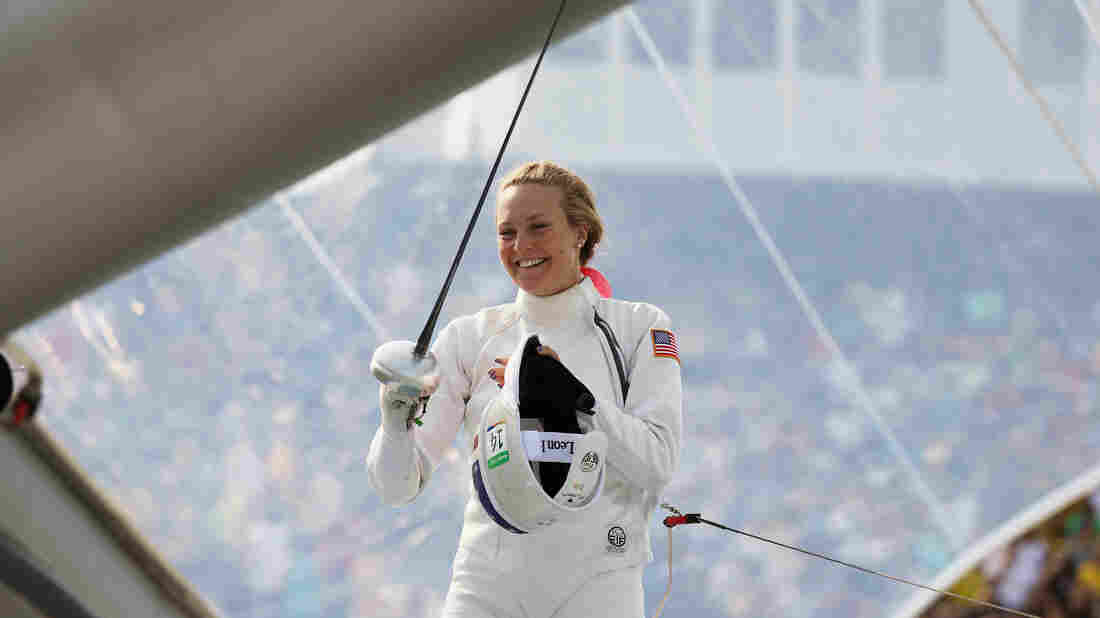
American Margaux Isaksen smiles during the women’s fencing in the Modern Pentathlon on Aug. 19 at the Rio Olympics. She finished fourth in London in 2012 and 20th in Rio. “It makes you feel sort of worthless,” Isaksen says of her performance. She calls this current period a “post-Olympic depression.” Rob Carr/Getty Images hide caption

toggle caption Rob Carr/Getty Images

The Rio Olympics are in the rear-view mirror. Thousands of athletes have returned home to resume their lives. But for many, this post-Olympic period can be a rough one, with depression and anxiety haunting them after the games.

That depression can affect both stars and lesser-known athletes alike.

Swimmer Michael Phelps, the most decorated Olympian of all time, has talked candidly about his downward spiral after the 2012 London games that led to a DUI arrest and time in rehab.

“I still remember the days locked up in my room, not wanting to talk to anybody, not wanting to see anybody, really not wanting to live,” he told NBC’s Bob Costas during the Olympics last month.

Phelps has been something of a savior to his friend and fellow swimmer Allison Schmitt. She also suffered profound depression after the London Olympics and has become an outspoken advocate for mental health treatment, especially for elite athletes.

Consider that these athletes have spent years, maybe decades, building to the all-consuming goal of making the Olympics.

Now, it’s over. All of the buildup, the hype and media attention, the extreme adrenaline rush of competition, have come to a crashing halt.

“You work so hard,” says Karen Cogan, sports psychologist with the U.S. Olympic Committee. “You put everything into it, and for some athletes, their performance is over in a matter of seconds, literally. And then it’s done, and now what?”

Fencer Kelley Hurley (left) with teammate Kat Holmes at the Olympics in Rio in August. “You feel a little empty” after the games, says Hurley, expressing a sentiment felt by many athletes who prepared for years. Melissa Block/NPR hide caption

toggle caption Melissa Block/NPR

That’s what fencer Kelley Hurley, 28, is asking herself.

I talked with her a couple of weeks ago as she was packing up to leave the athletes’ village in Rio, heading back home to San Antonio. Her epee team finished fifth.

“You feel a little empty,” she said. “Everything that you did all came up to one point, and now it’s over and the new chapter begins, and where to start writing?”

This was Hurley’s third Olympics. Now, she’s wondering if she should try for a fourth.

“Should I do school or make new friends, because I lost them all in the last four years, when I haven’t had time to hang out with any of them,” she says, ruefully.

Hurley hopes that, with the Olympics behind her, she can finish her masters in public health at the University of Texas, San Antonio.

Like Hurley, many athletes have put their lives outside of sport on hold. Some have delayed or taken time off from college. They’ve likely missed out on important family events, like weddings and funerals.

Now they’re reckoning with the future.

For triathlete Greg Billington, 27, of San Diego, becoming an Olympian was a driving goal for nearly 20 years. Ever since he started swimming around age 8, he wanted to qualify for an Olympic team. Posters of Olympic gold medal backstroker Lenny Krayzelburg hung on his bedroom walls.

So when Billington qualified to compete in Rio, he considered it the absolute pinnacle of achievement.

“It kind of changes who you are,” he says. “You’re trying to become the best version of yourself that exists. There’s nothing that quite grips your imagination like qualifying for an Olympic team does, so that’s what makes it hard to replace.”
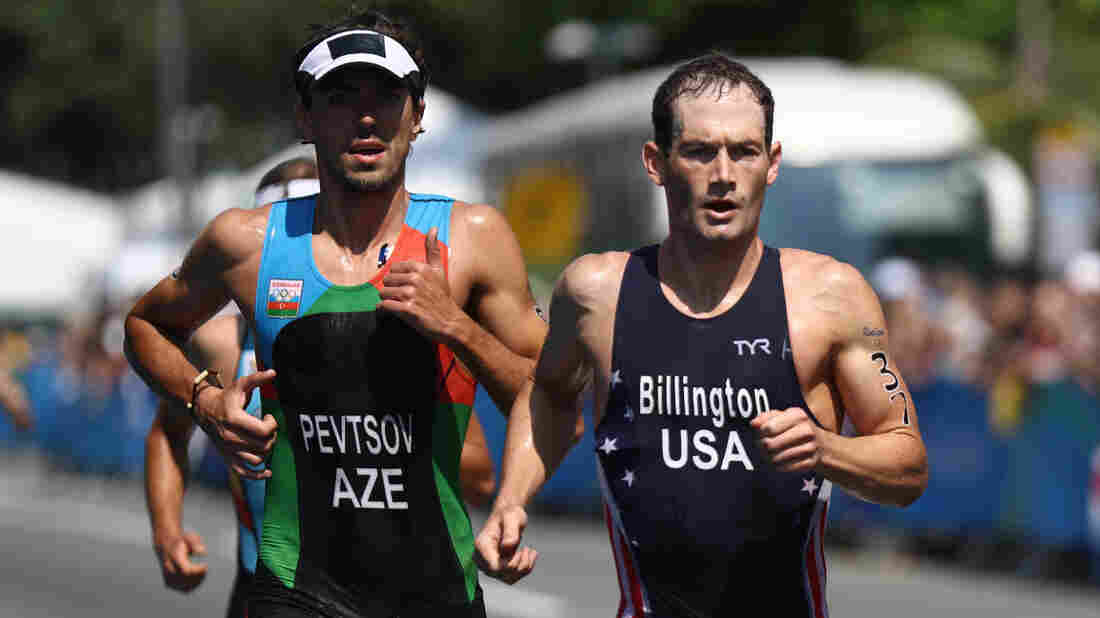
U.S. triathlete Greg Billington competes in the Olympics in Rio on Aug. 18. He finished 37th. “Currently nothing fills that void,” Billington, 27, says of the post-Olympic period. He plans to seek a spot on the U.S. team in 2020. Bryn Lennon/Getty Images hide caption

toggle caption Bryn Lennon/Getty Images

In the end, Billington didn’t have a good triathlon in Rio. He finished 37th. Now that he’s home in California, he says the transition has been tough.

“Currently nothing fills that void. It’s just a little empty part and that’s OK for a little while, as long as it gets filled before it starts to fester,” he says.

Billington says he’ll pursue qualifying for the 2020 Tokyo Olympics.

“I think there’s definitely more I can get out of myself in triathlon,” he says. After he retires, he’s interested in going to business school.

For some athletes, retiring from sport can bring its own set of problems.

“Their identity is so wrapped up in being an athlete and in their sport,” Cogan, the psychologist, says. “All of a sudden they don’t have that identity in the same way. So who are they going to be? What is the identity going to be? That sometimes is a big struggle.”

If they’re starting over in a new career, many athletes discover with a shock that they’re not among the best any more.

And even for athletes who made the medal podium, they come down from the ultimate high, an explosion of endorphins.

That success can bring its own set of pressures: can I possibly match that again?

Adam Krikorian, who has coached the U.S. women’s water polo team to gold medals in the past two Olympics, says apart from the medal itself, it’s the shared intense journey that proves impossible to replicate.

“You build this incredible bond, and all of a sudden it’s over,” he says. “They’re gonna go the rest of their life looking to try to emulate this experience. And many of them are gonna have a hard time finding something that’s going to equal that passion and that energy and that love.”

Cogan often counsels athletes disappointed in their Olympic performance, who get stuck replaying part of their competition constantly in their mind, wishing they could have a do-over.

That’s the case for Margaux Isaksen, 24, who competes in modern pentathlon, an event that combines shooting, fencing, swimming, horseback riding, and running.

At the London Olympics in 2012, she finished fourth — so close to a medal.

“I just remember thinking, wow, if I had run a second faster, or I’d got one extra fencing touch, then I would have a medal. And I just came home and I felt so defeated and so sad,” says Isaksen, who lives in Fayetteville, Ark.

This summer in Rio, Isaksen was competing five weeks after surgery for a stress fracture in her leg, and she finished 20th.

“It makes you feel sort of worthless,” she says. “It’s a really strong word, but that’s kind of how I feel right now. I really feel like I’ve let myself down, let my coaches down, and that’s hard. And then you don’t know if you want to put yourself through that again.”

Isaksen calls this period “post-Olympic depression.”

She’s finding some relief with yoga, and spending time outside. She’s also been bolstered by some tough love from her mother.

“She told me right after Rio just how proud she was. She gave me a big hug. And then she just said, ‘You know what, Margaux? There’s so much more to life than sport.’ And she said, ‘Just think about everything that’s going on in the world, all the suffering. And just think for a minute about how lucky you are that this seems like the biggest tragedy in your life right now.'”

Isaksen continues: “When you think about that and you put it in perspective, all of my so-called problems? It really doesn’t seem like anything at all.”

Being an elite athlete is a self-absorbed endeavor, Isaksen admits. Sometimes, she says, you just need a smack in the face to bring you back to reality.

Let’s block ads! (Why?)


No Image

Paralympics Open in Rio Under A Financial Cloud

The China team enters the stadium during the Opening Ceremony of the 2016 Paralympic Games at Maracana Stadium in Rio de Janeiro. The games feature more than 4,300 athletes from 161 countries. Hagen Hopkins/Getty Images hide caption

toggle caption Hagen Hopkins/Getty Images

The international games featuring more than 4,300 disabled athletes from 161 countries opened in Rio de Janeiro amid reports that costs could outpace ticket sales and sponsorships, jeopardizing some aspects of the games.

But organizers say a last-minute push has boosted ticket sales and a bailout by the Brazilian government has helped save the event.

International Paralympic Committee president Philip Craven said he was notified just five weeks ago that funding for the games was tight.

“This is the worst situation that we’ve ever found ourselves in at Paralympic movement,” Craven told The Associated Press. “We were aware of difficulties, but we weren’t aware it was as critical as this.”

The AP reports that the city of Rio contributed more than $46 million and the Brazilian federal government chipped in another $30.7 million funneled through three state-run entities.

Even with that cash infusion, Paralympics officials say venues, seating, and staffing will be scaled back. But they promise no sports or teams have been cut.

Of course, they were speaking after the Russian delegation was disqualified as a result of a doping scandal. During the opening ceremonies, the Russian flag was seen in the ranks of the athletes from Belarus, in an apparent protest against the banning of the Russians.

Organizers say 1.6 million tickets have been sold, but that’s short of the 2.5 million available. Four years ago, the London Paralympics sold 2.7 million tickets, reports the BBC.

Nevertheless, for the athletes it’s all about elevating the international profile of the games.

“I don’t want the movement to plateau or become stagnant,” U.S. wheelchair basketball player Desiree Miller told the AP. Miller also competed in London.

“I want it to catch fire after Rio so by the time Tokyo comes around there’s not a person in the States or a person in the world that doesn’t know who a Paralympian is.”

Let’s block ads! (Why?)


No Image

Paralympic Games Set To Begin In Rio After Brazilian Government Bailout

Thanks to a Brazilian government bailout the Paralympic Games will begin Wednesday in Rio de Janeiro. NPR’s Audie Cornish talks with Craig Spence, spokesman for the International Paralympic Committee, and Stephanie Nolen, Latin America correspondent for The Globe and Mail.

Transcript

AUDIE CORNISH, HOST:

Thanks to a Brazilian government bailout, the Paralympics will go on. They begin tomorrow. They were in trouble after the real Olympic organizing committee admitted to running out of money.

ARI SHAPIRO, HOST:

After weeks of legal wrangling and a search for more sponsorships, the Brazilian government and the city of Rio came up with a combined total of about $80 million to help make up the shortfall. So the games are set to get underway, albeit scaled back. Craig Spence is the spokesman for the International Paralympic Committee, and he told us via Skype from Rio what that means.

CRAIG SPENCE: We’ve had to reduce some of the venue capacities. So for example, our swimming venue originally takes 17,000 seats. Part of the cuts that have been made here to balance the budget is that Rio 2016 has reduced its workforce significantly. Because of that, we can’t fill all 17,000 seats safely, because there isn’t enough staff there to look after the spectators. So the swimming venue is now a 9,000-seat-capacity venue. And thankfully, we’ve sold out every single evening session of swimming for these games.

CORNISH: We know some 4,300 athletes are scheduled to participate. And we understand at one point, the budget problems actually threatened the travel grants that would help poorer countries. I know that some of those grants have come through, but have any countries or athletes had to drop out because of this?

SPENCE: Well, the travel grants have yet to be paid. The money should be received today by the International Paralympic Committee, and then we will pay the nations immediately. We did have 10 countries who we thought might struggle to get to the games because of these late grant payments. The IPC has worked with them to either secure a short-term loan from their governments or the IPC themselves have lent them the money.

CORNISH: Now, your boss, Philip Craven, the president of the International Paralympic Committee, has called this, quote, “the worst situation that we’ve ever found ourselves in at Paralympic movement.” Can you expand on that? I mean, how bad is it?

SPENCE: Well, I think he said it was inprecedented (ph) circumstances in the 56-year history of the games as well. And what we’ve done since then, though, is we’ve worked hard with the organizing committee, who basically have no money to organize the Paralympic Games. We’ve…

CORNISH: …Well, they had money. They ran out of money, right? I mean, the accusation is that they’d spent all the money on the Olympics and didn’t have enough left for the Paralympics.

SPENCE: Well, they had received a lot of money from the Olympics, including $1.5 billion from the IOC, but that money wasn’t there ready for the Paralympics. So what we’ve had to do is make the most of what we’ve got.

CORNISH: Going forward, does this feel like what happened with Rio is a kind of fluke or particular to Rio and its economic circumstances? Or is there anything that the International Paralympic Committee can do going forward to make sure they don’t end up in this situation again?

SPENCE: Well, there’s various things here that are key learnings for us. I mean, you’ve got to admit that Brazil is facing its worst economic crisis probably in its history, and it’s had some political uncertainty in recent years as well. In terms of the budget, yes, maybe the organizing committee could’ve brought in more Paralympic sponsors in the same way that in London 2012 you could only become a sponsor of the Olympic Games if you also sponsored the Paralympics. So that’s a key learning that we’ll take forward to Tokyo, who’s already following the London model.

CORNISH: That’s Craig Spence. He’s a spokesman for the International Paralympic Committee. Thank you for speaking with us.

SPENCE: You’re welcome. Thank you.

CORNISH: Stephanie Nolen has been trying to follow the missing money. She’s South America bureau chief for The Globe and Mail. And she says while organizers are trying to stay upbeat, there are still many challenges.

STEPHANIE NOLEN: Off the record, people are complaining about terrible catering services, about bad transport or the total absence of transport. I think we won’t know if it’s bad – and if so, how bad – until things really start to happen.

CORNISH: Heading into this, British Paralympic sprinter Jonnie Peacock was very critical of the treatment of athletes going into these games, saying that he felt disrespected by the way these budget issues went down. Is that something that’s being felt or expressed by other athletes?

NOLEN: I haven’t heard it from athletes. I have heard it from other people in the Paralympic movement who you can tell are at pains to not come right out and say, you know, we should not be the tacked-on little sibling event. There was supposed to be a budget for this. Where did our money go? I think there is, and quite legitimately, the feeling among everybody associated with the Paralympics that they have really been given short shrift here.

CORNISH: Is there any sense of who’s to blame here? Are we any closer to understanding just what happened to this money?

NOLEN: We’re not. I spent a lot of time today having new versions of that conversation with people associated with Rio 2016. At this point, they are blaming the whole budget shortfall on the fact that ticket sales were very, very slow and indeed only started to pick up in the last week or so, and also on the fact that sponsorship money was very late to come because of Brazil’s economic crisis.

You know, the problem with that explanation, of course, is that the travel grants, for example – that’s been a budgeted cost since 2009, when Rio won the right to host these games. They knew they were going to have to pay for that all along. So where was that money? The most recent explanation that I got today from Rio 2016 is that the transfer of that money got interrupted with the political crisis in Brazil and the change in presidents and administrations and their commitment of what they would pay, which, again, doesn’t really make sense to me because, you know, they knew this was coming.

Regardless of who the president was, they were going to have 161 national delegations to fly here. Regrettably, Rio 2016 is not obliged to be transparent about any of this. And still, we don’t know how big the deficit is and what else they don’t have money for. But that may become clear in the next two weeks.

CORNISH: Stephanie Nolen is the South America bureau chief for The Globe and Mail. We reached her by Skype in Rio. Thanks for speaking with us.

NOLEN: It’s a pleasure.

Copyright © 2016 NPR. All rights reserved. Visit our website terms of use and permissions pages at www.npr.org for further information.

NPR transcripts are created on a rush deadline by Verb8tm, Inc., an NPR contractor, and produced using a proprietary transcription process developed with NPR. This text may not be in its final form and may be updated or revised in the future. Accuracy and availability may vary. The authoritative record of NPR’s programming is the audio record.

Let’s block ads! (Why?)


No Image

Titans Linebacker Derrick Morgan To NFL: Consider The Benefits Of Marijuana

Tennessee Titans outside linebacker Derrick Morgan warms up before the first half of an NFL preseason football game between the Tennessee Titans and the San Diego Chargers, Saturday, Aug. 13, 2016. Mark Zaleski/AP hide caption

toggle caption Mark Zaleski/AP

The hard line against marijuana is softening all across the country.

Twenty-five states and the District of Columbia allow some form of marijuana use, mostly for medicinal purposes, though a few allow recreational use. And more states could decriminalize marijuana this year. But if you play in the NFL and you use weed it could cost you your job.

Tennessee Titans linebacker Derrick Morgan would like to change that; he would at least like the NFL to look into the health benefits of marijuana in a profession where injuries and ongoing pain is normal.

Morgan is not the first NFL player to speak publicly on the matter. Former Baltimore Ravens offensive lineman Eugene Monroe has also been an outspoken advocate for marijuana research. In announcing his retirement from football in July, he said in a statement:

“The last 18 years have been full of traumatic injuries to both my head and my body. I’m not complaining, just stating a fact. Has the damage to my brain already been done? Do I have CTE? I hope I don’t, but over 90% of the brains of former NFL players that have been examined showed signs of the disease. I am terrified.”

NPR’s Michel Martin recently spoke with Morgan from member station WPLN in Nashville. The NFL player spoke about Monroe and both of their stances on the use of marijuana in the NFL.


Interview Highlights

On how he got involved in the issue

Maybe about a year and a half ago, all the CTE [chronic traumatic encephalopathy] and the traumatic brain injury stuff was hitting in the news. And to me that was very alarming, so I really started exploring what my options were. And there really weren’t any [options] just readily available to you for protecting your brain, protecting [your] health from the trauma you experience playing football.

I actually was watching the CNN documentary on weed and I’d seen this little girl named Charlotte, she had epilepsy, hundreds of seizures a week. And they started giving her this cannabis oil and it was a significant reduction in her seizures almost overnight.

So I started looking into it, starting researching and educating myself, reached out to Eugene Monroe [former offensive tackle for the Baltimore Ravens] because I’ve seen him publicly advocating for it. [I] reached out to him and he just started extending his pool of resources and just kind of share[d] with me his story and his journey on it. And the more and more I researched it, the more and more I got comfortable about talking about it.

On what other players have told him privately

I’ve talked to several players about it; they have a lot of interest in it. Guys are concerned about their health and want to know what their options are. So I’ve gotten a lot of support and players reaching out who’ve been curious about it. So I’ve just been really trying to share all the information I have with them — connecting them to the right people and resources.

For me, I wish it didn’t have to be cannabis that I had to come out publicly and talk about it. But the more and more I research this, I’m like: Wow, this is something that, it shows to be very promising. You know, a lot of people are benefiting from it. … I’ve got to spread the awareness, I’ve got to get people talking about this.

On how the NFL has responded

I really haven’t had too much conversation with the NFL. I think where it starts is the delegation of resources to researching it. I’m not going sit here and say, “Hey, look, we need to take this off the banned substance list and let guys use it freely.”

What I’m asking for is just a thorough look into it — research into it. There’s a lot of anecdotal evidence out there of people benefiting from it. But I think we need some clinical research into it in order to make some progress.

On if he wants marijuana research to be used for pain management or thinks it could offer positive benefits in ameliorating the effects of CTE

Yes, I think so — both of those different things. Pain management — obviously we have an opioid epidemic in our country, the NFL is not immune to that. So definitely as an alternative to the prescription painkillers and then also as a protectant for your brain.

We’re banging heads every play. So to have something that could possibly be a neuroprotectant, I think that’s definitely worth looking into — when there really aren’t any options for us to be proactive about, you know, that aspect of our health. So on both of those fronts: pain management and protecting your brain from trauma.

Let’s block ads! (Why?)


No Image

Kareem Abdul-Jabbar Calls Colin Kaepernick's Concerns 'Very Admirable'

Colin Kaepernick, quarterback of the San Francisco 49ers, kneels during the national anthem before Thursday night’s game in San Diego. Chris Carlson/AP hide caption

toggle caption Chris Carlson/AP

San Francisco 49ers quarterback Colin Kaepernick dropped to one knee rather than stand during the national anthem at a preseason football game Thursday night. It’s an extension of the protest Kaepernick began last week when he sat as the anthem played before an earlier game, declaring, “I am not going to show pride in a flag for a country that oppresses black people and people of color.”

Prominent athletes have used their celebrity to call attention to social issues before. Basketball legend Kareem Abdul-Jabbar started using his fame to confront racial injustice as a college player, then over the course of his 20-season NBA career, and he continues now in retirement. In his recent book, Writings on the Wall: Searching for a New Equality Beyond Black and White, Abdul-Jabbar probes issues of race, political correctness and social activism in a series of analytical essays.

Abdul-Jabbar sat down with NPR’s Steve Inskeep to talk about Kaepernick, the broader role that athletes and celebrities play in shaping social movements and more.


Kareem Abdul-Jabbar presents a tribute to Muhammad Ali at the ESPY Awards at the Microsoft Theater in Los Angeles in July. Chris Pizzello/Invision/AP hide caption

toggle caption Chris Pizzello/Invision/AP

Interview Highlights

On Colin Kaepernick’s activism

Mr. Kaepernick is trying to get people to understand that he is concerned about a very important issue, which is the unnecessary killings of so many young black men. He’s really concerned about that and he went to a great length in order to call attention to that issue. … There are a lot of people who don’t like his tone, or maybe the venue that he chose to make his statement. But the fact that he is concerned about a real issue I think is a very admirable thing, and I hope that he will continue to find ways to bring this message across to people in a positive way.

I remember when a lot of Vietnam vets came back, they burned the flag. And it was not to denigrate America, but to protest the fact that we were fighting an unjust war and people were dying unnecessarily. And that requires a very dramatic statement. And they used their opportunity to make that statement that way.

On the role of athletes in the political sphere

That timing [of an athlete] making a statement or not making it really has to do with the opinion and the insight of the individual involved. Some individuals see this as an important issue and have made statements about it, and some people have decided not to engage. The fact that Mr. Kaepernick is willing to engage, and willing to risk so much in order to bring attention to the issue, I think we have to admire him for that and respect his need to make the statement that he’s making …

I didn’t make any statements the way Mr. Kaepernick is doing, but I was involved in, let’s say, right after the assassination of Dr. King, I was involved in a demonstration on the UCLA campus, in 1968. We just stood along Bruin Walk, and I had people criticize me for standing out there. People felt like the fact that I had the opportunity to play in the NBA, I should be very grateful for that and not rock the boat. But the assassination of Dr. King was a tragedy for our country, and I wanted to demonstrate my concern for what was going on. And I took the opportunity to do that.

On the criticism that comes with speaking out

I knew that I would get criticized. I was on a show with Joe Garagiola where he suggested that I leave the country because I said at times America is not living up to its responsibilities to all of its citizens. And he said, “Well maybe you should go someplace else.” But I choose to stay here and try to work to make America a better place. I think that is my patriotic duty, and I try to do it in that way, with that intention. With that motivation.

On Donald Trump’s suggestion that Kaepernick “find a country that works better for him”

You know, that’s his opinion. I notice that he wasn’t very eager to go over to Vietnam. So I don’t think he can throw any stones here in this instance.

On his critique of pushing nonvoters to the polls

Ignorance is not something that really lends itself to a meaningful discussion. So some of these people really shouldn’t vote, because they don’t know what the issues are. And I think people that are voting in the blind are doing a disservice to our country by not being better informed. … I hope that everybody understands the issues and votes their conscience according to a well-informed effort on their part.

By knowing what the issues are and how things can proceed, given what the issues are, I think we get a lot more done when we have the electorate being well informed. And it is my fervent hope that a well-informed electorate is the result of all this. … Some [people] definitely aren’t prepared to vote. And that’s unfortunate, but it’s a fact.

Let’s block ads! (Why?)


No Image

A Paralympian Cyclist Gears Up For Rio

Jennifer Schuble trains at the velodrome in Atlanta this summer before the Paralympics, which begin Sept. 7 in Rio de Janeiro. Esther Ciammachilli/WBHM hide caption

toggle caption Esther Ciammachilli/WBHM

On a muggy afternoon in Atlanta, Jennifer Schuble, 40, hops on her bicycle and clips into the pedals. She zooms around the steep banks of a velodrome. She drafts behind her coach, who’s on a motorcycle, holding the pace steady at 30 miles per hour.

The Olympics are over in Rio de Janeiro, which means it’s now time for the 2016 Paralympic Games, which begin Wednesday in the Brazilian city. There have been issues in the run-up to the Paralympics, with organizers announcing some cutbacks due to funding shortages. But thousands of athletes will be there as planned.

The United States is sending almost 300 para athletes, including Schuble, who won a gold and two silver medals in Beijing eight years ago, while taking a silver and a bronze in London in 2012.

At just 5-foot-3, Schuble is short for a cyclist, but she has explosive power. She displays no outward signs of a disability at first glance.

Schuble, who lives and trains in Birmingham, Ala., grew up playing soccer and running track. Then a series of accidents beginning in 1997 changed her life. It started when Schuble attended the U.S. Military Academy at West Point.

“I was in a hand to hand combat class and I did a flip and landed on my head,” she said. “I ended up with a concussion [and] my neck had four partially bulged discs.”

That’s when she suffered her first traumatic brain injury, or TBI. She began to struggle — both academically and physically — and withdrew from West Point.

Bronze medalists Jennifer Schuble (right), Sam Kavanagh (center) and Joseph Berenyi of the United States stand on the podium for the Mixed C1 to 5 cycling team sprint finals at the 2012 Paralympic Games in London. Bryn Lennon/Getty Images hide caption

toggle caption Bryn Lennon/Getty Images

A few years later, Schuble was in a car accident that resulted in a second TBI. Then in 2004, doctors diagnosed her with multiple sclerosis.

At that point, she said, “What next?”

Schuble says her biggest physical ailments are because of MS.

“MS is like an old house short-circuiting,” she said. “So when your core body temperature gets hotter as in when you’re exercising … you start misfiring. Your brain stops communicating. So, as an athlete that makes it harder.”

When her body temperature rises she loses feeling in her feet, which makes running almost impossible. But on a bike, her feet lock into the pedals and her legs do the work. Schuble says cycling helps to keep her MS at bay and she constantly pushes the limits despite her disability.

Paralympic athletes are divided into groups based on physical ability. Schuble competes with athletes who have mild physical impairments. Back in 2008, she came out of nowhere to break the world record in the women’s 500 meters in Beijing.

“That was just a huge moment because I don’t think anyone in that arena thought I’d win the 500 and break the world record,” said Schuble. “And for me to actually pull that off and actually do the start that I did, it was huge.”

She came close to winning gold again in London in 2012, but had to settle for an individual silver and a team bronze. That gave her a renewed purpose and fueled her quest to once again be the top Paralympic cyclist on the podium, this time in Rio.

Let’s block ads! (Why?)


No Image

My Father Stood For The Anthem, For The Same Reason That Colin Kaepernick Sits

San Francisco 49ers quarterback Colin Kaepernick stands on the field during an NFL football game against the Atlanta Falcons in Santa Clara, Calif. Ben Margot/AP hide caption

toggle caption Ben Margot/AP

Daddy would not have liked Colin Kaepernick. Had the San Francisco quarterback refused to stand for the national anthem in my father’s presence, Daddy would have fixed him in a stare that could freeze the blood in your veins. Then, to no one in particular — but to everyone within earshot — he’d give the young man a two-sentence lesson in patriotic etiquette.

“You stand during the national anthem,” he’d say, punctuating his words with fire. “People died for that flag.”

As a child coming of age in New Orleans in the 1960s, I found my father’s love of country utterly bewildering. His was the generation of men born free but shackled by bigotry. Yet, every time he took my brothers and me to see the Saints play football at old Tulane Stadium, we all stood for the national anthem. We took off our caps, faced the flag, and placed hands over hearts.

And Daddy sang.

O say can you see …

He sang with a pride I could not comprehend, in a gorgeous tenor’s voice that he didn’t mind showing off. In a city that once denied him the simple dignity of being called Mister Verdun P. Woods, Sr. In a land that would have his black countrymen fight on the front lines but sit in the back of the bus. He sang so that other people would hear.

What so proudly we hailed …

Verdun P. Woods Sr. Courtesy of Keith Woods hide caption

toggle caption Courtesy of Keith Woods

My father was an insatiable learner with intelligence that his baby brother once told me bordered on genius. He and his uncles, brothers and nephews joined the military in the 1940s as young men. He went to Manila, Okinawa and Korea, trained as a medic, worked as a communications clerk, learned a bit of German and enough Japanese to make you believe he knew more. After he’d served his country for eight years, he took a job with the U.S. Postal Service, one of those limited career tracks that a racist America reserved for black men.

Daddy was not one for self-reflection. Feelings didn’t flow from him; they escaped. So when he talked to me about his military years, the anger would burst from him like steam from a busted radiator. Any mention of the white commanding officer in Korea who treated him like trash and took credit for his work, and Daddy’s hands would start shaking and he’d bite down on his tongue like a Maori warrior dancing a Haka.

We watched a documentary years after he retired about the architects of American democracy. I saw his eyes combust, and he shouted, to no one in particular, “Yes, and they built it on the backs of the black man!”

This man. This accountant, camera buff, would-be linguist, postal clerk, kite maker, father of nine. This veteran. He would take us to the football game to see Peyton Manning’s father play, and he would face the flag and sing with a devotion that belied the truth I knew.

And the rocket’s red glare …

His singing was loud and embarrassing to me, a child who would rather have gone unnoticed. And it only got worse whenever some guy two seats down or three rows below us would rise but keep his hands at his side, or his hat on his head, as the Tulane University marching band struck the opening chords.

“You know,” Daddy would say, ostensibly to us but loud enough for the fan to hear, “you should take your HAT OFF when they play the national anthem.”

I can’t imagine that he would sympathize with Kaepernick, who’s struggling to reclaim lost magic on the field and courting infamy on the bench. I doubt Daddy would buy the quarterback’s refusal to “show pride in a flag for a country that oppresses black people and people of color.”

But for me, the words roused an old ambivalence. I’m a father of five. A grandfather of four. I live unrestrained by the immoral laws that constrained my elders. My dreams are brimming with hopes of unlimited tomorrows for my children, and theirs. And I’m fully aware that America teems still with the racial injustices against which my father railed and Colin Kaepernick now stands — or sits.

I can’t condemn him. I won’t. Love of country can’t be accurately measured by whether someone sits or stands or slouches or sings. It’s not that simple. If I could ask my father, I believe he’d say that he sang because he earned that right. I believe he sang to affirm a citizenship denied him through housing discrimination, police brutality, economic inequities and educational apartheid. Does that make him more or less like Kaepernick?

And what of me? When Daddy died on Halloween morning 2005, two months after Hurricane Katrina, he left me a strange inheritance: I’m incapable of going to a sporting event without noticing who leaves their hat on during the anthem and who doesn’t cover their heart. I still get anxious every time I see someone hold the American flag too low, even though I now know that, unlike what my father always said, you don’t have to burn the flag if it touches the ground. These things still mean something to me, but mostly because they meant everything to him.

At his burial, a military honor guard met my father’s flag-draped casket. Daddy would have geeked out. He would have made sure we noticed how, in a slow-motion ritual of glorious precision, the soldiers sharpened every crease and smoothed every fold, tucking in the last bit of the flag so that it formed a perfect triangle and showed no red. He would have savored the sad, tender spectacle of a lone soldier standing in the distance between crumbling New Orleans crypts, blowing taps into the autumn air.

I took it all in, and savored it on his behalf.

That is my relationship to the national anthem. It means what it does to me because it meant what it did to him. Yes, I stand even before the first strains of the song begin, but what rises in my chest is less my own expression of patriotism and more an artifact of the pride my father was forced to wrench from the stingy grip of his country. I have nothing to prove of my fealty to America, least of all by how I treat a song written by someone who believed black people are born inferior.

But I hold no grudge against Francis Scott Key. I’d be a tired, miserable man if I litigated every act of slaveholders in a place called Washington D.C. The truth is, I like the song. I like the way its lyrics call for emotion deep inside me. I like the flush of blood that rushes through my brain with its crescendo.

Who am I to decide what it should mean to Colin Kaepernick?

Who could possibly know what it meant to the people Daddy chided in the old Tulane Stadium?

And what could you truly make of me just a week ago, when that beautiful music started and I rose to my feet at a Washington Nationals baseball game. If what you saw was an unmitigated display of patriotism, you were wrong. My relationship to my flawed homeland is too complicated for that.

All you would know for sure is that I stood. I faced the flag, hand over heart.

And I sang.

O say does that star-spangled banner yet wave
O’er the land of the free and the home of the brave?

Let’s block ads! (Why?)


No Image

Ryan Lochte Just Wants To Dance, Apparently — With The Stars!

Ryan Lochte poses with his gold medal. Harry How/Getty Images hide caption

toggle caption Harry How/Getty Images

If you doubt that Ryan Lochte is going on Dancing With The Stars to try to change the subject away from what he himself has called his “immature, intoxicated behavior” during the Rio Olympics, where he admits he lied about at least some of his story about being robbed at gunpoint, just ask him. It’s not a secret. He told USA Today, “It’s just an amazing show and hopefully when I’m on it, people will watch and enjoy the show and talk about the show … Hopefully, it changes everyone’s mindset and just focuses on something different.” (Lochte has been charged in Brazil with filing a false report, though NPR’s David Folkenflik provided some useful caveats recently on Here & Now to some of the strongest accusations against him.)

Redemption for Lochte — who, in the past, had eagerly embraced the role of professional public dummy, real or not — is how the show sees it, too. Executive producer Rob Wade says, “Hopefully, this opportunity will be something that shows Ryan in a good light.” And in a line you would not believe if you hadn’t seen it published in black and white, Wade said, “I think at the end of the day, he really wants to dance.”

Oh, don’t we all?

[embedded content]
YouTube

Look, nobody is saying that Lochte has to be condemned forever for a single “I was like, whatever.” But the unseemly eagerness to turbocharge this one guy’s Limited Admission Of A Partial Possible Fabrication Apology Tour less than two weeks after Lochte began it cannot help but raise questions about which athletes are entitled to such pillow-soft landings after, let’s say, an international incident. It’s the kind of thing that’s hard to prove, since there’s a relatively small sample size of Olympians who return from the Olympics apologizing for lying and acting like juvenile drunks (again, this is essentially the shape of his account of what he did). Not a lot of 32-year-olds are going with immaturity as a defense in the first place, so it’s hard to say when they’d get a pass for it and when they wouldn’t. But I have to wonder: even if there were, would they all have television producers less than two weeks later specifically saying the hope was to show them in a good light? As opposed to, for instance, an honest light?

Don’t get me wrong: an appearance on Dancing With The Stars is always a long infomercial for your basic geniality. Do you remember Joey Fatone from N*SYNC? Do you remember how much you like him? WHAAAAAT? You don’t? Well, here he is, agreeably learning the cha-cha! How about Kate Gosselin? Sure, you know her as a reality show star, but did you know that she is a very good sport about how she can’t dance?

There’s a deeply weird logic to who gets to do Dancing With The Stars, but there are types they return to over and over: star athletes; Disney Channel veterans and other Celebrities Of The Young; women over 75 who will be praised for still being active; women over 35 who will be praised for still being active; nostalgia acts; people specifically famous in conservative politics (Tucker Carlson, Bristol Palin, Tom DeLay, and now Rick Perry have been cast); country musicians; and ringers. (Why did Alfonso Ribiero get to be on a show for amateurs? He became famous in a musical called The Tap Dance Kid! He is famous for dancing! Don’t get me started on the figure skaters, either.)

The whole thing is a great big goof parade to begin with, whether you like it or don’t. It’s a shame that I can’t link you to a high-quality online version of Tom DeLay doing the samba to “Why Can’t We Be Friends?” while wearing a shirt with an elephant on it and dancing with a woman whose dress has a donkey on it. But it was real. As was his dance to “Wild Thing.” (Maybe Rick Perry will dance to “Third Thing.” No? Anyone?)

Maureen McCormick from The Brady Bunch is on this season, and assuming they don’t run into “intellectual” property issues, I think it’s a very good bet that you’ll see her dance to either “Time To Change” or “Sunshine Day.” And there are many more: Laurie Hernandez, who emerged from the Olympics with no scandals at all! Marilu Henner! Babyface, who’s been making special appearances since Beverly Hills, 90210! Amber Rose! Vanilla Ice, now well into his third decade of exceeding expectations, durability-wise! (Honestly, though, a dance teacher is the perfect person to understand the key difference between “ding-ding-ding-digga-ding-ding” and “ding-ding-ding-ding-digga-ding-ding.”) It’s not supposed to be anything serious.

It’s partly for this reason, in fact, that I would have let Lochte cool his heels and his new Refreshing Honesty Haircut in Subdued Chestnut for a little while longer. Not forever. I like Dancing as a way to rediscover Joey Fatone and check in with Maureen McCormick. I’m a little less sure how I feel about it as a PR machine for people who are still facing charges over an incident that’s still a little murky. I could have stood a little more of an interregnum of regret before they started airing clip packages and, I’m going to guess, having him dance to something like “Oops, I Did It Again.” You know, ironically.

They had other options. I’m sure he’s not the only one who wanted to dance.

Let’s block ads! (Why?)


No Image

As Summer Wanes, Action To Begin At Tennis Season's Final Grand Slam

Tennis matches get started on Monday at the U.S. Open in New York. Renee Montagne talks to Courtney Nguyen, senior writer at WTA Insider, who offers a preview on what to look for.

Transcript

RENEE MONTAGNE, HOST:

Summer is drawing to a close. And that means the start of the U.S. Open Tennis Championships. Last year, Serena Williams lost in the semifinals in what was considered one of the biggest upsets of all time. This year, she enters her matches ranked on top. Courtney Nguyen is a senior writer at WTA Insider, the magazine of the Women’s Tennis Association, and she joins us. Good morning.

COURTNEY NGUYEN: Good morning.

MONTAGNE: What will you be watching for in this U.S. Open?

NGUYEN: Well, for me, I mean, that Serena Williams is the big story – comes in ranked No. 1, hasn’t been the top-notch year or, really, historical year that she had in 2015, but still by far and away the No. 1 player in the world. But she’s playing for history, chasing Steffi Graf, as she has been for quite some time, going for slam number 23, which would break the record for singles titles in the Open era, and also trying to break a consecutive No. 1 ranking, with 186 consecutive weeks at No. 1. And she’s trying to hold on to that top ranking. And she actually is being challenged for it this year.

MONTAGNE: Well, Serena Williams, and on the men’s side, obviously, Novak Djokovic, are both favorites to win, but both are nursing injuries. What are the chances their injuries could impair their performances?

NGUYEN: Yeah, I mean, so far, you know, they were pretty dominant for the last 18 months. And what we’re seeing in the last few months are these injuries crop up. And it has impacted their results, with Novak Djokovic losing early at Wimbledon to American Sam Querrey. He also lost early at the Olympics.

Serena Williams did the same thing – after winning Wimbledon, went to the Olympics, only played three matches between Wimbledon until now – and lost early in Rio to a young Ukrainian. So, you know, the injuries are very, very significant here. They’re the best players in the world when they’re healthy. And right now, we know that they’re not 100 percent healthy going into New York.

MONTAGNE: OK, and with Djokovic, as you’ve just described, on something of a summer slump, Roger Federer, who many consider the greatest player of all time, is missing his first U.S. Open in 17 years because of a knee injury. Does that mean we could see someone else rush up there as No. 1?

NGUYEN: No. 1 on the men’s side is pretty secured by Novak Djokovic. But we are seeing a lot of movement from the men behind him. Andy Murray has done an incredible job of playing some consistent tennis in 2016. And then we have some younger players who are really trying to make a big splash. So it’s a nice little time of transition for the ATP. And, you know, with Roger’s absence, it opens up some opportunities for some young names.

MONTAGNE: All right. Well, thanks very much.

NGUYEN: Thank you.

MONTAGNE: Courtney Nguyen is a senior writer at WTA Insider.

Copyright © 2016 NPR. All rights reserved. Visit our website terms of use and permissions pages at www.npr.org for further information.

NPR transcripts are created on a rush deadline by Verb8tm, Inc., an NPR contractor, and produced using a proprietary transcription process developed with NPR. This text may not be in its final form and may be updated or revised in the future. Accuracy and availability may vary. The authoritative record of NPR’s programming is the audio record.

Let’s block ads! (Why?)


No Image

Colin Kaepernick Is Just The Latest Athlete To Make A Strong Political Statement

Newly retired New York Times columnist Bill Rhoden discusses NFL player Colin Kaepernick’s refusal to stand during the national anthem and past political activism by athletes.

Transcript

MICHEL MARTIN, HOST:

Moving to one of America’s most popular pastimes now we’re talking football. The regular season starts in two weeks, but what happened before a preseason game on Friday is grabbing headlines right now. San Francisco 49ers quarterback Colin Kaepernick refused to stand up for the national anthem. After the game, he told reporters, quote, “I’m not going to stand up to show pride in a flag for a country that oppresses black people and people of color.” The NFL has said in response that players are encouraged, but not required to stand for the anthem.

But, as you might, imagine Kaepernick’s stance is getting quite a lot of attention from colleagues and fans alike. So we thought we’d call William Rhoden to talk about this. After 26 consecutive years writing his Sports of the Times column, he just decided to deliver his final regular column last month. But after three decades of writing about sports and activism in particular, we thought he was the man to turn to about this. Welcome back to the program, Bill Rhoden.

BILL RHODEN: Michel, it’s a pleasure. It’s a pleasure.

MARTIN: So Kaepernick is not backing down. He’s been tweeting this weekend that it is his right and choice to stand up for people who are oppressed. It seems as though we’ve seen more of this in recent years. Do you agree?

RHODEN: I think I really started seeing it, Michel, after Ali died because his whole life, it seemed, the essence of his life was protest. And a lot of young athletes, particularly, are – start going back and they looked at his stand against the draft and that. And I think that a lot of – what a lot of young, particularly black athletes, saw is that typically money is supposed to empower you.

And I think with a lot of guys what started happening is that money began to weaken them because they were so afraid of losing it and having stuff taken away. And I think that when they began studying the lives of Ali and Curt Flood and these people looked back, they saw that, wow, you know, this actually empowered them. It actually strengthened them. It actually is why we’re talking about them years later.

MARTIN: Both the NFL and the 49ers have issued statements saying that players have the right to not stand during the playing of the national anthem. Is this a change?

RHODEN: Yeah.

MARTIN: I think some people are intrigued by the league’s response here.

RHODEN: Because, you know – listen, you’ve got a league that’s made up of almost – in – NFL is made up almost by 78, 79 percent African-American men. That’s the league. The NBA almost high – like 87 percent African-American men. So if you don’t own – or you better tread lightly on this stuff because these are the guys that make your league. You know, I mean, what happens if you are perceived as trying to crush them? That’s – that – I think that’s the easiest way to drive people together, I think the easiest way – and listen…

MARTIN: Well, but you wrote about this yourself in your farewell column for The New York Times in July. You wrote about Jim Brown, who was 29 years old in July of 1966 when he announced his retirement from the Cleveland Browns because then owner Art Modell had said to him if you don’t come back from making this movie, I’m going to fine you. So from the movie set, he had a press conference announcing his retirement.

RHODEN: Right.

MARTIN: So it seems that that was a very different era.

RHODEN: Yeah. I mean, and it was also Jim Brown, you know. And a lot of people, including me – I was only 15, and you looked at that and said, wow, man, the fact that he would stare down an owner. But he was an outlier. In other words, that was way outside the norm, but look what happened to that. That was with ’66. Next year ’67, Ali steps back from the draft. ’68, Smith and Carlos’ Mexico – ’69, Curt Flood. So I think that that was – if you want to say – if you want to look at sort of the beginning of that kind of – but those people were – and each one of them paid a tremendous price.

MARTIN: You talked about the consequences that a number of visible black athletes have faced when they made political statements. In 1967, Muhammad Ali refused to be drafted. In 1968, Tommie Smith and John Carlos celebrated winning gold and bronze medals at the ’68 Mexico City Games with a silent protest on the victory stand. What were the consequences that they faced?

RHODEN: Well, for Ali, first of all, he lost his title. He lost his belt. He lost his source of income. He wasn’t – he didn’t fight. There he is, I think it was three, four – well, he just could not earn a living beyond being demonized. Curt Flood will never get into the Hall of Fame for standing up against Major League Baseball, never.

MARTIN: He refused to trade in 1969.

RHODEN: Yeah. In ’69, he was traded to the Philadelphia Phillies, and he said I’m not going. I’m not a piece of meat to be traded.

MARTIN: Tommie Smith and Carlos…

RHODEN: Tommie Smith and Carlos couldn’t find work, were demonized. You know, John Carlos’ wife – there was so much pressure. I mean, she committed suicide. There were other things, but it was so much pressure. Tommie Smith couldn’t find work. And again, they were demonized. There was just all kinds of…

MARTIN: They were essentially blacklisted.

RHODEN: Yeah, yeah. Yeah, essentially.

MARTIN: Before we let you go, does Colin Kaepernick have a history of using his platform to express political points of view? I mean, a number of people have taken note that LeBron James in recent years, for example, has made a number of gestures to express his concern around certain issues. Does Colin Kaepernick have a reputation for doing that and is this new for him?

RHODEN: This is new.

MARTIN: And why do you think – why him and why now?

RHODEN: I think this is new, and I think sometimes everybody has their epiphany at different times. I think part of it is that he looked at LeBron – what LeBron had done. I think he looked at other athletes. Also, I think his situation in San Francisco which is somewhat ambiguous – I think that he was gold – remember he was the golden boy the first two, three years. And suddenly when you’ve become the golden boy, then the rug is pulled out from under you. Then you think about a whole lot of realities. You think about everything from they love me when I’m on top. Now I’m not. So I think a lot of things, but personally whenever you wake up, whenever you smell the coffee, I’m for it. Just smell the coffee at some point (laughter).

MARTIN: That’s Bill Rhoden. He was kind enough to join us in our studios in Washington, D.C. You will have certainly recognized him from his 26 years writing the Sports of the Times column at The New York Times. He was at The Times for 35 years in all, just turned in – hung up his spurs, as it were, just last month. And apparently we’ll hear from you from time to time, we hope, Bill Rhoden.

RHODEN: Absolutely (laughter).

MARTIN: Thank you so much for joining us.

RHODEN: Thank you, Michel. It’s been a pleasure.

Copyright © 2016 NPR. All rights reserved. Visit our website terms of use and permissions pages at www.npr.org for further information.

NPR transcripts are created on a rush deadline by Verb8tm, Inc., an NPR contractor, and produced using a proprietary transcription process developed with NPR. This text may not be in its final form and may be updated or revised in the future. Accuracy and availability may vary. The authoritative record of NPR’s programming is the audio record.

Let’s block ads! (Why?)