
Lindsey Vonn Retires As The Winningest Female Skier In History

Lindsey Vonn competes during the FIS World Ski Championships Women’s Downhill on Sunday in Are, Sweden.
Christophe Pallot/Agence Zoom/Getty Images
hide caption
toggle caption
Christophe Pallot/Agence Zoom/Getty Images
Lindsey Vonn is retiring as the winningest female ski racer in the world and one of the most decorated alpine skiers in U.S. history, ending a career in which she refused to let terrible injuries slow her down. In her final race Sunday, Vonn sped down the mountain to loud cheers, taking bronze in the downhill at the world championships in Are, Sweden.
Sunday’s medal makes Vonn the first female skier to win medals at six different world championships, and it also marks the fifth time she has won a medal in the downhill at a world championship.
“I laid it all on the line. That’s all I wanted to do today,” Vonn said. “I have to admit I was a little bit nervous, probably the most nervous I’ve ever been in my life. I wanted to finish strong so badly.”
Race organizers shortened the course in the morning due to fog and wind, which served Vonn well, as it reduced the pressure on her surgically repaired knees. Vonn recently announced she would retire early due to her injuries. She was originally set to end her career in December.
“After many sleepless nights, I have finally accepted that I cannot continue ski racing,” Vonn said last week of her decision to retire.
Vonn, 34, is the first American woman to win an Olympic gold medal in the downhill. Her 82 World Cup victories are the most of any female skier — and she is stepping away from racing just four wins short of the all-time record held by Ingemar Stenmark. Vonn has also won seven World Championship medals, including twin golds in 2009.

Lindsey Vonn had her most successful Olympics in 2010, when she won gold in the downhill and bronze in the super-G at the Vancouver Games.
Alain Grosclaude/Agence Zoom/Getty Images
hide caption
toggle caption
Alain Grosclaude/Agence Zoom/Getty Images
“I have always pushed the limits of ski racing and it has allowed me to have amazing success but also dramatic crashes,” Vonn said in an Instagram post about her retirement, efficiently summarizing a career marked both by her daring and her resilience in coping with debilitating injury.
Vonn famously recovered from a crash that devastated her knee in 2013, and she has bounced back from broken bones and other injuries over her 18-year career. But she said recent problems with her knees forced her to make this week’s FIS Alpine World Ski Championships, in Are, Sweden, her last event.
One year ago, Vonn was winning races and seemed poised to break Stenmark’s World Cup record. She won a bronze medal in the downhill at the Pyeongchang Olympics.
YouTube
In March of 2018, Vonn won a gold medal in the downhill at Are, and took a bronze in the Super-G. The strong showing capped a season that also included wins in Germany, Italy, and France.
Her final alpine racing season has been rough for Vonn, starting in November, when she suffered a heavy and awkward crash during a training run at Copper Mountain, Colo.
At the time, Vonn said she had a bone bruise and a sprained lateral collateral ligament in her knee. But she recently said the injuries were more serious than she had revealed, including a ligament tear and three fractures. Vonn said she withheld that information, and the news that she had surgery last spring, because “I have never wanted the storyline of my career to be about injuries.”
But it was the accumulating effects of injuries, she said, that led her to stop racing.
“My body is broken beyond repair and it isn’t letting me have the final season I dreamed of,” Vonn said before traveling to the world championships in Sweden. “My body is screaming at me to STOP and it’s time for me to listen.”

Vonn was a dominant force on the FIS World Cup circuit, where she won four World Cup overall championships. She’s seen here kissing the crystal globe trophy after winning a Super-G race in Meribel, France, in 2015.
Jeff Pachoud /AFP/Getty Images
hide caption
toggle caption
Jeff Pachoud /AFP/Getty Images
Days after she announced her decision to retire, Vonn crashed in her final Super-G race, in a dramatic fall that left fans and fellow skiers cringing. Vonn went airborne as she neared a gate, sending her through the center of the panel rather than around it.
With her skis tangled, Vonn sprawled across the snow and into the netting. Seconds before, she had been rushing down the hill at speeds of around 60 mph, drawing roars from the crowd.
A red medical sled was brought to take Vonn down the mountain. But instead of using it, the four-time Olympian stood up, took stock of herself, and clipped back into her skis. After a few minutes, she skied through the rest of the course, waving to acknowledge the crowd.
“I’m too old to be crashing that hard,” Vonn said in an interview with NBC at the bottom of the run. “Oh man. It’s just time to be done. It’s like my body is not doing what my mind is telling it to anymore, and I can’t be taking these kinds of risks anymore, and crashing that hard.”
YouTube
She later added via Twitter, ” If adversity makes you stronger I think I’m the Hulk at this point….”
Vonn, who suffered a black eye and sore ribs from the crash, said the light had shifted on the race course, making it hard for her to judge the terrain through the goggles she was wearing. Up to that point, Vonn’s many fans, including rival skiers, had been cheering her on as she tried to carve time out of the course.
“I was charging,” Vonn said afterwards. “I wanted to lay it all out on the line.”
It was vintage Vonn, and proof that she wasn’t content to drift quietly into retirement. In being aggressive at the last world championships of her career, Vonn did what she has always done: pushing herself to be faster and attacking the course. And if she fell, she always got back up.
Vonn, the daughter of Alan and Linda Kildow, took up skiing at age 2. She grew up in the Twin Cities area of Minnesota — allowing her to develop her technical skills at the famous Buck Hill program run by ski-racing guru Erich Sailer in Burnsville. At age 12, Vonn moved to Vail, Colo., allowing her to train on larger mountains. Five years later, she made her Olympics debut in 2002.
Injuries are often blamed for taking away Vonn’s chances for more Olympic medals. But she was a dominant force on the world ski circuit, earning widespread respect for her athletic ability and tenacity. Her success, combined with the sense of personality she brought to her sport, helped Vonn win lucrative endorsement deals with brands from Head and Under Armour to Red Bull and Rolex.

Vonn got her start in skiing at an early age, and bolstered her talents with intensive slalom training under racing guru Erich Sailer’s Buck Hill program. She then moved on to dominate speed events, like the downhill.
Clive Rose/Getty Images
hide caption
toggle caption
Clive Rose/Getty Images
As she continued to win, Vonn became the face of American skiing. Her image was on magazine covers from Sports Illustrated to Glamour. Her resilience and bravery set an example for younger skiers to follow. And Vonn’s celebrity hit a new peak when she and another elite athlete, golfer Tiger Woods, dated for three years. Along the way, she boosted the visibility of alpine skiing and raised expectations for Team USA on the international level.
As Vonn steps away from her sport, her U.S. teammate Mikaela Shiffrin seems ready and able to dominate women’s skiing for years to come. Fittingly, it was Shiffrin who won the Super-G race in which Vonn crashed on Tuesday, with the former slalom specialist securing her first world title in that speed discipline. At just 23, Shiffrin has won 56 races on the World Cup circuit — already putting her third on the women’s win list.
But on Sunday, it was all about Vonn, as one of the greatest skiers in the world said farewell to the sport that repeatedly broke her body — but whose thrills kept her coming back for more.
“I’ll miss that wonderful sensation of speed that you can get only by racing down a hill on a pair of skis,” Vonn said at a news conference in Sweden this week. “I don’t know yet how I will compensate for that, because I won’t be able to do it skiing privately without my ski pass being taken away from me.”
Why We Can't Break Up With Big Tech

Gizmodo’s Kashmir Hill tried to disconnect from all Amazon products, including smart speakers, as part of a bigger experiment in living without the major tech players.
Jeff Chiu/AP
hide caption
toggle caption
Jeff Chiu/AP
Kashmir Hill wanted Amazon out of her life, completely.
It was the first week of a six-week experiment in living without tech giants. She had a virtual private network, or VPN, that would keep her devices walled off from any Amazon product. She would avoid Whole Foods and power down her Kindles.
But she had a problem. A small, chipper problem.
Alexa.
She couldn’t connect her Amazon Echo to the VPN. But if she just unplugged the smart speaker, someone, like her husband, might forget and plug it back in.
Then a colleague suggested that she hide it. Say, in a drawer.
Hill was so used to Alexa’s constant presence, the convenient timers and music on demand, that she hadn’t even considered putting the device away.
“We’ve only had it for two years, and it already has the level of prominence where I couldn’t have imagined just taking it off the counter,” she told NPR’s Weekend Edition. “I just can’t believe that, especially since I’m a privacy reporter.”
Hill, a reporter and editor at Gizmodo, has tackled extreme tech experiments before, like living in a smart home and spending only Bitcoin for a week.
Last fall, she decided to try cutting off Amazon, Facebook, Google, Microsoft and Apple — each for a week, and then all at once. She wrote about her attempt for Gizmodo.
The experiment was inspired, she said, by the condemnations of tech behemoths. Critics say the companies are monetizing our attention, mishandling our data and profiting from our children. They’ve concentrated too much economic power. They’re shaping our society in ways we don’t fully understand yet.
“People will say, if you don’t like the company, just stop using their products,” Hill said. “I wanted to find out if that was possible, and, spoiler, it’s not possible.”
Beyond a surface level boycott, like deleting her Facebook account, Hill tried to sever any ties that usually funnel her data, money and attention to the five companies. Each publishes a list of IP addresses they control, so technologist Dhruv Mehrotra built her a VPN that essentially blacklisted those addresses.
Armed with that VPN and unmitigated determination, Hill put Alexa in a drawer and started her Amazon week. And it was as though a vast tract of the web blinked out.
“When I started pulling stats about Amazon, I was shocked,” she said. The company reportedly controls nearly half of all online commerce. But the company’s most profitable business is Amazon Web Services, or AWS, its cloud-computing arm that hosts apps and websites.
“They basically control kind of the backbone of Internet infrastructure,” she said. “They’re not just shipping packages out all over America. They’re also shipping a ton of data to people’s computers.”
Netflix, HBO Go and AirBnB are among the many websites hosted by AWS, and therefore were off-limits to Hill during her Amazon week (though she would have been free to browse NPR.org). Work tools were also forbidden: AWS hosts Gizmodo’s website, as well as the messaging platform Slack. At one point, her daughter cried over the digital entertainment blockade.
Other companies presented unexpected challenges. Blocking Google meant she couldn’t use Lyft or Uber, which rely on Google Maps. Going into any given coffee shop put her at risk of coming into contact with Microsoft, if the shop used Windows to operate its payment system. Cutting off Facebook left her feeling strangely isolated, pining for connection even at the cost of pervasive data surveillance.
And there were slip-ups, like when she ordered an item off eBay instead of Amazon, only to have it show up at her door in an instantly recognizable package. The seller had used Amazon to fulfill the order.
“The big thing I learned is that it’s not possible to navigate the modern world without coming into contact with these companies,” she said. “It made me certainly sympathetic to some of the critics who are saying these companies are too dominant in their spaces.”
The exception? Apple. Hill says when she gave up her iPhone and stepped out of Apple’s “walled garden,” she had no trouble staying away from the company — and it wasn’t collecting data on her.
But giving up her iPhone posed another challenge when she tried to block all five companies at once in the experiment’s final week.
“Google and Apple have a duopoly on the smartphone market,” she said. “So when I went out trying to find a smartphone that was not made or touched by either tech giant, it wasn’t possible.”
After searching in vain, she settled on a “dumb phone.” She chose the Nokia 3310, an orange brick with T9 texting that has spawned countless memes — and perhaps even ensured its own continued existence — by being essentially indestructible.
“I went back to the ’90s!” Hill said, laughing. “This experiment was a time machine.”
A time machine, and a lesson, too. Before the experiment, the first thing she would do every morning, before touching her husband or talking to her daughter, was stare at a screen.
“I would grab my iPhone and just start scrolling,” she admitted. “It’s how I started the day, every day.”
There was nothing worth scrolling through on the Nokia 3310, so she didn’t bother. The smartphone fast broke her habit. Now she turns her phone off each evening, and she doesn’t turn it on in the morning until she needs it.
“I got out of some bad tech habits,” she said. “And I’m just kind of looking at screens less. So, if nothing else, I’m glad I did this experiment in terms of becoming a healthier tech user.”
Editor’s Note: Amazon, Facebook, Google and Microsoft are financial sponsors of NPR.
NPR’s Emily Abshire contributed to this report.
Saturday Sports: NBA Trades, Baseball's Free Agents

NPR’s Scott Simon talks to Howard Bryant of ESPN about the stark differences between Major League Baseball and the NBA when it comes to free agents.
SCOTT SIMON, HOST:
And now it’s time for sports.
(SOUNDBITE OF MUSIC)
SIMON: Spring training – pitchers and catchers open next week in Florida and Arizona. But how many of the players are going to follow them? So many big names unsigned while, in the NBA, some star players are trying to rearrange the rosters. Howard Bryant of ESPN and ESPN The Magazine joins us. Howard, thanks so much for being with us.
HOWARD BRYANT, BYLINE: Good morning, Scott. How are you doing?
SIMON: I’m fine, thanks. The NBA trade deadline passed this week. And there were several blockbuster trades and several busted blockbuster trades. What do you see as being the most important?
BRYANT: Well, I think what I see as the most important isn’t any one individual deal but the way that the landscape of the NBA is shaping up. The players have displayed so much power during this period. We always know that the NBA is a best-player-wins league because there are only 10 guys on the court at once. And so when you have a Michael Jordan or a LeBron James, you can completely change the landscape.
But for so many years, the players didn’t have the same power that they have now and that now the players have opt-out clauses, they can become free agents. This year you’ve got – Kevin Durant can be a free agent. Kawhi Leonard can be a free agent. Anthony Davis, as you can see, he’s not even a free agent until after next season yet tried to force a trade out of New Orleans.
And then on top of that, Kyrie Irving with Boston, he can become a free agent. But supposedly, if the rumors are true, Scott, he’s trying to tie where he goes to wherever Anthony Davis gets traded so they can move together – almost like the way LeBron James and Dwayne Wade engineered their Miami trio several years ago.
So what you see in basketball right now is that the players really are controlling – they’re controlling the teams whereas, for years, the teams had the power to move players around. Now the players are taking a lot of that power back. And the teams are scrambling to find out where these great players want to go. They’re creating their own landscape. They’re deciding what this is going to look like.
SIMON: And by contrast – or is it a contrast? – why so many unsigned players, including big stars, Bryce Harper, Manny Machado and others in Major League Baseball?
BRYANT: Well, baseball has got big problems. And when you look at what’s happening with that sport, it’s been going this way for years. You know, baseball over the last 25 years – they’ve had relative labor peace. They haven’t had a strike since the 1994 walkout that went into the 1995 season when Justice Sotomayor ended up saving baseball in 1995.
So they’ve had no real labor strife on the surface – under the surface, all kinds of problems. Baseball analytics have changed the way front offices deal with player evaluation. So now you’re starting to see teams not wanting to sign guys to these massive 10-year, $300 million contracts after they’re 30 years old.
The players believe that the owners want it both ways – that the way the system is set up, the players get to be controlled for six years before they can become free agents. So if you’re 23, 24 years old, you become a free agent when you’re 30. But now the teams don’t want to pay you when you hit 30.
So the battle is really going to be a pretty significant one. The labor – the deal is up in 2021. People are talking about heading toward a strike or some sort of work stoppage at some point coming up before that. And this is difficult for baseball. You’ve got two of the best players in the game, neither one is 30 years old – Manny Machado and Bryce Harper – neither one of them have a job. And the season starts tomorrow.
SIMON: I think they’ll find one.
BRYANT: I think they will, too.
SIMON: They’re always welcome here.
BRYANT: Well, Bryce Harper decided not to stay in Washington.
SIMON: No, no. I meant here.
BRYANT: (Laughter).
SIMON: I meant here.
BRYANT: They can come here, yes.
SIMON: Let me ask Stu Rushfield, our technical director, would you do the show with Bryce Harper?
BRYANT: Could you take Bryce Harper?
SIMON: Yeah.
BRYANT: He’s pretty good.
SIMON: Two thumbs up. OK. Howard Bryant of ESPN, thanks so much for being with us.
BRYANT: Thanks, Scott.
(SOUNDBITE OF L’INDECIS’ “PLAYTIME”)
Copyright © 2019 NPR. All rights reserved. Visit our website terms of use and permissions pages at www.npr.org for further information.
NPR transcripts are created on a rush deadline by Verb8tm, Inc., an NPR contractor, and produced using a proprietary transcription process developed with NPR. This text may not be in its final form and may be updated or revised in the future. Accuracy and availability may vary. The authoritative record of NPR’s programming is the audio record.
Former 'Enquirer' Spokesman On Bezos Allegations
NPR’s Scott Simon talks to Stu Zakim, former spokesman for the National Enquirer, about allegations that American Media Inc. tried to blackmail Amazon CEO Jeff Bezos.
SCOTT SIMON, HOST:
Jeff Bezos, the founder of Amazon, who owns The Washington Post, is accusing the National Enquirer of blackmail and extortion. He says the Enquirer, which is already involved in legal matters entangling President Trump, claimed to have embarrassing photos of him, demanded that Mr. Bezos stop looking into how the Enquirer was getting information on him and that he should say the Enquirer’s coverage of him was not politically motivated.
Stu Zakim was a senior vice president at Enquirer’s parent, American Media, and its spokesperson. He now owns Bridge Strategic Communications. That’s a PR firm. Thanks so much for being with us, Mr. Zakim.
STU ZAKIM: Thanks, Scott, for having me.
SIMON: From what you’ve learned, is this just another day at the office for a publication like the Enquirer? Is it extortion?
ZAKIM: Yes, it is. It’s another day at the office. It’s not extortion, per se. It’s the threat of extortion that you need to look at because, really, most people fold when they get that letter from the lawyers. They don’t question it.
SIMON: You mean fold in the sense Mr. Bezos would go, OK, I’ll do any – or anyone other than Mr. Bezos would go – would say, well, OK, that’s it. I’m not going to do this.
ZAKIM: Pretty much. And that’s how they’ve gotten a lot of their stories in – the way they want them published.
SIMON: Now, you know, we should say, by the way, American Media says that it acted lawfully and was in good-faith negotiations to resolve all matters with Mr. Bezos. Do you know the Enquirer got hold of those personal text messages or photos? Did they – would they break the law to do that?
ZAKIM: I don’t know. I haven’t really worked at the company in 12 years, so I’m not familiar with all the things that have been happening recently. But what we do see is a pattern of behavior that existed when I was there as well.
To the other point, I don’t think they – I have no idea how they got those photos or the texts. Certainly, it’s a mystery that now the government is involved in trying to find out. One can only imagine that people like to leak stories. You know, the Enquirer…
SIMON: Yeah.
ZAKIM: …Is based on the fact that they pay for tips. Not a lot of other media do that. So people come to them with salacious stories. Obviously, knowing who Bezos is, this – whoever was going to leak this to them felt that it was an amazing opportunity, and the Enquirer responded in kind.
SIMON: Based on your experience – now, people have remarked it seems ironic a man who made so much money harvesting the personal information of millions should be threatened with having his personal information revealed. But let me turn that question around. How smart is it for the National Enquirer to pick a quarrel with the richest man in the world, who can afford to fight them?
ZAKIM: I don’t think they anticipated he would respond the way he did because, once again, throughout their history of – since Pecker has owned the Enquirer, no one has really caved. I mean, most people have caved, rather. Bezos is the first person to say, I’m not going to do it. Come on and get me, guys.
The embarrassment already happened. Had they approached him before publication of the story, maybe they would’ve had that leverage. But now the story’s out. And how more harmful could it be than it was for their first issue? So if they have additional pictures, you know, for someone whose reputation is pretty good, his dent – the damage was done. So Bezos really had absolutely nothing to lose and everything to win by challenging the way he has.
SIMON: Mr. Zakim, I have to ask you – and I will note that the Enquirer has been absolutely right on a number of stories. I’m thinking, for example, of the reporting on John Edwards. Do they get good people working for them?
ZAKIM: I think there are good people working for that company, for sure. However, the nature of tabloid journalism is it bridges the gap between normal journalism. So you have to be more aggressive in your style. The readers are not expecting to see love – fluff stories. They want to see dirt. That’s why they’re paying for it. And you adapt to the place you’re working at if you want to stay working there. And that – so they do get good journalists.
As you’ve indicated, they’ve broken certain – a lot of stories through the years that have set a trend for other media to follow. But the core of their existence is really about the kind of stories we’re talking about today.
SIMON: Stu Zakim – he’s former American Media vice president, now owns Bridge Strategic Communications. Thanks so much for being with us.
ZAKIM: Thank you.
Copyright © 2019 NPR. All rights reserved. Visit our website terms of use and permissions pages at www.npr.org for further information.
NPR transcripts are created on a rush deadline by Verb8tm, Inc., an NPR contractor, and produced using a proprietary transcription process developed with NPR. This text may not be in its final form and may be updated or revised in the future. Accuracy and availability may vary. The authoritative record of NPR’s programming is the audio record.
An Overview Of State Abortion Laws
Scott Simon talks to Julie Rovner, chief Washington correspondent for Kaiser Health News, about new abortion laws in state legislatures across the country.
SCOTT SIMON, HOST:
This week, the U.S. Supreme Court blocked Louisiana from enforcing a restrictive abortion law. The court will likely hear a challenge to the merits of that law this fall. Many states are moving to pass a number of new abortion laws to prepare for the possible overturn of Roe v. Wade, that 1973 decision that legalized abortion in the United States. We’re going to turn now to Julie Rovner, chief Washington correspondent for Kaiser Health News. Jules (ph), thanks so much for being with us.
JULIE ROVNER: Thanks for having me.
SIMON: Chief Justice Roberts, of course, joined four liberal justices on the Supreme Court to temporarily block that abortion law from going into effect in Louisiana. What impact does that have in the state and other states?
ROVNER: Well, for the moment, that law will not be enforced while the case proceeds its way through the Supreme Court, which is now what we’re expecting. It was similar to a law in Texas that was actually struck down by the court in 2016 that required doctors who perform abortions to have admitting privileges at nearby hospitals. In 2016, the Supreme Court majority said that was not necessary. And then Louisiana passed this law anyway. It was sort of surprisingly upheld by the 5th Circuit Court of Appeals. And now the Supreme Court will have it as a possibility to either reverse or seriously undermine Roe v. Wade.
SIMON: Anti-abortion activists, of course, hope that Roe v. Wade will be overturned now that the balance of the Supreme Court may have shifted. A number of Republican-controlled legislatures are passing laws that would go into effect if that happens. What are those laws like?
ROVNER: Well, there are a whole number of different laws. There are what are called trigger laws. Those are laws that say if Roe v. Wade is struck down, then abortion would become illegal. There are other laws that states are passing that they are using to try and get the Supreme Court to either overturn Roe v. Wade or to undermine it. Those include not just the laws like the one in Louisiana, but there are bans on specific types of abortion procedures, particularly what’s called the D&E, which is the most common second trimester form of abortion.
There is an Indiana law that bans abortion for sex selection or in the case of fetal deformity. That one is near to getting a decision by the Supreme Court whether they will hear it. So there are a number of different ways that states are looking at trying to sort of make abortion either much more difficult to get or completely illegal.
SIMON: There are Democratic lawmakers in Virginia and New York state that have gotten attention for bills that would loosen abortion restrictions, especially in the third trimester. What else are some Democrats doing at the state level?
ROVNER: Well, mirroring what anti-abortion lawmakers are trying to do in more red states to make abortion illegal if Roe v. Wade was struck down, lawmakers in bluer states are trying to pass laws that would ensure that abortion remains legal. Remember; Roe v. Wade just said that states couldn’t ban abortion. So if it were struck down, it would be up to each individual state. So we’re seeing a number of states who are trying to either rewrite old laws or pass new laws that say if Roe v. Wade were to go away, abortion would remain legal in the state. There are other things that states are doing. In some of the blue states, they’re looking at ensuring that abortion is covered by insurance. That is not the case in some states; it is in others. They’re looking at making sure that women have easier access to other reproductive health services like birth control to make sure that abortions are not as necessary.
SIMON: The Trump administration is expected to soon announce its plan for funding family planning services. What do we expect from that?
ROVNER: We expect the administration to try and basically evict Planned Parenthood from the federal family planning program. This is a goal that goes back for anti-abortion activists to the 1980s. Planned Parenthood does not use federal funds for abortions. That is not allowed. But they do use their own private funds for abortions, and they also take federal money to provide family planning services. Basically, what these rules would do if they come out as we expect is they would say that if you are performing abortions, you must do it at a separate facility than one where you’re using federal funds to provide family planning services.
And also it would ban abortion referrals for women with unintended pregnancy. Currently, those are required if the woman seeks them, that counseling is also required, woman with an unintended pregnancy is to be given all of her options. And if she asks for an abortion referral, she is to be given one. That would basically be reversed under the new rules – at least as we expect them to come out.
SIMON: Julie Rovner is chief Washington correspondent for Kaiser Health News. Thanks so much for being with us.
ROVNER: You’re so welcome.
Copyright © 2019 NPR. All rights reserved. Visit our website terms of use and permissions pages at www.npr.org for further information.
NPR transcripts are created on a rush deadline by Verb8tm, Inc., an NPR contractor, and produced using a proprietary transcription process developed with NPR. This text may not be in its final form and may be updated or revised in the future. Accuracy and availability may vary. The authoritative record of NPR’s programming is the audio record.
The Week in Movie News: New ‘Avengers: Endgame,’ ‘Captain Marvel’ and ‘Us’ Trailers and More
GREAT NEWS
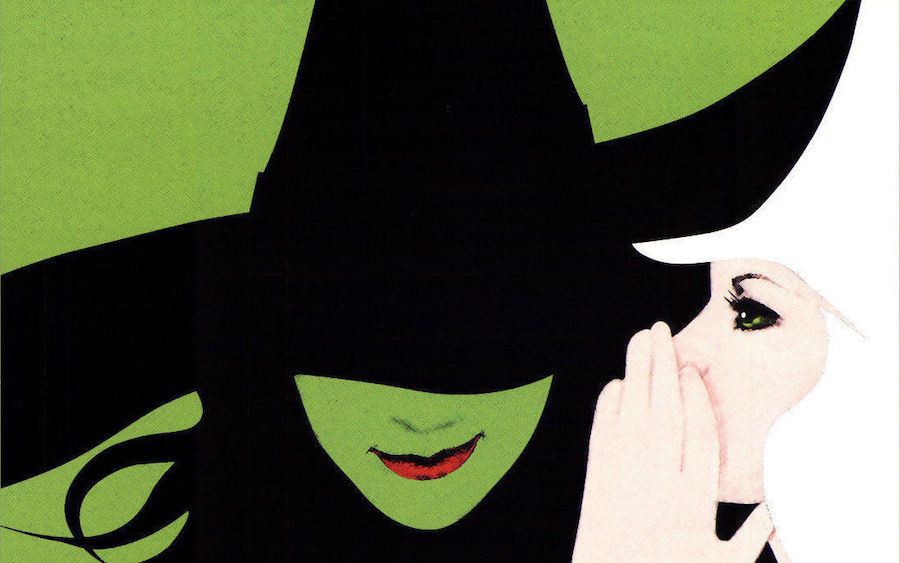
Wicked this way comes in 2021: After many years of Universal planning for a movie version of Wicked, the musical adaptation has set a release date for December 2021 with Billy Elliot director Stephen Daldry at the helm. Find out everything we know about the movie here.

EXCLUSIVE BUZZ
Mike Mitchell on The Lego Movie 2: The Second Part: We talked to Mike Mitchell, the director of The Lego Movie 2: The Second Part about how he came to the Lego-verse, the future of this franchise and the Jason Momoa and Bruce Willis cameos. Read the whole interview here.
COOL CULTURE
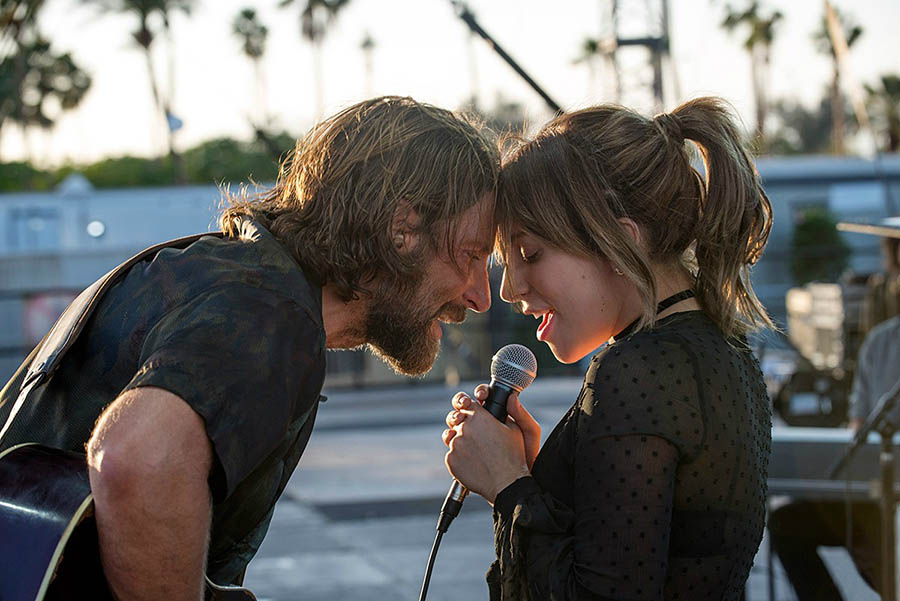
A Star is Born sound design breakdown: Insider puts the spotlight on the Oscar-nominated engineers behind the sound design for A Star is Born, focusing on the layered soundscape of the first concert performance of “Shallow.” Watch it here:
[embedded content]

MUST-WATCH TRAILERS
Avengers: Endgame teases some hope: The Super Bowl teaser for Avengers: Endgame may not be a full new trailer, but it offers enough new and more hopeful footage from the anticipated sequel that nobody is complaining. Watch it below and read everything we know about the upcoming Marvel Cinematic Universe installment here.
[embedded content]

Captain Marvel shows us how it’s done: Marvel didn’t stop with Avengers: Endgame, as a new teaser for Captain Marvel also dropped during the big football game. This one shows us how it’s really done by going higher, further, faster. Watch the spot below and read everything we know about the next MCU installment here.
[embedded content]
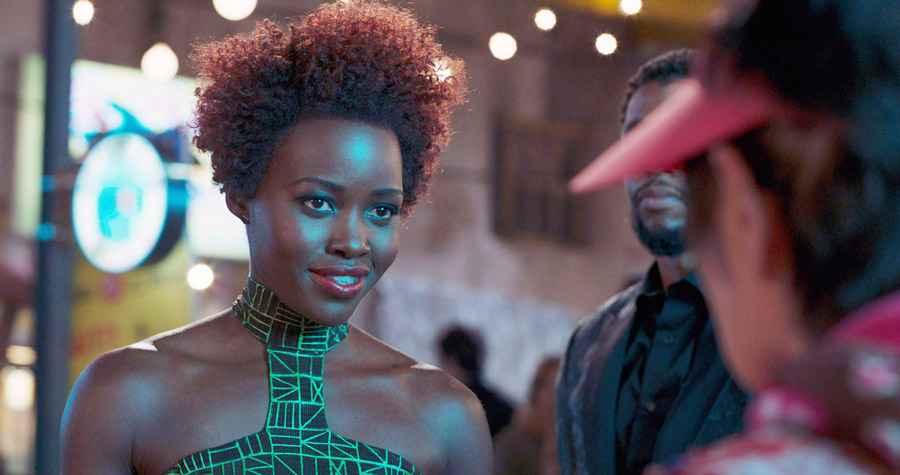
Us promises to terrify you: The Super Bowl teaser for Jordan Peele’s Us also shared some new footage from the upcoming horror movie, as if we needed any further reason to want to see it and any further nightmare fuel for the time being. Watch the new spot below and read everything we know about Us here.
[embedded content]

Scary Stories to Tell in the Dark looks horrifying: We got our first look at Scary Stories to Tell in the Dark during the Super Bowl, broken up into four separate teasers, and it looks to be a frighteningly faithful adaptation of the classic children’s books. Watch one of the teasers below and check out the others plus read everything we know about the horror movie here.
[embedded content]

Toy Story 4 heads to infinity and my foot: For a palette cleanser after all the superheroes and horror movies, Disney and Pixar shared another funny new look at Toy Story 4 during the Super Bowl with Buzz Lightyear trapped at a carnival, and it just feels great to have these old friends back on screen. Watch the new spot and find out everything we know about the sequel here.
[embedded content]
How Jamaica Found A Creative Solution To An Age-Old Problem For Central Bankers
The Bank of Jamaica has committed to aggressively managing inflation. The strategy involves an unusual public relations campaign using catchy reggae music and videos.
MARY LOUISE KELLY, HOST:
Every word spoken by the Federal Reserve is pored over by investors and traders. One wrong word could send the markets into a frenzy. So when Fed chair Jerome Powell speaks, like he did last week, he is cautious and, well, a bit dull.
(SOUNDBITE OF ARCHIVED RECORDING)
JEROME POWELL: In light of global economic and financial developments and muted inflation pressures, the committee will be patient.
KELLY: Now, compare that to the bank of Jamaica.
(SOUNDBITE OF ARCHIVED RECORDING)
UNIDENTIFIED SINGER: (Singing) BOJ, committed to the Jamaica and the economy.
KELLY: Quite a contrast. Darian Woods from our Planet Money podcast tells us how Jamaica found a creative solution to an age-old problem for central bankers.
DARIAN WOODS, BYLINE: Here’s the problem – keeping price inflation low. Jamaica has struggled with inflation over the years. The Caribbean nation started printing its own currency in the 1960s. Since then, the Jamaican dollar has lost more and more of its value. In the 1990s, price inflation even got past 70 percent annually. We all know this is bad. In the past few years, inflation has come down, and the central bank wants it to stay that way. But an important part of keeping it down means convincing everyday Jamaicans that it’s going to stay down. It’s a public relations problem.
TONY MORRISON: My name is Tony Morrison.
WOODS: Tony Morrison, he’s the head of public relations for Jamaica’s central bank, and he knows inflation is fueled by this virtuous or vicious cycle. If people think prices are going to rise a lot, they’ll spend their money faster, further speeding up inflation. If they think inflation will be low, that in itself will help slow inflation. Economists call this anchoring inflation expectations. So last year, Morrison was thinking about this problem. One more dry speech from the bank’s governor wasn’t going to cut it. He had a different idea – an extremely catchy song.
MORRISON: One of those annoying songs that you hear in the morning and then you find yourself singing it in the evening.
WOODS: So you first find it annoying, but then you find you can’t get it out of your head. Is that the goal?
MORRISON: Absolutely.
WOODS: So he brought this idea, a song that sticks, to the deputy governor of the bank, one of the most important economists in Jamaica. He found it hilarious.
MORRISON: When I wrote him, he burst out laughing.
WOODS: Laughing – not quite the reaction he wanted. But wait a second, the economist said – this is really important.
MORRISON: This one is so important that it has to be bigger than anything we’ve ever done before.
WOODS: Morrison wrote a 30-page plan, got the minister of finance’ approval. He even showed it to the International Monetary Fund. Then he hired some musicians and made some reggae music videos.
(SOUNDBITE OF ARCHIVED RECORDING)
UNIDENTIFIED PERSON #1: (Singing) Predictable, stable and low, jah (ph) getting inflation to boost the economy. BOJ.
WOODS: This video shows a race car zooming through Jamaica’s city streets, and then it pulls up at Jamaica’s central bank.
(SOUNDBITE OF ARCHIVED RECORDING)
UNIDENTIFIED PERSON #1: (Singing) Using an Inflation targeting strategy.
WOODS: Jamaica is introducing what’s called inflation targeting, committing to an inflation range every year.
(SOUNDBITE OF ARCHIVED RECORDING)
UNIDENTIFIED PERSON #1: Can’t be too high or too low.
WOODS: At the moment, that’s between 4 percent and 6 percent.
(SOUNDBITE OF ARCHIVED RECORDING)
UNIDENTIFIED PERSON #1: Inflation is the real heartbeat of the economy.
UNIDENTIFIED SINGER: (Singing) Inflating targeting the way to go.
UNIDENTIFIED PERSON #2: A message from Bank of Jamaica.
WOODS: The bank got the songs played all over national radio, and the videos have been viewed over 200,000 times. Morrison says the songs are working, a nice companion to a dry policy speech.
MORRISON: And using reggae music came somewhat naturally.
WOODS: Whether we want the U.S. Federal Reserve to make their own music videos is an open question of both economics and taste. Darian Woods, NPR News.
Copyright © 2019 NPR. All rights reserved. Visit our website terms of use and permissions pages at www.npr.org for further information.
NPR transcripts are created on a rush deadline by Verb8tm, Inc., an NPR contractor, and produced using a proprietary transcription process developed with NPR. This text may not be in its final form and may be updated or revised in the future. Accuracy and availability may vary. The authoritative record of NPR’s programming is the audio record.
Former Rep. John Dingell Left An Enduring Health Care Legacy

Remembering Baseball Hall Of Famer Frank Robinson
Robinson, who died Thursday, was the first player to win both the American and National League MVP awards. He later became the first black manager of a major league team. Originally broadcast in 1988.
DAVID BIANCULLI, HOST:
This is FRESH AIR. Baseball pioneer Frank Robinson, who notched major achievements in Major League Baseball as both a player and manager, died yesterday at age 83. On the field, he was the first pro baseball athlete to win the most valuable player award in both the American and National Leagues. When he retired from playing, he had 586 home runs to his credit, putting him fourth in line behind Hank Aaron, Babe Ruth and Willie Mays. In 1975, he became the first African-American to manage a major league baseball team – the Cleveland Indians.
Terry Gross interviewed Frank Robinson in 1988, weeks after he became manager of the Baltimore Orioles. She asked him about a baseball controversy from the previous year, when Los Angeles Dodgers Vice President Al Campanis, during a 1987 appearance on ABC’s “Nightline,” made some remarks suggesting that African-Americans in baseball were incapable of becoming effective major league managers.
(SOUNDBITE OF ARCHIVED BROADCAST)
FRANK ROBINSON: Finally, with the problem out in the open – Al Campanis making that statement that – a lot of us had been saying for years the problem existed. And the people in baseball said it did not exist. And finally, the closet door was opened by someone on the inside. And this dreadful secret had been exposed. Since Jackie Robinson broke the barrier as a player, how many – no one until 1975 was offered a job to manage a major league ball club. But, I mean, the minority are black. And you can’t tell me up until that time there were no other qualified blacks to manage in the major leagues.
TERRY GROSS, BYLINE: I think the first person in a situation like that is going to be looked at as an example, and it’s quite a responsibility to have. And it could be very inhibiting.
ROBINSON: Well, I – it’s no doubt about it, Terry. I went through that when I was a manager of the Cleveland Indians. Just take, for example, opening day. And I put myself in the lineup, and I don’t know why. But I was on deck. I was the second hitter in the lineup, and there had to be 50 cameramen standing there snapping my picture. And I had to climb over them to try to get to the batter’s box. Everything that I did that year was recorded and reported. And every move that I made, everyone was second-guessing. And if it didn’t turn out right, they were saying I should’ve done something else. If it turned out right, you know, it was still, well, he might have been lucky doing that. Sure, I knew that.
And I knew that I would be judged, and other minorities would be judged by what I did and how I performed. But I couldn’t worry about that. I just had to go out and do the best job I possibly could do. And if the players performed the way they were capable of performing, I knew that we would have a good year. And if they didn’t, I knew we’d have a bad year. It’s simple as that.
GROSS: Well, you had a lot of difficult adjustments to make going from playing to managing. And you write in your book that one of the most difficult adjustments was actually learning to work with pitchers because you’d hated pitchers so much as a batter yourself.
ROBINSON: Well, that’s true. I think that’s the most delicate part, I think, of managing other than dealing with the press is handling pitchers. And a lot of people think that, other than an ex-pitcher, managers don’t handle pitchers very well because they don’t know how they think. They don’t know how they really act. They don’t know how they feel. But I think that’s an art. It’s a feel for your personnel. You get to know them. You know what happens to them when they get out of sync. You know what happens to them when they’re on their game and when they start to lose it in the late innings, when he’s starting to lose a little bit off his fastball or starting to lose his control. Each pitcher has his own little thing that tips you off by what he’s starting to do in a ballgame if he’s starting to lose his stuff.
GROSS: Let’s talk a little bit about your career as a player – quite an illustrious career. Now, you say in your book that you really didn’t know anything about racism until you entered baseball in 1953. Was that your first exposure to segregation?
ROBINSON: Well, it certainly was. As I was growing up in Oakland, Calif., I certainly knew the difference in the color of my skin and some of my friends and neighbors and people who lived in the neighborhood. But those things never interfered with friendship and the relationship that I had with those people. And around my household, my mother, my brothers – color of other people’s skins, racism, prejudice was never discussed. We treated everyone the same.
And when I entered baseball and couldn’t go to a movie in Ogden, Utah, because of the color of my skin, I was really hurt very badly. And that was the first time I really have been away from home for any length of time. And also, you know, the area I had to live in – I had to live in the black area of the city. So that really bothered me. And the next year, it wasn’t any better. I started in Tulsa, Okla., for eight ballgames, and I wound up in Columbia, S.C. And we had bus trips and things like that.
And it wasn’t much better at all where you had to sit on the bus while the other players went into a restaurant to eat. And you had to – once you got to a – arrived at a city, you had to sit on the bus and wait for a cab to come from the black section of town to pick you up and take you back over there to go to the YMCA or private home to stay. So it was very, very hard on a young man from California that didn’t grow up with those type of feelings – didn’t really know anything about that to start out in baseball and find out about those things.
GROSS: Did you get any kind of support from management?
ROBINSON: Well, not really. You know, I guess they just felt like, hey, you signed on to do a job, and this is the job; and this is the conditions you have to play in, so go out and do your job.
GROSS: In the majors, you developed a reputation for being a very aggressive player. One of the things you became known for was sliding into second with your spikes up and frequently knocking into the second baseman. What were your guidelines there? You say your ethic was win any way you can win within the rules. What were your kind of guidelines in your own head about how to slide into second and to be intimidating but not to take that too far?
ROBINSON: Well, Terry, I’ll tell you. I never slid into a base to intentionally hurt anyone, but I had a job to do. And my job was to try to break up the double play any way I possibly could do that. That’s the way I was taught how to play the game when I was a kid. And that’s the way I played the game throughout my playing career.
Now, I never really, in my heart, went in with my spikes what I call high. But as people might know from the old days, as we say it, all shoes – baseball shoes in those days had metal spikes on the bottom of them. And when I slid into the base, naturally, those spikes were facing the infielder, the shortstop or the second baseman or whoever. And if it happened to come in contact with their body, the possibility of being – them being cut was there. And on occasions, it did happen. And just players thought that I was a little – maybe a little vicious. But I was never vicious as far as my plan was concerned as far as sliding into bases.
You know, I was injured also with spikes. A slide into second, I missed the second – a shortstop. He went up in the air. He came down on my arm and gave me 30 stitches in my bicep. And the doctor said if it had been half an inch lower, my career would’ve been over. But I didn’t worry about it. I just had it stitched up and came back in 10 days and played.
GROSS: Well, if you ended up spiking a player as you were sliding into second, would there be a payback later in the game?
ROBINSON: Well, the possibility was there. The next time I was up at home plate, the possibility of being hit in the ribs, hit in the head was there. But I never let that bother me. I went up to home plate and didn’t worry about it. Also, the possibility that next time I was going down to second base – if the second baseman or shortstop got the ball in time before I had a chance to slide, the possibility they’re going to try to stick one between my eyes. But I didn’t worry about that either. That was all part of the game, and I knew that. And I knew the price that you may have to – might have to pay going into a base if that did happen.
GROSS: Let’s stay at home plate for a minute. You also used to crowd the plate a lot as a hitter. Explain the strategy of that – of standing really close to the plate when you’re batting.
ROBINSON: Well, I changed my stance when I came to the major leagues. I moved right up on top of the plate. And I bent over at the waist and just stuck my elbows out over the inner part of the plate. And the strategy in that was to take the outside part of the plate away from the pitchers. And I didn’t want to give them the outside part of the plate because that’s the biggest part of the plate, and I thought they couldn’t – more consistently make their pitches out there, so that’s why I did that.
GROSS: So it gives you certain advantages over the pitcher. On the other hand, it’s a kind of dangerous position to take because you’re more likely to get hit by a ball if you’re that close to the plate.
ROBINSON: No, it’s no doubt about it. I was hit 198 times.
GROSS: Is that a record?
ROBINSON: It was for a while until Ron Hunt came along, and he upped the record to 250 times.
GROSS: Wow (laughter).
ROBINSON: And now Don Baylor has it going – it’s close to 300 times right now and counting. But, you know, that was all part of the game. I would be thrown at, knocked down, whatever. And you would get up and just do damage to the pitcher with the bat. And that’s the only way I looked at it. And I didn’t really worry about it – long as I didn’t feel like a pitcher was throwing at my head intentionally.
GROSS: What were your tricks for getting out of the way of the ball?
ROBINSON: Recognizing the pitch right away, knowing that it’s a fastball rather than a curveball. And certainly if a fastball is up and in, you better get down real quick. And we were taught to roll our front part of our body back towards the screen. In other words, you roll your front shoulder back, and hopefully – and pull your – tuck your head down and into your body to protect your head and face so the ball would hit you in the meaty part of your back so you wouldn’t be hurt very seriously.
GROSS: You have said that when a pitcher threw intentionally at a player on your team, that you would tell your pitcher to try to reciprocate in some way.
ROBINSON: Well, at times. If I thought they were doing it intentionally because a hitter had been hot and been hitting the ball pretty good against that pitcher or that ballclub, I have at times early in my career as a manager said to our pitchers, I want you to hit this guy on the knee. I have never said in the head or anything like that. I always made the target lower, than – that I thought maybe the pitcher might aim at.
So I always said, hit this guy on the knee. But I can honestly say I can’t remember any pitcher really going out there and doing that. I had some that try to do it. They threw the ball back to the backstop. They hit the screen. They threw the ball in the dirt and missed the player by three or four feet, but I can’t really remember a pitcher really after I told him to do that going out there and doing it.
GROSS: Is there a moment in your career that you think of as your greatest moment in baseball?
ROBINSON: I think one of the things that really turned my career around was being traded to the Baltimore Orioles.
GROSS: It’s the team that – it’s the team in your book that you describe as the only team when you were a player where the black players and the white players hung out together.
ROBINSON: Well, that’s true. At Cincinnati, I was treated very well at the ballpark and on the field and around the players when we were together on the road and everything like that. But once we were away from the ballpark, you know, we didn’t – the togetherness, it wasn’t there. But at Baltimore, it was just a real great atmosphere and a real good feeling among the players from the time that I stepped on the field in Miami, Fla. It was the first spring training game that we had and the first intrasquad game. The first time I stepped on the field, that feeling was just there. It was like a family affair, and there was a togetherness and closeness among all the players. No one was treated any differently than anyone else.
GROSS: Well, I want to thank you very much for talking with us about your career as a player and a manager. It’s been a pleasure. Thank you very much.
ROBINSON: Well, thank you for having me on, Terry.
BIANCULLI: Major League Baseball player and manager Frank Robinson speaking to Terry Gross in 1988. He died yesterday at age 83. Coming up, critic at large John Powers reviews “Everybody Knows,” a new film starring Penelope Cruz and Javier Bardem. This is FRESH AIR.
(SOUNDBITE OF ALFREDO RODRIGUEZ’S “VEINTE ANOS (TWENTY YEARS)”)
Copyright © 2019 NPR. All rights reserved. Visit our website terms of use and permissions pages at www.npr.org for further information.
NPR transcripts are created on a rush deadline by Verb8tm, Inc., an NPR contractor, and produced using a proprietary transcription process developed with NPR. This text may not be in its final form and may be updated or revised in the future. Accuracy and availability may vary. The authoritative record of NPR’s programming is the audio record.
Jeff Bezos Accuses 'National Enquirer' Owner Of Extortion And Blackmail
Amazon CEO Jeff Bezos accuses the owner of the National Enquirer of extortion and blackmail. Mary Louise Kelly talks with Wall Street Journal reporter Lukas Alpert.
