Articles by admin

No Image

The Last Horror Blog: 'Ma,' 'The Curse of La Llorona,' 'Happy Death Day 2U'

Ma

Ma trailer shows us a new side of Octavia Spencer – Every town has one: you know, that adult who spends way too much time partying with the local high school kids, even though they’re closer to social security than they are prom. Those people are creepy, as this new trailer for Ma demonstrates.

Oscar winner Octavia Spencer headlines, playing an unhinged woman who befriends a group of high school kids. Things get real weird real fast in the clip for the new Blumhouse feature. Check out the synopsis and trailer and see it for yourself.

“Oscar® winner Octavia Spencer stars as Sue Ann, a loner who keeps to herself in her quiet Ohio town. One day, she is asked by Maggie, a new teenager in town (Diana Silvers, Glass), to buy some booze for her and her friends, and Sue Ann sees the chance to make some unsuspecting, if younger, friends of her own. She offers the kids the chance to avoid drinking and driving by hanging out in the basement of her home. But there are some house rules: One of the kids has to stay sober. Don’t curse. Never go upstairs. And call her ‘Ma.’ But as Ma’s hospitality starts to curdle into obsession, what began as a teenage dream turns into a terrorizing nightmare, and Ma’s place goes from the best place in town to the worst place on earth.”

Ma hits theaters this May.

[embedded content]

The Curse of La Llorona trailer is creepy – We’ve got a new trailer for upcoming Warner Bros. release The Curse of La Llorona, which is set to hit theaters on April 9. Read on for the plot details.

“La Llorona. The Weeping Woman. A horrifying apparition, caught between Heaven and Hell, trapped in a terrible fate sealed by her own hand. The mere mention of her name has struck terror around the world for generations. In life, she drowned her children in a jealous rage, throwing herself in the churning river after them as she wept in pain. Now her tears are eternal. They are lethal, and those who hear her death call in the night are doomed. La Llorona creeps in the shadows and preys on the children, desperate to replace her own. As the centuries have passed, her desire has grown more voracious … and her methods more terrifying. In 1970s Los Angeles, La Llorona is stalking the night—and the children.”

Linda Cardellini and Raymond Cruz headline. Check out the trailer below and let me know what you think.

[embedded content]

It’s a sequel to The Nun – in LEGO form! – I’ve long been a fan of people making LEGO versions of popular films. There have been some classics over the years, and today we’re bringing you the latest, a sequel to The Nun made entirely out of the popular blocks and animated using stop-motion camera work.

Youtuber Kreimkouk is the mastermind behind the new two-and-a-half-minute short, which finds the titular character back to wreak more havoc. The artist explains that he used 1680 shots, filmed at 12 frames per second with a Sony DSC-HX50 camera to create the film. That’s some real dedication.

Check it out for yourself below.

[embedded content]

Is Eli Roth finally making Thanksgiving? – Word is circulating that Eli Roth is set to begin shooting a new film next month, that it’s based on a script with pal Jeff Rendell, and that filming will take place in Massachusetts, all of which has horror nerds hoping it’s Roth’s long-awaited, feature-length version of Thanksgiving.

Roth and Rendell crafted the faux trailer for the turkey day slasher as one of the clips for Quentin Tarantino and Robert Rodriguez’s Grindhouse. The teaser was a hit with fans, who’ve been dying to see a full-length version for years. Could this finally be it?

It’s too soon to say, but if it’s not Thanksgiving, Roth has done a great job trolling us all without actually saying anything. Personally, my guess is it’s a different project, but it’s still fun to imagine what a Thanksgiving would look like.

[embedded content]

Horror on the Horizon

Only one horror film is getting a wide release over the next two weeks, but it’s a big one.

Happy Death Day 2U, the sequel to 2017’s surprise hit, has opened in theaters nationwide, and if you’re still celebrating Valentine’s Day, this one’s for you and your beloved!

The film, which is billed as a sort of Back to the Future-esque follow-up, will pick up right where the first film left off, only with star Jessica Rothe now tasked with not only saving herself, but other people around her as well.

[embedded content]


Horror on Home Video

Hope your wallet has recovered from the holidays, because there are a lot of good discs coming over the next two weeks.

February 19 is packed with cool stuff, and Arrow’s release of H.G. Lewis’ gore classic Color Me Blood Red leads the way. Lewis’ gore films are campy and quaint by today’s standards, but there’s no denying their importance in terms of horror film history. Arrow gets that, and thus this disc is loaded with extras.

Also on the docket this week: a Blu-ray version of Firestarter, As Above, So Below, John Badham’s 1979 version of Dracula (with Frank Langella and Laurence Olivier…), WWII horror flick Overlord, and Skinner, a cult oddity with Traci Lords, Ricki Lake and Ted Raimi.

[embedded content]

February 26 doesn’t bring us quite so many titles, but it does bring us Vinegar Syndrome’s version of Mausoleum, an 80s cult classic that’s finally coming to Blu-ray.

“The Nomed Family has been the victim of an ancient curse in which the first born daughter of each generation has gone violently mad and then suspiciously dies. No one can explain the Nomed madness, but some say it’s because of the possession of a terrible demonic force. By way of an unnatural urge during her mother’s funeral, Susan entered her family’s mausoleum, and ever since an evil presence has been lurking inside of her, waiting for a chance to come out. Now an adult, something is hiding inside Susan’s body, coming out to grotesquely murder anyone who comes too close to uncovering her terrifying secret.”

This one’s got some great extras, so don’t miss out.

[embedded content]

Let’s block ads! (Why?)


No Image

Racial Disparities In Cancer Incidence And Survival Rates Are Narrowing

Dramatic decreases in deaths from lung cancer among African-Americans were particularly notable, according to the American Cancer Society.

Siri Stafford/Getty Images


hide caption

toggle caption

Siri Stafford/Getty Images

For decades, the rate of cancer incidence and deaths from the disease among African-Americans in the United States far outpaced that of whites. But the most recent analysis of national data by the American Cancer Society suggests that “cancer gap” is shrinking: In recent years, death rates from four major cancers have declined more among blacks than among whites.

The report was published online Thursday in CA: A Cancer Journal for Clinicians, a peer-reviewed journal of the American Cancer Society.

African-Americans still bear a disproportionate share of the cancer burden in the U.S., having the highest death rate and the lowest survival rate of any racial or ethnic group for most cancers.

“In 2019, approximately 202,260 new cases of cancer and 73,030 cancer deaths are expected to occur among blacks in the United States,” the analysis by ACS investigators notes.

But their report also shows that the gap between blacks and whites has closed considerably over the past few decades when it comes to lung, prostate and colorectal cancers. In fact, during the period from 2006 to 2015, overall death rates from cancer declined 2.6 percent per year among black men, compared to 1.6 percent per year among white men. Among women, for that same time period, death rates from cancer declined 1.5 percent per year among blacks compared to 1.3 percent per year among whites.

“Twenty?five years of continuous declines in the cancer death rate among black individuals translates to more than 462,000 fewer cancer deaths,” according to the report’s authors.

The improvement among African-Americans is largely due to dramatic decreases in incidence and death from lung cancer, says Dr. J. Leonard Lichtenfeld, acting chief medical officer for the American Cancer Society, and that likely reflects the steep declines in the prevalence of smoking.

“I can’t say why smoking has decreased so dramatically in the black community but the fact that it has is very good news,” he says. “It has significantly narrowed the gap between blacks and whites and we are very grateful.”

Still, racial disparities in cancer continue. The reasons are likely multiple, Lichtenfeld notes, and include disparities in education, socioeconomic status and access to health care.

When the U.S. ensures that everyone has equal access to good health care, screening and treatment, Lichtenfield says, “we’ll see even greater success. We have to make a commitment to make that happen.”

Let’s block ads! (Why?)


No Image

Today in Movie Culture: The Making of Movie Tie-In Action Figures, More Robert Pattinson as Batman Fan Art and More

Here are a bunch of little bites to satisfy your hunger for movie culture:

Dream Casting of the Day:

There have been rumors about Robert Pattinson taking over as Batman, so here’s some fan art showing what he could like in the role:

FANART: If Reeves needs a younger actor to portray Bruce Wayne, I can totally see him even if others can’t seem to. from r/DC_Cinematic

Reworked Trailer of the Day:

Rosemary Harris is seamlessly back as Aunt May in Aldo Jones’ surreal parody of the Spider-Man: Far From Home trailer:

[embedded content]

Movie Merchandising of the Day:

How did Hasbro start making movie tie-in action figures look exactly like the actors? Inside goes behind the scenes of the toy company’s process:

[embedded content]

Filmmaker Parody of the Day:

Speaking of Star Wars toys, here’s a neat little parody of Wes Anderson using figures to show what his Star Wars would look like (via /Film):

[embedded content]

Vintage Image of the Day:

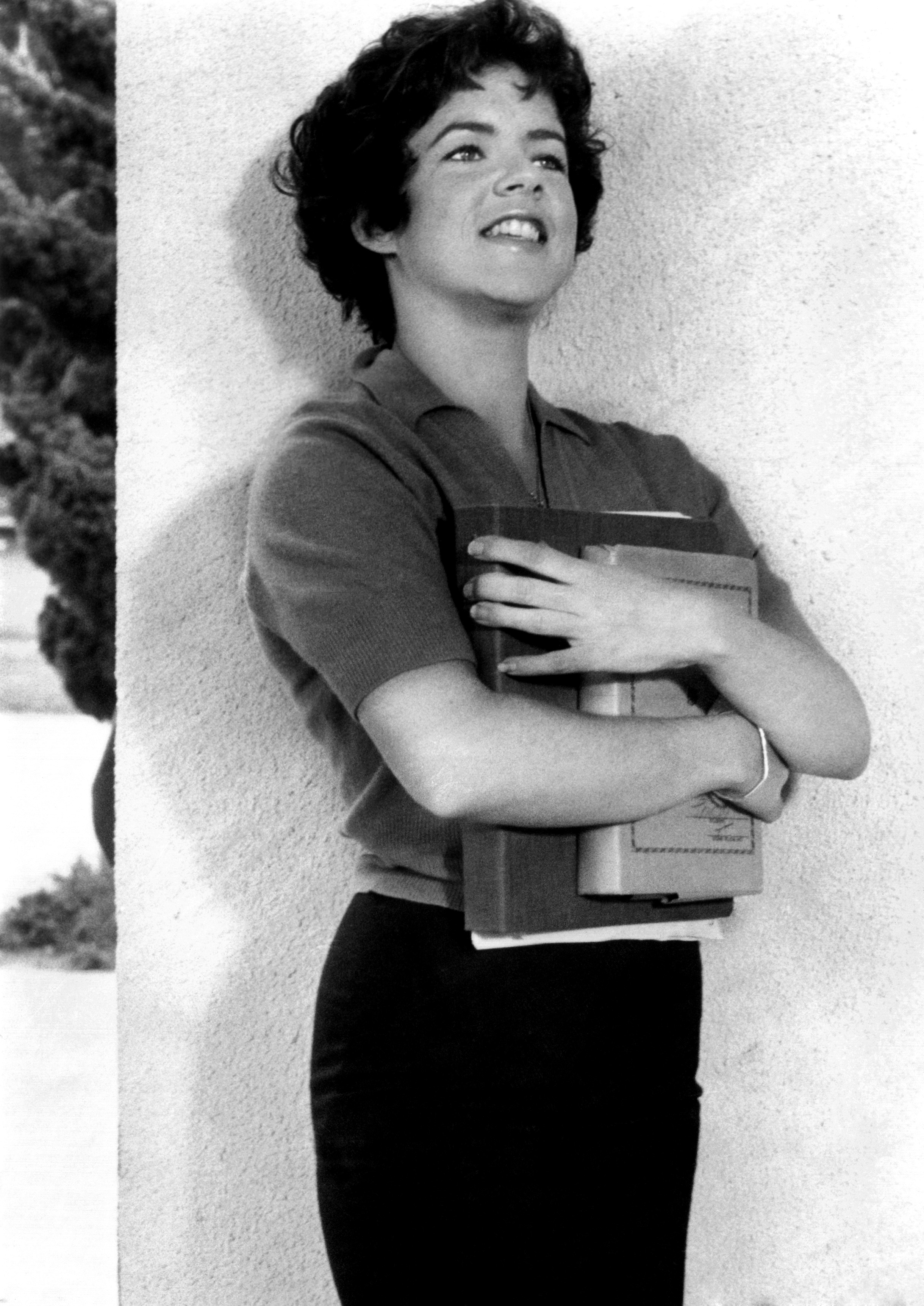
Stockard Channing, who turns 75 today, poses for a promotional shot on the set of Grease in 1977:

Filmmaker in Focus:

For Little White Lies, Luis Azevedo highlights the colors of the movies of If Beale Street Could Talk director Barry Jenkins:

[embedded content]

Screenwriting Lesson of the Day:

This new video from The Closer Look uses scenes from The Lord of the Rings, The Silence of the Lambs, Pulp Fiction and more movies to instruct how to write great dialogue:

[embedded content]

Cosplay of the Day:

In honor of the release of the Frozen II teaser today, this fan shared her excellent Elsa cosplay:

I was skeptical, but that Frozen 2 trailer looks pretty hype. Also Happy Birthday to me ???? Anyone else excited?

Also that new outfit is cute! #Disney #Frozen2 #Frozen #FrozenII #Elsa #Elsacosplay #disneycosplay #frozentrailer #cosplay #poccosplay #plussizecosplay pic.twitter.com/R7bCuB6Hhb

— MidnitePur @ CNY (@MidnightPursona) February 13, 2019

Classic Movie Trailer of the Day:

Today is the 15th anniversary of the release of 50 First Dates. Watch the original trailer for the classic rom-com below.

[embedded content]

and

Let’s block ads! (Why?)


No Image

The Strike That Changed U.S. Labor

Members of the nascent United Auto Workers Union (UAW) during a sit-down strike in the General Motors Fisher Body Plant in Flint, Michigan. (Photo by Sheldon Dick/Getty Images)

Sheldon Dick/Getty Images

On February 11, 1937, General Motors and the United Auto Workers union signed a landmark agreement. A union contract. The relationship with U.S. automakers and the labor movement ushered in a period of tremendous worker prosperity and union strength that lasted decades. Today, though, unions are a shadow of their former selves and are sometimes even vilified for dragging down companies and hamstringing workers. What happened? How did unions lose their mojo?

Find us: Twitter/ Facebook.

Subscribe to our show on Apple Podcasts, PocketCasts and NPR One.

Let’s block ads! (Why?)


No Image

Medical Anthropologist Explores 'Vaccine Hesitancy'

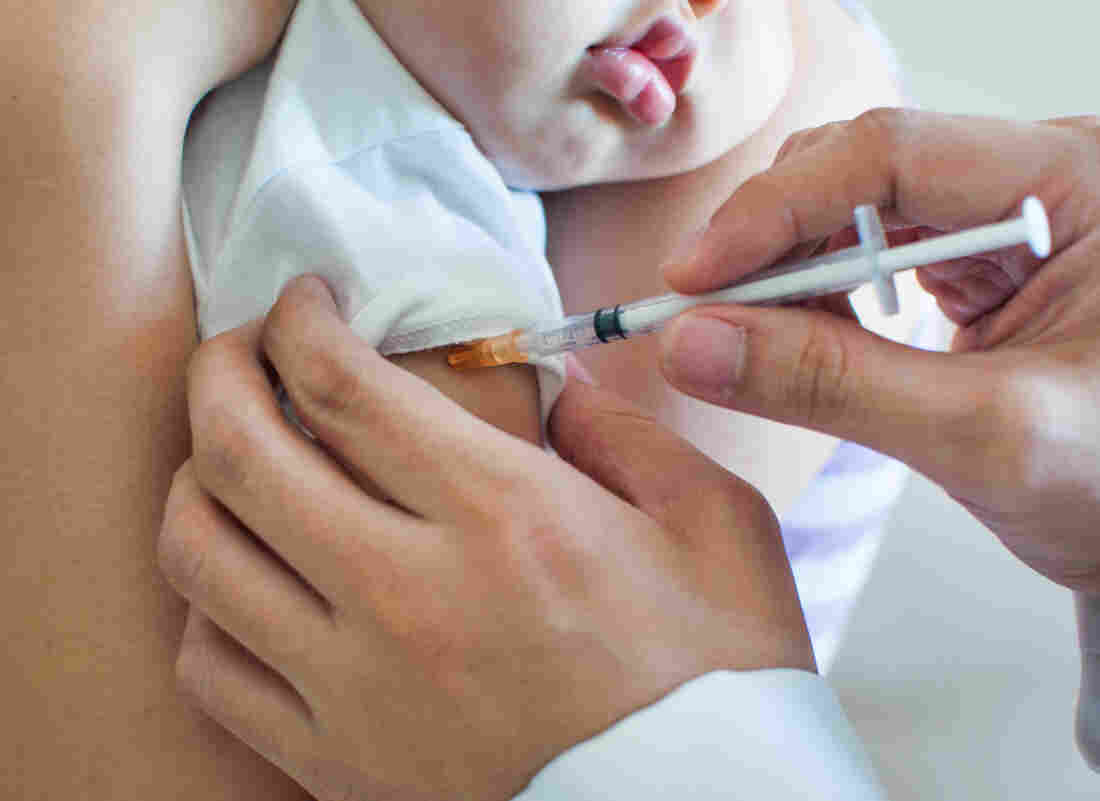
Hesitancy about vaccination in a community has a lot to do with acculturation to its norms.

Karl Tapales/Getty Images


hide caption

toggle caption

Karl Tapales/Getty Images

Distrust of vaccines may be almost as contagious as measles, according to medical anthropologist Elisa Sobo.

More than 100 people have been infected with measles this year, according to the Centers for Disease Control. Over 50 of those cases have occurred in southwest Washington state and northwest Oregon in an outbreak that led Washington Gov. Jay Inslee to declare a state of emergency on Jan. 25.

Some public health officials blame the surge of cases on low vaccination rates for this highly infectious disease.

Clark County, Wash. — the center of the current spate of cases — has an overall vaccination rate of 78 percent, but some schools in the county have rates lower than 40 percent.

Washington is one of 17 states that allows a parent to send his or her child to public school not completely vaccinated because of a “philosophical or personal objection to the immunization of the child.”

What makes some families reluctant to vaccinate their children? Sobo, a professor at San Diego State University, says it may be driven in part by the desire to conform in a community where many parents are skeptical of vaccines.

To better understand how parents decide not to vaccinate, Sobo interviewed families at a school with low vaccination rates in California. She found that skepticism of vaccines was “socially cultivated.”

Parents who believe that vaccines are dangerous persuaded other parents to believe the same thing by citing fears of “mainstream medicine” harming their children. Enrolling in the school even seemed to change the beliefs of some parents who had previously followed the state-mandated vaccine schedule: They started to refuse vaccines.

NPR’s Audie Cornish spoke with Sobo on All Things Considered. These interview highlights have been edited for clarity and length.

What are the common ideas that we have about families that don’t believe in vaccination?

One common idea would be that they’re all absolutely looney-tunes, crazy people wearing tinfoil hats and reading all these conspiracy theories on crazy blogs on the Internet. And that is absolutely not the case. What I found was that most of the people who are hesitating to vaccinate … They’re really smart people, and they’re highly, highly educated.

Back in 2012, you actually spoke to some parents in California, in a community where parents had their kids at a fairly progressive school. Half of kindergarteners had gotten exemptions from vaccines. What was going on in this community?

Often, the parents, the family didn’t arrive at the school having any hesitancy about vaccinations … As they acculturated or became part of the community, that’s when these kinds of beliefs and practices would take hold.

The longer the family had been in the community, … this practice of being hesitant about vaccinations evolved and it became part of that family’s medical practice.

[In areas where there are low vaccination rates], there tends to be a more open norm, where not vaccinating is accepted or sometimes even encouraged. When you have people surrounding you that move in that direction, to go in a different direction has social costs.

It’s not just the facts and the information that you’re going by. It’s: “What are the norms? What are people around me doing? And they seem to be OK, and everything’s working out for them.”

Think about yourself and the clothes that you wear to work. I’m guessing that you probably don’t have a formal dress code, but you kind of look around, and you see: “Oh, OK, this is what we’re expected to wear to work.” And you just do it.

Are you talking about a formal kind of peer pressure?

The peer pressure is not formal.

Informally, there becomes a sort of feeling in the community. It becomes known for not vaccinating.

There are parts of the country where there’s the opposite expectation, where someone who didn’t want to vaccinate their kids might be socially isolated for that decision.

And then their behaviors would be pushed underground. They might not feel comfortable telling other people.

When you see what’s going on in Washington State, what came to mind for you?

What is the media coverage going to do? Are they going to vilify these parents?

That witch hunt aspect is not helpful to have a good discussion about vaccination. It needs to be much more open and much less polarizing.

Are people ready to listen? Can there be convincing?

I think people are very ready to listen — if they’re heard. If you listen to them, and you allow them to say what they think without feeling judged, without pushing them into a corner, they’re absolutely ready.

Mara Gordon is a family physician in Washington, D.C., and a health and media fellow at NPR and Georgetown University School of Medicine.

Let’s block ads! (Why?)


No Image

Apple, Google Criticized For Carrying App That Lets Saudi Men Track Their Wives

The Absher app, available in the Apple and Google apps stores in Saudi Arabia, allows men to track the whereabouts of their wives and daughters.

Apple App Store/Screenshot by NPR


hide caption

toggle caption

Apple App Store/Screenshot by NPR

An app that allows Saudi men to track the whereabouts of their wives and daughters is available in the Apple and Google app stores in Saudi Arabia.

But the U.S. tech giants are getting blowback from human rights activists and lawmakers for carrying the app.

The app, called Absher, was created by the National Information Center, which according to a Saudi government website is a project of the Saudi Ministry of Interior.

The description of the app in both stores says that with Absher, “you can safely browse your profile or your family members, or [laborers] working for you, and perform a wide range of eServices online.”

In Saudi Arabia, women’s lives are highly restricted. For example, according to Human Rights Watch, women have always needed permission from a male guardian, usually a father or husband, to leave the country. In the past, paper forms were required prior to travel.

The Absher app makes the process a lot more convenient for Saudi men. And it’s drawing criticism, especially from human rights advocacy groups.

“It’s really designed with the men in mind,” says Rothna Begum, a senior researcher on women’s rights at Human Rights Watch. “Of course, it’s incredibly demeaning, insulting and humiliating for the women and downright abusive in many cases, because you’re allowing men absolute control over women’s movements.”

This week, Sen. Ron Wyden, D-Ore., sent a letter to both companies asking them to remove the app. “Saudi men can also reportedly use Absher to receive real-time text message alerts every time these women enter or leave the country or to prevent these women from leaving the country,” he wrote.

It is unconscionable that @Google and @Apple are making it easier to track women and control when and how they travel. These companies shouldn’t enable these abusive practices against women in Saudi Arabia. https://t.co/RDhZoTiQnP

— Ron Wyden (@RonWyden) February 11, 2019

In an interview with NPR on Monday, Apple CEO Tim Cook was asked about Absher. “I haven’t heard about it,” he said. “But obviously we’ll take a look at it if that’s the case.”

NPR also reached out to Google, but the company has not responded.

Both Apple and Google have faced previous controversies over apps in their stores. Both stores have policies banning inappropriate content such as the promotion of hate speech, graphic violence, bullying and harassment. The companies have faced some backlash over these policies, particularly around how they might impact small businesses.

Human Rights Watch’s Begum says she can see how the companies might not have realized initially that the app could be used for monitoring women. “It has other services that are quite generic and normal government services,” she says.

Apple and Google have different systems for flagging inappropriate apps. Apple prescreens apps, and Begum says Google relies on its users to alert it about violations. But, she says, each company needs to boost scrutiny of government-supported apps, especially when they are created by repressive regimes.

“They should consider the human rights implications … especially when it’s offered by a government,” she says. “When they’re evaluating whether an app should be allowed … providers really should consider the broader context or the purpose of the app, how it’s being used in practice and whether it’s facilitating abuse.”

Ironically, Absher has also been helpful to a few women trying to escape the repressive Saudi regime. Begum says some women have managed to secretly change the settings in the app on their male guardian’s phone so that it allows them to travel.

However, she says, Google and Apple need to push back against the Saudi government and either disable the app entirely or disable the features that enable men to track women in their families. “By not saying anything,” she says, “they’ve allowed the government to facilitate the abuse.”

In his letter to Google and Apple, Wyden wrote: “It is hardly news that the Saudi monarchy seeks to restrict and repress Saudi women, but American companies should not enable or facilitate the Saudi government’s patriarchy.”

Let’s block ads! (Why?)


No Image

'Church Of Safe Injection' Offers Needles, Naloxone To Prevent Opioid Overdoses

A man who goes by the name Dave Carvagio holds a packaged syringe in Pickering Square in Bangor, Maine. The Bangor chapter of the Church of Safe Injection sets up a table in the square and offers free naloxone, needles and other drug-using supplies.

Jesse Costa/WBUR


hide caption

toggle caption

Jesse Costa/WBUR

On a bitter cold afternoon in front of the central bus stop in Bangor, Maine, about a half-dozen people recently surrounded a folding table covered with handmade signs offering free clean syringes, coffee and naloxone, the drug also known as Narcan that can reverse an opioid overdose.

They’re with a group called the Church of Safe Injection that is handing out clean drug-using supplies in cities around the U.S.

Even though they could be arrested for doing so, volunteers say they have to step up because of the staggering number of opioid overdose deaths and because the public health system has failed.

“There are all these barriers to people getting well — like insurance and treatment rules,” said one of the Bangor volunteers who goes by the name Dave Carvagio, though it’s not his real name. “It’s to the point where, for some people, the only treatment options are in institutions like prison.”

Carvagio doesn’t want to be identified because it’s illegal in Maine to have more than 10 hypodermic syringes unless you’re a certified needle exchange. Police cars sometimes circle the park, but no one has been arrested — yet.

“I believe that there is not just like a moral duty to violate unjust laws, but in this circumstance a spiritual duty,” Carvagio said. On this day, they gave out 100 syringes, 10 naloxone kits and made one referral to treatment.

Bangor police Sgt. Wade Betters knows about the group. He says he’d like to sit down and meet with the volunteers, but he believes their focus should be on getting people into treatment.

“You know, if you’re committing a crime in the state of Maine, you could be subject to arrest or ticketed,” Betters said. “But in these cases, we use a lot of discretion because the goal is the same — to save lives.”

In Lewiston, Maine, police have taken a different position. They’ve warned the group not to give out clean syringes in a local park because it’s against state law. So the group members have arranged to meet with people and bring the supplies to different meeting spots.

Driving through Lewiston one night, in a car packed full of boxes of syringes and other drug-using equipment, Kandice Child met up with two young men standing near a convenience store.

“I’m going to give you 100 [syringes],” Child told one of the men. “What about alcohol wipes, you need any of those?”

A drug user in Lewiston, Maine, puts used needles into a sharps container to be exchanged for clean needles.

Jesse Costa/WBUR


hide caption

toggle caption

Jesse Costa/WBUR

Child gave them naloxone and test strips for the powerful opioid fentanyl. She says she only gives clean needles when someone returns their used ones so as to help keep syringes off the streets. Child says she does this because she has a family member who is struggling. She also says there are only six certified needle exchange programs in Maine, none in Lewiston.

“Why wait?” Child asked. “Should we all sit around and talk and point fingers or should we get off our a– and do something about it? This helps, it works, it saves lives, it reduces HIV, it reduces hepatitis, and it keeps syringes off the streets.”

Next stop was an apartment where three people were waiting to trade containers filled with used syringes for clean ones. Another volunteer demonstrated how to use naloxone as Child filled out paperwork keeping track of what she’s handed out.

A 36-year-old man — who didn’t want his name used because he’s using drugs — was uneasy. He says he’s glad to get the clean equipment but that he’s conflicted about whether getting these supplies makes it easier for him to use drugs.

“The only reason I struggle is the inner conflict, you know? It’s preventative maintenance yet at the same time it’s enabling, you know?” he said.

A woman in the apartment, who also didn’t want to be identified, chimed in: “I understand, but what are you supposed to do? If someone isn’t able or ready to go to treatment — should they die?”

Even the founder of the Church of Safe Injection, Jesse Harvey, 26, acknowledges that he’s struggled with the same questions. But he says working in addiction recovery has made him frustrated by the deaths and barriers to treatment. He says there are criteria to becoming a legitimate syringe exchange program that he’s not likely to meet, so he started this church.

Jesse Harvey, founder of the Church of Safe Injection, stands in a Denny’s parking lot in Auburn, Maine, alongside four sharps containers filled with used needles collected from drug users around the neighboring city of Lewiston.

Jesse Costa/WBUR


hide caption

toggle caption

Jesse Costa/WBUR

Harvey says there are now 18 chapters of the Church of Safe Injection in eight states — all of them funded by private, anonymous donations. Each one is independent but must abide by three rules: to welcome all people of all faiths, to serve all marginalized people and to support harm reduction.

But he says the group is not supporting legalizing drugs.

“We’re not saying it’s our religious belief to use heroin. No, not at all,” Harvey said. “We’re saying that it’s our sincerely held religious belief that people who use drugs don’t deserve to die when there are decades of solutions.”

Harvey plans to register the church as a nonprofit and then argue for a religious exemption from drug laws. He says the U.S. Supreme Court has already ruled that a religious group is allowed to use the illegal psychedelic ayahuasca in its rituals.

“I don’t think it’s illegal, and if it is, I think we have a religious exemption here,” Harvey said. “With the high rate of fatal opioid poisoning in Maine, why criminalize a group of people with lived experience who are trying to save lives? If the state is not going to do something about this, well guess what? We’re going to.”

Harvey says eventually he hopes to have a location for the church that will include a site where people could inject drugs under supervision. Such supervised injection sites are legal in some other countries, but Justice Department officials have warned that they will prosecute anyone operating one in the U.S. Nevertheless, at least a dozen U.S. cities are considering whether to open a site.

For now, Harvey says his congregants will continue to risk arrest to hand out supplies.

This story was produced in partnership with WBUR.

Let’s block ads! (Why?)


No Image

Apple CEO Tim Cook Optimistic About U.S.-China Trade Talks

Apple CEO Tim Cook attributed slower sales in China in part to the devaluation of the yuan.

Bebeto Matthews/AP


hide caption

toggle caption

Bebeto Matthews/AP

Apple CEO Tim Cook says he’s optimistic about trade talks between the U.S. and China. His remarks come as representatives from both countries are scheduled to meet later this week in Beijing.

“Both sides are talking and I always think that is always the essential thing to reaching an agreement,” Cook told NPR on Monday. “… It’s in both parties’ best interests to come together.”

Apple has much to lose if the talks don’t go well. China has been a key part of Apple’s growth. Analysts say close to 20 percent of the company’s business comes from China and Taiwan.

A March 1 deadline looms over the talks. The Trump administration says if an agreement is not reached by then over issues such as intellectual property rights, it will increase tariffs on Chinese imports from 10 percent to 25 percent.

Much of Apple’s growth in China has come from the sales of its marque product — the iPhone. However, Apple had to revise its earnings forecast downward in the winter quarter, largely due to slower iPhone sales in China.

Cook attributed slower sales in China in part to the devaluation of the yuan. “Because the local currency devalued over the course of the year,” he said, “our prices did go up there, more so than did in regions that are U.S. dollar denominated.”

In response, Cook said, Apple has cut prices in China to be in accord with prices before the currency devaluation. “We’ll see how that works out for us,” he said.

If the U.S. and China fail to reach an agreement by March 1, and the U.S. raises tariffs to 25 percent, analysts say, Chinese officials may retaliate and punish U.S. companies doing business there, further dampening Apple’s ability to compete in one of the world’s largest markets.

Despite slowing iPhone sales, Apple is seeing growth in other areas, especially in services — which include Apple Pay and Apple Music. Apple reported services brought in a record $10 billion in the winter quarter.

The company is also investing heavily in health care, rolling out features such as an electrocardiogram that helps detect heart problems using its Apple Watch.

Over the last year, Apple has also been in the process of rolling out a service that stores medical records from a variety of hospitals and providers in one place. On Monday, it announced a new partnership with the U.S. Department of Veterans Affairs, which will allow veterans using the VA’s health services to use the Health app on iPhones.

Cook says the app provides veterans with the ability to view their allergy conditions, lab results and medications in one spot. “This is part of our overall effort to really empower the patient,” he said. “We can’t wait to serve … a population of folks that we really have great reverence for.”

The app will allow a veteran to visit a doctor and be able to immediately share records without having to contact the offices of other clinicians and providers.

Last March, Apple rolled out this service to other health care providers such as Stanford Medicine, NYU Langone Health and Johns Hopkins Medicine.

A report by research firm CB Insights said “the market opportunity in healthcare is huge, and Apple sees healthcare and wellness as a core part of its app, services, and wearables strategies.” The report said global spending in health care exceeds $7 trillion a year, dwarfing the size of the smartphone market.

Officials at the VA and leaders at other health care facilities say Apple’s strong emphasis on security and privacy is part of the reason they are partnering with the company on health records. Cook has been a vocal proponent of privacy, calling out companies like Facebook for using the personal data of its users to sell lucrative ads.

While Cook may be optimistic about China-U.S. relations, Apple may need to look elsewhere if it wants to keep up the pace of growth it’s had for some 15 years.

Let’s block ads! (Why?)


No Image

The 'Strange Science' Behind The Big Business Of Exercise Recovery

A close up of a woman stretching her legs before going on a run through the city.

Hinterhaus Productions/Getty Images

From sports drinks to protein powders, from compression therapy to cupping — there’s a whole industry of products and services designed to help us adapt to and recover from exercise.

But does any of it work? That’s the question science writer Christie Aschwanden set out to answer in her new book, Good to Go: What the Athlete in All of Us Can Learn from the Strange Science of Recovery.

A former high school and college athlete, Aschwanden is the lead science writer for the website fivethirtyeight and was previously a health columnist for The Washington Post.

She notes that recovery wasn’t given much consideration back when she was coming up. Now, however, times have changed and recovery is “something that you do — and almost with as much gusto as the workouts themselves,” she says.

Aschwanden’s book examines the physiology behind different recovery methods and also offers an assessment of their effectiveness. Ultimately, she notes, the best form of recovery may be an old-fashioned one: listening to your own body.

“The most important skill that any athlete can develop is a sense of how their body is responding to exercise,” she says. “How they’re responding to their workouts; how they’re feeling; what it feels like for them to be recovered or underrecovered.”


Interview Highlights

On sports drinks that have electrolytes

“Electrolytes” is just a scientific name for salts. These are things that we get in all of the food that we eat. … And so, the idea is that when you’re exercising, you’re sort of creating these extraordinary needs, and … so you need to replace these salts that you’re sweating out. When you sweat, you do lose some salts. You lose fluids. So the idea behind sports drinks is that they’re replacing those. …

There are products now that will promise to find your individual sweat rate and individual salt-loss rate, but it turns out you don’t need a scientist looking over your shoulder to figure out how much you need to drink, or how much salt you need after exercise. Our bodies have this really sophisticated mechanism for helping us determine this — and it’s called thirst.

On the danger of overhydrating

We’ve been given this message for so long — and so much of it is marketing — this idea that … you have to always be drinking and hydrate, hydrate, hydrate. But it turns out that this just isn’t true. This idea and this concept that we have to be drinking even when we’re not thirsty has led to this problem that can actually be deadly. It’s called hyponatremia. It’s also called water intoxication, but this is something where people drink too much water and they end up diluting their blood to the point where they have all sorts of issues, including your brain can swell. And it can actually be fatal. …

I don’t want to make anyone feel like, “Oh, my gosh, I just drank a glass of water, was I really thirsty? Like, am I going to get hyponatremia and die?” That’s not what we’re talking about. And we’re talking about people who are drinking on the order of, like, multiple glasses of water per hour — in particular, while exercising. But really, if you’re not thirsty you don’t need to drink. It really is that simple.

There have been multiple people now who have died in marathons from drinking too much. And one of the things that makes this really scary is that some of the symptoms of overhydration look very similar to the things that we think of as being symptoms of dehydration. So for instance, dizziness, confusion, fatigue things like this. And so, in some cases, what’s happened is you have someone who collapses at a race and they’re given an IV and given more fluids, which is exactly the wrong thing at that point for them.

On the genesis of Power Bars and what to eat after a workout

Really the idea in the beginning was to create a food that would be convenient for athletes — something to eat after a workout that was easy to grab, easy on the stomach and all of that. But in the intervening years, there’s been sort of this push to think that this is absolutely the necessary thing that you must eat, and that there must be some important component or some important nutrient … that you really need. …

There’s nothing inherently wrong with these products — I’ll just say that upfront. They tend to have pretty good nutrients and ingredients for what you need after a workout. But there’s nothing particularly special about them either, except that they’re convenient. … You can have an energy bar or you could have a banana, or you could have a peanut butter and jelly sandwich — which apparently is the food of choice in the NBA. … But the idea that you have to have something that’s a packaged product just doesn’t hold water.

On icing after workouts to reduce soreness

The idea behind icing is that it’s a way to reduce inflammation. When you ice something, you are reducing the blood flow to that area. So basically, if your extremity gets cold, your body sort of shunts the blood into the core to try and keep you warm. During this time, when the blood flow is less to that area, you’re getting less circulation of these inflammatory things that are part of the inflammatory process. The idea here is that you’re going to reduce inflammation and that was, for a long time, really considered a good thing. …

Now the thinking [in terms of icing to reduce soreness] is really changing. … We’ve learned that inflammation is actually a really important part of the training response. If you are doing exercise in hopes of getting fitter, faster, stronger, you really need inflammation. You need that inflammatory process. You need your immune system bringing in these inflammatory things that are coming in to make those repairs. So the inflammation process is actually the repair process. Without it, you’re not going to get the same adaptations to exercise that you would otherwise.

On the problem with taking ibuprofen before and after a workout

It’s really common that athletes will take it prophylactically. So they’ll take it before a workout or before a race even. One scenario where it’s really popular is among ultramarathoners. So these are people that are running, say, 50 or 100 or even more miles, and they will take these drugs during the event or before.

I remember back in my high school track days, one of my teammates was popping ibuprofen before practice every day. And I know now after researching this book that that’s a pretty bad idea. And there are a couple of reasons for that. The first is that again, [in terms of exercise], inflammation is your friend. If you’re working out, that is how your body repairs itself. So there’s actually some pretty intriguing evidence that taking ibuprofen can impair the repair process from an injury. And that refers both to the type of microinjury that you get from a hard workout — the little damage to your muscle that your body comes in and repairs, and that’s what makes you stronger. But also to injuries like, say, a sprained ankle and things like this. So taking a nonsteroidal anti-inflammatory drug or taking ibuprofen can actually impede the healing process. I don’t think anyone wants to do that.

At the same time, I will say, though, if you’re in a lot of pain these are really good painkillers. And that’s probably a good reason to take it. But you want to limit it, and … you only want to take it when you really, really need that pain relief — and not [with] an expectation that you’re going to feel pain.

Sam Briger and Mooj Zadie produced and edited the audio of this interview. Bridget Bentz and Molly Seavy-Nesper adapted it for the Web.

Let’s block ads! (Why?)


No Image

Doctor Weighs In On Supreme Court's Decision To Block Louisiana Abortion Law

NPR’s Michel Martin speaks with Dr. Willie Parker about the recent Supreme Court decision regarding abortion access in Louisiana.


MICHEL MARTIN, HOST:

The U.S. Supreme Court voted 5-to-4 last week to temporarily block Louisiana from enforcing a law that would have required physicians providing abortion services to have admitting privileges at a hospital within 30 miles of wherever the procedure was performed. Supporters of the law say it’s intended to safeguard the health of women. Opponents say it’s yet another attempt to make abortions difficult, if not impossible, for women to obtain.

We wanted to look both at the current science and state of medical practice when it comes to abortion, so we’ve called Dr. Willie Parker. He is a board-certified OB-GYN, the chair of the board of Physicians for Reproductive Health. And he also supervises abortion care for women in Alabama at a clinic that draws patients from some five states. Dr. Parker, thanks so much for talking with us.

WILLIE PARKER: Thanks for having me.

MARTIN: So, first, can I just get your thoughts about the Supreme Court decision?

PARKER: Well, while I celebrate the fact that women in Louisiana will still have access to care because of the action of the Supreme Court, it was a temporary fix. What really needs to happen is the Supreme Court needs to hear the merits of that case and weigh, definitively, because these laws – when they create barriers to women, they deny them access to very necessary care.

MARTIN: Planned Parenthood has repeatedly called requirements like this a popular tactic to restrict or eliminate access using technicalities, but the technicalities are really where the battle is being fought right now.

MARTIN: So, first of all, I want to ask you a basic question which many people may not know, which – what are admitting privileges?

PARKER: Well, admitting privileges are arrangements that hospitals have with individual physicians, saying that we will vet your credentials, and we will say that you can bring your patients here. So if I do outpatient care, like an abortion procedure, where complications are extremely rare, I would never admit enough patients to the hospital to keep those privileges. And so hospital admitting privileges are not an acknowledgement of the quality of a physician’s services. It’s merely a contractual arrangement with the hospital that certain physicians, who’ve been vetted by that hospital, can admit their patients there.

MARTIN: Let’s also talk about the issue that is very much under discussion in the conservative media right now, which is matters that are being debated in New York and Virginia – or, at least, were being because they’ve been taken off the table in Virginia – that would have made it easier for women to obtain an abortion later in pregnancy. As you know, certainly, critics are calling this opening the door to infanticide. Is it?

PARKER: The late Senator Daniel Patrick Moynihan said that everyone’s entitled to their own opinion, but nobody’s entitled to their own facts. And the facts are, Michel, where abortion remains legal in this country, those laws that were under consideration in Virginia and the ones that were passed in New York don’t open the door to any services that women don’t already have access to. For example, in New York, it made it clear that no one can have an abortion beyond 24 weeks unless the fetus is nonviable. And so all the laws did were just clarify what was already on the books.

In Virginia, they were taking away barriers that have delayed women from getting necessary care in later stages of pregnancy. So neither of these laws would ever create the misrepresentation that the president stated in the State of the Union, where a pregnancy can be terminated minutes or days before the due date.

MARTIN: Why does this issue remain such a difficult one for this society to come to an understanding about?

PARKER: The fact that we’ve politicized this very important health care and we’ve made it, also, into a moral issue – it means that people are wrestling with subjective understandings, like morality and politics, and projecting them onto totally objective needed care, like abortion care.

MARTIN: That is Dr. Willie Parker. He’s a board-certified OB-GYN. Dr. Parker, thanks so much for talking to us.

PARKER: Thanks for having me.

Copyright © 2019 NPR. All rights reserved. Visit our website terms of use and permissions pages at www.npr.org for further information.

NPR transcripts are created on a rush deadline by Verb8tm, Inc., an NPR contractor, and produced using a proprietary transcription process developed with NPR. This text may not be in its final form and may be updated or revised in the future. Accuracy and availability may vary. The authoritative record of NPR’s programming is the audio record.

Let’s block ads! (Why?)