
Articles by admin

No Image

USA Gymnastics Announces New CEO, The Fourth In Less Than 2 Years

USA Gymnastics has hired a new CEO: the embattled organization’s fourth leader in the past two years. The organization is trying to get beyond a widening sexual abuse scandal.


ARI SHAPIRO, HOST:

Today, USA Gymnastics named its fourth CEO in less than two years. The new leader of USA Gymnastics is Li Li Leung. She will be leaving a job as an executive with the NBA to take the role. She’s also a former collegiate gymnast. Reporter Alexandra Starr joins us to talk about her appointment. Hi there.

ALEXANDRA STARR, BYLINE: Hi.

SHAPIRO: So USA Gymnastics has pretty much been in freefall since news broke in 2016 that former team doctor Larry Nassar had molested hundreds of athletes. He’s now behind bars for life. So where do things stand at USA Gymnastics today?

STARR: Things have been bad. The organization has been leaderless for months. In the fall, the U.S. Olympic Committee started the process of decertification. That basically meant that USA Gymnastics would no longer be the organization overseeing the sport. And then 2 1/2 months ago, USA Gymnastics declared bankruptcy.

SHAPIRO: That is quite a string of events. What impact did the bankruptcy have?

STARR: It put the dozens of lawsuits that had been filed against the organization on ice, and it also put a halt to the U.S. Olympic Committee’s effort to decertify USA Gymnastics. But now the head of the U.S. Olympic Committee says she’s very hopeful Leung can turn things around. So it looks like the organization is going to get another chance.

SHAPIRO: You have been covering USA Gymnastics in depth. Do you think she can turn things around?

STARR: She’s certainly saying the right things. This is what she said on a press call today.

(SOUNDBITE OF PRESS CALL)

LI LI LEUNG: I have bled. I have sweated. I have cried alongside my teammates, alongside other gymnasts. And it breaks my heart to see the state that the sport is in today, and that is why I stepped forward.

STARR: She says she wants USA Gymnastics to be more athlete-centric. And she also pointed to settling lawsuits with Larry Nassar’s survivors as one of her top priorities. All that said, the attorney representing most of those survivors was scathing about her appointment, so I – we can expect more conflict ahead.

SHAPIRO: So that’s what the attorney representing the survivors said. Has there been much reaction from the survivors themselves, the people who were abused by Larry Nassar?

STARR: Some have been coming forward and saying that they were not consulted on this appointment. And they seem to be arguing at this point that they’re concerned that she is not going to be a real agent of change.

SHAPIRO: Do you think she might have more success than the string of executives who have been cycling through this position?

STARR: Look. I think she is better prepared for this job than the last two people we’ve seen. The last CEO, former Congresswoman Mary Bono, lasted less than a week in the job (laughter). So I think she’s going to improve on those performances. At the same time, the organization has been in such disarray for so long, and reforming it is going to be such a heavy lift. We’ll have to see if anyone can turn this around. So we’ll be watching as we see how she moves forward as we move into, you know, Olympic preparation time.

SHAPIRO: Just to ask a bigger picture question here, there will be gymnasts in the United States competing at international levels whether or not USA Gymnastics as an organization survives. Why is it so important for somebody – anyone – to turn this organization around?

STARR: That’s a good question, Ari. I mean, something that is really remarkable is how extraordinary the women’s gymnastics team is. You know, they’ve just won – look at them. You know, they’ve won gold medal after gold medal. They cleaned up at the world championships last year. At the same time, this so-called national governing body, these – USA Gymnastics plays a role in developing a pipeline and staging these tournaments and getting people together for these camps. So it’s not stuff we necessarily see, but it is important work. And I think people who are advocates for the sport really do want to see this organization turn around.

SHAPIRO: That’s reporter Alexandra Starr. Thank you very much.

STARR: Thank you.

Copyright © 2019 NPR. All rights reserved. Visit our website terms of use and permissions pages at www.npr.org for further information.

NPR transcripts are created on a rush deadline by Verb8tm, Inc., an NPR contractor, and produced using a proprietary transcription process developed with NPR. This text may not be in its final form and may be updated or revised in the future. Accuracy and availability may vary. The authoritative record of NPR’s programming is the audio record.

Let’s block ads! (Why?)


No Image

Sweden Has Come Up With An Unusual Way To Encourage Entrepreneurship

Workers in Sweden have the right to take six-months unpaid leave if they want to start their own business. It’s one of the reasons why Sweden is a leading country for startups.


MARY LOUISE KELLY, HOST:

If you dream about opening your own business, you might want to consider a move to Sweden. Their employers must grant a leave of absence up to six months to an employee who wants to start a company. If that company fails, the employee goes back to their old job. The safety net is one reason Sweden has become a leading startup hub. Maggie (ph) Savage reports from Stockholm.

MADDY SAVAGE, BYLINE: The Swedish capital is living up to its reputation as one of the snowiest cities in Europe right now. And many entrepreneurs are jetting off to work remotely wherever they can find sunshine.

JESSICA PETTERSON: My name is Jessica Petterson. I usually live in Stockholm. Right now, I’m here in Sri Lanka, working remote for a month.

SAVAGE: She has a permanent job at a children’s charity in Sweden but has long-craved the chance to work more flexibly. So last year, she started a business offering virtual assistance to nonprofit organizations, which she can manage from anywhere in the world. Her employer agreed to hold her job open while she got started.

PETTERSON: I’m actually not sure if I would have dared to try to start this business if it wasn’t for this opportunity to take this leave. It’s quite a risk to start all over, no income whatsoever at the beginning.

SAVAGE: Her story isn’t unusual in Sweden, where anyone with a permanent position has a legal right to take unpaid leave for six months to launch a company, providing it doesn’t compete with their usual employer.

(SOUNDBITE OF WIND RUSHING)

SAVAGE: To find out more, I braved the snow and made a visit to Samuel Engblom at the Swedish Confederation for Professional Employees, which represents white-collar workers. Hi there.

SAMUEL ENGBLOM: Hello, and welcome to our offices. The idea is to promote mobility in the labor market. We want people to change jobs, and we also want people to start companies. I mean, you can promote entrepreneurship by making it more profitable, but you can also promote entrepreneurship by making it less insecure.

SAVAGE: Global observers argue that one of the benefits of Sweden’s unpaid leave system is that it recognizes it’s more than just financial risk that puts off entrepreneurs. Career risk is also a key factor in whether or not people take the plunge in launching a business.

TING XU: Regardless what you do after you fail as entrepreneur, when you go back to the labor market, you might have a hard time finding a job as good as the old one.

SAVAGE: That’s Ting Xu, an assistant professor at the University of Virginia whose work focuses on entrepreneurial finance.

XU: Many countries – they spend a lot of money – subsidize financing to entrepreneurs. However, reduce in risk can be just as important as providing finance. But what we cannot quantify is what’s the cost of providing these leaves, right? I think that’s the harder part.

SAVAGE: And many critics argue it would be just too expensive having to bring in temporary workers and losing staff they value who go off to start their own businesses. Even so, there are signs that Swedish employers are starting to export the concept.

MAX FRIBERG: My name is Max Friberg, today running a business software company called Inex One.

SAVAGE: He took unpaid leave from a consulting firm to start his company, which is based at this buzzing coworking space in the Swedish capital. Now, he’s considering offering staff in the U.S. the same opportunity when the firm opens its next office in New York.

FRIBERG: We see that as the competitive advantage – being able to offer some of these European-style benefits. And we’ve seen some companies, and most recently Spotify from Sweden, now doing that very successfully with flexible parental leave and holidays.

SAVAGE: It’s too early to tell if unpaid leave policies will end up playing a big role in the global race for tech talent. But at a time when much of the world is shifting towards temporary contracts and the gig economy, the Swedish approach certainly stands out. For NPR News, I’m Maddy Savage in Stockholm.

Copyright © 2019 NPR. All rights reserved. Visit our website terms of use and permissions pages at www.npr.org for further information.

NPR transcripts are created on a rush deadline by Verb8tm, Inc., an NPR contractor, and produced using a proprietary transcription process developed with NPR. This text may not be in its final form and may be updated or revised in the future. Accuracy and availability may vary. The authoritative record of NPR’s programming is the audio record.
Let’s block ads! (Why?)


No Image

In Arkansas, Thousands Of People Have Lost Medicaid Coverage Over New Work Rule

Arkansas Gov. Asa Hutchinson announces changes to the state Medicaid program called Arkansas Works, including the addition of a work requirement for certain beneficiaries, on March 6, 2017.

Michael Hibblen/KUAR


hide caption

toggle caption

Michael Hibblen/KUAR

Grisel Sustache Flores takes a seat at a health clinic in Springdale, Ark., for low-income patients. The 46-year old Puerto Rico native says she learned last fall that she qualified for Medicaid, which Arkansas expanded under the Affordable Care Act to cover more adults. It would cost her only $13 a month, so Flores, who suffers from multiple sclerosis, eagerly signed up.

“My doctors in Puerto Rico say my condition is very difficult,” Flores says through an interpreter at the Community Clinic facility. “Every day, it gets harder and harder.”

She holds out both hands. “Today my fingers are swollen and numb,” she says. “Some days it’s hard to stand for long periods.”

But in Arkansas, as in a handful of other states, Medicaid coverage now comes with some strings attached for certain beneficiaries. The Trump administration has allowed states to impose what’s known as a work requirement. In Arkansas, that means Flores has to work, volunteer or attend school at least 80 hours a month and periodically file progress reports to prove she’s doing so.

“Recently they have taken me out of enrollment because I was not reporting my hours of work,” she says.

Flores says losing her Medicaid health coverage was devastating because she needs medicines and physical therapy to control her disease. “I cried. I cried a lot,” she says.

Community Clinic serves 37,000 low-income patients in the northwest part of the state. Irvin Martinez, its health insurance enrollment specialist, says he’s witnessed a lot of turmoil among patients attempting to comply with the new Medicaid rules. In Arkansas, the program is called Arkansas Works.

Using his keyboard, Martinez opens the Arkansas Works web portal and clicks on some arrow icons. “I’ve actually seen, when I’ve logged into the website with them, that they are being locked out of their accounts if they enter the wrong data,” he says.

Patients who are locked out are instructed to call a hotline to help them complete their paperwork.

“But that has problems, too,” Martinez says. “I had one patient call and he was given the number to a prison, then to a private home. It took him three calls to the call center to get access to his account.”

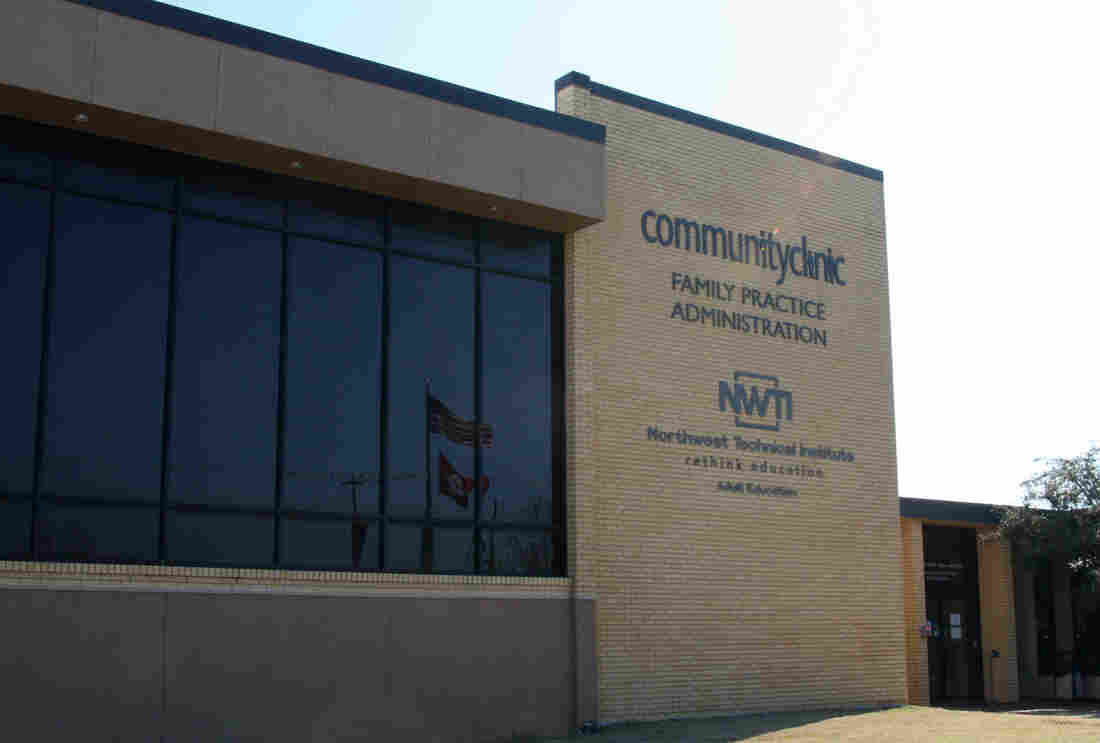
Community Clinic serves 37,000 low-income patients in northwest Arkansas at 13 locations, such as this one in Springdale. A Community Clinic insurance enrollment specialist says he’s seen firsthand the difficulties people have had trying to comply with the state’s new Medicaid work rule.

Courtesy of Lea Ann Thomas/Community Clinic


hide caption

toggle caption

Courtesy of Lea Ann Thomas/Community Clinic

In August 2018, a month after the work reporting requirement took effect, the state Department of Human Services said there were 265,223 total enrollees in Arkansas Works, with more than 62,000 of them subject to the new rule. By December, more than 18,000 had been disenrolled from their Medicaid insurance because they didn’t meet the requirement.

In response, DHS says it has beefed up its call center and is doing outreach to locate beneficiaries who might have lost insurance — by phone, email and home visits. The department has also launched an awareness campaign with paid advertising on public transit systems across the state and in college newspapers reminding people they need to comply with the work rule.

The department does offer a “good cause exemption” for beneficiaries dealing with unexpected circumstances that make it hard to meet the work requirement. But Martinez says Arkansas Works private insurance carriers and local nonprofits have had to step up to help confused patients navigate enrollment and reporting.

“Before the Affordable Care Act, nearly half of our patients were uninsured,” says Kathy Grisham, CEO of Community Clinic. “Many resorted to local emergency rooms for free health care.”

More people got insured when Arkansas expanded Medicaid. But Grisham says this new work requirement poses a serious burden on patients — and the providers who serve them.

“People do freak out when they find they are cut off,” she says. “So we shift them to our uninsured population because we are obligated to take care of them.”

Robin Rudowitz, associate director for the Kaiser Family Foundation Program on Medicaid and the Uninsured, says a few other states have also been approved by the Trump administration to test expanded Medicaid work rules, but those experiments cost money.

“We know Kentucky had done some original estimates that were in the range of $375 million to implement their waiver over two years,” she says.

Arkansas has spent $7.5 million on startup costs, according to the Department of Human Services.

But Gov. Asa Hutchinson, who initiated Arkansas Works, says the program is a success. “We’ve already had more than 7,000 Arkansas Works participants who have moved into work,” he says.

People disenrolled from Arkansas Works failed to comply, according to the governor, who says the work rule instills responsibility among certain Medicaid recipients who need a push.

“We are simply saying if you are able-bodied and able to work, and you don’t have dependent children at home,” he says, “you ought to either be working or you ought to be in school or you ought to be volunteering or contributing.”

Hutchinson says Medicaid case closures are often the result of churn — people moving away, earning too much money to qualify or securing health insurance elsewhere.

“There’s not an increase in uncompensated care,” he says. “There is not a huge flock of those coming back and re-enrolling this year, so I think we are seeing that the system is removing people who have been ineligible for the service.”

But KFF’s Rudowitz held anonymous enrollee focus groups and says enrollees reported steep learning curves in following the rules.

“The rules are complicated and involve multiple steps to comply, and many who were trying to comply faced some problems such as creating these online accounts or navigating the monthly reporting. They had problems with passcodes or couldn’t get assistance or had difficulty accessing the Internet, couldn’t find a computer, or were uncomfortable using a computer.”

In Springdale, Flores was able to re-enroll in Medicaid with the help of Martinez at Community Clinic. She pulls out her new insurance paperwork from her briefcase.

“My new documents have arrived,” she says, “and I am learning how it works.”

But Flores says she is now seeking counseling to help her cope with the stress of complying with her new health insurance.

Legal Aid of Arkansas, acting on behalf of nine Arkansas Works patients, has filed a lawsuit against the federal government over the regulations. The suit argues that the requirements are too cumbersome and cause harm to recipients.

Let’s block ads! (Why?)


No Image

Poor Pro Piacenza

Italian soccer team Pro Piacenza is in last place in its division. They’re also broke. On Sunday they lost 20 to 0.


DAVID GREENE, HOST:

Good morning. I’m David Greene. Maybe sports aren’t just about winning, but spare the lessons for these Italian soccer players. Their team, Pro Piacenza, is in last place in its division, according to Deadspin. They’re also broke. And yesterday, they could only field seven players, the minimum not to forfeit. All of them were teenagers. They lost 20-nil. One local blogger called it the most grotesque page in the history of Italian football. He actually stopped live blogging because it was just too painful.

Copyright © 2019 NPR. All rights reserved. Visit our website terms of use and permissions pages at www.npr.org for further information.

NPR transcripts are created on a rush deadline by Verb8tm, Inc., an NPR contractor, and produced using a proprietary transcription process developed with NPR. This text may not be in its final form and may be updated or revised in the future. Accuracy and availability may vary. The authoritative record of NPR’s programming is the audio record.

Let’s block ads! (Why?)


No Image

Colin Kaepernick Settled Legal Battle With NFL. What Comes Next?

Colin Kaepernick reached an agreement with the NFL. Sports sociologist Harry Edwards joins NPR’s Michel Martin to discuss what it means for the future of protest in the NFL.


MICHEL MARTIN, HOST:

Colin Kaepernick’s legal battle with the NFL is over. The former 49ers quarterback, whose decision to take a knee during the national anthem in 2016 to draw attention to police misconduct sparked protests throughout sports as well as a fierce backlash, has signed a confidential agreement with the NFL. The agreement, which included former teammate Eric Reid, settles claims that team owners conspired to blacklist them for their activism. But the debate continues about the effectiveness of such a protest and the way forward.

To talk more about this, we’ve called professor Harry Edwards, professor emeritus at the University of California, Berkeley, who’s been one of the country’s most influential thought leaders on the role of athletes in society. We called him at home in Fremont, Calif. Professor Edwards, thanks so much for talking with us.

HARRY EDWARDS: Thank you so much for having me.

MARTIN: I know that you’ve advised Colin Kaepernick at various points throughout the way, as well as you’ve advised a number of other athletes who have wanted to take stands on issues of concern. I know we don’t know the terms of the deal or, at least, we don’t know. But what do you think of his decision to settle?

EDWARDS: Well, I think it’s important that this be gotten off the road. One, the movement itself is in decline. These types of movements have a life of about six years. And if you go from 2012, when the Miami Heat and D Wade and LeBron first put on hoodies, up until 2018, you can see that pattern persist.

So I think, one, the movement itself is in steep decline. Two, I think that it’s in the interest of all involved that this be resolved so that, one, the league can go back, do an assessment of how this situation was managed in preparation for the inevitability of other issues coming over the stadium wall in a league that, by the middle of this next decade, would be somewhere between 82 and 85 percent black. And, secondly, I think that Colin has made a heck of a contribution, and I think that he should be able to exercise the full range of his options.

MARTIN: It’s interesting that you seem, in a way, to have sort of foreshadowed this because you wrote a piece last May, arguing that athlete activists should move beyond protests. Why do you say that?

EDWARDS: These types of movements are on the clock. The Black Power movement lasted for six years, from 1966 to approximately 1972. And if you’re going to move beyond drama to actual substantive achievement, you have to begin early on to come up with plans, to come up with perspectives that will allow you to move from protest to policies and programs and progress. If that doesn’t happen, then you get into a cycle of just protesting. And that most certainly is not conducive to substantive change.

MARTIN: You’ve, first of all, been a consultant to the 49ers. You – I know that you know Kaepernick. And I wondered if you anticipated and if he was prepared for just how much backlash that he got and other players who wanted to support him. I mean, the – you know, some of the fans, you know, screaming at people, you know, during the games, the people burning people’s jerseys, of course, not even to mention, you know, now-President Trump, then-candidate Trump’s very sort of heated conversation about this and very heated attacks on the players about this. I wonder – did you see all that coming? And did he see all that coming?

EDWARDS: Well, we talked about issues that were probably inevitable. It’s called a protest rather than a picnic because it tends to upset people. So I’m quite certain that he was prepared for that. He knew what he was getting into in that regard. Nobody could have anticipated Trump. But we talked about Muhammad Ali. We talked about Smith and Carlos. We talked about people like Bill Russell, who, at one time, was called Felton X in the press because he criticized some of the racial practices of cities that the Boston Celtics played in. So he was very much aware of that.

Now, it’s one thing to be aware of it. And then, it’s another thing to actually live through it. It’s a very difficult thing to deal with because it involves not just you but everybody you’re associated with. And they’re going through this at the same time. So, at the end of the day, he was aware of all of that. We discussed it, and he determined that it was an important enough issue for him to move forward. And I think that history will absolve him.

MARTIN: You know, the NFL and the Players Coalition negotiated a deal worth nearly $90 million This is money which is supposed to be devoted toward addressing the issues that Colin Kaepernick and others were trying to address. You’ve said that the devil isn’t in the details, it’s in the delivery. What do you think about the – I mean, are there plans for this money so far? Do you – what do you know about what they’re intending to do with it? And do you think it’s going to be meaningful?

EDWARDS: Ultimately, the deliverables take place on several levels. One, what do they materially produce and deliver in terms of impacting the issues and problems and challenges that the Players Coalition is concerned about? And, secondly, is there a conversation continuing over how best to manage the circumstances that come over the stadium wall that do not emerge within the context of the game or the operations of the game but that come over the stadium wall, owing to the demographics of the locker room? And I think that that’s as an – as important a deliverable as the $90 million, which, to a large, degree is something that has yet to materialize in total.

MARTIN: That is professor Harry Edwards, emeritus professor of sociology at the University of California, Berkeley. And he was kind of to join us from his home in Fremont, Calif. Professor Edwards, thanks so much for talking to us.

EDWARDS: Thank you so much for having me.

Copyright © 2019 NPR. All rights reserved. Visit our website terms of use and permissions pages at www.npr.org for further information.

NPR transcripts are created on a rush deadline by Verb8tm, Inc., an NPR contractor, and produced using a proprietary transcription process developed with NPR. This text may not be in its final form and may be updated or revised in the future. Accuracy and availability may vary. The authoritative record of NPR’s programming is the audio record.

Let’s block ads! (Why?)


No Image

Car Loan Delinquencies Reach New High

Economic pessimists seized on new data indicating an increase in car loan delinquencies as evidence of a looming recession, but a downturn is likely simply because of the economy’s cyclical nature.


LULU GARCIA-NAVARRO, HOST:

The economy is rocking right along. Unemployment is low at 4 percent, and we learned this week of a record number of job openings. But this week, we also got some data on car loans. The number of Americans seriously delinquent on them reached a new high. So let’s turn to NPR’s Danielle Kurtzleben for what that all means.

Hey, Danielle.

DANIELLE KURTZLEBEN, BYLINE: Hey, Lulu.

GARCIA-NAVARRO: All right. Let’s do the numbers.

KURTZLEBEN: All right. So the data that we’re talking about is from the New York Federal Reserve. And that data showed that a record 7 million people are seriously delinquent on their car loans. And by seriously delinquent I mean 90 days or more.

GARCIA-NAVARRO: Wow.

KURTZLEBEN: Yes. That’s the highest level in the 19 years that the New York Fed has even been tracking that.

GARCIA-NAVARRO: Why is that?

KURTZLEBEN: Well, we have a few hints in the data. We don’t know for sure. But delinquencies among people under 30, among young adults, have really climbed. As to what’s behind that, it could be student debt. That has climbed in a huge way in recent years.

GARCIA-NAVARRO: Indeed.

KURTZLEBEN: Aside from that, we’re seeing really high delinquencies among people with low credit scores. There is some indication that people are getting subprime auto loans, and they’re falling delinquent on those. But the bottom line, as the New York Fed pointed out in its report on this, is that this may mean that, even while you have those really good headline numbers of unemployment, that the strong economy isn’t benefiting everybody equally.

GARCIA-NAVARRO: The economy, though, is strong. So if there’s one bad indicator in the middle of that, how much weight should we give it?

KURTZLEBEN: You’re absolutely right, like you said at the top here, that the job market is looking really, really great. And amid all that, yeah. This is just one yellow flag. But that said, this is one yellow flag among several that have been popping up lately. For example, this week, we saw that retail sales fell in December by the largest amount since 2009. Aside from that, jobless claims, people coming forward and saying, hey, I need unemployment insurance – that also went up this week. So, no, this doesn’t mean recession is coming this week, this month, even this year. But it does seem to show that amid this seemingly pretty strong economy, there are some soft spots. And that is worrying.

GARCIA-NAVARRO: And you looked into what tools the government has to fight the next recession. What kind of tools do policymakers actually have?

KURTZLEBEN: Long story short, they have fewer tools or maybe weaker tools than they did before the last recession. I mean, let’s look at the Federal Reserve. A very simple way to think about it is the Fed uses interest rates like an accelerator pedal. It lowers those down when it wants to speed up the economy, right? Except right now that accelerator pedal is pretty close to the floor. Interest rates are already pretty low. The Fed has been raising them very, very slowly since the last recession. We kind of have a hangover there.

Then, you go across Washington to Congress. OK. Congress controls the purse strings, except when you look fiscally, we have higher debt than we had before the last recession for a whole bunch of reasons. Now, economists do differ on how bad debt is for the economy. But either way, it appears there’s less room there. And by the way, look at how much Congress is accomplishing these days. It’s hard to imagine them easily coming to an agreement on what to do if we did have a downturn.

GARCIA-NAVARRO: Downturns are inevitable because, as we’ve seen in economic history, things go up, things go down.

KURTZLEBEN: Most definitely, yeah.

GARCIA-NAVARRO: That is just the nature of the economic system.

KURTZLEBEN: Yeah.

GARCIA-NAVARRO: President Trump likes to talk about how strong the economy is right now. So if there’s a downturn, does he get the blame?

KURTZLEBEN: No. I mean, presidents can push policies that can boost the economy. They can potentially flub things that could hurt the economy. But in general, presidents can’t steer it. So you can’t give them full credit or full blame for big economic swings. Aside from that, you have a lot of these Democratic presidential candidates pushing really progressive policies aimed at helping Americans who are hurting economically, so promising better wages, better benefits. You even have some candidates talking about guaranteed jobs. And that’s, you know, a very, very big, sweeping change. So I’m interested in – if we do have a downturn, could that affect how voters feel about those policies? Could that push some voters more progressive?

GARCIA-NAVARRO: That’s NPR’s Danielle Kurtzleben with many good questions. We’ll be watching. Danielle, thanks so much.

KURTZLEBEN: Thanks, Lulu.

Copyright © 2019 NPR. All rights reserved. Visit our website terms of use and permissions pages at www.npr.org for further information.

NPR transcripts are created on a rush deadline by Verb8tm, Inc., an NPR contractor, and produced using a proprietary transcription process developed with NPR. This text may not be in its final form and may be updated or revised in the future. Accuracy and availability may vary. The authoritative record of NPR’s programming is the audio record.

Let’s block ads! (Why?)


No Image

Saturday Sports: Colin Kaepernick And Kareem Hunt

Colin Kaepernick has reached a settlement with the NFL after alleging collusion to deprive him employment. Meanwhile, the league is keeping Kareem Hunt in its ranks.


SCOTT SIMON, HOST:

I wait every week to say it’s time for sports.

(SOUNDBITE OF MUSIC)

SIMON: The NFL and Colin Kaepernick and Eric Reid have reached an agreement – nondisclosure agreement. But we’ll talk about it. Also, the debate in Cleveland over signing a player who shoved and kicked a woman in a hotel hallway. NPR’s Tom Goldman joins us. Tom, thanks so much for being with us.

TOM GOLDMAN, BYLINE: Good to be with you, Scott.

SIMON: Colin Kaepernick’s lawyer put out a statement on Twitter saying they had, quote, “resolved pending grievances.” Is that agent talk for they threw money at my client?

GOLDMAN: Well, we think so. But we don’t know. Kaepernick and Eric Reid sued the NFL, claiming the league conspired to not hire them after their protests during the national anthem, as you remember – started by Kaepernick in 2016 to protest police brutality and racial injustice. Now, Yahoo Sports said it was told previously the players would only settle if a lucrative financial agreement was reached. But we don’t know for sure because a confidentiality agreement, as you pointed out, is sealing everyone’s lips.

SIMON: Well, let me ask. Why didn’t the NFL want the case to go to trial?

GOLDMAN: It’s a big, powerful business. It doesn’t like its inner workings exposed. So it makes sense the league didn’t want this to go the distance. Last August, an arbitrator rejected the NFL request to dismiss the case. A hearing was coming up. And there would have been potentially sensitive NFL material revealed. There was also the chance that even though collusion is hard to prove, Kaepernick and Reid might have had enough to win. And that would have been a huge PR hit for the NFL.

SIMON: Does this necessarily mean Colin Kaepernick’s going to be signed by any team?

GOLDMAN: We don’t know. We really don’t know at this point. It means, perhaps, that that he got a lot of money. But we just don’t know at this point.

SIMON: Moving on. Kareem Hunt has signed with Cleveland Browns two months after he was cut by the Kansas City Chiefs when video surfaced of him shoving and kicking a woman. The NFL always says they won’t tolerate players who commit domestic violence. But Kareem Hunt is just the latest link to domestic violence to be signed to get another chance.

GOLDMAN: Yeah. That’s right. There is Joe Mixon in Cincinnati, Tyreek Hill in Kansas City. The NFL does have a – shall we call it – a difficult history with this issue. In Hunt’s case, though, Scott, this isn’t simply a green light and you’re back. He can’t play until the NFL finishes investigating and decides on punishment. He’s still facing multiple game suspension. And the Browns say they will have zero tolerance for any other incidents involving Hunt.

SIMON: A great Cleveland sportswriter, Mary Kay Cabot, wrote what – you and I both read it – a very provocative column…

GOLDMAN: Right.

SIMON: …This week in which she said – I’m going to paraphrase – look, Kareem Hunt grew up in a violent neighborhood near Cleveland. Many of his immediate family members, including his father and uncles were in prison and are now – so is his mother. He needs help. He’s getting it. He has a chance to turn this around. It could be a victory for victims of violence for everyone he helps in the future.

GOLDMAN: Yeah. It was revealing and significant, as you say, that it was written by a woman. It’s tricky because the NFL has this difficult history that we’ve talked about when it comes to domestic violence cases. And let’s be clear, Scott, this isn’t just altruism. The Browns are getting a great running back. He led the NFL in rushing as a rookie in 2017. But Hunt is getting another chance to move beyond this toxic…

SIMON: We should explain he wasn’t charged.

GOLDMAN: Right. Right. He wasn’t charged. And he’s getting this second chance to move beyond this toxic world you talk about. Cleveland general manager John Dorsey reportedly is a religious man who believes strongly in Hunt’s character and believes in that chance that the team’s giving him.

SIMON: Tom Goldman, thanks so much.

GOLDMAN: You’re welcome.

Copyright © 2019 NPR. All rights reserved. Visit our website terms of use and permissions pages at www.npr.org for further information.

NPR transcripts are created on a rush deadline by Verb8tm, Inc., an NPR contractor, and produced using a proprietary transcription process developed with NPR. This text may not be in its final form and may be updated or revised in the future. Accuracy and availability may vary. The authoritative record of NPR’s programming is the audio record.

Let’s block ads! (Why?)


No Image

If The U.S. And China Don't Reach A Trade Deal, Consumers Will Soon Feel The Impact

So far, the U.S. trade war with China hasn’t affected consumers much. But without a deal soon, tariffs on thousands of products will more than double.


SCOTT SIMON, HOST:

If the United States and China fail to reach an agreement on trade this month, tariffs may soon reach directly into consumers’ pockets. Farmers and manufacturers have been affected for months. This latest round of talks puts more at stake for more people. Grant Gerlock of NET News in Nebraska reports.

GRANT GERLOCK, BYLINE: In September, the Trump administration launched its biggest round of tariffs yet – a 10 percent tax on thousands of Chinese products, including a lot of everyday stuff. At this dollar store, I found a pair of pliers, some wall screws, eyeliner, a bath mat – all on the tariff list. But that doesn’t mean the price on the tag is 10 percent higher.

UCHE JARRETT: I can’t stress to you how much companies care about maintaining that stability.

GERLOCK: That’s Uche Jarrett, who teaches international economics at the University of Nebraska-Lincoln.

JARRETT: It drives their profit margins. It drives their estimates for the future. Whenever there is a change, there’s a lot of uncertainty that follows.

GERLOCK: Jarrett says so far, suppliers and retailers are shielding consumers from price hikes. They’d rather ding profits than lose customers. But soon consumers might have to pay up. The administration’s tariffs are aimed at narrowing the trade deficit with China. If there’s no deal by March 1, that 10 percent tariff will jump to 25 percent.

Irv Blumkin is CEO of the home furnishings chain Nebraska Furniture Mart. He says a 25 percent tariff would lead to higher prices at his store for everything from carpet to patio furniture.

IRV BLUMKIN: At 10 percent, you can come to a very minimal change. At 25 percent, it becomes a different deal.

GERLOCK: Blumkin is concerned a higher tariff will scare away his shoppers.

BLUMKIN: You know, they hear the news every day. And they see some of the uncertainties that are going on. And I think that impacts how people think.

GERLOCK: Irv Blumkin says some manufacturers are moving their production to countries like Vietnam, Malaysia or Mexico. While importers are scrambling, you might think that American manufacturers are benefiting from the tariffs. But maybe not. Take Bison, a company in Lincoln, Neb., that makes sports hardware.

I met CEO Nick Cusick at a local YMCA, where some office workers were playing a round of pickup basketball. The rims, the backboards and the wall pads were all made by Bison. Almost all the parts and pieces were manufactured in the U.S., too.

NICK CUSICK: Since we do compete against a fair number of companies who buy offshore, you would think generally speaking that we would benefit from…

GERLOCK: Yeah, aren’t you supposed to be the winners in this thing?

CUSICK: We’re supposed to be the winners.

GERLOCK: But Cusick says there’s a problem. When the U.S. raised taxes on imported steel, the price for American steel skyrocketed by as much as 50 percent. Bison had to raise its prices this year to cover costs.

CUSICK: But the end users – the schools, the consumers on our residential basketball side of our business – they’re the ones that are getting hit. So it’s kind of counterproductive.

GERLOCK: Unless the U.S. reaches a deal with China in the next few weeks, more businesses will be raising prices. And that’s when more consumers will begin to realize that trade wars come with a cost that they’ll be feeling in their wallets.

For NPR News, I’m Grant Gerlock.

SIMON: That story comes to us from Harvest Public Media, a reporting collaboration that focuses on agriculture and rural issues.

Copyright © 2019 NPR. All rights reserved. Visit our website terms of use and permissions pages at www.npr.org for further information.

NPR transcripts are created on a rush deadline by Verb8tm, Inc., an NPR contractor, and produced using a proprietary transcription process developed with NPR. This text may not be in its final form and may be updated or revised in the future. Accuracy and availability may vary. The authoritative record of NPR’s programming is the audio record.

Let’s block ads! (Why?)


No Image

Tribune Publishing Recognizes 'Hartford Courant' Newsroom Union

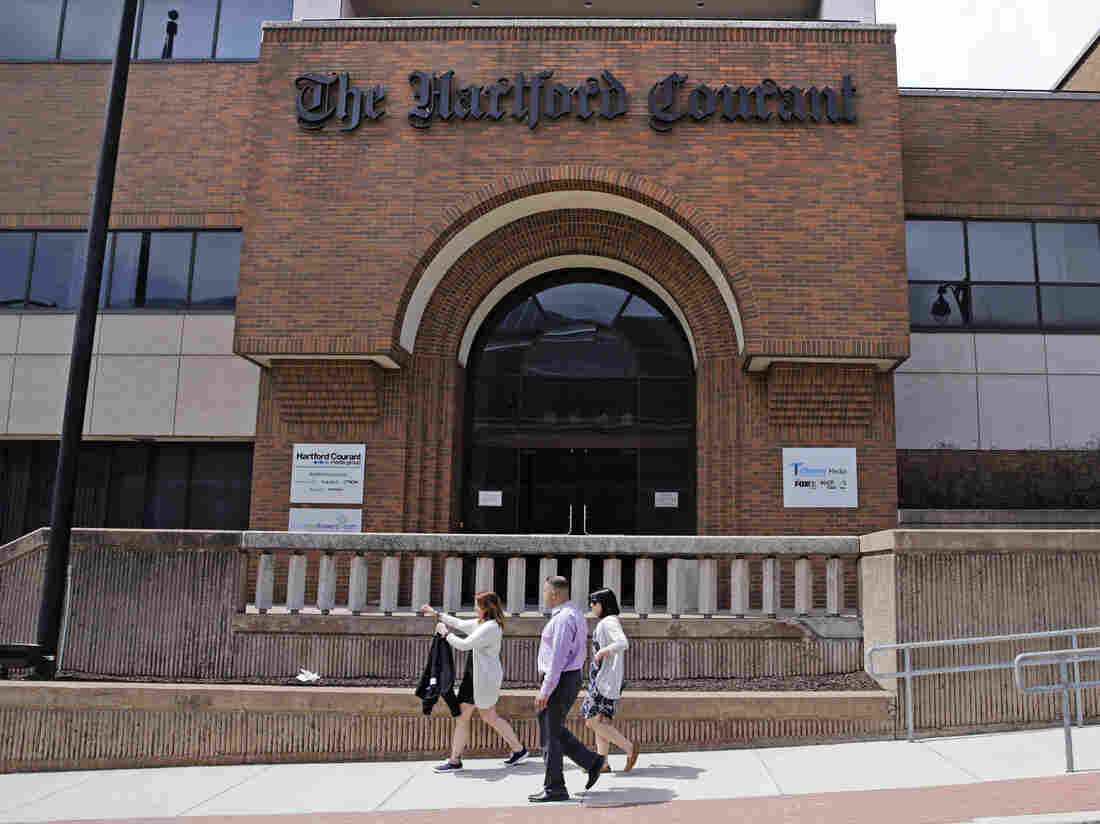
Tribune Publishing has agreed to recognize a new union representing journalists at the Hartford Courant in Connecticut’s capital.

Charles Krupa/AP


hide caption

toggle caption

Charles Krupa/AP

Journalists at the Hartford Courant have won the right to organize, just four days after they asked parent company Tribune Publishing to recognize the union. Organizers at the Connecticut newspaper had also filed a petition for a union election with the National Labor Relations Board.

“The company has agreed to voluntarily recognize the Hartford Courant Guild as the representative of certain newsroom employees at the Hartford Courant and Courant Community,” Tribune Publishing said in a statement Friday. “No date has been set for the beginning of contract negotiations.”

The Courant is the latest of several Tribune newspapers to see their newsrooms unionize. Similar successful efforts were made at the Los Angeles Times, the Chicago Tribune, the The Virginian-Pilot in Norfolk, Va., and the Daily Press in Newport News, Va. (Tribune Publishing, previously named Tronc, subsequently sold the LA Times.)

The Hartford Courant Guild will cover nearly 60 reporters, editors and photographers at the paper. More than 80 percent of eligible staffers signed union cards saying they want to be represented, organizers said.

“We acknowledge Tribune Publishing for taking this step, which expedites contract negotiations, and recognizes the overwhelming will of our newsroom to take a seat at the table,” the union said in a statement.

It added, “We look forward to building a more productive and collaborative relationship with the company as we join the conversation shaping the future of the Hartford Courant. We fight for improved resources and support so we can continue to serve our readers to the best of our abilities.”

Tribune Publishing has been the focus of sale and merger talks, and in January the newspaper chain announced the departures of its CEO and the two top officials of its digital arm.

Let’s block ads! (Why?)


No Image

Colin Kaepernick Reaches Agreement With NFL

Former 49ers quarterback Colin Kaepernick says he ‘resolved’ his grievances with the NFL. In 2016, he became the face of a protest movement in the NFL against racial injustice and police brutality.


MARY LOUISE KELLY, HOST:

Quarterback Colin Kaepernick has settled his collusion case against the National Football League. His former teammate, Eric Erid, has also settled his case. The two players sued the NFL, alleging teams conspired not to hire them as retaliation for kneeling during the national anthem. They had kneeled as a way to protest racial injustice and police brutality. With us now is NPR sports correspondent Tom Goldman. Hi, Tom.

TOM GOLDMAN, BYLINE: Hi, Mary Louise.

KELLY: So what details do we know about exactly how they have settled their cases?

GOLDMAN: We know nothing.

KELLY: Short interview then, thanks so much.

GOLDMAN: Let’s move on. No. We got three sentences in a joint statement by the NFL and the attorneys for Kaepernick and Reid saying they have resolved the pending grievances. And that’s it. Because of a confidentiality agreement, they are not saying anything more, which is a bit frustrating, you know, considering how this case this whole issue has roiled the country.

I mean, let’s remember how Kaepernick and his actions and Reid and the other players who followed created great upset throughout the country. The president weighed in a number of times. The vice president walked out of a game during the anthem where there were protests happening. The playing of the national anthem became must-see TV. But today, Mary Louise, we are left with three sentences.

KELLY: Three sentences from the people directly involved, but being a dogged reporter, I’m sure you’re nosing around and trying to find what everybody else is saying. So what is everybody else saying about this?

GOLDMAN: You betcha. The NFL Players Union, in a statement, says it’s not privy to the details of the settlement either. But it says it’s glad that Eric Reid has earned a job and a new contract. And the union continues to hope that Kaepernick gets his opportunity as well. Eric Reid signed last year with the Carolina Panthers, and just recently he wrapped with a very lucrative new three-year deal.

We got maybe a little insight into the settlement from Yahoo Sports. It said it was told on prior occasions that Kaepernick and Reid would only settle if a lucrative financial agreement was reached between the players and the NFL. And columnist Mike Freeman tweeted today he’s hearing from team officials that the NFL paid Kaepernick in the 60 to $80 million range.

And then I talked to University of Richmond law professor Carl Tobias, who’s followed this case closely. He says Kaepernick and Reid are vindicated in that they’re recovering something – the money. And Tobias says they’re also vindicated in that a settlement shows the NFL was unwilling to let the case proceed. In August of last year, an arbitrator ruled the case could go forward. He rejected the NFL’s attempts to have the case dismissed. That gave the players some leverage, although the collusion is tough to prove, and it wasn’t guaranteed the players would win.

KELLY: All right. So we shall watch for details of this settlement and also, as you said, for what Colin Kaepernick may do next beyond being face of Nike. I was just looking. He’s 31 years old, so by Tom Brady standards, he could have a decade of play left in him. Who knows?

GOLDMAN: Yeah, could be.

KELLY: NPR’s Tom Goldman. Thanks very much.

GOLDMAN: You’re welcome.

Copyright © 2019 NPR. All rights reserved. Visit our website terms of use and permissions pages at www.npr.org for further information.

NPR transcripts are created on a rush deadline by Verb8tm, Inc., an NPR contractor, and produced using a proprietary transcription process developed with NPR. This text may not be in its final form and may be updated or revised in the future. Accuracy and availability may vary. The authoritative record of NPR’s programming is the audio record.

Let’s block ads! (Why?)