Articles by admin

No Image

Sports Broadcaster And Former NFL Star Frank Gifford Dies At 84

Frank Gifford arrives at an opening on Broadway in a photo from Oct. 2007.

Frank Gifford arrives at an opening on Broadway in a photo from Oct. 2007. Peter Kramer/AP hide caption

itoggle caption Peter Kramer/AP

NFL Football Hall of Famer and long-time sports broadcaster Frank Gifford died today at his Connecticut home at age 84.

He “died suddenly this beautiful Sunday morning of natural causes,” the family confirmed in a brief statement.

Receiver and running back Gifford attended the University of Southern California on a football scholarship before going pro. He played for the New York Giants in a career on the field that spanned 1952 to 1964. He made the Pro Bowl in seven of his 12 NFL seasons.

ESPN says “Gifford amassed 9,753 combined yards and his 78 touchdowns is still a Giants record. He also threw for 14 touchdowns as a master of the option pass from his halfback spot.” In 1956, leading the Giants to a league championship, he was named the National Football League’s Most Valuable Player.

The Associated Press writes:

“A handsome straight-shooter who came off as earnest and sincere, Gifford was popular with viewers, even if some accused him of being a shill for the NFL.

“He experienced the highs and lows as an NFL player. Gifford fumbled twice early in the 1958 NFL championship game, both of which led to Baltimore Colts touchdowns, and later came up short on a critical third down. The Colts eventually won 23-17 in the league’s first overtime game. The thrilling finish helped popularize the NFL and was dubbed ‘The Greatest Game Ever Played,’ although not by Gifford.”

Gifford also appeared in about a dozen movies, the AP says, most notably Up Periscope (1959), which starred James Garner.

But it was in television that he eventually made his post-NFL career, becoming a sports commentator for CBS in 1965 and in 1971, joining ABC as a co-hosting of Monday Night Football, where he stayed until 1985. In 1986, he married television talk show hostess Kathie Lee Epstein.

“We rejoice in the extraordinary life he was privileged to live, and we feel grateful and blessed to have been loved by such an amazing human being,” his family said in the statement. “We ask that our privacy be respected at this difficult time and we thank you for your prayers.”

This entry passed through the Full-Text RSS service – if this is your content and you’re reading it on someone else’s site, please read the FAQ at fivefilters.org/content-only/faq.php#publishers.


No Image

Prince Compares Record Contracts To Slavery In Rare Meeting With Media

Prince presents the Album of the Year award at the 57th annual Grammy Awards in February.

Prince presents the Album of the Year award at the 57th annual Grammy Awards in February. John Shearer/John Shearer/Invision/AP hide caption

itoggle caption John Shearer/John Shearer/Invision/AP

Music icon Prince is worried about the future of the music business for artists, and his top priority can be summed up in one word: Freedom.

“Record contracts are just like — I’m gonna say the word – slavery,” Prince told a group of 10 journalists Saturday night, during a meet and greet at his Paisley Park Studios in Minneapolis. “I would tell any young artist … don’t sign.”

His pitch to the group was simple: Typical record company contracts turn artists into indentured servants with little control over how their music is used, particularly when it comes to revenue from streaming services playing their music online — and he wants to change that.

Cellphones and recording devices were banned for everyone at Paisley Park — as was any kind of alcohol — so no photos or audio of his words were recorded.

Sitting at the head of a glass table emblazoned with his trademark image combining the astrological symbols for male and female, Prince wanted to talk up his new alliance with Jay Z and the rap star’s new music streaming service, Tidal.

He talked about how his deal with Jay Z still gave him the freedom to collaborate with other artists on songs which might appear elsewhere, stressing the importance of artists controlling as much of the revenue from their work as possible.

“Once we have our own resources, we can provide what we need for ourselves,” he said. “Jay Z spent $100 million of his own money to build his own service. We have to show support for artists who are trying to own things for themselves.”

He advocated seeing artists paid directly from streaming services for use of their music, so that record companies and middlemen couldn’t take a share. He also criticized radio giant Clear Channel, saying its dominance of the radio industry homogenized stations across the country.

Asked how he would get his message out, Prince chuckled and looked at the group crowded around his conference table. “That’s why you’re here,” he laughed.

This entry passed through the Full-Text RSS service – if this is your content and you’re reading it on someone else’s site, please read the FAQ at fivefilters.org/content-only/faq.php#publishers.


No Image

During Segregation, A Mountain Oasis Gave Black Families A Summer Escape

A YWCA summer camp for girls called Camp Nizhoni took place at Lincoln Hills from 1924-1945.

A YWCA summer camp for girls called Camp Nizhoni took place at Lincoln Hills from 1924-1945. Denver Public Library, Western History Collection hide caption

itoggle caption Denver Public Library, Western History Collection

Fresh air, the smell of pine trees, the sounds of birds chirping and brooks babbling — all of these have helped American city-dwellers unwind for generations. But in the era of Jim Crow segregation, nature’s calm also gave African-Americans a temporary respite from racism and discrimination.

Those fortunate enough to afford a resort stay could visit relatively well-known getaways like Martha’s Vineyard’s Oak Bluffs, or Idlewild in Lake County, Mich. But tucked into a narrow canyon at the eastern edge of the Rocky Mountains about 40 miles from Denver was the lesser-known mountain resort called Lincoln Hills. The only black resort of that era west of the Mississippi, Lincoln Hills provided a safe haven for middle-class African-Americans to play and relax under the pines.

Gary Jackson on the back steps of the Lincoln Hills cottage his great-grandfather built in 1926.

Gary Jackson on the back steps of the Lincoln Hills cottage his great-grandfather built in 1926. Laura Krantz hide caption

itoggle caption Laura Krantz

They needed it. In the 1920s, the Ku Klux Klan ran Colorado. Klan-affiliated politicians controlled the state House of Representatives. The governor was a Klansman; so was the mayor of Denver. It wasn’t uncommon for the terrorist group to march through the streets in white robes and those sinister pointy-hat masks, sticking crosses in the lawns of black families, setting them ablaze.

This was the environment that Gary Jackson’s great-grandparents and grandparents endured. The 69-year-old Denver County judge talks about the discrimination his relatives faced, despite their educational attainment and middle-class status. So when an opportunity arose for Jackson’s great-grandfather to buy property in the mountains, away from it all, he didn’t hesitate.

In 1922, two black developers purchased 100 acres of land that had been blighted by decades of gold and silver mining (part of the reason it was available to African-Americans in the first place). It was divided into lots and sold on credit. Five dollars a month for 20 months could get you one of the nicer plots. Jackson’s great-grandfather purchased several and built cottages. Some were sold off but, almost 90 years later, two are still in his family.

A flier advertising lots for sale at Lincoln Hills.

Denver Public Library, Western History Collection

The cabin Jackson owns is right near the entrance to Lincoln Hills, above railroad tracks where trains piled high with coal pass frequently. The California Zephyr cuts through here, too, carrying passengers from San Francisco to Chicago, with a stop in Denver. It’s from that train that Jackson’s cabin got its moniker — Zephyr View — coined by his Uncle Johnny in the early ’50s.

The nickname stuck. You’ll find it emblazoned on a red wooden sign above the cabin’s sliding glass door. Another sign hangs over the bathroom, part tongue-in-cheek, part reminder of a not so distant past. COLORED RESTROOM, it reads.

When Jackson was a child, Lincoln Hills was his summer playground. As an adult, he came to understand its significance. “For us kids, it was just a fun, safe place to go. But for my grandparents and great-grandparents, it was a shelter from harsh times — a place to get away from harsh realities of Denver in the ’20s and ’30s: segregation, discrimination, not being treated equally.”

Generations of Jackson’s family — great-grandparents, grandparents, uncles, cousins, children and grandchildren — have spent summers here, mostly outside, lounging on the giant front deck, barbecuing on the recently finished back porch, hiking the hills and cooling off in South Boulder Creek.

There were other fun things to do in Lincoln Hills, too. In 1928, a man named Obrey Wendell “Wink” Hamlet built a six-bedroom lodge, as well as 20 rental cabins and a tavern/ice cream parlor/dance hall. African-American luminaries like Zora Neale Hurston, Langston Hughes and Lena Horne made the trek to spend a restorative week in the woods. At its height, Jackson says, there were as many as 5,000 visitors coming up to Wink’s Lodge over the course of a summer. It closed in 1965, but the building is still there, and it’s on the National Register of Historic Places.

The Zephyr View was built by Gary Jackson's great-grandfather, William Pitts. This photo was taken circa 1950.

The Zephyr View was built by Gary Jackson’s great-grandfather, William Pitts. This photo was taken circa 1950. Denver Public Library, Western History Collection hide caption

itoggle caption Denver Public Library, Western History Collection

Jackson points out that the success of Wink’s Lodge points to another benefit of Lincoln Hills. Not only was it a place of respite — it was also an economic resource. Here, African-Americans like Jackson’s great-grandfather could buy property that would increase in value. They could build and sell cabins as a commercial venture. And, with all the tourists and visitors it attracted, Wink’s Lodge was an economic driver for the area. The American dream, Jackson calls it.

Only a handful of black families still own cabins in Lincoln Hills. After desegregation, it was no longer a destination for the African-American middle class to summer. But a decade ago, black entrepreneur and Colorado native Matthew Burkett saw the Lincoln Hills property advertised on a flier in a grocery store. Burkett and his partners were looking for land to create a fly-fishing resort. When he called to find out more, he learned that the only other people expressing interest were sand and gravel company owners.

In 2007, Burkett purchased the property and went to work restoring land that had been neglected for years and used on and off by big industry. It’s now in operation as the Lincoln Hills Fly Fishing Club, but Burkett has also partnered with the Boys & Girls Clubs and the YMCA to bring kids, especially low-income kids of color, up to the woods. He says it’s his way of keeping Lincoln Hills’ legacy alive.

Gary Jackson's wife, Regina, paddleboarding on Pactolus Lake in Lincoln Hills.

Gary Jackson’s wife, Regina, paddleboarding on Pactolus Lake in Lincoln Hills. Laura Krantz hide caption

itoggle caption Laura Krantz

All summer, Code Switch is reporting stories on R&R: Race and Outdoor Recreation. We’ve hung out with Korean and Korean-American hardcore hikers and Chicano cyclists from East LA.

This entry passed through the Full-Text RSS service – if this is your content and you’re reading it on someone else’s site, please read the FAQ at fivefilters.org/content-only/faq.php#publishers.


No Image

Housing Bounces Back In Most, But Not All, Of Atlanta

3:56

Download

At the height of the housing bubble, Atlanta was adding tens of thousands of homes a year, but then the bottom fell out. Now, there’s building once again, but some residents are feeling left out.

Transcript

LINDA WERTHEIMER, HOST:

Before the Great Recession of 2007, Atlanta’s housing market was booming and adding tens of thousands of homes every year. When the bust came, the city fell hard. Now condos are shooting up again and there are construction cranes around town, but it’s not happening everywhere. WABE’s Molly Samuel takes us to one subdivision in Atlanta that never recovered.

MOLLY SAMUEL, BYLINE: From the outside, the Villages at Oakshire looks like a neat, normal housing development. Big brick walls flank the entrance, but drive inside and things seem off.

JERRY HICKS: This house has never been completed.

SAMUEL: Jerry Hicks lives in this subdivision in southeast Atlanta. He walks past a house where the lawn’s overgrown and plywood covers the windows. He says it used to be worse when more houses were vacant, but it still doesn’t look right. The subdivision’s roads are rough and gravelly. They’ve never been fully paved.

HICKS: We have these nice large houses everywhere, but this road is, you know, it’s just ancient looking.

SAMUEL: Hicks moved in in 2007, just in time for the mortgage meltdown. He and many of his neighbors stuck it out, but the developer didn’t. The company bailed before it finished building. Now Hicks says he’s underwater. He owes more on his mortgage than his house is worth and he’s stuck in this unfinished subdivision. The gates at the entrance don’t work. People have sewer problems. Half the roads here have no houses. There are hundreds of subdivisions in the metro Atlanta area like this one. Some just have a few empty lots. Some are more like Hicks’s neighborhood. It’s a legacy of the housing boom before the bust.

DAN IMMERGLUCK: We, along with Phoenix and a couple other cities, led the country in single-family subdivision development and sprawl, really.

SAMUEL: Dan Immergluck teaches city planning a Georgia Tech. He says developers built new neighborhoods like crazy, until the market crashed. Now unfinished subdivisions like these are problems for cities around the country where the housing boom mostly meant more single-family homes. Construction is returning in some places, but not everywhere.

IMMERGLUCK: Well, Atlanta’s a paradox because as a metro, the indicators are pretty positive. Job growth has returned. Housing demand has returned.

SAMUEL: Home values in Atlanta are going up. Last year, 17,000 permits for single-family homes were issued. That’s not as good as before the bust, but Immergluck says Atlanta is a dual market. For instance, in Jerry Hicks’s zip code, half the homeowners are still underwater years after the recession ended.

IMMERGLUCK: I think we have a bigger kind of race and space divide than lots of other cities.

SAMUEL: Villages at Oakshire is in Joyce Sheperd’s district. She’s an Atlanta city councilwoman. She says, the wealthier areas, for developers, they’re low-hanging fruit. But in her district…

JOYCE SHEPERD: So when you talk about developers who want to come in and talk about reinvesting, when they look at numbers and they crunch numbers, they’re not coming.

SAMUEL: Hicks says when he sees development happening on the other side of town, it leaves him feeling like a stepchild, like he’s being ignored. Why has he stuck around so long? He says, it’s partially to get his money back, but the main reason…

HICKS: I fell in love with the house, you know, basically. And I do think it’s going to turn around, just when (laughter) you know, so…

SAMUEL: One potential bright spot is street paving. Councilwoman Sheperd says that should happen next year. And a couple of developers have started poking around in the empty half of the subdivision and may finally build there – just one more sign that the U.S. housing market is beginning to bounce back. For NPR News, I’m Molly Samuel in Atlanta.

Copyright © 2015 NPR. All rights reserved. Visit our website terms of use and permissions pages at www.npr.org for further information.

NPR transcripts are created on a rush deadline by a contractor for NPR, and accuracy and availability may vary. This text may not be in its final form and may be updated or revised in the future. Please be aware that the authoritative record of NPR’s programming is the audio.

This entry passed through the Full-Text RSS service – if this is your content and you’re reading it on someone else’s site, please read the FAQ at fivefilters.org/content-only/faq.php#publishers.


No Image

Best of the Week: 'Fantastic Four' History Lesson and Review, 'Deadpool' Trailer and Analysis and More

The Important News

Casting Net: Channing Tatum finally signed his deal for Gambit. Will Smith will star in Collateral Beauty. Colin Farrell will star in the Harry Potter spinoff. Samuel L. Jackson and John C. Reilly are heading to Kong: Skull Island.

Franchise Fever: Felicity Jones might be playing a character from Star Wars Rebels in Star Wars Anthology: Rogue One. Two more Bad Boys movies are on the way. Pez and Dungeons and Dragons are the franchises of the future. Jurassic World 2 will not be about dinosaurs chasing people on an island.

Remake Report: Sony is remaking Jumanji. New Line is rebooting A Nightmare on Elm Street again.

New Directors/New Films: Peter Berg might direct a Boston Marathon bombing movie.

Re-release Report: The Hobbit trilogy is returning to theaters with extended editions. The first six Star Wars movies are being re-released again on Blu-ray for a new steelbook set.

Box Office: Tom Cruise had one of his best opening weekends ever.

The Videos and Geek Stuff

New Movie Trailers: Zoolander 2, Deadpool, The Last Witch Hunter, The Intern, By the Sea, Hitman: Agent 47, Stonewall and Everest.

Watch: An honest trailer for the previous Fantastic Four movies. And an analysis of the Deadpool trailer.

See: Exclusive images from Mistress America.

Watch: The pilot for a Clerks TV show that never aired.

See: The new Ghostbusters cast visited a children’s hospital in costume.

Watch: The new Lexus hoverboard in action.

See: What the suburbs from Edward Scissorhands look like now.

Learn: Why the Angry Birds movie will be the next Lego Movie.

Watch: The best defense of CG you’ll ever see.

See: The Mission: Impossible – Rogue Nation scene Tom Cruise had to be talked into.

Watch: “Uptown Fun” sung by the movies.

See: A Lion King animator’s tribute to Cecil the Lion.

Learn: Everything you need to know about Michael Mann.

Watch: Kristen Stewart and Jesse Eisenberg parody awkward junket interviews.

See: How It Follows is carrying John Carpenter’s torch.

Watch: A test reel for Shrek featuring Chris Farley as the original lead voice.

See: This week’s best new movie posters.

Our Features

Monthly Movie Guide: Everything you need to know about the movies in August.

Geek Movie Guide: Everything geeky you need to see and buy in August.

Marvel Movie Guide: Review of Fantastic Four.

R.I.P.: Remembering the Hollywood players we lost in July.

Comic Book Movie Guides: An infographic on the history of the Fantastic Four. The pros and cons of an R-rated Deadpool movie.

Horror TV Series Guide: Why you should be watching the Scream TV show.

Horror Movie Guide: All the latest horror movie news and goodies.

Home Viewing: Here’s our guide to everything hitting VOD this week. And here’s your guide to everything hitting DVD and Blu-ray this week. And here’s your guide to all the new indie and foreign films you need to see.

and

MORE FROM AROUND THE WEB:

This entry passed through the Full-Text RSS service – if this is your content and you’re reading it on someone else’s site, please read the FAQ at fivefilters.org/content-only/faq.php#publishers.


No Image

Crime Interrupts A Baltimore Doctor's Reform Efforts

Workers for the Safe Streets violence interruption project including Gardnel Carter, center, talk with Baltimore residents in 2010.
9:39

Download

Workers for the Safe Streets violence interruption project including Gardnel Carter, center, talk with Baltimore residents in 2010. Kenneth K. Lam/MCT via Getty Images hide caption

itoggle caption Kenneth K. Lam/MCT via Getty Images

On a hot, sunny Monday in mid-July, Dr. Leana Wen stood on a sidewalk in West Baltimore flanked by city leaders: Mayor Stephanie Rawlings-Blake, interim police commissioner Kevin Davis, Rep. Elijah Cummings. Under a huge billboard with the web address dontdie.org, she proudly unveiled a 10-point plan for tackling the city’s heroin epidemic.

Wen, the city’s health commissioner, said she aims to create a 24/7 treatment center, an emergency room of sorts for substance abuse and mental health. She spoke of targeting those most in need, starting with those in jail.

What Wen did not know was that, across town in East Baltimore, police had hours earlier arrested two workers with Safe Streets, the health department’s flagship anti-violence initiative.

The project, first launched by the health department in 2007, hires ex-offenders to go into the streets and mediate conflict before it erupts into violence. They’re called violence interrupters. It’s based on the Cure Violence model out of Chicago.

The workers have credibility in their communities because they are from those communities. Some have histories in the drug trade, and many of them have served time in prison.

What had happened was that in the wee hours of the morning, police responded to a call about an armed robbery. They chased the suspects to an address which turned out to be a Safe Streets neighborhood office. Inside, police found guns, drugs, and paraphernalia related to the manufacture and sale of drugs, including sifters, cutting agents and scales. Nine people were arrested, including Two Safe Streets employees who face gun and drug charges.

It wasn’t the first time Safe Streets workers had gotten into trouble. And Wen says she knows there are risks in hiring ex-offenders.

“But everything has risks,” she says “In my work as an ER doctor, there’s no procedure that I can recommend, no medication I can recommend that doesn’t come with a risk.”

Research shows Safe Streets does deliver. Last year, the health department says the program mediated 880 conflicts in Baltimore. Until recently, a couple of the neighborhoods they operate in had gone a year without a fatal shooting.

At the time of the arrests, Wen and the health department were preparing to announce the opening of a fifth neighborhood site for Safe Streets. There was talk of it opening in Sandtown-Winchester, Freddie Gray’s neighborhood.

Instead, Wen appeared at a press conference at police headquarters, this time flanked by the police commissioner and federal agents. She reported that the raided Safe Streets site had been suspended and that two employees had been fired. She strongly defended Safe Streets as a program, and spoke of standing united with the police and partners in reducing violence in Baltimore.

Her words had been chosen carefully. But there were problems.

She soon learned from her deputy Olivia Farrow that the Safe Streets staff was not happy.

Part of the problem was the image.

“People were upset to see me standing with the police in the first place,” Wen told us. “Because the entire point of Safe Streets is that they’re separate from the police, and in the mediation for conflicts, there has to be total trust. And we had potentially interfered with that relationship.”

So she sets about trying to fix things. She calls a meeting with the Safe Streets site directors. She brings in Brent Decker from Chicago’s Cure Violence, who trained many of the Baltimore staff, as well as violence expert Daniel Webster from Johns Hopkins University.

They talk about what could be done differently to keep staff from falling back into their old patterns and getting involved with drugs and crime. They discuss providing more counseling for the staff, who themselves have been perpetrators and victims of violence.

Wen then turns the conversation to a topic she’d heard about in one of her early visits to the program.

“Initially when I was meeting with Safe Streets, I said, ‘What is the one type of support we can help you with?’ And I thought they were going to say trauma debriefing, mental health support. And they said child support.”

That puzzles her. She wonders why she would be helping with child support in the first place, and also just how that would be done.

Dante Barksdale, Safe Streets’ outreach coordinator, explains that most of the guys coming to work for the program are over 30, which means they’re likely to have children. Many owe upwards of $50,000 in child support. The Safe Streets jobs pay about $28,000 a year.

A couple months after they start working, the state starts deducting child support from their paychecks, leaving them with very little. Most of these men have never held jobs before and don’t have the skills to find other work. All of these factors make for a very stressful transition to legal employment.

“We see that a lot,” Barksdale says. “That translates through all the sites.”

Dedra Layne, who oversees Safe Streets at the Health Department, proposes talking with the bureau of child support enforcement.

“If they don’t know that we’re faced with this issue, they can’t do anything,” Layne says. “We should at least be having the conversation about are there any options to consider. Are there any things that we can put in place that would support the staff as they move through their first employment opportunities and still have families to manage.”

What started as a conversation about preventing violence has now wandered into the realm of child support law, further and further away from what many might think of as public health. But Dr. Wen pushes on.

Leana Wen talks with Safe Streets outreach workers Dante Barksdale and Gardnel Carter in Druid Hill Park in Baltimore.

Leana Wen talks with Safe Streets outreach workers Dante Barksdale and Gardnel Carter in Druid Hill Park in Baltimore. Meredith Rizzo/NPR hide caption

itoggle caption Meredith Rizzo/NPR

“Have there been, around the country, efforts to do different types of salary arrangements to bypass the child support problem?” she asks. “An example might be instead of paying child support directly, have there been experiments to see what happens if we pay for housing?”

Heads nod around the table. They don’t know if it will work, but the sense is it’s worth looking into.

No one here would argue that child support isn’t important. In a different story, we might be using the term “deadbeat dads” to describe this problem. But what do you do when your deadbeat dad is someone who voluntarily puts himself in dangerous situations for the good of the community, wedging himself between people who literally want to kill each other? What do you do when your deadbeat dad represents your hope for the city, if only he can stay on track?

These are the questions that Leana Wen is wrestling with. And like so many other questions in Baltimore — there are no easy answers.

NPR and All Things Considered will continue reporting from Baltimore in the coming months, checking in with Leana Wen and her team periodically. Stay tuned for future stories.

This entry passed through the Full-Text RSS service – if this is your content and you’re reading it on someone else’s site, please read the FAQ at fivefilters.org/content-only/faq.php#publishers.


No Image

You're The Judge: Can The Job Market Stand Interest Rate Hikes?

The Marriner S. Eccles Federal Reserve Board Building in Washington, D.C. The Fed's next meeting is set for Sept. 16-17.

The Marriner S. Eccles Federal Reserve Board Building in Washington, D.C. The Fed’s next meeting is set for Sept. 16-17. Andrew Harnik/AP hide caption

itoggle caption Andrew Harnik/AP

The Labor Department’s July jobs report, released Friday, showed employers added 215,000 workers and that the unemployment rate was unchanged at 5.3 percent.

So how would you interpret that report if you were a policymaker for the nation’s central bank?

It really — really — matters how you read those numbers, because you have a huge decision to make in September. You and the other Federal Reserve Board policymakers have to set the direction for interest rates.

Lots of economists say you should vote for the first rate hike since 2006. But will you?

If you raise interest rates too soon, you might choke off growth. Think of the young family that wants a bigger car but needs an affordable loan. Consider the small-business owner who needs to borrow money to hire more workers.

Higher interest rates would hurt them and slow growth for all of us; maybe even bring on a recession.

But then think about the retirees who have earned almost no interest on their savings for years. Superlow rates have not only hurt savers; they’ve enabled some businesses to buy assets they can’t really afford, driving up prices and possibly creating bubbles. (Remember the pain caused by the housing bubble.)

Holding down interest rates could hurt savers and lead to inflation and dangerous price bubbles.

So what should you do? Let’s dig into this latest evidence to help make a decision.

Factors Favoring A Rate Hike

  • When the Federal Reserve met in July, policymakers said they saw “solid” job growth, and most private economists agreed, predicting 215,000 new hires for that month. They were right — the economy continues to churn out jobs at a pace consistent with 2.5 percent to 3 percent growth.
  • July’s unemployment rate held steady at 5.3 percent, and the workforce participation rate remained unchanged at 62.6 percent. Those stable numbers suggest the labor market is in no danger of going bust.
  • Average hourly earnings rose 0.2 percent in July — a hint that wage inflation might be starting.

Given that evidence, a reasonable person might say the economy is strong enough to allow interest rates to rise a bit in September. Nariman Behravesh, chief economist at IHS Global Insight, reached exactly that conclusion, saying: “Another solid jobs month in July strengthens the case for a September Fed rate hike.”

Factors Opposing A Rate Hike

  • The labor force participation rate may be steady, but it’s dismal. It hasn’t been this low since the late 1970s, when large numbers of women were entering the workforce. It suggests lots of workers remain so discouraged that they have dropped out of the market.
  • Sure, the pace of hiring is steady, but it’s still too slow to absorb all of the available labor force and significantly boost wages. Pay raises are meager.
  • The average workweek barely grew, up just one-tenth, to 34.6 hours.

That evidence may suggest the economy is still too weak to absorb higher interest rates. “This morning’s report was hardly suggestive of improvement,” Lindsey Piegza, chief economist at Stifel Fixed Income, said in her assessment. “Status quo is hardly a step in the right direction, making it difficult for the Fed to justify a near-term rate increase.”

The Fed will have one more chance to collect evidence before making a decision. The next monthly jobs report is due out Sept. 4, and the Fed’s policymakers will meet Sept. 16 and 17.

This entry passed through the Full-Text RSS service – if this is your content and you’re reading it on someone else’s site, please read the FAQ at fivefilters.org/content-only/faq.php#publishers.


No Image

Today in Movie Culture: The Science of the Human Torch, Movie Villain Supercut and More

Here are a bunch of little bites to satisfy your hunger for movie culture:

Movie Truth of the Day:

Nerdist’s Kyle Hill takes the occasion of a new Human Torch portrayal (in Fantastic Four) to discuss the truth about spontaneous human combustion:

[embedded content]

Supercut of the Day:

Not to be confused with another video we shared recently titled “Meet the Villain” here’s an all new, all great supercut of the best movie villains (via Devour):

[embedded content]

Vintage Image of the Day:

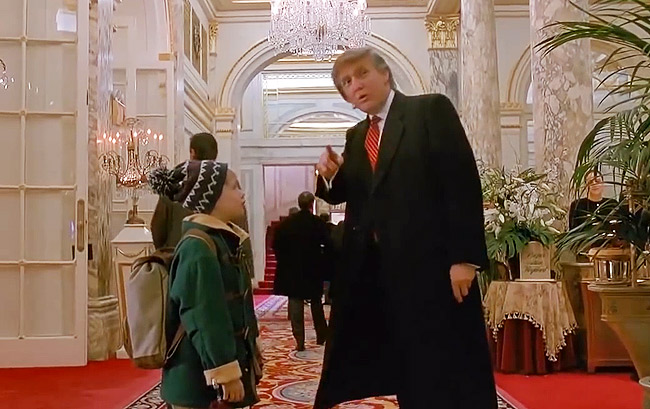
In honor of tonight’s GOP debate, here’s Donald Trump meeting Kevin McCallister (Macaulay Culkin) in 1992’s Home Alone 2: Lost in New York:

Classic Cartoon of the Day:

60 years ago today, the Chuck Jones-directed Merrie Melodies short Jumpin’ Jupiter, starring Sylvester, Porky Pig and the birdlike Jupiterian (currently seen in commercials), opened in theaters. Watch it below.

Movie Trivia of the Day:

Here are 15 things you might not know about Harry Potter and the Sorcerer’s Stone via Screen Crush:

[embedded content]

Cosplay of the Day:

Gladzy Kei gives us “Battle Princess Jasmine” based on the character from Disney‘s Aladdin (via All That’s Cosplay):

Movie Comparison of the Day:

Alex Kalogeropoulos mashed up John Carpenter‘s The Thing and David Robert Mitchell‘s It Follows, to show the similarity of their hidden threats (via Cinematic Montage Creators):

[embedded content]

Filmmaker In Focus:

James Cameron‘s movies are a “cinema of flesh and metal,” according to this video by Martin Kessler:

[embedded content]

Movie Location Vacation of the Day:

Here’s a side-by-side view of what the suburban neighborhood used for the setting of Edward Scissorhand looks like today, in case you were hoping to ever look for the pastel-colored houses (via /Film):

25 Years Ago Edward Scissorhands was filmed near my house

Classic Trailer of the Day:

Russ Meyer‘s cult classic Faster, Pussycat! Kill! Kill! turns 50 years old today. Watch the original trailer below.

[embedded content]

Send tips or follow us via Twitter:

and

This entry passed through the Full-Text RSS service – if this is your content and you’re reading it on someone else’s site, please read the FAQ at fivefilters.org/content-only/faq.php#publishers.


No Image

Ferguson Businesses Struggle To Rebuild Post-Riots

Sam's Meat Market was looted and vandalized at least three times during the unrest in Ferguson, Mo., last year.
4:44

Download

Sam’s Meat Market was looted and vandalized at least three times during the unrest in Ferguson, Mo., last year. Cheryl Corley/NPR hide caption

itoggle caption Cheryl Corley/NPR

Businesses in Ferguson, Mo., are bracing as the city prepares for peaceful protests marking the one-year anniversary since it was embroiled in violence following the death of 18-year-old Michael Brown. Brown was unarmed when he was shot by police officer Darren Wilson on Aug. 9. In November, many businesses were looted, vandalized and set on fire after a grand jury decided to not indict Wilson. Since then businesses have been working to rebuild.

There are two main business districts in Ferguson, one in the downtown area along North and South Florissant Ave., and the other on West Florissant, not far from where Brown was killed by then police officer Darren Wilson.

Along West Florissant Ave., there are some empty lots where once thriving businesses were located. Five buildings in Ferguson and several more in neighboring Dellwood were set on fire during the unrest after Brown’s death. Nearly all have been demolished and most are being rebuilt.

Sheila Sweeney, interim CEO of the St. Louis Economic Development Partnership, points out barbershops, cellphone stores and others that suffered less damage.

I think there’s a general sense of growth that most of them feel. Some are still obviously in need of assistance and a customer base is kind of starting to grow back, and it’s all going forward,” Sweeney says.

The partnership, banks and the state have given about $750,000 to more than 70 businesses in the region — either grants or loans — some at zero percent interest. St. Louis County is funding a matching grant program to help businesses pay the cost of fixing up their facades.

The smoldering remains of a beauty supply store in Ferguson, Mo., in November. Unrest gripped the city after a grand jury decided not to indict police officer Darren Wilson in the shooting death of Michael Brown.

The smoldering remains of a beauty supply store in Ferguson, Mo., in November. Unrest gripped the city after a grand jury decided not to indict police officer Darren Wilson in the shooting death of Michael Brown. Cristina Fletes-Boutte /TNS/Landov hide caption

itoggle caption Cristina Fletes-Boutte /TNS/Landov

At Sam’s Meat Market, there’s an open sign out front but the owner doesn’t want to talk. The grocery store sits back off the road. It was looted and vandalized at least three times during the unrest. Marquess Mull, who often cleans the floors of area businesses, says he expected the market to reopen after it was looted the first time.

But the second and third time, woo, it could take a lot out of a person,” Mull says. “I know it took a lot out of him just to really come back and get that mindset to come back, but this store is definitely important to the community.”

But others don’t feel as positive about doing business in Ferguson.

Dionneshea Forland has been in business for 10 years running Missouri Home Health and Therapy out of an office building on West Florrisant. She had to move out last August and again in November. Vandals stole computers and office furniture. Her clientele dropped because therapists weren’t comfortable coming to the area. Her client base is slowly growing, but Forland is still moving out.

I think businesses are having a hard time with coming back to where they were at before the incident happened,” Forland says. “I think the visual when you ride down West Florissant is not a good visual.”

Ferguson Mayor James Knowles says the city is making progress and even attracting new business. He says perceptions about West Florissant are caused in part by people he says are taking advantage of a situation.

“It’s very difficult when you have a group of 30 kids that show up on the lot of McDonalds scream, yell, intimidate people, scare people and claim it’s their right to do it, and it has nothing to do with any movement,” he says.

Knowles says the good news is that Ferguson will have more businesses overall than last year — among them, a call center that a managed health care company plans to open, creating up to 200 jobs. And Starbucks will locate a shop on West Florissant.

Jerome Jenkins, who owns a diner called Cathy’s Kitchen in downtown Ferguson, says the crowds are good at breakfast and lunch but it’s slower at night. People still unsure if they should come out after 5,” he says.

While some may view Ferguson as a city scarred by violence, Jenkins calls it a goldmine.

“So Ferguson will not fail, and we will rise out of the ashes from a riot not because we have this great idea but because we are surrounded by economic development,” he says.

Other business leaders say they just want people to recognize all the work that’s been done in the past year to help bring the community back.

This entry passed through the Full-Text RSS service – if this is your content and you’re reading it on someone else’s site, please read the FAQ at fivefilters.org/content-only/faq.php#publishers.


No Image

Will Brazil Be Ready For Summer Olympics? The Athletes Weigh In

2:20

Download

In Brazil, the countdown has begun for the 2016 Summer Olympics. Brazilian organizers say everything is on track, but concerns persist over the water quality for some of the events.

Transcript

AUDIE CORNISH, HOST:

It’s a year until the start of the Summer Olympics in Rio de Janeiro and despite worries over construction quality and delays, Brazil is promising that everything is on track. All this week, Rio has been running Olympic test events. NPR’s Lourdes Garcia-Navarro spent this morning at one venue, itself the subject of controversy over the quality of its water.

LOURDES GARCIA-NAVARRO, BYLINE: The rowing Olympic test matches are underway in Rio de Janeiro’s lagoon. It’s a beautiful, cloudless day, and there is, as you can hear, a lot of excitement.

UNIDENTIFIED CROWD: (Chanting) U.S.A. U.S.A. U.S.A.

JENNIFER MOFFAT: I am beyond excited. We’ve been looking forward to this for months, and I just can’t believe it’s finally happening.

GARCIA-NAVARRO: That’s Jennifer Moffat from Manlius, N.Y., who’s here watching her daughter row. These test events allow organizers to make sure that facilities are working and to run through operations – kind of like dress rehearsals. And so far, so good on what’s happening on the surface of the water. Last week though, an Associated Press investigation found that the water quality here is basically equivalent to raw sewage. So we decided to ask one of the U.S. coaches here about whether or not there should be a change of venue.

CONAL GROOM: The conditions have been great. The water is a great lake to row on and pretty. It’s fair. So if FISA has us racing – if the – our governing body has us racing, then we’re not worried.

GARCIA-NAVARRO: That’s Conal Groom, who coaches the men’s sculling team. He says at this point, most Olympians have been training for this course.

GROOM: It’s a sport that looks really simple – a bunch of round buoys in a body water – but there’s a lot of technical stuff. You know, the athletes and the infrastructure have just put too much work to prepare for this course, this setting.

GARCIA-NAVARRO: Other athletes agreed. Both the world sailing and rowing bodies have said they will be testing the waters for viruses, something that they weren’t doing before, but they haven’t called for a change of location. And Rio is promising it will try and improve water conditions before the games. So it seems for now, all will go ahead as planned.

But as one Brazilian resident of the city quipped to me outside the rowing venue, I’m sure it’ll be a fine for the athletes, but we will have to deal with our terrible water long after the Olympians are gone. Lourdes Garcia-Navarro, NPR News, Rio de Janeiro.

Copyright © 2015 NPR. All rights reserved. Visit our website terms of use and permissions pages at www.npr.org for further information.

NPR transcripts are created on a rush deadline by a contractor for NPR, and accuracy and availability may vary. This text may not be in its final form and may be updated or revised in the future. Please be aware that the authoritative record of NPR’s programming is the audio.

This entry passed through the Full-Text RSS service – if this is your content and you’re reading it on someone else’s site, please read the FAQ at fivefilters.org/content-only/faq.php#publishers.