Articles by admin

No Image

Online Magazine Searches For The Worst Store Name Puns

3:34

Download

NPR’s Ari Shapiro and Audie Cornish talk to Reyhan Harmanci of the website Atlas Obscura about its reader contest to select the worst businesses that use puns in their names.

Transcript

AUDIE CORNISH, HOST:

There is a subset of puns – businesses that name themselves based on a pun. You know, the kind of thing you see on a storefront sign that makes you groan or maybe laugh, depending on your mood.

ARI SHAPIRO, HOST:

So, for example, I’ve been living in East London for the last couple years in the neighborhood where actually Jack the Ripper operated, and there is a hair salon near my apartment called Jack The Clipper.

CORNISH: That’s a very good one. Another good one is an e-cigarette emporium named Darth Vapor.

SHAPIRO: You know, if there were only a map of businesses with names like this so you could seek them out or maybe steer clear of them.

CORNISH: Well, Ari, it’s happening.

SHAPIRO: Yes.

CORNISH: Reyhan Harmanci is on the case. She’s with the online magazine Atlas Obscura, and she’s asking for you or anyone to submit your favorite punny business names. Reyhan Harmanci, welcome to the show.

REYHAN HARMANCI: Thank you, guys.

CORNISH: First, tell us how this idea came about.

HARMANCI: Well, it’s been a source of much discussion in Atlas Obscura group chat room, and being a place called Atlas Obscura, we traffic in a lot of maps. So this has been a pet project for the last few months.

CORNISH: It’s like lunchroom chatter, basically, you guys going back and forth about maybe business names you’ve seen that you thought, oh, that’s a groaner.

HARMANCI: Yeah. And one of the reasons why we decided to it is when we would bring it up to other people, their response was like, oh, man, there was a place in my hometown or I just drove by a weird nail salon. It felt like it was ripe for some mapping.

SHAPIRO: What kind of trends are you seeing with the submissions you’ve gotten so far?

HARMANCI: Well, it’s funny you mentioned a hair salon in London. I just looked today. We have had already over 600 submissions, and there’s at least 10 different Curl Up And Dyes.

CORNISH: (Laughter).

SHAPIRO: Oh, D-Y-E, Curl Up And Dye.

HARMANCI: Yes, D-Y-E, yeah. So we’re seeing – I mean, I think the bulk have been categorized as restaurants – a lot of Thai restaurants in there. Washington, D.C., is extremely well represented. I think it’s the city with the most submissions thus far.

SHAPIRO: Here in D.C., we have a Bow Tie. We have a Titanic.

HARMANCI: Yes, yes.

CORNISH: Oh, Titanic, yeah, I never thought about that.

HARMANCI: Yes. Other places have a Thaiphoon, appeThaizing. For Vietnamese restaurants, there’s also a lot of submissions involving pho.

SHAPIRO: P-H-O – the Vietnamese soup.

HARMANCI: Yes, exactly, the soup. Beverly Hills apparently has a 9021Pho.

SHAPIRO: Pho.

CORNISH: Very nice.

SHAPIRO: Reyhan Harmanci, how do you anticipate people using this map? Are they going to seek these places out or are they going to avoid them as best they can?

HARMANCI: I will leave that to the discretion of the reader. I think that puns – it’s a funny thing. It’s not like a ha ha thing. It’s kind of like a gut feeling of, like, oof.

(LAUGHTER)

SHAPIRO: Can you distinguish between a great pun and a terrible pun, or are they actually the same thing?

HARMANCI: I think they’re actually the same thing.

CORNISH: Really?

HARMANCI: Yes. I think that the feeling you get from a great pun and a terrible pun is quite similar.

CORNISH: (Laughter).

SHAPIRO: I saw a falafel shop called Pita Pan.

(LAUGHTER)

SHAPIRO: Isn’t that good?

CORNISH: I see how you’re…

SHAPIRO: Pita Pan.

CORNISH: You’re amused. I’m appalled. You’re right. It’s kind of like two sides of the same coin.

SHAPIRO: Two halves of the same coin.

(LAUGHTER)

CORNISH: Reyhan Harmanci – she’s from the online magazine Atlas Obscura. She’s partnering with the news aggregator Digg to create an interactive map of American businesses with pun-based names. Thank you so much for speaking with us.

HARMANCI: Thank you guys so much.

CORNISH: And for people who still want to sneak in some of their top choices, how can they submit to the map?

HARMANCI: You can go to AtlasObscura.com/puns.

Copyright © 2015 NPR. All rights reserved. Visit our website terms of use and permissions pages at www.npr.org for further information.

NPR transcripts are created on a rush deadline by a contractor for NPR, and accuracy and availability may vary. This text may not be in its final form and may be updated or revised in the future. Please be aware that the authoritative record of NPR’s programming is the audio.

This entry passed through the Full-Text RSS service – if this is your content and you’re reading it on someone else’s site, please read the FAQ at fivefilters.org/content-only/faq.php#publishers.

No Image

Why Your Doctor Won't Friend You On Facebook

Patients of the Minnesota-based St. Cloud Medical Group can follow a public page on Facebook.

Patients of the Minnesota-based St. Cloud Medical Group can follow a public page on Facebook. Meredith Rizzo/NPR hide caption

itoggle caption Meredith Rizzo/NPR

Doctors’ practices are increasingly trying to reach their patients online. But don’t expect your doctor to “friend” you on Facebook – at least, not just yet.

Physicians generally draw a line: Public professional pages – focused on medicine, similar to those other businesses offer – are catching on. Some might email with patients. But doctors aren’t ready to share vacation photos and other more intimate details with patients, or even to advise them on medication or treatment options via private chats. They’re hesitant to blur the lines between personal lives and professional work and nervous about the privacy issues that could arise in discussing specific medical concerns on most Internet platforms.

Some of that may eventually change. One group, the American College of Obstetricians and Gynecologists, broke new ground this year in its latest social media guidelines. It declined to advise members against becoming Facebook friends, instead leaving it to physicians to decide.

“If the physician or health care provider trusts the relationships enough … we didn’t feel like it was appropriate to really try to outlaw that,” said Nathaniel DeNicola, an OB-GYN and clinical associate at the University of Pennsylvania, who helped write the ACOG guidelines.

But even the use of these professional pages raises questions: How secure are these forums for talking about often sensitive health information? When does using one complicate the doctor-patient relationship? Where should boundaries be drawn?

For patients, connecting with a physician’s office or group practice on Facebook can be a simple way to keep up with basic health news. It’s not unlike following a favorite sports team, your child’s middle school or the local grocery store.

One Texas-based obstetrics and gynecology practice, for instance, uses a public Facebook page to share tips about pregnancy and childcare, with posts ranging from suggestions on how to stay cool in the summer to new research on effective exercise for post-birth weight gain. Practices have also been known to share healthy recipes, medical research news, and scheduling details for the flu shot season.

“I have people come up to me and say, ‘I follow you on Facebook — thank you for posting this particular article. It helped me and my husband and my family,’ ” said Lisa Shaver, a primary care physician based in Portland, Ore.

But unless they’re already friends, she won’t add patients to her personal account, where, she said, she posts less health information and more cat videos.

Historically, professional groups including the American College of Physicians and American Academy of Family Physicians have advised against communicating through personal Facebook pages. The American Medical Association notes social media can be a valuable way to spread health information, but urged doctors in its 2010 guidelines to separate their personal and professional online identities to “maintain professional boundaries.”

Finding ways to use Facebook and other forms of social media to connect with patients — even if it may just be through professional pages — fits a trend in which patients seek more equal footing with their doctors, said Zack Berger, an assistant professor of medicine at the Johns Hopkins School of Medicine who studies patient-doctor relationships and social media.

It also follows what James Colbert, a hospitalist at Massachusetts-based Newton Wellesley Hospital, described as the growing consumer approach to medicine, including the notion that patients should be able to reach their physicians at all hours. Colbert is also an instructor at Harvard Medical School who researches how patients want to fit social technology into their health care.

Email can be a particularly convenient method, though it isn’t without concerns. Eva Schweber, 44, emails her doctor from a personal account and sends messages through an online portal — a more digitally secure system that is being adopted by a growing number of practices. The portal, she said, is for discussing complex, specific information. She’ll email her doctor from her personal email for less private concerns: scheduling, filling prescriptions and asking if certain symptoms might warrant a checkup.

“The unsecure email is easier, in that I can do it from my phone, my tablet, whatever,” said Schweber, of Portland, Ore.

In a recent study published in the Journal of General Internal Medicine, almost 20 percent of patient respondents reported trying to contact doctors through Facebook, and almost 40 percent through email. “Patients want to communicate with doctors [in whatever way] is convenient,” said Joy Lee, a postdoctoral research fellow at the Johns Hopkins Bloomberg School of Public Health, and the study’s lead author.

Doctors don’t yet seem to share that enthusiasm, Colbert said.

Meanwhile, security questions persist.

Social networking platforms aren’t usually digitally encrypted, increasing the odds they could get hacked or shared with third parties. The same worries hold true for other, casual forms of online communication such as email and text-messaging.

That means doctors who discuss specific health concerns with patients through those could break the Health Insurance Portability and Accountability Act, the patient privacy law.

“Those concerns are always going to be there,” said David Fleming, past president of the American College of Physicians. “How private is it when we share, when we talk to people? … Once I’ve written it or once I’ve emailed it, it’s gone, and I have no control.”

But because HIPAA was written before email and social media’s ascent, it may not address patient preferences or behavior, Colbert said. With more patients becoming comfortable using personal accounts for health needs, he said, the law perhaps deserves another look.

“Should we allow patients to be able to share or send messages without going through these privacy safeguards if they’re willing to do so? Or do we say that that’s not safe and even if patients don’t care about privacy we need to protect them,” he said. “That’s an open question.”

That public nature is a real worry for patients like Katie Cardenas, 45, who lives in Garner, N.C. She doesn’t think Facebook is secure enough for personal medical details. For sensitive information, she’ll usually send messages through a patient portal, the more secure website her doctor’s practice has set up.

Doctors could address that, several said, by using social media in other ways. These include maintaining active Twitter presences and professional Facebook pages for less-tailored health tips. That way, patients can get useful information and a sense of their doctors as people, but privacy stays intact and physicians maintain distance.

At the Minnesota-based St. Cloud Medical Group, patients can follow a public page. Doctors who are part of the practice post updates with safety tips and seasonal health reminders, or use the page to coordinate and publicize small projects, such as a week-long initiative geared to reducing children’s screen time.

Julie Anderson, a family physician who is also part of the practice, sees the value in this option, but doesn’t personally befriend patients on Facebook. Beyond patient privacy, she said, she fears blurring her personal and professional lives, or patients using that access to seek extra care when she’s off the clock.

“I’ve known colleagues that have friended somebody and have had inappropriate questions asked online, in terms of kind of abusing service,” she said. “Or abusing that … Facebook friendship, where they’re asking medical advice and you’re not even their physician.”

This entry passed through the Full-Text RSS service – if this is your content and you’re reading it on someone else’s site, please read the FAQ at fivefilters.org/content-only/faq.php#publishers.


No Image

Today in Movie Culture: 'Toy Story' and 'Straight Outta Compton' Meet Batman Villains and More

Here are a bunch of little bites to satisfy your hunger for movie culture:

Movie Mashup of the Day:

Can you guess what “Toy Squad” is? That’s right, a mashup featuring footage from Toy Story and audio from the Suicide Squad trailer (via Cinematic Montage Creators).

[embedded content]

Song Parody of the Day:

Speaking of DC Comics characters, in honor of Straight Outta Compton holding onto its box office crown this weekend, here’s a new parody of the title song as performed by Batman villains. Here is “Straight Outta Gotham”:

[embedded content]

Supercut of the Day:

Speaking of Batman, he may a good guy, but he’s also a killer. Here is a supercut counting all the lives he’s ended in all of his movies:

[embedded content]

Vintage Image of the Day:

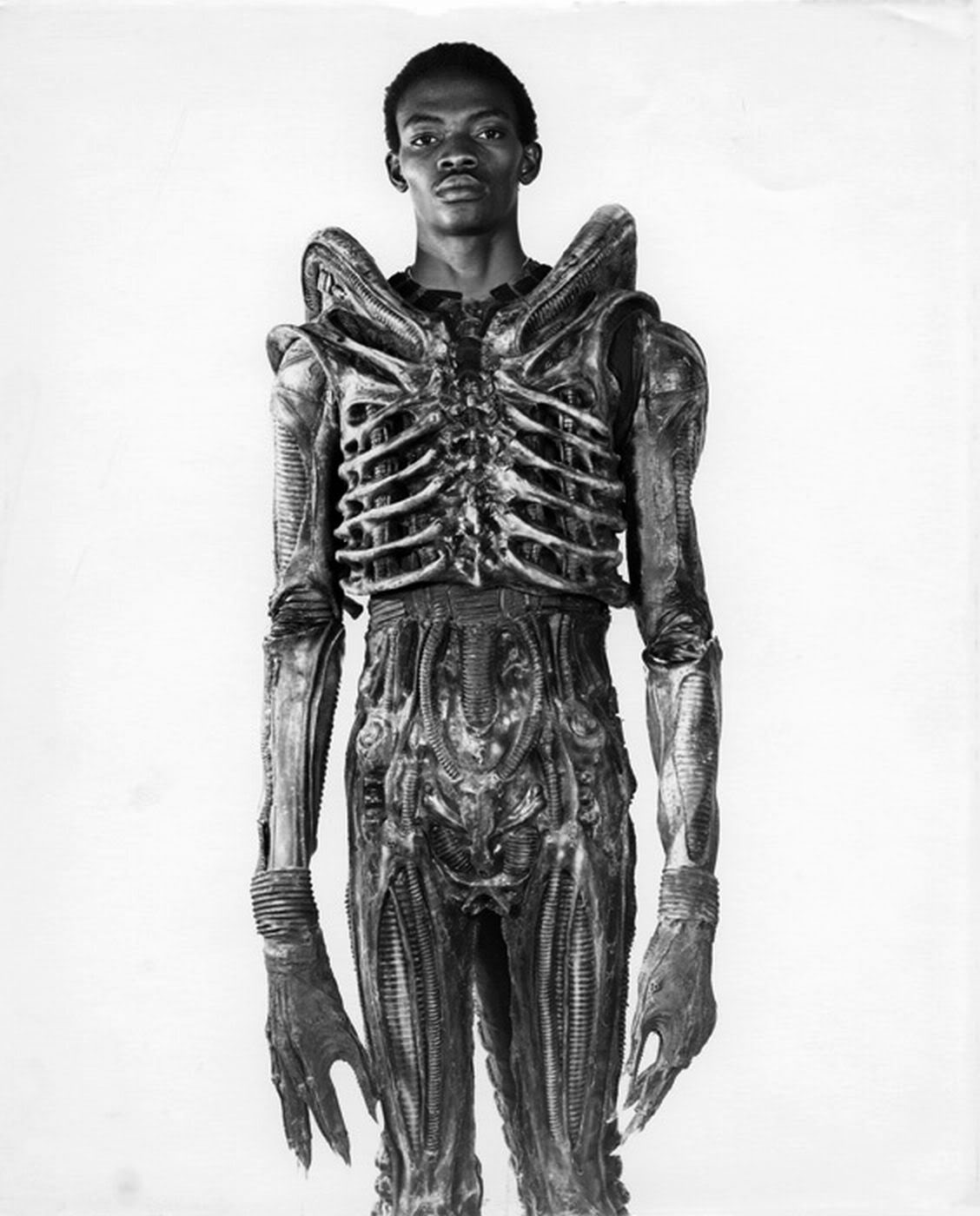
Yesterday was the birthday of Bolaji Badejo, the 6’10” (some places list him at 7’2″) actor who played the alien in Alien. He would have turned 62, but he died 23 years ago. Here he is in the iconic costume:

Cosplay of the Day:

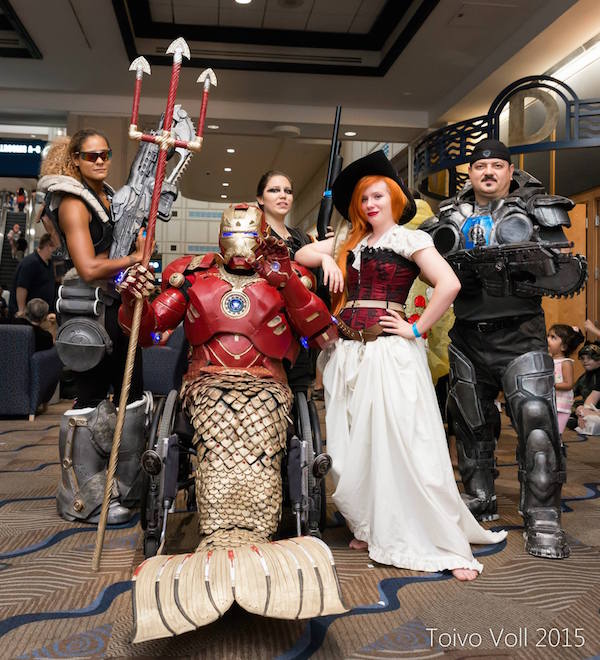
Does Iron Man‘s armor work underwater? Either way, this Iron Merman cosplay looks like a great way to get the Avenger seaworthy (via Fashionably Geek):

Star Wars of the Day:

I’ll let the Facebook post below explain today’s adorable bit of Star Wars fandom, which is followed by a video of the fan in action at Disneyland (via Fashionably Geek).

[embedded content]

Fan Poster of the Day:

Fitting in with our earlier post on The Karate Kid today, here’s a fan-made poster representing the fight between Johnny and Daniel as cobra vs. crane (via Geek Tyrant):

Video Essay of the Day:

We’ve seen plenty of supercuts of people breaking the fourth wall in movies. Now here’s a video essay from Now You See It on how the technique is used in those movies:

[embedded content]

Movie Redo of the Day:

How do they tell the story of Mad Max: Fury Road in the world of Mad Max? Probably through oral history and spoken legend, but maybe through hieroglyphics, like so (via Neatorama):

Classic Trailer of the Day:

Sam Raimi‘s Darkman hit theaters on this day 25 years ago, and although it’s only considered a cult classic today, it was actually the box office champ its opening weekend. Watch the original trailer for the superhero movie below.

[embedded content]

Send tips or follow us via Twitter:

and

This entry passed through the Full-Text RSS service – if this is your content and you’re reading it on someone else’s site, please read the FAQ at fivefilters.org/content-only/faq.php#publishers.


No Image

A Nasty Place On Wall Street: What Kind Of A Dive Is This?

Trader William McInerney keeps an eye on developments at the New York Stock Exchange, Monday.

Trader William McInerney keeps an eye on developments at the New York Stock Exchange, Monday. Richard Drew/AP hide caption

itoggle caption Richard Drew/AP

Stocks opened Monday with a swan dive: The Dow Jones industrial average plunged about 1,000 points, or 5 percent, in just minutes.

By midday, enough brave buyers had waded back in to push up prices — up to where losses were only around 1 percent or so.

But that didn’t last. Around 3 p.m., the Dow dropped again, sliding nearly 700 points.

Stress-filled minutes ticked down until 4 p.m.: CLANG, CLANG, CLANG.

The closing bell rang. Brows were wiped, and commentators scrambled to explain why investors had seen both panic selling and panic buying.

The Dow ended down 588 to 15,871, a drop of nearly 3.6 percent. The S&P 500 index closed off 3.9 percent, at 1,893.21, and the Nasdaq ended down 3.8 percent to 4,526.25.

Given the earlier free falls, that seemed somehow not so terrible.

But really, the day was bad. The closely watched S&P 500 measure is now down 11 percent since its May peak, well into “correction” territory.

When stocks are down at least 10 percent, Wall Street analysts use that bland term, “correction,” to characterize what has happened.

Workers who have just seen their retirement savings shrink may use less polite language.

During the financial crisis of 2008-09, many families lost a great deal of their savings. So the bull market of the past several years was merely restoring what had been lost. Having that restoration now “corrected” is painful.

Monday’s misery began in China. The main Shanghai stock index fell 8.5 percent. Then the selloff rolled over to Europe, where most stock indexes closed down about 5 percent.

By the time trading began in New York, everyone was expecting a drop. They got a doozy.

Why is this happening? Most analysts are pointing to China. For years, China had been growing rapidly, driving up demand for raw materials like steel, aluminum, corn, copper, oil and so much more. That demand buoyed the global economy.

But now, China’s blistering growth pace is slowing.

It’s clear “that the past decade has been China’s ‘Roaring 20s’ — and that the chickens are now coming home to roost,” said Robert Hockett, a Cornell professor.

And here’s what made that worse: The low interest rates of recent years had allowed many companies around the world to expand, so more grains were planted, more iron ore was mined, more steel was poured.

Now the world has too much supply and too little demand. That imbalance has sent commodity prices plunging, collectively down by about a third from last year. In turn, investors are dumping stocks in commodity-producing companies.

So investors have to decide: Is this selling wave a short-term correction? Or is this the start of a long-lingering bear market?

For workers who someday would like to retire and go fishing, the answer really matters.

This entry passed through the Full-Text RSS service – if this is your content and you’re reading it on someone else’s site, please read the FAQ at fivefilters.org/content-only/faq.php#publishers.


No Image

Katrina Shut Down Charity Hospital But Led To More Primary Care

Attorney Ermence Parent stands on the porch of her New Orleans home. Two hip replacements eased Parent's pain and got her exercising again, she says. A doctor at one of the city's newly renovated clinics made the diagnosis.
5:47

Download

Attorney Ermence Parent stands on the porch of her New Orleans home. Two hip replacements eased Parent’s pain and got her exercising again, she says. A doctor at one of the city’s newly renovated clinics made the diagnosis. Edmund D. Fountain for NPR hide caption

itoggle caption Edmund D. Fountain for NPR

Five years ago, New Orleans attorney Ermence Parent was struggling to find out what was wrong with her leg. She was 58 years old, and her right leg hurt so much that she needed a cane. That was not only painful, but frustrating for a woman who routinely exercised and enjoyed it. Parent sought advice from several doctors and a chiropractor, but got no diagnosis.

Then she made an appointment at the newly renovated St. Thomas Community Health Center, a primary care clinic dedicated to providing quality care for people regardless of insurance status. Most patients, including Parent, are on Medicaid or Medicare. Some pay on a sliding scale. Parent saw internist Dr. Mary Abell, who is now medical director of the clinic.

Abell took a careful medical history, looked at Parent’s X-rays and watched as she walked up and down the hallway

“‘Baby, your hips are going,’ ” the doctor told Parent. The attorney had “bone-on-bone” arthritis. Without surgery, the doctor said, “‘in about six months you’re going to be in a wheelchair.’ “

Instead, about a month later, Parent received her first hip replacement, and nine months later, her second.

Today, she’s back to exercising, has lost weight and sleeps more soundly. “You know, changing those two hips just rejuvenated me; it gave me years back on my life,” Parent says.

The shuttered main entrance of New Orleans' Charity Hospital (left), after storm and flood damage (right) from Hurricane Katrina closed it down in 2005.

The shuttered main entrance of New Orleans’ Charity Hospital (left), after storm and flood damage (right) from Hurricane Katrina closed it down in 2005. Robyn Beck/AFP/Getty Images; Don Ryan/AP hide caption

itoggle caption Robyn Beck/AFP/Getty Images; Don Ryan/AP

When Katrina hit in 2005, many health facilities were destroyed or otherwise shut down, including urgent care centers, nursing homes, pharmacies and hospitals. The renowned and beloved Charity Hospital, a public facility that had served the city’s poor for centuries, was forced to close.

Many said the loss of the hospital was devastating. Charity represented a precious connection to health from childhood through old age.

But the attachment people felt to the old institution may have been based more in sentiment than fact, says Abell, especially when it came to primary care. She says patients had to rely on a trip to the emergency room if they didn’t have health insurance and had ongoing chronic problems.

“Before Katrina, there was no primary care or preventive medicine — really, truthfully — for patients,” Abell says. “None. Zero.”

Back then, a patient with a medical problem that wasn’t acute often had to wait months to schedule an appointment, she says. And once they showed up for the appointment, they might have to wait all day — or even end up with the wrong clinic or with the wrong physician. Abell says the situation was “very disrespectful” to patients.

Today is a “different day,” Abell says. In recent years, a network of renovated and newly built primary care health clinics has opened, which she and New Orleans residents hope will bring a new degree of stability to the health care that the city’s low-income residents get.

Katrina was devastating, Abell says, but after its ruin, New Orleans received a dramatic infusion of cash from the state and federal governments, and from private foundations. The funds resulted in new hospitals, new clinics and an enormous state-of-the-art facility that replaced the old Charity Hospital.

University Medical Center New Orleans on Aug. 1, when the $1 billion facility welcomed its first patients.

University Medical Center New Orleans on Aug. 1, when the $1 billion facility welcomed its first patients. Brett Duke/The Times-Picayune/Landov hide caption

itoggle caption Brett Duke/The Times-Picayune/Landov

University Medical Center New Orleans, which opened this month, is just a few blocks from the shuttered hospital. The new facility’s gleaming buildings, hundreds of patient beds and high-tech specialty care, stand in startling contrast to the old institution.

Abell has high hopes the new medical center will provide timely, excellent care for both acute and chronic needs. And her biggest praise is for the new network of primary care clinics.

“Today, a patient can call and get same-day primary care,” Abell says, an improvement that Ermence Parent attests to, as well. A few months ago, when Parent’s leg became swollen, she called the clinic and was seen right away.

In a recent poll of New Orleans residents by NPR and the Kaiser Family Foundation, 72 percent of adults agreed that progress has been made in the availability of medical facilities and services in the city. But the majority of residents — 64 percent — also said more needs to be done to provide care for people who are uninsured and have low incomes.

And among African-Americans, nearly half said they’re very worried that health care services may not be available when they need them. Only 13 percent of white adults said they are very worried in that way.

According to Abell, one of the biggest remaining weaknesses in the current system in New Orleans is timely access to specialty care like orthopedics, neurology and cardiology.

It’s a problem, she says, “when you can’t get your patient in to be seen for an issue that’s evolving, and you know that some specialty advice would be helpful.” She says she’s had to rely on personal connections ­— and 30-plus years of experience working in the city — to help her poorer patients gain timely access to specialty care. She’s anticipating that the new University Medical Center will help remedy that.

That hope extends to mental health care, as well. Rashain Carriere-Williams, who directs program operations at Boys Town Louisiana, a community organization that helps troubled families and children, says the need for mental health treatment in the city is huge.

After Katrina, psychiatrists fled New Orleans, along with many other people. Unfortunately, Carriere-Williams says, most psychiatrists never came back. In the entire city, there are now only two or three psychiatrists who accept Medicaid and are willing to see her patients and their families, Carriere-Williams says.

“A lot of times it’s easier to get them in to see a psychologist, because there are more of those,” she says. But psychologists can’t prescribe the medication some patients need.

Although the new hospital has some beds dedicated to patients in need of mental health treatment, the number of beds isn’t nearly high enough, she says.

She’s been faced with heartbreaking situations — including one New Orleans boy who recently threatened suicide and had to be placed on suicide watch. The only facility with an inpatient bed was a six-hour drive from the city. The family drove their child there for a 72-hour hold, and the child temporarily got the needed care, says Carriere-Williams. But the experience was grueling, at a time when the family was extremely fragile.

Carriere-Williams says she’s hopeful the new clinics and hospitals will begin to fill the big gaps in the community’s mental health needs. But, based on Louisiana’s and New Orleans’ history in that regard, she says, she’s skeptical.

This entry passed through the Full-Text RSS service – if this is your content and you’re reading it on someone else’s site, please read the FAQ at fivefilters.org/content-only/faq.php#publishers.


No Image

Ball State Student Wins Tuition With Half-Court Shot

0:29

Download

[embedded content]
YouTube

Lem Turner made the shot during a freshman pep rally at Ball State University in Indiana. With the half-court shot, he won free tuition for a semester.

This entry passed through the Full-Text RSS service – if this is your content and you’re reading it on someone else’s site, please read the FAQ at fivefilters.org/content-only/faq.php#publishers.


No Image

Tiger Woods Falls Short In Quest To Win Regular Season's Final Tournament

Tiger Woods was unable to end his two-year winless streak on the PGA tour, despite leading early on in the Wyndham Championship in Greensboro, N.C.

Tiger Woods was unable to end his two-year winless streak on the PGA tour, despite leading early on in the Wyndham Championship in Greensboro, N.C. Chuck Burton/AP hide caption

itoggle caption Chuck Burton/AP

It had the makings of a storybook ending.

Tiger Woods, who’s in the midst of the worst stretch of golf in his legendary career, was on the verge of quieting all the critics who said he was finished. All he had to do was something he hasn’t done in two years — win a golf tournament.

A victory at Wyndham Championship Sunday would not just have given him 80 career victories, two behind the career record set by the great Sam Snead; it would also have propelled Woods into the playoffs. A solo second-place finish would have left him with a slim chance.

As the Associated Press reports:

“The dominant storyline all week at Sedgefield Country Club was the mere presence of Woods, who needed a victory to earn a spot in the FedEx Cup playoffs opener next week.”

Woods, wearing his trademark red shirt for the final day, entered Sunday trailing by just two shots to the overnight leader Jason Gore. The stage was set for something remarkable to happen.

But the magic never came. Woods couldn’t keep pace with the leaders in the first part of his round, punctuated by a triple-bogey (three shots over par) on the 11th, hole which effectively sunk his playoff quest. He finished tied for 10th place.

As CBS Sports reports, it wasn’t all bad for Woods.

“Even still, Woods should takeaway plenty of positives from the Wyndham Championship. It was his best tournament finish since the 2013 Barclays and he was driving the ball and striking the ball as well as he has in two years all four days. He looks confident with his swing and comfortable trying to hit different shots all the way through his bag.”

People were so nice this entire week, tons of respect for Greensboro. Very cool to see @Love3d get another win here.

— Tiger Woods (@TigerWoods) August 23, 2015

For Woods, the tournament’s close wasn’t a picture-perfect happy ending — but for another veteran golfer, it was.

Davis Love III – who at 51 years old—shot a six-under-par 64, winning by one stroke over Gore. He became the third-oldest winner in PGA Tour history, finishing at 17-under 263.

This entry passed through the Full-Text RSS service – if this is your content and you’re reading it on someone else’s site, please read the FAQ at fivefilters.org/content-only/faq.php#publishers.


No Image

Stocks Fall; Dow Down 10 Percent Since May

2:18

Download

Stock markets around the world plunged this week as investors absorbed more evidence that China’s economy is slowing. In the US, the Dow suffered its worst week since 2011.

Transcript

SCOTT SIMON, HOST:

The stock market had its worst one-day crash in four years yesterday. The Dow Industrial Average plunged 531 points, and that was it in just one day. Last week saw a global sell-off that sent markets around the world sharply lower. NPR’s Chris Arnold reports.

CHRIS ARNOLD, BYLINE: Investors were dumping stocks overboard like sailors trying to lighten a sinking ship on Friday. The one-word answer as to why, China. China is reporting a surprise slowdown in growth, and investors don’t like that kind of surprise from the world’s second-largest economy.

KAMEL MELLAHI: There is an air of fragility among the Chinese economy.

ARNOLD: Kamel Mellahi is a professor at the Warwick Business School in England, and he studies emerging markets. And he says some slowdown in China is by design. The Chinese government, he says, has been raising the minimum wage and trying to transform the country from a Third World, low-cost manufacturing center into a more mature economy. But rising wages, among other things, means…

MELLAHI: China is becoming less competitive in terms of labor cost and production of cheap goods.

ARNOLD: Now, people who follow China understand this. But the slowdown in manufacturing there was bigger than expected. And that, along with some uncertainty about U.S. interest rates and the weak overall economy in Europe, all this appears to have sparked the sell-off. Still, many money managers so far see this as an orderly correction for stocks and not a panic-driven disaster.

DAVID KOTOK: I think we got a correction. It’s about time.

ARNOLD: David Kotok is chief investment officer of Cumberland Advisors.

And what makes it about time?

KOTOK: Well, markets can’t go up forever. They have to correct. They have to restore balance. To do that, they have to sell off. They have to do it with violence, volatility. They have to make people nervous. That’s good.

ARNOLD: Kotok says it’s good because that’s what stops stocks from getting into dangerous bubble territory. But he says looking over the long term, the U.S. economy is continuing to recover. And over the next few years, he thinks stocks will rise well above where they were before this sell-off. Chris Arnold, NPR News.

Copyright © 2015 NPR. All rights reserved. Visit our website terms of use and permissions pages at www.npr.org for further information.

NPR transcripts are created on a rush deadline by a contractor for NPR, and accuracy and availability may vary. This text may not be in its final form and may be updated or revised in the future. Please be aware that the authoritative record of NPR’s programming is the audio.

This entry passed through the Full-Text RSS service – if this is your content and you’re reading it on someone else’s site, please read the FAQ at fivefilters.org/content-only/faq.php#publishers.


No Image

Baylor Scandal, Dodgers Surge: The Week In Sports

4:02

Download

It’s time now for sports! NPR’s Scott Simon talks to Howard Bryant of ESPN about a sexual assault conviction for a former Baylor University linebacker, and the Philadelphia Phillies of 2008.

Transcript

SCOTT SIMON, HOST:

And it’s now time for sports.

(SOUNDBITE OF MUSIC)

SIMON: Well, that was a good trade. Just three weeks after he was traded from the Milwaukee Brewers to the Houston Astros, Mike Fiers threw a no-hitter for his new team last night. He blanked the LA Dodgers. But the story in college football is grim. A Baylor defensive end was sentenced to six months in prison yesterday for sexual assault. What did Baylor know, and when did they know it? Howard Bryant of espn.com and ESPN the Magazine joins us now from the studios of New England Public Radio. Howard, thanks so much for being with us.

HOWARD BRYANT, BYLINE: Good morning, Scott.

SIMON: And let’s ask, please, about the case in Waco. Sam Ukwuachu has been sentenced 180 days, sexual assault. It’s only part of the story though.

BRYANT: Well, it’s – the story is really the university, Baylor University, knowing that here was a player who had had this issue, and they did nothing. They – there’s a – he said…

SIMON: He was tossed off the Boise State…

BRYANT: He was tossed off the – of the Boise State team, yes. He was a player at Boise State and was dismissed from the team and then transferred to Baylor. And now you have a he-said-he-said back and forth between Baylor Coach Art Briles and the coach at Boise State, Petersen – former coach, who’s now at Washington – about how – about what they knew. And Petersen is adamant that – he told ESPN yesterday that he told Baylor, told Briles, everything about Ukwuachu’s past. And Briles had previously said that they knew nothing, that the University told them nothing, that he had simply had some problems and was depressed over his former girlfriend. But the story is much deeper and much darker than that. And it goes back, once again, to how much do these universities want to know? It goes back to the things that we talk about constantly, about the talent trap of having people with ability and having the rules not apply to them and having the schools not want the rules to apply to them because they’re good players. And once again, now you’ve got a player who is facing 20 years. He got 180 days in jail but 10 years felony probation. And once more, these universities have a responsibility to the other students and to the women who were involved in this as well. There’s more to life than football, and there’s more to this than just their talent. And it’s – Ken Starr has promised an investigation. I think he knows a little bit about investigations (laughter), being the Lewinsky Whitewater guy from a bunch of years ago. So I really feel like this is something that these universities are not going to be able to get away with. But they keep getting away with it, and it’s very sad.

SIMON: Let’s switch to baseball if we could. Chase Utley was traded from the Phillies to the Dodgers this week. Does this mark the passing of an era?

BRYANT: Oh, sure it does. And I think it’s a good era in Philadelphia. Let’s not forget the Philadelphia Phillies were the losingest team in the history of baseball. They were founded in 1883. They’ve won two World Series. One was in 1980, and the other was with this group in 2008. You had Chase Utley and Ryan Howard and Jimmy Rollins and Cole Hamels, and three of them are gone now. And Ryan Howard’s the only one that’s left. But I think that it’s a good salute to Philadelphia. It’s a tough baseball town, and I feel like…

SIMON: Oh, I’ll say.

BRYANT: (Laughter) It’s a very tough baseball town.

SIMON: They threw no-hitters in Philadelphia, right?

BRYANT: That’s right. But if you’re a baseball fan, a generation of fans got to see some winning baseball in Philly. And that core group – we talk about numbers and players, but it’s nice to see that some players – the kids bought some jerseys and the players were still wearing them. And that’s what baseball should be all about.

SIMON: ESPN’s Howard Bryant, thanks so much.

BRYANT: Thank you.

Copyright © 2015 NPR. All rights reserved. Visit our website terms of use and permissions pages at www.npr.org for further information.

NPR transcripts are created on a rush deadline by a contractor for NPR, and accuracy and availability may vary. This text may not be in its final form and may be updated or revised in the future. Please be aware that the authoritative record of NPR’s programming is the audio.

This entry passed through the Full-Text RSS service – if this is your content and you’re reading it on someone else’s site, please read the FAQ at fivefilters.org/content-only/faq.php#publishers.


No Image

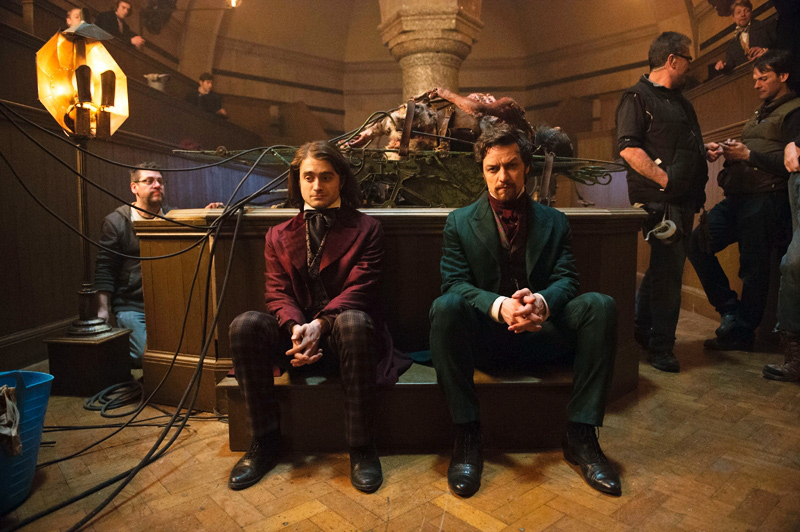
Best of the Week: First Looks at Rogue One and Star Wars Land, New 'Victor Frankenstein' Trailer and More

The Important News

Star Wars Updates: We got our first look at Rogue One (above) and confirmed Colin Trevorrow is directing Star Wars IX. Disney released concept art for Disneyland and Walt Disney World’s Star Wars land. And more images from Star Wars: The Force Awakens.

Disney Dispatch: Disney Animation is taking on Jack and the Beanstalk again. Dwayne Johnson will star in the Jungle Cruise movie.

Franchise Fever: Fantastic Beats and Where to Find Them began production and added Samantha Morton. What We Do in the Shadows is getting a sequel. Prometheus 2 may push back Alien 5. An animated Scooby-Doo movie might start a cinematic universe. Michael Shannon’s character Zod will look oddly different in Batman v Superman: Dawn of Justice.

Casting Net: Cobie Smulders will co-star in Jack Reacher 2. John Boyega will star in The Circle. Laura Linney will co-star in Sully. Chris Evans will star in Marc Webb’s Gifted. Christian Bale will star in Michael Mann’s Ferrari.

New Directors/New Films: Mike Flanagan will direct Ouija 2. James Foley will direct Fifty Shades Darker.

Remake Report: Zorro is returning for a post-apocalyptic movie. The next He-Man movie got a new writer.

Box Office: Straight Outta Compton made history its opening weekend.

The Videos and Geek Stuff

New Movie Trailers: Victor Frankenstein, The Martian, Carol, The Perfect Guy, The Witch, Hell and Back, The Final Girls, Finders Keepers, Scouts Guide to the Zombie Apocalypse and Blunt Force Trauma.

Watch: An honest trailer for Kingsman: The Secret Service.

See: The cast of Suicide Squad tattooing each other.

Watch: A feature on The Peanuts Movie and an animated promo for Maze Runner: The Scortch Trials.

See: The 10 best uses of the Straight Outta Compton meme.

Watch: 3 Mad Max: Fury Road deleted scenes. And the badass Mad Max video game promos.

See: Art depicting Ronda Rousey as Captain Marvel. And art depicting John Cena as Shazam. And art depicting Evangeline Lilly as The Wasp.

Learn: How to make your own Forrest Gump type movie.

Watch: A video essay on auteurism in the Mission: Impossible movies.

See: The best of the Star Wars: The Force Awakens fan art contest entries.

Watch: Jurassic World in 90 seconds in Lego.

Learn: Why nobody can tell Clark Kent is Superman.

See: What the owner of the Goonies house has done to the place. And the horror movie house just put on the market.

Learn: Which actor Johnny Depp’s Pirates of the Caribbean character was almost named after.

Check Out: A countdown of the 10 best film movements of all time.

See: This week’s best new movie posters.

Our Features

Disney’s D23 Expo Guides: Everything we learned about future Pixar and Disney Animation release. And everything we learned about the future of Star Wars movies. And everything we learned about Star Wars theme park attractions.

Classic Movie Guides: Celebrating the 20th anniversary of The Usual Suspects. Celebrating the horror classic Suspiria.

Comic Book Movie Guides: Comparing Fantastic Four to the worst comic book movies. What happens after Hugh Jackman stops playing Wolverine?

Home Viewing: Here’s our guide to everything hitting VOD this week. And here’s our guide to everything hitting DVD this week.

and

MORE FROM AROUND THE WEB:

This entry passed through the Full-Text RSS service – if this is your content and you’re reading it on someone else’s site, please read the FAQ at fivefilters.org/content-only/faq.php#publishers.