Articles by admin

No Image

Today in Movie Culture: What If Harry Potter Was the Bad Guy, the Neuroscience of Zombies and More

Here are a bunch of little bites to satisfy your hunger for movie culture:

Every hero can be reimagined as a villain. Here’s what it looks like when Harry Potter is reworked as the bad guy (via Geek Tyrant):

[embedded content]

Fake Film History of the Day:

Key & Peele imagines what the writers room was like for Gremlins 2: The New Batch. It sounds a lot less conceivable before you see the actual sequel.

Movie Science of the Day:

Do you prefer movies and TV shows with fast zombies or slow zombies? Either way, here’s Kyle Hill on the scientific difference between the two for Nerdist:

[embedded content]

Star Wars of the Day:

Fans like seeing John Boyega with a lightsaber so much, they’re adding the weapon to his scenes in Attack the Block:

pic.twitter.com/ML3MmyK3fG

— Brian Lipko (@BrianLipko) August 27, 2015

Classic Cartoon of the Day:

Today is the 60th anniversary of the classic Looney Tunes animated short Hyde and Hare, starring Bugs Bunny, directed by Friz Freleng and inspired by Strange Case of Dr. Jekyll and Mr. Hyde. Watch it in full below but with just the score track, featuring pre-recording material from the studio.

[embedded content]

Movies in Real Life:

Someone made a real-life version of Luxo Jr., the lamp who starred in Pixar‘s very first short film and now features as part of their logo. Watch him in action (via Live for Films):

[embedded content]

Vintage Image of the Day:

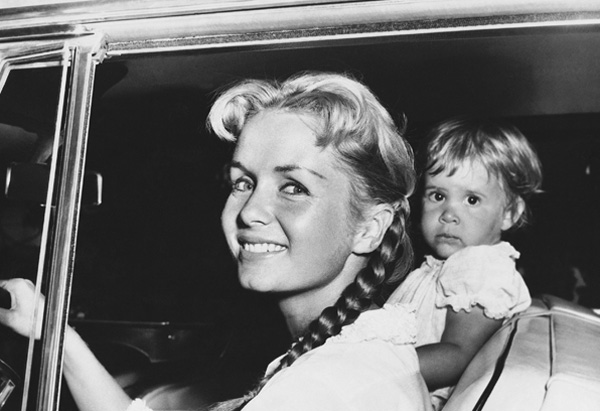
Debbie Reynolds and daughter Carrie Fisher, late 1950s. Reynolds was just announced for an honorary Oscar this fall, and Fisher is surely going to be tasked with presenting the award.

Amusement Park of the Day:

We’ve already shared photos of Banksy‘s Disneyland parody project, Dismaland, but now there’s also a great trailer for the “bemusement park” (via /Film):

[embedded content]

Movie Comparison of the Day:

Who knew Matilda and Chronicle are the same movie? Couch Tomato did:

[embedded content]

Classic Trailer of the Day:

This Saturday marks the 50th anniversary of the premiere of Pierrot le Fou at the Venice Film Festival. It’s one of Jean-Luc Godard‘s best movies, if not the best. Watch the original trailer for its US release, which came many years later, below.

[embedded content]

Send tips or follow us via Twitter:

and

This entry passed through the Full-Text RSS service – if this is your content and you’re reading it on someone else’s site, please read the FAQ at fivefilters.org/content-only/faq.php#publishers.


No Image

New Tesla Breaks Consumer Reports' Ratings Scale, Bolsters Company's Stock

Tesla's Model S P85D, seen here at a car show in April, scored 103 on Consumer Reports' 100-point ratings system.

Tesla’s Model S P85D, seen here at a car show in April, scored 103 on Consumer Reports’ 100-point ratings system. Johannes Eisele/AFP/Getty Images hide caption

itoggle caption Johannes Eisele/AFP/Getty Images

With a rare mix of blazing speed, safety and energy efficiency, the new Tesla Model S P85D left the folks at Consumer Reports grasping for ways to properly rate the car, after it scored a 103 — out of 100. “It kind of broke the system,” says Jake Fisher, director of the magazine’s auto test division.

Listing the all-electric car’s attributes, including its improved handling and stopping power, Fisher says, “We’re seeing numbers that we haven’t seen before. So this kind of blew out the system. We’re giving it a score of 100.”

That final rating came after the product testing organization adjusted its metrics a bit (but it says it won’t now grade all other cars on the P85D’s curve). It posted the results online Thursday — and in a rare move, Consumer Reports didn’t require a subscription to see the Tesla ratings (that move very likely played a part in the company’s trouble with its Web servers).

In a video discussion of the Model S P85D, Fisher says, “We’re not used to seeing large cars go 0-60 in 3.5 seconds. We’re not used to seeing large cars that get an equivalent of 87 miles per gallon, and are that fast. So it really blows apart a lot of things.”

[embedded content]
YouTube

Consumer Reports’ experts note that the score doesn’t mean the car has achieved perfection — for one thing, there’s the $127,820 price tag of the tested model. That makes it the most expensive car that the magazine has ever tested. And then there’s the base model’s estimated range of about 250 miles on a single charge.

But the magazine’s autos editor, Mark Rechtin, also notes that the Tesla is impressive for its quickness in applying power to the road — and pushing its occupants back in their seats.

“This car goes from 0 to 1.02 G’s in less than a quarter of a second,” Rechtin says, “which is almost as fast as the human brain can react.”

That rush of speed happens silently, Rechtin added. He said, “The only other way that you can feel that, in a legal setting, is to basically jump out of an airplane.”

We’ll note that those speeds reflect a car outfitted with the “Insane” driving mode. The quicker “Ludicrous” mode gets to 60 mph in 2.8 seconds, according to Tesla.

The glowing review generated intense interest in the car Thursday (as of this writing, the Consumer Reports website has crashed); it also propelled Tesla’s stock to an 8 percent gain, to a close of $242.99 on the Nasdaq market. That’s quite a bounce for a stock that, at the opening of Monday’s trading session, could be had (briefly) for $202.

On the performance of Tesla’s stock, The Wall Street Journal notes, “at midday, Tesla’s market value stood at $31.7 billion, up $2.5 billion from Wednesday’s close.”

In its first years in the auto market, Tesla has focused on high-priced cars. The Model S cost more than $50,000 when it was introduced, and the new Model S P85D has a base price of $104,500. But earlier this year, the company announced plans to produce a more affordable car called the Model 3, with a list price of $35,000.

This entry passed through the Full-Text RSS service – if this is your content and you’re reading it on someone else’s site, please read the FAQ at fivefilters.org/content-only/faq.php#publishers.


No Image

Darryl Dawkins, The NBA's 'Chocolate Thunder,' Has Died

Darryl Dawkins, seen here at the 2013 NBA All-Star Celebrity Game, died Thursday at age 58.
[embedded content]
YouTube

His power and talent tested the nuts and bolts of basketball — literally. Darryl Dawkins, who became famous for backboard-shattering dunks after he was the first NBA player to skip college altogether, has died at age 58.

Lehigh Carbon Community College, where Dawkins coached for two seasons, says:

“LCCC community is saddened by the passing of Philadelphia 76er legend and former LCCC basketball coach Darryl Dawkins. Our thoughts and prayers are with the Dawkins family.”

From Pennsylvania’s Lehigh Valley Live:

“Dawkins, who had many ties to the Lehigh Valley, was pronounced dead at 11:19 a.m. Thursday at Lehigh Valley Hospital in Salisbury Township, the Lehigh County Coroner’s Office said.”

No cause of death has been determined; an autopsy is scheduled for Friday.

Nicknamed “Chocolate Thunder,” Dawkins played 13 seasons in the NBA after being drafted out of high school by the Philadelphia 76ers in 1975. From the start of his pro career, Dawkins was capable of soaring above other players and arriving at the rim with unstoppable force.

At 6 feet, 11 inches and more than 250 pounds, he broke two glass backboards in one month during the 1979 season — prompting the NBA to adopt a new rule making it a finable offense to shatter a backboard.

Darryl Dawkins, seen here at the 2013 NBA All-Star Celebrity Game, died Thursday at age 58. Louis Dollagaray/Getty Images hide caption

itoggle caption Louis Dollagaray/Getty Images

A native of Orlando, Fla., Dawkins was part of the 76ers’ playoff teams of the late 1970s and early 1980s, alongside Julius Erving and World B. Free. But he was traded to the New Jersey Nets after six seasons — and one year before Philadelphia broke through to win the NBA championship in 1983.

With his ferociously powerful play in the lane and a flair for outlandish outfits, creative nicknames (“Sir Slam,” “Dr. Dunkenstein”), and wild theories (“I’m from Lovetron,” he often said, claiming otherworldly status), Dawkins can in some ways be seen as an early version of Shaquille O’Neal. But unlike Shaq, Dawkins never claimed an NBA title.

A player who brought incredible raw power into the league as a teenager, Dawkins has been the subject of many stories among NBA players. In one anecdote, Bobby Jones told ESPN about the time he smelled smoke after a Dawkins dunk, when Jones played for the Denver Nuggets:

” ‘This is the truth — I’m smelling smoke,’ Jones says. ‘I’m smelling something burning. The nets weren’t on fire or anything, but as I looked up there, because of the friction his dunk had caused, I could see these tiny little silk strands sort of drifting through the air. I thought, “Boy, I’d like to have a guy like that watching my back.” ‘ “

Dawkins was 20 at the time.

After his NBA career, Dawkins played several seasons in Italy before taking several coaching positions and serving as an ambassador for the NBA. From 2009-11, he was the head coach of the men’s team at Lehigh Carbon Community College. Dawkins also gave his time to charity and community efforts, including the Autism Speaks campaign and the Special Olympics.

This entry passed through the Full-Text RSS service – if this is your content and you’re reading it on someone else’s site, please read the FAQ at fivefilters.org/content-only/faq.php#publishers.


No Image

Help Wanted: Last Pediatrician On Mendocino Coast Retires

Dr. Bill Mahon says a gorgeous coast and the chance to practice a more personal style of community medicine lured him to remote Fort Bragg, Calif., 35 years ago.

Dr. Bill Mahon says a gorgeous coast and the chance to practice a more personal style of community medicine lured him to remote Fort Bragg, Calif., 35 years ago. Farida Jhabvala Romero/KQED hide caption

itoggle caption Farida Jhabvala Romero/KQED

Dr. Bill Mahon was a young pediatrician in the early 1970s when he fell in love with the rugged coast and majestic redwoods of Mendocino County, Calif. Like other people who have moved to Mendocino from around the country, settling here for him was a personal choice that prioritized lifestyle over money.

The prospect of practicing medicine in a small community also called to him. In 1977 he left his well-paying job at Kaiser Sacramento to join a practice with two other pediatricians in Fort Bragg.

Still, the move was a risk.

“There were no guarantees coming to the coast. This was a practice that started from scratch, and I just trusted the fact that it would increase and everything would be fine,” Mahon, now 68, says. “My first month of work here I made $200. That was it.”

Over time, the private practice grew to include any patient regardless of ability to pay, says Mahon. Some patients were not insured. Many had Medi-Cal, the state’s health insurance program for lower-income residents, which — until Mahon’s office gained rural health clinic status in the 1990s — provided reimbursements that were “pretty meager.”

“Early on we actually did trades at the practice,” says Mahon, with a chuckle. “We would trade a visit for a salmon or pottery or some other commodity, which, in the end, felt good from both sides.”

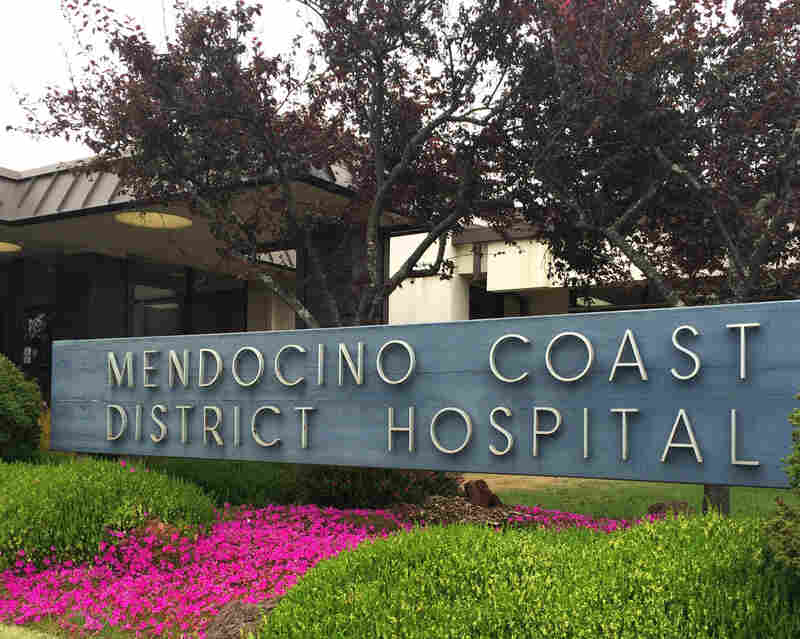
The Mendocino Coast District Hospital in Fort Bragg, Calif., now has pediatricians on call for emergencies only.

The Mendocino Coast District Hospital in Fort Bragg, Calif., now has pediatricians on call for emergencies only. Farida Jhabvala Romero/KQED hide caption

itoggle caption Farida Jhabvala Romero/KQED

For more than 35 years, Mahon examined patients day in and day out at his small clinic, next to Mendocino Coast District Hospital, the only hospital for miles. He handled everything from regular checkups to broken bones to very sick kids who might need a spinal taps or IV treatment. He got to know families closely. Going anywhere in town almost certainly involved bumping into a former patient.

“It really is the personal aspects of practice here,” says Mahon. “The connection with the parents, the connection with the kids and then how that connection spilled over into the larger community.”

Sometimes, he was roused out of bed in the middle of the night to attend to a newborn after a complicated delivery or speak with a distressed parent with an urgent question. Then those kids grew up — and many had kids of their own and brought them to see Mahon.

“I frequently tell people that I had a dream practice,” he says. “I took care of at least two generations of children. I wouldn’t trade a minute of it.”

Now Mahon is mostly retired. He only works at the hospital on call a few days a month. Families in most of the Mendocino Coast region no longer have access to a pediatrician who lives there permanently. The doctors that Mahon joined in the ’70s have long since retired, and other pediatricians have come and gone.

Until recently, a nurse practitioner and physician’s assistant at the clinic handled most cases. But with no pediatrician in the office, if a patient showed up very sick or with a complicated case, the clinic’s staff sent him to the hospital’s emergency department, which has on-call access to a pediatrician.

“This community deserves better,” says Mahon. “For me it’s rather sad. For all these years there have been resident pediatricians and now for the first time in 40 years, there is none.”

Mendocino Coast Clinics, which absorbed Mahon’s practice a few years ago, contracted an outside agency to bring in a temporary pediatrician for three months. He started last week.

“This is a stopgap measure,” says Paula Cohen, executive director at Mendocino Coast Clinics. “We would love to find someone who wants to move to this community and make it their home.”

Their search to find someone permanent has a few leads. Cohen says she interviewed an out-of-state doctor last weekend, and her staff is reviewing resumes. However, it’s hard for tiny Fort Bragg — population 7,300 — to compete with metropolitan areas when recruiting physicians.

Cohen says many physicians prefer the amenities — cultural activities, department stores, even supermarkets — of bigger cities. A physician who is married might need to look in areas that offer career opportunities for a spouse — who, if he or she works in financial services or tech, say, might not want to move to Fort Bragg.

The practice of medicine has also changed since Mahon came to the coast. Today, many young doctors don’t want to practice by themselves and independently treat the wide range of diseases and behavioral disorders in babies and children that Mahon did.

Most new physicians are educated in metropolitan areas, with a large suite of specialists available, says Janet Coffman, associate professor at the Institute for Health Policy Studies at the University of California, San Francisco.

“If you are in a rural area and the only pediatrician,” says Coffman, “people are expecting you to do a wider scope of practice. New physicians might not be prepared for that kind of medicine.”

Another big challenge is that most new doctors are looking for higher salaries to help them repay their debt from medical school. Graduates of public medical schools owed a median debt of $170,000, while private medical school graduates owed a median debt of $200,000, according to 2014 figures from the Association of American Medical Colleges. Poorer, rural areas, where many patients are on Medicaid, might not offer competitive salaries.

California could help rural communities recruit new physicians, Coffman says, by expanding programs that help doctors repay their debt if they practice in a medically underserved area. One such program in the state, the Steven M. Thompson Physician Corps Loan Repayment, offers up to $105,000 in financial assistance. Medical schools could also expand programs that train physicians for the daily challenges of practicing in a rural setting.

The issue is pressing in Mendocino County and other nearby Northern California counties, where more than half of all doctors practicing are 56 or older and nearing retirement age, according to a 2009 report by the California HealthCare Foundation. Statewide, the physician workforce is one of the oldest in the nation, with only New Mexico having a greater proportion of active physicians over 60.

Meanwhile, families in Fort Bragg say they greatly miss having a regular pediatrician they trust nearby.

Cassandra and Milo Young now drive their three children 60 winding miles inland to a pediatric practice in Ukiah. The trips usually take an entire day and represent additional costs in gas and time off work.

“It’s definitely a downfall to the area,” says Cassandra Young. She moved to the coast after working as a creative director at a large advertising firm in New York City.

“We made certain concessions to give this lifestyle to our children. We gave up the big career and department stores,” Young says. “But giving up good quality pediatric care doesn’t feel like something we should have to give up.”

She likes the pediatric practice in Ukiah well enough, she says, but misses Mahon.

He’s just wonderful, the kind of doctor we all wish our kids could have,” Young says. “It would be amazing to get another Dr. Mahon to move out here and be our country doctor.”

This story was produced by State of Health, KQED’s health blog.

This entry passed through the Full-Text RSS service – if this is your content and you’re reading it on someone else’s site, please read the FAQ at fivefilters.org/content-only/faq.php#publishers.

No Image

Today in Movie Culture: Homemade 'Batman v Superman' Trailer, 'The Dark Knight Rises' in Real Life and More

Here are a bunch of little bites to satisfy your hunger for movie culture:

Trailer Redo of the Day:

Get pumped for Batman v Superman: Dawn of Justice all over again with this sweded version of the movie’s trailer:

[embedded content]

Star Wars of the Day:

Here’s another trailer redo, this one for The Empire Strikes Back made in the style of the Star Wars: Force Awakens spot (via Live for Films):

[embedded content]

Movie Memorabilia of the Day:

Forget real-life or replica hoverboards, wouldn’t you rather have a replica of Marty’s ’80s skateboard from Back to the Future? Now you can (via /Film):

Classic Movies Up Close:

Film-Drunk Love has isolated all the shots of streets in Martin Scorsese‘s Taxi Driver “to explore New York from the point of Travis Bickle through the streets he roams…the places he considers filthy or pure” (via Cinematic Montage Creators):

[embedded content]

Filmmaker in Focus:

If you want more movies up close, here’s a look at Steve McQueen‘s use of close-ups specifically on hands and fingers for character development (via Cinematic Montage Creators):

[embedded content]

Scene Analysis of the Day:

Today’s real film studies lesson comes to you from Roger Corman, who in this old video analyzes the Odessa Steps scene from Eisenstein‘s Battleship Potemkin (via Filmmaker IQ):

[embedded content]

Vintage Image of the Day:

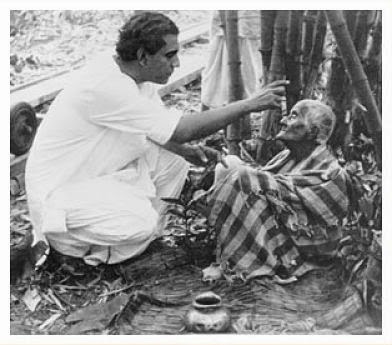
Satyajit Ray directs the wonderful Chunibala Devi for Pather Panchali, which debuted in Indian cinemas on this day 60 years ago.

Fan Theory of the Day:

If you’re not familiar with the Harry Potter fan theory that Dumbledore is the embodiment of death, Dan Casey breaks it down for Nerdist:

[embedded content]

If Movies Were Real:

Check out a fake documentary that might actually exist if the events of The Dark Knight Rises happened in real life:

[embedded content]

Classic Trailer of the Day:

15 years ago today, David Mamet‘s underrated Hollywood satire State and Main premiered at the Montreal Film Festival, giving us a necessary distinction between fun and entertainment (“if you don’t make it yourself, it ain’t fun…”). Watch the original trailer below.

[embedded content]

Send tips or follow us via Twitter:

and

This entry passed through the Full-Text RSS service – if this is your content and you’re reading it on someone else’s site, please read the FAQ at fivefilters.org/content-only/faq.php#publishers.


No Image

Wal-Mart To End Sales Of Some Semi-Automatic Rifles, Citing Low Demand

This fall, Wal-Mart will end sales of military-style assault rifles like the AR-15.

This fall, Wal-Mart will end sales of military-style assault rifles like the AR-15. Joe Songer/AL.COM/Landov hide caption

itoggle caption Joe Songer/AL.COM/Landov

Wal-Mart, thought to be the largest seller of firearms in the U.S., will stop selling military-style modern sporting rifles, such as the the AR-15, this fall.

Wal-Mart spokesman Kory Lundberg said the decision to phase out the controversial semi-automatics was based in business, not politics, citing declining demand.

“If you have a product customers aren’t buying, you phase it out,” he said, according to Bloomberg.

He added that Wal-Mart shoppers “were buying shotguns and rifles, and so we are increasing assortment in that.”

Lundberg tells NPR the move is happening now because of the change in seasons:

“As our Sporting Goods departments are resetting this week from Summer to Fall, the MSRs are being taking out of the assortment and replaced with new rifles and shotguns.”

The soon-to-be phased out AR-15 was used in several high-profile shootings over the past few years, including the 2012 shooting at Sandy Hook school in Newton, Conn., and the movie theater shooting in Aurora, Colo. Gun control advocates support bans on these types of weapons and welcome Wal-Mart’s decision to remove them from the shelves.

Spokeswoman Lori Haas from the Coalition to Stop Gun Violence, based in Washington, D.C., praised Wal-Mart’s decision.

“I think it’s a great idea. I think it’s a great signal that things are changing and that we have responsible citizens reacting to the gun violence in our country,” Haas told NPR.

But while Haas embraced Wal-Mart’s move, she questioned its claim that demand had indeed dropped. Wal-Mart does not disclose gun-sales figures.

“It would be lovely if there had been a decrease in demand,” Haas said, adding, “I would be very interested to learn of the gun manufacturer’s sales.”

According to a spokeswoman for the National Rifle Association, Amy Hunter, the AR-15 is highly popular in the U.S.

“The AR-15 is America’s most popular general use rifle,” Hunter told NPR.

In Hunter’s emailed statement, the NRA called Wal-Mart’s recent move disappointing.

“While we’re disappointed in Wal-Mart’s decision, we appreciate the firearms retailers who continue to carry these firearms and enable law-abiding citizens to purchase the firearm of their choice.”

In 2006, Wal-Mart also cut back on gun sales, removing firearms from about a third of its stores, again chalking the decision up to “diminished customer relevancy.” But then in 2011, it reintroduced guns to more stores around the country.

According to CNN Money, a Wal-Mart spokesman said at the time that the retail giant “realized there is broader appeal for guns in some areas because of sporting needs.”

Wal-Mart will be selling the discontinued rifles at steeply discounted rates as it phases them out.

This entry passed through the Full-Text RSS service – if this is your content and you’re reading it on someone else’s site, please read the FAQ at fivefilters.org/content-only/faq.php#publishers.

No Image

From Quiet Kid To Trash-Talking Titan: Ronda Rousey's Year Speaks For Itself

Ronda Rousey celebrates her most recent Ultimate Fighting Championship win on Aug. 1, shortly after knocking out Bethe Correia in just over half a minute.
7:59

Download

Ronda Rousey celebrates her most recent Ultimate Fighting Championship win on Aug. 1, shortly after knocking out Bethe Correia in just over half a minute. Ricardo Moraes/Reuters/Landov hide caption

itoggle caption Ricardo Moraes/Reuters/Landov

Clock yourself the next time you tie your shoes. Chances are, in the time it took you to get those shoes laced up, Ronda Rousey would have knocked out her opponent in a typical mixed martial arts match.

Rousey, the reigning women’s bantamweight champion in the sport, has held the title since the women’s Ultimate Fighting Championship was established in 2012 — more or less to showcase her talent. The most lethal of those talents is the arm bar, a move that she brought over from her days as an Olympian in judo. Today, she continues to use it to her advantage, often taking down fighters in seconds.

Known also for her ice cold stare, Rousey’s used to getting booed by the crowd for her trash talk — and loves it, too. Yet Rousey needed speech therapy when she was a child.

“I had a lot of trouble speaking as a kid. I didn’t really speak in coherent sentences until I was like 6 years old,” she tells NPR’s Audie Cornish. Diagnosed with apraxia when she was young, she fell behind in relation to other kids her age. “There was a long time where everybody was very worried, because my sisters were so advanced for their age and I would barely talk.”

Even later, she struggled for years to overcome her shyness.

“I was painfully shy for a long time,” she says. “I mean, that’s something I really had to work my way out of. And I really think it was because, after the 2008 Olympics, I spent a whole year bartending. It was the one thing that really forced me to be just not so scared to start conversations with strangers.”

These days, it’s her outspokenness and her fearsome reputation that have been nabbing headlines — and screen time. She has appeared in movies like the last of the Fast and Furious franchise and The Expendables 3, in which she was the only female action star on the bill full of men.

Still, though, in the octagon she’s never just another name on the card. In fact, she’s one of the most dominant athletes alive.

To hear their full conversation, click the audio link above.

Ronda Rousey (right), mid-fight with Bethe Correia. This bout didn't last much longer after the photo was taken. It didn't last very long, period.

Ronda Rousey (right), mid-fight with Bethe Correia. This bout didn’t last much longer after the photo was taken. It didn’t last very long, period. Matthew Stockman/Getty Images hide caption

itoggle caption Matthew Stockman/Getty Images


Interview Highlights

On the fine art of trash-talking

I always thought I was really bad at it, because I could barely hang in there with my sisters and my mom. But then, when I got away from the Olympics, over to professional sports, where I was into entertainment and getting people involved, that’s when I really got to find a new means of expression of, like, I get to create this superhero character version of myself.

I don’t have to think about, “Oh my God, I might be misrepresenting my country in doing so,” because it wasn’t about representing my country anymore. It was about building myself as an individual.

On the pre-fight comments about Rousey’s family from opponent Bethe Correia, whom Rousey eventually defeated in 34 seconds

Well, I’m used to opponents trying to say as many mean things as possible as they can about me. But when it gets to the part where they’re saying things that are hurtful to my family, that’s when it gets to a point where I feel like I have to make an example out of that person — so people know where the lines are, and where to not cross them. And I don’t think anyone’s going to be crossing that line ever again after that last fight. …

The lines are there. I mean, they’re a little bit more flexible than, you know, any other workspace environment. But they’re still there and they still need to be respected.

On her long-running war of words with Floyd Mayweather, her remarks about his history of domestic violence — and whether she’d ever step into the ring for a fight with him

I don’t think it’s my duty or anything like that, I don’t think I have to do anything, but I’m in a position where I can say something. If I feel like somebody insults me, I don’t have to sit there and bow my head and be a good little girl and just take it. I can say something back. And it’s actually encouraging that he’s in the kind of situation where he feels like he has to respond to me. …

Honestly, I don’t even think that any kind of coed fight would be good for the sport at all. … Because I don’t think there should ever be a situation where everyone gathers around an arena to see a man hit a woman.

On the first time she recalls seeing an MMA fight

I saw Gina Carano fight Julie Kedzie on Showtime, and I thought it was just the most amazing thing — not just seeing how great they were fighting each other, and how great of a fight it was, but seeing the reaction of all the men I was watching that fight with. And where they would speak vulgarly about the ring girls that whole night, when the girl fighters came on, they spoke about them with awe and respect. And I envied them [Carano and Kedzie] in a lot of ways, because I trained with a lot of these guys and the kind of reverence they were giving these girls was something that I never received from them.

On the female fan base for mixed martial arts

Actually, MMA has a — pretty even when it comes to the fan base. I think it’s like 60-40 [percent] men/women. It’s much more even than people would think.

And I think one reason why women are so drawn to fighting is because it’s an instinct that everyone has. It’s not an instinct to hit a ball with a bat or to put a ball in a hoop or to kick a ball between two posts. But it is an instinct in every single human being to fight, and everyone has that thought in their mind of what would I do if I was in there? And it’s not something that we’re taught; it’s something that we have in us. It’s not a man or woman thing; it’s a human thing.

On the physical toll the sport takes on her

I’m actually a lot more healed now, doing MMA, than I was doing judo. In judo, I was on the verge of having to quit, because my joints, my knees, everything was so worn out. … It’s actually a lot more internally damaging.

Everyone thinks [MMA is] a lot worse than it is, because you’ll get a little cut here or there and it’ll bleed, it’ll look bad, but it’s not nearly as bad as, say, boxing when someone’s taking 12 rounds of punishment to the head, or judo, where someone’s face-planting and they could break their neck or something like that. As long as I keep walking out of the cage without a single bruise on me, I’ll be able to fight a lot longer. …

I say all the time, it’s the pretty fighters you gotta look out for, because they’re the ones that get hit the least.

This entry passed through the Full-Text RSS service – if this is your content and you’re reading it on someone else’s site, please read the FAQ at fivefilters.org/content-only/faq.php#publishers.


No Image

Illicit Version Of Painkiller Fentanyl Makes Heroin Deadlier

Heroin sold in the U.S., like this dose confiscated in Alabama last fall, is often cut with other drugs.
4:09

Download

Heroin sold in the U.S., like this dose confiscated in Alabama last fall, is often cut with other drugs. Tamika Moore/AL.com/Landov hide caption

itoggle caption Tamika Moore/AL.com/Landov

Angelo Alonzo, a resident of Portland, Maine, says he nearly died last month after injecting what he believed to be a safe dose of heroin — the same amount he’s taken before. But this time, he says, the drug knocked him to his knees.

“An amount that usually gives me a good mellow high was just way too much,” he says, “and I woke up in the shower and I was cold. And I didn’t put myself there.”

Alonzo was lucky: A friend quickly treated him with Naloxone, an emergency antidote, and he entered a rehab program. While it would take a toxicology workup to discover exactly what was in the “heroin” that floored him, Alonzo says he suspects some form of fentanyl — a drug that’s making a big showing in Maine.

All around North America, U.S. drug officials warn, some drug dealers are lacing heroin with an illicit version of the potent anesthesia drug fentanyl. The dangerous combination is quickly killing unsuspecting users — and worsening the nation’s epidemic of deaths from heroin overdose.

According to the U.S. Drug Enforcement Administration, fentanyl is 30 to 50 times more potent than heroin, and 80 to 100 times more potent than morphine.

Regional drug dealers add the illicit form of fentanyl to the heroin they sell in hopes of restoring the potency of a product that’s been diluted by dealers higher up the distribution chain.

If you make that right mix, everyone loves your stuff,” Alonzo explains. “But, you know, that right mix might kill some people, too.”

Pharmaceutical-grade fentanyl is useful during surgery as an anesthesia drug and, in carefully titrated amounts. It also can be a blessing for patients in severe pain. But in the past two years, according to federal drug agents, Mexican cartels have ramped up production of a variant called acetyl fentanyl in clandestine labs. They are smuggling this version into the United States.

According to the DEA, acetyl fentanyl may be slightly less potent than fentanyl, but is still quite powerful. It is not yet included in many screens for toxic drugs, the DEA says. And this variant of fentanyl is also not approved for medical use in the United States.

Acetyl fentanyl’s street price is slightly higher than heroin’s, according to the DEA. But drug dealers apparently think the drug’s stunning potency makes it a good deal, nonetheless. The flip side? Two milligrams or less — a dose the size of a few grains of salt — can kill.

“Heroin is bad enough, but when you lace it with fentanyl, it’s like dropping a nuclear bomb on the situation,” says Mary Lou Leary, a deputy director in the White House’s office of National Drug Control Policy. “It’s so, so much more dangerous.”

There were at least 700 fentanyl-related deaths nationwide in a period from late 2013 through 2014, say federal officials. And many states, as well as Canadian provinces, are reporting a sudden wildfire of overdose deaths.

Two years ago, for example, Maine authorities documented just seven deaths related to illicit fentanyl. A year later the number of deaths jumped to 43, and Maine Attorney General Janet Mills says the problem is getting worse.

“In July alone, we suspect that approximately one death a day in Maine was due to a drug overdose of some sort,” she says. “We are confirming this with laboratory testing, but a substantial number of those involved fentanyl.”

Law enforcement officers and policymakers are struggling to react to the problem’s fast-moving spread. Only a handful of states have added acetyl fentanyl to their lists of banned substances. And the DEA added it to the federal list just this year.

Mills says prosecutors should seek the ability to make felony charges in fentanyl cases. That would not only facilitate dealmaking with users to get better information about drug networks, she says, but would also be useful leverage in getting more heroin users into drug treatment.

“We want to have a significant sentence hanging over them, Mills says, “so that we can encourage them — force them, if you will — into treatment.”

Federal and state authorities are trying to boost public awareness about fentanyl and have tried to get out the word locally when they discover a particularly dangerous batch of heroin on the streets.

But there’s a terrible irony in all this: For some heroin users, as Angelo Alonzo says, danger is magnetic.

“Usually when someone hears that people are dropping or dying out there — that’s usually when an addict wants that specific stuff,” Alonzo says. “They think that the high is unbelievable and they want it. You can understand why. But that’s a tough call. You’re playing with your life. “

It’s unclear what Alonzo’s next call may be in his own difficult road toward recovery. He recently checked out of the local rehab shelter — against medical advice.

Fred Bever is a freelance reporter in Portland, Maine.

This entry passed through the Full-Text RSS service – if this is your content and you’re reading it on someone else’s site, please read the FAQ at fivefilters.org/content-only/faq.php#publishers.


No Image

Today in Movie Culture: Honest 'Mad Max: Fury Road' Trailer, the G-Rated Version of 'Fight Club' and More

Here are a bunch of little bites to satisfy your hunger for movie culture:

Movie Takedown of the Day:

Okay, it’s not so much a takedown this time, but Honest Trailers does make a few jokes at the expense of Mad Max: Fury Road while also being totally truthful about its awesomeness:

[embedded content]

Movie Redo of the Day:

People of all ages should be able to enjoy Fight Club. Now your kids can, too, with this G-rated animated version:

[embedded content]

Hollywood Satire of the Day:

Funny or Die shows us the real reason that women don’t direct more action movies, starring Catherine Hardwicke, Nicole Holofcener and other great filmmakers (via Film School Rejects):

Vintage Image of the Day:

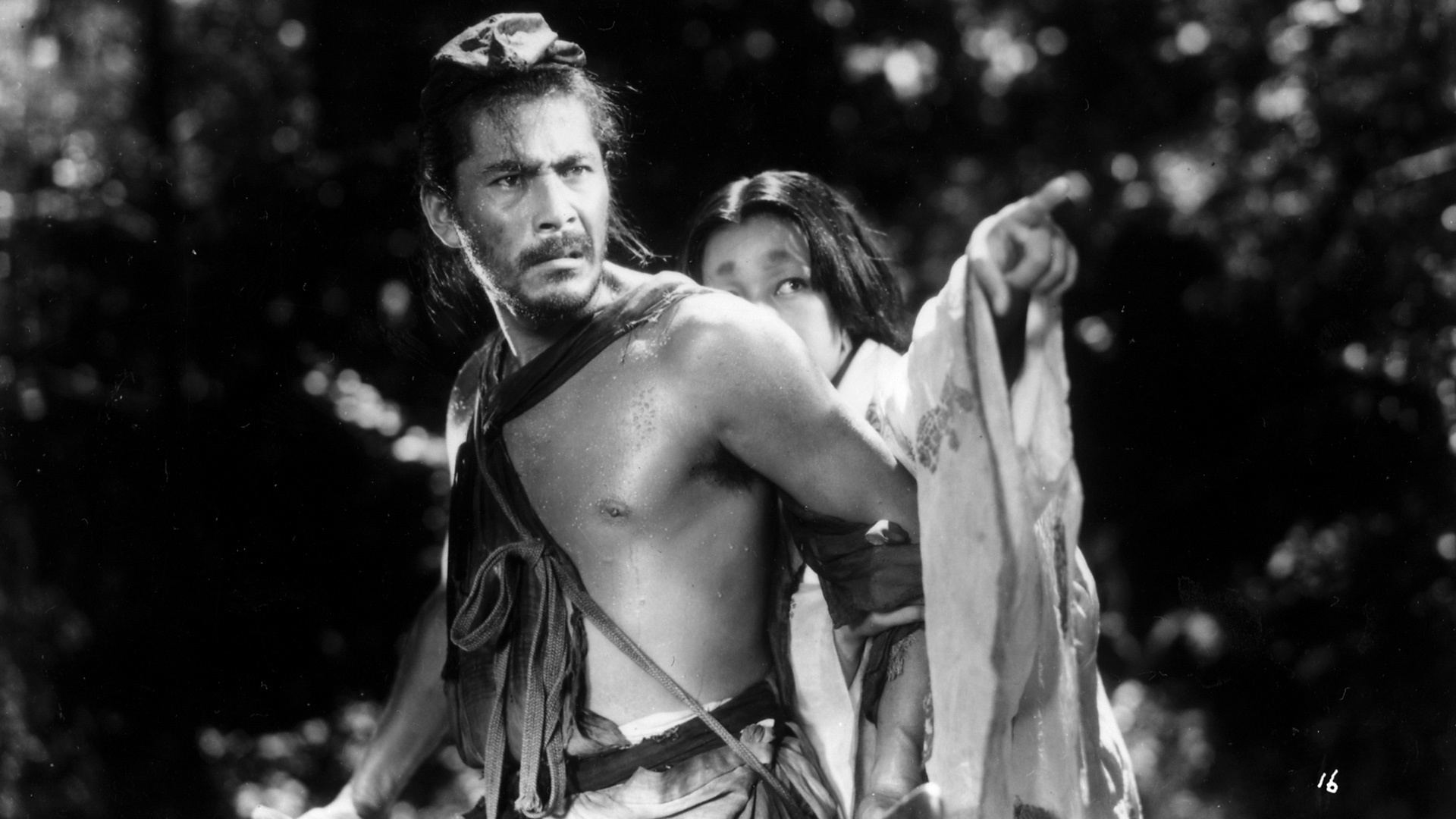
Toshiro Mifune and Machiko Kyo in Rashomon. Akira Kurosawa‘s masterpiece, which remains the point of reference for all movies with multiple points of view, opened on this day in Tokyo 65 years ago. It would arrive in America in late 1951.

Supercut of the Day:

Jason Statham has punched a lot of people over the years. Just how many? This supercut not only showcases them all, but it also runs a counter to tally them up (via Live for Films):

[embedded content]

Movie Studio Tour of the Day:

RocketJump Film School takes us on a tour of Universal Studios Costume Department, which rents out to professional costume designers, including those working for web content providers.

[embedded content]

Cosplay of the Day:

Pets aren’t allowed at Comic-Con, but that doesn’t mean cats can’t cosplay at their favorite characters from The Fifth Element (via Fashionably Geek):

Filmmakers in Focus:

Video essay master Jacob T. Swinney showcases the POV shots in the movies of the Coen Brothers:

[embedded content]

Movie Trivia of the Day:

Think you know everything about the Back to the Future trilogy? Let’s see if CineFix can stump you with this list of 9 bits of trivia:

[embedded content]

Classic Trailer of the Day:

Douglas Sirk‘s melodrama masterpiece All That Heaven Allows, starring Rock Hudson and Jane Wyman, made its debut in London on this day 60 years ago. Watch the original trailer for its U.S. release a few months later below.

[embedded content]

Send tips or follow us via Twitter:

and

This entry passed through the Full-Text RSS service – if this is your content and you’re reading it on someone else’s site, please read the FAQ at fivefilters.org/content-only/faq.php#publishers.


No Image

Justin Wilson, IndyCar Driver Who Died Monday, Helps 6 With Organ Donations

Justin Wilson, seen here in May, had designated himself as an organ donor. "He just keeps setting the bar higher," his younger brother, Stefan, said Tuesday.

Justin Wilson, seen here in May, had designated himself as an organ donor. “He just keeps setting the bar higher,” his younger brother, Stefan, said Tuesday. Sarah Crabill/Getty Images hide caption

itoggle caption Sarah Crabill/Getty Images

One day after the racing community was shocked by the death of driver Justin Wilson at age 37, news has emerged that Wilson, a well-known advocate for charities who often spoke about his dyslexia, donated his organs to others — and gave vital help to six people.

Wilson died Monday after suffering a head injury during a race at the Pocono Raceway in Long Pond, Pa., Sunday. He was struck by airborne debris from another car and then crashed into a wall on the track.

A native of Sheffield, England, Wilson raced in Formula 1 before moving to the U.S. In racing circles, the 6-foot, 4-inch Brit was often viewed as a gracious and friendly driver whose talent allowed him to overcome setbacks and compete against drivers who often had superior cars.

Wilson is survived by his wife, Julia, and two daughters, ages 5 and 7. His younger brother and fellow racer, Stefan, said on Twitter Tuesday that Justin Wilson’s organ donation “saved 6 lives today.”

With #giftoflife @justin_wilson saved 6 lives today. He just keeps setting the bar higher. Keep Julia & the girls in your prayers #myherojw

— Stefan Wilson (@stef_wilson) August 25, 2015

From the Racer website:

” ‘It sums up who he was; he’s touching people he doesn’t even know, and it shows what kind of person Justin Wilson was,’ said Stefan, who was with his brother when he passed. ‘We lost him yesterday, and it’s one of those tough questions that come up afterwards. He carried a donor card, they asked us, and we clarified that he wanted to donate. It’s a tough thing to consider; you want him to be whole, but it’s something he’d discussed with Julia and we honored what he wanted and went ahead with it.”

Tributes to the driver have flowed forth on Twitter and elsewhere; Tony DiZinno, a journalist who covered him for years, wrote an appreciation of Wilson, saying the driver smiled through the mechanical problems and contract uncertainties of racing.

DiZinno writes:

“Wilson’s most heroic drive likely came in the 2006 season finale at Mexico City. Despite breaking a small bone in his right wrist, Wilson left would-be substitute Adam Carroll waiting in the wings and made a triumphant, surprise return. He damn near beat Bourdais with one hand, losing out only by several tenths at race’s end.”

Wilson had seven career Indy car wins; he also competed in several endurance races, co-driving the winning car in the 24 Hours of Daytona in 2012. He drove for the Andretti Autosport team for several races this season.

Speaking about Wilson, Road Racing Club President Bobby Rahal said:

“Losing his life in an incident that was beyond his control is difficult to accept. His expert driving skills and keen awareness of all that was going on around him could not save him. We mourn his passing and will honor his memory as a championship-caliber driver who left us way too soon.”

This entry passed through the Full-Text RSS service – if this is your content and you’re reading it on someone else’s site, please read the FAQ at fivefilters.org/content-only/faq.php#publishers.