Articles by admin

No Image

A Brutal Week For Investors; Will There Be More Zigs Than Zags?

Traders work on the floor of the New York Stock Exchange on Friday. The Dow Jones industrial average dropped 531 points, or more than 3 percent.

Traders work on the floor of the New York Stock Exchange on Friday. The Dow Jones industrial average dropped 531 points, or more than 3 percent. Spencer Platt/Getty Images hide caption

itoggle caption Spencer Platt/Getty Images

Wow. That was ugly.

For investors, a brutal week ended Friday with prices plunging for stocks and commodities. The Dow Jones industrial average fell 531 to 16,460, a 3.12 percent drop.

Oil’s tumble was especially notable. For a while, West Texas crude was trading below $40 a barrel — the first time that happened since March 2009. It finished at $40.45, marking an eight-week stretch of price declines — the longest losing streak since 1986.

Want to play it safe and just earn interest on your savings? Sorry. The yield on a 10-year Treasury note also fell, down to just 2.05 percent, the lowest level since April.

So what’s an investor supposed to do?

Experts are mixed about the outlook. Some say not to worry too much: This downturn was an inevitable “correction,” following one of the longest bull runs in U.S. history.

For example, the S&P 500 index of stocks has risen five out of the past six years. On Friday, it fell 3.19 percent to 1,971. But that’s just a hair below where it was last year at this time. So if you have been invested for six years, you’re still ahead of the game.

From this viewpoint, the August rout is just part of the typical “sawtooth” pattern that characterizes the stock market. Prices can zigzag up and down, up and down. Over time, you make money because you are patient, and assume the “down” zigs are smaller than the “up” zags.

Instead of fretting, investors should be looking for opportunities to buy shares at low prices before they resume their climb. “Historically, market downturns present some of the best opportunities to buy stocks,” Azzad Asset Management told clients in its analysis of Friday’s selloff.

But wait.

Maybe this stock plunge signals something much worse than a simple correction. Maybe prices are plunging because a new global recession is taking hold, making any rebound impossible for a long time.

So which is it, a buying opportunity or hunker-down time?

Here’s a case for optimism:

— U.S. investors had been too upbeat for too long, shaking off the Greek debt crisis and the Chinese economic slowdown. But now, they are more clearly seeing the bad news and pulling back. So nothing is actually worse; we’re just resting after having partied too hard earlier.

— Consumers and homebuyers are still in a good mood, and they are driving an expansion that will keep the U.S. economy going in the fall. This is just a summer squall that will pass.

Here’s a case for pessimism:

— When China unexpectedly devalued its currency last week, it was sending the world a frightening message: Its economy is a mess. If China is no longer going to need massive amounts of oil, coal, corn, copper and other commodities, then huge numbers of miners, drillers and farmers are going to be out of work, triggering a global downturn.

— European shares are also sending a strong signal that the Continent’s growth is in trouble again. Despite cheaper energy, more central-bank stimulus and favorable currency rates, Europeans still can’t get their markets moving.

In September, policymakers at the Federal Reserve will meet to decide whether to raise interest rates for the first time in nine years. Savers wishing for safety may root for an uptick in the interest payouts on their bank deposits.

But stock investors may hope the Fed holds off for a while longer. Low interest rates can help companies expand at a lower cost — and expanding businesses tend to help stock prices.

Tough decision in these complicated times.

This entry passed through the Full-Text RSS service – if this is your content and you’re reading it on someone else’s site, please read the FAQ at fivefilters.org/content-only/faq.php#publishers.



No Image

Kansas Town Takes Dental Care To School

To make dental care more accessible, some schools are bringing dentists to students.

To make dental care more accessible, some schools are bringing dentists to students. iStockphoto hide caption

itoggle caption iStockphoto

Weeks before school started in Olathe, Kan., earlier this month, the town’s school district began its annual effort to get low-income students signed up for dental checkups.

When parents register at the elementary schools that serve the district’s poorest students, they are asked whether their children have a dentist. “And if they say no, we say, ‘We have a program in our school — a dentist is coming to our school this year,’ ” says health services director Cynthia Galemore.

The goal is to make dental care more accessible for low-income families. The obstacles to care aren’t limited to cost.

“A lot of times in these families dental care is not a priority,” says Galemore. “It’s not that the parents wouldn’t want to provide it, but they maybe can’t miss work to take their child to the dentist, [or] they may not have transportation.”

A lack of preventive dental care for poor children is a national problem. Medicaid and the Children’s Health Insurance Program, which cover children from low-income families, both pay for dental services. But fewer than half of children and teens enrolled in those programs received a preventive dental service last year, according to Stacey Chazin, a public health specialist with the Center for Health Care Strategies.

The participating schools in Olathe, a suburb of Kansas City, Mo., are among a few hundred across the country that offer oral health care. “What’s nice about the schools is [they’re] a place where students already go on a regular basis, whether it’s back to school night, or it’s a meet-the-teacher, or to pick up or drop off their kids,” says Chazin. In some schools, dentists provide care. In others, dental hygienists perform preventive services.

In a recent policy brief, Chazin recommends school-based oral health care as an important children’s health strategy. And, as it turns out, the federal government set goals to increase the proportion of children enrolled in Medicaid and the Children’s Health Insurance Program receiving any preventive dental service by 10 percent between 2011 and 2015.

Tooth decay is the most common chronic disease among American children, according to the American Academy of Pediatrics.

Some 25 percent of children ages 5 to 19 who live at or below the federal poverty level had untreated tooth decay, according to data from the Centers for Disease Control and Prevention. Only 12 percent of children with family incomes double that of poverty level had untreated tooth decay.

According to Chazin most school-based oral health programs focus on preventive services like cleanings, fluoride varnish and sealants – protective coatings placed over molars to prevent cavities. “The hope in all of it is that they’re referred to, and begin to get care from a dentist, where they would subsequently go for regular preventive visits and any needed treatment,” says Chazin. Medicaid and CHIP keep tallies of services performed at schools, when they are billed.

But it’s difficult to know if parents are scheduling those follow-up dentist visits. That data are hard to track, and to Chazin’s knowledge, no insurers or state health departments are taking the time to do it.

Olathe however, does have data on follow-ups. And that helped push the district to take the idea of in-school dental care one step further than most schools. At the start in 2009, the district tracked the number of follow-up appointments scheduled with dentists. The results weren’t good. Of the 339 children treated in school by dental hygiene students from the University of Missouri-Kansas City, 63 percent had tooth decay and were referred to a dentist. By the end of the school year, only 11 percent of those referred had had their parents contact a dentist’s office to schedule an appointment.

But when a clinic in town became a federally qualified health center in 2013, it opened up a new opportunity. The district now works with the clinic—which receives federal funds to provide free or low-cost care to the underserved— to bring dentists to the schools. These dentists perform the full array of services on site. It’s a win-win for the school district: Nurses no longer have to worry about parents scheduling follow-up visits, because they are scheduled at school. And the clinic provides a steady source of funding for the district’s growing number of immigrant students, some of whom don’t qualify for insurance because of their undocumented status. If a student has no insurance, the service is free.

“We used to think, ‘Oh, schools shouldn’t do this.’ We thought our job was to provide the education for the kids,” Galemore says. “We didn’t used to feed breakfast to kids at school either. Funding has been cut and cut and cut for schools, but it’s part of focusing on the whole child. We know if we have better health for that child there’s better learning.”

For this school year, the oral health program in Olathe is expanding from 10 to 12 elementary schools, and adding two high schools.

This piece comes from Side Effects Public Media, a public radio reporting collaborative that explores the impacts of place, policy and economics on health. Follow Side Effects on social media here.

This entry passed through the Full-Text RSS service – if this is your content and you’re reading it on someone else’s site, please read the FAQ at fivefilters.org/content-only/faq.php#publishers.


No Image

Bumgarner Leads Trend: Big League Pitchers Who Can Hit

4:10

Download

Major League Baseball is dominated by specialists but San Francisco’s Madison Bumgarner upsets convention. David Greene talks to Giants’ broadcaster Jon Miller about Bumgarner and pitchers with bats.

Transcript

DAVID GREENE, HOST:

If you are watching or listening to a Major League Baseball game, the best moment to grab something from the fridge or run to the bathroom might be when a pitcher comes up to bat. Pitchers just aren’t good hitters – or so we thought. Madison Bumgarner of the San Francisco Giants did this last weekend against the Washington Nationals.

(SOUNDBITE OF ARCHIVED RECORDING)

UNIDENTIFIED ANNOUNCER: Bumgarner hits a high drive left field. This one is gone.

(CHEERING)

UNIDENTIFIED ANNOUNCER: Well that’s an exclamation point for a great game for Bumgarner, his fourth home run of the year. Yeah, he’s the best hitting pitcher. That was a shot.

GREENE: This could be part of a trend. Big league pitchers are hitting more home runs than in the past, especially in the National League, the only league that forces pitchers to bat. San Francisco Giants’ play-by-play announcer and all around baseball guru John Miller said this isn’t all that surprising.

JOHN MILLER: All the guys who are pitchers, when they played Little League and maybe even in high school, they were excellent athletes and not only could pitch but they played the field. And they were, in many cases, the best hitter on their teams there as well.

GREENE: This changes, though, when pitchers become pros and work their way through the minor leagues. They become specialists fine tuning their craft. If you’re a starting pitcher, you’re actually only throwing in a game once every five days or so. But there’s a lot to worry about in between, leaving little time to practice swinging the bat.

MILLER: Pitching, you think of the arm, and that’s very true. But the big aspect of pitching that is so critical are the legs, the base for the pitcher. And they run every day. They do a lot of calisthenics and starting and stopping and wind sprints and that sort of thing. They will throw on the side. They do their bullpen session in between. So they do a lot of work in between starts. And then there’s Madison Bumgarner, with the Giants, who actually is one of those guys who can hit a little bit, who has also been getting some calls here lately to hit as a pinch hitter for the Giants. So he’s been especially working hard, even when he’s not pitching.

GREENE: Why is this happening this year? Why do we see Madison Bumgarner and some other National League pitchers who seem to be hitting more home runs these days? I mean, is National League pitching getting worse? Are there some pitchers now who are just sort of showing their athleticism more?

MILLER: Well, I wouldn’t say that it’s really become a huge trend. Bumgarner’s for four home runs, and he hit five last year. He’s the best hitting pitcher I think in baseball, especially when it comes to power. But Zack Greinke of the Dodgers has hit a couple of home runs lately. And I think when you look at the batting averages for these guys, then you realize we’re still talking about a different class of hitter than the guys who are the regular, everyday players.

GREENE: You know, I was at a Pirates game in Pittsburgh a couple weeks ago. And the Pirates were down. Their pitcher, A.J. Burnett, came up, hit a home run. And it really sparked a comeback. I mean, the Pirates came back, beat the Cardinals. The team seemed to really rally around Burnett when they saw him hit that home run. Does it do something emotionally to a team when they watch their pitcher do something like that?

MILLER: Yeah, I think so. The whole Giants crowd was energized the other day when Bumgarner pitched in San Francisco. And he hit a home run. He also hit a double and knocked in a run. And he pitched just an incredible game, a shutout, with 14 strikeouts. And it turned out he was the second pitcher in the history of Major League Baseball – Juan Marichal, another Giant, was the only other ever to have hit a home run in a game, have 10 or more strikeouts and pitcher shout-outs. So I think his teammates were energized by him. And the fans love it. He came in as a pinch hitter in St. Louis a couple of days later. And that’s not the norm. And they brought him in with two down in the ninth inning, down by a run. And his manager, Bruce Bochy, just said, well, I looked at what I had left on the bench, and the one guy who had the best chance of hitting a home run to tie the game up for us was Madison Bumgarner. And that’s what we needed, and that’s why I put him out there.

GREENE: And what happened?

MILLER: Trevor Rosenthal.

GREENE: Cardinals closer.

MILLER: Struck him out. There was no joy in San Francisco.

GREENE: John Miller, I hope you enjoy the series between the Giants and Pirates in Pittsburgh.

MILLER: All right, all the best.

GREENE: John Miller, the voice of the San Francisco Giants. He is in Pittsburgh, where Madison Bumgarner will pitch tonight against the Pirates, hopefully giving up home runs and not hitting them.

Copyright © 2015 NPR. All rights reserved. Visit our website terms of use and permissions pages at www.npr.org for further information.

NPR transcripts are created on a rush deadline by a contractor for NPR, and accuracy and availability may vary. This text may not be in its final form and may be updated or revised in the future. Please be aware that the authoritative record of NPR’s programming is the audio.

This entry passed through the Full-Text RSS service – if this is your content and you’re reading it on someone else’s site, please read the FAQ at fivefilters.org/content-only/faq.php#publishers.


No Image

Today in Movie Culture: 'Jurassic Park' Animated Series Artwork, Make Your Own Version of 'Forrest Gump' and More

Here are a bunch of little bites to satisfy your hunger for movie culture:

Filmmaking Tip of the Day:

Want to add a character into archival footage a la Forrest Gump? Here’s a great tutorial on the effect (via Live for Films):

[embedded content]

Movie Trivia of the Day:

Clickhole pokes fun of the many videos listing things you might not know about a movie with this video listing (fake) things you might not know about Christopher Nolan‘s The Dark Knight:

Star Wars of the Day:

You can either wear this new Darth Vader dress by Her Universe as is or you can use it for simplistic cosplay (via Fashionably Geek):

Movie Tribute of the Day:

Air New Zealand both enlisted and paid homage to the Men in Black property for its latest airline safety video (via /Film):

[embedded content]

Vintage Image of the Day:

With everyone talking about the long-in-development next attempt at a He-Man movie today, here’s a photo of Dolph Lundgren as He-Man in 1987’s Masters of the Universe:

Movie Science of the Day:

Ever wonder why people can’t tell Clark Kent is Superman? Nerdist’s Kyle Hill scientifically explores the superhero secret identity issue:

[embedded content]

Disney Parody of the Day:

Banksy has a new theme park, or art project, called Dismaland. It’s in England and it’s the unhappiest place on Earth (via Colossal).

Concept Art of the Day:

The following drawings by William Stout were done for a planned Jurassic Park animated series. See more at Stout’s website (via i09).

Filmmaker in Focus:

For Fandor and the Melbourne International Film Festival Critics Campus program, Conor Bateman explores identity in the films of Dogtooth and The Lobster director Yorgos Lanthimos (via The Playlist):

[embedded content]

Classic Trailer of the Day:

This weekend is the 25th anniversary of the release of Pump Up the Volume, starring Christian Slater as a teen with an influential pirate radio station. Watch the original trailer below.

[embedded content]

Send tips or follow us via Twitter:

and

This entry passed through the Full-Text RSS service – if this is your content and you’re reading it on someone else’s site, please read the FAQ at fivefilters.org/content-only/faq.php#publishers.


No Image

Food Waste And Beef Fat Will Be Making Airplanes Soar

United has purchased 15 million gallons of renewable jet fuel made from beef tallow, or fat, by Alt Air Fuels and plans to use the fuel this year for Los Angeles-to-San Francisco flights.

United has purchased 15 million gallons of renewable jet fuel made from beef tallow, or fat, by Alt Air Fuels and plans to use the fuel this year for Los Angeles-to-San Francisco flights. Tony Ruppe/United hide caption

itoggle caption Tony Ruppe/United

What do beef tallow and manure have in common with t-shirts and pine needles? Turns out you can make high-quality, low-carbon transportation fuel with all of them. A growing number of biofuel producers are teaming up with farms, meatpackers and waste management companies to tap gassy waste to meet new demand for renewable jet fuel and diesel for vehicles.

Lots of different agricultural feedstocks – from sugarcane to sweet potatoes — can be used in renewable fuel. But there’s a bonus if you use organic waste. Methane, a super potent greenhouse gas, is released into the atmosphere as manure and food decompose. And that gas and that waste are increasingly a liability for farmers.

According to Steve Kaffka, director of the California Biomass Collaborative at the University of California, Davis, anaerobic digesters, which convert the waste into biogas and power, can be a good way for large farms to minimize their waste and create a value-added product from it at the same time.

Meanwhile, the transportation industry is starting to feel the heat to fill up on renewable fuels. Airlines aren’t yet required to shrink their carbon footprints, but the Environmental Protection Agency is currently seeking public input on emissions standards that could one day apply to airlines operating in the U.S. The EPA says domestic aircraft account for 11 percent of the US transportation industry’s greenhouse gas emissions, and that these emissions contribute to air pollution in the atmosphere and endanger public health.

“Reducing greenhouse gas emissions from the fuel that powers our transportation is a critical part of addressing climate change. When fuel can be made out of waste into a value-added product, there can be big benefits,” says an agency spokesperson.

Many airlines aren’t waiting for regulations to be enacted.

United has purchased 15 million gallons of renewable jet fuel made from beef tallow, or fat, by Alt Air Fuels and plans to use the fuel this year for Los Angeles-to-San Francisco flights. The airline has also invested $30 million in Fulcrum BioEnergy, Inc., which uses household garbage, including food waste, for its fuel feedstock.

FedEx and Southwest Airlines recently each bought 3 million gallons of jet fuel that will be made from forest waste by Red Rock Biofuels. FedEx has a goal to get 30 percent of its jet fuel from alternative sources by 2030. In July, UPS announced it would purchase 46 million gallons of renewable diesel made from used cooking oils, animal fats and algae in the next three years for its delivery trucks.

At Fair Oaks Farms in Fair Oaks, Ind., an anaerobic digester converts half a million gallons of cow and hog manure each day into enough renewable energy to run a fleet of 42 milk delivery trucks.

At Fair Oaks Farms in Fair Oaks, Ind., an anaerobic digester converts half a million gallons of cow and hog manure each day into enough renewable energy to run a fleet of 42 milk delivery trucks. Abbie Fentress Swanson for NPR hide caption

itoggle caption Abbie Fentress Swanson for NPR

In Indiana, Fair Oaks Farms does the waste-to-fuel production itself with the help of a digester. This huge, sealed container converts half a million gallons of manure from 15,000 cows and 3,000 hogs into biogas. The biogas is captured, cleaned, compressed and odorized before being used to fuel a fleet of 42 tanker trucks that deliver Fair Oaks’ milk from Michigan to Tennessee.

“We are extremely interested in converting all of our waste to a full asset instead of a liability,” says Fair Oaks President Mike McCloskey. “Our goal is to sooner or later have a completely closed cycle where we’re taking full advantage of sustainability.”

Fulcrum claims one gallon of its renewable fuel produces 80 percent less greenhouse gas emissions than one gallon of conventionally produced petroleum-based fuels.

“There’s a huge carbon savings from our process,” says Rick Barraza, vice president of Fulcrum. “Airlines are looking at that and being able to show that they are reducing their carbon footprint with the fuel that they’re buying from us.”

But Kaffka of the California Biomass Collaborative says the industry is still struggling to measure the true carbon footprint of biofuels, and how much emissions they actually offset. “It’s difficult methodologically and in part because a lot of biomass is produced under varying circumstances,” Kaffka says.

Alt Air’s green jet fuel promises to reduce greenhouse gas emissions by between 65 and 85 percent. The company produces its fuel in a retrofitted asphalt factory and petroleum refinery southeast of Los Angeles with beef fat from Midwest meatpacking companies like National Beef. Its advanced hydroprocessing technology involves adding hydrogen to the tallow to remove oxygen before refining the fuel to meet stringent aircraft fuel specifications. It can then be blended at a 50-50 ratio with standard petroleum-based fuel.

Secretary Tom Vilsack of the U.S. Department of Agriculture says his agency also sees food waste and other animal products as a tremendous energy opportunity. “I have no hesitation in telling you that we will have plenty of feedstock,” he said in April in a speech at Michigan State University. “The challenge is figuring out how to do it, where to do it, and the most efficient way region to region to do it, and using the feedstock that makes the best sense for that particular region.”


Abbie Fentress Swanson is a journalist based in Los Angeles. She covers agriculture, food production, science, health and the environment.

This entry passed through the Full-Text RSS service – if this is your content and you’re reading it on someone else’s site, please read the FAQ at fivefilters.org/content-only/faq.php#publishers.


No Image

How Well Do War And Women's Health Mix?

4:00

Download

NPR’s Audie Cornish speaks with Col. Anne Naclerio, a medical doctor with the Army, about the simple steps that can be taken to help women before and during deployment to war zones.

Transcript

AUDIE CORNISH, HOST:

How well do war and women’s health mix? Colonel Anne Naclerio has been at the forefront of some of that research. She’s a medical doctor who chaired a task force on women’s health for the Army. And she’s just co-edited the book “Woman at War” which looks at the effects of deployment on women’s physical and mental health. Welcome to the program.

DEPUTY SURGEON ANNE NACLERIO: Thank you – happy to be here.

CORNISH: Back in 2011, you actually led a women’s health assessment team in Afghanistan where you got to speak with about -what was it? – 150 servicewomen about the challenges they faced while being deployed. Describe some of the issues that they raised.

NACLERIO: Yeah, that is correct. We got to speak to about 150 women across the theater, and a common theme that we heard was that women basically were serving successfully, is big picture. But there were a lot of what sounds like fairly simple issues that they hadn’t been educated on or aware of what they could do before deployment to increase their success and protect their health while downrange, things as simple as women’s hygiene issues, how to urinate in the field, how to maintain their hygiene, options on menstrual regulation and/or menstrual suppression for periods where they are in austere environments for prolonged times.

CORNISH: So what are some of the remedies or solutions that you think would help deal with some of these more basic needs? You talked about hygiene and things like that.

NACLERIO: I think the key is we have an obligation to – I like to use the word provision. We like to provision women for success, and that is everything from providing the education and materials. For instance, something as simple as a female urinary diversion device – that’s a device that allows women to urinate into a bottle if they’re in the back of a – let’s say – an armored personnel carrier in hostile territory, where their male colleagues can urinate simply into a bottle, that would allow them to or to urinate standing up. Those are devices that have been in our inventory for years, yet what we heard from women was they weren’t educated that they even existed.

CORNISH: Essentially, you’re arguing that these provisions are simple ones and that it’s actually not unusual to make this kind of accommodation – right? – even for men. I mean, are there examples of things that have changed over the years in terms of what the military provides?

NACLERIO: That’s correct. I would say – I mean, to use a historical example, in Vietnam in our earlier wars where we had trench foot, we learned very quickly that this was a major cause of morbidity in our soldiers, and we didn’t say, oh, we’re not taking soldiers with feet. We said, we need to make sure their provisioned for. They need better boots. They need clean, dry socks, and they need to be educated on how to do good foot hygiene. I think that what we’re seeing with our women with, you know, vaginal infections or urinary tract infections is just the same. I had women tell me they would withhold, they would dehydrate themselves purposely, and they would wear diapers.

CORNISH: Do you get the sense that they’re also – people are worried about asking for any quote, unquote, “special treatment,” and as a result, people aren’t stepping up to raise these issues.

NACLERIO: Well, I definitely think they don’t want to be, like, I need to go to the clinic for this female issue. And there is some data that shows that, some early research, so they soldier on. But these conditions are distracting, and they’re simple to prevent. And that’s what we have an obligation to do.

CORNISH: Colonel Anne Naclerio, thank you so much for speaking with us.

NACLERIO: Well, thank you for having me.

CORNISH: That’s Colonel Anne Naclerio. She’s Deputy Surgeon for U.S. Army Europe. She spoke with us from Wiesbaden, Germany.

Copyright © 2015 NPR. All rights reserved. Visit our website terms of use and permissions pages at www.npr.org for further information.

NPR transcripts are created on a rush deadline by a contractor for NPR, and accuracy and availability may vary. This text may not be in its final form and may be updated or revised in the future. Please be aware that the authoritative record of NPR’s programming is the audio.

This entry passed through the Full-Text RSS service – if this is your content and you’re reading it on someone else’s site, please read the FAQ at fivefilters.org/content-only/faq.php#publishers.


No Image

So Long, Big Mac: Cleveland Clinic Ousts McDonald's From Cafeteria

The McDonald's inside the Cleveland Clinic in Cleveland, in 2004.
2:41

Download

The McDonald’s inside the Cleveland Clinic in Cleveland, in 2004. Tony Dejak/AP hide caption

itoggle caption Tony Dejak/AP

One of the most prestigious names in health care is taking a stand on food.

This week, Cleveland Clinic announced it would sever ties with McDonald’s. As of Sept. 18, the McDonald’s branch located in the Cleveland Clinic cafeteria will turn off its fryers and close its doors for good. Its lease will not be renewed.

The move is part of a wider effort by Cleveland Clinic leaders to promote a culture of wellness. Employees are offered free gym access and Weight Watchers memberships. And nudging out McDonald’s is one of many steps the medical center has taken in the cafeteria to offer more healthful fare.

“Cleveland Clinic wants to help patients and visitors and our employees turn to healthier lifestyles and healthier choices,” clinic spokeswoman Eileen Sheil tells The Salt.

And, burgers and french fries, well, they don’t make the cut.

The move is not a huge surprise. As we’ve reported, Cleveland Clinic tried to terminate its lease contract with McDonald’s several years back, but failed.

In the meantime, other facilities have had better success — what advocates for more healthful fare say is part of a trend.

“Cleveland Clinic is the seventh hospital since 2009” to cut ties with McDonald’s, says Sriram Madhusoodanan of the advocacy group Corporate Accountability International.

He points to Vanderbilt Medical Center in Nashville, Tenn., Riley Hospital for Children in Indianapolis and Truman Medical Centers in Kansas City, Mo.

Now, McDonald’s does offer more fresh food than it used to — everything from Cuties California Clementines in Happy Meals to its recent experiments with kale salads. And the company is scrambling to remake itself into, in the words of its CEO, a “progressive burger company.”

But Madhusoodanan says many of its customers still go for the traditional menu.

“McDonald’s most profitable items remain burgers, fries and soda,” Madhusoodanan says. And that’s a lot of sugar, salt and fat.

Some of those loyal customers are unhappy with the decision to shutter the Golden Arches at Cleveland Clinic — or elsewhere.

In Cleveland, some commenters on a local news site have complained that the loss of Mickey D’s at the clinic amounts to the loss of the most affordable option. And another commenter wrote: “No one should be able to dictate lifestyle choices.”

Cleveland Clinic’s Sheil tells us that the medical center is aware of the need for good value. And, she says, as it considers replacements for McDonald’s, the idea is to find a vendor that offers more healthful food and affordable prices.

This entry passed through the Full-Text RSS service – if this is your content and you’re reading it on someone else’s site, please read the FAQ at fivefilters.org/content-only/faq.php#publishers.


No Image

After Serving Suspension, Is Alex Rodriguez Making A Comeback?

4:03

Download

After going hitless in 18 at bats, Rodriguez hit a homerun Tuesday night. NPR’s Robert Siegel speaks to MLB Network Insider and New York Post sportswriter Joel Sherman about A-Rod’s comeback season.

Transcript

ROBERT SIEGEL, HOST:

Last night at Yankee Stadium in the bottom of the seventh inning, New York was down by three to the Minnesota Twins. The bases were loaded, and Alex Rodriguez, hitless in his previous 18 at-bats, stepped up to the plate and smashed the ball over the right-center field fence. The Yankees won the game, and it was another chapter in the odd story of Alex Rodriguez’s comeback season. Joel Sherman writes the baseball column for the New York Post and joins us now.

Welcome to the program.

JOEL SHERMAN: Thank you Robert.

SIEGEL: And take us back to before the beginning of this season when Alex Rodriguez was pushing 40. He’d just served a season-long suspension for using performance-enhancing drugs, which he’d long denied. Is it fair to say that the Yankees’ management really just wanted him to go away?

SHERMAN: Well, I think in their preference on multiple layers were that he’d go away. I think they were, A) concerned that he couldn’t play baseball much anymore – he was 39, he had just had a second major hip surgery and he couldn’t catch up to a fastball the last time we saw them, then there was the question of, you know, them feeling duped by him and still having three years and about $60-odd million left, and they’d loved to have gotten out of that money that they owed him. And plus they were worried about him becoming some kind of distraction where people were just interested in the TMZ part of the Alex Rodriguez affair. And so I think there was huge concerns on all of those levels, and as it turned out, he’s actually been one of the big success stories for the Yankees.

SIEGEL: Yeah, talk about the season that he’s had this year. We should say the Yankees, to the surprise of many, are in first place in the American League East.

SHERMAN: Yeah, and one of the reasons they’re in first place in the American League East is, maybe Alex Rodriguez hasn’t played like prime Alex Rodriguez but he certainly played like a primetime player. There’s been a bunch of times where he’s had these little mini slumps, and you thought, aha – here’s the moment where he’s done, his body is breaking down, he turned 40 in July. And instead, he’s been a vital part of what’s a greatly improved offense from the last two seasons. And he’s also part of the fabric of leadership. I think even his greatest critics would agree that he’s actually a baseball gym rat. He loves the game. And one of the things he likes best about it is working with young players and incorporating them into both the clubhouse life, the major league life, and feeding them with information. And so he’s been an important part of the leadership fabric as well.

SIEGEL: Just one question about something. You mentioned Alex Rodriguez has many slumps and every time he goes into one, people think, aha – there it is, I knew he was finished. In 2006, you wrote, (reading) time to face facts – A-Rod simply doesn’t have it.

Next year, he hits 52 home runs and steals 24 bases. What is it about this guy – immensely talented – that he seems to be done for and he just comes back?

SHERMAN: Well, at that time, I would suspect that one of the things that helped bring him back was also what brought him to a suspension. He defied time, as a lot of players in that era defied time, by not playing legally.

SIEGEL: You’re saying performance-enhancing drugs?

SHERMAN: Yes. I mean, clearly, he was taking performance-enhancing drugs in 2010 and probably 2011 at the minimum, which probably helped him defy injury, recovery situations and age. But, you know, let’s start with who he is. Alex Rodriguez was the first pick in the first round of a draft. I think anybody who did amateur scouting would tell you that in the last 40 years – if you skipped to somebody who’s done amateur scouting in that period – there’s maybe two or three players, the Ken Griffey Jrs., the Alex Rodriguezs, the Bryce Harpers, who stand out, that they would be the first pick in the last 40 years of drafts if you put everyone together. So unique athletes tend to be able to last longer and be better than others. So he’s a very successful player now. I have two children. I wouldn’t bet their lives or my lives that he’s doing it clean, and, you know, let’s hope he is. It’s a greater story if he is. But he has kind of fooled us once already, and so the shame would be on me to believe him moving forward.

SIEGEL: Joel Sherman, of the New York Post and MLB Network Insider, thanks for talking with us.

SHERMAN: Thank you.

Copyright © 2015 NPR. All rights reserved. Visit our website terms of use and permissions pages at www.npr.org for further information.

NPR transcripts are created on a rush deadline by a contractor for NPR, and accuracy and availability may vary. This text may not be in its final form and may be updated or revised in the future. Please be aware that the authoritative record of NPR’s programming is the audio.

This entry passed through the Full-Text RSS service – if this is your content and you’re reading it on someone else’s site, please read the FAQ at fivefilters.org/content-only/faq.php#publishers.


No Image

Price Rises For Ticket To A Quicker Drug Review By FDA

A voucher gets a company's drug reviewed faster by the Food and Drug Administration.

Drew Kilb/Duke University’s Fuqua School of Business

A deal struck between drugmakers AbbVie and United Therapeutics Wednesday set a record price for a voucher that can be redeemed for a fast-track review of a new medicine by the Food and Drug Administration.

AbbVie, marketer of Humira and AndroGel, has agreed to pay $350 million to United Therapeutics, a company specializing in treatments for rare diseases, for a ticket to the regulatory fast lane.

The tickets, or priority review vouchers as they’re known, were created by Congress in 2007 to encourage the development of drugs for neglected tropical disease and rare illnesses affecting children.

Drugs like those aren’t usually lucrative for companies. The priority review voucher was conceived of as a prize that would be given to companies that brought medicines for certain overlooked diseases to market.

The voucher entitles its holder to move a drug through the review line faster. FDA has to make a decision about a voucher drug in about six months rather than the 10 or so for a drug submitted without one.

There’s no guarantee the FDA’s decision will be an approval; the agency could just reject a drug faster.

Oh, there’s one other important feature of the vouchers: They can be kept by the companies that won them or they can be sold to the highest bidder.

United Therapeutics got its voucher in March when the FDA approved a drug called Unituxin to treat pediatric neuroblastoma, a rare cancer in kids. Rather than keep the ticket, the company sold it. “We are very pleased to monetize our [voucher], and hope that this transaction will encourage others to join us in focusing development efforts on rare pediatric diseases,” Roger Jeffs, president and co-CEO of United Therapeutics, said in a statement.

AbbVie, for its part, confirmed the terms of the deal in an email to Shots but declined to say what the company’s plans are for the voucher.

Duke University’s David Ridley, whose academic work with two colleagues helped lay the foundation for the vouchers, told Shots in an email that the prices fetched by vouchers in 2015 “were in line with our expectations.” A 2006 paper co-authored by Ridley pegged the value of a voucher at more than $300 million for a drug with the potential for blockbuster sales.

In May, French drugmaker Sanofi paid $245 million for a voucher. Last November, Gilead Sciences paid $125 million to Knight Therapeutics for a voucher that was awarded for the approval of a drug to treat leishmaniasis. All told, four vouchers have been sold.

Ridley said that “while the value of some vouchers might be around $300 million, the price might be lower if there are many sellers.” He added, “United Therapeutics was lucky and/or smart that it was the only seller at a time when a buyer was eager to have a voucher.”

On a related note, the FDA is expanding the illnesses that can earn companies a voucher. Chagas’ disease and neurocysticercosis, a parasitic infection that can lead to epilepsy, have been added to the list of eligible conditions.

This entry passed through the Full-Text RSS service – if this is your content and you’re reading it on someone else’s site, please read the FAQ at fivefilters.org/content-only/faq.php#publishers.


No Image

Today in Movie Culture: Aubrey Plaza As the New Hawkeye, John Cena as Shazam and More

Here are a bunch of little bites to satisfy your hunger for movie culture:

Abridged Movie of the Day:

Were one of the two people who missed Jurassic World this summer? Here’s the gist in only 90 seconds, depicted in Lego (via Geek Tyrant):

[embedded content]

Wishful Thinking of the Day:

One fan wants Aubrey Plaza to star in a Netflix series based on Marvel’s other Hawkeye and has already put together some promo ads. Jeremy Renner‘s version of Hawkeye would still be there, and there’s a role for America Ferrara. See more at Live for Films.

Movie Takedown of the Day:

In advance of another spy kid movie (American Ultra), Honest Trailers exposes some faults to Kingsman: The Secret Service while admitting it’s actually surprisingly good:

[embedded content]

Supercut of the Day:

Speaking of Kingsman: The Secret Service, it’s featured in this showcase of improbable weapons in movies (via Devour):

[embedded content]

Vintage Image of the Day:

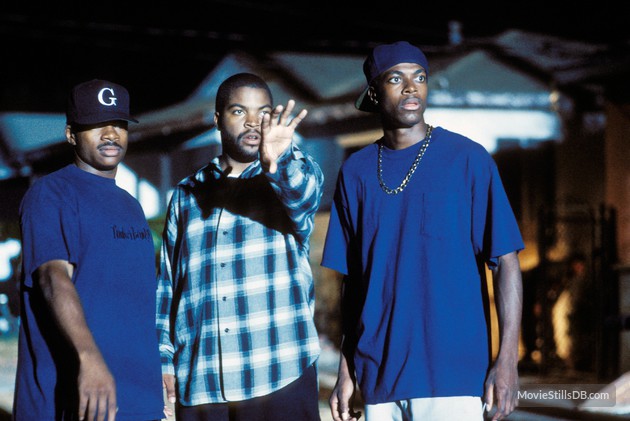
F. Gary Gray, Ice Cube and Chris Tucker on the set of 1995’s Friday, in honor of the box office success of Straight Outta Compton:

Cosplay of the Day:

What if Toothless the dragon from How to Train Your Dragon turned into a warrior princess? Behold, Alpha Toothless (via Geek Tyrant):

Movies in Real Life:

Is Woody from Toy Story real? Someone had some fun with a certain doll and the rear end of their automobile:

Hang on Woody! pic.twitter.com/oOjD0vaOpe

— You had one job (@_youhadonejob) August 15, 2015

Movies in Fake Real Life:

The latest episode of Real Fake History imagines the documentary that would exist if Pacific Rim actually happened:

[embedded content]

Fan Art of the Day:

John Cena is a fan favorite to play Shazam opposite Dwayne Johnson, who has already been cast as Black Adam, so Bosslogic shows us what both comic book characters could look like on the big screen (via Heroic Hollywood):

Classic Trailer of the Day:

Yesterday was the 55th anniversary of the opening of George Pal‘s The Time Machine, based on the H.G. Wells novel. Watch the original trailer, promising thrills you’ve never even imagined, below.

[embedded content]

Send tips or follow us via Twitter:

and

This entry passed through the Full-Text RSS service – if this is your content and you’re reading it on someone else’s site, please read the FAQ at fivefilters.org/content-only/faq.php#publishers.