
Articles by admin

No Image

Box Office Report: Faith in ‘War’ Bests NWA Over Holiday Weekend
Here’s your estimated 4-day box office returns (new releases bolded):

1. War Room – $12.5 million ($27.8 million total)

2. Straight Outta Compton – $11.2 million ($150.2 million total)

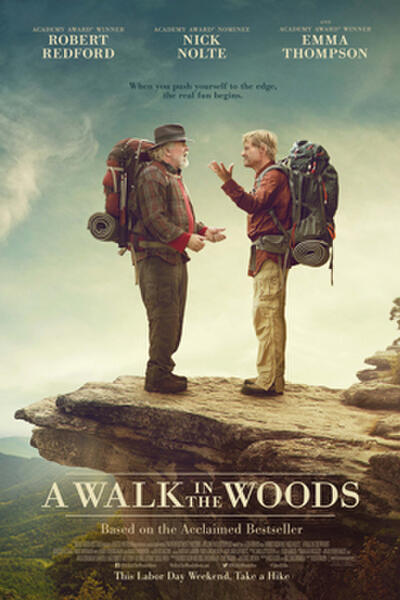
3. A Walk in the Woods – $10.5 million ($12.6 million total)

4. Mission Impossible Rogue Nation – $9.3 million ($182.5 million total)

5. The Transporter Refueled – $9.0 million ($9.0 million total)

6. No Escape – $7.0 million ($20.0 million total)

7. Inside Out – $4.5 million ($349.6 million total)

8. The Man From U.N.C.L.E. – $4.44 million ($40.3 million total)

9. Un Gallo con Muchos Huevos – $4.42 million ($4.42 million total)

10. Sinister 2 – $4.2 million ($24.5 million total)

The Big Stories

The unofficial end of summer is here at the box office. There have been winners and a few big losers. But it’s been fun hasn’t it? There were 45 wide releases from May to Labor Day but just 19 of them received positive ratings at Rotten Tomatoes from critics and, more importantly to the studios, only 11 of them can undoubtedly boast themselves as successful as of this weekend (Jurassic World, Avengers: Age of Ultron, Minions, Inside Out, San Andreas, Pitch Perfect 2, Mission: Impossible – Rogue Nation, Insidious Chapter 3, Spy, Magic Mike XXL and Ant-Man). Two or three more may still break into the black (believe it or not, Terminator Genisys is nearly there thanks to it rallying in China) and the summer box office looks to, surprisingly, be one of the top grossing to date, but it is of little consolation to those who spent so much to get back so little.

Refueled On Empty
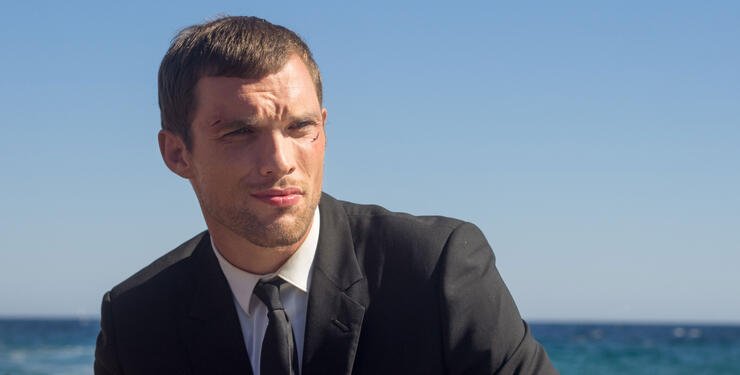
The Transporter Refueled may have seemed like the big opener of the weekend, but how could it have been. A Jason Statham headliner without the benefit of the Expendables, some furious fast stuff or Melissa McCarthy hasn’t opened to more than $10 million since 2011’s The Mechanic. January of 2011. And this fourth entry did not even have Statham in it. The last Transporter film back in 2008 opened to $12 million and that was down from the $16.5 start of the second one three years earlier. Not one film in the series made three times its opening weekend and only the third film made over $100 million worldwide. Though with a $65 million overhead (the first wide release distributed by EuropaCorp) it hardly justified a fourth go-round. Finishing just 26th on the all-time Labor Day opening weekend chart, you can expect a huge dropoff on another lackluster weekend next week as the film struggles to make $25 million total for the lowest-grossing film in the series.

It’s Turning Broad Green
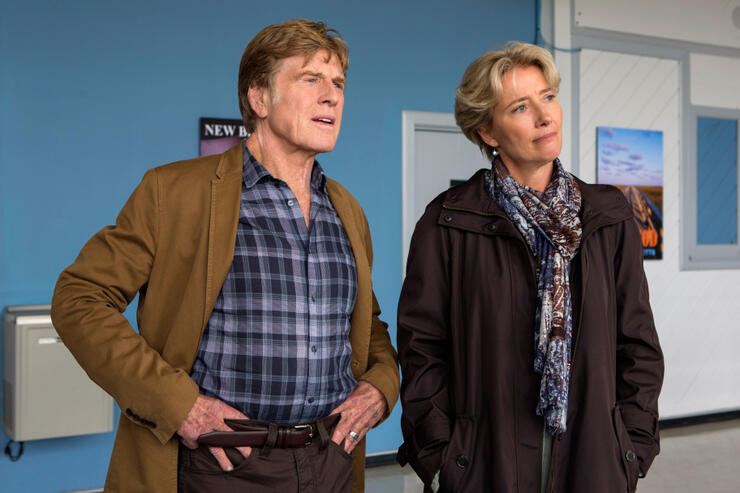
Speaking of a company’s first wide release, Broad Green Pictures said to heck with platforming its Robert Redford/Nick Nolte Sundance pickup, A Walk in the Woods, and just put it out there in 1,960 theaters. The result? The 18th best Labor Day opening. Combine that with opening it on Wednesday (where it was actually #1 for a day) and it looks like they have a nice end-of-summer/early Fall release on their hands. Critics may not have been too fond of the Ken Kwapis film (47% at Rotten Tomatoes) but this appears to be a title that will catch on with adults. It only needs another $4 million to supplant Dope (which was re-released by Open Road this weekend) as the highest-grossing Sundance film of the year to date after Fox Searchlight could just not find the younger audience for Me and Earl and the Dying Girl ($6.7 million to date.)

Broad Green has three more releases on the slate for 2015 and are likely to see small releases for Sarah Silverman in I Smile Back and Fear the Walking Dead‘s Cliff Curtis in The Dark Horse. But it would be cool to see if they go a bit wider with Ramin Bahrani’s 99 Homes with Andrew Garfield and Michael Shannon (in a performance that deserves to be remembered come awards time) and see if they can bring in the same audience. It may not have the goofy sentiment of A Walk in the Woods but it would be nice to see Broad Green go after an adult audience where others have failed in the past.

Tales of the Top Ten
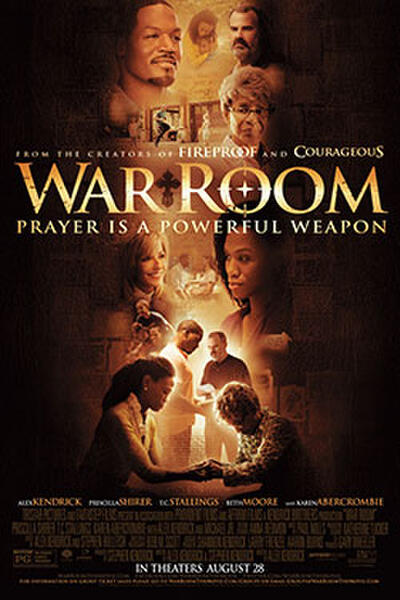
Last week I said the #1 slot would be close this week between Straight Outta Compton and War Room, if the latter expanded its release. Well Tri-Star did just that, adding 391 theaters for a total of 1526. And succeeded. With nearly $28 million in the bank, War Room is climbing the faith-based chart and should be heard from throughout all of September. Universal’s NWA biopic missed the opportunity to give Universal its second four-week victory of 2015 after Furious 7 dominated the month of April. The last film to have a four-peat was The Hunger Games back in March/April 2012. The last Universal films before this year to do it were 2000’s How the Grinch Stole Christmas and Meet the Parents. Before that, 1995’s Apollo 13.

With $182 million in the bank now, where does Mission Impossible Rogue Nation stand amongst its predecessors? It has finally outgrossed the 1996 original. It is still $15 million off the pace of both the fourth and second entries. Paramount will do whatever it can to make it reach $200 million here in the U.S. It might, just might, have one more week in the top five, then the release schedule starts to get loaded so it may find itself pushed out of the top ten by the last weekend on September. Maybe. Ant-Man, meanwhile, is going to officially outgross Captain America: The First Avenger in the U.S. sometime this week. It has already surpassed it worldwide.

The Man from U.N.C.L.E. may make a push for $50 million here in the States, but without a healthy overseas infusion it is currently one of the biggest bombs of the summer ahead of just Tomorrowland and Fantastic Four. Both No Escape and Sinister 2 are marching towards the atypical late summer gross of $30 million each. But jumping back into the top ten is Pixar’s Inside Out which was re-released on an additional 2200 screens this weekend. The highest-grossing animated film of the year in the U.S. (it’s still $300 million behind Minions worldwide) and the highest-grossing original film in Pixar’s history is going to soon pass $350 million where it will reside as the 5th highest-grossing animated film ever in the U.S. behind Shrek 2, Toy Story 3, Frozen and Despicable Me 2. The Lion King and Finding Nemo increased their loads thanks to re-releases in 3-D.

Not to be outdone though, Pantelion’s Mexican animated film, Un Gallo con Muchos Huevos (aka A Rooster with Many Eggs) grossed $4.4 million over the holiday weekend on just 395 screens. That is more than Zac Efron’s We Are Your Friends has grossed in 11 days; the lowest-performing release on over 2,000 screens since 2012’s Oogieloves In The BIG Balloon Adventure.


Erik Childress can be heard each week on the WGN Radio Podcast evaluating box office with Nick Digilio.

[box office figures via Box Office Mojo]

This entry passed through the Full-Text RSS service – if this is your content and you’re reading it on someone else’s site, please read the FAQ at fivefilters.org/content-only/faq.php#publishers.


No Image

Presidential Candidates Campaign In New Hampshire, Iowa On Labor Day

4:01

Download

Politics mixed with picnics and parades Monday as the candidates fanned out for an end of summer blitz of campaigning. Many discussed jobs — an issue that tops just about every voter’s list.

Transcript

AUDIE CORNISH, HOST:

There is no break this Labor Day for those who want to be the next president of the United States or who are at least thinking about it.

(SOUNDBITE OF ARCHIVED RECORDING)

JOE BIDEN: The tax code’s not fair. It’s simply not fair.

(APPLAUSE)

BIDEN: The wealthy aren’t paying their fair share. It used to be one America.

(SOUNDBITE OF ARCHIVED RECORDING)

HILLARY CLINTON: One of my principal jobs as your president will be to defend the right to organize and bargain collectively on behalf of hard-working Americans.

(SOUNDBITE OF ARCHIVED RECORDING)

BERNIE SANDERS: Throughout this country, millions of people are working longer hours for lower wages.

CORNISH: That’s Bernie Sanders at an AFL-CIO breakfast this morning in Manchester, N.H. Before that, we heard Hillary Clinton speaking at a labor event in Hampton, Ill., and Joe Biden in a speech to Steelworkers in Pittsburgh. It’s a symbolic day for Democrats, but Republicans are out and about too. And NPR’s Don Gonyea joins us from the Labor Day picnic – a chicken fry, actually, on the banks of the Mississippi River to talk more about it. And Don, the Mississippi River is long. Where exactly are you?

DON GONYEA, BYLINE: Well, I have been in Iowa all weekend, but I drove across the bridge onto the Illinois side. I’m right on the banks of the Mississippi in Illinois with a beautiful view of Iowa. I came here for the Labor Day rally where you – we just heard the clip of tape from Secretary Clinton’s speaking.

But I also came earlier in the day because there was one of those big Labor Day parades, a big celebration of organized labor. We had union floats. We had marching bands. We had a group marching on behalf of Bernie Sanders. There was, right behind them, a Hillary Clinton group – a bunch of her supporters with signs and T-shirts.

And this is what Labor Day really is for Democrats and for the labor movement. If it’s the end of the summer for everybody else, in an election season, this is when they really start gearing up and putting people on notice that the big push is about to begin.

CORNISH: And people often link the Labor movement with Democrats, but is that beginning to actually sort out? Are you actually seeing unions back specific candidates?

GONYEA: To some, it’s just beginning to sort itself out. Again, you know, the occasional Republican gets an endorsement from a labor union and from the AFL-CIO. But this year, there’s not a lot of love for the Republicans in the field when you talk to these union members and activists. A couple of the big unions – the American Federation of Teachers and the nurses union – have endorsed. The teachers went with Hillary Clinton. The nurses went with Bernie Sanders.

But most of the 56 unions affiliated with the AFL-CIO are just beginning their process. This weekend in Iowa, AFSCME, the big government employees union, had individual closed town halls with Sanders, with Clinton and with Martin O’Malley. So they’re beginning their process, and they’re trying to work their leverage on these candidates.

CORNISH: Leverage for what? I mean, what do they want or hope to achieve in this process?

GONYEA: They want the debate to be about their issues. They want these candidates to commit to being in a certain place on these issues – the minimum wage, the right to organize, worker safety, fair trade deals – things like that. And one guy in Newton, Iowa, at one of these events, said to me – he said, there’s no hurry for us to endorse. Why give it away too soon? The longer we push them, the better the chances that they’ll be talking about our issues. And we also need to impress upon them that it doesn’t stop the day they get elected.

CORNISH: And meanwhile for the GOP, what were you hearing?

GONYEA: They’re out campaigning today as well. Labor Day’s a little different for them. They celebrate American workers, but they don’t celebrate labor unions ’cause labor unions are generally on the other side. But candidates have also been out all over the place. It’s a great day to find groups of people, to bring people in, maybe hire a country band or something else and have a big festive day rooted around politics and the coming election season.

CORNISH: That’s NPR’s Don Gonyea in Hampton, Ill. Don, thanks so much.

GONYEA: My pleasure.

Copyright © 2015 NPR. All rights reserved. Visit our website terms of use and permissions pages at www.npr.org for further information.

NPR transcripts are created on a rush deadline by a contractor for NPR, and accuracy and availability may vary. This text may not be in its final form and may be updated or revised in the future. Please be aware that the authoritative record of NPR’s programming is the audio.

This entry passed through the Full-Text RSS service – if this is your content and you’re reading it on someone else’s site, please read the FAQ at fivefilters.org/content-only/faq.php#publishers.


No Image

Williams Sisters Both Win Easily; Set Up U.S. Open Quarterfinal

Serena Williams serves to Madison Keys during their Women's Singles Fourth Round match on Day 7 of the 2015 U.S. Open. Serena will play her sister Venus in the tournament's quarterfinals.

Serena Williams serves to Madison Keys during their Women’s Singles Fourth Round match on Day 7 of the 2015 U.S. Open. Serena will play her sister Venus in the tournament’s quarterfinals. Chris Trotman/Getty Images hide caption

itoggle caption Chris Trotman/Getty Images

No need for any extra practice for Serena Williams after this performance.

Plus, it’s not as if she needs to study too hard to figure out how to deal with her next opponent.

Playing far better than she did earlier in the U.S. Open as she chases a calendar-year Grand Slam, Williams set up a quarterfinal against older sister Venus with a 6-3, 6-3 victory over 19th-seeded Madison Keys on Sunday.

“A Williams will be in the semis, so that’s good,” the No. 1-seeded Serena said after needing only 68 minutes to dismiss Keys, a 20-year-old American with formidable serves and forehands who simply was outplayed.

Already a winner of the past four major tournaments, including last year’s U.S. Open, Serena is trying to become the first tennis player to win all four Grand Slam titles in the same season since Steffi Graf in 1988.

Venus, at 35 the oldest woman to enter the field, was on court even less time than her sibling, overwhelming 19-year-old qualifier Anett Kontaveit of Estonia 6-2, 6-1.

Venus’ match came first in Arthur Ashe Stadium, so then she had to decide whether to watch Serena play.

“I get very nervous, because even if I have to play Serena, I still want her to win, so I have a hard time watching unless she’s winning. Then it’s easy to watch,” said Venus, who won U.S. Open titles in 2000 and 2001, but had lost in the third round or earlier each of the past four years. “So it depends on how my nerves are.”

Serena acknowledged having a bout with the jitters before her second-round match, when she double-faulted 10 times, made another two dozen unforced errors and needed to come back over and over just to claim the opening set against a qualifier ranked 110th. Afterward, she took pointers from coach Patrick Mouratoglou and headed out to the practice court right away.

Then, in the third round, against someone ranked 101st, Serena dropped the first set and was two games from defeat in the second before turning things around. Again, she put in more work to fix things.

“I’m so proud that I was able to serve a lot better. Obviously I had to,” she said after winning 22 of 28 first-serve points and never facing a break point against Keys. “I was like, ‘Serena, it’s now or never. You’ve got to get that serve together.'”

As for whether she’d need to head out for a training session with Mouratoglou this time, Serena said: “No, not today. I’m going to take the rest of the day off and relax and just enjoy it.”

Another women’s fourth-round match scheduled for Sunday was scratched when 25th-seeded Eugenie Bouchard withdrew with a concussion, two days after slipping and falling in the locker room. The 21-year-old Canadian, the runner-up at Wimbledon last year, was supposed to play Roberta Vinci of Italy.

This entry passed through the Full-Text RSS service – if this is your content and you’re reading it on someone else’s site, please read the FAQ at fivefilters.org/content-only/faq.php#publishers.


No Image

An Unlikely Archivist For Armenian Aleppo: A Punk Drummer From D.C.

A 2010 photo of Father Yeznig Zegchanian of Forty Martyrs Armenian Apostolic Church in Aleppo, Syria.
6:39

Download

A 2010 photo of Father Yeznig Zegchanian of Forty Martyrs Armenian Apostolic Church in Aleppo, Syria. Jason Hamacher hide caption

itoggle caption Jason Hamacher

An American punk drummer has become an unlikely historian of the Armenian community in Aleppo, Syria. And he’s recently released a recording of their religious music — just as the city is crumbling during Syria’s ongoing civil war.

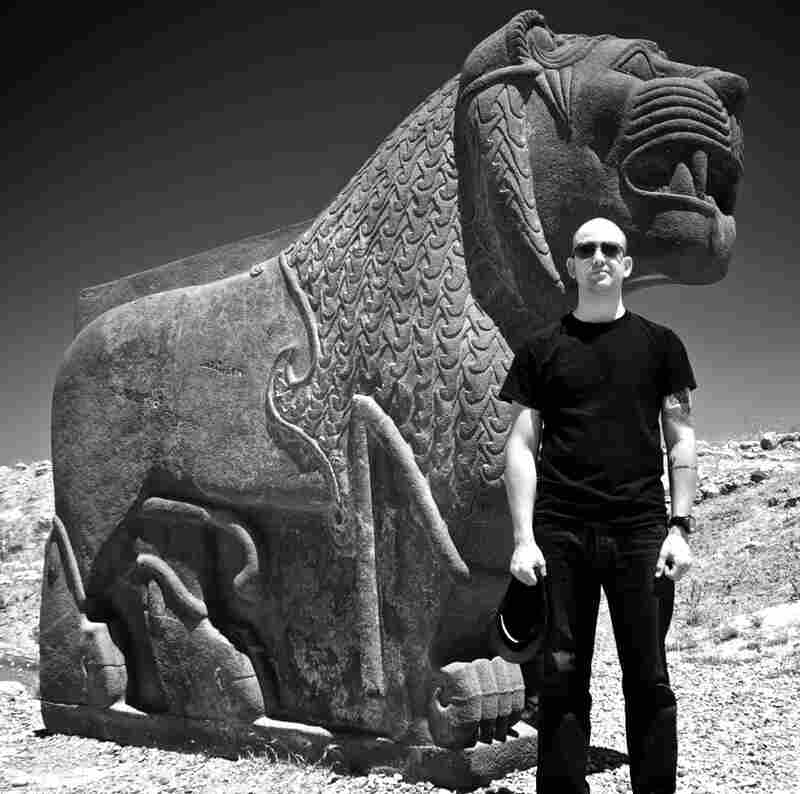
Archivist Jason Hamacher at the archaeological site of Ain Dara, Syria, in 2010.

Archivist Jason Hamacher at the archaeological site of Ain Dara, Syria, in 2010. Courtesy of Jason Hamacher hide caption

itoggle caption Courtesy of Jason Hamacher

Jason Hamacher doesn’t seem like the kind of guy who would be drawn to a place like Syria.

“I am the son of a Southern Baptist minister,” he says. “I was born in Texas, I have no cultural ties or blood ties whatsoever to the Middle East, or to the populations that inhabit the Middle East.”

Back in the early 2000s, Hamacher was a punk drummer in Washington, D.C., playing in several hardcore bands. A little musical competition between friends changed the direction of his whole life.

“We each challenged ourselves, saying each person has to find something online that we could write music to, and report back to each other,” he says. “So a couple of days later, a friend of mine calls, and said, ‘Hey. I found this really amazing chant from Serbia that you should check out.’ It was a bad phone connection, and I completely misunderstood him and thought he said ‘Syria.'”

He wasn’t a trained musicologist or photographer. But beginning in 2006, he made several trips to Syria, taking photos and recording music he found along the way. He documented many of Syria’s diverse minority communities, including Jews, Sufi Muslims and several different Christian denominations. He’s been releasing those recordings, one by one, on his own label.

His most recent release is an album that Hamacher made at a 15th-century Armenian church in Aleppo. It’s just one priest, Yeznig Zegchanian, chanting.

“It’s the famed Forty Martyrs church, and it’s the actual voice inside the church, which is what really makes the album so special,” Hamacher explains. “The songs are common songs. They can be heard throughout the liturgical year. There’s nothing rare about the songs.”

But the church and its neighborhood are another matter. The Armenian neighborhood of Judayda was a place where everybody went. It’s full, Hamacher says, of “really windy back alleys, and it opens up onto this really amazing square that’s lined with restaurants, trees and silver shops.”

“It was always one of those magical places where you had multiple communities living together, says Elyse Semerdjian, a historian of Syria at Whitman College in Walla Walla, Wash. “From neighborhood to neighborhood, you could switch languages, from Armenian to Kurdish to Turkish to Arabic.”

Semerdjian comes from an Armenian family from Aleppo, and she wrote the liner notes for Zegchanian and Hamacher’s Forty Martyrs: Armenian Chanting from Aleppo. She says the city became important to Armenians many centuries ago, because of Armenia’s religious heritage. Armenia officially became a Christian country 1700 years ago, in the year 301.

“You know, Aleppo was always situated along a pilgrimage route to Jerusalem,” she says. “And so we have very early accounts of Armenians who passed through Aleppo, and stayed in Aleppo for a period of time.”

Semerdjian says that Aleppo became even more of a refuge after 1915, when up to a million and a half Armenians were killed or deported from the Ottoman Empire.

“When the Armenian genocide took place in 1915,” Semerdjian says, “Aleppo was one of the major deportation routes for Armenians, where, on what were, in effect, death marches, that people were very lucky to survive. If they survived them at all, they ended up, many of them, in Aleppo.”

Father Zegchanian was born in Aleppo. He was first recorded by Jason Hamacher in 2006. Hamacher returned to Forty Martyrs four years later to try to record him again. But a deacon refused to even let him speak to Father Zegchanian until the priest himself happened to walk by — and Hamacher chased after him.

“It’s like, ‘I don’t know if you remember me,'” Hamacher recounts. “‘I would love to record an record with you inside the church. He’s like, ‘OK.'”

“‘Oh, that’s great!'” Hamacher continues. “And then he just started walking into the church. I was like, ‘Wait, not now, I don’t have my stuff!’ He’s like, ‘Yes.’ I was like, ‘Yes, you’ll do it? Or … yes to later?’ It’s like, ‘OK … let me go get my equipment!'”

And that recording, made totally on the fly, became an important historical document of an Aleppo that is nearly gone. In April of this year, the church of Forty Martyrs was bombed.

“At first, it seemed that the church, and everything related to the church, was completely destroyed,” Hamacher says. “And fortunately, it turned out to just be the courtyard and complex related to the church.”

Hamacher hasn’t been able to contact Father Zegchanian in the past couple of years. And he hasn’t been able to go back to Syria because of the war — but he says that’s made his work all the more urgent.

“Major portions of the iconic symbolism of that city has been wrecked and destroyed,” Hamacher says emphatically. “The importance to continue at least the memory of these places is to keep the arts going. That’s my attempt, you know, that’s my contribution, is trying to represent these communities in a way that is informational, respectful, artistic and honorable.”

In the meantime, Hamacher is eager to share what he’s collected. He’s working on a book of photos from Aleppo, and says that he’ll be releasing an album a year of music from Syria, as long as he’s got material.

This entry passed through the Full-Text RSS service – if this is your content and you’re reading it on someone else’s site, please read the FAQ at fivefilters.org/content-only/faq.php#publishers.


No Image

Why Google Is Going All In On Diabetes

An experimental contact lens being developed by Google can painlessly measure glucose levels in tears.

An experimental contact lens being developed by Google can painlessly measure glucose levels in tears. Google hide caption

itoggle caption Google

Millions of people with diabetes prick a finger more than five times a day to monitor their blood glucose levels. It’s a painful and expensive process.

But now, Google’s Life Sciences division is putting its immense resources behind new initiatives aimed at helping them better live with the disease.

“It’s really hard for people to manage their blood sugar,” said Jacquelyn Miller, a Google Life Sciences spokeswoman, in an interview with KQED. “We’re hoping to take some of the guesswork out of it.”

Earlier this week the new Google Life Sciences unit announced that diabetes is the company’s first major disease target. It may come as a surprise that Google, a company that helps people search online for flights and restaurants and dabbles in other ventures like self-driving cars, is investing in new therapies to treat disease.

But according to Michael Chae, executive director of the San Francisco Bay Area Chapter at the American Diabetes Association, Google’s decision is a no-brainer. It’s a highly lucrative opportunity. In 2012, the total cost of managing diabetes was put at $245 billion in the U.S. alone. The timing also appears just right for technology companies to enter the field.

“There’s been an explosion of wearables, data and analytics,” Chae said. “People with diabetes are more comfortable living in a measured world.”

He envisions a future where people with diabetes can measure their blood glucose levels on a continuous basis, using painless methods. One of Google’s emerging products is a contact lens embedded with a glitter-sized sensor that can measure glucose levels in tears. “There’s a whole lot of innovation at once,” he said.

‘I Didn’t Feel like a Normal Human Being’

The methods that Cyrus Khambatta uses to manage his Type 1 diabetes haven’t changed much in the past decade.

Khambatta, a nutritionist based in San Francisco, was diagnosed with the disease at the age of 22. Each day, he pricks a finger between six and 10 times. He uses a lancet to draw a little blood, which he puts on a test strip, and then he feeds the strip into a glucose meter to check his blood sugar levels.

Nutritionist Cyrus Khambatta uses his glucose meter and lancets to check his blood sugar six to 10 times a day.

Nutritionist Cyrus Khambatta uses his glucose meter and lancets to check his blood sugar six to 10 times a day. Courtesy of Cyrus Khambatta hide caption

itoggle caption Courtesy of Cyrus Khambatta

Before meals and exercise, he injects himself with a syringe filled with insulin. He dials up the amount of insulin based on the data from the glucose meter. The insulin required depends on many factors, including stress, sleep, exercise and diet, Khambatta explained, and involves a lot of attention to detail plus a little intuition.

“Unlike a migraine or acne, diabetes management is all about developing an understanding and manipulation of numbers over time,” he said. “Diabetes is very quantitative.”

Khambatta describes his style for managing disease as “old school” compared with some of his peers. Many other people with diabetes use more modern alternatives for glucose monitoring, such as a patch with tiny needle-based sensors under the skin that connects to a transmitter and an insulin pump.

But when Khambatta tried those options, he found they were still a lot of work. The sensor needed to be changed every two to three days, and the equipment served as a constant visual reminder of his condition. “I didn’t feel like a normal human being,” he said.

In the near future, he said, he also hopes that companies will develop non-invasive, continuous glucose monitoring, which wouldn’t draw blood or cause pain or trauma.

“That’s the Holy Grail,” said Cameron Sepah, medical director at Omada Health, a San Francisco-based company that focuses on technology for diabetes prevention. Sepah said such a sophisticated blood sugar-tracking system could be paired with a device that delivers insulin, and thus act as an “artificial pancreas.”

“Health companies have been working on this for years,” he said. “But Google has a history of taking on very ambitious projects.”

Why Google?

Google made a name for itself with search technology, but it has dabbled in more ambitious moonshot projects, from self-driving cars to stratospheric Internet balloons.

The life sciences team, which initially worked out of Google’s secretive research arm, Google X, spun out from the Google search engine business in August. Both entities will be held under an umbrella organization called Alphabet.

The life sciences unit is led by molecular biologist Andy Conrad, who has helped the company secure partnerships with top drug makers and medical device companies. Conrad seems to be taking a different tack than the the ill-fated Google Health team, which offered a personal health record product and closed in 2011 because of a lack of traction. The life sciences team is seeking help from more established players in the medical sector.

Google Life Sciences earlier this week announced a partnership with Sanofi, maker of an insulin inhaler and a slew of other products for people with diabetes. Google is also working with Johnson & Johnson on surgical robots, Biogen on potential treatments for multiple sclerosis and Novartis and Dexcom on diabetes-related projects.

But the diabetes market appears to be the primary focus. Data and analytics is Google’s area of expertise, and as Miller puts it, diabetes management is fundamentally an “information problem.”

Patients with diabetes lack clear information about how variables like nutrition and exercise affect their blood sugar levels, she said. And these kind of insights could help them adjust their insulin levels and avoid serious outcomes, like stroke, heart disease and hypoglycemia.

But don’t expect any of the products from the Life Sciences team to hit the market next week. Given the technical challenges and the regulatory requirements, experts say, it could take years before any new device reaches patients.

Christina Farr is the editor and host of KQED’s Future of You blog, which explores the intersection of emerging technologies, medicine and health care. She’s on Twitter: @chrissyfarr

This entry passed through the Full-Text RSS service – if this is your content and you’re reading it on someone else’s site, please read the FAQ at fivefilters.org/content-only/faq.php#publishers.


No Image

Before Superstardom, Williams Sisters Stunned On Compton's Courts

Sisters Serena, left, and Venus Williams shake hands after a match in 1991 in Compton, Calif.
4:36

Download

On Stockton Street, in Compton, Calif., there’s a small white stucco house with a chain-link fence and an old tree out front.

There’s isn’t a sign or plaque in the yard, and there aren’t any tour groups taking photos. There’s nothing here to indicate that this house, in this quiet neighborhood, was the childhood home of two of the best athletes of all time.

Sisters Serena, left, and Venus Williams shake hands after a match in 1991 in Compton, Calif. Paul Harris/Getty Images hide caption

itoggle caption Paul Harris/Getty Images

Long before the U.S. Open this week, before the Nike and Gatorade sponsorships and before the stardom, a young Venus and Serena Williams were given their first tennis rackets here.

Next door, Maria Gomez leans up against her blue pickup truck. She’s lived in this house since 1974, so she knew the Williams family. She says she remembers Venus and Serena running around the house and playing in the tiny backyard next door.

The girls cut their teeth on courts around Compton. And to this day, the Williams sisters are a source of pride in the city.

“To be able to say that they’re from the town that you grew up in — who wouldn’t be inspired by them?” says Janna Zurita, a Compton councilwoman. She was born and raised in Compton, and says she used to watch the Williams sisters train.

“A lot of the little kids here in the community, they look up to them and they think they’re great. I mean, they’re two beautiful women that changed the whole life of tennis,” Zurita says. “And they’re straight outta Compton.”

Their dad, Richard Williams, was their coach back then. He was known for being tough and pushing his daughters to perfection on the court — hours on the courts, day in, day out.

Some of the places where they’d practice were in rough neighborhoods, like East Rancho Dominguez Park, formerly known as East Compton Park. Today, the courts are repaved and there’s a new recreation center — but that’s not how it used to be.

Andre Barbee says the last time he stood on the courts at East Rancho Dominguez, gang members would hang out on park benches just outside the fence.

“You see them thugged out, drinking, smoking their weed,” he says. “But they never messed with us. So I never had a problem with nobody here.”

Barbee was a 21-year-old limo driver and part-time tennis coach when Richard Williams invited him to train with his daughters.

“Tennis was a passion,” he says.

Barbee was a tennis prodigy himself, so when he faced Venus and Serena on the court, he had finally met his match.

“Man, it was unbelievable,” Barbee says. “Never seen nobody that good. It was something I’d never seen before in my life.”

Venus wasn’t even a teenager yet.

Training meant hitting hundreds of balls with enough force to break the strings on their racquets.

“Every other day, I was restringing my racquets,” he says. “My shoes, once a week. A hole right in my foot of my shoe. Used to tape them up.”

They’d run drills up and down the court, honing their power at the baseline.

Andre Barbee met Venus and Serena Williams on the tennis courts at East Rancho Dominguez Park in Compton. He was 21 years old when Richard Williams invited him to train with his daughters.

Andre Barbee met Venus and Serena Williams on the tennis courts at East Rancho Dominguez Park in Compton. He was 21 years old when Richard Williams invited him to train with his daughters. Daniel Hajek/NPR hide caption

itoggle caption Daniel Hajek/NPR

This year, Serena has been unstoppable. If she wins the U.S. Open, she’ll be the first since Steffi Graf in 1988 to win all four grand slam titles in the same year.

Older sister Venus, once dominant in the sport, is on an upswing. On Friday, she advanced to the fourth round of the U.S. Open when she beat 18-year-old Belinda Bencic.

Playing in Compton is a distant memory now: The Williams family moved to Florida in 1991. But this is where Venus and Serena learned the game’s fundamentals.

“I love them like my little sisters,” says Barbee. “And Richard Williams, I loved him like a father. He was like a dad, you know? I miss training with them. At the time, I didn’t have a high school diploma. And [Richard] told me, ‘Promise me that you get your high school diploma.’

“Richard? I kept my promise,” he says. “I have my high school diploma.”

Barbee doesn’t play much tennis these days. But on this court, I can see him reliving that year he spent training with Venus and Serena Williams.

And for the record, the last time he played Serena, they never finished their match.

“She didn’t beat me yet,” Barbee says. “So Serena, if you’re hearing this, you still owe me a match. I can still play. It’s just, I can’t play long. I can play a set. Come on Serena, give me one set.”

Barbee starts laughing.

He’s ready for a rematch on the tennis courts at the corner of Compton Boulevard and Atlantic Avenue, where it all started.

This entry passed through the Full-Text RSS service – if this is your content and you’re reading it on someone else’s site, please read the FAQ at fivefilters.org/content-only/faq.php#publishers.

No Image

Veterans Used In Secret Experiments Sue Military For Answers

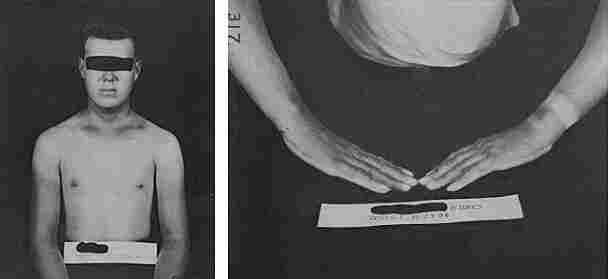
Historic images from the Naval Research Laboratory depict results of a test subject who was exposed to mustard gas.
4:11

Download

Historic images from the Naval Research Laboratory depict results of a test subject who was exposed to mustard gas. Naval Research Laboratory hide caption

itoggle caption Naval Research Laboratory

American service members used in chemical and biological testing have some questions: What exactly were they exposed to? And how is it affecting their health?

Tens of thousands of troops were used in testing conducted by the U.S. military between 1922 and 1975. As one Army scientist explained, the military wanted to learn how to induce symptoms such as “fear, panic, hysteria, and hallucinations” in enemy soldiers. Recruitment was done on a volunteer basis, but the details of the testing and associated risks were often withheld from those who signed up.

Many of the veterans who served as test subjects have since died. But today, those who are still alive are part of a class action lawsuit against the Army. If they’re successful, the Army will have to explain to anyone who was used in testing exactly what substances they were given and any known risks. The Army would also have to provide those veterans with health care for any illnesses that result, in whole or in part, from the testing.

The law firm representing the veterans estimates at least 70,000 troops were used in the testing, including World War II veterans exposed to mustard gas, whom NPR reported on earlier this summer.

Bill Blazinski has chronic lymphocytic leukemia, which he thinks may have been caused by the military tests. He was 20 years old and had just graduated from boot camp when he volunteered in 1968.

“There would be a guaranteed three-day pass every weekend unless you had a test,” he says. “There would be no kitchen police duties, no guard duties. And it sounded like a pretty good duty.”

What sounded more like a vacation than military duty quickly changed, he says. In one test, doctors said they would inject him with an agent and its antidote back to back.

“We were placed in individual padded cells. And you know the nurse left and I’m looking at this padded wall and I knew it was solid but all of a sudden started fluttering like a flag does up on a flag pole,” he recalls.

To learn about what substances made him hallucinate, in 2006, Blazinski requested the original test documents under the Freedom of Information Act. It showed two antidotes for nerve agent poisoning with dangerous known side effects.

Researchers kept information about which agents they were administering from test subjects to avoid influencing the test results. A lawyer representing the veterans, Ben Patterson of the law firm Morrison and Foerster, says that’s a problem.

“They don’t know what they were exposed to. You know, some of these substances were only referred to by code names,” Patterson says.

Code names such as CAR 302668. That’s one of the agents, records show, that researchers injected into Frank Rochelle in 1968.

During one test, Rochelle remembers that the freckles on his arms and legs appeared to be moving. Thinking bugs had crawled under his skin, he tried using a razor blade from his shaving kit to cut them out. After that test, he says he hallucinated for 40 hours.

“There were animals coming out of the walls,” he says. “I saw a huge rabbit and he was solid white with red eyes.”

In 1975, the Army’s chief of medical research admitted to Congress that he didn’t have the funding to monitor test subjects’ health after they went through the experiments. Since then, the military says it has ended all chemical and biological testing.

Test subjects like Rochelle say that’s not enough.

“We were assured that everything that went on inside the clinic, we were going to be under 100 percent observation; they were going to do nothing to harm us,” he says. “And also we were sure that we would be taken care of afterwards if anything happened. Instead we were left to hang out to dry.”

The Department of Justice is representing the Army in the case and declined to comment for this story. In June, an appeals court ruled in favor of the veterans. On Friday, the Army filed for a rehearing.

This entry passed through the Full-Text RSS service – if this is your content and you’re reading it on someone else’s site, please read the FAQ at fivefilters.org/content-only/faq.php#publishers.


No Image

Classic Sounds And Fresh Updates With Betto Arcos

Totó La Momposina's new album, Tambolero, is a reworking of her 1993 album La Candela Viva, regarded by many as one of Colombia's most important albums.
8:59

Download

Totó La Momposina’s new album, Tambolero, is a reworking of her 1993 album La Candela Viva, regarded by many as one of Colombia’s most important albums. Betto Arcos for NPR hide caption

itoggle caption Betto Arcos for NPR

Betto Arcos hosts Global Village on KFPK in Los Angeles, and he frequently visits All Things Considered on the weekends to share the new music he’s discovered while traveling the world. This time, he brings NPR’s Arun Rath a stack of new records that re-imagine classic styles of Latin music, from Afro-Cuban jazz to Mexican banda.

Hear the conversation at the audio link above, and delve deeper into the music below.

Hear The Music

Nueva Era

Nueva Era Courtesy of the artist hide caption

itoggle caption Courtesy of the artist

Daymé Arocena

  • Song: El Ruso
  • From: Nueva Era
[embedded content]
YouTube
  • Add to Playlist
  • Embed
    Embed <iframe src="https://www.npr.org/player/embed/436904913/436910821" width="100%" height="290" frameborder="0" scrolling="no">
  • Purchase Music
En Vivo

En Vivo Courtesy of the artist hide caption

itoggle caption Courtesy of the artist

Orquesta Típica Fernández Fierro

  • Song: Marejada
  • From: En Vivo
[embedded content]
YouTube
  • Add to Playlist
  • Embed
    Embed <iframe src="https://www.npr.org/player/embed/436904913/436917163" width="100%" height="290" frameborder="0" scrolling="no">
  • Purchase Music
Cover for Tambolero

Totó La Momposina

  • Song: La Candela Viva
  • From: Tambolero
[embedded content]
YouTube
  • Add to Playlist
  • Embed
    Embed <iframe src="https://www.npr.org/player/embed/436904913/436918574" width="100%" height="290" frameborder="0" scrolling="no">
  • Purchase Music
Banda de los Muertos.

Banda de los Muertos. Courtesy of the artist hide caption

itoggle caption Courtesy of the artist

Banda de Los Muertos

  • Song: El Paso
  • From: Banda de Los Muertos
[embedded content]
YouTube
  • Add to Playlist
  • Embed
    Embed <iframe src="https://www.npr.org/player/embed/436904913/436919285" width="100%" height="290" frameborder="0" scrolling="no">
  • Purchase Music

This entry passed through the Full-Text RSS service – if this is your content and you’re reading it on someone else’s site, please read the FAQ at fivefilters.org/content-only/faq.php#publishers.


No Image

Will The Fed Raise Rates, Or Keep The (Little) Economic Party Going?

2:33

Download

Friday’s decent but unspectacular jobs report didn’t answer the question of whether the Fed is about to raise interest rates. But even if the Fed finally takes the plunge, it will do so very gradually.

Transcript

SCOTT SIMON, HOST:

The U.S. unemployment rate has fallen to 5.1 percent – a lot better than the 10 percent jobless rate back in 2009. But the economy still has weak spots. The Federal Reserve will take all of this into account in two weeks, when it decides whether to raise rates from the lowest level on record. NPR’s Chris Arnold reports.

CHRIS ARNOLD, BYLINE: After the financial crisis hit, the Fed did something remarkable. It pushed its benchmark interest rate down to zero, where it’d never been before, and it stayed there for years. Now, the Fed’s poised to start removing that life support for the economy by raising rates. That has some analysts nervous. After all, if you take life support off too soon, the patient might crash again. But economist Diane Swonk says that people shouldn’t be too worried.

DIANE SWONK: The real message for everyone is, no matter what the Fed does, the first move is going to be small, and thereafter it’s going to be a crawl – up on rates. There is no surge in rates out there, and that’s because the economy’s just not hot enough.

ARNOLD: Swonk is with Mesirow Financial in Chicago, and she says the Fed is very aware that the economy still isn’t that great. There are several million working-age Americans without jobs. Wages are stagnant. So until things improve more…

SWONK: The Fed doesn’t want to snuff out what little party we might have going.

ARNOLD: Still, leaving interest rates so low for too long could spark bubbles in the housing market or the stock market, so the Fed is trying to steer a tricky course to keep the economy sailing into a better recovery. And there’s another reason to raise rates. Lisa Lynch is interim president of Brandeis University and a former Labor Department economist.

LISA LYNCH: Right now, the Fed has used pretty much all of its arsenal. And if you do have another negative shock, what do they do?

ARNOLD: In other words, with interest rates at zero, the Fed wants to get back to a place where it could drop interest rates again if it had to. Still, Lynch actually sees enough slack in the labor market and the economy that if she were at the Fed, she would wait a little longer before raising rates.

LYNCH: I don’t think there’s any harm done in doing that. And if you move prematurely and trigger uncertainty and concern and slow down the economy, we certainly don’t want to do that at this stage.

ARNOLD: One cause for uncertainty right now is China. Its economy is slowing down. Analysts say the Fed will be trying to figure out just how big a problem that might be for the global economy. Chris Arnold, NPR News.

Copyright © 2015 NPR. All rights reserved. Visit our website terms of use and permissions pages at www.npr.org for further information.

NPR transcripts are created on a rush deadline by a contractor for NPR, and accuracy and availability may vary. This text may not be in its final form and may be updated or revised in the future. Please be aware that the authoritative record of NPR’s programming is the audio.

This entry passed through the Full-Text RSS service – if this is your content and you’re reading it on someone else’s site, please read the FAQ at fivefilters.org/content-only/faq.php#publishers.


No Image

Best of the Week: New 'Star Wars' Toys, Our Summer Movie Recap and More

The Important News

Star Wars Updates: Benicio Del Toro pretty much confirmed he’s the villain in Star Wars: Episode VIII. Three actresses were shortlisted for Star Wars: Episode VIII. Great new Star Wars: The Force Awakens toys were unveiled for Force Friday.

Casting Net: Vincent Cassel will play a villain in Bourne 5. Steve Carell is replacing Bruce Willis in Woody Allen’s next film. Nicholas Hoult will play J.D. Salinger in a biopic. Cate Blanchett will play Lucille Ball in a biopic.

Franchise Fever: Daniel Craig might be done with James Bond after Spectre. Michael Shannon clarified his Batman v Superman “flipper hands” comment. Straight Outta Compton could get dueling sequels.

Remake Report: Steven Spielberg made everyone think Jaws and Back to the Future were getting reboots.

Home Video News: Amazon Prime video rentals can now be watched offline.

Box Office: War Room was a surprising box office success.

Oscar Talk: The Oscars will have two hosts next year. Beasts of No Nation was worth almost dying for.

The Videos and Geek Stuff

New Movie Trailers: Goosebumps, Pay the Ghost, Concussion, Knock Knock, The Danish Girl, The Fifth Wave, Miss You Already, A Christmas Horror Story, The Night Before and The Gamechangers.

Watch: A fan-made trailer for the never-made Superman Lives!

See: The best Star Wars goodies for Force Friday.

Watch: An Avengers: Age of Ultron gag reel.

See: Video proof that the Star Wars Ring Theory is true.

Watch: Christina Applegate portrays Meryl Streep in a fake Lifetime Movie.

See: What Steven Spielberg thinks of superhero movies.

Learn: How to make a homemade Ghostbusters ghost trap.

See: How the first two Terminator movies defined action movies. And see the Termiantor and tons more iconic movie characters mashed into one great nightclub scene.

Watch: Sesame Street parodies Clash of the Titans. And Sesame Street parodies When Harry Met Sally.

Learn: The science of The Matrix human batteries. And the science of Star Wars laser blasters.

See: This week’s best new movie posters. Plus three new posters for Dragon Blade.

Our Features

Monthly Movie Guide: Here’s our calendar for all the important release dates for this month.

Summer Movie Recap: We presented our awards to the best of summer 2015.

R.I.P.: We remembered Wes Craven. And we remembered all the reel-important people we lost last month.

Geek Movie Guide: Everything movie geeks need to know about this month.

Horror Movie Guide: The best documentaries about horror movies.

Comic Book Movie Guide: Why it’s okay that the Hulk isn’t in Captain America: Civil War.

Home Viewing: Here’s our guide to everything hitting VOD this week. And here’s our guide to everything hitting DVD this week. And here’s our guide to everything hitting Netflix Watch Instantly this month. And here’s our guide to everything hitting HBO Now this month.

and

MORE FROM AROUND THE WEB:

This entry passed through the Full-Text RSS service – if this is your content and you’re reading it on someone else’s site, please read the FAQ at fivefilters.org/content-only/faq.php#publishers.