Articles by admin

No Image

New EPA Rules Motivate Montana To Look Beyond Coal

Kevin Murphy says he is proud of what he and the other workers do at the Rosebud mine, including digging the coal and reclaiming the land afterward.
4:34

Download

Kevin Murphy says he is proud of what he and the other workers do at the Rosebud mine, including digging the coal and reclaiming the land afterward. Amy Martin/Montana Public Radio hide caption

itoggle caption Amy Martin/Montana Public Radio

Colstrip, Mont., is true to its name — it exists because of coal.

“Our coal’s getting deeper, like everywhere else, because everybody’s mining. They’re getting into the deeper stuff,” says Kevin Murphy, who has worked in the Rosebud Mine for 15 years running a bulldozer in the open pits.

Everything about the mine is enormous, especially the dragline, a machine as big as a ship with a giant boom that extends 300 feet up into the air. The dragline perches on the lip of the pit, scraping away hundreds of feet of rocky soil to reveal the black seam of coal below.

The coal goes directly to the power plant across the highway, where it’s pulverized and burned. This mine-to-mouth operation is the second-largest coal-fired power plant west of the Mississippi. But Murphy’s wife, Marti, says if you’re picturing blackened skies and sooty streets, you haven’t actually been to Colstrip.

Marti and Kevin Murphy at home with their children

Marti and Kevin Murphy at home with their children Amy Martin/Montana Public Radio hide caption

itoggle caption Amy Martin/Montana Public Radio

How Montana Compares With Other States

“I feel like that is how we’re perceived, as a dirty coal mining town. It’s just not true,” she says.

Marti works in the accounts payable office at the mine. She points out the money generated from coal has given her community amenities you wouldn’t normally find in a town of just over 2,000 people.

“We have free golf if you live in the city limits, free gym membership if you live in the city limits, walking paths all around town, a park in every single neighborhood that you could think of,” she says.

The goal of the EPA’s Clean Power Plan is to reduce carbon emissions from the power sector by 30 percent nationwide from 2005 levels. Marti says she wants a healthy environment, but talk of shutting down coal-fired power plants feels threatening in Colstrip.

“It’s pretty scary because you think about it, and then you have to think, ‘Well, where would we go if something happened?’ ” she says.

Economist Mark Haggerty is with Headwaters Economics, an independent research group in Bozeman, Mont., that studies energy issues across the West.

“I would be worried,” he says.

Haggerty says the real threat to Colstrip may not be the Clean Power Plan. “There are larger market trends that are already forcing a big transition away from coal towards natural gas,” he says.

Those trends could be good for Montana. The state does produce some natural gas, and it’s also rich in renewable resources, like wind. The American Wind Energy Association ranks Montana third among states with potential land-based wind power generation. But it’s currently 21st in the nation for actual wind production. Haggerty says the infrastructure to move wind energy toward population centers is one of the primary things holding it back.

“Those issues I think will be resolved, and I would expect that we could see renewables being a significant competitor with both coal and natural gas over the next decade,” Haggerty says.
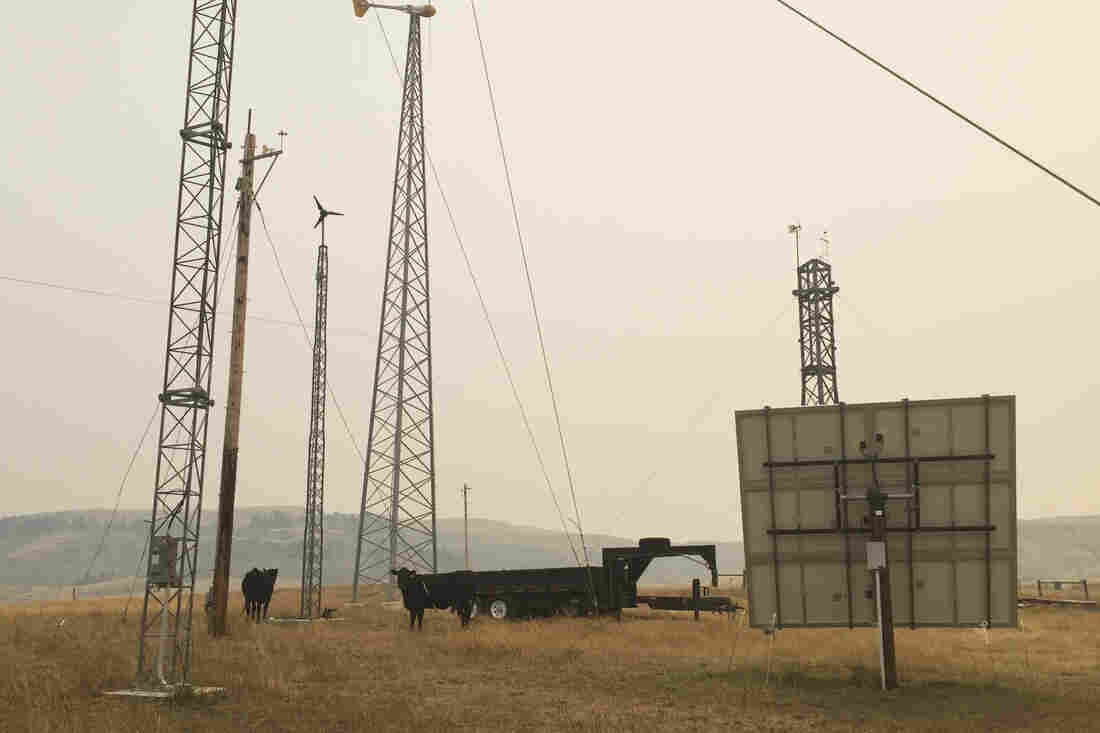
Jenni Bryce's cattle graze around her family's wind turbines and solar panels at her home near Belt, Mont.

Jenni Bryce’s cattle graze around her family’s wind turbines and solar panels at her home near Belt, Mont. Amy Martin/Montana Public Radio hide caption

itoggle caption Amy Martin/Montana Public Radio

That transition is well underway for Jenni Bryce, who lives near the town of Belt, in central Montana. In the pasture behind her house, cattle are grazing, solar panels are collecting sunlight and several turbines are whirling in the wind.

“We have a Bergey 10-kilowatt wind turbine, which is probably the standard size for residential,” she says.

Bryce founded Pine Ridge Products 16 years ago. It’s a small-scale solar and wind installation company that she runs from her home. Bryce didn’t plan to become a renewable energy entrepreneur — she’s actually a speech therapist — but after she and her husband put up solar panels and a wind turbine for their own use, other families started asking them for advice. That led them to start consulting, manufacturing parts and designing new turbine models.

Climate change was not what motivated Bryce to start her business. She points out that families like hers have been using windmills for a long time.

“They’ve been using them for water pumping,” she says. “And you look back at our history of rural electrification and before that they used windmills connected to batteries for their power in their houses.”

In true Montana fashion, Bryce’s commitment to renewable energy grows out of her rural roots — and her passion for self-sufficiency. That passion will be needed to bring Montana into compliance with the new EPA rules and to help ease the transition away from coal in coming decades.

This entry passed through the Full-Text RSS service – if this is your content and you’re reading it on someone else’s site, please read the FAQ at fivefilters.org/content-only/faq.php#publishers.


No Image

Beyond Brady: What To Expect In Tonight's NFL Season Opener

The last time the New England Patriots played the Pittsburgh Steelers was Nov. 3, 2013. The Patriots won 55-31.

The last time the New England Patriots played the Pittsburgh Steelers was Nov. 3, 2013. The Patriots won 55-31. Charles Krupa/AP hide caption

itoggle caption Charles Krupa/AP

Football is back.

Tonight at 8:30 p.m. ET the New England Patriots will play host to the Pittsburgh Steelers in Foxborough, Mass. The contest’s prevailing narrative is sure to focus on the Patriots’ quarterback Tom Brady, whose suspension for his alleged role in the Deflate-gate scandal was overturned last week. But there’s more to this game than the return of one man.

It’s possible tonight could mark the burial of the Deflate-gate saga. Beyond that, here’s what you need to know:

  • Suspensions for both teams will be a factor. Patriots running back LeGarette Blount, Steelers running back Le’Veon Bell and Steelers wide receiver Martavis Bryant are all suspended for violating the NFL’s substance abuse policy. With Blount and New England wide receiver Brandon LaFell also benched due to injury, Brady will be left with limited options. Luckily for him, star tight end and twerk-master Rob Gronkowski will be one of them.
  • The Patriots are favored to win. Las Vegas odds favor the Pats by 7, up from the 2.5-point favorite they were before Brady was exonerated last week. But what we saw from Brady’s preseason performances doesn’t inspire much confidence. He completed 10-22 passes for a measly 107 yards, and threw for one touchdown in three preseason games. Still, that’s based on a relatively small sample size.
  • The Steelers boast an impressive offensive combo. Steelers quarterback Ben Roethlisberger and wide receiver Antonio Brown are one of the most potent offensive duos in the league. Last season, Roethlisberger was No. 2 in the league for passing yards with 4,952. He also threw for 32 touchdowns. Brown led the league in receiving yards, recording 1,698 along with 13 touchdowns. Especially with former Patriots corner back Darrelle Revis gone to the Jets, the New England defense will likely have its hands full.
  • Roger Goodell won’t be in attendance. Claiming that he doesn’t want his presence to distract from the football, the beleaguered NFL commissioner (who issued Brady’s since-overturned four game suspension) will break tradition and watch the season opener on TV.

This entry passed through the Full-Text RSS service – if this is your content and you’re reading it on someone else’s site, please read the FAQ at fivefilters.org/content-only/faq.php#publishers.


No Image

Price Soars For Key Weapon Against Heroin Overdoses

A nasal spray version of the overdose-reversing drug naloxone demonstrated at police headquarters in Quincy, Mass., in 2014.
6:43

Download

A nasal spray version of the overdose-reversing drug naloxone demonstrated at police headquarters in Quincy, Mass., in 2014. Gretchen Ertl/Reuters/Landov hide caption

itoggle caption Gretchen Ertl/Reuters/Landov

Around the U.S., a worsening heroin epidemic has more and more cities turning to the anti-overdose drug naloxone to reduce deaths from abuse. Also known as Narcan, the medication blocks the effects of opioids and reverses the respiratory depression that occurs during an overdose.

Baltimore recently stepped up its naloxone training, focusing on drug users, and their families and friends. So far this year, city health workers have taught nearly 4,400 people how to use naloxone. That’s more than quadruple the number trained in 2014.

A big concern for Baltimore and other cities is the price of naloxone, which has risen dramatically as demand has gone up. In February, the Baltimore City Health Department was paying about $20 a dose. By July, the price had climbed to nearly $40 a dose.

Maryland Rep. Elijah Cummings, ranking member of the House Oversight and Government Reform Committee, places the blame squarely on the manufacturers and, in particular, Amphastar Pharmaceuticals, the company that makes the naloxone most widely used by health departments and police.

“When drug companies increase their prices and charge exorbitant rates, they decrease the access to the drug,” Cummings said this summer. “There’s something awfully wrong with that picture.”

Amphastar says it raised prices because of increased manufacturing costs, including a rise in the prices of raw materials, energy and labor.

Naloxone isn’t a new drug. It was first approved by the Food and Drug Administration in 1971 as an injectable medication, used primarily in hospital settings.

Today, Baltimore and other cities are choosing intranasal naloxone for community use — naloxone that can be sprayed into the nostril and doesn’t require needles. The intranasal delivery method isn’t explicitly approved by the FDA. Amphastar is currently the only company that makes naloxone in a dosage that can be administered that way.

Daniel Raymond is policy director for the Harm Reduction Coalition, which advocates for broader access to naloxone. He discussed naloxone pricing over the years, the changing market for the drug and what it means for prices and competition. Here are highlights, edited for length and clarity, from a conversation with All Things Considered‘s Audie Cornish.

On the price of naloxone a decade ago

When we started following this issue, it was over 10 years ago, and for the injectable naloxone it was about a dollar a shot. Each vial was dirt cheap. So it’s been a really dramatic increase over a fairly short period of time.

On how the market for naloxone has changed

Emergency rooms have traditionally been the main purchasers of naloxone. It’s also used by anesthesiologists, and it’s been used on some ambulances. So it was typically a hospital market. The hospital would buy in bulk, and there wasn’t a whole lot of prescribing going on.

Now we’ve got over 40 states that have passed laws facilitating access to naloxone, and have first responders carrying it and community distribution. That’s the majority of the country that’s moving in this direction of making naloxone more accessible.

On intranasal naloxone and potential new competitors

Amphastar is currently the only manufacturer in the U.S. who makes the dosage of naloxone used for intranasal administration. They have no competition. They can set whatever price they want, and almost a year ago, they decided to almost double that price. It’s hitting programs and health departments and first responders across the country really hard.

There are a couple companies that saw the need for an FDA-approved intranasal naloxone device. They’ve designed new devices that they’ve submitted to FDA for approval. So, I’m hoping by the end of the year, we’ll have one or two other intranasal naloxone devices available. The challenge will be whether these companies decide they want to compete on price, or they just want to take a share of the market.

On Evzio – the naloxone auto-injector

What the makers of Evzio — a company called kaleo — thought about was: Can we make something that your grandmother could use? So they designed this cartridge that’s an auto-injector. It actually talks you through the process of reversing an overdose. Now, they needed to do the research to show they had the right dose, to show that people could actually follow the instructions and use it without any training at all. And they needed to do all the manufacturing and assembling. So those R&D costs start to add up. The costs of the production line start to add up. Their gamble was, if they could take the complexity of educating somebody out of the picture, then they could drive more doctors to prescribe this.

On pharmaceutical companies’ pricing strategies

I think their choice in front of them is that they can have a narrow market at higher prices, or a much broader market at lower prices. Either way, they’re going to making money. The latter way, they’re saving more lives.

NPR and All Things Considered will continue reporting from Baltimore in the coming months, checking in with Baltimore Health Commissioner Leana Wen and her team periodically. Stay tuned for future stories.

This entry passed through the Full-Text RSS service – if this is your content and you’re reading it on someone else’s site, please read the FAQ at fivefilters.org/content-only/faq.php#publishers.


No Image

Songs We Love: Bridget Kearney & Ben Davis, 'Slow Rider'

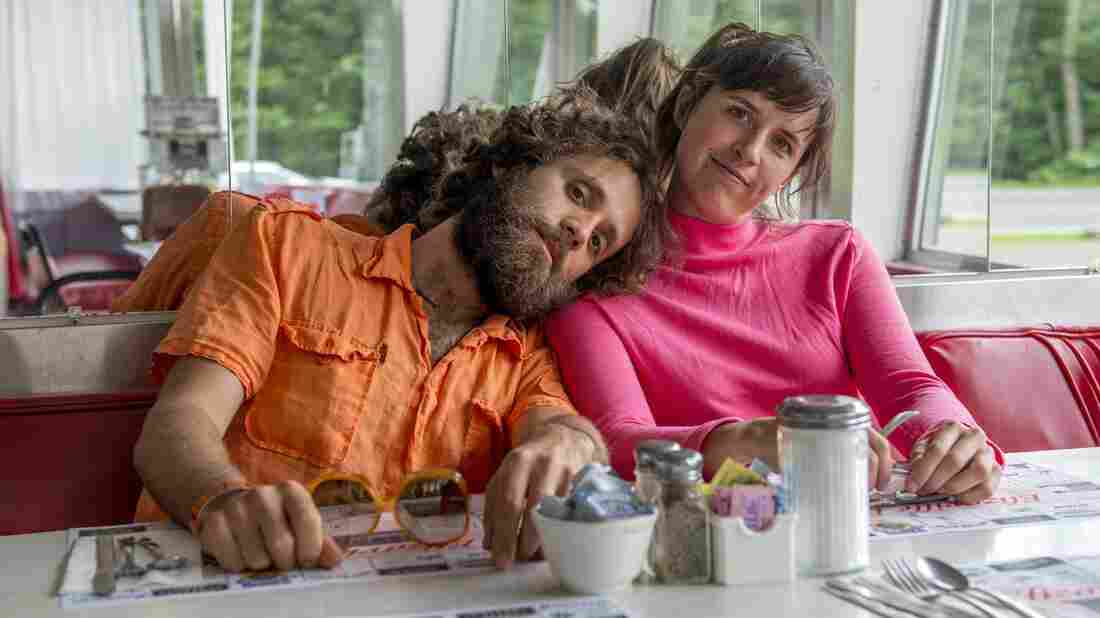
Benjamin Lazar Davis and Bridget Kearney's new EP, Bawa, is out Sept. 18.
5:28

Benjamin Lazar Davis and Bridget Kearney’s new EP, Bawa, is out Sept. 18. Tim Davis/Courtesy of the artist hide caption

itoggle caption Tim Davis/Courtesy of the artist

When Bridget Kearney and Benjamin Lazar Davis went to Ghana in 2014, they planned to travel and maybe make a few musical friends. They ended up spending the entire three weeks in the city of Accra, studying the traditional music of Northwest Ghana with master gyil player Aaron Bebe. The resulting EP, BAWA, treats the polyrhythmic peregrinations of the xylophone-like gyil not as a gimmick but as source material, a puzzle to be deconstructed and rearranged into a bright new collage.

Bridget Kearney & Benjamin Lazar Davis, Bawa (Signature Sounds Recordings)

Bridget Kearney & Benjamin Lazar Davis, Bawa (Signature Sounds Recordings) Courtesy of the artist hide caption

itoggle caption Courtesy of the artist

“Slow Rider” is the second song on BAWA, yet the release’s fourth track (each song is preceded by a snippet of the Bebe tune upon which it is based). It may take a few listens to tease out its ingredients because the playing is so dazzlingly complex. “Slow Rider” is more sedate, with the skeleton of a lopsided gyil riff and a lyrical electric guitar melody that trips along on top.

The Brooklyn-based Kearney and Davis are longtime collaborators. Kearney was a member of Davis’s sprawling avant-pop group, Cuddle Magic (she also plays bass in the up-tempo, stripped-down Lake Street Dive), and her knack for wordplay and for unexpected hooks has long been evident. Davis, on the other hand, has honed a weirder, texture-obsessed sensibility, and in fashion typical for his songs “Slow Rider” takes a while to get to the sweet spot, while spotlighting many of his favorite sounds (delicate snare drum hits and whispery harmony vocals). “You’re a slow rider, baby/ I’m a slow rider, hey hey,” Kearney sings in the chorus, and if it’s not immediately clear what a “slow rider” is, the song offers a definition of sorts, as it rises unhurriedly towards a state of gentle bliss.

Bawa is out on Sept. 18 on Signature Sounds.

This entry passed through the Full-Text RSS service – if this is your content and you’re reading it on someone else’s site, please read the FAQ at fivefilters.org/content-only/faq.php#publishers.


No Image

Today in Movie Culture: Dissecting BB-8, Immortan Donald Trump and More

Here are a bunch of little bites to satisfy your hunger for movie culture:

Movie Merch Breakdown of the Day:

If you’re wondering how your new Star Wars: The Force Awakens BB-8 toy works but don’t want to throw all that money away to dissect it yoursel, here’s a video showing of people who did it for you (via Geekologie):

[embedded content]

Star Wars Art of the Day:

Many people do Lego recreations of movie scenes, but few are as artful as those by Finnish photographer Vesa Lehtimäki. Below is one he did for The Empire Strikes Back. See others for Star Wars, Raiders of the Lost Ark and more at Screen Crush.

Supercut of the Day:

This video is 60 seconds of movie characters yelling “go go go,” and yes appropriately Gone in Sixty Seconds is represented:

[embedded content]

Cosplay of the Day:

When cosplay gets political: here’s a mashup of presidential hopeful Donald Trump and Mad Max: Fury Road villain Immortan Joe (via My Mad Existence):

DIY Film Fandom of the Day:

You don’t need a lot of money for cosplay. If you want to dress as Deadpool, Cinefix has your homemade solution:

[embedded content]

Retro Video Game of the Day:

Here’s a look at the 1985 Infocom game of The Hitchiker’s Guide to the Galaxy, which is now available to play online thanks to the BBC (via Open Culture):

[embedded content]

Vintage Image of the Day:

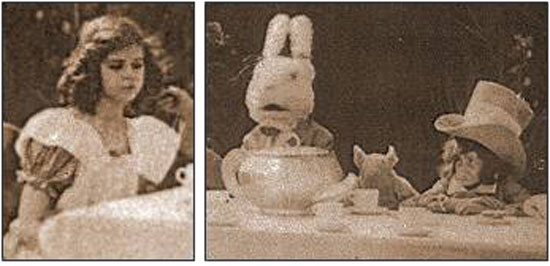
Gladys Hulette is Alice pieced together with the White Rabbit, the Mad Hatter and the Dormouse in Edwin S. Porter‘s Alice’s Adventures in Wonderland for Thomas Edison. The now-rare film made its debut 105 years ago today.

Filmmaker in Focus:

Get to know Stanley Kubrick through this supercut of his films set to Beethoven’s 7th (via The Playlist):

[embedded content]

Movie Comparison of the Day:

We don’t talk enough about Christopher Nolan‘s Insomnia, so here’s a recent video essay by Kevin B. Lee for Fandor comparing it shot-for-shot against the Norwegian original by Erik Skjoldbjærg:

[embedded content]

Classic Trailer of the Day:

This week marks the 20th anniversary of the premiere of Welcome to the Dollhouse at the Toronto International Film Festival. Watch the original Red Band trailer for the indie classic, which is getting a big sequel for release next year:

[embedded content]

Send tips or follow us via Twitter:

and

This entry passed through the Full-Text RSS service – if this is your content and you’re reading it on someone else’s site, please read the FAQ at fivefilters.org/content-only/faq.php#publishers.

No Image

2 Female Italian Players Advance At The U.S. Open

Italian player Flavia Pennetta after beating Petra Kvitova, of the Czech Republic, in a quarterfinal match at the U.S. Open on Wednesday at Arthur Ashe Stadium.

Italian player Flavia Pennetta after beating Petra Kvitova, of the Czech Republic, in a quarterfinal match at the U.S. Open on Wednesday at Arthur Ashe Stadium. David Goldman/AP hide caption

itoggle caption David Goldman/AP

Yes, Serena Williams’ quest for the tennis Grand Slam is exciting. No one has won all four major tournaments in the same calendar year since Steffi Graf did it in 1988. And now that Williams is in the semifinals at the U.S. Open, she’s only two wins away from the rare feat.

But for those who hunger for some ABS news (Anything But Serena) from New York …

There are two Italian players in the women’s semis — reportedly the first time in the Open era that two women from Italy made it that far in the same major tournament.

(That era began in 1968, when pros were allowed to compete in the majors.)

Wednesday at Flushing Meadows, Flavia Pennetta came back from a set down and beat fifth-seeded Petra Kvitova, a two-time Wimbledon singles champion. The final score was 4-6, 6-4, 6-2. Pennetta did a better job of dealing with the energy-sapping heat, since Kvitova has been battling mono since the summer. And Pennetta also overcame the difficult afternoon shadows on the Arthur Ashe Stadium court, which she called “a disaster.”

With the win, she reached her second U.S. Open semifinal in the last three years.

A day earlier, countrywoman Roberta Vinci also took three sets to beat Kristina Mladenovic and qualify for her first major tournament singles semifinal. That’s the good news. The bad? She’ll be playing Serena Williams.

The presence of two Italians in the semis is more than coincidence, according to Pennetta.

“We [Italian players] did a lot of good things in the last 10 years,” she said after beating Kvitova. “I start in 2009 with a top 10 [ranking], and then Francesca [Schiavone] won Roland Garros [the French Open in 2010] and Sara [Errani, World No. 16 and Italy’s top player] come. Everyone was pushing the other one and I think it was really important for us to have someone before us, to try to catch [up] all the time.”

Pennetta will play No. 2 seed Simona Halep of Romania in the one semifinal Thursday. As far as the other matchup, Pennetta has some advice for Vinci against the Williams Grand Slam express. “You just have to go on court and try … EVERYTHING,” Penetta says, dramatically pausing before the last word. “She [Vinci] has to believe she can make it. Because if you go on the court and you are not that sure or you’re thinking, it’s done, I’m OK like this … it’s gonna be bad.”

This entry passed through the Full-Text RSS service – if this is your content and you’re reading it on someone else’s site, please read the FAQ at fivefilters.org/content-only/faq.php#publishers.


No Image

House Begins Series Of Hearings On Defunding Planned Parenthood

3:00

Download

The House Judiciary Committee held the first hearing Wednesday to investigate whether Planned Parenthood is breaking any laws, but it quickly focused instead on whether abortion should be legal.

Transcript

AUDIE CORNISH, HOST:

House Republicans want to defund Planned Parenthood, and that effort began today with the first in a series of hearings. This was all prompted by sting videos that sought to implicate the women’s health group in various crimes related to the collection of fetal tissue for research. NPR’s Jennifer Ludden reports that much of today’s discussion focused on the morality of abortion itself.

JENNIFER LUDDEN, BYLINE: Chairman Bob Goodlatte has billed the hearing as an investigation, but its very title made the majority position clear.

(SOUNDBITE OF ARCHIVED RECORDING)

BOB GOODLATTE: We welcome everyone to this morning’s hearing on Planned Parenthood Exposed – Examining the Horrific Abortion Practices at the Nation’s Largest Abortion Provider.

LUDDEN: Arizona Republican Trent Franks talked about his disgust while watching this summer’s sting videos.

(SOUNDBITE OF ARCHIVED RECORDING)

TRENT FRANKS: Corporate officers and employees of Planned Parenthood casually discussing their rampant practice of harvesting and selling the little body parts from many of the hundreds of thousands of innocent babies they are guilty of killing in their abortion clinics across this nation.

LUDDEN: Planned Parenthood denies any wrongdoing, and the videos show no evidence of it. But Planned Parenthood wasn’t actually invited to testify. There were two women who survived botched abortions, including Gianna Jessen.

(SOUNDBITE OF ARCHIVED RECORDING)

GIANNA JESSEN: My medical records state, born alive during saline abortion – 6 a.m. – ha, victory.

LUDDEN: For nearly four hours, Democrats and Republicans mostly talked past each other. They argued over the term fetus versus baby, whether a dilation and evacuation procedure is humane, the definition of infanticide. A witness from the National Right to Life committee suggested new restrictions are needed to address that. Exasperated, Democrat Steve Cohen of Tennessee said his Republican colleagues weren’t really there to talk about the videos at all.

(SOUNDBITE OF ARCHIVED RECORDING)

STEVE COHEN: They want to outlaw abortion, and they won’t be happy until abortion is outlawed in the United States of America.

LUDDEN: And that was about the only point both sides agreed on. Federal law already bans spending taxpayer money on abortion. Yale law professor Priscilla Smith said the $500 million Planned Parenthood gets mostly through Medicaid pays for cancer screenings, treatment for sexually transmitted diseases and contraception. Cutting that, she told Wisconsin Republican Jim Sensenbrenner, would mean more unintended pregnancies.

(SOUNDBITE OF ARCHIVED RECORDING)

PRISCILLA SMITH: It’s really a no-brainer. It makes no sense not to fund those services if you want to reduce the number of abortions.

JIM SENSENBRENNER: Well, I don’t think there’s statistics that indicated that that’s the case.

SMITH: There absolutely are.

SENSENBRENNER: And we’re way out of time, so I’ll yield back.

LUDDEN: In a statement, Planned Parenthood noted a long history of sting videos by abortion opponents dating back to 2000. They also prompted congressional hearings, but their accusations turned out to be false. Republican leaders have suggested they don’t have the votes to defund the group, but House members say they plan more hearings soon. Jennifer Ludden, NPR News, Washington.

Copyright © 2015 NPR. All rights reserved. Visit our website terms of use and permissions pages at www.npr.org for further information.

NPR transcripts are created on a rush deadline by a contractor for NPR, and accuracy and availability may vary. This text may not be in its final form and may be updated or revised in the future. Please be aware that the authoritative record of NPR’s programming is the audio.

This entry passed through the Full-Text RSS service – if this is your content and you’re reading it on someone else’s site, please read the FAQ at fivefilters.org/content-only/faq.php#publishers.

No Image

Today in Movie Culture: Michael Jackson in 'Guardians of the Galaxy,' Hayao Miyazaki's Theme Park and More

Here are a bunch of little bites to satisfy your hunger for movie culture:

Movie Takedown of the Day:

In honor of a new M. Night Shyamalan movie coming out, Honest Trailers happens to The Happening:

[embedded content]

Alternate Dimension Movie of the Day:

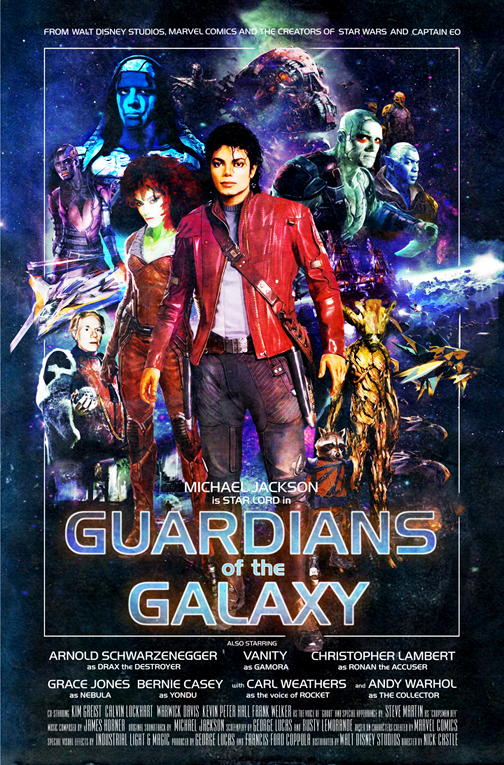
What if Michael Jackson and Andy Warhol starred in Guardians of the Galaxy in the 1980s? Peter Stults designs alternate dimension movie posters imagining other era castings for everything from Fantastic Four to Bridesmaids. See the lot at Live for Films.

Movie Character Lesson of the Day:

Learn how to be James Bond with these seven simple steps:

[embedded content]

Alternate Dimension Theme Park of the Day:

In a perfect world, Hayao Miyazaki really would have his own Disneyland-like theme park, as designed by animator Takumi and seen below. See more detail at Nerdist.

Vintage Image of the Day:

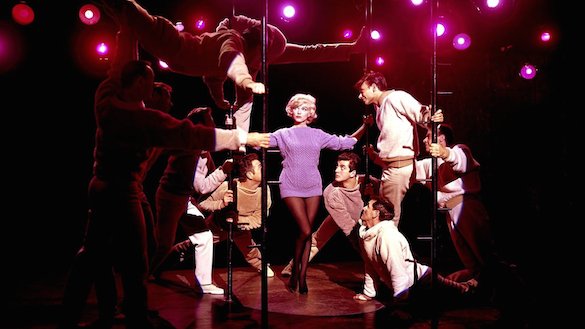
Marilyn Monroe in one of her final musical performances, for Let’s Make Love. The film opened on this day 55 years ago.

Before They Were Stars Video of the Day:

Here’s some recently unearthed footage of Angelina Jolie in an acting class from 2000. Yep, right around the time she was about to win an Oscar (via The Hollywood Reporter):

[embedded content]

Cosplay of the Day:

This year’s Dragon Con brought out a lot of Mad Max: Fury Road fans and cosplayers over the weekend, and they managed to all take a group photo (via Joanna Robinson):

Star Wars of the Day:

People make fun of how easily it was to destroy the Death Star in Star Wars, but in this funny cartoon the architect of the structure offers his defense of the exhaust ports (via Geek Tyrant):

[embedded content]

Poster Parody for a Good Cause of the Day:

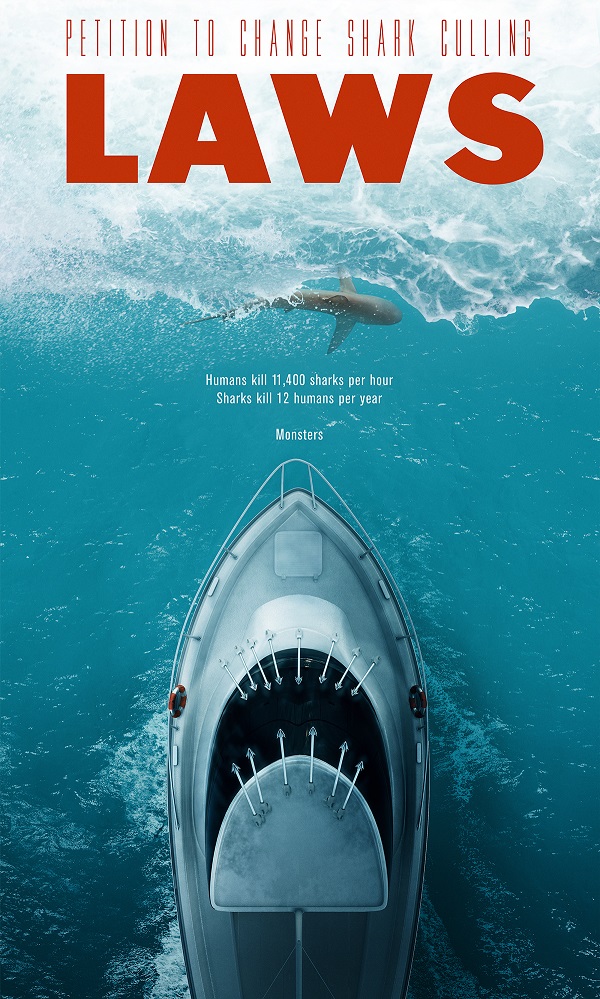
The iconic Jaws poster is reinvented for a campaign to raise awareness against shark culling (via Design Taxi):

Classic Trailer of the Day:

Today is the 15th anniversary of the premiere of Almost Famous at the Toronto International Film Festival. Watch the original trailer below:

[embedded content]

Send tips or follow us via Twitter:

and

This entry passed through the Full-Text RSS service – if this is your content and you’re reading it on someone else’s site, please read the FAQ at fivefilters.org/content-only/faq.php#publishers.


No Image

Seattle Teachers To Strike; First Day Of Classes Canceled

Teachers in Seattle will walk picket lines Wednesday after last-minute negotiations over wages and other issues failed to avert a strike in Washington state’s largest school district.

Classes for 53,000 Seattle Public Schools students were canceled Wednesday, on the scheduled first day of school.

Phyllis Campano, the union’s vice president, said Tuesday night that the district came back with a proposal that the union “couldn’t take seriously,” and they decided to end for the night.

Members of the Seattle Education Association, which represents about 5,000 teachers and support staff, plan to picket at all 97 schools.

“Nobody really wants to strike, but at this point the school board has not come to the table with a serious proposal to get it done,” Campano said. The union voted to walk out last week if a tentative agreement wasn’t reached by the first day of school.

“Bargaining teams for both sides have worked hard over the past months and practically round the clock in recent days_putting in marathon hours over the Labor Day weekend,” the school district said in a statement. “We are hopeful talks can resume and agreement can be reached to allow our students to start school.”

Both sides remained far apart on key issues, including pay raises, teacher evaluations and the length of the school day. The district earlier offered an increase of nearly 9 percent over three years. The union countered with a 10.5 percent increase over two years, Campano said, but she said the district barely budged from its previous proposal.

Meanwhile, the Seattle School Board voted Tuesday night to authorize the district superintendent to take legal action against striking teachers.

Seattle parents were scrambling to come up with day care options, including working from home, swapping care with other parents or signing up for other programs. The city parks department was expanding before- and after-school care programs into all-day offerings because of the strike.

Seattle isn’t the only district in the state facing a teacher labor action. Teachers in Pasco in southeast Washington have voted not to return to the classroom despite a court order to end the strike. In Pasco, teachers decided Monday night to remain on strike, idling 17,000 students on Tuesday in a dispute over pay and curriculum. Classes were canceled for another day Wednesday.

The strikes are happening at a time when Washington officials are under growing pressure to increase the amount of money the state spends on K-12 education.

Washington state is being sanctioned $100,000 a day by the state Supreme Court because the justices say lawmakers have failed to adequately pay to educate the state’s 1 million school children. The court has said the money is to be put in a separate fund for education.

Lawmakers have allocated billions of dollars toward public schools, but critics say that’s not enough to meet the requirements in the state Constitution that education be the Legislature’s “paramount duty.”

The Washington Supreme Court decided in 2012 that state funding for education is not adequate. The justices said the state was relying too much on local dollars to make up for an inadequate state budget for education. Overreliance on local dollars makes the inequity worse because school districts with higher property values can raise more money more easily.

Rich Wood, a spokesman for the Washington Education Association, said the strikes were mainly about local issues not tied to the larger state debate about funding.

“The negotiations are about meeting the needs of students in school districts,” Wood said. He noted that teacher strikes are relatively rare in Washington, with the last major one in 2011 in Tacoma. The state has 295 school districts.

This is the first strike by the Seattle Education Association over contract negotiations since 1985, Wood said. Seattle teachers participated in a statewide walkout in 1991 to urge the Legislature to spend more money on schools.

This entry passed through the Full-Text RSS service – if this is your content and you’re reading it on someone else’s site, please read the FAQ at fivefilters.org/content-only/faq.php#publishers.

No Image

Kansas State Imposes Sanctions In Halftime Show Controversy

In this photo from November 3, 2012, the Kansas State Wildcats marching band perform during a game against the Oklahoma State Cowboys.

In this photo from November 3, 2012, the Kansas State Wildcats marching band perform during a game against the Oklahoma State Cowboys. Ed Zurga/Getty Images hide caption

itoggle caption Ed Zurga/Getty Images

Kansas State’s marching band is in trouble for what some saw as getting too “creative” with a halftime show.

During KSU’s Saturday football home-opener against South Dakota, the band injected some levity into the performance by poking a bit of fun at rival University of Kansas. The band grouped itself into the shape of the Kansas mascot, a Jayhawk, getting attacked by a spaceship.

But it didn’t look like a space ship to a lot of spectators. Instead, people say, it looked phallic — and that the full formation appeared to show the Jayhawk performing a sex act. You can watch the video here and decide for yourself.

The resemblance was striking enough that Kansas State implemented self-imposed sanctions that included suspending the marching band director for one game, paying a $5,000 fine to the Big 12 Conference and requiring that future band programs be submitted for review.

Despite the punishments, the school showed support for the band and its members. As Kansas State’s president, Kirk Schulz, wrote to them in an email today, the show was judged “completely out of context” on social media.

“As many of you know, I love social media; however, it is also an opportunity for people to post hurtful and uninformed comments. I appreciate your dedication to excellence and ask that you simply ignore these comments.”

But Schultz went on to scold the band for depiction of the Jayhawk at all, which he felt crossed the line.

“The Big 12 Conference has a clear policy on sportsmanship, and our conference commissioner felt that the use of another university’s mascot was inappropriate and did not uphold the spirit of sportsmanship that we strive for in our conference.”

So, the message is clear: marching bands, resist the urge to imitate rival mascots…and spaceships, too.

This entry passed through the Full-Text RSS service – if this is your content and you’re reading it on someone else’s site, please read the FAQ at fivefilters.org/content-only/faq.php#publishers.