Articles by admin

No Image

Today in Movie Culture: 'RoboCop' Meets 'Paul Blart Mall Cop,' a 'Twin Peaks' Video Game and More

Here are a bunch of little bites to satisfy your hunger for movie culture:

Video Essay of the Day:

Jacob T. Swinney is back with another showcase of first and last shots from movies, including recent releases like Mad Max: Fury Road and Ex-Machina, placed side by side:

[embedded content]

Filmmaker in Focus:

Quentin Tarantino’s foot fetish is addressed in this supercut of shots of feet from his movies (via Cinematic Montage Creators):

[embedded content]

Vintage Image of the Day:

James Dean wearing glasses and showing off his lasso skills on the set of Giant, which was still in production when the actor died in a car crash on this day 60 years ago.

Movie Viewing Method of the Day:

Without actually acknowledging the slang term “Netflix and chill,” which doesn’t quite involve watching a movie through the service, Netflix has basically supported the concept with this DIY video for how to build “The Netflix Switch,” which is meant to help you in your uninterrupted “movie watching” (via /Film):

[embedded content]

Movie Parody of the Day:

When you cross RoboCop and Paul Blart Mall Cop it sort of ends up just being Chopping Mall, which is fine by us (via Geek Tyrant):

[embedded content]

Classic Cartoon of the Day:

Today is the 80th anniversary of the classic Ub Iwerks animated short Balloon Land, aka Mr. Pincushion Man. Watch the brilliant cartoon in full below.

[embedded content]

Fan Art of the Day:

This drawing of Edward Scissorhands would make a great special release poster or Blu-ray artwork someday (via Fan Art):

Star Wars of the Day:

This is literal bathroom humor, but this toilet paper dispenser that sounds like Chewbacca is actually pretty funny (via You Had One Job):

Use the force. (Via http://t.co/qqFdHl8S0S) pic.twitter.com/omyG7Rdbkx

— You had one job (@_youhadonejob) September 30, 2015

Video Game of the Day:

In tribute to actress Catherine E. Coulson, who passed away this week, Dangerous Minds reminds us of the Twin Peaks dance video game, “Fire Dance With Me,” a screen cap of which you can see below. Play it here.

Classic Trailer of the Day:

Today is the 10th anniversary of the theatrical release of Serenity, which hoped to carry the canceled show Firefly into a movie franchise. Here’s the original trailer for the sci-fi cult favorite:

[embedded content]

Send tips or follow us via Twitter:

and

This entry passed through the Full-Text RSS service – if this is your content and you’re reading it on someone else’s site, please read the FAQ at fivefilters.org/content-only/faq.php#publishers.


No Image

Whole Foods Says It Will Stop Selling Foods Made With Prison Labor

Haystack Mountain Goat Dairy, a Colorado goat cheese producer, says it will begin to source its milk from dairies that don't rely on inmate labor — so that they can continue to sell some cheeses to Whole Foods.

Haystack Mountain Goat Dairy, a Colorado goat cheese producer, says it will begin to source its milk from dairies that don’t rely on inmate labor — so that they can continue to sell some cheeses to Whole Foods. ilovebutter/Flickr hide caption

itoggle caption ilovebutter/Flickr

Whole Foods Market has announced that by April of next year it will stop sourcing foods that are produced using prison labor.

The move comes on the heels of a demonstration in Houston where the company was chastised for employing inmates through prison-work programs.

Michael Allen, founder of End Mass Incarceration Houston, organized the protest. He says Whole Foods was engaging in exploitation since inmates are typically paid very low wages.

“People are incarcerated and then forced to work for pennies on the dollar — compare that to what the products are sold for,” Allen tells The Salt.

Currently, Whole Foods sells a goat cheese produced by Haystack Mountain Goat Dairy in Longmont, Colo., and a tilapia from Quixotic Farming, which bills itself as a family-owned sustainable seafood company.

These companies partner with Colorado Correctional Industries, a division of the Colorado Department of Corrections, to employ prisoners to milk goats and raise the fish.

CCI’s mission is to provide inmates with employment and training. The intent is to give them skills that could help them find employment once they’re released. CCI employs about 1,600 inmates, according to a report by the Colorado state auditor.

In an email, Whole Food’s spokesperson Michael Silverman tells The Salt that the company liked the idea of employing inmates. “We felt that supporting supplier partners who found a way to be part of paid, rehabilitative work being done by inmates would help people get back on their feet,” he writes.

But Silverman says, “we have heard from some shoppers and members of the community that they were uncomfortable with Whole Foods Market’s sourcing products produced with inmate labor.”

And in order to stay “in-tune” with customers’ wishes, the company came to its decision to stop selling the goat cheese and tilapia.

As reporter Graeme Wood wrote in Pacific Standard, these in-state prison-work systems face no federal regulation.

And there are also questions about the justness of prison-work programs. Allen and other protesters in Houston hung signs that said: “End Whole Foods Market’s Profiting From Prison Slave Labor.”

By some accounts, though, they’re progressive. For instance, CCI supporters point to a lower recidivism rate among inmates who are employed while they’re incarcerated.

Haystack Mountain Goat Dairy’s John Scaggs says the farm will begin to source their milk from dairies that don’t rely on inmate labor — so that it can continue to sell some cheeses to Whole Foods.

But Scaggs says he’s still a supporter of the prison labor program that CCI has created in Colorado.

“This is a model example of a prison-work program,” Scaggs says. “By purchasing goat’s milk from the facility [that uses prison labor], we’re supporting … rehabilitative incarceration.” He says prisoners are taught teamwork and getting job training.

Scaggs says the inmates make about $1,500 to $2,500 a year, but he isn’t sure what the hourly rate of pay is.

“If an inmate is serving a sentence for a few years, they can come out with a few thousand bucks [in savings] and a whole new skill set,” he says.

This entry passed through the Full-Text RSS service – if this is your content and you’re reading it on someone else’s site, please read the FAQ at fivefilters.org/content-only/faq.php#publishers.


No Image

Kids With Ebola, Bird Flu Or TB? Texas Children's Hospital Will Be Ready

None of the biocontainment treatment centers in U.S. hospitals were specifically designed for kids — until now. Texas Children's Hospital aims to fill that gap.
3:54

Download

None of the biocontainment treatment centers in U.S. hospitals were specifically designed for kids — until now. Texas Children’s Hospital aims to fill that gap. Courtesy of Texas Children’s Hospital hide caption

itoggle caption Courtesy of Texas Children’s Hospital

It’s been exactly one year since the CDC confirmed that Thomas Eric Duncan had Ebola. He had flown from Liberia to Dallas to visit his fiancé, and became the first person diagnosed with the deadly virus on American soil.

During his stay at Texas Presbyterian Hospital in Dallas, two nurses also fell ill with Ebola. Duncan died, but the nurses survived, as did a handful of Americans who fell ill in West Africa but were transported back to the United States for care.

The Ebola outbreak in West Africa, and its spillover into the U.S., forced hospital officials to take a hard look at their readiness for a serious epidemic.

Within months the CDC designated 55 hospitals nationwide as future Ebola treatment centers, including two in Texas: the University of Texas Medical Branch, in Galveston, and Texas Children’s Hospital in Houston.

For many of these hospitals, preparing to care for Ebola patients meant renovating rooms and increasing training and simulations for staff. But Texas Children’s has built an entirely new unit for kids — a biocontainment wing with eight beds at its facility in suburban Houston.

“A year ago in the United States, there were only twelve beds for the entire country for patients that had a need to be isolated in a biocontainment unit,” says Dr. Judith Campbell, medical director for infection control and prevention at Texas Children’s. “And, not surprisingly, zero of those beds were designated for children.”

The biocontainment unit is still under construction. Dr. Judith Campbell, a specialist in pediatric infectious disease, explains that a "pass-through window" will allow health workers to make some deliveries without having to don and doff the entire protective outfit.

The biocontainment unit is still under construction. Dr. Judith Campbell, a specialist in pediatric infectious disease, explains that a “pass-through window” will allow health workers to make some deliveries without having to don and doff the entire protective outfit. Carrie Feibel/Houston Public Media hide caption

itoggle caption Carrie Feibel/Houston Public Media

Campbell helped design the special pediatric unit, which the hospital began planning after Duncan’s death. The $16 million project, which includes a separate area with 10 regular pediatric beds, was paid for out of the hospital’s capital funds and $1 million in donations.

Each of the eight patient rooms in the biocontainment unit has an antechamber, where doctors and nurses will put on protective gear, gloves and ventilated hoods. After treating the child inside the room, they will leave through a separate door and enter a third room, where they strip the equipment off.

The whole time, nurses will observe through large glass windows.
“So, if there’s any question, they can say ‘Wait, stop. You need to clean your hands again.’ Or ‘Wait, stop. Let’s take this glove off more carefully,’ ” Campbell explains.

The unit has its own biosafety laboratory, so infected blood samples never have to be carried to other parts of the hospital. There’s also a separate medical waste room, where carts full of used clothing and equipment can be wheeled inside 6-foot autoclaves. And, after every shift, medical workers will shower before leaving the unit.

Hospital officials say Ebola was the catalyst for the decision to build, but the unit is designed to handle any globe-trotting superbug.

“These rooms are equipped to take care of TB, MERS, pandemic influenza, bird flu and even a pathogen that we might not know what it is yet,” Campbell says. “That’s why we wanted to build something with the highest level of isolation ability.” Before designing the unit, teams from Texas Children’s visited adult biocontainment units at hospitals in Atlanta and Omaha.

The medical architecture in the new unit is impressive, says Dr. Amy Arrington, a pediatric intensive care specialist, but staff preparation is crucial, too. The initial training included 16 hours of learning how to maneuver in the awkward biocontainment suits – while still maintaining the emotional warmth and reassurance that’s part of caring for a child.

Workers are still about a month from finishing up the 8-bed isolation unit at Texas Children's Hospital. The unit's goal is to provide for the special physical and emotional needs of kids with highly infectious diseases.

Workers are still about a month from finishing up the 8-bed isolation unit at Texas Children’s Hospital. The unit’s goal is to provide for the special physical and emotional needs of kids with highly infectious diseases. Carrie Feibel/Houston Public Media hide caption

itoggle caption Carrie Feibel/Houston Public Media

“I describe it as a space suit,” Arrington says. The suit “has footies and arm holes and covers you up completely.” Doctors and nurses who volunteered to work on the unit had to relearn skills — such as inserting IVs while wearing the suit.

“When you put three pairs of gloves on, you (can) lose sensation in your hands because they’re so tight,” says Arrington, “But you really lose that tactile feel that as physicians and nurses is really important in taking care of any patient, let alone a child.”

Kids can be especially vulnerable to infectious diseases. During the Ebola outbreak in West Africa, children died at a higher rate than adults.

As pediatricians and parents know, sick children not only need close monitoring, but also encouragement to eat and drink, and comfort when they are scared and confused. That can be harder in a pediatric biocontainment room — the parents of a very sick child will probably not be allowed inside.

But Campbell says Texas Children’s Hospital is ready for that challenge, too. At least six doctors or nurses will be assigned to each child, and one of them will act as a family liaison. The kids will also be able to use tablet computers to talk with their families via video chat, and will be able to see them through the large windows.

The hospital is also developing a special doll that will wear a mini-version of the same biocontainment suit the doctors and nurses wear.

The goal there, Campbell says, is to soothe even the youngest kids, and help them understand, “Yes, we’re dressed up a little differently, but … their little doll has similar attire on.”

The pediatric isolation unit is to be ready to accept patients in late October, with a formal ribbon-cutting expected in November.

This story is part of NPR’s reporting partnership with Houston Public Media and Kaiser Health News.


This entry passed through the Full-Text RSS service – if this is your content and you’re reading it on someone else’s site, please read the FAQ at fivefilters.org/content-only/faq.php#publishers.


No Image

Court Rules Against Paying College Athletes

The NCAA notched a victory on Wednesday when a federal appeals court ruled against requiring colleges to compensate athletes in deferred cash payments, according to the Associated Press.

The decision is the latest to come from the lawsuit filed by former college football and men’s basketball players who claim that others profited from their likeness without paying them. The group was led by former UCLA basketball star, Ed O’Bannon, and a trial court judge sided with them last August.

The 9th U.S. Circuit Court of Appeals agreed with the lower court’s decision that profiting from college athletes’ names, images and likenesses used in video games and TV broadcasts violated antitrust laws, but still it vacated a plan that would pay athletes up to $5,000 per year in deferred payments.

“The difference between offering student-athletes education-related compensation and offering them cash sums untethered to educational expenses is not minor; it is a quantum leap,” Judge Jay Bybee wrote. “Once that line is crossed, we see no basis for returning to a rule of amateurism and no defined stopping point.”

NPR’s Tom Goldman reports:

“Last year a federal judge ruled that NCAA limits on what major college football and men’s basketball players can earn violated antitrust rules. The judge says schools can offer players scholarships that cover the full cost of attendance and up to $5,000 in deferred compensation. Now the appeals court has upheld the cost of attendance provision, but said no to the payments.”

The NCAA released a statement from president Mark Emmert, who agreed with the ruling.

“We have not completely reviewed the court’s 78-page decision, but we agree with the court that the injunction ‘allowing students to be paid cash compensation of up to $5,000 per year was erroneous.'”

Emmert added that member schools are allowed to provide up to the full cost of attendance for college athletes.

This entry passed through the Full-Text RSS service – if this is your content and you’re reading it on someone else’s site, please read the FAQ at fivefilters.org/content-only/faq.php#publishers.


No Image

Today in Movie Culture: 'Avengers: Age of Ultron' Gag Reel and Honest Trailer and More

Here are a bunch of little bites to satisfy your hunger for movie culture:

Bloopers of the Day:

With the superhero sequel hitting DVD and Blu-ray this week, Marvel released another gag reel from the making of Avengers: Age of Ultron (via /Film):

[embedded content]

Movie Takedown of the Day:

Also in anticipation of its home video release, Honest Trailers smashes Avengers: Age of Ultron:

[embedded content]

Movie Science of the Day:

In anticipation of The Martian, here’s a video featuring everything wrong with Christopher Nolan‘s Interstellar, and it features Neil deGrasse Tyson so it’s legit in its science:

[embedded content]

Celebrity Activism Triumph of the Day:

Actually, it’s not the triumph we’d like to showcase so much as the reaction to the triumph. Congratulations on your awesome victory dance, Emma Thompson!

One hell of a victory dance… Emma Thompson reacts to Shell abandoning its Alaska Arctic drilling @GreenpeaceUK pic.twitter.com/lhbU4TDURv

— Jack Leather (@jleather) September 29, 2015

Fan Build of the Day:

For anyone who has ever wanted an ooze canister like the ones in Teenage Mutant Ninja Turtles II: The Secret of the Ooze, the DIY Pro Shop shows you how to make one:

[embedded content]

Filmmaking Lesson of the Day:

For RocketJump Film School, Joey Scoma employs clips from Dr. Strangelove, Butch Cassidy and the Sundance Kid and more movies to demonstrate how to create an “oh f**k!” moment using editing:

[embedded content]

Supercut of the Day:

Camera movement can also create a similar exclamation through the use of a push in on a close-up, especially with a hero or villain as in these collected moments:

[embedded content]

Star Wars of the Day:

Mashable parodies fan theories in this silly uninformed analysis of the Star Wars: The Force Awakens trailer:

[embedded content]

Cosplay of the Day:

Speaking of Star Wars, here’s some great sexy Ewok cosplay to help usher in Halloween time, which for many is really just about dressing up as sexy versions of things (via Hot ‘N Geeky):

Classic Trailer of the Day:

Today is the 15th anniversary of the initial limited release of Christopher Guest‘s Best in Show. Watch the original trailer for the hilarious mockumentary below.

[embedded content]

and

This entry passed through the Full-Text RSS service – if this is your content and you’re reading it on someone else’s site, please read the FAQ at fivefilters.org/content-only/faq.php#publishers.


No Image

Amid VW Scandal, Critics Want Access To Carmakers' Computer Code

A Volkswagen Passat is tested for exhaust emissions, at a Ministry of Transport testing station in London. In the U.S., a 1998 copyright law prevents safety researchers from accessing the software that runs cars.
3:22

Download

A Volkswagen Passat is tested for exhaust emissions, at a Ministry of Transport testing station in London. In the U.S., a 1998 copyright law prevents safety researchers from accessing the software that runs cars. John Stillwell/PA Photos/Landov hide caption

itoggle caption John Stillwell/PA Photos/Landov

The revelation that Volkswagen rigged software to cheat on emissions tests got us wondering: What else is the software in your car doing that you don’t know about?

Well, that answer, for the time being, will remain a mystery.

That’s because there’s a little-known law in the U.S. that bars car owners — and researchers — from accessing the software inside vehicles.

There are as many as 100 million lines of computer code in some new cars. They help control the steering, cruise control, air bags, entertainment and anti-skid systems.

The technology is amazing, but Zeynep Tufekci, an assistant professor at the University of North Carolina, points out there is a cost.

“The computers in our cars help us brake better when it’s raining. But we have to realize it doesn’t come without issues; it means that you have an intelligent object that is serving its corporate owner at all times because we don’t have … independent access to the code,” she says.

Most of us are blissfully unaware of what goes on under the hood of our car. But some people, be they tinkerers, geeks or perhaps, most important, safety researchers, would like to access the software.

But under the Digital Millennium Copyright Act, now they can’t do that legally. Congress passed it in 1998 in part to protect DVDs from being pirated. But courts have also interpreted the law to keep people from accessing the computer code in cars, homes, even tractors.

Kit Walsh, a lawyer with the Electronic Frontier Foundation, thinks this is wrong. “Think of crash test dummies,” he says. “Those safety tests are relied on by a majority of Americans in deciding what vehicles to trust and to rely upon. And the same kind of analysis should be possible with computers, given the crucial role that they play in controlling safety-critical systems as well as emissions systems.”

Walsh says if independent researchers had access to the code in VWs, for instance, they might have detected the cheating software much sooner and revealed that the clean diesel the company touted in a recent TV ad wasn’t so clean.

An exemption to the law that would allow researchers and owners to access car software has been fought by the auto industry. And, Walsh says, the industry had an unexpected ally. “We were surprised to see that the EPA wrote in against the exemption, particularly given that the investigation against Volkswagen must have been underway at that point,” he says.

In a July letter to the U.S. Copyright Office, the EPA argued that allowing owners to access the software could result in tampering in a way that could increase emissions. Ironically, that’s what VW itself did.

The EPA did not respond to a request for a comment. Democratic Sen. Richard Blumenthal of Connecticut says researchers should be able to get into the software. “There should be access to the source code, that is to the software, so that consumers and researchers are able to protect the public against this kind of deceptive action,” he says.

The Copyright Office could act as soon as next month on such an exemption for researchers and others.

This entry passed through the Full-Text RSS service – if this is your content and you’re reading it on someone else’s site, please read the FAQ at fivefilters.org/content-only/faq.php#publishers.


No Image

House Calls To The Homeless: A Doctor Treats Boston's Most Isolated Patients

Cover detail from Stories from the Shadows, by James O'Connell.
35:47

Download

BHCHP Press

As a doctor who provides medical care to Boston’s homeless population, James O’Connell and his colleagues are used to working in unusual locations. “We are basically visiting them in their homes, which are often under bridges, down back alleyways [and] on park benches,” O’Connell tells Fresh Air‘s Terry Gross. “It’s been an education for us over these years.”

O’Connell is president of the Boston Health Care for the Homeless Program, which provides health care services at over 65 sites, including adult and family soup kitchens, detoxification units and corrections facilities. He writes about his practice in a new memoir, Stories from the Shadows: Reflections of a Street Doctor.

O’Connell has been caring for Boston’s “rough sleepers,” or homeless, since 1985. He says that homeless patients suffer from the same chronic and acute illnesses as the general population — with one crucial difference. “What we see … frequently, are regular issues that have been neglected for years and years,” he says. “So we see the natural history of illness that is usually interrupted by good preventive care.”

Over the years, O’Connell has seen the ravages of untreated frostbite, AIDS and diabetes, as well as the effects of profound isolation and extreme loneliness. But he has also witnessed a courage and resourcefulness in his patients.

“These are people who are nameless and faceless when they are sitting out in the street,” he says. “But when you get to know them, they are stories of great courage, of struggles against unbelievable adversity. … I think I probably would’ve been a broken person had I lived through what they lived through.”


Interview Highlights

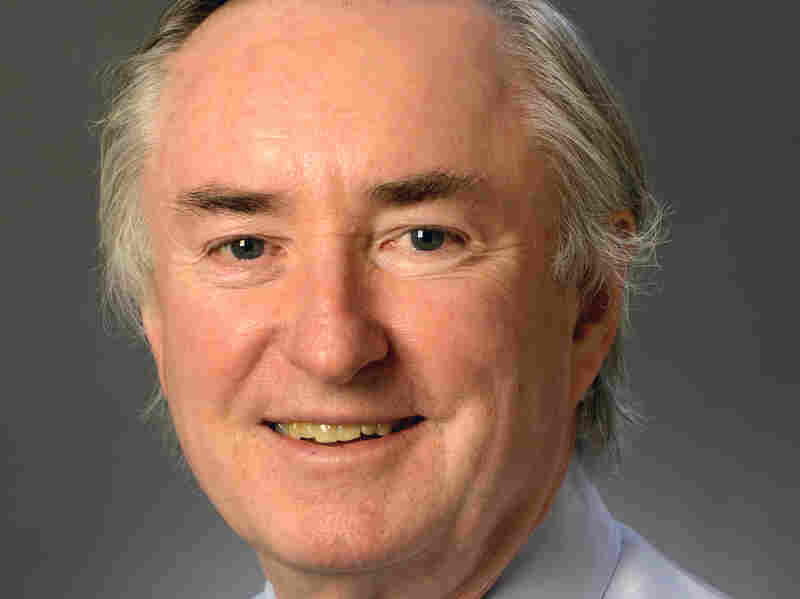
James O'Connell is the president of the Boston Health Care for the Homeless Program. He is also an assistant professor of medicine at Harvard Medical School.

James O’Connell is the president of the Boston Health Care for the Homeless Program. He is also an assistant professor of medicine at Harvard Medical School. Roger Farrington/BHCHP hide caption

itoggle caption Roger Farrington/BHCHP

On suspending judgment

I remember what came across is that whatever I thought of someone, when I first met them or first walked by them, it rarely panned out once I got to know them, and the stories that emerged from these people, what they have lived through and as you learn, each one is very different from another, but each one has a remarkable story. … I hope in these stories what emerges is the real resilient spirit of people who have really, really been dealt a bad hand in life and suffer from all those social determinants of poverty.

On the result of homeless people not receiving good preventive health care

We … see the end stage of many things. We often see pneumococcal pneumonia, for example, which probably should’ve been treated on Day 1 or Day 2; by Day 7 or Day 8 it can be very, very devastating. …

As we learned the hard way … these are people who were struggling to survive outside on the streets. They’re interested in just being safe today or just getting the next meal or just getting a bed for the night. Taking care of an infection in their foot or diabetes or their hypertension is way down the list of priorities, which, of course, is really difficult for us doctors who think that should be the top of the list.

On the extreme illnesses he’s seen

We see dramatic things that I never saw in medical school or often even in the textbooks. During this past year [we] have watched a man who had been outside for a very long time who has a pretty difficult psychotic disorder who got frostbite on both feet, really severely, came into our respite facility where we cared for him and he elected to not do surgery, and we spent the past year watching his feet fall off from auto-amputation, which is what happens at the end stages of frostbite. Most of our staff, including our nurses, had never seen anything as dramatic as that.

We will also see tuberculosis, things that you would be used to seeing in a Third World country much more than an inner city of a very medically rich world. We see all of the end stages of AIDS neglected because people were not able to get to treatment. … If you are caring for a homeless population, you are really seeing the really both exotic illnesses as well as the end stages of chronic, common illnesses.

On hidden homeless communities

Even after I had been doing this job for almost 15 years thinking I knew every nook and cranny of the city of Boston, somebody pointed out to me that there were 20 people living in a tunnel under Copley Square. …They came out only at nighttime; they spent their days down in the tunnels. And I remember going down there and meeting all these people for the first time and being stunned that most of them had been there the whole 20 years that I had been out. We always think we know a lot, but we keep our minds open to finding there’s always a new place where someone can be.

On trauma homeless women face

For women to get to the streets we know that the journey is one that is very complex and almost always full of unspeakable trauma — sexual, physical and emotional trauma — and, so, by the time women are on the streets, they are really suffering, and those who become pregnant often feel despair, discouraged, feel they have no place to go, and feel very attached to having the baby safely and in a good way.

So we found that pregnancy often is not only alarming for the women, but it’s a place where they can actually take stock of their lives and try to come in, so we always try to provide as much service … gentle service as we can to anyone who is pregnant on the street, so they can deliver a good baby and hopefully hang on to that baby.

Unfortunately, many of the women, if you speak to them on the street, have had many children, all of whom they’ve lost to social services, because they were unable to stop using or they had no place to bring the baby once the baby was born. There’s an awful lot of trauma among the women on the streets about the children they have lost and mourn.

This entry passed through the Full-Text RSS service – if this is your content and you’re reading it on someone else’s site, please read the FAQ at fivefilters.org/content-only/faq.php#publishers.


No Image

SMU Men's Basketball Team Banned From Postseason Over NCAA Violations

Head coach Larry Brown of the Southern Methodist Mustangs has been suspended for nine games for his role in violating NCAA rules.

Head coach Larry Brown of the Southern Methodist Mustangs has been suspended for nine games for his role in violating NCAA rules. Jim Rogash/Getty Images hide caption

itoggle caption Jim Rogash/Getty Images

Updated 6:20 p.m. ET

Southern Methodist University officials are considering an appeal of the NCAA’s sanctions against the men’s basketball program.

“There are a couple of things that we know we are going to consider, very seriously, appealing,” SMU president Gerald Turner said, according to the Dallas ABC affiliate WFAA. He added that head basketball coach Larry Brown had his full support.

For his part, Brown slammed the sanctions leveled against the basketball program at SMU as unfair.

“I’m overwhelmingly disappointed for our players and the SMU community that the NCAA has decided to punish them as a result of the unfortunate actions of one staff member who provided inappropriate help to one of our players,” Brown said, according to WFAA, adding that he does not think the punishment fits the transgression.

He also addressed the fact that the previous two college basketball teams he coached — Kansas and UCLA — were found to be in violation of NCAA rules. He said he had nothing to be ashamed of.

“UCLA, if you look back and read what happened there, the school asked to rehire me a few years later. And I’m pretty proud of what I did at UCLA. If you looked at what happened at Kansas, after I left Kansas, some of the finest NCAA institutions in the country vetted me and offered me a job.”

Our original post continues:

The NCAA has slapped sanctions on Southern Methodist University’s men’s basketball and golf programs for rule violations. Among other punishments, both teams have been banned from competing in their respective postseasons.

According to the NCAA’s report, SMU “committed multiple violations, including academic fraud, unethical conduct and head coach control in the men’s basketball program and recruiting and unethical conduct in the men’s golf program.”

The punishment for the men’s basketball team was handed down after an NCAA investigation concluded that an assistant coach had done a player’s schoolwork for him. The report states:

“A former assistant men’s basketball coach encouraged a student-athlete to enroll in an online course to meet NCAA initial eligibility standards and be admitted to the university. After he enrolled in the course, a former men’s basketball administrative assistant obtained the student’s username and password then completed all of his coursework.”

In addition, head basketball coach Larry Brown — who led his team to a stellar season last year that earned them a 6-seed in the NCAA tournament — has been suspended for nine regular-season games.

In a statement Tuesday, Brown said:

“Leading the SMU men’s basketball program is an honor and a responsibility that I take very seriously. That duty incudes helping our young men develop into people of character and to ensuring that we pursue our goals with integrity. I am saddened and disappointed that the Committee on Infractions believes that I did not fully fulfill my duties and I will consider my options to challenge that assertion in the coming days. I truly believe that our program has dedicated itself unwaveringly to the ideals of academic integrity and NCAA compliance. Still, there was a violation in our program and I take responsibility for that and offer my sincere apologies to the University community.”

Brown coaching career is both studded with trophies and marred by scandals. The hall-of-famer coached 10 NBA teams and won the NBA title with the Pistons in 2004, making him the only coach to win both a college championship (he won with Kansas in 1988) and an NBA championship. Brown has also coached three college programs: SMU, Kansas and UCLA — Kansas and UCLA were also sanctioned by the NCAA while under Brown’s leadership.

Though the NCAA said that Brown had “no direct knowledge” of the assistant coach completing the player’s homework, it said he failed to handle the situation appropriately.

“Upon learning of the misconduct in 2014, the head basketball coach did not report it to the compliance staff, conference office or enforcement staff for more than a month,” the report stated. “When asked by the NCAA enforcement staff about the potential violations, the head basketball coach initially denied having any information about the conversations with the former administrative assistant and student-athlete.”

The golf team faces punishment for violating recruiting protocols. The former coach, Josh Gregory, who resigned in 2014 when the NCAA violations first came to light, was found to have improperly contacted potential players.

“He had 64 impermissible contacts with 10 prospects and seven parents of prospects over the course of 10 months. The majority of the contacts occurred a year or more before NCAA rules allow contact with prospects,” according to the report.

The NCAA concluded that a booster also facilitated contact between prospective players and Gregory.

SMU President R. Gerald Turner and Director of Athletics Rick Hart were scheduled to address the media at 3 p.m. ET and Brown was set to speak at 4:30 p.m., according to the school’s website.

This entry passed through the Full-Text RSS service – if this is your content and you’re reading it on someone else’s site, please read the FAQ at fivefilters.org/content-only/faq.php#publishers.


No Image

Drought Is Driving Beekeepers And Their Hives From California

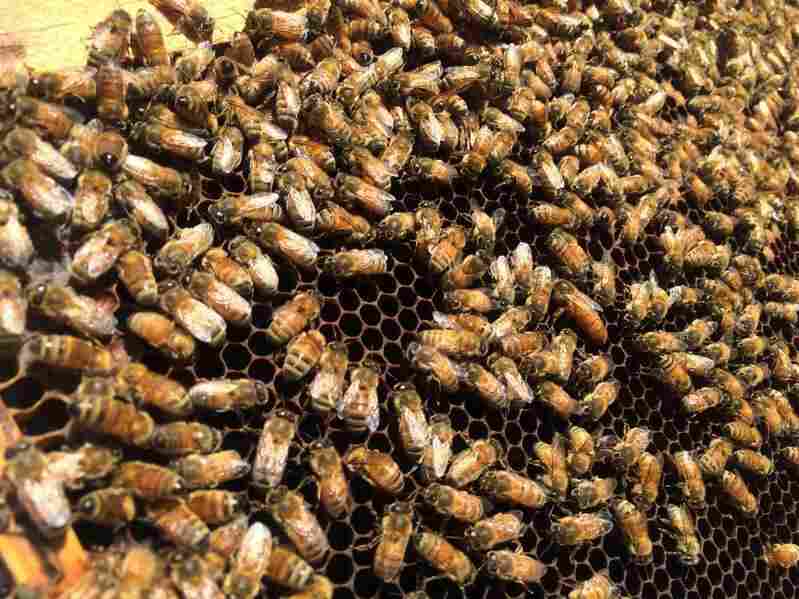
Dry conditions in California have limited the amount of pollen and nectar bees can collect.

Dry conditions in California have limited the amount of pollen and nectar bees can collect. Ezra Romero/Valley Public Radio hide caption

itoggle caption Ezra Romero/Valley Public Radio

The drought in California over the past four years has hit the agriculture industry hard, especially one of the smallest farm creatures: honeybees. A lack of crops for bees to pollinate has California’s beekeeping industry on edge.

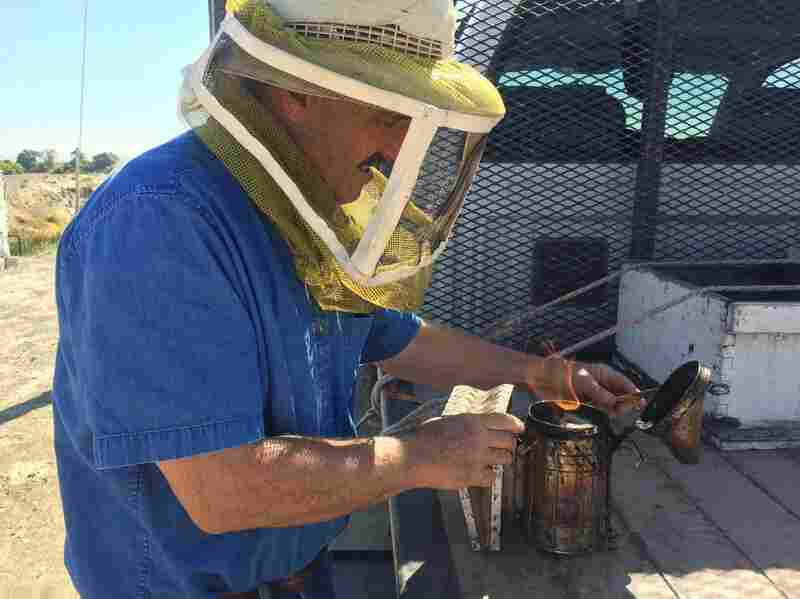
Gene Brandi is one of those beekeepers. He has a colony of bees near a field of blooming alfalfa just outside the Central California town of Los Banos. He uses smoke from a canister of burning burlap to calm the bees.

“It evokes a natural reaction, as if there were really a fire. And smoke helps to mask the pheromones that they communicate with,” Brandi explains.

Brandi has worked with bees since the early ’70s. He has more than 2,000 hives across the state, with around 30,000 bees in each one.

“I’m going to pull out this next frame here,” says Brandi, showing me some of his hives. “Looking for the queen again — there she is. She’s still laying eggs.”

The lack of rain and snow has reduced the amount of plants the bees feed on, which in turn limits the amount of pollen and nectar that bees collect. Normally, there are crops and wildflowers blooming here at any given time. This year in the state, there are just not enough plants and trees in bloom to keep many commercial beekeepers profitable.

Gene Brandi uses smoke to calm the bees he works with.

Gene Brandi uses smoke to calm the bees he works with. Ezra Romero/Valley Public Radio hide caption

itoggle caption Ezra Romero/Valley Public Radio

But Brandi is managing to keep his head above water by strategically placing his bees in the few spots where there are both crops and water.

A well pumps water into a canal on this farm. Thistle blooms on the banks. Nearby, cotton and alfalfa crops are growing. It’s enough to keep his bees happy. But fallow farmland surrounds the area.

“In the drought years we just don’t make as much honey,” says Brandi. “I mean, we’re very thankful that we have places like this, where the bees have made some honey this summer.”

Brandi says because of the lack of natural food for the honeybees, many beekeepers have to feed their colonies processed bee food, which is a mixture of pollen and oil. They’re also feeding the bees a honey substitute made of sugar syrup.

“If there’s not adequate feed, we need to supply it. Otherwise, they’re not going to make it, they’re going to die,” Brandi says.

The quality of these meal substitutes isn’t as good as the real deal. They’re expensive, and it’s like eating fresh versus canned vegetables. Beekeepers are also supplying bees with water.

Tim Tucker, president of the American Beekeeping Federation, says the expense in providing food and drink to the bees is causing more beekeepers to take their bees out of California and into other states.

“Commercial beekeepers are having difficult times keeping bees alive, and they’re kind of spread out,” Tucker says. “They’re going to Montana and they’re going to North Dakota.”

That raises concerns among farmers who rely on those bees to pollinate the 400-plus crops grown in California’s Central Valley. It’s especially important to have them here in the spring, when the region’s 900,000-plus acres of almonds bloom.

“They’re scrambling, trying to figure out as many options as possible to make sure their bees stay healthy and are prepared for next year,” says Ryan Jacobsen, CEO of the Fresno County Farm Bureau. “That includes trying to move to newer areas and trying to plant new feed sources.”

Jacobsen also notes that this drought is really the second punch to the beekeeping industry in the past 10 years. Each winter, as much as 40 percent of the honey bees in the West disappear due to the unexplained colony collapse disorder.

The expense of moving bees and the fear of weakening colonies are why beekeepers like Gene Brandi have taken the risk of not sending their bees out of state.

“Bees are like cattle, in the sense that the pasture can be overcrowded. And even though we have less forage then normal, it’s still more forage then other parts of the state,” says Brandi.

And just like every other farmer in the region, Brandi and his beekeeping counterparts say rain and snow are the only true answer to reviving the California beekeeping industry.

This entry passed through the Full-Text RSS service – if this is your content and you’re reading it on someone else’s site, please read the FAQ at fivefilters.org/content-only/faq.php#publishers.


No Image

Today in Movie Culture: 'Spider-Gwen' Movie Trailer, Jason Mitchell Stars in a Nancy Meyers Parody and More

Here are a bunch of little bites to satisfy your hunger for movie culture:

Dream Movie of the Day:

Vulture imagines what a Spider-Gwen movie would look like, with Emma Stone reprising her role of Gwen Stacy from the Amazing Spider-Man movies and some voiceover borrowed from Easy A.

[embedded content]

Filmmaker Parody of the Day:

Funny or Die inserted Straight Outta Compton‘s Jason Mitchell into the trailer for The Intern for a parody of Nancy Meyers movies:

Fan Art of the Day:

The below portrait of old and young Al Pacino are part of artist Fulvio Obregon’s series “Me & My Other Me.” See more at Design Taxi.

Mash-ups of the Day:

Artist Butcher Billy imagines Christian Bale as Patrick Bateman from American Psycho as a bunch of other pop culture characters. The Batman one seems pretty familiar. See them all individually and bigger at Design Taxi.

Classic Cartoon of the Day:

Today is the 80th anniversary of the release of Walt Disney‘s animated short On Ice, starring Mickey, Minnie, Goofy, Donald (hardly recognizable today) and Pluto. Watch it in full below.

[embedded content]

Cosplay of the Day:

We’ve seen mash-ups in the past of Mad Max: Fury Road and Mario Kart, so logically now here’s a cosplay mash of Furiosa and Princess Peach (via Fashionably Geek):

Star Wars of the Day:

Artist Daniel Morales Olvera mashed up Star Wars and The Walking Dead to give us zombie Stormtroopers (via Live for Films):

Supercut of the Day:

With The Walk opening in limited release this week, we have been reminded of this great supercut of the Twin Towers in movies:

[embedded content]

Movie Retitling of the Day:

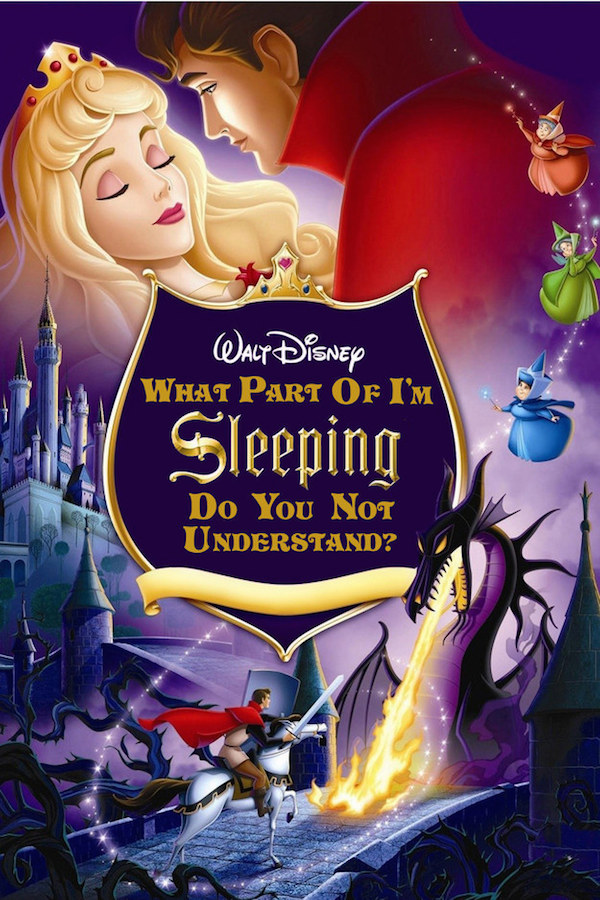
Buzzfeed retitled Disney animated classics to be “more accurate and badass” and designed new posters for these sassy versions. Below is one of the safer for work examples, for Sleeping Beauty:

Classic Trailer of the Day:

Yesterday was the 30th anniversary of the U.S. premiere of Ran, Akira Kurosawa‘s Oscar-winning samurai film adaptation of William Shakespeare‘s King Lear. Watch the original American trailer for the epic feature below.

[embedded content]

Send tips or follow us via Twitter:

and

This entry passed through the Full-Text RSS service – if this is your content and you’re reading it on someone else’s site, please read the FAQ at fivefilters.org/content-only/faq.php#publishers.