
Articles by admin

No Image

Top Bridge Players Withdraw From Bermuda Bowl Amid Cheating Scandal

4:08

Download

A cheating scandal has rocked the world of bridge. NPR’s Robert Siegel talks to Newsweek reporter John Walters to get the details.

Transcript

ROBERT SIEGEL, HOST:

Now what’s so unusual about this year’s Bermuda Bowl. That’s the tournament played every two years and currently underway in Chennai, India. At stake, the most prestigious title in the game of bridge, the card game. What’s unusual is that three countries – Germany, Israel and Monaco – have withdrawn their teams from the Bermuda Bowl after allegations of cheating. John Walters writes about this year’s big bridge scandal in Newsweek. Welcome to the program.

JOHN WALTERS: Thank you for having me.

SIEGEL: And explain to us what’s been charged here. A game of bridge has two parts. There’s the bidding that determines which pair of players goes on offense and how well they say they can do. And then there’s the actual playing out of the hand. Is the cheating that’s been charged all during the bidding?

WALTERS: It’s all during the bidding. And what has happened is Boye Brogeland, who is a professional player ranked 64th in the world out of Norway, came out with allegations against the team from Israel. He used videotaped footage of them to identify a tell between the two players, Lotan Fisher and Ron Schwartz.

SIEGEL: And when you say a tell, it’s sort of like if somebody burps in a particular way that means I’ve got the queen and the jack of diamonds?

WALTERS: (Laughter). I mean, not that exact situation, but yes. You’ve identified what they do. In the case of the Israelis, Boye Brogeland found that they would put the tray on which you place the cards on the board in a specific spot. And that spot identified what was the high card in each player’s hand.

SIEGEL: So that was the charge against the two Israelis.

WALTERS: Correct.

SIEGEL: There are also two from Germany and two from Monaco. How good are these six players?

WALTERS: Well, the players from Monaco are actually Italians and a month ago were the number one and number two ranked bridge players in the entire world. The reason the Italians are representing Monaco is because even though you only need two players in a hand of bridge, the teams are comprised of six players. What happens in every tournament is a very wealthy sponsor makes himself one of the six players on the team, and then he hires five other players. This is akin to Robert Kraft of the New England Patriots suiting up for a quarter…

SIEGEL: (Laughter).

WALTERS: …And then saying that he was just as responsible for winning the Super Bowl as Tom Brady was.

SIEGEL: And the rich sponsor of the two Israeli players in this case is Jimmy Cayne, the man who had been head of Bear Stearns, the investment bank, and who was – he was criticized for playing bridge as his bank collapsed during the financial crisis.

WALTERS: Yes. In 2007, when Bear Stearns was in terrible crises and high-ranking VPs were trying to contact Jimmy Cayne for answers to their questions, he was incommunicado. He was playing a 10-day bridge tournament in Nashville, and part of the rules are no cell phones.

SIEGEL: Because they could be used for cheating (laughter).

WALTERS: Exactly, exactly. He has never been implicated as having anything to do with their cheating. He was the sponsor, though. But without that, you would not have professional players in bridge. The interest isn’t enough, and it is certainly not a good spectator sport. And that is why the Italians were playing representing Monaco because they had a very wealthy Monegasque sponsor.

SIEGEL: If you look at championship bridge players playing at a tournament, there are screens up so that each player can’t see his partner that easily. There’s a tray that they pass underneath. I think you’re blocked under the tables so you can’t just kick the guy in the shin to tell him how many hearts you have or whatever. What can you do short of having the players in different rooms or having them dress up like the Michelin man? How can you have a guaranteed no-cheating bridge tournament?

WALTERS: For me, that’s what made the story so humorous. The Marx Brothers in the film “Animal Crackers” do a scene about bridge. And Chico begins by asking the women they’re playing against, how do you want to play, honest? So it’s always been susceptible to cheating. Most people who play bridge are retirees. They are not the ones who are committing this skullduggery. It’s only at the very highest levels where this is taking place.

SIEGEL: John Walters, thanks for talking with us about the story.

WALTERS: Thank you for having me on.

SIEGEL: John Walters, a senior writer for Newsweek, has written about the big scandal in the world of bridge.

Copyright © 2015 NPR. All rights reserved. Visit our website terms of use and permissions pages at www.npr.org for further information.

NPR transcripts are created on a rush deadline by a contractor for NPR, and accuracy and availability may vary. This text may not be in its final form and may be updated or revised in the future. Please be aware that the authoritative record of NPR’s programming is the audio.

This entry passed through the Full-Text RSS service – if this is your content and you’re reading it on someone else’s site, please read the FAQ at fivefilters.org/content-only/faq.php#publishers.



No Image

A Nurse Reflects On The Privilege Of Caring For Dying Patients

As life draws to an end, compassion is more important than food.
26:47

Download

As life draws to an end, compassion is more important than food. Kacso Sandor/iStockphoto hide caption

itoggle caption Kacso Sandor/iStockphoto

Palliative care nurse Theresa Brown is healthy, and so are her loved ones, and yet, she feels keenly connected to death. “I have a deep awareness after working in oncology that fortunes can change on a dime,” she tells Fresh Air’s Terry Gross. “Enjoy the good when you have it, because that really is a blessing.”

Brown is the author of The Shift, which follows four patients during the course of a 12-hour shift in a hospital cancer ward. A former oncology nurse, Brown now provides patients with in-home, end-of-life care.

Talking — and listening — are both important parts of her job as a palliative care nurse. This is especially true on the night shift. “Night and waking up in the night can bring a clarity,” she says. “It can be a clarity of being able to face your fears, it can be a clarity of being overwhelmed by your fears, and either way, I feel like it’s really a privilege to be there for people.”

Sometimes Brown finds herself bridging the gap between patients who know they are dying and family members who are still expecting a cure. “There can be a lot of secrets kept and silences. … One thing that palliative care can be really good at is trying to sit with families and have those conversations,” she says.

While some might see her job as depressing, Brown says that being with people who are dying is a profound experience. “When you’re with people who die … and being in their homes and seeing their families, it’s incredible the love that people evoke. And it makes me realize this is why we’re here; this is what we do; this is what we give to each other.”


Interview Highlights

On cutting costs and stretching nurses too thin

There’s a sense that you can stretch a nurse just like an elastic band and sort of, “Well, someone called off today.” That means a nurse calls in and says that she’s sick or her car broke down or he won’t be there, and sometimes we’re able to get someone onto the floor to take that person’s place, but often we’re not. Or an aide might not be able to show up for whatever reason, and then the assumption is just, “Well, the nurses will just do all the work that the aide would’ve done,” and the problem is that people do not stretch like rubber bands, and even rubber bands will break if you stretch them too far.

On loved ones wanting to feed their dying family members

Theresa Brown is a critical care nurse in Pittsburgh. Her previous book is Critical Care: A New Nurse Faces Death, Life, and Everything in Between.

Theresa Brown is a critical care nurse in Pittsburgh. Her previous book is Critical Care: A New Nurse Faces Death, Life, and Everything in Between. C. Ken Weingart/Algonquin Books hide caption

itoggle caption C. Ken Weingart/Algonquin Books

Food is so fundamental, and their feeling is “I’m letting my husband starve to death and that’s wrong.” So I have to talk them through the process of the body slowly going in reverse. All the processes we think of as normal and that are integral to life, they’re all slowing down. And so the body just doesn’t need food when someone gets very close to the end of their life and, in fact, they found that forcing someone to eat can mean that they just have this food sitting in their stomach, they’re not able to digest it, can actually make them more uncomfortable. So I talked to [one family member] about that, but tried to do it as gently as possible, while also acknowledging the incredible love that was motivating her and trying to honor that, but make it clear that she needed to show her love by being close with her husband, by holding his hand, by talking to him, but not by feeding him.

On whether patients ask if they’re dying

No, they don’t. … I think it’s because they’re afraid. They want to just take things day by day. I did have a wife once ask me. She said, “You know, I’m not new to this, and I want you to just tell me. Is he dying?” And at that point I was a pretty new nurse and I didn’t have the experience to know to say, “Yes.” Now I would know to say that. … I got a sense that she really wanted to know and no one else was telling her. …

Physicians can have a mindset of “we’re thinking positively, we’re focusing on the good that can come, and we’re not going to talk about ‘what if it doesn’t work out.’ ” And they will sometimes pull the nurse aside and say, “What’s going on?”

On leaving the hospital setting for palliative care

I love the hospital. I never thought I would leave the hospital, but I left to see patients outside the hospital because in the hospital I feel like we never see people at their best. They feel lousy. We wake them up at night. We give them no privacy. We give them, really, almost no dignity. We tell them what they’re going to do when, what they’re going to eat when, what pill they’re going to take when and no one likes living like that. … So I wanted to see people in their homes because I thought there’s got to be a way we could make the hospital better. Seeing what it’s like for patients in their homes I thought would show me that. And I would say overwhelmingly what I’ve seen is control: People have so much more control when they’re in their homes and it should not be that hard to give them back a little bit more control in the hospital.

On traveling to a patient’s home

When I started, I thought, “I can’t believe I’m doing this. I can’t believe I just drive up to these houses and go inside them.” I live in Pittsburgh, but it can get very rural feeling actually pretty quickly, and I remember … going to [a house] that was already through back-country roads and then down a gravel driveway, and I thought: “What am I doing? Am I insane?” And then I went into this house, and this family was so loving and amazing and wonderful, so it was a great education for me not to judge. And I know that my workplace checks out and makes sure that the places we’re going are real, so that’s comforting, but it’s definitely a giant leap of faith, and you just have to make that leap.

On home care versus hospital care

Often in the hospital they can be more comfortable in terms of we’re relieving their pain, we’re getting them anti-nausea medications very quickly, but … they’re not as comfortable with themselves, and in their homes they seem much more comfortable with themselves and with the people around them, and I had never thought about those two things as being so distinct, but they are. So the question then is how do we give people care that marries those two things, because they’re both so important.

On how patients express appreciation to nurses

A very popular gift in my hospital was Starbucks [gift] cards. … Often people bring in cookies and chocolate and that’s wonderful, but I remember one nurse saying, “You know, I wish someone would just bring in a lasagna.” … Because we never have time to eat and then you go into the break room and you’re hypoglycemic and you see all this chocolate, and so you eat all this chocolate, which doesn’t really help you feel that much better in the long run. So to actually drop off a meal is wonderful.

This entry passed through the Full-Text RSS service – if this is your content and you’re reading it on someone else’s site, please read the FAQ at fivefilters.org/content-only/faq.php#publishers.

No Image

Latitudes: Our Favorite Global Music In September

A-WA is an Israeli band featuring three sisters named Haim — who are not in the band called Haim.

A-WA is an Israeli band featuring three sisters named Haim — who are not in the band called Haim. Tomer Yosef/Courtesy of the artists hide caption

itoggle caption Tomer Yosef/Courtesy of the artists

Imagine the band Haim meeting the late Ofra Haza, with some EDM thrown in for good measure. That’s the wave the fast-rising Israeli sister act A-WA — Tair, Liron and Tagel Haim — rides. (Yes, their last name is Haim, too.) They pull inspiration from their Yemeni Jewish roots, as well as exploring commonalities with their Arab neighbors, including language; the band usually sings in Yemeni Arabic.

Produced by Tomer Yosef, whose band Balkan Beat Box you definitely know (even if you don’t realize it), A-WA pairs old and new both sonically and visually, as you’ll see in the video for their song “Habib Galbi” (Love of My Heart), filmed near their home village in the barren desert of Israel’s far south. Check out the tasselled snapbacks on their track-suited dancing friends — caps that manage to reference both hip-hop and traditional tarboosh hats, a.k.a. fezzes.

[embedded content]
A-WA YouTube

Here’s another musical pairing that bridges cultures farther afield from each other: a song from Pierre Kwenders (the stage name of José Louis Modabi) called “Mardi Gras.” Born and initially raised in Kinshasa, Democratic Republic of Congo, this singer and DJ moved to Canada as a teenager and is now based in Montreal. This is an electronic track redolent not just of Congolese dance music, but also of distinctly Acadian flavors, between some suave fiddling and a rap from Jacobus, aka Jacques Alphonse Doucet of the band Radio Radio.

[embedded content]
Pierre Kwenders YouTube

A huge hit on the European charts right now is a song by the German rapper Sido, featuring German-Egyptian singer Andreas Bourani. “Astronaut” is kind of an “It’s The End of the World As We Know It” for 2015, auf Deutsch; here’s a translation of the lyrics. It’s been at the top of the German songs chart for two weeks and counting.

[embedded content]
Sido YouTube

Let’s turn to the ethereal sounds of Estonian fiddler and singer Maarja Nuut, who’s now touring the U.S. She reaches back into her country’s folk heritage, ushering it into the 21st century through looping and spaciousness that echo the work of another artist — composer Arvo Pärt — who also hails from Rakvere, Nuut’s small hometown in the north of Estonia. Nuut’s music is mesmerizing and deeply soulful.

[embedded content]
Maarja Nuut YouTube

And we’re sending special (though belated) holiday greetings to Latitudes’ Jewish and Muslim friends: Shanah Tovah and Eid Mubarak. It’s not quite traditional, but I can’t help sharing this from Boston-born punk band The Kominas.

[embedded content]
Mipsterz YouTube

This entry passed through the Full-Text RSS service – if this is your content and you’re reading it on someone else’s site, please read the FAQ at fivefilters.org/content-only/faq.php#publishers.

No Image

For Jukebox Salesman, Collecting Records Isn't Just A Job: It's A Hobby, Too

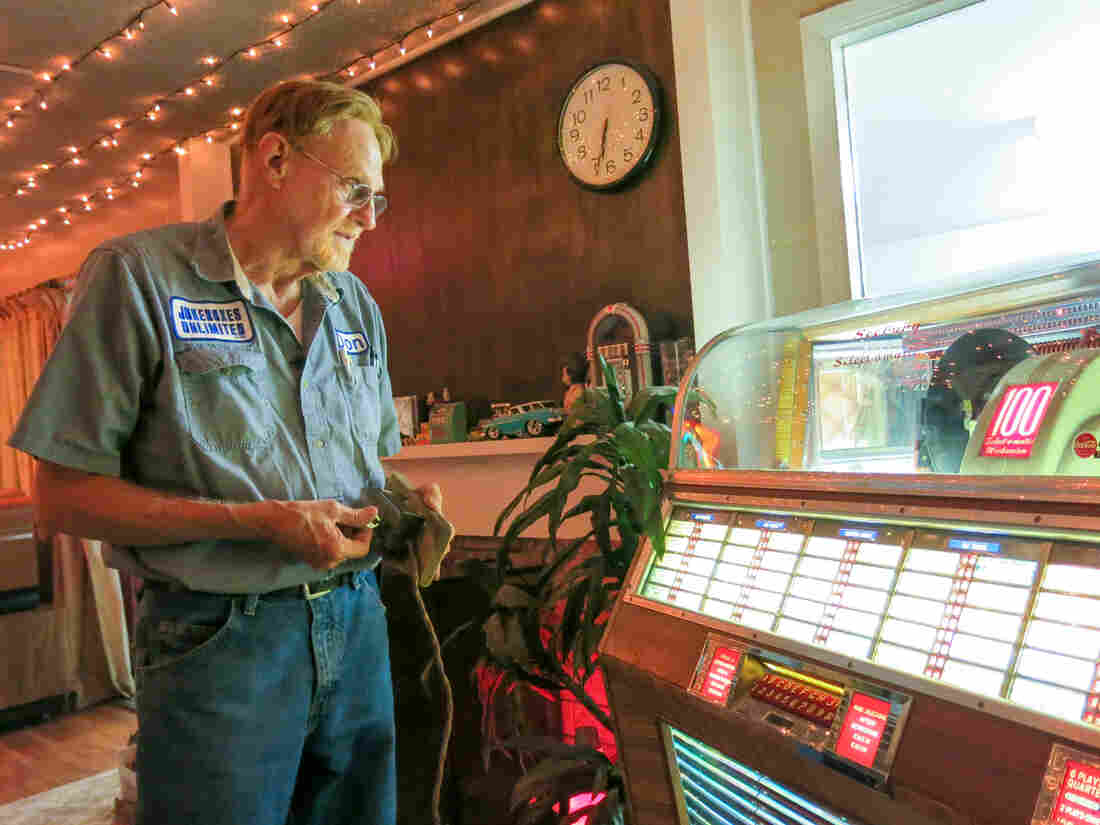
Don Muller says his favorite jukebox is his 1948 Seeburg M100A, which he keeps in the corner of his living room.
5:21

Download

Don Muller says his favorite jukebox is his 1948 Seeburg M100A, which he keeps in the corner of his living room. Carla Javier/NPR hide caption

itoggle caption Carla Javier/NPR

Don Muller has so many jukeboxes in his house, he doesn’t even know how many there are.

“I’ve never done this, walk around and count them,” Muller says, as he begins counting a row of jukeboxes tucked under a shelf of records.

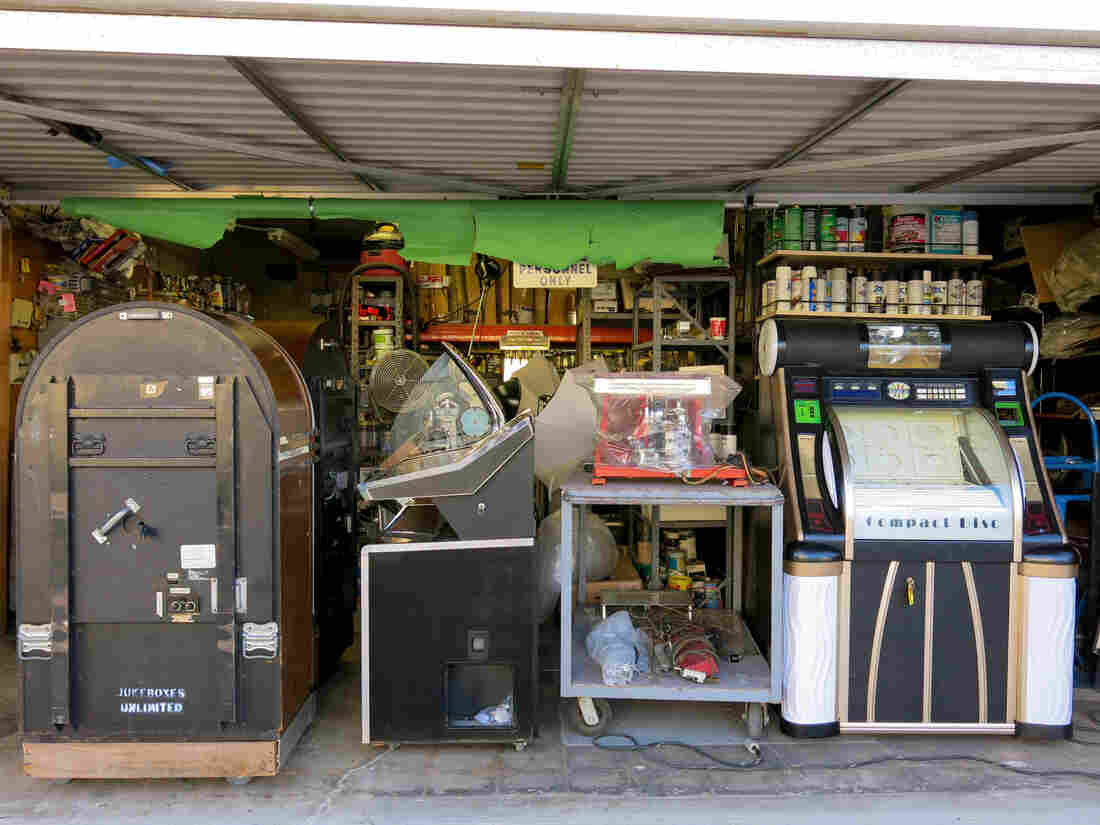
He walks through the add-on garage, porch, living room and foyer. So far, he’s counted 62 jukeboxes, just in his own house — plus 40 in stock at his store, and plenty more in storage elsewhere.

“I’ve been telling people we have over a hundred,” Muller says. “Now, I know it’s even way more than that.”

Most of these jukeboxes are part of his company, Jukeboxes Unlimited, which he’s owned since 1971. He guts many of them to salvage their parts for assisting with repairs. Others, he fixes up to sell, while still others — the nicer looking ones, especially those that light up — he rents for parties and dances.

And some, Muller simply falls in love with and keeps for himself, like his 1948 Seeburg M100A. It sits in the corner of his living room at home.

“This machine is 100 percent original, every single aspect of it: the original cartridge, the original needle and original old 78 rpm records,” he says before playing Frankie Lymon’s “Goody Goody.”

Muller's Jukeboxes Unlimited buys, repairs, rents and sells jukeboxes. He's owned it since 1971.

Muller’s Jukeboxes Unlimited buys, repairs, rents and sells jukeboxes. He’s owned it since 1971. Carla Javier/NPR hide caption

itoggle caption Carla Javier/NPR

Back when he got his start in the 1970s in Los Angeles, there were a lot of guys like him in the jukebox business — but he set himself apart by selling to the stars. His famous clients include Steve Martin and Mick Fleetwood, and their notes and copies of checks still fill books and albums of his. He even used to go to the Playboy Mansion to repair a jukebox owned by Hugh Hefner.

Muller, now 72, has seen many of his competitors go away. The business has gotten less glamorous, but he keeps busy through his online store.

“I get so many emails. I get ’em from all over the world, and it’s the same thing. It’s like, ‘Can you tell me what gear goes with this gear?’ And you know, for me to just get back to them and say, ‘What jukebox are you even talking about?’ I just don’t have time,” he explains.

He drives 50 miles to visit one of those people who contacted him online — Aline DeGroote, in Anaheim, Calif. She has promised to give him some records if he can take her jukebox off her hands.

Muller doesn’t need more records. The add-on to his house is full of them; he has hundreds and thousands already. Many are duplicates, and most aren’t worth that much — but he’s excited about the records DeGroote is offering anyway.

“I don’t collect records: I amass records,” he explains as he drives to DeGroote’s home. “I don’t even know what we’re getting today. I’m sure I already have 20 copies of what she’s got, but it’s an addiction.”

DeGroote’s jukebox is from the early ’60s, and she’s had some trouble selling it. She tried Craigslist and thrift stores.

“When I first tried to sell the jukebox, people were like, ‘Well, does it play CDs?'” DeGroote says.

Muller keeps his collection of records in what he calls "banana boxes." He says each box holds 400 45-rpm records.

Muller keeps his collection of records in what he calls “banana boxes.” He says each box holds 400 45-rpm records. Carla Javier/NPR hide caption

itoggle caption Carla Javier/NPR

Her dad, who died five years ago, used to keep the jukebox in the pool room. She grew up listening to it. But now it’s broken, and she’s selling it to Muller for $75.

“I wanted it to go to someone who would appreciate it for what it is,” she explains. “It’s a jukebox that plays old music.”

When she pulls out seven boxes of records, Muller’s face lights up. There are at least 2,000. He sorts through the records, putting them in other boxes he brought himself — “banana boxes,” he calls them, since he picked them up at the local grocery store.

“A packed banana box is 400 records,” he explains. “Four hundred 45s in a banana box.”

As he sorts through them, he gets excited when he sees a record by The Fleetwoods. He begins to sing “Come Softly To Me,” and DeGroote joins in.

Muller says he could make decent money if he sold his collection of over 400,000 records. But he doesn’t plan to unless someone comes along with a huge offer, because the records aren’t for his business.

They’re for his collection. And eventually, he’ll give them to his son.

This entry passed through the Full-Text RSS service – if this is your content and you’re reading it on someone else’s site, please read the FAQ at fivefilters.org/content-only/faq.php#publishers.


No Image

Fantasy Sports Push The Boundaries Of Legal Gambling

3:36

Download

More Americans than ever are signing up for fantasy sports leagues. NPR’s Rachel Martin speaks with Mike Pesca, host of The Gist podcast, about fantasy leagues and gambling.

Transcript

RACHEL MARTIN, HOST:

It’s time now for sports.

(SOUNDBITE OF MUSIC)

MARTIN: Today, we’re diving into the world of fantasy football. More Americans than ever are signing up for these leagues where you are the coach, the general manager and you decide who will be on your team. In the past few weeks, gaming sites have launched huge ad campaigns to try to cash in on what has become very big business. Mike Pesca is the host of Slate’s “The Gist” podcast. He’s here to tell us more. Hey, Mike.

MIKE PESCA: Hi, and isn’t it sad how they’ve defined fantasy down? What if I told you 30 years ago you’d be living out your fantasy. And I’d say yeah, but then they’d say, yeah it’s drafting Davante Adams in the third round.

MARTIN: (Laughter) Somehow seems insufficient, yeah. All right, so…

PESCA: That’s right.

MARTIN: …Remind us how this whole thing works.

PESCA: Well, the big trend now is the daily fantasy league. DraftKings and FanDuel are the two most prominent ones. The people who track ads say that DraftKings took out more ads than any other company in America like McDonald’s or GM…

MARTIN: Wow.

PESCA: …I have to name all the companies. I have a podcast. They do a couple podcasts where advertisers support it. Guess who advertises sometimes on my show? These guys. You can’t get away from it. So how they work is you pick different players. Depending on how the players do, you get points and then maybe you win your contest. You could make the weekend interesting for a wager of $5. You could wager $500 and lose the kids’ savings if you are so inclined.

MARTIN: Wow, OK, so DraftKings, Fanduel, have been really aggressive with their advertising, obviously. But how is it legal to gamble on sports this way when you’re not allowed to do the same thing in real life?

PESCA: Well, you’re not allowed to bet on the outcome of a game. So Chargers against the Bengals, you can’t bet on that. But if I wanted to bet on Philip Rivers, the quarterback of the Chargers, I mean, I would be betting on him. And the answer is the yearly fantasy leagues have existed for a while. They’re sometimes not even played for money or that much money. But you want to say camel’s nose under the tent, you want to say slippery slope, there was a loophole in the law. This loophole was exploited. The only state that bans it is Montana, but federally, it seems fine.

MARTIN: OK, so if this is getting so popular, though, is it likely to open any other doors? Is it likely to loosen the rules about betting on real-life football or other sports, for that matter?

PESCA: I think it will. And there are a few things going on. First of all, both of these companies, if you look at how much was invested, they’re both worth a billion dollars, and they both have partnered with the big sports league, with Major League Baseball, with the NHL, with the NBA. And, in fact, baseball and the NBA, they each own a part of some of the leagues. That’s part of their agreement. And the other big thing is that Adam Silver, the Commissioner of the NBA, he has said that he wants an avenue towards gambling to be legal. So I think rather than these fantasy leagues becoming illegal, what’s going to happen is that regular betting on the outcome of a game, a legal bet on the Super Bowl, will eventually be allowed to happen. But my one hope is that all the advertising – I know I’ve been the beneficiary to some extent – just simmers down a little bit. You can’t change a channel without someone telling you to try out FanDuel. Give it a break. This is fantasy gone awry.

MARTIN: (Laughter) Mike Pesca’s the host of “The Gist” on Slate. Thanks so much for talking with us.

PESCA: You’re welcome.

Copyright © 2015 NPR. All rights reserved. Visit our website terms of use and permissions pages at www.npr.org for further information.

NPR transcripts are created on a rush deadline by a contractor for NPR, and accuracy and availability may vary. This text may not be in its final form and may be updated or revised in the future. Please be aware that the authoritative record of NPR’s programming is the audio.

This entry passed through the Full-Text RSS service – if this is your content and you’re reading it on someone else’s site, please read the FAQ at fivefilters.org/content-only/faq.php#publishers.


No Image

Switzerland Bans Sales Of Some VW Diesels

New Volkswagen CEO Matthias Mueller poses with Berthold Huber (third from right) acting head of the Supervisory board of Volkswagen, Stephan Weil (second from right) Prime Minister of Lower Saxony and member of the Supervisory board, Wolfgang Porsche (right) member of Supervisory board and Bernd Osterloh (left) head of Volkwagen's works council, at VW's headquarters in Germany on Friday.

New Volkswagen CEO Matthias Mueller poses with Berthold Huber (third from right) acting head of the Supervisory board of Volkswagen, Stephan Weil (second from right) Prime Minister of Lower Saxony and member of the Supervisory board, Wolfgang Porsche (right) member of Supervisory board and Bernd Osterloh (left) head of Volkwagen’s works council, at VW’s headquarters in Germany on Friday. Fabian Bimmer/Reuters/Landov hide caption

itoggle caption Fabian Bimmer/Reuters/Landov

Switzerland has announced that it will temporarily halt the sale of Volkswagen diesel-engine vehicles after it was revealed earlier this month that the automaker cheated on emissions tests.

Thomas Rohrbach, spokesman for the Swiss federal office of roadways, is quoted by The Associated Press as saying that “the ban is on all cars with diesel engines in the ‘euro 5’ emissions category. It includes all VW models — as well as Seat, Skodas and others in the VW group.”

The BBC says that could affect 180,000 unsold cars in the country that have 1.2-liter, 1.6-liter and 2-liter diesel engines.

The news follows developments on Friday that included the appointment of a new CEO, Matthias Mueller, and announcements in Germany that emissions tests on 2.8 million VWs in the country had been rigged. The U.S. Environmental Protection Agency also said it was tightening its testing procedures.

This entry passed through the Full-Text RSS service – if this is your content and you’re reading it on someone else’s site, please read the FAQ at fivefilters.org/content-only/faq.php#publishers.

No Image

Toronto Blue Jays Are On A Red-Hot Streak

5:05

Download

The Toronto Blue Jays are playing their best baseball in years. Howard Bryant of ESPN.com and ESPN the magazine weighs in on the Blue Jays’ resurgence and Canadian fans’ renewed interest in the sport.

Transcript

SCOTT SIMON, HOST:

Time for sports.

(SOUNDBITE OF MUSIC)

SIMON: Last night, the Blue Jays beat the Tampa Bay Rays 5 to 3, and with that win, Toronto closes in on their first playoff spot in 22 years. By the way, the Cubs clinch a playoff spot for the first time since Julius Caesar. Howard Bryant of ESPN.com and ESPN The Magazine joins us now from Toronto the Good – this year in the American League. Howard, thanks for being with us.

HOWARD BRYANT, BYLINE: Good morning, Scott. Oh, that Chicago hyperbole – Julius Caesar wasn’t around in 2008. It wasn’t that long ago, was it?

SIMON: (Laughter) He’s always around for some of us. The Blue Jays are playing World Series ball.

BRYANT: They are playing some great baseball and the town – it’s great. It’s really nice to be up here. I hadn’t been up here since 2003 when I was covering the Red Sox. And the Toronto Blue Jays hadn’t been in the playoffs since 1993. They’re getting really close. It’s nice to see a town, just like with Pittsburgh, just like with Kansas City, that is alive with baseball, that cares about the sport. And that they – they’re not one of those teams that is now saying, oh, we’re eliminated on opening day. They’re in it. They’re – they can win, and they hit the ball like nobody else. Believe me.

SIMON: And, I mean, there was even some talk that they might – the Blue Jays after – although they won two World Series a number of years ago – might actually leave town and now they’re back and there’s even talk that Montreal might get a team back.

BRYANT: Well, let’s not forget that Canadians view labor very differently than Americans. And after the 1994 strike, baseball in Montreal virtually went away and then they ended up leaving and moving to Washington. And here in Toronto, let’s not forget that this was one of the franchises that was getting 4 million fans a year and then after the strike, baseball disappeared for a long time and it’s nice to see that it’s back. And they’re going to finish at about 2.6-2.7 million this year, so the fans are coming back.

SIMON: Another note about baseball, but certainly in a different direction, we had to say goodbye to Yogi Berra this week. People used to say he looked more like the guy selling beer at Yankee Stadium than he did an athlete. But, look, he was the American League’s Most Valuable Player three times. That’s as many times as Mickey Mantle. And of course, Yogi Berra was quoted almost as much as Winston Churchill. Can I share my favorite with you?

BRYANT: Absolutely.

SIMON: Yogi said, we made too many wrong mistakes. That’s also very wise, isn’t it?

BRYANT: It’s very wise. And one of the reasons people like to say how much they hate the New York Yankees, but one of the reasons to love the New York Yankees is because the Yankees do something better than anybody else in sports. And that is that they maintain their history. When you walked into Yankee Stadium, you saw everything that that organization had ever done. When you covered the Yankees as I did, you would go into the clubhouse, you’d go into spring training and you’d see all those guys. Rizzuto was there and Reggie’s there and Yogi was there. And at 90 years old, Yogi had been there all the time. It wasn’t just that he was a great player. He was always present. You could see him in the clubhouse with these 22 year olds. There’s Derek Jeter walking by Yogi Berra. And that is what we’re all about. It’s really terrific. My favorite Yogi-ism was also true – nobody goes there anymore; it’s too crowded.

SIMON: (Laughter) Howard, next book in your “Legend” series is out. The first was about baseball. This one is about football. We’re a few games into the season. How do you tell middle school kids about the greats of football when you also have to tell them how much damage we now know that the game could inflict on those who play?

BRYANT: Really big challenge, Scott, and I love the book “Legends: Football.” It was one of my – it really was a favorite to write, and I was surprised how much I liked it because it reminded me how much I love the sport. But at the same time, it was reminding me that – in the forward, I talk about how much I loved playing and playing with all the different kids and we would all get our shirts ripped off and get crushed by each other and that was the beauty of being kids and playing football. But today, that takes on a very, very different connotation. Today, we know about concussions and we know about trauma and what this is going to do not only when you turn 60 or 70, but what it does to you already when you’re a teen. And so that changes the dynamic. It changes the sort of the intimacy of the game, but it’s also a reality. But at the same time, it’s a viewer sport now and not a playing sport for a lot of people.

SIMON: And how long does it survive depending on that?

BRYANT: Well, it depends on economics, and I think that’s the sad part of it.

SIMON: Howard Bryant of ESPN.com and ESPN The Magazine, but that doesn’t mean no one should pick up your book. I’m looking forward to it. Howard, thanks so much for being with us.

BRYANT: Oh, my pleasure, Scott.

Copyright © 2015 NPR. All rights reserved. Visit our website terms of use and permissions pages at www.npr.org for further information.

NPR transcripts are created on a rush deadline by a contractor for NPR, and accuracy and availability may vary. This text may not be in its final form and may be updated or revised in the future. Please be aware that the authoritative record of NPR’s programming is the audio.

This entry passed through the Full-Text RSS service – if this is your content and you’re reading it on someone else’s site, please read the FAQ at fivefilters.org/content-only/faq.php#publishers.


No Image

Best of the Week: Fantastic Fest Guide, New Ways to Enjoy 'Star Wars' and More

The Important News

Franchise Fever: Ernie Hudson is making a cameo in the Ghostbusters reboot. Sigourney Weaver is also making a cameo in the Ghostbusters reboot. Prometheus 2 is titled Alien: Paradise Lost and there will be a few more linking to Alien.

More Sequel Stuff: A sequel to Sicario focused on Benicio Del Toro’s character is in development. Wesley Snipes has had talks about doing more Blade sequels. The WNUF Halloween Special is getting a follow-up. Furious 8 is having trouble finding a director. John Wick 2 starts shooting this fall with only one of the original directors. Men In Black is getting three more sequels.

Casting Net: Tracey Morgan will star in Fist Fight. Chris Evans and Jared Leto joined The Girl on the Train. Liam Neeson will star in The Commuter. Hugh Jackman says to cast Tom Hardy as the new Wolverine.

First Looks: Daniel Radcliffe in Imperium. Woody Harrelson in LBJ.

Star Wars Updates: The original theatrical cuts of the first Star Wars trilogy may finally return to home video.

Box Office: Johnny Depp scored a hit with Black Mass, even if it was in second place.

Format Focus: Netflix can be watched in virtual reality.

The Videos and Geek Stuff

New Movie Trailers: The Walk, Heist, Burnt, The Big Short, Angry Birds, Meadowland and Truth.

TV Spots: Creed.

Clips: The Walk.

Watch: A Sicario featurette about drug cartels.

Check Out: Rare shots of models used in the original Star Wars trilogy. And a virtual tour the crashed ship from Star Wars: The Force Awakens.

Hear: The new James Bond song for SPECTRE.

Watch: A homemade Deadpool trailer.

See: What you look like as a Peanuts character.

Check Out: The crazy gift Peruvian villagers gave the production designer of The Green Inferno.

See: Mel Gibson in Mad Max: Fury Road.

Watch: Seth Meyers and Anne Hathaway spoof rom-com endings.

Find Out: Why you should respect Michael Bay.

Watch: The new Jungle Book trailer with footage from the old Jungle Book.

See: Black Mass as a silent horror film.

Watch: A parody of Goodfellas set in the fast food industry.

Find Out: Why Ant-Man would have destroyed the world wtih his powers.

Watch: A supercut of movies where kids have special best friends.

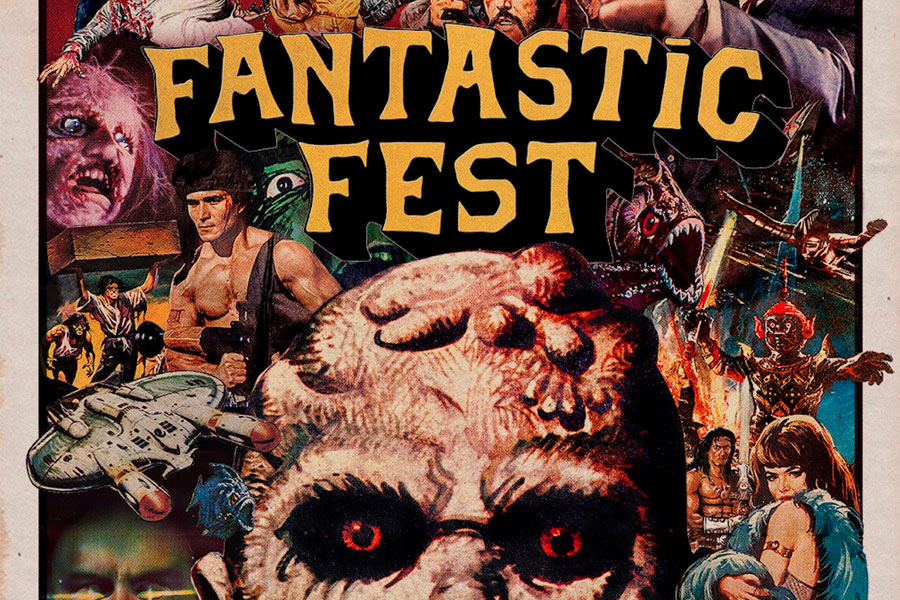
See: This week’s best new movie posters. And Mondo’s new posters for Mulholland Drive.

Our Features

Film Festival Reports: Our most anticipated movies of Fantastic Fest. The movie audiences loved most at the Toronto Film Festival. How the Golden Door International Film Festival is spreading autism awareness.

Birthday Celebration: Stephen King’s greatest movie moments.

Geek Movie Guide: 10 geeky movies to see this fall.

Sci-Fi Movie Guide: 6 Fantastic Fest sci-fi movies to watch right now.

Indie Western Movie Guide: The Keeping Room and the indie Western resurgence.

Home Viewing: Here’s our guide to everything hitting VOD this week. And here’s our guide to everything hitting DVD this week. And here’s our guide to all the new indies and international films to see this month.

and

MORE FROM AROUND THE WEB:

This entry passed through the Full-Text RSS service – if this is your content and you’re reading it on someone else’s site, please read the FAQ at fivefilters.org/content-only/faq.php#publishers.


No Image

Career Backup QB From Verizon Commercial Actually Will Play This Weekend

[embedded content]
YouTube

The ad begins: “A better network as explained by backup quarterback Luke McCown.”

Old spaghetti Western-type music fills the background as backup New Orleans Saints quarterback Luke McCown, dressed in full uniform, stands next to train tracks in a field, the sun setting behind him.

“Verizon has backup generators for most of their towers, so they’re ready if the power ever goes down,” he says.

McCown then looks up at a cell tower and salutes it with his helmet.

“I wonder why they save those backups, and not just put them in the regular rotation?” he wonders.

The camera cuts to a tight shot of McCown’s face as he looks into the distance and says, “I bet if they just had the chance, some of those backups would really shine.”

No word on whether Verizon’s backup generators will be put to use, but this weekend, McCown has his chance.

With the Saints’ starting quarterback, Drew Brees, suffering from a bruised rotator cuff, he’s been ruled out for Sunday’s game against the division rival Carolina Panthers. So McCown, the 34-year-old, 12-season NFL veteran with only nine previous NFL starts, will be under center. It will be his first time starting in an NFL regular season game since 2011.

Social media immediately took notice:

I hope Luke McCown plays well. Otherwise, people will think that @verizon back up generators don’t work.

— tim hasselbeck (@tthasselbeck) September 25, 2015

All those Luke McCown commercials worked. He’ll be starting for the Saints against the Panthers.

— Eric Rosenthal (@ericsports) September 25, 2015

#Saints Drew Brees OUT for Sunday’s game. Guess we’ll see if Luke McCown really means what he says in that Verizon ad pic.twitter.com/gfByQrUN18

— Rachel Nichols (@Rachel__Nichols) September 25, 2015

If McCown lights up the field, Verizon’s commercial will become instant legend. But what could happen if their spokesman for backup reliability isn’t, well, reliable? Messages left with corporate headquarters went unreturned Friday evening.

The game between the 0-2 Saints and the 2-0 Panthers is Sunday at 1 p.m. on Fox. Tune in to see how McCown fares — even if he flops, you might get to see the Panthers quarterback, Cam Newton, do something like this:

[embedded content]
YouTube

This entry passed through the Full-Text RSS service – if this is your content and you’re reading it on someone else’s site, please read the FAQ at fivefilters.org/content-only/faq.php#publishers.


No Image

A Pakistani Pop Star Pulls From The Culture's Musical Past And Present

Zeb Bangash performs with her band Sandaraa at Le Poisson Rouge in New York City last year. (Left to right: Michael Winograd, Bangash, Yoshi Fruchter, Eylem Basaldi.)
4:34

Download

Zeb Bangash performs with her band Sandaraa at Le Poisson Rouge in New York City last year. (Left to right: Michael Winograd, Bangash, Yoshi Fruchter, Eylem Basaldi.) Adam Berry/Courtesy of the artist hide caption

itoggle caption Adam Berry/Courtesy of the artist

Here’s a phrase you don’t hear a lot in the US: “Pakistani pop music.” In fact, the Islamic Republic of Pakistan has a thriving music industry — and singer Zebunissa Bangash, or Zeb for short, is one of its stars.

There has been violence and threat to Pakistani culture since the country was founded 68 years ago, both for political and religious reasons. Zeb was never subjected to that scrutiny: She studied art history at college in the US before returning home to form a band with her cousin, Haniya. Their accessible pop songs found a devoted following.

“I’m sure there are artists out there who are fighting to do music,” she says. “They certainly need recognition for that and they need support for that. But I’m not that artist.”

Pakistan has produced generations of musicians like Zeb, who defy easy assumptions about art and Islam — whether they’re performing Bollywood soundtracks or spiritual Sufi anthems.

“Artists are supposed to be dark, and they’re supposed to be cool, and they’re supposed to stay up all night,” she says laughing. “A lot of times, I’m taunted by my colleagues and my peers. They’re like, ‘Oh, there you are, Miss Disney Princess. What’s happening in your head?'”

More often than not, music and songs are what’s happening in her head. But music isn’t just for professionals in Pakistan: From lullabies to family gatherings to religion, music is a part of everyday life.

“I used to think that that’s what all families have,” Zeb explains. “I think even the way you recite the Qur’an itself, there is music embedded in it. You don’t call it singing, but it does have music embedded in it.”

Several years ago, Zeb appeared on one of the country’s most popular TV shows and sang a song in Dari and Pashto, regional languages most Pakistanis didn’t understand, accompanied by a traditional stringed instrument known as the rabab. The unorthodox performance was a huge success.

[embedded content]

“The song that people have given me the most love for is [that] song,” Zeb says. “That’s when I started thinking about the beauty that is hidden, or that seems to be erased.”

Zeb began studying the history of South Asian music after that. She says Muslim artists have often seen their work as a form of worship, in which creating beauty is about communion with the divine. She’s begun working with a classical teacher, Ustad Naseeruddin Saami, to explore the music of the past and the culture that produced it.

“What kind of a world is it where this was not only appreciated but encouraged, and had lots of patrons?” she asks. “I’m interested in really exploring that and learning more about it.”

It’s a tradition a lot of the country’s urban pop stars are losing.

“For some people, especially for the urban youth and for those who feel like globalized citizens, we feel completely disconnected from it,” Zeb says. “But the more traditional societies, and especially in places like rural Pakistan, those traditions are still linked to something beautiful and something that was intricate and subtle.”

And Zeb is not alone. She’s part of a new generation of Muslim musicians that is looking to the past to try to create a more inclusive future.

This entry passed through the Full-Text RSS service – if this is your content and you’re reading it on someone else’s site, please read the FAQ at fivefilters.org/content-only/faq.php#publishers.