
Articles by admin

No Image

For Environmentalists, Mines Near Wilderness Are Too Close For Comfort

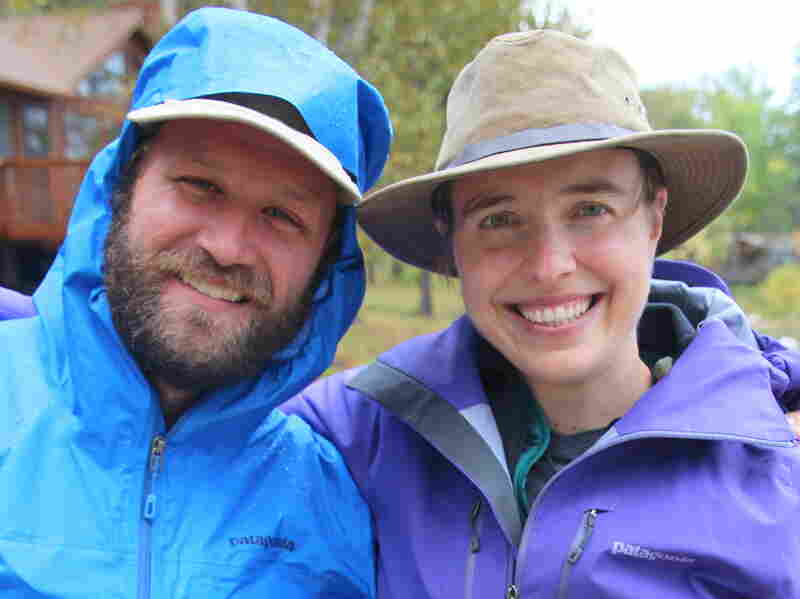
Amy and Dave Freeman paddle into the Boundary Waters, starting their 365 days in the wilderness to raise awareness of mining plans in the region.

Amy and Dave Freeman paddle into the Boundary Waters, starting their 365 days in the wilderness to raise awareness of mining plans in the region. Alex Chocholousek hide caption

itoggle caption Alex Chocholousek

Amy and Dave Freeman are willing to risk brutal winters, thin ice and hordes of hungry mosquitoes to raise awareness about impending mining operations on the border of public lands in northern Minnesota.

A year without a shower takes a tremendous amount of dedication and passion. Why do the Freemans believe the Boundary Waters Canoe Area Wilderness is worth the sacrifice?

“The Boundary Waters belong to all of us. It’s a national forest, it’s federal lands. It’s like a Yellowstone or a Yosemite,” Dave says. “There’s no other place like it on Earth.”

Amy, 33, and Dave, 39, are no strangers to strenuous outdoor adventures. Last year, they paddled and sailed from Ely, Minn., to Washington, D.C., a grand total of 101 days and 2,000 miles on the water, to raise awareness for the Boundary Waters. Their boat acted as a petition, garnering the signatures of thousands of people who oppose sulfide mining in northeastern Minnesota.
The Freemans will live in 120 campsites and travel about 3,000 miles by canoe, dog team, foot, skis and snowshoes during their year in the Boundary Waters wilderness area.

The Freemans will live in 120 campsites and travel about 3,000 miles by canoe, dog team, foot, skis and snowshoes during their year in the Boundary Waters wilderness area. Alex Chocholousek hide caption

itoggle caption Alex Chocholousek

They’ve already traveled more than 30,000 miles by kayak, canoe and dogsled through places such as the Amazon and the Arctic, earning them National Geographic Adventurers of the Year status in 2014.

Now, they’re back again to raise awareness about how mining might affect the Boundary Waters and are encouraging others to speak out.

“We really need to step back and look at this and say wait a second, do we want to have a whole mining development running along the southern border of the wilderness zone?” Dave says.

An Underground City

The Boundary Waters Canoe Wilderness Area attracts more than a quarter-million visitors each year, making it the nation’s most visited wilderness area. It’s the largest wilderness area east of the Rockies and north of the Everglades, consisting of 1,200 miles of interconnected waterways and a million acres of wilderness area within the Superior National Forest.

Map of Superior National Forest and Boundary Waters Canoe Area Wilderness

Source: U.S. Forest Service, Minnesota Geospatial Commons

Credit: Alyson Hurt/NPR

The Freemans describe it as a maze of lakes and rivers, chock-full of timber wolves, moose, loons, eagles and more. They’re disturbed that Twin Metals, a Minnesota mining company, proposed a sulfide mine between two and three miles from the Boundary Waters. They say that two of the ore bodies come right up to the surface and are a threat to the region.

Sulfide mines can produce acid, a dangerous contaminant for lakes and rivers when exposed to air or water. If there was a spill, potential water pollution would flow downstream through White Iron Lake and into the lakes and rivers of the Boundary Waters.

“We think it will be close to the largest underground mine in the U.S,” Twin Metals spokesman Bob McFarlin told Minnesota Public Radio reporter Dan Kraker in 2014.

It would resemble an underground city.

“You’ve got roads, lights, plumbing, electricity, air circulation — all those types of things that support an operation of 1,300 employees working underground in shifts, and moving a lot of material,” McFarlin said.

Twin Metals is not a new presence in the area. The company has drilled holes beneath the Superior National Forest for almost 10 years in hopes of finding copper and other metals.

“We don’t feel that the edge of our nations’ most popular wilderness area is an appropriate place for such a development, partially underground or not,” Dave says.

Twin Metals officials said in 2014 that the mine could cost upwards of $2.5 billion to build but that the more expensive underground design would limit damage to the surface compared to an open pit mine.

“We’re estimating right now about 55 percent of the material that is commonly stored on the surface in mining operations across Minnesota, we’ll be able to put that material underground,” McFarlin said at the time.

The Freemans aren’t satisfied by the claim that the underground design will help minimize the environmental impact.

“Any pollution from the mine sites will end up flowing directly into the Boundary Waters,” Dave says. “It will also be a big industrial zone. We’re talking about massive amounts of waste rock, processing facilities, things like 24-hour rock crushers.”

Frank Ongaro, executive director of Mining Minnesota, the copper-nickel industry trade association in Minnesota, disagrees. He would not speak specifically about the Twin Metals plan but did address mining in Minnesota as a whole.

“Around any variety of sensitive water areas, there is a buffer zone. Those have been identified,” he says. “In the rest of the Superior National Forest, mining and mineral development is not only acceptable, but is a desired use of the multiple use forest plan.”

‘All Of Us Are Environmentalists’

This summer’s wastewater spill into the Animas River near Durango, Colo., shows what can go wrong in the hard rock mining industry. Images of the mustard-yellow waters reinforced the impacts toxic mine sludge, accidentally released by the EPA, has on an ecosystem, community and economy.

Some Minnesotans say they’re well aware of the risk and only support mining projects that meet the stringent requirements and safeguards.

“Everyone in Minnesota, all of us are environmentalists,” Mining Minnesota’s Ongaro says. “We believe that jobs and the environment have and can and will exist side by side.”

“We’re a mining state. We’ve been mining in Minnesota for 130 years. We have strong regulations, second to none. We’ve got a system in place that requires environmental review and permitting. It’s up to any company to demonstrate that they can meet the minimum requirements. And if they do, they should be advanced. And if they don’t, they shouldn’t move forward,” he says.

Ongaro says that the state of Minnesota has a global responsibility to show the world how responsible development is done.

“Wind turbines, electric cars, you name it, they all take metals and we are import dependent on these metals from countries that have little or no environmental standards, don’t have safety requirements, have child labor violations. We need to hold up a model to the world on how to do it right,” Ongaro says.

Some locals are torn. The proposal offers tempting economic benefits for the area, like more than 1,000 permanent jobs and the creation of 3,500 jobs during the construction process. They say that mining, if done responsibly, is essential for the area and reiterate that they too care about clean water.

“Nobody on the Iron Range doesn’t believe in meeting the state and federal standards,” says Dave Lislegard, a third-generation miner and member of the Aurora, Minn., city council.

“We believe in doing the right thing in the right way, that is what allows us the opportunity to provide for our families. Nobody advocates not meeting the standards. It’s hard to watch people who are so adamant about pushing against our way of life. We are very proud of what we are,” he says.

Lislegard says he, and other “Iron Range” residents — an area in northeastern Minnesota with small communities built around the industry resulting from long swaths of iron ore — do not advocate a “rubber stamp” approach.
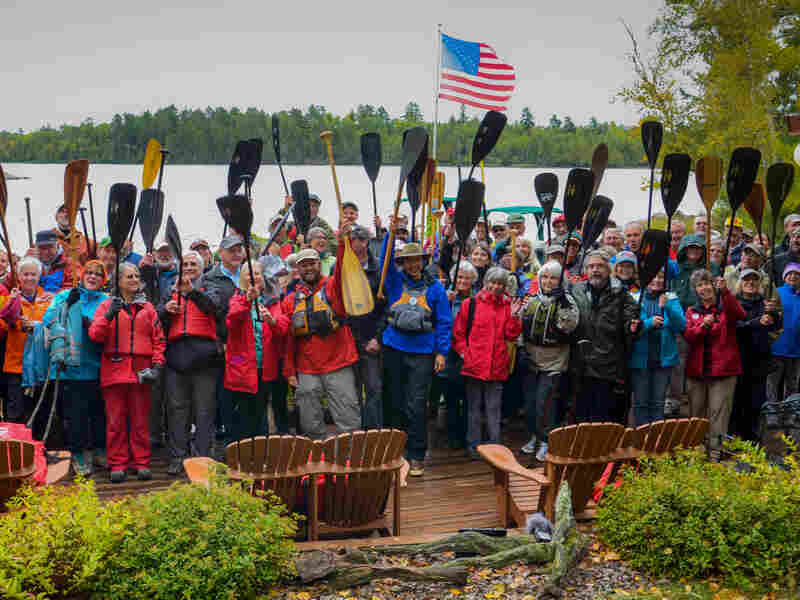
Amy and Dave Freeman's friends, family and supporters gather at River Point Resort and Outfitting Company in Ely, Minn., across from the proposed Twin Metals mine site, in preparation for the couple's launch on Sept. 23.

Amy and Dave Freeman’s friends, family and supporters gather at River Point Resort and Outfitting Company in Ely, Minn., across from the proposed Twin Metals mine site, in preparation for the couple’s launch on Sept. 23. Ellie M. Bayrd hide caption

itoggle caption Ellie M. Bayrd

“I, and all of us Ely folk, love the outdoors. And love Ely. We want nothing more than to preserve our home, but we also support responsible mining,” 29-year-old Natalie Tiffner said in a post on Instagram. Originally from Ely, Tiffner wishes she could raise her twin daughters there. But the lack of job opportunities for both her and her husband in Ely force her to work in Minneapolis.

“Mining is a way of life on the Iron Range,” Lislegard says. “It’s really hard for many of us who are trying to provide for our families to understand how individuals can stop working for a year and go camp.”

Bottom line? Mining is essential for many in the region where the Freemans are trying to stop it.

“Mining is the meat and potatoes,” Lislegard says. “Tourism is the dessert. It looks good, it tastes good, it smells good — but you can’t live on it.”

Into The Wilderness

On Sep. 23, Amy and Dave launched from the River Point Resort and Outfitting Company, within eyesight of the proposed mine location. Accompanied by around 40 friends, family and supporters, the flotilla made their way up the Kawishiwi River into the wilderness area.

Then the Freemans were on their own.

“We’re relieved,” Dave says. “We’ve been working so hard to get everything ready. When we crossed under that bridge we were mostly excited to be finally entering the wilderness.”

“I had to consciously tell myself that this is really a year. It could’ve been just a weekend trip, because we’re already so used to just that. Off you go! All of that,” Amy says.

This year will not be without its challenges.

“A year is a long time, mentally and physically,” Dave says. “If we’re being honest, it will probably wear on us. Winter is going to be really hard. It takes a lot of energy to stay warm and healthy when it’s well below zero.”

The couple, who also spend time as canoe guides, say they’re looking forward to helping people understand why they care so much.

“We’ve guided people from all over the country and all over the world,” Dave says. “This summer, I led trips with people from 15 different states. People come back every year, every other year. It really is a place that people travel long distances to come to. It’s hard to explain until you’ve been there, but it’s so unique and special.”

“It just draws you back over and over again,” Amy says.

Twin Metals officials said that while they wish the Freemans a safe journey, they have no further comment on their activities.

You can track the Freemans’ progress on social media (#WildernessYear) and through the organization Save The Boundary Waters.

Kylie Mohr is a digital news intern at NPR.org.

This entry passed through the Full-Text RSS service – if this is your content and you’re reading it on someone else’s site, please read the FAQ at fivefilters.org/content-only/faq.php#publishers.



No Image

An American Pigskin In London: Jets, Dolphins Head To U.K.

4:17

Download

The New York Jets and Miami Dolphins play in London Sunday. Andrea Kremer of HBO’s Real Sports and the NFL Network says that despite logistical challenges, it could mean big profits for the NFL.

Transcript

SCOTT SIMON, HOST:

Time now for sports.

(SOUNDBITE OF MUSIC)

SIMON: Is London calling the NFL? The New York Jets and the Miami Dolphins play this weekend at Wembley Stadium, where men in shorts usually play footee. The game’s expected to be a sellout. The NFL will play three games in London this year. Could London get a team before Los Angeles? We’re joined now by Andrea Kremer, correspondent for HBO’s “Real Sports” on the NFL Network. Andrea, thanks for being with us.

ANDREA KREMER, BYLINE: It’s great to talk to you, Scott, and I’m very happy to have heard that familiar sports theme because I don’t know if I’ve ever had a lead-in that involves topless women. So I was very happy to…

SIMON: (Laughter) That’s quite a statement coming from you.

KREMER: There you go.

SIMON: Britain’s treasury chancellor, presumably with his pinstripes on, says he wants an NFL franchise in London in five years. What are some of the practical challenges, though, of having a team that’s based across the ocean?

KREMER: Yeah, that sounds like wishful thinking. Look, this international series with the NFL playing games in London started in 2007. And it’s grown every year, and in fact, they’re expecting 84,000 people tomorrow at Wembley for the Jets and the Dolphins. And it’s a big weekend in the U.K. for sports. You’ve got Arsenal versus Manchester United. You’ve got the Rugby World Cup. So where does the NFL come into play? Look, it’s hard to conduct league business; there are logistical hurdles. Tuesday in the NFL, you always check out players that are available, free agents – street free agents as they call them. You can’t possibly do that across the pond. You have to have the business of a team centered in the United States, and then if you’re going to start playing, you know, six hours away – and that’s on the East Coast…

SIMON: Yeah.

KREMER: …Not including the time difference, it’s going to be very, very challenging. But what the NFL usually wants, the NFL usually gets.

SIMON: Now, I assume they’ve run the number – I mean, London would become – at least as I figure it – certainly the largest single-team NFL market. I guess they think they can rake in the pounds.

KREMER: Well, yeah, I mean – that’s what it always comes down to. I mean, you’ve got a commissioner who has said that within the next 10 years he would like to grow the National Football League to a $25 billion – that’s B, billion dollar industry. So I think it’s definitely possible, but there are a lot of challenges that have to be represented. Plus, you know, right now different teams go over. So you can be a Dallas Cowboys fan, but you’re still going to watch the Jets and the Dolphins because you like NFL football. But how do you really build a fan base? I think that’s going to be a big challenge as well.

SIMON: Yeah. Quick question now – well, not so quick. Coca-Cola, Visa, Budweiser, McDonald’s – they’ve now all called for Sepp Blatter, the head of FIFA, to resign after Swiss criminal proceedings have begun against him. I don’t think though they’ve actually withdrawn their sponsorship of international soccer games – the ads, right? Would that say more?

KREMER: No, they have not withdrawn their sponsorships. And remember, even someone like Visa and even dating back to May when some of these sweeping changes at FIFA were called for, Visa’s agreement runs until 2022. So, you know – you’ve had Sepp Blatter, who has been quite defiant and adamant – anyone that knows him would completely be unsurprised by that posture – saying that, you know, he still does not intend to resign before his stated goal of next February. And he looks like he’s prepared to call the bluff of the sponsors. You know, look, even back last year with the horrific year that the NFL had, they still never lost any major sponsors. But there was one situation where the Minnesota Vikings before they actually, you know, put Adrian Peterson on hold for the whole season, they did lose a sponsor – one of their local sponsors. And they acted quickly. The next week, Adrian Peterson was basically gone for the whole season. That’s the only precedent that I’ve seen. But, you know, look, Sepp Blatter could still be suspended by the FIFA Ethics Committee, but, Scott, no one has ever accused ethics and FIFA of being in the same sentence.

SIMON: Andrea Kremer. You’re listening to WEEKEND EDITION from NPR News.

Copyright © 2015 NPR. All rights reserved. Visit our website terms of use and permissions pages at www.npr.org for further information.

NPR transcripts are created on a rush deadline by a contractor for NPR, and accuracy and availability may vary. This text may not be in its final form and may be updated or revised in the future. Please be aware that the authoritative record of NPR’s programming is the audio.

This entry passed through the Full-Text RSS service – if this is your content and you’re reading it on someone else’s site, please read the FAQ at fivefilters.org/content-only/faq.php#publishers.

No Image

Best of the Week: New 'Back to the Future' Film Teaser, Fantastic Fest Reviews and More

The Important News

Franchise Fever: Christopher Lloyd stars in a new Back to the Future short. Trainspotting 2 will shoot next year. Lionsgate wants a Cabin in the Woods sequel. The Enchanted sequel will be titled Disenchanted. Watchmen might become a TV series. Sony is making an animated Ghostbusters movie.

Marvel Madness: Kevin Feige gave updates on Captain America, Spider-Man and more. And an update on Captain Marvel.

Casting Net: John Goodman joined Kong: Skull Island. Ellar Coltrane joined The Circle. Nat Wolff will star in Death Note.

New Directors/New Films: Matthew Vaughn will direct the spy movie I Am Pilgrim. Guillermo del Toro is making a small movie next.

Remake Report: Paramount is remaking The Man Who Shot Liberty Valance.

First Looks: Matthew McConaughey in Gold.

Box Office: Adam Sandler is box office gold in animated form.

Distribution Deals: Drafthouse will re-release the previously obscure movie Dangerous Men.

The Videos and Geek Stuff

New Movie Trailers: The Revenant, Spectre, The Assassin, The Forest, The Choice, Love, Doc Brown Saves the World and Burnt.

Watch: An Avengers: Age of Ultron deleted scene. And an Avengers: Age of Ultron gag reel and honest trailer. And Avengers: Age of Ultron summed up with Lego.

See: Chris Evans and Hayley Atwell star in a couple’s marriage proposal.

Watch: Hours of NASA video answering questions about The Martian.

See: What a Spider-Gwen movie starring Emma Stone would look like.

Watch: A Nancy Meyers movie parody starring Jason Mitchell.

See: Matt Damon recreate his movie career in eight minutes.

Watch: The first and last shots of movies side by side.

See: Every Jean-Claude Van Damme kill through his movie career.

Watch: A video showing how film scores affect our brains.

See: A bold new Hunger Games: Mockingjay – Part 2 poster. And classic horror movie posters come to life.

Our Features

Fantastic Fest Reviews: The Wave, Man Vs. Snake, Green Room and Tom Hiddleston in Crimson Peak and High-Rise.

Monthly Movie Release Guide: See everything arriving in theaters, VOD and more in October.

Interview: Drew Goddard on The Martian.

Virtual Reality Guide: The Walk VR experience is the best we’ve seen yet.

Upcoming Movie Guide: All you need to know about Revenant.

Horror Movie Guide: All the latest horror news and trailers.

Comic Book Movie Guide: What the DC movies could learn from the Batman: Arkham video games.

R.I.P.: Remembering the reel-important people we lost in September.

Home Viewing: Here’s our guide to everything hitting VOD this week. And here’s our guide to everything new streaming on Netflix this month. And here’s our guide to everything new to HBO Now.

and

MORE FROM AROUND THE WEB:

This entry passed through the Full-Text RSS service – if this is your content and you’re reading it on someone else’s site, please read the FAQ at fivefilters.org/content-only/faq.php#publishers.


No Image

Cubs Fans Try To Make Up For Sending Another Cubs Fan Death Threats In 2003

Remember that Chicago Cubs fan who may or may not have cost his team a crucial out in Game 6 of the 2003 National League Championship series against the Marlins?

No? Well, let’s take a jaunt down memory lane:

[embedded content]
YouTube

The infamous Steve Bartman incident, a muffed catch followed by outfielder Moises Alou’s tantrum, was painted as a turning point in the Cubs’ pennant chase. Chicago went on to lose Game 6 and then lost Game 7, falling short of making the World Series and relegating Bartman to the deepest circle of sports fandom hell.

To put it mildly, Cubs fans were not kind. Bartman had to be escorted from the stadium after Game 6, as debris rained down upon him. He received death threats. TV cameras and trucks swarmed in front of his home. Even four years later, KFC — in an attempt to make light of the situation or perhaps to make money — mailed a letter to Bartman’s home offering him free food if he stayed away from playoff games.

Since the incident, Bartman has basically disappeared. Despite requests for interviews, appearances, deals and promotions, Bartman has stayed completely out of public life. There have been newspaper profiles, fake social media accounts and even an ESPN 30 for 30 documentary called “Catching Hell,” which defends his actions. Bartman has steered well clear of it all, communicating only occasionally through a spokesman.

In fact, the last time Bartman had a public presence was the day after that fateful game, when his brother-in-law issued an apologetic statement on his behalf.

Now, 12 years later, with the Cubs teetering on the edge of the playoffs, some Cubs fans want to “make amends.” A GoFundMe account has been set up to raise $5,000 to pay for Bartman’s tickets and expenses to attend the National League Wild Card game against the Pittsburgh Pirates next week.

The description on the page says:

“Lifelong Cubs fan wants to make amends for 2003, lets make it happen. First we need to find him to get him to the big game. If anyone knows where he is at, tell him we are looking for him. The money would pay for his expenses including his ticket, hotel room, flights and a little spending money.

“If he cannot be found by time of the big game all the proceeds raised will be donated to the Alzheimer’s Association.”

As of Friday evening, 287 people had pitched in to raise $3,390 in three days.

The gesture, purportedly well-intentioned, was ultimately unsuccessful.

“It’s nice of these people to think of Steve, but he won’t be taking advantage of the offer,” Frank Murtha, a family friend and longtime spokesman, said to ESPN. “He’s perfectly capable of attending the game on his own, though he has no intention of being at the wild-card game.”

“Steve is glad the money will go to a good cause and will be cheering on the Cubs as always,” Murtha said.

This entry passed through the Full-Text RSS service – if this is your content and you’re reading it on someone else’s site, please read the FAQ at fivefilters.org/content-only/faq.php#publishers.


No Image

Coca-Cola, McDonald's Among Sponsors Calling For FIFA President's Resignation

FIFA President Sepp Blatter is being investigated by both U.S. and Swiss authorities for alleged corruption.

FIFA President Sepp Blatter is being investigated by both U.S. and Swiss authorities for alleged corruption. Michael Probst/AP hide caption

itoggle caption Michael Probst/AP

Following last week’s announcement that FIFA President Sepp Blatter is facing criminal proceedings in Switzerland for alleged corruption, Coca-Cola and McDonald’s, two major FIFA World Cup Sponsors, called for his immediate resignation.

The company released a statement, saying:

“Every day that passes, the image and reputation of FIFA continues to tarnish. FIFA needs comprehensive and urgent reform, and that can only be accomplished through a truly independent approach.”

Joining Coca-Cola in calling for Blatter’s resignation is another high-profile FIFA sponsor: McDonald’s. The company released a statement:

“The events of recent weeks have continued to diminish the reputation of FIFA and public confidence in its leadership. We believe it would be in the best interest of the game for FIFA President Sepp Blatter to step down immediately so that the reform process can proceed with the credibility that is needed.”

Budweiser owner Anheuser-Busch and Visa also added their calls for Blatter to step down, Reuters reports.

Blatter responded to the pressure almost immediately, but he reiterated that he would not give up his post. Blatter said through his U.S. lawyer, Richard Cullen, that he would not resign and that his leaving office would not be in FIFA’s best interest or advance the reform process, Reuters reports.

When Blatter announced in June that he was going to resign, Coca-Cola, McDonald’s and Visa praised the news and called for reform. Coca-Cola called it “a positive step for the good of sport, football and its fans.” Blatter, however, then said that his resignation would not take immediate affect and that he would step down in 2016.

Today’s calls for his resignation are the strongest indications yet that big name sponsors that have long been associated with FIFA are serious about reform.

While neither Coca-Cola nor McDonald’s has gone so far as to threaten to stop sponsoring the World Cup, it would be a significant blow if FIFA were to lose the support of high-profile, long-time sponsors.

On it’s website, FIFA says that Coca-Cola is “one of the longest-standing corporate partners of FIFA, with a formal association since 1974 and an official sponsorship of FIFA World Cup that began in 1978.”

It adds that “Coca-Cola has had stadium advertising at every FIFA World Cup since 1950.”

The latest allegations of wrongdoing surrounding Blatter have to do with questionable payments to two FIFA officials. As we previously reported:

“Blatter is primarily being investigated for a financial transaction involving UEFA (Europe’s soccer governing body) President Michele Platini and another linked to indicted former FIFA official Jack Warner, according to the statement.

“Blatter is accused of making a ‘disloyal payment’ of 2 million Swiss francs to Platini in 2011 for work Platini performed between 1999 and 2002. The New York Times notes that the payment was made” three months before Mr. Blatter won a fourth term as FIFA president” in June 2011.

“The statement from Swiss authorities also alleges that Blatter signed a contract with the Caribbean Football Union, of which Jack Warner was president at the time, that ‘violated his fiduciary duties and acted against the interest of FIFA.'”

This entry passed through the Full-Text RSS service – if this is your content and you’re reading it on someone else’s site, please read the FAQ at fivefilters.org/content-only/faq.php#publishers.

No Image

Let Me Show You What Keeps Me From Being Healthy

What do you see in your community that helps you be heart healthy, and what gets in your way? People who live in the “stroke belt,” an area in the Southeast with high rates of heart disease and stroke, can show you.

“The idea was to have community residents take photos of their individual take on the topic of barriers to heart health,” says Sarah Kowitt, a study author and graduate student in public health at the University of North Carolina, Chapel Hill.

The teen and adult volunteers took photos of what they think creates barriers to good heart health in Lenoir County, N.C., where they live. The study, published Thursday in Preventing Chronic Disease, is part of Heart Healthy Lenoir, a community-based project aimed at creating long-term strategies to reduce heart disease in a community at high risk.

Lenoir County is rural, low-income and mostly African-American. While cardiovascular disease is the leading cause of death in the U.S., there are “big disparities in income and disease among African-Americans” when compared with people of other races and ethnicities, Kowitt says.

This was a tiny study, just nine adolescents and six adults. But just look at some of these photos, and what people have to say about them.

Barriers To Good Health

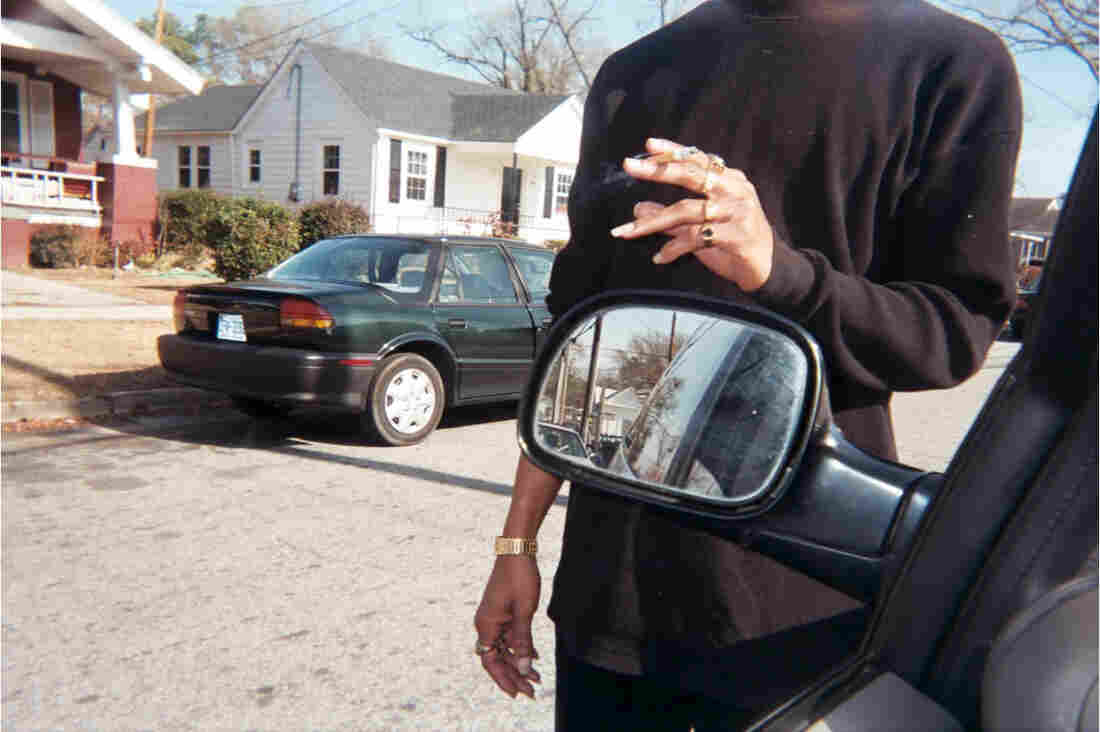
  • Family Influences

    “He wasn’t raised where health was an issue in the household. There was nobody talkin’ about health, probably nobody talking about not smoking or drinking or unhealthy practices, what it could lead to. There was nobody talkin’ about that.” National Center for Chronic Disease Prevention and Health Promotion hide caption

    itoggle caption National Center for Chronic Disease Prevention and Health Promotion

  • No Safe Place To Play

    “We live on a busy road … but if you branch off there’s little neighborhoods like this. There’s a branch where you can go ride your bike. But where we live at, you walk out [laughter] you won’t be walkin’ no more.” National Center for Chronic Disease Prevention and Health Promotion hide caption

    itoggle caption National Center for Chronic Disease Prevention and Health Promotion

  • Candy At The Front Of The Store

    “Have you ever noticed, like when you walk in the store, like most of the time right upfront where the cash registers are it’s candy, candy. All the healthy stuff is in the back, and right upfront is the candy, so it’s the first thing you see ’cause everybody knows you’re gonna buy it ’cause it’s good. It’s advertised good. People like it!” National Center for Chronic Disease Prevention and Health Promotion hide caption

    itoggle caption National Center for Chronic Disease Prevention and Health Promotion

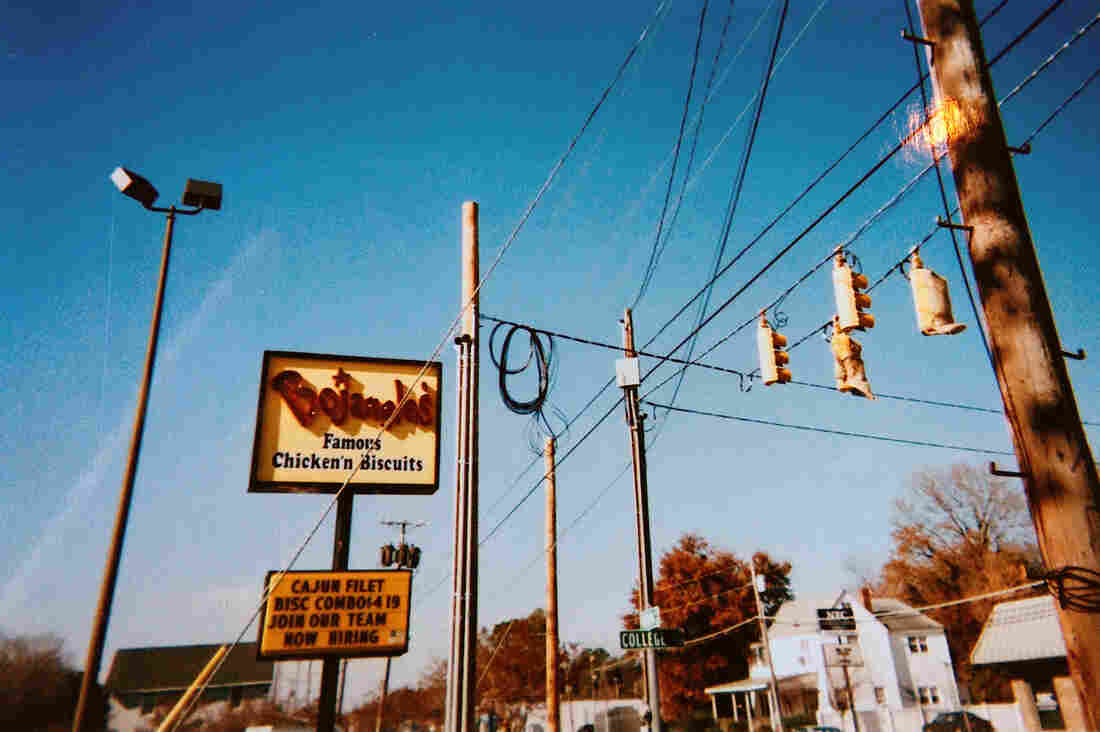
  • Fast-Food Avenue

    “What I’m showing here is the amount of fast-food places on [omitted] Avenue within a mile. I would say less than a half a mile! Four pizza joints … you got Moons, then you got a steakhouse right next to it. So you get your Chinese food and then your greasy sub sandwiches here; Burger King’s … you have Bojangles; the Mexican joint.” National Center for Chronic Disease Prevention and Health Promotion hide caption

    itoggle caption National Center for Chronic Disease Prevention and Health Promotion

In discussion groups following the photo sessions, adults and teens dug into these and other stressors in the community. Adults often pointed to racial prejudice and the stress it causes, saying that “as a people, this whole stress thing is new; we just think this is how it is.”

Bottom line, the photos and discussion sessions started a conversation about the importance of heart health and the difficulties many people face in maintaining it. According to co-investigator Alexandra Lightfoot, participants saw this as an opportunity to explore barriers to good health and rally the community to bring about needed changes.

Some great ideas emerged, says Lightfoot, including ways to “entice residents toward the healthy food” section in grocery stores and fast-food establishments, initiate nutrition education in the schools and even encourage rap stars to incorporate positive health messages in lyrics. All a great beginning, they say, in getting the community involved in helping make positive changes that are good for the heart.

What hurts or helps your health? Show us. Post your photos on Twitter or Instagram with the hashtag #NPRmyhealth.

This entry passed through the Full-Text RSS service – if this is your content and you’re reading it on someone else’s site, please read the FAQ at fivefilters.org/content-only/faq.php#publishers.


No Image

Today in Movie Culture: 'Avengers: Age of Ultron' Summed Up in Lego, the Medieval Justice League and More

Here are a bunch of little bites to satisfy your hunger for movie culture:

Movie Summary of the Day:

You could buy Avengers: Age of Ultron on Blu-ray this week, or you could just watch the sequel summed up in two minutes in Lego form:

[embedded content]

Murderous Montage of the Day:

See every kill made by a Jean-Claude Van Damme character in this career-spanning supercut (via Geek Tyrant):

[embedded content]

Custom Toys of the Day:

Hopefully Warner Bros. has room in its busy release schedule to produce a movie based on these custom action figures of medieval Dungeons and Dragons-like versions of the Justice League (Batman, Superman, Wonder Woman, The Flash and Green Lantern) by artist Sillof (via Geek Tyrant):

Cocktail of the Day:

Drunk Disney Libation Studios shows us how to make a custom cocktail themed to The Little Mermaid:

[embedded content]

Vintage Image of the Day:

Julie Andrews, who turns 80 years young today, with the real Maria von Trapp on the set of The Sound of Music.

Movie Science of the Day:

In a synergetic promotion of the Nerdist-presented horror movie The Hive, Kyle Hill explains the science of collective intelligence, aka “the hive mind”:

[embedded content]

Classic Cartoon of the Day:

Today is the 60th anniversary of the classic Merrie Melodies animated short Knight-Mare Hare, directed by Chuck Jones and starring Bugs Bunny as a “New York wabbit in King Arthur’s Court.” Watch the cartoon in full below.

Cosplay of the Day:

Is that Animal from The Muppets riding a motorcycle or the best cosplay-like helmet of all time (via You Had One Job)?

Supercut of the Day:

Considering how long people had to make do with listening to fights on the radio, this supercut of reaction shots to a boxing match we can’t see is still a step up (via Live for Films):

[embedded content]

Classic Trailer of the Day:

This weekend is the 35th anniversary of David Lynch‘s The Elephant Man. Watch the original trailer below.

[embedded content]

Send tips or follow us via Twitter:

and

This entry passed through the Full-Text RSS service – if this is your content and you’re reading it on someone else’s site, please read the FAQ at fivefilters.org/content-only/faq.php#publishers.


No Image

New EPA Rule Limiting Ground-Level Ozone Draws Fire From All Sides

A new rule from the Obama Administration aims to further reduce the main ingredient in smog. That might sound like good news if you live in a city where smog is a problem. But after the rule was announced, there were plenty of complaints about it.

Technically, the Environmental Protection Agency is reducing the National Ambient Air Quality Standards (NAAQS) for ground-level ozone limits from the current level of 75 parts per billion (ppb) down to 70 ppb.

Ground-level ozone is linked to respiratory illnesses and it can worsen diseases like emphysema and asthma. It’s created when pollution from cars, factories, power plants and other sources chemically react with sunlight. It’s primarily a problem during the warmer months of the year.

“Put simply — ozone pollution means it hurts to breathe for those most vulnerable: our kids, our elderly and those suffering from heart and lung ailments,” said EPA Administrator Gina McCarthy.

The EPA was under a court-ordered deadline to issue a rule today. A year ago, a scientific advisory committee suggested the agency set the standard between 60 and 70 ppb. Environmental groups are critical of the EPA for setting the new limit at the upper end of that spectrum.

While acknowledging the tighter standard will provide health benefits, John Walke, senior attorney and director of the Clean Air Program at the Natural Resources Defense Council, says the EPA missed an opportunity to set an even lower level, closer to the 60 ppb.

“Setting the safest recommended standard would have saved almost 6,500 lives and avoided nearly 1.5 million more asthma attacks per year than the smog pollution level the administration has chosen,” said Walke.

The National Association of Manufacturers (NAM) has been a vocal opponent of tightening the current standard. NAM President and CEO Jay Timmons said that while “a worst-case scenario was avoided” the new rule is “overly burdensome, costly and misguided.”

“The new ozone standard will inflict pain on companies that build things in America—and destroy job opportunities for American workers,” said Timmons.

The EPA’s stricter limits on ground-level ozone also set a new standard that communities around the country will have to try and meet. Some will have a more difficult time than others. The EPA projects that with existing programs to reduce pollution already in place, the vast majority of counties will be able to meet the new standard by 2025.

In responding to criticisms in the wake of her agency’s new rule, McCarthy told reporters she didn’t base her decision on a popularity contest. “What the Clean Air Act tells me to do is make my best judgement on the basis of the science,” said McCarthy.

While her predecessor, Lisa Jackson, had considered an even stricter standard — 65 ppb — McCarthy said now there’s more scientific research available that casts uncertainty over the benefits of setting the standard lower than 70 ppm.

Even though the new standard is now an EPA rule, it may not be the end of the debate. Some advocates for manufacturers and the oil industry are asking Congress to step in and block the new rule.

This entry passed through the Full-Text RSS service – if this is your content and you’re reading it on someone else’s site, please read the FAQ at fivefilters.org/content-only/faq.php#publishers.


No Image

Analysts Says NFL Safety Rules Put Quarterbacks At Risk Of Injury

4:33

Download

The Pittsburgh Steelers’ high-powered NFL offense lost its veteran quarterback, Ben Roethlisberger, to a hurt knee last weekend after a hit by a defensive player. Roethlisberger is the latest high profile quarterback to go down this season, and there’s concern there could be more.

Transcript

ROBERT SIEGEL, HOST:

And now to a different contest. It’s week four of the National Football League season. Tonight, the Pittsburgh Steelers host the Baltimore Ravens. The Steelers don’t have starting quarterback Ben Roethlisberger. He injured his knee last Sunday and joined a growing list of bruised and harried quarterbacks. That list is growing in part because some offensive linemen, the players who are supposed to protect the quarterback, aren’t. Here’s NPR’s Tom Goldman.

TOM GOLDMAN, BYLINE: Quarterbacks are most effective upright. But the images that define this young season are QBs in varying stages of freefall. After Detroit’s week two loss, one of the first questions for quarterback Matthew Stafford was, what body parts were x-rayed?

MATTHEW STAFFORD: My ribs and chest.

GOLDMAN: X-rays were negative, and Stafford got to play on – not so with Dallas’s Tony Romo and the Steelers’ Roethlisberger, both out for multiple games, both injured by defenders. The blame is falling squarely on the broad shoulders of offensive linemen. They’re used to it. They know nobody pays attention to them unless they make a mistake. But the mistakes are perceived as so numerous now that longtime NFL executive and ESPN analyst Bill Polian described the problem as an epidemic.

BILL POLIAN: It is a sad state of affairs, and if it keeps up, we’re going to be talking about backup quarterbacks playing a lot.

SCOTT PETERS: You know, so I played seven years in the NFL as an offensive lineman, and prior to that…

GOLDMAN: Scott Peters says he was frustrated throughout his career, which ended in 2009, because he never truly learned the technique necessary for his position. Peters, who now teaches line skills using mixed martial arts, thinks it’s still an issue in the league and a big reason for the current problems.

PETERS: Offensive line is not an intuitive position. It’s one that requires a tremendous amount of skill that goes against your intuition, whereas defensive linemen – not to put them down, but it’s more reactive and responsive.

GOLDMAN: Offensive linemen are taught how to repel defenders with hands, arms, foot placement, body angle, all while backing up. But Peters says it’s not taught enough, and the players’ current labor contract is partly to blame. The 2011 CBA aimed to promote more player safety by reducing off-season practice time – five weeks less, in fact. But Peters says that’s leaving O-linemen less skilled and quarterbacks more at risk.

PETERS: The real issue there is the restrictions that say, you can’t do, quote, unquote, “football activities.” So you can lift weights, but you can’t work on your skills that make you better at football. At least you can’t do that with coach’s supervision, and that’s what you need.

ERIC WINSTON: You know, I think that’s, like, a pretty flimsy argument, in my opinion.

GOLDMAN: When Eric Winston says that, understand a couple of things. He’s the president of the players union that fought for that contract with its reduced practice time, and he’s a veteran offensive lineman for the Cincinnati Bengals, a team with one of the league’s best O-lines…

(SOUNDBITE OF ARCHIVED RECORDING)

UNIDENTIFIED ANNOUNCER: Dalton throws – A.J. Green at the 50.

GOLDMAN: That’s been more responsible for this…

(SOUNDBITE OF ARCHIVED RECORDING)

UNIDENTIFIED ANNOUNCER: Touchdown Cincinnati.

GOLDMAN: …Than miscues and hurt quarterbacks. Winston says offensive linemen have ample time in the off season to work with coaches even with the restrictions – seven weeks’ worth. He thinks O-lines struggle because teams have patchwork units instead of lines that have played together several years like the Bengals and because of bad drafting or teams not wanting to pay a lot for skilled linemen. Also, the current emphasis on spread offenses and passing has turned defensive linemen into huge, speedy quarterback hunters.

WINSTON: I don’t think there’s ever been a time in this league when its been harder to be an offensive lineman. The athleticism now on the defensive line is so great that it makes it so hard to block these guys.

GOLDMAN: As the season goes on, struggling lines will try to come together to play and protect and keep those backup quarterbacks off the field. Tom Goldman, NPR News.

Copyright © 2015 NPR. All rights reserved. Visit our website terms of use and permissions pages at www.npr.org for further information.

NPR transcripts are created on a rush deadline by a contractor for NPR, and accuracy and availability may vary. This text may not be in its final form and may be updated or revised in the future. Please be aware that the authoritative record of NPR’s programming is the audio.

This entry passed through the Full-Text RSS service – if this is your content and you’re reading it on someone else’s site, please read the FAQ at fivefilters.org/content-only/faq.php#publishers.


No Image

Many Former Foster Youths Don't Know They Have Health Care

Laticia Aossey was hospitalized while a student at the University of Northern Iowa when she realized she hadn't signed up for health insurance.

Laticia Aossey was hospitalized while a student at the University of Northern Iowa when she realized she hadn’t signed up for health insurance. Matthew Putney/Courtesy of Youth Today hide caption

itoggle caption Matthew Putney/Courtesy of Youth Today

Laticia Aossey was flat on her back in an Iowa hospital bed with a tube up her nose, a needle for a peripheral IV stuck in one arm and monitors pasted to her body. It was early June 2014, a week after her 18th birthday, when a friend brought Aossey’s mail from home — including one ominous letter. Aossey’s health insurance was about to be discontinued.

“My heart dropped. I just wondered to myself, ‘Are they going to pull this tube out, unhook me from everything and roll me down to the street?’ ” Aossey said. “Could I get the medicine I needed?”

When children “age out” of foster care at age 18 in Iowa, they are eligible to receive Medicaid under the Affordable Care Act until they turn 26. But Aossey, a ward of the state as a foster child, had not filled out the necessary paperwork. Then she fell ill with stomach ulcers, acid reflux and cyclical vomiting.

She was in college at the University of Northern Iowa in Cedar Falls, and instead of using her dormitory address she had used a friend’s home address. The state Medicaid office sent the paperwork to complete her health care enrollment to her friend’s address in Iowa City, so she did not receive it right away.

“The first call I made from the hospital to get it straightened out, the woman said, ‘Your parents need to call,’ ” Aossey said.

“My parents? I was in foster care. I had no parents. Then she said my caseworker, an adult, my boss, somebody … [other than] me had to call. She wouldn’t talk to me. I was 18.”

Aossey’s doctors finally calmed her fears, and a couple of days later, she said, a caseworker arrived to help her complete the paperwork. She realized she could have managed that before things became complicated in the hospital.

“Be an adult,” Aossey advises other foster youth. “Find a way to do your paperwork. Do not rely on other people for something you should do.”

Aossey is one of 400,000 foster youth in the nation, and one of approximately 23,000 per year who age out of foster care when they turn 18 (or 21 in some states). They are all eligible for Medicaid, regardless of income, under the Affordable Care Act until 26.

Federal law requires states to cover former foster youth, and the federal government provides Medicaid matching funds to pay for it. But 21 states chose not to expand their Medicaid programs under Obamacare. And some states make enrollment for former foster youth easier than others.

“In some states, where the state is not embracing ACA in general, there wouldn’t be a particular incentive for them to inform young people of their eligibility,” says Celeste Bodner, founder and executive director of Foster Club, a national advocacy organization for foster youth. “If you want to call that a hostile environment, I don’t think that is a stretch.”

In California and New York, youth who age out of foster care are automatically enrolled in Medicaid. But even then, social services providers say they often need help figuring out health care.

The Jewish Child Care Association, which serves 750 foster youth of all faiths and backgrounds in New York City, puts significant resources into getting teens in foster care ready to be independent. A state-funded program includes guidance on filling prescriptions and managing health care.

“Navigating anything as a 20-year-old under the best of circumstances is tough and anxiety-provoking,” said Ronald E. Richter, CEO of the JCCA and a former commissioner of New York City’s Administration for Children’s Services. “Not all 20-year-olds come in for help with a smile on their face. Systems are not built for an anxious, stressed out 20-year-old.”

California automatically enrolls foster youth in Medi-Cal, its Medicaid program, but even that seemingly foolproof method has its glitches.

The Covered til 26 campaign, run by the advocacy organization Children Now, has tried to canvass the foster youth population, yet some slip through the safety net because of coding issues or questions about eligibility, changing addresses, incarceration, health issues and the sheer complexity of the system.

And in states without automatic enrollment, “What tends to happen when kids age out of foster care is that nobody tracks them, nobody keeps in touch with them,” said Bodner, of Foster Club. “It is extremely difficult to get word out to kids age 18 to 26 who are eligible. It can be an issue because that 18 to 26 population is really tough to find, there is no master list or a mailing list. This group is particularly transient.”

Many former foster children also would qualify for Medicaid based on income, but they may not be aware that they are eligible because of their foster status.

“It’s a complete maze,” said Bodner. “They get tracked into an income-qualification category as opposed to the automatic eligibility.”

Medicaid coverage for former foster children takes the place of insurance coverage that other young adults are eligible for through their parents, according to Jessica Haspel, a senior associate who handles welfare policy for Children Now in California.

“These are youth that have experienced abuse and neglect and the state has become their parent,” Haspel said. “It is giving them an equal protection other youth have had. It is about equity.”

Ray Glier writes from Atlanta. This story was produced by Youth Today, the national news source for youth-service professionals, including child welfare and juvenile justice, youth development and out-of-school-time programming.

This entry passed through the Full-Text RSS service – if this is your content and you’re reading it on someone else’s site, please read the FAQ at fivefilters.org/content-only/faq.php#publishers.