Articles by admin

No Image

Best of the Week: 'Back to the Future' Celebration, New 'Star Wars: The Force Awakens' Trailer and More

The Important News

Star Wars Mania: Star Wars: The Force Awakens dropped a final trailer. Tickets went on sale for the new movie, and each theater revealed different exclusives. We also learned where to see the Star Wars saga marathon.

Franchise Fever: Annabelle is getting a sequel. Judy Greer is returning for War of the Planet of the Apes.

Marvel Madness: Peyton Reed will direct Ant-Man and The Wasp.

Adaptation Elation: A real-life Fast and the Furious is being made into a movie.

Casting Net: Jon Hamm joined Edgar Wright’s Baby Driver. Edgar Ramirez might join The Girl on the Train.

Awards Buzz: Chris Rock will host the Oscars. The Gotham Awards nominations were announced.

Box Office: Goosebumps owned its opening weekend.

The Videos and Geek Stuff

New Movie Trailers: Star Wars: The Force Awakens, Pride and Prejudice and Zombies, Jane Got a Gun, The Danish Girl, Our Brand Is Crisis, The World of Kanako, Daddy’s Home, Joy and Fathers and Daughters.

Featurettes: Creed.

Clips: Bone Tomahawk.

Watch: Every Star Wars trailer. And a mega Star Wars: The Force Awakens trailer. And a sweded Star Wars: The Force Awakens trailer. And Spaceballs mashed with the Star Wars: The Force Awakens trailer.

See: Every Star Wars: The Force Awakens poster parody.

Watch: Star Wars: The Force Awakens actors reacting to the new trailer. And Disney characters reacting to the new trailer.

Listen: Only the music from the Star Wars: The Force Awakens trailer.

Watch: A supercut of Darth Vader’s kills.

Find Out: Which movie location is becoming a horror museum.

See: Images from the new Back to the Future visual history book.

Watch: An honest trailer for the Back to the Future trilogy. And Doc and Marty reunite in an alternate 2015.

See: Michael J. Fox tries on Nike’s real self-lacing sneakers. And the best Back to the Future cosplay ever.

Find Out: Why The Revenant is the hardest thing Leonardo DiCaprio has ever done.

Watch: Batman v Superman: Dawn of Justice in the 1940s.

See: New Batman v Superman: Dawn of Justice images.

Find Out: Which actress almost starred in Showgirls.

See: The amusing way Tom Hanks supported his son’s new movie.

Watch: Vin Diesel play Dungeons & Dragons as his Last Witch Hunter character.

See: This week’s best new movie posters. And a good look at the official Star Wars: The Force Awakens poster.

Our Features

Movie Celebration Guide: 10 ways the world celebrated Back to the Future Day.

Geek Movie Guide: 7 things to do to get ready for Star Wars: The Force Awakens.

Sci-fi Movie Guide: The best, worst and weirdest Star Wars trailers.

Interview: We talked to one of the original Star Wars poster artists.

Marvel Movie Guide: Diving into the special features of the Avengers: Age of Ultron Blu-ray.

Comic Book Movie Guide: The crazy Batman v Superman: Dawn of Justice fan theory.

Home Viewing: Here’s our guide to everything hitting VOD this week. And here’s our guide to everything hitting and leaving Netflix in November.

and

MORE FROM AROUND THE WEB:

This entry passed through the Full-Text RSS service – if this is your content and you’re reading it on someone else’s site, please read the FAQ at fivefilters.org/content-only/faq.php#publishers.


No Image

Kansas City Royals Beat Toronto Blue Jays, Head To World Series

The Royals' Lorenzo Cain celebrates after scoring on a hit by Eric Hosmer in the eighth inning against the Blue Jays in Game 6 of baseball's American League Championship Series.

The Royals’ Lorenzo Cain celebrates after scoring on a hit by Eric Hosmer in the eighth inning against the Blue Jays in Game 6 of baseball’s American League Championship Series. Matt Slocum/AP hide caption

itoggle caption Matt Slocum/AP

The Kansas City Royals fought off the Toronto Blue Jays and two Jose Bautista home runs to win Game 6 of the American League Championship Series Friday and advance to the World Series — their second trip to the series in two years.

The Royals will host the New York Mets in the best-of-seven contest starting Tuesday night.

Last year the team clawed its way to Game 7 of the World Series before finally losing to the San Francisco Giants.

Bautista’s pair of homers, a solo in the fourth inning and a two-run line drive in eighth, provided all of Toronto’s runs and tied the game at 3 apiece. But after a rain delay in the middle of the eighth, Kansas City scored on a single to lead 4-3.

Despite three Blue Jays stolen bases in the top of the ninth, Toronto left two men on as Kansas City held on for the win.

The Royals won a World Series in 1985, when they topped the Saint Louis Cardinals four games to three. They waited nearly three decades to return to post season play, in 2014, when they became the first team in Major League history to win the first eight playoff games in a row.

And by the way, in 1985, the American League team they beat to advance to the World Series? The Toronto Blue Jays, by four games to three.

This entry passed through the Full-Text RSS service – if this is your content and you’re reading it on someone else’s site, please read the FAQ at fivefilters.org/content-only/faq.php#publishers.


No Image

As RushCard Problems Linger, Federal Consumer Protection Group Steps In

The problems with the Russell Simmons' financial company, RushCard, started Oct.12, when a software upgrade in the transaction processing system caused many accounts to show a zero balance or left customers unable to access to their funds.

The problems with the Russell Simmons’ financial company, RushCard, started Oct.12, when a software upgrade in the transaction processing system caused many accounts to show a zero balance or left customers unable to access to their funds. Rob Latour/Rob Latour/Invision/AP hide caption

itoggle caption Rob Latour/Rob Latour/Invision/AP

Weeks after hundreds of thousands of RushCard customers were unable to access their money due to what the company called a technical glitch, the federal Consumer Financial Protection Bureau has stepped in to “ensure a comprehensive response” to the situation.

“The CFPB is taking direct action to get to the bottom of this situation that may have harmed thousands of innocent consumers already.” Director Richard Cordray said in a statement Friday. “The CFPB has also engaged in discussions with fellow regulators, including the Office of the Comptroller of the Currency and the Federal Trade Commission, to ensure a comprehensive response that addresses the situation quickly and holds accountable all of the parties involved to make consumers whole.”

While RushCard, a financial company owned by hip hop mogul Russell Simmons, has said nearly all of the problems with its prepaid debit cards are resolved, there are still some customers who say they are having trouble.

Racquel Hudson, 27, of Chicago said she went nearly two weeks without being able to access her money before her account regained full function on Wednesday. She said her husband was still not able to access his account.

Hudson, who works as a care manager assistant for Advocate Medical Group, said she was working hard to make ends meet.

“I’m squeezing the little money I have saved from my last paycheck, but that’s not even enough to pay off my bills. If I pay off my bills I’m gonna be broke,” she said Wednesday. Then what am I gonna do?”

Many of RushCard’s customers are what the finance industry calls “underbanked” or “unbanked,” meaning they do not have enough money to sustain a checking account, as The Atlantic‘s Gillian White explained on All Things Considered:

“They don’t have the necessary credit to keep up a credit line,” White told NPR’s Audie Cornish. “Prepaid cards kind of fill that role where you can have money direct deposited onto it. You can load money yourself, and then you can use it in places where a debit card — in this case, a Visa card — would be accepted.”

Hudson says she is considering taking legal action.

“I’ve put in a complaint in with the FDIC. And the Consumer Financial [Protection Bureau] and I’m to the point where I want to take legal action,” she said. “That’s my next step, trying to find an attorney for a situation like this.”

The CFPB is also considering its next steps. CFPB spokesman David Mayorga said one possibility is a lawsuit.

He declined to comment on whether the fact that many of of RushCard’s customers are poor and likely do not have the resources to pursue legal action on their own would influence the bureau’s decision to pursue punitive action against the company.

Mayorga did say, however, that there is a CFPB proposal under consideration that would ban consumer financial companies from using certain arbitration clauses that protect them from customers’ class-action lawsuits. As it stands, many financial companies, including RushCard, contractually prohibit customers from joining together to sue in groups.

“Consumers should not be asked to sign away their legal rights when they open a bank account or credit card,” Cordray said in an Oct. 7 statement. “Companies are using the arbitration clause as a free pass to sidestep the courts and avoid accountability for wrongdoing. The proposals under consideration would ban arbitration clauses that block group lawsuits so that consumers can take companies to court to seek the relief they deserve.”

The proposal was in the works before this month’s RushCard debacle, and is still under review.

This entry passed through the Full-Text RSS service – if this is your content and you’re reading it on someone else’s site, please read the FAQ at fivefilters.org/content-only/faq.php#publishers.


No Image

In Maryland, A Change In How Hospitals Are Paid Boosts Public Health

Joshua Sharfstein (center), secretary of the State of Maryland Department of Health and Mental Hygiene testifies at a hearing in 2011.
9:15

Download

Joshua Sharfstein (center), secretary of the State of Maryland Department of Health and Mental Hygiene testifies at a hearing in 2011. Chris Maddaloni/CQ-Roll Call, Inc./Getty Images hide caption

itoggle caption Chris Maddaloni/CQ-Roll Call, Inc./Getty Images

Think for a moment about what would happen if you upended the whole system of financial incentives for hospitals.

What if you said goodbye to what’s known as fee-for-service, where hospitals are paid for each procedure, each visit to the emergency room, each overnight stay? What if, instead, hospitals got a fixed pot of money for the whole year, no matter how many people came through the door?

Would a change like that make hospitals rethink the way they care for patients? Would they think more creatively about how to keep people healthier so they wouldn’t come to the hospital at all?

Those very questions are being asked in Maryland, where an experiment in how hospitals are paid has been underway since early last year.

The experiment came about under an agreement between the state of Maryland and the Centers for Medicare and Medicaid Services. It was championed by Dr. Joshua Sharfstein, who was then Maryland’s Secretary of Health and Mental Hygiene.

Sharfstein came into office in 2011, around the time the Affordable Care Act was being rolled out. Along with the expansion of health coverage for the uninsured, there was a lot of talk about improving health outcomes while cutting costs. The ACA created opportunities to test new ways of paying for and delivering care. Maryland was poised to act.

That’s because for nearly 40 years, Maryland had a unique system that set the rates, or the prices, that hospitals charged. Those rates were essentially the same for Medicare as they were for private insurers.

In other states, Medicare pays less than private insurers, Sharfstein says. Medicare’s participation in this system was contingent upon Maryland keeping price growth down.

But in recent years, the system was starting to crumble. Prices were rising, and overall expenditures were also up, as hospitals tried to make up in volume what they were losing on price. Maryland had some of the highest hospital readmission rates in the country.

“There were incentives built into the old system for volume,” Sharfstein says. “If you can only make $2 on a pair of pants, you have to sell a lot of pants.”

With prices on the rise, Medicare’s continued participation was in question. Rather than scrap the whole system, Sharfstein and his colleagues promised Medicare that Maryland would find a way to keep overall expenditures down while improving the quality of care and outcomes for patients.

The plan hinged on ending fee-for-service payments to hospitals and moving to something called global budgeting. Instead of being paid per admission, hospitals would get a set amount of money for the entire year for patient care, regardless of how many MRI tests, ER visits or hip replacements there were.

At the end of the year, if there was money left over, the hospitals could keep it.

“Whereas before, hospitals could really only make money by keeping their beds filled, now they can actually do better if their community is healthier and they’re preventing admissions,” Sharfstein says.

The state tested the approach in 10 rural hospitals.

Those hospitals had to think in a new way about how to serve people outside their wards and ERs. The hospitals hired care coordinators to check with patients after they were discharged to make sure they were taking their medications and eating right, for example.

Some hospitals created primary care centers in their communities, so patients had an easier way to see a doctor instead of making repeated trips to the emergency room. The hospitals also looked to partner with community groups working on issues as basic as housing.

The pilot worked, and in January 2014, after 18 months of negotiations between Maryland and the federal authorities, global budgeting went statewide.

It was voluntary for hospitals, but within six months every hospital in the state had signed up.

Now, nearly two years into the five-year agreement, the Centers for Medicare and Medicaid Services says that hospitals are well on track to hit targets. Under the deal, Maryland has to save $330 million for Medicare over five years and reduce hospital readmission rates all while improving the overall health of residents.

The Maryland Hospital Association says in the first year alone, cost savings topped more than $100 million, and hospital readmissions were down at a rate faster than the national average.

Dr. Leana Wen, Baltimore's health commissioner, is eager to see hospitals in the city pitch in on public health.

Dr. Leana Wen, Baltimore’s health commissioner, is eager to see hospitals in the city pitch in on public health. Meredith Rizzo/NPR hide caption

itoggle caption Meredith Rizzo/NPR

“To a certain extent in the United States of America, a healthier community may mean a financial problem for the hospital, but no longer is that the case in Maryland,” says Sharfstein. “And that creates a great opportunity for public health.”

That’s because a hospital’s bottom line now is directly connected to its ability to reduce preventable illnesses, a core mission of public health.

“Is it a game changer? Probably,” says Dr. Leana Wen, health commissioner in Baltimore. “It definitely is a game changer in concept. Because before, we were reimbursing for everything that we did to patients, not actually the care that we were providing to help patients not end up in the hospital in the first place.”

Wen wants to come up with a city-wide strategy that would bring together hospitals, treatment providers, community groups and others. She believes getting everyone on board is key to attracting state, federal and private dollars for projects that would yield big savings. And if hospitals see the dollars flowing, she hopes they’ll chip in too.

One such project is a stabilization center, a place where people who are drunk and high on the street can go to sober up and get into treatment.

“If a hospital were to agree to provide nurses and nurse practitioners, that would be fantastic,” Wen says. “Perhaps they provide funding. Perhaps they provide transportation.”

In return, the city would be relieving hospitals of a costly population of patients – people who routinely show up in emergency rooms with underlying substance abuse and mental health problems that cannot be addressed on the spot.

The city is also working on some data-driven projects that Wen and others believe hospitals would also be willing to invest in. One is a database that identifies “high utilizers,” the people who turn up in emergency rooms most often or call 911 repeatedly. Another is a Web-based dashboard that will show in real time the availability of mental health and substance addiction treatment slots across the city.

Dr. Cynthia Buchman Webb, chair of the emergency department at MedStar Union Memorial Hospital, says having such a tool would be a big help for hospitals, which often struggle to figure out where to send patients.

“Right now, that is the problem,” she says. “It’s on all of our providers at every different institution to do that ourselves, to make sure we have the most up-to-date information. That’s where Baltimore City can really play a big role.”

At the moment, the health department has a $30,000 grant to start building that dashboard, but more money and more buy-in from providers are needed to make it work.

For the stabilization center, the health department has secured just over $3.5 million from the Maryland state legislature to cover capital costs, but they need another $3.5 million to operate it. They’re piecing together funding from a number of sources and hope hospitals will be among them.

NPR and All Things Considered will continue reporting from Baltimore in the coming months, checking in with Leana Wen and her team. Stay tuned for future stories.

This entry passed through the Full-Text RSS service – if this is your content and you’re reading it on someone else’s site, please read the FAQ at fivefilters.org/content-only/faq.php#publishers.


No Image

Today in Movie Culture: Disney Characters React to the Final 'Star Wars: The Force Awakens' Trailer and More

Here are a bunch of little bites to satisfy your hunger for movie culture:

Trailer Reaction of the Day:

You’ve seen the Star Wars: The Force Awakens actors react to the new trailer. Now watch other Disney characters watch it:

Trailer Remix of the Day:

Watch another version of the final Star Wars: The Force Awakens trailer in which Han Solo flashes back to scenes from the original trilogy (via Live for Films):

[embedded content]

Tattoo of the Day:

And you thought nobody liked Jar-Jar Binks.

View post on imgur.com

Movie Comparison of the Day:

Critic Michael Mirasol sees similarities between part of Star Wars: The Force Awakens and Hayao Miyazaki‘s Nausicaa of the Valley of the Wind:

Only JJ knows. But I can dream of a connection between #StarWarsTheForceAwakens and #Nausicaa. pic.twitter.com/XIVUR5H8iZ

— Imperator Obesiosa (@flipcritic) October 20, 2015

Movie Mashup of the Day:

Batman, Mad Max and Rey from Star Wars: The Force Awakens come together in this clever piece of fan art by Messy Pandas:

Film Preservation Promotion of the Day:

Famous movie characters try to escape film deterioration in this neat video produced for the British Film Institute (via Cinematic Montage Creators):

[embedded content]

Filmmaker in Focus:

Whoispablo showcases the universe of Quentin Tarantino in this great supercut of the filmmaker’s work:

[embedded content]

Dessert of the Day:

Hopefully you’re not sick of celebrating Back to the Future yet, because this massive DeLorean time machine cake looks delicious (via Toyland):

Cosplay of the Day:

If you’re still in the Back to the Future spirit at the end of this month, you might want to copy this guy’s clever idea for Back to the Future Part II cosplay of Marty McFly on a hoverboard (via Geekologie):

Classic Trailer of the Day:

On this day 15 years ago, Charlie’s Angels had its world premiere in Hollywood. Watch the original trailer for the TV series adaptation starring Drew Barrymore, Lucy Liu and Cameron Diaz below.

[embedded content]

Send tips or follow us via Twitter:

and

This entry passed through the Full-Text RSS service – if this is your content and you’re reading it on someone else’s site, please read the FAQ at fivefilters.org/content-only/faq.php#publishers.


No Image

Insider Trading Charges Dropped Against Former SAC Official, Six Others

U.S. Attorney Preet Bharara mounted a high-profile investigation of insider trading, but an appeals court has made convictions harder to get

U.S. Attorney Preet Bharara mounted a high-profile investigation of insider trading, but an appeals court has made convictions harder to get Kathy Willens/AP hide caption

itoggle caption Kathy Willens/AP

U.S. officials have dropped insider trading charges against former hedge fund manager Michael Steinberg, after an appeals court ruling struck down convictions in a related case.

Prosecutors also dropped charges against six cooperating witnesses who had pleaded guilty in the same case.

U.S. Attorney Preet Bharara said in a statement that the charges against the witnesses “would no longer be in the interest of justice.”

Today’s decision blows a big hole in the government’s high-profile investigation of insider trading on Wall Street.

Steinberg, a top official at SAC Capital, was convicted in 2013 and sentenced to three and a half years in prison.

But last year, the 2nd U.S. Circuit Court of Appeals struck down the convictions of hedge fund managers Todd Newman and Anthony Chiasson, ruling that prosecutors had overreached in their case against the men.

Newman and Chiasson traded on the basis of inside information about technology company earnings.

But the court ruled that the insiders who originally passed on the information hadn’t received any personal benefit for doing so.

Such a conviction requires “proof of a meaningfully close personal relationship that generates an exchange that is objective, consequential and represents at least a potential gain of a pecuniary or similarly valuable nature,” the court said.

The court said “the government must also prove that the defendants — in this case, several steps removed from the initial disclosure — knew they were trading on information of this sort.”

After the U.S. Supreme Court refused to review the ruling, Bharara said he decided to drop the charges:

“These prosecutions were all undertaken in good faith reliance on what this office and others, including able defense counsel for all those who pled guilty, understood to be the well-settled law before Newman.”

Bharara said the ruling would make it much harder to pursue insider trading cases, and was a “potential bonanza for friends and family of rich people with access to material nonpublic information.”

Steinberg’s attorney, Barry Berke, expressed satisfaction about today’s decision:

“Michael Steinberg did not commit any crime and is an innocent man. We hope that his vindication will receive as much attention as his wrongful prosecution.”

“We are pleased that the ordeal for Mike Steinberg and his family is over,” said Mark Herr, a spokesman for Point72 Asset Management, the company formerly known as SAC.

Roland Riopelle, the attorney for one of the cooperating witnesses, Danny Kuo, said Bharara “chose to do the right thing, even if doing so was not the politically easy thing to do. With this matter behind him, Mr. Kuo looks forward to getting on with the rest of his life.”

The other witnesses were Spyridon Adondakis, Sandeep Goyal, Jon Horvath, Hyung Lim and Jesse Tortora.

This entry passed through the Full-Text RSS service – if this is your content and you’re reading it on someone else’s site, please read the FAQ at fivefilters.org/content-only/faq.php#publishers.


No Image

How Generic Drugs Can Cost Small Pharmacies Big Bucks

Maryland pharmacist Narender Dhallan often has to decide whether to fill a prescription and lose money or send a customer to another store.
5:20

Download

Maryland pharmacist Narender Dhallan often has to decide whether to fill a prescription and lose money or send a customer to another store. Cindy Carpien for NPR hide caption

itoggle caption Cindy Carpien for NPR

Pharmacist Narender Dhallan winces as he looks at a computer screen in his drugstore on a recent morning. For the second time in two hours, he has to decide whether to fill a prescription and lose money or send his customer away.

This time it’s for a generic antifungal cream that cost him $180 wholesale. The customer’s insurance, however, will pay Dhallan only $60 to fill it.

“This used to be something that would happen once in a rare, rare while,” Dhallan says. “Now it’s becoming routine.”

If the losses keep coming, Dhallan says his store, RiverRx in Bethesda, Md., won’t be in business two years from now.

The scenario at RiverRx is repeating itself at independent drugstores across the country, says Doug Hoey, president of the National Community Pharmacists Association.

Nearly 9 in 10 prescriptions filled in the U.S. are for generic drugs. And while generic drugs are typically cheaper than brand-name medicines, the prices for generics have been on a tear.

The problem for RiverRx and other independent pharmacies is that reimbursements haven’t been keeping up with the pace of price hikes. As a result, the pharmacies are losing money simply by filling prescriptions.

Hoey flips through a 3-inch stack of spreadsheets from his members detailing losses on generic drugs. “Here’s a generic Prozac, loss of $26,” Hoey says. “A generic used for rheumatoid arthritis, $83 loss. This one store lost $4,800 in one month.”

Hoey, Dhallan and other pharmacists say the problem lies with pharmacy benefit managers. The PBMs are middlemen in the medical world who influence what drugs you get, where you can get them and at what price. The biggest are Express Scripts and CVS Caremark.

PBMs negotiate deals with employers to run the part of their insurance plans that covers prescription drugs. The managers extract discounts from drugmakers on medications and also contract with pharmacies like RiverRx to fill prescriptions for the people served by PBMs. If Dhallan wants to be included in a PBM’s network, he has to sign on to its terms.

In the past, PBMs reimbursed drugstores pretty much in line with market prices. However, in the past two years, generic drug prices have risen on average 40 percent. When they spike like that, Hoey says, PBM reimbursements often don’t keep up.

“When those prices go up, our cost to buy the drug can go up 100, 500, 1,000 percent overnight,” Hoey says. “While we’re paying 1,000 percent more than we had paid the day before, our reimbursement — the payment to the pharmacy — often stays the same for an average of three months.”

Chain pharmacies like CVS and Walgreens also sometimes lose money filling generic prescriptions. However, they have more revenue and profit than the independents as well as other business lines to cushion the blow.

It’s hard for small pharmacies like RiverRx to demand more money from the PBMs because they hold the trump cards. CVS and Express Scripts dominate the industry. CVS Caremark is the 10th-largest company in the U.S. by revenue and it manages prescriptions for 70 million people. It also owns nearly 10,000 retail stores and the Caremark mail-order pharmacy. Express Scripts has a huge mail-order pharmacy of its own.

The PBMs aren’t just setting reimbursement for River RX, they’re also competing for its customers.

“We feel that’s a conflict of interest,” says Hoey.

A CVS Caremark spokeswoman said in an email that the pharmacy benefit manager deals “at arm’s length” with the retail side of the company.

“Our pricing with CVS/pharmacy is very competitive to similarly situated providers,” she said.

Benefit managers like CVS and Express Scripts say they save money for their clients and keep drug prices low overall. A 2011 study by the PBM’s trade group estimates it will save its clients and Medicare $2 trillion over 10 years.

“We save about 35 percent over what businesses would pay if we weren’t in the picture, and they were doing all of this themselves,” says Mark Merritt, president of the Pharmaceutical Care Management Association, which represents CVS Caremark and Express Scripts. “It’s billions if not trillions of dollars.”

Not everyone is so sure.

Analyst Richard Evans, who heads up the health practice at Sovereign and Sector Research LLC, says pharmacy benefit managers do extract discounts from drug companies for their clients. But as an industry, the PBMs haven’t managed to take all the air out of inflating drug prices.

He agrees that independent pharmacies are in trouble, in part because PBMs, in an effort to cut costs even more, have been narrowing their lists of approved pharmacies.

Laura Ard, a regular customer at RiverRx, has seen that firsthand. She takes a medication for a chronic condition and has been able to get the prescription for it filled with a modest copay at Dhallan’s store. Then her drug plan changed. Now she has to go to CVS or pay entirely out of pocket.

“It’s irritating because they’re telling me where I have to go, and where I have to shop, and at what price I have to get things,” she said on a recent day standing at the cash register at RiverRx.

On principle, she’s continued to pay out of pocket for the past six months — a total of more than $800. “This is my own personal private picket, at my expense,” she said with a laugh.

But Dhallan can’t count on many people doing what Ard does. He says he’s lost about 20 percent of his customers in the past year.

“Last year was the first year that we had a decrease in profit, even though we had an increase in the number of prescriptions,” Dhallan said. “I don’t know how long we can continue.”

This entry passed through the Full-Text RSS service – if this is your content and you’re reading it on someone else’s site, please read the FAQ at fivefilters.org/content-only/faq.php#publishers.


No Image

See Michael J. Fox Try On the New Self-Lacing Nike Shoes Inspired By 'Back to the Future'

UPDATE: Well, today is the day Nike promised us a pair of self-lacing sneakers just like the ones Marty McFly wore in Back to the Future II. So where are they?

When reached for comment, Nike did confirm to ABC News that the first pair of self-lacing sneakers does indeed exist and they are in New York City today. Why New York City? Most likely to coincide with an anniversary celebration tonight featuring a cast reunion followed by a Q&A and a screening of Back to the Future II.

There’s no word on whether the sneakers will be available to the public or if they were created solely to show off on Back to the Future Day, but good news is we’ll have those answers by the end of the day.

UPDATE 2: Michael J. Fox has revealed a letter sent to him today from Nike designer Tinker Hatfield, confirming the sneakers are on their way.

The letter I received from Tinker today. Thanks @Nike pic.twitter.com/UIolXrkUVC

— Michael J. Fox (@realmikefox) October 21, 2015

UPDATE 3: And here’s Michael J. Fox trying them on. If you want your own pair, you’re going to have to have a ton of money to throw down: They are making more, but they will only be available through an auction, with proceeds going to the Michael J. Fox Foundation for Parkinson’s Research.

Michael J. Fox models the first self-lacing @Nike Mag pic.twitter.com/bgPWM5CKBE

— michaeljfox.org (@MichaelJFoxOrg) October 21, 2015

Previously…

As soon as the clock struck midnight and 2015 strolled into our lives, various sites and news media were all over the connection between the year and the Back to the Future sequel in which Marty (Michael J. Fox) and Doc (Christopher Lloyd) travel from the ’80s to the year 2015 because, as Doc warns Marty, “Something’s got to be done about your kids!”

Not surprisingly, director Robert Zemeckis’ vision of 2015 is a bit different from the real 2015 — most notably there are no flying cars and the Jaws franchise is (thankfully) not releasing its 19th installment. But some stuff is close to actually happening, and of course we’re talking about those spiffy power-lacing Nike shoes that Marty rocks out in the movie.

[embedded content]

Fans have been on Nike for years to create a power-lacing sneaker, and the company promised it would deliver one in the year 2015 to coincide with the year the movie is set in. So… where is it?

Well, give it another month. Max Erdenberger, a former art director with ties to Nike, posted this image to Twitter seeminly revealing Nike’s plans to finally release the power-lacing sneaker this October 21, 2015, which also happens to be the exact date Marty McFly travels to in the Back to the Future sequel.

October 21, 2015 pic.twitter.com/uOCp5L8BXz

— Max Erdenberger (@thebetamax) September 9, 2015

Erdenberger followed up this tweet with one saying he doesn’t have much to report, but knowing Nike has been working hard to make these sneakers a reality in 2015 means chances are good they will be available to own this October.

How many will be available and how hard will it be to obtain a pair? The word is still out, but last time Nike did this — using a replica pair minus the power laces — they only made 1500 pairs available with all proceeds going towards the Michael J. Fox Foundation.

Earlier this year Nike’s Tinker Hatfield (pictured above, via NikeKicks.com) addressed this very topic at a trade show, saying they’re working real hard on getting the self-lacing shoes on the market as soon as possible, but that they still have “11 and two-thirds months left in 2015.”

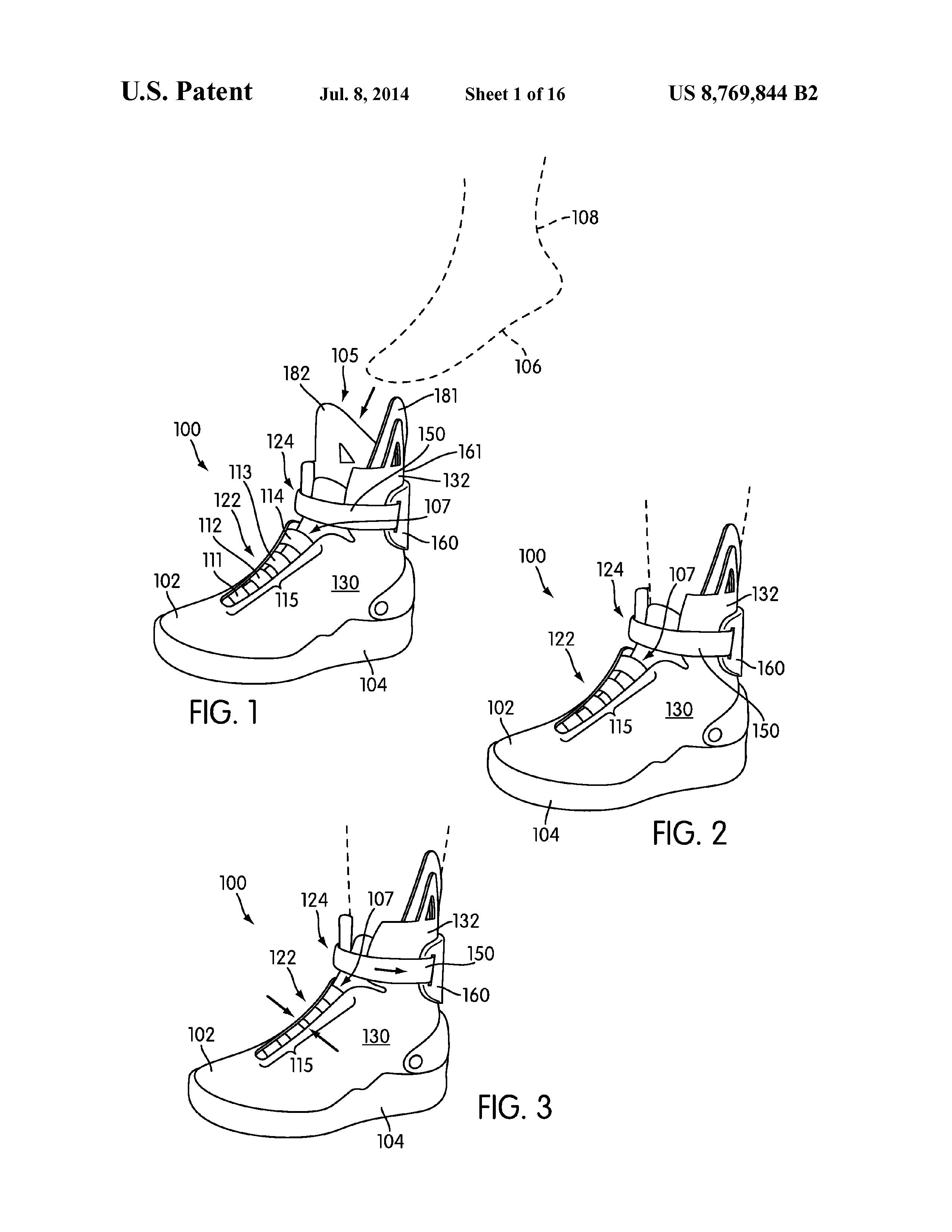
So Nike is definitely planning on delivering you Back to the Future nerds (raises hand) your precious power-lacing sneakers (yes!) at some point this year, and October 21 seems like the choice date for such a reveal. In the meantime, check out some of the Nike MAG 2015 US Patent Papers to see what the shoes will look like and how they’ll work, with additional patent images here.

Who’s buying a pair?

This entry passed through the Full-Text RSS service – if this is your content and you’re reading it on someone else’s site, please read the FAQ at fivefilters.org/content-only/faq.php#publishers.


No Image

New York Mets Beat The Cubs To Win National League Title

New York Mets' Daniel Murphy rounds first after hitting a two-run homer in the eighth inning of Game 4 of the National League championship series against the Chicago Cubs.

New York Mets’ Daniel Murphy rounds first after hitting a two-run homer in the eighth inning of Game 4 of the National League championship series against the Chicago Cubs. David J. Phillip/AP hide caption

itoggle caption David J. Phillip/AP

The New York Mets are headed to the World Series for the first time since 2000. Fired by a record-breaking home-run drive by Daniel Murphy, the Mets completed a four-game sweep of the Chicago Cubs for the National League Championship.

Wednesday’s 8-3 loss for the Cubs crushed the sell-out crowd at Chicago’s Wrigley Field.

With a two-run drive in the eighth inning, Murphy homered in his sixth consecutive game, and added a double and two singles for good measure.

The second baseman has homered in back-to-back games only once before in his six-year career, according to the Associated Press.

The Mets will face either the Toronto Blue Jays or the Kansas City Royals in the World Series. The Blue Jays beat Kansas in Game 5 of the American League series in Toronto earlier Wednesday, forcing a Game 6 in Kansas City with the Royals ahead 3-2.

This entry passed through the Full-Text RSS service – if this is your content and you’re reading it on someone else’s site, please read the FAQ at fivefilters.org/content-only/faq.php#publishers.


No Image

As Valeant's Troubles Mount, Its Stock Price Takes Another Dive

Now, that’s a lousy day in the market.

Valeant Pharmaceuticals, already under fire for its drug-pricing policies, was accused on Wednesday of creating phantom sales to falsely inflate revenues.

The allegations were made by Citron Research, a short-selling firm, in a report entitled, “Could this be the Pharmaceutical Enron?”

Short-sellers such as Citron make bets that a company’s stock will fall and they benefit when the price goes down, so their opinions can often be viewed with skepticism.

Nevertheless, the report sent Valeant’s stock, a favorite of hedge funds, plummeting by as much as 41 percent, eliminating as much as $20 billion from its market value. The stock is now down about 54 percent from its August high.

Multi-billionaire investor Bill Ackman of Pershing Square Capital Management was said to have lost as much as $2 billion on the stock, although with the price now so low, Ackman also told CNBC he is loading up on new shares.

Valeant, based in Quebec, is reportedly under investigation by federal prosecutors, who are seeking information about its pricing and distribution policies. The company has purchased the rights to sell two heart drugs, Nitopress and Isuprel, and raised their prices by 212 and 525 percent, respectively.

Such practices have been especially controversial lately after Turing Pharmaceuticals bought the right to sell Duraprim and then raised its price by 5,000 percent. After that huge increase was widely denounced as price-gouging, Turing agreed to lower the price.

Valeant’s troubles mounted Wednesday after the release of Citron’s report, which said the company used its relationship with specialty pharmaceutical companies such as Philidor to create phantom sales that made revenue look higher than it was.

Valeant issued a statement calling the report erroneous and denying any attempt to inflate revenue.

“There is no sales benefit from any inventory held at these specialty pharmacies,” Valeant said, in the statement.

Earlier this week, the New York Times reported that Valeant and other drug companies were using mail-order specialty firms to circumvent efforts by insurance companies to switch patients to cheaper, generic versions of their drugs.

This entry passed through the Full-Text RSS service – if this is your content and you’re reading it on someone else’s site, please read the FAQ at fivefilters.org/content-only/faq.php#publishers.