Articles by admin

No Image

Startup Aims To Give Classical Musicians An Online Bump

3:55

Download

For classical musicians, it’s difficult to sell their work online because of how the music is tagged on apps like Spotify. A tech startup in Nashville is trying to change that.

Transcript

ROBERT SIEGEL, HOST:

Classical musicians have had a problem in the digital age. It isn’t easy for them to put their work online. Classical makes up 2 percent of all album sales and less than half a percent of all online streaming. But the founders of a technology startup in Nashville say that they’ve hit upon a solution. As Emily Siner of member station WPLN reports, if successful, Darts Music’s concept could help artists in other genres, too.

EMILY SINER, BYLINE: The word to know in this story is metadata. That’s the information that’s attached to every digital audio file.

(SOUNDBITE OF SONG, “WE USED TO WAIT”)

WIN BUTLER: I used to write. I used to write letters. I used to sign my name.

SINER: Song name, “We Used To Wait” – artist, Arcade Fire – album, “The Suburbs.” That’s the metadata. But what about on a track like this?

(SOUNDBITE OF BEETHOVEN SONG, “SYMPHONY NO. 3 IN E-FLAT MAJOR, OPUS 55”)

SINER: It’s Beethoven’s third symphony, but the standard song name on Spotify, for example, is, technically…

CHRIS MCMURTRY: “Symphony No. 3 In E-flat Major, Opus Number 55, the Eroica.”

SINER: That’s Chris McMurtry, a classical music enthusiast who deals with stuff like this a lot. But there’s no composer field on Spotify, so you have to put Beethoven as an artist. Although, the symphony that plays it might also be an artist, or maybe the artist is the conductor.

MCMURTRY: And the things is, is in order to get into iTunes or Apple Music or Spotify, there is a specific way that they want to see that.

SINER: Itunes has a metadata style guide, and it dedicates an entire section to explaining the precise details of how to properly tag classical music. It doesn’t do that for any other genre. What this means is that independent classical musicians who want to sell their work online have a harder time of it than your typical rock band or singer-songwriter. Take Chris McMurtry. When he wrote his first chamber choir piece a few years ago, he tried to distribute it on a site called TuneCore, which lets you sell music on iTunes and Amazon.

MCMURTRY: Only to find than you could not choose classical as an option.

SINER: McMurtry then looked at some traditional classical music labels, but he didn’t like that business model.

MCMURTRY: If they accepted us, it was going to be at least 20, 35 to even 50 percent of our royalties, depending on the deal.

SINER: So he thought, a-ha – a business idea. Thus Dart Music was born. This is how it works or how it should work. It’s still in beta. You, a classical musician, upload your piece to Dart’s website.

(SOUNDBITE OF BEETHOVEN SONG, “STRING QUARTER NO. 1 IN F MAJOR, OPUS 18”)

SINER: Then the software asks you a series of simple questions, like…

MCMURTRY: What type of piece are you uploading?

SINER: You arranged a string quartet.

MCMURTRY: Oh, it’s a string quartet. Who composed this string quartet?

SINER: Ludwig, of course.

MCMURTRY: Beethoven – well, awesome. These are all the string quartets that Beethoven composed. Which one is it?

SINER: It’s like Turbo Tax for musicians.

ANDY DOE: They’re doing something that I’ve been saying somebody should do for years.

SINER: Andy Doe used to run iTunes’ classical music division. He says Dart’s trying to do what no one else does really well. It doesn’t ask you to understand the minutia of how to tag your music. Instead…

DOE: They ask you questions about the recording you want to publish and, from that, use the computer to do a lot of the heavy lifting.

SINER: He says Dart’s software is something that could help other genres, too. Think hip-hop, which also often has multiple versions and lots of contributors.

DOE: Very few people working in classical music realize that they share any distribution problems with hip-hop.

MCMURTRY: It’s awesome that we are helping classical and non-classical alike.

SINER: In fact, Chris McMurtry, the founder, says half of Dart’s clientele so far are not in classical. But he says his mission is to help classical artists. He wants to take care of them, even if bigger genres come calling. For NPR News, I’m Emily Siner in Nashville.

Copyright © 2015 NPR. All rights reserved. Visit our website terms of use and permissions pages at www.npr.org for further information.

NPR transcripts are created on a rush deadline by a contractor for NPR, and accuracy and availability may vary. This text may not be in its final form and may be updated or revised in the future. Please be aware that the authoritative record of NPR’s programming is the audio.

This entry passed through the Full-Text RSS service – if this is your content and you’re reading it on someone else’s site, please read the FAQ at fivefilters.org/content-only/faq.php#publishers.


No Image

Today in Movie Culture: Radiohead's 'SPECTRE' Theme Song, 'Star Wars' Pranks and More

Here are a bunch of little bites to satisfy your hunger for movie culture:

Alternate Theme Song of the Day:

Radiohead unveiled their unused song written for the James Bond movie SPECTRE, and you can hear it below over the movie’s actual title sequence.

[embedded content]

Jedi Prank Trick of the Day:

Magician Rahat Hossain has fun with the current Star Wars mania by pulling a prank inspired by Obi-Wan Kenobi’s death (via Geek Tyrant):

[embedded content]

Movie Mashup of the Day:

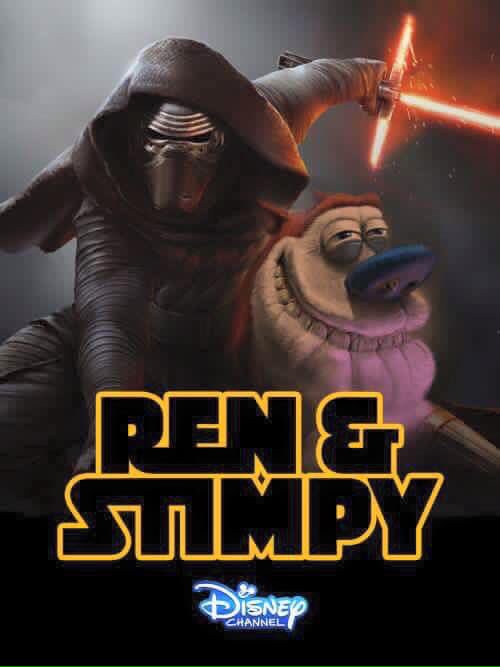
If you still haven’t seen Star Wars: The Force Awakens, spoiler: Kylo Ren is Ren the chihuahua, and here he is with his cat friend, Stimpy (via Live for Films):

Fan Theory of the Day:

Speaking of characters’ actual identities in Star Wars: The Force Awakens, here’s a look at the theory that Rey is Obi-Wan Kenobi’s granddaughter:

[embedded content]

Movie Comparison of the Day:

It’s pretty noticeable that Star Wars: The Force Awakens is similar to the original movie, but here’s a breakdown of all the evidence that they’re the same story:

[embedded content]

Vintage Film of the Day:

Today is the 120th anniversary of the first, famous public showing of the Lumiere Brothers‘ original short films, including Workers Leaving the Lumiere Factory, at the Grand Cafe in Paris. Watch one of these films, the very first comedy, The Sprinkler Sprinkled, below.

[embedded content]

Cosplay of the Day:

We hear Slimer is back for the Ghostbusters reboot. But no, this cosplaying pug is not playing the ghost in the movie (via Fashionably Geek):

Clever Short Film of the Day:

Watch a short narrative film about a drug deal in which all the dialogue is made up of movie titles — with their posters shown on screen (via Design Taxi):

[embedded content]

Movie Science of the Day:

Nerdist’s Kyle Hill explores the reality of building up an immunity to a poison, a la Wesley in The Princess Bride:

[embedded content]

Classic Trailer of the Day:

Today is the 70th anniversary of the theatrical release of Alfred Hitchcock‘s Spellbound. Watch the original trailer for the thriller starring Gregory Peck and Ingrid Bergman below.

[embedded content]

Send tips or follow us via Twitter:

and

This entry passed through the Full-Text RSS service – if this is your content and you’re reading it on someone else’s site, please read the FAQ at fivefilters.org/content-only/faq.php#publishers.


No Image

Buying A New Car Can Trim Your Carbon Footprint, But There's More To It

3:40

Download

If you drive an older, less efficient vehicle, ever think about swapping it for a new, more efficient one? It’s a good way to reduce your carbon footprint. But there are a lot of factors to consider.

Transcript

AUDIE CORNISH, HOST:

All the recent talk about curbing climate change has many wondering how they can reduce their carbon footprint. Some are switching to more environmentally friendly vehicles. NPR’s John Ydstie takes a look at what you should know if you’re thinking about getting a new car.

JOHN YDSTIE, BYLINE: I started by calling Sport Chevrolet in Silver Spring, Md., to find out what options I might have if I traded in my gas-burning car for an electric or a hybrid. They told me to come by one morning and have a look, so I did. And salesman Norm Kristall started out showing me a small electric car called a Chevy Spark.

NORM KRISTALL: Well, it’s a commuter vehicle, and we hope that most people who buy it are just driving a certain amount of miles every day. It gets up to 80 miles, so…

YDSTIE: So around 80 miles on a single charge but no auxiliary gas engine. So when the battery dies, you’re stuck. We decided to go for a ride.

KRISTALL: Kind of a very quiet start, almost like a space ship. You know, there’s no engine sound when you turn it on.

YDSTIE: Other companies also make this kind of four-seater commuter car. The Nissan leaf was one of the first. Dan Sperling, co-director of the National Center for Sustainable Transportation at the University of California, Davis, says there are a number of things you should consider before you buy an electric car. First, do you just need a car for commuting or other relatively short trips, and what fuel produces the electricity you will use to charge it?

DAN SPERLING: If you buy an electric car in an area where the electricity is made mostly from coal, your car will be the same or possibly even a little worse than a gasoline car.

YDSTIE: Ouch. To find out the source of your electrical energy, search EPA power profiler, and enter your ZIP code. If you’d like an electric car for commuting but need a car with a longer range for weekend trips, you could consider a plug-in hybrid like the Chevy Volt or the Toyota Prius Plug-in hybrid. Sperling says they typically have a 25- to 50-mile all-electric range, enough for most people’s commute. Of course, the cost of a new electric or a hybrid is also a big consideration. Sperling says these days, many are quite affordable partly because automakers are selling them below cost to try to build a market.

SPERLING: So you can actually get an electric car now for a very low price.

YDSTIE: Some are available for less than $20,000 after subtracting a $7,500 tax credit from the federal government, and many states provide tax incentives, too. There is another thing to consider in making a decision, and that’s the amount of carbon emitted in manufacturing a new car.

SPERLING: Ten to 15 percent of the total greenhouse gas emissions from that car over the life of the car would be associated with the manufacturing.

YDSTIE: So, Sperling says, you won’t get any overall reduction in your carbon footprint until you’ve driven your new, more-efficient car 10,000 to 20,000 miles. Another big consideration is how much you drive. Sperling says if you have an older car and you’re only driving a few thousand miles a year, it’s probably not worth it to upgrade to a cleaner car.

SPERLING: If, however, it’s a car that is being used quite a bit – say, 10,00 miles a year or more – there’s definitely a high payoff because now there are cars that get 50 miles per gallon compared to your 25.

YDSTIE: Of course, the best thing to do for the environment, says Sperling, is walk or bike or use mass transportation. John Ydstie, NPR News, Washington.

Copyright © 2015 NPR. All rights reserved. Visit our website terms of use and permissions pages at www.npr.org for further information.

NPR transcripts are created on a rush deadline by a contractor for NPR, and accuracy and availability may vary. This text may not be in its final form and may be updated or revised in the future. Please be aware that the authoritative record of NPR’s programming is the audio.

This entry passed through the Full-Text RSS service – if this is your content and you’re reading it on someone else’s site, please read the FAQ at fivefilters.org/content-only/faq.php#publishers.


No Image

Gene Editing Tool Hailed As A Breakthrough, And It Really Is One

Editing DNA has never been easier.
5:39

Download

Editing DNA has never been easier. Pasieka/Science Photo Library/Corbis hide caption

toggle caption Pasieka/Science Photo Library/Corbis

Every once in a while a technology comes along that completely alters the way scientists do their work.

It’s hard to imagine astronomy without a telescope or high energy physics without an accelerator.

From here on in, it’s going to be impossible to imagine biology without CRISPR-Cas9.

Simply put, CRISPR-Cas9 allows scientists to make specific changes to specific genes in living cells. Such a thing was possible in the past using technques called zinc finger nucleases and Talens. But those techniques were cumbersome and weren’t widely adopted.

In the three short years since the first scientific papers appeared about CRISPR-Cas9, the technique has been “spreading like wildfire,” says Ramesh Akkina, a molecular immunologist at Colorado State University.

And for 2015, the journal Science called CRISPR the “breakthrough of the year.”

There have been lots of ethical debates about what the new gene editing technique could do, such as creating designer babies or making mutant species. But most biologists aren’t interested in making designer babies or mutant species. They just want to understand basic things like how the cells in our bodies work, or how certain genes function. They expect CRISPR-Cas 9 to be very, very helpful with those lines of inquiry.

Recently I visited Colorado State University to give a talk, but I realized it would be a great place to assess just how far and wide CRISPR-Cas9 had spread.

First, I talked with Christopher Allen, a scientist in the environmental and radiological health sciences department who studies the genes that are important for repairing DNA inside our cells.

When that repair process goes wrong, the result can be cancer. So Allen would like to be able to compare cells side by side: one that has a gene he thinks is important in the repair process, and one that is missing that gene. To do that, he has to modify the genome of a cell, something CRISPR-Cas9 will let him do easily.

Another scientist, Carol Wilusz, studies how and when genes are expressed in stem cells. She says CRISPR-Cas9 is going to make a difference in her work, “because it’s going to enable us to do experiments that we’ve been struggling to do through other approaches.”

Now, Wilusz and Allen aren’t trying to cure diseases, at least not directly, but CRISPR might be useful for that, too.

“The work we’re doing now is to use CRISPR-Cas technology to delete HIV genome from infected cells, such that the cell can be cured completely,” says Ramesh Akkina, a virologist at Colorado State. Right now he is perfecting that trick in cells in the lab, but he is working on a scheme to do it in patients as well.

CRISPR-Cas9 isn’t just useful for working organisms in the animal kingdom. It’s useful in forests and fields.

“I study diseases of plants,” says plant geneticist Jan Leach, “and my goal is to try to make plants that are resistant to different pathogens.”

She says there are a host of genes inside plant cells that turn on when the plant tries to fight invasion from bacteria or fungi. She’d like to be able modify all of them. With CRISPR-Cas9, she can.

“I’ve been working in this particular area for over 20 years, and in 20 years I’ve been able to do one or two genes,” says Allen. “With CRISPR-Cas I’ll be able to do 20 or 30.”

In two days, I spoke with nine different researchers. I asked them all the same question. “Will CRISPR-Cas9 have an impact on your work?”

Honestly, it’s stunning to witness the impact CRISPR-Cas9 has had on biology. It ranks with the most important tools invented in the past century. I wouldn’t be surprised if it wins Science magazine’s breakthrough of the year next year too.

This entry passed through the Full-Text RSS service – if this is your content and you’re reading it on someone else’s site, please read the FAQ at fivefilters.org/content-only/faq.php#publishers.


No Image

Meadowlark Lemon, Star Of The Harlem Globetrotters, Dies

Meadowlark Lemon talks with Miami Marlins manager Don Mattingly in St. Louis on Dec. 5. The legendary Harlem Globetrotter died at his home in Scottsdale, Ariz., on Sunday. He was 83.

Meadowlark Lemon talks with Miami Marlins manager Don Mattingly in St. Louis on Dec. 5. The legendary Harlem Globetrotter died at his home in Scottsdale, Ariz., on Sunday. He was 83. Bill Greenblatt/UPI/Landov hide caption

toggle caption Bill Greenblatt/UPI/Landov

Meadowlark Lemon, a star with the Harlem Globetrotters for nearly a quarter century, died on Sunday at the age of 83. He had dreamed of playing for the Globetrotters when he was growing up in the Jim Crow South and joined the team in 1954 after serving in the Army. He went on to arguably become its preeminent player, earning the moniker “the clown prince of basketball.”

Created in the 1920s, the Globetrotters provided one of the few opportunities for African-American men who wanted to play professional basketball. Wilt Chamberlain, one of the greatest basketball players of all time, spent one year with the team before joining the NBA in 1959.

Lemon, who was known as “the clown prince of basketball,” offers a pretzel to a referee during a game at New York’s Madison Square Garden on Feb. 18, 1978. Suzanne Vlamis/AP hide caption

toggle caption Suzanne Vlamis/AP

“Meadowlark was the most sensational, awesome, incredible basketball player I’ve ever seen,” Chamberlain said in a television interview shortly before his death in 1999, according to the New York Times. “People would say it would be Dr. J or even Jordan. For me, it would be Meadowlark Lemon.”

Lemon was an elite athlete. He thrilled audiences with his long hook shots and ballhandling skills. But he and the Globetrotters emphasized their comedic side as well. Lemon would throw buckets of confetti on unsuspecting referees and fake injuries, among other gags.

Lemon left the Globetrotters in 1978 over a contract dispute and subsequently formed his own traveling teams, including Meadowlark Lemon’s Bucketeers and Meadowlark Lemon’s Harlem All-Stars. His likeness also appeared on the cartoon series Scooby Doo.

After his retirement, he became a Christian minister and along with his wife founded Meadowlark Lemon Ministries in 1994.

This entry passed through the Full-Text RSS service – if this is your content and you’re reading it on someone else’s site, please read the FAQ at fivefilters.org/content-only/faq.php#publishers.


No Image

Auto Industry Poised To Wrap Up A Blockbuster Year

3:29

Download

Amid falling gas prices and easy access to credit, auto dealers sold a record number of cars and trucks in 2015. The last few weeks of the year may be one of the best times to get a deal.

Transcript

MICHEL MARTIN, HOST:

As the year comes to a close, it looks like 2015 will be the year of the automobile. The auto industry is poised to sell a million and a half vehicles by New Year’s. That would be an all-time high. Not only is the year expected to be blockbuster, but more people are expected to buy cars and trucks in the days after Christmas than the rest of December combined. NPR’s Sonari Glinton has covered the highs and lows of the car industry, and he joins us from NPR West. Sonari, welcome.

SONARI GLINTON, BYLINE: It’s good to be with you.

MARTIN: So analysts say this is going to be the best year on record. What is leading to these high sales? Is the economy that great?

GLINTON: Well, consumers are a little stingy elsewhere in the economy, but when it comes to your car, there’s a lot of pent-up demand. So if you remember when the economy bottomed out, we sold almost half as many cars. And right now, the average car on the road is about a decade old. There’s also access to credit, so credit has loosened up. People are defaulting less on their auto loans. Interest rates are low, and there’s an expectation that they’re going to go up. And so people are sort of running to their cars to lock in low interest rates. And cars are safer and more efficient and cooler than they’ve ever been.

MARTIN: But you know, Sonari, just to kind of set the contrast here, you reported on Detroit. And I remember when we talked about the state of the auto industry some years ago. Do you remember that?

GLINTON: What’s funny is I started reporting on Detroit with GM exiting bankruptcy. So it’s been five years of my career, and I remember talking to you during the Super Bowl when this commercial came out. Remember it?

(SOUNDBITE OF CHRYSLER ADVERTISEMENT)

UNIDENTIFIED MAN: What does this city know about luxury, huh? What does a town that’s been to hell and back know about the finer things in life? Well, I’ll tell you – more than most.

GLINTON: And that was a Chrysler commercial. Now, each of the three Detroit automakers has come roaring back. And Chrysler has probably traveled the furthest distance between any of them. They are benefiting a lot from this big sales year.

MARTIN: So what are the cars that are selling?

GLINTON: Well, the reason Chrysler’s benefiting a lot is because of the truck and the compact SUV. So compact SUVs and trucks and SUVs, in general, make up 58 percent of the overall sales of cars. And so that is helping all of the Detroit carmakers.

MARTIN: Is anybody not benefiting from this buying boom?

GLINTON: Hybrids – hybrid sales have taken a hit, in part because gas prices are as low as $2 in parts of the country, and so hybrids have lost a bit of their shine. Also, regular gasoline engines have become a lot more fuel-efficient. In some ways, some of the regular gas engines are more fuel-efficient than some of the lesser hybrids, so there are really fuel-efficient gas cars out there.

MARTIN: Sonari, before we let you go, we talked about the fact that the domestic auto industry has struggled, how autoworkers were certainly pressured to give up a lot in terms of pay and benefits in the recession. What about this year? Has any of that changed?

GLINTON: Well, each of the three Detroit automakers renegotiated their contracts with the UAW. And each of the groups of workers made some gains to get back some of what they lost during the depths of the recession. So wages are going to go up for the first time for a lot of autoworkers, and their share of the profits are going to increase, as well, because of this boom year.

MARTIN: Sonari Glinton covers business for NPR and our Planet Money podcast, and he joined us from NPR West in Culver City. Sonari, thank you.

GLINTON: It’s a pleasure.

Copyright © 2015 NPR. All rights reserved. Visit our website terms of use and permissions pages at www.npr.org for further information.

NPR transcripts are created on a rush deadline by a contractor for NPR, and accuracy and availability may vary. This text may not be in its final form and may be updated or revised in the future. Please be aware that the authoritative record of NPR’s programming is the audio.

This entry passed through the Full-Text RSS service – if this is your content and you’re reading it on someone else’s site, please read the FAQ at fivefilters.org/content-only/faq.php#publishers.


No Image

Doctor Behind 'Concussion' Wanted To 'Enhance The Lives' Of Football Players

Dr. Bennet Omalu speaks on stage during the 2015 Health Hero Awards hosted by WebMD on Nov. 5 in New York City.
7:47

Download

Dr. Bennet Omalu speaks on stage during the 2015 Health Hero Awards hosted by WebMD on Nov. 5 in New York City. Bryan Bedder/Getty Images hide caption

toggle caption Bryan Bedder/Getty Images

The new Will Smith movie Concussion has put the spotlight back on the dangers of football. Smith portrays Dr. Bennet Omalu, the Nigerian immigrant who was the first to publish research on the degenerative brain disease he called chronic traumatic encephalopathy, or CTE.

Omalu, a forensic pathologist, noticed something strange in 2002 when performing an autopsy of Mike Webster, a famous former player for the Pittsburgh Steelers. In the years following his retirement, Webster suffered from mental and financial problems. He died at age 50 of a heart attack, Omalu said.

Omalu expected Webster’s brain to look like that of a boxer with dementia pugilistica, but it looked normal.

“I remember that moment very vividly. I was so downcast; totally confused. And I felt I had let down Mike Webster,” Omalu recalled.

Omalu took it upon himself to find the source of Webster’s mental problems in the years before his death. A deeply religious man, Omalu believes the spirit is alive after death, and talks with his “patients” accordingly. “I said to him, ‘Mike I will get to the bottom of this, I think there is something wrong with you.'”

Omalu ordered special tests, and even took the brain home for six months to investigate. When looking through stained slides, he told GQ he discovered accumulations of tau proteins, which are associated with diseases like Alzheimer’s.

He searched the scientific literature for similar cases involving football players, but found nothing. This was a new disease, and needed a new name. Omalu settled on chronic traumatic encephalopathy. “Chronic means long term,” Omalu says. “Traumatic means associated with trauma. Encephalopathy means a bad brain.”

The goal, Omalu said, was to “brand” the term CTE — not to sell anything, but to create awareness. “It was more likely to be impactful,” he said. “If I had just published it as a case report without a name in a scientific journal, it would have just fizzled, and become swallowed up by the body of existing literature.”

He found that repetitive impact to the head, like the players take in football, causes microscopic injuries in the brain. Hundreds of these blows over time cause permanent brain damage.

“Sometimes it may take weeks, months, years, decades, sometimes up to 40 years later … and you will now begin to manifest with symptoms like mood disorders, major depression, suicidal attempts, suicides, loss of intelligence … you begin to lose your learned behavior,” Omalu said.

Dr. Bennett Omalu and Will Smith attend a screening of Concussion in Westwood, Calif., on Nov. 23.

Dr. Bennett Omalu and Will Smith attend a screening of Concussion in Westwood, Calif., on Nov. 23. Valerie Macon/AFP/Getty Images hide caption

toggle caption Valerie Macon/AFP/Getty Images

Omalu’s research on CTE had an impact, but not the one he expected. When the NFL responded aggressively, he was genuinely surprised. He thought professional football would welcome his research as a way to “enhance the lives and safety and health of the players,” Omalu said.

“The NFL made a very calculated attempt, very mean attempt to decapitate me professionally,” he said. “They sent a very, very strong letter accusing me of fraud. Accusing me of practicing something that was not science, insinuating I was a voodoo doctor. Calling me all types of names.”

Still, Omalu said he never considered retracting his research.

“I had met the families of the sufferers of this disease. They were suffering in silence, they were suffering in obscurity. And it offended my sense of America. … I used my knowledge and education … to become the voice for the voiceless. To make a difference and enhance the lives of these players.”

Omalu said he’s happy with the way Concussion tells his story. He said he was involved in the whole process of production and wanted to ensure it was historically accurate.

And how about Will Smith playing him on the big screen?

“I think Will Smith did a phenomenal job. Will Smith’s acting reaffirms my belief in the American perfection,” Omalu said.

This entry passed through the Full-Text RSS service – if this is your content and you’re reading it on someone else’s site, please read the FAQ at fivefilters.org/content-only/faq.php#publishers.


No Image

States Deny Pricey Hepatitis C Drugs To Most Medicaid Patients

A 12-week regimen of Harvoni is 90 percent effective in curing an infection with hepatitis C, doctors say. It also costs about $95,000.
3:57

Download

A 12-week regimen of Harvoni is 90 percent effective in curing an infection with hepatitis C, doctors say. It also costs about $95,000. Baltimore Sun/TNS via Getty Images hide caption

toggle caption Baltimore Sun/TNS via Getty Images

Sarah Jackson had quit abusing drugs and had been sober for six months when she found out she had hepatitis C.

“That was weeks of not sleeping and just constant tears,” she says. “I had already put a lot of that behind me and had been moving forward with my life and this was just a major setback.”

To get rid of the infection, her doctor prescribed Harvoni, one of the new generation of highly effective hepatitis C drugs. But Jackson never started the treatment because her insurance, Indiana’s Medicaid, refused to pay for it.

“There’s nowhere else to go,” says Jackson. “The doctor tried and now I have no other place to turn.”

More than 3 million people in United States are infected with hepatitis C, a virus that can destroy the liver and cause liver cancer. The number of cases is increasing, and most new cases are attributed to injection drug abuse, according to the Centers for Disease Control and Prevention.

In the last few years, new medications have come on the market that can cure hepatitis C with a more than 90 percent success rate. But these new drugs are famously expensive. A full 12-week course of Harvoni costs about $95,000. Because of that, Medicaid in many states restricts who receives the medication.

Medicaid in at least 34 states doesn’t pay for treatment unless a patient already has liver damage, according to a report released in August. There are exceptions—for example, people who also have HIV or who have had liver transplants—but many living with chronic hepatitis C infection have to wait and worry.

“It is just not feasible to provide it to everyone,” says Matt Salo, director of the National Association of Medicaid Directors. “States have to make sure that we’re going to prioritize and that those who need it the most get priority treatment, and that’s what you’re seeing.”

States get a discount on the drugs, but Salo says even if they could cut prices in half, treating everyone with hepatitis C would still cost too much for states’ limited Medicaid budgets.

Officials in Washington state, for instance, estimate that at full price, treating everyone on Medicaid for hepatitis C would cost three times the state’s total pharmacy budget.

States are caught between the high prices and those who say that rationing care is illegal.

“If something is medically necessary, it’s medically necessary and must be covered by the Medicaid program,” says Gavin Rose, an attorney for the ACLU of Indiana.

Rose is representing Sarah Jackson in a class action lawsuit to fight the Indiana restrictions. He argues in the lawsuit that if a doctor says you need a drug, Medicaid must pay for it. The lawsuit cites a recent letter from the Centers for Medicare and Medicaid Services reminding states of the law.

Furthermore, Rose argues, treating hepatitis C early would keep the virus from spreading and actually save money in the long run. “We are talking about drugs that might prevent Medicaid from having to deal sometime in the future with treatment for liver cancer, with treatment for liver transplants,” he says.

There seems to be consensus that the new drugs for hepatitis C are too expensive. Even the U.S. Senate has criticized the pricing in a report released earlier this month. States spent $1 billion last year on Sovaldi, another commonly prescribed hepatitis C drug. A new treatment is set to come to market next year, and that competition may help bring prices down.

In the meantime Sarah Jackson will wait for her lawsuit to get resolved. “This is weighing over me every day. I have to worry about it all the time,” she says.

Despite the anxiety, she’s willing to go through it to help others like her who want to be cured.

This story is part of a reporting partnership with NPR, local member stations and Kaiser Health News.

This entry passed through the Full-Text RSS service – if this is your content and you’re reading it on someone else’s site, please read the FAQ at fivefilters.org/content-only/faq.php#publishers.


No Image

Barbershop: Political Dust-ups And Advocacy In The NBA

10:17

Download

In the Barbershop, blogger Dru Ealons, Washington Post reporter Wesley Lowery and NPR editor Ammad Omar discuss controversies involving Donald Trump and Ted Cruz, and a new set of ads from the NBA.

Transcript

MICHEL MARTIN, HOST:

And now it’s time for our trip to the Barbershop – that’s our weekly conversation about what’s in the news and whatever else is on our minds. Sitting in the chairs for a shapeup this week are Dru Ealons, a political blogger, former Obama appointee at the Environmental Protection Agency. Hi, Dru.

DRU EALONS: Hey there.

MARTIN: NPR’s own Morning Edition editor Ammad Omar. Hi, Ammad.

AMMAD OMAR, BYLINE: Hey, how are you?

MARTIN: And Wesley Lowery, reporter for The Washington Post. Hi, Wesley.

WESLEY LOWERY: Hello.

MARTIN: Thanks for coming in, happy holidays to everybody. I hope…

LOWERY: Merry Christmas.

MARTIN: …Everybody had a pleasant day, whether you observe the holiday or not. But we see that not everyone is feeling the love and joy of the season. For example, Donald Trump has not taken time off from slinging the rhetoric. Hillary Clinton was the target on Monday of this week – what a surprise. Trump used what I think a lot of people heard as a Yiddish slur, saying that she got schlonged in the 2008 Democratic primaries. You know, Ammad, I just have to ask, as a person who sort of sees all of the traffic around these stories when they come in, is it even worth asking anymore whether he’s crossed the line?

OMAR: It’s funny because, you know, if you go back to the earlier parts of this campaign, we heard his comments about Mexican immigrants; we heard his comments about Megyn Kelly, the Fox News anchor – he said there was blood coming out of her you-know-where, something along those lines. At all of these moments, people were saying that he must have gone too far now. This has got to be it for Donald Trump because we’re not used to hearing candidates use that sort of language I guess. But this one, it just seems like – it’s like oh, he said something again. I think the surprise if he were to stop using this kind of language because now it’s par for the course for him. And he’s doing great in the polls, so it seems like maybe it’s working.

MARTIN: Dru, what about his comment about – Hillary Clinton – he had a lot to say about her this week. He said that her – remember, Saturday night was the last Democratic debate of the year. And there was a point at which the cameras came back to the stage and Hillary Clinton was not yet back from what we assume was a stop. And, you know, he said it was too disgusting to talk about. I’m just wondering how do you hear that as a person who’s kind of done campaigns, been involved and sort of knows what it’s all like to be involved. And she was the only woman on the stage, of course. How do you hear that?

EALONS: What I – what – you know, I guess from the political perspective of what I hear is he’s just playing right into her game. Like, he – she wants the conversation between him and her to be around the sexism that he automatically already puts out. But now he has focused it towards her, so it gives her something that she can actually poke at and peel back at and that – honestly, I feel like he fell into her own trap. So now he has all week, unlike how he has before been a little bit more apologetic. He’s been more apologetic this time than he really has the last time, or he’s been explaining himself more than he has beforehand, usually as a matter fact. So yeah, it was stupid on his part. But…

MARTIN: Interesting…

EALONS: …He fell into her playbook.

MARTIN: That’s interesting. Wesley, what do you think? This is funny because you’re big into social media, too, and you sort of follow this stuff. What do you think about it?

LOWERY: Well, of course, I mean, it’s never surprising when Donald Trump does one of these things. You know, every single – tomorrow, we’ll be talking about something completely new that he’s said and done. It’ll be the new worst thing he’s said or the new, you know, most hyperbolic thing he’s said. But again, you know, I think that that was right. It does really play into kind of where Hillary Clinton wants the conversation to be, but it also doubles down on what Donald Trump supporters want to hear. You know, people who like Donald Trump like these things. They like this kind of hyperbolic celebrity, not afraid to say whatever’s on his mind no matter who knows what that is. And so it’s interesting to see how that cuts both ways.

MARTIN: Interesting. You know, there’s another interesting dustup I wanted to talk about this week, and that’s between Ted Cruz and The Washington Post. It started with this holiday-themed campaign ad featuring his family. And it’s supposed to be a spoof infomercial of Cruz reading re-imagined classic Christmas stories but with a snarky political twist. I’ll just play a little bit of that.

(SOUNDBITE OF POLITICAL AD)

UNIDENTIFIED MAN: The whole family will enjoy reading stories like “The Grinch Who Lost Her Emails.”

UNIDENTIFIED CHILD #1: I know just what I’ll do, she said with a snicker. I’ll use my own server and no one will be the wiser.

UNIDENTIFIED MAN: And if you act now, we’ll throw in the inspiring new Christmas story soon to be an instant classic

UNIDENTIFIED CHILD #2: Please read this when daddy.

TED CRUZ: OK.

UNIDENTIFIED MAN: “The Senator Who Saved Christmas.”

MARTIN: So then there was this political cartoon mocking the ad. It shows Sen. Cruz in a Santa outfit with a grinder and two monkeys on leashes – presumably, the monkeys representing the two little girls. So this was not appreciated by the Trump campaign. The Post then pulled the cartoon. So Wesley, you work for The Post.

LOWERY: I do.

MARTIN: I don’t want to put you on the spot, but I kind of do. So, I don’t…

LOWERY: The Washington Post is right always – period.

MARTIN: Well, exactly…

LOWERY: Are the bosses listening?

MARTIN: But, you know, The Post featured the famous political cartoonist Herblock for decades, and he made a lot of people angry but particularly political leaders. I don’t remember them ever pulling a cartoon.

LOWERY: Well, you know, the conventional wisdom or the rule of thumb is always that, you know, you keep children out of it. No matter who the politician is, you don’t go after the children. Now, that rule is always broken. We’ve seen – whether it be the Palin children or George W. Bush’s children or even Michelle and Barack Obama’s children be attacked previously. But I think that – and so it feels as if, you know, this may have been over the line because it invoked his children. That said, when you – you know, Ted Cruz is one of the smartest people in the campaign. You know, a very book smart – a debater, Ivy League-educated. You know that when you involve your children in something like a political ad, you’re potentially drawing fire to them so that you can then take the high ground of saying don’t attack my kids and raise money off of it, which he did.

MARTIN: He is raising money. But you talked to the Cruz campaign, Ammad. What did they say?

OMAR: Right, so we were talking before about how the Hillary Clinton bit – the Donald Trump bit played into Hillary Clinton’s hands – throughout this campaign, Ted Cruz has been kind of playing this – this theme about how the mainstream media is attacking him and the liberal media is out to get him. And they’ve been pounding this over and over and over again. And like Wesley mentioned, they immediately turned around and launched a fundraising appeal off of this…

MARTIN: Saying what?

OMAR: Saying that – again, look at the liberal media…

MARTIN: They’re trying to get me, so you need to help me to…

OMAR: Exactly.

MARTIN: …Defend myself.

OMAR: And so I asked the campaign if they’ve been getting more money from that. They didn’t really want to go into specifics about whether or not the fundraising is showing any immediate impact, but they went into it. They said look, this is just another example of how the mainstream media is out to get us. And they’re saying they’re using this – they’re very open – they’re saying they’re using this as a way to energize their supporters and keep playing this theme that they’ve been hitting over and over again. And I really – I think it played into their hands perfectly.

MARTIN: Dru, what do you have to say about this? As a mom and also as a person who saw how there are some just vicious things said about the Obama girls in – on the other hand, people say well, you know, it’s one thing for a politician to use – your people – just a picture of your kids and say look at my beautiful family; I’m a good person. And to actually put them in a political ad in a very particular way – I don’t know, where…

EALONS: Right.

MARTIN: …Do you come out on this?

EALONS: Exactly. I think one – the way that I look at it is he opened the door. Now, we can debate on whether The Washington Post should have walked through that door and actually put that picture – but the actual ad really depicted that whole sentiment of just bringing your children into a conversation around a particular person and taking that story and having them being a part of the politics versus saying oh, here’s my beautiful family…

MARTIN: OK, but the monkey thing – that’s exactly the kind of thing that has…

EALONS: Right.

MARTIN: …Really infuriated Obama supporters over the years…

EALONS: Oh, yes.

MARTIN: …Is depicting him as a monkey and so forth.

EALONS: Oh, no, no.

MARTIN: So just on that basis, they’re not the same ethnic group. And so, of course, there are particular issues around, you know, depicting African-Americans in a certain subhuman light, which is infuriating. But given that…

EALONS: Oh, yeah, I – again – if I was the mother, of course I’d be very upset. And as a mother, I would not want my child, an African-American son, depicted as a monkey. I think that was inappropriate on The Washington Post’s part. But I also say when you bring your children into the debate – not about just showing your family but having them talking about the Grinch who used emails or tried to get away – I mean, they have them in what I call the messiness of politics versus just saying here, as a prop, my beautiful family and wouldn’t you want to see them in the White House?

MARTIN: I see, so you think they stirred – OK.

EALONS: They opened the door. We shouldn’t have walked through it as the media, but they opened the door.

MARTIN: OK. Well, speaking of TV commercials, one more commercial. Another one making headlines this week is from the NBA with basketball stars Steph Curry, Carmelo Anthony and Chris Paul speaking out about gun violence along with the families of some victims. And, you know, Ammad, just is this something new? I mean, it seems as though the league is getting involved or at least embracing something that is a polarizing political issue. Does that seem like a new thing to you, the way – yeah.

OMAR: It’s interesting because it does seem like a new thing. And I chatted with some folks over at the NBA just today asking them about this. And they were very careful about how they’re kind of framing this. They’re saying this is nothing new. We have been doing community outreach for a long time. And they made it very clear – they’re very precise about – and careful about their language. They were saying we’re not advocating for any new gun laws. We’re not calling for gun control. We just want to stop gun violence and make safer communities. And who can be against that? Everyone’s for that, so they’re trying to make this a non-controversial thing. But obviously, that’s a very fine line to walk.

MARTIN: Wesley, you get the last word on this.

LOWERY: Of course, I mean, I thought it was really interesting. I mean, I thought it was really interesting. Now, it’s not the first time. You know, we’ve seen after Sandy Hook, there were some similar PSAs involving a lot of celebrities, including some NBA players. But one thing that’s really fastening is the NBA players tend to be the most outspoken about social issues, whether it was LeBron James wearing the I Can’t Breathe shirts after the Eric Garner – it seems to be – they are some of the athletes who are the most human. And for me, as a basketball fan, as an NBA fan, it’s very attractive to me to see them engaging, no matter what side of some of these issues you’re on.

MARTIN: All right, we have to leave it there for now. That’s Wesley Lowery of The Washington Post, Ammad Omar from NPR’s Morning Edition and blogger Dru Ealons. Thank you all so much for joining us.

OMAR: Thank you.

EALONS: Thank you.

LOWERY: Merry Christmas, happy New Year.

Copyright © 2015 NPR. All rights reserved. Visit our website terms of use and permissions pages at www.npr.org for further information.

NPR transcripts are created on a rush deadline by a contractor for NPR, and accuracy and availability may vary. This text may not be in its final form and may be updated or revised in the future. Please be aware that the authoritative record of NPR’s programming is the audio.

This entry passed through the Full-Text RSS service – if this is your content and you’re reading it on someone else’s site, please read the FAQ at fivefilters.org/content-only/faq.php#publishers.


No Image

The Good, the Bad, the Bogus: Christmas Day Movie Releases

The turkey consumed, the carols sung, and the crumpled remnants of a hundred wrapped gifts strewn across the floor… and you still have 12 hours left of your Christmas Day. What do you do? For many people, the answer is simple: head to the movies. A slew of films have enjoyed a Christmas Day release over the decades, some great, others not worth writing a festive card home about. Here’s a breakdown of some of the movies released on December 25 that would find their way onto the naughty, the nice, and the bogus lists respectively.

This entry passed through the Full-Text RSS service – if this is your content and you’re reading it on someone else’s site, please read the FAQ at fivefilters.org/content-only/faq.php#publishers.