Articles by admin

No Image

Songs We Love: Tokyo Black Star, 'Mitokomon'

Tokyo Black Star.

Mitokomon

8:32

  • Playlist
  • Embed
    <iframe src="https://www.npr.org/player/embed/460948435/460948805" width="100%" height="290" frameborder="0" scrolling="no" title="NPR embedded audio player">
  • Purchase

Tokyo Black Star. Courtesy of the artist hide caption

toggle caption Courtesy of the artist

Edo Express EP (World Famous)

Courtesy of the artist

Though he possesses an unquestioned pedigree in straight-ahead house and techno circles, Alex Prat (a.k.a. Alex From Tokyo, co-founder of Tokyo Black Star) is a musical nomad who looks to reveal his wandering spirit at every turn. That’s the vibe at the heart of “Mitokomon,” the globally curious opening track from the Edo Express EP, the group’s first new release in years. Prat recorded it with his Tokyo Black Star partner, engineer Isao Kumano, and modular-synthesizer operator Kenichi Takagi; together, they explore the sounds and rhythms of far-off lands at a studio in the heart of Japan’s capital.

“Mitokomon” centers on the analog synth and rudimentary drum-machine textures of 1970s West African musicians (and budding technologists) such as Francis Bebey and William Onyeabor, whose recently rescued sounds once pointed to the future and now paint a nostalgic, acoustically warm picture of globalization. Amid the twin layers of polyrhythmic percussion, as well as keyboards and a guitar that root the track in a quasi-reggae skank, lies an elongated, repeating synthesizer line of ambient panoramic beauty. Transpose that line to outlier orchestral timbres, then play it behind 70mm scenes of a rider in the desert, and you could mistake this music for a classic Ennio Morricone “Spaghetti Western” score (another era’s global-culture mashup). When all the melodic elements finally drop off, what’s left sounds uncannily like the skeletal beat to Strafe’s 1984 electro classic “Set It Off,” at which point Prat’s original pedigree comes into focus once again.

Edo Express EP is out now on World Famous.

This entry passed through the Full-Text RSS service – if this is your content and you’re reading it on someone else’s site, please read the FAQ at fivefilters.org/content-only/faq.php#publishers.


No Image

Obamacare Insurers Sweeten Plans With Free Doctor Visits

If your insurer waived the fee to see your primary care doctor, would you go more often?

If your insurer waived the fee to see your primary care doctor, would you go more often? Getty Images/Hero Images hide caption

toggle caption Getty Images/Hero Images

Health insurers in several big cities will take some pain out of doctor visits in 2016. The plans will offer free visits to primary care doctors in their networks.

You read that right. Doctor visits without copays. Or coinsurance. And no expensive deductible to pay off first either.

In Atlanta, Chicago, Dallas, Miami and more than a dozen other markets, people seeking coverage through the insurance exchanges can choose health plans providing free doctor visits, a benefit once considered unthinkable.

The change is rolling out in a limited number of plans following reports that high copays and deductibles have discouraged many Americans who signed up for private coverage the past two years from using their new insurance under the Affordable Care Act.

Insurers say they hope encouraging visits to doctors will benefit members and their bottom lines by catching illnesses early before they become harder and more expensive to treat. For example, prescribing antibiotics promptly to a patient with pneumonia could avoid a lengthy hospitalization costing tens of thousands of dollars.

In addition, the policy could also cut down on the use of more expensive urgent care centers and emergency rooms for cases that aren’t critical.

In most states, Dec. 15 was the deadline for coverage starting Jan. 1, though people have until Jan. 31 to enroll for 2016.

Two new health insurers, Harken Health, an independently operated affiliate of UnitedHealthcare, and Zoom+ are offering unlimited free primary care visits at company-owned clinics. Harken operates in Chicago and Atlanta. Zoom+ is based in Portland, Ore.

Down south, Florida Blue, the state’s largest insurer, has health plans in Miami-Dade and nine other counties where low-income members buying plans can also get two free primary care visits per year.

California-based Molina Healthcare, is offering not only free primary care visits in some plans, but also free visits to specialists in Florida, Texas and five other states.

The no-fee visits go beyond the preventive services, such as immunizations and screenings, that all insurers must provide under Obamacare without charging a copay, even when a deductible hasn’t been met.

Health policy experts say the new approach sets the insurers apart in crowded insurance markets and may attract younger, healthier people who don’t have relationships with doctors.

“This is a great development … and shows how the market is trying to innovate,” said Katherine Hempstead, director of coverage for the Robert Wood Johnson Foundation.

“Consumers should find this very appealing. … It might be like ‘a spoonful of sugar helps the medicine go down,’ ” she said, quoting a line from the Mary Poppins song. “People are not going to grouse as much about cost sharing later if they are getting something free first.”

Consumer advocates applaud the trend, which they say underscores why people need to look beyond the monthly premium when shopping for a plan. “It’s a smart move to reduce financial barriers to basic outpatient care to help patients manage their health,” said Lydia Mitts, a senior policy analyst at Families USA. “I hope other health plans will realize removing financial barriers to primary care doctors is a smart direction for patients and for the plans.”

The health plans offering free doctor visits are typically among the lowest-priced plans in many markets, according to a Kaiser Health News review of plans sold on the exchanges.

Some insurers can offer free visits because they operate health clinics staffed by salaried physicians. That’s the case at Harken Health, which has four primary care clinics in Chicago and six in Atlanta for its members to use for unlimited visits. Harken also offers members access to a doctor by telephone and Internet. “We are creating unfettered access between the care team and the patients,” said Tom Vanderheyden, CEO of Harken Health. “We think it’s a significant differentiation.” Harken also offers free yoga and cooking classes.

Patients with easy access to Harken’s clinics should be able to avoid trips to urgent care centers, retail clinics and emergency rooms, and develop a deeper relationship with their primary care doctor, Vanderheyden said. “Better access … should mean better outcomes and happier people.”

Dave Sanders, CEO of Zoom+ and a physician, said offering free doctor visits at its modern clinics, should help attract young enrollees. “We are unabashedly focused on the millennial generation,” he said.

To that end, Zoom+ lets members make appointments using a smartphone app. The company’s doctors emphasize changing diets before prescribing drugs.

Dr. Craig McDougall of ZOOM+ talks about food as medicine with a patient visiting one of the insurer's clinics in Portland, Ore.

Dr. Craig McDougall of ZOOM+ talks about food as medicine with a patient visiting one of the insurer’s clinics in Portland, Ore. Courtesy of Zoom hide caption

toggle caption Courtesy of Zoom

Zoom+ has run clinics in the Portland area for the past year, but it has never offered an insurance plan before. Members can get free care at the clinics or Zoom’s freestanding emergency room.

Under the health law, marketplace plans must cover a certain percentage of a member’s health costs with the amount varying based on gold, silver or bronze tiers. “What we have done is to spend the resources on primary care,” Sanders said.

Zoom+ also offers free mental health visits and one free dental visit for a cleaning.

Florida Blue, the state’s Blue Cross and Blue Shield plan, developed a new product for 2016 called myBlue which offers two free primary care doctor visits and then charges $1 a visit thereafter, $3 visits for specialists, free routine lab tests and free diabetic supplies. The myBlue plan was created to help people whose incomes qualify for the highest cost-sharing subsidies under the Affordable Care Act.

To offer such benefits, Florida Blue developed a smaller network of doctors, hospitals and pharmacies so it could better control costs. But to encourage enrollment in Miami-Dade County it recently partnered with three CliniSanitas medical clinics, which primarily serve the Hispanic audience in the area. The plan is also available across South Florida, and counties around Tampa and Orlando.

Jon Urbanek, a senior vice president for Florida Blue, said the new plan is intended to increase the insurer’s market share. He said participating providers in the myBlue products are not necessarily paid less than other doctors but their pay is more closely tied to reaching certain quality targets such as cancer and cholesterol screenings. In 6 of 10 counties where it’s available, the myBlue product offers the lowest premium. “We think our pricing positions us to do very well,” Urbanek said.

Molina Healthcare is offering zero copays for unlimited primary care doctor visits for one of its silver-tier plans for 2016. Unlike Florida Blue, it says it offers free doctor visits in its plans without using a narrow network of doctors and hospitals. “We really want folks to get value from their premium dollar and not have any barriers for care,” said Lisa Rubino, senior vice president at Molina.

Molina offers the zero copay doctor plans in Florida, Michigan, New Mexico, Ohio, Texas, Utah and Wisconsin.

This story was produced through collaboration between NPR and Kaiser Health News, an editorially independent program of the Henry J. Kaiser Family Foundation, a nonpartisan health care policy research organization. Neither the foundation nor the news service is affiliated with Kaiser Permanente.

This entry passed through the Full-Text RSS service – if this is your content and you’re reading it on someone else’s site, please read the FAQ at fivefilters.org/content-only/faq.php#publishers.


No Image

Today in Movie Culture: Lego Trailer for 'Captain America: Civil War,' Cate Blanchett in 'Thor: Ragnarok' and More

Here are a bunch of little bites to satisfy your hunger for movie culture:

Movie Trailer Remake of the Day:

Here’s the obligatory version of the Captain America: Civil War trailer redone with Lego (via Geek Tyrant):

[embedded content]

Alternate Movie Trailer of the Day:

This modern style trailer for The Empire Strikes Back makes the best Star Wars movie look even better than it actually is (via Devour):

[embedded content]

Brain Teaser of the Day:

Pandas are no longer just hiding out amongst snowmen. See if you can find the one hidden in this drawing of Stormtroopers (via Mental Floss):

Fan Art of the Day:

Comic artist Stephen Byrne has been producing some great fan artwork for Star Wars: The Force Awakens, including this lightsaber trio (via Joanna Robinson):

Cosplay of the Day:

Sometimes we’re not really sure how these mashup cosplay ideas come about. Introducing Bobahontas (via Fashionably Geek):

Classic Cartoon of the Day:

Today is the 65th anniversary of the classic animated short Two’s a Crowd. Watch the Chuck Jones-helmed Merrie Melodies cartoon below in full.

Casting Depiction of the Day:

Cate Blanchett is reportedly going to be in Thor: Ragnarok, possibly as Hela: Goddess of Death. So, artist Xteve Abanto created some images of the actress in the role opposite the title superhero. See one more at Geek Tyrant.

Supercut of the Day:

The movies are great for creating whole new worlds, whether they exist in another galaxy or here on Earth. Watch a tribute to some of these worlds (via Cinematic Montage Creators):

[embedded content]

Alternate Movie Poster of the Day:

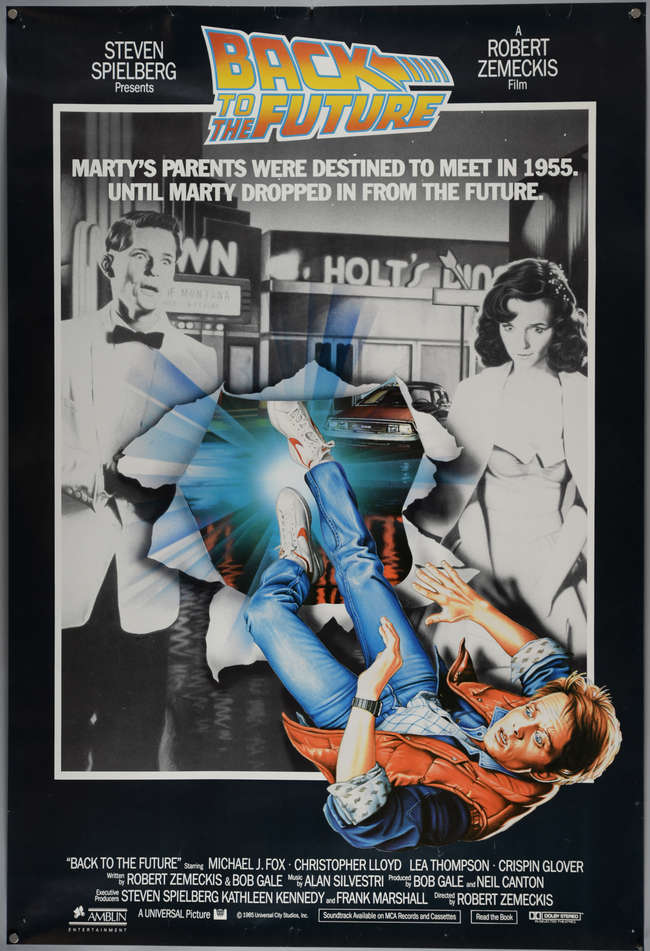
This is an unused poster idea for Back to the Future, and there may never have been a more literal illustration of a tagline (via Keith Calder):

Classic Trailer of the Day:

Today is the 90th anniversary of the theatrical release of Ben-Hur: A Tale of the Christ. Watch the rare vintage trailer for the classic silent film below.

[embedded content]

Send tips or follow us via Twitter:

and

This entry passed through the Full-Text RSS service – if this is your content and you’re reading it on someone else’s site, please read the FAQ at fivefilters.org/content-only/faq.php#publishers.


No Image

Puerto Rico Says It Will Miss $37 Million In Bond Payments This Week

Puerto Rico's governor, Alejandro Javier Garcia Padilla, shown here in an appearance in Washington this month, has been urging Congress to allow the commonwealth to seek bankruptcy protection.

Puerto Rico’s governor, Alejandro Javier Garcia Padilla, shown here in an appearance in Washington this month, has been urging Congress to allow the commonwealth to seek bankruptcy protection. Sait Serkan Gurbuz/AP hide caption

toggle caption Sait Serkan Gurbuz/AP

Puerto Rico will default on bond payments worth about $37 million on Jan. 1, as it struggles to contend with a mountain of debt worth $72 billion, government officials said today.

Still, the commonwealth will be able to pay off most of the $328 million it owes on its general obligation debt — but that’s only by clawing back some of the money from other government sources, Gov. Alejandro Garcia Padilla noted.

Melba Acosta Febo, president of the Government Development Bank, said the commonwealth had used more than $100 million in reserve funds to make debt service payments, which “should underscore that the Commonwealth is running out of options to pay its debt.”

In a statement, she said it was “unfortunate” that Congress had failed to give Puerto Rico the broad authority it needs to restructure its debts:

“No amount of lobbying can change the math or the facts—there isn’t enough money to provide essential services to the people of Puerto Rico, repay our existing obligations and grow our economy, which is the only way the Commonwealth will ever be able to repay our creditors.”

The payments that Puerto Rico will default on include debt issued by the Infrastructure Financing Authority, as well as $1.4 million on Public Finance Corp. bonds.

Puerto Rico has been reeling from the effects of a long recession and a declining population. Officials have repeatedly warned that they will default on their debts rather than deny essential services to island residents. Daniel Hanson of Height Securities told Bloomberg News that the default announced Wednesday was “remarkably mild,” considering “the commonwealth’s repeated claims about its inability to pay debt.”

This entry passed through the Full-Text RSS service – if this is your content and you’re reading it on someone else’s site, please read the FAQ at fivefilters.org/content-only/faq.php#publishers.


No Image

ESPN Invites FIFA Presidential Candidates To Debate On Live TV

The election for the next FIFA president will be Feb. 26, 2016.

The election for the next FIFA president will be Feb. 26, 2016. Michael Probst/AP hide caption

toggle caption Michael Probst/AP

Sports network giant ESPN has invited the candidates for president of FIFA, soccer’s world governing body, to debate on live TV.

A spokesman for the network confirmed the invitation to Reuters yesterday: “ESPN has invited all five candidates vying for the FIFA presidency to participate in a debate.”

According to Sportingintelligence, ESPN proposed that the debate take place on Jan. 29 in London. FIFA is scheduled to hold its presidential election on Feb. 26. The five candidates are Gianni Infantino of Switzerland, Prince Ali bin Hussein of Jordan, Sheikh Salman Bin Ibrahim Al-Khalifa of Bahrain, Jerome Champagne of France, and Tokyo Sexwale of South Africa.

The five are vying to replace disgraced longtime former FIFA chief Sepp Blatter of Switzerland, who presided over the organization from 1998 until his suspension in October. Then earlier this month, he was slapped with an eight-year ban for bribery. With Blatter’s former right-hand man and supposed successor, Michele Platini, also banned for eight years, the race appears wide open.

Champagne and Hussein confirmed to Sportingintelligence that they are considering the invitation.

It could be a busy week for them. The site says they are among three of the five candidates appearing Jan. 27 at a debate organized by New FIFA Now, a reform group, and a fourth is expected to attend.

The site adds that the idea for a live TV debate has some history. Efforts to organize one before last year’s election in May attracted interest from three candidates but failed “when Blatter refused to take part.”

This entry passed through the Full-Text RSS service – if this is your content and you’re reading it on someone else’s site, please read the FAQ at fivefilters.org/content-only/faq.php#publishers.


No Image

With No Museum, Thousands Of Mexican Instruments Pile Into This Apartment

Guillermo Contreras strums the five-string guitarra de golpe.
5:11

Download

Guillermo Contreras strums the five-string guitarra de golpe. Courtesy of Betto Arcos hide caption

toggle caption Courtesy of Betto Arcos

There’s a place in Mexico City that’s filled with thousands of musical instruments from all over Latin America — some of them more than 100 years old. It’s not a museum or music school. It’s an apartment. Actually, the collection’s grown so much, it now fills two apartments. It’s the result of a lifelong passion for the instruments and their history, as well as a determination to share them.

Guillermo Contreras is a brawny 63-year-old with gray hair and a beard, wearing blue jeans and a black dress shirt, but when he opens the door, you barely notice him. There are instruments everywhere. It’s more than any museum collection I’ve ever seen.

“No, I’ve filled one museum with 300 pieces,” Contreras says. “I can tell you, there are more than 4,000 instruments here.”

He’s got Jaranas, vihuelas, guitarrones, bajo quintos — all Mexican offspring of the Spanish guitar, which was brought here during the colonial period. There are also violins and harps of every size, marimbas, dozens of percussion instruments, and wind instruments of every shape, length and sound.

He pulls out a reed flute and says it was played by the Aztecs. The instrument is still played in a region of northeastern Mexico.

Contreras was an architect by profession when he traveled to a small town south of Mexico City in the late 1960s. He met a group of old musicians, some born in the late 1800s, who were playing instruments from that period.?

“They thought it was amusing that a guy from the city would visit them and have so much interest in their music, which was sort of dying,” Contreras says. “Many of them wanted to give me their 10-string guitars, and I couldn’t take that away from the family.”

Jaranas, psalteries and other instruments in Guillermo Contreras' apartment.

Jaranas, psalteries and other instruments in Guillermo Contreras’ apartment. Courtesy of Betto Arcos hide caption

toggle caption Courtesy of Betto Arcos

A few months later, he went back and found that some of the musicians had died. He asked their families about the centuries-old instruments — and says he was stunned by what he heard.

“An instrument from the 19th century, already destroyed, had been turned into a chicken feeder; another one became a little kid’s wooden horse.”

Contreras decided then and there that he would dedicate his life to documenting and preserving his country’s musical heritage.

Contreras is not just an instrument collector. He also knows each instrument’s individual history and how to play it. He pulls out a guitarra séptima, a 14-string guitar that was widely played across Mexico in the 19th century. Next, he demonstrates how to play a five-string guitarra de golpe, a strumming guitar still played in the state of Guerrero.

Contreras walks the walk, says Graco Posadas, director of programming at the CENART, the National Center of the Arts in Mexico City.

“Every time you ask him about the music,” Posadas says, “he’ll tell you he’s already been to the mountains, he’s already walked the kilometers, and he’s the only one that’s dedicated time to preserve those instruments, some of which have disappeared, unless he has them, and from every region in Mexico.”

In addition to the instruments, Guillermo Contreras has also amassed a large collection of field recordings, old photos and music publications dating back hundreds of years. He spends 16 hours a week sharing what he knows.

Everything to keep a beat.

Everything to keep a beat. Courtesy of Betto Arcos hide caption

toggle caption Courtesy of Betto Arcos

In a small classroom at the National School of Music, three students tap small turtle-shell drums with deer horns as Contreras plays a small bamboo flute. It’s the same melody that’s been played by Zapotec people of Oaxaca for hundreds of years. One of the students is Dalila Franco. She’s been studying music with Contreras for about a year.

“These rhythms, these melodic patterns, are calling us Mexicans; they’re telling us who we are, even if we don’t understand what they’re trying to tell us,” Franco says. “So the School of Music offers two tracks: the Western approach we inherited from Europe, where we learn the music of Beethoven, Mozart and Bach. But there’s also this other one that has a lot to do with our identity.”

For more than four decades, Guillermo Contreras has been a mentor and teacher to dozens of young musicians. He’s tried to get funding to build a museum and a music school, without success. But he keeps collecting and teaching because, he says, these instruments and their history are precious reminders of our humanity.

“I feel that this helps me understand a little bit more about life, as seen through the art of music and the musical instrument, which I believe are the most precious creations of humanity.”

With or without a museum, Contreras says that’s reason enough to continue collecting them, though he says he’s a little worried about finding space for more.

This entry passed through the Full-Text RSS service – if this is your content and you’re reading it on someone else’s site, please read the FAQ at fivefilters.org/content-only/faq.php#publishers.


No Image

Doctors Look To Prevent Abuse In Midst Of Opioid Epidemic

5:36

Download

The U.S. is in the grips of a prescription drug epidemic, fueled in part by an explosion in opioid prescriptions over the past several decades. Roughly half of those prescriptions are written by primary care doctors. NPR’s Robert Siegel talks with Dr. Wanda Filer, president of the American Academy of Family Physicians, about her experience prescribing opioids and what doctors can do to prevent abuse.

Transcript

ROBERT SIEGEL, HOST:

According to the Centers for Disease Control and Prevention, nearly 19,000 people died from prescription opioid overdoses last year. The drug epidemic has so rattled the country, it’s become a topic on the presidential campaign trail.

New Jersey Governor Chris Christie has riveted audiences in New Hampshire and on YouTube with the story of a law school classmate of his, in Christie’s telling, a perfectly successful, healthy, happily married lawyer.

(SOUNDBITE OF ARCHIVED RECORDING)

CHRIS CHRISTIE: He was running one day in his normal routine. He hurt his back. And so he went to the doctor because he was having trouble working – really hurt. And so he said listen, we’re going to give me some treatment, whatever, but in the meantime, just to help you get you through, we’re going to give you Percocet – help numb the pain.

SIEGEL: Christie says friend became addicted. He went on to lose his family, his job, his home and finally his life.

(SOUNDBITE OF ARCHIVED RECORDING)

CHRISTIE: A year and a half ago on a Sunday morning, Mary Pat and I got the call that we’d been dreading forever -that they found him dead in a motel room with an empty bottle of Percocet and an empty quart of vodka – 52 years old.

SIEGEL: As prescriptions for opioid painkillers have soared, so have overdose deaths. The CDC will issue new prescribing guidelines next year. They’re taking public comment through mid-January. The guidelines are aimed at primary care doctors, who write roughly half of all opioid prescriptions. Doctors like Wanda Filer of York, Pa., who’s also the president of the American Academy of Family Physicians.

Dr. Filer remembers that, not long ago, the fear was not overprescribing, but underprescribing for pain.

WANDA FILER: There was a campaign back in the late 1990s and early 2000s called Pain Is The Fifth Vital Sign, and many physicians were told you’re not paying enough attention. You need to be more liberal with opioid medications. I think many of us felt a little bit indicted, quite honestly, and now we feel as though the pendulum has shifted so quickly because suddenly, we’re being told there’s too many opiods. And I suspect the truth is somewhere in between. Pain, for those people who suffer from it, is a very real issue. It’s debilitating. It’s pain, but it’s also suffering on very human term.

SIEGEL: I mean, describe the real life of a primary physician here for us. How often is the complaint that brings someone to you pain?

FILER: I had three people on Monday morning who came in with complaints of pain. One of them is a person who’s been on opioid therapy long-term. It’s allowed her to regain her life. It’s allowed her to be much more functional, and I’m managing that. And she’s been stable. We have a contract in place. We check a random urine periodically to make sure the medication, A, is showing up and B, that nothing else that I don’t want showing up is showing up.

Another one was a patient that came in with his adult child. And she said to me my father is really hurting from all of his arthritis. I think that he needs opioids. I had never seen this man before. I said – well, how long have you had pain? Oh, for about four to five months. I said, well, before we give you any kinds of medications, let’s figure out what’s going on here.

My other concern, quite honestly, is I don’t know this patient very well. He has some underlying medical conditions that make opioids particularly risky for him. And so I did not give him the prescription, and I would be inclined not to do so until I get to know him better and see if it’s even safe for him.

SIEGEL: And might you be thinking during these interviews with patients – are you thinking, is this a case for Motrin as opposed to OxyContin, a non-opioid as opposed to opioid?

FILER: Absolutely. And is this a case for ice? Is this a case for yoga? Is this a case for physical therapy? So we think about all the modalities that are able to us. And narcotic or opioid medications are really the last resort.

SIEGEL: You’re an experienced primary care physician. That’s not a euphemism. You’ve been doing this for a few years.

FILER: (Laughter) Thank you.

SIEGEL: Do you think that, let’s say, less experienced doctors, one might say…

FILER: God bless you.

SIEGEL: …Younger, would find this a very difficult area of medicine to cope with today?

FILER: It is a difficult area. It’s a skill set that we all work to master. I think we master across our career – certainly, when I first came out into practice, it makes you squirm a little bit more, not so much the science of opioid prescribing, but that dance of – how much do I accept what this patient is telling me at face value? – versus – how much I have to be a healthy skeptic? – for their safety, but also for the health of the public.

SIEGEL: Are their patients whom you treated for pain five years ago, 10 years ago, who you think if, you know, if they walked in today with the same complaint, you would you treat very differently because you’re thinking about all this, and medicine’s thinking about it has changed?

FILER: I’m certain that there are people that I would treat differently today. I think we were influenced by some of the campaigns to provide more medication years back, and I think we all do that. You go back and you think about what I might’ve done a bit differently. That’s part of the ongoing, continual lifelong learning.

SIEGEL: How important are the upcoming guidelines from the Centers for Disease Control and Prevention, and what are you looking for there?

FILER: Well, I think the guidelines will be very important once they’ve gone through their public comment period. Many of us have not had a chance to really dig into them yet, but I like the idea that the CDC is bringing a credibility factor to this. However, I’m hearing some concern across multiple medical associations about the process.

And so making sure that we strike that right balance for people with real pain – get access to medications that they need, versus protecting the health of the public and doing no harm – will be the art of the guidelines as well as the science.

SIEGEL: Dr. Filer, thanks for talking with us today.

FILER: Thank you. It was my pleasure.

SIEGEL: Dr. Wanda Filer is president of the American Academy of Family Physicians.

Copyright © 2015 NPR. All rights reserved. Visit our website terms of use and permissions pages at www.npr.org for further information.

NPR transcripts are created on a rush deadline by a contractor for NPR, and accuracy and availability may vary. This text may not be in its final form and may be updated or revised in the future. Please be aware that the authoritative record of NPR’s programming is the audio.

This entry passed through the Full-Text RSS service – if this is your content and you’re reading it on someone else’s site, please read the FAQ at fivefilters.org/content-only/faq.php#publishers.


No Image

Today in Movie Culture: Kylo Ren Fandom, Honest 'Die Hard' Trailer and More

Here are a bunch of little bites to satisfy your hunger for holiday movie culture:

Cosplay of the Day:

Here’s a guy dressed as Kylo Ren balancing atop BB-8‘s body and playing “The Final Countdown” on flaming bagpipes. Fandom as peaked (via Geekologie):

[embedded content]

Fan Art of the Day:

Comic book artist Bengal captures Kylo Ren in motion with this cool print based on Star Wars: The Force Awakens (via Live for Films):

Movie Mashup of the Day:

Kylo Ren also makes an appearance in this mashup of Star Wars: The Force Awakens and Raiders of the Lost Ark. Indy/Han shot first:

Movie Tribute of the Day:

It’s a little late for the holidays, but Honest Trailers makes up for the timing by actually celebrating Die Hard completely, rather than tearing it down.

[embedded content]

Abridged Movie of the Day:

Need to catch up on the animated features of 2015 and don’t have a lot of time? Here’s Inside Out in just 30 seconds:

[embedded content]

Movie Montage of the Day:

This week is the 120th anniversary of cinema, if we start with the Lumiere Brothers‘ first public screening. Here’s a new montage of all the best of cinema since then:

[embedded content]

Fan-Made Replica of the Day:

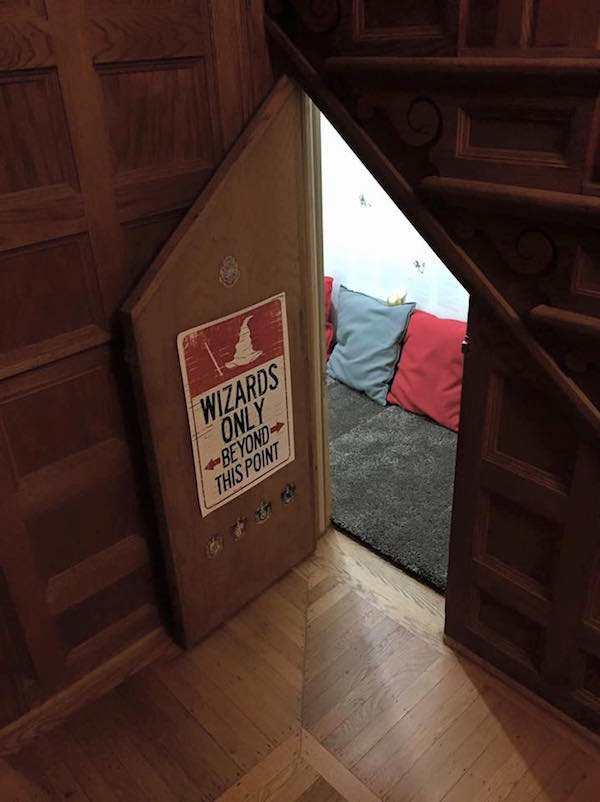
Below is the entrance to Harry Potter fan Courtney Bonnet’s shrine to the franchise, a replica of the main character’s room under the Dursley’s staircase. See more photos from the inside at Design Taxi.

Movie Trivia of the Day:

Is there anything you still don’t know about the Back to the Future trilogy at this point? Let CineFix try to stump you with seven more fun facts:

[embedded content]

Filmmaker in Focus:

Watch a video essay supercut on the films of Noah Baumbach edited by Fernando Andres:

[embedded content]

Classic Trailer of the Day:

Today is the 20th anniversary of the initial limited release of Terry Gilliam‘s 12 Monkeys. Watch the original trailer for the movie, which earned Brad Pitt his first Oscar nomination, below.

[embedded content]

Send tips or follow us via Twitter:

and

This entry passed through the Full-Text RSS service – if this is your content and you’re reading it on someone else’s site, please read the FAQ at fivefilters.org/content-only/faq.php#publishers.

No Image

A Cause For Cautious Celebration: Guinea Is Ebola-Free

Medical workers surround 34-day-old Noubia, the last known patient to contract Ebola in Guinea, as she was released from a Doctors Without Borders treatment center in Conakry on Nov. 28.

Medical workers surround 34-day-old Noubia, the last known patient to contract Ebola in Guinea, as she was released from a Doctors Without Borders treatment center in Conakry on Nov. 28. Cellou Binani /AFP/Getty Images hide caption

toggle caption Cellou Binani /AFP/Getty Images

Guinea is set to celebrate with concerts and fireworks Wednesday, following the World Health Organization’s announcement that the country is now officially Ebola-free.

On Tuesday, WHO declared that after two years and over 2,500 deaths, the Ebola epidemic in Guinea has officially ended. The announcement marks the passing of two 21-day incubation periods since the last person to have contracted Ebola — a baby girl called Noubia — was cured of the virus.

“Of course people are happy,” says Safiatou L. Diallo, a World Bank operations officer based in Conakry, Guinea. “But the mood here is also very humble. People have lost their entire families, and we are still remembering and mourning that.”

The announcement in Guinea is a milestone, because “this is the first time that all three countries — Guinea, Liberia and Sierra Leone — have stopped the original chains of transmission that were responsible for starting this devastating outbreak two years ago,” said WHO regional director for Africa Dr. Matshidiso Moeti in a statement.

“But at the same time it’s important to emphasize that this is not the end of Ebola forever,” Dr. Daniel Lucey, a professor of immunology at Georgetown University, who has worked at Ebola treatment wards in Sierra Leone and Liberia.

For the next three months, Guinea will be in a state of heightened surveillance to make sure the virus doesn’t re-emerge as it has done twice in Liberia. “The virus in some cases can persist in the semen of men who’ve survived the infection for up to nine or even 12 months,” Lucey explains. People can also contract the virus from animals.

Plus, in some survivors, the after-effects can include blurred vision, hearing loss and joint pain.”Clearly now is not the time to slow down,” Lucey says. It’s a time to build up health infrastructure, and continue developing and testing vaccines and anti-viral treatments to prepare for any future flare-ups, he says.

The World Bank, WHO and other aid groups have said they will continue to work with the governments in Guinea as well as Sierra Leone and Liberia to provide survivors with medical care as well as counseling to help them return to normal life.

Diallo from the World Bank points out that the epidemic has also left hundreds of children orphaned. Several local associations as well as international groups are now working to find homes for these children and get them back to school, she says. “But unfortunately this may take a long time. And they will need lots of support — they will be affected forever by the epidemic.”

There is also the issue of stigma against survivors, Diallo adds. Over the next year, public campaigns explaining that it’s safe to live and work around Ebola survivors, to shake their hands or breathe the same air will be crucial.

The epidemic had been especially difficult to contain in Guinea. As NPR’s Ofeibea Quist-Arcton reported earlier this year, mistrust, anger and denial in parts of the country hindered efforts to cure the infected and curb the spread of illness.

“No one expected it to be so hard or take so long to stop this disease. It just demolished entire villages and families,” Diallo says. “It will take some time to rebuild.”

This entry passed through the Full-Text RSS service – if this is your content and you’re reading it on someone else’s site, please read the FAQ at fivefilters.org/content-only/faq.php#publishers.


No Image

In Exile, Burundian Musicians Create Out Of Crisis

The members of Melodika live in a group house together in Kigali, Rwanda. Percussionist Omer Nzoyisaba is far left, with singer Christian Ninteretse third from the left.
4:59

Download

The members of Melodika live in a group house together in Kigali, Rwanda. Percussionist Omer Nzoyisaba is far left, with singer Christian Ninteretse third from the left. Michael May/NPR hide caption

toggle caption Michael May/NPR

Political violence has engulfed the African nation of Burundi. The U.N. Security Council has passed a resolution to try and prevent potential genocide, while refugees have been pouring into neighboring Rwanda. Among them is a group of musicians who fled their homes without any instruments.

Bertrand Ninteretse is a Burundian video artist and rapper who goes by the name Kaya Free. In April, he videotaped the death of a fellow protester shot by Burundian police. The protests were targeting the president, Pierre Nkurunziza, who’d defied the constitution and seized a third term in office. Since then, Nkurunziza’s police and party militias have cracked down on anyone seen as anti-government. In this country of only six million, more than 200,000 have fled. Kaya says he had to flee because he was on a police hit list.

When he reached the Rwandan capital of Kigali, he grabbed his smartphone and started tracking down his friends.

“Now we have Whatsapp, we have Facebook,” Kaya says. “We can write, ‘Hey, I’m in Kigali. Hey, we have a big house — even you can stay here.’ ‘Oh, really, Kaya! Okay, we come.'”

Kaya and his wife found themselves hosting Burundian musicians, each a star in his genre: jazz, reggae, traditional Burundian folk. Only they now had no instruments, no money, no chairs, even. They did have plastic pots and pans, as well as beer bottles.

Onstage, Melodika borrows guitars and drums, but at home, Pascal Niyonzima (left) practices on plastic tubs.

Onstage, Melodika borrows guitars and drums, but at home, Pascal Niyonzima (left) practices on plastic tubs. Michael May/NPR hide caption

toggle caption Michael May/NPR

Back in Burundi, these musicians would not have shared the same stage. Now, in this living-room jam, over this traditional rhythm rose the voice of an R&B singer — actually the winner of Prix-Music, which is like the Burundian version of American Idol.

“It was like a dream,” Kaya says. “For me, it was amazing. To see jazz people, traditional people, the winner of Prix-Music — they are together to sing songs.”

In a different house, still without chairs and instruments, percussionist Omer Nzoyisaba says this new group “was about our voices only.” He used to play traditional music at weddings. Next to him is a bassist accustomed to playing in nightclubs and a guitarist who performed in international hotels.

R&B singer Christian Ninteretse says the band, called Melodika, was created so they could eat. But it’s become something more.

“You were just friends,” Ninteretse tells his bandmates, “but because of the problems, you became family.”

Melodika now performs around Rwanda using borrowed guitars and drums. But back home, it’s just kitchen supplies and voices. The members refused to talk politics, but they said their message is one of unity. Ethnic unity. Regional unity. That’s why their playlist can follow an urban love song with a traditional homesick lament called “Yes, Mama.”

They pray, like so many exiles, for a chance to return home. They also hope to continue this journey, and to collect funds to make an album and travel the world with their music.

This is Burundi’s new sound, they say, with the confidence of stars. It’s just one that took a crisis to create.

This entry passed through the Full-Text RSS service – if this is your content and you’re reading it on someone else’s site, please read the FAQ at fivefilters.org/content-only/faq.php#publishers.