Articles by admin

No Image

Reality Star And Ex-Rapper Team Up To Coach Miami High School Football Team

With the announcement of new coaching hires, the Miami Jackson High School football team is making news months before the season even starts.

On Monday, the school named Lakatriona “Bernice” Brunson, 38, head coach of the football program. According to the Miami Herald, Brunson, who was working as a physical education teacher at the high school, is the first female high school football head coach in the state.

But she’s not just any female coach — she’s the trash-talking, tough-as-nails, tow-truck-driving character on the truTV show South Beach Tow, which follows the confrontations and mishaps that arise between tow truck drivers from Tremont Towing and drivers of offending vehicles.

[embedded content]
YouTube

Brunson’s TV character is grumpily matter-of-fact and not hesitant to give orders; it seems she’ll bring this same no-nonsense approach to the football field.

“I’m ready for whatever comes my way. I’m ready to fight, ready to get these guys prepared and ready to win,” she said at the news conference to announce her hiring, according to ESPNW.

At the presser, Brunson — who played football for the Miami Fury in the Independent Women’s Football League and was also a standout high school and college athlete — was joined by two of the Miami Jackson team’s players: offensive lineman Donte Morris and senior defensive tackle Javon Hunt.

Lakatriona “Bernice” Brunson from truTV’s South Beach Tow. Miami Herald/TNS via ZUMA Wire/Corbis hide caption

toggle caption Miami Herald/TNS via ZUMA Wire/Corbis

“[Brunson] shows tough love, wants you to work hard, not doubt yourself, give 100 percent effort,” Hunt said, according to the Herald.

The school also hired former 2 Live Crew rapper Luther Campbell as defensive coordinator. Despite the new hires’ high profiles, Brunson made it clear what came first:

“We’re not here to talk about music or reality TV,” said Brunson, who will also coach the Miami Jackson girls’ flag football team this spring. “We’re here to talk about football only.”

Campbell, who gained music fame in the 1980s and in recent years has found success on the coaching staffs of other Florida high school football teams, concurred.

“At first I thought ‘this [expletive] might be crazy because I take football real serious,’ ” Campbell said, according to the Herald. “But after a conversation with [Brunson], I said, ‘Naw, she knows her football. She’s on point.’ I don’t take this as a joke. I didn’t want to be a part of no circus.”

Although Miami Jackson last made it to the state championship semifinal in 2012, the program has yet to capture the title. The Herald says that’s partly because it has had to compete with South Florida football powerhouses such as Central, Booker T. Washington, Northwestern, Plantation American Heritage and Hallandale.

Brunson replaces former University of Miami and NFL player Earl Little, and she’s confident in her abilities.

“We’re just here to change the atmosphere at Miami Jackson and get some W’s on the board,” Brunson said at the press conference. “I know I can do it. … Watch what we’re going to do. It’s some big things coming up.”

This entry passed through the Full-Text RSS service – if this is your content and you’re reading it on someone else’s site, please read the FAQ at fivefilters.org/content-only/faq.php#publishers.


No Image

Why Is It So Hard To Test Whether Drivers Are Stoned?

The psychoactive ingredient in marijuana is a fat-soluble compound called THC.

The psychoactive ingredient in marijuana is a fat-soluble compound called THC. iStockphoto hide caption

toggle caption iStockphoto

Law enforcement officials would love to have a clear way to tell when a driver is too drugged to drive. But the decades of experience the country has in setting limits for alcohol have turned out to be rather useless so far because the mind-altering compound in cannabis, THC, dissolves in fat, whereas alcohol dissolves in water.

And that changes everything. “It’s really difficult to document drugged driving in a relevant way,” says Margaret Haney, a neurobiologist at Columbia University, “[because of] the simple fact that THC is fat soluble. That makes it absorbed in a very different way and much more difficult to relate behavior to, say, [blood] levels of THC or develop a breathalyzer.”

When you drink, alcohol spreads through your saliva and breath. It evenly saturates your lungs and blood. Measuring the volume of alcohol in one part of your body can predictably tell you how much is in any other part of your body — like how much is affecting your brain at any given time.

That made it possible to do the science on alcohol and crash risk back in the mid-20th century. Eventually, decades of study helped formulate the 0.08 blood alcohol limit as too drunk to drive safely. “The 0.08 standard in alcohol is from decades of careful epidemiological research,” says Andrea Roth, a professor of law at the University of California, Berkeley.

But marijuana isn’t like that. The height of your intoxication isn’t at the moment when blood THC levels peak, and the high doesn’t rise and fall uniformly based on how much THC leaves and enters your bodily fluids, says Marilyn Huestis, who headed the chemistry and drug metabolism section at the National Institute on Drug Abuse.

[embedded content]
YouTube

Because THC is fat soluble, it moves readily from water environments, like blood, to fatty environments. Fatty tissues act like sponges for the THC, Huestis says. “And the brain is a very fatty tissue. It’s been proven you can still measure THC in the brain even if it’s no longer measurable in the blood.”

From her research, Huestis found that THC rapidly clears out of the blood in occasional users within a couple of hours. While they’re still high, a trickle of THC leaches out of their brains and other fatty tissues back into the blood until it’s all gone.

That means a lab test would only find a trace amount of THC in the blood of occasional smokers after a few hours. “You could have smoked a good amount, just waited two hours, still be pretty intoxicated and yet pass the drug test [for driving],” says Haney.

And if you eat the weed instead of smoking it, Haney says, your blood never carries that much THC. “With oral THC, it takes several hours for [blood THC] to peak, but it remains very low compared to the smoked route, even though they’re very high. It’s a hundredfold difference,” she says.

But daily users are different. Huestis says that heavy smokers build up so much THC in their body fat that it could continue leaching out for weeks after they last smoked. These chronic, frequent users will also experience a rapid loss of THC from their blood after smoking, but they will also have a constant, moderate level of blood THC even when they’re not high, Huestis says.

It gets trickier when you try to factor in the chronic effect of smoking weed, Huestis says. “We found [chronic, frequent smokers’] brains had changed and reduced the density of cannabinoid receptors,” she says. They were cognitively impaired for up to 28 days after their last use, and their driving might also still be impaired for that long. “It’s pretty scary,” she says.

The attitude difference between stoned drivers and alcohol drivers seems clear, Huestis says. Pot smokers, she says, “tend to be more aware they’re impaired than alcohol users.” Drunk drivers are more aggressive, and high drivers are slower. But in her studies, she found that being blazed enough, as when a smoker’s blood THC level peaks at 13 nanograms per milliliter, could be just as a dangerous as driving drunk. The marijuana advocacy group NORML emphasizes that driving high can be dangerous, and advises people to drive sober.

This all translates into a colossal headache for researchers and lawmakers alike. While scientists continue to bang their heads over how to draw up a biological measurement for marijuana intoxication, legislators want a way to quickly identify and penalize people who are too high to drive.

The instinct, Huestis says, is to come up with a law that parallels the 0.08 BAC standard for alcohol. “Everyone is looking for one number,” she says. “And it’s almost impossible to come up with one number. Occasional users can be very impaired at one microgram per liter, and chronic, frequent smokers will be over one microgram per liter maybe for weeks.”

The shaky science around relating blood THC to driving impairment is unfair for people living in marijuana-legal states that have absolute blood THC limits for driving, says Andrea Roth, a professor of law at the University of California, Berkeley.

In states like Washington, if a driver is found to have over 5 nanograms of THC per milliliter in their blood, they automatically get a DUI-cannabis. “If we are going to criminalize DUI marijuana, we need to take information from scientific studies and use it to decide if that risk is sufficiently high to be so morally blameworthy that we call it a crime. But we don’t, so picking 5 nanograms per milliliter is arbitrary,” Roth says.

The complicated biology of THC makes current DUI cases very tricky.

“Blood isn’t taken in the U.S. until 1.5 to four hours after the [traffic] incident,” Huestis says. By then, THC levels would have fallen significantly, and these people might have been impaired but passed the test. At the same time, a heavy user living in a state like Washington would get a DUI even if she or he hadn’t smoked in weeks.

As a result, it gets difficult to even understand how risky blazed driving is. Traffic studies that rely on blood THC measures could also be inaccurate if blood is drawn too late and THC has already left the system. And some state traffic databases, including Colorado’s, according to state traffic officials, link accidents to 11-nor-9-carboxy-THC, a byproduct of marijuana metabolism that marks only recent exposure and not intoxication. That might result in an overestimation of marijuana-related accidents.

In the meantime, Haney says, the challenge shouldn’t deter people from trying to find a marijuana DUI solution. People are working on breath tests, saliva, other blood markers and behavioral tests, just nothing that so far has stuck, she says. “We need something, because it’s an important public health issue. But how we’re going to get there? I just don’t know.”

This entry passed through the Full-Text RSS service – if this is your content and you’re reading it on someone else’s site, please read the FAQ at fivefilters.org/content-only/faq.php#publishers.


No Image

Today in Movie Culture: Deadpool vs. Psylocke, 'Justice League' Trailer and More

Here are a bunch of little bites to satisfy your hunger for movie culture:

Mashup of the Day:

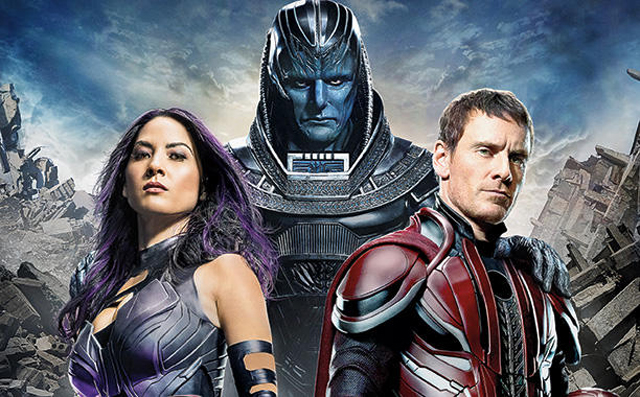
Deadpool and Psylocke are in two very separate X-Men movies coming out this year, but the following Instagram video shows their actors, Ryan Reynolds and Oliva Munn, in a playful sword fight:

Photoshop Fun of the Day:

Whoever created this picture of younger Harrison Ford and Carrie Fisher with a very young Adam Driver is a genius:

Fandom Parody of the Day:

The anticipation for Star Wars: The Force Awakens was a cultural phenomenon that went out of control. This funny video shows us it’s time for the typically just-casual fan to awaken and let it go (via Geek Tyrant):

[embedded content]

Cosplay of the Day:

Matt the Radar Tech (aka Kylo Ren in disguise) and Rey of Star Wars: The Force Awakens showed up together at the Chicago Comic & Entertainment Expo’s Mardi Gras Masquerade:

Matt (not Kylo Ren) and Rey hang out at our #C2E2 Mardi Gras Masquerade. #cosplay pic.twitter.com/x3mD9JeukY

— C2E2 (@c2e2) February 7, 2016

Fan-Made Trailer of the Day:

This mash-up of Batman v Superman: Dawn of Justice, Independence Day: Resurgence and Marvel movies probably is what Justice League will look like (via Geek Tyrant):

[embedded content]

Actor Comparison of the Day:

Slate explores the common comparison between Channing Tatum and Gene Kelly:

[embedded content]

Vintage Image of the Day:

James Dean, who would have turned 85 today, cuts some celebratory cake in Rebel Without a Cause:

Cooking Video of the Day:

Learn how to make the version of ratatouille seen in Pixar‘s Ratatouille (via Geek Tyrant):

[embedded content]

Reimagined Movie of the Day:

Mashable shows us what The Wizard of Oz would look like as a Michael Bay movie, or at least how it would be sold as a modern blockbuster:

[embedded content]

Classic Trailer of the Day:

Today is the 40th anniversary of the release of Martin Scorsese‘s Taxi Driver. Watch the original trailer for the film, which stars Robert De Niro, below.

[embedded content]

and

This entry passed through the Full-Text RSS service – if this is your content and you’re reading it on someone else’s site, please read the FAQ at fivefilters.org/content-only/faq.php#publishers.


No Image

Small Batch: The Super Bowl, From Peyton vs. Cam To Twitter vs. Coldplay

Beyoncé, Coldplay singer Chris Martin and Bruno Mars perform during halftime of the NFL Super Bowl 50 football game Sunday, Feb. 7, 2016, in Santa Clara, Calif.
8:16

Download

Beyoncé, Coldplay singer Chris Martin and Bruno Mars perform during halftime of the NFL Super Bowl 50 football game Sunday, Feb. 7, 2016, in Santa Clara, Calif. Julio Cortez/AP hide caption

toggle caption Julio Cortez/AP

Sunday night’s Super Bowl landed a huge TV audience for its battle between the Denver Broncos and the Carolina Panthers, which the Broncos took 24-10. While a football game is a football game, the Super Bowl is also a huge pop culture event, from the halftime show to the buildup and the barrage of advertising. We sat down the Monday morning after to take apart the highs, the lows, and the Beyonce of it all.

As we talk about a little, the halftime show was partially upstaged and made irrelevant by the release of Beyonce’s fascinating, gorgeous video “Formation,” and there’s already lots of interesting writing about it: NPR rounded some of it up here, plus there’s this and this and undoubtedly more by the hour. Dig in.

This entry passed through the Full-Text RSS service – if this is your content and you’re reading it on someone else’s site, please read the FAQ at fivefilters.org/content-only/faq.php#publishers.


No Image

Gulf Of Mexico Open For Fish-Farming Business

Divers around the open-ocean aquaculture cage at the Cape Eleuthera Institute in the Bahamas. These cages are not currently used in the Gulf of Mexico, but represent one type of farming technology that could work in the region.
3:46

Download

Divers around the open-ocean aquaculture cage at the Cape Eleuthera Institute in the Bahamas. These cages are not currently used in the Gulf of Mexico, but represent one type of farming technology that could work in the region. NOAA/with permission from Kelly Martin hide caption

toggle caption NOAA/with permission from Kelly Martin

The Gulf of Mexico is now open for commercial fish farming.

The National Oceanic and Atmospheric Administration (NOAA) announced last month that, for the first time in the U.S., companies can apply to set up fish farms in federal waters.

The idea is to compete with hard-to-regulate foreign imports. But opening the Gulf to aquaculture won’t be cheap, and it could pose environmental problems.

Harlon Pearce, the owner of Harlon’s Louisiana Fish, which supplies restaurants and groceries across the South, says he welcomes the change. Around this time of year, his refrigerated warehouse outside New Orleans is stocked with catch.

“You’ve got 30,000 pounds of fish right here, or more,” he says.

He’s freezing a lot of it to keep up with year-round demand. He says he’d like to sell nationwide, to big chains like Red Lobster, but “we never have enough fish to supply the markets. Never,” he says.

That’s true for a couple of reasons. For one thing, the seafood industry in the Gulf still hasn’t bounced back from the 2010 BP oil spill. Secondly, the industry has always fluctuated, because of hurricanes and pollution.

Pearce, who is on the board of the Gulf Seafood Institute, says aquaculture could solve that.

The rest of the world is already heavily invested in farming fish. According to NOAA, 90 percent of fish in the U.S. comes from abroad and half of this is farmed. While fish farms exist in the U.S., the industry has yet to really take off. And, until now, federal waters had been off limits. The U.S. government says that opening up the Gulf to fish farms would reduce American dependence on foreign food and improve security.

“We see it as another important step in building the resiliency of our oceans and fishing communities,” says NOAA Administrator Kathryn Sullivan. “This starts with the Gulf but actually opens the door for other regions to follow suit.”

In the coming years, NOAA will issue 10-year permits to companies that want to set up shop in federal waters, generally 3 miles offshore. The farms, which look like giant floating pens, are allowed to raise fish native to the area only. In the Gulf, that means species like red drum and cobia — not salmon or tilapia.

Some say the farms will hurt struggling fishermen.

“These systems will take up real space in the ocean and displace fishermen. In fact, there are going to be buffer zones around these facilities where fishermen can’t go,” says Marianne Cufone, an adjunct professor at the environmental law clinic at Loyola University.

And she says the farms run the risk of large fish escapes, which might wreak havoc on the local ecology.

“There have been millions of fish that have escaped all over the world and are causing problems — not just genetic problems, but things like spreading diseases between captive fish and wild fish,” Cufone says. Fish food and waste could also fall out of the pens and affect other marine life.

NOAA officials say they took all of this into account already by weighing thousands of public comments and enforcing certain environmental safeguards, like constant monitoring of cages.

Raising fish in the ocean won’t be quick or easy, says Rusty Gaude, a fisheries expert with Louisiana State University. He notes that NOAA is setting a lot of environmental rules, which can be burdensome. And then there’s the threat that hurricanes pose to floating fish farms.

“These initial efforts may go through some rather painful growing pains,” he says.

But he thinks the plan will become a reality.

“Eventually, the world and the Gulf of Mexico and Louisiana will see aquaculture here in the Gulf of Mexico,” he says.

NOAA and other federal agencies say the first permits could be approved in two years.

This entry passed through the Full-Text RSS service – if this is your content and you’re reading it on someone else’s site, please read the FAQ at fivefilters.org/content-only/faq.php#publishers.


No Image

When Men Get Breast Cancer, They Enter A World Of Pink

Maria Fabrizio for NPR
4:18

Download

Maria Fabrizio for NPR

At 46 years old, Oliver Bogler’s reaction to a suspicious lump in his chest might seem typical for a man. He ignored it for three to four months, maybe longer. “I couldn’t really imagine I would have this disease,” Bogler says. But when he finally “grew up” and went to the doctor, he was pretty quickly diagnosed with invasive breast cancer.

Now what’s interesting here is that Bogler is a cancer biologist who regularly works with cancer cells, as senior vice president of academic affairs at the University of Texas MD Anderson Cancer Center in Houston. Even so, he figured the lump was a benign swelling of breast tissue.

He had good reason to think so. Breast cancer is rare among men. Only 1 percent of all breast cancer cases are in men. Still, that means about 2,600 men receive a diagnosis of breast cancer every year.

But men typically don’t think they are at risk, says Dr. Sharon Giordano, an oncologist who also works at the MD Anderson Cancer Center. “Men don’t think of themselves as having breasts,” Giordano says. “They don’t realize that all men have some residual breast tissue.” So it’s not unusual to see male patients like Bogler who come to her with more advanced breast cancer than the typical female patient.

This could be one reason why men have a lower life expectancy after a breast cancer diagnosis. According to a study published in 2012, in the Annals of Surgical Oncology, men with early breast cancer had a 74 percent survival rate five years after their diagnosis compared to women, whose survival rate was 83 percent.

And men not only can get breast cancer, they can also inherit the BRCA1 and 2 genetic mutations that place them at greater risk. Like women, they can pass that mutation on to their children, who have a 50 percent chance of inheriting a parent’s mutation.

Once men are diagnosed, their treatment is pretty much the same as it is for women — typically surgery to remove the cancer followed by chemotherapy, radiation and hormone suppressing medication like tamoxifen.

That was the case for Bogler, but with one big difference — he had a mastectomy. Most women choose lumpectomies followed by radiation. This is often not an option for men, Giordano says, because their tumors are most commonly right behind the nipple, where there’s not a lot of breast tissue to remove.

The markings on Oliver Bogler's chest are used to guide radiation therapy.

The markings on Oliver Bogler’s chest are used to guide radiation therapy. Courtesy of David Jay Photography hide caption

toggle caption Courtesy of David Jay Photography

Unlike women, most men don’t have reconstructive surgery. That’s probably because they don’t even know it’s an option, says Giordano. A lot of male patients would probably be interested in having nipple reconstructive surgery, Giordano says, “So when they are out swimming, or playing basketball and have their shirt off, the surgical changes aren’t quite so obvious.”

And because breast cancer is so much more common among women, men with the disease can experience something of a “gender misfit.” Bogler wrote about his experience in a personal blog he called Entering a World of Pink. Breast cancer clinics are often decorated in lots of pink, and support systems are designed with women in mind. Giordano recalls one male patient who, after a biopsy, was given a pink floral ice pack that came with instructions to “place it inside your bra.”

When Edward Smith was diagnosed about four years ago, he went online to look for information and emotional support. The first couple of chat rooms he joined were not helpful, he says, when the participants found out he was a man. “They weren’t outright nasty or anything, but you could just feel that they were pulling back in terms of the conversation that was going on at the time,” he says.

Eventually Smith found a site that was welcoming — Living Beyond Breast Cancer. The women in this group were helpful, compassionate and willing to talk, Smith says. This was important because he was feeling a bit uncomfortable at work. Colleagues were just “stupefied,” he says, “because most people have never encountered a male who had breast cancer.”

The website recently published a guide for men, which Smith found particularly helpful. The medical information isn’t so different from women, says Jean Sachs, executive director of Living Beyond Breast Cancer, but the experience is very different. “It’s hard to get men to talk about it,” she says. The guide provides a list of men, including Smith, who are willing to talk to other men about their experience.

It’s also important, Sachs says, for men who test positive for the BRACA genetic mutations to understand that they can pass those mutations on to their children, which may encourage newly diagnosed patients to get tested.

The lack of awareness, even among doctors, oncologist Giordano says, means less money for needed research to figure out how breast cancer in men differs from women especially when it comes to life saving treatment. Treatments for men are based on evidence from research trials with women. Giordano’s now heading up research to better understand the biology of the disease in men and to try to figure out the most effective hormone therapy for men with breast cancer.

This entry passed through the Full-Text RSS service – if this is your content and you’re reading it on someone else’s site, please read the FAQ at fivefilters.org/content-only/faq.php#publishers.


No Image

Super Bowl Movie Trailers: Watch New Previews for 'Jason Bourne,' 'Captain America: Civil War' and More

The big game is known for football, but it’s also known for its movie trailers. Its BIG movie trailers.

From superheroes to long-awaited sequels, here’s a list of Super Bowl trailers currently online. And you can see all of the Super Bowl trailers in one handy place courtesy of this MovieClips playlist.

The movie trailer that won the Super Bowl…

Jason Bourne (July 29)

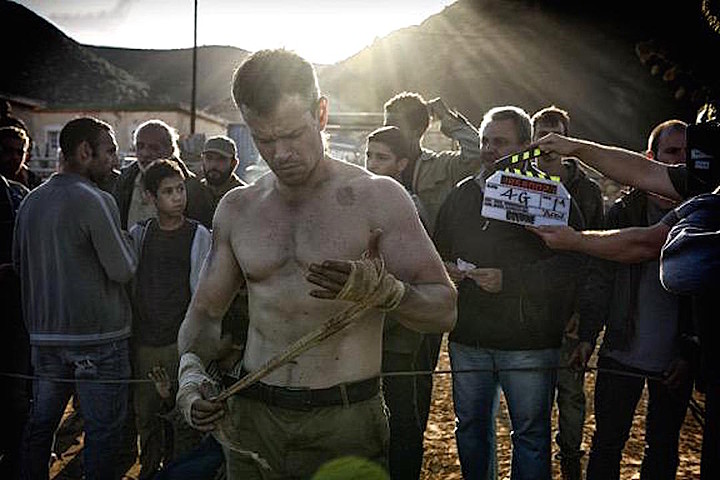
The first trailer for the next Bourne movie has hit, and it brought us an official title for the fifth installment: Jason Bourne. This one feels and looks a bit different from the previous Bourne movies, and we dig that knockout finale. Check it out.

[embedded content]

The rest of this year’s Super Bowl movie trailers, in order of their release dates…

Deadpool (February 12)

We’re under a week away from this R-rated superhero movie hitting theaters. Here’s one last good look before Deadpool unleashes his own unique brand of perverted wisdom upon us all.

[embedded content]

Gods of Egypt (February 26)

[embedded content]

Eddie the Eagle (February 26)

[embedded content]

10 Cloverfield Lane (March 11)

Remember hearing about that surprise Cloverfield spin-off? Here’s a new trailer.

[embedded content]

The Jungle Book (April 15)

Disney’s The Jungle Book returns to theaters this April, only in stunning live-action form. Check out the new Super Bowl spot below.

[embedded content]

Captain America: Civil War (May 6)

We love how each trailer for Captain America: Civil War brings us closer to some epic stand-off between the heroes at an airport. Still no sign of Spider-Man, but man does Iron Man look pissed off at his former Avengers teammates.

[embedded content]

X-Men: Apocalypse (May 27)

In addition to Deadpool and Eddie the Eagle (see above), Fox also unleashed a new trailer for X-Men: Apocalypse. Dare we say it got us all choked up?

[embedded content]

Teenage Mutant Ninja Turles: Out of the Shadows (June 3)

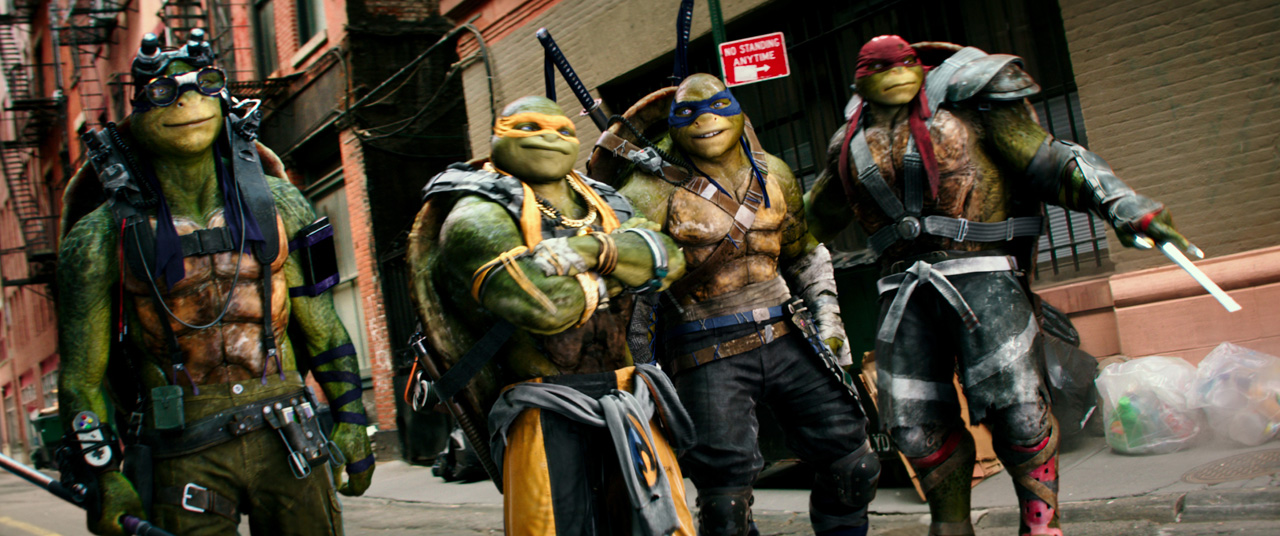
The turtles are back…. and this time they got a Krang to deal with.

[embedded content]

Independence Day: Resurgence (June 24)

The first Independence Day movie announced itself to the world with a big, splashy Super Bowl trailer, ushering in a new age where fans could very much look forward to seeing some of the year’s biggest movies teased during the game. Now, two decades later, watch the Super Bowl spot for its sequel above.

[embedded content]

The Secret Life of Pets (July 8)

[embedded content]

Bonus Awesomeness: Here’s that Hulk/Ant-Man Coke TV spot

[embedded content]

For all of the latest Super Bowl movie spots, make sure you hit up Movieclips’ YouTube playlist for up-to-the-minute additions.

This entry passed through the Full-Text RSS service – if this is your content and you’re reading it on someone else’s site, please read the FAQ at fivefilters.org/content-only/faq.php#publishers.


No Image

Boeing Can Sell Planes To Iran, But Does Iran Want Them?

An Iran Air Boeing 747 passenger plane on the tarmac of Mehrabad Airport in Tehran in 2013. Iran bought most of its planes from Boeing before the 1979 Islamic Revolution. The country now has one of the oldest airline fleets in the world. With sanctions lifted, Boeing can once again sell planes to Iran, but the country recently announced a major deal with Airbus.
3:55

Download

An Iran Air Boeing 747 passenger plane on the tarmac of Mehrabad Airport in Tehran in 2013. Iran bought most of its planes from Boeing before the 1979 Islamic Revolution. The country now has one of the oldest airline fleets in the world. With sanctions lifted, Boeing can once again sell planes to Iran, but the country recently announced a major deal with Airbus. BEHROUZ MEHRI/AFP/Getty Images hide caption

toggle caption BEHROUZ MEHRI/AFP/Getty Images

Iran and Boeing go way back. Boeing was the largest supplier of civilian aircraft to Iran before the country’s 1979 Islamic revolution. And despite the fraught relations between the U.S. and Iran since then, Iran has kept flying those planes for decades.

As part of the recent Iranian nuclear deal and the lifting of sanctions, Boeing is once again permitted to sell planes to the Islamic Republic. And Iran desperately wants to start replacing its fleet of aging, worn-out commercial aircraft.

But don’t expect any deals anytime soon. Just last week, Iran announced preliminary plans to buy 118 planes from France-based Airbus in a deal worth roughly $27 billion.

Boeing, which is based in Chicago, says it isn’t rushing to get back into Iran, says spokesman Gordon Johndroe.

“There are many steps that need to be taken should we decide to sell airplanes to approved Iranian airlines. But for now, we continue to assess the situation,” he says.

Dr. Adam Pilarski, vice president of Avitas, an aviation consultancy group, says Boeing is wise to be cautious in any deal with Iran.

The nuclear sanctions have been lifted, and the sale of commercial aircraft are allowed. But the U.S. is keeping some sanctions against Iran in place that are linked to human rights issues and terrrorism. Pilarski says Boeing would need to clarify a number of things before working out a deal.

“There are various complicated legal issues that many lawyers have to go through,” he says, adding “For example, could any of the technology on the new aircraft be used for military purposes?”

Boeing and Airbus compete fiercely around the world for airplane sales. But Pilarski says there’s no need for Boeing to panic about getting beat to the punch in Iran. He says it’s normal for a country buying aircraft to play two companies off each other for better price leverage in negotiations. Pilarski says it’s likely Boeing is already quietly exploring a deal.

“I would be very surprised if Iran only buys airplanes from Airbus and none from Boeing. That would be a huge surprise to me. It doesn’t make sense,” he says.

Rescue workers look through the wreckage of an Iran Air Boeing 727 plane that crashed in northwest Iran as it was making an emergency landing in 2011. More than 70 of the 106 on board were killed. Iran's aging airline fleet has had a poor safety record.

Rescue workers look through the wreckage of an Iran Air Boeing 727 plane that crashed in northwest Iran as it was making an emergency landing in 2011. More than 70 of the 106 on board were killed. Iran’s aging airline fleet has had a poor safety record. Esfandiar Asgharkhani/AP hide caption

toggle caption Esfandiar Asgharkhani/AP

Ardavan Amir-Aslani, a French-Iranian lawyer who is negotiating deals with Tehran for French companies says the Airbus deal isn’t set in stone.

“The agreements that have been signed are not definite, final documents,” he says.

Amir-Aslani says financing the Airbus deal is a challenge because it has to be done without using the U.S. financial system. U.S. banks are still barred from doing business in Iran, and most foreign banks have partnerships with U.S. banks. Amir-Aslani says there’s a difference between announcing a deal with Airbus and having an actual contract in hand.

“We’re talking about memorandums of understanding or letters of intent. So the actual implementation of these contracts is going to happen over time,” he says.

Iran may have other more pressing needs for its money – from rebuilding its infrastructure to modernizing its oilfields. Richard Aboulafia, an analyst with the Teal Group, an aerospace consultancy, says Iran may decide to lease new planes, not buy them. He says losing a deal wouldn’t affect Boeing too much.

“I don’t think this matters a whole heck of a lot. I mean you’re talking about an industry that pumps out 1,400 jets a year,” he says.

Even if it doesn’t sell planes, Boeing could make a lot of money another way. Many of those old jets that Iran is still flying are in desperate need of Boeing parts and maintenance, Aboulafia says

This entry passed through the Full-Text RSS service – if this is your content and you’re reading it on someone else’s site, please read the FAQ at fivefilters.org/content-only/faq.php#publishers.

No Image

Super Bowl 50: Denver Broncos Take Home The NFL Title

Peyton Manning, in the first quarter of Super Bowl 50.

Peyton Manning, in the first quarter of Super Bowl 50. Ezra Shaw/Getty Images hide caption

toggle caption Ezra Shaw/Getty Images

Peyton Manning is once more on top of the world. The Denver Broncos quarterback — a future Hall of Famer in what may be his final season — is once more a Super Bowl champion. The Broncos have beaten the Carolina Panthers, 24-10.

The game fell well short of a quarterback duel, though. Again, it was the Denver defense that led the way, harassing Cam Newton, forcing turnover after turnover and even tacking on a score of their own.

It was sloppy, it was often ugly, but it was, without a doubt, the biggest game of the year. Naturally, we decided to cover it with the littlest poems we could think of: haiku.

With a hat tip to our colleagues at WBUR’s Only a Game, where they’ve long been asking listeners for haiku, we decided it was time for us to try our hand at the art form: a three-line poem, with five syllables in the first line, seven in the second, and five again in the third.

(And yes, haiku-purists, we know the poems are supposed to be about nature, too. But give us some leeway here.)

Think of it as a syllable-conscious live-blog. We tweeted our updates in haiku as the game went on, retweeting your contributions and doing it all using the hashtag #SuperBowlHaiku. You can find all the tweets above.

Now, you might be asking yourself why, exactly, we covered the big game with all these tiny poems. Good question. That’s because — well, because this is NPR.

This entry passed through the Full-Text RSS service – if this is your content and you’re reading it on someone else’s site, please read the FAQ at fivefilters.org/content-only/faq.php#publishers.


No Image

Even A Broken Neck Couldn't Bury His Dream

Delvin Breaux, during a game against the New York Giants in November 2015.
6:10

Download

Delvin Breaux, during a game against the New York Giants in November 2015. Sean Gardner/Getty Images hide caption

toggle caption Sean Gardner/Getty Images

As part of a series called My Big Break, All Things Considered is collecting stories of triumph, big and small. These are the moments when everything seems to click, and people leap forward into their careers.

All football players know they’re one big hit away from the end of their career. Delvin Breaux was a high school senior with a scholarship on the line when he took one of those hits. It broke his neck.

But, nine years later, he has become one of the NFL’s top young defenders with the New Orleans Saints.

How did he manage such a feat? Well, Breaux says it’s a long story — one that began when he started playing football at age 4.

“Every day I used to wake up, I used to be like, ‘Hey, man, I’m gonna be in the NFL one day,’ ” he says. “You know, just watching the guys play on TV. It was just something that I always dreamed of.”

In high school, college coaches came in to recruit for schools all over the country — UCLA, USC, Virginia Tech, Virginia, Ohio State, Michigan. But Breaux says LSU — his “hometown team” — was the only school he wanted to attend.

Before he even got there, his life changed.

“The day I got seriously injured was Oct. 27, 2006,” Breaux recalls. “I shot down the left side of the field, just went in there and made the tackle. And next thing you know I was on the ground and everything just went dark.

“I couldn’t move or nothing, then I heard my teammates: ‘D Breaux, get up! We need you, man, get up!’ ” he says. “And I’m like, ‘I would but I can’t move.’ Then two or three seconds after I say that, a bright, white light just … appeared!”

He was able to open his eyes and stand up. Breaux started walking back to the sideline, getting ready to go back in.

“That’s when the sharp pain came and shot up the back of my neck. And I went to the sideline and told my dad that my neck’s hurting, and he was like, ‘Take some ibuprofen.’ And I couldn’t swallow the pills because my disc slipped out my esophagus.”

It turned out he had broken his C4, C5 and C6 vertebrae. Doctors put in screws, pins and rods to secure his neck, and there’s a scar in the front part of his esophagus where doctors put a plate in.

After that, the college teams stopped calling with offers.

“I was just so frustrated,” Breaux says. “I was like, ‘Man, my career’s over with. Can’t play ball no more, can’t pursue my dream. What am I gonna do next?’ And that’s all I kept thinking while I was in the hospital for that month.”

Luckily, he had committed early to play for LSU. The school kept him on scholarship, even though he was injured. But LSU would never clear him to play.

He ended up getting cleared by his own doctors, though.

“I went back home and told my wife, ‘Baby, I’m cleared to play football again.’ She said, ‘No, you’re lying.’ And I was like, ‘No, baby, look at the papers!’ Everything was cleared and there was no restrictions,” Breaux says. “And she was like, ‘Alright, well get your butt back on out there. It’s time to go play!’ “

In 2012 — for the first time in six years — he was back playing football, with the semipro Louisiana Bayou Vipers.

He didn’t know what to expect after being out of it for so long.

“Am I gonna be rusty? Am I gonna be great?” he wondered.

Breaux remembers it all coming down to one play.

“I think it was like the second play of the game. They ran the ball and they came my way. And I’m sitting up there like, ‘Man, I’ve got to make this tackle. They’re coming right to me. I’ve got to make this tackle. Please!’ And I went in and I made the tackle, and I jumped up and I’m like, ‘Man, I’m not dead. I’m not dead.’ “

His confidence regained, Breaux quickly started playing better. “I started ballin’ out,” he says. “I had an interception, I had two more tackles. I just started enjoying it. This is it — I’m back playing football again, I’m doing what I love, and now it’s time to get to the NFL.”

It wasn’t straight to the NFL, though. His next step was playing with the New Orleans VooDoo, an arena football team. After several months, he was recruited by the Hamilton Tiger Cats in Ontario, part of the Canadian Football League.

“My big break came after my CFL season. Recruiting felt like college all over again,” Breaux says. “I had a lot of teams wanting me — I would say 28 of the 32 NFL teams they had, I had workouts. Ended up signing with the Saints. I went through the physical process, and they were like, ‘You’re good to go!’ I’ve been pumped ever since.”

Despite the difficulties along the way, he never considered giving up football. People even told him to quit. But “that did nothing but add fuel to the fire,” Breaux says. “It made me want to go hard and work out extra hard. I was trying to show people that I’m not out of it, I’m still in it.

“My motivation and dedication and determination just wouldn’t let me quit,” he says. “It was always: Let’s do one more rep, let’s do one more set, you can make it, you’re gonna make it, just continue to keep believing.”

This entry passed through the Full-Text RSS service – if this is your content and you’re reading it on someone else’s site, please read the FAQ at fivefilters.org/content-only/faq.php#publishers.