Articles by admin

No Image

U.S. And Cuba To Re-Establish Commercial Air Travel Next Week

The U.S. and Cuba will sign a civil aviation agreement in Havana on Tuesday, re-establishing air service between the two countries for the first time in more than 50 years, the U.S. Department of Transportation said.

The signing formalizes the arrangement that was reached Dec. 16, stating that a certain number of flights would be allowed to fly from the U.S. to Cuba every day. As the Two-Way previously reported:

“The deal allows for up to 20 flights to Havana per day, and up to 10 daily flights to other Cuban cities. State Department spokeswoman Kerry Humphrey says that, besides Havana, there are nine international airports in Cuba — so the deal allows for 110 possible flights per day.”

Starting on Tuesday, U.S. airlines will have a 15-day window to submit applications to serve Havana and the other Cuban cities, the Miami Herald reports. The newspaper adds:

“Decisions on which airlines and which U.S. cities will have commercial service to Cuba are expected to be made by this summer and the first scheduled flights could begin by next fall, Brandon Belford, deputy assistant for aviation and international affairs at the Department of Transportation, said Friday.”

Scheduled flights to Cuba are expected to start later this year, according to the DOT. Charter flights, currently the only air transportation options between the two countries, will be allowed to continue at an unlimited frequency, Humphrey said in December.

This entry passed through the Full-Text RSS service – if this is your content and you’re reading it on someone else’s site, please read the FAQ at fivefilters.org/content-only/faq.php#publishers.


No Image

Today in Movie Culture: Betty White Reviews 'Deadpool,' and More

Here are a bunch of little bites to satisfy your hunger for movie culture:

Movie Review of the Day:

Betty White curses her way through a rave review of Deadpool, starring her co-star from The Proposal:

[embedded content]

Movie Science of the Day:

Kyle Hill of Nerdist’s Because Science explains how Deadpool‘s healing power works:

[embedded content]

Cosplay of the Day:

It may be a disappointment that Dogpool doesn’t make an appearance in Deadpool, but here’s Catpool with a chimichanga to make it all better (via Fashionably Geek);

Supercut of the Day:

Look at his year’s Oscar-nominated movie characters looking in this supercut edited by Jose Rico (via Cinematic Montage Creators):

[embedded content]

Custom Toy of the Day:

A fan of a certain Star Wars fan theory made his own fake Funko Pop! figure of Darth Jar Jar (via Geek Tyrant):

Film History of the Day:

Learn about the five most expensive scenes in silent movies, including Metropolis and Buster Keaton‘s The General:

[embedded content]

Vintage Image of the Day:

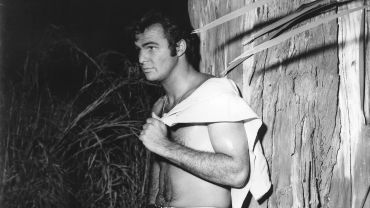
Burt Reynolds, who turns 80 today, in his 1961 film debut, Angel Baby:

Abridged Franchise of the Day:

See if you can tell where one Transformers movie ends and another begins in this 90 second recap of the whole quadrilogy:

[embedded content]

Movie Comparison of the Day:

See 24 reasons why Beetlejuice and R.I.P.D. are the same movie:

[embedded content]

Classic Trailer of the Day:

Today is the 35th anniversary of the original My Bloody Valentine. Watch the original trailer for the horror classic below.

[embedded content]

and

This entry passed through the Full-Text RSS service – if this is your content and you’re reading it on someone else’s site, please read the FAQ at fivefilters.org/content-only/faq.php#publishers.


No Image

At Many Workplaces, Training For A New Threat: Active Shooters

4:15

Download

[embedded content]

Local police forces and the Department of Homeland Security produce active-shooter training videos that promote the slogan “Run, Hide, Fight.”

City of Houston YouTube

A string of attacks on cities, schools and workplaces has prompted many employers to turn to a new area of security for their employees: active-shooter training.

Until about a decade ago, workplace security focused mostly on preventing theft. Now, businesses are trying to give their employees guidelines on how to escape or handle armed intruders.

“Active shooter’s been kind of my life since 1999,” says James McGinty, vice president of training and development for Covenant Security Services, whose clients include companies looking for guidance on how to deal with active shooters. He is also a former police officer and consultant to the Department of Homeland Security.

“Seventy-five to 80 percent of your businesses are looking to now do some type of armed intruder/active shooter policy procedure and training,” McGinty says.

He says the Columbine High School shootings in 1999 changed the way law enforcement, schools and workplaces thought about dealing with an active shooter.

Definitions of what constitutes an active shooter can vary, which makes data hard to collect. Some crowdsourced estimates put the number of shooting events last year at 330, but some definitions only include events with four or more casualties. The FBI defines it as someone actively engaged in killing or attempting to kill people in a confined and populated area. There were 160 such incidents between 2000 and 2013.

Insurance companies may encourage employers to do active-shooter training to limit liability. Some in the chemical or nuclear power industry might be required to do so by law. It is also a sensitive matter — no company was willing to discuss its program on the record for this story.

Some employers partner with local law enforcement for their training.

Videos produced by local police forces and the Department of Homeland Security promote the slogan “Run, Hide, Fight.” They say running away increases the chances of survival. They also advise coming out of the building with your hands up, or turning off the lights and your cellphone ringer if you’re hiding. Or — as a last resort — trying to gang up as a group on the assailant.

This kind of training at work is hard, says Laurence Barton, a threat consultant and trainer who works with the FBI.

“How do you create awareness, without creating paranoia?” he says.

He says employers are handling more threats — increasingly made through social media or through underground Internet services that allow people to send anonymous, encrypted messages.

“About a dozen threats per week for the Fortune 100 [companies] is average,” Barton says, but the vast majority of those are handled quietly, without incident or publicity.

It often falls to human resources departments to identify unstable or problematic employees — and sometimes fire them. They have to weigh a worker’s medical privacy and rights against the safety of other workers. Barton worries that some training courses create false expectations that those workers can handle active shooters themselves.

“This cottage industry is out offering one- and two-day seminars on how to deal with the active shooter, and this is crazy. This is absolutely, in my opinion, totally inappropriate,” he says. Only police, he says, should manage shooters.

Don Alwes, a law enforcement officer and instructor for the National Tactical Officers Association, says workplace training does not have to be expensive or time consuming, especially when done in concert with local police.

“The training costs on that are relatively low, compared to some types of physical security systems or armed guards,” Alwes says.

But none of it is effective if people don’t heed the lessons from past shootings.

“Sometimes we learn the lessons, but they tend to fall out of our minds as we get back to normal activities,” he says. “Someone paid for those lessons, usually in blood.”

The San Bernardino facility attacked in December conducted monthly active-shooter trainings. One might be tempted to say it didn’t work, but Alwes says it’s hard to know. More might have died that day without it.

This entry passed through the Full-Text RSS service – if this is your content and you’re reading it on someone else’s site, please read the FAQ at fivefilters.org/content-only/faq.php#publishers.


No Image

Will HealthCare.gov Get A California-Style Makeover?

Karyn Jackson (right) helped Fernando Rico, of Pasadena, Calif., complete a Covered California application for health insurance at an enrollment fair in 2014.

Karyn Jackson (right) helped Fernando Rico, of Pasadena, Calif., complete a Covered California application for health insurance at an enrollment fair in 2014. Allen J. Schaben/LA Times via Getty Images hide caption

toggle caption Allen J. Schaben/LA Times via Getty Images

When 28-year-old Charis Hill discovered that the cost of medication to treat her degenerative arthritis had risen to $2,000 a month, she chose to be in pain instead.

“I felt like an invalid,” said Hill, who lives in Sacramento and at the time had only catastrophic health coverage. She said the month without the medicine made it hard to get out of bed.

Paying for drugs isn’t a problem for Hill now. She has a more robust Covered California health plan, and she gets assistance from a drug company.

As of the first of this year, she won’t have to worry about sticker shock if she switches medications either. All Covered California plans now have a cap on how much patients pay for drugs: $250 a month in silver, gold and platinum plans; $500 a month in bronze plans, the least expensive ones.

“I could try a better treatment,” said Hill, a patient advocate, who says she is exploring that because her symptoms are becoming more severe. “The $250 is something I know that I can always fall back on.”

The copay cap on drugs is just one way Covered California chose to shape the health insurance marketplace this year. The California exchange uses more of its purchasing power to get what it wants than the vast majority of exchanges in other states. That means it decides which insurers can join the exchange, what plans and benefits are available and at what price.

The federal government — in proposed rules for 2017 — has signaled it too wants to have more of a hand in crafting plans. Though there are no hints HealthCare.gov will go as far as a monthly drug copay cap, it would be forging ahead on a path California already blazed — swapping variety for simplicity in plan design.

“Not letting [health] plans define what’s right for consumers, but defining it on behalf of consumers … is a better model for the market,” says Peter Lee, executive director of Covered California. “We want to make sure every consumer has good choice but not infinite choice.”

Most other states, including those in the federal exchange, haven’t subscribed to that idea so far. They have a clearinghouse model, in which all health insurers and plan designs are accepted as long they comply with the Affordable Care Act. That can mean the same insurer offers multiple plans with slightly different premiums, deductibles and copays. Even within one metal tier, say silver, the same insurer might offer half a dozen slightly different plans. (Obamacare plans come in four tiers, from bronze, with the most limited benefits, to platinum, with the most.)

Now, the federal government proposes to create standard cost-sharing designs in various metal tiers and make them easily accessible on HealthCare.gov. And it’s considering how to improve value by being more selective about plans.

A simplified marketplace, the feds say, will make it easier to choose high-quality health insurance.

“Many consumers … find the large variety of cost-sharing structures available on the Exchanges difficult to navigate,” the proposed rules say. “We believe that standardized options will provide these consumers the opportunity to make simpler comparisons.”

The proposal signals a big change.

“Up until now the federal marketplace has really taken a hands-off approach” in shaping the marketplace, said Sabrina Corlette, research professor at Georgetown University’s Center on Health Insurance Reforms. “The new proposed rule says ‘You know what? We actually are going to become more of an active purchaser.'”

California’s Approach

Covered California holds insurers to a higher bar than what’s required under the Affordable Care Act. It negotiates premium prices down and requires quality goals to be met. Health plans must participate in health-disparity workgroups, collect information about enrollees’ health status and monitor rates of preventive health services use. In the first two years, California’s exchange rejected multiple health insurance carriers.

Covered California says it’s the only exchange in the country that requires all plans to be standardized (not just some, which the federal government is proposing). All gold tier plans, for instance, have the same costs for lab tests, doctors’ visits and deductibles.

“There was always a suspicion like, ‘Oh, is that plan $80 more a month because it covers more?'” said Anthony Wright, of the advocacy group, Health Access. “And it was almost impossible to know. Whereas now people know ‘Okay, these are basically the same plans.'”

Price negotiations with insurers have paid off, according to Covered California. During 2016 plan year negotiations, insurers reduced premiums by 1 percent to 9 percent, said Lee. The exchange says this will result in $200 million in savings for premium payers and taxpayers this year.

Covered California average premium increases have been on par with the increases in other states, according to the private health care consulting firm, Avalere Health. It says this year’s 4 percent overall average increase was particularly low in comparison.

But national researchers say the downward pressure on premiums may be more indicative of competition than the exchange’s negotiating power.

An Industry Partner?

Health insurers in California acknowledge there’s more red tape if they sell in the subsidized marketplace there, but surprisingly, they don’t complain.

In fact, a California insurance trade group says it sees the exchange as a partner, and active purchasing as valuable for establishing ground rules.

“So far in California, it has worked,” said Charles Bacchi, president and CEO of the California Association of Health Plans.

The rules allowed new plans to get into the individual market, he says, and provided “more security in knowing what the playing field was.”

At the same time, Bacchi said, health plans don’t always agree with the exchange’s decisions.

“There is give and take,” he said.

Blue Shield of California, which in 2015 had 25 percent of the exchange’s enrollment, says it’s very happy with its relationship with Covered California.

Applying to sell through Covered California creates “different work” than was required before, said Ken Wood, Senior Vice President of Consumer Markets at Blue Shield of California, adding that he applauds its approach. But the business is worth it, he said. Covered California gives insurers access to more than a million consumers, whose monthly premiums are largely subsidized by government.

And “the standard benefits is an enormous simplification for consumers,” he said.

But one of two health insurance regulators in California, the state Department of Insurance, said Covered California’s strict guidelines may not benefit consumers.

It has created a situation in which the exchange “has fewer carriers than would otherwise be the case,” said Janice Rocco, deputy commissioner of the California Department of Insurance.

More insurers in the marketplace for the first two years would have had an impact on price in the long term, said Rocco.

Closely Watching California

Federal administrators may be trying to adopt active purchasing rules before the new presidential administration takes office, said Corlette, and California’s example may make it more politically feasible.

“There’s no question that the feds are closely watching the California experience,” said Corlette, commenting on Covered California’s ability to keep insurers in the marketplace and hold down premiums.

The federal rules also name other active purchasing exchanges as models however, including New York, Massachusetts and other state-based exchanges.

Health insurers on a national level are “strongly” opposed to an active purchaser model for states served by HealthCare.gov, including standardized benefits.

“It could discourage many from enrolling if they can’t find a policy that works best for them,” said Clare Krusing from America’s Health Insurance Plans.

“Where there is competition and choice is where consumers benefit and where health plans benefit,” said Krusing.

Researchers raise other logistical and market concerns. Caroline Pearson, senior vice president of Avalere Health, said the risk of losing insurers under active purchasing is “significant.”

“Right now the federal government needs to focus on increasing enrollment and maintaining plan participation,” said Pearson.

Streamlining benefits like medical service copays could get tricky when spanning across more than 30 states with different economies, said Corlette.

What Consumers Say

Not all of Covered California’s actions have been met with applause. Consumer advocates say they’re still concerned about the high deductible in Covered California’s Bronze plans, an amount the exchange chose to raise for 2016 plans. But at the same time, advocates appreciate that policy decisions aren’t being made in the “back room of an insurance company.”

“Covered California has put itself apart from other states in that it is willing to be aggressive and do what’s right,” said arthritis patient and advocate Charis Hill.

She said she’s glad Covered California reminds insurance companies that they exist to serve patients: “If they’re not doing their job, then somebody’s going to step in.”

A version of this story first appeared on Kaiser Health News. Pauline Bartolone is a reporter for CALmatters, a nonprofit, nonpartisan media venture explaining California’s policies and politics.

This entry passed through the Full-Text RSS service – if this is your content and you’re reading it on someone else’s site, please read the FAQ at fivefilters.org/content-only/faq.php#publishers.

No Image

Today in Movie Culture: 'Star Wars' Meets 'Mario Kart,' 'The Fog' Action Figures and More

Here are a bunch of little bites to satisfy your hunger for movie culture:

Dream Video Game of the Day:

If this mashup of Mario Kart and Star Wars actually existed, it’d make so much money (via Geek Tyrant):

[embedded content]

Alternate Trailer of the Day:

The original trailer for Star Wars: Episode I – The Phantom Menace made it look better than it turned out. Now here’s a modern trailer in the style of the one for Star Wars: The Force Awakens, which makes it look even better:

[embedded content]

Mashup of the Day:

Pixar‘s Inside Out meets Star Wars: The Force Awakens in this portrait of Kylo Ren and his emotions by Dan Hipp (via Geek Tyrant):

Fan Theory Parody of the Day:

Mashable makes fun of Star Wars: The Force Awakens fan theories in this video exploring the sequel’s hidden clues:

[embedded content]

Fan Art of the Day:

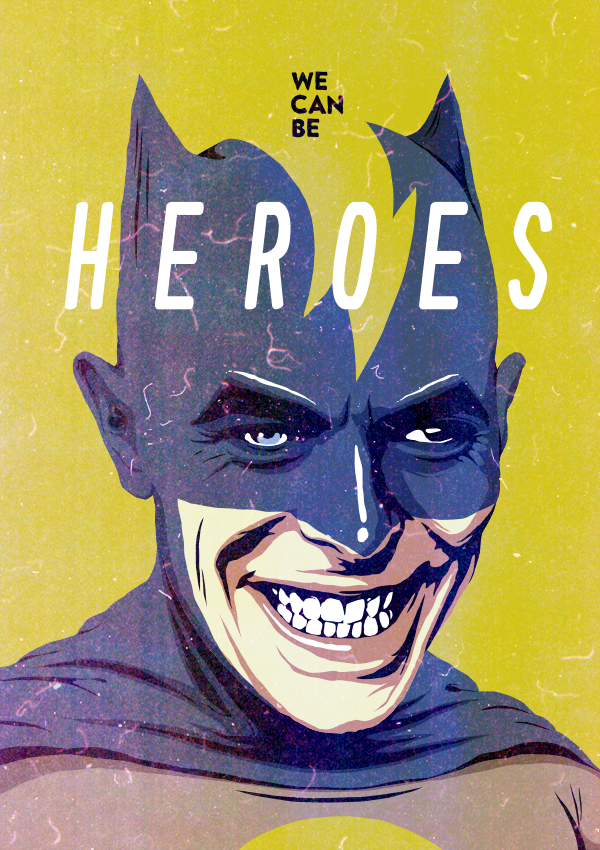
We never got to see David Bowie play a superhero, but here’s what he would have looked like as Batman and Captain America. See more art casting him as other character, all linked to hit songs of his, at Geek Tyrant.

Cosplay of the Day:

This hugely popular viral video features someone dressed as Elsa dancing to “Metralhadora” during Carnival in Brazil, joined by other characters from Frozen, plus Spider-Man and Woody from Toy Story (via Buzzfeed):

Depois do sucesso de Carreta Furacão, esse carnaval nos traz a Carreta Vingadora.

Posted by Brazileirícimos on Tuesday, February 9, 2016

Toy of the Day:

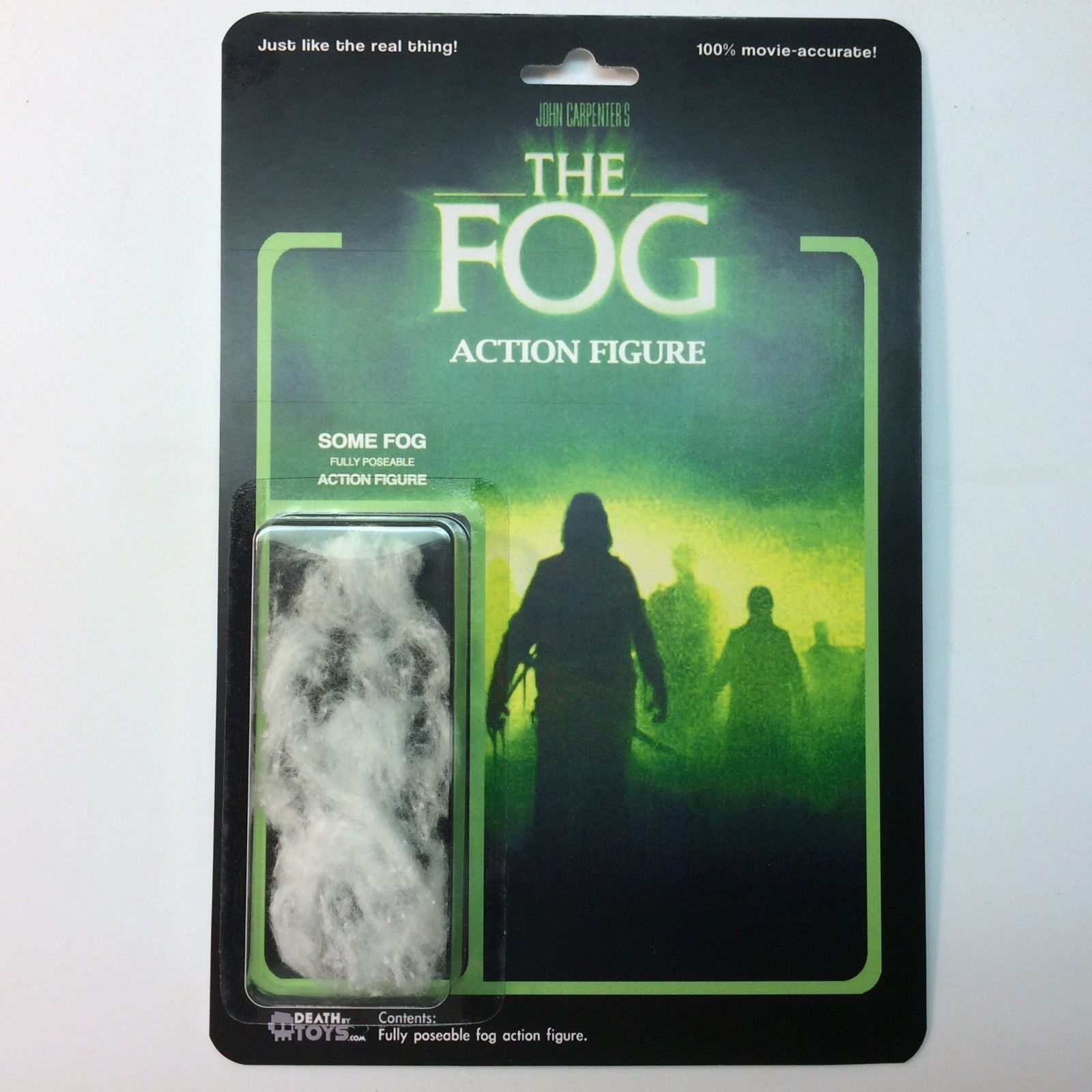
Finally, thanks to Death by Toys, you can now own The Fog action figures. Er, make that action fluff (via Dread Central):

Movie Homages of the Day:

Watch scenes from The Simpsons side by side with the movies they reference (via One Perfect Shot):

[embedded content]

Movie Comparison of the Day:

Speaking of homage, The Film Theorists ponder whether Reservoir Dogs rips off City of Fire or is just paying tribute:

[embedded content]

Classic Trailer of the Day:

This week is the 20th anniversary of the release of Ted Demme‘s Beautiful Girls. Watch the original trailer for the ensemble rom-com below.

[embedded content]

and

This entry passed through the Full-Text RSS service – if this is your content and you’re reading it on someone else’s site, please read the FAQ at fivefilters.org/content-only/faq.php#publishers.


No Image

Famous Big-Wave Surf Contest Thwarted By Undersized Waves

A surfer catches a wave at Waimea Bay after the In Memory of Eddie Aikau surfing contest was canceled on Wednesday.

A surfer catches a wave at Waimea Bay after the In Memory of Eddie Aikau surfing contest was canceled on Wednesday. Marco Garcia/AP hide caption

toggle caption Marco Garcia/AP

There’s really only one thing you absolutely need to hold a big-wave surf competition, and it’s big waves.

Unfortunately for a famous surf contest in Hawaii scheduled for Wednesday, the waves failed to measure up.

“The Bay calls the day. The Eddie is No Go,” read the website of the Quiksilver In Memory of Eddie Aikau contest, called “The Eddie” for short.

The beach of Oahu’s North Shore, where the competition was slated to take place, was packed with spectators before the sun had even risen, The Associated Press reports, but the requisite swells never materialized.

Around dawn, organizers called it off hours before it was supposed to begin.

Clyde Aikau, Eddie Aikau’s brother, thanked the surfers and spectators for their support in a video posted to the site. He said, “We are sorry it didn’t run but that’s how nature is. Hopefully we’ll have it again and see you next time.”

[embedded content]
YouTube

The AP adds that El Niño conditions had helped stir up big waves, but the expected 40-foot swells never showed up on Wednesday. The event organizers will keep an eye on the ocean to see whether conditions allow the competition to go ahead in the coming weeks.

Wednesday’s “Eddie” was to be the first since 2010. In fact, since its inception in 1985, it has been held only eight times, according to the World Surf League website. The site has this about the origins of the competition:

“The big-wave event honors the legendary Eddie Aikau, Waimea Bay’s first lifeguard. A North Shore local and respected waterman, Aikau spent his free time rescuing swimmers and surfing big swells. After competing as a professional surfer, he was selected to join an expedition on a Polynesian voyaging canoe — the Hokule’a — headed for Tahiti. But mission was quickly abandoned when the Hokule’a encountered a storm and capsized. After surviving the night with his crew mates, Aikau decided to paddle to land for help.

“Despite his unparalleled skills in the water, he would never reach land. A massive manhunt began, including the deployment of the largest air and sea search in Hawaiian history, but Aikau was never seen again.”

[embedded content]
YouTube

This entry passed through the Full-Text RSS service – if this is your content and you’re reading it on someone else’s site, please read the FAQ at fivefilters.org/content-only/faq.php#publishers.

No Image

Fed Chair Janet Yellen Warns Of Growing Risks To U.S. Economy

3:04

Download

Federal Reserve Chair Janet Yellen made clear in congressional testimony Wednesday she sees an economy that faces increased risk. Her assessment was sufficiently downbeat to practically remove the possibility of another interest rate hike at the Fed’s next monetary policy meeting in March.

Transcript

ARI SHAPIRO, HOST:

A reality check today from Federal Reserve Chair Janet Yellen. She acknowledged that the U.S. economy is facing a higher level of risk than just a few months ago. NPR’s John Ydstie reports.

JOHN YDSTIE, BYLINE: Yellen was on Capitol Hill giving her semi-annual report to Congress on the health of the U.S. economy, and here’s what she had to say in her opening statement.

(SOUNDBITE OF ARCHIVED RECORDING)

JANET YELLEN: Financial conditions in the United States have recently become less supportive of growth.

YDSTIE: Yellen blamed the sharp decline in stock prices, less available credit, weak global growth and a further strengthening of the dollar, which hurts U.S. exports.

(SOUNDBITE OF ARCHIVED RECORDING)

YELLEN: These developments, if they prove persistent, could weigh on the outlook for economic activity in the labor market.

YDSTIE: Not a very sunny outlook. But, ironically, that’s what investors were looking for – an expression from Yellen that she sees the same headwinds for the economy that they do. As investors see it, Yellen’s acknowledgment of these economic headwinds makes it less likely that the Fed will raise interest rates again anytime soon. But Yellen walked a fine line in the hearing. She didn’t explicitly take another interest rate hike off the table. And in response to a question about whether recent market turmoil had convinced policy-makers to put off thoughts of further interest rate hikes, Yellen said…

(SOUNDBITE OF ARCHIVED RECORDING)

YELLEN: I think the answer is maybe, but the jury is out. We’ve continued to see progress in the labor market. Over the last three months, there’ve been 230,000 jobs per month averaging through.

YDSTIE: And, Yellen said, while economic growth was disappointing at the end of last year, she expects it to pick up, helped by lower oil prices.

(SOUNDBITE OF ARCHIVED RECORDING)

YELLEN: If you look at the difference in oil prices now relative to 2014, for the average American household, we’re looking at a savings of a thousand dollars a year.

YDSTIE: Yellen said that’s boosting consumer spending. Wall Street responded positively to Yellen’s testimony, but lost its gains later in the day. Also today, Yellen faced consistent questioning from African-American lawmakers about the continued high rates of unemployment in their communities, even as the national unemployment rate is at 4.9 percent. Here’s Minnesota Democrat Keith Ellison.

(SOUNDBITE OF ARCHIVED RECORDING)

KEITH ELLISON: White unemployment in Minnesota is 2.9 percent as of December 2015, but black unemployment is 14.1. What can we do about it?

YDSTIE: Yellen responded that the Fed’s main tool, manipulating interest rates to boost employment across the economy, could not be targeted at one group.

(SOUNDBITE OF ARCHIVED RECORDING)

YELLEN: The Fed, of course, has a role to play, but job training, educational programs, programs that address other barriers in the labor market, this is Congress’s job to address.

YDSTIE: Yellen will visit the Senate tomorrow. John Ydstie, NPR News, Washington.

Copyright © 2016 NPR. All rights reserved. Visit our website terms of use and permissions pages at www.npr.org for further information.

NPR transcripts are created on a rush deadline by a contractor for NPR, and accuracy and availability may vary. This text may not be in its final form and may be updated or revised in the future. Please be aware that the authoritative record of NPR’s programming is the audio.

This entry passed through the Full-Text RSS service – if this is your content and you’re reading it on someone else’s site, please read the FAQ at fivefilters.org/content-only/faq.php#publishers.


No Image

Songs We Love: Cerrone, '2nd Chance (feat. Tony Allen)'

Marc Cerrone

Marc Cerrone Courtesy of the artist hide caption

toggle caption Courtesy of the artist

Afro (Because Music/Atlantic 2016)

Afro (Because Music/Atlantic 2016) Courtesy of the artist hide caption

toggle caption Courtesy of the artist

It’s been a boom time for old-school disco producers looking to grab some of the EDM spotlight, and, to put it kindly, the results have usually been mixed. Guest stars and cover versions are the default when an old hand makes a grand re-entrance in any genre. But even though he was responsible for some of the most famous records in all of Eurodisco — the most proudly mechanical and formula-driven dance-music style of the 1970s — it’s somehow unsurprising that Frenchman Marc Cerrone has personalized that script.

Rather than grasping for old glory or at straws, Cerrone’s new Afro EP sounds sleekly contemporary, without the slightest strain. The theme is in the title: In addition to a solo track, the two originals are collaborations with a pair of crucial African musicians, including Manu Dibango on “Funk Makossa,” a stretching out of the latter’s foundational 1972 hit, “Soul Makossa.” (The EP’s other three tracks are remixes, including one by key Daft Punk collaborator Todd Edwards.)

[embedded content]
YouTube

But Afro‘s opening track is the gem. “2nd Chance” features Tony Allen, the drummer in Fela Kuti‘s original band, Africa 70, and the force behind a string of Afrobeat classics, and it is his buoyant pulse, along with a flickering wah-wah guitar, that sets the tone. The tempo is quick and there’s a lot going on — sharp strings, taut piano, a bit of chanting — but it all seems utterly casual, like a still-stylish, well-worn suit. And although both Cerrone and Allen are known for stretching things out (up to twenty minutes at a time on their best days), the brevity of “2nd Chance” — also available on the EP in a seven-minute “Extended Club Mix” — keeps the focus clear and leaves the listener wanting more.

Afro EP is out on February 12 on Because Music/Big Beat.

This entry passed through the Full-Text RSS service – if this is your content and you’re reading it on someone else’s site, please read the FAQ at fivefilters.org/content-only/faq.php#publishers.


No Image

Today in Movie Culture: Hayao Miyazaki's 'Phantom Menace,' Honest 'Scott Pilgrim' Trailer and More

Here are a bunch of little bites to satisfy your hunger for movie culture:

Movie Takedown of the Day:

Honest Trailers vs. Scott Pilgrim vs. the World:

[embedded content]

Classic Cartoon of the Day:

Today is the 60th anniversary of the theatrical release of the Oscar-nominated animated short Gerald McBoing! Boing! on Planet Moo. Watch it below.

[embedded content]

Reimagined Movie of the Day:

Star Wars: Episode 1: The Phantom Menace looks much better remade as an animated feature from Studio Ghibli (via Geek Tyrant):

Alternative Endings of the Day:

See a number of different ways Star Wars: The Force Awakens could have ended:

[embedded content]

Fan Art of the Day:

Joey Spiotto’s latest Storytime series print offers an adorable look at young Rey and young BB-8 from Star Wars: The Force Awakens (Etsy):

Dream Toy of the Day:

Kibooki’s “Vinyl Idolz” series of 3D fan art that looks like vinyl toys added this Kylo Ren as Matt the Radar Tech to the bunch (via Design Taxi):

Vintage Image of the Day:

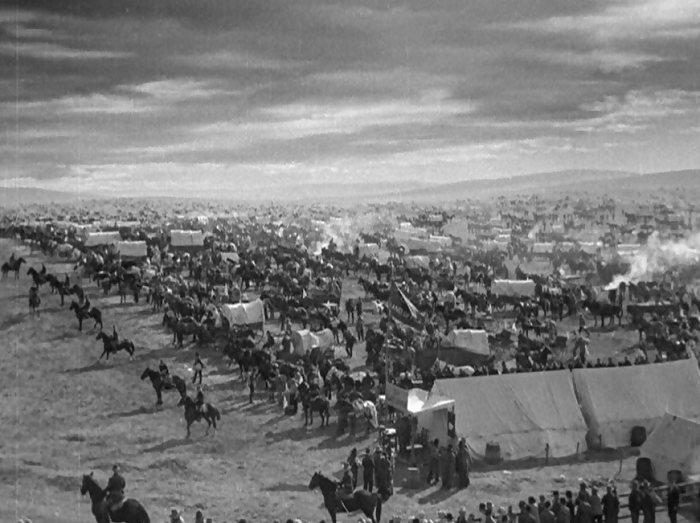
Future Oklahomans await the start of the Land Rush of 1889, as depicted in the Best Picture-winning Western Cimarron, which opened in theaters 85 years ago today.

Movie Score Recording Session of the Day:

Jon Favreau, director of Disney‘s live-action remake of The Jungle Book, tweeted this video of the new version of “The Bare Necessities”:

?? pic.twitter.com/I5uviuSNfy

— Jon Favreau (@Jon_Favreau) February 9, 2016

Movie Trivia of the Day:

In anticipation of the new sequel, here are seven things you probably don’t already know about Zoolander:

[embedded content]

Classic Trailer of the Day:

Today is the 20th anniversary of the theatrical release of John Woo‘s Broken Arrow. Watch the original trailer for the action movie, which stars John Travolta and Christian Slater, below.

[embedded content]

and

This entry passed through the Full-Text RSS service – if this is your content and you’re reading it on someone else’s site, please read the FAQ at fivefilters.org/content-only/faq.php#publishers.


No Image

Japan Is Selling Bonds Guaranteed To Lose You Money

Pedestrians stand outside a securities firm in Tokyo Tuesday. Stocks plunged again in Japan, and the interest rate on the benchmark bond fell below zero.
3:11

Download

Pedestrians stand outside a securities firm in Tokyo Tuesday. Stocks plunged again in Japan, and the interest rate on the benchmark bond fell below zero. Eugene Hoshiko/AP hide caption

toggle caption Eugene Hoshiko/AP

Japan is venturing further into the terra incognito of negative interest rates, selling a 10-year government bond that actually costs its purchasers money over time.

In doing so, Japan joins a handful of European countries that have also lowered rates below zero.

The yield on the 10-year note sold by the Bank of Japan dipped to an unprecedented level of negative .05 percent, meaning that anyone who buys it will lose money.

But with global financial markets in turmoil, investors are evidently willing to pay a price for parking their money in an asset that is widely seen as very safe.

Like other central banks, the Bank of Japan has been steadily lowering interest rates for years in an effort to stimulate its economy. It cut rates so much that they eventually fell to zero, leaving the bank with no more ammunition

When interest rates fell to zero, it was widely thought that

With global stock markets in turmoil, investors have been pouring money into safe havens such as the yen. That’s sent the value of the yen rising against competing currencies such as the Euro, and made Japan’s exports less competitive.

Japanese officials are hoping that negative rates will lessen the pressure on the yen and stimulate growth.

“The hope is, and it’s a big hope, that going to negative would help to add more stimulus to the economy, particularly as the world economy slows,” said David Blanchflower, professor of economics at Darmouth and a former member of the Bank of England’s Monetary Policy Committee.

The Bank of Japan has a long history of using monetary policy to neglible effect. It long ago cut interest rates to stimulate its economy, but growth has remained well below expectations.

Like other major central banks, including the Federal Reserve, the Bank of Japan has now essentially lowered rates to zero.

long ago cut the interest rates on the money it pays for holding

The move by the Bank of Japan is aimed at stimulating its economy, but it increases the likelihood that other countries will try to do the same thing.

“In some sense this is an opening shot in a currency war. I’ve called it currency skirmishes,” “As one cuts and one goes to negative, others do too.”

in an effort to stimulate its economy, but growth has remained well below expectations. Like other major central banks, including the Federal Reserve, it’s essentially lowered rates to zero.

The analogy I would give, it’s like trying to play golf with only a one iron. You’ve only got one club, that’s what you’ve got to use.

“There’s that terrible thing called zero, which is looking and we all thought that the zero lower bound was as low as things could go. That was as much stimulus as you could put into the economy.”

This entry passed through the Full-Text RSS service – if this is your content and you’re reading it on someone else’s site, please read the FAQ at fivefilters.org/content-only/faq.php#publishers.