Articles by admin

No Image

Super Bowl Ads Past And Present: How Do They Stack Up?

Many consider Apple's 1984 Super Bowl ad, directed by Ridley Scott, one of the best Super Bowl ads ever.
3:45

Download

Many consider Apple’s 1984 Super Bowl ad, directed by Ridley Scott, one of the best Super Bowl ads ever. YouTube hide caption

toggle caption YouTube

For lots of people Super Bowl Sunday isn’t even about the football, it’s about the commercials. Over the years, advertising spots during the Super Bowl have become more elaborate, more talked about and more expensive than ever.

CBS, which is airing Super Bowl 50 this Sunday, is charging advertisers between $4.8 and $5 million for a 30-second spot. That’s up from a $4.4 million average cost last year, and $2.5 million a decade ago, according to Kantar Media. Last year’s game drew a record 114.4 million viewers, with even more expected this year.

With the hefty price tag for television time, advertisers are integrating social media and online advertising to try to maximize exposure. And companies are even putting the ads on YouTube in advance of the Big Game.

So what should we expect this year?

“Compared to last year we’re really seeing much more fun,” says Jeanine Poggi, who covers the TV industry for Advertising Age. This year’s Super Bowl will be “a lot more star-studded,” she told NPR’s Michel Martin. Poggi says this year’s ads include about 40 celebrities, up from about 28 last year.

In this ad for Bud Light, Amy Schumer and Seth Rogen say America’s shared love of beer will bring the country together:

[embedded content]
YouTube

If you’ve ever wondered what it would be like to see Jeff Goldblum sing and play a piano as it goes up the side of an apartment building, here’s your chance:

[embedded content]
YouTube

Christopher Walken says socks can be exciting, and so can the Kia Optima:

[embedded content]
YouTube

This is after last year, when most of the talked-about ads took a serious tone.

“We actually were kind of dubbing it the ‘Somber Bowl,'” Poggi says. “There was cyber bullying, domestic abuse.”

This Nationwide commercial from last year about a boy who got killed from preventable household accidents got a lot of backlash:

[embedded content]
YouTube

“That’s just depressing,” says Poggi, who says that serious ads do tend to outperform humorous ones. “But, if you have a Super Bowl filled with these depressing, sad [ads] none of them stand out from each other.”

The Super Bowl is one of the few times advertisers can get a massive audience in the age of Netflix and hundreds of cable channels.

And how do the modern ads stack up against some old favorites?

Michael Hiltzik argued in the Los Angeles Times that no Super Bowl ad will ever top the 1984 Apple ad for the Macintosh computer, which set the standard that Super Bowl ads should be different:

[embedded content]
YouTube

Some lists put this 1979 Mean Joe Greene ad for Coca-Cola as one of the best, maybe because many people still remember it:

[embedded content]
YouTube

The Budweiser frogs ad from 1995 was a simple concept. But at least you remember what it was for:

[embedded content]
YouTube

And USA Today puts this McDonald’s ad with Larry Bird and Michael Jordan at the top of its list:

[embedded content]
YouTube

This entry passed through the Full-Text RSS service – if this is your content and you’re reading it on someone else’s site, please read the FAQ at fivefilters.org/content-only/faq.php#publishers.


No Image

A Voter's Guide To The Health Law Chatter

Republican presidential hopeful Sen. Ted Cruz initially claimed his private insurance had been canceled. It turned out his insurer had transferred him to a plan with a narrow network of providers.

Republican presidential hopeful Sen. Ted Cruz initially claimed his private insurance had been canceled. It turned out his insurer had transferred him to a plan with a narrow network of providers. Andrew Burton/Getty Images hide caption

toggle caption Andrew Burton/Getty Images

Nearly six years after its enactment, the Affordable Care Act remains a hot issue in the presidential race – in both parties.

“Our health care is a horror show,” said GOP candidate Donald Trump at the Republican debate in South Carolina in December. Texas Sen. Ted Cruz, winner of the Iowa caucuses, said at the debate in Des Moines that the health law has been “a disaster,” adding it’s “the biggest job-killer in our country.”

Democrats largely support the law, but even they can’t agree on how to fix its problems. Hillary Clinton said at the Jan. 25 town hall on CNN that she wants to “build on the ACA. Get costs down, but improve it, get to 100 percent coverage.”

Clinton’s rival for the nomination, Vermont Sen. Bernie Sanders, acknowledged that “the Affordable Care Act has done a lot of good things,” but added that “the United States today is the only major country on earth that doesn’t guarantee health care to all people as a right.” Sanders is pushing a government-run “Medicare for All” plan instead.

In some cases candidates are bending the truth. But praise and criticisms of the law can be accurate. That’s because the health law is so big and sweeping that it has had effects both positive and negative.

Here is a brief guide to some things the health law has – and has not – accomplished since it was signed by President Barack Obama in 2010.

CLAIM: The law has increased the number of people with health insurance coverage.

This is true, no matter what measure you use. The Census Bureau and polling firm Gallup both found substantial drops in the percentage of people without health insurance after the majority of the law’s coverage expansions took effect in 2014.

COUNTER-CLAIM: There are still millions of Americans who don’t have insurance.

This is also true. Even though approximately 90 percent of Americans now have insurance, that remaining 10 percent amounts to more than 30 million people.

Millions aren’t eligible for coverage under the law because they’re not in the U.S. legally. Another 3 million are in the so-called Medicaid gap, meaning they would be eligible for Medicaid under the ACA except their states opted not to accept the expansion after the Supreme Court effectively ruled the expansion optional.

Still others are eligible to purchase coverage on a health insurance exchange, but either can’t afford it, don’t think the insurance available offers a good value, or don’t know they are legally required to obtain it. An estimated 7.5 million Americans paid a fine to the IRS for failing to get covered in 2014; millions more were exempt from the requirement and didn’t have coverage.

In recognition of the fact that enrollment has been smaller than expected, the Congressional Budget Office recently lowered its projections for those who will buy insurance under the law from 21 million to 13 million in 2016.

CLAIM: The ACA has fixed the dysfunctional individual insurance market.

Prior to the passage of the health law, millions of people who didn’t have work-based or government coverage were shut out of buying their own insurance because they had been sick or because the coverage offered did not cover the services they needed.

The law aimed to address the problems in the individual market in several ways, including requiring insurers to sell to those with preexisting conditions at the same price as healthier people; standardizing the benefits package; and limiting the size of deductibles. Tax credits were made available in order to help people afford coverage. And the law created insurance exchanges intended to help consumers compare, choose, sign up and pay for health insurance.

How well these changes succeeded in stabilizing the market isn’t clear. What is clear is that more people are now insured through the market.

COUNTER-CLAIM: The ACA has made the individual market worse.

All is not well in the individual market. Even with help paying premiums, many moderate-income Americans are finding that their deductibles and copayments are so high they cannot afford to use their insurance.

In other cases, individuals can get insurance they can afford to use, but it doesn’t include their regular doctors and hospitals. In fact, plans that do offer coverage outside of the insurer’s network are becoming harder to find and more expensive.

That change affected Cruz, who initially claimed his private insurance had been cancelled. In fact, his insurer had stopped offering his broad-choice plan and automatically transferred him to a narrow-network product.

CLAIM: The ACA has improved the Medicare program.

While most of the law was aimed at those without insurance, lawmakers also took the opportunity to beef up some benefits for the 55 million Americans in the Medicare program.

Medicare enrollees got new coverage for preventive services and annual checkups, and those with high prescription drug expenses got help to fill the “doughnut hole” gap left by the 2003 Medicare drug program.

Over the longer term, the law created several payment experiments intended to improve the quality of care Medicare patients receive and lower costs. These include efforts to prevent patients from going back to the hospital after they’ve been discharged.

COUNTER-CLAIM: The ACA has not saved money for Medicare.

The rate of increase in Medicare spending has slowed since the health law was passed in 2010. But it’s not clear how much of that can be attributed to the law, aside from some provisions that actually cut payments to hospitals and other health providers.

And some of the most highly anticipated projects, including accountable care organizations that are paid bonuses for keeping Medicare patients healthy and lowering spending, have not so far shown very good results.

CLAIM: The ACA has killed jobs.

One of Republicans’ favorite talking points – that the health law would depress employment – has turned out not to be the case.

An analysis in 2015 by the Urban Institute found that the health law “had virtually no adverse effect on labor force participation; employment; the probability of part-time work; and hours worked per week by nonelderly adults.”

While there would be fewer people in the workforce due to the law, the Congressional Budget Office found in 2014 that “almost entirely” stems from voluntary actions by workers who could quit because they no longer depended on their jobs for insurance — now they could buy it on their own.

CLAIM: The ACA has slowed overall health spending.

The White House trumpeted the fact that health spending grew at its slowest rates ever between 2010 and 2013. But health policy analysts are still engaged in a lively debate about how much of the slowdown was attributable to the recession, to the health law and to other changes in the health care system.

Meanwhile, the rate of spending has begun to accelerate again, jumping from a 2.9 percent increase in 2013 to 5.3 percent in 2014. That has occurred as millions more Americans gained access to health care through the law.

Kaiser Health News is an editorially independent news service that is part of the nonpartisan Henry J. Kaiser Family Foundation. Julie Rovner is on Twitter: @jrovner.

This entry passed through the Full-Text RSS service – if this is your content and you’re reading it on someone else’s site, please read the FAQ at fivefilters.org/content-only/faq.php#publishers.


No Image

Best of the Week: First Look at Chris Hemsworth in 'Ghostbusters,' 'Fast and Furious' Forever and More

The Important News

First Looks: We got our first glimpse of Chris Hemsworth’s Ghostbusters role, plus more new images. Vin Diesel shared new images from XXX: The Return of Xander Cage. And he shared some more.

Star Wars Mania: Gwendoline Christie confirmed Captain Phasma will return in Star Wars Episode VIII.

Franchise Fever: Vin Diesel revealed release dates for Fast and Furious movies through 2021. Channing Tatum revealed how he was almost in the Fast and Furious movies.

New Directors/New Films: Steven Soderbergh will direct Channing Tatum in Lucky Logan. Jaume Collet-Serra will direct Liam Neeson again in The Commuter. Josh Boone might direct Stephen King’s Revival. Mary Harron is helming a Manson Family movie. James Franco will direct true story Zola.

Produce Aisle: Leonardo DiCaprio is producing a movie of The Sandcastle Empire.

Reel TV: Dan Stevens and Aubrey Plaza will star in the X-Men series Legion.

Settling the Score: Two tracks from the Batman v Superman: Dawn of Justice score were released.

Box Office: Kung Fu Panda 3 won the weekend.

Awards: Idris Elba made history at the SAG Awards.

Festival Fair: The SXSW Film Festival announced its 2016 slate.

The Videos and Geek Stuff

New Movie Trailers: Lego Star Wars: The Force Awakens, Demolition, Miles Ahead, Zootopia, Zoolander 2, Green Room, Me Before You, The Witch, The Driftless Area, Creative Control and Get a Job.

TV Spots: Alice Through the Looking Glass.

Clips: Channing Tatum sings in Hail, Caesar!

Behind the Scenes: Fantastic Beasts and Where to Find Them and Guardians of the Galaxy Vol. 2.

Watch: This year’s Super Bowl movie trailers as they become available. And Super Bowl players make Oscar predictions.

Learn: Which Star Wars icon almost appeared in The Force Awakens.

See: Star Wars as an R-rated Grindhouse movie.

Learn: Which movie characters are the most realistic psychopaths.

See: The best closing shots in movie history.

Learn: George Miller’s reason why Justic League: Mortal didn’t happen.

Watch: Jurassic World visual effects reel.

See: Kate Winslet explains how Jack could have been saved in Titanic.

Learn: The real reason Bill Murray repeated the same day in Groundhog Day.

See: Winnie the Pooh characters redo this year’s Oscar nominees.

Learn: Where you can ride Falkor from The Neverending Story.

See: The Revenant video game.

Learn: Why we cry during happy parts of movies.

See: This week’s best new movie posters.

Our Features

Monthly Movie Guide: Above is our guide to this month in movies.

New Movie Guides: Hail, Caesar! and Pride and Prejudice and Zombies.

Film Festival Guide: The Sundance movies that need to be on your radar.

Set Visit: Lazer Team.

Interview: Bridge of Spies producer Kristie Macosko Krieger.

Geek Movie Guide: Everything movie geeks needs to see and buy this month.

Horror Movie Guide: All the news and trailers a horror fan needs this month.

Comic Book Movie Guide: What happened between Man of Steel and Batman v Superman: Dawn of Justice.

R.I.P.: Remembering all the reel-important people we lost in January.

Home Viewing: Here’s our guide to everything hitting VOD this week.

and

MORE FROM AROUND THE WEB:

This entry passed through the Full-Text RSS service – if this is your content and you’re reading it on someone else’s site, please read the FAQ at fivefilters.org/content-only/faq.php#publishers.


No Image

Officials Remain Tight-Lipped On Complex Security At Super Bowl 50

3:56

Download

Law enforcement experts say this year’s Super Bowl is one of the most guarded public events in recent history. But you won’t hear that from federal or local officials. They are very tight-lipped about security.

Transcript

KELLY MCEVERS, HOST:

San Francisco is, of course, the official host city for the Super Bowl on Sunday. But the game itself between the Carolina Panthers and the Denver Broncos will be played 45 miles away. It’ll be in the Silicon Valley city of Santa Clara. NPR’s Richard Gonzales reports that distance has made security for the game even more complicated than usual.

RICHARD GONZALES, BYLINE: I’m standing near the foot of Market Street in downtown San Francisco at the entrance of Super Bowl City. It’s an enclosed venue occupying several blocks. It’s free to the public, and inside there’s music, food, drink, commercial displays and interactive games for all ages. There’s hundreds of people standing in line, waiting to go through a metal detector to get inside. And outside there’s police standing by, carrying high-powered rifles.

RICH ALONZO: Oh, that’s good security. I love that.

GONZALES: Rich Alonzo, a retired public transit manager, and his wife, Mary Jo, are standing in line.

R. ALONZO: I hate to say we have to live like this.

MARY JO ALONZO: So they had snipers up there, too, right?

R. ALONZO: Somewhere, yeah.

GONZALES: But security is about more than officers with guns. An estimated 1 million people will descend on the San Francisco Bay area to be part of the Super Bowl festivities. The plan to protect them started more than two years ago. And today, the security hub is many miles to the south. Inside a nondescript building in Silicon Valley, six miles from where the Super Bowl will be played, there’s a large cafeteria room with the window shades drawn closed. The room is crammed full of computers, screens large and small, phones, miles of wires and cables – all of the tools of a pop-up, high-tech war room for more than two dozen federal, state and local law enforcement agencies, working 24/7. Security is so tight that I was allowed to see the room, but I wasn’t permitted to record any sound in the FBI’s information operation center. John Lightfoot is the assistant special agent in charge for San Francisco. His description of the room is pretty technical.

JOHN LIGHTFOOT: This center has multiple high-speed, low-drag, redundant communications capabilities, where we take in information and spit it back out.

GONZALES: Lightfoot is talking about collecting and sharing everything from officer field reports and 911 calls to traffic and weather alerts, camera images and radiological sensors posted around the region, not to mention social media. Part of the job of processing all of that information comes to Bryan Ware. He’s the chief technology officer for a Virginia-based company called Haystax Technologies. He’s worked on six other Super Bowls. Ware says, compared with last year’s game in Glendale, Ariz., this one is more logistically challenging, partly because the game will be played 45 miles away from where tens of thousands of fans will be lodging in San Francisco.

BRYAN WARE: You know, you can’t get hardly anywhere in the Bay are without going through two hours’ worth of traffic.

GONZALES: Ware says one of the main challenges is coordinating information between different law enforcement agencies with different chains of command throughout the region.

WARE: All those kinds of things need to be enabled much more by technology because you don’t have the benefit of kind of close geography.

GONZALES: Even with all the sexy hardware, security officials stressed the need for human intelligence. That’s why their mantra to the public all week has been see something, say something. FBI Special Agent John Lightfoot says it isn’t the threat of a foreign terrorist attack that keeps him up at night. Something else worries him.

LIGHTFOOT: There’s that one person out there who decides they want to do something, and we miss it for whatever reason – the public hasn’t shared it with us or just not appeared on our radar screen. The lone offender keeps me up.

GONZALES: So far, there are no credible threats against the Super Bowl, and security officials have been noticeably tight-lipped. As one big-event security specialist puts it, plans known are plans defeated. Richard Gonzales, NPR News, San Francisco.

Copyright © 2016 NPR. All rights reserved. Visit our website terms of use and permissions pages at www.npr.org for further information.

NPR transcripts are created on a rush deadline by a contractor for NPR, and accuracy and availability may vary. This text may not be in its final form and may be updated or revised in the future. Please be aware that the authoritative record of NPR’s programming is the audio.

This entry passed through the Full-Text RSS service – if this is your content and you’re reading it on someone else’s site, please read the FAQ at fivefilters.org/content-only/faq.php#publishers.


No Image

Unemployment May Be Dropping, But It's Still Twice As High For Blacks

3:51

Download

The jobs numbers are in: 150,000 jobs were added to the economy in January. That’s fewer than expected, though the unemployment rate fell to an eight-year low.

President Obama took the opportunity this morning to take a shot at some of his more vocal opponents.

“The United States of America, right now, has strongest, most durable economy in the world,” he said. “I know that’s still inconvenient for GOP stump speeches, as their ‘Doom And Despair’ tour plays in New Hampshire — I guess you cannot please everybody.”

There was a lot of good news in the report: It wasn’t just hours worked that went up, pay went up too — and that hasn’t happened in years.

But those things aren’t true for everyone.

“One of the problems is that we continue to have a tale of two economies,” says Imara Jones is a economist and writer. “[The improvement] is mostly true for people who are white, have good educations, and are tied to those sectors that are flourishing in the global economy. And then we have the economy of everyone else that has been left out and left behind”

One of the groups left behind is African-Americans. Their unemployment rate, 8.8 percent, is more than double the rate for whites, 4.3 percent, and is actually closer to the 9 percent unemployment rates whites experienced in the depths of the recession. And for blacks, the rate actually went up last month.

Lowell Blackmon, 20, is working on getting a GED — and on getting a job.

“Right now, any type of job that, you know — that can pay me,” he says. “I’m good with my hands, so I like to work a lot. They got a lot of jobs out here, you just gotta have your stuff to be able to do it.”

Valerie Johnson, an economist with the Economic Policy Institute, says part of the reason the unemployment rate for blacks may have gone up is because more were looking for work.

“Perhaps people who were previously unemployed were encouraged by last month’s numbers and are now looking for employment,” she says, adding that while there’s good news for everyone in this months’ report, “we still maintain that roughly 2-to-1 ratio between black and white unemployment.”

“That disparity is very persistent,” Johnson says, “and it’s present whether we’re in a recession or in a recovery. It’s present at all levels of education.”

Gwendolyn Cole hopes she’s one of the workers headed in the right direction — she’s been out of a job for two years, but just got an interview with the utility company Pepco.

“I’m so happy about it, ’cause I did 15 years with D.C. Public Schools, and then I turned around and did 15 years as home child care provider,” she says. “So I went into electronics, and it’s a wonderful field, because it’s more data entry, customer service.”

Cole’s work history shows why many African-Americans are struggling to make their way out of the last recession, says Imara Jones.

African-Americans are more likely to be teachers and firefighters and police than their white counterparts — in part because of the strong anti-discrimination laws that exist for government jobs that you don’t have in the private sector,” he says. “And of course during the Great Recession, one of the greatest lagging sectors in jobs was that — in government.”

Jones says though there is a still a lot of good news, but a lot of people especially African-Americans — don’t feel like they’re benefiting from it yet.

“Once you have labor force participation going up, unemployment coming down, wages going up and hours going up, that’s the sign of a recovery — but we’re not there yet,” he says.

But economists Imara Jones and Valerie Johnson do say we’re getting closer — one little step at a time.

This entry passed through the Full-Text RSS service – if this is your content and you’re reading it on someone else’s site, please read the FAQ at fivefilters.org/content-only/faq.php#publishers.


No Image

High Costs For Drugs Used By A Few Are Starting To Add Up

Multiple sclerosis pill Tecfidera is on the top 10 list of most costly specialty drugs, as measured by overall spending, for California's health benefit system for public workers and retirees.

Multiple sclerosis pill Tecfidera is on the top 10 list of most costly specialty drugs, as measured by overall spending, for California’s health benefit system for public workers and retirees. John/Flickr hide caption

toggle caption John/Flickr

The cystic fibrosis drug Orkambi can help people with specific genetic mutations breathe better, but treatment with the pill comes with a hefty sticker price — $259,000 a year.

Orkambi, which was approved by the Food and Drug Administration last July, is expected to take almost $36 million from California’s general fund this fiscal year and next. That cost estimate doesn’t include any discounts the state may receive from drug manufacturers.

Seventy-four Californians with health coverage under the Department of Health Care Services are expected to receive the drug in the current fiscal year. In the next one, 220 people are expected to get it, some of whom may be the same patients as this year.

Orkambi is listed on the specialty tier of drug categories in some private health plans. That category is typically reserved for high-cost drugs or, in the federal government’s view, for drugs that cost more than $600 a month and are used by a small proportion of patients.

Specialty drugs are already proving to be a financial burden on one California agency, the California Public Employees’ Retirement System, which purchases health benefits for active and retired state workers. CalPERS says that specialty drugs made up less than 1 percent of all prescriptions for its members but accounted for 30 percent of the total drug costs in 2014.

Drugmakers say the health benefits from specialty drugs justify their cost.
“Patients are gaining access to medicines that are better treating their diseases or frankly even curing them,” said Priscilla VanderVeer, deputy vice president of communications at the Pharmaceutical Research and Manufacturers of America. “Patients are now healthier. They’re more productive. They’re functioning.”

VanderVeer said companies price drugs not just on the cost of production, but on the value the industry believes the drug brings to the health care system, such as efficacy, improvements in quality of life or length of life and the extent to which the medical need for a drug has gone unmet.

The price of the drug also accounts for the cost of developing other drugs and the high risk that a particular drug won’t make it to market, VanderVeer said. Only 12 percent of drugs that go through clinical trials get approved, according to PhRMA.

Finally, she said, the sticker price doesn’t reflect the final price paid for the drug, which can be heavily discounted through negotiations or because of mandated rebates for Medicaid programs.

Drugmakers are following the money, said Joel Hay, professor of pharmaceutical economics and policy at University of Southern California. Companies invest in specialty drugs that target a small population because their high price tags can be spread over a large insurance pool, he said.

Even though specialty drugs are “ridiculously expensive per treatment episode,” Hay said, the cost for each member in a health plan is “just a few cents.” Raising the price 10 cents on a diabetes drug, for example, would have a bigger budget impact, he said, because more people have diabetes than cystic fibrosis.

Hay says manufacturers are now less inclined to invest in drugs that treat millions of people, because there is more pushback on price. “Drug companies are for-profit companies obligated to make money for their stockholders,” Hay said. “They’re not virtuous charitable organizations.”

Drugmakers are also investing more in treating uncommon illnesses because there is less competition and therefore more opportunity for profit, said Dr. Helene Lipton, professor of health policy at the School of Pharmacy and Institute for Health Policy Studies at the University of California, San Francisco.

The high price of the drugs affects patients, she noted, because health plans put controls on the drugs so that they’re used as a last resort.

“That may mean going through two or more rounds of care with other medications before being able to use the specialty drug,” Lipton said.

Still, it’s not just specialty drugs that are straining health plans’ budgets, said Steve Miller, chief medical officer at Express Scripts, a pharmaceutical benefits manager that negotiates drug coverage for 7.5 million Californians.

“The price of drugs is just continuing to go up,” said Miller, explaining that the trend is due to both new high-cost drugs coming on the market, and mark-ups of old drugs.

There has been an explosion of drugs costing $100,000 a year over the past decade, for things like cystic fibrosis and cancer, Miller said. And there was a 127 percent price increase of branded drugs that had been on the market between 2008 and 2014, he says.

A California ballot initiative scheduled to go before voters this November aims to rein in drug costs by limiting the amount the state pays for a drug to no more than the lowest price paid for the same drug by the U.S. Department of Veterans Affairs.

A version of this story appeared first on KQED’s State of Health blog. CALmatters is a nonprofit journalism venture dedicated to explaining state policies and politics. Pauline Bartolone wrote this article while participating in the California Data Fellowship, a program of the Center for Health Journalism at USC’s Annenberg School of Journalism.

Barolone will be exploring how the cost of specialty drugs’ affects patient access. If you are a chronic disease patient who is either taking a specialty drug or having difficulty getting the right one, she would like to hear from you. Reach her on Twitter @pbartolone or pauline@calmatters.org.

This entry passed through the Full-Text RSS service – if this is your content and you’re reading it on someone else’s site, please read the FAQ at fivefilters.org/content-only/faq.php#publishers.

No Image

Today in Movie Culture: The Best Movie Endings of All Time, Tarkovsky's Influence On 'The Revenant' and More

Here are a bunch of little bites to satisfy your hunger for movie culture:

Movie Comparisons of the Day:

The Petrick highlights 17 shots/scenes from The Revenant and shows them side by side with similar shots/scenes in films by Andrei Tarkovsky (via Cinematic Montage Creators):

[embedded content]

Reimagined Movie of the Day:

Artist Jake Rowlands created this reworking of Star Wars as a samurai movie for a CG+ competition. See more at Live for Films.

Mashup of the Day:

If you’ve never gotten into Doctor Who, perhaps this Star Wars: The Force Awakens style trailer for the reboot’s first season will grab you (via Geek Tyrant):

[embedded content]

Video Essay of the Day:

The School of Life looks into how and why grown-up moviegoers cry during the loveliest moments in cinema:

[embedded content]

Vintage Image of the Day:

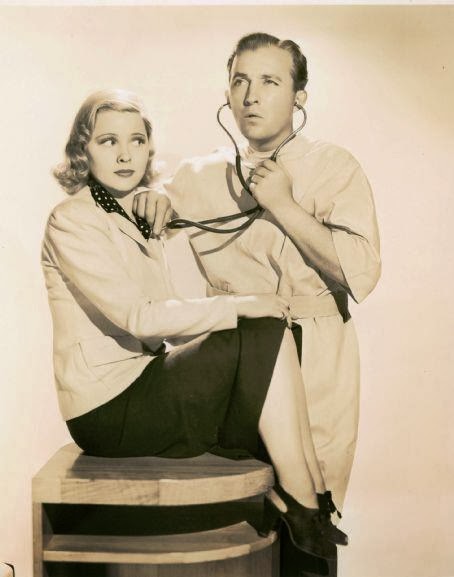
Mary Carlisle, who turned 102 yesterday, gets a check up from regular leading man Bing Crosby in 1938’s Doctor Rhythm:

Filmmaker in Focus:

The following video essay celebrates the “ma” or calm of Hayao Miyazaki‘s movies:

[embedded content]

Visual List of the Day:

CineFix counts down the 10 best closing shots of all time, including the endings of 2001, Fight Club, Inception, Stalker and Casablanca:

[embedded content]

Alternate Endings of the Day:

Speaking of movie endings, what if all movies just ended once their title was spoken? Here’s what a few, including Face/Off, would look like (via Devour):

[embedded content]

Fan Theory of the Day:

Is the ending of Galaxy Quest really an evil government reality show? That’s the theory presented in this io9 video:

[embedded content]

Classic Trailer of the Day:

Today is the 40th anniversary of the release of Paul Mazursky‘s Next Stop, Greenwich Village. Watch the original trailer for the movie, which co-stars Christopher Walken, Jeff Goldblum and features a very young uncredited Bill Murray, below.

[embedded content]

and

This entry passed through the Full-Text RSS service – if this is your content and you’re reading it on someone else’s site, please read the FAQ at fivefilters.org/content-only/faq.php#publishers.


No Image

With Oil Prices Languishing, Shell Reports 80 Percent Drop In Earnings

Royal Dutch Shell reported an 80 percent drop in earnings in 2015, but says it will still press ahead with the proposed mega-merger with BG Group plc.

Royal Dutch Shell reported an 80 percent drop in earnings in 2015, but says it will still press ahead with the proposed mega-merger with BG Group plc. Kirsty Wigglesworth/AP hide caption

toggle caption Kirsty Wigglesworth/AP

On Thursday, Shell released its full year report that showed an 80 percent drop in earnings from 2014 to 2015. The company’s earnings fell steeply from $19 billion in 2014 to $3.84 billion in 2015.

“We are making substantial changes in the company, reorganising our Upstream, and reducing costs and capital investment, as we refocus Shell, and respond to lower oil prices,” CEO of Royal Dutch Shell Ben Van Beurden said in a statement.

Part of this restructuring includes moving forward with a plan announced last April to buy the BG Group for about $70 billion in cash and shares. The move was hailed as one of the biggest energy mergers in at least a decade.

“The completion of the BG transaction, which we are expecting in a matter of weeks, marks the start of a new chapter in Shell, rejuvenating the company, and improving shareholder returns,” Van Beurden said.

While Shell’s shrinking earnings are staggering, the company isn’t alone. Slumping oil prices are affecting other industry behemoths like BP, Exxon and Chevron.

As the Two-Way reported, BP reported on Tuesday a 91 percent drop in earnings for the fourth quarter of 2015 and a 51 percent drop for the year.

Exxon and Chevron, too, saw their yearly earning cut by half. Exxon’s earnings fell by 50 percent from $16.2 billion in 2015 compared with $32.5 billion in 2014. Chevron’s CEO cited low crude oil prices to explain why the company’s revenue dropped from $19.2 billion to $4.6 billion.

“Our 2015 earnings were down significantly from the previous year, reflecting a nearly 50 percent year-on-year decline in crude oil prices,” said Chairman and CEO John Watson.

While the lower gas prices may be taking a toll on oil companies, it’s generally good news for people at the pump. But, NPR’s Chris Arnold warns, while lower oil and gas prices helps U.S. consumers save money, it could spell trouble for the U.S. economy overall. Chris explained why on All Things Considered last week:

“Jim Bianco, president of Bianco Research in Chicago, evokes an old adage: ‘The day that the price of oil falls, you might not like the reason.’

“He says a slowdown in China and elsewhere around the world is driving down the price of oil along with other commodities such as copper, aluminum and zinc.

“So at least part of the reason oil prices have crashed, Bianco says, goes beyond the oil market itself and the boom in production of oil in the U.S. It’s part of a larger global slowdown. And some investors are worried that slowdown will hurt the U.S., too.

“‘The fear is it’s part of a larger whole,’ Bianco says. ‘You cannot look at it in a vacuum.’

“So far, there isn’t a lot of evidence that the U.S. is getting dragged down by all the trouble abroad. Job growth remains pretty solid. The economic recovery is continuing. And some analysts think we might see a bigger boost from cheaper energy later this year.”

This entry passed through the Full-Text RSS service – if this is your content and you’re reading it on someone else’s site, please read the FAQ at fivefilters.org/content-only/faq.php#publishers.


No Image

House Hearing Probes The Mystery Of High Drug Prices That 'Nobody Pays'

Nancy Retzlaff, chief commercial officer for Turing Pharmaceuticals, was asked how much the drug Daraprim costs at the House Oversight and Government Reform Committee on Capitol Hill on Thursday.
3:39

Download

Nancy Retzlaff, chief commercial officer for Turing Pharmaceuticals, was asked how much the drug Daraprim costs at the House Oversight and Government Reform Committee on Capitol Hill on Thursday. Brendan Smialowski/AFP/Getty Images hide caption

toggle caption Brendan Smialowski/AFP/Getty Images

Members of Congress at a Thursday hearing wrestled with questions about why the prices of some old drugs are rising so fast.

Much of the session held by the House Oversight and Government Reform Committee was dominated by Martin Shkreli, the bad-boy former CEO of Turing Pharmaceuticals who earned notoriety by raising the price 5,000 percent for the drug Daraprim, a treatment for toxoplasmosis.

Shkreli — who has been indicted on unrelated securities charges and pleaded not guilty — invoked his Fifth Amendment right against self-incrimination and refused to answer questions. As the hearing went on, he smirked, rolled his eyes and chuckled. Afterward, he insulted the committee members on Twitter.

Hard to accept that these imbeciles represent the people in our government.

— Martin Shkreli (@MartinShkreli) February 4, 2016

Committee member Rep. Ted Lieu, D-Calif., tweeted back.

You know what’s sort of cool @MartinShkreli? That I represent the people and you are under federal indictment. https://t.co/acQvPEuPrT

— Ted Lieu (@tedlieu) February 4, 2016

Once Shkreli left Thursday’s hearing, lawmakers grilled other witnesses about rising drug prices.

The seemingly simple question about how much Daraprim costs in the real world proved pretty tricky to pin down.

Listen for yourself as Rep. Peter Welch, D-Vt., asked Turing’s Chief Commercial Officer Nancy Retzlaff how much Daraprim costs. The response is enough to make us feel like imbeciles.

  • Playlist
  • Embed
    <iframe src="https://www.npr.org/player/embed/465604320/465617672" width="100%" height="290" frameborder="0" scrolling="no" title="NPR embedded audio player">

Rep. Welch ask Turing’s Nancy Retzlaff about Daraprim pricing

This entry passed through the Full-Text RSS service – if this is your content and you’re reading it on someone else’s site, please read the FAQ at fivefilters.org/content-only/faq.php#publishers.


No Image

Quitting The Gridiron When Football Runs Through The Family

Garrison Pennington (right, No. 42) tackles a player during Albany High School's 2014-2015 season — the last he would play.
3:48

Download

Garrison Pennington (right, No. 42) tackles a player during Albany High School’s 2014-2015 season — the last he would play. Courtesy of Ned Purdom hide caption

toggle caption Courtesy of Ned Purdom

I’m from a football family. The guys all play, including my dad, my brother, my uncle and me. I was even named after a former 49ers player, Garrison Hearst.

My parents were at every game I played. From the field, if I looked toward sidelines, they’d be there, either cheering or taking pictures. My mom took lots of videos on her iPhone from the bleachers at one of my games.

Last summer, I started thinking about quitting. My grades were slipping. And I felt like I was making big sacrifices for a sport that I couldn’t see myself playing beyond high school. What’s all of this time and energy for? I dreaded bringing it up to my parents, but they surprised me.

Pennington, named after former San Francisco 49er Garrison Hearst, says he misses football, but he is looking forward to finding the same kind of satisfaction — without the risks.

Pennington, named after former San Francisco 49er Garrison Hearst, says he misses football, but he is looking forward to finding the same kind of satisfaction — without the risks. Jenny Bolario/Youth Radio hide caption

toggle caption Jenny Bolario/Youth Radio

“Privately, I was just stressed out. Football was not fun anymore,” said my dad, Jed Pennington.

“Every Friday night, like, there was the games, and you guys would go out and hang out with your friends,” he continued. “And then mom and I would go out and have dinner. And part of that dinner was just a sigh of relief that there wasn’t an injury that night.”

My parents had been so supportive at my games. It never crossed my mind that they were worried sick. My dad says the low point was watching my brother get a concussion on the field.

“That one was horrible, he wanted to play, and he thought he could play,” my dad recalls. “And that was a really hard argument to have with him, because this was his long-term well-being and health.”

Although football is dangerous, it’s still very important to my family. We watch games on the weekends and keep up with the latest roster changes. So far the controversy around football hasn’t stopped us from enjoying the sport.

I talked to my brother Michael, who was MVP and captain of our high school football team about his experience playing.

Garrison's older brother, Michael (far right), suffered a concussion playing football and also ended up quitting the sport. The brothers are shown here with cousin Sayyid Dawan (left) and aunt Lizzie Pennington.

Garrison’s older brother, Michael (far right), suffered a concussion playing football and also ended up quitting the sport. The brothers are shown here with cousin Sayyid Dawan (left) and aunt Lizzie Pennington. Courtesy of Pennington Family hide caption

toggle caption Courtesy of Pennington Family

“Hell yeah, it’s dangerous, but it’s a hell of a lot of fun,” Michael said. “It’s just something that you have to do if you’re OK with taking the risk.”

I also asked him what he remembers about his concussion.

“I didn’t notice anything right away,” he recalled. “I finished the game, and I felt fine, just a little bit dizzy. But that night I felt like I was about to throw up so badly. And then the next day I took the practice SAT and I could barely remember how to write my name.”

My brother and I both decided to quit football. And we’re not the only ones.

If you look at the latest stats, there are almost 26,000 fewer high school football players today than there were in the 2008-2009 school year, according to figures from the National Federation of State High School Associations, or NFHS.

It was also 2009 when the NFL formally acknowledged the connection between football and the long-term effects of concussions.

Bob Colgate, the NFHS’ director of sports and sports medicine, won’t cite any one reason for why football participation is down.

“There may be knee injuries, ankle injuries, there may be arm injuries,” Colgate said. “I mean it is a contact sport, so the injuries that could evolve through the participation in that sport may be something that an individual does not want to look at.”

Sometimes I think back to my time on the field and I miss it. Football was such a big part of my life. But if I can find the satisfaction I got from football without taking the same risks, I’m going to do that instead.

It certainly pleases my dad.

“I’m very happy for our time as a football family,” he said. “But I’m also very relieved that it’s over.”

And with two years left of high school, I still have time to do something worthwhile other than football.

Garrison Pennington is a 17-year-old high school junior in Albany, Calif. This story was produced by Youth Radio.

This entry passed through the Full-Text RSS service – if this is your content and you’re reading it on someone else’s site, please read the FAQ at fivefilters.org/content-only/faq.php#publishers.