
Articles by admin

No Image

Tennis Writer And Commentator Bud Collins Dies

Venus Williams (left) and Serena Williams are interviewed by Bud Collins before the 2009 U.S. Open.

Venus Williams (left) and Serena Williams are interviewed by Bud Collins before the 2009 U.S. Open. Rob Tringali/Getty Images hide caption

toggle caption Rob Tringali/Getty Images

With his colorful style in both commentary and fashion, tennis writer and broadcaster Bud Collins livened up the tennis world for nearly 50 years. He died at his home in Brookline, Mass., at age 86.

His death was announced by his wife, Anita Ruthling Klaussen, on her Facebook page.

ARTHUR WORTH “BUD” COLLINS17 JUNE 1929 – 4 March 2016 Good night, sweet prince,And flights of angels sing thee to…

Posted by Anita Ruthling Klaussen on Friday, March 4, 2016

Collins, a longtime columnist for The Boston Globe and an analyst for CBS, NBC, ESPN and the Tennis Channel, was best known not only for his commentary during NBC’s Breakfast at Wimbledon broadcast live on weekend mornings but also for his lively pants and bow ties, sometimes yellow, sometimes purple, always vibrant.

In his remembrance of Collins, NPR’s Only A Game host Bill Littlefield wrote:

“He was almost as well-known for his sartorial splendor — more specifically for the gaudy pants that became a kind of trademark. In our conversation during the 2002 French Open, I mentioned to Bud that one of the players, Jeff Grant, had noted Bud’s trousers.

” ‘I think he had some kind of green and pink pastel with some flowers,’ Grant told me. ‘Vintage Bud.’

“I asked Bud for comment, and he responded, ‘I can categorically state that I have been paid by no one to wear anything. And no one would pay me to wear anything, and most people are surprised when I even pay for those creations.’ “

The pants were his “trademark and a symbol of the gusto he brought to his reporting,” NPR’s Tom Goldman reports.

“Collins wrote several tennis encyclopedia, and coached tennis at Brandeis University where one of his players was future activist Abbie Hoffman,” Tom says. “But it was his years of tennis columns and commentary that defined his career.”

The Globe wrote:

“In newspaper columns and as a TV commentator, Mr. Collins provided the sport with its most authoritative voice, and he also wrote a tennis encyclopedia and a history of the game, all while remaining one of the most congenial people anyone met courtside or in the press box.”

“Few people have had the historical significance, the lasting impact and the unqualified love for tennis as Bud Collins,” tennis legend Billie Jean King tweeted. “He was an outstanding journalist, an entertaining broadcaster and as our historian he never let us forget or take for granted the rich history of our sport. I will miss him and I will always cherish our memories of our journeys together.”

Few people have had the historical significance, lasting impact and the unqualified love for tennis as Bud Collins. pic.twitter.com/CLuJF2ThVm

— Billie Jean King (@BillieJeanKing) March 4, 2016

The New York Times wrote that “while he focused on tennis, he mused about anything that caught his eye” and covered combat in the Vietnam War. The paper adds:

“Mr. Collins was much the showman. He often quoted his imaginary Uncle Studley’s reflections on tennis. Steffi Graf was ‘Fraulein Forehand,’ Bjorn Borg was ‘the Angelic Assassin’ and the hard-serving Venus and Serena Williams were ‘Sisters Sledgehammer.’ He considered himself the representative of the everyday player, or the hacker, as he put it.”

Collins’ role as a tennis commentator had been limited in recent years as his health failed, but last year he attended the U.S. Open in New York, where the media center was dedicated and named in his honor.

Listen to NPR’s Only A Game host Bill Littlefield remember Collins on Here & Now.

This entry passed through the Full-Text RSS service – if this is your content and you’re reading it on someone else’s site, please read the FAQ at fivefilters.org/content-only/faq.php#publishers.

No Image

Action On A National GMO Labeling Measure Heats Up On Capitol Hill

A mockup of a possible GMO label on a can of Campbell’s Spaghetti-Os, with these words: “Partially produced with genetic engineering.” Lawmakers are scrambling to piece together a national GMO labeling standard before July 1. Courtesy of Campbell Soup Company hide caption

toggle caption Courtesy of Campbell Soup Company

With a July 1 deadline looming, Congress was scrambling this week to quickly set a national standard for labeling food products that contain genetically modified ingredients.

While most lawmakers mentioned polls showing the majority of Americans support GMO labeling, they differed on whether a national system should be voluntary or mandatory. A measure passed in the U.S. House last summer sets voluntary labeling standards.

The first mandatory GMO labeling law is set to go into effect in Vermont in July – Kansas Republican Sen. Pat Roberts has called it a “wrecking ball” headed the food industry’s way. Roberts, the chair of the Senate Agriculture, Nutrition and Forestry Committee, won first-round approval on Tuesday for his own GMO labeling bill – which would preempt Vermont’s law.

Roberts’ bill would create a voluntary USDA labeling standard for GMO foods. Perhaps more importantly, it specifically prevents states from creating their own labeling standards.

The labeling issue has created a conundrum for lawmakers. They must weigh the competing interests of activists who want more transparency in the food system, industrial agriculture, and large food companies, while also maneuvering the always-tricky issue of state rights. Pro-GMO forces worry that such labels would inherently imply that something is wrong with these foods.

Given the complicated dynamics involved, Sen. Heidi Heitkamp, a North Dakota Democrat, chastised her fellow committee members for passing the Roberts bill “in a pretty cavalier way.” Although she, too, voted for the measure, Heitkamp worried that the committee had essentially voted to “preempt a state law.” As she put it, lawmakers were telling Americans “we know better than they do” about their right to know what’s in their food.

“That’s a tough sell,” Heitkamp told her colleagues. “It’s a tough sell in a political environment where people think that Washington, D.C., doesn’t listen to them.”

Roberts’ bill now moves to the Senate floor, but he doesn’t believe he has the 60 votes needed to get it passed, so a compromise will have to be crafted.

Earlier this year, U.S. Agriculture Secretary Tom Vilsack oversaw negotiations on labeling rules between organic companies and conventional food manufacturers. But those talks broke down, and Vilsack said the issue is now in the hands of Congress.

Meanwhile, a competing labeling measure popped up this week: Democratic Sen. Jeff Merkley of Oregon introduced a bill that would make it mandatory for companies to disclose GMO ingredients as part of nutrition facts labels.

Campbell Soup Co., which announced in January that it would begin disclosing GMO ingredients on its products, applauded Merkley’s bill via Twitter.

We applaud @SenJeffMerkley on intro of #GMO nat’l labeling bill. Provides clear & consistent info consumers seek. https://t.co/MqGJCeqnce

— Campbell Soup Co (@CampbellSoupCo) March 2, 2016

“Provides clear & consistent info consumers seek,” the Tweet reads.

A fourth potential plan, a possible compromise from Sen. Joe Donnelly, an Indiana Democrat, was offered as an amendment during the ag committee meeting this week. It would create a voluntary disclosure program, which could become mandatory in three years if less than 85 percent of companies were listing GMO ingredients.

Donnelly characterized his plan as setting “ambitious goals” for companies to be more transparent.

“Instead of pitting conventional farmers versus organic [farmers], or concerned parents versus biotech companies, we need to quickly enact legislation that ensures consumers can get the information they want, without sticking misleading labels on every food product,” he told the committee.

This issue wasn’t so controversial in the House, where a voluntary labeling measure — sponsored by Kansas Republican Rep. Mike Pompeo — passed easily last July on a bipartisan vote of 275-150.

That both bills seeking a voluntary labeling system were sponsored by Republicans based in Midwest farm country shouldn’t come as a surprise. The majority of crops grown in the U.S. have been genetically engineered. According to the USDA, in 2015, 94 percent of soybean acreage and 92 percent of corn acreage are GE seeds.

And most of the large farm groups support Roberts’ bill, including the National Corn Growers and the American Soybean Association.

On the other side of the issue are environmentalists like Food & Water Watch and a group called Just Label It. They call Roberts’ and Pompeo’s bills the “Deny Americans the Right to Know” or DARK Act.


Peggy Lowe is investigations editor for Harvest Public Media and KCUR.

This entry passed through the Full-Text RSS service – if this is your content and you’re reading it on someone else’s site, please read the FAQ at fivefilters.org/content-only/faq.php#publishers.


No Image

Florida Doctor Says False Diagnoses Inflate Bills, Could Harm Patients

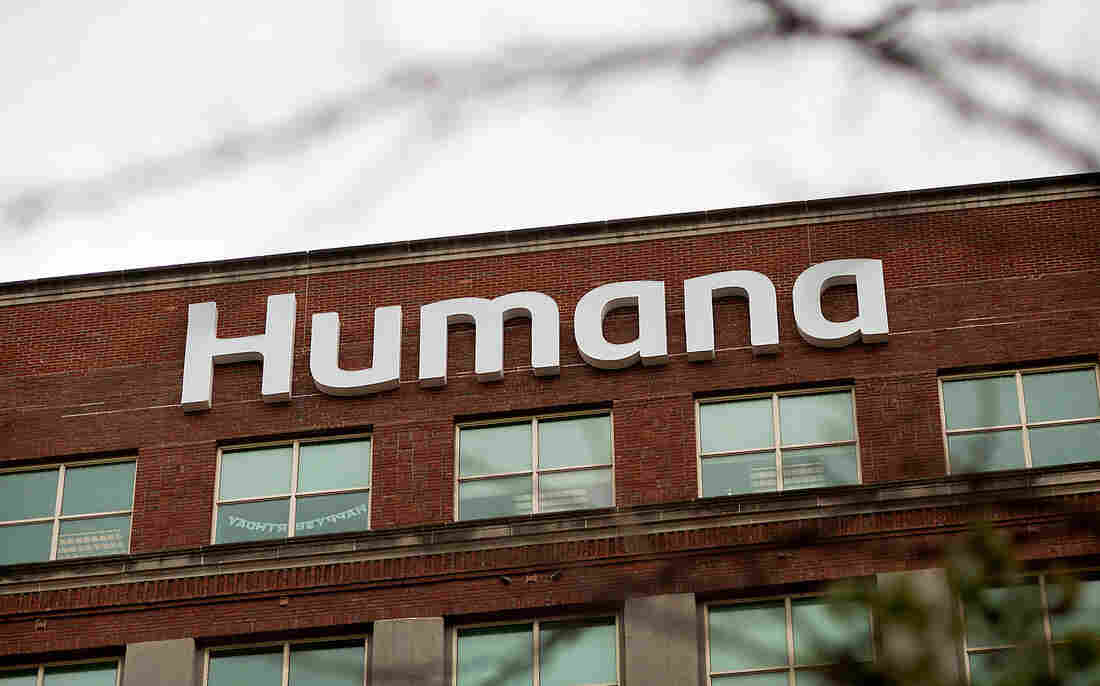
A federal whistleblower suit unsealed in late February alleges that Humana knew about billing fraud involving Medicare Advantage patients and didn't stop it.

A federal whistleblower suit unsealed in late February alleges that Humana knew about billing fraud involving Medicare Advantage patients and didn’t stop it. Ty Wright/Bloomberg via Getty Images hide caption

toggle caption Ty Wright/Bloomberg via Getty Images

Insurance giant Humana Inc., which operates some of the nation’s largest private Medicare health plans, knew for years of billing fraud at some South Florida clinics but did little to curb the practice even though it could harm patients, a doctor alleges in a newly unsealed whistleblower lawsuit.

The suit was filed by South Florida physician Mario M. Baez. It accuses Humana and Baez’s former business partner, Dr. Isaac K. Thompson, of engaging in a lucrative billing fraud scheme that lasted for years. The suit also names three other Palm Beach County doctors, two medical clinics and a doctors’ practice group as defendants. The suit was filed in October 2012 but remained under a federal court seal until Feb. 26.

Humana had no comment. “As a matter of long-standing company policy, Humana does not comment on pending litigation,” said company spokesman Tom Noland.

Thompson, a Delray Beach doctor, was indicted early last year on health care fraud charges stemming from similar allegations. He had pleaded not guilty but last week indicated he would change his plea and was to appear Friday in federal court in Fort Lauderdale, according to court records.

The Baez case is likely to bring fresh scrutiny to the giant Louisville, Ky.-based insurer, which covers more than 3 million elderly patients in its Medicare Advantage plans nationwide. The case could also spotlight costly flaws in the government’s complex and controversial method for paying private Medicare health plans.

The Baez suit targets a billing formula called a risk score, which is designed to pay Medicare health plans higher rates for sicker patients and less for people in good health. But overspending tied to inflated risk scores has cost taxpayers tens of billions of dollars in recent years, as the Center for Public Integrity reported in a series of articles published in 2014.

Federal officials have struggled for years to stamp out these overcharges, known in health care circles as “upcoding,” while at least a half-dozen whistleblowers have filed lawsuits accusing Medicare Advantage plans of ripping off the government.

Baez’s case adds a new wrinkle because it alleges that inflating risks scores not only wastes taxpayer dollars but can also cause a patient to be harmed by improper medical treatment.

Baez said in a letter to the presiding judge in the case, U.S. District Judge Kenneth A. Marra, that treating elderly patients with “multiple ailments” is difficult when you have accurate data, but “when medical records are poisoned with misleading data [from inflated risk scores] it becomes Russian roulette.” Patients aren’t told their risk score and aren’t likely to know if a doctor has exaggerated how sick they are or added bogus medical conditions to their medical records to boost profits, Baez said.

Baez and Thompson were partners in two clinics in Humana’s network, Lake Worth Medical P.A. and IM Medical P.A., in Delray Beach, from 2003 to 2012. Baez alleges in his suit that in February 2009 he became suspicious of billing practices at the two clinics and confronted doctors who worked there about it.

The doctors said they had been told by Thompson to “upcode” diagnoses, according to the suit. Baez said he reported the abuses to Humana in May 2009, but the company failed to return the alleged overpayments. In 2012, Baez contacted the FBI, which eventually sparked the Department of Justice criminal investigation that ensnared Thompson.

Doctors use a series of billing codes to document patients’ health, including any diseases they have and how severe they are. The Medicare Advantage plans report these codes to the government, which calculates a patient risk score and sends off a payment to the health plan.

In Thompson’s case, Humana paid 80 percent of the money it received to the doctor and retained the rest. Prosecutors charged that fraudulent diagnoses submitted by Thompson between January 2006 and June 2013 generated overpayments of $4.8 million.

Baez alleges that Humana encouraged overbilling by providing doctors in its network with forms that highlighted “more profitable” diagnosis codes they could use for patients. Many were statistically impossible to support, according to the suit, which cited allegedly inflated risk scores in more than three dozen patients.

For instance, scores of patients at IM Medical and Lake Worth Medical were diagnosed with a serious but rare spinal disorder called ankylosing spondylitis, when only 1 in 1,000 people truly has this disorder, according to Baez.

Similarly, aging patients with ordinary joint aches were diagnosed with “unspecified inflammatory polyarthropathy,” a chronic disease that requires the care of a specialist, according to the complaint.

Others with minor depression were said to have bipolar disorder, which paid the health plan a higher rate. According to the complaint, Humana officials agreed to fully correct the overages, but later “reneged” on the promise to do so and failed to correct the record with Medicare, according to Baez. The health plans are required to attest to the accuracy of any diagnoses submitted to the government.

The other doctors named as defendants in the Baez suit are Dennis Salazar, Arnaldo Mora and Daniela Mayer. All formerly worked for Thompson. The suit also named MCCI Group Holdings, a medical practice group. None of the doctors could be reached for comment. MCCI Group had no comment.

Humana has previously acknowledged it has been the target of investigations into its billing practices, including some involving whistleblowers. So has another large Medicare Advantage plan operated by UnitedHealth Group. Last month, UnitedHealth said it was cooperating with a Department of Justice review of its billing practices, according to a Securities and Exchange Commission filing.

Court filings unsealed in the Baez case confirm that the company faces several similar whistleblower suits, including at least one that remains under court seal. The court records also suggest that the criminal fraud investigation that snared Thompson is not over.

“There are some components of the criminal investigation which remain active,” Assistant U.S. Attorney Mark A. Lavine wrote in a December 2015 court filing. Lavine added that the investigation “continues to move forward aggressively.”

Lavine also indicated that two other whistleblower cases have been filed against Humana “in connection with similar allegations at other clinics.”

Baez told the center he has been frustrated with the plodding pace of the government investigations into Medicare Advantage. Keeping the matter under seal for so long “protects those who have perpetrated the fraud, but keeps patients and the public in the dark.”

In November 2015, Baez wrote to Marra asking that the seal be lifted.

“Seven years ago I presented to Humana the problem with upcoding and entering false information in patients’ medical records in order to justify the upcoding. … Nothing has changed. Nothing has been done to protect the hundreds of patients with misleading medical information in their medical records,” Baez wrote.

This piece comes from the Center for Public Integrity, a nonpartisan, nonprofit investigative news organization. For more, follow the center on Twitter @Publici, or sign up for its newsletter. Follow Fred Schulte: @FredSchulte

This entry passed through the Full-Text RSS service – if this is your content and you’re reading it on someone else’s site, please read the FAQ at fivefilters.org/content-only/faq.php#publishers.


No Image

Today in Movie Culture: Donald Trump vs. the X-Men, 'Star Trek' Parody of 'Hamilton' and More

Here are a bunch of little bites to satisfy your hunger for movie culture:

Political Parody of the Day:

Would Donald Trump‘s election be the end of the world? This X-Men: Apocalypse parody implies yes (via Complex):

Trump: Apocalypse

This election year, the X-Men will face their greatest threat… Donald Trump.

Posted by Max Goodrich on Sunday, February 28, 2016

Musical Mashup of the Day:

Fans of the Broadway hit Hamilton and Trekkies alike can appreciate this Star Trek-themed parody of the song “My Shot” (via Film School Rejects):

[embedded content]

Everything Mashup of the Day:

Antonio Maria Da Silva has another Hell’s Club short that brilliantly mashes up tons of movie characters, including multiple James Bonds, Terminators, Jean-Claude Van Dammes, Aliens Xenomorphs, Star Wars droids and much more:

[embedded content]

Poster Parodies of the Day:

This gallery of poster parodies and mashups includes plenty of recent Oscar nominees redone in genius ways (via Nerd Approved):

27 Movie Poster Parodies of Best picture Nominees

Film School Lesson of the Day:

RocketJump offers a basic lesson in editing with this video on cuts and transitions

[embedded content]

Supercut of the Day:

Speaking of cuts, here’s a super one from Burger Fiction of movie characters cursing without using real swear words:

[embedded content]

Vintage Image of the Day:

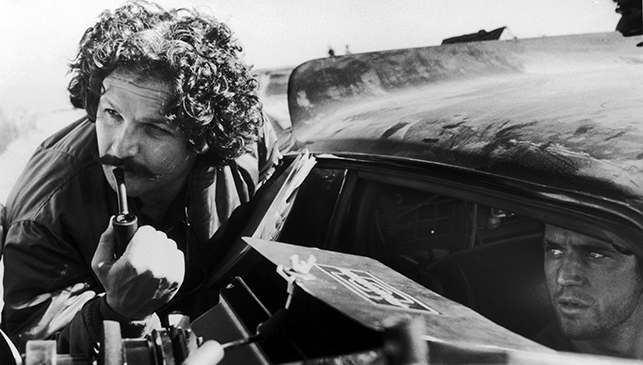
George Miller, who turns 71 today, smokes a pipe on the set of Mad Max in 1977 while getting a shot of Mel Gibson inside the Interceptor:

Cosplay of the Day:

The DIY Costume Squad shows us how to make a great cheap Leeloo getup for fans of The Fifth Element (via Fashionably Geek):

[embedded content]

Filmmaker in Focus:

The new episode of Joshua Maddock’s The Filmmakers is a showcase of Martin Scorsese‘s films:

[embedded content]

Classic Trailer of the Day:

With the new Ghostbusters getting its first full trailer today, here’s the very funny trailer for the 1984 original:

[embedded content]

and

This entry passed through the Full-Text RSS service – if this is your content and you’re reading it on someone else’s site, please read the FAQ at fivefilters.org/content-only/faq.php#publishers.


No Image

Tech Companies, Security Experts Express Support For Apple

Apple’s legal battle with the FBI over iPhone encryption continues: A federal magistrate, at the FBI’s request, has ordered the tech giant to write software to help investigators circumvent iPhone security features to access a phone used by one of the San Bernardino shooters. Apple is fighting the order, calling it dangerous, illegal and unconstitutional.

Today was the deadline for amicus briefs, or “friend of the court” filings in the case.

Some big names are throwing their weight behind Apple — Intel and AT&T have filed briefs, as well as Google, Facebook, Amazon, Microsoft, Snapchat, Box, Slack and Yahoo.

Relatives of some of the victims of the San Bernardino shooting, meanwhile, have filed to support the federal government’s position. Several law enforcement associations also oppose Apple, according to the Department of Justice.

The briefs filed on behalf of Apple (which have been shared by the company) reveal a wide swath of concerns affected by the question of smartphone security.

Here’s a sampling:

The Risk To Dissidents’ Lives

International human rights and technology nonprofit Access Now, along with Wickr Foundation, a nonprofit group affiliated with the messaging app Wickr, looked at the international implications, particularly the risk for dissidents facing oppressive governments:

“Deliberately compromised digital security would undermine human rights around the globe. Pursuant to international law, the United States has a duty to foster basic human rights such as freedom of expression and privacy. The assistance sought by the government not only diminishes the commitment of the United States to uphold those fundamental rights in the digital age, but also keeps Apple from fulfilling its own responsibilities to respect the human rights of users.

“Technology and connectivity have empowered millions around the world to demand social and political change — but criminals and authoritarian regimes exploit the same technology to identify and persecute protesters, democracy activists, bloggers and journalists. In some countries, reliable security tools such as encryption can be the difference between life and death. The relief sought by the government endangers people globally who depend on robust digital security for their physical safety and wellbeing.”

Infringement On Safety, Unraveling Of Trust

A group of individual security experts, represented by lawyers from the Stanford Law School Center for Internet and Society, described what they saw as a threat to public safety. The group — including Stanford cryptography professor Dan Boneh, independent researcher (and former NSA employee) Charlie Miller, and security expert Bruce Schneier, among others — described a practical risk (the technology could be used on other phones), a future risk (a precedent set for risky cybersecurity bypasses) and damage to public trust in software updates.

The last item, they said, represented a concrete threat — not just a change in feelings:

“Regular, silent, automatic updates are crucial for software security. The belief that such an update could be spyware that a company was forced by the government to sign and distribute might lead people to turn off automatic updates. This would render software patches less effective and the general public less secure.”

The Rights And Needs Of Users

The American Civil Liberties Union highlighted the rights of Americans and what it identified as disproportionate impact on the poor:

“While the government can in some circumstances require private parties to support law-enforcement investigations—for example, by requiring them to produce relevant evidence or give truthful testimony—the government does not hold the general power to enlist private third parties as its investigative agents to seek out information they do not possess or control. In other words, law enforcement may not commandeer innocent third parties into becoming its undercover agents, its spies, or its hackers. …

“If the government prevails, then this case will be the first of many requiring companies to degrade the security and to undermine the trust in their products so essential to privacy in the digital age. For the many users who rely on digital devices to secure their information and communications, including members of vulnerable populations who rely on mobile devices to access the Internet, this burden would be severe.”

The Nature Of The Internet — And Our Lives

A coalition of Internet-centric companies — including Airbnb, eBay, reddit and Twitter — got a little philosophical, arguing that the FBI’s request “threatens the core principles of privacy, security, and transparency that underlie the fabric of the Internet.”

Questions of privacy are personal, their filing says:

“An ever growing range of services delivered to devices as diverse as mobile phones, tablets, computers, appliances, and cars have become an increasingly important and integral part of our daily lives, in ways that could never have been envisioned as recently as five or ten years ago. These services provide the ability to communicate with friends, family, colleagues, external advisers and the world at large; to share and read live news from around the world or in-depth works of commentary and expression; and to engage in commerce whether shopping online, starting a business, or planning your next vacation or tonight’s dinner. In sum, today the devices and the software that power them touch every aspect of our lives.”

The Future Of Devices

A group of trade associations from the tech industry objected that the government’s demand would “effectively dictate product design” — not just affecting users’ security immediately but laying the groundwork for altered products well into the future.

That could be bad for users, if privacy is weakened — and bad for law enforcement, the associations suggest, if companies are pushed into an arms race to try to make ever more impossible-to-unlock devices.

The Cost To Businesses

ACT/The App Association, which represents software companies, focused on the burdens the government’s request would place on developers.

It also made an argument that will be familiar to anyone who has groaned in frustration after installing a brand-new software update:

“[T]he Government’s position borders on the absurd in the context of software development. Not only are the burdens imposed extraordinary (i.e., diverting resources from company’s actual business to being a tool of government), but the goals the Government seeks to achieve are far from assured. As any computer user knows, many software patches, which are far more basic than what the Government seeks to compel here, fail to fix problems, make other things worse, or simply necessitate more patches.”

Standing With The Investigators

On the other side of the question, attorney Stephen Larson who represents some family members of some of the victims killed in San Bernardino sided with the FBI, saying the phone could reveal a possible accomplice. The Los Angeles Times reports:

“The 41-page amicus brief includes a letter from Mark Sandfeur, whose son was slain in the conference room where Syed Rizwan Farook and Tashfeen Malik opened fire on Dec. 2, 2015.

” ‘Recovery of information from the iPhone in question may not lead to anything new. But, what if there is evidence pointing to a third shooter? What if it leads to an unknown terrorist cell?” Sanfeur wrote in a letter to Apple Inc. Chief Executive Tim Cook that was included in the brief. ‘What if others are attacked, and you and I did nothing to prevent it?’ “

This entry passed through the Full-Text RSS service – if this is your content and you’re reading it on someone else’s site, please read the FAQ at fivefilters.org/content-only/faq.php#publishers.


No Image

A Team Of Refugees Will Compete At The Olympic Games In Rio

A woman takes pictures of the Olympic rings at Madureira Park, the third largest park in Rio de Janeiro.

A woman takes pictures of the Olympic rings at Madureira Park, the third largest park in Rio de Janeiro. Yasuyoshi Chiba /AFP/Getty Images hide caption

toggle caption Yasuyoshi Chiba /AFP/Getty Images

A team of refugees will compete alongside athletes representing their home countries at the Summer Olympics in Rio de Janeiro, the International Olympic Committee has announced.

Previously, athletes who did not represent a country were not allowed to compete.

The team will likely number between five and 10 athletes, the committee said in a statement, and “will be treated at the Olympic Games like all the other teams.”

“By welcoming the team of Refugee Olympic Athletes to the Olympic Games Rio 2016, we want to send a message of hope for all refugees in our world,” IOC President Thomas Bach said in a statement.

Here’s more from Bach:

“Having no national team to belong to, having no flag to march behind, having no national anthem to be played, these refugee athletes will be welcomed to the Olympic Games with the Olympic flag and with the Olympic Anthem. They will have a home together with all the other 11,000 athletes from 206 National Olympic Committees in the Olympic village.”

The IOC said it has identified 43 contenders for the places on the team and the final group will be announced in June. Along with athletic prowess, potential team members will be assessed by “official refugee status verified by the United Nations, and personal situation and background.”

There are some 20.2 million refugees globally, according to U.N. figures. That includes 5.1 million registered refugees in camps in the Middle East, and an additional 15.1 million “refugees of concern.”

According to The Guardian, the IOC identified three possible refugee-team contenders in December:

“They were a Syrian swimmer based in Germany, a judoka from the Democratic Republic of Congo who was living in Brazil and an Iranian taekwondo fighter training in Belgium.”

The chosen athletes will march in the opening ceremony under the Olympic flag, just in front of home team Brazil. Uniforms and coaches will be provided by the IOC.

Prior to Thursday’s announcement, CNN highlighted a group of elite refugee athletes.

“I ask God to bring peace back to my country,” Congolese karate champion Martial Nantoura told the network. “But I am still on the national team. If someone tells me to go to the mat, I will go.”

This entry passed through the Full-Text RSS service – if this is your content and you’re reading it on someone else’s site, please read the FAQ at fivefilters.org/content-only/faq.php#publishers.


No Image

Donald Trump Releases Details Of Health Care Plan

2:55

Download

Donald Trump has promised to repeal and replace the Affordable Care Act, and now he has released some more details of how he would do that on his website.

Transcript

AUDIE CORNISH, HOST:

Last night, Donald Trump released details of his health plan. No surprise – he wants to repeal Obamacare. NPR’s Alison Kodjak reports that the other proposals on Trump’s website include many Republican favorites and some that both liberals and conservatives find troubling.

ALISON KODJAK, BYLINE: When Trump was asked about his health care proposal in the debate last week broadcast on CNN, this is mostly what he talked about.

(SOUNDBITE OF ARCHIVED RECORDING)

DONALD TRUMP: We have to get rid of the lines around the states so that there’s serious, serious competition.

UNIDENTIFIED MODERATOR: But Mr…

KODJAK: What he meant was that he wants to allow insurance companies to sell policies across state lines. It’s a popular idea among Republicans, but beyond that, Trump was criticized because he had little more to offer. Now that’s changed. The Trump campaign has posted a seven-point health plan on his website. It includes getting rid of those lines around the states, and it adds a handful of other provisions that are mainstays in conservative health care circles. Joe Antos is a scholar at the right-leaning American Enterprise Institute.

JOE ANTOS: He mentions things that, depending on how you interpret them, could really fit well within traditional Republican views.

KODJAK: Among those items, Trump calls for people to deduct their health insurance premiums from their taxes and use tax-free health savings accounts to pay for out-of-pocket costs. He proposes changes to Medicaid, the government health insurance for the poor and disabled. He’d give a fixed amount of money to each state rather than using today’s cost-sharing formulas. Trump’s plan leaves a lot up to interpretation. Antos likes the tax provision because he’s assuming Trump would ensure they be structured to benefit low-income people, but other conservatives see it differently. Jeffrey Anderson is a senior fellow at the Hudson Institute. He looks at the proposals for deducting premiums and health savings accounts and sees a huge giveaway.

JEFFREY ANDERSON: It creates a new tax loophole by providing an open-ended tax break on the individual side.

KODJAK: Anderson agrees with Trump’s goal to repeal the Affordable Care Act, but her worries about Medicaid. Trump’s plan says, quote, “we must review basic options for Medicaid and work with the states to ensure that those who want health care coverage can have it.” Anderson says that sounds to him like a huge Medicaid expansion. That’s the conservative discussion. Liberals are interpreting Trump in yet another way. Igor Volsky is deputy director of the American Progress Action Fund. He says Trump wants to simply ditch Obamacare.

IGOR VOLSKY: It gets rid of Obamacare but doesn’t talk about coverage expansion, doesn’t talk about cost controls. And so we’re left in the world where a lot of people are losing the coverage they currently have under Obamacare and they don’t actually get anything in return.

KODJAK: We asked the Trump campaign to clarify some of these provisions. A spokeswoman said via email, quote, “the plan speaks for itself.” Alison Kodjak, NPR News.

Copyright © 2016 NPR. All rights reserved. Visit our website terms of use and permissions pages at www.npr.org for further information.

NPR transcripts are created on a rush deadline by a contractor for NPR, and accuracy and availability may vary. This text may not be in its final form and may be updated or revised in the future. Please be aware that the authoritative record of NPR’s programming is the audio.

This entry passed through the Full-Text RSS service – if this is your content and you’re reading it on someone else’s site, please read the FAQ at fivefilters.org/content-only/faq.php#publishers.


No Image

Today in Movie Culture: Deadpool Goes 'Back to the Future,' 'Jurassic Park' Without the Dinosaurs and More

Here are a bunch of little bites to satisfy your hunger for movie culture:

Mashup of the Day:

This fan art by Mike S. Miller has us wanting Deadpool 2 to just be a remake of Back to the Future starring Deadpool and Cable (via Live for Films):

Movie Comparison of the Day:

You think Olympus Has Fallen and White House Down are the same? Here’s Couch Tomato with 24 ways they’re different:

[embedded content]

Fake Movie of the Day:

There’s a Reddit user who’s turning postings of photos and art and turning them into fake movie posters. In honor of London Has Fallen, below is one starring Gerard Butler. See more at io9.

Filmmaker in Focus:

Edited by the great Jacob T. Swinney, here is Steven Spielberg‘s career summed up in 30 shots from 30 movies, from Duel through The BFG:

[embedded content]

Reworked Movie of the Day:

Speaking of Spielberg, here’s what Jurassic Park looks like without any dinosaurs (via Devour):

[embedded content]

Spoilers of the Day:

If you think you’ve seen every major movie of last year, you might find it safe to watch the annual Fine Brothers rundown of their spoilers. Watch if you dare:

[embedded content]

Supercut of the Day:

Speaking of spoilers, here’s a video that tries to tell a story using the final lines from 129 movies (via Devour):

[embedded content]

Star Wars of the Day:

Time to throw away your Snuggie and get yourself one of these Star Wars-inspired crocheted X-wing fighter blankets (via Geekologie):

Cosplay of the Day:

Check out Sneaky Zebra’s compilation of cosplay from this year’s London Super Comic Con, which includes plenty of Star Wars: The Force Awakens costumes:

[embedded content]

Classic Trailer of the Day:

In honor of Zootopia, here’s an old VHS trailer for Disney’s 1973 animated feature Robin Hood, which is said to be a huge influence on the studio’s new release:

[embedded content]

and

This entry passed through the Full-Text RSS service – if this is your content and you’re reading it on someone else’s site, please read the FAQ at fivefilters.org/content-only/faq.php#publishers.


No Image

Protestors Gather Outside Supreme Court As Justices Consider Abortion

2:26

Download

The Supreme Court Wednesday heard what could be its most consequential abortion case in a generation. Hundreds of protestors crowded the steps of the building while arguments took place inside.

Transcript

AUDIE CORNISH, HOST:

As we mentioned earlier, people on both sides of the issue rallied outside of the court. That’s where NPR’s Jennifer Ludden was posted.

UNIDENTIFIED WOMAN: If you love an abortion provider, make some noise.

(CHEERING)

JENNIFER LUDDEN, BYLINE: Abortion rights supporters vastly outnumbered abortion opponents. They packed the steps of the Supreme Court, spreading in a dense crowd to the edge of the sidewalk, where police struggled to keep people off the street. Mary Beth Hastings took time off work to be here. She said the stakes seem even higher with the death of Antonin Scalia and the need to pick a new justice.

MARY BETH HASTINGS: I think it’s tremendously important for people to think about this in terms of the election, in terms about – of Supreme Court justices. This is not something we can take for granted.

LUDDEN: Valerie Peterson came up from Texas to rally with the National Abortion Federation. Last summer, she was devastated to learn her 16-week fetus had a fatal brain abnormality. She said the Texas law being debated today meant a long wait for an abortion, with a mandated ultrasound and counseling, so she flew to Florida to get the procedure.

VALERIE PETERSON: I think that women that don’t have the means that I did will have no choice but to take matters into their own hands. And so this is a really cruel and grueling ruling process for women.

LUDDEN: Most of the few abortion opponents gathered in a small circle, pressed in on all sides by the crowd surrounding them. John Nagourney held a photo of a baby that said life counts.

JOHN NAGOURNEY: We’re kind of hemmed in, so just trying to do my part to, you know, to try to stand up for, you know, truth.

LUDDEN: Next to him, Annie Piper had driven three hours from Liberty University.

ANNIE PIPER: I think that a lot of abortion clinics don’t uphold women’s health standards, and so this is a very, very important issue for women.

LUDDEN: Most in the crowd were young, but not all. Sonia Conly is 77. She’s long supported abortion rights and remembers before Roe v. Wade.

SONIA CONLY: I did have a need for an abortion, but I know women who did. And I know women who had to go to Mexico, so I just think that we’re going backwards.

LUDDEN: Conly remembers walking by the Supreme Court back in 1976, during an early protest against abortion. She was pregnant then. She says she’d never have guessed she’d be here four decades later, still fighting for abortion rights. Jennifer Ludden, NPR news, Washington.

Copyright © 2016 NPR. All rights reserved. Visit our website terms of use and permissions pages at www.npr.org for further information.

NPR transcripts are created on a rush deadline by a contractor for NPR, and accuracy and availability may vary. This text may not be in its final form and may be updated or revised in the future. Please be aware that the authoritative record of NPR’s programming is the audio.

This entry passed through the Full-Text RSS service – if this is your content and you’re reading it on someone else’s site, please read the FAQ at fivefilters.org/content-only/faq.php#publishers.


No Image

Indicted Ex-Oil CEO Aubrey McClendon Dies In Car Crash

3:23

Download

Aubrey McClendon, one of the pioneers of the shale oil revolution in the U.S. died in a car crash Wednesday at age 56 years. McClendon was indicted Tuesday on charges he conspired to rig the bidding process on oil and gas leases in Oklahoma.

Transcript

KELLY MCEVERS, HOST:

A pioneer of the U.S. fracking industry died today suddenly. Oklahoma police say Aubrey McClendon drove his car into an overpass wall. Just yesterday, the Justice Department had indicted McClendon on charges that he rigged the bidding process for oil and gas leases in Oklahoma. McClendon denied the charges, calling them unprecedented and wrong, but the circumstances of his death are bound to raise questions. Joining us now is Joe Wertz of State Impact Oklahoma. He’s speaking to us from KOSU in Oklahoma City. And, Joe, what else are police saying about how McClendon died?

JOE WERTZ: Well, the Oklahoma City police aren’t saying a whole lot. At a press conference here this afternoon, they said they don’t know what caused the accident. They just know the former Chesapeake Energy CEO was alone in an SUV that was likely traveling faster than the speed limits. The SUV left the road, hit the wall of an overpass and burst into flames. McClendon died. Police – the only other detail police had was that there appeared to be plenty of space for McClendon to get back on the road and avoid the wall.

MCEVERS: Do they suspect that he took his own life?

WERTZ: They haven’t – again, they haven’t said. They’re going to do an autopsy, and they promise more details in the days and weeks to come. But we just don’t know at this point.

MCEVERS: I mean, when you read about McClendon, he’s obviously this larger-than-life figure in the energy industry. He’s the co-founder of an energy company that took off the mid-’90s – a company he was later forced out of. I mean, given the impact he’s had on Oklahoma, how are people there reacting?

WERTZ: Oklahoma is reacting with shock and disbelief. McClendon had a big impact on the state and Oklahoma City, in particular. But McClendon and Chesapeake Energy were also a force in world energy markets. McClendon didn’t invent hydraulic fracturing or fracking, but he was certainly one of the technology’s biggest evangelists. He was a high-profile and unapologetic oil man and, really, one of the principle architects of the recent energy boom here in the U.S. And all of that was made possible by fracking’s ability to unlock oil and gas from shale rock, and McClendon was at the center of all that.

MCEVERS: He was also a major philanthropist, I understand, supporting lots of arts organizations in the city and state, and also a big basketball fan. Am I right?

WERTZ: Yeah, that’s right. You know, McClendon cut a wide path in Oklahoma and Oklahoma City especially, both individually and at the helm of Chesapeake Energy. He gave a lot of money to charities, you know, community groups and arts organizations. He was active in city development issues. And he played a key role in bringing the NBA franchise to Oklahoma City. He owned an estimated 20 percent of the team, and Oklahoma City Thunder is a huge deal in Oklahoma City, and he was a regular on the sideline there at the arena – the Chesapeake Arena, of course, named after the company.

MCEVERS: Quickly – I mean, the Justice Department has said their bid-rigging investigation is ongoing, which means there might be additional indictments. Talk about that just a little bit.

WERTZ: Yeah, you know, it’s bad news on top of bad news. The news of the indictment just broke Tuesday, so we don’t have a lot of details. It’s a bid-rigging charge, and the feds say that the charges that McClendon faced are part of an ongoing probe, so we just don’t know a lot more – a lot of unanswered questions.

MCEVERS: That’s Joe Wertz of State Impact Oklahoma. Thank you so much.

WERTZ: Thank you.

Copyright © 2016 NPR. All rights reserved. Visit our website terms of use and permissions pages at www.npr.org for further information.

NPR transcripts are created on a rush deadline by a contractor for NPR, and accuracy and availability may vary. This text may not be in its final form and may be updated or revised in the future. Please be aware that the authoritative record of NPR’s programming is the audio.

This entry passed through the Full-Text RSS service – if this is your content and you’re reading it on someone else’s site, please read the FAQ at fivefilters.org/content-only/faq.php#publishers.