Articles by admin

No Image

How Google's Neural Network Hopes To Beat A 'Go' World Champion

South Korean Go champion Lee Sedol (right) poses with Google DeepMind head Demis Hassabis. On Wednesday, Sedol will begin a five-match series against a computer.
3:36

Download

South Korean Go champion Lee Sedol (right) poses with Google DeepMind head Demis Hassabis. On Wednesday, Sedol will begin a five-match series against a computer. Jung Yeon-Je/AFP/Getty Images hide caption

toggle caption Jung Yeon-Je/AFP/Getty Images

In South Korea on Wednesday, a human champion of the ancient game of “Go” will square off against a computer programmed by Google DeepMind, an AI company owned by the search giant. If the machine can beat the man over a five-day match, then researchers say it will be a milestone for artificial intelligence.

Here are the key things to know about the match and what it will mean for the future, both of humanity and our robot overlords.

1. A computer won at chess 20 years ago. Go is tougher.

In the game of Go, players try to seize territory and encircle each other's pieces.

In the game of Go, players try to seize territory and encircle each other’s pieces. Marcin Bajer/Flickr hide caption

toggle caption Marcin Bajer/Flickr

IBM grabbed the headlines when its Deep Blue supercomputer bested world champion Gary Kasparov in 1997.

But chess is a computer’s game. It has strict rules and a limited number of moves each turn. Deep Blue gained the upper hand by crunching a huge volume of possible moves to see which ones would lead to a win.

Go is a very different kind of game. Players use stones to fence off territory and capture each other’s pieces. It has fewer rules and more choices each turn. In fact, “there are more possible ‘Go’ positions than there are atoms in the Universe,” says Demis Hassabis, a researcher with Google DeepMind.

Computers hate choices. Go is a nightmare for rule-bound computers.

2. This program taught itself how to play.

The Google program, known as “Alpha Go,” actually learned the game without much human help. It started by studying a database of about 100,000 human matches, and then continued by playing against itself millions of times.

As it went, it reprogrammed itself and improved. This type of self-learning program is known as a neural network, and it’s based on theories of how the human brain works.

AlphaGo consists of two neural networks: The first tries to figure out the best move to play each turn, and the second evaluates who is winning the match overall.

It’s far more powerful than any Go-playing computer program to date

[embedded content]

Google DeepMind’s press conference on 8 March in Seoul, South Korea.

Google DeepMind YouTube

3. The machine is not guaranteed to win.

In October, AlphaGo beat a European champion of the game, Fan Hui. But Hui is ranked far below the program’s current opponent, Lee Sedol, who is considered among the best Go players in the world. Sedol may still be able to beat AlphaGo.

Nevertheless, the overall approach is clearly working, and soon AlphaGo, or another similar program, likely will overtake the world’s best

4. This program will not lead to a dystopian future in which humanity is enslaved by killer robots. At least not for a few more years.

The deep-learning approach is making great strides. It’s getting particularly good at recognizing images (and more creepily, human faces).

But skull-crushing mechanical suzerain? Probably not. For one thing, physical robots still suck. Seriously. They’re just terrible.

[embedded content]
Nature YouTube

And Google has a rosier purpose in mind anyway. It hopes programs such as AlphaGo can improve language translation and health care tools. It might even someday be used to build a sophisticated virtual assistant. “I’ve concluded that the winner here, no matter what happens, is humanity,” Eric Schmidt, the chairman of Google’s parent company, Alphabet, said in a pre-match news conference.

Regardless of what you think about AI, it seems likely this sort of program will change the way we live and work in the years ahead.

This entry passed through the Full-Text RSS service – if this is your content and you’re reading it on someone else’s site, please read the FAQ at fivefilters.org/content-only/faq.php#publishers.


No Image

Today in Movie Culture: 'Creed' As a 1990s Release, Kylo Ren TV, Lego 'Alien' and More

Here are a bunch of little bites to satisfy your hunger for movie culture:

Alternate Universe Movie of the Day:

In another universe, Creed came out in the 1990s. Mashable shows us what the VHS trailer looked like:

[embedded content]

Star Wars of the Day:

Kylo Ren would love this video of Kylo Ren inserted into other movies, including The Dark Knight, Pulp Fiction and The Shining (via Geekologie):

[embedded content]

Mashup of the Day:

With news that J.K. Simmons is the new Commissioner Gordon, BossLogic’s new Spider-Man and Batman mashup art is perfectly timed:

Screenwriting Lesson of the Day:

Speaking of Batman, Frame by Frame looks into the right and wrong ways of adapting the Caped Crusader to the big screen:

[embedded content]

Cosplay of the Day:

We haven’t even seen Jason Mamoa in action as Aquaman yet, but here’s cosplayer Raquel Sparrow showing us what the female version looks like (via Fashionably Geek):

Vintage Image of the Day:

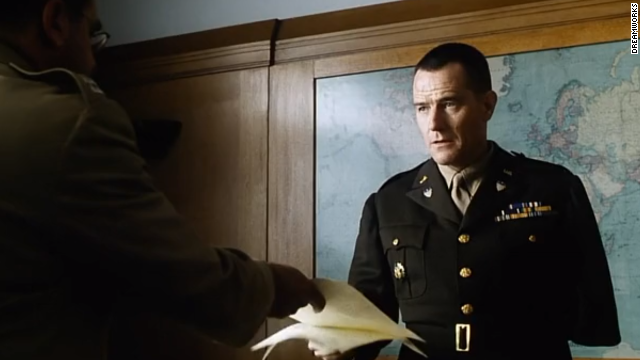
Bryan Cranston, who turns 60 years old today, as a one-armed colonel in Saving Private Ryan:

Lego Build of the Day:

There is no official Alien themed Lego playset, but at least now you can follow the directions for the Arvo Brothers’ custom Xenomorph build and make your own (via Geek Tyrant):

Remote Control Build of the Day:

Speaking of toys, check out a custom-made RC flyer below modeled after the balloon-lifted house from Pixar‘s Up. See a video on the project and more at Mental_Floss.

Filmmaker in Focus:

Check out a video highlighting the use of the color blue, in various shares, in the films of Michael Mann (via CInematic Montage Creators):

[embedded content]

Classic Trailer of the Day:

This week is the 20th anniversary of the release of The Birdcage. Watch the original trailer for the comedy, which stars Robin Williams and Nathan Lane, below.

[embedded content]

and

This entry passed through the Full-Text RSS service – if this is your content and you’re reading it on someone else’s site, please read the FAQ at fivefilters.org/content-only/faq.php#publishers.


No Image

See The 'Best Minnesota High School Hockey Hair' Featuring Lots Of Mullets

[embedded content]
YouTube

“Texas has their Friday night lights, Indiana has their barnyard hoops — here in Minnesota, it’s the land of 10,000 locks,” says the narrator in the intro of the “Best Minnesota High School Hockey Hair” awards video. “Hockey is king.”

The competition to crown the best hair was stiff this year, but in the end, a quartet from Burnsville, Minn., took the top spot.

“At No. 1, I’m sure this will be controversial, but hockey’s a team game and what Burnsville did is special,” the narrator says. “If you watch this — they’re going to show how deep their lineup is. They’re about to go back to back: beard, mullet, ginger, Afro. That’s like a hockey team going four lines deep. It’s unbelievable. These guys are like the super group of salad; they are like the Village People of hockey hair — look at this. All in a row. Burnsville, love ya.”

Salad — for the uninitiated — is another way of saying lettuce, which of course, is slang for a bro’s long hair. Other synonyms: arugula, flow.

The video, created by “Game On! Minnesota,” is the fifth annual video. It features appearances from ESPN’s hockey analyst Barry Melrose, “a guy that used to tuck his mullet into his dress shirt,” and New York Islanders’ winger Matt Martin, “who knows a thing or two about great hair.”

This entry passed through the Full-Text RSS service – if this is your content and you’re reading it on someone else’s site, please read the FAQ at fivefilters.org/content-only/faq.php#publishers.


No Image

Jury Awards Erin Andrews $55 Million In Lawsuit Over Nude Video

Fox Sportscaster Erin Andrews, who also hosts ABC's Dancing with the Stars (center), in court March 4. She sued a hotel after another guest secretly filmed her nude through a hotel door peephole.

Fox Sportscaster Erin Andrews, who also hosts ABC’s Dancing with the Stars (center), in court March 4. She sued a hotel after another guest secretly filmed her nude through a hotel door peephole. Getty Images hide caption

toggle caption Getty Images

A jury awarded Fox sportscaster Erin Andrews $55 million Monday in a civil lawsuit she filed against a Nashville Marriott hotel after a stalker filmed her nude through her door’s peephole in 2008.

The video was put online, where it was viewed millions of times, and Andrews sued the hotel and the stalker for $75 million for negligence, emotional distress and invasion of privacy.

The man who recorded her, Michael Barrett, admitted stalking Andrews and was sentenced to 2 1/2 years in prison. He confessed that he arranged with the hotel to stay in the room next to hers and altered the peephole in order to record her nude.

The defense team argued that Andrews’ career had improved because of the video. The Chicago Tribune writes:

“The defense team’s flawed premise in this case is basically that women in sports broadcasting are commonly sexualized, so of course Andrews would benefit from being exposed like this.”

Andrews, meanwhile, countered that the video could make a mockery of her career. She testified in court, saying tearfully that the incident has negatively impacted her life.

“I feel so ashamed,” she said in her testimony. “This happens every day of my life. Either I get a tweet, or somebody makes a comment in the paper, or somebody sends me a still of the video to my Twitter, or somebody screams it at me in the stands. And I’m right back to this.”

This entry passed through the Full-Text RSS service – if this is your content and you’re reading it on someone else’s site, please read the FAQ at fivefilters.org/content-only/faq.php#publishers.


No Image

Doctors Often Fail To Treat Depression Like A Chronic Illness

Most people get treatment for depression from primary care doctors rather than specialists.

Most people get treatment for depression from primary care doctors rather than specialists. Jupiterimages/Getty Images hide caption

toggle caption Jupiterimages/Getty Images

Depression prompts people to make about 8 million doctors’ appointments a year, and more than half are with primary care physicians. A study suggests those doctors often fall short in treating depression because of insurance issues, time constraints and other factors.

More often than not, primary care doctors fail to teach patients how to manage their care and don’t follow up to see how they’re doing, according to the study, which was published Monday in Health Affairs. Those are considered effective tactics for treating chronic illnesses.

“The approach to depression should be like that of other chronic diseases,” said Dr. Harold Pincus, vice chair of psychiatry at Columbia University’s College of Physicians and Surgeons and one of the study’s co-authors. But “by and large, primary care practices don’t have the infrastructure or haven’t chosen to implement those practices for depression.”

Most people with depression seek help from their primary care doctors, the study notes. That can be because patients often face shortages and limitations of access to specialty mental health care, including lack of insurance coverage, the authors write. Plus there’s stigma: Patients sometimes feel nervous or ashamed to see a mental health specialist, according to the authors.

Meanwhile, physicians and researchers have increasingly been calling for mental health conditions such as depression and anxiety to be treated like physical illnesses. Historically, those have been handled separately and not always with the same attention and care as things like high blood pressure and heart disease.

The researchers compared strategies for treating depression with those used for asthma, diabetes and congestive heart failure. They surveyed more than 1,000 primary care practices across the country to determine how often doctors’ offices used five steps considered best practices to manage chronic conditions. These include employing nurse care managers; keeping a registry of all patients with a condition that requires regular follow-up; reminding patients to comply with their treatment regimens; teaching them about their illnesses; and giving doctors feedback. Those approaches track with guidelines from the Department of Health and Human Services Agency for Healthcare Research and Quality.

On average, the practices surveyed were least likely to follow those protocols when treating depression. About a third kept registries of patients with depression; the other steps were less commonly used. Less than 10 percent of practices, for instance, reminded patients about their treatments or taught them about the condition.

Doctors were most likely to use those best practices for treating diabetes. Most practices followed at least one of the strategies for managing chronic illness.

Effectively treating any chronic illness requires working with patients beyond single visits, said Dr. Tara Bishop, an associate professor of health care policy and research at Weill Cornell Medical College and the study’s main author. For depression, that means things like following up to see if medication is working or if a dose should be adjusted.

“When we treat high blood pressure, the blood pressure may start at 150 over 95, and then it’s monitored over time until it gets to a level that’s being aimed for,” said Dr. Jeffrey Borenstein, president of the Brain and Behavior Research Foundation. The foundation funds mental health research but was not involved with this study. “If somebody has depression, their symptoms need to be monitored until it gets to a level that the depression is lifted.”

Depression can contribute to other health problems, like pulmonary disease or diabetes, Bishop said. It can make people less productive at work, or less able to have healthy relationships. Unchecked, it can result in suicide.

“If we actually treat depression as a chronic illness and use the level of tools we’re using for diabetes, then we’ll be able to better treat patients — and help them live healthier lives and more productive lives,” she said.

The study didn’t delve into why the gap exists between depression and other medical conditions. But the authors pointed to potential explanations. One is that there’s been a decades-long push to improve how doctors treat diabetes — an effort that has almost been “the poster child” for how to monitor and treat a long-term illness, Pincus said.

And there are time pressures. Diagnosing a patient with depression and following up regularly can take more time than a diabetes blood test or insulin check. Cramming that into a 15-minute visit can get difficult, Bishop said, especially as doctors are increasingly asked to do more with less time.

Plus, she said, while there’s been an effort nationally for the medical profession to better address mental wellness, individual physicians may still struggle.

“It’s almost like a subconscious divide of mental health issues versus physical health issues,” she said.

This entry passed through the Full-Text RSS service – if this is your content and you’re reading it on someone else’s site, please read the FAQ at fivefilters.org/content-only/faq.php#publishers.


No Image

Ray Tomlinson, Inventor Of Modern Email, Has Died

Raymond Tomlinson, the inventor of modern email and selector of the “@” symbol, has died.

Raytheon Co., his employer, on Sunday confirmed his death; the details were not immediately available.

Email existed in a limited capacity before Tomlinson in that electronic messages could be shared amid multiple people within a limited framework. But until his invention in 1971 of the first network person-to-person email, there was no way to send something to a specific person at a specific address.

The first email was sent on the ARPANET system, a computer network that was created for the U.S. government that is considered a precursor to the Internet. Tomlinson also contributed to its development.

At the time, few people had personal computers. The popularity of personal email wouldn’t take off until years later but has become an integral part of modern life.

“It wasn’t an assignment at all, he was just fooling around; he was looking for something to do with ARPANET,” Raytheon spokeswoman Joyce Kuzman said of his creation of network email.

Tomlinson once said in a company interview that he created email “mostly because it seemed like a neat idea.” The first email was sent between two machines that were side-by-side, according to that interview.

He said the test messages were “entirely forgettable and I have, therefore, forgotten them.” But when he was satisfied that the program seemed to work, he announced it via his own invention by sending a message to co-workers explaining how to use it.

Tomlinson chose the “@” symbol to connect the username with the destination address and it has now become a cultural icon.

Why that symbol? Kuzman said Tomlinson was looking at the keyboard and needed something that would not otherwise be part of the address and that seemed to be a logical solution.

“It is a symbol that probably would have gone away if not for email,” she said.
MoMA’s Department of Architecture and Design added the symbol into its collection in 2010, with credits to Tomlinson.

Tomlinson held electrical engineering degrees from Rensselaer Polytechnic Institute and the Massachusetts Institute of Technology. Tomlinson was an inductee to the Internet Hall of Fame and recipient of numerous awards and accolades but was described as humble and modest.

“People just loved to work with him,” Kuzman said. “He was so patient and generous with his time … He was just a really nice, down-to-earth, good guy.”

Tomlinson was hired by Bolt Beranek and Newman, known as BBN, in 1967. It was later acquired by Raytheon Co., where he still worked at the time of his death, as a principal scientist.

He lived in Lincoln, Massachusetts where he raised miniature sheep. Attempts to contact his family were unsuccessful.

While more general email protocols were later developed and adopted, Tomlinson’s contributions were never forgotten.

“He was pretty philosophical about it all,” Kuzman said. “And was surprisingly not addicted to email.”

This entry passed through the Full-Text RSS service – if this is your content and you’re reading it on someone else’s site, please read the FAQ at fivefilters.org/content-only/faq.php#publishers.


No Image

What's Better Than A Buzzer-Beater? How About 3 … In A Single Game?

3:30

Download

On Thursday, an epic high school basketball game — featuring three buzzer-beating buckets — ended with a last-second shot in quadruple overtime, sending one team to the Minnesota state tournament.

Transcript

MICHEL MARTIN, HOST:

So it is March, the height of basketball season. But college and pro ballers are not the only ones serving up thrills. This past Thursday, there was an epic basketball game in Minnesota. A couple of high school rivals collided in a regional championship game that went to not one, not two overtime periods but four. And you know how exciting a last-second buzzer-beater is – this one had three of them. It was Waseca v. Marshall. Waseca was leading as they neared the end of regulation time. Matt Collins was in the crowd.

MATTHEW COLLINS: They actually missed some free throws that allowed Marshall to crawl back into the game. And Marshall came down and hit the three that rolled around the rim and sat on top of the rim and eventually went in to send it into overtime.

(SOUNDBITE OF BASKETBALL GAME)

MARTIN: So that’s one last-second shot to tie it up. The overtime period that followed ended in yet another tie. The next overtime – same thing, another tie. It came down to a third heart-pounding overtime. Let’s skip to the end. Marshall is up three points with only one second left on the clock. Waseca was all the way at the other end of the court.

COLLINS: The whole place thought the game was over. Some people around us were starting to leave. And Waseca then inbounded it then to Nick Dufault, who is their kind of star player. And from around the opposite free-throw line, he just turned and threw it up.

MARTIN: Now, consider that a regular three-point shot is about 20-feet away. Dufault was almost 80 feet from his own basket when he let it go.

COLLINS: It didn’t even touch the rim. It went straight through the basket. I mean, it was unbelievable.

(SOUNDBITE OF BASKETBALL GAME)

UNIDENTIFIED CROWD: (Cheering).

UNIDENTIFIED MAN #1: Oh, my God.

MARTIN: Needless to say, nobody else was leaving early as the game headed into the fourth overtime. Marshall tied up the game again with time running out. And as if Hollywood were writing the script, enter the unlikely hero – 17-year-old junior Cole Streich, a guy who could have put the game away for Waseca earlier.

COLE STREICH: Yeah, at the end of regulation, I had a free throw where I could have put us up by four. And then I ended up missing that, and I knew I had to make up for it somehow.

MARTIN: And redemption awaits those who seek it. With five seconds on the clock, Streich got the ball near half-court. As he dribbled toward the basket, defenders seemed to be backing away from him. The sea parted. They were focusing on the guy who sank that 80-footer earlier in the game.

STREICH: So they left me wide open. No one came out to guard me.

(SOUNDBITE OF BASKETBALL GAME)

UNIDENTIFIED MAN #2: Go, go, go, go, go…

MARTIN: Three, two, one…

STREICH: So I just shot it.

(SOUNDBITE OF BASKETBALL GAME)

UNIDENTIFIED CROWD: (Cheering).

MARTIN: Swish.

(SOUNDBITE OF MUSIC)

MARTIN: A third-buzzer beater, this one for the win.

STREICH: It was just chaos. Everyone went wild in the crowd, and we were just all ecstatic that we won.

MARTIN: Final score – Waseca 103, Marshall 100. Amid the frenzy though, Matt Collins noticed the Marshall players on the court trying to process something beyond just the pain of a loss.

COLLINS: They acknowledged and realized how incredible of a game that was. And I think that’s a game that no team should have to lose. But there was definitely a mutual respect that – wow – that we just played a classic game that’s going to go down in history.

MARTIN: Smelling salts not included with the ticket price – should’ve been.

(SOUNDBITE OF MUSIC)

Copyright © 2016 NPR. All rights reserved. Visit our website terms of use and permissions pages at www.npr.org for further information.

NPR transcripts are created on a rush deadline by a contractor for NPR, and accuracy and availability may vary. This text may not be in its final form and may be updated or revised in the future. Please be aware that the authoritative record of NPR’s programming is the audio.

This entry passed through the Full-Text RSS service – if this is your content and you’re reading it on someone else’s site, please read the FAQ at fivefilters.org/content-only/faq.php#publishers.


No Image

Amid Uncertainty, Iranians Hope For Economic Reforms

People ride a horse and carriage at sunset in Isfahan's UNESCO-listed central square on June 2, 2014 in Isfahan, Iran. Isfahan, with its immense mosques, picturesque bridges and ancient bazaar, is a virtual living museum of Iranian traditional culture, and is Iran's top tourist destination.
3:56

Download

People ride a horse and carriage at sunset in Isfahan’s UNESCO-listed central square on June 2, 2014 in Isfahan, Iran. Isfahan, with its immense mosques, picturesque bridges and ancient bazaar, is a virtual living museum of Iranian traditional culture, and is Iran’s top tourist destination. John Moore/Getty Images hide caption

toggle caption John Moore/Getty Images

In Iran, voters are still waiting for clarity from the Feb. 26 parliamentary elections, but they’re optimistic that a more cooperative legislature will help the government boost the economy. Hopes for broader social and political reforms, however, remain faint.

On a recent afternoon, a covered bazaar in north Tehran has its share of visitors, but there seems to be a lot more window-shopping than buying going on. Carpet shop owner Ali Mirnezami confirms that impression. He says this shop has been operating for 90 years, but at the moment things aren’t looking good.

“The market is down, it’s not bouncing back,” he says. “We’re still waiting for final election results and we hope that will improve things, but so far nothing tangible.”

Mirnezami says Iranian President Hassan Rouhani needs a cooperative parliament to fulfill his promise to use money coming into Iran as part of last year’s nuclear agreement to restore some vitality to the economy.

First, Mirnezami says, the government needs to tackle inflation.

“They also need to create some jobs for our young people,” he says. “Then they need to look to the production sector, rehabilitate our factories. I hope the early signs of a more cooperative parliament are true.”

Broader Reforms Still Elusive

Reform voters stood in long lines on election day in hopes of keeping hardliners out of parliament as much as possible. Younger voters like Mohammad Reza Rezahani made it clear he had more than a better economy on his mind.

“I vote today only for freedom — a little freedom, a little. I’m not having any freedom,” he says. When asked if he’d like to see a parliament that will work with President Rouhani, he eagerly agrees.

Many younger Iranians have been chafing under the country’s conservative religious social restrictions. They would love to be able to speak their mind without fear of arrest. But nearly seven years after authorities crushed massive street protests, reformers are still threatened with arrest and expectations for change are extremely low.

For one thing, there will be large numbers of conservatives in the next parliament who may back Rouhani on economic issues, but will likely vote against changes on sensitive issues such as the mandatory headscarf for women.

Iranians shop in Tehran’s ancient Grand Bazaar on Jan. 16, 2016, the day many sanctions were lifted as part of a nuclear deal. President Rouhani called the deal a “golden page” in Iran’s history. Atta Kenare/AFP/Getty Images hide caption

toggle caption Atta Kenare/AFP/Getty Images

Iranians also see external reasons for caution. Analyst Foad Izadi at Tehran University says Iranians only need look at the chaos plaguing the region to see how easily popular demands for change can get out of hand.

“So if people want to change things — and a lot of people want to change things — they do not want another revolution,” he says. “Because revolutions would be messy and deadly … so they do want to change some things about this government, but they want to do it through polling stations organized by this government.”

In Isfahan, A Plea For The World To Visit

To the south in the culturally rich city of Isfahan, business owners would be perfectly happy with economic improvements. At Imam Square, a UNESCO World Heritage site featuring ornately tiled grand mosques and a palace, locals take a spin in horse-drawn carriages.

But driver Seyed Mehdi says that’s because it’s a weekend — most of the time he’s scrounging for business. “We don’t need the locals, they already know all about this place,” he says. “We need tourists, we need foreigners!”

Ahmed Turkan minds a visitor-free handicrafts store nearby. He says no one he knows is especially interested in whether Iran’s reformers or hardline conservatives will be in charge of the next parliament. What people want, he says, is some action on getting the economy moving. He spreads his hands and asks, is it wrong to be friends with the outside world?

“Some 50 years ago when there were very few tourists, you could still have seen more people here on this square,” he says. “There could be a hell of a lot more people on this square! But as everyone keeps telling us, the signs are promising.”

How Many More Visitors Can Isfahan Handle?

In terms of sheer numbers of visitors, the signs are indeed promising — visits to Isfahan were up 60 percent last year, according to Mohsen Yarmohamadiyan at the provincial culture and tourism department. He says in the wake of last year’s nuclear deal, Iran is starting to overcome the relentless bad press it gets in the West.

“Ever since this new government took over, they’ve been trying to bring the real image of this nation to the world,” he says. “We’re slowly correcting a lot of misinformation.”

But for Isfahan, that good news also comes with a challenge. Yarmohamadiyan says much needs to be done for the province to accommodate more tourists, should the numbers continue to grow.

“As more people come to Isfahan, we’re urging hotels to build more rooms,” he says. “We also have around 1,000 historic houses here, and we’re urging the owners to consider converting them into boutique hotels.”

But development doesn’t always get top priority. After years of debate, Yarmohamadiyan says builders of a new subway line have agreed to reroute it around major cultural sites, including those at Imam Square.

With major social and political reforms still on the back burner, the focus remains on the economy. That’s fine with Tehran cooking and catering businesswoman Sanaz Minaei. She shows a visitor a cooking class at one of her several companies, and says the opportunities for Iran are huge — if only the country can rejoin the global economy as promised.

“Certainly we’d like a parliament that will open up communications with the outside world,” she says. “When the parliament is cooperating with the government there is more peace, and peace is good for business.

Minaei’s wish is to see all the sanctions finally lifted so she can expand her business of promoting Iranian cuisine internationally. She includes the U.S. in that wish, but doesn’t expect it to come true overnight. As one of Iran’s most successful businesswomen, she can’t even get a visa to visit her sisters in America, let alone do business there.

This entry passed through the Full-Text RSS service – if this is your content and you’re reading it on someone else’s site, please read the FAQ at fivefilters.org/content-only/faq.php#publishers.


No Image

Former Montana Clinic Owner Sues Ministry Group Over Vandalism

Susan Cahill, owner of All Families Healthcare, stands in front of the first building in Kalispell, Mont., where she offered abortion services. After vandalism closed her last clinic down, Missoula became the nearest place for women in the Flathead Valley to find abortion services.

Susan Cahill, owner of All Families Healthcare, stands in front of the first building in Kalispell, Mont., where she offered abortion services. After vandalism closed her last clinic down, Missoula became the nearest place for women in the Flathead Valley to find abortion services. Corin Cates-Carney/MTPR hide caption

toggle caption Corin Cates-Carney/MTPR

All Families Healthcare was vandalized by Zachary Klundt in March 2014. Last spring, he was sentenced in a criminal trial. In an affidavit, police describe destruction to the clinic’s art, iodine all over the floor and severe damage to the building’s heating and plumbing. Klundt later said he broke into the clinic looking for prescription drugs. But Susan Cahill, the physician assistant who owned the clinic, doesn’t believe that story.

Klundt pleaded guilty to three felony charges. He was sentenced to 20 years with 15 years suspended and ordered to pay Cahill and other victims more than $600,000 in restitution. He apologized to Cahill at the end of that trial, though Klundt is appealing his case to the Montana Supreme Court.

Last month, Cahill filed a civil suit alleging that Klundt wasn’t the only person responsible for the destruction of her business. Cahill names Zachary Klundt, his parents, Hope Pregnancy Ministries of Kalispell, Mont., and that organization’s executive director as defendants. She is suing for damages for, among other things, loss of her business, emotional distress and putative damages for “defendants’ malicious actions.”

“If I can do anything to help stop this assault on women’s reproductive health and lives, I’m going to. It’s not just about me, although yes, I would like some compensation,” Cahill says. “I’m not just going to sit down and play dead.”

In the civil case, Cahill alleges that Klundt was an instrument of Hope Pregnancy Ministries to stop her from performing abortions.

Hope Pregnancy Ministries is a non-profit Christian organization that offers free pregnancy diagnosis, alternatives to abortion, parenting education and STI testing in Northwest Montana.

Klundt’s mother, Twyla Klundt, served on its board of directors at the time of the vandalism and resigned from the position immediately after.

“The vandalism of All Families Healthcare was deplorable and regrettable, but it has nothing to do with Hope Pregnancy Ministries,” board chair Joanna Wirth said in a written statement.

The civil suit filed in Montana’s Flathead District Court says that on December 13, 2013, Michelle Reimer, executive director of Hope Pregnancy Ministries, purchased the building in which Cahill had a medical office in Kalispell, and subsequently evicted her.

The suit says Cahill relocated her practice in mid-February 2014, and Klundt vandalized it the following month. It was the only health clinic that provided abortions in Northwest Montana’s Flathead Valley. Cahill has been unsuccessful in finding a new building for her business.

“I can’t open my own place again because no one is going to rent to me. And I don’t know if I had a place if I have the heart to start all over again,” Cahill said.

Cahill now works as a receptionist in her husband’s acupuncture therapy business.

Cahill says she has not seen any of the restitution Klundt was ordered to pay, and has been told by the county attorney’s office that she is unlikely to see much of it, if any, because Klundt won’t be earning much money over his lifetime.

Cahill has demanded a jury trial in her civil suit. The named defendants have until the end of March to respond.

In response to a Montana Public Radio request for comment, a statement released by Hope Pregnancy Ministries said, “Hope Pregnancy Ministries has, for the past 17 years, provided compassionate care to thousands of men and women in this community, and will continue to do so regardless of baseless allegations intended to malign an organization which has always been above reproach.”

The statement also said, “A number of inaccuracies and untruths have been included in recent press releases and media reporting on this matter. Hope Pregnancy Ministries will issue its own press release at a later date to correct the erroneous statements that have been made.”

This story is part of a reporting partnership with NPR, Montana Public Radio and Kaiser Health News.

Evidence Used For The Trial

These photos of a series of text messages between Zachary Klundt and his mother were part of the criminal case against Klundt. The James Armstrong to which they refer was the the first abortion provider in the Flathead after Roe v. Wade and hired Cahill. She opened All Families Healthcare when Armstrong retired in 2006. Photos provided by the attorney representing Susan Cahill in her civil lawsuit against Klundt, his parents and Hope Pregnancy Ministries.

This entry passed through the Full-Text RSS service – if this is your content and you’re reading it on someone else’s site, please read the FAQ at fivefilters.org/content-only/faq.php#publishers.


No Image

Best of the Week: 'Spotlight' Wins Best Picture, 'Ghostbusters' Reboot Trailer Debuts and More

The Important News

The Oscars: Spotlight, Leonardo DiCaprio and Mad Max: Fury Road were among the big winners at the Academy Awards.

Star Wars Mania: Star Wars: The Force Awakens will hit digital then DVD/Blur-ray next month. Daisy Ridley is recording a song with Barbara Streisand. The creator of R2-D2 has died.

X-Movie X-Citement: Gambit has been delayed but Fox scheduled two more X-Men movies. Liev Shreiber has had talks about returning as Sabretooth in Wolverine 3.

Marvel Madness: Disney announced there will be no R-rated MCU movies. The Venom movie got a new writer.

DC Delirium: Suicide Squad 2 is already in the works. Batman v Superman: Dawn of Justice R-rated-cut content and deleted scenes were revealed.

Casting Net: Matthew McConaughey and Idris Elba have beenwere confirmed for The Dark Tower. Miles Teller and Josh Brolin will star in No Exit. Will Smith and Joel Edgerton will star in David Ayer’s Bright.

Franchise Fever: New Alien and Predator movies snagged release dates. James Bobin will direct the 21 Jump Street and Men in Black crossover.

New Directors New Films: Sam Raimi will direct World War 3. Zack Snyder wants to make a movie about George Washington. Jon Turteltaub will direct Meg. James Bobbin will direct the 21 Jump Street, Men In Black crossover.

Sequelitis: Tyler Hoechlin joined Fifty Shades Darker. Lee Toland Krieger may direct The Divergent Series: Ascendant. Surf’s Up is getting a sequel sub-titled WaveMania. Ariadna Gutierrez will play the love interest in xXx: The Return of Xander Cage.

Comedy Corner: The new Lonely Island movie finally got a title.

Remake Report: Diego Luna may join the Flatliners remake. Dakota Johnson and Tilda Swinton will star in a Suspiria remake. Takeshi ‘Beat’ Kitano will co-star in the live-action Ghost in the Shell.

First Look: The new Power Rangers unveiled a bunch of first-look images.

Box Office: Deadpool won another weekend.

Ride the Movie: Disney is moving forward on an It’s a Small World movie.

Reel TV: Big Hero 6 will continue as an animated TV series. David Hasselhoff will appear in the Baywatch movie.

Festival Fare: The 2016 Tribeca Film Festival announced a wave of titles.

The Videos and Geek Stuff

New Movie Trailers: Ghostbusters, Finding Dory, Ice Age: Collision Course, A Beautiful Planet, The Angry Birds Movie, Nina, Rio I Love You, The Man Who Knew Infinity and Louder Than Bombs.

TV Spot: The Divergent Series: Allegiant.

Clip: Batman v Superman: Dawn of Justice.

Watch: A fan recut of the Ghostbusters trailer.

See: New Batman v Superman: Dawn of Justice images. And Ben Affleck dressed up as Batman for kid’s birthday.

Watch: Oscars highlights and movie parodies. And two parodies of Oscar nominee Carol.

See: New Captain America: Civil War images. And new Captain America: Civil War promo posters.

Watch: Keanu Reeves training for John Wick 2.

See: Alternative costume designs for Deadpool. And a mashup of Deadpool and Back to the Future.

Watch: A mashup of Donald Trump and X-Men: Apocalypse. And the best mashup of everything ever.

See: Peter Mayhew’s proof that Han shot first in Star Wars.

Watch: Jurassic Park without the dinosaurs. And a supercut of Steven Spielberg’s most iconic shots.

See: This week’s best new movie posters.

Our Features

Monthly Movie Guide: Above is your guide to everything you need for the month of March.

Geek Movie Guide: How geek movies fared at the Oscars.

Sports Movie Guide: 6 movies about obscure sports.

Horror Movie Guide: Updates and news on horror sequels, remakes and more.

Comic Book Movie Guide: Captain America and Iron Man’s positions in Captain America: Civil War.

Filmmaker Guide: How many good movies does Paul Feig need to make before he’s trusted?

R.I.P.: Remembering George Kennedy and others who died in February.

Home Viewing: Here’s our guide to everything hitting VOD this week.

and

MORE FROM AROUND THE WEB:

This entry passed through the Full-Text RSS service – if this is your content and you’re reading it on someone else’s site, please read the FAQ at fivefilters.org/content-only/faq.php#publishers.