
Articles by admin

No Image

California To Permit Medically Assisted Suicide As Of June 9

Debbie Ziegler holds a photo of her late daughter, Brittany Maynard, while speaking to the media in September after the passage of California's End Of Life Option Act. Maynard was an advocate for the law.

Debbie Ziegler holds a photo of her late daughter, Brittany Maynard, while speaking to the media in September after the passage of California’s End Of Life Option Act. Maynard was an advocate for the law. Carl Costas/AP hide caption

toggle caption Carl Costas/AP

California Gov. Jerry Brown signed landmark legislation last October that would allow terminally ill people to request life-ending medication from their physicians.

But no one knew when the law would take effect, because of the unusual way in which the law was passed — in a legislative “extraordinary session” called by Brown. The bill could not go into effect until 90 days after that session adjourned.

The session closed Thursday, which means the End of Life Option Act will go into effect June 9.

“We’re glad to finally have arrived at this day where we have a date certain,” says Sen. Bill Monning, D-Carmel.

“It’s a historic achievement for California, and for a limited universe of people dealing with a terminal illness,” Monning says. “It could indeed be a transformative way of giving them the option of a compassionate end-of-life process.”

Disability-rights advocates fought hard last year against passage of the legislative act, and they continue to voice concern.

Marilyn Golden, senior policy analyst with the Disability Rights Education & Defense Fund, says it would be impossible to know, for example, if a depressed patient went to many doctors — who all denied the request for lethal medication — before finding one who agreed to write the prescription.

“We are looking ahead at measures to protect people from abuse,” Golden says, “and to explore and inform doctors, nurses and pharmacists that they don’t have to participate.”

As written, the law requires two doctors to agree, before prescribing the drugs, that a patient has six months or less to live. Patients must be able to swallow the medication themselves and must affirm in writing, 48 hours before taking the medication, that they will do so.

California is the fifth state to permit this option at the end of life. It joins Vermont, Oregon, Washington and Montana.

Across the state, some patients with advanced cancer welcomed the news.

“It gives me a great peace of mind to know that I will not be forced to die slowly and painfully,” says Elizabeth Wallner, in a release from Compassion & Choices, an aid-in-dying advocacy group. Wallner, 52, of Sacramento, is a single mother with stage 4 colon cancer that has spread to her liver and lungs.

“It gives great comfort to know that the agonizingly traumatic image of me suffering will not be my family’s last memory of me,” she says.

Monning says he’s grateful to people who worked for passage of the law, some in their final days:

  • Brittany Maynard, an Orange County, Calif., woman with brain cancer, moved to Oregon to take advantage of laws there that allowed her to get lethal medication. Before she died in 2014, she recorded a video that was shown during hearings on the End of Life Option Act in Sacramento.
  • Jennifer Glass, of San Mateo, Calif., helped to launch the campaign in 2014, then died of lung cancer last year.
  • Christy O’Donnell, 47, of Los Angeles, died of lung cancer last month.

“I really believe,” Monning says, “we use today to mark and dedicate the memory of some true champions.”

This story was produced by member station KQED’s blog State of Health.

This entry passed through the Full-Text RSS service – if this is your content and you’re reading it on someone else’s site, please read the FAQ at fivefilters.org/content-only/faq.php#publishers.


No Image

'Fantastic Lies' Lays Out 2006 Duke Lacrosse Rape Case

6:56

Download

David Greene talks to director Marina Zenovich about her documentary, Fantastic Lies, about the Duke lacrosse rape trial. The story begins 10 years ago when team members held an off-campus party.

Transcript

DAVID GREENE, HOST:

Ten years ago this Sunday, members of the Duke University lacrosse team held an off-campus party. Two strippers were hired – one of them, a young black woman who went to the police.

(SOUNDBITE OF DOCUMENTARY, “FANTASTIC LIES”)

UNIDENTIFIED MAN: She’s asked, you know – have you been the victim of a sexual assault? She said yes.

GREENE: What unfolded was a story that captivated the nation. The narrative – wealthy, white university athletes had taken advantage of an underprivileged African-American woman. It made many people sick.

(SOUNDBITE OF FILM, “FANTASTIC LIES”)

UNIDENTIFIED WOMAN: I’m shocked and appalled that there are still varsity letters on these athletes.

UNIDENTIFIED MAN: Three weeks after a woman accused several Duke lacrosse players of rape and sexual assault, head coach Mike Pressler has resigned. Also, the rest of the lacrosse season was canceled.

GREENE: Ultimately, three players were charged with rape by District Attorney Mike Nifong who quickly became a big part of the story himself. He did dozens of interviews talking about the case and the athletes’ behavior at a time when he was running for office. He won the election, and he kept his job. This whole story is laid out in the documentary “Fantastic Lies” that’s airing this Sunday on ESPN. The director is Marina Zenovich.

MARINA ZENOVICH: It was just a – you know, a perfect storm of everyone overreacting and kind of journalists taking the lead of the DA who was going on television and basically acting as if he had some smoking gun.

GREENE: But there was no smoking gun. In fact, there was no evidence, DNA or otherwise, that a crime had happened at all. It took more than a year for the three players to clear their names, including Duke’s captain David Evans.

(SOUNDBITE OF DOCUMENTARY, “FANTASTIC LIES”)

DAVID EVANS: I am innocent. Reade Seligmann is innocent. Collin Finnerty is innocent. Every member of the Duke University lacrosse team is innocent. You have all been told some fantastic lies.

ROY COOPER: Today, we are filing notices of dismissal for all charges against Reade Seligmann, Collin Finnerty and David Evans.

GREENE: Marina Zenovich came into our studios to talk about this ESPN “30 for 30” documentary. And I began by asking her whether people just had this perception that lacrosse players at a big-time university represent a kind of white privilege.

ZENOVICH: I think it’s unfair, but people are going to react the way they want to react. I found it fascinating, as a filmmaker, how people had so much judgment, whether they were right or wrong.

GREENE: Was it hard to get people to talk?

ZENOVICH: Oh, my God. Are you kidding? I literally would just start writing letters almost as a joke to see how many noes I could get. I have a whole file of noes, and it was just one after another.

GREENE: You got some of the players on the team to talk, but none of the three who were actually charged.

ZENOVICH: Right.

GREENE: What did they tell you? Or what was their response to you?

ZENOVICH: Do you know that I’ve never spoken to any of them? I fight and fight to get people to talk, but I never reached out to them myself. They knew the film was happening. They knew that I was trying to get them through their lawyers, through their parents. But on some level, I really respected the fact that they just want to move on. It’s unfortunate that they will be labeled as the Duke lacrosse boys, but unfortunately, that’s what happens.

GREENE: I want to play one clip from one of the professors who spoke to you, James Coleman, a criminal law professor at Duke. Let’s just listen to a little bit of this.

(SOUNDBITE OF DOCUMENTARY, “FANTASTIC LIES”)

JAMES COLEMAN: People, you know, treated it like a Christmas tree and they put their lights on it and their ornaments to, you now, push other issues that they could connect to it. But this was the wrong case for that. It doesn’t support all of these other issues I – that people want to sort of, you know, heap up on it and use it as a platform.

GREENE: Say more about the Christmas tree metaphor and what you make of that.

ZENOVICH: Well, everybody brought to this case what they wanted to bring to it, and that’s, I think, a big problem with cases like these. Everyone is coming from their own experience. And I was glad that professor Coleman kind of could explain that because he was in the thick of it.

GREENE: Whose job was it to stop that from happening – to tell people to pause and wait for the truth?

ZENOVICH: Well, I think it’s our elected officials’ – the DA in the case. I mean, you know, everyone looks to the DNA for the truth, you know. But this is a case where he was engaging in serious professional misconduct and was disbarred.

GREENE: I want to play one more clip of tape from the film. It’s – you spoke to Dan Okrent who is the former public editor from The New York Times. And here’s what he had to say.

(SOUNDBITE OF DOCUMENTARY, “FANTASTIC LIES”)

DAN OKRENT: It was male over female. It was rich over poor. It was educated over uneducated. My God, all the things that we know happen in the world coming together in one place And you know, journalists – they start to quiver with a thrill when something like this happens.

GREENE: You do sort of paint a picture of journalists as real – as really failing here.

ZENOVICH: You know, it started as a sports story, and it became bigger and bigger. And, as I said, it had a DA who was – you know, didn’t go on one local radio show. He went on national talk shows acting as if the boys were already guilty. I mean, this all played into this mishandling of this case.

GREENE: There was something about, you know, three white men – you know, that the truth being discovered and not being – not having to serve time for a crime they didn’t commit. And I just think about, you know, the Innocence Project, which these young men have joined, which is to get wrongly accused people, you know, out of prison. And, you know, I just think about the number of young black men around this country who are serving time in prison for crimes they didn’t commit. Did that sort of thing come to mind as you were putting this documentary together?

ZENOVICH: You know, it did. But what also came to mind is that this film focuses on a case where men were falsely accused and where a DA engaged in serious professional misconduct. But this should not, in any way, detract from the fact that the vast majority of reports of sexual assault are true. And to use this case, the Duke Lacrosse case, as representative of a wider issue would be a profound injustice to the real victims who have the courage to come forward.

GREENE: That was the director Marina Zenovich. Her documentary “Fantastic Lies” airs on ESPN this Sunday night.

Copyright © 2016 NPR. All rights reserved. Visit our website terms of use and permissions pages at www.npr.org for further information.

NPR transcripts are created on a rush deadline by a contractor for NPR, and accuracy and availability may vary. This text may not be in its final form and may be updated or revised in the future. Please be aware that the authoritative record of NPR’s programming is the audio.

This entry passed through the Full-Text RSS service – if this is your content and you’re reading it on someone else’s site, please read the FAQ at fivefilters.org/content-only/faq.php#publishers.


No Image

Today in Movie Culture: '10 Cloverfield Lane' Redone in Lego, Ice Cube as J. Jonah Jameson and More

Here are a bunch of little bites to satisfy your hunger for movie culture:

Fake Movie of the Day:

From the guys behind Wet Hot American Summer comes a new spoof on Grindhouse car movies. Watch the trailer (which is also a fragrance ad) for the fake movie The Second Sound Barrier, starring Juliette Lewis as the villain, below (via GQ).

Trailer Remake of the Day:

With 10 Cloverfield Lane arriving this Friday, here’s a redo of its trailer in Lego (via Geek Tyrant):

[embedded content]

Dream Casting of the Day:

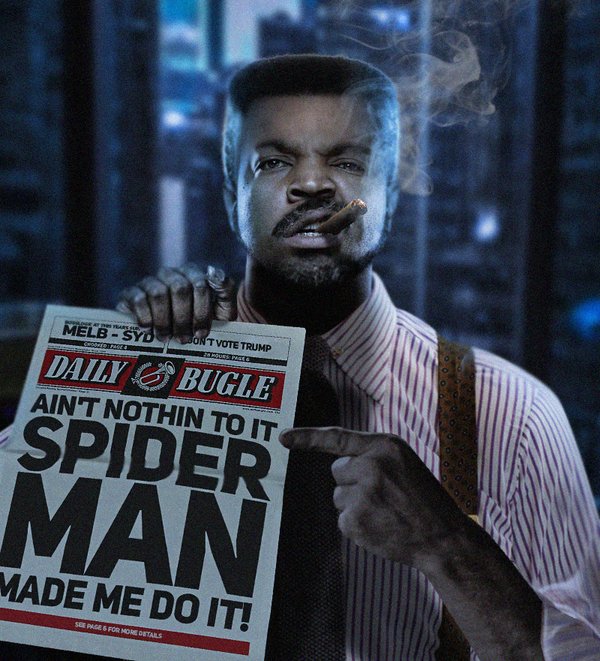
With J.K. Simmons now playing DC’s Commissioner Gordon, BossLogic suggests Ice Cube for the role of J. Jonah Jameson in Marvel and Sony’s next Spider-Man movie. Here’s an artist rendering and a NSFW mashup video from Watch Loud in favor of the idea:

[embedded content]

Cosplay of the Day:

Watch a Batman cosplayer vs. a Superman cosplayer for the love of a Wonder Woman cosplayer in this music video for Shaun Canon’s “SuperLove” (via Geek Tyrant):

[embedded content]

Vintage Image of the Day:

Oscar Isaac, who turns 37 today, in one of his first movies, 2002’s All About the Benjamins:

Movie Trivia of the Day:

This week is the 20th anniversary of Fargo, so here’s a video commemorating the occasion with things you might not know about the Coen Brothers movie:

[embedded content]

Supercut of the Day:

Movie shots that take inspiration from iconic paintings are featured in this video side by side with the original works (via Cinematic Montage Creators):

[embedded content]

Alternative Posters of the Day:

Colin Morello created posters for the original Star Wars trilogy and Star Wars: The Force Awakens using their opening shots. See the first one below and the rest at Live for Films.

Filmmaker in Focus:

With her latest film, Certain Women, coming out soon, Kelly Reichardt gets a tribute video essay from Fandor:

[embedded content]

Classic Trailer of the Day:

This week is the 25th anniversary of The Hard Way, a movie that was heavily promoted but didn’t perform as well as hoped. Watch the original trailer for the movie, which stars Michael J. Fox and James Woods, below.

[embedded content]

and

This entry passed through the Full-Text RSS service – if this is your content and you’re reading it on someone else’s site, please read the FAQ at fivefilters.org/content-only/faq.php#publishers.


No Image

Where Melissa Harris-Perry Saw A New Direction, MSNBC Saw Temporary Shift

Melissa Harris-Perry speaks at the Maya Angelou Forever Stamp dedication at the Warner Theatre on April 7, 2015, in Washington, D.C. Harris-Perry hosted a weekend talk show on MSNBC but left that role last month, amid a dispute with the network.

Melissa Harris-Perry speaks at the Maya Angelou Forever Stamp dedication at the Warner Theatre on April 7, 2015, in Washington, D.C. Harris-Perry hosted a weekend talk show on MSNBC but left that role last month, amid a dispute with the network. Larry French/Getty Images hide caption

toggle caption Larry French/Getty Images

When Melissa Harris-Perry refused to host her eponymous MSNBC talk show in late February, she said she was stepping back because over the past few weeks she had been “silenced.” Shortly afterward, she and her network confirmed they had parted ways.

From the start, Harris-Perry and her employers had very different explanations for why things went south. Harris-Perry said her show was being undermined; MSNBC says it, like other shows, was temporarily affected by the election season.

The talk show host described her perspective in a letter to colleagues that was later posted on Medium. As the Two-Way reported at the time:

“In the letter, Harris explains why she objects to hosting … after weeks of having her show preempted “without comment or discussion or notice,” she says:

” ‘After four years of building an audience, developing a brand, and developing trust with our viewers, we were effectively and utterly silenced. Now, MSNBC would like me to appear for four inconsequential hours to read news that they deem relevant without returning to our team any of the editorial control and authority that makes MHP Show distinctive.

… Perry also described the ‘insulting absurdity’ of her exclusion from MSNBC’s election coverage, alleging that she was traveling for the election season just like other MSNBC journalists — even staying in the same hotels — but wasn’t included on air.”

On All Things Considered today, NPR’s David Folkenflik provides some context for the dispute:

“Under new NBC News President Andy Lack, the cable network shifted toward a newsier sensibility — as though, during the daytime, it was NBC News on cable. Several liberal opinion shows went by the wayside, though prime-time stayed the same.

“MSNBC rebranded itself the place for politics and has won stronger daytime ratings as a result. Melissa Harris-Perry says she didn’t want to be another political anchor reading the latest polls.”

David spoke both to the host and to MSNBC President Phil Griffin. Where Harris-Perry saw a change in direction, away from questions of racial and social justice and toward “horse-race coverage,” Griffin describes a temporary impact of rolling election coverage.

  • Playlist
  • Download
  • Embed
    <iframe src="https://www.npr.org/player/embed/469828825/469842636" width="100%" height="290" frameborder="0" scrolling="no" title="NPR embedded audio player">

Many shows on MSNBC were affected by the election coverage, Griffin said, and Harris-Perry’s show was safe.

“We had a four-year relationship with Melissa where we created this really terrific program that we loved and that brought different voices and was really part of the MSNBC sensibility,” he told David.

Harris-Perry had objections beyond election-year scheduling shifts, David reports.

“It appears to be an air that is now more homogenous, less concerned with questions of racial and social justice, and less interested in highlighting a variety of concerns that shows like mine and others had been quite focused on over the last couple of years,” she said,

She also said she believed MSNBC officials had failed to publicly support her during periods of public criticism.

You can hear the full story on All Things Considered.

This entry passed through the Full-Text RSS service – if this is your content and you’re reading it on someone else’s site, please read the FAQ at fivefilters.org/content-only/faq.php#publishers.


No Image

NFL Takes Bidders To Live Stream Regular Season Games

3:43

Download

The NFL plans to sell the rights to live stream more than a dozen regular season football games next season. NPR’s Kelly McEvers talks to Peter Kafka of ReCode about the NFL’s plan.

Transcript

KELLY MCEVERS, HOST:

The NFL sees a future in the Internet. They must because they’re taking bidders for the rights to 18 regular-season football games. And when we talk about rights, we’re talking about digital rights. That is the right to live stream a football game. That means you could eventually end up watching football on sites like Facebook. Peter Kafka wrote about this for the tech news site ReCode. Hi there, Peter.

PETER KAFKA: Hi. How are you?

MCEVERS: Tell us a little more about where things stand with this. Facebook and Amazon are among the big tech companies that want to live stream NFL games. Is that right?

KAFKA: That’s right. The NFL has allowed various people to stream its games on the Internet for several years now. There hasn’t been a lot of interest in doing it, but you could watch the Super Bowl via a CBS app this year. You could watch – NBC streams games on Sunday nights. You can watch those for free. The big deal this year is the NFL has said we’re going to auction off specific digital rights; we really want digital players to come in here. And so you might see people who don’t traditionally show live video and who’ve never shown live NFL game, like Facebook, like Amazon, getting into this market for the first time.

MCEVERS: Well, what is in it for the NFL to break this out like this as a separate package?

KAFKA: Oh, this – that equation’s really easy. The NFL gets more money or games they’ve already sold at least once and multiple times. The NFL’s been very, very smart about taking very, very valuable asset – its games – and maximizing its value by sort of slicing and dicing and offering different people different access to these games. And now, for the first time, they’ve said there’s a specific digital package. What do you want to pay us?

MCEVERS: And so, then, what is in it for the companies who might be bidding for this – Facebook, Amazon, Verizon?

KAFKA: That is a really good question. In theory, there’s some advertising revenues these guys can generate. There isn’t going to be a giant audience for this stuff because if you can watch a football game on TV, traditionally that’s probably where you’re going to want to watch it. I’m not sure there’s going to be a huge demand to stream an NFL game on your phone via a Facebook app. But that said, there’s some interest in this stuff. Yahoo did this last fall as sort of an experiment with the NFL and got a couple million people watching at least a portion of a really boring regular season game. There’s an asterisk there because Yahoo made it nearly impossible to use any part of Yahoo – Yahoo Mail, Tumblr, anything – without seeing it. They were auto-playing it. So there’s still big question about much demand there is to watch this stuff over the Internet, but there’s some. And the NFL is really looking forward to a few years from now, when some of its existing TV contracts come up. And they’re imagining a scenario where not only do they have CBS and NBC, ABC bidding for the rights to show these games, but they might actually have Facebook or Apple or Verizon coming in and saying, no, no, we want the exclusive rights to these games. And that’s very exciting for the NFL, at least as a business.

MCEVERS: You’re right about that Yahoo deal. I mean, they paid something like $20 million to stream just one game, and that’s for a million or two viewers. How does that math work out?

KAFKA: That math is sort of a shrug, right? The NFL said this is an experiment. Yahoo said this is an experiment. Yahoo would say, privately, we’re not going to cover our costs on this, so it’s not a moneymaking exercise. I think they want the bragging rights. I think there’s some of this year – for Amazon, Facebook, other folks that might be entering this, they’re probably not going to make a ton of money the first year or so streaming these games, but they want to distinguish themselves. And again, you’ve got a bunch of people who are all very interested in sort of jumping on the web video boom. They don’t really know what it looks like, but they know there’s a boom there. And if you can have NFL games and no one else has them, or at least you can say that, that’s a way to distinguish yourself. It’s a really could branding exercise, I think, is a lot of ways some of these folks are going to think about it.

MCEVERS: Right. So its sounds like the NFL is kind of saying, you know, get in on the ground floor.

KAFKA: Get in on the ground floor, and you will have a shiny bauble that none of your competitors will be able to say they have.

MCEVERS: That’s peter Kafka. He’s senior editor for media at ReCode. Thank you very much.

KAFKA: Thanks for having me.

Copyright © 2016 NPR. All rights reserved. Visit our website terms of use and permissions pages at www.npr.org for further information.

NPR transcripts are created on a rush deadline by a contractor for NPR, and accuracy and availability may vary. This text may not be in its final form and may be updated or revised in the future. Please be aware that the authoritative record of NPR’s programming is the audio.

This entry passed through the Full-Text RSS service – if this is your content and you’re reading it on someone else’s site, please read the FAQ at fivefilters.org/content-only/faq.php#publishers.


No Image

Medicare Looks To Cut Drug Costs By Changing How It Pays Doctors

Erbitux is used to treat cancers that start in the head and neck and tumors there that spread from other parts of the body. Because its effectiveness varies, should the price also?

Erbitux is used to treat cancers that start in the head and neck and tumors there that spread from other parts of the body. Because its effectiveness varies, should the price also? Dr. P. Marazzi/Science Source hide caption

toggle caption Dr. P. Marazzi/Science Source

Medicare is going to test new ways to reimburse doctors for medications, in hopes they’ll choose less expensive drugs.

The plan would alter Medicare Part B, which pays for medicines administered in doctors offices or outpatient hospital clinics — to eliminate incentives for doctors to use the most expensive drugs.

The changes would have an outsize effect on cancer doctors and clinics. Medicare Part B shelled out about $7.8 billion on cancer drugs in 2014, or 42 percent of its total spending on drugs that year.

The program now reimburses the doctors or clinics for the cost of the medication plus a 6 percent fee. That means doctors and hospitals earn more money when they use pricier drugs.

As it is now, Dr. Patrick Conway, chief medical officer for the Centers for Medicare and Medicaid Services, called the reimbursement structure “perverse.”

“We’ve heard from oncologists who feel pressure from their health system to pick higher cost drugs even when they are not appropriate for a patient,” he said in a conference call with reporters on Tuesday.

The agency plans to test a reimbursement formula that would pay the cost of the drug, plus a 2.5 percent surcharge and a flat fee of $16.80.

Under the current system, a doctor earns just 60 cents for administering a $10 medication. An equivalent drug that cots $1,000, however, would bring in $60. Under the proposed formula, the cheaper drug in this example would generate a payment of $16.93 and the second one $41.80, according to CMS.

CMS officials say that change would mostly eliminate the incentive to choose a high priced drug over one that may be more appropriate. Medicare Part B spent about $20 billion on outpatient medicines last year.

“We’re trying to align the incentives to what’s best for patients and doctors,” Conway said.

The Medicare Part B plan would also reduce or eliminate the share of the drugs’ costs that patients have to pay.

Dr. Peter Bach, director of The Center for Health Policy and Outcomes at Memorial Sloan Kettering Cancer Center, says research shows doctors prescribe higher priced drugs when they bring in more profit.

“It is refreshing to see Medicare move towards an experiment where they pay for drugs using a flat fee reimbursement, where what doctors and hospitals make is related to giving the drug, not how much it costs,” Bach said in a statement to Shots.

But other cancer doctors aren’t so thrilled.

The American Society of Clinical Oncology opposes the CMS proposal. The proposal could have a major effect on oncologists because many cancer patients receive their chemotherapy treatments in doctors offices or clinics.

“It is inappropriate for CMS to manipulate choice of treatment for cancer patients using heavy-handed reimbursement techniques,” said ASCO CEO Allen Lichter in a statement posted on the physician group’s website.

ASCO, the Pharmaceutical Research and Manufacturers Association and about 100 other physician and advocacy groups sent a letter to Health and Human Services Secretary Sylvia Burwell last week opposing the payment changes.

“We believe that this type of initiative, implemented without sufficient stakeholder input, will adversely affect the care and treatment of Medicare patients with complex conditions,” the letter said.

The agency plans to field test the new reimbursement formula, as well as a handful of others ideas, in different regions of the country starting later this year. CMS will then compare the results to determine which changes are effective at reducing drug spending.

CMS is also planning to test a handful of so-called value-based pricing ideas. The first would pay for drugs according to how well they work.

For example, if a cancer medication is very effective in eliminating a specific tumor, but is also used on a second, different condition with less success, Medicare will pay less when it is used for the second condition than the first. Sloan Kettering’s Bach, who served as an adviser to CMS on cancer policy in 2005 and 2006, argued for varying payments for drugs this way in a 2014 paper published in JAMA, the Journal of the American Medical Association. The approach is called indication-based pricing.

The agency also plans to work with drugmakers to link prices to patient outcomes, perhaps paying less for medications when patients end up being admitted to a hospital.

Private insurers and pharmacy benefit managers have been testing similar ideas.

Cigna last month said it had agreed with drugmaker Novartis on a pay-for-performance deal for the heart failure drug Entresto. Under the agreement, Cigna will pay less if patients taking the medication are hospitalized for heart failure.

And Express Scripts, the biggest manager of pharmacy benefits, says it’s working with cancer drug manufacturers to pay indication-based prices that tie cost to how well the drugs perform.

The CMS proposal is open for public comment until May 9. Conway said the field tests will begin after the comment period is complete.

This entry passed through the Full-Text RSS service – if this is your content and you’re reading it on someone else’s site, please read the FAQ at fivefilters.org/content-only/faq.php#publishers.


No Image

Watch Ladysmith Black Mambazo Perform 'Homeless' Live In The Studio

March 9, 201612:22 PM ET

by Scott Kulicke

Musical lore has it that Ladysmith Black Mambazo, the iconic South African mbube group, was founded by Joseph Shabalala after a series of dreams in which he heard its sounds. It goes unmentioned whether Shabalala dreamed of 50 years’ worth of worldwide success as perhaps the best-known cultural export of South Africa.

Most people can’t say the group’s name without thinking of Paul Simon, and true to form, at KEXP the group performed its Simon-less version of Graceland‘s “Homeless,” which host Darek Mazzone aptly describes as timelessly evoking a sense of love. Ladysmith Black Mambazo has continued after Joseph’s 2008 retirement under the direction of his son Thamsanqa, and the group came to us with a full roster, including three of Shabalala’s other sons. Enjoy one of the most historically important and musically distinctive groups of the last century as Ladysmith Black Mambazo fills the KEXP studio.

Set List
  • “Homeless”

Watch Ladysmith Black Mambazo’s full performance on KEXP’s YouTube channel.

This entry passed through the Full-Text RSS service – if this is your content and you’re reading it on someone else’s site, please read the FAQ at fivefilters.org/content-only/faq.php#publishers.


No Image

Today in Movie Culture: New Darth Maul Fan Film, How 'Deadpool' Should Have Ended and More

Here are a bunch of little bites to satisfy your hunger for movie culture:

Fan Film of the Day:

The best new character from the Star Wars prequels gets a great spotlight, as he deserves, in the new fan-made short Darth Maul: Apprentice (via Neatorama):

[embedded content]

Reimagined Ending of the Day:

Captain America helps out the Merc with a Mouth in the How It Should Have Ended for Deadpool:

[embedded content]

Imagined Remake of the Day:

Ignore the fact that there’s a new installment coming out soon; here’s what a remake of The Ring would be like today (via Geek Tyrant):

[embedded content]

Casting Rendering of the Day:

J.K. Simmons has been cast as the new Commissioner Gordon in The Justice League Part One, so BossLogic and ComicBook.com came up with an artist rendering of what he might look like in the role:

Movie Takedown of the Day:

With the next installment coming out soon, Honest Trailers tries to make sense of The Divergent Series: Insurgent:

[embedded content]

Filmmaker in Focus:

This montage of Guillermo del Toro movies highlight’s the director’s most imaginative ideas (via Cinematic Montage Creators):

[embedded content]

Movie Trailer Comparison of the Day:

We’re still hoping the new Ghostbusters is better than Pixels, but they do look awfully similar when their trailers are viewed side by side — especially when synched up through YouTube Doubler (via Reddit):

YouTube Doubler

Supercut of the Day:

Speaking of similarities in movies, here’s a supercut of characters asking “what have I done?” or “what have you done?” followed by a montage of the things done:

[embedded content]

Video Essay of the Day:

Channel Criswell has a new video analyzing Spike Jonze‘s Her and its “wants vs. needs” narrative:

[embedded content]

Classic Trailer of the Day:

Today is the 20th anniversary of the limited release opening of Fargo. Watch the original trailer for the Coen Brothers movie, which would go on to win two Oscars:

[embedded content]

and

This entry passed through the Full-Text RSS service – if this is your content and you’re reading it on someone else’s site, please read the FAQ at fivefilters.org/content-only/faq.php#publishers.


No Image

Tests Say The Water Is Safe. But Flint's Restaurants Still Struggle

A sign at the Westside Diner in Flint, Mich., reassures customers that it serves uncontaminated water pulled from Detroit's drinking supply.
4:29

Download

A sign at the Westside Diner in Flint, Mich., reassures customers that it serves uncontaminated water pulled from Detroit’s drinking supply. Brett Carlsen/Getty Images hide caption

toggle caption Brett Carlsen/Getty Images

The once routine practice of getting a glass of water before a restaurant meal in Flint, Mich., is now fraught with apprehension, since lead pipes started leaching into the drinking water after officials switched to the highly corrosive Flint River as the city’s water supply.

The crisis over lead-contaminated water has touched every aspect of life in Flint, and for restaurants, it could not have come at a worse time. In the past few years, restaurants have been resurging, especially in downtown Flint. Now, they are trying to recoup lost business and convince leery customers that their water is safe.

Flint switched back to Lake Huron for its drinking water late last year. But despite the ongoing testing for lead, city and state officials say it’s time to go on the offense in regard to restaurants.

George Wilkinson, vice president for the Flint & Genesee Chamber of Commerce, says everyone should know “that it’s OK to come out and go to these different restaurants for meals, because the water’s been tested, it’s certified and it’s clear. Flint is open for business.”

Blackstone’s Pub and Grill is one eatery that has helped to revitalize Flint’s downtown. Posters on its front windows promote concerts and other events, but one prominently displayed sign lists the results of the restaurant’s test results in big bold letters: “Water — lead free.”

However, the lunch crowd inside is thin. Manager Patti Bergstrom says business has been slack. “We’ve noticed a change. We get a lot of phone calls like, ‘Oh my goodness, what do you do for your water? How do you wash your dishes?’ ” she says.

Bergstrom says restaurants know that keeping lead out of their water is crucial. When they rinse produce, for example, they let the water run first for a while, to flush any lead that may have settled in the plumbing overnight. Many restaurants have bought expensive filtration systems to keep the lead out of beverage machines, bar guns, ice-makers and dishwashers. Bergstrom says Blackstone’s new filtration system cost about $800, with $250 replacement filters.

Some restaurants buy bagged ice. And unlike Flint residents, they also have to buy bottled water. The Flint & Genesee chamber tries to mitigate that cost by offering free water to businesses twice a week.

Amy Hadd, a secretary eating lunch at Blackstone’s, lifts her glass of water. “I feel comfortable drinking the water here,” she says. “It’s filtered. It’s been tested. As long as the results are posted, I don’t mind.”

The Genesee County Health Department sent a letter to restaurants about how to handle tap water last October, but they were just guidelines distributed before the water emergency was declared.

Anthony Pavone, a supervisor with the Health Department, says inspectors have since tested hundreds of facilities, including chain restaurants.

“A lot of them already had filters on their pop and ice machines, just because they want their product to be consistent at all their locations,” he says. “They take every precaution they can for variations in different water supplies.”

Carlos Amos, manager of Angelo's Coney Island in Flint, Mich., talks to Anthony Pavone, supervisor of the Genesee County Health Department. Amos says the restaurant's owner got a good deal on bottled water that customers can choose to buy.

Carlos Amos, manager of Angelo’s Coney Island in Flint, Mich., talks to Anthony Pavone, supervisor of the Genesee County Health Department. Amos says the restaurant’s owner got a good deal on bottled water that customers can choose to buy. Cheryl Corley/NPR hide caption

toggle caption Cheryl Corley/NPR

The iconic Angelo’s Coney Island has been operating in Flint for more than 60 years. A sign at the front of the restaurant says: “All of our beverages and ice are made with filtered water.” But even here, says manager Carlos Amos, business is down. “The first question out of everybody’s mouth is, ‘Do you have Flint water?’ “

Amos says the restaurant’s owner bought a new filtration system and stacks of bottled water to sell to customers who prefer it. On every table, there’s a copy of an inspection report showing no lead in Coney Island’s water.

Mason Miller, a General Motors retiree eating breakfast at the restaurant, says he doesn’t pay much attention to the signs, because he expects clean water. “You would think that would be the No. 1 priority on a restaurant list — to make sure that people could come in here and be safe,” he says.

That’s an opinion that many of the restaurateurs in Flint hope more people will embrace during a water crisis that has yet to be resolved.

This entry passed through the Full-Text RSS service – if this is your content and you’re reading it on someone else’s site, please read the FAQ at fivefilters.org/content-only/faq.php#publishers.


No Image

'Dentist Of Horror' Allegedly Mutilated Scores Of Patients In France

Dutch dentist Jacobus Van Nierop in his dental office in Chateau-Chinon, France, in 2009.

Dutch dentist Jacobus Van Nierop in his dental office in Chateau-Chinon, France, in 2009. Christophe Masson/AP hide caption

toggle caption Christophe Masson/AP

The Dutch dentist was initially welcomed to the rural French town of Chateau-Chinon, which had been without a dental care provider for two years.

Then the horror stories started.

Now Jacobus Van Nierop is standing trial on charges of aggravated assault and insurance fraud, after scores of patients said he caused them injuries since arriving in town in 2008, Agence France-Presse reports. If found guilty, he could be sentenced to as many as 10 years in prison and fined up to $165,000, according to AFP.

The Associated Press has this account from a woman who said she was treated by the “Dentist of Horror,” as he has been dubbed in French media:

“One patient, Sylviane Boulesteix, has said she was unexpectedly summoned to the dental office in central-eastern France in May 2012. Without warning, the dentist pulled eight of her teeth out and immediately fixed dentures on her raw gums. For three hours, the elderly woman says she sat gushing blood.

“In the following days, she says Van Nierop refused to relieve her pain. A judicial expert later described a ‘cruel and perverse’ man whose incompetence made Boulesteix lose several health teeth, go through trauma and suffer irreversible damage to her mouth.”

The town of Chateau-Chinon, where Van Nierop is accused of mutilating dozens of patients.

The town of Chateau-Chinon, where Van Nierop is accused of mutilating dozens of patients. Jeff Pachoud/AFP/Getty Images hide caption

toggle caption Jeff Pachoud/AFP/Getty Images

According to AFP, some patients said they would wake to find notes asking them to come back for further treatment:

” ‘Every time, he would give us what he called ‘a little prick’ and we were asleep, knocked out,’ said Nicole Martin, a retired teacher who lost several teeth to abscesses caused by the horrific operations.

” ‘When it was over, we would find a Post-it note saying to come back for an appointment the next day or the day after,’ she added.”

Martin set up a victims’ group to press charges that grew to more than 120 members, according to AFP.

Van Nierop, 51, has said he “suffers from ‘psychological problems’ including gender identity issues and suicidal tendencies,” AFP reports.

He had a blanket over his head when he arrived today at the courthouse in the nearby city of Nevers, AFP reports. He has been incarcerated for the past 18 months.

“What my clients and I expect are explanations,” Charles Joseph-Oudin, who is representing some of the victims, tells AFP. “To understand how Mr. Van Nierop could have acted in such a way for so long, how things could have become so bad. Today, we have no explanations. Understanding is the first step of the victims’ healing process.”

According to the AP, the defendant has “refused to answer questions during the investigation, saying only that the oral health of the people in the region was ‘deplorable.’ “

Van Nierop was arrested in 2013 but was released and then fled to Canada, AFP reports. He was found in New Brunswick in 2014, extradited to the Netherlands and then sent back to France to stand trial.

According to Vice, the Van Nierop case highlights the problem of France’s 192 ” ‘medical deserts’ — areas where the authorities have failed to find successors for retiring doctors.” Vice says some 2.5 million people live in these areas.

This entry passed through the Full-Text RSS service – if this is your content and you’re reading it on someone else’s site, please read the FAQ at fivefilters.org/content-only/faq.php#publishers.