Articles by admin

No Image

U.S. Doctors Prepare For Arrival Of Zika Virus

NPR’s Kelly McEvers talks to Dr. Umair Shah, executive director of public health and environmental services in Harris County, Texas, about what they’re doing to prepare their community for Zika, and how they’re paying for it.

Transcript

KELLY MCEVERS, HOST:

For more on how public health officials in the Houston area are handling Zika, we called Umair Shah. He leads the Harris County Health Department. He says in addition to educating residents, the county is targeting the Aedes aegypti mosquitoes that carry Zika.

UMAIR SHAH: We’ve set traps throughout Harris County, but what our program is really designed to do is to pick those mosquitoes that are caught in those traps, bring them back to our virology lab and then to test those mosquitoes. And where we light up for disease, where we know that there is, in this case, Zika virus, then we can design interventions against that.

The primary intervention for the Aedes mosquito is source reduction. We have to reduce the sources of breeding. We cannot spray our way out of this. We have to really rely on people and communities to be able to get the refuse and the litter and the used tires out of harm’s way so we can actually get those breeding grounds removed.

MCEVERS: What do these traps look like?

SHAH: Combination of net and – there are certain traps that actually – they’ve got water in them. And sort of what it does, is it really simulates what is attractive to a mosquito. So one of the traps, for example, might smell like kind of a dirty gym bag. And that may not be what you or I would want to be around, but a mosquito loves it, right?

MCEVERS: (Laughter).

SHAH: So a mosquito loves it, and that’s exactly what you’re trying to do, is to – boom, you grab it, and then you can bring it back to the lab and test it.

MCEVERS: So far, the case of Zika in Houston were related to travel. How quickly is your department able to act once you confirm a case of locally transmitted Zika?

SHAH: What we’ve been saying is that this is not a matter of if. This is a matter of when. We don’t know when is, unfortunately, and so for us, it’s really being as nimble as we can with this response. So we never thought we were going to be talking about, you know, sexual precautions for a mosquito-born illness – right? – those kinds of things.

You know, I think that’s the real – where the rubber meets the road – is really putting all sorts of efforts together. We’re fortunate in our department that we have animal health. We have insect experts, and we have the human health aspect. There are environmental people know the community from – you know, here’s high weeds and some other things that may be breeding grounds for mosquitoes.

But also our epidemiologists who are disease detectives, are mosquito control inspectors and going to a neighborhood and be able to take those three different vantage points and be able to respond to Zika, I think is really key

MCEVERS: So you’d say you’re ready.

SHAH: You know, I don’t know if anybody is ready right now. It is really important for us to increase some of the resources and the funding to local communities, especially in states such as Texas where, you know, we have higher risk. And as great as a mosquito-control program that we have, we are 98 percent funded by local taxpayer dollars, and why that’s important is that if you have that kind of reliance on local resources, you really need supplementation by what’s happening at the federal or state level. And those resources need to be brought to the table to local communities such as ours so that we can actually fight the bite.

MCEVERS: Congress, of course, hasn’t approved the Obama administration’s request for $1.9 billion on this issue.

SHAH: We’re hopeful that something’s going to happen at the federal level. You know, I can’t tell you exactly what the dollars are that any community is going to need because there are so many unknowns about Zika, but I will say that we need to really be very commonsensical and smart about how we get those dollars to local communities.

Vaccines are good. Research is good, and we appreciate all the work with our academic partners. But local public health is where it happens.

MCEVERS: Umair Shah is executive director of public health and environmental services in Harris County, Texas. Thank you very much for your time today.

SHAH: Really appreciate it.

Copyright © 2016 NPR. All rights reserved. Visit our website terms of use and permissions pages at www.npr.org for further information.

NPR transcripts are created on a rush deadline by Verb8tm, Inc., an NPR contractor, and produced using a proprietary transcription process developed with NPR. This text may not be in its final form and may be updated or revised in the future. Accuracy and availability may vary. The authoritative record of NPR’s programming is the audio record.

Let’s block ads! (Why?)


No Image

Today in Movie Culture: The Best of the Marvel Cinematic Universe, Disney's 'The Revenant' and More

Here are a bunch of little bites to satisfy your hunger for movie culture:

Movie Studio Showcase of the Day:

Get pumped for Captain America: Civil War with this great supercut of the best of the Marvel Cinematic Universe (via Live for Films):

[embedded content]

Casting Depiction of the Day:

Speaking of the MCU, Nathan Fillion was revealed this week to be playing Wonder Man in Guardians of the Galaxy Vol. 2, so here’s BossLogic’s depiction of what he could look like:

Reworked Movie of the Day:

What if The Revenant was a Disney animated feature? It might look like this redone trailer using footage from Brother Bear (via Cinematic Montage Creators):

[embedded content]

Location Vacation of the Day:

Relax to the sights and sounds of Dagobah in this 94-minute loop of a bit from The Empire Strikes Back that turns Yoda‘s backyard into a soothing retreat:

[embedded content]

Fake Outtakes of the Day:

Speaking of Star Wars, watch a reel of funny fake Kylo Ren bloopers that re-dub the masked villain’s dialogue from Star Wars: The Force Awakens (via Geek Tyrant):

[embedded content]

Vintage Image of the Day:

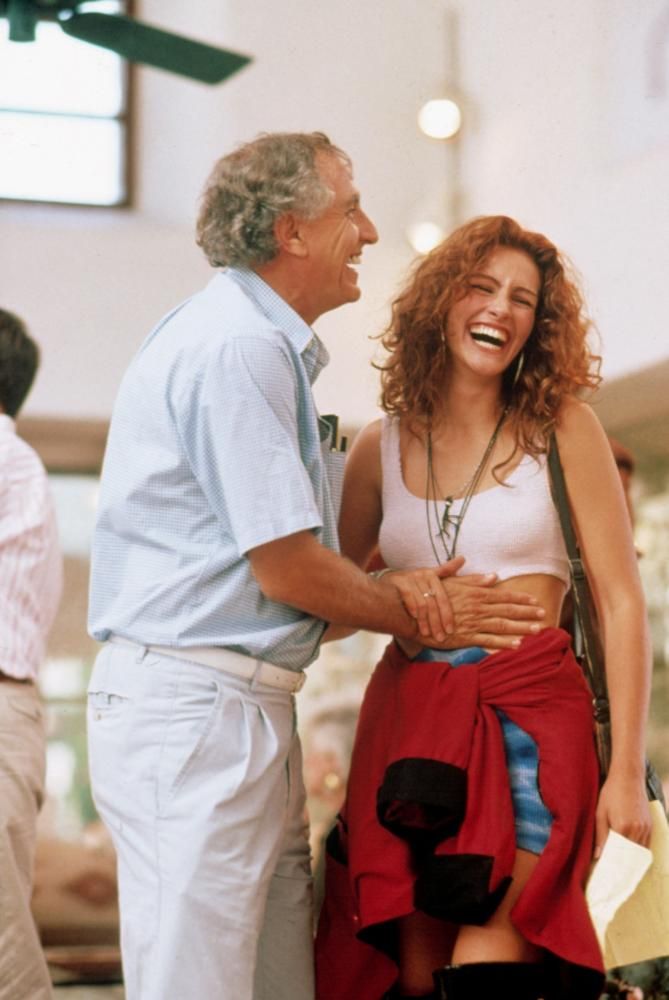
In honor of their latest collaboration, Mother’s Day, opening this weekend, here’s Julia Roberts and director Garry Marshall on the set of Pretty Woman in 1989:

Movie Poetry of the Day:

This supercut collects movie clips that rhyme with each for a video that gives new meaning to the term poetic cinema (via Live for Films):

[embedded content]

Character in the Spotlight:

See many different ways actors have played Macbeth in this Shakespearean supercut starring Michael Fassbender, Orson Welles and more (via Cinematic Montage Creators):

[embedded content]

Film Analysis of the Day:

In the spirit of Room 237, another Stanley Kubrick movie gets overanalyzed with this NSFW spotlight on the hidden jokes and cryptic metaphors in A Clockwork Orange (via One Perfect Shot):

[embedded content]

Classic Trailer of the Day:

Today is the 60th anniversary of the U.S. release of the Americanized version of Godzilla, reworked with Raymond Burr starring. Watch the original trailer for what was retitled Godzilla: King of the Monsters below.

[embedded content]

and

Let’s block ads! (Why?)


No Image

FBI Explains Why It Won't Disclose How It Unlocked iPhone

FBI Director James Comey testifies March 1 before the House Judiciary Committee on the encryption of the iPhone belonging to one of the San Bernardino attackers.

FBI Director James Comey testifies March 1 before the House Judiciary Committee on the encryption of the iPhone belonging to one of the San Bernardino attackers. Nicholas Kamm/AFP/Getty Images hide caption

toggle caption Nicholas Kamm/AFP/Getty Images

The FBI has officially decided it can’t tell Apple how the agency hacked into the locked iPhone used by one of the San Bernardino attackers.

The FBI paid undisclosed professional hackers more than $1 million to get inside the locked and encrypted iPhone 5C through a previously unknown flaw in the software.

The agency has been weighing whether it would submit the details to a review process that helps decide whether software vulnerabilities known to the government should be disclosed to companies.

FBI science and technology chief Amy Hess said in a statement on Wednesday that the agency has determined it won’t be able to submit the third-party iPhone hack to the review, called the Vulnerabilities Equities Process:

“The VEP cannot perform its function without sufficient detail about the nature and extent of a vulnerability.

“The FBI purchased the method from an outside party so that we could unlock the San Bernardino device. We did not, however, purchase the rights to technical details about how the method functions, or the nature and extent of any vulnerability upon which the method may rely in order to operate. As a result, currently we do not have enough technical information about any vulnerability that would permit any meaningful review under the VEP process.”

This was exactly the kind of challenge predicted by Robert Knake, former director of cybersecurity policy for the National Security Council in the Obama administration, in his recent interview with NPR. Knake offered a detailed description of how the Vulnerabilities Equities Process works and suggested that intellectual property lawyers will in the future fight over whether hackers can own the rights to a vulnerability.

Let’s block ads! (Why?)


No Image

Jordan Reportedly Bans Band With Gay Frontman From Performing

Hamed Sinno (R) and Haig Papazian of the Lebanese alternative rock band Mashrou' Leila performing in Bourges, France in 2015.

Hamed Sinno (R) and Haig Papazian of the Lebanese alternative rock band Mashrou’ Leila performing in Bourges, France in 2015. Guillaume Souvant/AFP/Getty Images hide caption

toggle caption Guillaume Souvant/AFP/Getty Images

A popular and groundbreaking alt-rock band from Lebanon called Mashrou’ Leila was scheduled to play a big show in Amman, Jordan Friday.

Instead, their show was cancelled by the government — and the band says they have been told they can never perform again in the country, because of the group’s politics, religious beliefs and “endorsement of gender equality and sexual freedom.”

[embedded content]
Mashrou’ Leila YouTube

Mashrou’ Leila had been slated to play at the famous Roman amphitheater in Amman, where they have previously performed three times, as well as elsewhere across the country.

In a lengthy note posted on Facebook in both Arabic and English, the band alleges that the actual reason for the permission to be withdrawn is different:

“We have been unofficially informed that the reason behind this sudden change of heart, few days before the concert day, is the intervention of some authorities. Our understanding is that said authorities have pressured certain political figures and triggered a chain of events that ultimately ended with our authorization being withdrawn.

“We also have been unofficially informed that we will never be allowed to play again anywhere in Jordan due to our political and religious beliefs and endorsement of gender equality and sexual freedom.”

The lead singer of Mashrou’ Leila, Hamed Sinno, is openly gay, and the band has addressed gay rights as well as politics and corruption in both its songs and many of its interviews. In an interview last year with the CBC show Q, Sinno said that a show they did in a predominantly Christian town in Lebanon called Zouk Mikael was protested by people who believed that “homosexuals shouldn’t be allowed to set foot on Christian soil.” Sinno attributed that attitude to “broader fundamentalisms in the region.”

According to a report on the Jordanian news site jo24.net published Tuesday, at least one public supporter of the ban is a member of parliament named Bassam al-Batoush, who has called for the group to be banned due to their “controversial” material that references sex, homosexuality, “calls for revolution” and promotes “Satanic” ideas.

The governor of Amman district, Khalid Abu Zeid, told the Associated Press Wednesday that the band’s songs “contradict” Judaism, Christianity and Islam. Initially, the AP reports, officials from Jordan’s Antiquities Department rescinded permission because such a show would “contradict the ‘authenticity’ of the ancient venue.”

Last year’s performance at the Roman amphitheater in Amman… #???_?????_??_???? #????_????_??_???? pic.twitter.com/UkfbK8bEzZ

— haig papazian (@haigpapa) April 26, 2016

Mashrou’ Leila violinist Haig Papazian has posted pictures of one of their previous three shows at the amphitheater on Twitter.

As the band also noted on Facebook, Sanno’s mother is from Jordan, and the members say that the country is “a formative part of his identity and writing, and a place we have always considered our second home.”

The Facebook note concludes, “We urge the Kingdom to choose fighting alongside us, not against us, during this ongoing battle for a culture of freedom against the regressive powers of thought control and cultural coercion.”

The U.S. State Department’s 2015 human rights report on Jordan includes this assessment: “While consensual same-sex sexual conduct is not illegal, societal discrimination against LGBTI persons was prevalent, and LGBTI persons were targets of abuse. Activists reported discrimination in housing, employment, education, and access to public services. Some LGBTI individuals reported reluctance to engage the legal system due to fear their sexual orientation or gender identity would either provoke hostile reactions from police or disadvantage them in court. Activists reported that most LGBTI individuals were closeted and fearful of their sexual identity being disclosed.”

The five-member band was founded at the American University of Beirut in 2008 and has released three albums. Their name translates as both Leila Project and Night Project; Leila is a Juliet-like figure in Arabic literature. A rapturous review from London’s Guardian last November said that they “charge the stage with electricity, sensuality and a dazzling aura of resistance.”

Mashrou’ Leila’s latest video, for the song “AOEDE,” which was released earlier this month, opens with a young woman recounting a story of police brutality.

The band is heading to the U.S. and Canada on tour this May and June, with dates scheduled in Brooklyn, Manhattan, Washington, D.C. and Vancouver.

[embedded content]
Mashrou’ Leila YouTube

Let’s block ads! (Why?)


No Image

That Surgery Might Cost You A Lot Less In Another Town

Need knee replacement surgery? It may be worthwhile to head for Tucson.

That’s because the average price for a knee replacement in the Arizona city is $21,976, about $38,000 less than it would in Sacramento, Calif. That’s according to a report issued Wednesday by the Health Care Cost Institute.

The report, called the National Chartbook on Health Care Prices, uses claims and payment data from three of the largest insurance companies in the U.S. to analyze how prices for procedures vary from state to state, and city to city.

The takeaway?

Health care prices are crazy.

“There doesn’t seem to be a systematic pattern with respect to what’s high and what’s low,” says David Newman, HCCI’s executive director. Newman is lead author of an article published Wednesday online in the journal Health Affairs that accompanied the release of the Chartbook.

The reports compare average state prices for 242 medical services — from primary doctor visits to coronary angioplasty to a foot x-ray — to the national average price for those services. It shows that states such as Minnesota and Wisconsin have higher than average prices while others, such as Florida and Maryland, were cheaper overall.

Arizona’s health care prices were generally cheaper, about 82 percent of the national average, while next door in New Mexico, care was more expensive, about 25 percent above average.

And prices vary within states, too.

If a Sacramento knee replacement patient doesn’t want to drive the 871 miles to Tuscon, he or she could drive south to Riverside, Calif., and pay $27,000 less. In Florida, the surgery costs $17,000 less in Miami than it does 180 miles north in Palm Bay.

“For every mile that a consumer drives south on I-95, they will save $100,” Newman says.

The HCCI data is some of the most detailed and complete information available on health care prices paid by private insurance companies. It includes payment data from Aetna, Humana, UnitedHealthCare. It doesn’t include claims information from The Blue Cross and Blue Shield Association, which is the largest health insurer in the country.

The price variations revealed by HCCI show that the health care market is not following traditional economic and market rules.

“The market just isn’t working,” says Zack Cooper, a professor of health policy and economics at Yale University.

Cooper says in the past, analysts believed that health care costs were rising because people were using too much health care. That analysis was based on Medicare data. However, Medicare pays the same across the country.

The new data show that private-insurance payments vary widely and states that have low Medicare spending, like Minnesota, often have higher prices in the private insurance market.

He says one major factor is the consolidation of hospitals, leading to a lack of competition.

“Where one large hospital dominates the markets, that hospital is able to get higher prices,” he says. “Hospitals have gotten increasingly powerful over time.”

The new data may give insurers and consumers better ammunition to shop around for lower prices or to negotiate better deals.

But that will require people taking a different approach to choosing health care.

People should be willing to travel farther for services, Cooper says. That would put powerful hospital systems in different cities in competition with one another, perhaps putting pressure on prices.

And there are limits on where competition can bloom in health care, says
Sarah Dash, president and co-CEO of the Alliance for Health Reform.

“A woman is going to go to the one OB/GYN that she goes to. She’s not going to run all over town trying to find the cheapest one necessarily,” Dash says.

“Where it’s shoppable, where it’s elective, where it’s not an emergency and where the price is knowable, then there are things that can be done,” she says.

Let’s block ads! (Why?)


No Image

Even Though It's April, Sports Headlines Scream Football

With the NFL draft and 2 quarterbacks in court, football proves it can make news year round, and not always for the right reasons. Our commentator says football, not baseball, is our national pastime.

Transcript

STEVE INSKEEP, HOST:

Never mind that we’re in baseball season as well as the season of pro basketball and hockey playoffs. USA Today columnist Christine Brennan tells us that in America, there is still just one sport.

CHRISTINE BRENNAN: It’s April, but the sports headlines scream football. Tom Brady’s four-game NFL suspension for Deflategate has been reinstated by a federal appeals court. Yes, Deflategate is back. Johnny Manziel, the former Cleveland Browns quarterback, has been indicted on a domestic violence charge after allegedly hitting his girlfriend several times. Two young college players – Jared Goff of California and Carson Wentz of North Dakota State – Are about to be selected at the top of the 2016 NFL draft. So what season is this anyway? It’s football season in America, sports fans. It always is.

The NFL, not Major League Baseball, is our real national pastime. Oh, millions upon millions of fans will go to the baseball games this spring and summer. I’ll be among them. I love baseball in the summertime. There’s nothing better. Well, except for going to a football game in the fall – Or actually just watching it on TV. I’m speaking for the American sports fan here, not necessarily myself. The numbers bear this out. Sports TV ratings are at their highest for the National Football League, with college football not too far behind for its biggest games. And nothing gets close to the Super Bowl – Always the most-watched show on TV every year.

The NFL off-season lasted less than three months. And now here comes the NFL draft Thursday night, live from Chicago. In 2014, TV coverage of the draft reached a record 45.7 million people over three days. Those people were not watching anyone throw a pass or make a tackle. They were watching team executives sitting next to a telephone at a table, choosing a young man who then walks on stage and nervously adjusts his new team’s cap on top of his head. And then it happens again and again. It’s the pro-sports Groundhog Day. But it’s also really good reality TV. One of the reasons for the huge ratings in 2014, people couldn’t stop watching Heisman Trophy-winner Johnny Manziel slip all the way down to the 22nd pick, a slide greased by his off field antics. Turns out he should have slipped all the way out of the draft, but that’s another story.

Sports fans, by wide margins, chose to watch that NFL draft drama hour after hour rather than real live sports. The 2014 draft easily beat out two NBA and two NHL playoff games being played that same evening. See what I mean? The NFL is our national pastime. The NFL also spurs on important national conversations. The troubling Manziel news is a continuation of a domestic violence conversation begun after the release, a year and a half ago, of the Ray Rice elevator video – That punch and his punishment, or lack thereof. When something that big happens in the NFL, it instantly becomes conversation fodder for the nation. So maybe football headlines all year ’round do have their place after all.

INSKEEP: Christine Brennan is a sports columnist with USA Today.

Copyright © 2016 NPR. All rights reserved. Visit our website terms of use and permissions pages at www.npr.org for further information.

NPR transcripts are created on a rush deadline by Verb8tm, Inc., an NPR contractor, and produced using a proprietary transcription process developed with NPR. This text may not be in its final form and may be updated or revised in the future. Accuracy and availability may vary. The authoritative record of NPR’s programming is the audio record.

Let’s block ads! (Why?)


No Image

Today in Movie Culture: 'Alien' Meets 'Star Wars,' 'Iron Man' Meets 'Gladiator' and More

Here are a bunch of little bites to satisfy your hunger for movie culture:

Trailer Crossover of the Day Part 1:

It’s Alien Day, so here’s a recut of the trailer for Aliens done in the style of the trailer for Star Wars: The Force Awakens (via Reddit):

[embedded content]

Trailer Crossover of the Day Part II:

And here’s a trailer for Star Wars: The Force Awakens done in the style of the original Alien trailer:

[embedded content]

Vintage Image of the Day:

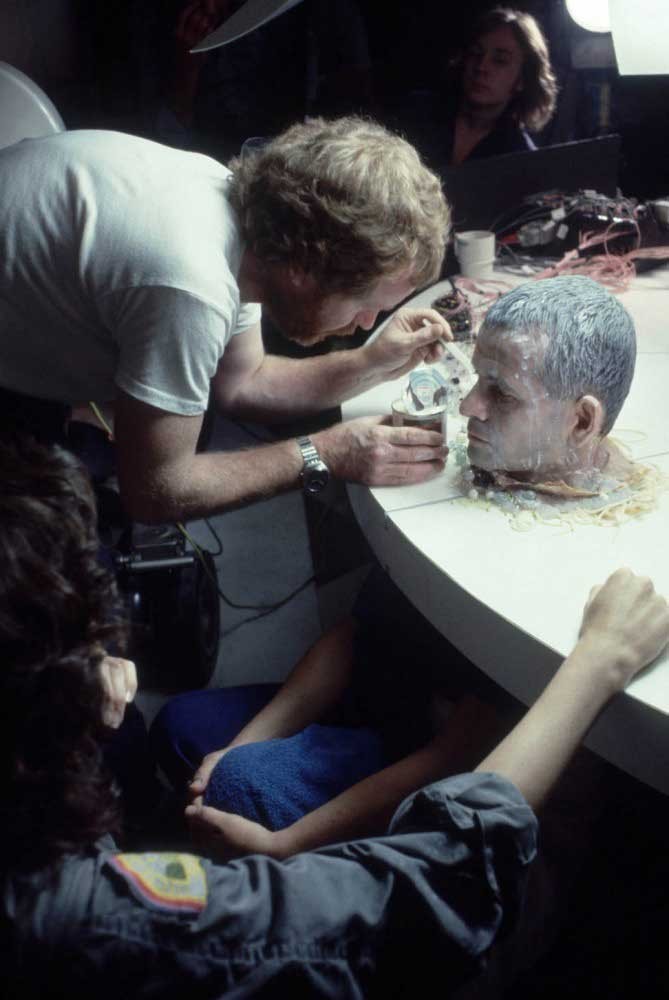
Ridley Scott applies condensed milk to Ian Holm as he waits for his big decapitated android moment on the set of Alien in 1978:

VFX Breakdown of the Day:

See how the Merc with a Mouth’s mask effects were practically achieved in this new Deadpool featurette:

[embedded content]

Movie Promotion of the Day:

Deadpool is now on iTunes, and the character has taken over the ads for other movies available on the digital movie service. Below are the day-appropriate Alien 3 and a funny one for 127 Hours. See the rest on iTunes or in a gallery at Comic Book Resources.

Mashup of the Day:

In the new animated series Hero Swap, Iron Man is inserted into the movie Gladiator:

[embedded content]

Custom Action Figure of the Day:

Speaking of Iron Man, Sam Kwok Workshop has done it again with another custom figure, this time mashing the superhero with Tron. See more images at Geek Tyrant.

Reworked Movie of the Day:

What if Ferris Bueller’s Day Off was a thriller? That’s the idea in this reimagined trailer for “Ferris Bueller Must Die”:

[embedded content]

Filmmaking Tip of the Day:

Now You See It explores what makes for a good movie ending by looking at Psycho, its remake, The Silence of the Lambs, 12 Angry Men and more:

[embedded content]

Classic Trailer of the Day:

In honor of Alien Day, of course here is that terrific original trailer for the 1979 horror sci-fi film:

[embedded content]

and

Let’s block ads! (Why?)


No Image

Amazon Extends Same-Day Delivery To Previously Excluded Boston Area

Bags are loaded for delivery at Amazon's urban fulfillment facility in New York last year. In some areas, Amazon Prime subscribers can get free same-day delivery.

Bags are loaded for delivery at Amazon’s urban fulfillment facility in New York last year. In some areas, Amazon Prime subscribers can get free same-day delivery. Mark Lennihan/AP hide caption

toggle caption Mark Lennihan/AP

This post was updated at 7:45 p.m. ET.

A central neighborhood in Boston had been left out of Amazon’s plans for free same-day delivery in the city. The company said on Tuesday that will change.

A Bloomberg analysis last week showed that the predominantly black Roxbury community did not have access to the Amazon Prime service, which is offered to all adjacent neighborhoods. After looking at nationwide data, Bloomberg called the disparity in Boston “the most striking.”

Boston Mayor Marty Walsh, who had criticized the inconsistency, tweeted on Tuesday that Amazon had notified him of the change. “I thank them for this decision,” he wrote.

.@amazon informed me today that they will now be offering same day service to every neighborhood in Boston. I thank them for this decision.

— Mayor Marty Walsh (@marty_walsh) April 26, 2016

In a statement to The Boston Globe, the mayor’s office said the city’s chief of economic development and chief of policy “had been in conversations with Amazon before the mayor’s call.”

Amazon says it is “actively working with our local carrier to enable service to the Roxbury neighborhood in the coming weeks.” The statement from Scott Stanzel, director Amazon’s operations communications, adds that the company is not done expanding same-day delivery nationwide and that all Prime members already have free two-day and one-day shipping options.

In its report last week, Bloomberg noted that there was “no evidence that Amazon makes decisions on where to deliver based on race.”

“Demographics play no role in it. Zero,” Amazon’s vice president of global communications, Craig Berman, told the news agency. Berman said that those decisions were instead based on where existing Amazon Prime customers live.

The Boston Globe‘s own analysis indicated that “the three ZIP codes excluded from same-day delivery by Amazon are among the poorest in Boston.”

The service is available only to monthly subscribers of Amazon Prime. Those customers can get free same-day delivery on orders of at least $35.

Let’s block ads! (Why?)


No Image

British Inquest Finds Police At Fault For Hillsborough Soccer Stadium Disaster

An inquest into the deaths of 96 soccer fans in a British sports stadium has concluded that faulty policing was responsible. The supporters of Liverpool Football Club were crushed to death during a game in 1989. Their relatives had to fight for nearly 30 years to overcome a police cover-up, which included allegations that the fans themselves were to blame for the disaster.

Transcript

KELLY MCEVERS, HOST:

The longest legal inquest in UK history wrapped up today, the investigation into the Hillsborough disaster. That was a 1989 crush at a soccer stadium in England that killed 96 people. It was the worst sports disaster in UK history. But it took nearly 30 years for the truth about what happened that day to finally come out. To learn more, we’re joined by NPR’s Lauren Frayer in London. Welcome to the show.

LAUREN FRAYER, BYLINE: Hi, Kelly.

MCEVERS: And Lauren, tell us what happened that afternoon at the Hillsborough Stadium in 1989.

FRAYER: It was a sold-out soccer game, a huge overflow of fans were outside. And so police opened a stadium gate to try to relieve some of the congestion. They were worried about a crush of people outside the stadium and didn’t realize that it created a massive crush inside. There were steel fences and turnstiles that people were pushed up against. And all but three of those 96 victims died of asphyxia. Many of them were very young, some just children. It was a family day out. There was one family who lost two daughters, young children. Police say it was a stampede instigated by drunken fans without tickets, and families have spent nearly 30 years trying to overcome a police cover-up and get justice for their relatives.

MCEVERS: So then, what happened today?

FRAYER: Today, a jury in this investigation found that the 96 victims of Hillsborough were killed unlawfully, that police errors were to blame. And gross negligence by the top officer in charge of security that day made him responsible for manslaughter. The jury also found that the behavior of soccer fans themselves did not contribute to the disaster. And that created this really emotional moment outside the courtroom for victims’ families.

Twenty-seven years in the making, they’ve been waiting to see their loved ones exonerated. They left the courtroom today singing Liverpool’s soccer team’s anthem “You’ll Never Walk Alone.” These were Liverpool fans who died. Let’s hear some of that now.

(SOUNDBITE OF ARCHIVED RECORDING)

UNIDENTIFIED PEOPLE: (Singing) You’ll never walk alone. Walk on. Walk on with hope in your heart.

MCEVERS: So these fans finally exonerated. How is it that the fans themselves were blamed for the stampede?

FRAYER: So this was decades ago in this era of soccer hooliganism. And the narrative that emerged from both police and some news media in the UK was that the fans were drunk and out of control. A top police official actually lied and said it was fans that opened that external gate at the stadium.

Margaret Thatcher’s former press secretary blamed the fans. And a tabloid newspaper, The Sun, ran a story about fans attacking rescue workers, pickpocketing the bodies of victims. These were really ugly accusations about people involved in this disaster and even the very people who died. Here’s Anne Burkett who lost her son Peter. She spoke to reporters outside the court.

(SOUNDBITE OF ARCHIVED RECORDING)

ANNE BURKETT: To lose a loved one in a disaster is impossible to describe in mere words. What followed massively increased the distress and grief of all of us families. A police cover-up of industrial proportions, it has continued in one guise or another until today.

MCEVERS: So I guess the question is – why did it take so long for people like Anne Burkett to get answers? And what are the police saying about this?

FRAYER: Well, the denials and cover-up and finger-pointing went on for years. But today, finally, police took full blame. They issued condolences to victims, called the police errors catastrophic. Hillsborough really changed the way sporting events are policed around the world – also changed the design of stadiums. There are no external stadium fences anymore, for example – no standing-only sections like there were at Hillsborough.

This was a fact-finding inquest, so not a criminal case. But the finding of unlawful killing means British prosecutors are now under pressure. And they say they’re now studying these findings and are considering criminal charges.

MCEVERS: That’s NPR’s Lauren Frayer. Thank you.

FRAYER: You’re welcome.

Copyright © 2016 NPR. All rights reserved. Visit our website terms of use and permissions pages at www.npr.org for further information.

NPR transcripts are created on a rush deadline by Verb8tm, Inc., an NPR contractor, and produced using a proprietary transcription process developed with NPR. This text may not be in its final form and may be updated or revised in the future. Accuracy and availability may vary. The authoritative record of NPR’s programming is the audio record.

Let’s block ads! (Why?)


No Image

Only Human: A Birth That Launched The Search For A Down Syndrome Test

Michael Herzenberg and his birth mother, Lee.

Michael Herzenberg and his birth mother, Lee. Mary Harris/WNYC hide caption

toggle caption Mary Harris/WNYC

Only Human is a new podcast from WNYC Studios. Hosted by Mary Harris, Only Human tells stories we all can relate to. Because every body has a story. Subscribe to Only Human on iTunes or wherever you like to get your podcasts.

[embedded content]

When Lee Herzenberg remembers the day her son Michael was born, she laughs and calls it a “cool birth.” Her obstetrician was a friend, and she describes it almost like a party — “a little bit painful, but that you forget very quickly.” Lee even got a kick out of the fact that a resident learned to do an episiotomy on her.

It was November 1961, and she was at the newly christened Palo Alto-Stanford Hospital Center; her husband, Len, was a biology professor on campus. Like most fathers at the time, he didn’t attend the birth, which meant he wasn’t there when Michael started turning blue.

The nurses whisked the newborn off to the nursery without telling Lee anything was wrong.

It was then that a doctor noticed the characteristic features of Down syndrome: floppy muscles, eyes that slanted upward. They got Michael breathing again, but doctors thought his prognosis was grim. They gave Michael just a few months to live. A daisy chain of physicians was called, and Lee says it was a pediatrics professor who told her husband what had happened. Then Len was dispatched to tell Lee.

She remembers the moment with uncharacteristic emotion. “We hugged each other, and it was a terrible conversation to realize that you’d lost the baby, but the baby was lost,” Lee says now. “We knew immediately what we’d do. We had already made the decision that it was not a good thing to take the baby home, and so we didn’t.”

In the 1960s — an era before neurodiversity movements and early intervention programs — many people still called people with Down syndrome “mongoloids.” Playwright Arthur Miller institutionalized his son, Daniel, in 1966. A few years later, an article in The Atlantic Monthly argued that “a Down’s is not a person.”

Lee and Len Herzenberg had seen friends struggle with the birth of a child with Down syndrome and had even gone with a colleague to an institution, where he dropped off his own infant daughter.

So, they decided Michael would never come home.

But Michael wasn’t absolutely lost to them. Michael’s birth sparked their search for a blood test that has revolutionized prenatal care in this country.

I made the mistake of telling one scientist I was reporting about “Len Herzenberg’s lab.” He corrected me instantly: “Len and Lee’s lab.” Because Lee Herzenberg was “leaning in” decades before Sheryl Sandberg coined the phrase. At 81, Lee, a professor of genetics, is still running the lab she and her husband founded more than 50 years ago. Len died in 2013.

The lab is a quirky place, even by Stanford standards. Lee rarely sits on chairs, preferring cushions on the floor. She’s often accompanied by her bichon frise, Gigi. Researchers can often be found working in this basement office well into the night.

But Lee Herzenberg isn’t just quirky. She is one of the few professors at Stanford — possibly the only one — never to have officially graduated from college. Instead, she trained by her husband’s side, auditing courses while he got his Ph.D. at Caltech (women weren’t allowed to attend at the time) and working at his labs at the Pasteur Institute in Paris and the National Institutes of Health.

And the science that’s been done here has changed the course of medicine.

The Herzenbergs are best known as the creators of the modern-day fluorescence-activated flow cytometer, or FACS. It was a machine born out of frustration: Len couldn’t stand squinting down a microscope looking at cells.

Before the FACS, a biologist peering at slides could feel like he was playing a really intense round of “Where’s Waldo,” staring at crowds of all kinds of cells, trying to pinpoint the exact ones he was looking for. Not only was it annoying — Len Herzenberg worried it wasn’t particularly scientific. He wanted a way to find and describe cells that didn’t rely on his worn-out eyes.

The FACS allows you to pour cells in, program the machine to find whatever it is you’re looking for, and then it will spit out a little tube of just those cells alone. And the FACS gives you all kinds of information, too: how big the cells are and how much DNA they have inside.

The FACS was used to diagnose AIDS because the technology can quickly and easily sort out T cells. The FACS was used to find the first stem cells. When Len Herzenberg died, one colleague told The New York Times that “without Len, tens of thousands of people now alive would not be.”

But in the 1970s, the Herzenbergs were still proving the value of this machine. That’s when they started thinking about using it to create a blood test for Down syndrome.

One of Michael's albums, with a photo of his birth parents, Lee and Len Herzenberg.

One of Michael’s albums, with a photo of his birth parents, Lee and Len Herzenberg. Mary Harris/WNYC hide caption

toggle caption Mary Harris/WNYC

Len had seen research from Finland claiming it was possible to see a fetus’s cells in a mother’s blood. It was hard to believe. But he figured that FACS, with its nearly magical sorting capabilities, could figure it out. So he took on a medical student named Diana Bianchi as a research associate and made sorting out these cells her project.

If they could isolate these cells, he could learn a lot about the developing fetus, including whether the fetus had chromosomal abnormalities.

“They had a very personal reason for doing this, because of their son Michael,” Bianchi says now. “They wanted to have a test that could be offered to any pregnant woman — that would be noninvasive and would allow them to know if a child had Down syndrome. The first step, however, was to show that you could pull out fetal cells.”

Scientists now estimate that for every 200 billion cells in a mother’s bloodstream, about 10 of those are fetal cells. Bianchi was one of the first people to see them.

The New York Times quoted Len saying the work was a “first step” toward a blood test for Down syndrome for all pregnant women. But it would take 30 years for a practical test to become a reality.

As it turned out, Len’s FACS wasn’t the right tool for prenatal diagnosis. There weren’t very many fetal cells to be sorted, and if a pregnant woman already had children, scientists couldn’t be sure if the cells in her blood came from the current fetus or one of her older kids.

But in 2008, Len helped ensure the right tool was found.

A researcher named Stephen Quake had discovered a way to sequence chunks of fetal DNA floating in expectant mothers’ blood. As a member of the National Academy of Sciences, Len made sure the paper was published in the academy’s journal. Another researcher, Dennis Lo, confirmed Quake’s findings. Three years later, the tests were on the market.

Now, at just 10 weeks into a pregnancy, a whole range of things can be revealed with this test. Not just Down syndrome, but a host of other chromosomal abnormalities as well as the sex of the child to be.

Until this test, doctors had to rely on amniocentesis, an invasive procedure that involves inserting a needle in the womb to sample amniotic fluid, or biopsying the placenta, to tell them with any reliability whether a fetus had a chromosomal abnormality. These tests aren’t just uncomfortable; they come with a risk of miscarriage. By some estimates, in the past five years the number of these procedures performed in this country has plummeted by more than 50 percent.

To some parents, this knowledge can be alarming. Advocates in Ohio are trying to pass a law preventing abortions if Down syndrome is the reason (North Dakota and Indiana have already passed similar laws).

Lee Herzenberg is honest about what she would have done if she’d known early on in her pregnancy that Michael had Down syndrome.

“I’d say if I had the choice of not pushing Michael into this life — if I at that time would know I was carrying a Down syndrome child — I would have aborted the child,” she says. “I see no reason Michael has to live the life he leads. The fact that we’ve made it very happy for him or that he’s made it very happy for us — all of that is adapting to a situation, but I don’t think it’s fair or proper.”

But Lee is alarmed that these tests are now being used to determine the sex of unborn babies. She worries about parents choosing to abort girls.

Diana Bianchi, that medical student from the Herzenberg lab, is now a professor at Tufts, where she founded the Mother Infant Research Institute. She’s still working in prenatal testing. In fact, perfecting these tests has become her life’s work.

But her focus has shifted. Now that she can detect Down syndrome so early, she wants to treat it early, too — in the womb. Because finding this chromosomal abnormality at 10 weeks means there’s a window of opportunity: The brain changes associated with Down syndrome don’t occur until a month or so later. Theoretically, you could treat a fetus before some brain changes occur at all.

Bianchi’s work is still early. She’s experimenting with mice, giving them existing drugs in utero to see if she can forestall brain damage.

There’s an often-quoted statistic, that 90 percent of parents who find out that their fetus has Down syndrome will abort. But that statistic is from a study done in the United Kingdom. In the U.S., far fewer women terminate.

“We have to unpack this connection between prenatal testing and abortion,” she says. “We have good data to suggest that approximately 40 plus percent of women who know their fetus has Down syndrome continue their pregnancy. There are many women who speak very highly of the fact that this allows them to prepare.”

The Down syndrome baby who kicked off the search for this blood test is now a 54-year-old man. He lives in a squat house in Redwood City, Calif., just a 30-minute drive from his birth mother’s home.

For years, Michael lived with a local woman named Barbara Jennings, who raised a number of children with developmental challenges. The Herzenbergs’ pediatrician helped them find her when Michael was a newborn. The Herzenbergs would visit Michael every month or so, but they never felt they should bring him home. When Barbara died, Michael moved to this group home.

It’s hard to know how much Michael understands when I speak to him, though he has learned to read and use a cellphone. And he’s stubborn. A lot like his mother, actually. “Michael has the hardest head in the whole world,” says Janet Thomas, the caretaker who runs this house. “He does whatever he wants to do. He does not care whatever you say. He’s going to do whatever it is he wants to do — that’s Michael.”

I asked Lee if she ever regretted not raising Michael, and she said no. “It was a decision that was selfish, if you like, because we had things we wanted to do. In retrospect, a lot of things would never have gotten done. There would be no FACS had we decided to do this. Because it would have been a very intensive kind of upbringing.”

As for Michael, he clearly loves his mother, no matter what she decided. In Michael’s room, there are photos on almost every surface, with snapshots of his biological and adopted families. In the corner is a huge poster of his father, celebrating when he won the Kyoto Prize for his contributions to biotechnology. And deep in one album, there’s a picture of Len and Lee together. The caption reads: “Michael’s Other Mom + Dad.”

Let’s block ads! (Why?)