Articles by admin

No Image

Today in Movie Culture: Captain America Laments the Thousands He's Killed and More

Here are a bunch of little bites to satisfy your hunger for movie culture:

Movie Promo of the Day:

For the German release of Captain America: Civil War, Daniel Bruhl (Baron Zemo) villainously feeds Robert Downey Jr. (Tony Stark/Iron Man) ping pong balls and a laxative:

[embedded content]

Supercut of the Day:

For a guy who didn’t want to kill anyone, Captain America has been reponsible for a lot of deaths throughout the Marvel Cinematic Universe. Watch him watch his own kill count below.

[embedded content]

Trailer Parody of the Day:

The new trailer for Jason Bourne got a recut on Jimmy Kimmel Live! so that it reflects a funny new title: Bourne Loser:

[embedded content]

Reworked Movie of the Day:

Mashable turns My Cousin Vinny into a serious courtroom drama in this trailer re-imagining the classic comedy:

[embedded content]

Vintage Image of the Day:

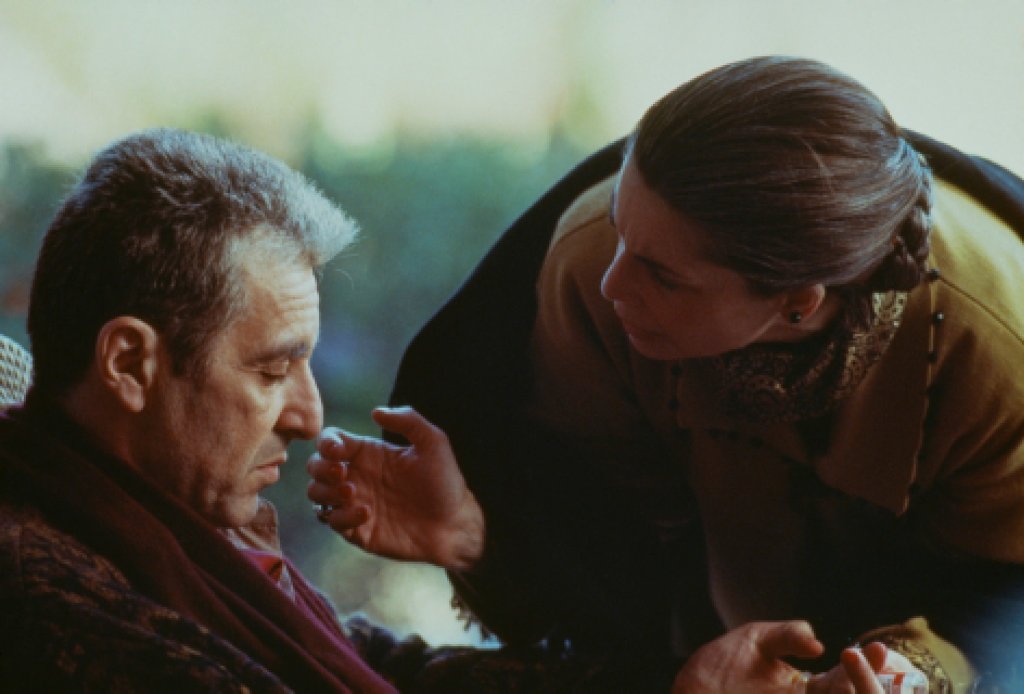
Al Pacino, who turns 76 today, and Talia Shire, who turns 69 today, in a scene from The Godfather Part III:

Cosplay of the Day:

See the best cosplay of the Emerald City ComiCon, including a Deadpool and Say Anything mashup, a sexy Boba Fett and dogs dressed as Wolverine in the following two-part Beat Down Boogie showcase:

[embedded content]

[embedded content]

Visual List of the Day:

For Fandor Keyframe, Zach Prewitt counts down the 20 best sci-fi films of the century so far, including Primer, Inception, Moon, Ex Machina and Children of Men:

[embedded content]

Bad Film Analysis of the Day:

Speaking of this century’s sci-fi movies, here’s a bad reading of Christopher Nolan‘s Interstellar by aliens from the future:

[embedded content]

Video Essay of the Day:

The world building in Wes Anderson‘s stop-motion film The Fantastic Mr. Fox is celebrated in this video from Jack’s Movie Reviews (via One Perfect Shot):

[embedded content]

Classic Trailer of the Day:

Today is the 15th anniversary of the original French release of Amelie (aka Le fabuleaux destin d’Amelie Poulain). Watch Miramax’s trailer for the American release, which followed many months later:

[embedded content]

Let’s block ads! (Why?)


No Image

#AirbnbWhileBlack: How Hidden Bias Shapes The Sharing Economy

Airbnb host Synta Keeling rents two bedrooms in her house in Washington, D.C.'s predominantly black Anacostia neighborhood.

Airbnb host Synta Keeling rents two bedrooms in her house in Washington, D.C.’s predominantly black Anacostia neighborhood. Maggie Penman/NPR hide caption

toggle caption Maggie Penman/NPR

Quirtina Crittenden was struggling to get a room on Airbnb. She would send a request to a host. Wait. And then get declined.

“The hosts would always come up with excuses like, ‘oh, someone actually just booked it’ or ‘oh, some of my regulars are coming in town, and they’re going to stay there,'” Crittenden said. “But I got suspicious when I would check back like days later and see that those dates were still available.”

In many ways Crittenden, 23, is the target audience for AirBnb. She’s young, likes to travel, and has a good paying job as a business consultant in Chicago. So she started to wonder if it had something to do with her race. Crittenden is African American, and on AirBnb, both hosts and guests are required to have their names and photos prominently displayed on their profiles.

Crittenden shared her frustrations on Twitter with the hashtag #AirbnbWhileBlack. She started hearing from lots of friends who had similar experiences.

“The most common response I got was, ‘oh yeah, that’s why I don’t use my photo.’ Like duh. Like I was the late one,” Crittenden said.

After Quirtina Crittenden changed her photo to a cityscape, she says she stopped having problems finding a room on Airbnb.

After Quirtina Crittenden changed her photo to a cityscape, she says she stopped having problems finding a room on Airbnb. Quirtina Crittenden hide caption

toggle caption Quirtina Crittenden

So she ran her own experiment—she shortened her name to just “Tina” and changed her photo to a picture of a landscape.

“Ever since I changed my name and my photo, I’ve never had any issues on Airbnb,” Crittenden said.

Crittenden’s story fits within a larger finding that racial discrimination on AirBnb is widespread. Michael Luca and his colleagues Benjamin Edelman and Dan Svirsky at Harvard Business School recently ran an experiment on AirBnb. They sent out 6,400 requests to real AirBnb hosts in five major American cities—Baltimore, Dallas, Los Angeles, St. Louis, and Washington.

All the requests were exactly the same except for the names they gave their make-believe travelers. Some had African American-sounding names like Jamal or Tanisha and others had stereotypically white-sounding names like Meredith or Todd.

Luca and his colleagues found requests with African American sounding names were roughly 16 percent less likely to be accepted than their white-sounding counterparts. They found discrimination across the board: among cheap listings and expensive listings, in diverse neighborhoods and homogenous neighborhoods, and with novice hosts as well as experienced hosts. They also found that black hosts were also less likely to accept requests from guests with African American-sounding names than with white-sounding ones.

Luca and his colleagues found hosts pay a price for their bias—when hosts rejected a black guest, they only found a replacement about a third of the time. In a separate study, Luca and his colleagues have found that guests discriminate, too, and black hosts earn less money on their properties on Airbnb.

To put this in perspective, AirBnb isn’t some little startup anymore. It’s one of the largest players in the hotel industry worldwide. In 2015, more than 2 million listings were offered on the platform, nearly four times as many rooms as the Marriott hotel chain.

Luca thinks this racial discrepancy is driven largely by unconscious bias—the hidden associations we have that affect our behavior without us realizing it. The way AirBnb’s platform is designed, names and photos are the first thing people see, and therefore one of the first things they consider, either consciously or unconsciously, when choosing a place to stay.

David King, AirBnb’s new director of “diversity and belonging,” says AirBnb is aware of discrimination on their platform and they want to be a leader in addressing it. He says he’s talking with Luca and others in finding potential solutions.

One thing that could help is removing people’s names and photos or making them less prominent. But this isn’t something AirBnb will improve their platform.

“The photos are on the platform for a reason,” King said. “It really does help to aid in the trust between the guest and the host . . . You want to make sure that the guest who shows up at your door is the person you’ve been communicating with.”

King pointed out that Airbnb has the opportunity to do a lot of good in communities. It brings tourists to neighborhoods without many hotels that don’t normally benefit from the tourism industry.

One of those neighborhoods is Washington, D.C.’s Anacostia. It’s a predominantly black neighborhood on the edge of the city, across the Anacostia River from the main tourist attractions. While there are only a couple hotels here, there are dozens of Airbnb hosts.

Synta Keeling is one. She earns thousands of dollars a month renting out two bedrooms in her townhouse, but she puts in a lot of work. She’s earned the official designation of “superhost” for getting excellent reviews and never cancelling a booking. It’s a title she says hosts in richer areas of the city don’t have to worry about.

Social scientists have uncovered racial bias in all different places online. Shankar talked with psychologist Raj Ghoshal, who’s found racial discrimination on Craigslist. Mikki Hebl, a psychologist at Rice University, has found racial bias on Facebook.

What’s unclear is what legal liability websites might have for discrimination on their platforms. So while online platforms offer us the opportunity to meet people we would never normally meet, our hidden biases may be getting in the way.

The Hidden Brain Podcast is hosted by Shankar Vedantam and produced by Kara McGuirk-Alison, Maggie Penman and Max Nesterak. To subscribe to our newsletter, click here. You can also follow us on Twitter@hiddenbrain, @karamcguirk,@maggiepenman and@maxnesterak, and listen for Hidden Brain stories every week on your local public radio station.

Let’s block ads! (Why?)


No Image

Tom Brady's 'Deflategate' Suspension Reinstated By Appeals Court

Tom Brady’s four-game suspension by the NFL for reportedly deflating footballs is back on. The penalty was overturned by federal judge last summer, who agreed with Brady’s argument that the penalty was unfair. But on Monday, a three-judge panel disagreed, saying the NFL was within its rights when it imposed the suspension.

Transcript

KELLY MCEVERS, HOST:

Deflategate is the NFL story that just keeps on giving. A federal court panel ruled today the NFL commissioner did have the right to suspend Patriots quarterback Tom Brady for four games. NPR’s Tom Goldman reports.

TOM GOLDMAN, BYLINE: Tom Brady’s back-and-forth legal case is back again. He was suspended after the NFL decided it was more probable than not Brady ordered balls deflated below the legal limit during the 2015 AFC Championship game. Then in September, a federal judge overturned the suspension. Then today, a federal appeals court voted 2 to 1 to uphold the suspension, giving the NFL a massive win according to Tulane sports law professor Gabe Feldman.

GABE FELDMAN: Although there was a dissenting opinion, the majority opinion was about as favorable for the NFL as they could possibly have expected.

GOLDMAN: Feldman says the decision ends a losing streak for NFL Commissioner Roger Goodell in recent cases of player misconduct.

FELDMAN: In each of those cases, the commissioner’s initial discipline was either eliminated or reduced by an arbitrator or a federal judge.

GOLDMAN: But today’s ruling essentially says Goodell did not exceed the scope of his power, power the league says was negotiated as part of the current collective bargaining agreement. No word on a possible Brady appeal – if the suspension holds, Brady would miss the first four games of the regular season. Tom Goldman, NPR News.

Copyright © 2016 NPR. All rights reserved. Visit our website terms of use and permissions pages at www.npr.org for further information.

NPR transcripts are created on a rush deadline by Verb8tm, Inc., an NPR contractor, and produced using a proprietary transcription process developed with NPR. This text may not be in its final form and may be updated or revised in the future. Accuracy and availability may vary. The authoritative record of NPR’s programming is the audio record.

Let’s block ads! (Why?)


No Image

Lesson Learned For Baltimore's Health Commissioner: 'I Like A Fight'

North Stricker Street near Riggs Avenue in the Sandtown-Winchester neighborhood of Baltimore.

North Stricker Street near Riggs Avenue in the Sandtown-Winchester neighborhood of Baltimore. Lance Rosenfield/The Washington Post/Getty Images hide caption

toggle caption Lance Rosenfield/The Washington Post/Getty Images

To wrap up our series on public health in Baltimore, Audie Cornish met up with Baltimore City Health Commissioner Leana Wen in Freddie Gray’s neighborhood of Sandtown-Winchester. The health department recently opened a new outpost of its violence prevention program Safe Streets there, employing ex-offenders to mediate conflicts before they erupt in violence.

Wen spoke about pushing a public health agenda in a city that has long struggled with poverty, violence and addiction. She also talked about what she, as an emergency physician, has learned in her first stint in government. Here are interview highlights, edited for length and clarity.

On her goal to make Baltimore a model for the country

We have gotten significant national recognition for some of our programs, including our programs to respond to the opioid overdose epidemic. I had the opportunity to testify in front of the U.S. Senate and House and was invited to speak with President Obama about Baltimore’s work. I do believe that because of the way we’ve focused on addiction as a disease, that that’s changing the conversation in our city and actually, is leading the way around the country. People are beginning to see Baltimore not as [the HBO drama] The Wire and heroin overdose but actually as a model for recovery and resilience.

On what she wants to tackle next

The unrest [after Freddie Gray] paradoxically opened the door for us to address trauma, which is a natural segue to talk about mental health and the bigger picture of emotional well-being. People finally felt like they could talk about the trauma they’ve experienced for so many years. It’s the trauma of police brutality. It’s the trauma of discriminatory practices. It’s the trauma even of being poor. We now want to convene a citywide group to address this issue, which is very difficult because ultimately, the trauma work has to be done at the community level.

On her optimism, despite the challenges Baltimore faces

Dr. Leana Wen, Baltimore City health commissioner, visits a newly opened Safe Streets center in the Sandtown-Winchester neighborhood in West Baltimore.

Dr. Leana Wen, Baltimore City health commissioner, visits a newly opened Safe Streets center in the Sandtown-Winchester neighborhood in West Baltimore. Emily Bogle/NPR hide caption

toggle caption Emily Bogle/NPR

I’m not blind to the problems that exist. But I also realize these problems have been in the making for decades. We’re not going to be able to make a huge difference overnight. But there are things we can do along the way to demonstrate to our community that we hear you, and this is what we do in the meantime. We cannot solve the issue of addiction overnight, but we can reduce overdose deaths, and we have passed a Good Samaritan law [to protect people who help overdose victims] and we are introducing programs where individuals caught with drugs are not going to be incarcerated but actually, are going to be offered drug treatment. So we’re showing that things can be done, and that we’re taking small steps. And actually, our community gets it. If we just came to the community and said we’re going to solve all of our crime problems overnight, they’re not going to buy it. But if we say we know the success of Safe Streets, it’s been demonstrated in four sites across our city, now we’re going to open a fifth site in Sandtown, you can feel the energy and the optimism. And maybe that’s why I’m so optimistic.

On what she’s learned from the job since she began in January 2015

I was never in the political world, and I’m not from Baltimore. So coming here, everyone was new. It’s been a really steep learning curve.

The things I’ve learned over the year have been a lot about myself, and who I am as a manager, who I am with navigating complicated politics and situations, but also what motivates me. And I’ve learned that I like a fight. I don’t want to be in a situation where things are going well. I don’t feel like I have anything to do in that case. In the ER, it’s the patient dying in front of me. It’s someone who is gravely ill, and my fight is the fight to save their life.

I see the same thing in Baltimore. There are so many problems. There are so many fights I can have every single day. It’s the fight to get health on every agenda, to change legislation, to change public perception and mindset, to reduce stigma, to introduce new programs in a time of severe fiscal constraints. I like a fight, and I’m good at it, and that is what motivates me.

I’m learning now just how powerful that voice can be — to say, I’m not here as a politician. I’m here as a doctor and as a scientist. I’m here to give voice to all these issues that we’ve seen that are unfair — housing politics, policing policies, drug policies. And I’m saying from a health perspective how these policies have destroyed our community, and this is what we’re doing about it now.

Dr. Leana Wen has been a contributor to Shots since 2013. You can read her account of why she decided to become Baltimore’s health commissioner here.

Let’s block ads! (Why?)


No Image

Remembering African Singer And Style Icon Papa Wemba

Congolese singer Papa Wemba performing Saturday in Abidjan, Ivory Coast, shortly before collapsing onstage. He died before reaching the hospital early Sunday.

Congolese singer Papa Wemba performing Saturday in Abidjan, Ivory Coast, shortly before collapsing onstage. He died before reaching the hospital early Sunday. AFP/Getty Images hide caption

toggle caption AFP/Getty Images

One of Africa’s most famous musicians and an international style icon, Congolese singer Papa Wemba, died suddenly during a performance early Sunday at age 66. He died after collapsing onstage in Abidjan, the capital of Ivory Coast; the show was being broadcast live on RTI 1, one of Ivory Coast’s public television channels.

Wemba’s death was confirmed by the culture minister of the Democratic Republic of Congo, Baudouin Banza Mukalay, the Associated Press reported. According to reports obtained by Reuters from the Ivory Coast morgue that received Wemba’s body, he died between his collapse and his arrival at a local hospital.

Papa Wemba was born in 1949 in Lubefu, in the Central African nation known then as the Belgian Congo, later as Zaire and now as the Democratic Republic of the Congo (DRC). His birth name was Shungu Wembadio Pene Kikumba, but as the eldest son in his family, he was nicknamed “Papa.” His mother was a professional mourner; he grew up steeped in the sounds of her music and blessed with a singularly keening tenor.

But other circumstances also made Wemba’s emergence as an artist particularly fortuitous. He grew up during a golden age of Congolese music. During the 1950s and 1960s, his country was the epicenter of a brilliant new kind of dance music variously called Congolese rumba, lingala and soukous. This new style borrowed heavily from the sound — and particularly rhythms — of Cuban big bands, but put in an African context. Artists like Franco and Tabu Ley Rochereau became idols all over the continent, and to the young Papa Wemba as well.

By the time he arrived in Zaire’s capital, Kinshasa, in the late 1960s, the young Wemba had set his sights on a professional singing career. In 1969, he became a founding member of what would become one of the biggest acts in African music in the 1970s, Zaïko Langa Langa. The band took Congolese rumba, stepped up the tempo, and brought in more rock-ified guitars. And with that band, Wemba launched a trailblazing career that emphasized an internationally accessible sound.

[embedded content]
YouTube

Wemba left Zaïko Langa Langa in 1974; after co-founding a series of other short-lived bands (including Isisfi Lokole and Yoka Lokole), he founded a hugely popular group called Viva La Musica in 1977.

Offstage and on, Wemba embodied a dapper persona. He even turned to acting, and starred in the 1987 Congolese vehicle La vie est belle (released internationally as Life Is Rosy), in which he, unsurprisingly, played an aspiring young singer.

[embedded content]
YouTube

Papa Wemba’s smooth, easy sound and extraordinary voice reached the ears of some very famous European and American artists as well. He settled in Paris in the 1980s, and became one of the best-known — and most well-connected — musicians from Africa. He sang with Stevie Wonder and opened for Peter Gabriel, before going on to record for Gabriel’s Real World label.

[embedded content]
Peter Gabriel YouTube

As the years went by, Papa Wemba continued to hone his sound to keep up with current trends. In the early 2000s, he strove for a silky R&B sound on tunes like “Ye Te Oh.”

[embedded content]
Papa Wemba Officiel YouTube

More recent singles found him collaborating on more hip hop-flavored tracks like “O’Koningana,” alongside a rising young performer named Tony Madinda.

[embedded content]
YouTube

Papa Wemba also gained notoriety for his offstage dealings. When he toured Europe in the 1980s, he would arrive with huge entourages of dozens of musicians, dancers and staff from Zaire. In 2003, he was accused in both France and Belgium of running a human-smuggling ring and went to jail for several months in France; when the case went to trial in 2004, prosecutors charged that many included in those entourages were actually illegal immigrants, who paid thousands of dollars to enter Europe with the famed singer. He was convicted in France, fined and given a suspended prison sentence; foreign news organizations like London’s Independent reported then that his bail was paid by the Congolese government. Upon his release, he moved back to the DRC.

At home, and across sub-Saharan Africa and the African diaspora, Papa Wemba will be remembered not just for his voice and for his musical innovations, but his legendary sense of fashion style. As I noted just last month on Latitudes, the singer was celebrated as “Le Pape (The Pope) de la Sape” — the undisputed king of the fashionable men known as sapeurs. That sobriquet is so well known in the French-speaking world that in a popular YouTube skit about dressing well and living large, a French comedy trio refers to their characters as “Papa Wemba’s hidden sons.”

The sapeurs‘ natty attire even became the inspiration for a number of international menswear designers, including Junya Watanabe and Paul Smith.

After Papa Wemba’s death, the BBC collected reflections from a number of other prominent African artists. Singer Angélique Kidjo, who recorded a duet with him for an album by Cameroonian saxophonist Manu Dibango, told the BBC’s Newshour:

“His whole attitude about dressing well was part of the narrative that we Africans have been denied our humanity for so long.

“People have always had stereotypes about us, and he was saying dressing well is not just a matter of money, not just something for Westerners, but that we Africans also have elegance. It was all about defining ourselves and refusing to be stripped of our humanity.”

Let’s block ads! (Why?)


No Image

'Wake Up You!' Explores The Transitional, Post-War Rock 'N' Roll Of Nigeria

Warhead Constriction, a group of high-schoolers from Lagos, is one of many rock bands of the 1960s and '70s featured in the new book series Wake Up You! The Rise and Fall of Nigerian Rock, 1972-1977.

Warhead Constriction, a group of high-schoolers from Lagos, is one of many rock bands of the 1960s and ’70s featured in the new book series Wake Up You! The Rise and Fall of Nigerian Rock, 1972-1977. Courtesy of Now-Again Records hide caption

toggle caption Courtesy of Now-Again Records

If you came of age in the 1960s, chances are you think about rock ‘n’ roll as the music of youth, of rebellion, of fighting the establishment. But in Nigeria, which was in the middle of a civil war, rock was one of the ways in which people expressed their politics.

You might have heard about activist artists like Fela Kuti, who rebuked abusive government practices through song. But what you might not know is that the warring governments also understood the power of rock. Some military administrators went so far as to conscript popular rock bands — both to keep up their soldiers’ morale and to pacify the angry civilians.

That fascinating history is the subject of a new book series called Wake Up You! The Rise and Fall of Nigerian Rock, 1972-1977 by music producer and historian Uchenna Ikonne. He joined NPR’s Michel Martin to talk about it; you can hear their conversation at the audio link, or read on for an edited version.

Michel Martin: So how did the Nigerian rock scene get started?

Uchenna Ikonne: Well, the scene got started in the early 1960s, actually, when Rock Around The Clock showed in Nigeria. That was the first introduction to rock ‘n’ roll, as it was for many people around the world. But at the time, rock ‘n’ roll was seen more as a passing fad rather than a genre that was expected to have any kind of permanence. As the decade proceeded, a lot of young people got together to dance to foreign rock ‘n’ roll records, usually those by Elvis Presley and Cliff Richard, and later by The Beatles. And soon enough, they decide to form their own bands.

Would you mind talking a little bit about Fela? He is, for a lot of people, perhaps the main musical figure that they might be acquainted with. Where does he fit into this story?

Fela is somebody who is often associated with a proudly and aggressively pro-African stance, but that’s not the way he was always perceived on the Nigerian music scene. In his early days, in fact, he was rejected by the mainstream because his music seemed too foreign.

He had come back from England with the idea of being a straight-ahead jazz musician in the mold of Miles Davis. This was a period of cultural nationalism, and all Nigerians were encouraged to project expressions of self that were more or less indigenous — so the idea of coming and trying to play jazz, it was seen as not really where the culture wanted to go. The first audience that accepted Fela at this time was kids who were listening to rock ‘n’ roll music, because they themselves felt like outcasts.

So then how did rock ‘n’ roll start to change as the war years went on?

When rock ‘n’ roll first came about, it sounded kind of ridiculous to most people. It seemed like these young Africans were awkwardly aping foreign artists, who were white, who were themselves copying black Americans. Something seemed to be lost in translation. But one thing that changed during the war was the popularity of soul music. And there was something about soul music that seemed to speak to young Africans on a very deep level. So the music became funkier, it became deeper, and that gave the rockers the opportunity to occupy the center stage in the culture.

One of the fascinating things that I learned from your book is that people on both sides of the conflict actually had their own dedicated bands, or they had their own kind of musical following. Can you talk a little bit about that?

During the war, the soldiers had to be entertained, so both the Nigerian and the Biafran armies found out that it was in their best interest to conscript musical groups, to entertain the soldiers and keep their morale up. These groups also gave a lot of young people the opportunity to avoid being drafted to the combat zone. If you could pick up a guitar, there’s a chance that maybe you could be an army musician and be in less risk of being killed. So, a lot of people flocked towards those bands if they could play at all.

How do you think that affected the music scene after the war?

Well, it affected the kind of music that was popular. You can hear that, for example, on tracks such as “Graceful Bird,” by Warhead Constriction, which was a band of high schoolers at the time in Lagos.

You can also hear the same thing in the music of The Hykkers, such as “In The Jungle.” They were just showing a new heaviness, a new sense of fury and fuzz, to the music, that sort of reflected the sense of confusion and the aftermath of the violence of the war.

One of the things I was wondering is that, given that rock is so important to the Nigerian story, did any of these artists gain fame elsewhere in the world?

Several of them tried. They weren’t able to do it; it was difficult. They really did make the attempt, but at the time, I’m not sure that the Western audience was ready to accept them. Things are a lot easier now due to the internet: People are used to listening to music from all over the world. Back then, Western record labels really did not know what to do with African artists. They would fall in love with them for their African sound, and then take them over to London or New York, and then really not know how to market them. They’d end up trying to scrub all the Africanness away from them and turn them into something else.

Why is the subtitle of the book, “The Rise And Fall Of Nigerian Rock”?

Because the music did not really sustain itself. By the middle of the 1970s, it had already started fading. By the end of the ’70s, it was mostly gone. And not only did it disappear, but it disappeared from the collective memory in many ways. I think the country just kind of grew out of it, decided to move in a different direction culturally. And that whole period just turns out to be a weird interstitial period that isn’t exactly the ’70s and isn’t the ’60s, either; it was just a period of transition.

Let’s block ads! (Why?)


No Image

These Earth-Saving Robots Might Be The Future Recyclers

[embedded content]

Apple’s new robot, Liam, is designed to disassemble iPhones for recycling purposes.

YouTube

Meet Liam, an Apple robot designed to take apart 1.2 million iPhones a year.

Mashable reporter Samantha Murphy Kelly got a first look at the robot at Apple’s headquarters. It has 29 arms and it was an Apple secret for three years. She writes:

“Liam is programmed to carefully disassemble the many pieces of returned iPhones, such as SIM card trays, screws, batteries and cameras, by removing components bit by bit so they’ll all be easier to recycle. Traditional tech recycling methods involve a shredder with magnets that makes it hard to separate parts in a pure way (you’ll often get scrap materials commingled with other pieces).”

According to Apple’s environmental report released last week, Liam’s goal is to pick out all the high-quality, reusable components from old iPhones to reduce the need for mining more resources from earth.

While the technology currently only exists in Apple’s factories in California and the Netherlands, it’s the company’s experiment in recycling technology — a field that is gradually attracting the interest of technology and robotics entrepreneurs.

We just might end up in a world reminiscent of the 2008 Disney and Pixar movie WALL-E.

[embedded content]

Trash and robots: In the future, we just might live in a world reminiscent of WALL-E.

YouTube

Sorting Through Chemicals In E-Waste

When trash is sorted for recycling by hand, the job can be dangerous. According to a report published last year by the National Council for Occupational Safety and Health and other organizations, 17 people died between 2011 and 2013 on their jobs at recycling facilities in the United States due to unsafe working conditions.

The Occupational Safety and Health Administration lists all the hazards workers can be exposed to when sorting out waste, ranging from chemical exposure to lifting injuries. Electronic waste, in particular, exposes workers to multiple chemicals that may harm their health, including ammonia, mercury and asbestos.

According to the Apple’s recent environmental report, the company has collected nearly 90 million pounds of e-waste through its recycling programs, which is 71 percent of the total weight of the products it sold seven years earlier.

But Fortune editor Philip Elmer-DeWitt wrote that Liam the robot wouldn’t scale up because Apple sold more than 230 million iPhones last year. He writes:

“One Liam is not going to make much of a dent in the toxic mountain of electronics waste Apple has helped create.”

While Apple told Mashable’s Kelly that no other company it knows of is disassembling technology products in this way, there are many interesting “recycling robots” like Liam out there, although most are still just prototypes — except for ZenRobotics, a company from Finland.

Using Smart Software To Sort Trash

[embedded content]

ZenRobotics, a Finland company, uses artificial intelligence in its machines to sort waste.

YouTube

The ZenRobotics Recycler utilizes artificial intelligence to identify and sort materials from mixed waste. Show samples of materials to the system, and the software will learn what to do with it. According to its website, the company has the “first commercially available robotic waste sorting system.” This month, it announced plans to deliver its first robots to the U.S.

Dane Campbell, a systems engineer with PLEXUS Recycling Technologies, the company that brought ZenRobotics into the United States, says robotics in the waste industry in the U.S. is not the new idea — but artificial intelligence is.

He says current machines sometimes have problems sorting out materials like plastic bags from newspapers, thus causing sorting facilities to rely on people. According to Campbell, the machines can cost up to $1 million each.

Recycling may become more expensive — a New York Times opinion article pointed out last October — as more materials are thrown into the recycling dump, sorting will take more supervision. But automation remains expensive. The falling commodity prices might also hurt the recycling business.

A U.S. startup, AMP Robotics, aims to change that by offering “scalable recycling.” The company is fairly new, and founder Matanya Horowitz says he had the idea to bring robotics to the recycling industry because conditions for recycling workers can be “dull, dirty and dangerous.” He says “recycling is ripe for this technology.”

The company sold one machine last month and is still looking to improve the system. According to Horowitz, the machine will work like those found in a food processing plant.

Roaming Robots To Encourage Recycling Behavior

Some more future-looking solutions to encourage recycling might lie with robots that encourage you to throw your trash into bins.

For a time in Disney World, a talking trash can called Push roamed the streets of the theme park, encouraging people to discard trash in it while cracking jokes at passers-by. It’s no longer there after the contract expired in 2014.

[embedded content]

PUSH is a moving and talking trash can that used to roam around Disney World, encouraging visitors to throw their trash in the can.

YouTube

A few years ago, the Dustbot, a Segway-robot hybrid roamed the streets of Italy, collecting trash when called. The project ended in 2009.

[embedded content]

The Dustbot was a prototype robot on a Segway that travelled through the narrow alleys of Italy to collect trash.

YouTube

As robotics and technology like artificial intelligence matures, we just might see more of these robots hiding behind sorting facilities or roaming the streets — especially because we’re accumulating more and more waste globally and in the U.S.

Zhai Yun Tan is a digital news intern.

Let’s block ads! (Why?)


No Image

Astronaut Completes London Marathon From The International Space Station

Runners make their way across Tower Bridge during the Virgin Money London Marathon on Saturday in London.

Runners make their way across Tower Bridge during the Virgin Money London Marathon on Saturday in London. Ben Hoskins/Getty Images hide caption

toggle caption Ben Hoskins/Getty Images

About 38,000 runners competed in the London Marathon today – and one of them ran it in orbit 200 miles above Earth.

British astronaut Tim Peake completed the 26.2 mile course at the International Space Station with an estimated time of 3:35.21 , the European Space Agency tweeted.

.@astro_timpeake has finished his #LondonMarathon in space! Estimated time 3:35:21. @Astro_Jeff comes to applaud Tim pic.twitter.com/0AT4EgRUNK

— ESA Operations (@esaoperations) April 24, 2016

He was also the official starter of the race in a video message played at the starting line. “I’m really excited to be able to join the runners on earth from right here on board the Space Station. Good luck to everybody running, and I hope to see you all at the finish line,” Peake told his fellow competitors.

.@astro_timpeake starts his #londonmarathon all the way from space!https://t.co/29UKkcAoeU

— BBC Get Inspired (@bbcgetinspired) April 24, 2016

Of course, running in space poses serious challenges. Peake told reporters earlier this week that it’s been difficult to get comfortable with the harness system, which he says is like running with a “clumsy rucksack on.” The system keeps him from floating off the treadmill. He explains how it works:

“These chains connect to a bungee system, and that keeps me on the treadmill and gives me the weight bearing that I need on my legs to stimulate those muscles and to make sure we don’t lose too much muscle mass, that we don’t lose too much bone density.”

As The Guardian reports, “weightlessness is not kind to astronauts. The perceived lack of gravity deconditions the body in a number of ways.”

[embedded content]
YouTube

But Peake says the microgravity conditions are actually a “perfect environment” for post-race recovery:

“The moment you stop running and the moment you get off that bungee system, your muscles are in a completely relaxed state. And I do think we recover faster up here from any kind of aches or sprains.”

He spoke about how inspiring the crowds and the atmosphere were when he ran the London Marathon in 1999. To give a digital sense of the atmosphere down below, Peake made use of the RunSocial app: “so I’ll actually be looking at the route that I’m running, and I’ll be running alongside everyone else who’s running the digital version of the London Marathon.”

RunSocial tweeted out moments during Peake’s race, like this one where he crosses the Tower Bridge:

A few miles earlier @astro_timpeake over Tower Bridge Digital #LondonMarathon pic.twitter.com/vXGcFSiFQQ

— RunSocial (@runsocial) April 24, 2016

When Peake spoke to reporters, he hadn’t yet decided on his plans for a pre-race breakfast. He was considering baked beans, sausage and eggs, but added that food in microgravity doesn’t “settle very well” and that he’d need to eat well before the race.

As for tunes, Peake has been tweeting out a playlist using the hashtag #spacerocks.

Peake is the second astronaut to run a marathon from the International Space Station. Sunita Williams completed the Boston Marathon while in orbit in 2007.

Larry Williams tells our Newscast unit that in London today, Kenyans dominated:

“Defending men’s champion Eliud Kipchoge completed the 26.2 mile course just 8 seconds off the world record,breaking the tape in front of Buckingham Palace in 2 hours, 3 minutes and 5 seconds.

“Kipshoge, looking fresh at the end, was 46 seconds ahead of fellow Kenyan Stanley Biwott, who won last year’s New York marathon.

“In the woman’s race, 31 year old Kenyan Jemima Sumgong took the marathon for the first time. Recovering from a hard tumble to the ground with around 4 miles remaining, Sumgong quickly got up rubbed her head and made up for lost time to win with 5 seconds to spare. Her time was 2 hours, 22 minutes, 58 seconds.”

Hello #London! Fancy a run? 🙂 #LondonMarathon https://t.co/CvaUjUo7IU pic.twitter.com/SLckqOp8Gk

— Tim Peake (@astro_timpeake) April 24, 2016

Let’s block ads! (Why?)


No Image

Thousands Leave Maryland Prisons With Health Problems And No Coverage

Stacey McHoul said she ran out of psychiatric medicine a few days after leaving jail last year and soon began using heroin again.

Stacey McHoul said she ran out of psychiatric medicine a few days after leaving jail last year and soon began using heroin again. Courtesy of Kaiser Health News hide caption

toggle caption Courtesy of Kaiser Health News

Stacey McHoul left jail last summer with a history of heroin use and depression and only a few days of medicine to treat them. When the pills ran out she started thinking about hurting herself.

“Once the meds start coming out of my system, in the past, it’s always caused me to relapse,” she said. “I start self-medicating and trying to stop the crazy thoughts in my head.”

Jail officials gave her neither prescription refills nor a Medicaid card to pay for them, she said. Within days she was back on heroin — her preferred self-medication — and sleeping in abandoned homes around Baltimore’s run-down Sandtown-Winchester neighborhood.

Thousands of people leave incarceration every year without access to the coverage and care they’re entitled to, jeopardizing their own health and sometimes the public’s.

Advocates for ex-convicts held high hopes for the Affordable Care Act’s Medicaid expansion that promised to deliver insurance to previously excluded single adults starting in 2014, including almost everybody released from prisons and jails.

Many former inmates are mentally ill or struggle with drug abuse, diabetes or HIV and hepatitis C infection. Most return to poor communities such as West Baltimore’s Sandtown, which exploded in violence a year ago after Freddie Gray died from injuries sustained in police custody.

But Maryland’s prison agency, which three years ago said it was “well positioned” to enroll released inmates in Medicaid, is signing up fewer than a tenth of those who leave prisons and jails every year, according to state data. Few other states that have expanded Medicaid under the health law are doing any better, specialists say.

Officials of the Maryland Department of Public Safety and Correctional Services say they do the best they can with limited resources, enrolling the most severely ill in Medicaid while letting most ex-inmates fend for themselves.

“We are battling, every one of us,” to maximize coverage, said prison medical director Dr. Sharon Baucom, pointing to efforts to train sign-up specialists, get Medicaid insurance for hospitalized inmates and share information on mentally ill inmates with other agencies.

“There are handoffs that could be improved,” she said. “With the resources that we currently have, and the process that we have in place, we could do more — and we just need some more help.”

Coverage under Medicaid was seen as an unprecedented chance to transform care for ex-inmates by connecting them to treatment, reducing emergency room visits, controlling disease and putting them on a path to rehabilitation.

As many as 90 percent of people leaving prisons and jails are eligible for Medicaid in states such as Maryland that expanded the federally supported program for low-income residents under the health act, experts estimate. The law gave states the option of extending Medicaid coverage to all low-income adults under 65, not just the children, pregnant women and disabled adults who were mainly included before.

Sickest Inmates Are First In Line

Some 12,000 of Maryland’s 21,000 prison inmates are designated at any given time as chronically ill with behavioral problems, diabetes, HIV, asthma, high blood pressure and other conditions, according to prison officials. But given limited means and the already tall order of connecting emerging prisoners with transportation, shelter and employment, the system must focus on enrolling the very sickest, Baucom said.

“It’s a shame to have to make that call,” she said.

Dr. Rosalyn Stewart saw what happened to many chronically ill ex-offenders when she ran a recently completed pilot program to enroll former inmates in Medicaid and get them treatment and shelter.

“People frequently ran out of their medications and did not have access to the care they needed,” said Stewart, an associate professor at the Johns Hopkins University medical school.

McHoul, 40, spent two short stays last year in Baltimore’s Women’s Detention Center. The first time the facility released her without Medicaid coverage. Shortly afterwards she landed in a hospital with an inflamed esophagus. She got out after a second jail stay in August without knowing the hospital had enrolled her in Medicaid between incarcerations, she said.

At neither time did she have more than two weeks’ supply of any medication, including Depakote, a mood stabilizer, she said. For some prescriptions there was less than a week’s store.

“It was whatever was left in the blister pack,” said McHoul, who’s now in a Baltimore drug treatment program. “It’s like, ‘Here’s your supply. Sign this that we gave them to you. See you later.'”

State policy is to give exiting prisoners 30 days’ worth of medicine. But a court ordered McHoul released shortly after she was arrested the second time, which didn’t give the jail enough time to prepare medications, said a corrections spokesman.

A Burden For Emergency Departments

There are many Stacey McHouls.

“Maybe somebody needs prescription services and they’re not enrolled and they don’t know where to go,” said Traci Kodeck, interim CEO of HealthCare Access Maryland, a nonprofit that connects consumers to coverage and has worked with the prison system. “Absolutely it happens. Many of them will end up in the emergency departments if we don’t attempt to connect them to services prior to release.”

Mark Pruitt, 46, from southwest Baltimore, said lapsed Medicaid coverage meant he couldn't enter an addiction recovery program last year after he was released.

Mark Pruitt, 46, from southwest Baltimore, said lapsed Medicaid coverage meant he couldn’t enter an addiction recovery program last year after he was released. Courtesy of Kaiser Health News hide caption

toggle caption Courtesy of Kaiser Health News

Mark Pruitt, 46, was released from a Baltimore facility in October with no Medicaid card and a craving for heroin, which he said he had used before he was incarcerated for a parole violation.

He desperately wanted to enter a drug treatment program, but signing up for Medicaid to pay for it was going to take weeks — far longer than he could wait.

“I knew what I wanted. I wanted help,” he said. “I really wanted help. But it’s a struggle when you’re broke — no money, no insurance, feeling defeated. Where do you turn?”

If administrators at a Baltimore recovery facility hadn’t gotten him enrolled in Medicaid, he said, “I think I’d be dead.”

From January 2014, when the Medicaid expansion took effect, through March of this year, Maryland released almost 16,000 people sentenced to prison or jail, according to state data. Thousands more cycle in and out of jails each year without being convicted.

But the corrections department said it enrolled only 1,337 released inmates in Medicaid from the beginning of 2014 through late March. Another 1,158 prisoners joined Medicaid over that time when they were hospitalized. (Medicaid covers inmates if they spend 24 hours as hospital inpatients; most return to prison.)

Many ex-prisoners are enrolled only when they experience a crisis and end up in an emergency room — the kind of expensive care health officials are trying to reduce. The law requires hospitals to treat emergency cases regardless of insurance coverage. They can retroactively sign those patients for Medicaid.

‘They Don’t Want To Do The Paperwork’

Monique Wright, 35, got out of Jessup Correctional Institution last fall and began suffering acute head and neck pain caused by scoliosis, a spine curvature. Without Medicaid coverage or a primary care doctor, she said she had to seek emergency care at Johns Hopkins Bayview Medical Center.

“It’s the paperwork” that keeps prison officials from making sure people like her have Medicaid upon release, Wright said. “They don’t want to do the paperwork. They don’t have the staff to do the paperwork.”

Advocates wonder why the corrections system is so poor at enrolling what, they often point out, is “literally a captive audience.”

“They’ve had them housed for the past 10, 15 years,” said a frustrated Andre Fisher, a case manager for ex-inmates at Druid Heights Community Development Corp., a nonprofit in West Baltimore. “What’s so hard about it?”

Enrolling inmates in Medicaid can take weeks, prison officials said. Sometimes the card doesn’t arrive until after they’re out. Computer problems slowed signups in late 2014.

One mistake made by Maryland and most other states is not considering inmates for Medicaid until their release dates approach, said Colleen Barry, a professor at the Johns Hopkins Bloomberg School of Public Health who has studied the process.

“It’s a bad way to do it because you’re getting a very small number” of enrollees by waiting, she said. A better alternative is to enroll inmates when they are booked, as Chicago’s Cook County Jail has demonstrated, she said. Those incarcerated are generally ineligible for Medicaid, but putting them in the system when they enter makes it easier to trigger coverage when they leave, she added.

Ex-Inmates Struggle To Get Medicaid Without Help

If it’s hard for the prison system to enroll inmates, it’s even harder for the individuals to enroll themselves. Those who emerge without Medicaid face a maze of applications, bus trips, phone calls and queues if they want to sign up. Many don’t bother.

For most leaving incarceration, “it’s up to you to go there, make sure you get your health insurance,” said Jamal McCoy, 21, who was living with family in West Baltimore on home detention before he was released. “Most people don’t go. Some people take it easy when they get home.”

Those who try often find that lack of identification is the first challenge. To prevent fraud, Maryland and other states require Medicaid applicants to show verified Social Security numbers.

But jails frequently lose inmate IDs, say prisoners and enrollment officials. Those locked up for years are non-persons for much of the system, with no credit records or driver’s licenses.

That can mean delays of many weeks when released prisoners are especially vulnerable. Gaps in coverage and care of even a few days after fragile patients leave the corrections health system can make the difference between life and death.

“If you’re the diabetic that hasn’t been compliant with your medication, you need your medication now,” said Henrietta Sampson, director of treatment coordination at Powell Recovery Center, a Baltimore addiction recovery agency that works with ex-inmates. “You can’t wait two weeks because you may drop dead.”

Compared with the rest of the population, ex-prisoners in Washington state were a dozen times more likely to die in the first two weeks after release, according to research by Dr. Ingrid Binswanger, lead researcher for Kaiser Permanente Colorado’s Institute for Health Research. Drug overdose, cardiovascular disease, homicide and suicide were the leading causes of death.

Prison officials helped enroll William Carter, 50, in Medicaid when he was released last year. But doctors told him the coverage wouldn'€™t pay for an expensive hepatitis C drug until the virus begins damaging his liver.

Prison officials helped enroll William Carter, 50, in Medicaid when he was released last year. But doctors told him the coverage wouldn’€™t pay for an expensive hepatitis C drug until the virus begins damaging his liver. Courtesy of Kaiser Health News hide caption

toggle caption Courtesy of Kaiser Health News

“It’s very important to manage that transition, to make sure people have continuity of care,” she said. (Kaiser Permanente has no relationship with Kaiser Health News.)

Yet in some cases the prison system has stymied outside groups trying to arrange inmates’ coverage. Stewart’s group repeatedly sought permission — “continuously, for about three years,” she said — to meet vulnerable prisoners inside the facility to get an early start on enrollment and post-release appointments. It never happened.

Baucom blamed the problem on “competing priorities” and staff turnover.

Acceptance into Medicaid by the state isn’t the end of the story. Released inmates then must enroll in a private managed care organization hired by Maryland to provide coverage. That can take weeks longer.

Even when insured, ex-inmates face the same barriers to care experienced by other low-income Baltimoreans — or worse.

Many prison inmates are infected with hepatitis C, which can cause liver damage or cancer over time. But the high cost of curing the disease has prompted Maryland’s and other Medicaid programs to limit access to treatment to those whose livers are already compromised.

“I guess I got to wait until damage is done to my liver,” said William Carter, 50, adding that prison officials initiated Medicaid enrollment when he got out last year.

Released prisoners often have no idea that some Medicaid managed-care contractors allow them to use only certain doctors and pharmacies.

“So a patient goes to Walgreens or wherever to fill something and it’s like, ‘That’ll be $150,'” because he should have gone somewhere else, said Stewart. “They don’t understand what the problem was.”

Even checking all the right boxes sometimes isn’t enough for ex-inmates, who bear the double stigma of poverty and a criminal history.

One released prisoner got an appointment to renew his mental health prescription with a facility in Carroll County, Maryland — his home — that also accepted his Medicaid card, said Baucom. After the clinic learned he had a prison record it cancelled the visit.

“It’s not enough to have a card,” Baucom said. “You’ve got to have access.”

Neighborhoods are at risk when former inmates with chronic illness return.

“You really need to think about this as a public health issue,” said Scott Nolen, director of drug treatment programs for the Open Society Institute–Baltimore, a nonprofit that works on criminal justice policy. “There is transmission of communicable diseases that happens in prison, in confined spaces. And now those folks are coming back into communities, and we want to make sure they get health care.”

In few places is the burden greater than Sandtown-Winchester. Gray, 25, died of spinal injuries that prosecutors filing manslaughter and assault charges blamed on police who arrested him.

The Justice Policy Institute, a nonprofit, called Sandtown “ground zero for the use of incarceration” in Baltimore last year, estimating that nearly one resident in 30 is in prison.

At the same time, three West Baltimore ZIP codes including Sandtown showed the highest rates of HIV infection in Maryland in 2014, according to hospital data from the Maryland Health Services Cost Review Commission obtained and analyzed by Kaiser Health News and Capital News Service.

The corrections department could use more computers, release planners and other enrollment resources, Baucom said.

“If you do the checkoff list, we’ve checked off everything we can do,” she said, noting efforts not only to increase enrollment capacity but cooperation with the Maryland motor vehicle agency to get inmates state IDs.

Jesse Jannetta, a specialist at the Urban Institute in prisoner re-entry, believes Maryland’s low signup rate “is not unusual” in other states. A study published in Health Affairs found prisons and jails nationwide had enrolled 112,520 people in Medicaid from late 2013 up to January 2015, although the authors believe the actual figure was higher.

Federal and state prisons released 636,000 people in 2014, according to the Justice Department. Millions more are estimated to cycle through jails each year.

Few independent experts expect Maryland — let alone most other states — to come anywhere close to full enrollment of emerging inmates anytime soon.

“It’s fair to say we’re just at the tip of the iceberg” in prisoner enrollment, said Johns Hopkins’ Barry, a co-author of the Health Affairs study. “Maryland is always an innovator. If Maryland is still at the cutting edge of how to do this, many areas of the country don’t have any of these types of programs in place.”

Kaiser Health News is a national health policy news service that is part of the nonpartisan Henry J. Kaiser Family Foundation.

This story came from a partnership with The Baltimore Sun and Capital News Service, which is run by the University of Maryland’s Philip Merrill College of Journalism. KHN reporter Shefali Luthra and CNS reporters Catherine Sheffo, Daniel Trielli, Naema Ahmed and Marissa Laliberte contributed.

Let’s block ads! (Why?)


No Image

A Nation Engaged: Trade Stirs Up Sharp Debate In This Election Cycle

A container ship is unloaded at the Port of Los Angeles. Voters in this year's presidential election have deep feelings about trade — and often are at odds with each other about it.

A container ship is unloaded at the Port of Los Angeles. Voters in this year’s presidential election have deep feelings about trade — and often are at odds with each other about it. Robyn Beck/AFP/Getty Images hide caption

toggle caption Robyn Beck/AFP/Getty Images

In this year’s election cycle, international trade has emerged as a top campaign issue.

So journalists with NPR and several public-radio member stations set out this week to examine trade matters as part of our special election-year series: A Nation Engaged.

We journalists learned a lot about what Americans are saying about trade. You can join in the learning process and conversation on this page, where we’ve pulled together the stories and interviews.

If you don’t have time to dive into all of it, here are some of the comments that helped us tell stories about the good and bad impacts of trade.

  • Mike John, Missouri cattle rancher: “This pending TPP trade negotiation, to me, is hugely important for agricultural commodities, but specifically for beef. … The Asian markets are showing a huge increase in demand for beef.”
  • Dennis Roach, truck driver: “Jobs are going to foreign countries, we’re shipping more products in from overseas. … I bet you go to anybody’s house and look in their closet and it says: Indonesia, China, Japan, Taiwan. Very few things are made in the USA.”
  • Colorado Gov. John Hickenlooper: “Commerce between two countries, throughout history, has always, has almost always, led to improving quality of life on both sides.”
  • David Autor, MIT labor economist: “If I lose my job at a furniture factory where I’ve worked for decades, no amount of cheaper toys and raincoats at Wal-Mart is going to make me whole again.”
  • Congressional Research Service: “NAFTA did not cause the huge job losses feared by the critics or the large economic gains predicted by supporters. The net overall effect of NAFTA on the U.S. economy appears to have been relatively modest.”
  • Ron Kirk, former U.S. trade representative and former Dallas mayor: “No state benefits more from global trade and global commerce than the state of Texas. In Texas, we lead the country in exports and no other states are close — we export just shy of $300 billion of goods and products and services. … There are literally thousands of Texans who owe their livelihoods to the production and movement of goods to consumers around the world.”
  • John Hansen, Nebraska Farmers Union president and opponent of the proposed Trans-Pacific Partnership agreement: “We have a more positive balance of trade with countries that we do not have a trade agreement with. We’d be better off if we did nothing than we did something that’s destructive.”

Listen to the audio above for a discussion of trade in the political season with NPR’s Michel Martin, NPR’s Marilyn Geewax and Colorado Public Radio’s Megan Verlee.

Let’s block ads! (Why?)