Articles by admin

No Image

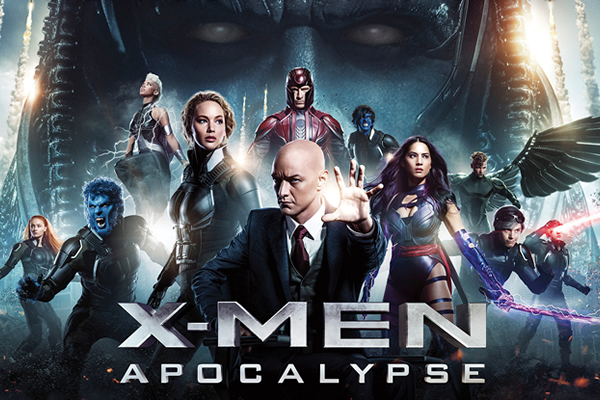
Box Office Report: 'X-Men: Apocalypse' Fails to Top 'The Last Stand'

Here’s your estimated 3-day box office returns (new releases bolded):

1. X-Men: Apocalypse – $80.0 million ($80.0 million total)

2. Alice Through the Looking Glass – $34.1 million ($34.1 million total)

3. The Angry Birds Movie – $24.6 million ($72.2 million total)

4. Captain America: Civil War – $19.7 million ($377.1 million total)

5. Neighbors 2: Sorority Rising – $11.4 million ($40.6 million total)

6. The Jungle Book – $9.2 million ($340.7 million total)

7. The Nice Guys – $8.1 million ($23.5 million total)

8. Money Monster – $5.5 million ($35.2 million total)

9. Love & Friendship – $3.1 million ($4.1 million total)

10. Zootopia – $1.1 million ($336.1 million total)

The Big Stories

The reviews for this summer are going in one direction while the Memorial Day holiday appears to have the grosses headed in the other. The 4-day weekend at least provides the appearance of a box office on the upswing even if Captain America: Civil War is the only film so far this month to put up a sexy number. While that, Angry Birds and even Neighbors 2 look to be successes for their studios, it is the new leaders this week drawing attention for their long-term prospects against their budgets.

Apocalypse Now

For all the grief Brett Ratner’s X-Men: The Last Stand gets from critics and fans it still remains the top-grossing film in the franchise in the U.S. with the highest opening weekend ($102.7 million.) 2014’s Days of Future Past came up about $400,000 short of its total in the U.S. but finally showed Fox that this series did not have a ceiling when it came to international grosses. Prior to that film’s $746 million worldwide tally, no film in the series had reached $500 million and only half had even reached $200 million in the U.S. Which side will X-Men: Apocalypse join?

The $80 million that Apocalypse has estimated to make over the holiday weekend is good enough for 10th on the all-time list; ahead of Pearl Harbor but behind Bruce Almighty. Days of Future Past is 5th on the list after a $110.5 million 4-day and Ratner’s The Last Stand is 3rd all-time with $122.8 million behind just Indiana Jones and the Kingdom of the Crystal Skull and Pirates of the Caribbean: At World’s End; three franchise films with reactively unfavorable memories. Now if we look at the multiples on the Memorial X-Men films they are hardly inspiring. The Last Stand managed just a 1.90 after the 4-day and Days of Future Past was at 2.11. Apocalypse is the second worst-reviewed film (48%) ahead of the 38% of X-Men Origins: Wolverine (which also had a 2.11 multiple after an $85 million three-day weekend.) Even if we were generous and think fans will fight back against the bad reviews to give Apocalypse a 2.30 multiple that will still only give it $184 million.

Fox mis-read the potential critical response to this one and have allowed negativity to flow after a two-and-a-half week-early embargo lift. Which is not what you want with a $170 million budget. On the positive side, that number practically makes this an independent film for the notoriously overbudgeted Bryan Singer and it has already pulled in $185 million overseas. Even a 2.11 multiple puts Apocalypse at $168 million in the U.S. Add in another $100 million internationally and there will be no worry about this being a solid hit for Fox. Though if you can believe it, Days of Future Past was the only X-Men film to even achieve over $285 million overseas.

“We’re Through The Looking Glass Here People”

Nobody is going to cry too hard for Disney this year. Not with the success they have had with Zootopia, The Jungle Book and Captain America: Civil War; the three highest-grossing films of the year worldwide. So a sequel to one of the few billion-dollar films that have ever been released seemed like a no-brainer. Tim Burton’s Alice in Wonderland was hardly embraced by critics (with a 51% Rotten Tomatoes rating) but those reviews were more easily brushed off than what is being said about Alice Through the Looking Glass. Though it received the same “A-” Cinemascore as its predecessor, a 28% Rotten Tomatoes ranks the film 2% ahead of Disney’s Planes but 2% below The Country Bears. Though the film that most comes to mind for the studio is 2015’s Tomorrowland.

We could even throw in Disney’s $200 million-budgeted Prince of Persia for good measure which opened to a $37.8 million Memorial Day and finished with just $90.7 million in the U.S. (and $336 million overall.) The $190 million-budgeted Tomorrowland opened to $42.6 million over last year’s holiday and finished with $93.4 million (and $209 million overall.) Alice Through the Looking Glass could not even match Persia. With just a $34 million four-day, any pressure put on it next week by the Ninja Turtles sequel could be catastrophic for the film’s U.S. total. While the film seemed like it was never going to do Wonderland numbers (or even do half its numbers) for it to do roughly 25% of the original is just embarrassing. Though costing slightly less than Disney’s other Memorial failures (at $170 million) Looking Glass posting a healthy international total could still save this one from being labeled an outright bomb. (It has made $65 million overseas to date while Tomorrowland only made $115 total.) In other words, the year of Disney will continue.

Tales of the Top Ten

Last week’s trio of new releases had a wide spectrum of drops. The Angry Birds Movie dropped 50.9% in weekend two putting it on pace for less than the $129 million figured from last week. The animated film is already a hit for Sony thanks to over $157 million overseas. Universal’s Neighbors 2: Sorority Rising drop of 57% is not particularly good as it hopes to have enough in the tank for a $55 million run in the U.S. But with a nearly equal tally internationally, the $35 million-budgeted sequel could still make it into the black for the studio. The lowest drop from last week belongs to Shane Black’s The Nice Guys (at 41.8%) which now looks to easily surpass the $29 million pegged for it in this column and now hopes to have its eye on a still paltry $40 million. With a $50 million budget, the film needs to count on whatever international appeal Russell Crowe and Ryan Gosling maintain to not be another loser for Warner Bros.

Marvel’s Captain America: Civil War is officially over the $1.1 billion mark worldwide; good enough to be the 15th highest-grossing film ever. (It will be 14th on Tuesday.) But in the U.S. it has pretty much relinquished all hope to catching Avengers: Age of Ultron as it is now $34 million off that film’s pace. It will still become the 23rd film to gross over $400 million in the U.S. and may still crack the Top 15 of all-time at home too. Oh, who are we kidding? These are fantastic numbers and there is no reason to make them seem any less so. Just as Disney’s The Jungle Book continues to roll. Next weekend it passes $350 million and it likely will continue to have enough in the tank to pass Deadpool‘s $362.7 million. Disney can only hope that its planned sequel does not go the route of Alice Through the Looking Glass. After passing $991 million worldwide, you can expect Zootopia 2 eventually as well. The Jungle Book is at nearly $880 million worldwide.

Further down the list, Jodie Foster’s Money Monster is pushing its way towards $40 million. Whit Stillman’s Love & Friendship cracked the top ten. With a tally of $4.1 million it has outgrossed every one of his films save for Barcelona which should fall shortly. That number also makes it the 15th highest-grossing film for Roadside Attractions; the studio that botched the Tom Hanks release of A Hologram for the King, which Love & Friendship will be outgrossing on Tuesday. With a little word-of-mouth after its expansion to 493 theaters, this could be just the 7th film in their history to gross over $10 million in the U.S. A24 is also generating a nice rollout for its Alchemy-pickup The Lobster. After expanding to 116 theaters this weekend it’s total stands at $2.1 million and looks poised to reach the top ten of that rising studio.


Erik Childress can be heard each week evaluating box office on WGN Radio with Nick Digilio as well as on Business First AM with Angela Miles and his Movie Madness Podcast.

[box office figures via Box Office Mojo]

Let’s block ads! (Why?)


No Image

Study Suggests Cutting Some Vaccine Boosters For Rare Diseases

People are supposed to get vaccine boosters for tetanus and diphtheria once every 10 years. But researchers in Oregon say that’s overkill: For adults, one booster every 30 years might be good enough.

Transcript

STEVE INSKEEP, HOST:

People are supposed to get boosters for tetanus and diphtheria once every 10 years. Now researchers in Oregon say that’s too much. NPR’s Rae Ellen Bichell reports on the case for once every 30 years.

RAE ELLEN BICHELL, BYLINE: Tetanus and diphtheria are extremely rare in the U.S.

MARK SLIFKA: There’s more cases of anthrax every year than there are of diphtheria. That’s how rare that disease has become because of vaccinations.

BICHELL: That’s Mark Slifka, an immunologist at Oregon Health and Science University. Children get a series of vaccines to protect against the bacteria. And adults are supposed to get a booster shot every 10 years to keep up their immunity. But when Slifka and his colleagues studied about 500 people in Washington and Oregon, they concluded that almost all of them would likely remain protected for at least 30 years.

SLIFKA: So you could have one vaccination at the age of 30 and one vaccination at the age of 60. Then you don’t have to try and remember – how long ago was it when I had my last shot? Instead you just say, oh, it’s my 30th birthday. I should get my tetanus and diphtheria shot.

BICHELL: Slifka says cutting down on adult vaccination could save about $280 million a year. Dr. Flor Munoz, an infectious disease specialist at Baylor College of Medicine, says the study is compelling.

FLOR MUNOZ: The rationale, I think, is very sound for looking at this data.

BICHELL: But the big question is – do these results from Oregon apply to the whole country? It would take a bigger study to figure that out. And there’s another thing.

MUNOZ: One of the assumptions here is that all children received their vaccines and you have this protection. And we know that’s not true. Many children are not vaccinated. And we have, actually, increasing pockets of unvaccinated young children that might be at risk.

BICHELL: If people don’t get the full vaccine series as children and then miss their boosters as adults, that could be bad. After the Soviet Union fell, child vaccination dropped, adults stopped getting boosters and after years with few cases, thousands of people got diphtheria. Slifka says it was like taking a match to a forest. Rae Ellen Bichell, NPR News.

Copyright © 2016 NPR. All rights reserved. Visit our website terms of use and permissions pages at www.npr.org for further information.

NPR transcripts are created on a rush deadline by Verb8tm, Inc., an NPR contractor, and produced using a proprietary transcription process developed with NPR. This text may not be in its final form and may be updated or revised in the future. Accuracy and availability may vary. The authoritative record of NPR’s programming is the audio record.

Let’s block ads! (Why?)


No Image

Sounds Of The Indy 500

Today marked the 100th running of the Indianapolis 500. We get the sounds from today’s historic race, won by rookie driver Alexander Rossi.

Transcript

MICHEL MARTIN, HOST:

And now it’s time to start your engines. Today car racing fans celebrated a milestone.

(SOUNDBITE OF 2016 INDIANAPOLIS 500)

UNIDENTIFIED MAN: We’re honored to have you here on this historic day, the 100th running of the Indianapolis 500-Mile Race.

UNIDENTIFIED CROWD: Ladies and gentlemen, start your engines.

(APPLAUSE, SOUNDBITE OF CARS RACING)

MARTIN: The race was first run at the Indianapolis Motor Speedway in 1911. But it had to take a few years off during the First and Second World Wars. This afternoon, more than 400,000 people gathered at the Indianapolis Motor Speedway to watch drivers race to speeds of more than 200 miles per hour.

For the first time in 50 years, the race was broadcast live on local Indiana television. Officials decided to lift the media blackout after selling out the entire stadium this year. Donny and Wendy Brown from Danville, Ind., have been coming to the race off and on for about 30 years. They were here Sunday with their four teenage kids. The Browns said there was no way they would stay home and just watch the race on TV.

DONNY BROWN: Oh, you want to be here. You want to be…

WENDY BROWN: The atmosphere…

D. BROWN: Atmosphere, seeing the speed – you can’t get the speed on the TV. You see it in person.

W. BROWN: Just to hear the cars and just to feel the chest when they go by – you can’t replace that.

D. BROWN: Plus it’s a history…

W. BROWN: It’s awesome.

D. BROWN: …One-hundredth running? You want to be here.

(SOUNDBITE OF 2016 Indianapolis 500)

MARTIN: Rookie driver Alexander Rossi from Nevada City, Calif., won the race just in time before his fuel ran out. He told ABC Television, quote, “I have no idea how we pulled that off.”

Copyright © 2016 NPR. All rights reserved. Visit our website terms of use and permissions pages at www.npr.org for further information.

NPR transcripts are created on a rush deadline by Verb8tm, Inc., an NPR contractor, and produced using a proprietary transcription process developed with NPR. This text may not be in its final form and may be updated or revised in the future. Accuracy and availability may vary. The authoritative record of NPR’s programming is the audio record.

Let’s block ads! (Why?)


No Image

Coca-Cola Halts Production In Venezuela Due To Nation's Sugar Shortage

Venezuela just became one of the few countries in the world that does not sell Coca-Cola. Tom Standage of the Economist tells NPR’s Rachel Martin what that says about the Venezuelan economy.

Transcript

RACHEL MARTIN, HOST:

Venezuela has just become one of the few countries in the world where you cannot buy a Coca-Cola. Other countries include Cuba and North Korea. But it’s not because of embargoes in Venezuela. It’s because there isn’t enough sugar. Venezuela is in the middle of a deep recession. The country has been dealing with a food shortage and the world’s highest inflation.

To talk more about this, we’ve reached out to Tom Standage. He’s the deputy editor of The Economist and the author of “The History Of The World In 6 Glasses” (ph). He joins us now from London. Thanks so much for being with us.

TOM STANDAGE: Thanks for inviting me.

MARTIN: First off, how did Venezuela get to the point where they don’t have enough sugar? What economic policies got them there?

STANDAGE: Well, the whole of the Venezuelan economy is just in a big mess. Essentially, Hugo Chavez, the previous president, had this, you know, great idea of a socialist revolution where he would give lots of money to the poor. And it all looked really good to start with. Essentially, the whole thing was funded by oil money. The oil prices collapsed. Chavez has died. His successor Nicolas Maduro is in a bit of a bad way because, actually, as well as giving money to the poor, the regime was helping itself to massive amounts of money.

And they’re now in this very odd situation where the official exchange rate means that you have to pay something like 10 bolivares for a dollar. The unofficial exchange rate, the black market rate, is about 100 times higher than that. And members of the regime are still allowed to exchange this pretty worthless local currency for dollars, which they can then sell for 100 times as much. So that means that they are not really terrifically well-incentivized to change this ridiculous policy.

And in the meantime, there are shortages of lots of products because if you import any products, there’s no way you want to sell them at the fixed prices the government is forcing you to sell them at. If you’re a sugar producer, you certainly don’t want to be making sugar because you’re forced to sell it at this ridiculously low price.

MARTIN: So people seize on this whole idea of Coca-Cola not being available in Venezuela ’cause it’s a catchy headline. But you argue – you have written in your book that it has symbolic power – that this particular product and not having it has symbolic meaning. Can you explain why?

STANDAGE: Well, Coca-Cola has always been the nearest thing to capitalism in a bottle. And, in fact, in 1997, The Economist did this correlation of Coca-Cola consumption in different countries. And it turns out to correlate positively with wealth, quality of life and social and political freedom. Now, of course, that’s not because Coca-Cola causes all of those things. It’s because, we think, free market capitalism encourages all of those things.

And whenever a country opens up, like Burma, for example, recently has – who are the first people to move in? You see the Coca-Cola lorries going in. And they go in and they find a partner. And, you know, off they go. So it really is this sort of symbol of moving towards greater economic freedom. And obviously, in Venezuela’s case, we sadly have this example of Coca-Cola going the opposite direction saying – actually, you can’t have that anymore in the same way that you can’t have social, political freedom, quality of life and economic growth.

MARTIN: So what happens now? How does this country get itself out of this – what has become a very devastating recession?

STANDAGE: It really is very hard to see an easy way out. The difficulty is that the opposition won the most recent election. And so they are trying to have a sort of recall vote to get rid of Maduro who’s technically meant to be in power until 2018. And I think if change does come, it will be because people within Maduro’s own party see that he is unviable.

And the only way that they can keep control and keep their cushy jobs is to push him out. So will the revolution happen within his own party, or will there be a sort of explosion on the streets? Neither of these scenarios is terribly nice. It’s all really quite frightening.

MARTIN: Tom Standage is deputy editor of The Economist. He also wrote a book titled “A History Of The World In 6 Glasses.” Tom, thanks so much for talking with us.

STANDAGE: Thank you.

Copyright © 2016 NPR. All rights reserved. Visit our website terms of use and permissions pages at www.npr.org for further information.

NPR transcripts are created on a rush deadline by Verb8tm, Inc., an NPR contractor, and produced using a proprietary transcription process developed with NPR. This text may not be in its final form and may be updated or revised in the future. Accuracy and availability may vary. The authoritative record of NPR’s programming is the audio record.

Let’s block ads! (Why?)


No Image

Death Talk Is Cool At This Festival

A chalkboard "bucket list" stirred imaginations and got people talking at an Indianapolis festival designed to help make conversations about death easier.

A chalkboard “bucket list” stirred imaginations and got people talking at an Indianapolis festival designed to help make conversations about death easier. Jake Harper/WFYI hide caption

toggle caption Jake Harper/WFYI

In a sunny patch of grass in the middle of Indianapolis’ Crown Hill Cemetery, 45 people recently gathered around a large blackboard. The words “Before I Die, I Want To …” were stenciled on the board in bold white letters.

Sixty-two-year-old Tom Davis led us through the thousands of gravestones scattered across the cemetery. He’d been thinking about his life and death a lot in the previous few weeks, he told us. On March 22, he’d had a heart attack.

Davis said he originally planned to jot, “I want to believe people care about me.” But after his heart attack, he found he had something new to write: “I want to see my grandkids grow up.”

Others at the event grabbed a piece of chalk to write down their dreams, too, including some whimsical ones: Hold a sloth. Visit an active volcano. Finally see Star Wars.

The cemetery tour was part of the city’s Before I Die Festival, held in mid-April — the first festival of its kind in the U.S. The original one was held in Cardiff, Wales, in 2013, and the idea has since spread to the U.K., and now to Indianapolis.

The purpose of each gathering is to get people thinking ahead — about topics like what they want to accomplish in their remaining days, end-of-life care, funeral arrangements, wills, organ donation, good deaths and bad — and to spark conversations.

“This is an opportunity to begin to change the culture, to make it possible for people to think about and talk about death so it’s not a mystery,” said the festival’s organizer Lucia Wocial, a nurse ethicist at the Fairbanks Center for Medical Ethics in Indianapolis.

The festival included films, book discussions and death-related art. One exhibit at the Kurt Vonnegut Memorial Library had on display 61 pairs of boots, representing the fallen soldiers from Indiana who died at age 21 or younger.

These festivals grew out of a larger movement that includes Death Cafes, salon-like discussions of death that are held in dozens of cities around the country, and Before I Die walls — chalked lists of aspirational reflections that have now gone up in more than 1,000 neighborhoods around the world.

“Death has changed,” Wocial said. “Years ago people just died. Now death, in many cases, is an orchestrated event.”

Medicine has brought new ways to extend life, she says, forcing patients and families to make a lot of end-of-life decisions about things people may not have thought of in advance.

“You’re probably not just going to drop dead one day,” she said. “You or a family member will be faced with a decision: ‘I could have that surgery or this treatment.’ Who knew dying was so complicated?”

With that in mind, the festival organizers held a workshop on advance care planning, including how to write an advance directive, the document that tells physicians and hospitals what interventions, if any, you want them to make on your behalf if you’re terminally ill and can’t communicate your wishes. The document might also list a family member or friend you’ve designated to make decisions for you if you become incapacitated.

“If you have thought about it when you’re not in the midst of a crisis, the crisis will be better,” Wocial said. “Guaranteed.”

About a quarter of Medicare spending in the U.S. goes to end-of-life care. Bills that insurance doesn’t cover are usually left to the patients and their families to pay.

Jason Eberl, a medical ethicist from Marian University who spoke at the festival, said advance directives can address these financial issues, too. “People themselves, in their advance directive will say, ‘Look, I don’t want to drain my kids college savings or my wife’s retirement account, to go through one round of chemo when there’s only a 15 percent chance of remission. I’m not going to do that to them.’ “

The festival also included tour of a cremation facility in downtown Indianapolis. There are a lot of options for disposing of human ashes, it turns out. You can place them in a biodegradable urn, for example, have them blown into glass — even, for a price, turn them into a diamond.

“It’s not inexpensive,” Eddie Beagles, vice president of Flanner and Buchanan, a chain of funeral homes in the Indianapolis area, told our tour group. “The last time I looked into it for a family, “it was about $10,000.”

A crematorium tour was part of the festival, too. Metal balls, pins, sockets and screws survive the fire of cremation.

A crematorium tour was part of the festival, too. Metal balls, pins, sockets and screws survive the fire of cremation. Jake Harper/WFYI hide caption

toggle caption Jake Harper/WFYI

“Really, when it comes to cremation, there’s always somebody coming up with a million dollar idea,” Beagles added. “If you can think of it, they can do it.”

Beagles showed us a pile of detritus from cremated human remains. He picked up a hip replacement — a hollow metal ball — then dropped it back into the ashes.

I’m a health reporter, so I know a fair amount about the things that could kill me, or are already killing me. But watching this piece of metal that used to be inside a human be tossed back onto the heap gave me pause. I’m thinking about what I might write on a “Before I Die” wall. I still don’t know — there are many things to do before I go. But I’m thinking about it a lot harder now.

This story is part of NPR’s reporting partnership with Side Effects Public Media and Kaiser Health News.

Let’s block ads! (Why?)


No Image

Best of the Week: James Bond Casting Rumors and Wishes, 'Beauty and the Beast' Remake Teaser and More

The Important News

Bond Bonanza: Tom Hiddleston is reportedly in talks to play James Bond. Jamie Bell was rumored for the role. Gillian Anderson was imagined in the role.

Marvel Madness: Mark Ruffalo said the Hulk will be Hulk-ier in Thor: Ragnarok.

Franchise Fever: Lionsgate is planning up to seven Power Rangers movies.

Sequelitis: Mike Myers said he may do another Austin Powers movie. Alien Covenant released a first look at Katherine Waterston.

Remake Report: John Carpenter will produce the next Halloween movie. Dwayne Johnson is still remaking Big Trouble in Little China. Disney will probably do a live-action remake of The Little Mermaid.

Manga Movie Mania: Rila Fukushima joined the Ghost in the Shell remake. Rosa Salazar will star in Alita: Battle Angel.

Animation Elation: The next Garfield movie will be fully animated. Adam Sandler is making another animated feature.

Box Office: The Angry Birds Movie knocked Captain America: Civil War out of the top.

Survey Says: National Lampoon’s Vacation and Thelma & Louise were named the best road movies of all time. Jason Bourne‘s movie locations topped a dream vacation poll.

Awards: Ken Loach’s I, Daniel Blake won the top prize at the Cannes Film Festival.

Reel TV: Ewan McGregor joined the cast of Fargo for the third season. Get Shorty is going to be a TV show.

The Videos and Geek Stuff

New Movie Trailers: Beauty and the Beast, Finding Dory, Star Trek Beyond, The Space Between Us, Deepwater Horizon, Free State of Jones, Morgan, Nine Lives, Clown, Len and Company, The Infiltrator, Seoul Searching, Sing and Collide.

New Movie-Based TV Trailers: The Rocky Horror Picture Show, Lethal Weapon, Shooter, Time After Time, The Exorcist, Training Day and Frequency.

Watch: A 15th anniversary re-release trailer for The Fast and the Furious.

Behind the Scenes: The stars of 13 Hours meet their real-life counterparts.

Watch: A clip for the fake Neighbors 3: Zombies Rising.

See: X-Men parody of Lifestyles of the Rich and Famous.

Listen: Audio of the real possession that inspired The Conjuring 2.

See: Star Wars presented in scrolling animation form. And a resurfaced teaser for Revenge of the Jedi.

Watch: A new short film from Disney animator Patrick Osborne.

See: The 100 best American movies according to a BBC poll.

Watch: Vanilla Ice resurrects “Ninja Rap” at the Teenage Mutant Ninja Turtle: Out of the Shadows premiere.

See: The best new movie posters of the week. And a new alternative Predator poster.

Our Features

Movie Review: X-Men Apocalypse.

Comic Book Movie Guide: What Justice League can learn from Game of Thrones.

Interview: Bryan Singer on the past and future of the X-Men franchise. And on the deleted scenes we’ll see on the X-Men: Apocalypse DVD. And on how X-Men Apocalypse is not the end of a trilogy.

Geek Movie Guide: The greatest moments of the X-Men movies.

Old Movie Guide: When Pearl Harbor tried to be another Titanic.

Horror Movie Guide: All the latest horror news and trailers.

Home Viewing: Here’s our guide to everything hitting VOD this week.

and

MORE FROM AROUND THE WEB:

Let’s block ads! (Why?)


No Image

Millenials Are Moving Back With Mom And Dad

A new survey finds more young adults now live at home with parents rather than with a spouse or romantic partner. Kim Parker of the Pew Research Center talks about the factors that fuel this trend.

Transcript

MICHEL MARTIN, HOST:

We’re going to take a few minutes now to talk about a new report out about a trend among millennials that’s gotten a lot of attention. For the first time in more than a hundred years, younger adults – those aged 18 to 34 – are more likely to be living in their parents homes than with a partner or spouse.

In a few minutes, we’re going to talk about this in our Barbershop roundtable. We’ve pulled together a group of millennials who’ve been thinking about this. But first, let’s talk about the study with Kim Parker, director of social trends at the Pew Research Center, and she helped with the report. Kim, thanks so much for joining us.

KIM PARKER: Thanks so much for having me.

MARTIN: What are some of the factors that are fueling this – that are fueling this? I assume there’s more than one.

PARKER: The main driving force is the sort of downward trend in the share of young adults who are married, and part of that is explained by the fact that young adults are marrying later in life. But part of it also has to do with other factors. One is educational attainment.

There are different patterns by race and ethnicity, and there are also some economic factors that are really playing into this and particularly affecting young adults who don’t have a college degree. Employment among that group is down and wages are down. And those things make it a lot harder for young people to get out and establish their own households.

MARTIN: The fact of the matter is millennials are probably the most diverse demographic in our history – right? – and so if you come from, say, an immigrant background, it’s not considered so terrible to live with your parents. In fact, that’s the norm in a lot of cultures. Is that a factor?

PARKER: We do find the rates of young adults living at home, and also more broadly multigenerational households are more common among new immigrants and racial and ethnic minorities. But when you just look at the patterns of what’s been going on with whites, you see a similar uptick in the shared living with parents and a downward trend in the share who are marrying or living with romantic partners.

MARTIN: One more question – gender. Do you find that young men or young women are more likely to live with their parents? Is there a difference there?

PARKER: We do find a difference. Young men are more likely than young women to be living with their parents. This actually became the dominant living arrangement in 2009, so they hit the tipping point a few years back.

MARTIN: Why do we think that is? Do we have any idea why that is?

PARKER: Overall, employment rates among young men are down significantly in recent decades, and wages have also fallen a lot especially for young men without a college education.

But one thing that was really interesting for the young women was that, you know, a few decades ago, like 1960, 1970, young women who were employed were actually more likely to be living at home because they were a lot less likely to marry. But then things changed and married women started entering the workforce in bigger numbers, and then, you know, you see a different pattern.

MARTIN: That’s Kim Parker, director of social trends at the Pew Research Center. Kim, thanks so much for speaking with us.

PARKER: Thank you so much.

Copyright © 2016 NPR. All rights reserved. Visit our website terms of use and permissions pages at www.npr.org for further information.

NPR transcripts are created on a rush deadline by Verb8tm, Inc., an NPR contractor, and produced using a proprietary transcription process developed with NPR. This text may not be in its final form and may be updated or revised in the future. Accuracy and availability may vary. The authoritative record of NPR’s programming is the audio record.

Let’s block ads! (Why?)


No Image

World Health Organization Dismisses Calls To Move Or Postpone Rio Olympics

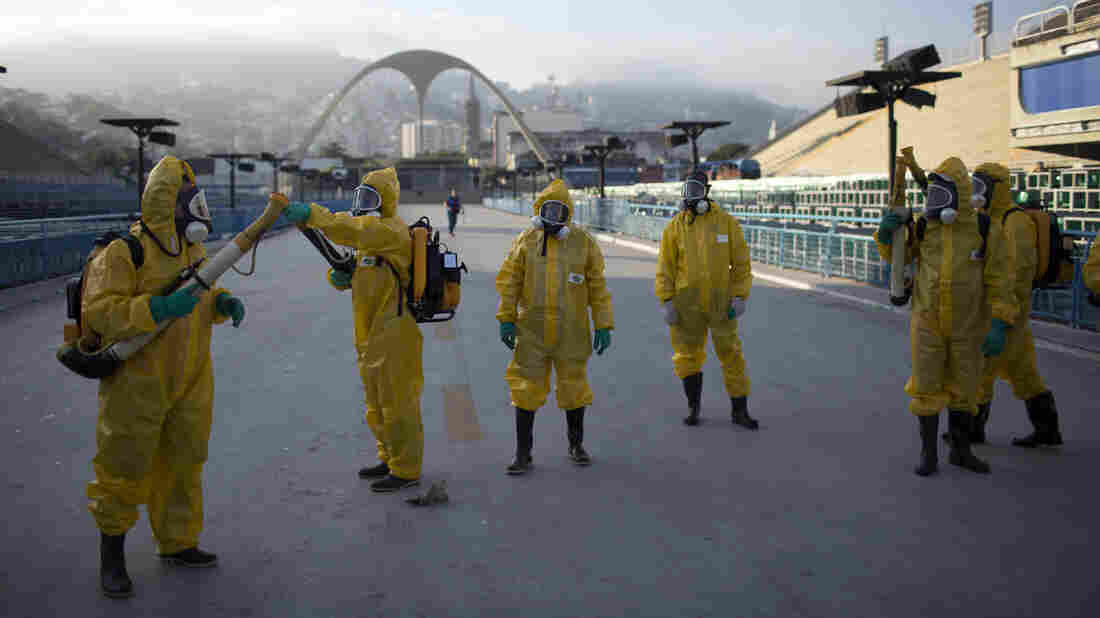
Health workers get ready to spray insecticide to combat the Aedes aegypti mosquitoes that transmits the Zika virus in January, under the bleachers of the Sambadrome in Rio de Janeiro, which will be used for the Archery competition in the 2016 summer games.

Health workers get ready to spray insecticide to combat the Aedes aegypti mosquitoes that transmits the Zika virus in January, under the bleachers of the Sambadrome in Rio de Janeiro, which will be used for the Archery competition in the 2016 summer games. Leo Correa/AP hide caption

toggle caption Leo Correa/AP

The World Health Organization is trying to ease concerns about spreading Zika as a result of this summer’s Olympics in Rio de Janiero.

“Based on current assessment, cancelling or changing the location of the 2016 Olympics will not significantly alter the international spread of Zika virus,” a statement released Saturday reads.

This comes a day after more than 150 scientists released an open letter to the head of WHO calling for the games to be moved or postponed, citing new research. “We make this call despite the widespread fatalism that the Rio 2016 Games are inevitable or ‘too big to fail,'” the letter says. Here’s more:

“An unnecessary risk is posed when 500,000 foreign tourists from all countries attend the Games, potentially acquire the strain, and return home to places where it can become endemic. Should that happen to poor, as-yet unaffected places (e.g., most of South Asia and Africa) the suffering can be great. It is unethical to run the risk, just for Games that could proceed anyway, if postponed and/or moved.”

The Paralynpic Athlete, Marcelo Collet, on Tuesday in Salvador, Brazil.

The Paralynpic Athlete, Marcelo Collet, on Tuesday in Salvador, Brazil. Felipe Oliveira/Getty Images hide caption

toggle caption Felipe Oliveira/Getty Images

It called on WHO to conduct a new assessment of its recommendations regarding Zika and the games, citing concerns about the medical consequences of the strain of the virus found in Brazil.

The Olympics are set to start in just 69 days and as The Guardian noted, the Olympic torch is already touring Brazil on its way to the opening ceremonies.

“The fire is already burning, but that is not a rationale not to do anything about the Olympics,” said Amir Attaran, a University of Ottawa professor and one of the letter’s four co-authors, told The Guardian. “It is not the time now to throw more gasoline on to the fire.”

Attaran recently published a commentary for the Harvard Public Health Review and spoke with All Things Considered about his controversial position. “[T]he odds are extremely high that somebody will take the disease elsewhere and seed a new outbreak,” he said.

As the WHO states, “based on the current assessment of Zika virus circulating in almost 60 countries globally and 39 countries in the Americas, there is no public health justification for postponing or cancelling the games.” It advises people coming for the games to follow public health advice, like guarding against mosquito bites and practicing safe sex.

The new letter from the scientists “will cause a fresh headache for Brazilian government officials and Olympic organisers, who have repeatedly insisted the Games can go ahead safely as long as athletes and visitors smother themselves in insect repellent to minimise the risks from the mosquito-borne disease,” as The Guardian reports.

Brazil’s president is facing impeachment proceedings and the country is in the middle of an economic recession.

According to Reuters, the International Olympic Committee says it was not consulted on the WHO’s response. The wire service adds that the IOC “has repeatedly said the virus would not pose a threat to the Games.”

Let’s block ads! (Why?)


No Image

Today in Movie Culture: 'Rogue One' Video Game Style, 'X-Men' Character Theories and More

Here are a bunch of little bites to satisfy your hunger for movie culture:

Remade Trailer of the Day:

The trailer for Rogue One: A Star Wars Story has been remade in 8-bit video game type graphics:

[embedded content]

Music Performance of the Day:

Watch Jeff Goldblum and The Mildred Snitzer Orchestra perform an Independence Day: Resurgence themed tune for an Omaze charity sweepstakes promo:

Adorable Cosplay of the Day:

The latest awesome wheelchair-based cosplay is for Ant-Man and his buddy Antony (via Fashionably Geek):

Ant-Man & Antony wheelchair costume in action. #BigSlickKC #AntMan pic.twitter.com/c68Gc8G1c9

— Walkin’ & Rollin’ (@WalkinNRollin) May 23, 2016

Character Commentary of the Day:

See what the MCU Captain America thinks of the new comic book Hydra-allegiant Captain America:

Yup I lol’d #CaptainAmerica pic.twitter.com/imTEbqy0KY

— Jake Lester (@Jake_Lester) May 26, 2016

Fan Theory of the Day:

The Film Theorists analyze the power of Magneto in the X-Men movies and theorize how he could be killed:

[embedded content]

Movie Science of the Day:

Another X-Men character theory has Kyle Hill exploring whether or not Wolverien could get a tattoo:

[embedded content]

Vintage Image of the Day:

Helena Bonham Carter, who turns 50 today, has a seat with director David Fincher on the set of Fight Club in 1998:

Supercut of the Day:

Burger Fiction highlights all the instances in movies where someone says, “Welcome to…” some such setting, including those of The Shawshank Redemption, Good Burger, Fight Club, and Strange Brew:

[embedded content]

Concept Art of the Day:

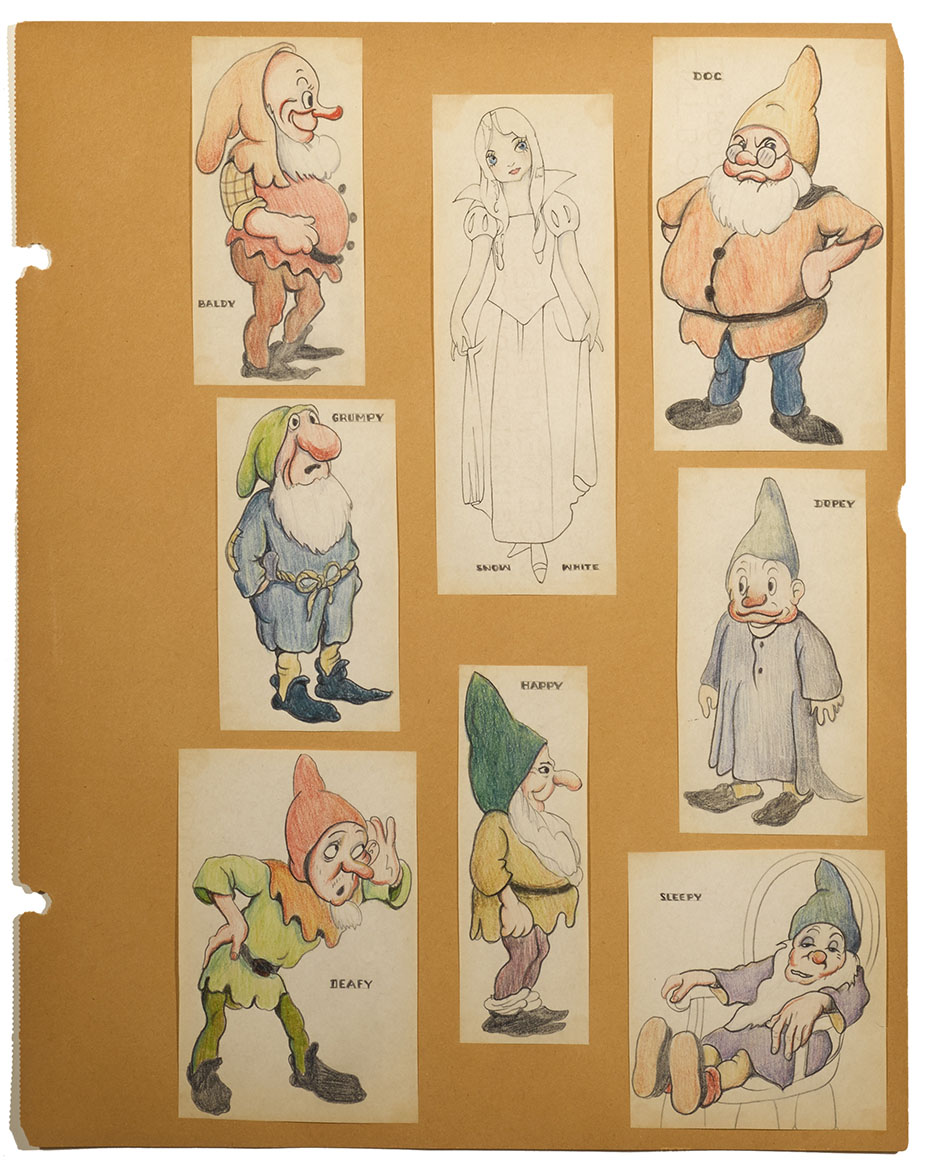
Check out a page of rare old rejected concept art for Snow White and the Seven Dwarfs, which is being auctioned off next month (via The Hollywood Reporter):

Classic Trailer of the Day:

Today is the 10th anniversary of the release of X-Men: The Last Stand. Watch the original trailer for the sequel below.

[embedded content]

and

Let’s block ads! (Why?)


No Image

Ship That Breast Milk For You? Companies Add Parent-Friendly Perks

Some companies are offering compensation beyond paid parental leave, covering surrogacy and adoption, or even shipping breast milk home to baby for traveling moms.

Gary Waters/Ikon Images/Getty Images

A handful of companies are offering parental benefits that go way beyond just paid leave, to include things like surrogacy reimbursement, egg freezing or breast milk shipping for traveling mothers.

As competition for talent heats up, companies see it as a relatively cheap way to recruit, retain and motivate their employee base.

This month, Johnson & Johnson extended fertility treatment benefits to same-sex couples and increased coverage to $35,000 for full- and part-time U.S. employees. It upped reimbursements for surrogacy and adoption to $20,000 — and it also ships breast milk.

“We wanted to be a leader in this space,” says Peter Fasolo, Johnson & Johnson chief human resources officer. Taking care of employees in this way costs far less than, say, health insurance, in part because the benefits are used by a minority of workers, and generally on a one-time or short-term basis. “They’re really not that expensive, to be frank with you.”

It may not be a lot of money for the company, but it can be for an individual employee.

Bruce Elliott, manager of benefits for the Society for Human Resource Management, says the amount Johnson & Johnson offers is unusually high. “We don’t see a lot of that. You know, we will see adoption support typically capped at about $5,000,” he says.

Elliott says rich benefits are more common in tech and finance. Ernst & Young has offered breast milk shipping for years, and last year, IBM, Accenture and Twitter added it. Apple and Facebook started covering egg freezing two years ago.

Clif Bar, the energy food company, instituted a breast milk shipping benefit recently that has made a huge difference for Marin Vaughn, a customer manager. Instead of schlepping pumped milk home in suitcases packed with ice when she came home from work travel, she now just requests supplies that allow her to refrigerate and ship the milk back home.

“So it just goes FedEx overnight; it’s super easy. I wish it had been around earlier,” when she had her first child three years ago, she says.

But the companies bolstering their family friendly benefits are largely ones where talent is in short supply. Outside of those rarefied places, it’s still uncommon.

According to SHRM, fewer than a third of employers, 27 percent, cover in vitro fertilization treatment. Adoption and surrogacy benefits are rarer still, and usually take the form of paid leave, not reimbursement. Seventeen percent offer adoption leave; 5 percent offer paid leave for parents having a child through a surrogate, SHRM says.

Ellen Bravo, executive director of advocacy group Family Values@Work, says 60 percent of women work in places without lactation rooms.

“For them it means squeezing into a bathroom stall, the most unsanitary place to pump milk,” Bravo says. And some employers won’t even allow pumping in bathrooms. She cites a discrimination suit filed with the Equal Employment Opportunity Commission this month by four female Frontier Airlines pilots alleging, in part, insufficient support for breast-feeding moms.

A Frontier Airlines spokesman says accommodations are made where possible, but allowing pilots to pump in flight could disrupt service, embarrass crew members or pose a security risk.

Though there are exceptions, most employment experts say there’s a big generational and cultural shift toward parent-friendly policies.

Kate Torgersen founded Milk Stork, a company that handles the logistics of breast milk shipping, and says she thinks young parents are demanding more of employers.

“They’re ambitious about their parenting,” she says. “They know about the value of breast-feeding, they’re incredibly informed and they’re vocal about what their needs are.”

Milk Stork launched less than a year ago. Since then, Torgersen says, the company has signed on a dozen corporate clients and is talking to many more.

Let’s block ads! (Why?)