Articles by admin

No Image

For Democrats, The Weak GDP Report May Have Silver Linings. Maybe.

At their party’s convention this week, Democrats highlighted positive economic news from the Obama era, including the dramatic plunge in unemployment and persistent growth in output.

But then on Friday, after the gathering had ended, the Commerce Department said the economy grew at only 1.2 percent during April, May and June. Most economists had believed that the gross domestic product, a measure of all goods and services, had been growing at about 2.6 percent this spring.

So when the disappointing number was revealed, many Republicans pounced, suggesting that voters would not want to continue having a Democrat in the White House.

For example, Republican Ari Fleischer, a former spokesman for President George W. Bush, tweeted: “Want to know why Hillary could lose to Trump? It’s because the economy grew just 1.2%.”

And Ralph Benko, senior economic advisor to American Principles Project, a conservative think tank, said in a statement that “the new economic numbers cannot possibly represent good news for Team Clinton.”

But a deeper look at the data reveals a potentially more encouraging interpretation for Democrats.

The GDP data showed the weakness was in inventory accumulation. Businesses turned cautious this spring and whittled down inventories rather than make big commitments to the future.

But at the same time, consumers were springing to life, increasing their spending by an annualized rate of 4.2 percent – a healthy pace.

Economists say shoppers are in good shape for several reasons: cheap gasoline is leaving more cash in wallets; interest rates are low; unemployment is just 4.9 percent and wages are up 2.6 percent from a year ago.

So shopping is up too. The National Retail Federation recently predicted back-to-school spending would hit $75.8 billion — up more than 11 percent from last year’s $68 billion. “We are optimistic that overall economic growth and consumer spending will continue to improve,” NRF President Matthew Shay said in a statement.

So if Americans are buying now, then businesses will have to restock this fall, ahead of the holiday shopping season. That could mean more jobs or longer hours for a lot of people, including factory workers, truck drivers, distribution-center workers, store-shelf stockers and so on.

Nariman Behravesh, chief economist at IHS Global Insight, put it this way in his written assessment: “The big drop in inventories is a bad news/good news story. The bad news is that it cut second quarter growth. The good news is that the change in inventories will likely be positive in the third quarter, which will add to growth.”

And here’s another silver lining for Democrats: slow spending by businesses in the first half of the year could help hold down interest rates for everyone in the second half.

“The weak GDP report makes an increase in the fed funds rate at the Federal Open Market Committee’s next meeting, in mid-September, very unlikely,” PNC economist Gus Fuacher said in a statement.

Keeping rates low will help consumers who need to borrow for cars, homes and other purchases.

In other words, the economy could shape up like this in the fall for average workers: an inventory buildup could generate more jobs and longer work weeks; low interest rates could spur more consumer spending; and falling gas prices could put many Americans in a more positive mood.

Or not. Perhaps the drop in inventories signals a real decline in the economy. Maybe by November, the weak growth turns into a real recession. Anything is possible.

But for now, most economists are still holding to a somewhat brighter interpretation of the GDP data. “While the top-line growth rate for the second quarter of 2016 was disappointing, it does not reflect the underlying growth rate of the U.S. economy, which is in the 2 percent to 2.5-percent range,” Behravesh said.

He continues to forecast 2.5 percent growth for the second half of the year.

Let’s block ads! (Why?)


No Image

Best of the Week: 'Blair Witch' Shocker, 'Wonder Woman' and 'Justice League' Trailers and More

The Important News

Marvel: Brie Larson was officially announced as Captain Marvel. Spider-Man: Homecoming revealed its main characters’ identities. Ghost Rider was officially announced for Agents of S.H.I.E.L.D.

D.C.: Will Beall is working on a new script for Aquaman. Kiersey Clemons was officially announced for The Flash. The Flash will have a cameo in Suicide Squad.

Other Comic Book Movies: The Rocketeer is getting a rebooting sequel.

Star Wars: Alden Ehrenreich might be starring in a young Han Solo trilogy. But he will not appear in Rogue One.

Horror: The Woodswas revealed to actually be a Blair Witch sequel. Lights Out is getting a sequel.

Musicals: Meryl Streep is joining Mary Poppins Returns.

True Stories: Paul Feig is producing a movie about stranded supermodels.

Video Game Movies: Jessica Chastain is joining The Division.

YA Movies: Oprah Winfrey will star in A Wrinkle in Time.

Remakes: Allison Anders will direct Idina Menzel in a Beaches remake.

Box Office: Star Trek Beyond won the weekend.

The Videos and Geek Stuff

New Movie Trailers: Wonder Woman, Doctor Strange, Justice League, Kong: Skull Island, Hacksaw Ridge, T2: Trainspotting, Split, Fantastic Beasts and Where to Find Them, The Accountant, Spaceman, Masterminds, Bad Santa 2, Office Christmas Party, Suicide Squad, Ithaca, Kickboxer: Vengeance, The Great Wall, Ben-Hur, King Arthur and the TV series Legion.

TV Spot: Sausage Party.

Clip: Pete’s Dragon.

See: Henry Cavill secretly walks the Comic-Con floor and surprises Will Smith.

Watch: Melissa McCarthy, Adam Sandler and other famous actors audition for young Han Solo.

See: A proof of concept trailer for a Gene Roddenberry biopic.

Watch: Matt Damon recaps the Bourne series. And an honest trailer for the Bourne series. And videos on the evolutions of Matt Damon and action in the Bourne movies.

See: How Matt Damon wound up with a musical cameo in Eurotrip.

Watch: An Academy profile on movie title designer Dan Perri.

See: How X-Men: Apocalypse should have ended.

Watch: Criminal director Ariel Vromen discusses its accidental JFK reunion.

See: A Pitch Perfect-inspired political video.

Watch: A video tour of Guillermo del Toro’s ridiculous house.

See: What Quentin Tarantino’s Suicide Squad would look like.

Our Features

Fan Convention Reports: Everything you missed at Comic-Con Day Two, and at Comic-Con Day Three.

Marvel Movie Guide: The biggest moments of the Comic-Con Marvel panel. And everything you need to know about Marvel’s upcoming movies.

Marvel TV Guide: Everything you need to know about Marvel’s new TV shows.

DC TV Guide: Everything about the overlaps between the DC movies and TV shows.

Geek Movie Guide: The hits and misses of Comic-Con.

Interviews: Actress Lucy Boynton on Sing Street. And Dave Franco on the start of his career. And Dave Franco on Nerve.

Home Viewing: Our guide to everything hitting VOD this week. And our guide to everything hitting Netflix next month.

and

MORE FROM AROUND THE WEB:

Let’s block ads! (Why?)


No Image

As Teams Inch Toward MLB Trade Deadline, Here Are Some Players On The Block

Jonah Keri of CBS Sports talks to NPR’s Robert Siegel about the MLB trade deadline — which teams are angling for what players and why.

Transcript

ROBERT SIEGEL, HOST:

For Major League Baseball fans, it’s that time of year when you don’t just root, root, root for the home team, but for the home team’s general manager. August 1 marks the end of the trading deadline between now and Monday afternoon – GMs who figure their team just might make it to the post-season if they fill that one hole in the lineup and GMs who’ve given up on this year and want to unload a veteran who’s a burden on the payroll.

They all have a long weekend to make their swaps. It’s time to think, not just about depth charts, but about spreadsheets, too. And I suspect that baseball writer Jonah Keri of CBS Sports has been doing just that. Jonah, welcome to the program once again.

JONAH KERI: Thank you for having me.

SIEGEL: And can you explain what’s the idea here? What’s the theory behind there being a deadline on August 1, and what can teams do?

KERI: Well, I mean, you want to set up a situation where there’s some fairness. Everybody knows that the same date is in play. And you also want to have a big enough window where if you’re making a trade, it presumably has an impact. If you make a trade on the last day of the season, it’s not going to help you that much.

If you do it now, you get two plus months of potential performance from a player. So teams that are, as you said, out of the race can say, OK, we want to build for the future. We’re going to trade you our veteran player who might be coming up on free agency or, perhaps, he makes a lot of money, and in exchange we would like prospects. We would like players who might be a couple of years from the big leagues, but have a chance to become good players and to become cheap good players at that.

SIEGEL: There are lots of rumored possible trades out there. What are some of the rumors that you’re watching more carefully?

KERI: Well, the Milwaukee Brewers have really a chance to be in the driver’s seat here because they’re a noncontending club with a lot of good players. Jonathan Lucroy is an excellent two-way catcher. He could potentially go to a team like Cleveland or Texas. The Brewers have some really good relief pitchers named Will Smith and Jeremy Jeffress. So we could see any of that happen.

And the Chicago White Sox also have become intriguing, at least in name if nothing else. Chris Sale and Jose Quintana – two excellent left-handers who are both signed to very team-favorable contracts – it would require a heck of a lot to acquire either of those gentlemen. But if it were to be done, a team like Boston or Texas, especially with a lot of young talent, has the ability to potentially match up.

SIEGEL: Does the record show that the general manager who is bold on July 31 often does very well and should be praised for his trades?

KERI: Interesting that you say that. I just wrote an article for CBS Sports today that argues you can do it both ways. You can certainly shoot the moon and come up big, and we’ve seen that work quite a few times. But the Toronto Blue Jays are an example of a team that this week made two deals, and they gave up virtually nothing, but they specifically addressed weaknesses. They didn’t get superstars, but they got useful players for very little.

And three examples that I posed were the 2014 San Francisco Giants, the 2010 San Francisco Giants and the 2009 New York Yankees. All three of those clubs were really good. They decided, you know what? We’re not necessarily going to make an over-the-top deadline move, and they all went on to win it all. They just relied on the talent that they had, picked up a couple of roll players and just cruised on into the World Series.

And of course, the danger if you trade for a superstar is it might come back to bite you. We’ve seen Hall of Famer John Smoltz was once a prospect who was traded in a deadline deal. So you have to be a little bit careful if you are going to make that gutsy trade that you’re not giving up a guy who could end up being multiples better than the person that you might have rented for two months.

SIEGEL: Jonah Keri of CBS Sports. Jonah, let’s hope neither of us gets traded by Monday afternoon.

KERI: Amen, Robert.

SIEGEL: Jonah hosts the Jonah Keri podcast.

Copyright © 2016 NPR. All rights reserved. Visit our website terms of use and permissions pages at www.npr.org for further information.

NPR transcripts are created on a rush deadline by Verb8tm, Inc., an NPR contractor, and produced using a proprietary transcription process developed with NPR. This text may not be in its final form and may be updated or revised in the future. Accuracy and availability may vary. The authoritative record of NPR’s programming is the audio record.

Let’s block ads! (Why?)


No Image

Campaign For Universal Health Care In Colorado Seeks Bernie Sanders' Help

"I believe that health care is a right, not a privilege," Sen. Bernie Sanders told Denver supporters in February. ColoradoCare supporters hope to leverage his charisma for a win on their state amendment.

“I believe that health care is a right, not a privilege,” Sen. Bernie Sanders told Denver supporters in February. ColoradoCare supporters hope to leverage his charisma for a win on their state amendment. Marc Piscotty/Getty Images hide caption

toggle caption Marc Piscotty/Getty Images

Backers of ColoradoCare — the state ballot initiative that would establish universal health care in Colorado — think they have the perfect job for former presidential candidate Sen. Bernie Sanders.

With the Democratic National Convention in Philadelphia behind him, Sanders “comes to Colorado and campaigns for single-payer — and we win,” says T.R. Reid, one of the architects of ColoradoCare. The initiative aims to provide every resident of Colorado with affordable health insurance. Sanders made universal coverage one of the cornerstones of his presidential bid.

The proposal comes with a $38 billion annual price tag — to be paid by a tax on workers and businesses. The program would eliminate the need for insurance premiums and deductibles, and proponents claim it would save the state and individuals a lot of money.

Reid says the backers of ColoradoCare have pitched Sanders’ team, hoping he will campaign on behalf of the measure that will come before voters in November.

Sanders has already championed the issue in the state — he pushed for a single-payer system during his Democratic primary campaign in Colorado. It was one of his key health care positions, and it got thousands of his supporters cheering at an event in Denver in February.

“I believe that health care is a right, not privilege,” Sanders told cheering crowds.

He also beat that drum during a TV appearance with MSNBC’s Rachel Maddow in May. Sanders pointed out that Canada started what would eventually become its nationwide system of universal health care by persuading lawmakers in each province — one province at a time.

“So if you’re asking me, do I think if a major state — whether it’s Colorado or California or whatever — goes forward and it works well, [will] other states say ‘Hey, you know, I got a brother over there in Colorado and he’s getting health care, great health care and it’s less expensive than the current system,’ ” Sanders said. “Yeah, I think that is one possibility.”

The whole concept of ColoradoCare — or Amendment 69, as it will appear on the ballot — appeals to Andrew Kleiman, a 35-year-old Sanders supporter from Grand Junction.

“I think we’re just at such a tipping point,” Kleiman says. “The momentum of Bernie’s campaign carried over into something like this would be a perfect fit and pretty necessary.”

Kleiman says if Sanders actively backed the proposal in Colorado it would help motivate millennials like him to vote.

Reid agrees. “The last poll showed 60 percent of millennials support ColoradoCare,” he says. “Those are Bernie people and if he can turn them out to vote, we win.”

But a coalition of opponents, including conservatives, insurance firms and business groups, has come out against the initiative, which is expected to draw big money from both sides.

“I don’t think the economics of it work out,” says Nina Anderson, a small business owner in Grand Junction. She says the proposed program would be too expensive for small businesses and employees.

Colorado has been on the cutting edge of some other big policy changes, like legalizing recreational pot. Anderson says she’s not ready for the state to take the lead on a huge government-run health care system, and does not think Sanders should jump in.

“That is the scary part, I think, about being in Colorado and being on the forefront of anything that is attempting to move to socialized care,” Anderson says. “You do get everybody with outside interests coming in and playing in your sandbox.”

Cody Belzley, who served as senior health policy analyst to former Democratic Gov. Bill Ritter, opposes the proposal and says she’s not sure what difference Sanders would make — if he did come.

“It’s such a strange political year,” Belzley says. “I think it’s really hard to know what’s going to impact Colorado voters or the outcome of Amendment 69. I think this is a decision to be made by Colorado voters, based on what’s going to be best for them and their families.”

Colorado voters haven’t passed a general tax increase in years. Obamacare cut the state’s uninsured rate in half, but many residents still struggle with high premiums and deductibles.

Belzley, who works for a group opposing the amendment, Coloradans for Coloradans, urges voters to look at the details. “I think when folks look at that,” she says, “they come to understand this is just too risky a proposal.”

Sanders’ presence in Colorado could motivate voters on both sides, says Seth Masket, a political science professor at the University of Denver.

“That’s kind of the mixed message of initiatives,” Masket says. “They can really draw out both sides, depending on how passionate people are on the subject. The key for supporters of this initiative would be to translate passion for Sanders into passion for this initiative. Sanders is probably the best equipped to actually make that case.”

A representative from the Sanders campaign, Michael Briggs, says the topic is something that “interests Bernie very much. We don’t have a trip scheduled yet, but he has been keeping a close eye on this.”

This story is part of NPR’s reporting partnership with Colorado Public Radio and Kaiser Health News.

Let’s block ads! (Why?)


No Image

U.S. Economy Grew By Just 1.2 Percent During 2nd Quarter

Claudia Caballero, a district manager for Aldi, talks with applicant Manoushka Metellus (right) at a job fair in Florida earlier this month. With a low unemployment rate, consumers are still spending but business inventories fell during the second quarter.

Claudia Caballero, a district manager for Aldi, talks with applicant Manoushka Metellus (right) at a job fair in Florida earlier this month. With a low unemployment rate, consumers are still spending but business inventories fell during the second quarter. Lynne Sladky/AP hide caption

toggle caption Lynne Sladky/AP

The U.S. economy grew at an annual rate of just 1.2 percent during the second quarter of this year, well below expectations, and it came after an even weaker first quarter, the Commerce Department said.

The report exacerbates fears that factors such as the global slowdown and the decline in energy production might have hit the economy harder than first thought.

While all-important consumer spending rose by a healthy 4.2 percent, business investment fell by 9.7 percent and inventories fell. Government spending, which includes military expenditures, also dropped, by 0.9 percent.

The Commerce Department also released revised numbers showing that the economy expanded by 2.6 percent during 2015, the biggest increase in nearly a decade.

But the data indicates that growth began to slow at the end of the year and was lackluster during the first half of 2016. The economy grew at an annual rate of just 0.8 percent during the first three months of this year.

The good news is that, with the unemployment rate still relatively low, consumers continue to spend.

Still, businesses remain cautious about the future, suggesting that many are worried about the outlook abroad. Although exports actually rose during the second quarter, the stronger dollar could hurt U.S. manufacturers trying to sell products abroad.

As The Wall Street Journal reported, continued anemic growth is likely to be felt in several ways in the months to come:

“Lackluster growth could be a concern to Federal Reserve officials considering whether the economy is strong enough to absorb higher interest rates later this year. It could also influence voters weighing the economic track record during Barack Obama’s administration before electing a new president in November.”

The numbers released today represent the first estimate of growth for the quarter. The data is almost always revised as more information comes in.

Let’s block ads! (Why?)


No Image

Dave Franco Explains How Wanting to Have Sex With Christopher Mintz-Plasse Launched His Career

You might think that Dave Franco’s career was always a given, that he would be offered big roles by virtue of being the younger brother of the already successful James Franco. That is simply not the case. Sure, name recognition no doubt helped the younger Franco when he was landing tiny cameos in movies like Superbad as Greg the Soccer Player, but as he pursued juicier roles he found himself going through the same audition process as any other actor.

Franco’s big break out was 21 Jump Street. After that he started getting key roles in major movies like Warm Bodies and Now You See Me. But as Franco explained to us in a recent interview for his new movie Nerve, none of those projects would have happened were it not for a very vulgar short film he’d made with Christopher Mintz-Plasse.

And we mean a very, very vulgar short film. Seriously, do not press play on You’re So Hot if anyone with sensitive ears is within hearing range. So how was it responsible for Franco’s rise?

As it turns out, Franco’s early career saw him taking jobs he didn’t really want just to get acting experience. And that’s totally understandable, it’s what all actors go through, but as he puts it, “After a while, I wasn’t working on things that I was proud of, where I would literally tell my friends and family ‘Do not go see this project that I’m in.’ So I started to think I needed to take things into my own hands and that’s when I started making these short films for Funny or Die with this buddy of mine I’ve known since middle school.”

Dave Franco You're So Hot

So these shorts ended up scratching an itch Franco’s acting career wasn’t quite reaching. Meanwhile he’s out auditioning for projects like every other actor does. He tells us he went in for 21 Jump Street seven times, describing it as a “really arduous audition process.” Obviously he ended up getting the job, but it was only after he was cast that directors Phil Lord and Chris Miller confessed to him that the big reason he got it was they loved You’re So Hot.

“That’s so silly to think about, because that’s a video where I’m telling my best friend Christopher Mintz-Plasse that I want to have sex with him, and that landed me my biggest film role at the time,” Franco laughs as he tells the story. “I honestly don’t believe I would be where I’m at right now without those silly short films.”

So does Dave Franco want to branch out from just acting and direct, as James Franco has done a number of times now? “I do have aspirations to do it on a feature scale, but to be honest I’m scared to. It’s a leap. I know I need to just rip the Band-Aid off. It is something I’ll do eventually.”

In the mean time, you can marvel at the NSFW wonder that is You’re So Hot. And if you’re an aspiring actor reading this, maybe take a cue from Franco and start making your own things. You may be surprised what opportunities they eventually create.

[embedded content]

Nerve is in theaters now. Check it out, it’s worth it.

[embedded content]

Follow @PeterSHall Follow @MoviesDotCom

Let’s block ads! (Why?)


No Image

Regulators Draw Up New Rules To Stop Abusive Practices By Debt Collectors

Richard Cordray, shown here at a March 2015 hearing, directs the Consumer Financial Protection Bureau, which has proposed new rules to overhaul the multi-billion dollar debt collection industry.)

Richard Cordray, shown here at a March 2015 hearing, directs the Consumer Financial Protection Bureau, which has proposed new rules to overhaul the multi-billion dollar debt collection industry.) Steve Helber/AP hide caption

toggle caption Steve Helber/AP

The Consumer Financial Protection Bureau is drawing up new rules that would curb abusive debt collection practices, which it says generated some 85,000 consumer complaints last year alone.

The rules would limit the number of times debt collectors can contact borrowers to collect debts, and require them to substantiate that they have the right person before doing so. They would also have to make it easier for borrowers to dispute debts.

“Both consumers and responsible businesses stand to benefit by improved standards for debt collection. Consumers deserve to be treated with dignity and respect, and businesses should be able to operate fairly and reasonably to collect the debts they’re legitimately owed,” said Richard Cordray, the bureau’s director, at a field event in California.

The bureau says it receives more complaints about the $13.7 billion debt collection industry than any other issue. Many consumers report being harassed repeatedly to pay debts they don’t owe, or have already paid, the bureau says.

“The basic principles of the proposals we’re considering are grounded in common sense. Companies should not collect debt that is not owed. They should have more reliable information about the debt before they try to collect,” Cordray said.

One problem is that many companies purchase debt from creditors for pennies on the dollar, with the intention of aggressively trying to collect it, but don’t necessarily have correct information about the borrower or even whether the debt has been paid, he said.

The proposals would limit the number of times a company could contact a borrower and prevent the company from using certain channels of communication, such as a work phone, if the borrower requested it.

Debt collection is already governed by the 1977 Fair Debt Collection Practices Act. The bureau was given the authority to issue new regulations under the Dodd-Frank financial overhaul bill of 2010.

Bureau officials say the 1977 act needs to be updated in numerous ways.

For instance, the act gave consumers the right to dispute a debt or ask for more information, but few consumers understand they may do so, Cordray said.

Under the proposed rules, companies would be obligated to confirm their information about debts if consumers requested it.

The proposed rules are being released to the public for comment and will be rewritten in greater detail, after industry and consumer groups weigh in.

“The law should protect and promote ethical debt collection, which safeguards the rights of consumers and provides clear and effective rules of the road for collectors,” said James Mastriani, president of Velocity Recoveries, a debt collection firm.

But, he added, “The law should not be misused to enable borrowers to turn legitimate loans into de facto gifts. In the long run, this will reduce the availability of credit for all consumers and make credit more expensive.”

Graciela Aponte-Davis, director of California policy at the Center for Responsible Lending, said the proposals “endorse the common-sense idea that people should not be harassed for debts they do not owe.”

But she expressed concern that some parts of the proposals don’t protect consumers from unwarranted collection attempts.

“Specifically the proposal does not go far enough to require that debt collectors adequately document that they are pursuing the right person for the right debt,” she said.

Let’s block ads! (Why?)


No Image

Doctors Need A New Skill Set For This Opioid Abuse Treatment

Dr. Michael Frost demonstrates use of Probuphine, an implant that dispenses medication to treat opioid addiction.

Dr. Michael Frost demonstrates use of Probuphine, an implant that dispenses medication to treat opioid addiction. Karen Shakerdge/WXXI hide caption

toggle caption Karen Shakerdge/WXXI

In a big hotel conference room near New York’s Times Square, six doctors huddle around a greasy piece of raw pork. They watch as addiction medicine specialist Michael Frost delicately marks the meat, incises it and implants four match-sized rods.

“If you can do it well on the pork, you can easily do it on the person,” Frost tells his audience.

Frost consults for Braeburn Pharmaceuticals, the company behind the newly FDA-approved treatment Probuphine, and is teaching doctors how to use it. They are learning to implant it in pork so they can later implant it in patients’ arms.

Although addiction specialists welcome Probuphine, which delivers a constant dose of the drug buprenorphine over six months, at this early stage it’s complicated for physicians to add it to their repertoire. Because physicians who treat addiction don’t necessarily have experience with surgery or access to sterile spaces, some are having to learn a new skill and develop new systems.

Probuphine is unlike any other addiction treatment on the market. It promises to be life-changing for people already stable in recovery using medication-assisted treatment, who would otherwise need a daily dose of a similar drug to stay free of cravings and withdrawal pains.

Patients using Probuphine were 14 percent more likely to stay opioid-free compared to those using a daily sublingual version of buprenophine, according to a study published this month in JAMA, the Journal of the American Medical Association. Patients in this study had been stable on buprenorphine for an average of three and a half years beforehand. The authors do caution against generalizing these findings. Most participants, they note, were white, employed, had at least a high school education and were previously addicted to prescription opioids rather than heroin.

“They don’t have to be dependent on taking something every day. It takes the choice out of that,” says Ella Leers, a doctor who treats substance abuse at the Carnegie Hill Institute in Manhattan.

The FDA approved Probuphine under the condition that physicians are trained and tested before implanting or even prescribing the treatment. There are three kinds of certification: implanter, prescriber or both. If doctors can’t perform the implanting themselves, they need to coordinate with another doctor who can.

To date, over 1,800 healthcare practitioners have been certified — 27 have implanted dozens of patients, according to a representative for Braeburn Pharmaceuticals, Probuphine’s maker.

Gloria Baciewicz, chief of addiction psychiatry at the University of Rochester Medical Center, says using the new treatment will take some adjustments. But, she adds, there need to be as many effective treatments as possible for opioid use disorder.

“Now with Probuphine, we have to take it up to a whole different level because we have to have either agreements with implanters or a room where we can implant. We have to get the equipment. There will be a lot more to do,” she says. Her team was already planning on moving to another space, which will have the facilities they need to conduct minor surgery.

Prescribing Probuphine may also call for a new approach to the counseling and behavioral therapy that is typically recommended for those on medication-assisted treatment.

“If you’re implanting something that can be there for six months, you want to make sure that the patients are still coming in to get the other types of support that they can use because of their addiction issues,” says Leers.

There are also questions about insurance coverage. Billing codes are still being established. For now, doctors need to buy the Probuphine kits that run almost $5,000 themselves, and then bill patients or insurance companies.

Braeburn has offered to help physicians verify if an insurance plan would reimburse any of the cost. According to the company, Blue Cross Blue Shield and United Healthcare approved reimbursement for a few patients who have implants. Medicare, Medicaid and the VA have Probuphine in their formulary and are required to cover it if deemed medically necessary.

Despite having to get certified and the other hurdles, many doctors welcome the treatment option. Opioid drug overdoses have reached epidemic levels — roughly 78 Americans die every day from opioid overdose, according to the Center for Disease Control and Prevention.

So it’s good to have a another way to deliver medication-assisted treatment, says Richard Rosenthal, medical director of addiction psychiatry for the Mount Sinai Health System. Rosenthal was one of two principal investigators on a Probuphine clinical trial.

“Everybody is waking up to the fact that we’re in the midst of an opioid epidemic,” says Rosenthal. “There are actually very few medications for addiction of any kind. Given the addiction treatment system in the United States, most of the treatment that’s given is psychosocial. There’s very little use of FDA-approved medications.”

Probuphine made a difference, says Scott Jernigan of Jacksonville, Fla. He was in recovery for almost a year, taking another medication, when he signed up for a Probuphine clinical trial. He said Probuphine freed him from weekly doctor visits and pharmacy runs, and from fears of how sick he’d feel if he missed a dose or forgot to take his medication.

“[It] meant that I could become more of what my normal is going to be,” Jernigan says.

Some specialists recommend patients stay on medication-assisted treatment for years, or even indefinitely. For now, Probuphine can only be prescribed for two runs of six-month use and is meant for people already stable on 8 mg or less of a medication like buprenorphine.

Authors of the JAMA study suggest further investigation of Probuphine to gauge issues often associated with buprenorphine, such as diversion or pediatric exposure.

This story is part of a reporting partnership with NPR, Side Effects Public Media and Kaiser Health News.

Let’s block ads! (Why?)


No Image

Today in Movie Culture: The Action of the 'Bourne' Movies, 'Pitch Perfect' Political Propaganda and More

Here are a bunch of little bites to satisfy your hunger for movie culture:

Franchise Recap of the Day:

With Jason Bourne out this week, Kevin B. Lee looks at the first three Bourne movies to show how action movies evolved in just five years (via Fandor Keyframe):

[embedded content]

Actor in the Spotlight:

Meanwhile, Matt Damon has evolved, too, and Burger Fiction has the montage to showcase his development:

[embedded content]

Classic Movie Poster of the Day:

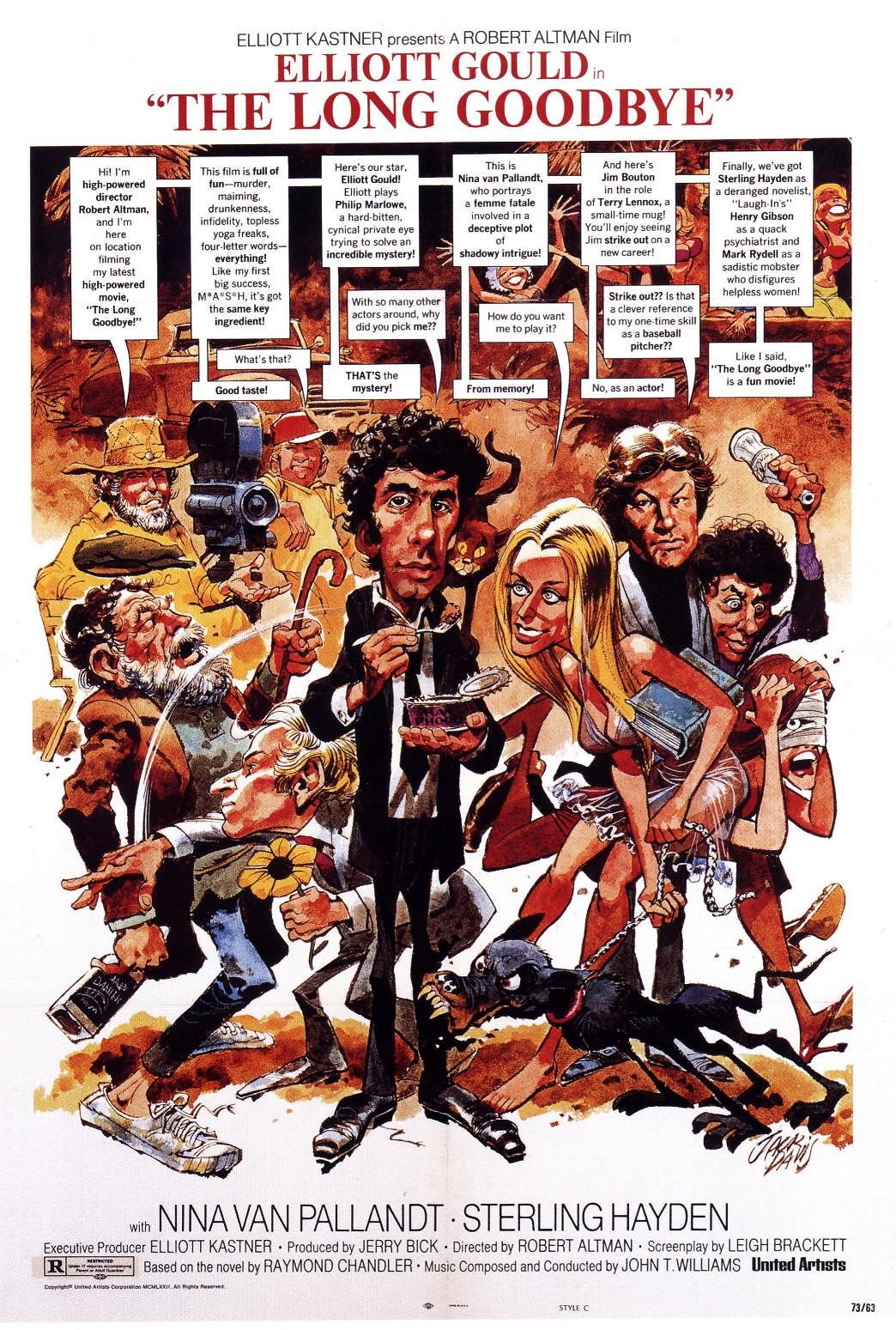
In honor of artist Jack Davis, who died today at age 91, here’s one of his greatest movie posters, for The Long Goodbye:

Political Propaganda of the Day:

Elizabeth Banks put together a video for the Democratic National Convention and Hillary Clinton’s presidential campaign inspired by the Pitch Perfect movies:

[embedded content]

Casting Depiction of the Day:

Now that Kurt Russell’s character in Guardians of the Galaxy Vol. 2 has been revealed to be the living planet Ego, BossLogic shows us what that could look like (via Twitter):

Movie Takedown of the Day:

If you’ve got room for yet another critical slam against Batman v Superman: Dawn of Justice, the Nerdwriter intelligently highlights the one fundamental flaw of the movie:

[embedded content]

Cosplay of the Day:

At this year’s Comic-Con, Adam Savage went incognito as the bear from The Revenant (via Fashionably Geek):

[embedded content]

Vintage Image of the Day:

Maya Rudolph, who turns 44 today, in her movie debut, 1997’s Gattaca, wearing a surgical mask and holding a baby:

Filmmaker in Focus:

Sergio Leone gets a musical montage tribute in this video essay showcase of his films by editor Alejandro Villarreal (via Cinematic Montage Creators):

[embedded content]

Classic Trailer of the Day:

Today is the 50th anniversary of the release of Alfred Hitchcock’s Torn Curtain. Watch the original trailer for the movie, which stars Julie Andrews and Paul Newman, below.

[embedded content]

and

Let’s block ads! (Why?)


No Image

Sen. Tim Kaine's Record On Health Care: He's With Hillary

Virginia Sen. Tim Kaine counted health care policy among his chief concerns at a campaign rally for Hillary Clinton in Miami on July 23.

Virginia Sen. Tim Kaine counted health care policy among his chief concerns at a campaign rally for Hillary Clinton in Miami on July 23. Justin Sullivan/Getty Images hide caption

toggle caption Justin Sullivan/Getty Images

As he takes the stage Wednesday night at the Democratic National Convention in Philadelphia, vice presidential nominee Tim Kaine is firmly in Hillary Clinton’s camp — and his party’s — on the big health care issues. Now a U.S. senator from Virginia, Kaine supports the Affordable Care Act and pushed its Medicaid expansion. He also worked to overhaul the mental health system when he was governor of Virginia.

Here are highlights and a few flashpoints of controversy from Kaine’s health policy record:

Mental health

A defining moment in Kaine’s tenure as governor was the 2007 mass shooting at Virginia Tech, where 33 people, including the gunman — a student at the school — died.

Almost exactly one year later, Kaine signed a $42 million legislative package to overhaul the state’s mental health system. The money was used mostly for emergency mental health services, children’s mental health services, increased case managers and doctors and jail diversion projects, according to the Virginia Office of the Attorney General.

“Somebody shouldn’t be imprisoned because we won’t provide funding for community mental health,” Kaine said at a mental health conference in 2008, shortly after the bills were signed, according to the Virginian-Pilot in Norfolk.

The package of laws made it easier for authorities to commit someone having a mental health crisis into treatment involuntarily. They no longer had to prove the patient was in “imminent danger.” Instead, the new standard only required authorities to demonstrate a “substantial likelihood” that the person could cause serious harm to himself or others.

Together, Kaine and the state’s General Assembly made a down payment on longer-term reforms for the delivery of mental health and behavioral health services in Virginia, says Peter Cunningham, a professor of health behavior and policy at Virginia Commonwealth University.

Abortion

As a Catholic who worked with Jesuit missionaries in Honduras in 1980, Kaine says he opposes abortion personally but supports a woman’s right to choose for herself. His stance has drawn criticism over the years.

“Personally, I’m opposed to abortion and I’m opposed to the death penalty,” he said on NBC’s Meet the Press in June. “The right thing for government is to let women make their own decisions.”

That was a change from Kaine’s position in 2005, when he supported parental consent laws and bans on “partial birth” abortions, causing the Virginia chapter of NARAL Pro-Choice America to withhold an endorsement in his gubernatorial campaign. As governor, he signed a bill creating “Choose Life” license plates in Virginia, which he said was an issue of free speech.

Since then, Kaine has actively supported Planned Parenthood and opposed abortion restrictions.

In 2013, Kaine cosponsored legislation to improve access to contraception.

Affordable Care Act

Kaine did not mark himself as a health care reformer when he was Virginia’s governor, but his 2006-2010 term overlapped the recession when little change was happening anywhere at state or national levels, Cunningham points out.

“He was probably pretty typical of the middle-of-the-road Democratic governors in sort-of-purple states,” Cunningham says. “When the recession hit, that precluded any other major health reform effort that he might have contemplated.”

Kaine supported Obamacare when he ran for Senate in 2012 and has since cosponsored bills to improve the law. Kaine has pushed for Medicaid expansion in Virginia and cosponsored legislation to incentivize expansion in other states as well. Like Clinton, Kaine has proposed adjusting the federal health care law to include some low-income families that aren’t currently covered — fixing the so-called family glitch. This year, he cosponsored a bill to require more businesses to provide benefits under the ACA.

Public health

Kaine has occasionally incited controversy, as in 2007 when Virginia became the first state to require all girls to get the human papillomavirus vaccine (protection against a virus that can cause cervical cancer) before enrolling in high school. In 2009, he backed a bill that banned smoking in bars and restaurants in the tobacco-producing commonwealth.

Opioids

Since his election to the Senate four years ago, Kaine has cosponsored bills that would establish an advisory committee to help the FDA approve new opioids, reform guidelines for the VA regarding the prescription of opioids, protect first responders from lawsuits when they administer emergency drugs to counteract an overdose, and create a drug monitoring program for Medicare.

Many of those bills were rolled into CARA — the Comprehensive Addiction and Recovery Act of 2016, which was signed by President Obama in July. The bill bore Kaine’s name as a cosponsor.


Kaiser Health News (KHN) is a national health policy news service. It is an editorially independent program of the Henry J. Kaiser Family Foundation.

Let’s block ads! (Why?)