Articles by admin

No Image

Many Well-Known Hospitals Fail To Score High In Medicare Rankings

Memorial Hermann Hospital System in Houston was one of very few nationally renowned hospitals to get a five-star ranking from Medicare.

Memorial Hermann Hospital System in Houston was one of very few nationally renowned hospitals to get a five-star ranking from Medicare. Ed Uthman/Flickr hide caption

toggle caption Ed Uthman/Flickr

The federal government released its first overall hospital quality rating on Wednesday, slapping average or below average scores on many of the nation’s best-known hospitals while awarding top scores to many unheralded ones.

The Centers for Medicare & Medicaid Services rated 3,617 hospitals on a one- to five-star scale, angering the hospital industry, which has been pressing the Obama administration and Congress to block the ratings.

Hospitals argue that the government’s ratings will make teaching hospitals and other institutions that treat many tough cases look bad. They argue that their patients are often poorer and sicker when admitted, and so are more likely to suffer further complications or die, than at institutions where the patients aren’t as sick.

Medicare, which already publicizes on its website more than 100 hospital metrics, many of which deal with technical matters, acknowledges that the ratings don’t reflect cutting edge care, such as the latest techniques to battle cancer. Still, it has held firm in publishing the rankings, saying that consumers need a simple way to objectively gauge quality. Medicare does factor in the health of patients when comparing hospitals, though not as much as some hospitals would like.

Medicare based the star ratings on 64 individual measures that are published on its Hospital Compare website, including death and infection rates and patient reviews.

Just 102 hospitals received the top rating of five stars, and few are those considered as the nation’s best by private ratings sources such as U.S. News & World Report, or viewed as the most elite within the medical profession.

Medicare awarded five stars to relatively obscure hospitals and a notable number of hospitals that specialized in just a few types of surgery, such as knee replacements. There were more five-star hospitals in Lincoln, Neb., and La Jolla, Calif., than in New York City or Boston. Memorial Hermann Hospital System in Houston and Mayo Clinic in Rochester, Minn., were two of the only nationally known hospitals to get five stars.

Medicare awarded the lowest rating of one star to 129 hospitals. Five hospitals in Washington, D.C., received just one star, including George Washington University Hospital and MedStar Georgetown University Hospital, both of which teach medical residents. Nine hospitals in Brooklyn, four hospitals in Las Vegas and three hospitals in Miami received only one star.

Some premiere medical centers received the second-highest rating of four stars, including Stanford Health Care in California, Massachusetts General Hospital in Boston, Duke University Hospital in Durham, N.C., New York-Presbyterian Hospital and NYU Langone Medical Center in Manhattan, the Cleveland Clinic in Ohio, and Penn Presbyterian Medical Center in Philadelphia. In total, 927 hospitals received four stars.

Medicare gave its below-average score of a two-star rating to 707 hospitals. They included the University of Virginia Medical Center in Charlottesville, Beth Israel Medical Center in Manhattan, North Shore University Hospital (now known as Northwell Health) in Manhasset, N.Y., Barnes-Jewish Hospital in St. Louis, Tufts Medical Center in Boston and MedStar Washington Hospital Center in D.C. Geisinger Medical Center in Danville, Pa. — which is a favorite example for national health policy experts of a quality hospital — also received two stars.

Nearly half the hospitals — 1,752 — received an average rating of three stars. Another 1,042 hospitals were not rated, either because they did not have enough cases for the government to evaluate accurately, or because, as with all Maryland hospitals, Medicare does not collect the necessary data.

The government said in a statement that it has been using the same type of rating system for other medical facilities, such as nursing homes and dialysis centers, and found them useful to consumers and patients. Those ratings have shown, Medicare said, “that publicly available data drives improvement, better reporting, and more open access to quality information for our Medicare beneficiaries.”

In a statement, Rick Pollack, president of the American Hospital Association, called the new ratings confusing for patients and families. “Health care consumers making critical decisions about their care cannot be expected to rely on a rating system that raises far more questions than answers,” he said. “We are especially troubled that the current ratings scheme unfairly penalizes teaching hospitals and those serving higher numbers of the poor.”

A preliminary analysis Medicare released last week found hospitals that treated large numbers of low-income patients tended to do worse.

A sizable proportion of the nation’s major academic medical centers, which train doctors, scored poorly, according to a Kaiser Health News analysis. Out of 288 hospitals that teach significant numbers of residents, six in 10 received below-average scores, the analysis found. Teaching hospitals comprised one-third of the facilities receiving one-star. A number were in high-poverty areas, including two in Newark, N.J., and three in Detroit.

“Hospitals cannot be rated like movies,” Dr. Darrell Kirch, president of the Association of American Medical Colleges, said in a statement. “We are extremely concerned about the potential consequences for patients that could result from portraying an overly simplistic picture of hospital quality with a star-rating system that combines many complex factors and ignores the socio-demographic factors that have a real impact on health.”

Kaiser Health News is an editorially independent news service supported by the nonpartisan Kaiser Family Foundation.

Let’s block ads! (Why?)


No Image

For Olympic Boxer Claressa Shields, Round 2 Brings New Expectations

Boxer Claressa Shields, shown here in November 2015, wants to follow in Muhammad Ali's footsteps.

Boxer Claressa Shields, shown here in November 2015, wants to follow in Muhammad Ali’s footsteps. Harry How/Getty Images hide caption

toggle caption Harry How/Getty Images

Claressa Shields will be back in the ring Aug. 17 to defend her Olympic gold medal. The 2012 Olympics in London were the first time women were allowed to box in the Games and the 17-year-old high school student from Flint, Mich., made history.

But winning a gold medal didn’t change her life as much as she thought it would.

As an independent journalist and filmmaker, I’ve been following Claressa for the past five years. When I first met Claressa in 2011, I was in a dimly lit auditorium in Toledo, Ohio, photographing the women who were trying to become the first to box in the Olympics. A teenage girl with short hair, thick biceps and a determined stare entered the ring — it was her first fight against adult women.

Shields, who is 5-foot-10 and fights at 165 pounds, dispatched her opponent before the end of the first round.

Claressa had been training in the basement of a small neighborhood gym in Flint, one of the most dangerous cities in the country. Few people had ever seen her fight. Less than a year after I first saw her, there she was in London with a gold medal around her neck.

“I just remember being on the podium and I’m like, ‘Holy crap! This medal is huge,’ ” she told me last month. “And it was so heavy. And when he put it on, I just held [it] and looked and I thought I was about to go crazy. I wanted to jump down and run around the ring, and jump on the ropes and put my hands in the air holding the medal. Just shaking and laughing. It was like someone handed me a million dollars and said, ‘Here you go.’ “

Claressa (right) exchanges punches with Nadezda Torlopova of Russia during the Women's Middle Boxing final bout during the London 2012 Olympic Games.

Claressa (right) exchanges punches with Nadezda Torlopova of Russia during the Women’s Middle Boxing final bout during the London 2012 Olympic Games. Scott Heavey/Getty Images hide caption

toggle caption Scott Heavey/Getty Images

Claressa slept with the gold medal, its ribbon wrapped around her wrist, for weeks. After years working toward this goal, she’d achieved it.

But just days after the Olympics ended, Claressa remembers sitting in her coach’s living room back in Flint and thinking: Now what?

“You know, I guess, I’ve won the Olympic gold medal and I don’t know what to think about now,” she told me. “I don’t know what to dream about. That was my dream for years. I was literally going to sleep and I would see all black, like I wasn’t able to dream. My dream had been accomplished. What do I do now?”

Soon she was back in high school, living with her coach because things were too unstable at home. Her mother has long struggled with addiction.

Claressa, showing her championship belts to a classmate, was a high school junior when she won the Olympic gold in 2012. She is the first in her family to graduate from high school. She won a scholarship to Olivet College and studied for a semester, but was unable to keep up with classes and her international tournament schedule. She plans to study again after Rio.

Claressa, showing her championship belts to a classmate, was a high school junior when she won the Olympic gold in 2012. She is the first in her family to graduate from high school. She won a scholarship to Olivet College and studied for a semester, but was unable to keep up with classes and her international tournament schedule. She plans to study again after Rio. Sue Jaye Johnson hide caption

toggle caption Sue Jaye Johnson

As a member of the U.S. national boxing team, Claressa received a stipend of $1,000 a month. But those earnings were going to pay her mom’s water bill and helping her older brother, who was in prison.

“Everybody was saying, ‘You should be signed with Nike, you should be on a Wheaties box, how come you aren’t in this magazine?’ It got to the point where I just shut everybody out. I can’t hear that anymore. I really can’t dwell on what I didn’t get,” she told me.

Why didn’t any of those things happen?

“I don’t know why it didn’t happen,” she said. “I take it as I wasn’t ready for it, I guess. I wasn’t the ideal woman. I wasn’t the pretty girl who wears her hair straight. I don’t know. I guess I wasn’t what they were looking for.”

A few months after the London Games, Claressa was back on the amateur circuit. At her first tournament, Claressa and her coach met with USA Boxing officials about a PR strategy. The officials had one suggestion: Claressa should stop talking about how she likes to beat people up.

“You want me to stop saying that?” Claressa asked the boxing officials. “Why?”

Jason Crutchfield, Claressa's coach, examines her after a sparring session at Berston Field House in Flint, Michigan. Claressa trained at Berston from age 11 to 17. When she was 13, and before it was announced that women would be allowed to box in the Olympics, Crutchfield predicted she would win the Olympic gold.

Jason Crutchfield, Claressa’s coach, examines her after a sparring session at Berston Field House in Flint, Michigan. Claressa trained at Berston from age 11 to 17. When she was 13, and before it was announced that women would be allowed to box in the Olympics, Crutchfield predicted she would win the Olympic gold. Sue Jaye Johnson hide caption

toggle caption Sue Jaye Johnson

Julie Goldsticker, a USA Boxing PR consultant at the meeting, offered some advice on attracting endorsements.

“I box,” said Claressa.

“I understand that,” Goldsticker replied.

“It’s an image thing,” Jason Cruthchfield, Claressa’s coach, explained. “Just tone it down a little bit.”

Claressa wouldn’t budge.

“Their definition of a woman — you can be tough, but not too tough,” she told me when we spoke recently. “If I want to get in there and kick a girl’s ass, I’m going to kick her ass. That’s it. You might as well have told me to start punching my opponents a little softer so girls won’t feel so threatened.”

It’s one thing for a girl to fight — but to admit that you like it makes a lot of people uncomfortable.

Until 2012, boxing was the last male-only sport in the Olympics. Having women in the ring is a stretch for advertisers and promoters – even for many fans. Claressa’s own father, Clarence Shields, had trouble with it. And he was a boxer.

Clarence was locked up for most of Claressa’s childhood, in prison for robbery. These days, he’s supportive of her boxing career, but it wasn’t always that way.

He and his daughter first talked about boxing when she was 11. He told her it was too bad he didn’t have any sons to train.

“Maybe you could live your dreams through me a bit,” Claressa told him.

Claressa, her niece and her father, Clarence Shields, read a letter from Claressa's older brother, who is in prison. Clarence was a boxer who was in prison for most of Claressa's childhood. When Claressa started boxing, he thought she would get beaten up and quit.

Claressa, her niece and her father, Clarence Shields, read a letter from Claressa’s older brother, who is in prison. Clarence was a boxer who was in prison for most of Claressa’s childhood. When Claressa started boxing, he thought she would get beaten up and quit. Sue Jaye Johnson hide caption

toggle caption Sue Jaye Johnson

A week later, she asked her dad if she could box. “And my answer was, ‘Hell, no,'” Clarence said.

“Do you remember the exact words? You said boxing is a man’s sport and that made me so mad.”

“And you should have taken it that way. That was a chauvinist statement, that a girl can’t do it.”

“I’ve been at it ever since. I’m still proving people wrong.”

“Truth be known, little mama, you are awesome.”

Proving people wrong is one of Claressa’s biggest motivations. Now 21, her record is 74 wins and one loss. That single loss was four years ago.

Her goal is to be unstoppable, because that’s what will make people respect and pay attention to women’s boxing. And to her.

To focus on training for Rio, Claressa moved last year to the Olympic Training Center in Colorado Springs. She’s gotten away from the chaos and stress of life in Flint. She’s seen a bigger world. And that’s what she also wants for her mom and younger sister and brother.

“So now, after this Olympics, I want to move my family to Florida or a better place where they can be safer and make a living,” she told me. “I want my family to see things I’ve seen.”

Growing up in Flint, Claressa would run early in the morning to avoid the gun violence that has plagued the city. Last year, Claressa moved to the Colorado Springs Olympic Training Center. After the Rio Olympics, she plans to settle her mother and younger brother, sister and nephew in Florida.

Growing up in Flint, Claressa would run early in the morning to avoid the gun violence that has plagued the city. Last year, Claressa moved to the Colorado Springs Olympic Training Center. After the Rio Olympics, she plans to settle her mother and younger brother, sister and nephew in Florida. Sue Jaye Johnson hide caption

toggle caption Sue Jaye Johnson

This time around, it’s about more than winning a gold medal. Claressa wants to follow in the footsteps of another young, black Olympic boxer who redefined beauty and power both in and out of the ring.

And like Muhammad Ali, Claressa’s fight for recognition is both personal and political. She wants to make the world embrace her power and aggression.

“In Rio, what’s going to happen [is] everybody’s going to be talking about that girl, Claressa Shields, can fight,” she says. “I know for a fact I’m gonna win the Olympics again. I know already. I’m just telling you what is going to happen. I’m going to win. Period.”


Sue Jaye Johnson is the producer of T-Rex: Her Fight for Gold, a film about Claressa Shields premiering Aug. 2 on PBS Independent Lens. She co-produced for Radio Diaries Claressa’s fight to make it to the 2012 Olympics and has been chronicling her life ever since. You can listen to Claressa’s 2012 audio diary on the Radio Diaries Podcast.

The radio version of this online story was produced by Joe Richman and Nellie Gilles of Radio Diaries.

Let’s block ads! (Why?)


No Image

Today in Movie Culture: Gene Roddenberry Biopic Trailer, the Movies That Influenced 'Stranger Things' and More

Here are a bunch of little bites to satisfy your hunger for movie culture:

Redone Trailer of the Day:

With only days left until Jason Bourne arrives in theaters, here’s a version of its trailer redone in 8-bit video game style:

[embedded content]

Proof of Concept Trailer of the Day:

With good timing for the 50th anniversary of Star Trek, below is a great proof of concept trailer for a Gene Roddenberry biopic that’s in the works called The Pilot. It repurposes clips from Confessions of a Dangerous Mind, Argo and other movies (via Geek Tyrant):

[embedded content]

Cosplay of the Day:

This little girl cosplaying as Chewbacca (at Comic-Con?) would be adorable enough to share, but the fact that Peter Mayhew loves it makes it all the more wonderful:

The cutest picture I’ve seen all day? Here you go… pic.twitter.com/wCmA9pSOf7

— Peter Mayhew (@TheWookieeRoars) July 26, 2016

Alternate Ending of the Day:

X-Men: Apocalypse could have been much better if a handful of scenes went different ways, as seen in the following animated parody:

[embedded content]

Ending Explanation of the Day:

Do you love Christopher Nolan’s The Prestige but still don’t quite get the ending? WhatCulture is here to help, with obvious spoilers:

[embedded content]

Vintage Image of the Day:

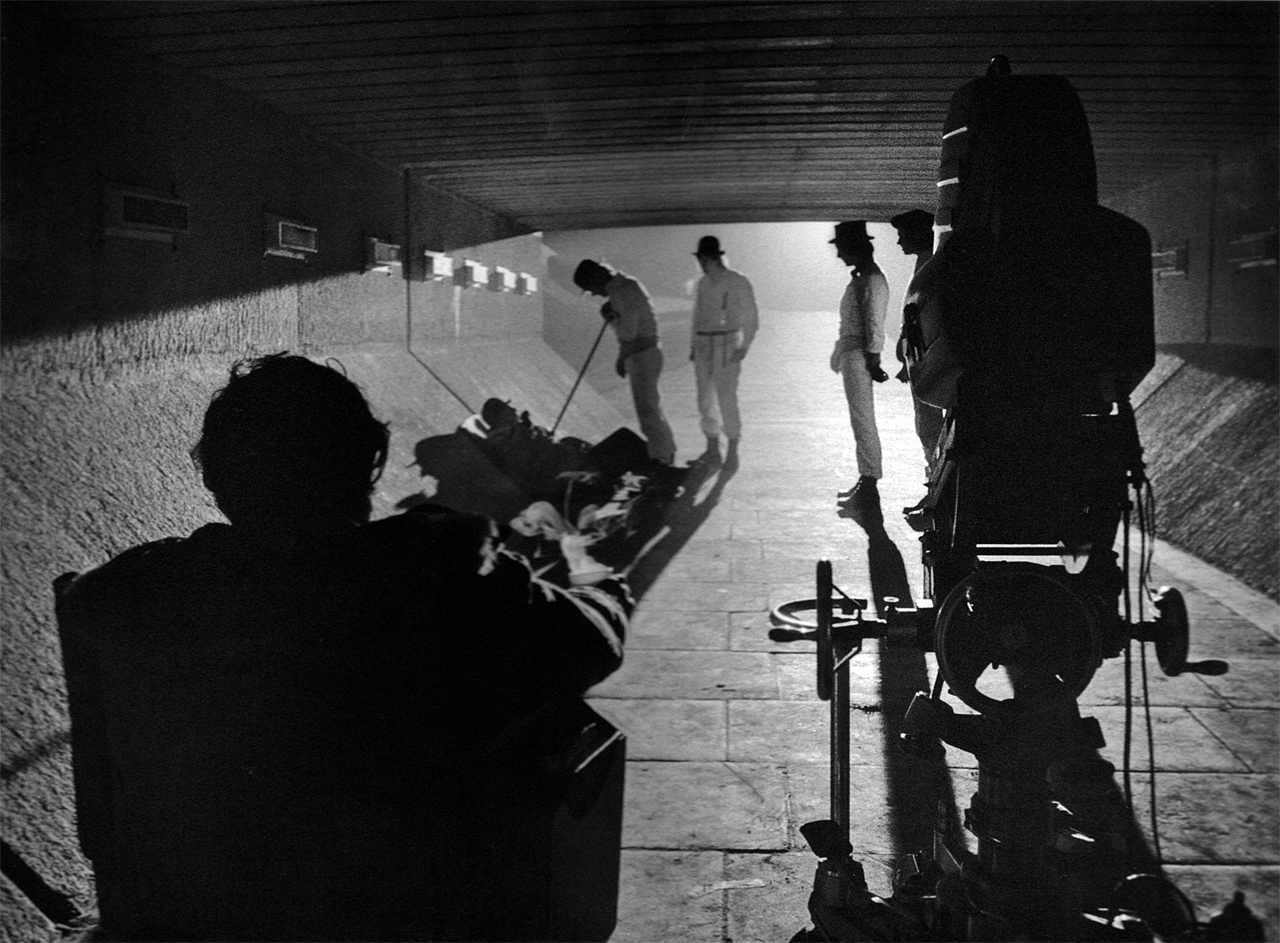
Stanley Kubrick, who was born on this date in 1928, directs a famous scene from A Clockwork Orange, which turns 45 this year:

Homage Supercut of the Day:

Scenes from the Netflix series Stranger Things are shown side by side with the movies they pay homage to, including E.T. the Extra-Terrestrial, in this comprehensive video (via Cinematic Montage Creators):

[embedded content]

Video List of the Day:

Must See Films spotlights the 50 (actually 54) most under-appreciated, forgotten and misunderstood movies of all time:

[embedded content]

Filmmakers in Focus:

Star Wars: Episode VIII director Rian Johnson and Shaun of the Dead director Edgar Wright unite in this amazing filmmaker fan art (via Twitter):

Classic Trailer of the Day:

Today is the 20th anniversary of the release of Kingpin. Watch the original trailer for the Farrelly Brothers comedy below.

[embedded content]

and

Let’s block ads! (Why?)


No Image

Fewer Young People Buying Houses, But Why?

First-time home buyers participating at lower rates in the otherwise booming housing market, and experts offer differing opinions on whether, or when, younger buyers are likely to return.

Robert Carter/Getty Images/Ikon Images

Trevor Burbank is single, 27 years old, and has been house hunting in Nashville for the last year.

“My rent’s going up in August, so I have to figure out what I’m doing,” he says.

The last time Burbank looked for a place was five years ago. He decided to use his down payment to start a business instead.

“There was a house that I really liked that was going for $60,000, and I saw the house being sold in the past few months for just shy of $300,000,” Burbank says.

There’s a big debate in real estate over where home ownership rates are headed, and whether Millennials — people who came of age around 2000 — will get into the housing market the way generations before them did.

The percentage of people younger than age 35 who are homeowners went from 42 percent a decade ago to just a little more than a third now.

Lawrence Yun, chief economist for the National Association of Realtors, says young people are squeezed from both sides. Rents are increasing even faster than home prices.

And, he says, city politicians aren’t making it easy for developers to build condominiums that would be good starter homes.

“We are creating this divide because of the ongoing housing shortage,” Yun says.

There are other factors everyone agrees are making it harder for today’s younger home buyers. They’re delaying marriage, mortgages are harder to get, and people are staying in school longer, taking larger loans.

Which has the biggest effect, though? Is home ownership on a permanent decline because of high costs, changing demographics or new attitudes about home ownership?

“That’s the million-dollar question,” says Jonathan Spader, senior researcher at Harvard’s Joint Center for Housing.

He takes the view that ownership may stay the same, just delayed for the younger generation.

“We really haven’t seen a shift in interest in home ownership among younger households,” Spader says.

In surveys, a huge majority — 90 percent — of those younger than age 30 expect to eventually own, he says, but their earnings took a hit in the recession eight years ago and it’s taking them longer to save up a down payment.

Laurie Goodman, co-director of the Housing Finance Policy Center at the Urban Institute, takes a different view: she thinks the younger generation is simply less interested in home ownership.

“This is a permanent shift,” Goodman says.

She cites a 2014 study by Fannie Mae of “prime” home buyers. It found that among young, college educated, upper-income, white families, home ownership fell 6 percent from 2000.

“And that sort of best captures the subtle change in attitudes towards home ownership, because this is a group for whom there’s no reason not to be homeowners,” Goodman says.

Of course more than 80 percent of them eventually buy, but, she says, “they’re doing it later, and a lower percentage of them are eventually doing it.”

And then there are the views of Ted Gayer, an economist at the Brookings Institution.

“I actually think home ownership rates are likely to increase,” he says.

Gayer says many young adults lived with their parents to weather the post-recession years, but as they age, more will start new households and that trend will increase.

“This Millennial generation is actually a rather large generation,” he says.

At 82 million people, he says, it outranks the Baby Boomers in size. And Gayer expects that means a bigger housing boom is around the corner.

As for Burbank, his startup isn’t generating much salary yet. Qualifying for a mortgage took some finagling.

He’s looking for a fixer-upper, but sellers are driving hard bargains on those, too.

“In some cases, there’s not even photos online,” Burbank says. “So you don’t get a tour, you don’t get photos.”

He’s losing out to investors buying sight unseen.

That’s a bridge too far for Burbank, so for now, he remains on the sidelines.

Let’s block ads! (Why?)


No Image

Insurers May Share Blame For Increased Price Of Some Generic Drugs

When your health insurer reclassifies a prescription drug you take from tier 1 to tier 2, it can sharply increase the portion of the drug's cost that you're expected to pay.

When your health insurer reclassifies a prescription drug you take from tier 1 to tier 2, it can sharply increase the portion of the drug’s cost that you’re expected to pay. Roberto Machado Noa/LightRocket via Getty Images hide caption

toggle caption Roberto Machado Noa/LightRocket via Getty Images

With recent reports that drugmakers have sharply raised the prices of some prescription drugs, a reader has written in to ask why a common generic drug is also suddenly costing him more. Another reader has questions about health plans with high deductibles. Here are those readers’ questions, and what I’ve learned about the answers.

I take levothyroxine, the generic form of Synthroid, to treat a thyroid disorder. This generic has been on the list of drugs that cost $10 for a 90-day supply at my pharmacy for as long as I can remember. Starting in April, the drug was dropped from the list and the price rose 300 percent. The pharmacist tells me all the generic drug manufacturers are raising prices. How is it possible that this drug increased in price so quickly?

Generic drug price hikes have come under close scrutiny lately, as reports continue to surface of significant and seemingly inexplicable increases. Some drugs affected — including your thyroid medicine, as well as the common heart medicine digoxin — are widely used and have had relatively modest prices for years.

What gives? Health care professionals like your pharmacist often blame drug manufacturers, claiming they raise prices simply because they can. There’s no question that happens, says Dan Mendelson, president of the consulting firm Avalere Health. But there are other reasons that generic drug prices may increase as well.

For example, insurers may have simply changed the design of their health plan’s drug benefit, Mendelson says. They may have moved the drug into a higher tier — one that requires consumers to pay a bigger chunk of the cost. Drug prices also sometimes increase because the cost of manufacturing or distributing the drug has increased.

But consumers don’t have to simply pay up. Drug costs often vary widely from pharmacy to pharmacy, so shopping around makes financial sense. In addition, some retailers offer rock-bottom prices on dozens of generic drugs to consumers who pay cash. If you’re ponying up $4 in cash instead of a $30 copay for each refill, the savings can quickly add up.

Do you know of any insurance carriers that are selling high-deductible marketplace plans where once the deductible is met, the plan pays 100 percent of the costs after that? In other words, the deductible and the out-of-pocket maximum would both be the same?

It’s not unusual to find plans that are structured the way you describe, particularly among bronze-level plans, says Linda Blumberg, a senior fellow in the Health Policy Center at the Urban Institute. Blumberg and colleagues analyzed the availability of these plans on the federal marketplace, which runs the insurance exchanges for about two-thirds of U.S. states.

Such a plan might have a deductible of $6,850 for individual coverage, for example, which is also the maximum that someone with an individual plan can be required to spend out of pocket for covered care in 2016.

Some insurers have touted this type of plan for its simplicity, noting that there’s only one number to keep track of. Still, at the bronze level, a health plan that picks up all costs after the deductible is met is likely to have a deductible of several thousand dollars. Bronze plans are the least generous of the four levels of coverage on the exchange.

Still, even in a high-deductible plan, some care is covered before the deductible is met, including preventive services. Under the Affordable Care Act, consumers don’t have to pay out of pocket for preventive care if it has been recommended by the U.S. Preventive Services Task Force. In addition, some insurers offer plans that cover a certain number of primary care visits or generic drugs, for example, that are exempted from the deductible.

If you’re considering a plan whose deductible and out-of-pocket maximum are the same, Blumberg says, carefully check the particulars of what’s covered.

Kaiser Health News is an editorially independent news service that is part of the nonpartisan Henry J. Kaiser Family Foundation. Health care reporter Michelle Andrews’ column appears as part of NPR’s partnership with Kaiser Health News. Andrews is on Twitter: @mandrews110

Let’s block ads! (Why?)


No Image

Ichiro Suzuki Closes In On Baseball's 3,000-Hit Club

Ichiro Suzuki of the Miami Marlins is just four hits shy of 3,000 hits. He’s expected to reach that milestone during Tuesday’s game. The 42-year-old came to U.S. Major League Baseball from Japan in 2001, when he was met with much doubt. Only 30 baseball legends have hit 3,000.

Transcript

ROBERT SIEGEL, HOST:

Miami Marlins outfielder Ichiro Suzuki is on the verge of reaching one of baseball’s great milestones – 3,000 career hits.

(SOUNDBITE OF ARCHIVED RECORDING)

UNIDENTIFIED MAN: Ichiro to right field – he’s got another hit, four away from 3,000.

SIEGEL: He’s 42 years old, and he could hit that mark as early as tonight.

KELLY MCEVERS, HOST:

His fans across the country and around the world have been waiting for this moment. Amy Franz of Seattle took three planes and rented a car to be in Miami this week to see her favorite player.

AMY FRANZ: I started counting his hits in 2004. I watched Ichiro play most of his career in Seattle, and the location of my seats was directly behind him. And I just felt that I really needed to be present for the milestone.

SIEGEL: When Ichiro steps up to the plate tonight, he’ll be greeted with the kind of fanfare he didn’t get when he came to the U.S. in 2001 after nine years in Japan’s professional league.

RICH WALTZ: There was doubt as to whether he could come over and perform at the same level.

SIEGEL: Rich Waltz is the play-by-play announcer for the Miami Marlins on Fox Sports Florida. He says Ichiro turned doubters into believers, starting with his first manager in his very first week of spring training with the Seattle Mariners.

WALTZ: Ichiro spent that week hitting weak balls foul on the third base side. His manager Lou Piniella called him into his office and tried to get it across. Look; you need to pull the ball. You need to hit it with a little more authority.

MCEVERS: Lou Piniella wasn’t sure he got the message, but in the game that day…

WALTZ: Ichiro hit three balls off the wall in right field. As he walked through the dugout on his way to the clubhouse, he looked at Piniella and said, are you happy now?

MCEVERS: The hits keep coming, though Waltz says Ichiro doesn’t exactly look the part and even once described his slender arms as…

WALTZ: Toothpicks – if you walked by Ichiro, you would have no idea that he is one of the greatest players in his time in Major League Baseball. And Ichiro said it, look; if a guy that looks like me and is built like me and has success in this game, I think it’s a signal to other kids in both Japan and the United States that in baseball, you don’t have to be 6-foot-5 and 230 pounds.

SIEGEL: Ichiro Suzuki and the Miami Marlins take the field against the Philadelphia Phillies tonight with baseball history in the balance.

Copyright © 2016 NPR. All rights reserved. Visit our website terms of use and permissions pages at www.npr.org for further information.

NPR transcripts are created on a rush deadline by Verb8tm, Inc., an NPR contractor, and produced using a proprietary transcription process developed with NPR. This text may not be in its final form and may be updated or revised in the future. Accuracy and availability may vary. The authoritative record of NPR’s programming is the audio record.

Let’s block ads! (Why?)


No Image

After His Assassination, A Pakistani Artist's Family Keeps His Song Alive

Pakistani cyclists ride past a wall image of late Sufi musician Amjad Sabri alongside a street in Karachi on June 27, 2016.

Pakistani cyclists ride past a wall image of late Sufi musician Amjad Sabri alongside a street in Karachi on June 27, 2016. Asif Hassan/AFP/Getty Images hide caption

toggle caption Asif Hassan/AFP/Getty Images

It’s been about a month since Amjad Sabri’s voice was silenced. He was shot dead in his home city of Karachi by two men on a motorcycle, and his millions of fans are still in shock and anger.

So are his family. Sabri’s oldest brother, Sarwat, hopes the police will soon arrest the culprits. He has many questions for his brother’s killer: “Why did you do it? Are you doing it for God? For evil? Or for a man? For money? And he has to give the answer to the whole nation — not only the nation, the whole world now, because the whole world is listening.”

Qawwali is what made Amjad Sabri world-famous. It’s devotional music linked with Sufism, a mystical variant of Islam deeply entwined with the traditions of South Asia.

Sabri was a brilliant performer and a pioneer. At his family home in the back streets of Karachi, visitors still flood in every day to pay their condolences. An entire wall is devoted to a portrait of Amjad’s father, also a legendary qawwali singer.

We’re met by Amjad’s brothers, including Talha Fareed, who performed alongside Amjad for many years.

“He was like my father,” Talha says. “I am still in shock. I feel as if he is coming in here. I feel he is just coming.”

Relatives have come from far and wide. “We are proud that we were related to him,” says Mohammad Taha, 15, who flew in from his home in London to mourn his Uncle Amjad. “We are proud to be his family. The thing I don’t get is, who would want to hate him? He loved the world, the world loved him. But there is always a hater. Where there’s friends, there’s always enemies as well.”

Those enemies include the Taliban. For years now, the Taliban and other Islamist fundamentalists have fought a war against music. In Pakistan, they’ve burned down CD shops and attacked musicians. Soon after Sabri was shot, a splinter group of the Pakistani Taliban took responsibility. Sabri’s family aren’t sure that’s true, yet there’s no doubt their form of Sufi Islam, with its emphasis on spreading faith through music, is anathema to hardline Islamists like the Taliban.

His brother Sarwat says their faith is all about tolerance. “Our message is for humanity,” he says. “It is not for one sect. It is not for one religion. It is for the all human.”

Then, as we’re sitting and talking, something strange happens. The Sabri family starts singing. We didn’t ask them to; it was spontaneous. Amjad’s brother, Azmat, starts; his younger brother Talha Fareed joins him for a duet; and then it’s Amjad’s uncle Mehmood’s turn.

There is a message behind this. Amjad’s home is a house of mourning right now, but it will always be a house of music that will not be silenced by violence. The next generation of Sabris also don’t seem scared.

Amjad’s sons and nephews are busy learning qawwali, according to Sarwat. “How many of them are learning to sing? All of them!,” he says. “And all of them are very talented!”

Twelve year-old Bilawal Sabri, singing one of his Uncle Amjad’s songs, is happy to prove that point.

Let’s block ads! (Why?)


No Image

Today in Movie Culture: Matt Damon Recaps the Bourne Franchise, Why All Superheroes Are Villains and More

Here are a bunch of little bites to satisfy your hunger for movie culture:

Franchise Recap of the Day:

Get ready for Jason Bourne with this video of Matt Damon himself recapping the first three Bourne movies in just 90 seconds (via Geek Tyrant):

[embedded content]

Franchise History of the Day:

In honor of the release of Star Trek Beyond, Burger Fiction chronicles the 50-year evolution of Star Trek in movies and TV:

[embedded content]

Cosplay of the Day:

There are many videos highlighting cosplay from Comic-Con, but only Vanity Fair has one where the cosplayers dramatically cover David Bowie’s “Heroes”:

[embedded content]

Fan Theory of the Day:

In a ranting video list for Cracked, Daniel O’Brien argues that every superhero in the movies is actually a bad guy:

[embedded content]

Fan Art of the Day:

With Pokemon Go all the rage, the latest Nicolas Cage meme comes to us from artist Sarah Wainschel. See more at BuzzFeed.

Studio Tribute of the Day:

In a video titled “Fan.tasia,” Lindsay McCutcheon honors Disney’s animated features of the last 38 years with a musical mashup (via One Perfect Shot):

[embedded content]

Mashup of the Day:

This time it’s a character trope being mashed together, as Dylan Nanayakkara shows how Le Samurai, The Driver and Drive fit so well together because of their stoic male antihero (via Cinematic Montage Creators):

[embedded content]

Movie Craftsman of the Day:

The Academy showcases title designer Dan Perri, best known for The Exorcist, Raging Bull and Star Wars, in their latest original video:

[embedded content]

Filmmaker in Focus:

Channel Criswell goes deep into the deconstructionism of Lars von Trier in this video on the filmmaker’s unique philosophy and style:

[embedded content]

Classic Trailer of the Day:

Today is the 30th anniversary of the release of Stephen King’s Maximum Overdrive. Watch the original, King-hosted trailer for the campy horror movie below.

[embedded content]

and

Let’s block ads! (Why?)


No Image

Michael Jordan Speaks Up For Black Lives And Police Officers

Michael Jordan says he is giving $1 million each to an NAACP legal fund and a community policing group to help find solutions to violence against African-Americans and police officers.

Michael Jordan says he is giving $1 million each to an NAACP legal fund and a community policing group to help find solutions to violence against African-Americans and police officers. Charles Rex Arbogast/AP hide caption

toggle caption Charles Rex Arbogast/AP

Michael Jordan is condemning violence against both African-Americans and police. His forceful and emotional statement, released by ESPN’s The Undefeated, is a marked change for the NBA legend.

Jordan has been famously apolitical during his career — first as a Hall of Fame basketball player for the Chicago Bulls and more recently as an owner of the Charlotte Hornets — avoiding public statements on politics and civil rights, when other athletes have spoken out.

“I can no longer stay silent,” Jordan writes. “We need to find solutions that ensure people of color receive fair and equal treatment AND that police officers — who put their lives on the line every day to protect us all — are respected and supported.”

The statement comes after the recent police shootings of two African-American men, Alton Sterling and Philando Castile, and two deadly attacks against police officers in Dallas and Baton Rouge.

“I know this country is better than that,” Jordan writes.

Jordan says he’s making $1 million donations to two organizations, the NAACP Legal Defense Fund and the Institute for Community-Police Relations, which was recently established by the International Association of Chiefs of Police. The aim, Jordan writes, is to help “build trust and respect between communities and law enforcement.”

The donations come during a period of renewed advocacy and statements about social issues by professional athletes and sports leagues.

Current NBA stars LeBron James, Carmelo Anthony, Dwyane Wade and Chris Paul opened the 2016 ESPYs, earlier this month, by asking professional athletes to speak up on issues of social justice and to help unite communities in the U.S.

WNBA players have spoken out, too, wearing solid black shirts during warm-ups, or shirts with the printed words “#BlackLivesMatter” and “#Dallas5,” in reference to the five police officers who were killed in Dallas earlier this month.

Most recently, the NBA announced that it was stripping Charlotte, N.C., of the 2017 NBA All-Star Game because of North Carolina’s House Bill 2 — the so-called bathroom bill — which has been called discriminatory against lesbian, gay, bisexual and transgender people.

In making that announcement, the league stated: “While we recognize that the NBA cannot choose the law in every city, state, and country in which we do business, we do not believe we can successfully host our All-Star festivities in Charlotte in the climate created by HB2.”

Let’s block ads! (Why?)


No Image

The Big Internet Brands Of The '90s — Where Are They Now?

A CompuServe system shows an index of stories by the Columbus Dispatch and Associated Press on July 9, 1980.

Verizon is buying Yahoo for $4.8 billion, acquiring its “core Internet assets” — search, email, finance, news, sports, Tumblr, Flickr — in essence writing the final chapter of one of the longest-running Internet companies.

Last year, Verizon bought another Internet pioneer, AOL (aka America Online) for $4.4 billion — complete with its ad targeting technology and content sites Huffington Post and TechCrunch.

This got us thinking: What happened to all those other big brands that dominated the early Internet experience? Here’s a nerdy remembrance of a few of them. (A TL;DR preview: Yahoo and AOL bought a bunch of them, though many survived far longer than you might think.)

CompuServe

A CompuServe system shows an index of stories by the Columbus Dispatch and Associated Press on July 9, 1980. AP hide caption

toggle caption AP

The original Internet service provider launched for consumers as a dial-up online information service in 1979, and its popularity skyrocketed in the 1980s and 1990s. It was the original portal to the web, with news, chats, file sharing — a first Internet experience for several generations of users.

H&R Block (yep, that tax-prep company) bought Compuserve in 1980 and in 1997 sold it to WorldCom, which in turn passed on the subscriber base to the growing rival AOL. After itself going through a merger and then a spin-off with Time Warner, AOL officially shut down CompuServe in 2009.

But! A relic version still exists here.

Prodigy

A younger competitor to CompuServe, Prodigy was a “home computer information service” launched nationally in 1990 by a partnership of Sears and IBM, distinguishing itself with the addition of graphics and advertising support. The service lost money and users in the early ’90s and went through a reboot in 1993, according to Wired.

Prodigy Classic officially shut down in 1999, citing the “Y2K problem,” and the Atlantic has a great long read on what went wrong. The company re-imagined itself as an Internet provider and got fully acquired by SBC communications, now known as AT&T.

AltaVista

CEO Rod Schrock shows AltaVista's new look in 1999.

CEO Rod Schrock shows AltaVista’s new look in 1999. Paul Sakuma/AP hide caption

toggle caption Paul Sakuma/AP

Launched in 1995 by Digital Equipment Corporation as a demo project, AltaVista — aka a web “super spider” — was essentially an indexing predecessor of Google.

It changed hands a few times: Compaq Computer bought it in 1998 (for $3.3 million), one-time Internet giant CMGI bought it in 1999 (for $2.3 billion), ad company Overture Services bought it in 2003 (for $140 million) and it was acquired by Yahoo later the same year. Yahoo officially shut down AltaVista in 2013.

GeoCities

This was like the original Facebook — or, um, MySpace? You could find a community and build your own neon-colored, spinning-animation, multi-fonted, totally cool personal web page! After its mid-’90s launch, Yahoo bought GeoCities for more than $3.5 billion during the dot-com boom in 1999, ran it as Yahoo! Geocities and eventually shut it down in 2009.

But if you’re nostalgic, you could still Geocities-ize websites, thanks to the Internet.

Ask Jeeves

Jeeves came and went as the friendly online butler, eventually retired by Ask.com.

Jeeves came and went as the friendly online butler, eventually retired by Ask.com. Adam Berry/Bloomberg/Getty Images hide caption

toggle caption Adam Berry/Bloomberg/Getty Images

Remember that web butler Jeeves who answered your web queries in a distant echo of today’s Siri?

Launched in 1996, Jeeves didn’t live up to Google’s search engine ascent: Bought in 2005 by IAC (whose businesses include OkCupid, Tinder, The Daily Beast, CollegeHumor and Vimeo), it went through several relaunches, abandoning the search engine and emerging as Ask.com.

Angelfire

The website host/builder is still around! Launched in 1996, it was bought a year later by another dot-com startup WhoWhere, which in turn was bought in 1998 by Lycos, described by CNN at the time as “the world’s fourth most popular Web site, behind America Online, Yahoo and Microsoft.” Lycos, after trading hands many times, currently belongs to Indian digital media company Ybrant Digital.

Netscape

The original caption of this photo read: “The Netscape Navigator home page on the Internet’s World Wide Web is seen Wednesday, Aug. 9, 1995.” AP hide caption

toggle caption AP

A brainchild of now-legendary Mark Andreessen and Jim Clark of Silicon Graphics, the Netscape browser beat Microsoft to the market in 1994. After intense “browser wars,” detailed by Engadget, Netscape’s release of the source code spurred the creation of Mozilla.

AOL bought Netscape for the dot-com-bubbleprice of $4.2 billion in 1998, though it ended up costing $10 billion. As Firefox gained prominence, AOL made several attempts to revive Netscape’s popularity, but eventually stopped supporting it in 2008.

ICQ

[embedded content]

You’ve got a message!

YouTube

Launched in 1996 by Israeli company Mirabilis, the “I seek you” chat service was an alternative to AIM and Yahoo Messenger (both of which are still around, and the latter is apparently beloved by oil traders).

AOL bought Mirabilis in 1998 for $287 million and sold ICQ in 2010 to Russian investment firm Digital Sky Technologies for $188 million.

Bonus ’90s Brands That Are Still Around

  • eBay (owns Stubhub; previously also owned Skype, Craigslist and PayPal);
  • Match.com (now owned by IAC, along with Tinder and OkCupid);
  • Amazon.com (owns Audible, Zappos);
  • MapQuest (launched as a web service in the 1990s, it was bought by America Online, which is now owned by Verizon);
  • WebMD (formed as a result of a 1999 merger, backed by Microsoft and featuring the co-founder of Netscape).

Let’s block ads! (Why?)