
Articles by admin

No Image

No Dorms For U.S. Basketball Teams; They'll Stay On A Cruise Ship In Rio

The U.S. men's and women's basketball teams will reportedly stay on the Silver Cloud cruise ship rather than the Athletes' Village during the Olympic Games that start in Rio de Janeiro on Friday. The cruise ship is shown here on Monday at Rio's Maua Pier.

The U.S. men’s and women’s basketball teams will reportedly stay on the Silver Cloud cruise ship rather than the Athletes’ Village during the Olympic Games that start in Rio de Janeiro on Friday. The cruise ship is shown here on Monday at Rio’s Maua Pier. Vanderlei Almeida /AFP/Getty Images hide caption

toggle caption Vanderlei Almeida /AFP/Getty Images

In a move that could be interpreted as indulgent or prescient — or both — the U.S. men’s basketball team at the Rio Olympics will stay aboard a luxury cruise ship rather than the spartan facilities at the Athletes’ Village.

It appears the U.S. women will also be living aboard the Silver Cloud, according to media reports.

The men’s basketball team, made up of 12 highly compensated NBA stars, has a tradition of opting for upscale digs ever since professionals were allowed to play in the Olympics in 1992. And the men’s team even stayed on a cruise liner once before, at the 2004 Games in Athens.

Meanwhile, Olympic organizers have been dealing with complaints of incomplete or malfunctioning facilities in the dormitory-style apartments that will house the more than 10,000 athletes at the Games. As Merrit Kennedy reported for The Torch, the Australian team has dealt with several problems, from plumbing and lighting issues to a fire and theft.

#IOCLuxuryLodging. Putting together a shower curtain so we can shower and not flood the place. pic.twitter.com/omaBJ7Dlje

— Andrew Bogut (@andrewbogut) August 2, 2016

NBA player Andrew Bogut, who’s in Rio to play for his native Australia, tweeted a photo of himself “putting together a shower curtain so we can shower and not flood the place.”

U.S. players are not anticipating any such problems.

“USA Basketball teams haven’t stayed in the Olympic Village since the 1988 teams did,” says the federation’s chief media officer, Craig Miller. He adds, “Our teams are extremely active in supporting their U.S. teammates.”

Many players, including LeBron James, a veteran of the past three Olympic teams, but not this one, took part in off-the-court events, attended other competitions and hung out with athletes at the Olympic Village.

The basketball team’s plans have been known since at least February, when The Sporting News cited Brazilian news agency UOL:

“Rio tourism official Nilo Sérgio Felix told UOL two transatlantic liners will be used to host high-profile guests during the games. One will be home to the so-called Olympic family — International Olympic Committee members and insiders — and the other to guests of a ‘multinational company’ and the group many around the world still refer to as the ‘Dream Team.’ “

Miller confirmed that the male basketball players aren’t the only ones who’ll be staying on what’s now been identified as a cruise ship with nearly 200 rooms. He says the ship was retained by food distribution giant Cisco, which sponsors both USA Basketball and the International Olympic Committee.

From the news agency EFE:

“The Silver Cloud, which docked at the city’s port at the weekend, can accommodate up to 400 people in its 196 cabins, some of which have already been allotted to the U.S. men’s and women’s Olympic basketball teams, the general directorate of the Maua port terminal said.”

We contacted USA Basketball’s women’s team to ask about their housing arrangements, but got few details, with a team representative citing security policies about lodging.

The U.S. men have their first game on Saturday, when they’ll face China. The women’s team will play their first game on Sunday, against Senegal.

Let’s block ads! (Why?)


No Image

Latitudes: Hear Great Global Music Right Now

A still from the Brazilian band Cabruêra’s video for their song “Beira Mar” (Seashore). Courtesy of the artists hide caption

toggle caption Courtesy of the artists

With the Olympics beginning soon, we’re all probably about to hear a lot of bossa nova and samba. But let’s head instead to Paraiba, in Brazil’s Northeast, for the band Cabruêra and their wistful song “Beira Mar” (Seashore), in which they layer rock with percussion and accordion that bear a local accent. This animated video, with its trippy concept and supersaturated color scheme, is just dazzling.

And if you’re in New York this coming weekend, you can catch Cabruêra during the Brasil Summerfest — just in time to get you in the mood for Rio 2016.

[embedded content]
Tumi Music YouTube

Sometimes, all you need in the summer is a song that transports you somewhere else — and “Palermo Hollywood” by French singer/songwriter (and actor and record producer) Benjamin Biolay provides just that thing. Hardly a newcomer, Biolay likes to immerse himself in a particular theme or soundscape for each project. For his latest, he takes listeners to Buenos Aires, whose Palermo Hollywood neighborhood provided the name for both his latest album and its title track.

Some of the other songs on “Palermo Hollywood” bend more toward Latin inspiration, including several tunes co-written with Uruguayan/Argentine musician and actress Sofia Wilhelmi. The title song, however, is a melange of ideas and influences, between Biolay’s darkly Serge Gainsbourgian vocals, a gritty bass guitar riff and lush strings.

[embedded content]
Benjamin Biolay VEVO YouTube

The next Sia or Rihanna? That’s how singer Era Istrefi is being pitched to an international audience. With more than 119 million page views as of now on YouTube, her smash “Bonbon” — sung mostly in Albanian — came to the attention of Ultra Music, and the label has been busy having her remake the song in English and German as well. But Istrefi, a Kosovar Albanian, isn’t the only pop star right now who speaks (at least some) Shqip; Rita Ora‘s family left Kosovo when she was a baby.

As with some of Istrefi’s earlier regional hits, like the reggae-soaked “Mani për Money” (Crazy for Money) — which features patois-style lyrics that some may well find startling and even objectionable, especially coming out of Istrefi’s mouth — the dancehall-based “Bonbon” owes a significant debt to Caribbean music.

[embedded content]
Ultra Music YouTube

I’ve had my eyes and ears on the Korean group Jambinai for a few years now. Their mix of traditional Korean instruments and an aesthetic steeped in noise, metal and hardcore is incredibly intense and bracingly new. And their driving, pummeling energy is in plain view on their new album, A Hermitage, and on this song, “They Keep Silence.” It’s post-rock by way of Eunyong Sim’s geomungo (a long zither), Bomi Kim’s haegum (a bowed fiddle) and vocals and guitar by Ilwoo Lee (who also plays a traditional Korean bamboo flute called a piri on the album), rounded out by bass and drums, played respectively by Jihoon Ok and Jae Hyuk Choi.

As Lee recently told Vice, the inspiration for “They Keep Silence” is an expressly angry response to the Sewol ferry disaster in 2014, in which 304 people died. “The people in the government did wrong,” Lee said, “and those who know are keeping silent about it.”

[embedded content]
Jambinai YouTube

Finally, one more pick that features a very sweet moment in a summer when tempers are at a boil. When the Haitian band Lakou Mizik, now touring the U.S., got stuck on a flight out of Chicago that was delayed for nearly six hours, they decided to serenade the other passengers. Not only did their fellow travelers respond to their impromptu gig with cheers, but the Facebook version of their video has been picked up by outlets from Mashable to ABC.

Lakou Mizik has a strong sense of community in any setting. This nine-member group, ranging in age from their 20s to late 60s, came together in the aftermath of the 2010 earthquake that devastated Haiti.

[embedded content]
Lakou Mizik YouTube

Let’s block ads! (Why?)


No Image

Today in Movie Culture: Marvel vs. DC Trailer, Boba Fett vs. Predator and More

Here are a bunch of little bites to satisfy your hunger for movie culture:

Fake Movie of the Day:

Another fan trailer for a Marvel vs. DC movie, this time with the X-Men included, shows how intense it would be:

[embedded content]

Mashup of the Day:

In this 8-bit animation, we see what it would be like for Boba Fett to battle the Predator in video game form:

[embedded content]

Supercut of the Day:

In anticipation of the the Summer Olympics in Rio, Darth Blender compiled a cool montage of athletic competition in the movies:

[embedded content]

Vintage Image of the Day:

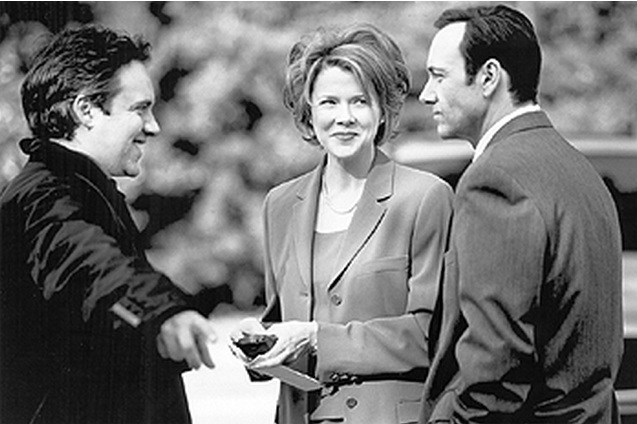
Sam Mendes, who turns 51 today, directs Kevin Spacey and Annette Bening in a scene for his 1999 directorial debut, American Beauty:

Movie Homage of the Day:

Check out an animated flipbook based on Stranger Things that pays homage to its E.T. the Extra-Terrestrial homage-paying (via io9):

[embedded content]

Movie Comparison of the Day:

Speaking of inspiration, this side-by-side clip makes it clear The Shining was influenced by the silent Swedish film The Phantom Carriage:

inspiration? pic.twitter.com/xkO2rAM4Cw

— Rabih Alameddine (@rabihalameddine) July 31, 2016

Video Essay of the Day:

Speaking of Stanley Kubrick, here’s a BFI video essay on how he used new technology for the period piece Barry Lyndon:

[embedded content]

Film History of the Day:

Now You See It highlights the rises and falls of Hollywood for more than 100 years:

[embedded content]

Cosplay of the Day:

The Return of the Jedi-inspired Rancor costume showcased in detail in the New York Magazine video below was a favorite at Comic-Con last month:

[embedded content]

Classic Trailer of the Day:

Today is the 30th anniversary of the release of Howard the Duck. Watch the original trailer for the Marvel Comics adaptation below.

[embedded content]

and

Let’s block ads! (Why?)


No Image

Olympic Victory And Defeat, Frame By Frame

The triumph of victory at the Olympics

The triumph of victory at the Olympics Scott Pakulski/Flickr hide caption

toggle caption Scott Pakulski/Flickr

It may sound trite, but the Olympic Games truly are a chance to witness what unites us all as human beings: Our joy in triumph and our anguish in defeat.

David Matsumoto believes this truism, but on an entirely different level.

Matsumoto is a professor of psychology at San Francisco State University and a former Olympic judo coach. He has analyzed the behavior of Olympic athletes. He spoke recently with Shankar Vedantam about what his research reveals.

Matsumoto and his colleagues used a high-speed camera to analyze the faces of judo players immediately after the medal matches at the 2004 Olympic games in Athens. They examined 84 athletes from 35 different countries. The study found striking similarities in how athletes responded in the first milliseconds following victory (smiling) or defeat (sadness or no expression). The athletes’ responses eventually diverged in culturally specific ways, but not before displaying consistent expressions. Previous research has shown similar results, but Matsumoto says this was the first study set in such a high-stakes, real-world competitive environment.

The findings suggest humans’ immediate reactions to victory and defeat are universal in nature. But Matsumoto couldn’t rule out the possibility that these consistent reactions were all learned by athletes after watching others.

That is, until he turned his lens to the Paralympic Games. In Paralympic judo, the players are all blind.

Matsumoto and his colleagues did a follow-up study examining the faces of blind judo players in the 2004 Paralympic Games, including those who were born blind. The congenitally blind athletes were unable to have learned expressions through sight.

So when their reactions lined up with all the others athletes’, including the sighted athletes from the previous study, Matsumoto had even stronger evidence to suggest that our spontaneous reactions to winning and losing are simply part of our nature, not nurture.

The Hidden Brain Podcast is hosted by Shankar Vedantam and produced by Kara McGuirk-Alison, Jennifer Schmidt, Maggie Penman, and Chris Benderev. To subscribe to our newsletter, click here. You can also follow us on Twitter @hiddenbrain, @karamcguirk, @maggiepenman, @jennyjennyschmi and @cbndrv, and listen for Hidden Brain stories every week on your local public radio station.

Let’s block ads! (Why?)


No Image

FDA-Approved Knock-Offs Of Biotech Drugs Could Safely Save Big Bucks

In 2015, the Sandoz unit of drugmaker Novartis won Food and Drug Administration approval of a drug called Zarxio, which is similar to Amgen's Neupogen, a medicine that boosts the production of white blood cells.

In 2015, the Sandoz unit of drugmaker Novartis won Food and Drug Administration approval of a drug called Zarxio, which is similar to Amgen’s Neupogen, a medicine that boosts the production of white blood cells. Sebastien Bozon/AFP/Getty Images hide caption

toggle caption Sebastien Bozon/AFP/Getty Images

Copycat versions of biotech drugs work just as well as the originals and cost a lot less, according to an analysis of studies of the medicines.

The analysis by researchers at Johns Hopkins Bloomberg School of Public Health finds that so-called biosimilars — medications that are meant to mimic, and compete with, complex and expensive biotech drugs — perform as well as the brand-name versions.

The researchers looked at data from 19 studies of biosimilar drugs that treat rheumatoid arthritis, inflammatory bowel disease and psoriasis, and found that they were comparable to the originals and would cost less. The findings will appear in the Aug. 2 issue of Annals of Internal Medicine.

“Hopefully, this will encourage the brisk adoption of these products,” said Caleb Alexander, the study’s lead researcher, in a release. “There is no question that greater competition in this market will benefit patients, prescribers and society in the long run.”

Biologics include proteins and antibodies that are typically made by living organisms. They’re more difficult to produce than medications made from mixtures of chemicals. It’s also next to impossible to make an exact copy of a biological product, which is why the drugs are often referred to as biosimilars.

There was a provision in the Affordable Care Act meant to encourage development and approval of biosimilars, but progress has been slow. The Food and Drug Administration has approved only two such drugs since the law passed in 2010.

Zarxio, the first biosimilar drug approved in the U.S., is expected to save about $6 billion a year because it costs less than Amgen’s Neupogen, the brand-name product. The medications help boost the immune systems of chemotherapy patients by increasing production of white blood cells.

In April, the FDA approved a second drug that is similar to Johnson & Johnson’s Remicade to treat colitis and Crohn’s disease. That drug, called Inflectra, is one member of the class of biosimilars that the researchers at Johns Hopkins examined. There are several other biosimilar drugs in this class available in Canada, Asia and Europe.

The Johns Hopkins study is important because drugmakers have raised questions about biosimilars since they aren’t identical to the drug they’re supposed to mimic. Many are fighting approval of the drugs, and some argue that they should not be substituted for a brand-name drug without a patient’s consent.

But IMS Health Informatics says there are 50 biosimilars under development. All told, they could save U.S. and European health systems as much at $110 billion over the next five years, the company estimates.

Let’s block ads! (Why?)


No Image

FDA-Approved Knock-Offs Of Biotech Drugs Could Safely Save Big Bucks

In 2015, the Sandoz unit of drugmaker Novartis won Food and Drug Administration approval of a drug called Zarxio, which is similar to Amgen's Neupogen, a medicine that boosts the production of white blood cells.

In 2015, the Sandoz unit of drugmaker Novartis won Food and Drug Administration approval of a drug called Zarxio, which is similar to Amgen’s Neupogen, a medicine that boosts the production of white blood cells. Sebastien Bozon/AFP/Getty Images hide caption

toggle caption Sebastien Bozon/AFP/Getty Images

Copycat versions of biotech drugs work just as well as the originals and cost a lot less, according to an analysis of studies of the medicines.

The analysis by researchers at Johns Hopkins Bloomberg School of Public Health finds that so-called biosimilars — medications that are meant to mimic, and compete with, complex and expensive biotech drugs — perform as well as the brand-name versions.

The researchers looked at data from 19 studies of biosimilar drugs that treat rheumatoid arthritis, inflammatory bowel disease and psoriasis, and found that they were comparable to the originals and would cost less. The findings will appear in the Aug. 2 issue of Annals of Internal Medicine.

“Hopefully, this will encourage the brisk adoption of these products,” said Caleb Alexander, the study’s lead researcher, in a release. “There is no question that greater competition in this market will benefit patients, prescribers and society in the long run.”

Biologics include proteins and antibodies that are typically made by living organisms. They’re more difficult to produce than medications made from mixtures of chemicals. It’s also next to impossible to make an exact copy of a biological product, which is why the drugs are often referred to as biosimilars.

There was a provision in the Affordable Care Act meant to encourage development and approval of biosimilars, but progress has been slow. The Food and Drug Administration has approved only two such drugs since the law passed in 2010.

Zarxio, the first biosimilar drug approved in the U.S., is expected to save about $6 billion a year because it costs less than Amgen’s Neupogen, the brand-name product. The medications help boost the immune systems of chemotherapy patients by increasing production of white blood cells.

In April, the FDA approved a second drug that is similar to Johnson & Johnson’s Remicade to treat colitis and Crohn’s disease. That drug, called Inflectra, is one member of the class of biosimilars that the researchers at Johns Hopkins examined. There are several other biosimilar drugs in this class available in Canada, Asia and Europe.

The Johns Hopkins study is important because drugmakers have raised questions about biosimilars since they aren’t identical to the drug they’re supposed to mimic. Many are fighting approval of the drugs, and some argue that they should not be substituted for a brand-name drug without a patient’s consent.

But IMS Health Informatics says there are 50 biosimilars under development. All told, they could save U.S. and European health systems as much at $110 billion over the next five years, the company estimates.

Let’s block ads! (Why?)


No Image

The Australian Olympic Team Is Having A Rough Week

Australian Olympic team delegation head Kitty Chiller speaks to the media during a press Conference on Thursday in Rio de Janeiro.

Australian Olympic team delegation head Kitty Chiller speaks to the media during a press Conference on Thursday in Rio de Janeiro. Ryan Pierse/Getty Images hide caption

toggle caption Ryan Pierse/Getty Images

The Australian Olympic team has had a difficult week.

First, upon arrival at the Olympic Village, delegation head Kitty Chiller said their allotted building was not “safe or ready” to receive the athletes.

Then, after quick efforts to get the building ready, the athletes moved in — only to have a fire break out two days later. It has now emerged that clothing and at least one laptop were stolen from the team during the fire evacuation.

The fire broke out on Friday evening in the building’s underground parking lot, according to a statement from the team. About 100 athletes and officials evacuated the complex for about 30 minutes while firefighters put the blaze out, and nobody was injured.

“The stairwells and corridors on the first few levels filled with smoke,” Chiller said — but the smoke alarms did not go off. Here’s more:

“The fire alarm had actually been silenced in our building while they were doing maintenance work on the building next door — so the alarms and the sprinklers did not activate. It’s concerning that that the fire system had been turned off and that we hadn’t been aware of that.”

It’s not clear what caused the fire, but authorities have launched an investigation. Chiller suggested that the fire could have started from a contractor’s cigarette.

“What we think has happened, is that a cigarette was thrown in a rubbish bin or on rubbish and that’s what started the fire,” she said, and called for a reminder to be sent to staff that the Village is non-smoking.

The team had previously complained of numerous problems with the building, including electrical issues. “Problems include blocked toilets, leaking pipes, exposed wiring, darkened stairwells where no lighting has been installed and dirty floors in need of a massive clean,” Chiller said in a statement last week.

She addressed the thefts at a press conference Sunday in Rio and described them as ” ‘concerning,’ but added ‘unfortunately theft is going to be inevitable,’ in a compound with 31 buildings and up to 18,000 athletes and staff,” according to The Associated Press.

Let’s block ads! (Why?)


No Image

Oyster Farming Takes Off With Farm-To-Table Movement

Oyster farming on the East Coast has doubled in the past six years and shows no sign of slowing. Not only is this good for consumers and fishermen. Apparently it’s good for our waterways.

Transcript

ELISE HU, HOST:

Oyster farms are rapidly sprouting up along America’s eastern shoreline. Production doubled in just the past six years, driven by the farm-to-table movement. As Delaware Public Media’s James Morrison reports, the comeback of the oyster, which are filter feeders, are also good for our waterways.

JAMES MORRISON, BYLINE: Jimmy Parks is shucking the meat out of a cell-phone-sized oyster shell and preparing to drop it into a deep fryer.

JIMMY PARKS: For my fried oyster platter, I do my – I toss the fries in Old Bay for a little more Maryland flair.

MORRISON: Parks is a longtime chef and owner of The Butcher Station in Winchester, Va. He says the way we eat oysters has changed in the past 10 years.

PARKS: As much food as possibly can go on my plate at the least amount of money I can spend used to be the way things were. And now people are getting away from that, and they’re gravitating more towards I want cleaner sources.

MORRISON: Not only are we demanding clean sources, we’re becoming foodies. A decade ago, you probably would have just ordered oysters. Now, we pay attention to the taste profile, which is sometimes called a merroir of where our oysters come from. Oysters from New England are usually saltier than Chesapeake Bay oysters, which are considered milder and with a buttery finish.

PARKS: Now there’s, I think, over 3,500 different varieties of oysters in the world, but only five species. So it’s all about where they come from. So each area has a unique oyster to their water.

MORRISON: I’m heading out to Tim Devine’s oyster farm in the Chesapeake Bay. He was a photographer in New York before starting Barren Island Oysters in Maryland five years ago.

TIM DEVINE: The cages come up, and then they dump them into here. The upfeed takes them up into our chipping mechanism, which is – they call it a tumbler. It is essentially a rock tumbler that has some holes in it that sorts oysters.

MORRISON: Devine grows a strain of oysters that are immune to diseases that have devastated wild oyster populations, and his operation is sustainable. He’s taking nothing out of the water except the nutrients his oysters have eaten, and he’s putting nothing in but the cages that hold his oysters.

DEVINE: The coolest thing is within our cages we see these little shrimp-like creatures that actually eat the pseudofeces of the oysters. And then things like seahorses and crabs and other things eat those little guys, and then the food chain has begun.

MORRISON: The cages are creating reef-like habitats, and that’s helping small sea creatures survive. But the biggest benefit of these farms could be their ability to filter water.

GULNIHAL OZBAY: Oyster tissue is being blended in the blender. So now they are going to process it.

MORRISON: Gulnihal Ozbay is an oyster researcher at the University of Delaware. She says oysters are filtering phytoplankton and excessive nutrients out of our waterways.

OZBAY: It’s like almost like in the aquarium we have filters, same thing with oysters.

MORRISON: Farmed oysters are raised in clean, monitored waters, so they’re basically making clean water cleaner. Ozbay says what we really need are sacrificial oysters in our most polluted waterways.

OZBAY: These are filter feeders. As they filter, they will accumulate some of the contaminants.

MORRISON: States like Virginia have these programs and are working to expand them. East Coast states are also processing a backlog of applications to lease thousands of acres of sea floor for new oyster farms. For NPR News, I’m James Morrison.

Copyright © 2016 NPR. All rights reserved. Visit our website terms of use and permissions pages at www.npr.org for further information.

NPR transcripts are created on a rush deadline by Verb8tm, Inc., an NPR contractor, and produced using a proprietary transcription process developed with NPR. This text may not be in its final form and may be updated or revised in the future. Accuracy and availability may vary. The authoritative record of NPR’s programming is the audio record.

Let’s block ads! (Why?)


No Image

Volleyball Plus Soccer Makes Footvolley

Footvolley is a sport played like it sounds: A volleyball is kicked around like soccer with no hands. The U.S. and other countries are sending teams to Brazil, but it’s not an Olympic sport yet.

Transcript

MICHEL MARTIN, HOST:

The 2016 Summer Olympic Games begin next Friday, but sports fans might be drawn to a game taking place outside of the Olympics on the beaches of Rio. It is footvolley. And, as the name implies, it’s a combination of volleyball and soccer. It’s catching on in the U.S. And, as NPR’s Greg Allen reports, it will get international exposure during this year’s games in Brazil.

GREG ALLEN, BYLINE: On a beach in Sunny Isles in a town just north of Miami, Benny Astorga is putting members of the USA footvolley team through training drills.

BENNY ASTORGA: Good. Come on. Let’s go. Put it away. Good.

ALLEN: He tosses up a volleyball as the players use their feet then their chest to keep the ball in play, and finally a head shot puts it over the net. It’s basically volleyball played soccer-style. Astorga says that’s how the game got started in Brazil in the mid-1960s. Soccer players were looking for a game to play on the beach.

ASTORGA: It was banned to play football on the sand. They saw some open-court nets, decided, you know, go over there and see who could keep it up the longest and a sport grew out of it, you know?

MELONY POVIONES: People see it, and they’re like – they’re in awe because they’re like, oh, my goodness, I’ve never seen it before.

ALLEN: Melony Poviones is one of the women on the USA footvolley team set to compete in Rio. The U.S. team will be one of 23 countries taking part in a competition that’s not officially part of the Olympics, but instead is billed as a cultural event. Poviones is from South Florida where the Brazilian-born game is gaining popularity. She’s 24 and grew up playing soccer. She discovered footvolley while recovering from a knee injury.

POVIONES: I used to see the guys playing, so I kind just asked one day. I was like, hey, can I join? Because I played soccer my entire life. So they were like yeah, cool, jump in. And I was – I started getting the hang of it, and I started to love it.

ALLEN: Another team member Sergio Menezes was born in Brazil, grew up in the U.S. He was inspired to get serious about the game nearly 20 years ago. One day, he and some Brazilian friends were on the beach when they were challenged to a game of footvolley. He recalls the challenger, a Brazilian in Miami on vacation, beat them badly.

SERGIO MENEZES: So he just got frustrated. He said you guys are terrible. You know, you’re not real Brazilians. So, that kind of stuck. It was me, a couple of friends of mine. We were all Brazilians looking at each other going, man, we got to learn this sport.

ALLEN: Within a few years, Menezes was into footvolley in a big way. He helped found the U.S. Footvolley Association and began holding tournaments. Later, he and others secured a national sponsor and began the Pro-Footvolley Tour. Menezes is a player, but also a footvolley promoter. It’s a fast-paced game, he says, with a lot of fun, excitement and potential for growth of beach volleyball. In footvolley, the money play, the one that gets fans on their feet, is something called the shark attack.

MENEZES: The shark attack is when a player thrusts his body sort of like he’s going towards the net and at the very last second, he slams it with the bottom of his foot. And it’s very hard to defend because it goes straight down. Yeah, that’s our slam dunk.

(SOUNDBITE OF ARCHIVED RECORDING)

UNIDENTIFIED ANNOUNCER: Goes up and…

(APPLAUSE)

ALLEN: That’s a shark attack earlier this year at a pro-footvolley event on Florida’s Hollywood Beach. Menezes helped convince Brazilian footvolley groups to push for an event at this year’s Olympics. The Brazilian Olympic Committee agreed to an international tournament in late August at the beach volleyball arena on Copacabana Beach. It’s not quite an Olympic event, not even an official demonstration sport, but Menezes and other footvolley enthusiasts are thrilled.

MENEZES: What it is it’s when a guy and a girl started going out, and they don’t know what it is. But there’s something there. OK? That’s what it is. I mean, if you’re in Rio and you’re in the Olympic stadium, it’s an amazing sport, and the world’s going to see it. I mean, it’s the first step.

ALLEN: The first step for a fledgling sport that Menezes hopes eventually to see as a medal event at a future Olympics. Greg Allen, NPR News, Miami.

Copyright © 2016 NPR. All rights reserved. Visit our website terms of use and permissions pages at www.npr.org for further information.

NPR transcripts are created on a rush deadline by Verb8tm, Inc., an NPR contractor, and produced using a proprietary transcription process developed with NPR. This text may not be in its final form and may be updated or revised in the future. Accuracy and availability may vary. The authoritative record of NPR’s programming is the audio record.

Let’s block ads! (Why?)


No Image

The Costs Of The Pulse Nightclub Shooting

A makeshift memorial continues to grow outside the Pulse nightclub, the day before the one month anniversary of a mass shooting, Monday, July 11, 2016, in Orlando, Fla.

A makeshift memorial continues to grow outside the Pulse nightclub, the day before the one month anniversary of a mass shooting, Monday, July 11, 2016, in Orlando, Fla. John Raoux/AP hide caption

toggle caption John Raoux/AP

Mario Perez lives in Miami, but he was in Orlando for a housewarming party Saturday, June 11. After the party, the 34-year-old went to Pulse for Latin night.

At 2 a.m., he heard gunshots. Loud. He knew it was real.

“And the minute he started shooting, I got hit from the side, I got grazed by a bullet,” Perez says. “My first instinct was to fall to the floor, that’s what you’re taught to do.”

He heard gunshot after gunshot after gunshot. It was too many to count. But then there was a brief break in the firing, and Perez ran out the back of the club. He hid inside the kitchen of a nearby 7-Eleven until police and paramedics showed up. He was taken to Orlando Regional Medical Center, and was at the emergency room from 3 a.m. until 8 a.m.

The gunshot wound on his side is purple and swollen, and he has nerve damage from the bullet fragment. He cut his elbow from glass on the floor of the nightclub and received six stitches. Perez doesn’t know how much bills coming from specialists, X-rays or other tests may cost him. But his bill from Orlando Regional Medical Center’s emergency department: $20,000.

“$20,000,” Perez said. “That’s the quote, that’s what they told me.”

Perez has no health insurance. He’s working for a temp agency right now and doesn’t have the money to be seen by a doctor for follow-up care in Miami.

So just how much will the Pulse nightclub shooting cost all of the victims? It’s a difficult, if not impossible question to answer right now. At last check, there were 56 people brought to the hospital, including three patients who spent two weeks in the intensive care unit, and one patient is still in the hospital in critical condition.

Embry Howell is a senior fellow at the Urban Institute, a think tank in Washington, D.C. She studied the average cost of a gunshot victim in 2010. Using that benchmark, she estimates the hospital costs from the Pulse shooting will be about $1 million.

“And I would imagine that would be an underestimate,” Howell said.

Howell said many of the victims may be in the same boat as Mario Perez – uninsured.

“They’re young, primarily Latino and living in Florida,” she says, a state that has not expanded Medicaid to its population.

“My guess would be you have a high rate of uninsured,” she concludes.

Ted Miller is a researcher with the Pacific Institute for Research and Evaluation. He has been studying the cost of firearm injuries for more than two decades. He used the 2011 shooting of former Congresswoman Gabby Giffords and 18 others in Arizona to make what he calls a conservative estimate.

That estimate: $4 to $7 million dollars in medical costs and mental health costs for victims and survivors of people who died. That’s the lifetime medical costs for the survivors, the costs of surgery, the cost of rehab. But it doesn’t count the long-term costs for those who are severely injured.

“They said some time ago that there were six people in ICU who would have long time, serious consequences,” Miller said. “And my guess is most of those folks will have traumatic brain injuries that will have continuing lifetime care.”

Miller also makes a broader estimate beyond just the medical costs. That includes the cost of the police response, the cost to employers – and the dollar value of those 49 lost lives.

“I estimate that the total cost of the Orlando shooting is around $385 to $390 million,” Miller says. “To put that in context, on that same day, the cost of other gunshot wounds in the U.S. was probably about $600 million. So about one and a half times the cost of the Orlando incident. That tells you that there are a lot of people killed and injured by firearms every day in this country,” he says. And, he explains, “Suicide deaths account for the largest share of gun violence costs.”

What’s not included in Miller’s $385 million estimate is the cost of mental health counseling for people who were in the club but not physically shot – and friends and family of those there. And then there’s the cost of fear: People being afraid to go out to a dance club, or maybe skipping a visit to the theme parks.

Orlando Regional received 44 of the shooting victims. A hospital spokeswoman says some patients have insurance coverage, some don’t. The hospital is going to look for payment sources from the community or the state, such as victim funds that are raising money across the country. But she says the hospital expects unreimbursed costs of more than $5 million.

Pulse shooting victim Mario Perez is calculating his personal costs. He’s worried he’s going to lose his job. He’s anxious knowing millions of dollars have been raised to help victims, but his bills are arriving now. He started his own GoFundMe campaign but it’s only raised about $600.

“As long as it gets covered, I’m going to be fine,” Perez said. “If they don’t cover it, I’m stuck in a hole. I don’t know what I’m going to be able to do if they don’t assist me.”

This story is part of a reporting partnership with NPR, Health News Florida and Kaiser Health News.

Let’s block ads! (Why?)