Articles by admin

No Image

California Surfers Divided Over Sport's Inclusion In Olympics

Surfing will be coming to the Olympics in 2020. The International Olympic Committee approved the sport for the upcoming Tokyo Games. Surfers in Southern California had a variety of reactions to the news, from “gnarly” to saying the Olympics were “50 years late.”

Transcript

KELLY MCEVERS, HOST:

The Olympics start tomorrow in Rio de Janeiro. But the world is already planning for the next Summer Games, Tokyo 2020. And the International Olympic Committee just announced that Tokyo will feature five new sports, including for the first time ever, surfing.

AUDIE CORNISH, HOST:

We caught up with a few surfers in Los Angeles to see what they thought.

DAVID HIRSCH: Wow, that’s gnarly.

MCEVERS: That’s 24-year-old David Hirsch. He was decked out in his wet suit waxing his board. And he was about to head down to the ocean when we broke the news.

HIRSCH: Like, I’m not, like, waving, like, a surf flag, but it would just be cool for people to be able to see something new, some different sport that they weren’t exposed to before or something.

CORNISH: Gaby Herbst was packing up her board and strapping it to the top of her car. She’s a high school teacher. And she has time to surf while on summer break.

MCEVERS: And even though you might not think of Japan when you think of surfing, she says it’s a good choice.

GABY HERBST: I think it’s a fun place for it to start because internationally, I wouldn’t say that it’s the biggest scene. But they do have really good waves out there.

CORNISH: She is a little skeptical that the biggest names in surfing will come out to the Olympics, though, since it’s around the same time of professional surfing competitions.

HERBST: Like, I don’t know who’s going to give up, you know, all those points for missing out on a comp and all that money to go compete in the Olympics.

MCEVERS: Then there’s Matt Muzio. He grew up in Hawaii and started surfing at the age of 12, about 40 years ago.

CORNISH: And he’s basically over it.

MATT MUZIO: They’re about 50 years late.

MCEVERS: Fifty years late and for all the wrong reasons.

MUZIO: I think the whole thing’s a joke. It has nothing to do with surfing. It has everything to do with money. Surfing’s a soul sport. It’s about going out in the morning and surfing. What are the Olympics going to do for surfing?

CORNISH: Lauren Bos was coming out of the water when we spoke to her. She and her friends have been talking about the Olympics news since yesterday.

LAUREN BOS: Yeah, it was, like, all my girlfriends that we all surf, and our group text is called wave babes. They’re all still in the water, actually, yeah (laughter).

MCEVERS: She just started surfing two years ago, and she’s hooked.

BOS: I mean, it sounds very hippy, but, like, I caught the stoke. I know that sounds really silly, but, I mean, it really is, like, once you start, you can’t stop. And it’s all you think about. And you watch videos and you watch other surfers. And you start recognizing all the big names and follow their Instagram accounts and just start recognizing good style when you see it.

CORNISH: She’s excited to see some of the big names compete. But one downside, all the Olympic attention might bring more people to her favorite surf spots.

Copyright © 2016 NPR. All rights reserved. Visit our website terms of use and permissions pages at www.npr.org for further information.

NPR transcripts are created on a rush deadline by Verb8tm, Inc., an NPR contractor, and produced using a proprietary transcription process developed with NPR. This text may not be in its final form and may be updated or revised in the future. Accuracy and availability may vary. The authoritative record of NPR’s programming is the audio record.

Let’s block ads! (Why?)


No Image

Massachusetts Joins State-Led Efforts On Equal Pay For Women

Massachusetts Gov. Charlie Baker signs a pay equity act into law at the Massachusetts State House on Monday in Boston.

Massachusetts Gov. Charlie Baker signs a pay equity act into law at the Massachusetts State House on Monday in Boston. Elise Amendola/AP hide caption

toggle caption Elise Amendola/AP

Employers in Massachusetts will be barred from forcing prospective employees to divulge how much they were making at their last job. The change, effective in 2018, is part of a sweeping new equal pay measure Republican Gov. Charlie Baker signed into law on Aug. 1.

The law’s goal is to prevent women from being stuck in a cycle of low salaries.

“What happens to people over time is if, in that first negotiation — or those first few jobs out of high school or college — you are underpaid, then you really get a snowball effect,” says Victoria Budson, who directs the Women and Public Policy Program at Harvard University’s Kennedy School of Government and who advocated for the new law.

“If each subsequent salary is really benchmarked to that, then what can happen is that type of usually implicit and occasionally explicit discrimination really then follows that person throughout their career,” she says.

Democratic state senator Pat Jehlen was the chief sponsor of the legislation. She says divulging a low salary may prevent someone from even getting the job in the first place.

“We heard about a woman who had had a phone interview for a job, did very well, and didn’t hang up at the end of the conference call,” Jehlen says. The woman “heard the other people saying: ‘She looked like an ideal candidate until we heard what she’s making now. She must not be as good as she looks,’ and they didn’t hire her.”

The law also protects employees from retribution if they talk openly about how much they’re paid. It’s already been illegal under federal law for more than 80 years for employers to impose “pay secrecy.” But according to the Institute for Women’s Policy Research, about half of employees say talking about salary with coworkers “is either discouraged or prohibited and/or could lead to punishment.”

Advocates say that if employees talk with their coworkers about how much they’re paid, it’s easier to find out when there are discrepancies.

One business group opposed the new law: the Massachusetts High Technology Council. It objected to the presumption that any pay differential is the result of discrimination. The group declined to comment for this story.

But other business groups supported the law, based on a provision that could help companies.

For the first time in the U.S., companies will have new ways to defend against claims of wage discrimination. Under the new law, companies can defend themselves against lawsuits by showing they have taken a look at pay practices and taken steps to remedy disparities.

To Jehlen, that’s the most powerful part of the new law.

“I think most discrimination is not intentional,” the state senator says. “I think people are unaware of bias or of the causes of bias. And so if they perform a genuine self-assessment looking across the board at what different people are paid, and seeing if there [are] unintentional differentials, they can use that if somebody tries to bring a suit against them.”

Massachusetts is one of the pioneers in mandating equal pay, passing its first such law in 1945.

Now, it’s part of a national trend, says Vicki Shabo of the National Partnership for Women and Families.

“It’s actually the latest in a run of some pretty strong pay-equity laws that have passed over the last year or so in California, in New York, recently in Maryland,” she says.

At a time when Congress has been unable to pass an equal pay bill, states are taking the lead.

Let’s block ads! (Why?)


No Image

Medical Studies Involving Children Often Go Unpublished

Even when results from studies involving children are available, they frequently aren't published in medical journals.

Even when results from studies involving children are available, they frequently aren’t published in medical journals. Cultura RM Exclusive/Getty Images hide caption

toggle caption Cultura RM Exclusive/Getty Images

Many medical studies involving children never end up being put to use because scientists frequently don’t publish the results of their work, according to an analysis published online Thursday.

The findings raise both scientific and ethical issues regarding research on this vulnerable population.

Previous studies have documented that about a third of all clinical trials conducted in the United States end up as largely wasted effort, because the scientists doing that work don’t take the effort to publish and share their results with the scientific community.

Pediatricians Florence Bourgeois and Natalie Pica at Harvard Medical School and Boston Children’s Hospital wondered whether researchers focusing on children took this obligation to publish more seriously. As they report in the journal Pediatrics, the experience with childhood research is just about as bad.

The report, reviewing clinical trials started in 2008-10, finds that 19 percent of the studies that recruited children didn’t run to completion. That was often because researchers weren’t able to recruit as many volunteers as they needed to run the experiments. And of the 455 trials that were completed, the results from 30 percent weren’t published.

“That means all the participants who are enrolled in these studies aren’t able to contribute in a meaningful way to our clinical information and knowledge,” Bourgeois said. One reason may be that scientists didn’t get the results they were hoping for. It’s less rewarding to publish results that report a failed trial, but Bourgeois says it’s just as important for science to do so.

“The harm is we end up with scientific literature that only shows all the things that do work,” she said. “It may falsely appear that certain interventions do work. So our literature may become biased and may not be representative of the true efficacy or safety of an intervention.”

One result of that is that other scientists may try to run the same failed experiment, and end up down the same blind alley as scientists who had tried it before. “That leads to a lot of inefficiency and waste,” she said.

Parents volunteer their children for these studies with an understanding that their efforts are contributing to the advancement of medical science.

Vincent del Gaizo, the parent of a child with a hard-to-treat form of juvenile arthritis, is passionate about that commitment. He’s taken a very active role in managing his son’s disease. When his son was about 9, he suffered from a flare-up so acute that he couldn’t bend his right elbow at all. Del Gaizo learned of a clinical trial of an experimental drug near his home, in Hackensack, N.J., and decided to take the risk that the drug would help.

Del Gaizo paid close attention to how the drug affected his son. But he also cared about how the work benefited the community more broadly. “It is hugely important to me as a patient-family,” for scientists to publish their results and explain them clearly, he said. It’s important “not only for the patient-families but also for the clinicians,” del Gaizo said. Doctors need to know what works — and what doesn’t work — to guide their treatment of children who aren’t participating in studies.

The results of the clinical trial his son participated in were eventually published: The drug worked better than an injection of plain salt water but hasn’t ended up on the market to treat this condition. But del Gaizo says he talks to many other families, as a patient advocate, and finds they frequently don’t learn the results of the experiments involving their children. “Just having information available to you … would make it so patient-families like us can sleep at night with the decisions we have to make on a daily basis.”

The shortcomings of pediatric research come as no surprise to Dr. Joseph Ross at the Yale School of Public Health. He arrived at similar results when he analyzed clinical trials that include adults. Scientists have many explanations for why they don’t publish their results. “Maybe the results don’t show what the investigator wants and they move on,” Ross said. “But more often people are busy and people don’t focus enough time and attention on getting those results out.”

Ross considers this an ethical lapse. “When you do a clinical study and you’re asking patients to participate and subject themselves to a risk, in order to inform science and generate knowledge, you have an ethical obligation to disseminate those results to the wider scientific community,” he said.

Let’s block ads! (Why?)


No Image

Watch Imarhan Perform Live In The Studio

August 4, 20161:00 PM ET

Imarhan is a crew of young musicians from Tamanrasset in southern Algeria. The band has a direct family relationship with Tuareg rock trailblazers Tinariwen: Not only is one of Tinariwen’s members, Eyadou Ag Leche, a cousin of Imarhan’s frontman, but he also has production and co-writing credits on the younger band’s new album.

Imarhan integrates the hypnotic riffs and relentless percussion of traditional Tuareg music with modern elements to create something fresh, as you can hear on “Tarha Tadagh.”

Set List
  • “Tarha Tadagh”

Photo: Brian Lowe/KCRW

Let’s block ads! (Why?)


No Image

Today in Movie Culture: 'Aquaman v Superman, ' Edgar Wright's 'The Dark Knight' and More

Here are a bunch of little bites to satisfy your hunger for movie culture:

Alternate Dimension Movie of the Day:

Here’s what the Dark Knight movies would look like as directed by Edgar Wright, specifically in the style of Scott Pilgrim vs. the World (via Edgar Wright):

[embedded content]

Alternate Timeline Movie of the Day:

Here’s what the VHS box might have looked like if What We Do in the Shadows had come out in the 1980s. See more of Steelberg’s VHS covers, including a new one for Stranger Things, on his Instagram page.

Film History of the Day:

Wired chronicles the history and box office successes of DC and Marvel movies over four decades using stop-motion animation:

[embedded content]

Alternate Movie of the Day:

What if a different DC superhero went after the Man of Steel instead of Batman? How It Should Have Ended presents Aquaman v Superman:

[embedded content]

Fake Movie of the Day:

We’ve had so many movies about manic pixie dream girls that it’s time for Sarcastic Nightmare Downer Girl:

[embedded content]

Reworked Movie of the Day:

CineFix reimagines Meet the Parents as a thriller with Ben Stiller as a villain in this recut trailer:

[embedded content]

Vintage Image of the Day:

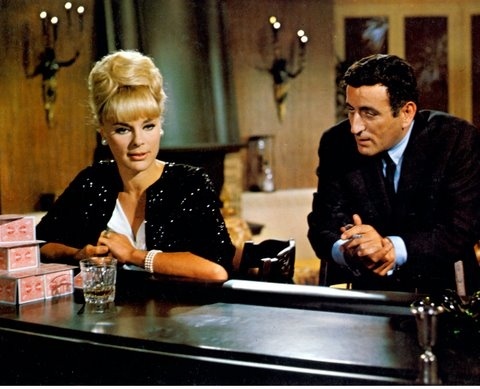
Tony Bennett, who turns 90 today, with Elke Sommer in the only movie he ever acted in, 1966’s The Oscar:

Supercut of the Day:

With a new Harry Potter book out in stores, here’s a new supercut of all the spells from the movies in alphabetical order (via Geekologie):

[embedded content]

Actor in the Spotlight:

For Fandor Keyframe, Kevin B. Lee looks at Margot Robbie’s evolution as an actress from sex symbol to superstar:

[embedded content]

Classic Trailer of the Day:

Today is the 15th anniversary of the release of The Princess Diaries. Watch the original trailer for movie, directed by the late Garry Marshall, below.

[embedded content]

and

Let’s block ads! (Why?)


No Image

U.S. Women's Soccer Team Opens Olympics With A Win Over New Zealand

Kelley O'Hara (top) joins her American teammates in celebrating a second-half goal by Alex Morgan in the U.S. women's soccer team's Group G first-round win over New Zealand in Belo Horizonte, Brazil, Wednesday.

Kelley O’Hara (top) joins her American teammates in celebrating a second-half goal by Alex Morgan in the U.S. women’s soccer team’s Group G first-round win over New Zealand in Belo Horizonte, Brazil, Wednesday. Pedro Vilela/Getty Images hide caption

toggle caption Pedro Vilela/Getty Images

Carli Lloyd scored her 89th international goal and the U.S. women held off New Zealand Wednesday, winning a physical game 2-0 to kick off the Americans’ bid to win a fourth consecutive gold medal at the Summer Olympics in Rio.

The versatile Tobin Heath assisted on Lloyd’s goal, sending a perfect crossing pass that Lloyd headed past New Zealand goalkeeper early in the first half.

U.S. forward Alex Morgan, who had been frustrated in her attempts to score in the first half, turned things around in the second, using a crisp pass from Morgan Brian to send a left-footed shot speeding past New Zealand goalkeeper Erin Nayler and into the near corner of the net to make it 2-0 in the 46th minute.

The Americans controlled the ball throughout, with a 63 percent to 37 percent edge in possession. New Zealand was given three yellow cards in the game.

For Morgan, 27, the goal was her 68th in international competition. It came after a sequence of crisp passes between the Americans that set up Morgan’s strike.

If the U.S. team felt any jitters in this game, they could be excused: While New Zealand’s “Football Ferns” — ranked 17th in the world — are not to be overlooked, the American squad is playing under pressure, chasing their fifth gold in the past six Olympics and vying to become the first team, male or female, to win the World Cup and Olympic gold back-to-back.

And as the U.S. Olympic team noted on Twitter, today’s game was played on the anniversary of the Americans’ victory over China in the 1996 Summer Olympics in Atlanta.

20 years ago TODAY, @ussoccer_wnt defeated China for its first Olympic?!

? to kick off #Rio2016 with USA vs. NZL!https://t.co/KYg0ucdlCo

— U.S. Olympic Team (@TeamUSA) August 3, 2016

As NPR’s Russell Lewis has reported, this U.S. team is similar to the one that roared to a World Cup title last year:

“A few players have retired and been replaced by stars of the future: Crystal Dunn and Mallory Pugh. Both have had stellar play in the lead-up to the games.”

“Soccer is the only Olympic sport not to be contested solely in Rio. The games will be played in stadiums across the country built or renovated when Brazil hosted the World Cup in 2014.”

Wednesday’s game was played in Belo Horizonte, where spectators in the sparsely populated stadium erupted in whistles and jeers whenever U.S. goalkeeper Hope Solo touched the ball — seemingly a response to Solo’s now-famous tweet about the Zika virus that showed her wearing a mask and wielding bug spray.

The Americans will now turn their attention to France – ranked third in the world – before playing Colombia.

Host team Brazil also won its first game of these Olympics, scoring three goals against a defense-minded – but clearly overmatched – team from China.

The women’s soccer final will be played in Rio at the legendary Maracana Stadium on Aug.19.

Let’s block ads! (Why?)


No Image

Is There A Double Standard When Women CEOs In Tech Stumble?

Elizabeth Holmes, founder and CEO of Theranos, speaks at the Clinton Global Initiative's closing session Sept. 29, 2015, in New York City.

Elizabeth Holmes, founder and CEO of Theranos, speaks at the Clinton Global Initiative’s closing session Sept. 29, 2015, in New York City. Andrew Burton/Getty Images hide caption

toggle caption Andrew Burton/Getty Images

Two of the highest profile women in tech have had a tough year. Marissa Mayer, the CEO of Yahoo, saw her company sold to Verizon. Elizabeth Holmes, the founder of the experimental blood testing company Theranos, was banned from her own labs by regulators for two years.

Though men founders and CEOs fail all the time, it may have different implications when women mess up, says Marianne Cooper, a sociologist at the Clayman Institute for Gender Research at Stanford University.

“There are so many other male leaders that … failure doesn’t really create expectations about other men’s leadership capacities or capabilities,” she says.

When former Enron CEO Kenneth Lay was indicted for securities fraud or Angelo Mozilo, the former chairman of Countrywide Financial, was associated with bringing on the housing crisis nobody suggested it was because they were men.

Because there are so few women CEOs, especially in tech, Cooper says when a Marissa Mayer or Elizabeth Holmes fails it can feed stereotypes. “It not only can damage her career just individually for herself,” says Cooper, “but it can actually serve to reconfirm broader cultural beliefs that are out there that women aren’t quite the right fit for senior leadership or certain kinds of senior leadership positions.”

Cooper says there are studies that show that when women and men go to funders with the same idea, women are less likely to get backing.

Yahoo President and CEO Marissa Mayer delivers a keynote during the Yahoo Mobile Developers Conference on Feb. 18, in San Francisco.

Yahoo President and CEO Marissa Mayer delivers a keynote during the Yahoo Mobile Developers Conference on Feb. 18, in San Francisco. Stephen Lam/Getty Images hide caption

toggle caption Stephen Lam/Getty Images

And with the timing of failures by Mayer and Holmes so close, some people do lump them together despite their very different career trajectories. If you read the comments below articles online, both women are the targets of stinging sexism.

A recent post on NPR’s site said of Mayer’s failure — “simply evidence that women cannot lead.” A post on news comment site Reddit — called both women part of the “the feminist industrial complex” that promotes unqualified women.

Despite other successful CEOs in tech, as young, attractive, rising stars Mayer and Holmes became media darlings. Holmes was fashioned as a great female visionary of the tech world. Last year, Time magazine put her on the list of its 100 most influential people. Holmes’ penchant for wearing black turtlenecks evoked comparisons to Steve Jobs, who also wore them.

Mayer became a symbol of a woman CEO who could juggle her job and giving birth to twins. She appeared on television shows talking about the experience.

Many women executives in the tech world still prefer to see Mayer as a role model.

“I think certainly Marissa going in as a CEO who was having a child has shown that you can do both of those things at once. And just having a woman be in that role is normalizing for the rest of us,” says Natala Menezes, who has been an executive at Amazon, Microsoft and Google and is currently a general manager at the marketing and analytics firm Localytics.

Minnie Ingersoll, the chief operating officer and co-founder of Shift, a startup that helps people sell used cars online, likes to see women shoot for the stars. “One message for young women is that it’s OK to take a big risk and to fail,” she says. “I think there’s something actually for me personally that I find almost inspiring in someone who is willing to take that risk.”

But she doesn’t think Mayer and Holmes have much in common. “Marissa and Elizabeth are both blond women. But other than that, I see what is going on in their careers very differently,” Ingersoll says.

Though being young and blond may have something to do with the media’s fascination with these women, there are others succeeding as leaders in tech. Ursula Burns runs Xerox. Meg Whitman now runs HP enterprise — and as the former CEO of eBay she helped turn the company into a giant of online commerce. Ginni Rometty is CEO of IBM.

Menezes and Ingersoll hope that their successes will make it easier for women to succeed and dream so big that they can afford to fail as often as men do.

Let’s block ads! (Why?)


No Image

Medicaid Safety Net Stretched To Pay For Seniors' Long-Term Care

Mel Nickerson moved his wife, Donna, to the Turlock Rehabilitation and Nursing Center in April. She has Alzheimer's disease, and he realized he could no longer care for her safely at home.

Mel Nickerson moved his wife, Donna, to the Turlock Rehabilitation and Nursing Center in April. She has Alzheimer’s disease, and he realized he could no longer care for her safely at home. Courtesy of the Nickerson family/Kaiser Health News hide caption

toggle caption Courtesy of the Nickerson family/Kaiser Health News

Donna Nickerson spent her last working years as the activity and social services director at a Turlock, Calif., nursing home.

But when she developed Alzheimer’s disease and needed that kind of care herself, she and her husband couldn’t afford it: A bed at a nearby home cost several thousand dollars a month.

“I’m not a wealthy man,” said Nickerson’s husband Mel, a retired California State University-Stanislaus professor. “There’s no way I could pay for that.”

About half of all people turning 65 today will need daily help as they age, either at home or in nursing homes. Such long-term care will cost an average of $91,100 for men and double that for women, because they live longer.

In California and across the U.S., many residents can’t afford that, so they turn to Medicaid, the nation’s public health insurance program for low-income people. As a result, Medicaid has become the safety net for millions of people who find themselves unable to pay for nursing home beds or in-home caregivers. This includes middle-class Americans, who often must spend down or transfer their assets to qualify for Medicaid coverage.

Medicaid, known as Medi-Cal in California, was never intended to cover long-term care for everyone. Now it pays for nearly 40 percent of the nation’s long-term care expenses, and the share is growing. As baby boomers age, federal Medicaid spending on long-term care is expected to rise significantly — by nearly 50 percent by 2026.

The pressure will only intensify as people age, so both state and federal officials are scrambling to control spending.

State Medicaid directors are closely watching as long-term care spending takes up larger shares of their budgets and squeezes out other programs, said Matt Salo, executive director of the National Association of Medicaid Directors.

“There isn’t a day that goes by they are not thinking about long-term care,” Salo said. “It makes up a huge portion of the entire budget and it’s growing … It is absolutely not sustainable.”

In the meantime, people who need long-term care are depleting their savings or transferring their assets to others so they can qualify for Medicaid. Long-term care insurance rates are rising, and many seniors find they can no longer afford policies they purchased long ago.

In California, seniors typically can qualify for Medi-Cal if their yearly incomes are under $16,395. To get long-term care through Medi-Cal, they also must show a need for assistance with certain “activities of daily living,” such as dressing or bathing. Incomes can be higher if seniors can demonstrate medical need and have spent much of their savings, with some exemptions for homes and other assets.

About 21 percent of the state’s over-65 population is enrolled in Medi-Cal, according to the state Department of Health Care Services. Medi-Cal paid for long-term care for an estimated 716,000 people who are aged, blind or disabled in 2013, the most recent data available. In 2014, nearly a quarter of Medi-Cal’s dollars went to pay for long-term care — about $14.7 billion, according to the California Health Care Foundation.

Herb Schwartz, a former computer program analyst, and his wife rely on Medi-Cal to pay for their care at the Los Angeles Jewish Home in Reseda, Calif. They moved there after he suffered a fall.

Herb Schwartz, a former computer program analyst, and his wife rely on Medi-Cal to pay for their care at the Los Angeles Jewish Home in Reseda, Calif. They moved there after he suffered a fall. Heidi de Marco/Kaiser Health News hide caption

toggle caption Heidi de Marco/Kaiser Health News

When Nickerson, 85, realized a nursing home bed was too expensive, he sought guidance from an attorney, who helped him take his wife’s name off their home and take their assets out of her name. Then Nickerson applied for her to receive Medi-Cal, and he helped her move into a Turlock nursing home near the one where she once worked.

Now, Nickerson said he pays about $1,700 a month from her Social Security, and Medi-Cal picks up the rest of the tab, he said. Nickerson said his wife, now 84, is getting the care she needs, and he can’t imagine having her anywhere else.

“It is absolutely the best place for her,” he said. “She needs help 24 hours a day.”

If more middle-class Californians like the Nickersons seek help from Medi-Cal, however, the program could be overwhelmed and unable to help the people who need it most, said Joanne Handy, CEO of LeadingAge California, an advocacy group that represents nonprofit nursing homes.

“The pressure on the state Medicaid budget, not only here in California but across the country, is just going up, up, up,” she said. “If you put on top of that more and more what we call middle-income Californians spending down and then going onto Medi-Cal, it is just a crazy policy.”

Salo, of the National Association of Medicaid Directors, said people shouldn’t have to impoverish themselves to get financial help paying for long-term care, but states cannot afford to cover the care for everyone who needs it and are trying to come up with ways to control spending.

More than a dozen states, including California, are contracting with managed care companies to provide both medical care and long-term care services to their Medicaid beneficiaries. These services can range from nursing home care to at-home assistance with bathing, chores and transportation to medical appointments.

States are hoping that contracting with managed care plans will help save money, improve care and better coordinate services for seniors. But some health advocates say that managed care organizations — traditionally geared towards providing only medical care — aren’t necessarily prepared to offer other forms of care such as bathing or cooking and could end up restricting services or providers to save money.

California recoups some of what it spends on nursing homes and other services by collecting what it is owed from people’s estates.

“We can’t do both — serve as a payer of last resort and let people keep their assets,” said Jennifer Kent, head of the state’s Department of Health Care Services.

The state has been holding informational hearings in Sacramento this year to brainstorm about other ways to grapple with long-term care costs in California. “It all falls to Medicaid, and that is problematic,” said state Sen. Carol Liu (D-La Cañada Flintridge).

Several organizations, including the SCAN Foundation, the Urban Institute and the Bipartisan Policy Center, also have been working together to come up with possible solutions. These could include new insurance options that would take some burden off Medicaid.

About 1.4 million people are in nursing homes nationwide, and about 62 percent of those beds are paid for by Medicaid.

The percentage is even higher at the Los Angeles Jewish Home in the San Fernando Valley, where about 85 percent of the beds are paid for with Medi-Cal dollars. Some of the residents “exhaust every penny they have” to be able to afford the care, said CEO Molly Forrest.

Sitting in a courtyard at the nursing home, Josephine Rudolph, 99, said she gets help with dressing and bathing. Rudolph, who still loves to read, said Medi-Cal has paid for her to live at the home since 2005. Otherwise, she said, she couldn’t afford it.

Josephine Rudolph, 99, says she couldn't afford to live at the Joyce Eisenberg Keefer Medical Center Skilled Nursing Facility in Reseda, Calif., without Medi-Cal assistance.

Josephine Rudolph, 99, says she couldn’t afford to live at the Joyce Eisenberg Keefer Medical Center Skilled Nursing Facility in Reseda, Calif., without Medi-Cal assistance. Heidi de Marco/Kaiser Health News hide caption

toggle caption Heidi de Marco/Kaiser Health News

Herb and Judie Schwartz, both in their 80s, also rely on Medi-Cal to live at the Jewish Home. Family photographs cover their walls. An oxygen tank and a walker sits in a corner. Just above the bed is an emergency tab that notifies the nurse’s station if the couple needs help.

They moved to the Jewish Home about four years ago after Herb Schwartz, a former computer program analyst, had a fall and it was no longer safe for the couple to live at home.

“I don’t know where we would have been without Medi-Cal,” said Judie Schwartz, a retired teacher. “We would have probably ended up with one of our kids. I love them but I can’t imagine having to live with them.”

This story was produced by Kaiser Health News, which publishes California Healthline, a service of the California Health Care Foundation.

Blue Shield of California Foundation helps fund KHN coverage in California, and The SCAN Foundation supports KHN’s coverage of aging and long-term care issues.

Let’s block ads! (Why?)


No Image

Today in Movie Culture: Honest 'Watchmen' Trailer, How Pixar Makes You Cry and More

Here are a bunch of little bites to satisfy your hunger for movie culture:

Movie Takedown of the Day:

In anticipation of the relesae of Suicide Squad, Honest Trailers watches Watchmen and pulverizes it:

[embedded content]

Fan Theory of the Day:

Also in anticipation of Suicide Squad, the Film Theorists address the fan theory that there are three different Jokers:

[embedded content]

Fan Art of the Day:

Quentin Chaillet created this digital art piece titled Little Batman, showcasing a version of the character antithetical to the one on the big screen lately (via Geek Tyrant):

Movie Scoring Lesson of the Day:

If you want to make animated films like Pixar’s, watch this video on how the studio uses music to play with our emotions (via Sploid):

[embedded content]

Screenwriting Lesson of the Day:

In the second new video essay on the script for American Beauty, Lessons from the Screenplay focuses on the 27 pages director Sam Mendes cut out:

[embedded content]

Movie Editing Lesson of the Day:

CineFix spotlights two brilliant moments in editing, one from Ida and the other from No Country for Old Men, to illustrate the ideas of holding long and cutting short:

[embedded content]

Movie Craft of the Day:

Get a peek at the world of casting in the Academy’s video on David Rubin, who shares the story of discovering Hairspray‘s Nikki Blonsky:

[embedded content]

Vintage Image of the Day:

Myrna Loy, who was born on this date in 1905, with William Powell and Skippy the dog (aka Asta) reading their scripts behind the scenes of The Thin Man in 1934:

Cosplay of the Day:

Cosplayer extraordinaire Ryan Wells shows off his costume for the Garthim from The Dark Crystal (via Fashionably Geek):

Classic Trailer of the Day:

Today is the 25th anniversary of the release of Doc Hollywood. Watch the original trailer for the Michael J. Fox comedy below.

[embedded content]

and

Let’s block ads! (Why?)


No Image

For Cars, The Good Old Days Are Today

A Nissan Titan rolls off the line in Canton, Miss., in April. Truck and SUV sales were strong again in July.

A Nissan Titan rolls off the line in Canton, Miss., in April. Truck and SUV sales were strong again in July. Rogelio V. Solis/AP hide caption

toggle caption Rogelio V. Solis/AP

For six years, the auto industry has been on a sales streak. July was no different. It was the best July since 2005, with sales up .4 percent over last July. Much of the growth was in trucks and SUVs. The three top-selling vehicles were trucks (Ford F Series, Chevy Silverado, Ram).

While sales generally were strong, some of the big names were down. General Motors fell 2 percent; Ford, 3 percent; Toyota, 1 percent. Those numbers are compared to the same month last year.

The industry is on track this year to sell 17.8 million vehicles.

The question for those watching the economy is: Has the car industry peaked? “It’s clear the industry is plateauing,” says Akshay Anand with Kelley Blue Book, “as we’re now seeing signs of SUVs slowing down for several brands, while sedans continue to struggle.” Anand isn’t alone in his analysis. Last week on Ford’s earnings call, the company said it likely slow production in anticipation of a weakened automotive economy in the fall and winter.

For much of the last half decade, the auto industry has been the bright spot in a tepid economy. And Anand says that’s not likely to change for a while. He says “sales are near all-time highs, and should continue to remain strong regardless of the flattened [economic] growth for the rest of 2016.”

The auto industry is and has been cyclical. But since the bailout of GM and Chrysler, the automakers have been looking to improve profitability during the downturns. Jessica Caldwell analyst with edmunds.com says with sales volume cooling, the car companies can “focus on profits instead of volume. And if you’re selling SUVs and trucks then that’s not a bad strategy.” Trucks and SUVs tend to have much higher profit margins.

Also since the downturn, the car companies have been able to reduce costs. And the recent sales growth is real, not inflated by incentives. “Interest rates are higher than last year and consumers bought at a higher rate,” says Caldwell. While car company helped the economy recover most analysts don’t see an automotive slowdown being the spark that ignites the next recession.

Let’s block ads! (Why?)