Articles by admin

No Image

Ryan Lochte Just Wants To Dance, Apparently — With The Stars!

Ryan Lochte poses with his gold medal. Harry How/Getty Images hide caption

toggle caption Harry How/Getty Images

If you doubt that Ryan Lochte is going on Dancing With The Stars to try to change the subject away from what he himself has called his “immature, intoxicated behavior” during the Rio Olympics, where he admits he lied about at least some of his story about being robbed at gunpoint, just ask him. It’s not a secret. He told USA Today, “It’s just an amazing show and hopefully when I’m on it, people will watch and enjoy the show and talk about the show … Hopefully, it changes everyone’s mindset and just focuses on something different.” (Lochte has been charged in Brazil with filing a false report, though NPR’s David Folkenflik provided some useful caveats recently on Here & Now to some of the strongest accusations against him.)

Redemption for Lochte — who, in the past, had eagerly embraced the role of professional public dummy, real or not — is how the show sees it, too. Executive producer Rob Wade says, “Hopefully, this opportunity will be something that shows Ryan in a good light.” And in a line you would not believe if you hadn’t seen it published in black and white, Wade said, “I think at the end of the day, he really wants to dance.”

Oh, don’t we all?

[embedded content]
YouTube

Look, nobody is saying that Lochte has to be condemned forever for a single “I was like, whatever.” But the unseemly eagerness to turbocharge this one guy’s Limited Admission Of A Partial Possible Fabrication Apology Tour less than two weeks after Lochte began it cannot help but raise questions about which athletes are entitled to such pillow-soft landings after, let’s say, an international incident. It’s the kind of thing that’s hard to prove, since there’s a relatively small sample size of Olympians who return from the Olympics apologizing for lying and acting like juvenile drunks (again, this is essentially the shape of his account of what he did). Not a lot of 32-year-olds are going with immaturity as a defense in the first place, so it’s hard to say when they’d get a pass for it and when they wouldn’t. But I have to wonder: even if there were, would they all have television producers less than two weeks later specifically saying the hope was to show them in a good light? As opposed to, for instance, an honest light?

Don’t get me wrong: an appearance on Dancing With The Stars is always a long infomercial for your basic geniality. Do you remember Joey Fatone from N*SYNC? Do you remember how much you like him? WHAAAAAT? You don’t? Well, here he is, agreeably learning the cha-cha! How about Kate Gosselin? Sure, you know her as a reality show star, but did you know that she is a very good sport about how she can’t dance?

There’s a deeply weird logic to who gets to do Dancing With The Stars, but there are types they return to over and over: star athletes; Disney Channel veterans and other Celebrities Of The Young; women over 75 who will be praised for still being active; women over 35 who will be praised for still being active; nostalgia acts; people specifically famous in conservative politics (Tucker Carlson, Bristol Palin, Tom DeLay, and now Rick Perry have been cast); country musicians; and ringers. (Why did Alfonso Ribiero get to be on a show for amateurs? He became famous in a musical called The Tap Dance Kid! He is famous for dancing! Don’t get me started on the figure skaters, either.)

The whole thing is a great big goof parade to begin with, whether you like it or don’t. It’s a shame that I can’t link you to a high-quality online version of Tom DeLay doing the samba to “Why Can’t We Be Friends?” while wearing a shirt with an elephant on it and dancing with a woman whose dress has a donkey on it. But it was real. As was his dance to “Wild Thing.” (Maybe Rick Perry will dance to “Third Thing.” No? Anyone?)

Maureen McCormick from The Brady Bunch is on this season, and assuming they don’t run into “intellectual” property issues, I think it’s a very good bet that you’ll see her dance to either “Time To Change” or “Sunshine Day.” And there are many more: Laurie Hernandez, who emerged from the Olympics with no scandals at all! Marilu Henner! Babyface, who’s been making special appearances since Beverly Hills, 90210! Amber Rose! Vanilla Ice, now well into his third decade of exceeding expectations, durability-wise! (Honestly, though, a dance teacher is the perfect person to understand the key difference between “ding-ding-ding-digga-ding-ding” and “ding-ding-ding-ding-digga-ding-ding.”) It’s not supposed to be anything serious.

It’s partly for this reason, in fact, that I would have let Lochte cool his heels and his new Refreshing Honesty Haircut in Subdued Chestnut for a little while longer. Not forever. I like Dancing as a way to rediscover Joey Fatone and check in with Maureen McCormick. I’m a little less sure how I feel about it as a PR machine for people who are still facing charges over an incident that’s still a little murky. I could have stood a little more of an interregnum of regret before they started airing clip packages and, I’m going to guess, having him dance to something like “Oops, I Did It Again.” You know, ironically.

They had other options. I’m sure he’s not the only one who wanted to dance.

Let’s block ads! (Why?)


No Image

Today in Movie Culture: 'Kubo and the Two Strings' Behind the Scenes, 'Ghostbusters' Effects Breakdown and More

Here are a bunch of little bites to satisfy your hunger for movie culture:

Behind the Scenes Video of the Day:

See the painstaking work that went into the stop-motion feature Kubo and the Two Strings in this time-lapse video (via Geekologie):

[embedded content]

Visual Effects Breakdown of the Day:

Check out how Iloura created their visual effects for Ghostbusters in this revealing VFX reel (via io9):

[embedded content]

Movie Art of the Day:

In honor of Gene Wilder, here’s a relevant new Willy Wonka and the Chocolate Factory-based print from Truck Torrence’s new Mass Hysteria 2 series of pop culture-inspired art (via Geek Tyrant):

Superhero Movie Parody of the Day:

In response to Deadpool, Suicide Squad and Batman v Superman, Last Week Tonight‘s John Oliver presents his solution to superhero movie fatigue, which is a unique superhero character he created in the fifth grade (via THR):

[embedded content]

Casting Interpretation of the Day:

With word that Bucky/Winter Soldier (Sebastian Stan) might become Captain America in Avengers: Infinity War, BossLogic shows three variants of what that could look like:

Fun with @ComicBook creating Captain (Bucky) America (3 Alts) pic.twitter.com/SMSxaxA7Cw

— BossLogic (@Bosslogic) August 28, 2016

Supercut of the Day:

All kinds of movie moments become unintentionally romantic in Now You See It’s spotlight on the sense of touch in film:

[embedded content]

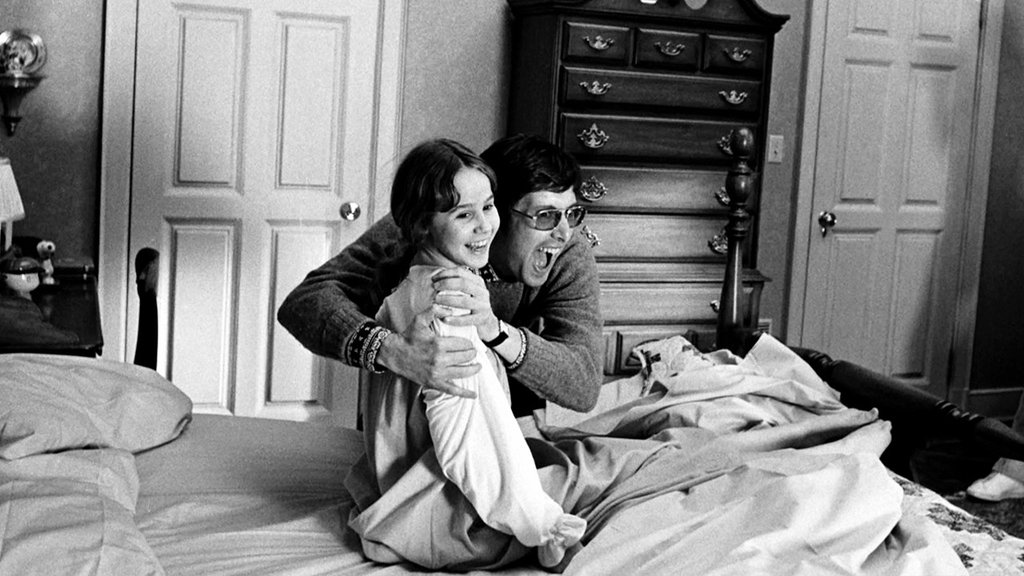
Vintage Image of the Day:

William Friedkin, who turns 81 today, directs young Linda Blair on the set of 1973’s The Exorcist:

Actor in the Spotlight:

Watch Natalie Portman grow up, almost Boyhood-like, in Candice Drouet’s spotlight on the actress through the years:

[embedded content]

Cosplay of the Day:

Photographer Laura Izumikawa has been getting attention lately for her pictures of her baby dressed up as movie characters while she’s napping. They just posted a new one inspired by Star Wars:

Classic Trailer of the Day:

Today is the 30th anniversary of the release of the skateboarding movie Thrashin’. Watch the original trailer for the movie, which stars a young Josh Brolin, below.

[embedded content]

and

Let’s block ads! (Why?)


No Image

FAA Expects 600,000 Commercial Drones In The Air Within A Year

Drones are flown at a training class in Las Vegas in anticipation of new regulations allowing their commercial use. Ethan Miller/Getty Images hide caption

toggle caption Ethan Miller/Getty Images

We are in “one of the most dramatic periods of change in the history of transportation,” says Transportation Secretary Anthony Foxx.

He was talking about all of it: the self-driving cars, the smart-city movement, the maritime innovations. But the staggering prediction of the day goes to the drone industry:

The Federal Aviation Administration expects some 600,000 drones to be used commercially within a year.

For context, the FAA says that 20,000 drones are currently registered for commercial use. What’s expected to produce a 30-fold increase in a matter of months is a new rule that went into effect Monday and makes it easier to become a commercial drone operator.

“The FAA forecasts there could be as many as 600,000 unmanned aircraft used commercially during the first year after this rule is in place,” FAA Administrator Michael Huerta said in a press conference. “Drones are helping to create a whole new means of realizing the American dream,” he added later.

Broadly, the new rules change the process of becoming a commercial drone pilot: Instead of having to acquire a traditional pilot’s license and getting a special case-by-case permission from the regulators, drone operators now need to pass a new certification test and abide by various flying restrictions (and, well, be older than 16).

Huerta says more than 3,000 people preregistered to take the certification test Monday — the first day of the new regime.

The rest of the drone safety rules still apply: No flights beyond line-of-sight, over people, at night, above 400 feet in the air or faster than 100 miles an hour. Drones also can’t be heavier than 55 pounds, and all unmanned aircraft have to be registered. (Some locations, such as Washington, D.C., prohibit drones altogether.)

Businesses, however, may get special waivers to skip some of the restrictions if they can prove they can do so safely. Huerta said Monday that the FAA has approved almost 80 waiver applications; the vast majority sought permission to operate at night. CNN was one applicant that received permission to fly over people, Huerta said.

So far, the top uses of commercial drones have included aerial photography, real estate, various inspections, agriculture and filmmaking, according to an analysis by the Association for Unmanned Vehicle Systems International, the industry trade group. Foxx and Huerta also cited firefighting, search and rescue, conservation and academic research as potential beneficiaries.

The drone association expects the industry will create more than 100,000 jobs and generate more than $82 billion for the economy in the first 10 years of being integrated into the national airspace.

“If the federal government continues to embrace drone technology policy that balances safety and innovation, by 2025 our country will reach one million drone flights per day,” Douglas Johnson, vice president for technology policy at the Consumer Technology Association, said in a statement.

The FAA is also working on new rules that eventually will allow drone flights over people and beyond line of sight. Huerta said the FAA expects to propose rules on flights over people by the end of 2016. The agency will also be issuing new privacy guidance to local and state government, he said, and will include privacy education in the pilot certification process.

Let’s block ads! (Why?)


No Image

Depression Treatment Often Doesn't Go To Those Most In Need

Many people get antidepressants when they might not need them.

Gary Waters/Ikon Images/Getty Images

Most Americans who screen positive for depression don’t receive treatment, a study finds, while most who did receive treatment don’t appear to have the disorder.

“Over the last several years there has been an increase in prescription of antidepressants,” says Mark Olfson, professor of psychiatry at the Columbia University Medical Center and lead author of the study, which was published Monday in JAMA Internal Medicine. “In that context, many people assumed that undertreatment of depression is no longer a common problem.”

But Olfson found the opposite to be true after analyzing data from Medical Expenditure Panel Surveys in 2012 and 2013 that asked people if they had been screened for depression. Of the 46,417 adults surveyed, 8.4 percent answered in ways that suggested they had depression, but only 28.7 percent of the people who appeared depressed received any treatment for it.

“The findings highlight that there are continuing challenges in aligning depression care with patient needs,” Olfson says.

Those in the lowest-income group were five times more likely to appear to have depression compared with those in the highest income group, with 18.2 percent of lowest-income adults screening positive compared to 3.7 percent of the highest-income group. But higher-income people were more likely to get treatment.

People who were female, white, non-Hispanic, had at least a high school education or had health insurance were more likely to get treatment if they were depressed, the study found. People with low incomes, uninsured adults, racial and ethnic minorities and men were less likely to be treated.

Though 8 percent of people surveyed got some form of treatment, most of the people who got treatment probably didn’t need it. Only 29.9 percent of the people treated had screened positive for depression; 21.8 percent of them appeared to have serious psychological distress. People with public insurance such as Medicaid and people who were separated, widowed or divorced were most likely to be treated, while uninsured adults, racial and ethnic minorities, and men were least likely.

Antidepressants were far and away the most common treatment, and people with either less serious distress or no depression were more likely to receive them. That could be a problem, Olfson says, because studies have shown that antidepressants are not more effective for patients with mild depression than a placebo.

“Being a little less aggressive in medication in mild depression would be beneficial,” he says. “There are simpler forms of psychological interventions that can be adapted for primary care.”

Patients with mild depression could first be given nondrug treatments ranging from counseling and exercise to yoga, the researchers say.

And although the study found that those with serious psychological distress are more likely to be treated by psychiatrists instead of general medical professionals, that wasn’t the case for older patients, African-Americans, the uninsured or those with less education.

Most people with untreated depression make at least one visit to a primary care doctor annually, and Olfson says those visits could be used to screen people in disadvantaged populations, and ideally offer them mental health treatment at the primary care clinic.

“If you give them a referral to a mental health clinic, they simply won’t go if they don’t think they have a mental health disorder,” he says. “By embedding the services within primary care, it becomes more accessible and less stigmatized.”

It’s an idea Benjamin Cook, director of the Health Equity Research Lab and an assistant professor at Harvard Medical School, agrees on, but he says increasing access for minorities would require professionals who speak their languages and understand what type of treatment they are open to. Cook was not involved in the study.

“African-Americans and Latinos prefer antidepressants less than whites,” Cook says. That might be an underlying reason “not to go for mental health treatment, why they might not stay at treatment for as long.”

It can be hard for primary care doctors to find mental health professionals to refer patients to, particularly in rural areas, Olfson says; prescribing antidepressants might be their only option. “Depression really is a serious condition and we’re finding that so many Americans aren’t receiving care,” he adds. “I hope that [this study] brings attention to this situation.”

Kaiser Health News is an editorially independent news service supported by the nonpartisan Kaiser Family Foundation.

Let’s block ads! (Why?)


No Image

As Summer Wanes, Action To Begin At Tennis Season's Final Grand Slam

Tennis matches get started on Monday at the U.S. Open in New York. Renee Montagne talks to Courtney Nguyen, senior writer at WTA Insider, who offers a preview on what to look for.

Transcript

RENEE MONTAGNE, HOST:

Summer is drawing to a close. And that means the start of the U.S. Open Tennis Championships. Last year, Serena Williams lost in the semifinals in what was considered one of the biggest upsets of all time. This year, she enters her matches ranked on top. Courtney Nguyen is a senior writer at WTA Insider, the magazine of the Women’s Tennis Association, and she joins us. Good morning.

COURTNEY NGUYEN: Good morning.

MONTAGNE: What will you be watching for in this U.S. Open?

NGUYEN: Well, for me, I mean, that Serena Williams is the big story – comes in ranked No. 1, hasn’t been the top-notch year or, really, historical year that she had in 2015, but still by far and away the No. 1 player in the world. But she’s playing for history, chasing Steffi Graf, as she has been for quite some time, going for slam number 23, which would break the record for singles titles in the Open era, and also trying to break a consecutive No. 1 ranking, with 186 consecutive weeks at No. 1. And she’s trying to hold on to that top ranking. And she actually is being challenged for it this year.

MONTAGNE: Well, Serena Williams, and on the men’s side, obviously, Novak Djokovic, are both favorites to win, but both are nursing injuries. What are the chances their injuries could impair their performances?

NGUYEN: Yeah, I mean, so far, you know, they were pretty dominant for the last 18 months. And what we’re seeing in the last few months are these injuries crop up. And it has impacted their results, with Novak Djokovic losing early at Wimbledon to American Sam Querrey. He also lost early at the Olympics.

Serena Williams did the same thing – after winning Wimbledon, went to the Olympics, only played three matches between Wimbledon until now – and lost early in Rio to a young Ukrainian. So, you know, the injuries are very, very significant here. They’re the best players in the world when they’re healthy. And right now, we know that they’re not 100 percent healthy going into New York.

MONTAGNE: OK, and with Djokovic, as you’ve just described, on something of a summer slump, Roger Federer, who many consider the greatest player of all time, is missing his first U.S. Open in 17 years because of a knee injury. Does that mean we could see someone else rush up there as No. 1?

NGUYEN: No. 1 on the men’s side is pretty secured by Novak Djokovic. But we are seeing a lot of movement from the men behind him. Andy Murray has done an incredible job of playing some consistent tennis in 2016. And then we have some younger players who are really trying to make a big splash. So it’s a nice little time of transition for the ATP. And, you know, with Roger’s absence, it opens up some opportunities for some young names.

MONTAGNE: All right. Well, thanks very much.

NGUYEN: Thank you.

MONTAGNE: Courtney Nguyen is a senior writer at WTA Insider.

Copyright © 2016 NPR. All rights reserved. Visit our website terms of use and permissions pages at www.npr.org for further information.

NPR transcripts are created on a rush deadline by Verb8tm, Inc., an NPR contractor, and produced using a proprietary transcription process developed with NPR. This text may not be in its final form and may be updated or revised in the future. Accuracy and availability may vary. The authoritative record of NPR’s programming is the audio record.

Let’s block ads! (Why?)


No Image

Colin Kaepernick Is Just The Latest Athlete To Make A Strong Political Statement

Newly retired New York Times columnist Bill Rhoden discusses NFL player Colin Kaepernick’s refusal to stand during the national anthem and past political activism by athletes.

Transcript

MICHEL MARTIN, HOST:

Moving to one of America’s most popular pastimes now we’re talking football. The regular season starts in two weeks, but what happened before a preseason game on Friday is grabbing headlines right now. San Francisco 49ers quarterback Colin Kaepernick refused to stand up for the national anthem. After the game, he told reporters, quote, “I’m not going to stand up to show pride in a flag for a country that oppresses black people and people of color.” The NFL has said in response that players are encouraged, but not required to stand for the anthem.

But, as you might, imagine Kaepernick’s stance is getting quite a lot of attention from colleagues and fans alike. So we thought we’d call William Rhoden to talk about this. After 26 consecutive years writing his Sports of the Times column, he just decided to deliver his final regular column last month. But after three decades of writing about sports and activism in particular, we thought he was the man to turn to about this. Welcome back to the program, Bill Rhoden.

BILL RHODEN: Michel, it’s a pleasure. It’s a pleasure.

MARTIN: So Kaepernick is not backing down. He’s been tweeting this weekend that it is his right and choice to stand up for people who are oppressed. It seems as though we’ve seen more of this in recent years. Do you agree?

RHODEN: I think I really started seeing it, Michel, after Ali died because his whole life, it seemed, the essence of his life was protest. And a lot of young athletes, particularly, are – start going back and they looked at his stand against the draft and that. And I think that a lot of – what a lot of young, particularly black athletes, saw is that typically money is supposed to empower you.

And I think with a lot of guys what started happening is that money began to weaken them because they were so afraid of losing it and having stuff taken away. And I think that when they began studying the lives of Ali and Curt Flood and these people looked back, they saw that, wow, you know, this actually empowered them. It actually strengthened them. It actually is why we’re talking about them years later.

MARTIN: Both the NFL and the 49ers have issued statements saying that players have the right to not stand during the playing of the national anthem. Is this a change?

RHODEN: Yeah.

MARTIN: I think some people are intrigued by the league’s response here.

RHODEN: Because, you know – listen, you’ve got a league that’s made up of almost – in – NFL is made up almost by 78, 79 percent African-American men. That’s the league. The NBA almost high – like 87 percent African-American men. So if you don’t own – or you better tread lightly on this stuff because these are the guys that make your league. You know, I mean, what happens if you are perceived as trying to crush them? That’s – that – I think that’s the easiest way to drive people together, I think the easiest way – and listen…

MARTIN: Well, but you wrote about this yourself in your farewell column for The New York Times in July. You wrote about Jim Brown, who was 29 years old in July of 1966 when he announced his retirement from the Cleveland Browns because then owner Art Modell had said to him if you don’t come back from making this movie, I’m going to fine you. So from the movie set, he had a press conference announcing his retirement.

RHODEN: Right.

MARTIN: So it seems that that was a very different era.

RHODEN: Yeah. I mean, and it was also Jim Brown, you know. And a lot of people, including me – I was only 15, and you looked at that and said, wow, man, the fact that he would stare down an owner. But he was an outlier. In other words, that was way outside the norm, but look what happened to that. That was with ’66. Next year ’67, Ali steps back from the draft. ’68, Smith and Carlos’ Mexico – ’69, Curt Flood. So I think that that was – if you want to say – if you want to look at sort of the beginning of that kind of – but those people were – and each one of them paid a tremendous price.

MARTIN: You talked about the consequences that a number of visible black athletes have faced when they made political statements. In 1967, Muhammad Ali refused to be drafted. In 1968, Tommie Smith and John Carlos celebrated winning gold and bronze medals at the ’68 Mexico City Games with a silent protest on the victory stand. What were the consequences that they faced?

RHODEN: Well, for Ali, first of all, he lost his title. He lost his belt. He lost his source of income. He wasn’t – he didn’t fight. There he is, I think it was three, four – well, he just could not earn a living beyond being demonized. Curt Flood will never get into the Hall of Fame for standing up against Major League Baseball, never.

MARTIN: He refused to trade in 1969.

RHODEN: Yeah. In ’69, he was traded to the Philadelphia Phillies, and he said I’m not going. I’m not a piece of meat to be traded.

MARTIN: Tommie Smith and Carlos…

RHODEN: Tommie Smith and Carlos couldn’t find work, were demonized. You know, John Carlos’ wife – there was so much pressure. I mean, she committed suicide. There were other things, but it was so much pressure. Tommie Smith couldn’t find work. And again, they were demonized. There was just all kinds of…

MARTIN: They were essentially blacklisted.

RHODEN: Yeah, yeah. Yeah, essentially.

MARTIN: Before we let you go, does Colin Kaepernick have a history of using his platform to express political points of view? I mean, a number of people have taken note that LeBron James in recent years, for example, has made a number of gestures to express his concern around certain issues. Does Colin Kaepernick have a reputation for doing that and is this new for him?

RHODEN: This is new.

MARTIN: And why do you think – why him and why now?

RHODEN: I think this is new, and I think sometimes everybody has their epiphany at different times. I think part of it is that he looked at LeBron – what LeBron had done. I think he looked at other athletes. Also, I think his situation in San Francisco which is somewhat ambiguous – I think that he was gold – remember he was the golden boy the first two, three years. And suddenly when you’ve become the golden boy, then the rug is pulled out from under you. Then you think about a whole lot of realities. You think about everything from they love me when I’m on top. Now I’m not. So I think a lot of things, but personally whenever you wake up, whenever you smell the coffee, I’m for it. Just smell the coffee at some point (laughter).

MARTIN: That’s Bill Rhoden. He was kind enough to join us in our studios in Washington, D.C. You will have certainly recognized him from his 26 years writing the Sports of the Times column at The New York Times. He was at The Times for 35 years in all, just turned in – hung up his spurs, as it were, just last month. And apparently we’ll hear from you from time to time, we hope, Bill Rhoden.

RHODEN: Absolutely (laughter).

MARTIN: Thank you so much for joining us.

RHODEN: Thank you, Michel. It’s been a pleasure.

Copyright © 2016 NPR. All rights reserved. Visit our website terms of use and permissions pages at www.npr.org for further information.

NPR transcripts are created on a rush deadline by Verb8tm, Inc., an NPR contractor, and produced using a proprietary transcription process developed with NPR. This text may not be in its final form and may be updated or revised in the future. Accuracy and availability may vary. The authoritative record of NPR’s programming is the audio record.

Let’s block ads! (Why?)


No Image

German Official Says U.S.-Europe Trade Talks Have Collapsed, Blames Washington

Protesters demonstrate against the Transatlantic Trade and Investment Partnership in Germany, in April. Officials conceded that opposition to trade agreements is building on both sides of the Atlantic. Markus Schreiber/AP hide caption

toggle caption Markus Schreiber/AP

Talks aimed at setting up a U.S.-European free trade zone have run aground because of intransigence on Washington’s part, a top German politician said Sunday.

“In my opinion the negotiations with the United States have de facto failed even though nobody is really admitting it,” said Sigmar Gabriel, German vice chancellor and economy minister, in an interview with the broadcaster ZDF on Sunday.

The Obama administration and the 28-member European Union have been in talks to set up the Transatlantic Trade and Investment Partnership, or TTIP, which would be the world’s largest free trade zone.

But negotiations have reportedly stalled because of the unexpected decision by Britain to leave the EU and because of growing public opposition to trade agreements on both sides of the Atlantic.

Gabriel said the U.S. and the EU haven’t agreed on a single item out of 27 chapters being discussed, despite 14 rounds of talks, and he said Washington was “angry” about a similar trade agreement struck between Canada and the EU. He said Europe “must not succumb to American demands.”

Neither the European Commission nor the U.S. Trade Representative’s office had any immediate response to the comments.

On the record, U.S. and European officials say they are continuing to move forward with talks and stress the importance of the TTIP to their economies.

“It’s our job to make sure that we adequately inform people about the facts of how TTIP will actually work for the people of Europe,” U.S. Secretary of State John Kerry said at a press conference in Brussels last month.

“It will protect jobs, it will protect their regulatory rights, protect their abilities with respect to labour and the environment,” he said.

German Chancellor Angela Merkel said last month that the TTIP is “absolutely in Europe’s interest.”

“We are determined to continue these negotiations,” added EU Trade Commissioner Cecilia Malmström. “They are important for Europe, for our economy, for our jobs, for our business people, for our consumers, and it makes a lot of sense to do it even (without Britain).”

But behind the scenes, there have been signs of trouble in the talks.

Last month, Agence France-Presse quoted diplomats as saying that talks may be suspended until after the U.S. elections in November, as well as elections in France and Germany next year.

French Prime Minister Manuel Valls said TTIP would be “a breeding ground for populism.” And in the U.S., Republican Senate Majority Leader Mitch McConnell has said, “By any objective analysis this is, shall I say, a down period for trade agreements around the world.”

Britain’s decision to leave the EU had only made the negotiations tougher, as The Economist recently reported:

“Though the Brexit vote was shaped by concerns about the free movement of labour, rather than of goods and services, the appetite for new trade deals was already weak.”

Let’s block ads! (Why?)


No Image

A Young Woman Dies, A Teen Is Saved After Amoebas Infect The Brain

The amoebas that can cause rare brain infections resemble white blood cells under the microscope. CDC hide caption

toggle caption CDC

Doctors describe 16-year-old Sebastian DeLeon as a walking miracle — he is only the fourth person in the U.S. to survive an infection from the so-called brain-eating amoeba.

Infection from Naegleria fowleri is extremely rare but almost always fatal. Between 1962 and 2015, there were only 138 known infections due to the organism, according to the Centers for Disease Control and Prevention. Just three people survived. This summer, two young people, one in Florida and one in North Carolina, became infected after water recreation. Only one had a happy ending.

DeLeon is a 16-year-old camp counselor. The Florida Department of Health thinks he got the infection while swimming in unsanitary water on private property in South Florida before his family came to visit Orlando’s theme parks.

So many things had to go right for DeLeon to survive. On a Friday, he had a bad headache. The next day, his parents decided this was way more than just a migraine and took him to the emergency room at Florida Hospital for Children.

Doctors persuaded the family to do a spinal tap to rule out meningitis, even though he didn’t have a stiff neck, the telltale symptom. Sheila Black, the lab coordinator, looked at the sample and assumed she saw white blood cells. But then she took a second, longer look.

“We are all detectives,” Black said. “We literally had to look at this and study it for a while and watch for the movement because the amoeba can look like a white cell. So unless you’re actually visually looking for this and looking for the movement, you’re going to miss it.”

That movement triggered the alarm: This was an amoeba case. And that’s when the pharmacy reached out to a small Orlando drug company called Profounda, which has a drug called Impavido that was originally developed as a cancer treatment and approved by the FDA in 2016 to treat the tropical parasitic disease leishmaniasis. It has been used in several cases to treat amoeba infections as well.

Profounda CEO Todd MacLaughlin got the call from the pharmacy, but he was out of town so his son drove the drug to Florida Hospital.

“Within 12 minutes he had picked up the product and was on the way to the hospital,” MacLaughlin said. “Everybody was in the right place at the right time.”

DeLeon was given the drug along with others. Doctors put him into a coma and lowered his body temperature to give the drugs time to work and slow the infection.

Dr. Humberto Liriano was emotional talking about the experience. They knew the odds were not in DeLeon’s favor when he was placed into a coma.

“The family when they came to me, immediately within four hours, I had to tell them to say their goodbyes,” Liriano says. “I had to tell them, ‘Tell him everything you want to tell your child, because I don’t know from the time I put him to sleep to the time I take the tube out, [if he will] wake up.’ “

DeLeon’s mother, Brunilda Gonzalez, thanked doctors at a press conference.

“We are so thankful that God has given us the miracle through this medical team and this hospital for having our son back and having him full of life,” Gonzalez said. “He’s a very energetic adventurous, wonderful teen. We’re so thankful for the gift of life.”

Central Florida has coped with amoeba infections before, including the death of Jordan Smelski, who died at the same hospital where DeLeon was saved. Smelski’s parents started a foundation to raise awareness of the disease in the medical community and to advocate for hospitals to stock the drug in case of an infection.

Profounda says seven hospitals have taken it up on stocking the drug at no cost, charging them only when the drug is used. The drug costs $48,000 for a full round of treatment. MacLaughlin said the company will provide the drug free if someone doesn’t have insurance.

Sebastian DeLeon, 16, is now the fourth known U.S. survivor of the so-called brain-eating amoeba. Abe Aboraya/WMFE hide caption

toggle caption Abe Aboraya/WMFE

DeLeon will soon head to South Florida for rehab, and doctors are optimistic he’ll make a full recovery.

But in North Carolina, an 18-year-old Ohio woman died from the amoeba in mid-June, stoking fear in the community. She had been rafting at the U.S. National Whitewater Center in Charlotte, which is among a handful of facilities in the country that have man-made rapids coursing through concrete channels. Its CEO, Jeff Wise, pointed out the lower part of the channel in mid-July.

“This is the bottom pond,” he says, “where all of the water in our essentially 12 million-gallon system rests while it’s ready to be pumped back up into the top pond, where it’ll float back down through the channels.”

But there was no whitewater between late June and Aug. 10, because CDC tests found the amoeba after the woman died.

Mecklenburg County Health Director Dr. Marcus Plescia encouraged people to keep perspective.

“This organism, Naegleria fowleri, is actually quite a prevalent or commonly occurring organism in open bodies of water,” he said. “We find it in lakes. We find it in ponds. It’s very common for people to come into contact with, but it’s very uncommon for people to develop this kind of infection with it.”

It’s harmless if swallowed, because stomach acid kills it. But if it’s in water forced up the nose, it can cause the brain infection, which is difficult to diagnose and treat.

The Whitewater Center uses city water that it treats with UV radiation, a filtration system and some chlorine. Still, it’s a large, open body of water, and exists in a regulatory no-man’s land because it’s neither swimming pool nor local river or lake.

North Carolina Gov. Pat McCrory said the state should re-examine whether the center should be treated like a swimming pool. But testing for the amoeba is not part of swimming pool regulations, because chlorine used in pools is effective at killing it. And the county and the state don’t have the ability to test for it. It’s usually up to the CDC.

As part of its lease agreement with the county, the center does weekly tests for common contaminants such as fecal coliform bacteria.

County health leaders point out that people are much more likely to die from drowning or boating accidents in area lakes and rivers than they are from Naegleria fowleri. In fact, there have already been at least eight of those deaths in the greater Charlotte area this summer.

But people just don’t get as worked up about those. David Ropeik, a risk management consultant in Concord, Mass., explains why.

“We worry about things not only based on the likelihood of them happening but the nature of the experience itself,” Ropeik says. “The odds may be low of brain-eating amoeba eating your brain, but the nature of a brain-eating amoeba eating your brain sounds pretty scary, doesn’t it?”

Ropeik is the author of How Risky Is It, Really? He says the media coverage of rare risks is part of the problem.

“Anything that makes a risk feel scarier like, ‘This is the zombie amoeba!’ is going to subconsciously interest journalists as something that will get people’s attention,” he says. “Because the viewer, reader, listener is likely to pay attention to a story that could portend their death.”

Dr. Jennifer Cope, an infectious disease epidemiologist at the CDC, said 11 out of 11 tests for the amoeba were positive at the rafting center, which does sound alarming. She called that significant but noted this is the first time the CDC has encountered the amoeba in this type of setting.

Whitewater Center CEO Wise says roughly 1.5 million people have rafted there over the past decade, and this is the first health issue it has had tied to what’s in the water.

The CDC says there are ways to make the water less conducive to the amoeba’s growth, including bulking up the amount of chlorine. The Whitewater Center worked with consultants to figure out a more effective way of doing that, and it reopened this month with a revamped chlorination system. So far, county health leaders say it is working the way it is supposed to.

This story is part of a reporting partnership with NPR, local member stations and Kaiser Health News.

Let’s block ads! (Why?)


No Image

Mother Calls EpiPen Price Hike 'A Matter Of Life And Death'

Lawmakers are demanding answers after the maker of an allergy treatment raised the price from about $100 per pack to about $600 per pack in seven years. Parents say they can’t afford it.

Transcript

MICHEL MARTIN, HOST:

You probably heard news this week about the rising cost of EpiPens. Those are devices people carry around to inject themselves with medicine to treat severe allergic reactions. The cost has risen from about $100 for a pack of two to about $600 – all that since 2009. Now, for many people, these are not optional. These are literally lifesavers. For some, like Jill Negro, a 38-year-old mother of two children who both have severe allergies, the price hike is causing financial strain and fear.

JILL NEGRO: Lately, with the most recent increase, it’s to the point that I honestly don’t know how we’re going to be able to continue to pay for them. You know, we make enough to pay our bills, and, honestly, it’s a matter of life and death for my children.

MARTIN: The price hike has now drawn the attention of lawmakers from both political parties, who are demanding answers from the maker of EpiPens, Mylan, about what’s behind the price hike. But we thought we’d ask NPR health correspondent Alison Kodjak about this. Welcome. Thanks for joining us.

ALISON KODJAK, BYLINE: Thanks for having me.

MARTIN: So is there any one factor behind the price hike? It’s my understanding that the medicine itself, epinephrine, is actually quite cheap, and the technology itself doesn’t seem to have changed so what’s behind this?

KODJAK: You know, there’s not one particular force other than that the company wants to raise the price. And, as a lot of people have told me, it’s kind of what the market will bear. There isn’t a good competitor, so Mylan can keep raising the price. And people are still going to buy these.

MARTIN: As this has gotten more public attention, and, as we said, lawmakers have gotten interested in this question, what’s the company’s response been?

KODJAK: They haven’t actually given an explanation as much as a response. And that response was we’re going to offer coupons to people whose insurance doesn’t fully cover these – up to $300 – in order to defray their costs, which is good, but it doesn’t actually reduce the overall cost in the market. So people are still, either through their insurance or some other way, spending a lot of money on these injectors.

MARTIN: You know, in the course of reporting this, we reached out to people who use EpiPens often, you know, parents and teachers, for example, to see how this is affecting them. Let me play another clip from that reporting. This is Lexi Henegar. She’s a mother of six, and two of her children have severe food allergies, and this was her question.

LEXI HENEGAR: Why are they considering a coupon rather than just cutting the price and making the price more reasonable, something that everyone can afford?

MARTIN: I guess the larger question would be who decides what the cost is?

KODJAK: Well, they decide what the cost is. And the reason they would go with the coupon, as opposed to overall cutting the price, is because the insurance companies will still have to pay the higher price for those people that they cover, who aren’t complaining, because they only have a $25 co-pay.

The only sort of regulation of the price is the negotiations between the insurer and the drug company. And the insurance companies certainly aren’t paying the full $600. We’re not quite sure how much they pay, but they’re paying a lot because this is the only game in town.

MARTIN: Why now?

KODJAK: Well, you know, there’s – it seems to be that people in the pharmaceutical industry have sort of caught on to the idea that they can raise prices and turn their companies into cash cows. This is not the only drug where they’ve looked around, realized there’s no competition, and said, look, if we charge a little more, people’ll still have to pay for it.

MARTIN: Before I let you go, I was wondering if there’s any international comparison that we could make here. I mean, pharmaceuticals are a worldwide industry. And I just wondered, is the United States unique in allowing the cost of medication to be so free-flowing?

KODJAK: The United States is very unusual. In most advanced economies, the government has at least some, if not the role in paying for pharmaceuticals and is allowed to bargain for them as either set prices or negotiate prices. The U.S., the government is also the major payer. Medicare pays for about 29 to 35 percent, depending on how you count it, of the prescription drugs out there. But the program is barred by law from negotiating prices.

MARTIN: That’s Alison Kodjak. She’s a health correspondent on NPR’s science desk. Alison, thanks so much for coming in.

KODJAK: Thanks so much for having me.

Copyright © 2016 NPR. All rights reserved. Visit our website terms of use and permissions pages at www.npr.org for further information.

NPR transcripts are created on a rush deadline by Verb8tm, Inc., an NPR contractor, and produced using a proprietary transcription process developed with NPR. This text may not be in its final form and may be updated or revised in the future. Accuracy and availability may vary. The authoritative record of NPR’s programming is the audio record.

Let’s block ads! (Why?)


No Image

Mother Calls EpiPen Price Hike 'A Matter Of Life And Death'

Lawmakers are demanding answers after the maker of an allergy treatment raised the price from about $100 per pack to about $600 per pack in seven years. Parents say they can’t afford it.

Transcript

MICHEL MARTIN, HOST:

You probably heard news this week about the rising cost of EpiPens. Those are devices people carry around to inject themselves with medicine to treat severe allergic reactions. The cost has risen from about $100 for a pack of two to about $600 – all that since 2009. Now, for many people, these are not optional. These are literally lifesavers. For some, like Jill Negro, a 38-year-old mother of two children who both have severe allergies, the price hike is causing financial strain and fear.

JILL NEGRO: Lately, with the most recent increase, it’s to the point that I honestly don’t know how we’re going to be able to continue to pay for them. You know, we make enough to pay our bills, and, honestly, it’s a matter of life and death for my children.

MARTIN: The price hike has now drawn the attention of lawmakers from both political parties, who are demanding answers from the maker of EpiPens, Mylan, about what’s behind the price hike. But we thought we’d ask NPR health correspondent Alison Kodjak about this. Welcome. Thanks for joining us.

ALISON KODJAK, BYLINE: Thanks for having me.

MARTIN: So is there any one factor behind the price hike? It’s my understanding that the medicine itself, epinephrine, is actually quite cheap, and the technology itself doesn’t seem to have changed so what’s behind this?

KODJAK: You know, there’s not one particular force other than that the company wants to raise the price. And, as a lot of people have told me, it’s kind of what the market will bear. There isn’t a good competitor, so Mylan can keep raising the price. And people are still going to buy these.

MARTIN: As this has gotten more public attention, and, as we said, lawmakers have gotten interested in this question, what’s the company’s response been?

KODJAK: They haven’t actually given an explanation as much as a response. And that response was we’re going to offer coupons to people whose insurance doesn’t fully cover these – up to $300 – in order to defray their costs, which is good, but it doesn’t actually reduce the overall cost in the market. So people are still, either through their insurance or some other way, spending a lot of money on these injectors.

MARTIN: You know, in the course of reporting this, we reached out to people who use EpiPens often, you know, parents and teachers, for example, to see how this is affecting them. Let me play another clip from that reporting. This is Lexi Henegar. She’s a mother of six, and two of her children have severe food allergies, and this was her question.

LEXI HENEGAR: Why are they considering a coupon rather than just cutting the price and making the price more reasonable, something that everyone can afford?

MARTIN: I guess the larger question would be who decides what the cost is?

KODJAK: Well, they decide what the cost is. And the reason they would go with the coupon, as opposed to overall cutting the price, is because the insurance companies will still have to pay the higher price for those people that they cover, who aren’t complaining, because they only have a $25 co-pay.

The only sort of regulation of the price is the negotiations between the insurer and the drug company. And the insurance companies certainly aren’t paying the full $600. We’re not quite sure how much they pay, but they’re paying a lot because this is the only game in town.

MARTIN: Why now?

KODJAK: Well, you know, there’s – it seems to be that people in the pharmaceutical industry have sort of caught on to the idea that they can raise prices and turn their companies into cash cows. This is not the only drug where they’ve looked around, realized there’s no competition, and said, look, if we charge a little more, people’ll still have to pay for it.

MARTIN: Before I let you go, I was wondering if there’s any international comparison that we could make here. I mean, pharmaceuticals are a worldwide industry. And I just wondered, is the United States unique in allowing the cost of medication to be so free-flowing?

KODJAK: The United States is very unusual. In most advanced economies, the government has at least some, if not the role in paying for pharmaceuticals and is allowed to bargain for them as either set prices or negotiate prices. The U.S., the government is also the major payer. Medicare pays for about 29 to 35 percent, depending on how you count it, of the prescription drugs out there. But the program is barred by law from negotiating prices.

MARTIN: That’s Alison Kodjak. She’s a health correspondent on NPR’s science desk. Alison, thanks so much for coming in.

KODJAK: Thanks so much for having me.

Copyright © 2016 NPR. All rights reserved. Visit our website terms of use and permissions pages at www.npr.org for further information.

NPR transcripts are created on a rush deadline by Verb8tm, Inc., an NPR contractor, and produced using a proprietary transcription process developed with NPR. This text may not be in its final form and may be updated or revised in the future. Accuracy and availability may vary. The authoritative record of NPR’s programming is the audio record.

Let’s block ads! (Why?)