Articles by admin

No Image

49ers Quarterback Sits Out National Anthem To Protest Oppression Of Minorities

Quarterback Colin Kaepernick of the San Francisco 49ers throws a pass against the Green Bay Packers in the first half of their preseason football game on Friday in Santa Clara, California. Thearon W. Henderson/Getty Images hide caption

toggle caption Thearon W. Henderson/Getty Images

As players rose to stand for the national anthem at the 49ers-Packers game on Friday night, 49ers’ quarterback Colin Kaepernick pointedly remained seated.

His gesture was to protest the treatment of African Americans and minorities in the United States, as he told NFL.com after the game. Kaepernick has remained sitting during the anthem “in at least one other preseason game,” according to the site.

“I am not going to stand up to show pride in a flag for a country that oppresses black people and people of color,” Kaepernick said, according to NFL.com. “To me, this is bigger than football and it would be selfish on my part to look the other way. There are bodies in the street and people getting paid leave and getting away with murder.”

He told NFL.com that he did not notify the team in advance. “I am not looking for approval. I have to stand up for people that are oppressed. … If they take football away, my endorsements from me, I know that I stood up for what is right,” Kaepernick said. NFL.com reports that Kaepernick recently “decided to be more active and involved in rights for black people.”

In a statement carried by NFL.com, the 49ers said they recognize his right to remain seated:

“The national anthem is and always will be a special part of the pre-game ceremony. It is an opportunity to honor our country and reflect on the great liberties we are afforded as its citizens. In respecting such American principles as freedom of religion and freedom of expression, we recognize the right of an individual to choose and participate, or not, in our celebration of the national anthem.”

On his Twitter page, Kaepernick has recently focused on Black Lives Matter, police violence and civil rights issues.

Kaepernick’s protest has drawn comparisons to a similar gesture 20 years ago from Denver Nuggets guard Mahmoud Abdul-Rauf, which generated a major controversy. He was suspended for one game and ultimately agreed to stand with his head bowed in prayer, as SB Nation reported.

The gesture has also ignited debate and is currently trending on Twitter. It has sharply divided fellow NFL players.

For example, Miami Dolphins running back Arian Foster wrote, “the flag represents freedom. the freedom to choose to stand or not. that’s what makes this country beautiful.” Later, he wrote, “protest is imperative for change. it invokes the conversation.”

the flag represents freedom. the freedom to choose to stand or not. that’s what makes this country beautiful. … https://t.co/Ev5D9ACe78

— Feeno (@ArianFoster) August 27, 2016

Taking a different view, former Denver Broncos offensive tackle Tyler Polombus wrote, “Activists changed USA for better but have to associate Nat Anthem w/ military that die for ur right to protest. Stand up. Find another way.”

Activists changed USA for better but have to associate Nat Anthem w/ military that die for ur right to protest. Stand up. Find another way

— Tyler Polumbus (@Tyler_Polumbus) August 27, 2016

Here’s more discussion about Kaepernick’s protest:

Texts coming in from coaches, players, front office execs from around league on Kap. So far every player backs him. No coach/exec does.

— mike freeman (@mikefreemanNFL) August 27, 2016

Wow the amount of people who agree with sitting during the national anthem is truly disturbing! we wonder why our country is in the toilet?!

— AUBREY HUFF (@aubrey_huff) August 27, 2016

Bad decision by @Kaepernick7 but bc of the men/women who died for that flag, he has the liberty to disrespect them #betterwaystogetattention

— Mitch Harris (@Mitch_Harris2) August 27, 2016

Kaep is using his platform & brand to make a compelling & polarizing point, which is his right, even if it’s met with ire!#idontagree

— Tiki Barber (@TikiBarber) August 27, 2016

The easy thing to do is to make fun of Kap and his play. How about trying to understand where he’s coming from….but that would be too hard

— Adrian Clayborn (@AJaClay) August 27, 2016
Let’s block ads! (Why?)


No Image

Best of the Week: The Top Movies of the Century, How to Get a Marvel Movie Gig and More

The Important News

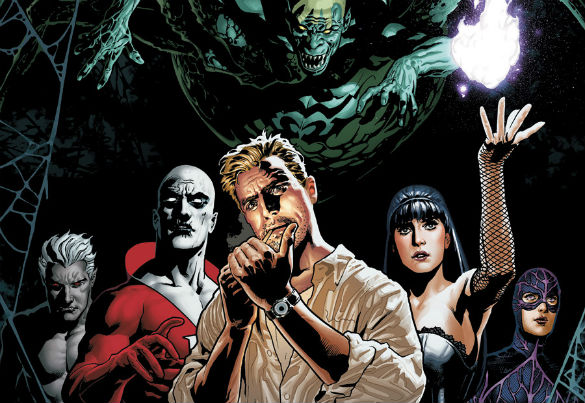
DC Extended Universe: Doug Liman will direct the Justice League Dark movie.

Marvel Cinematic Universe: Niki Caro, Lesli Linka Glatter and Lorene Scafaria were shortlsted to direct Captain Marvel. Vin Diesel confirmed the Guardians of the Galaxy will be in Avengers: Infinity War. Mark Mothersbaugh is scoring Thor: Ragnarok. The Russo Brothers revealed Steve Rogers is no longer Captain America in the MCU.

Star Wars: Gareth Edwards revealed Rogue One‘s title has three meanings.

Disney: New photos and concept art from the live-action Beauty and the Beast surfaced online.

Sequels: Dwayne Johnson confirmed the new movie is a sequel, not a reboot. Laika promised they will never make sequels.

Remakes: Ruben Fleischer is making a movie based on the show Cops. Sam Mendes is making a live-action version of James and the Giant Peach.

Box Office: Suicide Squad continued to reign in theaters.

Polls: Critics were surveyed for a list of the 100 best movies of this century. Moviegoers named their most anticipated fall releases.

Reel TV: Rupert Grint is starring in a Snatch TV series. The Departed and Get Shorty are also becoming TV shows.

Documentaries: Idris Elba is documenting his personal, passionate pursuit to be a kickboxer.

Festivals: Fantastic Fest revealed another crop of major movies in this year’s program.

The Videos and Geek Stuff

New Movie Trailers: Rings, Lion, La La Land, Kidnap, A United Kingdom, Max Steel, The Dressmaker, Planetarium, Manchester By the Sea and My Blind Brother.

TV Spots: Mechanic: Resurrection and Blair Witch.

Clips: Snowden.

See: What Rogue One: A Star Wars Story looks like starring Jar-Jar Binks.

Watch: Hugh Jackman shaves his Wolverine beard for the last time.

See: Why Heath Ledger’s Joker is the best-written version of the character.

Learn: Why Thor is to blame for John Krasinski not being cast as Captain America.

See: What Star Trek Beyond would have looked like if made in the 1960s.

Learn: How a fan got Dwayne Johnson cast in the Fast and Furious movies.

See: How many times Jason Statham kicks in his movies.

Watch: An honest trailer for Disney’s live-action Jungle Book.

Learn: How to make a great sex scene.

Watch: A viral video parody promoting Don’t Think Twice.

See: Why the “Evil” Queen is not the villain of Snow White and the Seven Dwarfs.

Watch: A thrilling behind-the-scenes look at Cuba Gooding Jr.’s Oscar win.

See: The best new movie posters unveiled this week.

Watch: Two real robots react to the trailer for Morgan.

Our Features

Interview: The Russo Brothers reveal how to get a job directing a Marvel movie.

Comic Book Movie Guide: Here’s everything you need to know about Justice League Dark.

Lists: For National Dog Day, we named the 10 best dog movies.

Home Viewing: Our guide to everything hitting VOD this week.

and

MORE FROM AROUND THE WEB:

Let’s block ads! (Why?)


No Image

A New Course At Arkansas Colleges: How To Not Get Pregnant

[embedded content]
Arkansas Campaign To Prevent Unplanned Pregnancy YouTube

Orientation at Arkansas Tech University this year included a surprising topic for a Bible Belt state that pushes abstinence-only in high school. Every freshman was shown a newly produced video in which real students talk about the struggle of an unplanned pregnancy, and the challenge of staying in school as a parent.

“I lost a lot of friends,” says one young woman in the video who had dreamed of becoming a surgeon. A young man says he “went from not having any responsibility to having a full-time responsibility,” while another laments that Friday nights are no longer spent with friends but at home “watching Dora. A lot of Dora.”

The message is clear, and it will come up again throughout the year: in a college success course, in group chats in dorms, at a slew of events during Sexual Health Week.

Why in college? Arkansas has the nation’s highest rate of teen births, but most of them — here and nationally — are actually to young adults, 18 and 19 years old. Last year, the Arkansas Legislature passed a law directing the state’s public colleges and universities to tackle unplanned pregnancy. Schools have each been crafting their own plans for how to do that, and they launched the effort during orientation this month.

After watching the video at one session at Arkansas Tech in Russellville, nearly every student said it hit home.

“I think there was anywhere between five to 10 girls in my grade that got pregnant,” says freshman Sydney Blackwell. “I remember in eighth grade there was a girl that never made it to ninth grade because she got pregnant.”

Only 4 of 20 students in this group say they had sex ed in high school. Brooklynn Evans says she didn’t get much guidance at home, either, not even the basic birds and bees. “My parents were too uncomfortable to talk about it,” she says.

Same with Carlos Morales. He thinks it’s great that his college is bringing this up, but “it would have been better to have a class earlier, during our middle school.”

‘The problem in the room that nobody wants to discuss’

Arkansas’ law is modeled on one that took effect last school year in Mississippi. Both had bipartisan support and were amazingly uncontroversial.

“It was surprisingly easy; it shocked me,” says Rep. Deborah Ferguson, the Democratic co-sponsor of the Arkansas law. Still, she says it would not be politically possible to mandate sex ed in earlier grades. The legislation’s Republican co-sponsor believes that’s best left to local districts.

But that co-sponsor, Rep. Robin Lundstrum, had an early job in family planning. She says she heard from high school students over and over that they had nowhere to turn for information on how to not get pregnant. “It’s the problem in the room that nobody wants to discuss,” she says.

At Arkansas Tech, student wellness dean Kristy Davis says it makes sense to target those in college, many of whom are away from home for the first time. She says faculty can help “make sure that they’re prepared and they have the information to make good decisions for themselves.”

The mandate is so far unfunded. Angela Lasiter, a program specialist with the Arkansas Department of Higher Education, is creating a nonprofit and hopes to attract money to keep the effort going. At community colleges, which usually lack a health center, she’s also making sure nearby clinics are stocked with the most effective contraceptives. A substantial share of students at some two-year colleges are already parents, and Lasiter says the state’s push can help prevent them from having a second child.

Some universities are even weaving the topic into their curriculum. Lasiter says it’s easy to drop into classes like statistics, English, “or, say, Speech 101. ‘We would like for you to write a 10-minute speech on how to prevent unplanned pregnancies.’ Boom.”

Incoming students at Arkansas Tech University in Russellville are now required to attend sessions on preventing pregnancy. Jennifer Ludden/NPR hide caption

toggle caption Jennifer Ludden/NPR

The goal, she says, is to get students talking. And if they also talk with their little sisters and brothers, all the better.

There’s also a broader benefit for the state, Lasiter says. When young parents drop out of college, or never get there in the first place, it costs Arkansas $129 million a year in “lower income, more people on welfare, a less higher quality of living.” That economic hit is compounded because the children of teen mothers are more likely to have an early, unplanned pregnancy themselves.

But is college too late to teach sex ed?

Magical thinking

“They don’t know as much as they think they do, and they don’t know as much as we wish they did,” says Andrea Kane, vice president for policy and strategic partnerships at the National Campaign to Prevent Teen and Unplanned Pregnancy. She says research shows young adults think they know how to not get pregnant, but when pressed for details they’re prone to myths and misinformation. For instance, she says, “4 in 10 young adults in this country believe it does not matter if you use birth control or not; when it is your time to get pregnant, you will.”

The National Campaign has been pushing for more prevention efforts at the college level, and Kane says other states are showing interest in the new laws in Arkansas and Mississippi. She says even students who had sex education in high school might have forgotten the information, or may find it more relevant now that they’re older.

Marie Sandusky has been counseling students at the University of Arkansas at Little Rock since well before the state’s law. She directs health services there, and says it’s a challenge to help students understand the risk of pregnancy.

“There’s this 18- and 19-year-old brain thing that’s kind of like magical thinking,” she says. “Sort of like, ‘It’s not going to happen to me.’ “

With the new law, the university is being more proactive. This year, incoming freshmen had to complete an online lesson on preventing unplanned pregnancy. In their dorm rooms, they found a postcard with the health services phone number and the tag line, “Plan to postpone parenting.”

Marie Sandusky directs student health services at the University of Arkansas at Little Rock. In an orientation session, rag dolls are handed out to symbolize the number of students who will become parents this year if they don’t practice safe sex or use birth control. Jennifer Ludden/NPR hide caption

toggle caption Jennifer Ludden/NPR

Sandusky also drove home the risk factor at a recent orientation event. In an auditorium of 300 students, 22 of them found a red star under their seat. They received a rag doll on a string that they had to wear around their neck the rest of the evening. “And then we say, ‘If you choose to become sexually active, and don’t choose to practice safe sex or get on birth control,” says Sandusky, “this many people will have a baby by the end of the year.’ “

Of course, the hope is that Arkansas’ push to prevent unplanned pregnancy will eventually bring down that number.

Let’s block ads! (Why?)


No Image

Brazilian Police Charge Ryan Lochte With Making A False Report

U.S. swimmer Ryan Lochte attends a news conference on Aug. 12 in Rio de Janeiro. Matt Hazlett/Getty Images hide caption

toggle caption Matt Hazlett/Getty Images

The saga of the swimmer and the robbery-that-wasn’t continues: Ryan Lochte has been charged with filing a false police report.

Brazilian police say Lochte and the International Olympics Committee’s ethics commission will both be informed of the charges, NPR’s Lulu Garcia-Navarro reports.

The charge carries a penalty of up to 18 months in prison and Lochte could be tried in absentia, Lulu says. She notes that the U.S. has an extradition treaty with Brazil but that it’s unlikely Lochte would be sent there if convicted.

As we’ve reported, Lochte told his mother, police and the press that he and three other U.S. swimmers were robbed at gunpoint earlier this month after thieves posing as police stopped the taxi they were traveling in.

That turned out to be, well, not what happened.

“There was no robbery,” Rio de Janeiro Civil Police Chief Fernando Veloso said. Video showed the swimmers stopping at a gas station, as NPR reported:

“Referring to that video, Veloso says multiple witnesses have described a scene in which the swimmers vandalized the bathroom, were asked to pay for it, and got testy. He added that the video supports that version of events.

“The police did confirm one element that’s common to all versions of the events that transpired around 6 a.m. local time this past Sunday: that the group of U.S. swimmers had a gun pointed at them. But instead of a robbery, it seems that the guns were wielded by security guards who kept the swimmers from leaving.

“Contrary to some earlier reports, the police say there was no physical violence between the swimmers and workers at the gas station who reportedly wouldn’t let the Americans leave without paying for damages.”

NPR’s Greg Myre reflected on the “silly story” last week, writing, “Lots of teenagers don’t give their moms the straight story about what happened on a Saturday night. But Lochte is 32.”

He “has badly tarnished one of the great Olympic careers of all time,” Greg notes. “After his remarkable career, he is likely to be best remembered for a bit of late-night mischief that he then turned into an international incident.”

Let’s block ads! (Why?)


No Image

Bolivian Miners Reportedly Kidnap, Kill High-Level Official Amid Strike

Smoke wafts over the highway linking the Bolivian capital of La Paz with the Chilean border during an ongoing clash between striking miners, who are blockading the road, and police. Aizar Raldes/AFP/Getty Images hide caption

toggle caption Aizar Raldes/AFP/Getty Images

Striking miners in Bolivia kidnapped and beat to death the country’s deputy government minister after he traveled to the area to mediate in the bitter conflict over mining laws, officials said late Thursday.

Government Minister Carlos Romero called it a “cowardly and brutal killing” and asked that the miners turn over the body of deputy minister Rodolfo Illanes.

Earlier, Romero said that Illanes had been kidnapped and possibly tortured, but local media reports that he had been killed by the miners had not been confirmed.

But late Thursday Romero and Defense Minister Reymi said that the vice minister of government had been beaten to death by the miners, who are demanding more rights, including the right to associate with private companies.

Illanes had gone to Panduro — a town 80 miles south of the La Paz, where the strikers have blockaded a highway since Monday — to open a dialogue. Thousands of passengers and vehicles are stranded on roads blocked by the strikers.

The strike had turned violent recently, with two protesters being killed and riot police failing to clear a highway in a western part of the mining-dependent Andean nation.

Bolivia’s informal or artisan miners number about 100,000 and work in self-managed cooperatives. They want to be able to associate with private companies, which is currently prohibited. The government argues that if they associate with multinational companies they will cease to be cooperatives.

The National Federation of Mining Cooperatives of Bolivia, once strong allies of President Evo Morales, went on an indefinite protest after negotiations over the mining legislation failed.

Let’s block ads! (Why?)


No Image

A Happy Ending For An Australian Ultramarathoner And Chinese Stray Dog

They’ve known each other for only a few months, but this love story between an Australian ultramarathoner and a Chinese stray dog has seen extraordinary highs and lows.

As Dion Leonard raced last March, a little brown dog started following him for miles across the Gobi Desert. The two quickly fell for each other and he named her Gobi. “When she came into camp she followed me straight into my tent, laid down next to me and that was that – a bond had been developed,” Leonard said in a blog post from the race.

Gobi kept him company during four of the six stages in the grueling 155-mile race, “showing unique strength and stamina,” as Leonard wrote.

Some fantastic images from @4Deserts #gobimarch as we enjoy a rest day before the final push tomorrow! pic.twitter.com/Pgjjy6ypFr

— Dion Leonard (@Oh_Yes_Please) June 24, 2016

“I didn’t [adopt her], Gobi seemed to adopt me!” Leonard said. “The dog was more famous than anyone in the race. She was in everyone’s blogs and emails and was all over the race photos making her the star of the race.”

Soon, Leonard was making plans to bring Gobi to his home in Scotland. As he explained, the process would take about four months for medical checks and quarantine. She was being cared for in the city of Urumqi, awaiting transfer to Beijing for the quarantine process.

But then, alarming news: “[W]e received a phone call that Gobi has been missing in Urumqi, China for a number of days and she has still not been found,” Leonard wrote. A frantic search ensued. Leonard flew in from Edinburgh, and he said he went at least 34 hours without sleep, looking for his beloved pup.

[embedded content]

In Urumqi and nearby rural villages, Leonard and the search team canvassed residents and hung up fliers in search of the lost canine. To find her would be “nothing short of a miracle,” Leonard tweeted. There were numerous sightings that turned out not to be the real Gobi.

Search for Gobi continues. hard to know where to look in a large city, small group of volunteers & so many dogs pic.twitter.com/5qfKQlawv9

— Dion Leonard (@Oh_Yes_Please) August 22, 2016

As The Washington Post explained, “Urumqi is a huge city of 3 million people, and he feared the dog could even have run back into the countryside that surrounds it, where people speak the Uighur language, don’t use social media and were unlikely to even be aware of the campaign.”

“It’s a bit of a goose chase; we’re trying our best to remain positive,” he said in a video posted on his Twitter feed.

Further adding to Leonard’s worries: As we saw in the race, “she is quite a good runner so it’s just hoping she hasn’t run too far,” he tweeted.

But then something miraculous happened. As the Post reported, a Chinese man called and said he and “his son had seen a small stray dog in a local park while walking his own dog. They had brought her home and thought she could be the one.”

We are so happy to be together again! ??? @WaaUltra pic.twitter.com/DySpVovohP

— Dion Leonard (@Oh_Yes_Please) August 25, 2016

Turns out the helpful stranger was right. “She came running over towards me, she basically ran round my legs, jumped up on me,” Leonard told BBC Radio 5 live. “It was love again at immediate sight so it was just an amazing feeling and I’m just so grateful for all the help that’s been put into finding her over here.”

These images, posted by Leonard immediately after the reunion, show how joyful the pair is:

We bloody well found her!!! pic.twitter.com/tIw5fEIDIg

— Dion Leonard (@Oh_Yes_Please) August 24, 2016

Dion struck a more serious tone about the ups and downs of the search to the BBC. “It’s been really difficult to remain positive in front of everyone else, and I’ve been getting back to my room very late at night and falling into a bit of a heap to be honest. I just realized that every day slipping by was another day that we weren’t going to find her before I had to go back to the U.K.”

He concluded: “This day is one of the best days of my life.”

Let’s block ads! (Why?)


No Image

Discounts Aren't Enough to Halt Outrage At High EpiPen Prices

The cost of an EpiPen two-pack has risen more than 400 percent in recent years. The drug is used to halt severe allergic reactions. Joe Raedle/Getty Images hide caption

toggle caption Joe Raedle/Getty Images

The EpiPen, an injectable drug that reverses severe allergic reactions, just got a little cheaper for some consumers.

The device’s manufacturer, Mylan NV, announced Thursday that it will offer coupons worth as much as $300 off a two-pack.

The move is a reaction to harsh criticism from consumers and several lawmakers over repeated price increases that have boosted the cost of the medication to more than $600 from less than $100 just a few years ago.

The company says it will offer the discounts to patients whose insurance doesn’t cover the costs because of high deductibles or limited pharmacy benefits.

But coupons may not be enough to tamp down anger over the price hikes.

“This step is much more a PR fix more than a real remedy,” Sen. Richard Blumenthal, D-Conn., said in an interview Thursday. “What’s needed is robust, real action to lower the price for everyone, not just a select few.”

He says the EpiPen has such enormous market share that the company may be violating antitrust laws by exploiting that. A report by the health care website Stat says some of Mylan’s contracts to give schools free or discounted EpiPens may have done just that, because they bar the schools from buying competitors’ products.

Mylan told Stat that the provision restricting school purchasing has since been discontinued, but did not say when it was halted.

Blumenthal is just one of several lawmakers who have called for investigations into Mylan’s business practices and have asked for justifications of its price increases in recent days. He and a few others say the discounts aren’t enough.

Blumenthal sent a letter to the company earlier this week demanding that it lower the price.

Sen. Charles Grassley, R-Iowa, sent a letter to Mylan demanding an explanation for the increase. And Sen. Amy Klobuchar, D-Minn., has asked the Federal Trade Commission to investigate whether Mylan has violated antitrust laws in its marketing of the EpiPen.

Rep. Elijah Cummings, D-Md., says his Oversight and Government Reform Committee would hold hearings. “Offering a meager discount only after widespread bipartisan criticism is exactly the same tactic used by drug companies across the industry to distract from their exorbitant price increases,” Cummings said in a statement.

And Democratic presidential hopeful Hillary Clinton weighed in on her Facebook page. “It’s wrong when drug companies put profits ahead of patients, raising prices without justifying the value behind them,” she wrote.

The wholesale price of a single pen was about $47 in 2007. It rose to $284 this summer, according to Richard Evans, a health care analyst at SSR. But consumers can no longer buy a single pen, so the retail price to fill a prescription today at Walgreens is about $633, according to GoodRX.

Blumenthal says a solution could require new laws.

“At the end of the day there may need to be stronger legal protections against these types of price gouging and profiteering at the expense of people who need a lifesaving drug where the company has a stranglehold on the market,” he says.

Let’s block ads! (Why?)


No Image

Today in Movie Culture: Jason Statham Kicking Butt, How to Film Sex Scenes and More

Here are a bunch of little bites to satisfy your hunger for movie culture:

Supercut of the Day:

With Mechanic: Resurrection out this Friday, Burger Fiction compiled every Jason Statham kick ever:

[embedded content]

Viral Video of the Day:

We had to share this viral video promoting Mike Birbiglia’s Don’t Think Twice or we would all be murdered (via /Film):

[embedded content]

Fan Art of the Day:

Illustrator George Evangelista offers another look at how Henry Cavill could look when Superman returns in Justice League (via Geek Tyrant):

Film History Lesson of the Day:

With Kubo and the Two Strings now in theaters, check out a great video on the evolution of stop-motion animation (via Cinematic Montage Creators):

[embedded content]

Movie Trivia of the Day:

Learn some things you probably don’t already know about Labyrinth, which turned 30 this summer, in this ScreenCrush trivia video:

[embedded content]

Vintage Image of the Day:

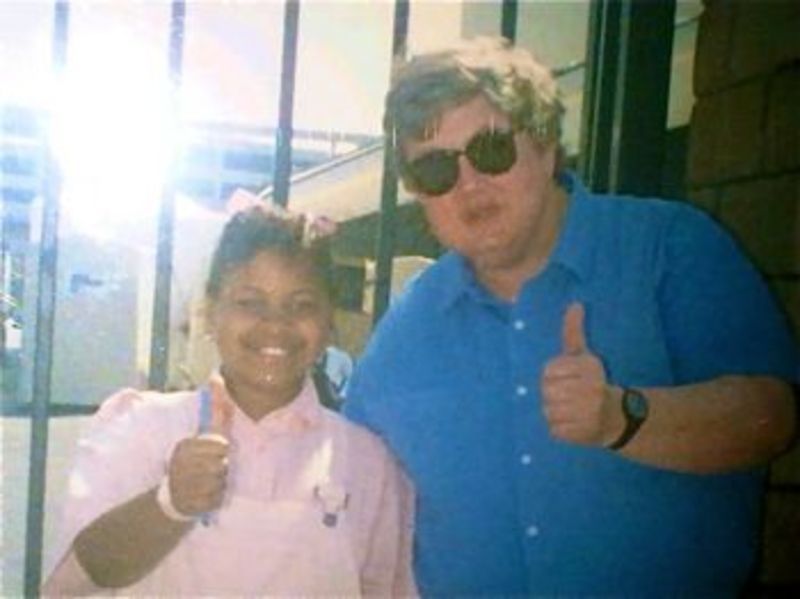
Filmmaker Ava DuVernay, whose birthday is today, meets Roger Ebert at age 8 outside a rehearsal for the Oscars:

Filmmaking Lesson of the Day:

Frame by Frame shows the proper way to shoot a great sex scene in this video that delves into film history, cinema studies and filmmaking craft:

[embedded content]

Filmmaker in Focus:

In his latest for Fandor Keyframe, Kevin B. Lee explores the world of Alex Ross Perry, with a video tribute:

[embedded content]

Actors in the Spotlight:

This supercut of the “best supporting weirdos” in cinema highlights 56 great characters from the finest character actors (via Geek Tyrant):

[embedded content]

Classic Trailer of the Day:

Today is the 50th anniversary of the release of Fantastic Voyage. Watch the original trailer for the sci-fi classic below.

[embedded content]

and

Let’s block ads! (Why?)


No Image

Study Of Breast Cancer Treatment Reveals Paradox Of Precision Medicine

By testing tumors, researchers hoped to identify women who could avoid chemotherapy without increasing their risk of a cancer recurrence. Voisin/Phanie/Science Source hide caption

toggle caption Voisin/Phanie/Science Source

A major study about the best way to treat early-stage breast cancer reveals that “precision medicine” doesn’t provide unambiguous answers about how to choose the best therapy.

“Precision doesn’t mean certainty,” says David Hunter, a professor of cancer prevention at Harvard’s T.H. Chan School of Public Health.

That point is illustrated in a large study published Wednesday in the New England Journal of Medicine, involving decisions about chemotherapy.

As is true for many cancers, breast cancer responds best to treatment when it is caught early, before it has spread throughout the body. Dr. Fatima Cardoso, the study’s lead author and a breast cancer specialist at the Champalimaud Clinical Center in Lisbon, Portugal, says that creates a conundrum for doctors and patients alike.

Because it’s the only opportunity to cure the cancer, “when in doubt we tend to treat” women with early-stage breast cancer, she told Shots. “So we know that we overtreat the patients with early breast cancer.”

That means that women could end up undergoing chemotherapy even if it wouldn’t really improve their survival odds.

Hoping to refine those treatment decisions, Cardoso helped organize a huge study throughout Europe to see whether a commercially available genetic test called MammaPrint could help reduce that overtreatment. More than 6,600 women participated at 112 institutions in nine nations.

Scientists identified women with breast cancer whose physical exams suggested they were at relatively high risk for having the cancer return eventually after surgery, but who seemed to be at low risk of recurrence based on the genetic test results.

They were invited to participate in the study, which would randomly assign them to have chemotherapy or not. “You know that chemotherapy is a treatment that scares people, so overall and for the majority of patients, it was not difficult to convince them,” Cardoso says.

The genomic test, which studies 70 distinct features of a tumor, did a pretty good job of predicting who was at low risk for recurrence of breast cancer and could therefore avoid the pain, discomfort and risks of chemotherapy. (The test, priced at $4,200, is covered by some insurance in the United States.)

The scientists found that 46 percent of women who were deemed to be at high risk of recurrence based on physical symptoms could actually skip chemotherapy with little consequence to their long-term survival.

But the test results weren’t always definitive. About 95 percent of women who skipped chemotherapy as a result of the genetic test results were free of metastasis five years later, but those who had the additional treatment did about 1.5 percentage points better, give or take.

“It’s possible that the benefit is zero, and it’s possible that’s 2 percent or maybe even a little more, you can’t be sure,” says Dr. Clifford Hudis, chief executive officer of the American Society of Clinical Oncology. He was not involved in the European study but co-wrote an editorial accompanying it. It would take another huge clinical trial to figure out whether chemotherapy does in fact add a small survival advantage.

But the study raises a bigger point here: The genomic test, as precise as it is, offers only probabilities, not absolute guidance. And that’s a lesson that applies to the whole new realm of precision medicine, which is billed as potentially transformative for medical care.

“The new tools will definitely be helpful, but they often will pose challenges about what the right decision is,” says Hunter, who wrote a perspective piece noting that people will need to develop a tolerance for uncertainty when using precision medicine tests.

Is it worth all the trouble of chemotherapy for women who are found to be at low risk for recurrence in this genomic test? That’s a tough call, because it requires grasping the rather abstract idea of improving survival odds by maybe just 1 percentage point.

“As humans, we’re notoriously poor at assessing risk and making those calculations,” Hunter says.

He says doctors and patients need better tools to understand and communicate the subtleties that are inherent in precision medicine.

Cardoso is already seeing this play out in her clinic. Women shown to be at low genetic risk on the MammaPrint test are usually opting not to have chemotherapy after their surgery. “But there always [are] some patients for whom 1 percent benefit is enough — and you need to respect the wishes of each individual patient.”

She says the women clearly benefit from the new information, even though it doesn’t provide an absolute answer.

Let’s block ads! (Why?)


No Image

Latest Target In The Drug Price Wars? The Ubiquitous EpiPen

An aggressive marketing campaign has made the EpiPen the go-to drug for treating anaphylaxis. Mark Zaleski/AP hide caption

toggle caption Mark Zaleski/AP

EpiPens are in your friend’s purse and your kid’s backpack. The school nurse has a few, as does Grandma.

The medicine inside — epinephrine — has been around forever, and the handy gadget that injects it into your leg is not particularly new either.

So members of Congress, responding to their angry constituents, want to know why the price of the EpiPen, which can reverse a life-threatening allergic reaction, has risen about fivefold in the past decade.

The wholesale price of a single pen was about $47 in 2007, and it rose to $284 this summer, according to Richard Evans, a health care analyst at SSR. But consumers can no longer buy a single pen, so the retail price to fill a prescription today at Walgreens is about $633, according to GoodRX.

It’s the latest in a string of controversies over rising drug prices that have caught the attention of lawmakers on Capitol Hill. At least three senators have called for investigations into the price of the EpiPen, and Sens. Charles Grassley, R-Iowa, and Richard Blumenthal, D-Conn., have sent letters to Mylan, the drug’s manufacturer, demanding an explanation for the increase.

Blumenthal went a step further. “I demand that Mylan take immediate action to lower the price of EpiPens for all Americans that rely on this product for their health and safety,” he wrote in a letter to the company.

Sen. Amy Klobuchar, D-Minn., has asked the Federal Trade Commission to investigate whether Mylan has violated antitrust laws in its marketing of the EpiPen.

And Hillary Clinton weighed in, calling the price increases “outrageous.”

“It’s wrong when drug companies put profits ahead of patients, raising prices without justifying the value behind them,” the Democratic presidential nominee said in a statement on her Facebook page.

Mylan spokeswoman Nina Devlin said in an email, “We have reached out to every member of Congress who has sent us a letter, and we look forward to meeting with them and responding to their questions as soon as possible.”

She did not immediately comment on Clinton’s statement.

The EpiPen is a long, plastic tube that automatically injects a dose of epinephrine — or adrenaline — into a person’s thigh to stop an allergic reaction. It’s easy to use and portable.

Mylan bought rights to the EpiPen in 2008 and launched an aggressive marketing and awareness campaign. That effort has made the so-called auto-injector a must-have for anyone with an allergy — perhaps to bee stings or tree nuts — that may trigger anaphylaxis, a life-threatening reaction in which the airwaves swell and close.

According to an account by Bloomberg Businessweek, the company considered selling off rights to the drug, which is an old product, but instead launched a campaign to boost sales. Revenue rose from $200 million to more than $1 billion a year.

The company itself touts its campaign “for increased anaphylaxis awareness” as what has helped drive prescriptions and sales of the device.

“Ensuring access to epinephrine — the only first-line treatment for anaphylaxis — is a core part of our mission,” Mylan said in a press release this week.

And certainly people with life-threatening allergies are better off with easy access to the drug.

But Mylan is better off too.

That’s because each EpiPen prescription creates a win-win sales cycle for Mylan.

An EpiPen prescription actually includes two injectors. The FDA in 2010 recommended that patients have access to two, in case the first doesn’t work, and Mylan complied by taking its single EpiPens off the market and offering them in two-packs.

But often one prescription is not enough. People want the pens at home, in their offices or schools, perhaps in the car. So they might buy three or more two-pen packs. Schools and businesses also often keep them on hand in case a student or customer has an unexpected reaction.

That’s a lot of EpiPens.

Plus, epinephrine has a short shelf life, so people have to replace their EpiPens each year, even if they’ve never used them.

That’s how the drug has become a cash cow for Mylan, which last year moved its headquarters from the U.S. to the Netherlands.

But consumers are fed up. Almost 90,000 people signed a petition to Congress asking for an investigation. About 40,000 of those signatures came in on Wednesday.

Mylan says it is working to keep the medication cheap for consumers, by offering $100 coupons to offset high insurance copayments. In a statement released Monday, the company said about 80 percent of patients with insurance get the EpiPen free.

The statement didn’t mention the retail price or the price increases at all. Instead, the company focused on insurance policies with high deductibles that shift costs to patients.

“We encourage all patients and families to thoroughly review and understand their healthcare insurance coverage,” the statement said.

EpiPen’s name recognition means doctors who want to prescribe adrenaline to an allergy-prone patient usually just turn to it. There is no specific EpiPen generic, so pharmacists can’t substitute a cheaper alternative.

But that alternative does exist. Another auto-injector known as Adrenaclick is available in generic form at Wal-Mart for $141, according to GoodRX.

It’s unclear how far the threats of a congressional investigation into the EpiPen will go.

But the prospect does present one awkward situation. The CEO of Mylan, Heather Bresch, is the daughter of Sen. Joe Manchin, D-W.Va. In the time that the price of the EpiPen has been skyrocketing, so has Bresch’s compensation. Last year, she earned about $18.2 million, according to the New York Times. That’s up from about $2.5 million in 2007.

In earlier investigations into drug prices, the chiefs of many companies have been grilled and lectured harshly by lawmakers. It’s unclear whether the angry senators will be as inclined to be as aggressive with the daughter of one of their colleagues.

Let’s block ads! (Why?)