San Francisco’s Conor Gillaspie celebrates his three-run home run in the ninth inning, propelling the Giants to a 3-0 win over the New York Mets in the National League wild-card game. Al Bello/Getty Imageshide caption
toggle caption
Al Bello/Getty Images
Madison Bumgarner pitched a four-hitter in his latest postseason gem, Conor Gillaspie hit a three-run homer off Jeurys Familia in the ninth inning, and the San Francisco Giants beat the defending National League champion New York Mets 3-0 Wednesday night in the wild-card game.
Trying to follow their World Series titles in 2010, ’12 and ’14, the Giants open the NL Division Series on Friday at the best-in-the-majors Chicago Cubs.
Bumgarner has pitched 23 consecutive scoreless innings in winner-take-all postseason games — all on the road — following a four-hitter at Pittsburgh in the 2014 wild-card game and five innings of relief at Kansas City to save Game 7 of the 2014 World Series.
Mets pitcher Noah Syndergaard didn’t allow a hit until two outs in the sixth and gave up two hits in seven innings. Addison Reed escaped bases-loaded trouble in the eighth.
Brandon Crawford doubled leading off the ninth against Familia, who walked Joe Panik with one out.
A wrecked police motorcycle lays on the scene after a suspected drunk driver crashed during the Oklahoma State University homecoming parade in Stillwater, Okla. J Pat Carter/Getty Imageshide caption
toggle caption
J Pat Carter/Getty Images
Zero. That’s the stated goal of transportation officials in the U.S., no traffic fatalities by 2046. Zero deaths is a movement that began in Sweden. There, it’s called Vision Zero. The idea is simple. “No loss of life is acceptable.” That is the one sentence motto of Sweden’s campaign.
Here in U.S., the rate is nearly four times that at approximately 11 deaths per 100,000. Transportation officials in the U.S. say they want to repeat Sweden’s success.
National Highway Traffic Safety Administration Administrator Mark Rosekind speaks at the start of a public meeting about self-driving cars earlier this year. Susan Walsh/APhide caption
One of the tragic coincidences is that as economic activity increases and more people with jobs are on the road, traffic fatalities go up. U.S. drivers put in a record 1.58 trillion miles on the road in the first half of this year, the Federal Highway Administration said this week. That’s a 3.3 percent increase over the same period in 2015. Meanwhile, the rate of deaths is up by more than 10 percent.
“The really sad part is that in the United States we accept 35,092 people dying on the roadways and thinking that’s okay. It should be unacceptable,” says Mark Rosekind, the head of NHTSA. Rosekind’s father was a motorcycle policeman in San Francisco, who was killed on the road in the line of duty. “There are too many stories like this,” Rosekind says.
Several states and cities in the U.S. have adopted this zero-tolerance policy. Practically, getting to zero is not only an ambitious goal but a complex one as well. In Sweden, a premium is placed on safety over convenience, traffic or speed. Low urban speed limits, strict policing of drunk driving, bike lanes with barriers separating cyclists from traffic, and smart pedestrian crossings are some of the solutions implemented.
“There isn’t actually a single magic bullet. It’s not like you can say if the entire country just changed its speed laws then we’d get rid of all fatalities on the road,” Rosekind warns. He says over the next month federal, state, and local governments along with the private sector will develop a plan that moves the country toward the zero-traffic fatalities.
“One of the ways for us to get there is to figure out how to leverage all the new technologies that are coming online that will help us improve safety,” Rosekind says. Autonomous vehicle technology with innovations such as automated braking will get the country closer to the goal, Rosekind says. But self-driving cars are not a panacea, at least not in the near term. Full, self-driving vehicles are still years away, he says. “And even if we were to get a perfect self-driving car tomorrow, it still takes 20 or 30 years to get into our fleet.” Without a plan, Rosekind says, it could take 50 or 60 years before self-driving cars alone helped bring the death rate down.
“In 30 years, we could be looking at zero deaths on our roadways. It’s bold. There’s no question it’s a heavy, heavy lift,” says Rosekind. But putting the focus on traffic deaths now, he says, sets the country up “for a future that could really be dramatically different than the tragedy we live in now.”
Note: This episode originally aired inFebruary 2014.
People in La Crosse, Wisconsin are used to talking about death. In fact, 96 percent of people who die in this small, Midwestern city have specific directions laid out for when they pass. That number is astounding. Nationwide, it’s more like 50 percent. La Crosse is such an exception thanks to one guy who decided that people in this town needed to make plans for their death.
In today’s episode, we’ll take you to a place where dying has become acceptable dinner conversation for teenagers and senior citizens alike. It’s a place that also happens to have the lowest Medicare spending of any region in the country.
Here are a bunch of little bites to satisfy your hunger for movie culture:
Movie Shoes of the Day:
Nike is raffling off a limited amount of Nike Mag self-lacing sneakers inspired by the iconic shoes in Back to the Future Part II to support the Michael J. Fox Foundation for Parkinson’s Research (via USA Today):
[embedded content]
Short Film of the Day:
Speaking of things from the 1980s, see how many movie and TV references from the decade you can spot in this animated short titled Mall 84 (via Geek Tyrant):
[embedded content]
Character Introduction of the Day:
Get ready for Rogue One: A Star Wars Story with the debut and origin of Wedge Antilles in a clip from the upcoming Gary Whitta-scripted episode of Star Wars Rebels:
[embedded content]
Alternate Ending of the Day:
Here’s an animated look at how Star Trek Beyond should have ended:
[embedded content]
Vintage Image of the Day:
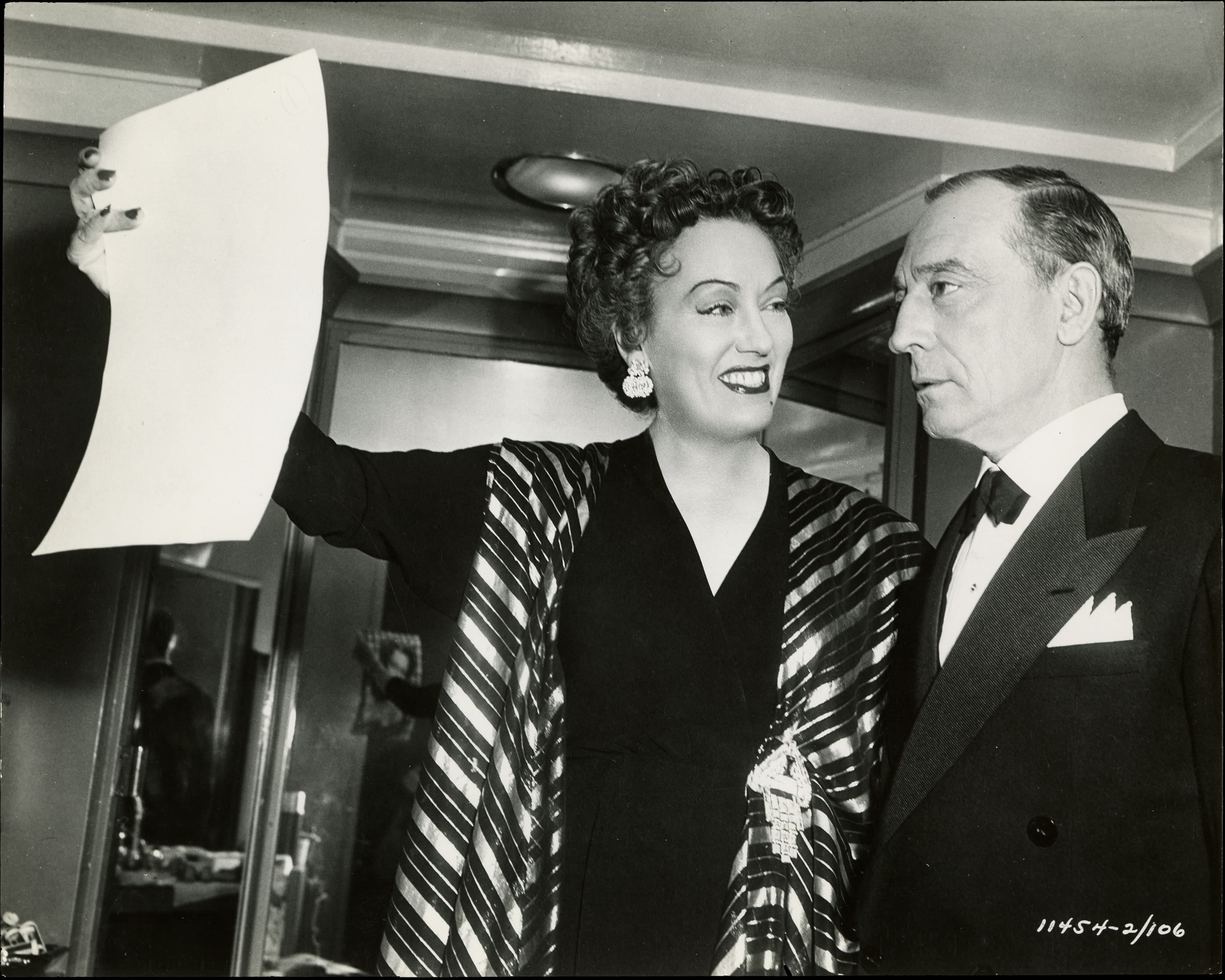
Buster Keaton, who was born on this day in 1895, with Gloria Swanson on the set of 1950’s Sunset Blvd.:
Magic Trick of the Day:
Benedict Cumberbatch does a trick with water, one of the ancient elements, in this video for Vanity Fair:
[embedded content]
Cosplay of the Day:
Speaking of magic, here’s some great cosplay of Newt Scamander from Fantastic Beasts and Where to Find Them. See more pics at Fashionably Geek.
Screenwriting Lesson of the Day:
Lessons from the Screenplay showcases the script for Moonlight Kingdom and what’s written before the style takes over:
[embedded content]
Filmmaker in Focus:
The Discarded Image explores Quentin Tarantino’s use of violence in the video essay “Not Blood, Red”:
[embedded content]
Classic Trailer of the Day:
Today is the 20th anniversary of the release of That Thing You Do!, written and directed by Tom Hanks. Watch the original trailer for the movie below.
George Town in Grand Cayman, Cayman Islands, is the home of many international banks and offshore companies. A new study shows the Caymans hold $46 billion in multinational corporate profits, far more than its own $3 billion economy. David Rogers/Getty Imageshide caption
The study looked at Fortune 500 companies and how they used tax haven subsidiaries to avoid paying taxes on their income in 2015. One of the practices that has become standard for big companies is to create subsidiaries in a country that has no corporate or income tax.
According to the study, 367 of the companies on the Fortune 500 have at least one of these subsidiaries. The study found these companies are holding $2.5 trillion in accumulated profits offshore for tax purposes.
Here are highlights from the study, which is titled Offshore Shell Games 2016:
“All told, these 367 companies maintain at least 10,366 tax haven subsidiaries.
“The 30 companies with the most money officially booked offshore for tax purposes collectively operate 2,509 tax haven subsidiaries.
“The most popular tax haven among the Fortune 500 is the Netherlands, with more than half of the Fortune 500 reporting at least one subsidiary there.
“Approximately 58 percent of companies with tax haven subsidiaries have set up at least one in Bermuda or the Cayman Islands — two particularly notorious tax havens. The profits that all American multinationals — not just Fortune 500 companies — collectively claimed they earned in these two island nations according to the most recent data totaled 1,884 percent and 1,313 percent of each country’s entire yearly economic output, respectively.”
Matt Gardner, executive director of the Institute on Taxation and Economic Policy, is one of the study’s authors. He says: “In many tax havens, it’s easier to set up a subsidiary than it is to get a library card. Very often there is little asked of the company in terms of who owns it [and] what they’re doing with it.”
The Securities and Exchange Commission requires publicly held corporations, to disclose how they interact with the federal tax system — how much they pay in U.S. taxes, how much they pay abroad, how much cash they hold abroad for tax purposes. The study analyzed disclosures mainly from corporate reporting.
Gardner says a hallmark of Bermuda and the Caymans is that they have little in the way of a tax system. According to the study, nearly half of the money that is held offshore is parked on one of the two island nations.
“Is there a chance that they’re actually doing something real in these countries? And pretty clearly the answer is: no.” says Gardner. He points to the fact that the entire economy of the Cayman Islands is $2.7 billion, according the country’s Economics and Statistic office. According to the study, U.S. multinationals claimed they earned $46 billion in the Cayman Islands, a figure that far surpasses the size of its whole economy.
“Very clearly these are profits that are being earned in the Caymans on paper only,” says Gardener, “and the economic activity generating these profits is taking place somewhere else, most likely in the U.S.”
Gardner points out that this activity is completely legal, but he says his group is fighting for changes in federal tax laws. To those who say avoiding taxes is the responsibility of corporate managers, Gardner responds, “Concealing their profits in a post office box in Bermuda may be a highly effective strategy for avoiding tax but it’s a terrible strategy for building a company.”
Gardner says the billions of dollars held in these two islands are effectively being “stashed in a suitcase under a bed.” He says companies could be investing in meaningful ways, such as building infrastructure in the U.S. or other countries, investing in research and development or adding production capacity. “They’re not doing that with this cash,” he laments. That, he argues, is “fundamentally against the interest of their shareholders.”
A federal health list specifically guarantees some women’s health coverage available without a copay or deductible, so what about men’s health? And what options are available for coverage for people who travel frequently? Here are the answers to some recent questions from readers.
Why aren’t there preventive health recommendations for men like there are for women under the health law? Women and breast cancer get so much attention by the health care community. Heart health, diabetes, prostate cancer and colon cancer are a few examples of opportunities for education and preventive screening for men.
There are many recommendations for men’s preventive care in the health law, although most of the examples you mention apply to women as well. Under the law, services recommended by the U.S. Preventive Services Task Force have to be provided without charging people anything out of pocket. The independent panel of medical experts currently recommends that women and men be screened for high blood pressure, elevated cholesterol and blood sugar levels, and for colorectal cancer.
The drafters of the health law paid special attention to women’s preventive health needs, creating additional recommendations tailored specifically for them. This was done in part to address recognized gaps in women’s services, especially in the areas of sexual and reproductive health, said Adam Sonfield, senior policy manager at the Guttmacher Institute, a reproductive health research and policy organization.
The federal government is in the process of updating the women’s preventive health guidelines. If it adopts the working group recommendations this fall, insurers will begin to cover condoms and vasectomies for men without charge. Adding this no-cost benefit would address an inequity in current coverage rules and help both women and men avoid unwanted pregnancies.
I am 74 years old and on Medicare. My mother died of ovarian cancer and two maternal aunts and my paternal grandmother had breast cancer. Does Medicare cover BRCA testing?
Medicare generally only covers genetic testing for the two BRCA mutations that are associated with an increased risk of breast and ovarian cancer if you’ve already been diagnosed with cancer and have a family history that indicates testing is appropriate.
Throughout its history, the Medicare program, which provides health benefits for older and disabled Americans, has focused on treating injury and illness, not preventing them. Although the program now covers some cancer screening tests such as mammograms and colonoscopies, those changes were specifically authorized by Congress.
It’s a wrongheaded approach, said Dr. J. Leonard Lichtenfeld, deputy chief medical officer at the American Cancer Society. “I’m incensed that this is not covered.”
The BRCA test results could be important not only to the woman but also to her siblings and children, Lichtenfeld said.
The U.S. Preventive Services Task Force recommends that women who have a family history of breast or ovarian cancers be screened to determine if they’re at higher risk for potentially harmful genetic mutations and, if appropriate, referred for genetic counseling and BRCA testing. Under the health law, private insurers are required to cover such testing without charging women for it. But that provision does not apply to Medicare.
There are non-insurance options for testing, Lichtenfeld noted. Color Genomics, for example, offers a genetic test that analyzes 30 genes associated with hereditary cancers, including BRCA1 and BRCA2, for $249.
Are there any options available for people with marketplace plans who travel regularly? Emergency costs for an accident should be covered, but what about follow-up care after an accident or an illness while traveling? How does this work with increasingly narrow provider networks?
The situation you describe can be tough to manage. Under the health law, an insurer can’t require you to pay more for care in an emergency department that’s not in your provider network than it would have mandated for emergency care in network.
But once you leave the emergency department, you may get hit with out-of-network charges if you’re admitted to the hospital, for example, or need other follow-up care and are far from home.
Be sure to check with individual Blues plans before signing up if that type of coverage is important to you, said Paul Rooney, vice president of carrier relations at eHealth.com, an online insurance broker.
“Some of the local Blues are pulling [that coverage] from their offerings,” he said.
You might consider buying an accident policy. These plans typically pay a fixed dollar amount to offset your costs if you’re injured in an accident. But they can be tricky, said Nate Purpura, vice president of consumer affairs at eHealth.com. The policies don’t cover preexisting medical conditions, and the insurer might deny a claim that it considers related to an earlier medical problem, he said.
Kaiser Health News is an editorially independent news service that is part of the nonpartisan Henry J. Kaiser Family Foundation.Michelle Andrews is on Twitter:@mandrews110.
Maria Sharapova during her quarterfinal match at the Australian Open tennis tournament in January. A drug test Sharapova took during the event later came back positive for the banned substance meldonium. Rick Rycroft/APhide caption
toggle caption
Rick Rycroft/AP
The international Court of Arbitration for Sport has reduced tennis star Maria Sharapova’s two-year doping ban to 15 months.
In its decision, released Tuesday morning, the court cited Sharapova’s apparent lack of knowledge that the drug she was taking — a prescription heart medication called meldonium that can improve blood flow — had been banned by anti-doping regulators. She had appealed the two-year sentence, calling it “unfairly harsh” in a post on Facebook.
In another post following Tuesday’s decision, Sharapova called it one of her “happiest days, as I found out I can return to tennis in April.” She also called on the International Tennis Federation to look into better ways to notify athletes of changes to doping regulations.
[embedded content]
As we have reported, Sharapova has said she simply did not know the drug’s status had changed. In March, when she announced she had failed the drug test, she said she had been taking the drug for years.
“I did fail the test, and I take full responsibility for it. … It’s very important for you to understand that for 10 years, this medicine was not on WADA [World Anti-Doping Agency]’s banned list and I had been legally taking the medicine for the past 10 years. But on Jan. 1, the rules had changed and meldonium became a prohibited substance, which I did not know. … I was given this medicine by my doctor for several health issues I was having in 2006.”
So, what’s so bad about meldonium? In an interview with NPR this summer, Olivier Rabin, science director for the World Anti-Doping Agency, said the agency banned it on Jan. 1 after noticing that entire teams were taking meldonium, “which usually suggests a drug isn’t being taken for medical purposes. How could every member of a team need the same medical treatment?” He also cited studies questioning the drug’s safety.
Sharapova first tested positive for meldonium in January during the Australian Open, where she lost to Serena Williams in the quarterfinals. The court upheld an earlier decision that stripped Sharapova of the ranking points she earned by making it to the quarterfinals, as well as any prize money.
The 15-month ban is back-dated to Jan. 26, 2016, which means Sharapova will be eligible to compete in April 2017, in time for both the French Open in May and at Wimbledon in July.
Here are a bunch of little bites to satisfy your hunger for movie culture:
Hollywood Satire of the Day:
In Saturday Night Live‘s parody of Hollywood Reporter round table discussions, Margot Robbie impersonates Keira Knightley, Cecily Strong does Marion Cotillard, Sasheer Zamata plays Lupita Nyong’o and Kate McKinnon plays a fake old Hollywood actress:
[embedded content]
Movie Re-creations of the Day:
In honor of Mean Girls Day, Entertainment Weekly recreated parts of the movie with dogs. See more here.
Fake TV Spinoff of the Day:
Fans want Dredd to continue as a TV series on Netflix, so one of them made this fake opening credits sequence as a pitch (via Geek Tyrant):
[embedded content]
Bad Film Analysis of the Day:
Here’s the hidden meaning of The Purge according to an alien visiting Earth in the future:
[embedded content]
Vintage Image of the Day:
Leo McCarey, who was born on this day in 1898, with Harpo Marx and Chico Marx on the set of Duck Soup in 1933:
Actor in the Spotlight:
The latest episode of the character actor showcase No Small Parts looks at the acting roles of Andre the Giant:
[embedded content]
Influential Movie of the Day:
This Fandor Keyframe video essay by Leigh Singer explores the imfluence of Aliens on the modern action movie (via The Playlist):
[embedded content]
Cosplay of the Day:
This cosplayer is so perfect as Mavis from Hotel Transylvania, maybe Adam Sandler should start casting a live-action remake. See more pics at Fashionably Geek.
Video Essay of the Day:
Darren of Must See Films presents a love letter to cinema, exploring how the movies make us feel:
[embedded content]
Classic Trailer of the Day:
Today is the 30th anniversary of the release of Tough Guys starring Kirk Douglas and Burt Lancaster. Watch the original VHS trailer for the movie below.
Hyundai vehicles sit on display on a lot in Los Angeles earlier this year. Partick T. Fallon/Bloomberg via Getty Imageshide caption
toggle caption
Partick T. Fallon/Bloomberg via Getty Images
General Motors, Ford, Honda and Fiat Chrysler all saw their sales go down in September. On the other hand, sales of Nissans and Toyotas were up.
Car sales in 2016 are on pace with 2015, says Jessica Caldwell, senior analyst with Edmunds.com. In 2015, 17.5 million vehicles were sold.
But “Just because we’re not seeing the same amount of growth as we’ve had in the past six years, it’s not a bad thing because we’re on a record pace,” Caldwell adds.
Caldwell says the fundamentals of the market surrounding cars remain strong. That’s despite the fact that overall the sales of passenger vehicles fell 0.7 percent to 1.4 million last month. Caldwell points out that gas prices and interest rates are low, which helps sales. The Conference Board, which tracks consumer confidence, has it at a nine-year high.
In a normal year, Caldwell says, we would be worried about a sales plateau, but, she says, “We’re plateauing at the highest level ever. We’re at point in which automakers are going to make money, dealers are going to make money and consumers are getting good deals.”
Many industry watchers are concerned about an impending automotive recession. For six straight years, the auto industry has grown. Now, most analysts expect sales to stay at a plateau for a while and fall off eventually. Jack Nerad, executive market analyst with Kelley Blue Book, says, “September sales results have industry observers on the edge. Is this just a minor fallback in an otherwise solid year or does this indicate that a long overdue dip in car sales is coming … and perhaps has already begun?”
That is the multibillion-dollar question, says Nerad, which will be answered in the final quarter of the year, “a [potentially] volatile final quarter that contains a hotly contested presidential election,” he adds.
Some of the growth of new car sales is being dampened by used car sales. Leasing as an option has grown more popular — more than 30 percent of new vehicles are being leased. That’s up from 20 percent five years ago, and it means more nice used cars are competing with new cars for sale.
“Taking the short view that the end is nigh is juvenile,” says Eric Lyman, senior analyst with Truecar.com. “The end is nigh for sales growth, but if you go back 10 years and tell executives [that] for the foreseeable future … everyone would see 17 million in sales … everyone would have been over the moon,” he says.
Lyman sees demand falling off, a place for concern. Right now the industry is operating at full tilt, with automakers set up to produce vehicles that meet nearly record demand. If sales lag for a few months, Lyman sees the carmakers cutting back on production.
The analysts don’t expect to see production cut until mid-2017. That has implications for autoworkers. Ford, for example, has indicated that it would very likely cut production. Lyman says until carmakers figure out demand, “it will be a wonderful time for consumers.” Lyman and other analysts see sales incentives increasing in the coming months.
People pose for pictures during an NFL fan rally on Regent Street in London on Saturday. Tim Ireland/APhide caption
toggle caption
Tim Ireland/AP
Daniel Brewer arrived in London on Sunday morning wearing a Jacksonville Jaguars onesie and face paint, complete with black whiskers, brown spots and a blue nose. He had come with fellow fans from the English city of Reading to cheer on the Jags as they took on the Indianapolis Colts beneath sunny skies at Wembley Stadium.
“None of us naturally are Jags fans,” Brewer confided. “We all have our own roots, but because they signed a contract, they’ve got our hearts.”
The Jags have signed to play one game in London each season through 2020, making them the closest thing to a hometown team here. They’re the only U.S. team to make a multiyear commitment, according to the NFL.
Like most of the nearly 84,000 spectators who turned out for Sunday’s game, which Jacksonville won 30-27, Brewer’s favorite NFL team wasn’t on the field. Brewer first got interested in American football through a woman he met at college from Baltimore.
“So I’m a Ravens fan,” he said.
Fans from the English city of Reading don Jacksonville Jaguars onesies to cheer on the team, which has committed to playing games in London through at least 2020. Frank Langfitt/NPRhide caption
toggle caption
Frank Langfitt/NPR
As the National Football League enters its 10th season staging games in London, the events have proven wildly popular, routinely selling out and drawing fans from across Europe. Brewer and many other fans here say they want more games — or even their own team.
Unlike football fans in a U.S. NFL city, though, those here divide their loyalties among the league’s 32 teams. Ride the tube — London’s subway — on game day and you’ll spot a jersey from every NFL team in a matter of minutes.
For instance, Brian Moody-Smith, a 50-year-old carpenter from Kent, was wearing No. 44 from the Washington Redskins, a number made famous by John Riggins. Moody-Smith watched Riggins, a freight train of a running back, on British TV in the early 1980s, when he led his team to victory in Super Bowl XVII with a 43-yard touchdown run.
More than three decades later, Moody-Smith is still awestruck. “He was the man,” he said.
Thousands of fans wearing jerseys representing all 32 NFL teams attend opening day of the NFL’s International Series at London’s Wembley Stadium on Sunday. Frank Langfitt/NPRhide caption
toggle caption
Frank Langfitt/NPR
Adrian Schlauri flew in from Zurich for Sunday’s game. As he stood in line with about 1,000 other people to buy merchandise, Schlauri explained why he was wearing a vintage Philadelphia Eagles jersey with No. 92, which is associated with Hall of Fame defensive end Reggie White.
“I’m an Eagles fan for about 12 years,” said Schlauri — half his life. “Reggie White is one of the best players we had.”
Adrian Schlauri, 24, and his father, Guido, flew into London from Zurich for Sunday’s game. Adrian became a football fan while following his dad, who played in an amateur league. Adrian is wearing the vintage jersey of Hall of Fame Philadelphia Eagles defensive end Reggie White. Frank Langfitt/NPRhide caption
toggle caption
Frank Langfitt/NPR
Schlauri got interested in the game because his father, Guido, also here with him on Sunday, played offensive tackle for an amateur American football team in Switzerland.
Many European fans say they are drawn to U.S. football because of the game’s complex strategy, its exciting, big plays and the NFL’s pageantry. Joe Luxford, wearing a Minnesota Vikings jersey, said he enjoys the outsize personalities and showmanship of the American players, such as retired Cincinnati Bengals wide receiver Chad Johnson, known for his elaborate end zone celebrations.
“It’s sort of like a theater-type performance,” said Luxford, an IT recruiting consultant attending Sunday’s game with childhood friends. “I know some English who don’t like that in Americans in general. But us lot, we like that.”
Given the NFL’s passionate following here, people like Jordan Mead, a restaurant manager, believe basing a team in London is a no-brainer.
“I think within the next five years, there’s got to be a franchise,” said Mead, wearing a Jags jersey with his name on the back.
But Nick Deaker, who drives a forklift and backs the Carolina Panthers, thinks fans here are too divided to make a local franchise work.
“I can’t see everybody changing their allegiance,” he said. “They might come down for the first couple of seasons just to test the water, but after that, I can’t see it lasting very long.”
The Jacksonville Jaguars’ middle linebacker, Paul Posluszny, enters Wembley Stadium as a crowd of nearly 84,000 cheers. The Jaguars are the closest thing to a hometown American football team in London. Frank Langfitt/NPRhide caption
toggle caption
Frank Langfitt/NPR
The NFL will play three games in London this season and add a fourth to the series in 2018. Alistair Kirkwood, managing director of NFL International in London, says the league needs to look abroad for future growth.
But there are big logistical questions. For instance, would distance from the U.S. pose a competitive disadvantage for a team based in London, because of the travel time?
Kirkwood says the league has a lot of work ahead before it would consider expanding to London. He says the NFL needs to double its fan base here and make sure that a new team would strengthen the league as a whole — and that it would be sustainable for a generation or two of fans.
“If you were to do it,” said Kirkwood, “you’d want to do it with a guarantee of absolute success.”