Articles by admin

No Image

Emails Reveal Clinton's Mixed Relationship With Wall Street

Goldman Sachs Chairman & CEO Lloyd Blankfein stands with Hillary Clinton during the 2014 Clinton Global Initiative meeting in New York on Sept. 24, 2014. Stephen Chernin/AFP/Getty Images hide caption

toggle caption

Stephen Chernin/AFP/Getty Images

Excerpts from speeches Hillary Clinton was paid to give to big banks suggest a relationship with Wall Street that is a lot more familiar and pragmatic than the fiery rhetoric she has sometimes used on the campaign trail.

“I represented all of you for eight years. I had great relations and worked so close together after 9/11 to rebuild downtown, and a lot of respect for the work you do and the people who do it,” she told a Goldman Sachs symposium on Oct. 24, 2013.

But in transcript of her comments, found in an email included in a release by WikiLeaks on Friday, Clinton went on to say that the financial crisis had demonstrated the importance of bank regulation: “I think that when we talk about the regulators and the politicians, the economic consequences of bad decisions back in ’08, you know, were devastating, and they had repercussions throughout the world.”

NPR has not verified and the Clinton campaign has not confirmed the authenticity of the emails. But the campaign has not disputed the veracity of some contents that have been widely reported.

In another speech, to a San Diego law firm, the former secretary of state praised some of the people she knew on Wall Street, but also said she wasn’t afraid to work against their interests: “When I was a senator from New York, I represented and worked with so many talented, principled people who made their living in finance. But even though I represented them and did all I could to make sure they continued to prosper, I called for closing the carried interest loophole and addressing skyrocketing CEO pay.”

The excerpts were contained in an email to Clinton staffers from campaign research director Tony Carrk. The speeches were delivered after she resigned as secretary of state but before she started her presidential campaign.

Clinton’s relationship with Wall Street was an ongoing issue during her long primary campaign against Sen. Bernie Sanders, I-Vt., who frequently excoriated her for making lucrative speeches to banks and taking donations from them. He also frequently called on her to release transcripts of her speeches, which she has refused to do.

“To a significant degree, her campaign is funded by Wall Street and big money interests,” Sanders told CNN in an interview last February.

A report published in July by the Center for Responsive Politics said donors from the “securities and investment industry” have given nearly $40 million to the Clinton campaign and pro-Clinton superPACs, more than any other industry. But the report also said most of that money had come from a very few liberal donors.

CNN reported in February that the Clintons had delivered 729 speeches from February 2001 until May 2015, receiving an average of $210,795 for each address. They also reported “at least $7.7 million for at least 39 speeches to big banks, including Goldman Sachs and UBS.”

Clinton has repeatedly insisted that the speeches and donations had no impact on her decisions as senator or secretary of state. “You will not find that I ever changed a view or a vote because of any donation that I ever received,” she said during a debate with Sanders.

The excerpts released yesterday contain few real bombshells but they do suggest that Clinton had a level of comfort with her audience. In one Goldman Sachs speech, she spoke about the difficulty Wall Street officials have making the transition to government work, noting, “there is such a bias against people who have led successful and/or complicated lives. You know, the divestment of assets, the stripping of all kinds of positions, the sale of stocks. It just becomes very onerous and unnecessary.”

In another speech, she allowed that the growing wealth of her and her husband, former President Bill Clinton, had insulated her from some of the realities of middle-class life, while acknowledging “the growing sense of anxiety and even anger in the country over the feeling that the game is rigged.” She then went on to reminisce about her own “solid middle-class upbringing.”

“So I lived that,” she said. “And now, obviously, I’m kind of far removed because the life I’ve lived and the economic, you know, fortunes that my husband and I now enjoy, but I haven’t forgotten it.”

At another speech before the National Multifamily Housing Council in April 2013, Clinton said politicians sometimes needed to have both a “public and a private position” on contentious policy matters: “I mean, politics is like sausage being made. It is unsavory, and it always has been that way, but we usually end up where we need to be. But if everybody’s watching, you know, all of the back room discussions and the deals, you know, then people get a little nervous, to say the least.”

That is borne out by some of her remarks about the financial system and the 2008 crash, which suggest a view that is more nuanced than her typical campaign speeches. Clinton noted that there was a common public view that the United States and its banking system had caused the crash:

“Now, that’s an oversimplification we know, but it was the conventional wisdom. And I think that there’s a lot that could have been avoided in terms of both misunderstanding and really politicizing what happened with greater transparency, with greater openness on all sides, you know, what happened, how did it happen, how do we prevent it from happening,” she said to Goldman Sachs in October 2013.

And to Deutsche Bank in October 2014: “So even if it may not be 100 percent true, if the perception is that somehow the game is rigged, that should be a problem for all of us, and we have to be willing to make that absolutely clear. And if there are issues, if there’s wrongdoing, people have to be held accountable and we have to try to deter future bad behavior, because the public trust is at the core of both a free market economy and a democracy.”

As a Democrat who represented New York in the Senate, Clinton has had an ambivalent relationship with Wall Street. In 2008, she voted for what would become the start of the bank bailout, noting in an interview with WNYC that it would benefit her state.

“I think the banks of New York and our other financial institutions are probably the biggest winners in this [bailout], which is one of the reasons why in the end, despite my serious questions about it, I supported it,” she told host Brian Lehrer. But she also voted for the Dodd-Frank financial overhaul bill, and more recently she has proposed tighter oversight of large financial institutions.

She has also lambasted “the shadow banking industry,” which includes firms such as hedge funds and insurance companies that perform many of the same functions as banks. And she has proposed closing a loophole that allows banks to trade taxpayer backed money through hedge funds.

Let’s block ads! (Why?)


No Image

Olympics Leadership Agrees To Cede More Anti-Doping Control To WADA

IAAF President Sebastian Coe, left, speaks with FIFA President Gianni Infantino at the opening of an Olympic Summit in Lausanne, Switzerland, Saturday. Olympic sports leaders are discussing how to improve a global anti-doping system amid the fallout of a Russian state-backed cheating scandal. Fabrice Coffrini/AP hide caption

toggle caption

Fabrice Coffrini/AP

Saying that it’s “an absolute priority for the entire Olympic Movement” to protect clean athletes, top officials from the International Olympic Committee and major sports federations are agreeing to relinquish more control over catching cheaters to the World Anti-Doping Agency.

That’s the news from the Olympic Summit, a meeting of IOC executives and the leaders of international sporting federations and national organizing committees. It follows an Olympics season that was plagued with doping scandals and the hacking of athletes’ medical records held by WADA.

From Geneva, Lisa Schlein reports for NPR’s Newscast unit:

“IOC sporting leaders meeting behind closed doors in a luxury hotel in Lausanne have decided to distance themselves from the controversial doping issue: They are giving WADA more powers to oversee the testing program.

“The anti-doping agency is mainly a regulatory body, which compiles the list of banned substances. The IOC is proposing WADA have more control over national anti-doping agencies and that it should supervise national anti-doping programs. The court of Arbitration for Sport will decide on sanctions for athletes who cheat.”

The IOC is also promising more money for WADA, saying that a financial boost would come from “the Olympic Movement” as well as from governments. But that money, the IOC says, will depend on WADA implementing some reforms — including a significant upgrade to its information security standards.

WADA’s response to the IOC’s announcement might best be described as lukewarm yet positive. The organization said it has its own proposals to consider — and noted that the topics overlap with the areas the IOC highlighted, from funding and governance to testing and consequences for cheating.

“It was encouraging to hear the sentiment expressed in today’s Olympic Summit that echoes the consensus reached by other stakeholders to the effect that WADA must be given greater authority and regulatory powers,” WADA President Craig Reedie said in a news release. “We will take these ideas forward with us into WADA’s Foundation Board meeting on 20 November; at which, the process towards a ‘roadmap’ will be drawn up.”

Let’s block ads! (Why?)


No Image

Best of the Week: Batman and Wolverine Titles Announced, First Look at New 'Pirates of the Caribbean' and More

The Important News

DC Extended Universe: Ben Affleck confirmed The Batman title and discussed the villain choice. An extended cut of Suicide Squad will arrive next month.

X-Men: Hugh Jackman revealed the next Wolverine movie is titled Logan.

Star Wars: Warwick Davis confirmed he’ll be in Star Wars: Episode VIII.

Harry Potter: All the Harry Potter movies are returning to theaters this month in IMAX.

Remakes: Chloe Grace Moretz joined the Suspiria redo. Angourie Rice joined the remake of The Beguiled. Disney’s live-action Mulan got a release date.

Sequels: Enchanted 2 has found a director. Emily Mortimer joined Mary Poppins Returns.

Video Game Movies: Gears of War is being turned into a movie.

Biopics: Lee Daniels is back on as director of the Richard Pryor biopic.

Box Office: Tim Burton had a hit with Miss Peregrine’s Home for Peculiar Children.

The Videos and Geek Stuff

New Movie Trailers: Pirates of the Caribbean: Dead Men Tell No Tales, Doctor Strange, War for the Planet of the Apes, Patriots’ Day, Resident Evil: The Final Chapter, Get Out, Jackie, John Wick 2, The Monster, The Take, Sleepless, Allied, The Hollow Point, The Edge of Seventeen and Underworld: Blood Wars.

Movie Clips: Trolls and Boo! A Madea Halloween.

Watch: Margot Robbie played Keira Knightley on SNL. And Benedict Cumberbatch did a magic trick for Vanity Fair.

Learn: How to make a great cheap Harley Quinn Suicide Squad costume.

See: The best Mystique from X-Men cosplay you’ll ever see.

Watch: Behind the scenes footage of Justice League.

See: How to win Nike’s Back to the Future Part II sneakers.

Watch: A fan-made Avengers: Infinity War trailer.

Hear: Quentin Tarantino’s old plan for a Luke Cage movie.

See: What the opening to a Netflix Dredd series could look like.

Watch: The kids from Stranger Things reenacted favorite ’80s movie scenes.

See: People react to a talking dog a la Dug from Up.

Watch: A very weird Rogue One: A Star Wars Story trailer.

See: New images from Blade Runner 2049 and Valerian.

Watch: A fan-made Muppets parody of Fifty Shades of Grey.

Learn: All about the new streaming service from Criterion and TCM.

See: All of this week’s best new posters.

Our Features

Movie Calendar: See what’s new and celebrating an anniversary this October in the above calendar.

Geek Movie Guide: We showcased all the geeky stuff to look out for in October.

Fantastic Fest Reviews: The Girl With All the Gifts and Colossal and 90 Degrees North.

New York Film Festival Reviews: My Entire High School Sinking Into the Sea.

Lists: We ranked the 10 best villains in Tim Burton movies. And we ranked all the episodes of Luke Cage.

R.I.P.: We remembered all the reel-important people we lost in September.

Comic Book Movie Guide: Here’s what we want from The Batman.

Home Viewing: Our guide to everything hitting VOD this week.

and

MORE FROM AROUND THE WEB:

Let’s block ads! (Why?)


No Image

Episode 728: The Wells Fargo Hustle

A cable car passes by a Wells Fargo bank in San Francisco, California.

Justin Sullivan/AFP/Getty Images

The third-largest bank in the country, Wells Fargo, is in big trouble. A federal investigation found that Wells Fargo was opening bank accounts without customers’ permission. Perhaps as many as two million fraudulent accounts.

After the scandal broke, Wells Fargo’s CEO John Stumpf was called to Capitol Hill to testify. He told the senators that the bank’s upper management wasn’t responsible for the giant scam. He said it was just a bunch of bad apples working at bank branches. Mostly low-level employees.

One of the low-level employees was watching her former boss testify. And she couldn’t believe it. This wasn’t Wells Fargo’s culture? Upper management had nothing to do with it? She knew the company in branches across the country had pushed and pushed young bankers until they broke the rules. Even the law.

Today on the show, we take you inside the branch at the headquarters of Well Fargo bank. A place where a lot of workers were rewarded for doing some very bad things.

Music: “Hear The Sound” and “Too Much At Once.” Find us: Twitter/Facebook.

Let’s block ads! (Why?)


No Image

EpiPen-Maker Mylan Settles For $465 Million In Medicaid Dispute

The federal Medicaid program had accused Mylan of underpaying required rebates for the EpiPen, which is used to reverse serious allergic reactions. Drew Angerer/Getty Images hide caption

toggle caption

Drew Angerer/Getty Images

Drugmaker Mylan N.V. announced Friday that it had reached a $465 million settlement with the U.S. Justice Department and other government agencies to resolve questions over rebates required by the Medicaid program.

The deal settles allegations by the Centers for Medicare and Medicaid Services that Mylan had misclassified the EpiPen as a generic drug and had not paid the appropriate rebates that are required by law.

Andrew Slavitt, the acting head of CMS, detailed the allegations in a letter to Sen. Ron Wyden, D-Ore., this week.

Slavitt told Wyden that Mylan had misclassified EpiPen as a “non-innovator” or generic drug, when it should have been classified as a brand-name product. Slavitt said the agency had informed Mylan multiple times of the misclassification.

Drugs companies pay rebates to the Medicaid program of 23.1 percent for brand-name drugs and 13 percent for generics. Mylan paid only the 13 percent for $1 billion worth of EpiPens that Medicaid bought between 2011 and 2015. That cost state and federal taxpayers $163 million, he said.

Mylan was facing potentially large penalties. Companies are required to report a drug or device’s correct classification and can be fined up to $100,000 per violation under the terms of the Medicaid Drug Rebate Program.

Mylan has come under increasing scrutiny by lawmakers on Capitol Hill, federal agencies and state attorneys general after the company raised the price for the EpiPen more than 500 percent since 2008. The device is an auto-injector used to reverse serious allergic reactions.

Mylan said the settlement “did not provide for any finding of wrongdoing.”

Let’s block ads! (Why?)


No Image

Experts Puzzled Over Significant Drop In NFL TV Ratings

The NFL’s TV ratings dominance was once bulletproof. But this year, they are down 10 percent across the board. And experts are struggling to find a reason why. NPR’s Kelly McEvers talks to reporter Joe Flint, who wrote about this for the Wall Street Journal.

KELLY MCEVERS, HOST:

Have we fallen out of love with football just a little bit? NFL TV ratings, once thought to be completely bulletproof, have dropped about 10 percent this season across all networks. The drop is even worse for the primetime games. Why is this happening? Well, there are no shortage of theories, but no definitive answers either. Reporter Joe Flint wrote about this for The Wall Street Journal, and he’s here with me in the studio now. Thanks for coming in.

JOE FLINT: Thank you for having me.

MCEVERS: OK, so just last year, the NFL had some of the best ratings ever. I mean, what are some of the theories behind this year’s drop?

FLINT: The main culprit, according to the NFL, is the election and all the coverage and all the attention that Donald Trump and Hillary Clinton are getting and that they’re sucking a lot of air out of the room. One of the debates went up against Monday Night Football and, of course, crushed it. And on Sunday afternoons, even, the cable news networks are all up dramatically in viewers and men 18 to 49, which is, of course, the core NFL demographic. So that’s what the league believes, but there are other folks who have different ideas.

MCEVERS: OK, so what are some of those ideas?

FLINT: Well, there are some who just think that the quality of NFL play has been on the decline. There’s also some key players missing. Tom Brady was suspended for the first four weeks. Tony Romo’s hurt. Peyton Manning’s retired. All these things are – are maybe contributing to a little less fan interest. And then there is a very vocal minority, as I’ve learned in the last two days since writing about this, of people very upset with the league’s non-reaction to the players protesting during the national anthem.

MCEVERS: OK, so you’re referring, of course, to protests started by Colin Kaepernick, and then other players have followed. What are people saying about it to you?

FLINT: Well I’ve gotten a lot of emails from readers very upset about it. They feel it’s disrespectful to the country, disrespectful to the game. They’re upset that the NFL, which will fine a player if they’re wearing the wrong socks or if the shoe laces aren’t tied right, is letting this go by, which they see as a tacit endorsement.

Some readers say they don’t have an issue with protest, but they don’t want to see it on the football field. Why does sports have to be politicized? Can’t it be the one refuge away from this? And others are just furious about it in general and say they’re tired of spoiled athletes not respecting the country and – and the flag.

And, again, I can’t say this is a real issue driving the ratings or not. The NFL certainly isn’t – doesn’t think so. On the other hand, if it is, I wouldn’t expect them to say they recognize that. So, you know, we’ll have to just see as time goes on, especially after the election.

MCEVERS: Now, I’m about to say something that some people would consider, you know, completely un-American and possibly even unconstitutional. Is it possible that, after all these years of consuming football 24/7, 365 days a year and all these different platforms, people are just getting tired of football?

FLINT: Well, it’s interesting. I mean, I’m a football fan. I’ve grown up watching the game, and I still watch, but I don’t watch it with the same intensity. I, myself, am kind of frustrated with the constant tweaking to the rules that the NFL does, the constant trying to get everything perfect that really interrupts the flow of the game, which, of course, then means more commercials, which then gives me another reason to turn the channel, lose interest and get bored. And I’m hearing from some readers that that, too, is an issue. And I think another thing we can’t dismiss is we are learning so much more about the violence of the game – the injuries, the concussions. It’s just become tougher to watch and see. And I don’t think that can be diminished either, and especially as time goes on and fewer kids are playing football as youths, which means they might not be watching it as much as they become adults.

MCEVERS: Well, Joe Flint of The Wall Street Journal, thank you so much for coming in.

FLINT: Thanks for having me.

Copyright © 2016 NPR. All rights reserved. Visit our website terms of use and permissions pages at www.npr.org for further information.

NPR transcripts are created on a rush deadline by Verb8tm, Inc., an NPR contractor, and produced using a proprietary transcription process developed with NPR. This text may not be in its final form and may be updated or revised in the future. Accuracy and availability may vary. The authoritative record of NPR’s programming is the audio record.

Let’s block ads! (Why?)


No Image

'Early School Leavers' Face Dismal Social And Economic Prospects

People stand in line to register for a job fair in Miami Lakes, Fla. A new study shows a growing number of young people in developed countries are giving up on work, school and training. Lynne Sladky/AP hide caption

toggle caption

Lynne Sladky/AP

Add to the list of worrisome economic trends what economists call “NEETs” — young people who are Not in Education, Employment or Training.

Their numbers are growing, now 40 million in the 35 member countries of the OECD — the Organization for Economic Co-operation and Development. And two-thirds of them are not actively looking for work.

The figures come from the biennial OECD report, Society at a Glance 2016.

In the United States, 14.4 percent of young people age 15-29 are NEETs, according to the OECD.

This report follows others that illustrate how the Great Recession disproportionately affected young people. It says one in 10 jobs held by workers under 30 have disappeared. And the OECD says the trend could affect economic mobility, as well as national and economic security for years to come.

In particular, the report highlights the dismal prospects of “early school leavers,” young people who do not complete secondary school.

Imara Jones, an economist who looks at race and gender, says for as many as one in seven young people, “that means that they’re totally outside of the economic lifestyle of the country, any kind of life of the country.”

The OECD gives a snapshot of the report.

The high number of NEETs also represents a major economic cost, estimated at between USD 360 billion and USD 605 billion, equivalent to between 0.9% and 1.5% of OECD GDP.

Young people who finished school at 16, without completing upper secondary education, make up over 30% of NEETs. Foreign-born youth are on average 1.5 times more likely to be NEET than native youth and 2-2.25 times more likely in Germany, Austria, the Netherlands and Norway.

“It is getting harder and harder for young people with low skills to find a job, let alone a steady job in today’s workplace,” said Stefano Scarpetta, OECD Director of Employment, Labour and Social Affairs. “Unless more is done to improve opportunities in education and training for everyone, there is a growing risk of an increasingly divided society.”

Fighting early school leaving is essential, says the OECD. Governments must ensure that young people obtain at least an upper-secondary qualification so they can continue in education or gain vocational skills. Despite progress, one in six 25-34 year olds in OECD countries left school before upper secondary.

Women are 1.4 times more likely to become NEET than men on average. For many of them, this is because they are looking after small children and the high cost of childcare is a major barrier to employment: in the US, Ireland, United Kingdom and New Zealand, childcare costs for a lone parent can account for between one-third and a half of net income.

Jacob Kirkegaard, a senior fellow with the Peterson Institute for International Economics, says, “Obviously this is not just an economics number, it actually has real implications on other things as well,” such as national security.

“All these young people, they have got nothing else to do and they are sitting in the basement surfing on the Internet,” Kirkegaard says. “And all of a sudden they get sucked into some radical ideology of some kind.”

“There is no doubt,” Kirkegaard adds, regardless of the country, “these numbers are materially worse for minority youth.”

Both economists worry that in many ways the problem is greater here in the U.S.

“The problem in Europe is more of a cyclical nature,” says Kirkegaard. “That’s because workers there are more likely to have training and be looking for work.”

In the U.S. he regards the problem as structural, because so many young people in the U.S. have given up on the economy. He warns that without gaining an economic foothold early on, the risk that this group “basically remains high school drop-outs for their life is much higher. And that basically is a structural problem.”

Economist Jones sees in this report an explanation for many of today’s social problems. Jones says countries that are key to global economic growth “have a structural problem of future growth where they have millions and millions of young people who are not consuming, nor are they investing in themselves through education.” It’s one of the reasons Jones postulates why economic growth remains slow.

Let’s block ads! (Why?)


No Image

Today in Movie Culture: 'Avengers: Infinity War' Fan Trailer, Muppets Take 'Fifty Shades of Grey' and More

Here are a bunch of little bites to satisfy your hunger for movie culture:

Movie Parody of the Day:

You will never see Kermit the Frog and Miss Piggy the same way again after watching this well-edited Muppets version of Fifty Shades of Grey from Darth Blender:

[embedded content]

Fake Trailer of the Day:

This fan-made trailer for Avengers: Infinity War from Screen Rant ends on a funny note but also hints at just how crowded that movie is going to be:

[embedded content]

Franchise Consistency of the Day:

Couch Tomato shows us 24 reasons why all the X-Men movies are the same:

[embedded content]

Adorable Cosplay of the Day:

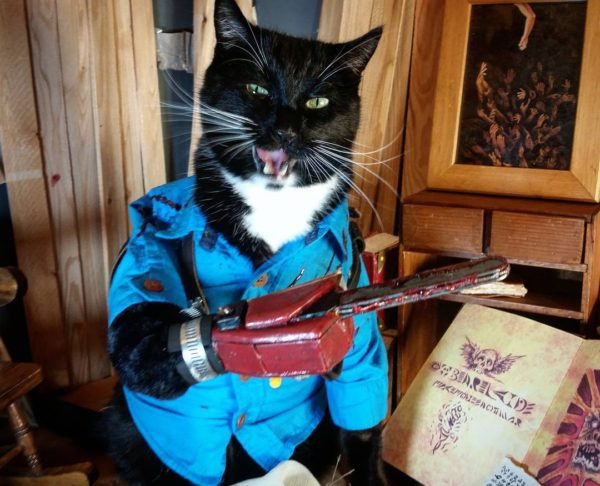
Bruce Campbell is a pretty cool cat, but here he is as a real cat — or the other way around — in this Evil Dead cosplay. See more pics at Fashionably Geek:

Gag Reel of the Day:

The cast of Star Trek Beyond make a lot of innuendo in this blooper reel via Yahoo Movies:

Video Essay of the Day:

Frame by Frame looks at Kubo and the Two Strings and how Laika is changing the face of stop-motion animation, with a history lesson on the format to boot:

[embedded content]

Vintage Image of the Day:

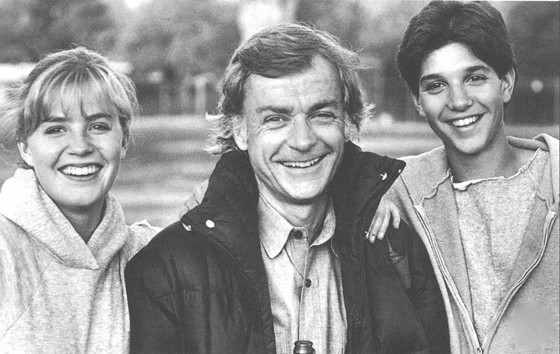
Elisabeth Shue, who was born on this day in 1963, with co-star Ralph Macchio and director John G. Avildsen pose together on the set of The Karate Kid in 1983:

Actor in the Spotlight:

Screen Crush profiles Harrison Ford in the latest episode of the trivia series You Think You Know Movies?:

[embedded content]

Supercut of the Day:

Ranker spotlights ridiculous scenes of hacking in movies in their latest supercut:

[embedded content]

Classic Trailer of the Day:

Today is the 10th anniversary of the release of Martin Scorsese’s The Departed. Watch the original trailer for the movie below.

[embedded content]

and

Let’s block ads! (Why?)


No Image

Countries Around The World Beat The U.S. On Paid Parental Leave

(Left) Edith Einarsson, Kristina Ingemarsdotter Persson, Samuel Einarsson and Per Einarsson. (Center) Yao Zhang, Shanshan Zhang and Rachel Meng. (Right) Lama Dossary and her daughter Leila. Linda Johansson/Courtesy of Kristina Ingemarsdotter Persson; Courtesy of Rachel Meng; Bushra Al-Hinai/Courtesy of Lama Dossary hide caption

toggle caption

Linda Johansson/Courtesy of Kristina Ingemarsdotter Persson; Courtesy of Rachel Meng; Bushra Al-Hinai/Courtesy of Lama Dossary

Out of 193 countries in the United Nations, only a small handful do not have a national paid parental leave law: New Guinea, Suriname, a few South Pacific island nations and the United States.

In the U.S., that means a lot moms and dads go back to work much sooner after the birth of a baby than they would like because they can’t afford unpaid time off.

Jody Heymann, founding director of the World Policy Analysis Center at UCLA, says the global landscape for paid parental leave looks bright, but the U.S. is far behind.

“The U.S. is absolutely the only high-income country that doesn’t, and as you can tell by the numbers, overwhelmingly the world provides it,” she says. “The world not only provides paid maternity leave, but they provide adequate paid paternity leave.”

Countries first began thinking about paid parental leave during the Industrial Revolution, Heymann says.

“In the 1800s — as soon as women started moving from working at home to working in factories — countries realized they needed to do something to ensure that women could work and care,” she says. “So they started to provide across Europe and across Latin America and elsewhere paid maternity leave — leave that would care for families, for kids and ensure that economies could succeed.”

Later on, representatives from around the world met through the United Nations and agreed to strive for a minimum of 14 weeks of leave, paid at two-thirds of a worker’s salary up to a cap. This was decades ago, and today, most countries meet or exceed that minimum. Heymann says at least 50 countries now provide six months or more of paid maternity leave.

The driving motivation behind setting a global standard for paid parental leave comes down to common sense and economic benefits, Heymann says.

“In most countries, families rely on income from both the mom and dad,” she says. “Families can’t afford to have a lengthy period without income for one of them. At the same time, newborns absolutely need parental care. So this being a fundamental piece of social insurance or what governments do as part of their social security really is common sense.

“The second piece that drives countries is I’ve spoken to finance ministers from around the world who say one of their greatest sources of success economically is getting women into the workforce in equal numbers,” Heymann continues.

Brigitte Beltre, a mother from France, explains a common way that countries pay for this leave.

“You have to know it’s not for free,” she says. “In France, you have to work a certain amount of time to have paid maternity leave. You have to give to the system. It’s like a savings account.”

Governments rely on a social insurance structure, where small contributions create a pool of money that workers can draw from when they need to take leave.

“Those contributions to the government may come from employers, employees and the government’s general revenue, but they pay it through a social insurance system, so that no business has a heavy burden — if they’re a small employer and one person’s out, or if they’re a larger employer, but disproportionately have young parents as employees,” Heymann says. “That’s how they spread the responsibility evenly.”

Canada has a similar set-up to France. Tatiana Mellema in Vancouver says being able to dip into that fund gave her enough time off to bounce back from the major medical event of giving birth.

“Physically the recovery of having a child is huge,” Mellema says. “It took, for me, months.”

She says it also gave her time to care for her new son at his most vulnerable stage.

Tatiana Mellema plays with her son, Luca Kirton. Travis Kirton/Courtesy of Tatiana Mellema hide caption

toggle caption

Travis Kirton/Courtesy of Tatiana Mellema

“The financial support was essential to getting us through that year and giving me that time with him,” Mellema says. “Had I not have had it, I probably would have had to go back to work fairly quickly after I had him, which I can’t even imagine doing, because my experience is just having that year with him was so important.”

Heymann says paid parental leave policies have a significant impact on infant and maternal health.

“So there are powerful, long-term studies showing that providing paid maternity leave, for example, lowers infant mortality,” she says. “Beyond this, we know that women who have sufficient paid maternity leave are much more likely to breastfeed, and breastfeeding lowers the risk of all sorts of infectious diseases, it increases and improves cognitive outcomes, and it benefits the woman’s health.”

In Sweden, the government provides almost 16 months of paid leave to be used between two parents.

Per Einarsson, a video game developer who lives in Stockholm, Sweden, says he and his partner, Kristina, split that paid time off evenly when each of their two kids were born. He says that time helped him to be a more engaged dad.

“It was nice to be educated, if you may, to learn how to take care of my children and to bond with them, and then of course it was nice to give Kristina the possibility to get back to her job and focus on her career as well,” he says.

Einarsson says that time set a tone in their home — one that’s felt years later. Their kids are now three and five years old.

“I think in their eyes we were always very equal to them and still are,” he says. “And I think that felt good to us and hopefully to our children as well.”

But Sweden is not the norm. Most countries don’t offer equal leave to men and women. Policies around the world tend to be more centered on moms than dads. But Heymann says the most competitive countries that do provide it show that paid paternity leave is economically possible.

“Overwhelmingly, the most competitive countries in the world — the ones with the strongest economies and the lowest unemployment — do provide paid leave for dads, showing this is feasible,” she says.

And when women do get or take more paid leave than men, there can be an unintended downside: It makes it harder for women of child-bearing age to get hired or promoted.

In China, many mothers experience workplace discrimination after taking maternity leave despite laws that prohibit it.

“Although the labor law forbids the employer to fire female employees in one year after giving birth, the bosses can find ways to let the employee feel uncomfortable,” says Meng Meng, a mother who lives in China.

Lama Dossary of Saudia Arabia says taking paid leave changed how she was treated at work. There, mothers receive 10 weeks of paid time off, and fathers get three days.

“When I went back I did feel like it did affect how I was looked at, how I was treated,” Dossary says. “My promotions got stopped for a while. I wasn’t given the same amount of work, I wasn’t given the same amount of responsibility.

“I don’t know how it would affect things, but I do think that maybe if other people were able to take such leave off — whether to take care of their older parents or a father maybe has to take some time off because he has a child that needs special care for a while — I think that would at least change the perception,” she says.

According to Heymann, the U.S. is an outlier in a few ways when it comes to global parental leave polices.

On one hand, the U.S. is the only developed country without a national paid parental leave policy.

“We urgently need to catch up in the United States,” Heymann says. “For a high-income country, we have some of the worst outcomes for our infants. We have some of the highest rates of infant mortality. We have huge health inequalities.”

But despite this, Heymann says the U.S. stands out in one pretty positive way.

The U.S. Family and Medical Leave Act guarantees 12 weeks of job-protected time off equally to many American moms and dads. People caring for a sick parent or even themselves during a long illness also qualify.

Heymann points to this law as a good starting point because it treats mothers and fathers equally. But this is unpaid leave, and it doesn’t apply to about half of the American work force.

“The problem is the fact that it’s unpaid means it’s unaffordable to many Americans,” Heymann says. “And all of the caveats that come with the Family [and] Medical Leave Act that have to do with how many hours you’ve worked, how big your employer is, etc., means that millions of Americans aren’t covered. So we need to take that basis, make it paid and ensure that all Americans are covered.”

Let’s block ads! (Why?)


No Image

Today in Movie Culture: 'Stranger Things' Kids Reenact '80s Movies, History of Zombie Movies and More

Here are a bunch of little bites to satisfy your hunger for movie culture:

Movie Scene Recreations of the Day:

Gaten Matarazzo and Caleb McLaughlin, two of the kids from Stranger Things, reenact scenes from E.T. the Extra-Terrestrial, Ghostbusters and The Empire Strikes Back for BuzzFeed:

Supercut of the Day:

In this sad supercut from Room 237, we see images of the death and destruction that come post war (via Cinematic Montage Creators):

[embedded content]

Film History Lesson of the Day:

For Fandor Keyframe, Jacob T. Swinney chronicles the rise of the zombie movie:

[embedded content]

Vintage Image of the Day:

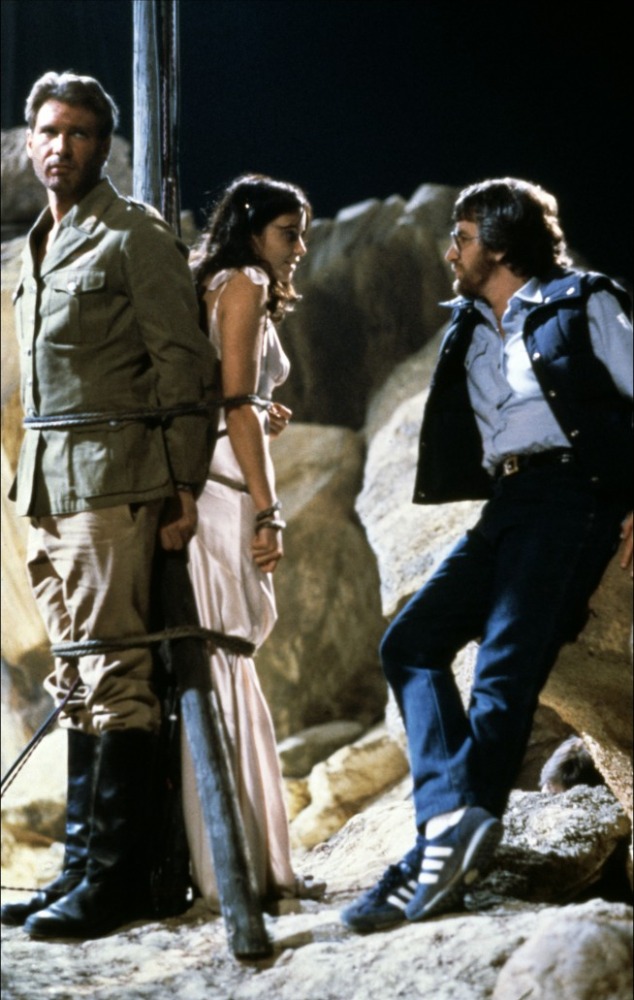
Karen Allen, who was born on this day in 1951, with co-star Harrison Ford and director Steven Spielberg filming a climactic moment from Raiders of the Lost Ark in 1980:

Movie Trivia of the Day:

With a new Emily Blunt movie out this weekend (The Girl on the Train), CineFix shares seven pieces of trivia about Sicario:

[embedded content]

Video Essay of the Day:

Channel Criswell explores drama in action in Seven Samurai and what today’s action movies can learn from Akira Kurosawa:

[embedded content]

Cosplay of the Day:

DIY Costume Squad shows us how to make a perfect but cheap Suicide Squad Harley Quinn costume just in time for Halloween:

[embedded content]

Fan Art of the Day:

Here’s what Iron Man would look like if he was an owl. See more of the artist’s “Owlvengers” plus Deadpool as an Owl at Geekologie.

Filmmaker in Focus:

Jorge Luengo’s latest spotlight on the obsessions of Pedro Almodovar looks at how much the filmmaker features books in his movies:

[embedded content]

Classic Trailer of the Day:

This week is the 20th anniversary of the release of the Wachowskis’ Bound. Watch the original trailer for the romantic crime thriller below.

[embedded content]

and

Let’s block ads! (Why?)