Articles by admin

No Image

How Gaps In Mental Health Care Play Out In Emergency Rooms

Too often, pediatricians say, the teen depression that went undiagnosed in the community shows up in the ER as a suicide attempt. Studio 642/Blend Images/Getty Images hide caption

toggle caption

Studio 642/Blend Images/Getty Images

Nearly 1 in 5 children each year suffers a psychiatric illness, according to research estimates. But a national shortage of medical specialists and inpatient facilities means that many still go untreated — despite national efforts to improve mental health care.

New research is driving home the consequences. Scientific abstracts presented Monday in Las Vegas, at the annual meeting of the American College of Emergency Physicians, offer insights into how frequently patients with mental health issues land in the emergency room — often because opportunities to intervene earlier are missed. Pediatricians and child psychiatrists say children are among the hardest hit.

The researchers analyzed data compiled by the National Hospital Ambulatory Medical Care Survey, which tracked mental health visits to hospital emergency departments between 2001 and 2011.

Compared with physically ill patients, people with mental health conditions rely more on the emergency department for treatment and are more often admitted to the hospital from the ER, the scientists found. Also, they tended to be stuck in the ER longer than people who show up in the ER with physical symptoms.

Specifically, the researchers found that about 6 percent of all the emergency department patients — of all ages — had a psychiatric condition. More than 20 percent of these psychiatric patients were admitted to the hospital, compared with just over 13 percent of the medical patients. About 11 percent of these patients with mental health problems required transfer to another facility, compared with 1.4 percent of the patients with physical ailments.

About 23 percent of mental health patients stayed in emergency care for longer than six hours, and about 1.3 percent for more than 24 hours. Only 10 percent of medical patients were under treatment in the ER for more than six hours, and just half a percent were there for more than 24 hours.

The researchers have not yet determined the distribution of ages among the patients in their study who came to the ER because of mental health symptoms. Anecdotally, though, ER patients with psychiatric problems tend to include more children and elderly patients than you’d expect to see based on the age range of the general population, says Suzanne Lippert, a clinical assistant professor in emergency medicine at Stanford University and lead author on the study.

The findings highlight what can happen when patients can’t find good outpatient treatment for mental health problems, Lippert says. The evidence also underscores, she says, that when psychiatric patients arrive at the ER in a crisis, there is often no good place where they can continue treatment, once the immediate issue has been addressed.

Patients who come to the ER because of physical ailments can usually be sent home, Lippert says, “because we know they’ll be evaluated by [their] doctor in one or two days.” But psychiatric patients don’t always have that option because of gaps in the mental health care system.

And young patients may be affected the most, says Dr. Steven Schlozman, a research psychiatrist at Harvard Medical School and associate director of the Clay Center for Young Healthy Minds at Massachusetts General Hospital. He was not affiliated with the research.

“It’s a numbers game,” Schlozman says. “Unless you live in a large urban area, you’re very unlikely to find a child psychiatrist.”

Lippert’s study found that the most severely ill psychiatric patients typically spent more time in the ER. Patients with bipolar disorder, depression or psychosis and those diagnosed with multiple conditions were more likely than others to be held in the ER longer than 24 hours.

A national shortage of inpatient beds for psychiatric patients is part of the problem, Lippert says. She has seen patients have to wait longer than a week to get the inpatient treatment they need.

Such delays in cramped, overused emergency quarters hurt patients, says Dr. Thomas Chun, an associate professor of emergency medicine and pediatrics at Brown University. Doctors often agree a child needs to be transferred, he says, only to find no outside beds available.

“We are the wrong site for these patients,” says Chun, who was not involved in Lippert’s study. “Our crazy, chaotic environment is not a good place for them.”

Meanwhile, the young patients are even less likely to get reliable care after they are discharged from the ER. Whether they need regular follow-up with a psychiatrist, or a transfer to specialized facility, the resources often aren’t in place. The American Academy of Child and Adolescent Psychiatry estimates there are only 8,300 such specialists in the U.S., for more than 15 million young patients.

Dr. Lindsay Irvin, a pediatrician in San Antonio, says the dearth of psychiatrists who specialize in treating young people means many young patients simply don’t get the mental health treatment they need. By the time they wind up in the ER, she says, undiagnosed depression may have progressed to suicidal intent. And after leaving the ER, many are lost to follow-up.

“They’ll land in a pediatric or family practice,” Irvin says, where most primary care doctors haven’t been trained “to navigate the ins and outs of psychotropic meds.”

Lippert and her colleagues also found that the emergency psychiatric patients were more likely to be uninsured than medical patients were. About 22 percent of mental health patients lacked coverage, versus 15 percent of patients treated for physical conditions.

Kaiser Health News is a national health policy news service that is part of the nonpartisan Henry J. Kaiser Family Foundation.

Let’s block ads! (Why?)


No Image

How Free Web Content Traps People In An Abyss Of Ads And Clickbait

Author Tim Wu says that much of the content on the Internet is created by businesses that are on a “quest for clicks.” PeopleImages.com/Getty Images hide caption

toggle caption

PeopleImages.com/Getty Images

If you feel like Internet ads are more pervasive and invasive than ever before, you’re not alone. Author Tim Wu tells Fresh Air‘s Terry Gross that the Web has gotten worse over the years, not better — and unrelenting ads are to blame.

“I think you spend 50 percent of your mental energy trying to defeat ad systems,” Wu says. “It’s amazing that we’ve got this great scientific invention, the Web and the Internet, and then it has come to the point where using it reminds me of swatting mosquitoes.”

As a professor at Columbia Law School, Wu became known as an open Internet advocate who is credited with coining the term “net neutrality.” His new book, The Attention Merchants, examines how advertising has changed the Internet — and how those changes affect us.

Tim Wu is a professor at Columbia Law School. His previous books include The Master Switch and Network Neutrality. Mikiko Hayashi/ Deckle Edge hide caption

toggle caption

Mikiko Hayashi/ Deckle Edge

He says the book was inspired by his own experience of sitting down to look something up on the computer and finding, four hours later, that he had slid into a world of digital distraction. “It’s what I call the casino effect,” Wu says. “It’s this effort of the environment to make you lose control of your sense of time and your attention kind of gets dragged away.”

Wu points out that much of the “free” content on the Internet comes at a price to users, who are subjected to ads that are targeted specifically at them and which are increasingly difficult to ignore or close. “Google, Facebook, Twitter — the whole set of companies essentially knows all your weaknesses and essentially how to manipulate you in subtle ways in order to have you do things you might not otherwise do,” he says.

Wu says that although the Internet is full of “clickbait that brings ads along like a bad cold,” it doesn’t have to be that way. “We can have a better Web,” he says. “Whether it’s a combination of subscription models or nonprofit models, I would like to have a Web that we feel proud of, that lives up to its promise.”


Interview Highlights

On the quest for clicks

It’s inherent to the business model. It’s very driven with the need to grow, to get more clicks and clicks and clicks. And some of this book is about the history, and we often say that ratings kind of ruined television in the 1950s, well, the quest for ratings looks dignified in comparison to the quest for clicks.

So much engineering talent and ability has gone into trying to make people click on things that I think we’ve almost lost the last five years of development. It’s been very disappointing.

On how we are used to content being free

It’s a bargain with some historical precedent. I think back starting with radio, starting with television, we got used to this idea of stuff being free as long as you just watch a few ads. …

This attention-merchant model has spread to so many areas of our life, where we’re completely used to everything being free. But then the payoff, or the exchange, is that then we also agree to stuff that is compromised, because it is always trying to get us to click on ads at the same time. So we have this bargain that we made — and you can call it Faustian, you can call it whatever you want — that we have decided that we have to have everything for free, and I think we’re starting to pay for it in terms of our mental states.

On the price of “free” Internet content

If you really want change in this area, and you want to act, you probably have to pay for stuff, pay for content. Some people are like, “Oh my God I have to pay?” But people do pay. They pay for Netflix, they pay for HBO, they pay for other types — they subscribe to newspapers sometimes.

Generally speaking, when you pay for stuff it has more of your interests at heart. … In other words, a lot of the websites are always serving two masters, they’re both trying to get you entertained enough to stay there, or to click on things, but to also then make it a good platform for advertising. So I have sort of a plea to people who want to change these sort of things is, like, maybe just suck it up and start paying for more stuff.

On the pervasiveness of Internet advertising

In the media, traditional media like print, we had boundaries, we had spaces that ads didn’t leave, they stayed where they were on the page, they didn’t float around over the text, and we’re sort of lost on the Internet.

We don’t have any barriers. We have a demand for growth that is insistent, and so advertising just keeps getting heavier and heavier and heavier. It doesn’t have any natural limit, and we haven’t found a place for the limit.

On Google’s approach to advertising

I think Google is the most profitable attention merchant in the history of the world. … They started a very idealistic beautiful company in many ways, but they didn’t have a business model.

The most interesting thing about Google is its founders hated advertising and in fact, they wrote this paper in the ’90s, saying in its appendix that any advertising-based search engine would always be corrupted and unable to serve its highest purposes, because advertising always corrupts the goal of the search engine, which is to try to give you the most important stuff, not the stuff someone paid to be there.

Google is this conflicted company. I think they thought they could do this deal and keep advertising at bay, but I think year in, year out Google is starting to get worse instead of better. … You can see it with Google Maps, you can see it with Google Directions where somehow Uber is always one of the options, and it’s becoming exactly what they said was what they never wanted, which is a pay-for service where the highest bidder gets the best results. So it’s kind of a cautionary tale.

I do think the best thing for companies like Google and Facebook, if they are afraid of this ethical trap of advertising, is they should start letting people pay who want to pay and avoid some of the advertising.

On how advertisers can use technology to target individual “moments”

I think this is going to become more intense in the coming decade as we start to carry more and more technology with us. We already have our phones, but other wearables and those technologies are going to want to know when you’re deciding things and then offer some kind of input, subtle or less so, on that moment.

So you know, discovering the moment: Let’s say you’re someone’s phone and you notice that your owner is drinking coffee at certain times of the day, just very subtly indicating where the local coffee shop is, which happens to have paid whoever makes your phone, at the right moment. … We are possibly facing little tiny bits of manipulation in all of our waking hours, if we don’t have that already.

On how Facebook “likes” help advertisers

Every time you click on a “like” button on another site, you’ve told Facebook that you’re doing that, and so therefore advertisers know who their fan base is. When you decide to “like” something you may feel you’re innocently putting out your preferences, but actually you’re delivering something of enormous value, which is indicating that you essentially like to be advertised to by this company.

It’s so funny that the Internet has become a series of traps where you do innocent things like give your name or address or indicate a preference — “I like this thing” — and therefore you open yourself up to a deluge of advertising based on those stated preferences. That’s what you’re doing, you’re signaling who you are as a consumer.

On what can happen when Internet companies know intimate details about individuals

I’m concerned with our autonomy. … I particularly don’t like it when it’s used to exploit your weaknesses or make you lose control in some ways — so it’s like advertising casinos to people who have gambling problems, or just things that are too sensitive — if you have a disease and suddenly you started getting ads for cures for that disease, it’s an embarrassing disease. All that kind of stuff, it just gets into that zone of autonomy or privacy where you feel a sense of freedom to be who you want to be, and I’m afraid when too many people know too much about you, it actually makes us all a lot more boring, because you’re afraid to express yourself.

Let’s block ads! (Why?)


No Image

Tennis Star Nick Kyrgios Suspended For Tantrum At Shanghai Masters

Nick Kyrgios of Australia complains to the referee during his men’s singles match against Mischa Zverev of Germany at the Shanghai Masters tennis tournament on Wednesday. Johannes Eisele /AFP/Getty Images hide caption

toggle caption

Johannes Eisele /AFP/Getty Images

The governing body for men’s tennis has suspended Australian star Nick Kyrgios for three months, or eight tournament weeks, after he essentially threw his second-round match last week at the Shanghai Masters.

Kyrgios often appeared uninterested during the match against German player Mischa Sverev, lobbing soft, slow serves over the net and wandering away before Sverev could return them. He bickered with the umpire and a fan during the match, and was quickly defeated at 6-3 and 6-1. ESPN has provided video of some of the more dramatic moments:

[embedded content]

Tennis’ governing body, the ATP, said Kyrgios’ display amounted to “conduct contrary to the integrity of the game.” It fined him $25,000. That amount is in addition to earlier fines for his performance during that match — for not giving his best effort, verbally abusing a spectator and for unsportsmanlike conduct.

Kyrgios, 21, issued an apology, saying that his “body finally just gave out in Shanghai both physically and mentally” after a difficult schedule of travel and tournament play. He won the title in Tokyo’s tournament earlier this month. Kyrgios added: “I do understand and respect the decision by the ATP and I will use this time off to improve on an off the court. I am truly sorry and look forward to returning in 2017.”

The suspension will last through Jan. 15, 2017. However, the ATP gave him an option to reduce that suspension to three tournament weeks, should he agree to enter a “plan of care under the direction of a sports psychologist.”

Kyrgios did not personally indicate whether he intended to shorten his suspension by seeking professional help, but Tennis Australia said in a statement that he has agreed to do so.

However, “there are no regular tournaments on the schedule after Nov. 7,” as The Associated Press reports, “so he will have to wait until next year in any case to return to the tour.”

At a press conference after last week’s match, a bored-looking Kyrgios openly disparaged his fans: “I don’t owe them anything. It’s my choice. If you don’t like it, I didn’t ask you to come watch. Just leave. If you’re so good at giving advice and so good at tennis, why aren’t you as good as me?”

He struck a different tone in his statement today: “I of course know how important the fans are to the success of our sport and I personally love the interaction with fans in the many different cities throughout the world on the tennis circuit.”

Kyrgios has been the subject of numerous controversies. As The Two-Way reported, the ATP fined him $10,000 for making a lewd on-court remark to an opponent in Aug. 2015. A month before that, he was fined nearly $9,500 for swearing on the court.

Let’s block ads! (Why?)


No Image

You're About To See A Lot More Cuban Cigars In The U.S.

David Savona of Cigar Aficionado talks about the lifting of restrictions on importing cigars from Cuba, and why Cuban cigars are so special to smokers.

MICHEL MARTIN, HOST:

Finally today, it’s time for our segment called Words You’ll Hear. That’s where we take a word or a phrase that we think will be in the news and let you know what it’s all about. And this week’s word is Cohiba. That is the cigar brand owned by the Cuban government. And if you are a cigar aficionado, then you probably know this already – you might be seeing a lot more of them in the U.S. Before Friday, Americans who traveled to Cuba were only allowed to bring back rum and cigars worth a combined value of $100. For those in the know, that’s about three good cigars. But a new round of regulations meant to ease trade with Cuba eliminates that limit.

We invited David Savona to talk about it with us. He is the executive editor of – what else? – Cigar Aficionado magazine. And he’s with us now. Mr. Savona, thanks so much for joining us.

DAVID SAVONA: Oh, thank you very much.

MARTIN: I do want to mention that the new trade regulations are not just about cigars. They also lift limits on cargo ship travel between the U.S. and Cuba, and they make it easier for Cuban and American researchers to conduct joint medical research. So with that being said – Mr. Savona, what is so special about a Cuban cigar?

SAVONA: Well, Cuban cigars have been the forbidden fruit for Americans for more than five decades. But more importantly than being forbidden fruit and being illegal for so many years, the cigars are exceptional. Cuba is the birthplace of the premium cigar industry, so the cigars made in Cuba are world-class. They’re prized by connoisseurs around the world. And they’re very, very good.

MARTIN: OK, not trying to get in your business here, but how have you been able to have Cuban cigars to this point?

SAVONA: Well, you know, our editors travel the world. We’ve been in business for 24 years, going on 25. And we’ve been all around the world in that entire time and in Cuba for many of those years. And as journalists, we’ve been allowed to go to Cuba, unlike most Americans. Typical travel is still banned under the embargo, but journalists have been allowed to go under that loophole.

MARTIN: If you aren’t able to travel to Cuba for, you know, whatever reason, can you go to a cigar shop and just buy one now in the U.S.?

SAVONA: They still cannot be sold in the U.S., so you won’t see them at your local cigar shop. But you can go to London, you can go to Montreal, you can go to Mexico, any of these other countries where Cuban cigars are sold, and you can now bring back, you know, for personal consumption Cuban cigars from those countries. That’s a big deal. That’s a big change.

MARTIN: So how much do they cost? As I mentioned, that maybe $100 to this point would get you three – is that how much they cost in Cuba?

SAVONA: Yeah. At the very, very high end, though. Talking about Cohibas – a Cohiba Behike, the fattest size, known as a 56, they go for about $33 dollars apiece in Cuba. So yeah, that’s three cigars under the old $100 limit, which is not very much at all. Even a more modestly-priced good Cuban cigar would cost, you know, maybe $10 or so. So that doesn’t get you even a full box because most boxes of Cuban cigars have 25 cigars. So one of the big changes with this law, a change we certainly applaud, is that now when you take your trips, you can come back with an entire box or a couple of boxes of Cuban cigars, which is a good thing in our eyes.

MARTIN: Part of what makes these so attractive is that they’ve been made the same way for what, generations now? Is there going to be a windfall for Cuba? Or is the price, do you think, going to rise in part because demand is going to rise?

SAVONA: Prices in Cuba are still very reasonable compared to other markets around the world. A Cuban cigar that retails for, you know, $20 in Cuba might retail for $80 in London. So prices could go up. The other thing you mentioned about the allure – you know, the Cuban cigar – there is an allure because of the forbidden fruit aspect, the fact that it has been illegal.

And while it is an excellent cigar, you know, we do our tasting – in every issue of Cigar Aficionado, we taste cigars from around the world, Cuban versus non-Cuban. And while the Cubans certainly do exceptionally well in those taste tests, they don’t always win. So the cigars from the Dominican Republic, Nicaragua, Honduras – in many cases, they’re just as good.

So I don’t think the cigar smokers of America will all of a sudden just stop smoking the cigars they’ve grown to love over these decades of smoking only or being available to only smoke non-Cubans. I think in the future, when it’s all completely open, the cigar smoker America will have a full choice – Cuban, Dominican, Nicaraguan and otherwise – and Cuban cigars will become a part of the regular rotation, a more complete humidor for the cigar smoker of the future.

MARTIN: That’s David Savona. He’s the executive editor of Cigar Aficionado magazine telling us about Cohibas. He was kind enough to join us from his home office in Connecticut. Mr. Savona, thanks so much for speaking with us.

SAVONA: Oh, thank you. It’s been a pleasure.

Copyright © 2016 NPR. All rights reserved. Visit our website terms of use and permissions pages at www.npr.org for further information.

NPR transcripts are created on a rush deadline by Verb8tm, Inc., an NPR contractor, and produced using a proprietary transcription process developed with NPR. This text may not be in its final form and may be updated or revised in the future. Accuracy and availability may vary. The authoritative record of NPR’s programming is the audio record.

Let’s block ads! (Why?)


No Image

NASCAR Driver Tony Stewart Revved Up To Treat Fans To His Final Drive

The man some NASCAR racing fans call the last of the ‘old school’ drivers is retiring soon. Tony Stewart is known for his aggressive and controversial style.

MARY LOUISE KELLY, HOST:

To NASCAR now and a controversial driver who will hit the gas just a few more times before retiring. Tony Stewart has won three championships, become co-owner of a race team and paid numerous fines over his 18 seasons. His style has created enemies, but it’s also why his fans love him and other drivers respect him. From member station WFAE, Michael Tomsic reports.

MICHAEL TOMSIC, BYLINE: Tony Stewart has a temper. That’s been clear since 1999, his rookie season in NASCAR’s top circuit.

(SOUNDBITE OF ARCHIVED RECORDING)

UNIDENTIFIED MAN #1: And as you can see, Tony Stewart here was out of his car, throwing his gloves at Kenny Irwin.

TOMSIC: Stewart reached into Irwin’s moving car and had to let go as Irwin sped off. That was after the two drivers kept bumping each other in a race. NASCAR fined Stewart $5,000. In the years since he’s crashed cars, shoved drivers, punched a photographer, kicked a tape recorder and stomped back onto the track to throw something.

(SOUNDBITE OF ARCHIVED RECORDING)

UNIDENTIFIED MAN #2: Tony’s not very happy.

UNIDENTIFIED MAN #3: Whoa.

UNIDENTIFIED MAN #2: Gosh, looks familiar.

TOMSIC: Two things stand out from this instant in 2012 – how the crowd roared as Stewart nailed Matt Kenseth’s windshield with his helmet and how nonchalant the announcers were.

(SOUNDBITE OF ARCHIVED RECORDING)

UNIDENTIFIED MAN #2: That’s a perfect strike.

UNIDENTIFIED MAN #4: That’s a nice throw.

TOMSIC: Just Stewart being Stewart. Matt Kenseth laughs about it now.

MATT KENSETH: Nobody likes being involved in that stuff, but whether they tell you they like to or not, everybody loves to watch it, right? So…

TOMSIC: He says it’s certainly a draw for fans. And he says the fire Stewart races with is part of what makes him great.

KENSETH: Man, I’ve never seen anybody more talented behind the wheel than Tony. Whether it’s in a dirt car or a stock car, there’s nobody better.

TOMSIC: Stewart was a dirt track champion and Indy car champion before transitioning to NASCAR’s top circuit. He then won NASCAR’s Sprint Cup championship in 2002, 2005 and 2011. He kept racing on dirt tracks, too. And in 2014, that led to what he calls a tragic accident. On a dirt track in New York, Stewart knocked Kevin Ward, Jr.’s car into a wall. Ward then walked into the middle of the race to confront Stewart’s car.

(SOUNDBITE OF ARCHIVED RECORDING)

UNIDENTIFIED MAN #5: Oh, he hit him.

TOMSIC: In a spectator’s YouTube video, you see Stewart’s car fishtail and Ward go under one of the tires, killing him. Stewart says it was an accident, and a grand jury decided not to press charges. After that decision, Stewart said he thinks about what happened every day.

(SOUNDBITE OF ARCHIVED RECORDING)

TONY STEWART: It’s going to be a part of my life. It’s going to be a part of Kevin’s family’s life. It’s never going to go away for any of us. But hopefully, it’ll get easier for all of us.

TOMSIC: Ward’s family sued Stewart and that lawsuit is now in federal court. Stewart has continued to drive aggressively and speak his mind. This season, NASCAR fined him $35,000 after he blasted the association for a lug nut policy that he said put drivers at risk with loose wheels.

(SOUNDBITE OF ARCHIVED RECORDING)

STEWART: I don’t know if it was the delivery that got NASCAR upset or what, but the message was right. I think you guys know after 17 full years of this if I strongly believe in something, I’m going to speak up for it.

TOMSIC: A group of NASCAR drivers paid the fine for Stewart and NASCAR later changed the policy. In the campground at the Charlotte Motor Speedway, Jerry Goodin says Stewart reminds him of iconic drivers from earlier generations like Richard Petty.

JERRY GOODIN: He’s going to do what it takes to win. He’s very aggressive. He doesn’t hold back, says he wants to say.

TOMSIC: Goodin says Stewart is the last of the old-school drivers.

JUDY WILEY: And I’m old-school, too, so I guess that’s why I kind of like him (laughter).

TOMSIC: This is another fan, Judy Wiley.

WILEY: That’s the greatest thing you can say about him. He’s old-school. But he’s a genuine good person.

TOMSIC: She points to the foundation he’s had for many years that helps critically ill children. Some drivers say it’s part of the generous off-the-track version of Stewart many people don’t see. Defending champion Kyle Busch says when he first started…

KYLE BUSCH: He put his arm around me and definitely helped me and gave me some insight on how the sport is.

TOMSIC: With a handful of races left, Stewart is out of the running for this year’s championship. When he announced his plan to retire, he made clear he’s not going away.

(SOUNDBITE OF ARCHIVED RECORDING)

STEWART: NASCAR’s probably going to be the most disappointed of everybody today because they aren’t getting rid of me. So they have to deal with me as an owner. So there’s still the opportunity to get fined and there’s still opportunity to be put on probation, just like always.

TOMSIC: Stewart will remain co-owner of the Stewart-Haas racing team. He jokes that next season, you’ll probably see him enjoying a race from the top of some fan’s motor home. For NPR News, I’m Michael Tomsic.

(SOUNDBITE OF TRACY LAWRENCE SONG, “ONE FOOT ON THE PEDAL”)

KELLY: This is WEEKEND EDITION from NPR News. BJ Leiderman writes our theme music. Rachel Martin returns next week. I’m Mary Louise Kelly.

Copyright © 2016 NPR. All rights reserved. Visit our website terms of use and permissions pages at www.npr.org for further information.

NPR transcripts are created on a rush deadline by Verb8tm, Inc., an NPR contractor, and produced using a proprietary transcription process developed with NPR. This text may not be in its final form and may be updated or revised in the future. Accuracy and availability may vary. The authoritative record of NPR’s programming is the audio record.

Let’s block ads! (Why?)


No Image

Review: 'Billy Lynn's Long Halftime Walk' Offers a Brand New Way to Watch a Movie

We’re on a bit of a war binge right now.

The success of recent films like American Sniper and Lone Survivor has paved the way for a new crop of war movies that isolate individual soldier stories, many of them true, and moviegoers are feasting on ’em. In November alone there are two, Mel Gibson’s Hacksaw Ridge and Ang Lee’s Billy Lynn’s Long Halftime Walk, while Christopher Nolan’s Dunkirk awaits us this July.

But it’s Billy Lynn — based on Ben Fountain’s acclaimed novel of the same name — that takes the rare approach of actually acknowledging our obsession with romanticizing war stories through cinema, and when the film tackles those issues head on it’s incredibly refreshing and thought-provoking in a way we usually don’t experience. Of course the experience of watching Billy Lynn is the other story — Ang Lee choosing to shoot his film at a higher frame rate than we’ve ever seen: 120 frames-per-second 3D, with 4K clarity.

Very few will actually be able to watch the film this way; there aren’t many theaters equipped to project Billy Lynn as the complete package that was showcased during its premiere at the New York Film Festival. It’s still worth talking about, though, as the brightness, crispness and creepy realness of the picture sort of mirrors the story of a soldier home on leave who slowly begins to embrace his own clarity while experiencing life as a war hero on display at a big, splashy Thanksgiving Day football game.

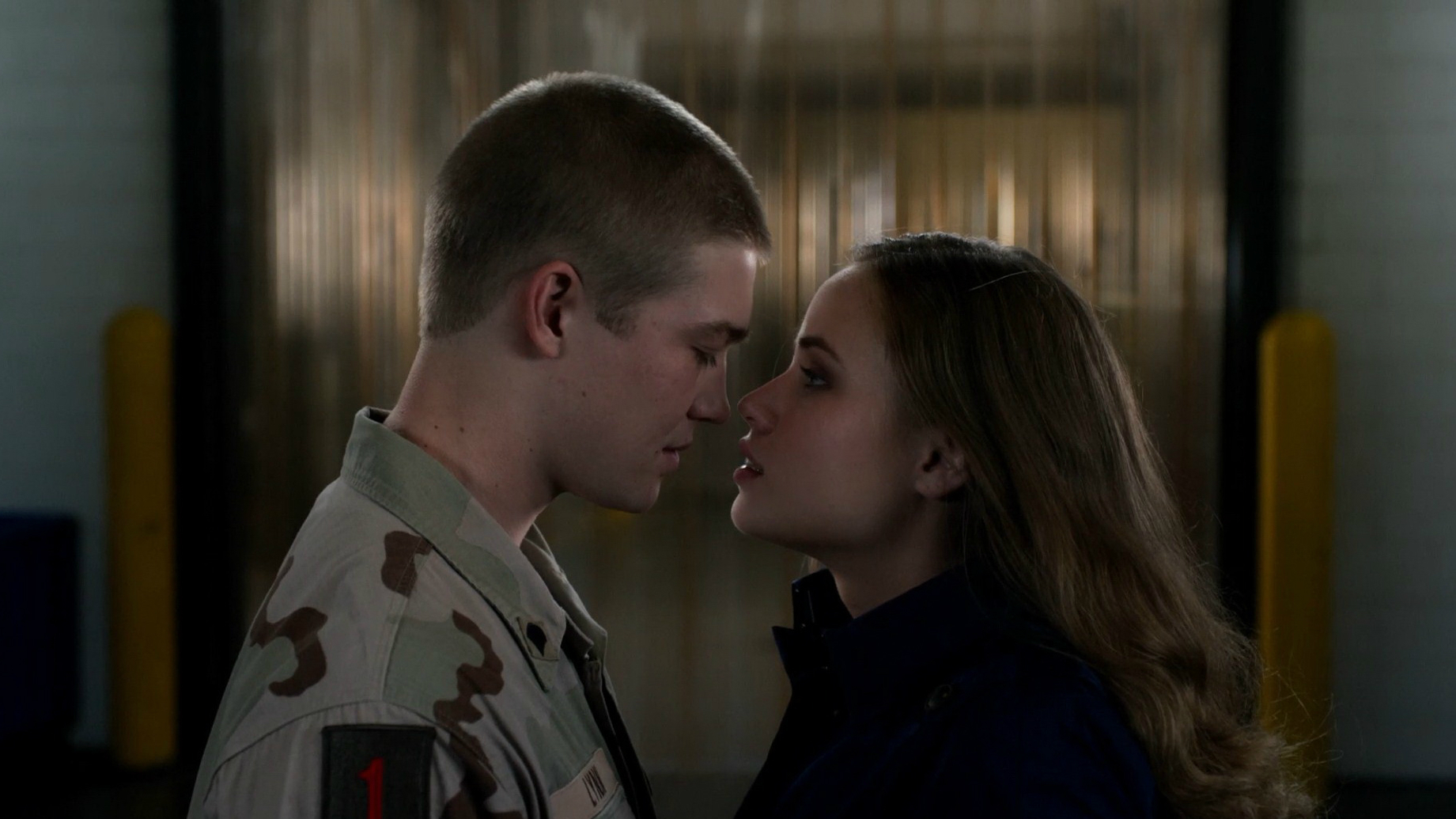
During a fierce fire fight in Iraq, Billy Lynn (newcomer Joe Alwyn) courageously rushes to defend a wounded soldier, and in the process fights off approaching insurgents with nothing but a hand gun, a knife and his fists. All of it is caught on camera, and Lynn’s story eventually finds its way home, leading to a victory tour for his entire Bravo team while on leave for the Thanksgiving holiday.

It’s home in Texas that Lynn finds a family (and especially a sister, played by Kristen Stewart) proud but desperate to have him back home for good. Then there are the thousands of beer-guzzling, chicken finger-devouring football fans who loudly cheer for Lynn and his team as if auto-programmed to acknowledge the troops even if they can’t ever understand the horrific realities of war unless it’s projected back at them on a big screen full of celebrities. There are agents trying to cut movie deals, cheerleaders yearning for their own soldier to love and miss and write to, and all of it is a lot for one movie — leading much of Billy Lynn’s Long Halftime Walk to feel overstuffed like the obnoxious all-you-can-eat Thanksgiving buffet the soldiers are treated to at one point.

[embedded content]

There’s a lot of melodramatic meat on the table with this one, and its twangy Texan score just adds to the soap opera-ish vibe of the film, at times masking many of its rich, soulful themes. When Billy Lynn’s Long Halftime Walk settles into its quieter moments — specifically between Billy Lynn and his sister, or Lynn and his sergeants Shroom (Vin Diesel) and Dime (Garett Hedlund), or Lynn and the cheerleader he strikes up a brief fling with — that’s when you feel it and you appreciate it. That’s when it becomes more about the complexities of being a soldier, and less about putting a soldier on display.

The reality is that many of us will never know what reality is actually like for a soldier who’s been to war, no matter how close Ang Lee pushes the camera into Billy Lynn’s bloodshot eyes with 4K clarity. There’s a conversation to be had, though, about the business of war heroes, and the exploitation of what in many cases are the worst days and moments of a person’s life. Why are we so drawn to it? Why do we celebrate it? Why do we cheer a soldier on more than we actually help them adjust to life before, during and after the fight?

Billy Lynn’s Long Halftime Walk scratches the surface of these issues, and even if it feels a little too muddled and busy in its execution, there’s enough here to inspire a more thoughtful and educated approach to telling a soldier’s story. Respecting and accepting that story without feasting on it like hungry spectators ogling the violence that comes with war… or, well, a football game.

A Quick Guide to Watching Billy Lynn in 120fps

1. What is this higher frame rate thing?

Most traditional films are projected at 24 frames-per-second, while recently Peter Jackson experimented with projecting one of his Hobbit movies at 48 frames-per-second. For Billy Lynn, Ang Lee blew past that by projecting the film at 120 frames-per-second in 3D, with 4K clarity versus the typical 2K.

2. So… what? Should I care about this in any way?

If you’re into higher frame rates and what it’s like to experience some of the latest cutting edge technology cinema has to offer, then yes. In my opinion, Billy Lynn is more successful with the format than Peter Jackson was, only because the picture is so clear, not many genres can pull it off without the whole thing feeling too staged. This in no way works for a fantasy movie or a genre film, but for a sporting event or a documentary, it could very well change the game in a way that brings audiences a more intimate experience.

3. Is Billy Lynn’s Long Halftime Walk worth seeing in 120fps 3D?

Ultimately yes, but there’s a caveat. If you happen to be in one of the rare spots where Billy Lynn is actually playing in this format, then you have to see it for yourself if you’re any kind of fan interested in the evolving moviegoing experience. The sequences set in Iraq, for example, are so remarkably vivid that I quite frankly have never seen anything like it. That right there — the ability to watch a movie in a way you’ve never watched a movie before — is reason enough to check it out.

That being said, Billy Lynn is also worth an additional watch in a more conventional setting, simply because it’s hard not to focus on the new format and the ways with which Lee utilizes it — most notably with several close-ups hoping the stark details bring us closer to the characters.

4. Does it work? Do you feel closer to the characters?

Yes and no. The war scenes offer pretty incredible edge-of-your-seat action, but they are brief. Same goes for the halftime show Billy Lynn and his fellow soldiers take part in. The show itself is typically over the top, and its glitzy bells and whistles are quite gripping to watch in the format. Colors pop. Uniforms glisten. Bullets linger. But in terms of feeling the characters more, it doesn’t really work. The picture is too crisp, too stiff, and lacks certain nuances that assist in connecting with a character or story on a more emotional level.

5. What about Vin Diesel? How does he look in 120fps 3D 4K?

Bald. Balder than before, if that’s even possible.

And if you’re looking for more info on the format, here’s a featurette you can check out.

[embedded content]

Billy Lynn’s Long Halftime Walk hits theaters on November 11.

Let’s block ads! (Why?)


No Image

West Virginia Grapples With High Drug Costs

State lawmakers in West Virginia say their budget choices are only getting tougher. About a third of state residents are on Medicaid. OZinOH/Flickr hide caption

toggle caption

OZinOH/Flickr

Skyrocketing prices for essential medicines like the EpiPen, are generating public outcry, congressional hearings and political promises for policy fixes. In the meantime, the increases continue to hit pocketbooks — even of people who don’t rely on these expensive drugs. In a state like West Virginia, where dire budget shortfalls have been a problem over the last few years, the problem is especially pronounced.

Kimberly Earl, of Charleston, W.Va., is feeling the pinch. She has four children, all of whom need medication.

“I have a 13-year-old who’s a pediatric cancer survivor,” she says. “I have two children who are allergic to foods, medication and environmental factors, and both of those children both have asthma.”

Last year, two of her children needed new EpiPens — which come in a 2-pack. (The dose of epinephrine each pen delivers is designed to be used in an emergency, to stop a severe allergic reaction.) The Earls have private health insurance, but had yet to meet their $10,000 family deductible for 2015. They didn’t have enough money for two boxes of EpiPens at the $600 price — even with a $100 discount from the drug’s manufacturer. So the family improvised.

“We took the pens and we split the two pens between two kids,” Earl explains. “I actually took the pens out and wrote on the top — ‘use this one first’ on the current pens, and ‘use this one second’ on the expired pens. So each kid was walking around with one current pen and one expired pen. And we were just hoping that if there was an issue they wouldn’t have to use that second pen.”

While Earl paid for the drugs out of pocket, about a third of West Virginians are insulated from these direct costs because they are covered by Medicaid. The state expanded Medicaid under the Affordable Care Act, giving lower-income people the government-sponsored insurance. Most Medicaid patients don’t have premiums or copays.

But in the end, rising drug prices affect everybody in West Virginia. When lawmakers consider the state’s budget, they only have so much revenue to divvy up among priorities that include health care services, roads and schools, says Dr. James Becker, the medical director of Medicaid in West Virginia.

“So when the cost of a drug goes up dramatically,” he says, “that impacts our system and we have to step in and make adjustments to regulate the drug appropriately.”

The West Virginia Department of Health and Human Resources can regulate the cost of drugs by negotiating lower prices through the federal rebate program. The rebate program is a complex system, but basically comes down to this: The more Medicaid patients enrolled in the program, the more bargaining power the government has to make drug companies lower their prices. Another way Medicaid manages costs is by including older, cheaper, but still effective drugs in its formulary, rather than relying on more costly new brands.

But even with these measures, the overall increase in the price of medications has forced some shifting of funds in other parts of the state budget, says Ron Stollings, a Democrat and state senator from Boone, W.Va.

“Certainly for Medicaid funding in West Virginia, [the hike is drug prices] is a huge cost,” says Stollings, a former chairman of the state senate’s health committee. “So when we have to put money into funding Medicaid, we have to cut funding for higher education and secondary education; we have to put off paving projects, etc.”

Stollings says these rising Medicaid costs — partially due to higher drug costs — fall on the taxpayer, who may end up paying more state taxes to fund the budget.

“If you’re a taxpayer, it impacts you,” Stollings says. “If you’re an insured person it will impact your premiums, and if you are on Medicaid you may get this expensive medication, but they may be ratcheting down coverage for other things.”

Medicaid is a large portion of the West Virginia’s budget, right behind public education. And it will probably get even bigger next year, as the state picks up more of the Medicaid expansion costs from the federal government.

This story is part of a reporting partnership with NPR, West Virginia Public Broadcasting and Kaiser Health News.

Let’s block ads! (Why?)


No Image

Police Searches Of Social Media Face Privacy Pushback

Twitter and Facebook have restricted access to users’ data for Geofeedia, a data analytics firm, over privacy concerns. Geofeedia/Screenshot by NPR hide caption

toggle caption

Geofeedia/Screenshot by NPR

Law enforcement is increasingly worried about losing access to powerful tools for searching social media because of changing attitudes at the social media companies that allow the searches.

Earlier this week, Facebook and Twitter restricted the bulk data access to users’ information for a company called Geofeedia, after the ACLU of Northern California published a report revealing that Geofeedia had suggested to police departments that they could use the service to track protests.

Social media monitoring services such as Geofeedia rely on bulk data access to be able to search far larger volumes of social media posts, and more efficiently, than the average user. It’s the kind of large-scale social media analysis that’s mainly used by commercial clients, such as marketers, but which has also been sold to law enforcement agencies.

The social media posts being scanned are public, but the ACLU’s Nicole Ozer says the practice is still an invasion of privacy, because of the sheer scale.

“Many of these police departments are actually surveilling entire communities,” Ozer says. That’s a reference to the services’ ability to pinpoint social media posts by location — although most people don’t enable location tagging on their social media, and wouldn’t be subject to this kind of “geo-fencing.”

Still, services such as Geofeedia can comb through and analyze vast numbers of public social media posts, which can sometimes allow police to track someone down, even if that person isn’t visible online.

Recently, police in Texas used social media to locate a teenage girl who had run away after stealing her father’s handgun and car, says Nick Selby, a police detective there.

“What we had to do is look for her in the traffic of other people talking with her or about her,” Selby says.

Signs of restricting access

It’s easier to cast a wide net like that with a social media monitoring service such as Geofeedia. But in recent months, these tools have become less available to police.

Twitter, in particular, appears to be getting more restrictive. Not only did it cut off Geofeedia’s access to bulk data following the ACLU report, earlier this year it quietly cut off data to another company, Dataminr, because it provided deep searches of public Twitter feeds to U.S. intelligence agencies.

The same thing may now be happening to companies that provide searches to law enforcement. Selby, the detective in Texas, says the change has affected the social media search abilities at his disposal.

“I have had to re-work tools to emulate the [bulk data stream] from Twitter, and scrape the public Twitter feeds of people of interest because we can no longer buy this from a lot of the vendors who used to have it,” he says.

A spokesman for Twitter would not say whether the company has changed its policy toward searches by law enforcement; in an email, a spokesman pointed NPR to the company’s guidelines for developers (that is, companies such as Geofeedia that use Twitter data). The guidelines bar search companies from allowing law enforcement agencies to use the data to “investigate, track or surveil Twitter’s users (…) in a manner that would require a subpoena, court order, or other valid legal process or that would otherwise have the potential to be inconsistent with our users’ reasonable expectations of privacy.”

But that policy is very much open to interpretation, because police don’t usually need legal orders to search public social media, and it’s arguable whether such searches violate users’ “expectation of privacy.”

The ACLU’s Ozer believes it does, and that privacy laws need to catch up.

“There’s a difference between posting something online, and thinking that that information is going to end up in a huge database that the police are going to be able to search through at any time for any reason,” Ozer says.

Tide turns amid fears of surveillance

If Twitter has decided to cut off law enforcement, it would represent a dramatic change. In recent years, several data analytics companies have openly marketed Twitter-based search tools to law enforcement, with no complaints from the social media company itself — at least, not in public.

Now some people inside policing believe the climate has turned against them. A few departments have tried to address fears of surveillance by establishing internal rules to make sure officers don’t search social media “at any time for any reason,” as Ozer put it.

The police department in Dunwoody, Ga., for instance, requires officers to get their social media searches approved ahead of time by a supervisor.

“So you can’t target particular groups, or classes of people, or different ideologies,” says Chief Billy Grogan.

But rules like this have been slow to catch on. Most police departments don’t restrict social media searches, in part because it doesn’t occur to police that they shouldn’t be searching public data the same way a marketing company does.

That freedom may now be at risk, as companies such as Twitter feel pressure from activist groups such as the ACLU to turn off the data tap.

Let’s block ads! (Why?)


No Image

Latest In Sports: Cubs In MLB Playoffs, Colin Kaepernick To Start For 49ers

NPR’s Scott Simon and Tom Goldman discuss the latest in baseball playoffs.

SCOTT SIMON, HOST:

Finally time for sports.

(SOUNDBITE OF MUSIC)

SIMON: American and National League Championship Series are underway – LA, Chi-Town, Cleveland and Toronto. NPR’s Tom Goldman joins us. Morning, Tom.

TOM GOLDMAN, BYLINE: Hello.

SIMON: Last night, the Cleveland Indians handcuffed the Toronto Blue Jays, didn’t they?

GOLDMAN: Oh, boy, they did. You know, they won – I’ll wait till the theme song goes away. They won…

SIMON: That’s for you, my friend, yeah.

GOLDMAN: (Laughter) They won – they being the Indians – won two to nothing. Zero runs for a Toronto team that averaged seven runs a game in its first round sweep of Texas. And, you know, in the first few innings, Toronto repeatedly threatened to score, but Kluber and the Cleveland defense snuffed out each threat.

SIMON: Corey Kluber, yeah.

GOLDMAN: Yeah, very, very impressive.

SIMON: I’m beginning to think that Cleveland just finds a way.

GOLDMAN: You know, last night was only game one of a best 4 out of 7 American League Championship Series. But, Scott, maybe it is time to start paying attention to the Indians. You know, remember, they swept Boston in the first round, pretty much shut down the best hitting team in baseball, the Red Sox. So the Indians are undefeated so far in the postseason. Their pitching and defense is neutralizing opponents – opponents’ offenses. They haven’t won a World Series in 68 years, Scott. Is that the drought that is going to end?

SIMON: Well, there are droughts and there are droughts – 68 years versus 108 years. National League Series starts tonight. Dodgers versus Cu Cu Cu Cu Cu Cu (ph) Cubs. And I believe this is the latest in the season that they’ve played for a title in Illinois since the Lincoln-Douglas debates of 1858.

GOLDMAN: (Laughter) Ba-boom (ph) 108 years – yeah. Well, of course, you know, they played in the National League Championship Series last year. Likewise in 2003, 1989, 1984, but, you know – so they were a round away from the World Series. But of course, 108 years without a title – the mother of all baseball droughts compared to Cleveland, which – I don’t know what – the father of all droughts. But I will tell you, Scott, our David Schaper, reporter in Chicago, has been out talking to Cubs fans, and he says they’re pumped and most are not thinking about billy goats and black cats and other superstitions and curses. So come on, are you anxious? Are you anxious?

SIMON: I ain’t afraid – I ain’t afraid of no curses, no, no. This is a – this is a genuinely great team, win or lose. And, you know, I think we ought to get past that damn goat. What can I tell you? You know, I think I want to go to a Greek restaurant (laughter) and have a little – maybe some cabrito at Rick Bayless’ place. Listen, I want to go to the NFL because after after Colin Kaepernick, after weeks of being known for his protest during the national anthem, is going to be the San Francisco 49ers’ starting quarterback on Sunday – significance of this please, doctor.

GOLDMAN: (Laughter) Doctor – you know, it’ll raise his visibility more. It’ll give his political messages a new bump. That’s good news for those who consider him a hero; bad news for those who consider him an anti-American traitor. It’ll be fascinating if he does play well and gets back to his 2012-2013 forum. It’ll be a challenge because the 49ers are not a good team. Their problems go way beyond quarterback. But if he does get the team going in the right direction, what’ll it do for his reputation in NFL front offices, which right now is not good. He’s considered a distraction, a troublemaker. If after the season he becomes a free agent, will teams go after him if he plays well now? I’ll bet they would. Nothing makes you less of a pariah than winning.

SIMON: Right, distraction, troublemaker, who wins? I want that guy. NPR’s Tom Goldman, thanks very much for being with us.

GOLDMAN: You’re welcome.

Copyright © 2016 NPR. All rights reserved. Visit our website terms of use and permissions pages at www.npr.org for further information.

NPR transcripts are created on a rush deadline by Verb8tm, Inc., an NPR contractor, and produced using a proprietary transcription process developed with NPR. This text may not be in its final form and may be updated or revised in the future. Accuracy and availability may vary. The authoritative record of NPR’s programming is the audio record.

Let’s block ads! (Why?)


No Image

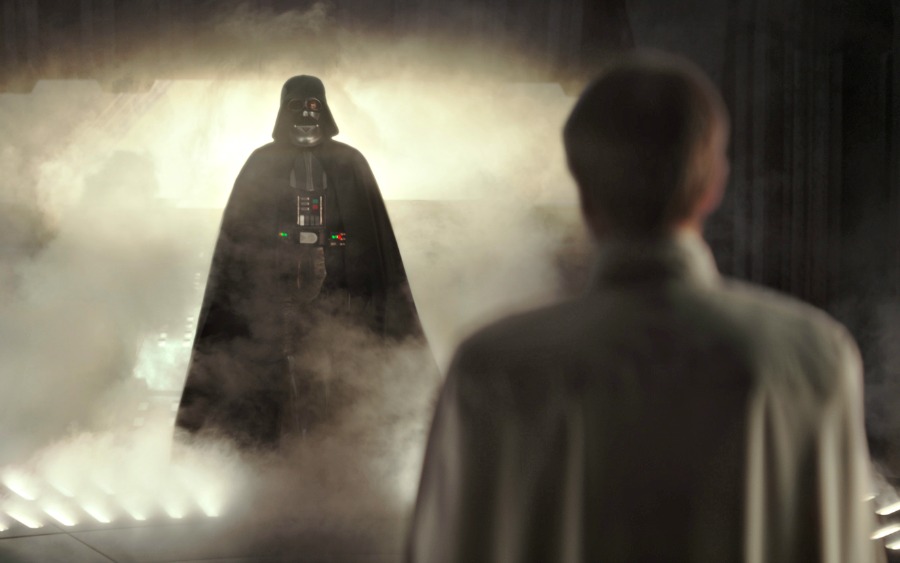
Best of the Week: Final 'Rogue One' Trailer, 'Doctor Strange' Buzz and More

The Important News

Disney: Guy Ritchie will direct the live-action Aladdin remake. Mulan will follow the studio’s new live-action formula for success.

Marvel Cinematic Universe: Forest Whitaker joined the cast of Black Panther. Captain Marvel will be an origin story. Details on Stan Lee’s Doctor Strange cameo were revealed. Scarlett Johansson is talking to Marvel about Black Widow movies.

DC Extended Universe: Wonder Woman will have a simple story. Justice League concept art revealed a look at Amber Heard as Mera.

The Wizarding World of Harry Potter: J.K. Rowling announced there will be five Fantastic Beasts movies.

Sequels: Boyd Holbrook will be the hero in The Predator. Jurassic World 2 will be about animal abuse. Kevin Hart and Ice Cube will return in Ride Along 3.

Spinoffs: Bad Moms is spinning off a sequel titled Bad Dads.

Box Office: The Girl on the Train won the weekend.

Reel TV: Sigourney Weaver will play the villain on Marvel’s The Defenders.

Ways of Seeing: Fifty Shades sequels will have VR experience tie-ins.

The Videos and Geek Stuff

New Movie Trailers: Rogue One: A Star Wars Story, John Wick: Chapter 2, Power Rangers, The Unspoken, Trash Fire, The Charnel House, Life on the Line and Army of One.

Movie Clips: Ouija: Origin of Evil.

Behind the Scenes: Doctor Strange.

See: Doctor Strange battles Eleven from Stranger Things.

Watch: An honest trailer for X-Men: Apocalypse.

See: Wolverine destroys a car in Logan storyboards.

Watch: How Suicide Squad should have ended.

See: Anna Kendrick asks Ben Affleck if she can be his Batman’s Robin. And The Accountant prequel motion comic.

Learn: Why Matt Damon thinks audiences should see The Great Wall.

Watch: A new animated Lego Jurassic World short. And an animated Lego Yellow Submarine short.

See: Seven movie mistakes you can’t see.

Watch: Lin-Manuel Miranda parodies The Music Man on SNL.

See: Barack Obama’s list of essential sci-fi movies.

Watch: Kylo Ren reacts to the new Rogue One trailer.

See: Never before seen Disney archives artwork. And Disney’s Alice in Wonderland redone with cats.

Watch: Michael Bay teases the Transformer: The Last Knight trailer.

See: All of this week’s best new posters. And a new poster and photos from Brave New Jersey.

Our Features

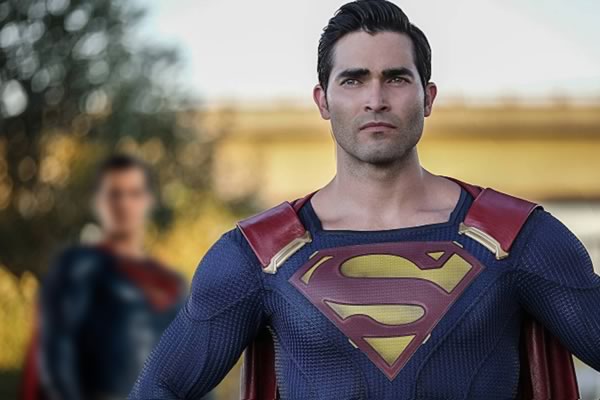
Comic Book Movie Guide: How TV’s new Superman upstaged the DC movies.

Interviews: The Voyage of Time producers Sarah Green and Nicolas Gonda on their 14-year journey. Jeffrey Dean Morgan on Desierto and Watchmen.

Horror Movie Guide: Our spotlight on all the latest horror news and trailers.

Home Viewing: Our guide to everything hitting VOD this week. And our guide to all the indie and foreign movies you need to see this month.

and

MORE FROM AROUND THE WEB:

Let’s block ads! (Why?)