Articles by admin

No Image

'Doctor Strange' Proves Marvel Movies Are Evolving in Some Awesome Ways
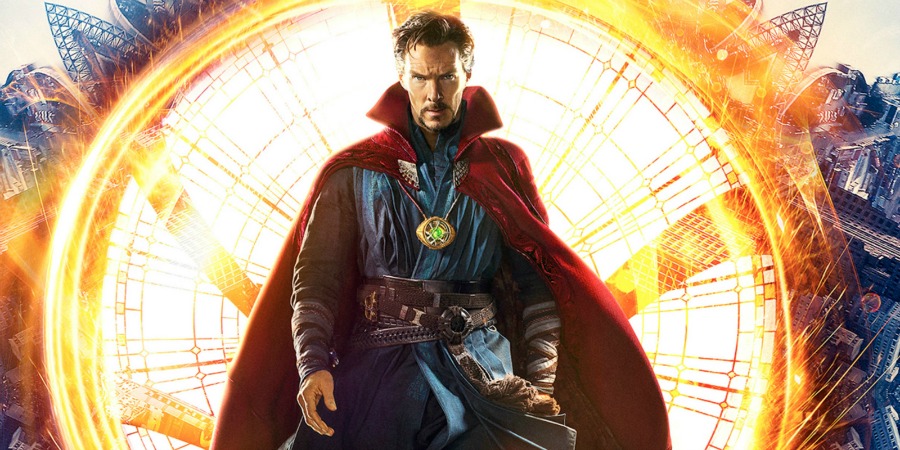
If there’s any doubt left in your mind about Doctor Strange being Marvel’s strangest movie to date, then I’ll officially confirm that it is indeed their strangest, but also incredibly weird and wild in all the best ways.

This is a film that takes you to distant dimensions and to other planes of existence. It features magical portals for traveling anywhere the mind can conjure, as well as masters, sorcerers, deadly spells, a cloak with its own personality, creepy villainous eye makeup and, most importantly, a great introduction to Marvel’s mystical universe, complete with names you won’t be able to pronounce and bonkers imagery you won’t be able to forget.

If there’s any Marvel movie that will immediately inspire you to go back and read the comics, it’s this one.

Meet Doctor Strange

Doctor Stephen Strange (Benedict Cumberbatch) is like a rebooted Tony Stark in ways; he’s got Stark’s smarts, ego and arrogance, only he’s a doctor whose mystical powers are no accident or controlled with a powered suit — they’re taught and discovered from within. But it is a horrible car accident that leaves Strange with permanent damage to his hands, essentially ending the career he lives for. While on an expensive and never ending quest to find a way to put himself back together using science, he discovers the answer may instead be mystical.

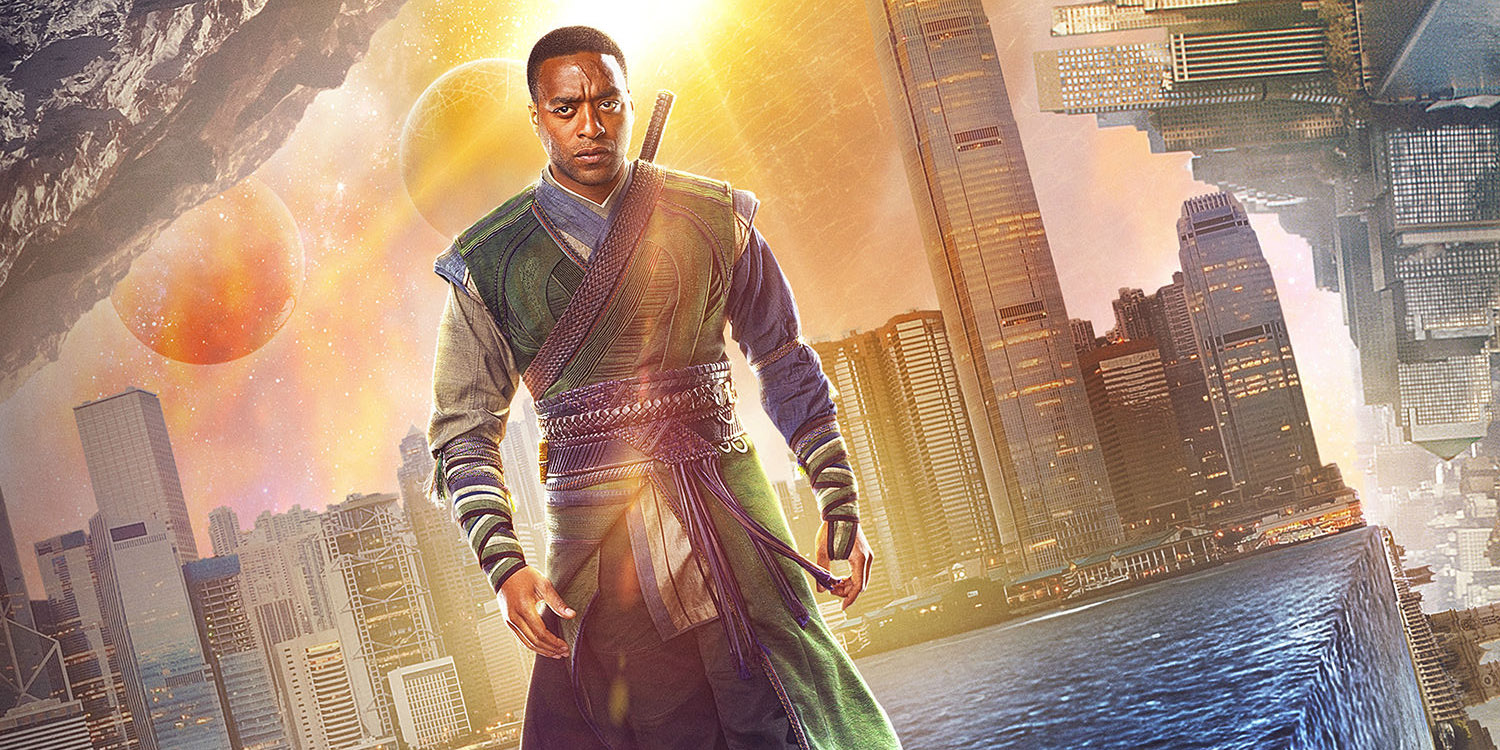
Tipped off to a remote location somewhere in the mountains of Kathmandu, it’s there he finds a Celtin woman known as the Ancient One (Tilda Swinton), who runs a sort of sorcerer school training those deemed worthy in the ways of sorcery — all of it in an effort to defend earth from outside forces who seek to harm it or its people. The Ancient One reluctantly decides to train Strange with assistance from Mordo (Chiwetel Ejofor), a fellow sorcerer, and of course they all find themselves defending an attack on the planet in no time.

So quick, in fact, that Doctor Strange is one of Marvel’s most tightly paced movies. It breezes by at just under two hours, and the shorter runtime definitely works in favor of the story despite how heady it is and how many rules are buried within. The last half flies — we’re thrown from upside-down battles on the mirror-reality streets of New York City to psychedelic time-twisty showdowns in another dimension. All of it is just frenetic eye candy that’s elevated even moreso if you see it in IMAX 3D, where it really pops.

Doctor Strange is our freakadelic introduction to Marvel’s mystical universe, one that exists both on earth and away from it, in another reality or dimension. And with the ability to stage massive battles in mirror realities that don’t impact actual reality on earth, it opens the door for all kinds of visual inventiveness and action without sacrificing millions of lives.


A Quick Guide to Understanding What the Hell Is Going On in Doctor Strange

Let us pop into the mirror-reality of this review for some helpful tips on understanding the rules of Doctor Strange. This will present various plot spoilers, so feel free to skip ahead. This should not impact your experience of this review.

Here are five quick things to know about the rules of the film that will help make sense of it going in…

Mirror reality: Some fights, like the opening scene and two battles near the end, are contained within a mirror reality created by a sorcerer so that the action is contained in a sort of box that does not impact actual reality.

Astral plane: Some sequences involve the souls of characters exiting their body to examine what’s happening around them. There’s actually a fight scene that occurs between two souls outside their bodies, if you can believe it. Oh, they go there. Our first introduction to the astral plane can be seen in the image above.

Portals: One neat trick utilized in the film is the ability to conjure a portal to anywhere on earth or beyond just by thinking about the location. This is used in so many different ways; as a means to travel and as a means to disperse with villains. It’s pretty cool.

Spell weapons: The weapons our characters fight with in the film are typically conjured through magic. It’s not really explained how exactly one learns to do this (we just see Doctor Strange studying a bunch of books housed in a sort of master library throughout the movie), but the ability to continually switch up the mechanics of a fight is one of the unique aspects of the film.

Time bending: The ability to manipulate time itself also factors heavily into the film via a tool called the Eye of Agamotto. Strange uses this tool in specific situations, and it may also hold a major clue that directly ties Strange to the larger cinematic universe and another villain we’re still waiting to see show up in a bigger way: Thanos.


The stakes are still high, though, as at any time monstrous villainous powers from other dimensions or realms could break into our reality and wreak havoc, which is why Strange and his cohorts exist: to protect us from those kinds of forces. It’s almost as if they operate somewhere between the MCU’s other heroes, and while Doctor Strange definitely feels like its own contained story, those following along with Marvel’s ever expanding cinematic universe will clearly see groundwork being laid with regards to Strange’s world eventually colliding with the likes of both the Guardians and the Avengers.
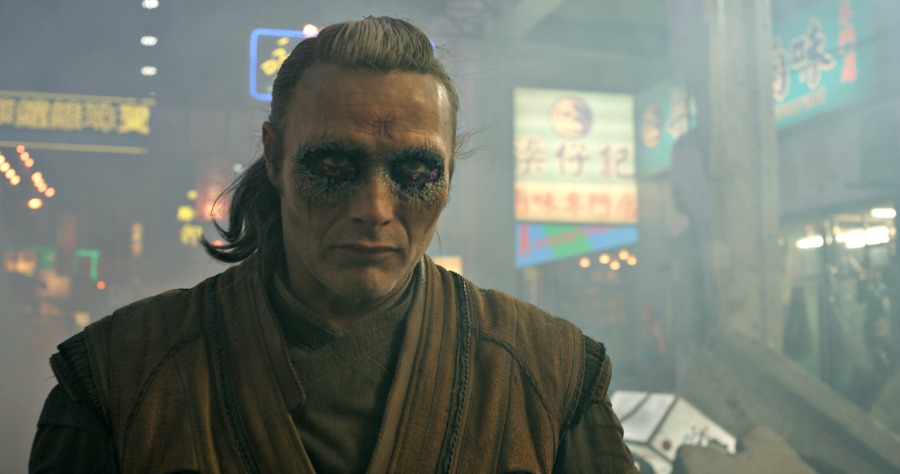
Doctor Strange continues Marvel’s streak of assembling fantastic ensemble casts, as the Strange crew boasts multiple Oscar wins and nominations shared between the fivesome of Benedict Cumberbatch, Tilda Swinton, Rachel McAdams, Chiwetel Ejiofor and Mads Mikkelsen. All of them are strong, delivering convincing turns as their respective characters even if we could’ve used a little more depth to both McAdams’ nurse and Mikkelsen’s villain.

The most fascinating of the characters apart from Strange, whose selfish-to-selfless arc will feel familiar to those who’ve seen the original Iron Man, is actually Mordo. It’s his arc that kind of runs opposite to Strange, and future appearances could bring us the most complex and conflicted character since Tom Hiddleston’s Loki. Here’s hoping Ejiofer’s role in Doctor Strange is the beginning of a multi-picture storyline for him because more than anything (and especially if you stay through the credits) you’ll be hankering for more Mordo when it all wraps up.
Doctor Strange is a heady film that makes you work harder to process its plot than any previous Marvel adventure, and its action sequences are so trippy and mind-bending that at times it will leave you in awe of what you’re watching unfold in front of your eyes. Much credit goes to director Scott Derrickson for competently and compellingly steering us down a very wacky rabbit hole, and to his cowriters C. Robert Cargill and Jon Spaihts for making sense of the madness in a way that delivers a brainy experience at the movies, but also a fun and accessible one, too.

[embedded content]

Let’s block ads! (Why?)


No Image

The Next Generation Of Local, Low-Power FM Stations Expands In Urban Areas

The next wave of low power FM stations is coming on the air. Initially restricted to rural areas because of interference concerns, nearly 2,000 new stations have been approved — many in urban areas.

RACHEL MARTIN, HOST:

Radio has gotten bigger and bigger over the last few years. Back in 1996, a change in the law allowed a few large media giants to buy up hundreds of radio stations. Local shows were replaced with nationally syndicated programs. In an effort to increase local programming, The Federal Communications Commission introduced low power FM back in 2000, mostly in rural areas. Now the FCC has expanded that program to urban markets. Allyson McCabe reports.

ALLYSON MCCABE, BYLINE: If you tune into WQRZ-LP in Hancock County, Miss., you might hear letters from the mailbag, notices about lost pets or the daily weather report.

(SOUNDBITE OF ARCHIVED RECORDING)

UNIDENTIFIED WOMAN #1: It’s 8:02. It’s 86 degrees outside and it feels like 95. Yuck.

BRICE PHILLIPS: We provide the public a service – the most local information you can get.

MCCABE: So says WQRZ-LP’s founder, Brice Phillips. Stations like his were created in response to the increasing consolidation of the radio industry, says Peter Doyle, head of the FCC’s audio division.

PETER DOYLE: There was a loss of localism, a homogenization in radio broadcasting. And a low-powered FM service might provide a counterbalance that could serve niche and underserved communities.

MCCABE: These stations were initially called microradio. And like WQRZ, they were authorized to operate at up to 100 watts.

DOYLE: To give you a sense of contrast, our most powerful FM stations are authorized to operate with 100,000 watts.

MCCABE: Nevertheless, those big stations and NPR were concerned about signal interference from the LPFMs, so they were mostly restricted to rural areas where the dial was less crowded. After conducting studies, the FCC decided to expand their reach six years ago to urban communities. The commission received close to 3,000 applications. It approved construction permits for more than 1,900 new stations, many in cities, where Doyle says their potential reach is considerable.

DOYLE: In major markets, low power stations have the opportunity to serve tens or hundreds of thousands of people.

MCCABE: As with the first wave, new LPFMs this must be a local, non-profit and non-commercial. Some plan to offer faith-based programming, others educational or community affair shows. And some will be geared towards local music and arts.

(SOUNDBITE OF ARCHIVED RECORDING)

UNIDENTIFIED MAN #1: And welcome to another installment of “Transient Descent” here on ARTxFM Louisville.

MCCABE: ARTxFM launched in 2012 as an experimental pop-up station at a Louisville, Ky. arts festival. Then it went online. This year, the station went on air as WXOX-LP on Valentine’s Day, and hundreds came out to its studio to celebrate.

(SOUNDBITE OF ARCHIVED RECORDING)

UNIDENTIFIED WOMAN #2: We are officially on the Dallas domains, and you guys are here to celebrate it with us. Thank you so much.

MCCABE: But getting on air has been more than a collective labor of love. WXOX’s founder, Sharon Scott, say it’s also required significant financial investment.

SHARON SCOTT: I think a lot of people have this idea, like, you apply for a license and you get a license and then you just flip the switch and you’re on air. And that is absolutely (laughter) not the case. I wish that it was. But there are so many different expenses, you know, from rent to utilities, music licensing fees, legal fees, you know, insurance.

MCCABE: Community radio activists like to say that the equipment needed to get a new LPFM up and running often costs less than $10,000, but costs are far greater in major markets, even for established internet stations like the Chicago Independent Radio Project, which goes by the acronym CHIRP.

(SOUNDBITE OF ARCHIVED RECORDING)

UNIDENTIFIED MAN #2: Chirpradio.org. All-local music there, of course, because this is the local six-pack.

MCCABE: CHIRP has been live-streaming a mix of local and independent music since 2010 thanks to nearly 250 volunteers. But founder Shawn Campbell says it’s still struggling to get on the air.

SHAWN CAMPBELL: Because there had never been low power FMs built in big cities before, we probably underestimated some of the costs. Our costs ultimately will be close to $100,000 to set this up.

MCCABE: From the time they’re granted construction permits, LPFMs have 18 months to get on the air, says the FCC’s Peter Doyle.

DOYLE: About 775 of these have already completed construction, but our experience has been not all stations make the finish line.

MCCABE: So far, more than 100 have surrendered those permits and more than 500 have requested extensions. Nevertheless, Doyle says revitalizing the public airwaves remains a high priority even in the digital age.

DOYLE: There is a special place for radio in the media ecosystem, and that’s a different place than internet radio.

MCCABE: A good example of that place is back in Hancock County, Miss. When Hurricane Katrina made landfall, tiny WQRZ was the area’s only local 24-hour emergency information provider, says the station’s founder, Brice Phillips.

PHILLIPS: As I learned since 2005, if you have infrastructure damage, there’s no cellphones. There might not be any phone lines or the internet. But hey, a 1.5-volt battery and an FM radio, and you have the local emergency information you need. low power FM covers the whole gap.

MCCABE: And with luck, money and a lot of work, it’ll be there to do the same for urban communities. For NPR News, I’m Allyson McCabe.

Copyright © 2016 NPR. All rights reserved. Visit our website terms of use and permissions pages at www.npr.org for further information.

NPR transcripts are created on a rush deadline by Verb8tm, Inc., an NPR contractor, and produced using a proprietary transcription process developed with NPR. This text may not be in its final form and may be updated or revised in the future. Accuracy and availability may vary. The authoritative record of NPR’s programming is the audio record.

Let’s block ads! (Why?)


No Image

Chicago Cubs Beat Los Angeles Dodgers To Enter World Series For First Time Since 1945

Chicago Cubs players celebrate after Game 6 of the National League baseball championship series against the Los Angeles Dodgers, Saturday, in Chicago. David J. Phillip/AP hide caption

toggle caption

David J. Phillip/AP

Cursed by a Billy Goat, bedeviled by Bartman and crushed by decades of disappointment, the Chicago Cubs are at long last headed back to the World Series.

Kyle Hendricks outpitched Clayton Kershaw, Anthony Rizzo and Willson Contreras homered early and the Cubs won their first pennant since 1945, beating the Los Angeles Dodgers 5-0 Saturday night in Game 6 of the NL Championship Series.

The drought ended when closer Aroldis Chapman got Yasiel Puig to ground into a double play, setting off a wild celebration at Wrigley Field.

Seeking their first title since 1908, the Cubs open the World Series at Cleveland on Tuesday night. The Indians haven’t won since 1948.

“This city deserves it so much,” Rizzo said. “We got four more big ones to go, but we’re going to enjoy this. We’re going to the World Series. I can’t even believe that.”

Manager Joe Maddon’s team, deemed World Series favorites since spring training, topped the majors with 103 wins, then beat the Giants and Dodgers in the playoffs.

The Cubs took their 17th pennant. They had not earned a World Series trip since winning a doubleheader opener 4-3 at Pittsburgh on Sept. 29, 1945, to clinch the pennant on the next-to-last day of the season.

The eternal “wait till next year” is over. No more dwelling on a past history of failure — the future is now.

“We’re too young. We don’t care about it,” star slugger Kris Bryant said. “We don’t look into it. This is a new team. This is a completely different time of our lives. We’re enjoying it and our work’s just getting started.”

Hendricks pitched two-hit ball for 7 1/3 innings. Chapman got the final five outs, then threw both arms in the air and got mobbed by teammates and coaches.

Let’s block ads! (Why?)


No Image

TIMELINE: AT&T's Merger With Time Warner Follows Decades Of Industry Deals

AT&T’s $85.4-billion bid to buy Time Warner is now official, facing what’s expected to be a tough regulatory review, given the reach and impact of the telecom and the media behemoths.

The deal is a large one for both spaces, though each has seen a fair amount of reshuffling in the power rankings over the years. (In fact, both AT&T and Time Warner are themselves results of consolidation and spin-offs.)

The latest in this year’s leadup was Verizon’s bid to buy Yahoo to combine its Internet assets with the telco’s earlier purchase of AOL. It’s a race to reach as many users — and advertisers — with as much content as possible.

Below is a condensed history.

1877

AT&T’s ancestor is born as Bell Telephone Company. Note quite a decade later, the American Telephone and Telegraph Company was formed as a subsidiary to create a long-distance network.

1923

Time magazine debuts on March 3.

Four Warner brothers establish Warner Brothers Pictures, which in 1969 becomes a subsidiary of Warner Communications, created when Kinney National Services buys what by then is Warner Brothers-Seven Arts Inc.

1984

The monopoly Bell System, aka Ma Bell, splits up into eight companies, dubbed Baby Bells, after the Justice Department pursues an antitrust case. Decades later, parts of those companies were eventually subsumed by modern-day AT&T, Verizon and CenturyLink.

1989

AT&T is buying Time Warner in a massive merger that would create a mammoth media and telecom company. Richard Levine/Corbis/Getty Images hide caption

toggle caption

Richard Levine/Corbis/Getty Images

Time Inc. and Warner Communications announce a merger to create Time Warner Inc., described by The New York Times as the “largest media and entertainment conglomerate in the world” and valued at more than $15 billion.

1995

Time Warner and Turner Broadcasting System announce a $7.5-billion merger, uniting brands including CNN, Time magazine, Warner Brothers and the Cartoon Network.

The Walt Disney Company says it will buy Capital Cities/ABC Inc. for $19 billion, creating what The New York Times once again describes as ” the world’s most powerful media and entertainment company.”

2000

AOL announces its plan to buy Time Warner for more than $160 billion, at the peak of the dot-com boom.

2004

Comcast drops its bid to buy Disney for $54 billion after a rebuff.

2005

SBC Corporation — formerly known as one of the Baby Bells, Southwestern Bell Corporation — acquires AT&T for more than $16 billion, creating the telecom company we now know under that brand.

2008

Time Warner spins off its cable unit, which becomes Time Warner Cable.

2009

Time Warner spins off AOL, marking the end of what goes down in history as one of the most disastrous mergers.

2011

Comcast receives regulatory approval for its $30-billion bid to buy a majority stake in NBC Universal. Comcast completely took over NBC Universal in 2013, when GE divested its stake.

AT&T gives up on its $39-billion attempt to buy T-Mobile after the Justice Department and the Federal Communications Commission stage forceful opposition to the union of the No. 2 and No. 4 wireless carriers.

2013

Time Warner spins off its Time Inc magazine division.

2014

Verizon buys out Vodafone’s stake in Verizon Wireless for $130 billion, gaining full ownership of the nation’s largest wireless carrier.

Time Warner spurns a bid from Twenty-First Century Fox, reported at $80 billion.

2015

Comcast abandons its $45-billion bid to buy Time Warner Cable after the FCC opposes the merger over concerns of creating a cable operator and Internet provider with too much control over what Americans watch and do online.

Verizon buys AOL for $4.4 billion.

AT&T gets government approval to buy satellite TV company DirecTV for $48.5 billion, creating one of the largest pay-TV providers to compete with Comcast.

2016

The FCC and DOJ approve the $88-billion merger of Charter Communications with Time Warner Cable and a smaller rival Bright House Networks, creating the second-largest broadband provider and the third-largest video provider.

Comcast buys DreamWorks Animation for $3.8 billion to compete against Disney.

Time Warner buys a 10-percent stake in Hulu for $583 million.

Verizon and Yahoo announce a $4.8-billion merger that would give Verizon ownership of Yahoo’s Internet assets.

AT&T says it will acquire Time Warner for $85.4-billion.

Let’s block ads! (Why?)


No Image

Best of the Week: New 'Logan' and 'Guardians of the Galaxy Vol. 2' Previews, a New Way to Watch Movies and More

The Important News

Marvel Cinematic Universe: James Gunn wants to make a Nebula spinoff. Letitia Wright joined Black Panther. The next Spider-Man movie is in the works.

X-Men: Mary Elizabeth Winstead and Lizzy Caplan are on the shortlist to play Domino in Deadpool 2.

D.C. Extended Universe: Ben Affleck’s The Batman begins filming in the Spring. James Wan says Aquaman will be like Raiders of the Lost Ark.

Star Wars: Donald Glover is the new young Lando Calrissian. Joss Whedon wants to make a Star Wars movie now.

Transformers: John Turturro and John Goodman are returning for Transformers: The Last Knight.

Sequels: Anna Camp will be back in Pitch Perfect 3. Michael Dougherty and Zach Shields are writing Godzilla 2.

Remakes: Willy Wonka is getting a a reboot focused on his early adventures. Leonardo DiCaprio is producing a live-action Captain Planet movie.

True Stories: The Coen Brothers are writing a movie about dark web drug dealer Ross William Ulbricht. Tom Hardy will star in an Ernest Shackleton biopic.

Legendary Tales: A big new Sinbad movie is in the works. Alex Graves will direct Sony’s live-action Mulan movie.

Adaptations: Carla Gugino and Bruce Greenwood will star in Gerald’s Game.

Box Office: Ben Affleck had one of his best openings with The Accountant.

Doc Talk: Michael Moore unveiled his surprise documentary TrumpLand.

Reel TV: Enemy of the State is getting a sequel TV series.

The Videos and Geek Stuff

New Movie Trailers: Logan, Guardians of the Galaxy Vol. 2, Assassin’s Creed, Nocturnal Animals, Arrival, A Cure for Wellness, Frank & Lola, U.S.S. Indianapolis: Men of Courage, Pet, The Boss Baby and In a Valley of Violence.

MovieClips: Moana and Doctor Strange.

Watch: A deleted scene from Star Wars: The Force Awakens. And Star Wars mashed up with Veep. And a chronological megatrailer for Rogue One: A Star Wars Story.

See: New Rogue One: A Star Wars Story images. And new Logan images. And a new Wonder Woman image.

Watch: A viral promo for A Cure for Wellness. And a vintage-looking viral promo for Ouija: Origin of Evil. And a retro trailer for Boo! A Madea Halloween.

See: Halloween costumes worn by movie nerds in the ’70s and ’80s.

Watch: A fan-made trailer for Frozen 2. And a fan-made Thor: Ragnarok trailer.

See: Danny Elfman parodied the presidential election through music. And a campaign video that’s also a movie bully supercut.

Watch: An animated short for adults by Pixar animators. And a short scripted by Doctor Strange co-writer C. Robert Cargill.

See: Amazing fan art inspired by Doctor Strange.

Watch: Characters from 49 movies sing the Friends theme.

See: All of this week’s best new posters.

Watch: Tom Cruise recreates his best movie roles.

See: Harry Potter redone with hamsters.

Watch: Kate McKinnon stars in a Ghostbusters outtake reel.

Our Features

Movie Reviews: Billy Lynn’s Long Halftime Walk offers a brand new way to watch a movie.

Marvel Movie Guides: We look into all the latest Marvel movie rumors. And why Hulk isn’t more important to the MCU.

Interviews: Ti West on In a Valley of Violence and how realism is boring. And Park Chan-wook on The Handmaiden and remakes. And MondoCon artist Kevin Tong answers 10 questions.

Home Viewing: Our guide to everything hitting VOD this week.

and

MORE FROM AROUND THE WEB:

Let’s block ads! (Why?)


No Image

Episode 731: How Venezuela Imploded

People queue to buy basic food and household items outside a supermarket in Caracas.

Federico Parrra/AFP/Getty Images

Things are pretty bad right now in Venezuela. Grocery stores don’t have enough food. Hospitals don’t have basic supplies, like gauze. Child mortality is spiking. Businesses are shuttering.

It’s one of the epic economic collapses of our time. And it was totally avoidable.

Venezuela used to be a relatively rich country. It has just about all the economic advantages a country could ask for: beautiful beaches and mountains ready for tourism, fertile land good for farming, an educated population, and oil, lots and lots of oil.

During the boom years, the Venezuelan government made some choices that add up to an economic time bomb.

Venezuela didn’t save its oil money. It used it to subsidize goods and services for the people, but in some unusual ways. Another choice: instead of making stuff at home, Venezuela imported almost everything it could. The government also kept tight control on the exchange rate between Venezuelan bolivars and U.S. dollars.

As long as the price of oil was high, there weren’t serious problems. Then oil prices came down.

Today on the show, we have an economic horror story about a country that made all the wrong decisions with its oil money. It’s a window into the fundamental way that money works and how when you try to control it, you can lose everything.

Music: “Deserted” and “Faded Dreams.”Find us: Twitter/ Facebook.

Let’s block ads! (Why?)


No Image

101-Year-Old Chicago Cubs Fan Hopes Beloved Team Grants Her Birthday Wish

Chicago Cubs superfan Virginia Wood is celebrating her 102nd birthday next month, and she’s hoping her beloved team grants her a wish — a World Series title. Cheryl Corley/NPR hide caption

toggle caption

Cheryl Corley/NPR

It will be a night of tension and hope for baseball fans in Chicago when the Cubs and Los Angeles Dodgers play Game 6 of the National League Championship Series on Saturday.

If the Cubs win, they will move on to the World Series to face the American League champion Cleveland Indians. It will be a step closer to fulfilling a wish of a faithful fan, 101-year-old Virginia Wood.

Wearing a Cubs T-shirt and surrounded by family, Wood was ready for baseball Thursday night when the Cubs and Dodgers took to the field. Her wheelchair not far from the television, the former physical education teacher knew what she wanted to see from her team.

“I just want to be sure they get the first run,” Wood says. “I really do. I think it makes a difference.”

And the Chicago Cubs did not disappoint — scoring in the first inning.

Wood attended her first Cubs game at Chicago’s Wrigley Field in 1924. She was 10 years old. As an adult, she would go as often as she could, especially with friends after work on “Ladies Day” when they could attend free.

“When people didn’t stay for the whole game, we’d all move ourselves down a little closer to the front as far as we could go,” Wood says.

Wood saw lots of games but no championships. The Cubs last won a World Series in 1908, but Wood dismisses the idea of a curse holding the Cubs back. She says she knew a championship would come eventually, and she is convinced this is the year.

“Oh, I’m counting on them going all the way, absolutely,” she says.

Wood says in the past, the Cubs didn’t have all the parts they needed — good pitching and hitting at the same time. This year, they have Joe Maddon. Wood says Maddon is an excellent manager directing a very talented team.

“They’ve got all young kids now,” Wood says. “It’s wonderful. They’re enthusiastic. They hustle a lot. They go after everything, and I think that’s what the difference is.”

Wood’s son, Gary, says his mother hopes the Cubs grant her a favorite wish — a World Series title.

“She’ll be 102 next month,” he says. “That’s what she wants for her birthday.”

“Oh yeah, sure, I’d like to have that,” Wood says. “Good birthday present. Oh yeah, that’s the best.”

But first, there’s a game or two left before that can happen, and Wood says she’ll be watching and cheering on her team.

Let’s block ads! (Why?)


No Image

How Does Our Brain Get Rid Of Toxins?

[embedded content]

Part 4 of the TED Radio Hour episode Toxic

About Jeff Iliff’s TED Talk

Neuroscientist Jeff Iliff talks about his research, which explores how the brain naturally flushes out toxins during sleep.

About Jeff Iliff

Neuroscientist Jeff Iliff is an Assistant Professor of Anesthesiology and Perioperative Medicine at Oregon Health & Science University. Iliff was a part of a University of Rochester Medical Center team that discovered a brain cleansing system, which they dubbed the “glymphatic system.”

Let’s block ads! (Why?)


No Image

Today in Movie Culture: Tom Cruise Recreates His Best Roles, 'Thor: Ragnarok' Fan Trailer and More

Here are a bunch of little bites to satisfy your hunger for movie culture:

Career Re-creation of the Day:

Watch Tom Cruise reenact scenes from his most iconic movies, including Top Gun, A Few Good Men, Eyes Wide Shut and all five Mission: Impossible movies, with help from James Corden and Cuba Gooding Jr.:

[embedded content]

Actor in the Spotlight:

Speaking of the world’s biggest movie stars, Ranker compiled a supercut proving that Will Smith is always yelling:

[embedded content]

Fake Trailer of the Day:

The real trailer for Thor: Ragnarok will hopefully have a little more fun than this fan-made video, but it’s still a decent mashup (via Geek Tyrant):

[embedded content]

Cosplay of the Day:

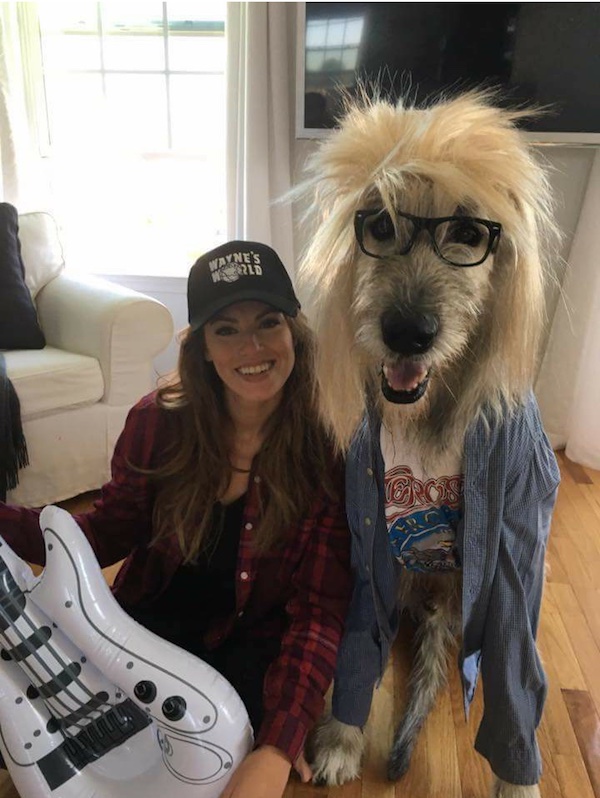
When you just can’t find the right human friend to be the Garth to your Wayne from Wayne’s World cosplay, get yourself an Irish wolfhound (via Fashionably Geek):

Blooper Reel of the Day:

Watch an exhausting but hilarious nine-minute video of all of Kate McKinnon outtakes from the Ghostbusters remake (via /Film):

[embedded content]

Supercut of the Day:

For Fandor Keyframe, Philip Brubaker chronicles the history of movies featuring female presidents, including Independence Day: Resurgence:

[embedded content]

Genre Study of the Day:

See how the movies have depicted the future over the years in this chronological supercut of sci-fi movies (via One Perfect Shot):

[embedded content]

Vintage Image of the Day:

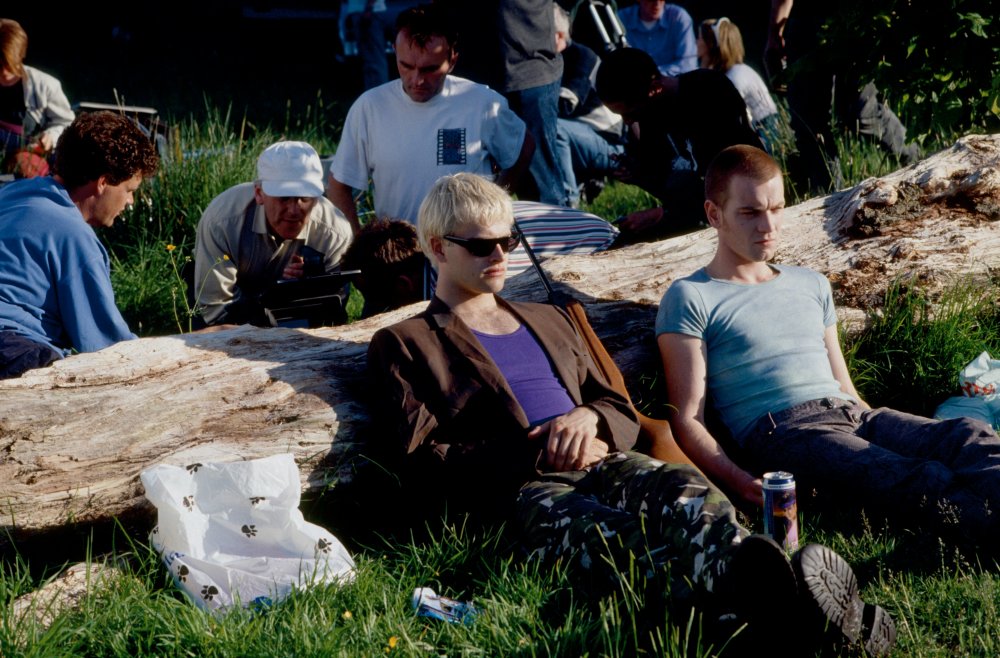
Danny Boyle, who turns 60 years old today, films a scene for Trainspotting with Ewan McGregor and Jonny Lee Miller:

Fan Theory of the Day:

The Film Theorists proposes that the Ouija movies, including the new prequel, area actually sequels to The Exorcist:

[embedded content]

Classic Trailer of the Day:

Today is the 10th anniversary of the theatrical release of Christopher Nolan’s The Prestige. Watch the original trailer for the movie below.

[embedded content]

and

Let’s block ads! (Why?)


No Image

Lawmakers Question Price Hikes For Leukemia Drug

Sen. Bernie Sanders, I-Vt., left, and Rep. Elijah Cummings, D-Md., are pictured in Washington last year. Sanders and Cummings are demanding information from a drug company that repeatedly has raised prices on a leukemia drug. Susan Walsh/AP hide caption

toggle caption

Susan Walsh/AP

Another pharmaceutical company is coming under fire for boosting the price of one of its drugs. Two lawmakers are demanding to know the justification for a more than $80,000 price hike for a year’s supply of a drug that treats leukemia patients.

As NPR’s Alison Kodjak reports:

“The drug is called Iclusig and it was approved in 2012 to treat a subset of patients with chronic myeloid leukemia.

“Sen. Bernie Sanders, I-Vt., and Rep. Elijah Cummings, D-Md., sent a letter to Ariad Pharmaceuticals asking it to explain the medication’s $200,000 price tag.

“The two lawmakers say the company boosted the price repeatedly and at the same time cut the dose, effectively raising the costs even more.

“In the letter, the lawmakers demanded details about the company’s profits and any programs it offers to cut patient costs.”

Sanders recently has taken up the fight against escalating drugs costs and Cummings is senior Democrat on the House Oversight and Government Reform Committee.

The Associated Press reports:

“According to data from Truven Health Analytics, the list price for a year’s supply of Iclusig tablets has increased from $114,960 in 2012 to $198,732 in October 2016.”

During that period, says the AP, the drug Iclusig was linked to life-threatening blood clots. Ariad took the drug off the market temporarily, then re-introduced it in late 2013 with added warnings and recommended it for a small subset of patients with chronic myeloid leukemia.

Ariad’s price hike was first reported earlier this month by The Street.

“Ariad says the price hikes are justified because Iclusig ‘addresses an area of high unmet medical need in an ultra-orphan patient population of around 1,000-2,000 patients per year.’ “

As we have reported, Mylan Pharmaceuticals faced criticism this year over the price of EpiPen, which is used to treat allergic reactions, as did Turing Pharmaceuticals last year for the cost of Daraprim, which treats a deadly parasitic infection.

Let’s block ads! (Why?)