Articles by admin

No Image

California Rules About Violence Against Health Workers Could Become A Model

California rules would require site-specific assessments to identify violence risks for health care workers and plans to mitigate them. Dana Neely/Getty Images hide caption

toggle caption

Dana Neely/Getty Images

Workers in California’s hospitals and doctors’ offices may be less likely to get hit, kicked, bitten or grabbed under workplace standards adopted by a state workplace safety board.

Regulators within the California Division of Occupational Safety and Health approved a rule last Thursday that would require hospitals and other employers of health professionals to develop violence prevention protocols and involve workers in the process. The standard now will be reviewed by the Office of Administrative Law, which proponents expect will approve the new rules. The earliest they could take effect would be January 2017.

“This is a landmark day for the entire country,” said Bonnie Castillo, a registered nurse who is director of health and safety for the California Nurses Association/National Nurses United, which represents 185,000 registered nurses across the U.S.

There are no federal rules specifically protecting workers from violence, but some states, including California, New York, Illinois and New Jersey require public employers to take preventive measures, according to the American Nurses Association.

The Cal/OSHA rules apply to private health care facilities in the state and are more robust than existing workplace protection rules, union officials say. Site-specific assessments will be done to identify violence risks, and the resulting plans to prevent injuries will address concerns identified by workers.

“California has now set the bar with the strongest workplace violence regulation in the nation,” wrote Castillo in a statement.

Two unions, the California Nurses Association and the Service Employees International Union, have been pushing for more comprehensive protections because of what they see as an alarming rate of health care workplace assaults, such as the 2010 strangling death of a nurse at a state-run psychiatric hospital in Napa.

“Unfortunately, [violence] is sort of a daily occurrence,” said Kathy Hughes, a registered nurse and spokesperson for the SEIU Nurse Alliance of California. She said her union formed a campaign and talked to hundreds of health care professionals, many of whom had accepted the idea that assaults happen at work. But “violence shouldn’t be part of the job,” said Hughes.

The California Nurses Association sponsored the 2014 bill that required the board to adopt the violence prevention rules this year.

National research shows that health care workers are at a “substantially higher” risk of workplace violence than the average worker. In 2013, for example, private-sector hospital workers were five times more likely to take time off from work because of an injury caused by violence than a typical private sector worker.

Workplace safety standards already exist in California, but the Cal/OSHA rules are specifically designed to prevent violence.

“It can’t be a cookie-cutter approach,” said Hughes, adding that emergency departments and pediatric care units pose different dangers to workers, so safety protocols can’t simply be a canned plan found on the Internet.

Both the California Nurses Association and SEIU say they hope the new California standards will become a national model.

Testimony at hearings leading up to the approval of the rules to prevent violence suggest that worker assaults vary in severity.

As a student nurse at a San Francisco hospital, Amy Erb remembered being kicked in the head by an agitated, confused patient with a traumatic brain injury.

Other health care workers told stories about patients throwing lamps, lifting caregivers up by their necks or stuffing dirt into the mouths of their colleagues.

Under the new rules, California employers wouldn’t be liable for every act of violence against a worker, such as a mass shooting, but they could be cited by Cal/OSHA for not following protocols, Hughes said. The standard applies to hospital-affiliated facilities and clinics, including home health care settings and drug treatment programs.

Hospitals and physicians were at the table when regulators hammered out the workplace rules. The California Hospital Association didn’t provide comment for this story, but it had been opposed to creating new standards when lawmakers looked at the issue in 2014. Hospitals also wanted “workplace violence” to be better defined.

The hospital trade association said several recent trends may contribute to violence at health care facilities. Cuts to mental health care services lead to more psychiatric patients in hospitals. The aging patient population may include more Alzheimer’s patients, some with aggressive tendencies. And hospitals caring for current or recently released prisoners face a higher risk of violence.

This story was produced by Kaiser Health News, which publishes California Healthline, an editorially independent service of the California Health Care Foundation.

Let’s block ads! (Why?)


No Image

Today in Movie Culture: Tom Hanks Revisits 'Big' Scenes, Musical 'Nightmare Before Christmas' Tributes and More

Here are a bunch of little bites to satisfy your hunger for movie culture:

Talk Show Appearance of the Day:

Tom Hanks went on The Late Show with Stephen Colbert, was reunited with the Zoltar machine from Big and wished he could be 30 again:

[embedded content]

Musical Movie Recreation of the Day:

Speaking of Tom Hanks revisiting parts of Big, here he is performing the childhood rap from the movie with some fans:

[embedded content]

Vintage Image of the Day:

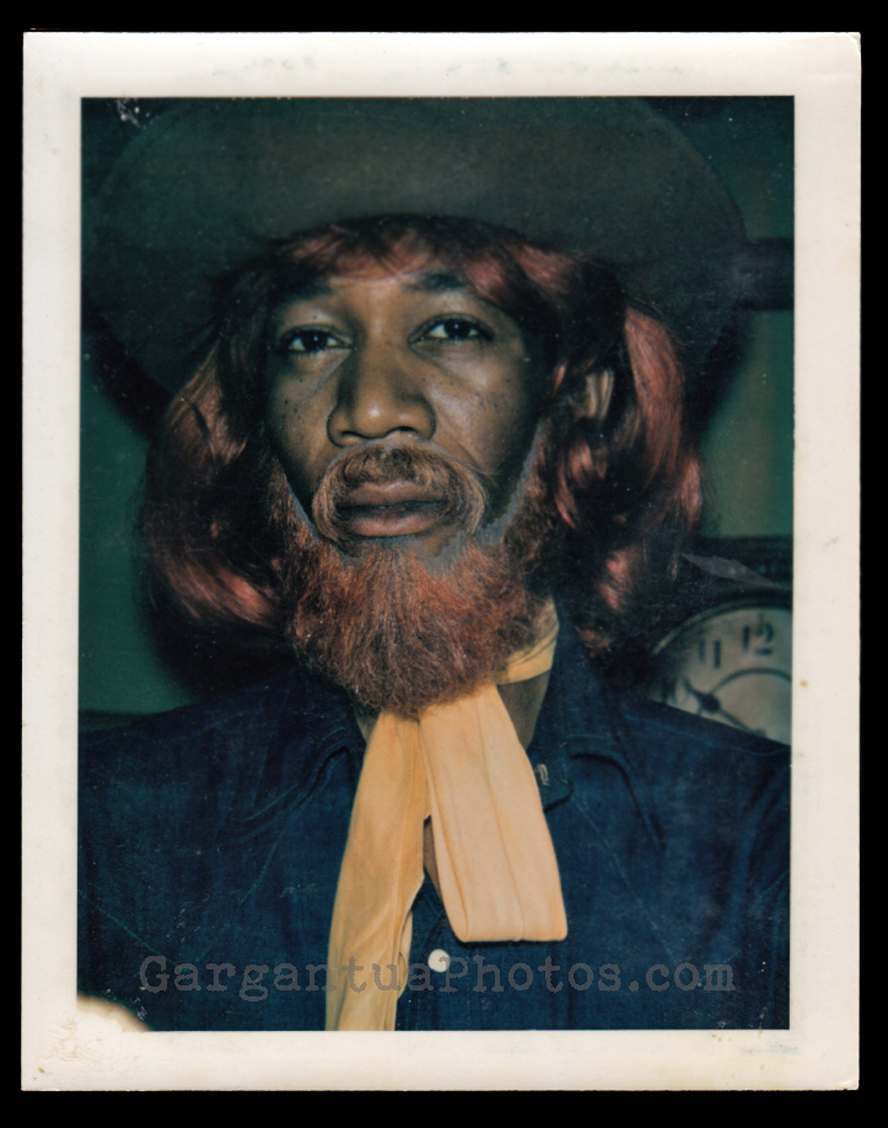
Morgan Freeman poses for a production continuity Polaroid while a cast member of The Electric Company, which was first broadcast 45 years ago today. See more Polaroids at A.V. Club.

Halloween Prep of the Day:

Disney Style shows four quick and easy Disney costumes for girls, including characters from Alice in Wonderland and The Incredibles:

[embedded content]

Cosplay of the Day:

Speaking of Disney costumes, here’s a cover of “Sally’s Song” from The Nightmare Before Christmas from cosplaying fans. See photos at Fashionably Geek.

[embedded content]

Movie Takedown of the Day:

Speaking of The Nightmare Before Christmas, this week’s Honest Trailer musically roasts the movie (and Hot Topic) on an open fire:

[embedded content]

Retold Classic of the Day:

Watch the original Halloween, which came out 38 years ago today, redone with video game graphics in the latest from 8 Bit Cinema:

[embedded content]

Star Wars Merchandise of the Day:

You music-loving Star Wars fans probably already have Princess Leia hairdo headphones, but now you need to own this levitating Death Star speakers (via the Fowndry):

Movie Comparison of the Day:

Fandor Keyframe spotlights similarities between two of this year’s awards contenders, Barry Jenkins’s Moonlight and Vikram Gandhi’s Barry:

[embedded content]

Classic Trailer of the Day:

Today is the 25th anniversary of the release of Curly Sue, the final movie directed by John Hughes. Watch the original trailer for the comedy below.

[embedded content]

and

Let’s block ads! (Why?)


No Image

Cleveland Beats Chicago Cubs 6-0 In Game 1 Of World Series

The Cleveland Indians defeated the Chicago Cubs 6-0 in Game 1 of the World Series, building on a dominant performance by starting pitcher Corey Kluber. Matt Slocum/AP hide caption

toggle caption

Matt Slocum/AP

Updated at 11:55 p.m. ET with final score

The Cleveland Indians beat the Chicago Cubs 6-0 in Game 1 of the 2016 World Series on the strength of a commanding performance by their starter Corey Kluber who struck out nine batters over six innings.

Kluber was so dominant that he struck out eight of the first nine Cubs batters he faced. He had the help of back-up catcher Roberto Perez who clobbered two home runs.

Cubs starter Jon Lester gave up three runs over 5 2/3 innings. The Indians got to Lester early in the game. He gave up a hit and walked two batters in the top of the first inning before giving up an infield hit and hitting a batter. By the end of the first, the Indians were ahead 2-0 and their fans smelled blood.

Cleveland’s Roberto Perez hit two home runs in the Indians’ 6-0 win over the Chicago Cubs in Game 1 of the World Series. Charlie Riedel/AP hide caption

toggle caption

Charlie Riedel/AP

The Indians added another run when Perez hit a home run to left field off Lester in the fourth inning. He struck again in the bottom of the eighth inning hitting a three-run homer, again to left field, off reliever Hector Rondon.

The Cubs twice threatened to get back in the game. In the seventh inning, they loaded the bases with no outs, but Indians reliever Andrew Miller shut them down. In the eighth inning, the Indians put two runners on base, but again failed to score.

Our original post:

Game 1 of the 2016 World Series between the Chicago Cubs and the Cleveland Indians is underway.

The home-team Indians jumped out to 2-0 lead in the bottom of the first inning after Cubs starter Jon Lester walked the bases full and then gave up an infield hit and hit a batter.

Both teams have waited decades to call themselves champions. As the Two-Way reported earlier, it’s been 68 years since the Indians last won the Series and 108 years since the Cubs were baseball’s champions.

(The last time the Indians played in the World Series was 1997 and they lost in a seven-game series to the then-Florida Marlins.)

Typically, a World Series generates its own excitement. Still, with all due respect to baseball’s Chicago Cubs, Major League Baseball’s best regular-season team with 103 victories this year, tonight is a special night in Cleveland.

Before the first pitch, Indians fans streaming into Progressive Field were bouncing off the vibes from the arena right next door.

That is Quicken Loans Arena, where the National Basketball Association’s current kings, the Cleveland Cavaliers, are kicking off their 2016-17 season. Tonight they raised a championship banner from their historic 2015-16 season when they became the first NBA team to overcome a 3-1 game deficit and win the series against the Golden State Warriors.

But enough of basketball — my colleague Tom Goldman is on the scene at Progressive Field, and he summed up the mood inside the ballpark this way: “You can see it in the eyes of every fan here in Cleveland. The Cavs! The Indians! It’s beyond festive. It’s a dream come true in Cleveland!”

The temperature at game time was 50 degrees. Ski hats and parkas are in full force, says Tom, and of course, the coats and headgear are mostly in the Indians’ red, white and blue colors.

Let’s block ads! (Why?)


No Image

Volkswagen Agrees To $14.7 Billion Settlement In Emissions Cheating Scandal

Nearly 500,000 dirty diesel vehicles could be taken off the roads under a settlement approved by a judge in the Volkswagen emissions cheating scandal. VW has agreed to pay up to $14.7 billion to resolve claims from consumers and the U.S. government. Customers will be compensated under a VW buyback program, and the company will also pay to offset the pollution caused by the rigged diesel vehicles.

ROBERT SIEGEL, HOST:

A federal judge has approved a nearly $15 billion settlement between the carmaker Volkswagen and the U.S. government and consumers. Just over a year ago, VW admitted it installed software on its diesel vehicles that cheated on emissions tests. The company says it will begin buying back vehicles from customers next month. And it will pay to offset pollution caused by its dirty cars. NPR’s Sonari Glinton reports.

SONARI GLINTON, BYLINE: To understand Volkswagen’s diesel settlement, you need to know that the company was intent on becoming the world’s No. 1 car brand. One of the ways to do that – capture the American market with diesel. Karl Brauer is with Kelley Blue Book.

KARL BRAUER: Really the heart of his problem was an extremely demanding management, you know, team that wanted something that really wasn’t possible. But the pressure to deliver was so high that those below them kind of felt they had to do something, even if it wasn’t necessarily the right thing, to keep management happy.

JAMES KOHM: Well, the lesson is don’t cheat, that (laughter) if you cheat, you’ll be caught. And the cost will be significant.

GLINTON: James Kohm is the associate director of enforcement at the Federal Trade Commission. He says VW is not out of the woods. It still has to settle on its 3-liter diesels. The EPA is still suing for civil penalties under the Clean Air Act. There are still cases pending in Europe. And he says…

KOHM: So at the end of this process, it is hard to see how Volkswagen would have any incentive to repeat this process that has been disastrous for them.

GLINTON: Customers get the value of the car before the scandal was announced plus money for the hassle. The company also settled with dealers in the U.S. David Uhlmann is law professor at the University of Michigan. He notes the speed that VW has settled this case – just over a year.

DAVID UHLMANN: Volkswagen paid top dollar to resolve the consumer claims. But what they got by paying top dollar was the ability to start moving beyond this crisis.

GLINTON: And they need to get this behind them because it is such a competitive and fast-changing market.

LAURA MACCLEERY: We’re absolutely on the brink of a major shift in how consumer products will work in general.

GLINTON: Laura MacCleery is with Consumer Union, the consumer advocacy group that started Consumer Reports. She says as products become more complex and cars start driving themselves, software matters.

MACCLEERY: Transparency around that is actually a matter of life and death. And so we need trust in auto makers and other product manufacturers now, more than ever. And we need to make sure that regulators aren’t caught unawares or, you know, deceived.

GLINTON: And a shout-out to my high school English teacher Mr. Kizelevicus for teaching me about irony ’cause I’m pretty sure this is it. Remember at the top of this story, I said that VW wanted to be the No. 1 car company in the world? Well, Karl Brauer with Kelley Blue Book says this year, it likely will be.

BRAUER: You can have a major issue in the U.S. market. But if you’ve got success in a market like China, it more than counteracts it. And you still end up as a global leader in terms of automotive sales and revenue.

GLINTON: Volkswagen says it will begin buying back diesel vehicles in mid-November. It comes out with a new SUV on Thursday. Sonari Glinton, NPR News.

Copyright © 2016 NPR. All rights reserved. Visit our website terms of use and permissions pages at www.npr.org for further information.

NPR transcripts are created on a rush deadline by Verb8tm, Inc., an NPR contractor, and produced using a proprietary transcription process developed with NPR. This text may not be in its final form and may be updated or revised in the future. Accuracy and availability may vary. The authoritative record of NPR’s programming is the audio record.

Let’s block ads! (Why?)


No Image

Simplified Study Aims To Quickly Test A Long-Shot ALS Treatment

Karen Lorne, diagnosed with Lou Gehrig’s disease in July, volunteers weekly with her certified therapy dog, Bailey, at the Ronald McDonald House in Chapel Hill, N.C. Courtesy of Karen Lorne hide caption

toggle caption

Courtesy of Karen Lorne

Researchers have launched an innovative medical experiment that’s designed to provide quick answers while meeting the needs of patients, rather than drug companies.

Traditional studies can cost hundreds of millions of dollars, and can take many years. But patients with amyotrophic lateral sclerosis, or Lou Gehrig’s disease don’t have the time to wait. This progressive muscle-wasting disease is usually fatal within a few years.

Scientists in an active online patient community identified a potential treatment and have started to gather data from the participants virtually rather than requiring many in-person doctor’s visits.

How is that possible?

In this case, doctors and patients alike got interested in an extraordinary ALS patient whose symptoms actually got better, which rarely occurs. He’d been taking a dietary supplement called lunasin, “and lo and behold six months later, [his] speech [was] back to normal, swallowing back to normal, doesn’t use his feeding tube, [and he was] significantly stronger as measured by his therapists,” said Richard Bedlack, a neurologist who runs the ALS clinic at Duke University.

Of course, it could just be a coincidence that the man who got better happened to be taking these supplements. To find out, Bedlack teamed up to run a study with Paul Wicks, a neuropsychologist and vice president for innovation at a web-based patient organization called PatientsLikeMe.

The study they came up with dispensed with many of the standard features of research that make it so expensive, time-consuming and often so hard to recruit patients:

  • There’s no comparison group taking a placebo; instead the researchers match each patient with three to five people whose disease was on a similar course.
  • The researchers could skip safety testing because the supplement is already on the market.
  • Most important, they aren’t looking for subtle effects, like slower disease progression. That may be vital for a pharmaceutical company seeking approval for a new drug, but isn’t necessarily what patients want.

“I think what people are really looking for is to regain some function,” Wicks says. “So with limited time resources, limited patients available to take part in studies, perhaps we want to swing for the fences every now and then.”

Chances are the dietary supplement won’t help, but at least people will learn the outcome quickly and won’t waste their time and money if lunasin fails.

“If we find just one patient that has a reversal the size of the initial patient, that in itself is incredible, because these reversals are once in a generation,” Wicks said. He and Bedlack have identified just 24 patients, over many years, whose disease actually reversed course, at least temporarily.

The study recruited 50 volunteers at a record pace for ALS research, Bedlack said. That’s partly because it only requires three doctor visits. Those appointments are frequently challenging for people with this debilitating disease.

Most of the data are gathered virtually — patients post their own weekly assessments in a secure area of the PatientsLikeMe website.

Karen Lorne, a 58-year-old nurse practitioner from Chapel Hill, N.C., had cared for patients with ALS, so she knew about the inexorable nature of the disease. This spring, she noticed she could no longer hold medical instruments securely in her left hand, and her speech started to slur. She was diagnosed with ALS in July.

“I was pretty shocked that we know so little and that we have no idea how to fix it — because that’s what we do in medicine,” she says.

After considering her options, Lorne decided to sign up for the low-hassle trial with the supplement. She reports her own symptoms once a week, by typing them in on the PatientsLikeMe website. She can track her own progress, as well as that of the other patients in the study.

And it also serves as a support group. “You can type in, ‘I’m having a bad day,’ and somebody will give you a list of pointers to help you keep in the center, which is where you really want to live,” she said.

And the study doesn’t consume her precious days. She still can focus on her family and life’s daily pleasures.

“We try to live in the present and enjoy every moment as thoroughly as possible,” she says. “And actually, some of my friends who do not have the disease, seeing me having it has helped them shore up their lives and recognize what’s important.”

She is also helping advance knowledge about ALS, even if this trial doesn’t end up helping her.

Patients are a valuable resource, yet only 10 percent ever end up in a study.

“If this infrastructure works, in two years could you imagine 20 trials like this run in parallel?” Wicks asks. “You know, I have a question for the field: Why isn’t every patient in a study?”

One reason that’s not the case is that very ill patients are not likely to recover under any circumstances, so they don’t usually provide a lot of value in scientific studies, says Jeffrey Rothstein, a neurologist who runs ALS studies at the Johns Hopkins University School of Medicine. “That’s why almost no trial is open to all-comers,” as this one was, he says.

He agreed, though, that the study would show whether the supplement has a truly dramatic effect, which is the main purpose of the experiment. “The value of getting patients involved is fantastic,” he says.

If a virtual study like this identifies a promising lead, scientists could quickly pursue that through laboratory studies and more traditional studies with volunteers. Clearly that approach, of starting with animal studies and building on that knowledge, has been a huge disappointment so far with ALS.

And if the approach is successful, it could apply to other diseases as well.

Let’s block ads! (Why?)


No Image

Today in Movie Culture: Batman vs. Iron Man Fan Trailer, Clive Owen Returns in New BMW Film and More

Here are a bunch of little bites to satisfy your hunger for movie culture:

Remade Trailer of the Day:

You’ve seen the first trailer for Logan. Now watch it again with the footage replaced perfectly with clips from X-Men: The Animated Series and X-Men: Evolution (via io9):

[embedded content]

Mashup of the Day:

Two wealthy playboy superheroes go head to head in Screen Rant’s fake trailer for Batman v Iron Man: Dawn of Billionaire Justice:

[embedded content]

Strange Trailer of the Day:

Aldo Jones has made a Weird Trailer for Doctor Strange, making the real thing seem a lot less surreal:

[embedded content]

Car Ad of the Day:

Clive Owen is back as The Driver in a new BMW Films short called The Escape from director Neill Blomkamp:

[embedded content]

Cosplay of the Day:

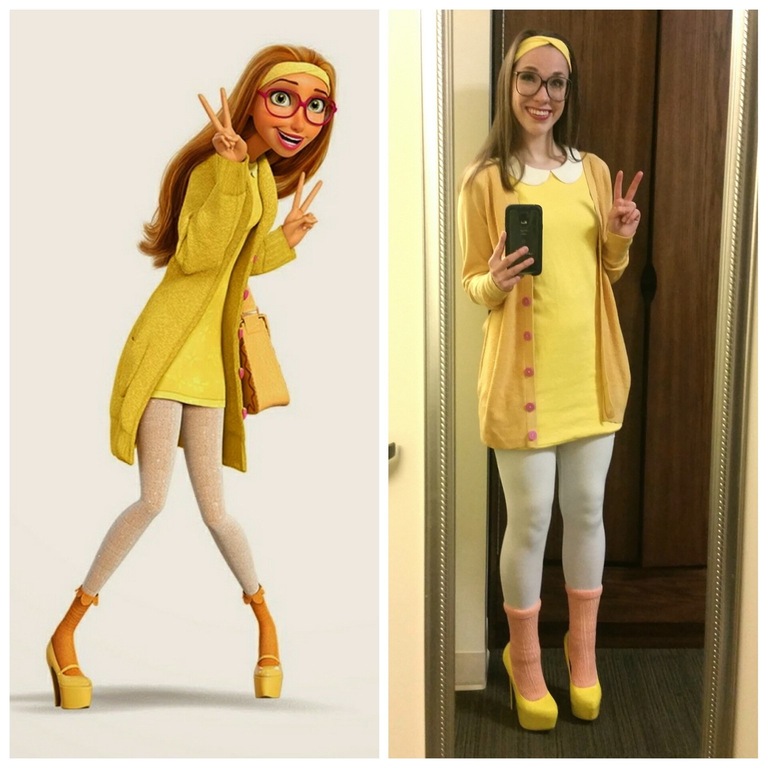
This woman was apparently born to cosplay as Honey Lemon from Disney’s Big Hero 6. Read more of her story at Fashionably Geek.

Halloween Prep of the Day:

If you’re still not sure what to be for Halloween this year, how about a Stormtrooper using the DIY Costume Squad’s tutorial to make yourself a good get-up cheaply:

[embedded content]

Vintage Image of the Day:

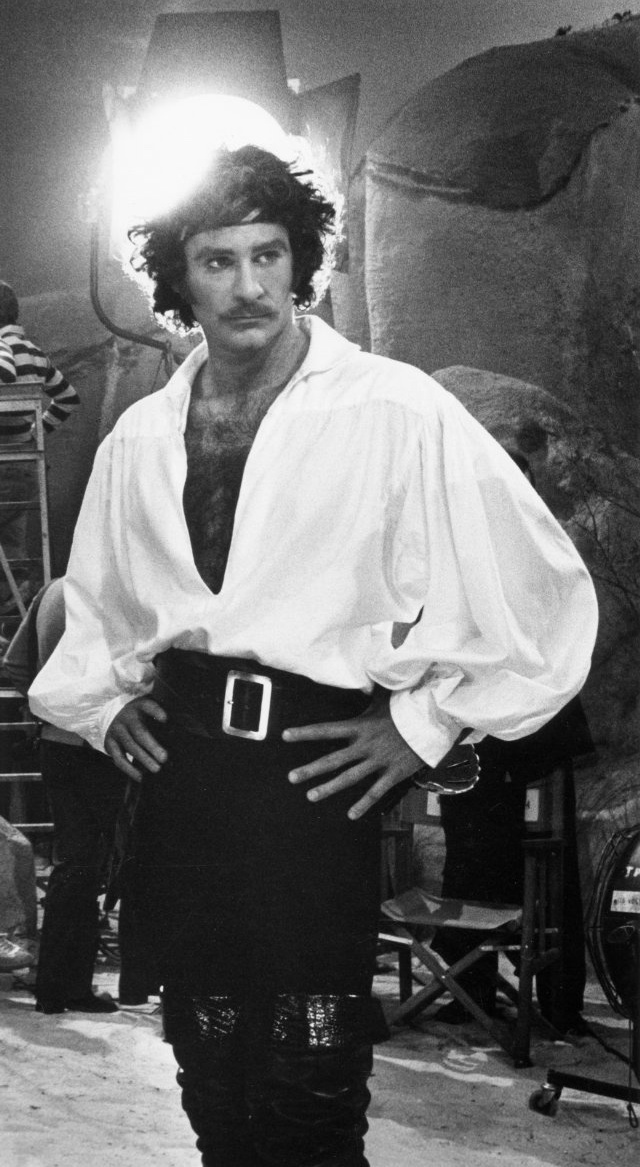
Kevin Kline, who turns 69 today, on the set of the 1982 musical The Pirates of Penzance:

Actor in the Spotlight:

The latest episode of character actor showcase No Small Part focuses on magician and disembodied hand performer Christopher Hart, who plays Thing in the Addams Family movies:

[embedded content]

Actor Parody of the Day:

The best Tom Cruise impersonator you’ll ever see stars in this video sketch in which the movie star is a Pokemon trainer:

[embedded content]

Classic Trailer of the Day:

With the latest Madea movie a hit, let’s revisit the original trailer for her film debut, the 2005 Tyler Perry movie Diary of a Mad Black Woman:

[embedded content]

and

Let’s block ads! (Why?)


No Image

Buick Up, Honda And Subaru Down, Says Consumer Reports

A Buick Avista concept car is exhibited in Beijing in April. Buick, which sells a large percentage of its cars in China, is No. 3 in Consumer Reports‘ latest reliability rankings. Andy Wong/AP hide caption

toggle caption

Andy Wong/AP

Buick, a subsidiary of General Motors, has become the first domestic brand in more than three decades to earn one of the highest ratings for reliability from Consumer Reports. Results from the Consumer Reports Annual Brand Reliability Survey were released in Detroit Monday.

Lexus, owned by Toyota, was the top brand. Toyota itself came in second, followed by Buick. The company ranks cars and car brands based on its survey of more than a half-million car owners.

Buick

“Yes, really, Buick,” says Jake Fisher, who runs Consumer Report‘s auto testing lab in Connecticut. Fisher tells NPR that Buick has been making reliable cars for quite a while, and he says the brand continues to improve. According to Fisher, what sets Buick apart from the other GM brands is that it has a small number of models and doesn’t make large trucks or SUVs, which have been a problem for GM.

This year Buick sold more than 1 million vehicles through September, according to GM. Buick is a near-luxury brand and skews older in the U.S., but the company’s sales are overwhelmingly dominated by China, which is the largest market for Buick. China accounted for nearly 40 percent of GM’s global sales.

Consumer Reports has been criticized in Detroit for being too enamored of Japanese carmakers. The Japanese brands all finished in the top 15 of 29 brands surveyed. “Anyone who’s not doing well with our ratings thinks that the system might be rigged against them,” says Fisher. “This is data. These are real situations. This is cars breaking down. This is not opinion. This is not what people think about their cars. It doesn’t matter if you’re from an automaker called Honda or Buick. Each car needs to be reliable.”

Honda And Subaru

If Buick was a surprise, it wasn’t the only one. “The Honda Civic, this year with a redesign and a lot of changes, has really fallen way down,” Fisher says. That was one of many surprising results in the survey. All of the Asian nameplates scored among the top half of the 29 brands tested. They accounted for seven of the top 10 spots. What Fisher found “absolutely surprising” was Honda. The company fell two spots, barely holding on to its slot in the top 10. “This is the first time really in history that we did not recommend a Honda Civic because of reliability problems,” Fisher says.

Despite a decade of double digit sales growth, Subaru fell out of the top 10. Fisher says that’s in part because of problems with its midsize sedan as well as quality issues with the Subaru Outback.

Tesla And Technology

Automobiles are safer than they’ve ever been and in many ways more reliable, according to Fisher. He says reliability remains just as important a factor. “Certainly cars are lasting longer. It’s not uncommon to have a car that goes 100,000 or 200,000 miles. But today’s cars have [different problems than] they did five or 10 years ago,” he says.

From Consumer Reports:

  • Tesla‘s Model S has improved to average reliability, which now makes the electric car one of our recommended models. But its new Model X SUV has been plagued with malfunctions, including its complex Falcon-wing doors. Both vehicles can be upgraded to include Tesla’s optional semi-autonomous Autopilot software, which can allow the car to maintain lane position, speed, and following distances on its own.
  • “Consumer Reports has serious concerns about how some automakers, including Tesla, have designed, deployed, and marketed semi-autonomous technology. We believe automakers need to clearly communicate what these systems can and cannot do. To that end, we have identified models in our ratings that offer semi-autonomous features.”

“We’re seeing problems with in-car electronics that we didn’t see five or 10 years ago,” says Fisher. He says that as the car companies introduce new technologies “often to make cars better to drive or better to live with, sometimes they add reliability problems, reliability headaches.”

Fisher uses Tesla as an example of a company that pushes the envelope and puts the latest technology in its cars. “It’s going to be a problem,” Fisher says, pointing out that “the Model X is one of the least reliable cars on our survey. And there’s a lot of possibly needless complexity in that car which is otherwise a quite simple power train. I mean, electric cars should be reliable,” Fisher says. He says all of the technology, including autopilot, is what’s pulling Tesla’s rating down.

Fisher says as some companies race to use the newest technology, whether it’s proven or not, other companies prefer more of a methodical, slow rollout. He says Toyota and Lexus, which won the top prizes, tend not to put the absolute latest and greatest technology in their vehicles. “Some people say [Toyota is] a bit boring, but there’s a reason they are. Because they’re a little bit slower at rolling out that technology.” Fisher says Toyota’s dominance in terms of reliability “kind of proves their point.”

Let’s block ads! (Why?)


No Image

20 Years Later, Humans Still No Match For Computers On The Chessboard

World chess champion Magnes Carlsen (right) won’t play his computer or play the game like a computer. Instead, he chooses his strategy based on what he knows about his opponent. Sebastian Reuter/Getty Images for World Chess by Agon Limited hide caption

toggle caption

Sebastian Reuter/Getty Images for World Chess by Agon Limited

Next month, there’s a world chess championship match in New York City, and the two competitors, the assembled grandmasters, the budding chess prodigies, the older chess fans — everyone paying attention — will know this indisputable fact: A computer could win the match hands down.

They’ve known as much for almost 20 years — ever since May 11, 1997. On that day, IBM’s Deep Blue defeated the great Garry Kasparov who, after an early blunder, resigned in defeat.

“I am ashamed by what I did at the end of this match. But so be it,” Kasparov said. “I feel confident that machine hasn’t proved anything yet.”

Kasparov’s confidence proved unjustified. In the years since, computers have built on Deep Blue’s 1997 breakthrough to the point where the battle between humans and machines is not even close. Even chess grandmasters like author and columnist Andrew Soltis know this to be true.

“Right now, there’s just no competition,” Soltis says. “The computers are just much too good.”

And as it turns out, some players prefer to stay away from computers as opponents, he says.

“The world champion Magnus Carlsen won’t even play his computer,” Soltis says. “He uses it to train, to recommend moves for future competition. But he won’t play it, because he just loses all the time and there’s nothing more depressing than losing without even being in the game.”

Magnus Carlsen, who’s Norwegian, defends his title against Sergey Karjakin of Russia, in November. Carlsen is 25. Karjakin, 26.

They have both arrived at the highest ranks of the game in an era when a $100 chess computer can easily dispose of them both.

That superiority had been pursued and imagined for decades.

There was a chess match in the movie 2001: A Space Odyssey. HAL, the computer, versus Frank, the astronaut.

[embedded content]

The chess match in 2001: A Space Odyssy between HAL, the computer, and Frank, the astronaut.

YouTube

But here’s the question. Do HAL’s real-life progeny — computers that can see 30 moves into the future — play the game differently? Do they have a style? Have they taught humans new strategies?

Murray Campbell of IBM was part of the Deep Blue project. As he says, chess computers do play differently. They make moves that sometimes make no sense to their human opponents.

“Computers don’t have any sense of aesthetics or patterns that are standard the way people learn how to play chess,” Campbell says. “They play what they think is the objectively best move in any position, even if it looks absurd, and they can play any move no matter how ugly it is.”

Human chess players bring preconceptions to the board; computers are unbound by habit.

And, unlike people, computers love to retreat, Soltis says.

“And if you see a game in which one of the players is doing a lot of retreating mysteriously and so on, and the game goes on forever and ever, that’s a computer,” he says.

Susan Polgar is a grandmaster and a six-time national collegiate champion chess coach. Computers do all that retreating, she says, because they’re not slaves to human nature. Humans, she says, don’t like to admit a mistake unless they really have to.

“And in those borderline cases when it’s not obvious that you have to retreat, chess players tend to not like to retreat,” Polgar says. “Let’s say you move a knight forward towards your opponent’s king, attacking. Unless you absolutely have to retreat, you rather try to follow up that attack by bringing more pieces to attack your opponent’s king.”

Computers display no such stubbornness. “A computer, if it calculates that the best move is to retreat, it has absolutely no psychological boundaries holding it back from retreating,” Polgar says.

One of the human players in November’s match, Magnus Carlsen, the world champion, was described as playing a very un-computer like game of chess. Polgar says this means Carlsen can win with different kinds of strategy, and he might choose his strategy based on what he knows about his opponent.

“Against one opponent that loves having queens on the board — the most dangerous attacking piece — he would make sure, you know, try to get rid of the queens as soon as possible and put his opponent in a more uncomfortable setting on the chessboard,” Polgar says.

To the great human chess champion, understanding the foibles of his foe can be a key to victory. To a computer, all opponents look the same.

Polgar says computers are great training aids for her chess teams. And she says, computers have solved several age-old chess problems — questions of how to win when there are very few pieces on the board.

Soltis is less charitable to the machines that humans programmed to play chess, and that now beat their former masters routinely. They may have nerves of silicon. They may be indefatigable and immune to psychological distraction. But Soltis says they haven’t imparted much wisdom about the game.

“We sort of had a social contract, we thought, with the computers many years ago,” Soltis says. “We would teach them how to play chess. They would teach us more about chess. They haven’t lived up to their side of the bargain.”

The real payoff from teaching computers to play chess may not have anything to do with the game. Campbell, from IBM, says it’s a lesson taken from that experience that has propelled artificial intelligence research in the years since.

“Humans have certain strengths and weaknesses. Computers have certain strengths and weaknesses,” Campbell says. “Computers plus humans do better than either one alone.”

Computers have the advantage of brute force. They can mine huge amounts of information. But humans, Campbell says, still excel at evaluating that information and coming up with a plan that will work.

He says that’s especially true as researchers use computers to take on messy, real-world problems full of unknowns, like combating climate change or curing cancer.

“I think many of the common board games don’t have the unknown element in it,” Campbell says. “They may have chance elements. A game like backgammon, for example, there’s roll of the dice, but you can calculate the probabilities quite accurately. When there’s unknowns, there’s things … just are hidden from you, and even the alternatives, the things you can do, can’t be set down and enumerated. There’s maybe too many possible actions you can take. That’s the challenge for modern artificial intelligence research.”

Meanwhile, back at the chessboard, two of the best human players in the world — Carlsen and Karjakin — play their championship in Manhattan’s South Street Seaport, starting Nov. 11.

Sergey Karjakin, of Russia, will meet Norway’s Magnus Carlsen in New York City in November to determine the next world chess champion. Carlsen is defending his title. Sebastian Reuter/Getty Images for World Chess by Agon Limited hide caption

toggle caption

Sebastian Reuter/Getty Images for World Chess by Agon Limited

Let’s block ads! (Why?)


No Image

On Baseball's Biggest Stage, 2 Lovable Losers Square Off To Become The Champ

This week, the World Series features two of professional sports’ most famously hapless franchises: the Chicago Cubs and the Cleveland Indians. Both teams have gone decades without a championship.

MICHEL MARTIN, HOST:

And now it’s time for Words You’ll Hear. That’s where we take a word or a phrase we think you’ll be hearing in the news and break it down for you. This week’s phrase is lovable losers. Yes, that’s right, we’re talking about the Chicago Cubs, who are one step closer to fulfilling the wish of long-suffering fans – winning the World Series. They’ll play the Cleveland Indians Tuesday in the first game of the series. And yes, we know both teams have endured epic drought since their last championships. We’re joined now by NPR’s David Schaper, who is in Chicago and spent some time with euphoric fans there. Hi, David.

DAVID SCHAPER, BYLINE: Hi, Michel.

MARTIN: So the Cubs have been called the lovable losers, but losers no more. They clinched a spot in the Series by beating the Los Angeles Dodgers at Wrigley last night. What’s the city like there now?

SCHAPER: You know, it’s really, truly unbelievable. It’s not unusual – I’m outside of Wrigley Field, and you see grown men and women come up with tear in their eyes. You start talking to people and they get choked up. They are so emotional about this. I just saw a guy walk by, too, who had spray-painted his dog. He has a white dog, and he spray-painted it red and blue, the Cubs colors, with the Cubs logo all over this dog. And people are stopping him and taking pictures. And it’s a really fantastic atmosphere. It’s just – people are euphoric. But, you know, as you mentioned, this is a 71-year drought that, you know, the Cubs haven’t been in the World Series. But they haven’t won it since 1908, and so there’s a lot of people who feel there’s unfinished business here.

MARTIN: Can you remind us why the Cubs are called the lovable losers? And just for people who want to send me the lawyers, I didn’t make this up. This is not me.

SCHAPER: (Laughter) No, no. And a lot of us kind of refer to them as lovable losers. It’s in part because it’s such a charming team. It’s got this iconic ballpark that people just love. Baseball fans from all over the world, not just all over the country, like to come to visit Wrigley Field because it’s a mecca of sorts for baseball fans. And the way that they’ve lost over the years has been so tragic, so heartbreaking, you know, ripped out the hearts of many fans over the years. So again, to get to this point and to move on outside of the National League Championship Series and into the World Series is just a phenomenal feat for fans here.

MARTIN: Now, you might not be the person to ask, but is there any sympathy for Cleveland ’cause Cleveland hasn’t had it that much better, having not won since 1948?

SCHAPER: That’s right. You know, and there is some sympathy here. There are a lot of people who feel like, you know, they’ve had a long drought, too. They don’t have the best reputation of baseball in terms of winning teams. And so a lot of people are thinking, yeah, it would be nice for them to win it, just not this year (laughter). It’s not going to happen.

(LAUGHTER)

MARTIN: All right, well, the first game is Tuesday in Cleveland. Are there any special plans in Chicago?

SCHAPER: Well, I can’t imagine anybody watch – not watching the game. I think people are going to be glued to their TVs whether it’s at home or at bars or pubs. It’s Cub fever through and through in this city. Schools are having special events where they’re having all the kids dressed in Cub uniforms and Cub colors. So it’s going to be quite something to watch.

MARTIN: So don’t call you that night, basically.

(LAUGHTER)

MARTIN: All right, that’s NPR’s David Schaper in Chicago. David, thank you.

SCHAPER: Oh, thanks, Michel.

Copyright © 2016 NPR. All rights reserved. Visit our website terms of use and permissions pages at www.npr.org for further information.

NPR transcripts are created on a rush deadline by Verb8tm, Inc., an NPR contractor, and produced using a proprietary transcription process developed with NPR. This text may not be in its final form and may be updated or revised in the future. Accuracy and availability may vary. The authoritative record of NPR’s programming is the audio record.

Let’s block ads! (Why?)