Articles by admin

No Image

To Get A College Scholarship: Forget The Field, Hit The Books

Think playing on sports’ travel team will help your kids get a college scholarship? Think again. Commentator John U. Bacon advises that they hit the books instead.

DAVID GREENE, HOST:

If you’re the parent of an athlete, you may not have seen much of him or her recently. It is fall sports season. Winter sports are gearing up, and travel teams are busy. These are teams that can be organized outside school and involve lots and lots of time on the road. But commentator John U. Bacon says those miles just don’t add up.

JOHN U. BACON: Why do we do this? Why do we spend countless hours, week-in and week-out, on endless road trips, transporting our child athletes across the state and even across the country while sacrificing everything else, including other sports, family dinners and even family vacations? Because the coaches tell us we must. If we don’t, our kids won’t get a college scholarship or even make their high school team, let alone go pro.

Now, let’s start with some cold facts. Nationally, less than 2 percent of high school athletes will get college scholarships. That’s true at my alma mater, the University of Michigan, where only 2 percent of students receive athletic scholarships, but a whopping 70 percent receive academic scholarships. That adds up to $23 million for sports, compared to $915 million for academics – 40 times more. You don’t have to be an AP Calculus whiz to figure out where to spend your time. You want a scholarship? Forget the fields. Hit the books. It’s fool’s gold, people. But they keep selling it, and we keep buying it.

Travel teams are also counterproductive. You don’t get better at your sport by sitting in a van. You get burned out. Legendary Yankees catcher Yogi Berra was amazed to see his grandchildren traveling across the country just to take a few at bats. He said when he grew up in St. Louis, playing stickball with his buddy Joe Garagiola, they’d take 48 bats by dinner. Berra learned to hit by hitting.

And what about playing one sport all year? Even the great one, Wayne Gretzky, thinks it’s crazy. He said, I was absolutely ecstatic to see the end of hockey season. One of the worst things to happen to the game, in my opinion, has been year-round hockey. Gretzky spent his springs playing lacrosse.

In the U.S., hotshot tennis players are pushed to enter junior tournaments year-round and enroll in Florida’s tennis academies. But instead of ushering in a golden era of American tennis, it has ruined our most promising players. Since 2003, American men have not won a single major title. On the women’s side, the Williams sisters have been dominant. Why? Instead of entering them and endless tournaments across the country, their father, Richard, taught them himself on the public courts of South-Central, L.A. There’s your answer. The Williams sisters have won 29 major titles. Their American peers have won exactly five and none since 2002.

You want to succeed? Go outside and play. When you come in, do your homework, just like always.

Copyright © 2016 NPR. All rights reserved. Visit our website terms of use and permissions pages at www.npr.org for further information.

NPR transcripts are created on a rush deadline by Verb8tm, Inc., an NPR contractor, and produced using a proprietary transcription process developed with NPR. This text may not be in its final form and may be updated or revised in the future. Accuracy and availability may vary. The authoritative record of NPR’s programming is the audio record.

Let’s block ads! (Why?)


No Image

Today in Movie Culture: 'A Wrinkle in Time' Mannequin Challenge, 'Harry Potter' Franchise Recap and More

Here are a bunch of little bites to satisfy your hunger for movie culture:

Production Video of the Day:

Ava DuVernay and the very inclusive crew of A Wrinkle in Time revealed their April 6, 2018, release date in a great mannequin challenge video.

Late entry! 102 crew members! 27 departments! Release date news! #WrinkleInTime #InclusiveCrew #MannequinChallenge pic.twitter.com/5GfmztP9fI

— Ava DuVernay (@AVAETC) November 14, 2016

Franchise Recap of the Day:

To get you ready for this week’s release of Fantastic Beasts and Where to Find Them, here’s a recap of the Harry Potter series in Lego form:

[embedded content]

Film Score Cover of the Day:

Also in honor of the Wizarding World returning, here’s an a capella cover of the Harry Potter theme:

[embedded content]

Music Video of the Day:

Speaking of cover songs, here’s a music video for Alessia Cara’s version of the Moana tune “How Far I’ll Go” (via Twitter):

[embedded content]

Mashup of the Day:

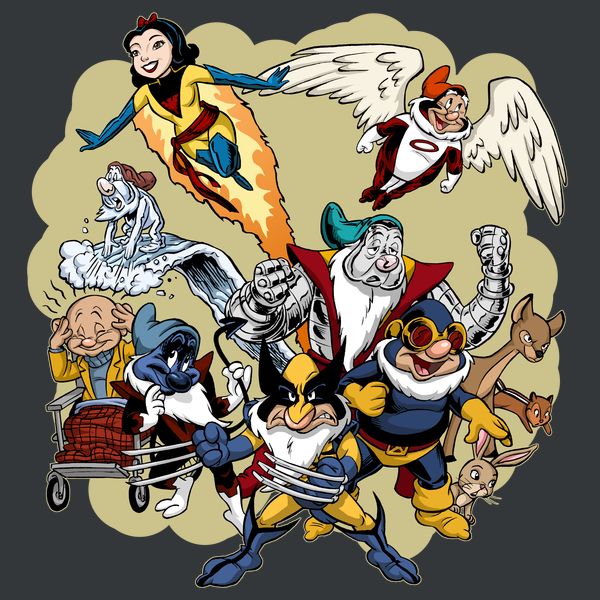
Speaking of Disney properties, technically the X-Men are a Disney property, via Marvel Comics, so this mashup with Snow White and the Seven Dwarfs from Darth Blender is a natural fit:

Movie Takedown of the Day:

Still speaking of Disney animated features, Honest Trailers filets Finding Dory by calling it lesser Pixar and only made for money:

[embedded content]

Vintage Image of the Day:

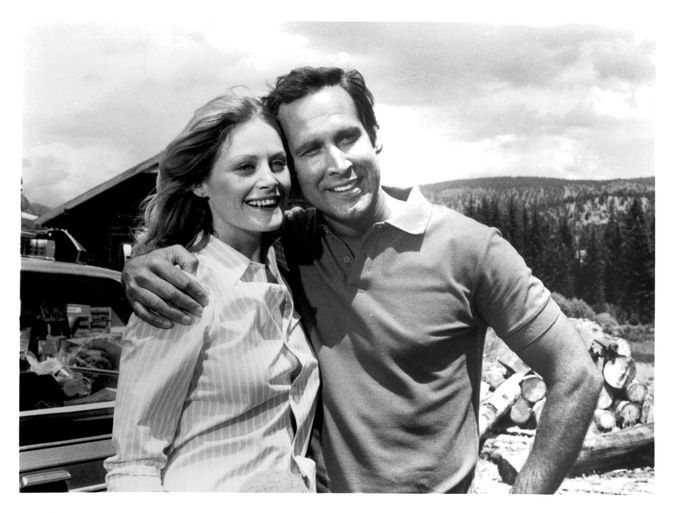
Beverly D’Angelo, who was born on this day in 1951, poses with Chevy Chase in 1982 for a publicity still for National Lampoon’s Vacation:

Filmmaker in Focus:

Kino highlights point of view shots in the films of John Carpenter for a look at the relationship between the camera and the subject (via Film School Rejects):

[embedded content]

Cosplay of the Day:

It’s always fun when cosplayers reenact a specific scene, as these guys did for Ghostbusters (via Paul Feig):

@paulfeig and @katiedippold taught us the importance of the Swiss Army knife. Lesson learned. pic.twitter.com/GHdlj1DfE5

— Ghostbusters of BC (@Ghostbusters_BC) November 14, 2016

Classic Trailer of the Day:

Today is the 20th anniversary of the release of Space Jam. Watch the original trailer for the Michael Jordan-led Looney Tunes movie below.

[embedded content]

and

Let’s block ads! (Why?)


No Image

Following Election, NRA Goes On 'Offense'; Here's What It Could Aim To Do

Range safety officers look over a line of 1,000 Henry Golden Boy Silver rifles before an NRA-sponsored event in Phoenix. Each participant took two shots, celebrating the presidential election results. Nathan Rott/NPR hide caption

toggle caption

Nathan Rott/NPR

“Our time is now.” That’s the message from Wayne LaPierre, the head of the National Rifle Association, to his group’s members and gun owners across America, following last week’s election.

With a Republican-held Congress and Donald Trump headed to the White House — helped, in no small part, by the support of the NRA — big changes could be coming to the nation’s gun laws.

At an NRA-sponsored event Monday, in the desert north of Phoenix, more than 1,000 gun owners and enthusiasts gathered for a so-called 1000 Man Shoot. Men and women from 16 states lined up shoulder to shoulder to fire 1,000 Henry Golden Boy Silver rifles simultaneously. They fired two rounds at a long row of targets. In the cheers after the second, a shooting safety officer in a lime green shirt and red hat said: “Can you hear us now, Hillary?”

“We made history last week,” Pete Brownell, the first vice president of the NRA, told the crowd. “And I have to tell you it feels great to be on offense again.”

Brownell and other gun rights advocates say that they’ve had to be on defense for the past eight years under the Obama administration.

Article continues after sponsorship

“We’ve always had to be looking out for how our rights are going to be taken away from us as individuals; how our constitutional rights are going to be impinged upon,” Brownell says. “Now, the ball’s going to be in our court.”

There are a number of laws that the NRA and gun enthusiasts would like to see change under the Trump administration. We’ve listed some of those laws below and asked Adam Winkler, a constitutional law professor at the UCLA School of Law and author of Gunfight: The Battle over the Right to Bear Arms in America, what the chances are for each proposal.

We should note that this is not a comprehensive list. And if you’re wondering why it’s not longer, Winkler says, “It’s because the NRA has been so successful over the last 40 years in American politics that it’s already accomplished almost everything on the list of its agenda items.”

1. National reciprocity for concealed-carry permits

This is the biggest-ticket item for the NRA and it’s the most likely to happen. Trump, a concealed-carry-permit holder, has said that concealed carry “is a right, not a privilege,” and that a permit should be valid in all 50 states, similar to a driver’s license.

That’s what national reciprocity would do — it would give a concealed-carry-permit holder in a state such as Texas the right to carry a gun in a state such as New York, regardless of New York’s concealed-carry laws. There are two versions of this law that have already been proposed in Congress, the broader of which would allow a person to get a concealed-carry permit outside his state of residence.

“That’s the more controversial version of national reciprocity,” Winkler says. “I’m not sure that’s the one we’ll get, but the NRA is most likely going to push for the broadest version of national reciprocity.”

Winkler believes that some version is likely to pass, but he says that Democrats could filibuster. He also notes that some Republicans could withhold support from national reciprocity because of states’ rights.

“If you believe in any local autonomy, as Republicans claim to, then the broad version of reciprocity undermines that significantly,” Winkler says. “Because a state or city like Los Angeles would no longer be able to control who carries guns in public.”

2. An end to gun-free military zones

At a rally in January, Trump said, “My first day, there’s no more gun-free zones.” He was talking about schools and military bases. He later clarified his position on schools, saying that school resource officers or teachers should be allowed to carry them. He has not publicly changed his opinion on military bases.

Currently, most gun owners on military bases must register their firearm and store it in an armory while on base. The only people who can carry guns while on a military base are on-duty military, state or local police.

There have been pushes by the NRA and Republican lawmakers to allow more military personnel to carry firearms on base, following mass shootings at Fort Hood in 2009 and the Washington, D.C., Navy Yard in 2013, but the Department of Defense has not changed its position. Under Trump, it might.

“This is very easy,” Winkler says. “Allowing carrying of firearms on military bases is something that the president will probably be able to do through executive order. I believe that [Trump] will.”

3. Removing suppressors from the National Firearms Act

Gun owners can already use suppressors — or silencers — in most states, but gun rights groups say that the process to get one is onerous. Suppressors are regulated under the National Firearms Act, which was originally enacted in 1934 following the St. Valentine’s Day Massacre to tax the making and transfer of certain firearms. The underlying purpose of the act, according to the Bureau of Alcohol, Tobacco, Firearms and Explosives, was to “curtail, if not prohibit, transactions in NFA firearms.”

Gun rights advocates and shooters have long argued that suppressors should not be regulated by the NFA and have made a public health argument for their use: Guns are loud. “Everybody that you know that’s an old shooter is deaf,” says Michelle Camp, the leader of the Utah chapter of The Well-Armed Woman. “To have the ability to get [suppressors] easier would be really helpful.”

Winkler says it would take legislative action to get suppressors off the NFA list and that a piece of legislation already exists: the Hearing Protection Act of 2015, proposed in the House of Representatives. Winkler says he doesn’t expect it to be a priority for Congress, but “if the NRA decides to get behind silencer legislation, I think it will pass,” he says. Hours after Trump won last week’s election, the NRA dropped this tweet:

4. Revamping federal background check process

Nobody is entirely happy with the federal government’s current background check process or its database, the National Instant Criminal Background Check System. Gun control groups argue that there are too many loopholes in it, and many gun rights groups concur — a rare show of agreement — though not in the details.

The system is supposed to prevent a felon or someone who is mentally ill from purchasing a gun, but it has obstacles like underfunding and inaccurate, out-of-date data. Gun control groups would like to see things in the current system fixed, including the straw purchasing loophole. Gun rights groups say they’d like to find ways to get the system better data to work with.

During his campaign, Trump said that he was against expanding background checks and that the current system needs to be fixed.

“Unfortunately, I feel the efforts to ‘fix’ the background check system will be really efforts to gut the background check system,” Winkler says. “To make it less effective, less streamlined, and make it harder for prosecutors to find gun criminals. That’s been the NRA’s practice with regard to background checks in the past.”

Let’s block ads! (Why?)


No Image

Biomedical Researchers Ponder Future After Trump Election

The federal government spends more than $30 billion a year to fund the National Institutes of Health. What changes are in store under a new administration? NIH/Flickr hide caption

toggle caption

NIH/Flickr

What could the world of medical research look like under a Trump administration?

It’s hardly an idle question.

The federal government spends more than $30 billion a year to fund the National Institutes of Health. That’s the single largest chunk of federal research funding spent outside the Pentagon’s sphere of influence.

Policy insiders confronted that question — albeit with an acute shortage of actual data — Monday at a meeting of health advocates in New York City.

The biotech and pharmaceutical companies, which are at the end of the drug-development pipeline, see encouraging signs for their enterprises. The stock market didn’t swoon. Oft-mentioned tax breaks could conceivably encourage drugmakers that have been harboring hundreds of billions of dollars in profits overseas, to bring some of that money back to the U.S.

And the Trump campaign’s anti-regulation rhetoric also rings as good news in the ears of Big Pharma.

Hillary Clinton’s campaign to rein in prescription drug prices also looks to be on the ropes, which may be more welcome news for companies than for consumers who have been shocked by rapid price increases.

Article continues after sponsorship

At the Partnering for Cures meeting, Kay Holcombe, senior vice president of the Biotechnology Innovation Organization, a trade group, said she hoped Clinton’s drug-price campaign would fade. Holcombe told attendees that she prefers “a nonshrieking environment.”

What’s good for the pharmaceutical and biotech industry may not necessarily appeal to President-elect Donald Trump’s supporters, however. It doesn’t translate to rapid gains for struggling workers in the Rust Belt.

And there are fewer tea leaves to read when it comes to Trump’s support for universities and other government-funded parts of the nation’s biomedical enterprise. His campaign said little about research and development in general, or health research in particular.

“The fact that he did not take an ideological position may be a positive thing,” said Tanisha Carino, vice president for U.S. public policy at U.K.-based GlaxoSmithKline. Perhaps there’s a blank slate that can be influenced by people who care deeply about these issues.

She noted that science is an international endeavor (her company alone operates in 150 countries), and it could be harmed if isolationism were to hit medical research and related industries.

Antibiotic resistance, for example, is a global problem, with drug-resistant germs emerging and spreading all over the world. “We as a country can’t solve that,” she said.

And Keith Yamamoto, vice chancellor for science policy at the University of California, San Francisco, said he hopes there’s an opening to remind the Trump administration and its supporters in Congress that NIH research dollars are spent in their districts and support robust economies.

He also said he’d argue that bolstering basic biomedical research could speed up innovation and reduce the expense of drug development. “Let’s get back to the basics,” Yamamoto said. “That’s the kind of message that I would try to send.”

Yamamoto is among a group of prominent scientists who had drawn up policy plans for the next administration. Yamamoto acknowledged that he wasn’t exactly expecting to have the conversation with the Trump transition team.

There is at least one person close to Trump who has long been an advocate for a significant cash infusion for medical research: Newt Gingrich. He’s on some shortlists for a position that could direct his attention elsewhere. Even so, people at the advocates’ meeting in New York nodded in ready agreement when someone suggested that he’s one key person to watch.

You can contact Richard Harris with comments: rharris@npr.org.

Let’s block ads! (Why?)


No Image

Jamaican Bobsled Team Stranded After Van Breaks Down

David Schnerch came across the stranded team in Alberta, Canada, while he was running errands. He drove the team to Canada Olympic Park. The 1988 debut of the team inspired the movie Cool Runnings.

DAVID GREENE, HOST:

Good morning. I’m David Greene. Out for an errand in Alberta, Canada, David Schnerch came across a bobsled team from Jamaica – yes, the Jamaican bobsled team, made famous by their 1988 Olympic debut. They’re still at it – until their van broke down. Schnerch wasn’t having that. He drove the team to the Olympic Park himself. And afterwards, with another competition to get to, Schnerch handed them the keys to his truck, saying just focus on the race; we’ll get you what you need. It’s MORNING EDITION.

Copyright © 2016 NPR. All rights reserved. Visit our website terms of use and permissions pages at www.npr.org for further information.

NPR transcripts are created on a rush deadline by Verb8tm, Inc., an NPR contractor, and produced using a proprietary transcription process developed with NPR. This text may not be in its final form and may be updated or revised in the future. Accuracy and availability may vary. The authoritative record of NPR’s programming is the audio record.
Let’s block ads! (Why?)


No Image

Today in Movie Culture: 'Frozen' Meets 'Suicide Squad,' 'Doctor Strange' FX Breakdown and More

Here are a bunch of little bites to satisfy your hunger for movie culture:

Mashup of the Day:

How many little girls traded their Elsa dresses for Harley Quinn pigtails this Halloween? They could have just done a Frozen and Suicide Squad mashup like this one by BossLogic (via ComicBook.com)

Do You Want to Kill a Batman? @MargotRobbie @SuicideSquadWB pic.twitter.com/GV3USGxyOn

— BossLogic (@Bosslogic) November 12, 2016

Bad Movie Description of the Day:

Speaking of Disney animation, learn the hidden meaning of America’s biggest movie of 2016, Pixar’s Finding Dory, according to an alien in the future:

[embedded content]

Special Effects Reel of the Day:

See what scenes from Doctor Strange looked like before the effects were added in this reel from Insider (via Design Taxi):

Cosplay of the Day:

We’ve seen the video mashup, now here’s the cosplay combination representing the “Doctor Stranger Things” idea, via one of the writers of Doctor Strange:

The mashup I’ve been waiting weeks to see: DOCTOR STRANGER THINGS! pic.twitter.com/vgbjOhFMCg

— C. Robert Cargill (@Massawyrm) November 14, 2016

Movie-Themed Attraction of the Day:

Speaking of cool costumes, check out a fun new Japanese attraction that looks inspired by Jurassic Park (via Geekologie):

[embedded content]

Special Effects History Lesson of the Day:

Speaking of Jurassic Park, watch Great Big Story’s illustrated telling of the inspiration and planning of the effects involved in the T-Rex introduction (via Geek Tyrant):

[embedded content]

Vintage Image of the Day:

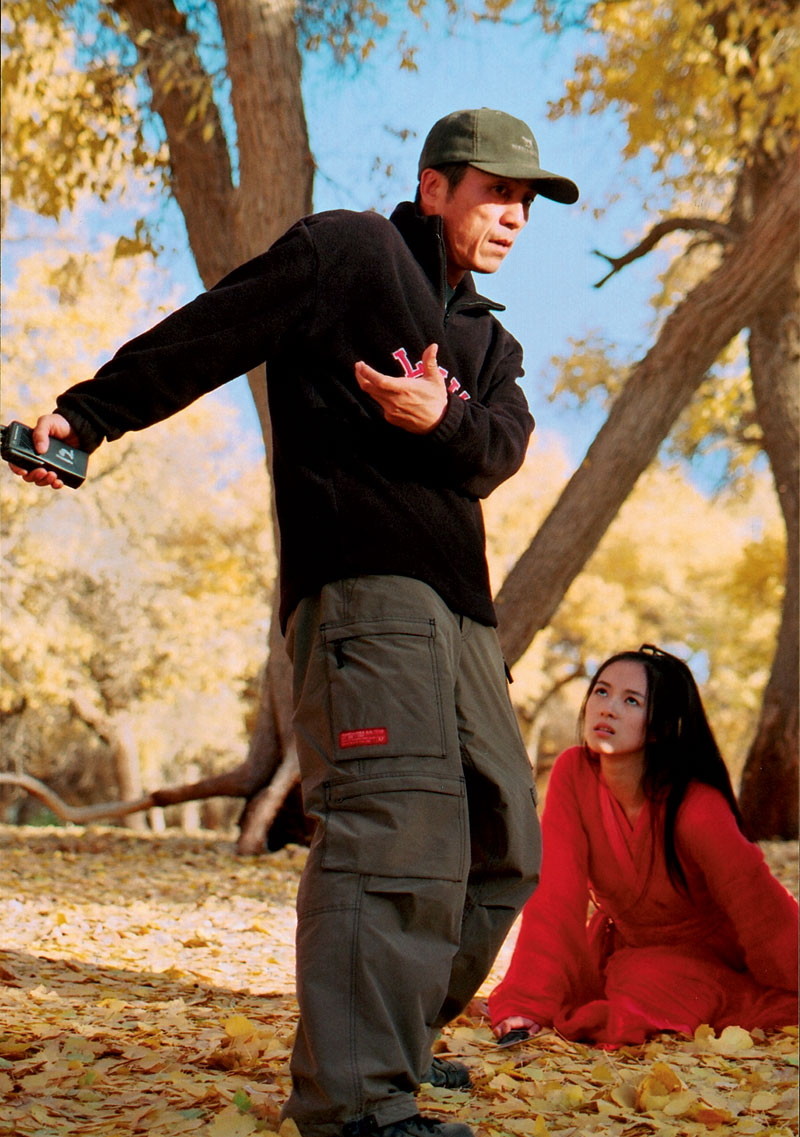
Zhang Yimou, who turns 65 today, directs Zhang Ziyi on the set of his 2002 film Hero:

Actor in the Spotlight:

See the incredible range Philip Seymour Hoffman had just through his work for Paul Thomas Anderson in this tribute by Abi Gol (via Cinematic Montage Creators):

[embedded content]

Fan Build of the Day:

Learn how to turn your BB-8 toy into something even more accurate to the Star Wars: The Force Awakens character (via /Film):

[embedded content]

Classic Trailer of the Day:

Today is the 75th anniversary of the release of Alfred Hitchcock’s Suspicion. Watch the original trailer for the movie, which earned Joan Fontaine an Oscar for Best Actress, below.

[embedded content]

and

Let’s block ads! (Why?)


No Image

SEC Chair White Says She Will Step Down At The End Of Obama's Term

Securities and Exchange Commission Chair Mary Jo White, shown at a press conference in 2015, says she will step down in January. Seth Wenig/AP hide caption

toggle caption

Seth Wenig/AP

Mary Jo White, the chair of the Securities and Exchange Commission, will step down in January, a move that leaves the future direction of the regulatory agency more uncertain than ever.

“It has been a tremendous honor to work alongside the incredibly talented and dedicated SEC staff members who do so much every day to protect investors and our markets,” White said, in a statement released today.

“I am very proud of our three consecutive years of record enforcement actions, dozens of fundamental reforms through our rule-makings that have strengthened investor protections and market stability, and that the job satisfaction of our phenomenal staff has climbed in each of the last three years,” she said.

A former U.S. attorney, White is known as a moderate who tried to navigate a politically divided agency known for internal battles.

Under her leadership, the commission implemented most of the rules stemming from Dodd-Frank, the landmark financial overhaul law passed in the aftermath of the financial crisis, the Wall Street Journal reported:

“During Ms. White’s tenure, which began in April 2013, the SEC overhauled the regulation of money-market mutual funds, credit-rating firms, stock exchanges, and electronic trading venues. She frequently navigated political infighting at the SEC to complete Dodd-Frank requirements, and such friction could continue under a Republican chairman.”

Article continues after sponsorship

But White was sometimes criticized by liberals such as Massachusetts Sen. Elizabeth Warren for not pursuing Wall Street wrongdoers more aggressively.

With White gone, the commission which is supposed to have five members will be down to just two people, one Democrat and one Republican.

While President Obama has nominated two additional commissioners, the Republican-controlled Senate has refused to vote on them.

President-elect Donald Trump is expected to have an easier time getting his nominees approved.

Trump is expected to pursue a more conservative approach to regulation than his predecessor, but hasn’t spelled out what he will do, beyond repealing Dodd-Frank.

The heads of other financial regulatory agencies are widely expected to follow White out the door by announcing their departures over the next few weeks.

Let’s block ads! (Why?)


No Image

How Trump Could Repeal Several Parts Of The Affordable Care Act

President-elect Trump and Congress have a couple of options in deciding how to best repeal the Affordable Care Act, each with dramatically different impacts. NPR sorts through the options and looks at how existing Obamacare insurance plans will be affected.

KELLY MCEVERS, HOST:

Trump has said one of his top priorities as president is to repeal and replace Obamacare, but Senate Democrats could make an outright repeal tough. Trump says he’ll consider keeping two popular provisions, a requirement that insurers cover people with existing conditions and another that lets children stay on their parents’ policies until age 26.

As NPR’s Alison Kodjak reports, there are several ways to get rid of the rest of the health care law but not without creating major disruptions in the insurance market.

ALISON KODJAK, BYLINE: Democrats who supported the Affordable Care Act could use their filibuster power to block Trump and congressional Republicans from directly repealing the law. But there is a workaround. For bills related to the budget or taxes, the filibuster doesn’t apply. And Republicans in Congress gave it a test drawn earlier this year.

JOHN MCDONOUGH: Last fall and January of this year, they demonstrated quite convincingly that they could frame a budget reconciliation bill, get it through the House, get it through the Senate, get it to the president’s desk, which they did. President Obama vetoed it. President Trump would sign that bill.

KODJAK: That’s John McDonough, a professor at Harvard who is a Senate staffer who worked on Obamacare. He says if a similar bill passes next year without a replacement…

MCDONOUGH: Then we are looking at a national holy mess in the insurance market like we’ve never seen before.

KODJAK: That’s because the parts of the law that can be repealed in a budget bill are the ones that make the health insurance market function, says Karen Pollitz, a senior fellow at the Kaiser Family Foundation.

KAREN POLLITZ: The mandate to have health insurance or pay a penalty, the mandate on employers to provide health benefits and the tax credits and cost-sharing subsidies that make it affordable for people to get health insurance would be repealed.

KODJAK: What can’t be reversed that easily – the parts of the law that prevent insurers from discriminating against sick people.

POLLITZ: You can’t be turned down based on your health status. You can’t charge customers more based on their health status.

KODJAK: All of which make health insurance more expensive. Pollitz says this combination would lead healthy people who think insurance is too expensive to drop their policies and sick people to buy. Insurance companies will then raise prices to account for their sicker customer base, leaving more people to drop insurance.

POLLITZ: And that’s what sometimes is referred to as the death spiral.

KODJAK: As in killing the insurance market. An even faster way for a President Trump to deal a blow to Obamacare would be to drop an Obama administration appeal of a court ruling against the law.

Earlier this year, a federal judge ruled that subsidies designed to cut the costs in some policies are illegal. That’s because Congress didn’t appropriate money for the payments which go to health insurers. Dropping the appeal would leave the court ruling in place.

POLLITZ: That would either force them to jack up premiums or to just face tremendous losses.

KODJAK: Under either scenario, these experts say, the changes could lead to the end of the individual health insurance market. Alison Kodjak, NPR News, Washington.

Copyright © 2016 NPR. All rights reserved. Visit our website terms of use and permissions pages at www.npr.org for further information.

NPR transcripts are created on a rush deadline by Verb8tm, Inc., an NPR contractor, and produced using a proprietary transcription process developed with NPR. This text may not be in its final form and may be updated or revised in the future. Accuracy and availability may vary. The authoritative record of NPR’s programming is the audio record.

Let’s block ads! (Why?)


No Image

Mexicans Mixed On Trump's Plan To End NAFTA

Donald Trump says he would undo NAFTA, which he calls the “worst trade deal ever.” Economists say many jobs depend on U.S.-Mexico trade, but others say NAFTA has been bad for Mexico’s economy.

MICHEL MARTIN, HOST:

Now let’s spend some time looking at how Donald Trump’s election has been received in a number of world capitals. First to Mexico. The president-elect’s pledge to rip up the North American Free Trade Agreement, which he repeated often, has gotten much attention there. While it isn’t clear how far Donald Trump can or will go to fulfill that promise, Mexicans are already getting a taste of what that could mean economically. NPR’s Carrie Kahn reports from Mexico City.

CARRIE KAHN, BYLINE: On election night, Mexico’s peso began to slide. And as it looked more likely that Donald Trump was going to win, it took a plunge. By this weekend, it hit a new low of 21 pesos to the dollar, a nearly 13-percent loss since just Tuesday. Eduardo Reyes, standing outside a crowded Mexico City restaurant, says tough times are coming.

EDUARDO REYES: (Speaking Spanish).

KAHN: “If the United States gets a fever, it turns into pneumonia for us. That’s just the way it always is,” says Reyes. That old adage is ringing true as Mexicans are already seeing prices rise. Those hikes are showing up in a lot of goods Mexicans have come to enjoy in recent years, everything from General Mills cereals, Nabisco cookies, to the American barley used to make their Mexican beer.

Mexican economist Luis de la Calle says the two economies are more intertwined and dependent on each other than ever before, and it will be hard to break that apart.

LUIS DE LA CALLE: Mexico buys from the U.S., co-produces with the U.S. for the world, and we also compete with the U.S. But it’s a two-way street.

KAHN: De la Calle, who helped negotiate the free trade deal more than two decades ago, says ripping up NAFTA will also hurt American consumers and American jobs. Every day, nearly a billion and a half dollars’ worth of trade crosses the U.S.-Mexico border. According to the Mexico Institute at the Woodrow Wilson Center in Washington, D.C., more than 5 million U.S. jobs are directly dependent on trade with Mexico. But while Trump offended Mexicans with his harsh rhetoric directed at them, there are some here who agree with his depiction that NAFTA was the worst trade deal ever.

ALEJANDRO ALVAREZ: Mexican agriculture has been destroyed.

KAHN: Alejandro Alvarez, an economist at Mexico’s National Autonomous University, says small Mexican farmers couldn’t compete against U.S. agribusiness.

ALVAREZ: We used to be self-sufficient in corn, and now more than half of the supply that we need comes from the U.S.

KAHN: Alvarez says Mexican agriculture lost nearly a million and a half jobs. He says many of those displaced workers headed north in one of the biggest surges of Mexican migration to the U.S. Two decades later, though, net migration between the two countries is now at virtually zero.

Carlos Petersen of the Eurasia Group, a political analysis firm, says if President-elect Trump keeps his promise to rip up the trade agreement, he could do that with just six months’ notice. Duties would once again be placed on Mexican products entering the U.S. Some economists here say Mexico would then impose duties on U.S. imports. But Eurasia’s Petersen says Mexico and its much smaller economy wouldn’t win that trade war.

CARLOS PETERSEN: The impact for the Mexican economy against the impact to the U.S. economy is overly disproportioned, right? And that’s why Mexico doesn’t have a lot of tools to really force the hand of Donald Trump into a more beneficial agreement for Mexico.

KAHN: Many economists say the factories now in Mexico wouldn’t go back to the U.S. They probably would head to cheaper labor countries like Vietnam or China. In the end, Petersen says soon-to-be President Trump will come under great pressure from U.S. businesses and their Republican congressional allies to move cautiously. Carrie Kahn, NPR News, Mexico City.

Copyright © 2016 NPR. All rights reserved. Visit our website terms of use and permissions pages at www.npr.org for further information.

NPR transcripts are created on a rush deadline by Verb8tm, Inc., an NPR contractor, and produced using a proprietary transcription process developed with NPR. This text may not be in its final form and may be updated or revised in the future. Accuracy and availability may vary. The authoritative record of NPR’s programming is the audio record.

Let’s block ads! (Why?)


No Image

Not My Job: Sportscaster Joe Buck Gets Quizzed On Kittens And Rainbows

Joe Buck

Tommy Garcia/Dutton

When the Cubs won the World Series on Nov. 2 — remember that? — the person who told the world it had happened was sportscaster Joe Buck. He has been broadcasting the NFL on Fox since 1993 and Major League Baseball since 1995. He has now written a memoir about his life in broadcasting, called Lucky Bastard: My Life, My Dad, and the Things I’m Not Allowed to Say on TV.

We thought everyone could use a little distraction this week, so we’ve invited Buck to play a game called “It’s all just kittens and rainbows!”

Click the audio link above to hear how he does.

PETER SAGAL, HOST:

And now the game where people who have lead interesting lives answer questions about things that really don’t interest them. It’s called Not My Job. When the Cubs won the World Series last week – you remember that?

(APPLAUSE)

SAGAL: You remember that. Seems a while ago, but it happened. The person who told the world that it had happened as it happened was sportscaster Joe Buck. He has been broadcasting the NFL on Fox since 1993 and Major League Baseball since 1995. He has a new memoir out called “Lucky Bastard” and he joins us now. Joe Buck, welcome to WAIT WAIT… DON’T TELL ME.

(APPLAUSE)

JOE BUCK: Oh, my gosh. I’m honored. Thank you. Thank you very much. And I get it. I mean, everybody in Chicago where they’re laughing and clapping says, oh, that guy hates my Cubs and they – he hates my team. That’s – it couldn’t be further from the truth, but we’ll tackle that another day.

SAGAL: All right, that’s fine. Now, you actually bring up something ’cause you immediately assume that people here are angry at you.

BUCK: Yeah.

SAGAL: And you call your book “Lucky Bastard,” so you kind of lead with the knowledge that there – in the very opinionated sports fan community, there are pockets of people who are not fans of yours.

BUCK: Yeah, but it’s really, I think, born out of the fact that in baseball, all year long, Cub fans are listening to their announcers…

SAGAL: Who are pretty great.

BUCK: …Call the action.

SAGAL: Yeah.

AMY DICKINSON: Yeah.

BUCK: And when we show up, we’re the national guys and yeah, we get excited for Rizzo hitting a homerun or Bryant hitting a homerun or Hendricks pitching great, but we also have to get excited for the other side, and they’re not used to hearing that. So it’s OK. I’ve gone to a lot of therapy for this. I pay, like, $240, $250 an hour to get over it, knowing that people don’t like me in certain parts of the world. And that’s fine. I can accept that.

SAGAL: Right. So that means that any game you do, whether football or baseball, you can be reasonably certain that everybody is going to be furious at you at one point because you’re praising the other team.

BUCK: At some point they’re – they want to throw something at the TV and they say, I hate that guy ’cause he just yelled ’cause the other team just hit a homerun.

SAGAL: Wow.

BUCK: I get it. It’s fine – all good.

SAGAL: Let me – one of the things I am amazed at is that you seem – and I actually – I think you do a great job because a lot of the time, unlike sort of the classic, reserved announcer, you seem very excited and caught up in the game. You seemed really excited when the Cubs finally won last week. So…

BUCK: Well, yeah. I mean, first of all, my name – the name of my book is “Lucky Bastard.” I am the luckiest person to get to sit there and call that. And that was – of the 19 World Series – and I will tell you that that is as good as it will ever get for me, for an announcer of calling any sport. To declare the Cubs champions after 108 years was the highlight of my career.

SAGAL: Right.

DICKINSON: Oh, yay.

BUCK: Might as well just (unintelligible).

(APPLAUSE)

SAGAL: Had you, Joe – had you – I mean, ’cause we all knew if the Cubs won, it was going to make history. Had you prepared something ’cause you – we all remember Al Michaels’ can you believe in miracles and all the other famous calls. Did you have one ready?

BUCK: It was 10th inning of game seven, which is insane in and of itself.

SAGAL: Yeah, I remember.

BUCK: And then a guy hit the chopper to the third baseman, Bryant, and you got to kind of call the play first and then whatever comes out of your mouth after that comes out. So I have to live with whatever happens like you guys have to live with whatever you say spur of the moment. And you have to trust yourself.

MAZ JOBRANI: So what did you say when it was done?

BUCK: I don’t remember.

SAGAL: I believe you said, if I’m not mistaken, the Cubs win the World Series, which had the benefit of being true.

BUCK: Yeah, it was something really deep like that.

SAGAL: Other question – the opposite question. Baseball can be pretty dull.

BUCK: Yes.

SAGAL: One of those endless at-bats where the pitcher keeps throwing over to first base and the batter keeps filing it off. Do you ever just – you have nothing to say and you just…

BUCK: Yeah, and that’s the beauty of TV as opposed to radio. I can just sit there and be like, yeah, listen to the sound of the crowd and the yell of the (unintelligible).

SAGAL: Yeah.

BUCK: Take it all in, everybody, the sounds of the ballpark.

SAGAL: And that’s when you…

BUCK: Yeah, you don’t have to say much.

SAGAL: And that’s when you quietly slip off to the bathroom, right?

BUCK: Yeah, I’ve done that. I’ve…

(LAUGHTER)

SAGAL: OK, so tell me about that. What do you do when you need to go to the bathroom?

BUCK: Yeah, I – so one of the requirements that should be taught in broadcaster school – although I didn’t go to broadcaster school. I went to the school of nepotism – is that you need to have…

(LAUGHTER)

BUCK: …You need to have a great, strong bladder to call professional sports because, especially in football where, you know, you don’t know how long a half’s going to last and then the timeouts happen and a incomplete pass. If you have to go to the bathroom – I actually called a touchdown on national TV in the NFL while going to the bathroom.

DICKINSON: No, no, no.

SAGAL: Wow.

(LAUGHTER)

DICKINSON: No.

SAGAL: Yeah.

JOBRANI: Wait, were you talking about the play or for what – about what you were doing in the bathroom?

BUCK: Well the kind of – they both kind of run together, you know? You could be calling either one.

SAGAL: I guess so. It’s like, it’s out. It’s good.

BUCK: Right.

DICKINSON: Oh, my God.

LUKE BURBANK: Who scored the touchdown?

BUCK: Sterling Sharpe of the Green Bay Packers. And it was Green Bay and Atlanta, and he called a touchdown and let’s just say that we came back from commercial earlier than I thought we were going to.

SAGAL: Wow.

DICKINSON: Wow.

BURBANK: This was at Lambeau?

BUCK: This was – no. Believe it or not – and friends of mine can’t believe this actually happened – they would give up home games at Lambeau to play some games in Milwaukee. So this was a game in Milwaukee County Stadium, the last game the Packers ever played there as the home team.

BURBANK: Well, for obvious reasons.

BUCK: Yeah.

(LAUGHTER)

SAGAL: Yeah, they couldn’t use the stadium anymore. It smelled funny. Nobody knew why.

BUCK: Yeah, it did. It did. I – look, I’m not proud of admitting anything (unintelligible).

(LAUGHTER)

SAGAL: Joe Buck, though we have asked you here today to play a game that we are calling…

BILL KURTIS: It’s all just kittens and rainbows.

SAGAL: This week, we thought everybody could use a little adorable distraction. So we are going to ask you three questions about kittens and rainbows. Get two right, you’ll win our prize for one of our listeners – Carl Kasell’s voice on their voicemail. Bill, who is Joe Buck playing for?

KURTIS: Leslie Bayer of Kansas City, Mo.

SAGAL: So you ready to play?

BUCK: I am. Leslie, I’m sorry, before we start.

(LAUGHTER)

SAGAL: Here’s your first question. In 2007, a kitten in London named Otto made news for doing what? A – its unique mix of short and long fur earned it a TV show called “Mullet Cat.”

DICKINSON: Oh, God.

SAGAL: B – Otto, the kitten, climbed on the composer of “Cats,” Andrew Lloyd Webber’s keyboard, deleting the entire score for his new musical; or C – the queen’s footman lost one of her corgis and attempted to secretly replace it with Otto the cat.

BUCK: I’m going to go with Andrew Lloyd Webber, B.

SAGAL: You’re right.

(SOUNDBITE OF BELL)

DICKINSON: No.

SAGAL: That’s right.

DICKINSON: No kidding.

SAGAL: That’s what happened.

(APPLAUSE)

SAGAL: Lord Weber, as he is actually known, was writing a sequel to “Phantom Of The Opera,” which Otto the kitten saved the world from.

DICKINSON: But how do we know that really happened?

SAGAL: Well, he said it happened.

DICKINSON: Well.

SAGAL: He said, I wrote this musical and my cat…

DICKINSON: I mean…

SAGAL: …On my computer keyboard and erased it.

DICKINSON: Who among us hasn’t told a story like that?

SAGAL: That’s true.

DICKINSON: Like, the dog ate my homework, the cat…

SAGAL: Lord Weber, where’s the score we’ve been waiting for? Funny thing, he says.

BUCK: (Laughter) Right.

SAGAL: Two more questions, Joe. Here we go. Here’s a rainbow. The Rainbow Sheikh of Dubai – a real person – he’s known for his vast wealth. But how did he get that nickname, the Rainbow Sheik? Was it A – for a wedding present he gave his wife, a new Mercedes for each color of the rainbow; B – he picked the name Rainbow Sheikh because the name Iron Sheikh was already taken.

(LAUGHTER)

SAGAL: Or C – it is said that the cuisine he eats in his palace is so fine he literally farts rainbows.

DICKINSON: Oh, God.

BUCK: I’m going to go with A…

SAGAL: You’re going to go with A, for the wedding present?

BUCK: …The Mercedes.

SAGAL: Yes, you’re right.

(SOUNDBITE OF BELL)

SAGAL: He gave his wife…

JOBRANI: Wow.

SAGAL: …Seven Mercedes in the colors of the rainbow, earning the nickname the Rainbow Sheikh.

DICKINSON: You know, we’d better get used to that kind of nonsense.

SAGAL: Yeah, pretty much.

(APPLAUSE)

SAGAL: All right.

DICKINSON: Oh, Donald.

SAGAL: You’ve gotten two right, but let’s go for perfect, Joe – back to kittens. In 2011, an adoption shelter in England took weeks to find a home for one of its kittens. Why? A – was it A – thanks to a typographical error, it was advertised not as the perfect pet but as a perfect pest; B – the kitten insisted on only eating gluten-free cat food; or C – the kitten looked just like Adolf Hitler.

BUCK: I’m going to say C, Adolf Hitler.

SAGAL: You’re right.

(SOUNDBITE OF BELL)

DICKINSON: Whoa.

JOBRANI: Wow.

SAGAL: It was, in fact, Adolf…

(APPLAUSE)

JOBRANI: Way to go, Joe Buck.

KURTIS: Joe.

DICKINSON: Whoa.

JOBRANI: That’s a perfect game.

SAGAL: That’s a perfect game.

KURTIS: It is.

SAGAL: Picture-perfect game.

KURTIS: No-hitter here.

DICKINSON: Somebody’s going to have to call that.

SAGAL: It really does. And it was called – Kitler is the name.

(LAUGHTER)

SAGAL: I’m going to ask you something, Joe. You took a secod before answering each of those questions. So if you had to do a play-by-play for your own thought process, what would it have been like?

BUCK: Well, here’s a guy who’s standing on a street in Manhattan right now listening to a roaring crowd behind three people who he’s never met who are asking him questions about topics he doesn’t care about.

(LAUGHTER)

BUCK: And after examining his career and what could happen if he answered incorrectly, he came up, oddly enough, with the right answer every time.

SAGAL: There you go, Joe Buck at his finest.

(APPLAUSE)

SAGAL: Joe Buck, as you probably know, if you’ve watched any sports at all, is an announcer for Fox Sports, and you heard his voice during the World Series. And on Sundays, you’ll hear it during football season. His new memoir, a very fun and revealing read, is called “Lucky Bastard.” Joe Buck, thank you so much for joining us.

BUCK: Hey, top of the resume – three for three.

SAGAL: You bet me.

BUCK: Three for three, baby.

(SOUNDBITE OF MUSIC)

SAGAL: In just a minute, Bill finds true love with a slug. It’s the Listener Limerick Challenge. Call 1-888-WAIT-WAIT to join us on the air. We’ll be back in a minute with more of WAIT WAIT… DON’T TELL ME from NPR.

Copyright © 2016 NPR. All rights reserved. Visit our website terms of use and permissions pages at www.npr.org for further information.

NPR transcripts are created on a rush deadline by Verb8tm, Inc., an NPR contractor, and produced using a proprietary transcription process developed with NPR. This text may not be in its final form and may be updated or revised in the future. Accuracy and availability may vary. The authoritative record of NPR’s programming is the audio record.
Let’s block ads! (Why?)