Articles by admin

No Image

Zika No Longer Global 'Health Emergency,' WHO Declares

A mother holds her baby, who has microcephaly, in Recife, Brazil. Mario Tama/Getty Images hide caption

toggle caption

Mario Tama/Getty Images

The World Health Organization announced Friday that it no longer considers the Zika epidemic a public health emergency of international concern.

But Zika’s threat to pregnant women and babies is not going away anytime soon, the agency says. Instead, the virus is now a chronic problem, says the WHO’s Dr. Pete Salama.

“It is really important that we communicate this very clearly: We are not downgrading the importance of Zika,” Salama says. “In fact, by placing this as a longer term program of work, we’re sending the message that Zika is here to stay. And WHO’s response is here to stay, in a robust manner.”

One thing is clear: Zika is still spreading. And microcephaly cases are still growing. Argentina reported its first potential case this week. And Florida continues to find people who caught Zika inside the state.

For these reasons, pregnant women — and their partners — still need to pay attention to where they travel, says Dr. Thomas Frieden, director of the Centers for Disease Control and Prevention.

“Regardless of how WHO defines Zika, [the disease] is unprecedented, and it’s an extraordinary risk for pregnant women,” Frieden says. “That’s why it’s important that pregnant women not travel to places where Zika is spreading.”

Right now, those places include countries across Latin America, the Caribbean, parts of Southeast Asia — and neighborhoods in Miami.

Article continues after sponsorship

WHO first declared Zika a public health emergency back in February. Back then, the situation looked dire.

Brazil was investigating more than 4,000 cases of microcephaly — a horrible birth defect where babies have brain damage and small heads. And health officials were predicting thousands of more cases, as Zika spread across the Western Hemisphere.

“If this pattern is confirmed beyond Latin America and the Caribbean, the world will face a severe public health crisis,” WHO’s director-general, Dr. Margaret Chan, said in February.

But so far, that pattern hasn’t repeated itself. Brazil has confirmed the most Zika-linked microcephaly cases, about 2,100. Other counties in Latin America have reported far fewer. Colombia has the second highest with 57 confirmed cases and the U.S. is third with 31, WHO said Thursday.

Such a vast difference between the situation in Brazil versus other countries has raised some eyebrows. Could some other factor in Brazil be increasing the risk of microcephaly there? Perhaps a pesticide or another virus?

“I think it’s too early to draw conclusions,” says Alessandro Vespignani, who models the spread of Zika virus at Northeastern University in Boston.

Colombia is still investigating more than 300 microcephaly cases to see if they’re linked to Zika. Several countries, such as Venezuela and Haiti, have not been vigilant about reporting cases. And countries that are on top of reporting, such as Mexico and Puerto Rico, aren’t expected to have microcephaly cases until next year — it takes around 9 months after a Zika outbreak strikes for the bulk of microcephaly cases to appear.

“We can’t rule out the possibility that something unique is happening in Brazil,” Vespignani says. “But, right now, we have to wait and see what happens elsewhere.”

Let’s block ads! (Why?)


No Image

Daily Fantasy Sports Sites DraftKings And FanDuel Agree To Merge

Daily fantasy sports sites DraftKings and FanDuel say they expect the deal, which is subject to regulatory approval, will close in 2017. Scott Olson/Getty Images hide caption

toggle caption

Scott Olson/Getty Images

FanDuel and DraftKings announced Friday that they have agreed to merge, ending months of speculation over the fates of the two largest players in the daily fantasy sports industry.

Both sites have faced recent legal challenges that center on the question of whether their contests, in which people create and bet on fantasy teams of professional athletes, amount to games of skill or gambling. NPR’s Nathan Rott has reported on the legal questions, which you can read about here.

A Q&A on DraftKings’ site hints that reducing legal costs was a factor in the decision to join forces. “By combining and streamlining resources, FanDuel and DraftKings can work more efficiently and economically with state government officials to develop a standard regulatory framework for the industry,” it reads.

DraftKings and FanDuel have had to “defend themselves as well as lobby for legislation to make the games legal in several states that have declared them illegal gambling operations,” as Reuters reported. They recently reached a “$12 million settlement over false advertising claims with the New York Attorney General.”

Joining forces, the companies said in a statement, will “help the combined company accelerate its path to profitability” and drive “more variety in contest formats, loyalty programs, enhanced social functionality and ancillary sports-oriented content and experiences” as well as promote industry growth.

“Being able to combine DraftKings and FanDuel presents a tremendous opportunity for us to further innovate and disrupt the sports industry,” FanDuel CEO Nigel Eccles said.

The merger requires federal approval before it is final, and the companies did not release the financial terms of the deal. Some analysts are asking whether the deal could potentially violate antitrust laws, The Associated Press reported, because the two sites “represent about 90 percent of the daily fantasy sports market.”

Article continues after sponsorship

FanDuel and DraftKings will operate under their own names “for the foreseeable future,” and “both platforms will remain separate and operational through the 2017 NFL season while the deal is finalized,” the companies said. The combined operation will be headquartered in New York and Boston.

The daily fantasy sites added that the deal is expected to close in 2017. DraftKings CEO Jason Robins will be CEO of the new company, with Eccles as chairman of the board.

Let’s block ads! (Why?)


No Image

Today in Movie Culture: Marvel's 'Beauty and the Beast,' 'Harry Potter' Trivia and More

Here are a bunch of little bites to satisfy your hunger for movie culture:

Mashup of the Day:

Darth Blender has come through with another necessary mashup, this one redoing the Beauty and the Beast trailer with footage of Marvel’s Black Widow and the Hulk:

[embedded content]

Redone Trailer of the Day:

Where’s the old school video game tie-in for Fantastic Beasts and Where to Find Them? At least here’s an 8-bit graphics redo of the movie’s trailer:

[embedded content]

Movie Trivia of the Day:

Speaking of the wizarding world, ScreenCrush shares some trivia about Harry Potter and the Prisoner of Azkaban you might not know:

[embedded content]

Movie Comparison of the Day:

And speaking of Prisoner of Azkaban, Couch Tomato has 24 reasons it’s the same movie as The Monster Squad:

[embedded content]

Video Essay of the Day:

More on Harry Potter, here’s a video essay on the series’ theme of politics of hate by Kaija Siirala for Fandor Keyframe:

[embedded content]

Vintage Image of the Day:

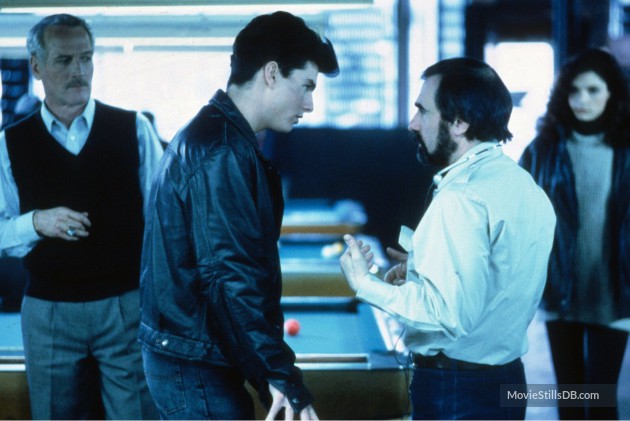
Martin Scorsese, who was born on this day in 1942, directs Tom Cruise while Paul Newman and Mary Elizabeth Mastrantonio, who was born on this day in 1958, look on during the making of The Color Money in 1986:

Reimagined Movie of the Day:

It’s also Danny DeVito’s birthday, so here’s a trailer for Matilda as if it was directed by Scorsese instead of him:

[embedded content]

Actor in the Spotlight:

Ranker’s latest actor-focused supercut shows us how John Goodman is always really angry in his movies:

[embedded content]

Star Wars of the Day:

Watch Ben Schwartz and Bill Hader help give BB-8 a voice in this new bonus feature from the Star Wars: The Force Awakens Collectors Edition (via /Film):

BB-8 speaks in “Sounds of the Resistance,” from Star Wars #TheForceAwakens Collector’s Edition. https://t.co/vOOTyXzurL pic.twitter.com/z1NUjT7nic

— Star Wars (@starwars) November 15, 2016

Classic Movie Trailer of the Day:

Today is the 40th anniversary of the release of Elia Kazan’s The Last Tycoon, starring Robert De Niro and Jack Nicholson. Watch the original trailer below.

[embedded content]

and

Let’s block ads! (Why?)


No Image

Cubs' Kris Bryant And Angels' Mike Trout Named Baseball's Most Valuable Players

The Chicago Cubs’ Kris Bryant celebrating with his teammates after they won the World Series against the Cleveland Indians. The Baseball Writers’ Association of America named him the National League Most Valuable Player for 2016. David J. Phillip/AP hide caption

toggle caption

David J. Phillip/AP

After powering the Chicago Cubs to their historic victory in the 2016 World Series, second-year third baseman Kris Bryant claimed one of Major League Baseball‘s most coveted individual awards on Thursday. He was named the National League’s Most Valuable Player.

Bryant, 24, is only the fourth player in baseball history to win the MVP award one year after being named the Rookie of the Year. He smacked 39 home runs, had a .292 batting average, along with hitting 102 runs batted in and scoring 121 runs, the league’s best. Bryant played third base and outfield.

The last Cubs player to win the MVP award was Sammy Sosa in 1998.

Bryant received 29 of 30 first-place votes in the balloting by the Baseball Writers’ Association of America, beating out Washington Nationals second baseman Daniel Murphy and Los Angeles Dodgers shortstop Corey Seager.

Mike Trout of the Los Angeles Angels has been named the American League’s Most Valuable Player for the second time. Chris Carlson/AP hide caption

toggle caption

Chris Carlson/AP

Over in the American League, the Los Angeles Angels’ Mike Trout was named MVP. The 25-year-old center fielder and five-time All-Star won his first MVP award in 2014. This year, he batted .315, hit 29 home runs, driving in 100 runs, and scoring 123 runs.

Article continues after sponsorship

Trout, widely regarded as the best player in the game, received 19 first-place votes from the baseball writers, surpassing Mookie Betts of the Boston Red Sox and Jose Altuve of the Houston Astros. He’s been in the running for the AL MVP award in each of his five seasons in the majors. However, his club finished a disappointing 74-88, placing fourth in the AL Western Division.

As ESPN reports, Trout is the sixth player to win two MVP awards before the age of 26.

The baseball writers’ vote was held before the start of the postseason.

Let’s block ads! (Why?)


No Image

Federal Reserve Chair Throws Cold Water On Trump's Economic Plan

Federal Reserve Board Chair Janet Yellen told Congress on Thursday she didn’t agree with President-elect Donald Trump’s plans for more infrastructure spending and less banking regulation. Win McNamee/Getty Images hide caption

toggle caption

Win McNamee/Getty Images

President-elect Donald Trump has pledged a $1 trillion infrastructure spending program to help jump-start an economy that he said during the campaign was in terrible shape.

Speaking on Capitol Hill Thursday, Federal Reserve Board Chair Janet Yellen warned lawmakers that as they consider such spending, they should keep an eye on the national debt. Yellen also said that while the economy needed a big boost with fiscal stimulus after the financial crisis, that’s not the case now.

“The economy is operating relatively close to full employment at this point,” she said, “so in contrast to where the economy was after the financial crisis when a large demand boost was needed to lower unemployment, we’re no longer in that state.”

Yellen cautioned lawmakers that if they spend a lot on infrastructure and run up the debt, and then down the road the economy gets into trouble, “there is not a lot of fiscal space should a shock to the economy occur, an adverse shock, that should require fiscal stimulus.”

In other words, lawmakers should consider keeping their powder dry so they have more options whenever the next economic downturn comes along.

Trump was harshly critical of Yellen during his campaign. But testifying before the Joint Economic Committee, Yellen said she is not going to quit just because Trump won the election. Rep. Carolyn Maloney, D-N.Y., asked Yellen, “Can you envision any circumstances where you would not serve out your term as chair of the Federal Reserve?” “No, I cannot,” answered Yellen, “It is fully my intention to serve out that term.” Yellen’s appointment goes through January 2018.

Article continues after sponsorship

Another target of Trump’s during the campaign came up at the hearing: the Dodd-Frank Wall Street Reform and Consumer Protection Act. Rep. Pat Tiberi, R-Ohio, cited Trump’s criticism that the Dodd-Frank banking rules were stifling lending and stunting the economy. But Yellen gave her support to Dodd-Frank, saying:

“We lived through a devastating financial crisis, and a high priority for all Americans should be that we want to see put in place safeguards through supervision and regulation that result in a safer and sounder financial system, and I think we have been doing that and our financial system as a consequence is safer and sounder and many of the appropriate reforms are embodied in Dodd-Frank.”

Yellen added, “We wouldn’t want to go back to the mortgage lending standards that led to the financial crisis.”

She also said she thought banks were actually willing to lend to small businesses, but that sales haven’t been growing sufficiently fast to justify borrowing, suggesting the demand for loans was the real problem.

As far as the ever-present question about when the Fed will raise interest rates, Yellen signaled that she didn’t see any reason to alter the Fed’s prior guidance now that Trump has been elected as the next president.

Let’s block ads! (Why?)


No Image

To Make A Big Stink About Diarrhea, Ask 'Em To Write A Poo-em

A trio of toilets, photographed by Samantha Russell, a Peace Corps volunteer, in Viti Levu Island, Fiji. Samantha Russell/Courtesy of PATH hide caption

toggle caption

Samantha Russell/Courtesy of PATH

How do you get people to discuss diarrhea? Ask them to write poetry about it.

That’s the idea behind Poo Haiku, a competition created by Defeat DD, a campaign dedicated to the eradication of diarrheal disease.

Although everybody’s had the runs, it’s not something most folks talk about, says Hope Randall, digital communications officer for PATH’s Center for Vaccine Innovation and Access, which created DefeatDD to bring together resources on vaccines, nutrition, oral rehydration therapy, sanitation and more.

Silence is a problem because diarrheal disease is a problem. It’s the second-leading cause of death for children under the age of five. And it disproportionately affects kids in the developing world, where it’s tougher to access safe water and medical care.

Attention translates into more resources, Randall says, which is why Defeat DD wants to get people comfortable with words like “poo.” Hence, the call for “poo-ets” to write “poo-ems.”

Turns out there are plenty of potty mouths eager to show off their creativity. For the third Poo Haiku contest, which wrapped up on Nov. 4, Twitter was flush with submissions — a record 146 poo-ems, Randall boasts. The prize? Social media fame and the chance to be featured in DefeatDD’s 2017 calendar, which will be shaped like a toilet.

Article continues after sponsorship

Most contributions came from the global health world. Take, for example, this winning entry from Kat Kelley of the Global Health Technologies Coalition, which references a recent study published in The Lancet:

Just six pathogens
But eighty percent of kids’
Diarrheal deaths.

Currently, there’s only a vaccine for one of these six pathogens — rotavirus, Randall notes. So DefeatDD is pushing for investment in vaccines to fight two more, ETEC, a type of E. coli bacteria, and Shigella.

The other pressing item on the DefeatDD agenda, Randall says, is the need to address the fact that even kids who survive diarrhea often deal with long-term consequences. Randall herself penned an entry on that topic:

A vicious cycle,
Gut damage, malnutrition
We can halt the churn.

Some Poo Haiku are more emotional than informational. Alanna Imbach, media relations manager for WaterAid, offers a good reminder that behind the stats, there are individual children out there facing hurdles to hygiene:

She is just a girl
Out looking for a toilet
Trying not to fear.

Other “poo-ems” will put a smile on your face, promises Randall, who’s partial to this one from a fifth grader who learned about Poo Haiku at school:

Go now, Mister Poo
Hurry, quick to the toilet,
When done wash your hands.

The ultimate winner, of course, is the fight against diarrheal disease. “As simple as it sounds, these kinds of words are so rarely used in polite discourse,” Randall says, noting that anything that helps poo become public makes the campaign a success.

Although the contest is now over, Randall would love to see people continue to share poo-ems through Saturday, which is World Toilet Day — the annual reminder that 2.4 billion people don’t have access to a toilet. Check out all of the poo-ems, including some videos, by searching for the hashtag #poohaiku on Twitter.

Let’s block ads! (Why?)


No Image

In This Bobo Yéyé Box Set, Find The Creativity And Optimism Of A Lost World

Volta Jazz, also known as Orchestre Volta-Jazz, was one of the most prominent Bobo Dioulasso bands of the ’60s and ’70s. Sory Sanlé hide caption

toggle caption

Sory Sanlé

Imagine that an important American musical city, one at a crossroads of commerce and culture (say, Memphis), was unknown to much of the world. Bobo Dioulasso in Upper Volta, the name Burkina Faso went by during the French colonial period, could be described in this way. French author and producer Florent Mazzoleni has spent years visiting that city, literally going door to door to collect vinyl records that rarely circulated beyond the country’s borders.

The music Mazzoleni collected is described as “Bobo Yéyé.” Bobo refers to its city of origin. Yéyé is how French-speaking people in the 1960s and ’70s talked about the era’s rock n roll, especially The Beatles with their immortal refrain, “Yeah, yeah, yeah.” Mazzoleni’s work has culminated in a box set, which he titled Bobo Yéyé: Belle Époque in Upper Volta. “Belle Époque” means “a beautiful era.

Among the groups featured in the box set is Volta Jazz, one of the most prominent bands of this time. You can hear a strong Afro-Cuban influence in their music, because Latin music was huge in West Africa in the ’60s. Bobo was a market center and an army town, booming, full of nightclubs and bands that catered to locals, soldiers and visitors alike. All sorts of cultures, including rock and roll, collided merrily in this hopeful milieu.

[embedded content]
YouTube

The bands featured in this box set were all processing the excitement, complexity and upheaval of Upper Volta’s recent independence from France. Radio was introducing new sounds, and musicians and fans were keen to fuse their local identity with international trends. In the song “De Nwolo,” Tidiane Coulibaly and his band Dafra Star incorporate the region’s most prominent instrument, the wooden xylophone known as the balafon, into electric guitar pop.

Article continues after sponsorship

Unfortunately, this rich cultural moment was crushed after 1984, when a new military leader, Thomas Sankara, imposed a curfew in the country’s cities and decreed that musicians could no longer charge money for their concerts. This box set gives us 41 tracks and over 100 black and white photographs depicting stylish musicians and their fans, African mods and urban warriors, young people with high hopes and big dreams. Bobo Yéyé lets us savor the seductive creativity and optimism of a lost world, a belle époque indeed.

Let’s block ads! (Why?)


No Image

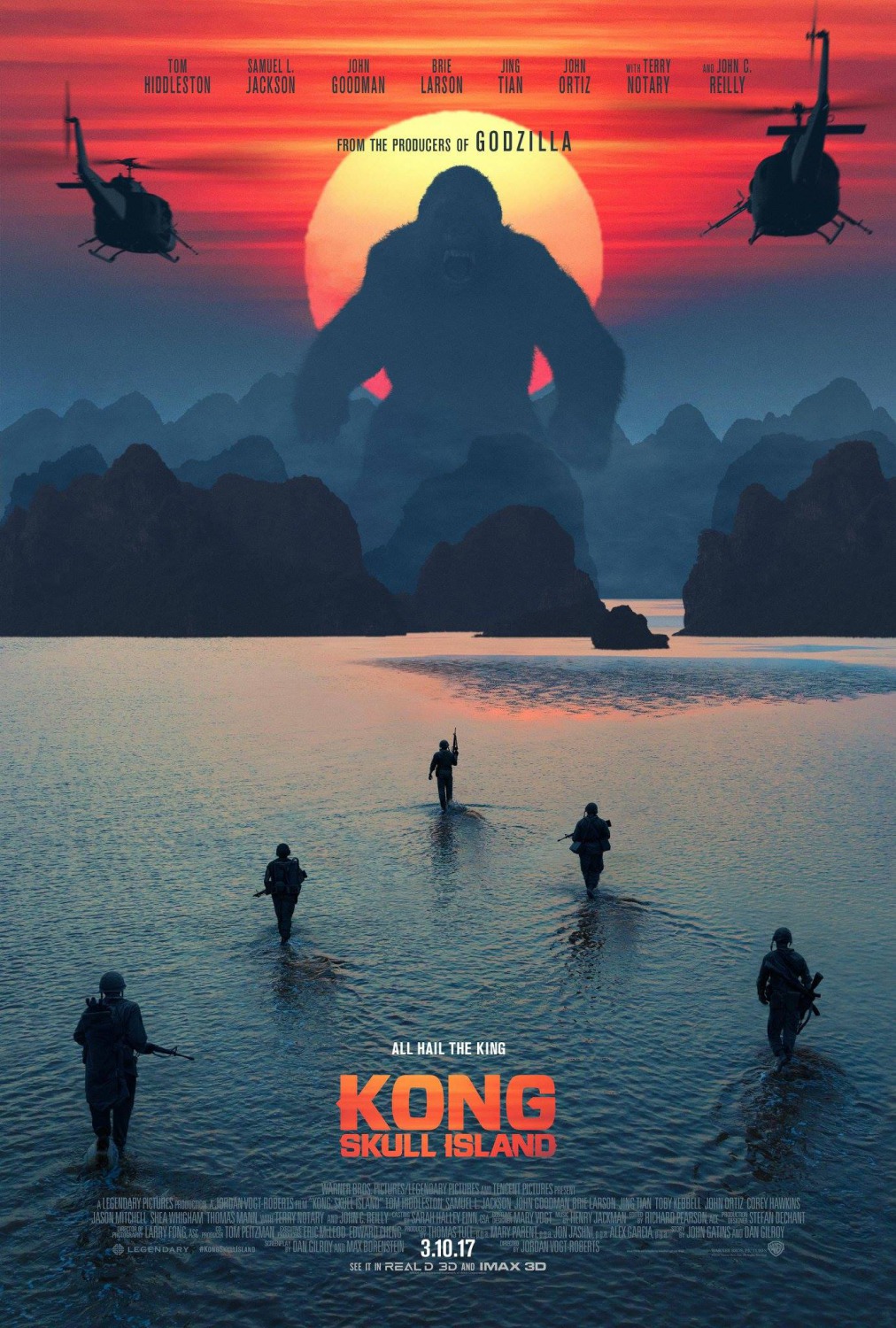
New 'Kong: Skull Island' Trailer Is Full of Monsters

Kong Skull Island

There have been a lot of King Kong movies. Maybe not quite as many as his giant cohort Godzilla, but when a franchise has been rebooted four times, you’d think all of the creative juices would have been taped by now. And yet here we are with a new trailer for Kong: Skull Island, a fifth franchise reboot which not only looks wildly different from any King Kong movie before it, but it just looks flat out amazing.

Seriously, if you thought you were done with the giant ape after Peter Jackson’s 2005 reboot, you are really, really going to want to watch this trailer. If you’re still not sold, we don’t know what else to say. This looks like one of the most exciting movies of 2017.

[embedded content]

Kong: Skull Island stars Brie Larson, Tom Hiddleston, John C. Reilly, Samuel L. Jackson, John Goodman, Corey Hawkins, Jason Mitchell, and Terry Notary. Oh, and a whole mess of monsters. It’s directed by Jordan Vogt-Roberts (The Kings of Summer) and hits theaters on March 10, 2017.

Follow @PeterSHall Follow @MoviesDotCom

Let’s block ads! (Why?)


No Image

Episode 574: The Buffalo Talk-Off

Office phone

In today’s show, we visit Buffalo, New York, and get a window into a rough business: Debt collection. This is the story of one guy who tried to make something of himself by getting people to pay their debts. He set up shop in an old karate studio, and called up people who owed money. For a while, he made a good living. And he wasn’t the only one in the business—this is also the story of a low-level, semi-legal debt-collection economy that sprang up in Buffalo. And, in a small way, it’s the story of the last twenty or so years in global finance, a time when the world went wild for debt.

For more on Buffalo and the debt underworld, see the book Bad Paper by Jake Halpern, and also Jake’s articles in the New Yorker and the New York Times Magazine.

Music: “Loving You” and “Clap Your Hands.” Find us: Twitter/ Facebook.

NPR thanks our sponsors

Let’s block ads! (Why?)


No Image

Bellevue Hospital Pioneered Care For Presidents And Paupers

Opened in 1816 on the old Bel-Vue estate bordering the East River, the so-called Bellevue Establishment was the largest and most expensive building project in the city’s history to date, containing an almshouse, an orphanage, a lunatic asylum, a prison and an infirmary. An infectious disease hospital would be added in 1826. Courtesy of the Lillian and Clarence de la Chapelle Medical Archives at NYU/Doubleday hide caption

toggle caption

Courtesy of the Lillian and Clarence de la Chapelle Medical Archives at NYU/Doubleday

When he was growing up in New York, All Things Considered host Robert Siegel always knew that Bellevue Hospital was a city institution.

But it wasn’t until he read David Oshinsky’s book Bellevue: Three Centuries of Medicine and Mayhem at America’s Most Storied Hospital, that he realized the hospital was a pioneering institution for all of American medicine.

The hospital, which grew out of an almshouse founded in 1736, has been in the forefront of many innovations in medicine in the U.S. Advances that started at Bellevue included ambulances, a maternity ward, nursing school, a children’s clinic and forensic pathology.

Siegal talked with Oshinsky, a professor of history at New York University, about the hospital and how it reflects the advances and failures of medicine. The interview has been edited for length and clarity.

In 1876, O.G. Mason, Bellevue’s official photographer, took a carefully staged photograph of a blood transfusion in progress. Courtesy of the Lillian and Clarence de la Chapelle Medical Archives at NYU/Doubleday hide caption

toggle caption

Courtesy of the Lillian and Clarence de la Chapelle Medical Archives at NYU/Doubleday

On Bellevue’s origins in colonial New York

Bellevue’s first class of interns, top, circa 1856. At bottom, America’s first professional nursing school opened at Bellevue in 1873. Preferring single, literate, religious women from cultivated families, it rejected most applicants on account of “bad breeding.” Courtesy of the Lillian and Clarence de la Chapelle Medical Archives at NYU/Doubleday; Courtesy of Bellevue Hospital Center Archive/Doubleday hide caption

toggle caption

Courtesy of the Lillian and Clarence de la Chapelle Medical Archives at NYU/Doubleday; Courtesy of Bellevue Hospital Center Archive/Doubleday

Bellevue in the 18th century was really both a poorhouse and a pest house. It was a place you came to die. It really began with the great yellow fever epidemics of the 1790s. At that time the Bel-Vue estate, which became the hospital, was located on the East River, about two miles away from where most of New York was located down by the Battery. And you would send people who really had no chance of recovering.

On hospitals not being very good at saving lives in the first half of Bellevue’s history

Most physicians at Bellevue and elsewhere believed in the miasma theory — that clouds of bad air caused all kinds of disease. They had no concept that an invisible organism could cause so much damage, and that was what germ theory was about. Belluevue physicians were really on the forefront, particiularly the younger physicians, in pushing germ theory forward.

Article continues after sponsorship

You also had a hospital where there was no anesthesia until the 1840s, and once anesthesia comes, postoperative infections are still extraordinarily high. It’s only when you have professional nursing and germ care and the coming of X-ray machines and the kind of pathology where you can actually do lab work within a hospital that makes a hospital better at saving a person’s life.

Applying the lessons he learned as a medical administrator in the Civil War, Edward Dalton organized the nation’s first civilian ambulance corps at Bellevue in 1869. Here, a Bellevue ambulance surgeon provides assistance to an injured New Yorker. Courtesy of the Lillian and Clarence de la Chapelle Medical Archives at NYU/Doubleday hide caption

toggle caption

Courtesy of the Lillian and Clarence de la Chapelle Medical Archives at NYU/Doubleday

On Bellevue doctors treated two presidents — James Garfield and Grover Cleveland — with very different outcomes

Garfield was hit by two bullets, neither of which was fatal, but the lead surgeon was Frank Hamilton from Bellevue. And Hamilton came down to Washington and he put his finger into Garfield’s wound, and put dirty probes into Garfield’s wound. He didn’t die from the bullets, he died of the kind of infection was brought about by physicians who didn’t believe in germ theory.

About 15 or 20 years later, Grover Cleveland had a mass in his mouth which turned out to be cancerous. It was during the Great Panic of 1893, a serious economic depression. Cleveland did not want to alert his critics. So they hired a yacht with a number of Bellevue surgeons and physicians. They sailed up the East River to a very, very calm piece of water and they removed this mass from Cleveland’s mouth in a one and a half hour operation using every imaginable antiseptic technique available. Cleveland survived the operation and died of a heart attack many, many years later.

During the 1918-19 influenza pandemic, which killed upwards of 50 million people worldwide, patients at Bellevue slept in corridors, closets, and on beds of straw on the floors. No one was turned away. Courtesy of Bellevue Hospital Center Archive/Doubleday hide caption

toggle caption

Courtesy of Bellevue Hospital Center Archive/Doubleday

How Bellevue’s response to AIDS epitomizes its ethos

Because it was the place that turned no one away, it dealt with anything that came through New York City: cholera with the Irish in the 1930s, tuberculosis with the Jews and the Italians about the turn of the century, the great influenza epidemics. Bellevue treated more AIDS patients than any hospital in the country, and more AIDS patients died at Bellevue than at any hospital in the country. Bellevue was really in crisis mode at that time.

AIDS was one of the big issues at Bellevue and hospitals across the country. Doctors were wary. There were studies done where even a percentage of young interns thought they had the right to determine whether they would treat these patients or not. In the end, and this is the important point, Bellevue prevailed. The Bellevue message prevailed. The ethos that we treat everybody, regardless of their disease, regardless of their social standing. And they did. And I think that people look back at that era with great pride.

Let’s block ads! (Why?)