Articles by admin

No Image

White House Sharpens Its Case For Obamacare, As Republicans Sharpen Knives

Oklahoma State University President Burns Hargis gets his blood pressure checked in a mobile medical unit parked at the state Capitol. Sue Ogrocki/AP hide caption

toggle caption

Sue Ogrocki/AP

The Affordable Care Act is on the chopping block, likely to be one of the first casualties when President-elect Donald Trump takes office next month.

“We will repeal the disaster known as ‘Obamacare’ and create new health care — all sorts of reforms that work for you and your family,” Trump promised in Florida last week.

Before that happens, President Obama and his aides want to put a marker down on what they see as the law’s accomplishments over the last six years.

“When I came into office, 44 million people were uninsured,” Obama told reporters during his pre-Christmas news conference at the White House. “Today, we’ve covered more than 20 million of them. For the first time in our history, more than 90 percent of Americans are insured.”

So far, more than 6.4 million people have signed up for insurance coverage in 2017 through the federal exchange. Enrollments are on track to exceed last year’s total, with many coming from states like Florida, Texas, and North Carolina that were carried by Trump.

While expanded insurance coverage is the yardstick most often cited, defenders argue the Affordable Care Act has also helped limit rising health care costs and put more emphasis on the quality of care, not just how much is done.

Article continues after sponsorship

“While multiple factors are likely playing a role, payment reforms introduced in the [Affordable Care Act] have made substantial, quantifiable contributions to slowing the growth of health care costs in both Medicare and private insurance,” White House economists wrote in a report this month.

The report cites estimates from the Congressional Budget Office that Obamacare has shaved 1.3 percentage points off the annual growth in per-person Medicare spending.

For people who get health coverage through their employer, the slowdown has been even sharper, the report says. The cost of family coverage has grown just over 3 percent per year since the Affordable Care Act was passed in 2010. That’s a 45 percent reduction from the pace of the previous six years. While many workplace insurance plans now include higher deductibles and co-pays, workers’ out-of-pocket costs are still growing more slowly than they were before Obamacare, White House economists say.

The law also encourages payment reforms that reward doctors and hospitals for high-quality care, not simply performing a lot of tests and procedures. More than 30 percent of Medicare payments are now based on these “alternative payment models,” along with about 10 percent of payments for workers covered by private insurance.

To be sure, the Affordable Care Act remains deeply controversial. Americans who dislike the law slightly outnumber those who approve of it. That’s partly a reflection of the law’s partisan history. It was passed without a single Republican vote.

Implementation has also been rocky — especially the disastrous debut of the government’s insurance exchange website in 2013. Nineteen states — most with Republican leadership — declined to take advantage of the Affordable Care Act’s Medicaid expansion.

What’s more, after losing money in past years, many insurance companies have stopped offering policies on the government-run exchanges. According to the Kaiser Family Foundation, about 20 percent of people shopping for coverage on the exchanges this year have just one insurance company to choose from. With less competition, premiums on the exchanges have risen sharply: about 25 percent on average.

Despite these drawbacks, supporters say the Affordable Care Act has been a net-plus, both for individual customers who can no longer be denied access to health insurance and for the federal government which has steadily reduced its forecast of long-term health-care costs.

At the same time, the law has not proven to be the drag on job growth that many Republicans warned of.

“Since I signed Obamacare into law, our businesses have added more than 15 million new jobs,” Obama noted.

The president can point to a number of other positive indicators as he prepares to leave office, including long-awaited wage gains in the last year and a modest decrease in income inequality, stemming, in part, from higher taxes on the wealthy.

The president and his team are trying to document those gains, mindful that the next occupant of the White House wants to reverse much of what Obama has put in place.

“What the president-elect is going to be doing is going to be very different than what I was doing, and I think people will be able to compare and contrast and make judgments about what worked for the American people,” Obama said during his year-end news conference. “I hope that, building off the progress we’ve made, that what the president-elect is proposing works. What I can say with confidence is that what we’ve done works.”

Let’s block ads! (Why?)


No Image

Today in Movie Culture: 'Back to the Future' Meets 'Stranger Things, 'Batman v Superman' FX Reel and More

Here are a bunch of little bites to satisfy your hunger for movie culture:

Mashup of the Day:

Marty McFly and a Ghostbuster save Barb from the Demogorgan in this stop-motion mashup of Stranger Things, Back to the Future and Ghostbusters (via Geek Tyrant):

[embedded content]

Reworked Trailer of the Day:

Passengers, which is now in theaters, gets the surreal “weird trailer” treatment from Aldo Jones, and now it’s a Jurassic World sequel:

[embedded content]

Special Effects Reel of the Day:

Take a moment to appreicate some of the craft that went into making Batman v Superman: Dawn of Justice with this effects breakdown highlighting Scanline’s work (via /Film):

[embedded content]

Toy of the Day:

Need a last minute holiday gift? Here’s a life-size Iron Man from China that only costs $360,000 (via /Film):

[embedded content]

Cosplay of the Day:

And if you have almost as much money you can also pick up this Medieval Boba Fett costume that you can actually wear (via Geekologie):

Villain Defense of the Day:

With Rogue One focused on shades of gray in the Star Wars galaxy, here’s Screen Rant with a case that the Dark Side isn’t so evil after all:

[embedded content]

Storyboard Comparison of the Day:

Watch scenes from The Empire Strikes Back side by side with their original storyboards below. And see more for The Dark Knight, No Country for Old Men and more at Geek Tyrant.

[embedded content]

Vintage Image of the Day:

Emma Stone, who is expected to win an Oscar for this year’s La La Land, shows early signs of being a star c. 1997:

Oh nothing, it’s just Emma Stone at age nine. https://t.co/2QXaOaBeNJ pic.twitter.com/EqKhoehh9h

— Sasha Stone (@AwardsDaily) December 21, 2016

Video Essay of the Day:

Glowing Screens offers an appreciation of Swiss Army Man in this analysis of the seemingly crude film:

[embedded content]

Classic Trailer of the Day:

Today is the 50th anniversary of the Italian opening of The Good, the Bad and the Ugly. Watch the original U.S. trailer for the spaghetti western classic below.

[embedded content]

and

Let’s block ads! (Why?)


No Image

'Wall Street Journal' Raises Possible Conflicts Of Interest For Rep. Tom Price

A report in the Wall Street Journal is raising questions about possible conflicts of interest for Rep. Tom Price, Donald Trump’s choice to be Secretary of Health and Human Services. According to the newspaper, Price traded medical stocks while also working on health legislation in Congress. NPR’s Robert Siegel talks to Michelle Hackman of the Wall Street Journal.

ROBERT SIEGEL, HOST:

A new report raises questions about the financial dealings of one of Donald Trump’s top Cabinet picks. Trump chose Congressman Tom Price of Georgia for secretary of Health and Human Services. According to The Wall Street Journal, Price has been active in trading medical stocks, and he’s done so even while working on health legislation in Congress, legislation that could affect those stock prices. Michelle Hackman wrote about this for the paper and she joins us from New York. Welcome to the program.

MICHELLE HACKMAN: Thank you for having me.

SIEGEL: How heavily invested is Congressman Price in these health-related stocks?

HACKMAN: Tom Price, you know, by background is an orthopedic surgeon. So it’s probably fair to start off by saying this man is deeply interested in health care. This is his background and so it makes sense that he’d also, you know, know more about health-related stocks than other companies. As of the most recent filings, he has ownership in about 40 different companies that add up to – and this is probably a conservative estimate – but about $300,000 at least.

SIEGEL: You reported that well price was actively making trades, he was also actively shaping health legislation. Tell us first about the case of the 21st Century Cures Act and Price’s stake in the company in Innate Immuno.

HACKMAN: Mr. Price was on the committee that wrote this law that among other things speeds up the process by which drugs and other medical devices can be approved. That really impacts companies that Mr. Price was also buying stock in at the same time that he was writing and passing this legislation, like Innate Immunotherapeutics, which has a drug. It’s a multiple sclerosis drug that stands to benefit from accelerated passage through the FDA.

SIEGEL: Did the stock price increase?

HACKMAN: The stock price doubled after he invested it in August.

SIEGEL: And he was investing in other companies as well that were affected by the 21st Century Cures Act?

HACKMAN: Yes, he does. So he has stocks and several other pharmaceutical companies including Pfizer, who’s also a campaign donor to him.

SIEGEL: He has been reporting this activity, do I understand that?

HACKMAN: Yes.

SIEGEL: Yeah. And what kind of laws or regulations govern members of Congress in the stock market when they do report their investments?

HACKMAN: Until about four years ago, members of Congress weren’t required to even disclose their stock holdings. And four years ago, there was this public outrage in which a different congressman was sort of using his insider knowledge from his job to buy stocks and make a profit. And so they passed this law called the Stock Act – Stop Trading on Congressional Knowledge – where they required all members of Congress to file every trade they made within 45 days, made it explicitly illegal to buy or sell stocks on knowledge that they obtained as members of Congress.

SIEGEL: Did you hear anyone characterize his conflict of interest or potential conflict rising to the level of insider trading?

HACKMAN: No, we can’t make that characterization for sure. I mean, there are some trades that he made that the timing is definitely questionable but I think the work of looking into whether he actually had insider knowledge is something that Senate committees would have to look into.

SIEGEL: If he’s confirmed as secretary of Health and Human Services, Congressman Price would have to divest himself.

HACKMAN: That’s true. So members of Congress are allowed to do this. Members of the administration have much stricter ethics rules.

SIEGEL: What did you hear back from either Congressman Price or the Trump transition team about the Wall Street Journal story?

HACKMAN: We called Congressman Price on Wednesday and he immediately referred us to the Trump transition. The Trump transition team told us naturally that Mr. Price is concentrated on being confirmed and that if he is, he will follow all ethics rules and divest from all these stocks.

SIEGEL: Reporter Michelle Hackman of The Wall Street Journal. Thanks for talking with us.

HACKMAN: Thank you.

Copyright © 2016 NPR. All rights reserved. Visit our website terms of use and permissions pages at www.npr.org for further information.

NPR transcripts are created on a rush deadline by Verb8tm, Inc., an NPR contractor, and produced using a proprietary transcription process developed with NPR. This text may not be in its final form and may be updated or revised in the future. Accuracy and availability may vary. The authoritative record of NPR’s programming is the audio record.

Let’s block ads! (Why?)


No Image

Wins And Losses In Global Health In 2016

From left: Emmanuel Kwame lost his sight to river blindness as a young man in Ghana; a bed net keeps mosquitoes away from a mother and child in a Somalian hospital; extracting a guinea worm from an infected person. Getty Images and NPR hide caption

toggle caption

Getty Images and NPR

“This year there’s been one big home run and a lot of scratch singles.” That’s how Red Sox fan and editor-in-chief of the New England Journal of Medicine, Dr. Jeffrey Drazen, sums up the year-that-was in public health.

Zika was the home run of 2016. It got lots of attention. It created a lot of drama. And it had a significant public health impact this year, says Drazen, who is a professor at the Harvard T.H. Chan School of Public Health. The Zika outbreak prompted travel warnings throughout the hemisphere and sparked frantic efforts to develop a vaccine.

And then there are the “scratch singles.” In baseball a “scratch single” is when a hitter barely hits the ball — “scratches” it — but still manages to get to first base. Drazen is talking about the non-glamorous work in public health that wins games over the long haul.

With ongoing efforts to combat mosquitoes and get people to sleep under bed nets, deaths from malaria continue to decline in Africa — down from more than 800,000 a year in 2000 to roughly 400,000 last year.

New HIV infections and fatalities have stabilized globally, although that still means that the virus spread to about 2 million more people in 2016 and killed another million. This flat-lining on HIV/AIDS is seen by some as a worrisome indication that progress against the epidemic has stalled. The more optimistic voices in the HIV world, however, point out that given the rapidly expanding population in Africa, where the bulk of new infections occur, the fact that numbers aren’t rising illustrates a heroic effort to keep this epidemic from getting far worse through prevention, education and HIV treatment programs.

Article continues after sponsorship

Middle Eastern Respiratory Syndrome or MERS refuses to die but appears to be slouching toward extinction. MERS has primarily been a Saudi Arabia problem thus far. Since the virus was first discovered in 2012, 1482 of the 1841 cases reported to the World Health Organization have been in Saudi Arabia. One significant exception came in 2015, when a MERS outbreak in Korea caused panic in Seoul, temporarily shutting down schools, hospitals and factories. The outbreak in Korea was sparked by a businessman who’d recently returned from the Middle East. And although transmission of the virus continues at only a low level in Saudi Arabia, there’s no reason that a traveler couldn’t trigger another outbreak like the Korean one somewhere else in the world.

But in baseball terms, MERS in 2016 was the slugger at the bottom of the batting order, still getting up to the plate, still a threat but not causing much concern.

On the good news front, there have been lots of little advances — promising stars emerging from the ranks of the minor leagues. “There’s a new herpes vaccine for shingles that’s 90 percent effective,” Drazen says enthusiastically about a Glaxo Smith Kline vaccine that just wrapped up clinical trials. The GSK vaccine is far more effective than the roughly 50 percent offered by the only commercial shingles vaccine currently on the market.

“And guinea worm, we are almost close to eradicating that,” Drazen adds. Guinea worm is a nasty tropical parasite that’s spread by contaminated water. The worms pop out of people’s legs like long, burning strands of spaghetti. The Carter Center, which has been one of the lead agencies in the effort to stamp out guinea worm, says there were fewer than two dozen cases in the first 10 months of 2016.

Rob Henry, a senior public health adviser with USAID’s Neglected Tropical Disease (NTD) program, shares Drazen’s outlook: “I think 2016 was an excellent year,” he says.

“This year, for example, Guatemala was declared free of onchocerciasis — river blindness. That’s a big one.”

River blindness is a parasitic infection, spread by black flies, that causes excruciating itching and in severe cases blindness. The declaration that Guatemala is now free of the disease means that river blindness has been eliminated from everywhere in the Americas except one remote area in the Amazon along the border between Brazil and Venezuela.

River blindness is one of the seven neglected tropical diseases that USAID’s NTD program focuses on. Lymphatic filariasis is another. Also known as elephantiasis, it can cause horrific swelling of the legs and scrotum.

“Cambodia this year got acknowledgement from WHO as having eliminated lymphatic filariasis as a public health problem,” Henry says. “That’s a big moment for Cambodia.”

Henry says eliminating diseases like elephantiasis can’t compete in the headlines with the fight against fatal conditions. But he too is a big believer in the power of small hits: “It’s one thing to say you’re out there saving lives but it’s another thing to talk about how do you improve lives. How do you improve things to enable people to be able to make a living for themselves, for kids to be able to go to school, for people to be able to take care of their farms.”

Mass de-worming programs supported by USAID can break the transmission cycle of the parasite that causes lymphatic filariasis. And Henry notes that significant progress is being made against this disease not just in Cambodia but across the tropics.

“In Africa, Togo is just about ready to be able to declare the elimination of lymphatic filariasis,” he says. In the year 2000 in some parts of Togo up to 22 percent of residents were infected with the parasites that cause the debilitating swelling.

The other disease eradication effort that is tantalizingly close to victory but can never quite hit it out of the park is the campaign to end polio. And 2016 was a complicated year for the virus. On the one hand only 34 cases had been detected in 2016 as of this week. Unfortunately four of them were in Nigeria, which had previously been declared “polio-free” along with the rest of the African continent.

The new cases in Africa were found in areas recently liberated from Boko Haram. The insurgents barred health workers, destroyed health clinics and made routine immunization campaigns impossible.

Jeff Drazen says polio eradication is no longer a medical problem.

“We have the medical capacity to do this but it’s become a political problem,” he says. “It’s not as much a medical challenge as it is a political challenge.”

Or as the great baseball player Yogi Berra once said, “It ain’t over ’til it’s over.”

Let’s block ads! (Why?)


No Image

Today in Movie Culture: 'Rogue One' Opening Crawl, 'Spider-Man' vs. 'Birdman' and More

Here are a bunch of little bites to satisfy your hunger for movie culture:

Alternate Opening of the Day:

Do you wish Rogue One: A Star Wars Story had an opening crawl? Here’s a perfect one made by fan Andrew Shackley (via THR):

Mashup of the Day:

Because Michael Keaton is playing a winged supervillain in Spider-Man: Homecoming, of course there’s a mashup with Birdman (via Geek Tyrant):

[embedded content]

Movie Science of the Day:

Is Groot really a tree? Kyle Hill explains what the Guardians of the Galaxy character must be made of:

[embedded content]

Movie Promo of the Day:

Speaking of tree men, to get us ready for the adaptation of A Monster Calls, Liam Neeson, who voices the title creature, reads the first pages of the book:

[embedded content]

Abridged Remake of the Day:

In honor of today being the day Kevin is left home alone, here’s a retelling of Home Alone in 8-bit video game-style animation:

[embedded content]

Vintage Image of the Day:

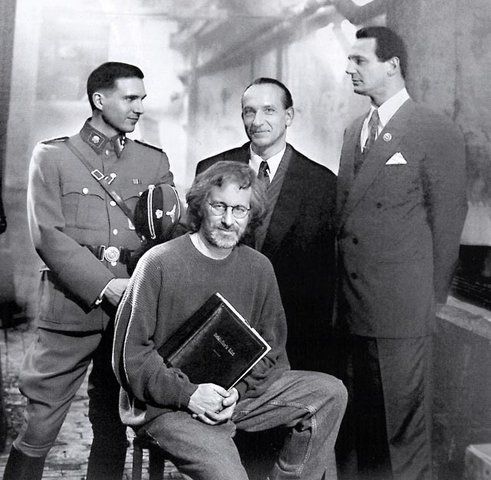
Ralph Fiennes turns 54 today, so here’s a behind the scenes photo from the set of Schindler’s List in 1993:

Actors in the Spotlight:

The BFI pays tribute to black actresses throughout film history, young and old, in this montage promoting their Black Star project:

[embedded content]

Role Models of the Day:

Need a new year’s resolution? How about trying to swim like Ariel, run like Aladdin and train to be as fit as other Disney heroes care of Misfit and Oh My Disney:

[embedded content]

Year-End Recap of the Day:

The latest essential look at 2016 in film is Mr. Nerdista’s video list of the top 15 movies of the year:

[embedded content]

Classic Trailer of the Day:

Today is the 60th anniversary of the release of Alfred Hitchcock’s The Wrong Man. Watch the original trailer for the film noir classic below.

[embedded content]

and

Let’s block ads! (Why?)


No Image

Despite Pledges To Cut Back, Farms Are Still Using Antibiotics

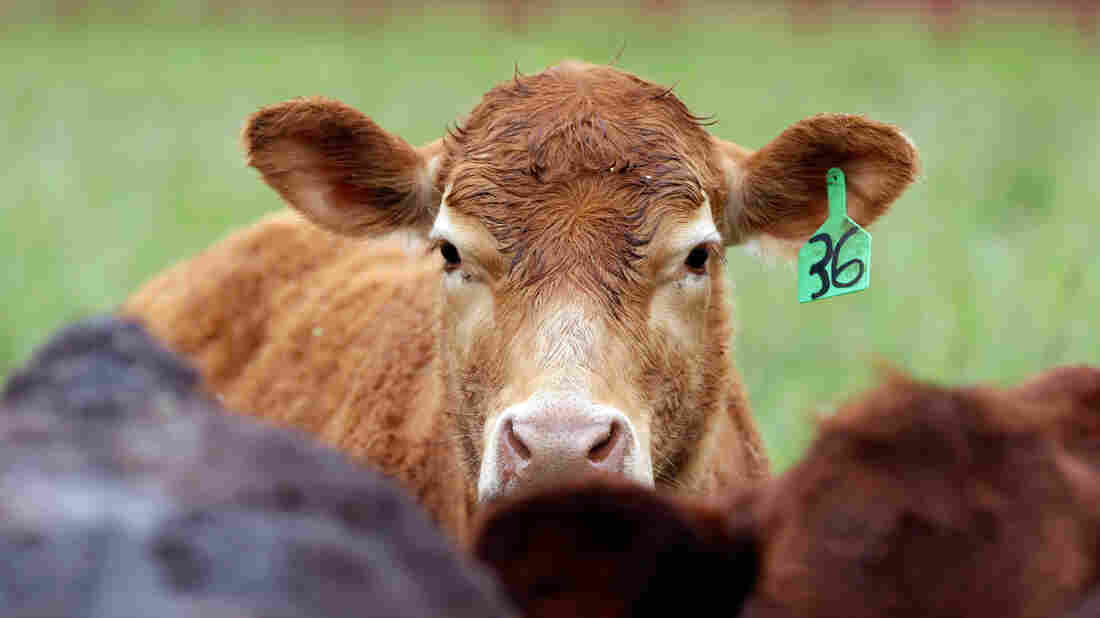
Antibiotic- and growth-hormone-free cattle gather at a farm in Yamhill, Ore. Despite farmers pledging to reduce or stop antibiotics use, a new report finds that sales of antibiotics for use on farms are going up. Don Ryan/AP hide caption

toggle caption

Don Ryan/AP

It’s a continuing paradox of the meat industry. Every year, more restaurants and food companies announce that they will sell only meat produced with minimal or no use of antibiotics. And every year, despite those pledges, more antibiotics are administered to the nation’s swine, cattle and poultry.

According to the latest figures, released this week by the U.S. Food and Drug Administration, antibiotic sales for use on farm animals increased by 1 percent in 2015, compared to the previous year. The increase was slightly greater – 2 percent — for antibiotics used as human medicine.

The FDA and other public health agencies have been pushing farmers to rely less on these drugs. Heavy use of antibiotics both in human medicine and in agriculture has led to the emergence of drug-resistant bacteria, complicating the task of treating many infections.

But the FDA finds a glimmer of good news in the latest figures, pointing out that the rate of increase has slowed. In the previous year, antibiotic use had increased by 4 percent, and a total of 22 percent from 2009 to 2014.

Article continues after sponsorship

The poultry industry has made the most ambitious promises to reduce antibiotic use. Perdue Farms says that 95 percent of its chickens already are raised with no antibiotics at all. Tyson Foods, the largest producer, has announced that it is “striving” to end the use of antibiotics that also are used in human medicine. Tyson will continue to deploy a class of antibiotics called ionophores, which can’t be used on humans. The new report, however, doesn’t shed any light on the impact of these moves, because it doesn’t show how much of each drug is used on cattle, swine or poultry.

In a statement, David Wallinga, from the Natural Resources Defense Council, said that “this report further underscores how urgently we need more and stronger government action” to reduce antibiotic use.

Ron Phillips, from the Animal Health Institute, which represents veterinary drug manufacturers, says that the FDA’s data on drug sales tell us little about what’s most important — whether the use of those drugs is leading to more drug-resistant bacteria. He says that another recent government report, from the National Antimicrobial Resistance Monitoring System, shows “very encouraging trends.” According to that report, bacteria found on meat at slaughter have not shown increasing resistance to most antibiotics in recent years.

There are some concerning trends, however. Some species of bacteria found on cattle have shown increasing levels of resistance to ciproflaxin, and turkey samples showed a big increase in Salmonella that’s resistant to several different drugs.

Let’s block ads! (Why?)


No Image

Dancer, Prancer, Runner — And Artist? Holiday Cheer, Courtesy Of GPS

Jolly old Santa himself. Unpictured: the sweat, pain and — possibly? — tears that went into tracing his form on the map. Owen Delaney/Courtesy of Strava hide caption

toggle caption

Owen Delaney/Courtesy of Strava

The plan began with an idle thought.

Glancing at a map earlier this month, Owen Delaney realized something funny: Seen from above, the Diana Fountain in London’s Bushy Park bears a striking resemblance to the bulbous nose of Rudolph the Red-Nosed Reindeer — at least, it would if that famous nose of his were blue. At any rate, that fountain-nose would look better if seen in the context of a full face.

So, Delaney decided to do it himself.

The run that started it all: Rudolph the Red-Nosed Reindeer. Well, make that a blue nose — for the Diana Fountain in London’s Bushy Park. Owen Delaney/Courtesy of Strava hide caption

toggle caption

Owen Delaney/Courtesy of Strava

Using Strava, a social network that allows athletes to track and share the routes of their workouts, he traced the path of his run through Bushy Park using GPS. The result was a squiggly (and probably sweaty) take on a favorite holiday character, seen from a bird’s-eye view.

Then, Delaney kept going. He tried to sketch Santa Claus the next day — an illustration that required a little off-road running.

“That was the toughest one,” Delaney says. “Trying to run [Santa’s] eyes and eyebrows through knee deep bracken, in the dark, it was very unforgiving on the legs! Then I thought, ‘Why not try and come up with something different every day until Christmas?’ “

Article continues after sponsorship

Owen Delaney with his son Tom, during a run in London’s Bushy Park. Owen Delaney hide caption

toggle caption

Owen Delaney

And so he has. Each day since that first Rudolph run, Delaney has traced a route and then broken out his running shoes — to ink in the sketch, as it were. He has drawn an open sleigh, a snowflake, even a sad snowman with its head plopped off.

Delaney, a father of two, says he plans to keep going through Christmas, even if his children are bemused by the whole thing.

“My kids seem quite confused by it all,” he says. “I show them the pictures after I’ve done a run, and they just give me a funny look like I’ve lost the plot. Kids are very astute.”

Hear that? This isn’t child’s play, folks. So we expect you to view the following works of art with only the utmost gravity — and sure, maybe a little holiday cheer, too.

“I’ve probably spent a few hours on it in all,” Delaney says, “drawing routes for all the runs up until Christmas day, and a few other ideas.” Owen Delaney/Courtesy of Strava hide caption

toggle caption

Owen Delaney/Courtesy of Strava

“People seem to be enjoying the posts on Strava,” Delaney says of his project. “That’s what motivated me to carry it on, really. I like that it’s making people smile.” Owen Delaney/Courtesy of Strava hide caption

toggle caption

Owen Delaney/Courtesy of Strava

A snowflake!

Owen Delaney/Courtesy of Strava

Let’s block ads! (Why?)


No Image

The Murky World of Secondhand Diabetic Test Strips

A screenshot from sellusdiabeticteststrips.com.

Screenshot/Courtesy Christa Kral

Chelsea Arnold was getting into debt over tiny pieces of plastic: diabetic test strips. When Arnold was first diagnosed with diabetes she needed to test her blood sugar 10 times a day. She went to Wal-Mart and found that one box, which contained only a five-day supply of test strips, was $80. Arnold called her parents and told them she didn’t know what to do. She didn’t have the money.

Arnold then did what a lot of people do when they need help: She searched on Google. She typed in the words “cheap test strips,” and Craigslist came up. She bought eight boxes for less than $100. At Wal-Mart, she would have paid $640. Arnold said, “it was like having a life sentence and then realizing that there’s a cure.”

With this Google search, Arnold stumbled into an underground economy for diabetic supplies. It’s a market that offers a lower-cost option for test strips, though it is hard for customers to know where the boxes come from. Some boxes may be repackaged and unsafe to use, and some boxes are sold by diabetics who are desperate for cash. But many of them come from people who have health insurance and have accumulated extra test strips.

Article continues after sponsorship

Trey falls into this category. (He asked us not to use his last name, because he fears retribution from his insurance company, even though he feels he hasn’t broken any laws.) He moved from one type of blood sugar monitoring system to another type of monitoring system and ended up with 20 extra test strip boxes.

At that point, Trey began researching. He said, “Obviously No. 1: Is it legal to be able to sell test strips?” Trey realized that it is legal, with a caveat. “It’s kind of a gray market as long as you don’t get them from Medicare and Medicaid,” he said. Trey then found a local buyer on Craigslist.

It starts to look a little seedy here. He put the 20 boxes in a brown paper lunch bag. “When I went to sell the test strips we met in a McDonald’s parking lot,” Trey said. “I came out with the bag full of test strips, and he had his wallet full of money and it was like we were doing a geriatric drug deal in the McDonald’s parking lot to get rid of some test trips.”

Trey made $300 off the geriatric drug deal. He jokingly calls the cash he made “blood money.” He used his “blood money” to buy Christmas presents for his kids.

As far as we can tell, his test strips went on to the next stop: a gray market middleman, something like a wholesaler, someone like Christa Kral. Along with her cousin, Kral purchases diabetic test strips from people like Trey. Their website is called sellusdiabeticteststrips.com.

To advertise, Kral used to post fliers near the train station in her town. Now her ads are online. She thinks the company’s unusual tagline has also brought in customers: “Two moms will buy your test strips.”

Kral operates her business out of her dining room. She has a cardboard box with about 20 boxes of test strips inside. She might pay $50 a box. It depends on the brand, the condition of the box, and the expiration date for the test strips.

Then she sells them at a markup to the next part of this chain: retailers. Arnold, the woman who bought test strips off Craigslist because they were too expensive at Wal-Mart, is now a retailer. That time when she couldn’t afford her test strips and keep her blood sugar in check — it scared her, and it made her decide to change her career path.

Arnold had been planning to go to medical school. But “that’s what really made me think I shouldn’t be a doctor and that I should go and help people try to afford the test strips,” she said.

Arnold started a website, glucomart.com. It’s a place where people can buy affordable test strips. She turned her garage into a kind of pharmacy. Her floor is epoxied, and she has pharmacy shelves.

Arnold realizes that if manufacturers or insurance companies lowered the price of test strips, she could be put out of business. She’s actually OK with that, because, she said, “the business exists to help people afford the test strips they need.”

Arnold would be happy to go back to her original plan and trade in her pharmacy shelves for a doctor’s coat.

Let’s block ads! (Why?)


No Image

Today in Movie Culture: Jason Takes 'Home Alone,' Chewbacca Sings a Christmas Carol and More

Here are a bunch of little bites to satisfy your hunger for movie culture:

Mashup of the Day:

This perfectly edited Christmas movie mash up by Antonio Maria Da Silva combining Home Alone, Iron Man 3, Gremlins, Krampus, Die Hard 2 and more is a new holiday classic:

[embedded content]

Christmas Carol Cover of the Day:

Do we smell another Star Wars holiday special in the making? Here’s Chewbacca growl-singing “Silent Night”:

[embedded content]

Cosplay of the Day:

The squad of cosplayers below posed for a holiday pic dressed as the characters from Rogue One. See more of their staged photos at Fashionably Geek.

Yule Log of the Day:

Instead of the usual boring old yule log on a fire video, this season you can pretend you’re celebrating the holidays in Captain America’s apartment:

[embedded content]

Adaptation Compilation of the Day:

Someone compiled 400 versions of A Christmas Carol for one perfect adaptation of the Charles Dickens classic (via Geek Tyrant):

[embedded content]

Holiday Movie Trivia of the Day:

With Christmas coming, here’s a bunch of facts about Christmas Vacation from ScreenCrush:

[embedded content]

Vintage Image of the Day:

Kiefer Sutherland, who turns 50 today, as a young boy with father Donald Sutherland:

#fotosraras de #cine ¿Sabes quién es? pic.twitter.com/H8BP5yIeYX

— Tom Reilly (@reilly_writer) October 1, 2016

Year-End Recap of the Day:

The latest great mashup of the movies of 2016 is by Nikita Malko (via Cinematic Montage Creators):

[embedded content]

Movie Comparison of the Day:

Couch Tomato shows why Warcraft is basically just a remake of The Lord of the Rings: Return of the King:

[embedded content]

Classic Trailer of the Day:

Today is the 70th anniversary of the release of It’s a Wonderful Life. Watch the original trailer for what has become a holiday staple below.

[embedded content]

and

Let’s block ads! (Why?)


No Image

Uber Stops Self-Driving Test In California After DMV Pulls Registrations

Devin Greene sits in the front seat of an Uber driverless car during a test drive in San Francisco on Dec. 13. Eric Risberg/AP hide caption

toggle caption

Eric Risberg/AP

Uber will have to park its self-driving cars in California for now.

California’s Department of Motor Vehicles on Wednesday said it had revoked the registrations of 16 autonomous vehicles owned by the ride-hailing company.

“We have stopped our self-driving pilot in California as the DMV has revoked the registrations for our self-driving cars,” an Uber spokesperson said. “We’re now looking at where we can redeploy these cars but remain 100 percent committed to California and will be redoubling our efforts to develop workable statewide rules.”

The DMV said the registrations for 16 Uber cars were improperly issued because they weren’t marked as test vehicles. The department said it’s inviting Uber to “seek a permit so their vehicles can operate legally in California.”

Earlier this month, Uber started offering rides in self-driving cars in San Francisco without a permit for autonomous vehicles — defying state regulators. Uber’s self-driving Volvos, which were operated with a “safety driver” behind the wheel, have already been deployed in Pittsburgh.

Article continues after sponsorship

Uber had said that because the cars’ programming is “not ready” to drive without a person behind the wheel monitoring the automobile, the company didn’t need a self-driving car permit. Uber contended that its vehicles operate in the same way as those equipped with “advanced driver assist technologies” such as Tesla’s autopilot.

The DMV said Wednesday that “Uber is welcome to test its autonomous technology in California like everybody else, through the issuance of a testing permit that can take less than 72 hours to issue after a completed application is submitted.”

Let’s block ads! (Why?)