Articles by admin

No Image

Box Office Report: ‘Rogue One’ Dominates As Only ‘Sing’ & ‘Fences’ Win Out Among Newcomers

Here’s your estimated 4-day box office returns (new releases bolded):

1. Rogue One – $96.0 million ($318.0 million total)

2. Sing – $56.0 million ($76.6 million total)

3. Passengers – $23.1 million ($30.4 million total)

4. Why Him? – $16.7 million ($16.7 million total)

5. Assassin’s Creed – $15.0 million ($22.4 million total)

6. Fences – $11.3 million ($11.5 million total)

7. Moana – $10.4 million ($183.4 million total)

8. La La Land – $9.7 million ($17.5 million total)

9. Office Christmas Party – $7.2 million ($44.2 million total)

10. Collateral Beauty – $7.0 million ($18.0 million total)

The Big Stories

So it’s Christmas time and Hollywood has given moviegoers its annual presents and lumps of coal for everyone to decide upon once their gifts are opened. You’ve got something for kids, something for sci-fi fans, wacky comedy, Oscar-wannabe dramas and expansions and Assassin’s Creed. Between that, Passengers and Why Him? the critics could not even get them to 100% combined. Sing is right in there in that Illumination realm of 71% and Denzel Washington’s Fences is riding high with 94%, but it’s still the film with the 85% approval garnering the bulk of the attention once again and should be doing so for weeks to come.

And Your Animated Idol Is…
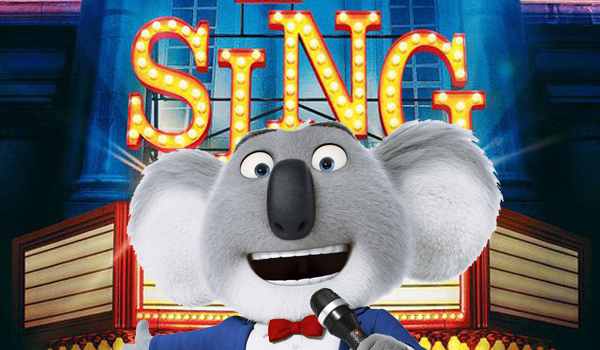
We start with the new stuff this week and as I have anticipated for months, Illumination’s Sing has leapt out as a big winner. The studio that has become a direct challenger to Disney & Pixar even if their efforts are more cartoony than cinematic is doing so not just by making big bucks at the box office but by keeping the costs down on the front end. While Finding Dory was the unquestioned victor at the box office this summer, it was The Secret Life of Pets and its $75 million budget (compared to Dory‘s $200) that made it the winner of the profit margin. They already have a billion-dollar film under its belt in Minions ($1.159 billion) as well as $975 million with Despicable Me 2 and another $875 million for Pets with Despicable Me 3 on the horizon for next summer.

Sing is also rockin’ a $75 million budget and in its first six days (since opening on Weds) it is estimated to gross $76.6 million. That’s just in the U.S. (it has made another $17.2 internationally) and it is now halfway to recouping its budget. P&A will come after that and then its nothing but profit town. Shocking as it may seem, studios have avoided releasing full-on animated fare in the month of December. The Princess and the Frog was in limited release going back to November before being launched wide on Dec. 11, 2009. That leaves the all-time animated champ of December as The Prince of Egypt, which opened to $14.5 million on Dec. 18, 1999 and went on to gross $101.4 million. Sing is likely to reach that before next weekend.

[embedded content]

We’ll get to the full chart in a minute, but in relation to films that have opened in the days before Christmas, Sing‘s six-day total ranks only behind Alvin and the Chipmunks: The Squeakquel, Meet the Fockers and National Treasure: Book of Secrets. In other words, Sing is the all-time six-day champion amongst non-sequels during this time of year.

The Chipmunks and Nicolas Cage grossed $219.6 & $219.9 million, respectively, while the Fockers went on to gross over $279 million. $200 million seems a given at this point and from there it will be after Illumination’s $214 million gross for Dr. Seuss’ The Lorax and then the $251 million of the first Despicable Me film. The $336 million that Minions made in the U.S. is probably a stretch, but if Sing manages to hit the three-quarter billion dollar mark worldwide it will be the animation studio’s fourth to do so. Not bad.

Wait! Chris Pratt Did WHAT???
Last week Collateral Beauty was criticized for withholding its disturbing setup from audiences. Critics called the film on it (as part of its overwhelming awfulness) and then attention was turned on them as the blame for the film tanking at the box office. (As of this Monday it is estimated to have grossed just $18 million for what will become Smith’s lowest-grossing star vehicle to date.)

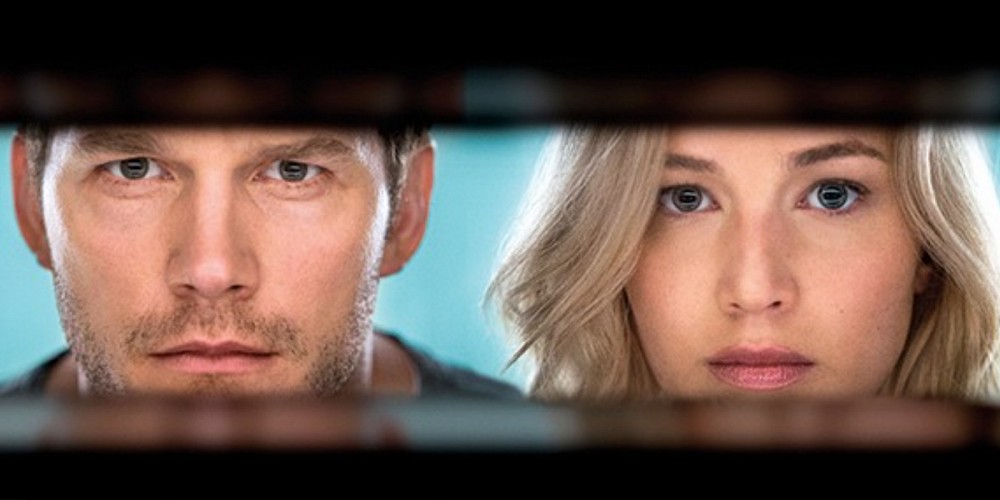
Last week, Passengers was unleashed to critics with another ethical dilemma kept out of the film’s trailers. (We’re talking first half-hour here, people.) Sony did not clamp down on the first responders and the hate was all over Twitter. By the time the second responders got to weigh in, the word was already out that Morten Tyldum’s Passengers was an outright disaster and that maybe Jon Spaithis’ long-cherished script maybe should have stayed on the infamous unproduced pile where it sat for several years.

32% is the score Passengers is feeling from Rotten Tomatoes. It’s not THE worst of the holiday season (still higher than Collateral Beauty, Assassin’s Creed and Bad Santa 2) but it’s down there. Studios can deal with bad reviews. If the film does poorly now they (or their media surrogates) can just blame the critics for the film’s performance. But it’s the dollars front and center and now is a good time to bring in that chart.

This chart reflects the six-day performance of films opening between Dec. 20-23. (*Beavis is based on a 7-day number.) You can see how concerned the studio may be now about Passengers:

Alvin and the Chipmunks: The Squeakquel ($87.6), Meet the Fockers ($84.4), National Treasure: Book of Secrets ($77.8), Sing ($76.3), Night at the Museum ($67.6), Cast Away ($60.8), Little Fockers ($53.4), Titanic ($43.7), True Grit ($43.1), Beavis and Butt-Head Do America* ($30.9), Passengers ($30.4), Fun with Dick and Jane ($29.1), The Girl with the Dragon Tattoo ($27.8), Jack Reacher ($26.9), Rocky Balboa ($26.6), Any Given Sunday ($24.2), The Family Man ($22.876), Miss Congeniality ($22.870), Two Weeks Notice ($22.81), Jimmy Neutron: Boy Genius ($22.5), Assassin’s Creed ($22.2), This is 40 ($20.7)

[embedded content]

Miss Congeniality is the only film on that list under $27 million to gross $100 million. ($106.8 million to be precise.) And Beavis and Butt-Head is the only film above $27 million to fail to reach $100 million. Sony is staring at a $110 million budget on the film, which is not a bad investment on a high-concept sci-fi film with two of the most successful young stars of the day. Seeing as how most concepts begin with envisioning the trailer it’s a bit shocking that nobody recognized the problem they had before a frame was ever shot.

Sony already took a bath banking on Pratt as second-billed to Denzel Washington in The Magnificent Seven a few months ago. After a really solid summer (The Angry Birds Movie, The Shallows, Sausage Party, Don’t Breathe) that was unfortunately tempered by the disaster of Ghostbusters, Sony is on another losing streak including Seven, Inferno and Billy Lynn’s Long Halftime Walk –and unless Passengers can find another $300 million, well, they have Underworld: Blood Wars and Resident Evil: The Final Chapter up next.

Why Creed?
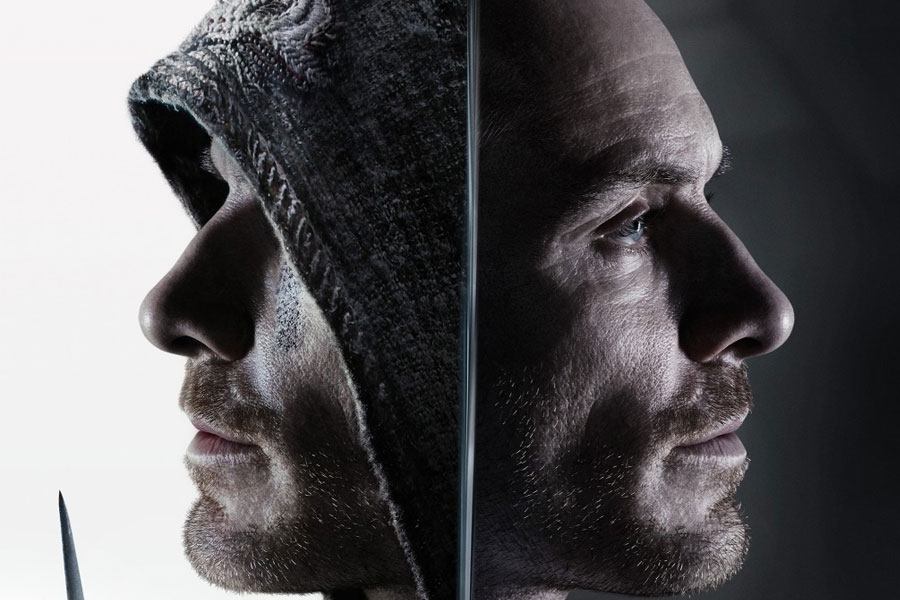
Speaking of video game adaptations that brings us to Fox’s Assassin’s Creed, which was my pick for the potential biggest loser of the holiday season. $125 million spent on a genre that has only ever seen one film (Lara Croft: Tomb Raider) gross that much in the U.S. While they may not have expected it at the time of production, Warcraft‘s $386 million gross overseas might have provided some hope for this one (Assassin’s Creed has made $14.2 million internationally thus far.) Even though Warcraft grossed only $47 million and has one of the worst opening weekend multiples of the year (1.95). If we take the grosses of the video game films that made it into wide release, their average multiple is a measely 2.52. That would put Assassin’s Creed somewhere in the vicinity of $45 million. (At least it would be more than 47 Ronin‘s $38.3 million.)

If we refer to the above chart though, the lowest-grossing film on that list is Beavis & Butt-head’s $63 million. With only $15 million this weekend after $7.4 million its first two days, the lower-end appears to be a good bet. That will leave the film looking for a minimum of $350 million to break even. When will studios learn these films are not a good idea?

Assassin’s Creed is not the only Fox film being released this week. John Hamburg’s comedy, Why Him?, with Bryan Cranston and James Franco was launched on Friday. The budget on this one is far more respectable at $38 million and its estimated $16 million start in its first four days is hardly a death sentence this time of year. As evidenced by this chart of “comedies” opening on Dec. 18 or later.

Parental Guidance ($14.5 / $77.2), Fun with Dick and Jane ($14.38 / $110.3), Two Weeks Notice ($14.32 / $93.3), Sisters ($13.9 / $87.0), Dude Where’s My Car? ($13.8 / $46.7), The Secret Life of Walter Mitty ($12.7 / $58.2), This is 40 ($11.5 / $67.5), The Family Man ($10.5 / $75.7), Why Him? ($10.1 / ???), Miss Congeniality ($10.0 / $106.8), Fat Albert ($10.0 / $48.1), Kate and Leopold ($9.7 / $47.1), Charlie Wilson’s War ($9.6 / $66.6), We Bought a Zoo ($9.3 / $75.6), Cheaper by the Dozen 2 ($9.3 / $82.5)

You will notice that the BOLD titles are all Fox releases, so clearly they have a type this time of year and that doesn’t even mention Gulliver’s Travels and Joe Somebody. (In their defense, 9 to 5, The Flamingo Kid and Johnny Dangerously opened around this time too.) Though even if Why Him? does reach the lowball figure of $47 million on that list it will still need about another $67 million to break even. If not that means that Why Him? (and likely Assassin’s Creed) will be added to a growing losing streak at Fox that goes back to September starting with Morgan and on to Miss Peregrine’s Home for Peculiar Children, Keeping Up with the Joneses, Trolls and Rules Don’t Apply. Again in their defense, they do currently own the second most profitable film of the year in Deadpool behind just The Secret Life of Pets.

Tales of the Top Ten

Rogue One: A Star Wars Story may still be about $725 million away from being the most profitable film of 2016, but it is well on its way to challenge Finding Dory to become the highest-grossing film of the year in the U.S. After just ten days the film is at $286.3 million. That is the 9th best 10-day total ever and no film on that top ten list have grossed less than $400 million. After Monday it is being estimated at over $318 million which is just under both Avengers: Age of Ultron and The Dark Knight; summer releases which finished, respectively, with $459 million and $533 million. That is your new range for Rogue One, which would be good enough to be one of the ten best U.S. grossers ever. It will need $859 million overseas to break into the top ten on that list. (It has currently grossed $237.4 million internationally.) If it does crack the top ten on both lists then it is guaranteed to be the most successful film of 2016 along with making history for Disney as they would become the first studio to release four billion-dollar films in a calendar year.

Going down the list we look at Moana and its expected march towards $230 million. By the day after Christmas it is estimated to be $40 million ahead of the pace of Tangled, which grossed $200.8 million domestic. It is also still over $6 million ahead of Toy Story 2‘s $245 million pace, though it is steadily falling behind its weekend pace. Though as of now, $240 million may be the new number to watch. Will that be enough to outpace Sing? Could be an interesting race to the finish. Moana is over $327 million worldwide. Fantastic Beasts and Where to Find Them has jumped over $744 million worldwide and into the Top Ten of the most profitable titles of 2016.

On the expansion front, Manchester by the Sea is over $21 million by Monday making it the highest-grossing Sundance film of the year. La La Land expanded into 734 theaters and has now grossed over $17 million on its way to its Oscar nominations next month. Also making the big jump is Denzel Washington’s Fences, which grossed $11.3 million after bursting into over 2200 theaters. The thing is that it did that number in a mere two days after opening on Christmas. It did not quite crack the Top 15 list of all-time of single-day Christmas openers, but it came within $2 million of doing so. Dreamgirls is 14th on that list and it started with $8.7 million compared to Fences‘ $6.6 million. Dreamgirls also failed to get a Best Picture nomination while Fences is in line to.

Over to the limited release front, Hidden Figures also managed to start with $955,000 in its first two days on 25 screens. Peter Berg’s Patriots Day grossed over $241,000 in just seven theaters and Pedro Almodovar’s Julieta made over $151,000 on six.

On the four-screen front, Martin Scorsese’s Silence opened to $180,000, Ben Affleck’s all-but-hidden-from-critics-during-awards-season, Live By Night, made just $56,000 and J.A. Bayona’s A Monster Calls started with a mere $42,000. To put those numbers in perspective, Captain Fantastic ($93,824), Indignation ($93.125), Hello My Name is Doris ($84,896), Equity ($82,434), American Honey ($71,203), Knight of Cups ($60,860) and The Meddler ($57,022) all had stronger openings on four screens.


– Erik Childress can be heard each week evaluating box office on WGN Radio with Nick Digilio as well as on Business First AM with Angela Miles and his Movie Madness Podcast.

[box office figures via Box Office Mojo]

Let’s block ads! (Why?)


No Image

After 8 Decades And Countless Pastrami Sandwiches, New York's Carnegie Deli Folds

Customers dine at Carnegie Deli in New York City. The iconic deli, known for its large pastrami and corned beef sandwiches, announced it will close at the end of the year. Drew Angerer/Getty Images hide caption

toggle caption

Drew Angerer/Getty Images

One of the most famous delicatessens in New York will slice its last sandwich this week.

The Carnegie Deli opened in 1937 on Seventh Avenue across from Carnegie Hall. But it didn’t’ achieve notoriety until decades later — around the time that director Woody Allen filmed a table full of off-duty comedians there in his movie, Broadway Danny Rose.

There’s still a “Woody Allen” sandwich on the menu at the Carnegie Deli: half pastrami, half corned beef. But the real star is that pastrami.

“People love my pastrami so much, it’s like a human being,” says owner Marian Harper. “It’s overwhelming to me.”

Harper inherited the Carnegie Deli from her father, Milton Parker, who took over the restaurant with partner Leo Steiner in 1976. Back then, the Carnegie was just another deli in the theater district. Then a reviewer from The New York Times listed its pastrami among the best in the city. Ever since, Harper says, it’s been tough for customers to get a table.

Marian Harper is the owner of the iconic deli. She inherited the restaurant from her father. David Verdini/Courtesy of Carnegie Deli hide caption

toggle caption

David Verdini/Courtesy of Carnegie Deli

“They know to come here hungry,” says Harper. “They love the big portions. My father called it gargantuan sandwiches, he used that name.”

Article continues after sponsorship

The deli’s oversized portions and over-the-top attitude made it an essential New York experience.

“The Carnegie is really the New York Jewish deli,” says Ted Merwin, professor of history at Dickinson College, and the author of Pastrami on Rye: An Overstuffed History of the Jewish Deli. “It’s a symbol for what I call the ethos of excess.”

Merwin says restaurants like the Carnegie Deli and its longtime rival, the Stage Deli, played an important role in American Jewish culture.

For Jews, an important part of their becoming American was being able to eat in delis that were in and around the theater district, says Merwin. “So the celebrity culture was something they participated in very avidly.”

Pictures of movie stars and famous people who have dined at the deli hang on the restaurant’s wall. /Courtesy of Carnegie Deli hide caption

toggle caption

/Courtesy of Carnegie Deli

The walls of the Carnegie Deli are still lined with photos of Broadway stars. But most of them are forgotten now. And most of the patrons don’t bat an eye at the Christmas music being piped into the dining room. They’re mainly tourists, hungry for a nostalgic New York experience.

“I’m sorry to see it go,” says John Sinnott, who was dining with his wife and two children. The family lives in the Hudson Valley and visits New York City every year during the holiday season. Sinnott says it’s an annual family tradition to see the Christmas tree at Rockefeller Center, and stop at the Carnegie Deli for lunch.

“It’s another part of New York that’s gone forever,” he says. “You have to move forward. But some things you don’t want to leave behind.”

The Carnegie Deli has been struggling lately. It closed for 10 months after workers reported a gas leak. A court ordered the restaurant to pay its employees more than $2 million in back wages.

Customers wait in line outside for a table at the Carnegie Deli. Drew Angerer/Getty Images hide caption

toggle caption

Drew Angerer/Getty Images

Marian Harper went through a nasty divorce from her husband, who allegedly stole the deli’s prize pastrami and cheesecake recipes, and shared them with his mistress. But Harper says none of that is responsible for the closing of the deli’s Manhattan outlet at the end of the month.

“I’m at that certain age where I want to enjoy my life, and I want to do certain things,” says Harper. “And all good things must come to an end.”

The Carnegie Deli will still have outposts in Las Vegas and Bethlehem, Pa. But if you’re looking for that table full of comedians in the back, you’ll have to watch Broadway Danny Rose.

Let’s block ads! (Why?)


No Image

Boxing Day's Roots: Why Some Celebrate The Day After Christmas

Monday is Boxing Day in the UK and Ireland, as well as many former British colonies. We learn about the origins of the holiday and how it is marked now.

ARI SHAPIRO, HOST:

It’s the day after Christmas which means for the British, Australians, Canadians and people in a handful of former British colonies, it’s Boxing Day. Boxing Day is always celebrated on December 26th, the day after Christmas. So what is it exactly? Well, in Britain, it’s a bit like Black Friday. Government offices are closed. Stores are wide open. We called up Selfridges’ department store in London and reached manager Luke Bayliss. He had to duck into a store room to escape the noise and crowds.

LUKE BAYLISS: It’s our first day of sales and mark downs. We had people queuing up – big groups of people have come in of up to 20, you know, (unintelligible).

SHAPIRO: We asked Bayliss if he knew where Boxing Day came from.

BAYLISS: I have no idea (laughter).

SHAPIRO: So we had to go to other sources. We looked into it, and it turns out there are a few competing theories. Some historians say the name originates in Victorian times when churches passed around a donation box and asked congregants to open up their pocketbooks. Others say it’s much older than that. Back in the 1500s, servants had to work on Christmas. The next day was theirs. Their employers would send them home with boxes of leftovers, gifts and holiday bonuses.

And there’s a third theory. Boxing Day is the day when blacksmiths and other tradespeople would receive boxes of money or gifts from their customers, a kind of end-of-the-year tip. Samuel Pepys, whose diary is considered an authoritative source on what life was like in England in the 17th century, he references the practice in a December 19, 1663 diary entry.

KEVIN: (Reading) And thence by coach to my shoemaker’s and paid all there and gave something to the boys’ box against Christmas.

SHAPIRO: Today, aside from shopping, Boxing Day is traditionally big for sports like soccer and fox hunting.

TOM HUNT: Boxing Day has been for centuries the highlight of the calendar year for hunting.

SHAPIRO: That’s Tom Hunt of the Countryside Alliance, a group that supports fox hunting in the U.K. The practice is currently illegal if the fox is killed.

HUNT: I think, actually, a lot of it’s just got to do with the fact that, you know, everyone’s been with their families on Christmas Day. Often, there’s been a bit of excess in terms of eating and everything else, and I think, you know, a bit of hunting on Boxing Day is a fantastic way to get some countryside air.

SHAPIRO: So whether you are shopping, fox hunting or just enjoying the day off, from all of us here at NPR, happy Boxing Day.

Copyright © 2016 NPR. All rights reserved. Visit our website terms of use and permissions pages at www.npr.org for further information.

NPR transcripts are created on a rush deadline by Verb8tm, Inc., an NPR contractor, and produced using a proprietary transcription process developed with NPR. This text may not be in its final form and may be updated or revised in the future. Accuracy and availability may vary. The authoritative record of NPR’s programming is the audio record.

Let’s block ads! (Why?)


No Image

A Dying Man's Wish To Donate His Organs Gets Complicated

Dave Adox, right, and his husband Danni Michaeli at their home in South Orange, N.J., in the fall of 2014. Adox was diagnosed with ALS at age 42 and became almost totally paralyzed within six months. He died last May. Courtesy of Evan Bachner hide caption

toggle caption

Courtesy of Evan Bachner

At 44 years old, Dave Adox was facing the end of his two-year battle with ALS, also known as Lou Gehrig’s disease. He needed a ventilator to breathe and couldn’t move any part of his body, except his eyes. Once he started to struggle with his eyes — his only way to communicate — Adox decided it was time to die.

He wanted to donate his organs, to give other people a chance for a longer life. To do this, he’d need to be in a hospital when he went off the ventilator.

“I was always interested in organ donation and had checked the box on my license,” Adox said last spring at his home in South Orange, N.J., through a machine that spoke for him. He laboriously spelled out these words, letter by letter, by focusing his eyes on a tablet. Adox had spent a career with words that now came slowly — he was a freelance reporter, including for public radio, then went on to work in advertising.

“When I got diagnosed with ALS at 42, and the disease paralyzed my entire body in six months, I definitely developed a greater appreciation of the value of the working human body,” he said.

Article continues after sponsorship

Family members surround Adox on the day that he died last May. His wish to die in a hospital so that he could donate his organs turned out to be difficult to fulfill. Karen Shakerdge/WXXI hide caption

toggle caption

Karen Shakerdge/WXXI

Adox and his husband, Danni Michaeli, made a plan. They would go to University Hospital in Newark, where Adox often had been treated, and have his ventilator disconnected. The doctors there had reassured Adox he could ask to come off the ventilator anytime.

In May his family and friends flew in from around the country, and joined neighbors for a big celebration of Adox’s life. They spent one last weekend with him, planting a tree and painting a big, colorful mural in his honor. Some wore T-shirts printed with Adox’s motto, “Celebrate everything until further notice.”

But their plan suddenly changed when University Hospital’s attorneys intervened.

“At the 11th hour, they emailed us and said their lawyers had stopped the process because they were afraid it looked too much like assisted suicide,” Adox explained. “I was crushed.”

Every day, physicians withdraw life support on behalf of patients in hospitals who choose to refuse care. That’s generally not considered physician-assisted suicide or euthanasia — the key being that the patient is already in the hospital.

But Adox was asking to be admitted to the hospital specifically to end his life. And despite the planning, his request made some people uncomfortable.

Dr. John Bach, a professor of physical medicine rehabilitation and neurology at Rutgers New Jersey Medical School, which is affiliated with University Hospital, was Adox’s primary physician, and understood and approved of his patient’s plan to end his life and share his organs.

“I could have given [him] a prescription for morphine and he could have been taken off the ventilator at home,” Bach says. “But he wanted his organs to be used to save other people’s lives!”

Adox before he was diagnosed with ALS. He decided to become an organ donor so that other people could enjoy a longer life. Courtesy of Evan Bachner hide caption

toggle caption

Courtesy of Evan Bachner

Other physicians at the hospital supported Adox’s plan, too.

“We have an ethics committee that approved it 100 percent,” Bach says. “We have a palliative care committee — they all agreed, 100 percent. But it didn’t make any difference to the lawyers of our hospital.”

University Hospital has declined several requests for comment, but Bach says the hospital’s attorneys were concerned about liability.

“The legal issue is: What is euthanasia?” Bach explains. “Are you killing a patient by taking him off a respirator that’s keeping him alive?”

Adox had an advance directive that stated, “I do not want medical treatment that will keep me alive if I have an incurable and irreversible illness and the burdens of continued life with life-sustaining treatment become greater than the benefits I experience.”

Having an advance directive on file is especially important for ALS patients, Bach says, because they can eventually become “locked in,” unable to express their wishes.

“To be locked in means you cannot move anything at all — not a finger, not a millimeter,” Bach says. “You cannot move your eyes; you cannot move your tongue; you cannot move your facial muscles at all. You cannot even wink to say yes or no.”

In this particular case, the hospital wouldn’t have had to rely on the directive, Bach noted: Adox was still fully capable of expressing his wishes clearly. It deeply troubled the physician that his patient’s wishes could not be met.

“Myself and all the other doctors who took care of him in the hospital were almost as upset about it as he and his husband were,” Bach says.

Dr. Joshua Mezrich, a transplant surgeon at the University of Wisconsin Hospital, has had patients with ALS who, like Adox, wanted to donate organs. He believes hospitals need to create protocols for these situations — even though such cases are rare.

Mezrich acknowledges this could challenge a key principle for physicians: First, do no harm. But that mandate can and should be interpreted broadly, he believes.

“I think it’s fair to say that doing no harm doesn’t always mean making people live as long as possible — keeping them alive no matter what,” Mezrich says. “Sometimes, it means letting them have the death that they want, and it means letting them give this gift, if that’s what they want.”

Still, planning one’s death to allow for organ donation raises some thorny questions, says Arthur Caplan, director of the division of medical ethics at New York University and author of Replacement Parts: The Ethics of Procuring and Replacing Organs in Humans.

Adox and Michaeli with their son, Orion, in the winter of 2015. Courtesy of Christine Gatti hide caption

toggle caption

Courtesy of Christine Gatti

Typically a separate team of physicians or an organ procurement team discusses donation with family members after a patient dies, to avoid any tones — whether real or perceived — of coercion or conflict of interest, Caplan points out.

“You’d have to change the culture of critical care and say it’s OK to talk with the person about organ donation as part of their dying,” he explains.

This issue may get bigger, Caplan believes, as states move to legalize physician-assisted death. Although, so far, there has been little public discussion because “it’s too controversial.”

“If we went in the direction of bringing more people who are dying — whether it’s ALS or whatever it is — into settings where we could have them consider organ donation because they’re on the machines, we’d probably have a bigger pool of organ donors,” Caplan says.

But that approach would have a downside, too, he continues. People might perceive doctors as more focused on “getting organs” than caring for dying patients.

Adox takes one last walk with family and friends in New York’s Central Park before going to a hospital to be disconnected from the ventilator that kept him alive. Karen Shakerdge/WXXI hide caption

toggle caption

Karen Shakerdge/WXXI

There is at least one hospital that has established a policy for patients with ALS who want to be organ donors. Froedtert Hospital and its partner Medical College of Wisconsin, in Milwaukee, approved such a policy in May.

About a year ago there, a patient with ALS wanted to donate her organs, but the hospital wasn’t able to honor her wish. The experience prompted physicians to develop a multistep system that includes evaluation from psychologists, an ethics review and considers technical matters such as transportation or insurance coverage.

“Obviously we’re all sensitive to any perception of assisted expedition of death,” says Dr. William Rilling, vice chair of clinical operations of radiology at Froedtert Hospital. “But, at the end of the day, the patient’s wishes count for a lot.”

After University Hospital declined to admit Adox, he and his husband reached out to six other hospitals through various intermediaries. They waited for days to hear back.

In the end, LiveOnNY, the organ procurement organization based in New York City, stepped in to help. The organization’s medical director, Dr. Amy Friedman, went to visit Adox at his home to vet his suitability as a donor.

“There was a hospital partner,” Friedman says, “that felt very supportive of this circumstance, understood the challenges that they would be faced with, [and was] prepared to be supportive of what Dave wanted and would be able to provide a bed.”

Finally, on the palliative care floor at Mt. Sinai Hospital on May 18, Adox and Michaeli prepared to say their goodbyes.

“We sat; we listened to ’80s music. I read Dave a poem,” Michaeli recounts, close to tears. “And when they were really sure — and we were all really sure — that he was in a deep state of sedation they disconnected his breathing machine.”

And in the end, Adox’s wishes were met — he was able to donate his liver and kidneys. Michaeli says he felt “an incredible swelling of gratitude” to the hospital team who helped make that happen.

“The person we were trying to do a direct donation for was a match,” Michaeli says. “And he has Dave’s kidney right now.”

This story is part of a reporting partnership with NPR, Side Effects Public Media and Kaiser Health News.


Let’s block ads! (Why?)


No Image

Christmas Day in Movie Culture: Darth Vader and Kylo Ren's Holiday Shenanigans, Marvel Yule Logs and More

Here are a bunch of little bites to satisfy your hunger for movie culture:

Star Wars Holiday Special of the Day:

Darth Vader and little Kylo Ren bond during the holidays in this funny Christmas-themed Star Wars parody (via Geek Tyrant):

[embedded content]

Yule Logs of the Day:

Instead of the boring old yule log this holiday, you can put one of Marvel’s varieties on in the background. Below is one from the Milano from Guardians of the Galaxy and there are more from Iron Man, Thor, Captain America and Ms. Marvel here.

[embedded content]

Christmas Carol Cover of the Day:

The cast of Sing join Paul McCartney for an a cappella rendition of “Wonderful Christmastime” on The Tonight Show Starring Jimmy Fallon:

[embedded content]

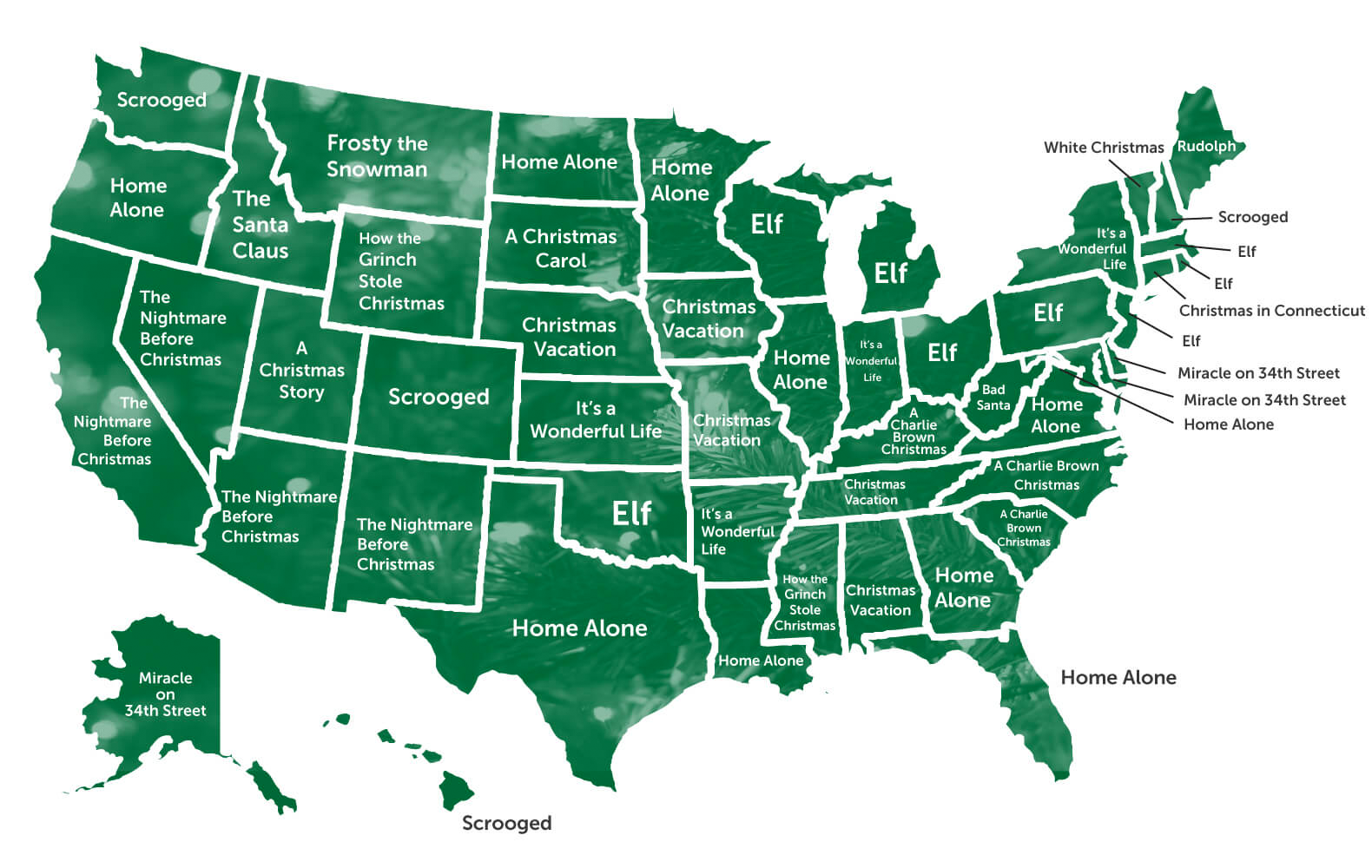
Movie Map of the Day:

Mental Floss filled in a map of the U.S. with each state’s favorite Christmas movies (via Geekologie):

Movie Debate of the Day:

CNN gets to the bottom of whether or not Die Hard is actually a “Christmas movie” with help from critic David Edelstein:

Supercut of the Day:

Darth Blender’s latest is not the usual gag gift but a nice montage of good and bad Christmas movies:

[embedded content]

Vintage Newspaper Ad of the Day:

In case you have any doubts that Gremlins is a Christmas movie, here’s a great ad from the 1984 holiday season:

Love this 1984 #Gremlins newspaper ad featuring ‘Stripe Claws’ & ‘Gizmo’! @joe_dante @zwgman @AmblinEnt pic.twitter.com/6zqRubhTDa

— Jon Donahue (@JonDonahue) December 6, 2016

Filmmaker in Focus:

John Woo is heavily represented in Fandor’s supercut tied to the “two turtle doves” part of “The Twelve Days of Christmas.” See their other supercuts based on the song at Vimeo.

[embedded content]

Movie Homages of the Day:

See if you can find all 20 movies referenced in this animated action movie starring Santa Claus (via Geek Tyrant):

[embedded content]

Vintage Image of the Day:

Macualey Culkin and Joe Pesci seem to get along during the making of Home Alone while writer/producer John Hughes can be seen in the background:

Alternate Ending of the Day:

Above Average imagines a different way It’s a Wonderful Life could have gone in this parody of the classic film’s ending:

[embedded content]

Classic Trailer of the Day:

Imagine a time before A Christmas Story played in theaters let alone marathons on television by watch the holiday classic’s original trailer from 1983:

[embedded content]

and

Let’s block ads! (Why?)


No Image

For Global Investors, 'Uncertainty' Over Business Climate Under Trump

The Trump International Golf Club in Dubai is part of the president-elect’s real estate empire. Trump has said his sons would run his companies while he’s president. Karim Sahib/AFP/Getty Images hide caption

toggle caption

Karim Sahib/AFP/Getty Images

It can take decades for a country build up a name as a good place to do business, and the U.S. consistently ranks among the best. But some economists say its reputation for trustworthiness could be challenged if President-elect Trump makes good on threats to rip up international agreements.

“The U.S. is consistently among the top five, the top 10 countries in the world in terms of the environment for doing business. And this is mostly because of the rule of law and the transparency of government,” says Simeon Djankov, a senior fellow at the Peterson Institute for International Economics and former chief economist at the World Bank.

He warns that America’s solid reputation could quickly disappear if President-elect Trump carries through with some of his campaign promises. He points to the Paris climate accord, signed by world leaders a year ago. Djankov says there was an underlying expectation in the global business community that an international contract would be honored when the next U.S. president took office.

“Suddenly the president-elect says, ‘Well, I don’t like this agreement, I may not abide by it,’ ” he says. “This business is thrown into panic, already they have spent maybe hundreds of thousands or even millions of dollars abiding by this new regulation, now it’s for nothing, so to speak.”

Article continues after sponsorship

Scuppering such agreements can erode trust with international investors, says Ray Fisman, a professor of economics at Boston University.

“If there’s one thing that deters investment, it is uncertainty,” he says. “And we’re seeing uncertainty. You don’t quite know what you’re in for if you consider doing business in the U.S.”

It’s still unclear whether there will be a bright line between Trump’s business dealings and the White House. His children have sat in on meetings with world leaders and advisers. Trump has said his sons would run his companies while he’s president — but he could still make money off his name used on properties across the world.

“We should not forget that perceptions are important,” says Alejandro Salas, a director at Transparency International, which produces an index every year looking at the impact of perceived corruption on international investment in more than 160 countries.

Salas says the higher level of corruption, the less attractive a country is to investors, and vice versa. The U.S. ranked 16th last year, tied with Austria. Salas says that may change because Trump appears to disregard many rules and regulations.

“The fact that there could be so much conflict of interest, the fact that he says as far as the conflict of interest laws don’t apply to the president, that’s very dangerous,” Salas says.

The American system of checks and balances will help hold the government accountable, Salas says. For now, investors will give the new president time and latitude to settle into the job. Meanwhile, the stock market is going gangbusters.

Let’s block ads! (Why?)


No Image

Avid Runner Switches Up Route In The Spirit Of Christmas

Owen Delaney is an avid runner who decided to make his runs a little more festive this year. He used his GPS app to create Christmas-themed art.

(SOUNDBITE OF CHUCK BERRY’S “RUN RUDOLPH RUN”)

AILSA CHANG, HOST:

Owen Delaney is an avid runner. A couple weeks ago, he looked at a map of his local park in London and he saw all the normal things – trails, a fountain but also an opportunity.

OWEN DELANEY: It just popped into my head the idea of running in the shape of Rudolph’s face.

(SOUNDBITE OF SONG, “RUN RUDOLPH RUN”)

CHUCK BERRY: (Singing) Run, run, Rudolph. Santa’s got to make it to town.

CHANG: He used Strava, a social network that allows athletes to manually plot their routes and – if they’re feeling creative – to draw some GPS art. And by GPS art, we mean he deliberately ran a route in the shape of a picture. The first picture he did was Rudolph with the park fountain as a nose. And he went on from there.

DELANEY: Then Santa’s face, then the sleigh, I think – a Christmas tree, snowflake. I did another reindeer face in a different park that didn’t work so well. And today I did Christmas stockings for my two kids and a carrot to leave out for Rudolph (laughter) and a glass of sherry for Santa.

CHANG: But it wasn’t always easy. He can’t stop to correct his work. Delaney says he has to do the run all in one go. And sometimes, he has to veer off the beaten path just a little bit.

DELANEY: If you look at the Santa one, the eyes are a little bit messy ’cause that wasn’t on paths. That was out through the bracken and the fields.

CHANG: After today, Delaney says he plans to return to his regular runs. But who knows what the future holds?

DELANEY: Maybe something for Easter, something for New Year perhaps. We’ll have a think on the New Year after Christmas and come up with some ideas maybe.

CHANG: He almost makes running sound festive.

Copyright © 2016 NPR. All rights reserved. Visit our website terms of use and permissions pages at www.npr.org for further information.

NPR transcripts are created on a rush deadline by Verb8tm, Inc., an NPR contractor, and produced using a proprietary transcription process developed with NPR. This text may not be in its final form and may be updated or revised in the future. Accuracy and availability may vary. The authoritative record of NPR’s programming is the audio record.

Let’s block ads! (Why?)


No Image

See New, Bloody 'Alien: Covenant' Trailer: In Space, No One Can Hear You Bleed

Alien: Covenant

Prometheus faced the difficult challenge of reigniting the Alien franchise after 15 years of anticipation, which were filled only by two disappointing spin-off movies (Alien vs. Predator, Aliens vs. Predator: Requiem). Ridley Scott and company decided to explore the origin of an advanced civilization in a story that was set some 30 years before the events in the original Alien.

The movie was certainly ambitious, which means that there was a lot of story to set up, not only with a new alien civilization, but also the state of mankind in the future. By and large, Prometheus delivered thoughtful ideas, while also providing fans with with the pulse-pounding action and gruesome thrills that we’ve come to expect from the series.

Watch the crazy new red-band trailer below. (Warning: NSFW)

[embedded content]

Alien: Covenant picks up the story 10 years later and as the latest official photo reveals, it’s definitely going to be bloody.

224612072104 pic.twitter.com/pA2x6TNiR9

— Alien Anthology (@AlienAnthology) December 22, 2016

Will Alien: Covenant be more of a straight-ahead action movie? Or will it incorporate more horror elements? Time will tell.

Here’s the official premise: “The crew of the colony ship Covenant, bound for a remote planet on the far side of the galaxy, discovers what they think is an uncharted paradise, but is actually a dark, dangerous world. When they uncover a threat beyond their imagination, they must attempt a harrowing escape.” The cast is led by Michael Fassbender and Katherine Winston and includes Billy Crudup, Danny McBride, Demian Bichir, Carmen Ejogo, Amy Seimetz and Jussie Smollet. James Franco has also indicated that he’ll be playing a supporting role.

Alien: Covenant will burst into theaters on May 19.

Alien: Covenant

Let’s block ads! (Why?)


No Image

Latest In Sports: Putin Denies Sponsored Russian Doping

President Vladimir Putin denies his government sponsors sports doping, but some competitions have pulled out of Russia after new evidence emerges from an international inquiry.

LINDA WERTHEIMER, HOST:

It’s time for sports.

(SOUNDBITE OF MUSIC)

WERTHEIMER: Russia has lost hosting privileges for three international sporting events after a report showing extensive evidence of state-sponsored doping. Russian President Vladimir Putin, though, is denying his country’s government ever supported sports doping. NPR’s Tom Goldman joins us on the line to tell us where this story’s heading. Good morning, Tom.

TOM GOLDMAN, BYLINE: Hi, Linda.

WERTHEIMER: First of all, let me start with what Putin said at a press conference yesterday. He denied Russia was involved in state-sponsored doping, but did acknowledge his country has a doping problem. Is that an important distinction?

GOLDMAN: It is. It’s the difference between saying we do some doping like everyone else but denying that what they do in Russia is above and beyond. Well, what Russia has done is way beyond. There have been in-depth reputable media accounts coming out of Germany and the U.S. over the past few years detailing a Russian doping system, and then the scathing McLaren report this year prompted by those media accounts.

The report is chock full of physical evidence and facts – you can read them online – detailing a doping conspiracy involving over 1,000 athletes, the FSB – Russia’s security agency – and officials in the Ministry of Sport, which is part of the Russian government. That’s what’s meant by state-sponsored doping, and it directly contradicts Putin’s claim yesterday. Linda, the world knows what’s going on. As – and as you mentioned, Russia is losing sporting events because of it.

WERTHEIMER: Which ones? Which – what were the events pulled?

GOLDMAN: Well, earlier this month, the bobsled and skeleton world championships scheduled for February in Russia were moved to Germany. A couple of days ago, a top speed-skating event was moved. We don’t know where yet. And two biathlon events were moved – voluntarily by the Russians, I might say. In fact, the Russians were praised by the International Biathlon Federation for being proactive and taking the matter seriously. These actions are happening because of the McLaren report and the threat of boycott by athletes if the events stayed in Russia.

WERTHEIMER: So do you think there’s a chance that Russia might lose the very big event in 2018, the World Cup soccer championship? Will that be taken away?

GOLDMAN: Probably not. Very slim chance of that for several reasons. Economist Andrew Zimbalist, who’s written about the high cost of World Cups, says Russia has built from scratch seven soccer stadiums already for the 2018 event. There have been billions spent on stadiums and infrastructure. Politically, there doesn’t appear to be the political will to punish Russia from the heads of major sports organizations. Anti-doping historian John Hoberman told me those leaders live in an ethics-free zone.

The president of FIFA, soccer’s governing body, Gianni Infantino, already has said the World Cup isn’t moving and that FIFA isn’t the world doping police. And, you know, finally, don’t expect wealthy soccer players to threaten boycott like the Olympic athletes have done recently. They’ve got too much to lose.

WERTHEIMER: I also wanted to ask you about the NFL games this weekend.

GOLDMAN: Ah, yeah.

WERTHEIMER: What should we be looking for as we head toward the playoffs?

GOLDMAN: Well, you’ve got 12 games on this Saturday before Christmas. And certainly we’ll know a lot more at the end of today than we know right now. There are four teams in the playoffs – New England, of course, Seattle, Dallas and Oakland. We need eight more. And it may take until the end of next weekend before the field of 12 is complete.

But there are lots of interesting games today. Just to pluck out two, Minnesota is playing a suddenly red-hot Green Bay team, which looked done a month ago but now has won four straight. And the Miami Dolphins started the season one and four. Now they’ve won eight of their last nine. And they have a chance to make the playoffs, which would be quite a turnaround.

WERTHEIMER: What about a chance for those Cleveland Browns? Could they possibly make it?

GOLDMAN: (Laughter) Make what, Linda? You mean just win a game against San Diego? You know, there’s always a chance, you know, any given Sunday or Saturday, in this case. But there could be a more cosmic reason for the Browns’ winless streak to end. As you know, today is a rare confluence of Christmas Eve and the beginning of Hanukkah. There’s an alignment of the calendars and maybe of the heavens, which might be what’s needed for the Cleveland Browns to win a football game.

WERTHEIMER: NPR’s Tom Goldman. Thank you, Tom.

GOLDMAN: You’re welcome.

Copyright © 2016 NPR. All rights reserved. Visit our website terms of use and permissions pages at www.npr.org for further information.

NPR transcripts are created on a rush deadline by Verb8tm, Inc., an NPR contractor, and produced using a proprietary transcription process developed with NPR. This text may not be in its final form and may be updated or revised in the future. Accuracy and availability may vary. The authoritative record of NPR’s programming is the audio record.

Let’s block ads! (Why?)


No Image

The Economy Trump Will Inherit

Donald Trump calls the impact of trade deals on the US a “disaster.” But what kind of economy is he really inheriting and how might he affect it? Economics blogger Megan McArdle weighs in.

LINDA WERTHEIMER, HOST:

This is WEEKEND EDITION from NPR News I’m Linda Wertheimer. During his presidential campaign, Donald Trump hammered away at the troubles of the American economy. But if you look at the numbers, the economy doesn’t seem to be doing so badly. The unemployment rate is now 4.6 percent – half what it was when Obama first took office. Home sales are up. Energy prices are stable. The stock market is soaring. To talk more about what kind of economy Trump is inheriting and what happens next, we invited Bloomberg View columnist Megan McArdle into our studios. Thank you very much.

MEGAN MCARDLE: Thanks for having me.

WERTHEIMER: So many of the numbers we look for as indicators of our economy’s health are positive. I want to ask you for your take on them. Do you – let’s start with unemployment – 4.6. Is that – that is a good number, isn’t it?

MCARDLE: It is a pretty good number, but you have to qualify that because one thing that we have seen since this recession is that, unlike earlier recessions, we haven’t seen employment recover the way we would normally expect to. So the unemployment rate is low. What we haven’t seen is labor force participation is about three percentage points lower than it was in 2007. And if you have fewer people looking for work, you can get a low unemployment rate, but that doesn’t necessarily mean that things are healthy because people may have dropped out because they can’t find a job, and they just say, you know what? I’m not even looking anymore.

WERTHEIMER: President-elect Trump also talked a lot about international trade agreements, and it was his view that some of these agreements have hurt the sort of American workers you were just talking about. Do you think he’ll be able to renegotiate trade agreements, and if he does, will it help those people?

MCARDLE: The president does actually have extraordinary latitude on trade agreements and on foreign policy more generally much more than he does on domestic policy. So he could throw any number of monkey wrenches into the operation of our international trade agreements. But you have to ask, first of all, whether he will because it’s easy to talk about those things in abstract. But then when you start actually doing it, you know, there’s lots of interest groups that are going to be descending on Washington saying, please, please, please, don’t do this. He may want to get re-elected.

And then the more complicated question is does that help American workers? Because I think that, you know, 10 years ago when I was working for The Economist, I would have said, look, trade’s great for everyone. It’s win-win. It, you know, rising tide lifts all boats. And I think that we’ve actually decided there was an emerging consensus among economists that that actually hasn’t been the case. First of all, because some of the trade adjustment things we wanted to do, like retraining, haven’t worked out that well but also because China itself, such a huge economy, so many people, was such a shock to the system that normally over the course of a decade we would lose some jobs to trade. And some people would be hurt by it, but then other things would compensate.

The dislocations were too big for the economy to absorb as readily. That doesn’t, though, mean that undoing it is actually going to fix the problem. You know, there are things – you can’t – if you break a jar of mustard, you can’t put it back together and put the mustard back into the jar, right? It’s broken. And that I think is similar with a lot of these things that have happened. And those factories went and they’re not coming back no matter what we do.

WERTHEIMER: Mr. Trump is promising 4 percent GDP growth, which is up from the current 2 or so. Is that possible?

MCARDLE: It is theoretically possible, certainly for a few quarters anyway. But, you know, the president just doesn’t have that much control over the economy. And I think that actually, you know, all presidents promise that they’re going to make it grow. They’re going to do all these things. The good news is that they don’t have that much control over our economy.

WERTHEIMER: Which is also the bad news.

MCARDLE: It is somewhat the bad news, but if you think about it, if a president could come in and make the economy grow at 4 or 5 percent because he wanted to, that would also mean that a bad president could come in and give you a recession of negative 5 or negative 10 percent. You know, you can really screw up an economy if you want to. I think Venezuela is a good example of that right now. But in general, within the limits of the U.S. political system, the president has maybe a few tenths of a percentage point impact on our GDP growth. Most of it is Americans deciding to do things more efficiently, to create jobs, to invent things. President Trump can’t make that happen. No one else can either.

WERTHEIMER: Megan McArdle is a columnist with Bloomberg View. Thank you very much for coming in.

MCARDLE: Thanks for having me.

Copyright © 2016 NPR. All rights reserved. Visit our website terms of use and permissions pages at www.npr.org for further information.

NPR transcripts are created on a rush deadline by Verb8tm, Inc., an NPR contractor, and produced using a proprietary transcription process developed with NPR. This text may not be in its final form and may be updated or revised in the future. Accuracy and availability may vary. The authoritative record of NPR’s programming is the audio record.

Let’s block ads! (Why?)