Articles by admin

No Image

NFL Rookie K.J. Dillon Gets Stuck With $16,000 Dinner Bill In Hazing Ritual

Houston Texans safety K.J. Dillon tweeted that he ordered a $13 salad. Wesley Hitt/Getty Images hide caption

toggle caption

Wesley Hitt/Getty Images

It’s become a tradition in the NFL for players to go out for an exorbitantly expensive meal to welcome rookies — and then stick them with the bill.

Houston Texans safety K.J. Dillon fell victim to such a stunt Monday night at a Pappas restaurant. The tab was a whopping $16,255.20.

Notable items on the bill include seven orders of sea bass with lobster and two orders of filet mignon, but the main price driver was alcohol. A total of 22 Hennessy Pardis Imperials cost Dillon — who says he doesn’t drink — a cool $7,700. All Dillon ordered, according to tweets that have since been deleted, was a $13 Caesar salad.

Dillon also deleted a tweet that included a picture of the bill, but you can see a cached version via Google.

He might actually have gotten off easier than some. When Dallas Cowboys wide receiver Dez Bryant was a rookie, he reportedly refused to carry shoulder pads for veteran team members and was punished with a $54,000 bill.

Judging by his Twitter feed, Dillon didn’t seem to take offense. But former NFL punter Adam Podlesh wasn’t laughing. He replied to Dillon, tweeting that the stunt is further evidence of a culture that fuels a “bankruptcy epidemic” among NFL players.

@K_DILLON20 For those who dont think the NFL player bankruptcy epidemic has anything to do with veterans passing down the culture..exhibit A

— Adam Podlesh (@Adampodlesh08) December 20, 2016

The Houston Chronicle points out that Dillon is making the rookie minimum of $450,000 a year. “If Dillon tipped 20 percent then his credit card suffered a charge of $19,500, which is 4 percent of his yearly salary,” the newspaper adds.

Article continues after sponsorship

“That is the same relative spending as a $50k a year new employee spending almost $3000 on his co-workers,” Podlesh tweeted.

Despite high salaries, athletes in major sports leagues like the NFL and NBA have much shorter peak-earning periods than those in most other professions. Bad investments, exorbitant spending and expensive divorces can leave many former players empty-handed. A 2009 Sports Illustrated investigation found that 78 percent of NFL players had gone bankrupt or were under serious financial stress within two years of retiring.

For Dillon’s part, he tweeted that the team veterans take him out for dinner once a week, and that they “never asked for a dime. I got them boys.” Still, he was eating cheap the next day.

Made a sandwich for lunch.

— KJ Dillon (@K_DILLON20) December 20, 2016

Let’s block ads! (Why?)


No Image

In Texas, Students Help Provide Health Care For Refugees

Third-year dental student Alex Dolbik checks the oral health of a patient at the Refugee Health Clinic in San Antonio. Wendy Rigby/Texas Public Radio hide caption

toggle caption

Wendy Rigby/Texas Public Radio

Each Wednesday at St. Francis Episcopal Church on the north side of San Antonio, dozens of refugees from all over the world come for free care at the Refugee Health Clinic.

Students and faculty at the University of Texas Health Science Center in San Antonio have teamed up to operate one of the only student-run refugee clinics in the country.

Layla Mohsin, a teacher from Iraq, and her son Karrar Al Gburi are clients of the Refugee Health Clinic. Wendy Rigby/Texas Public Radio hide caption

toggle caption

Wendy Rigby/Texas Public Radio

In the past six years, more refugees have resettled in Texas than in any other state. That was before the state of Texas pulled out of the refugee resettlement program in September, citing concerns over terrorism.

The refugees who come seeking care are from the Middle East, southern Africa and Asia. They have fled violence and persecution. An estimated 5,000 refugees live within 3 miles of San Antonio’s medical center.

Most who have resettled here receive temporary federal government health benefits that run out after six months or so.

“We really fill that gap before they can kind of get on their feet after they’ve lost their government benefits,” says Michael Tcheyan, a medical student who volunteers at the clinic. “We feel like it’s our duty, and it’s their right to get medical care and to be connected with services that are going to make their life better.”

Medical students from the Student Faculty Collaborative Practice of UT Health San Antonio help provide care along with students from the School of Nursing, the School of Dentistry and the School of Allied Health Professions, which includes physician assistants, physical therapy and respiratory care.

Article continues after sponsorship

Layla Mohsin, 52, came to the clinic for dental care. She’s a teacher from Iraq who came to the U.S. with her family of seven to escape the violence.

“We left Iraq and came to the United States because there is safety here. There, there is no safety,” Mohsin says as her son, Karrar Al Gburi, interprets for her. “The main concern? The lethal explosive cars. You can get caught by an explosive car at any place, any time.”

Laxmi Adhikari, 65, arrived in San Antonio from a refugee camp in Nepal. He is originally from Bhutan. Wendy Rigby/Texas Public Radio hide caption

toggle caption

Wendy Rigby/Texas Public Radio

Laxmi Adhikari, a 65-year-old old man who fled Bhutan to a refugee camp in Nepal, is being treated for an itchy stubborn rash. He sports a T-shirt with a local high school team logo, a gift from one of the many people in San Antonio who he says have welcomed him.

“It’s far better than the refugee camp,” Adhikari says through Nepalese interpreter Dal Gajmer. “I trust and believe all of the nurses and doctors. They treat me very well.”

Dental student Eduardo Vela is originally from another country, too. He understands his patients’ challenges. “If you don’t know the language, there are a lot of cultural differences. I myself grew up in Mexico, so I know a little bit of the feeling of being an outsider and then trying to fit in,” Vela says.

The refugee population has many unmet medical needs, says clinic medical director Browning Wayman. “They are in search of people to manage their high blood pressure, their diabetes, their high cholesterol, thyroid disease, mental health issues,” Wayman explains. “For a lot of us that went into medicine, we went into it to help people. This is a population that needs help, and so it’s really a joy.”

The Refugee Health Clinic provides necessities like oral care items to patients who often arrive in the U.S. with nothing. Wendy Rigby/Texas Public Radio hide caption

toggle caption

Wendy Rigby/Texas Public Radio

Funding for the Refugee Health Clinic is provided through the Kronkosky Charitable Foundation and St. Luke’s Lutheran Health Ministries Inc., as well as the operations budget of the Center for Medical Humanities and Ethics, part of the School of Medicine of the University of Texas Health Science Center at San Antonio. Endowment funds, individual donors and the university pitch in to cover other costs.

Texas will continue to be home to new refugees. But instead of giving financial assistance to the state, the federal Office of Refugee Resettlement will be giving that money directly to nonprofits.

The refugees don’t use the free clinic forever. The staff helps them find more permanent care. If patients need a referral to a specialist, they may have to find a way to pay for that visit.

The students and faculty also work to connect patients to whatever health coverage they might be eligible for, such as CareLink, a financial assistance program for health care services through University Health System. It’s available for Bexar County residents who do not have public or private health insurance. The cost is based on family size and income.

Navigating the health care system can be difficult even for Americans, says one of the clinic’s founders, Dr. Andrew Muck, an associate professor of emergency medicine at UT Health Science Center, so he says it is hard to imagine the difficulty for these refugees.

“You don’t speak the language, may not have a job,” Muck says. “And even though you’re in the midst of this robust health system, you can’t get in the door, can’t get over those hurdles.”

Let’s block ads! (Why?)


No Image

Today in Movie Culture: A Yule Log for Horror Fans, a Gingerbread House for 'Star Wars' Fans and More

Here are a bunch of little bites to satisfy your hunger for movie culture:

Yule Log of the Day:

Instead of the usual old yule log videos, here’s one perfect for horror fans that features Chucky from Child’s Play on fire for seven hours (via Geek Tyrant):

[embedded content]

Festive Movie Food of the Day:

Following up last week’s gingerbread Enterprise, here’s a gingerbread Death Star just in time for Rogue One (via Geekologie):

Reworked Trailer of the Day:

Need another holiday classic movie tradition? CineFix cut a trailer for Fargo that makes it look like a feel-good Christmas comedy:

[embedded content]

Festive Cosplay of the Day:

Every cosplayer should have a holiday version of their favorite movie character at the ready for this time of year, like the Catwoman below. See more pics at Fashionably Geek.

Holiday Card of the Day:

Speaking of Batman characters, here’s some seasons greetings from the Caped Crusader and Robin from The Lego Batman Movie:

There’s nothing like celebrating the holidays with your butler and over-enthusiastic sidekick. #LEGOBatmanMovie pic.twitter.com/dgxzPBpD58

— LEGO Batman (@LEGOBatmanMovie) December 15, 2016

Vintage Image of the Day:

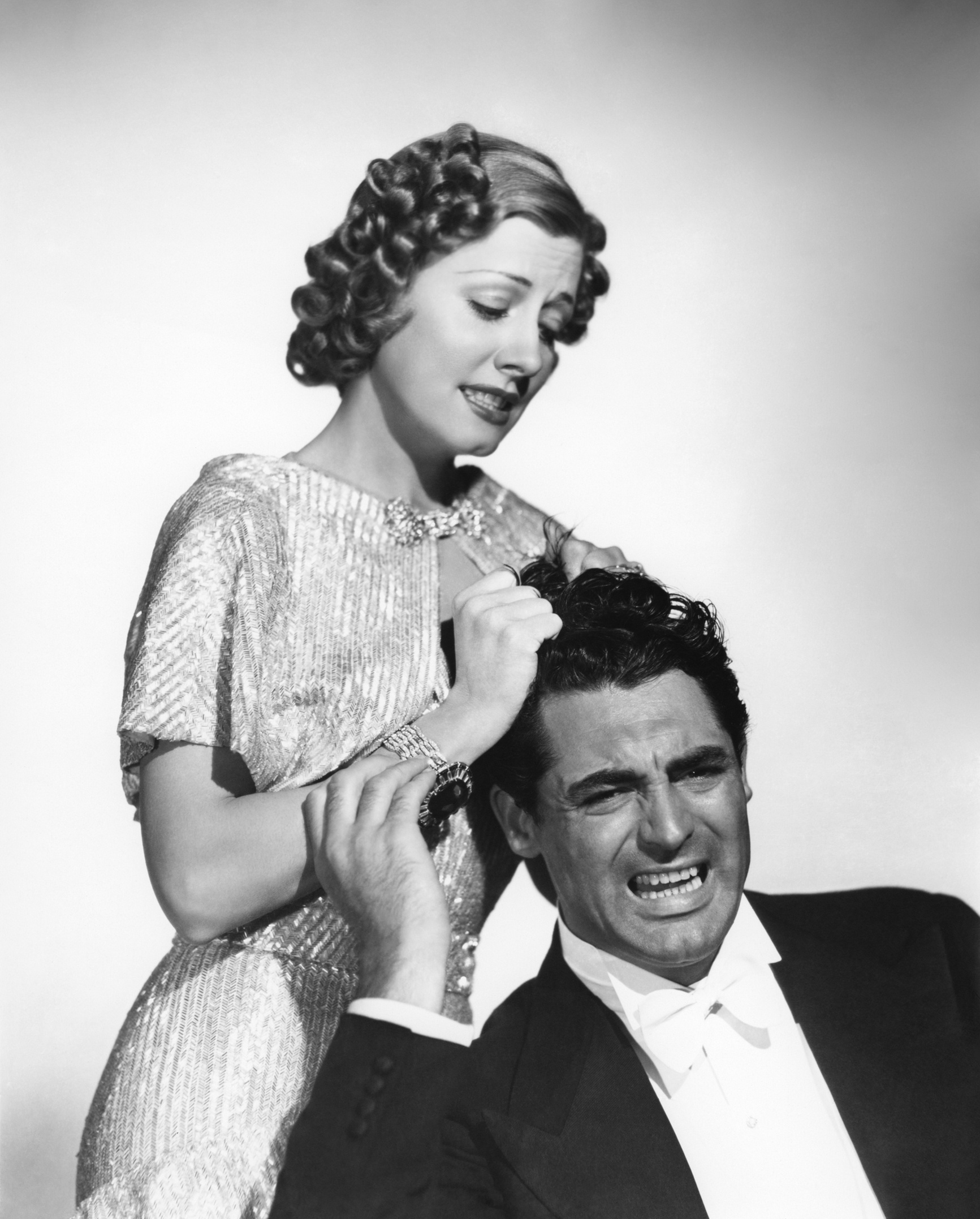
Irene Dunne, who was born on this day in 1898, with Cary Grant for a fun publicity shot for 1937’s The Awful Truth, which netted her a third Oscar nomination:

Actor in the Spotlight:

With Passengers opening tomorrow, ScreenCrush shares some trivia about Jennifer Lawrence:

[embedded content]

Movies Takedown of the Day:

In honor of the release of Assassin’s Creed, Honest Trailers comes for the souls of awful video game movies Mortal Kombat and Mortal Kombat: Annihilation:

[embedded content]

Year-End Recap of the Day:

The latest great 2016 in film supercut comes to us from Fernando Andres for One Perfect Shot (via Film School Rejects):

[embedded content]

Classic Trailer of the Day:

Today is the 25th anniversary of the theatrical release of Oliver Stone’s JFK. Watch the original trailer for the classic conspiracy drama below.

[embedded content]

and

Let’s block ads! (Why?)


No Image

College Football Players' Decisions To Skip Bowl Games Garner Support, Some Criticism

Stanford running back Christian McCaffrey said he will not play in the Sun Bowl on Dec. 30, so he can focus on preparing for the NFL draft. Marcio Jose Sanchez/AP hide caption

toggle caption

Marcio Jose Sanchez/AP

Two of college football’s star running backs, Stanford’s Christian McCaffrey and LSU’s Leonard Fournette, have said they won’t play in their respective bowl games, decisions that have prompted some debate in the football world.

On Friday, Fournette, who is dealing with a nagging ankle injury, announced his decision to skip LSU’s Citrus Bowl appearance against Louisville, saying, “It’s best for my future.” On Monday, McCaffrey tweeted he would to sit out Stanford’s Sun Bowl game against North Carolina, calling it a “very tough decision.”

The reasoning behind the players’ decision to skip nonplayoff postseason games goes like this: As projected first-round draft picks, they’ve already proven their worth to NFL scouts over multiple seasons, so they don’t have much to gain from playing in one more game — especially when that game won’t give them a shot at the National Championship. They would, however, have plenty to lose. Playing in the bowl game would put them at risk of suffering potentially debilitating injuries that could cost them their careers or millions in NFL salaries.

Article continues after sponsorship

This isn’t idle worry.

In last season’s Fiesta Bowl, Notre Dame linebacker Jaylon Smith tore ligaments in his knee, and as a result he fell from a predicted top-five NFL draft pick to the second round before the Dallas Cowboys drafted him. This cost him millions of dollars in salary, and he still hasn’t played a down of professional football.

Say Jaylon Smith went 5th overall. He’d get a fully guaranteed 4-yr, $23.5M deal. Wound up with a 4-yr, $6.5M ($4.5M guar) deal instead.

— Albert Breer (@AlbertBreer) December 19, 2016

Despite this, some college football fans and pundits maintain that skipping bowl games is selfish. Former Ohio State star and Dallas Cowboys running back Ezekiel Elliott tweeted his condemnation of football players who opt out of postseason games.

All these young guys deciding to skip their bowl games ?.I would do anything to play one more time with my brothers in that scarlet and gray

— Ezekiel Elliott (@EzekielElliott) December 19, 2016

Elliott later qualified his criticism, saying it “makes sense” for Fournette and McCaffrey to sit out because they had been dealing with injuries.

Elliott isn’t alone in his thinking, but in light of the growing push to pay college athletes in revenue sports, traditional attitudes about college football are shifting. And many people have come out in support of the athletes’ decisions to sit out. Here are a few:

  • McCaffrey’s teammates. In announcing he would sit out, McCaffrey thanked his teammates for their “100% support.” McCaffrey’s teammate Trenton Irwin tweeted: “The whole team supports [McCaffrey] in everything and anything. [He’s] been a leader to this team through the easy times and tough times.”
  • Fournette’s teammates. Several of Fournette’s teammates spoke out to support Fournette’s decision. Wide receiver D.J. Chark said, “We support him. You know, that was my roommate when I came in. I’ve seen all the things he went through to get to where he’s at. … For him not playing in the bowl game, it’s not unexpected. I feel like we’re still going to be able to play LSU football but we’re glad that he’s going to be there supporting us and helping us out along the way.”
  • Fournette’s coach. LSU head coach Ed Orgeron said, “We’re grateful for all of the years Leonard has given us, all the great memories, all the great games.” He also tweeted: “I want to wish all of the best to Leonard Fournette as he pursues his professional football career. He’s a great member of The Tiger Family!”
  • McCaffrey’s coach. Stanford head coach David Shaw said: “We understand that this was a very difficult decision. For three years Christian has not only been a great player, but a great teammate as well. We wish him great success at the next level, as we continue our preparation for the Sun Bowl.”
  • Former South Carolina running back Marcus Lattimore. Lattimore tweeted: Haven’t had the pleasure of meeting [Fournette] or [McCaffrey] but by all accounts are great guys. They did their homework. Go get it!
  • Sun Bowl Executive Director Bernie Olivas. After McCaffrey announced his decision, Olivas said, “Well we would be lying if we said we weren’t a little disappointed, but at the same time, we are also understanding. He was hurt earlier this year so I am sure that weighed on his decision.”
  • North Carolina quarterback Mitch Trubisky. Trubisky, who will face Stanford in the Sun Bowl, said, “I think it’s smart on their part, because it’s different when you’re a running back and you’re taking all the shots. So for them to just prep for the NFL, I respect it because they’re making the decision that’s best for them in their career.”
  • A scouting director for an NFL team. Speaking to Fox Sports, the anonymous executive defended the players’ decisions and said, “Put yourself in their shoes, an injury could change the course of the rest of their lives. We’re not talking about a left guard here. We’re talking about a skill (position) player who is a huge target. That’s the reality of it.”

The Sun Bowl is Dec. 30 at 2 p.m. ET and the Citrus Bowl is Dec. 31 at 11 a.m. ET.

Let’s block ads! (Why?)


No Image

Obama Designates Atlantic, Arctic Areas Off-Limits To Offshore Drilling

Walruses rest on the shores of the Chukchi Sea, the vast majority of which was designated off-limits to drilling on Tuesday. Ryan Kingsbery/AP hide caption

toggle caption

Ryan Kingsbery/AP

President Obama has indefinitely blocked offshore drilling in areas of the Atlantic Ocean and in Arctic waters, a move aimed at advancing environmental protection during his final days in office.

The Arctic protections are a joint partnership with Canada. “These actions, and Canada’s parallel actions, protect a sensitive and unique ecosystem that is unlike any other region on earth,” the White House said in a statement.

“They reflect the scientific assessment that, even with the high safety standards that both our countries have put in place, the risks of an oil spill in this region are significant and our ability to clean up from a spill in the region’s harsh conditions is limited,” the White House added. “By contrast, it would take decades to fully develop the production infrastructure necessary for any large-scale oil and gas leasing production in the region — at a time when we need to continue to move decisively away from fossil fuels.”

This map shows the Atlantic areas that have been designated off-limits to oil and gas explorations and development activity. White House hide caption

toggle caption

White House

Obama’s action designates 31 Atlantic canyons “off limits to oil and gas exploration and development activity,” totaling 3.8 million acres, according to the administration. It provides the same protections to much of the Arctic’s waters, covering the “vast majority of U.S. waters in the Chukchi and Beaufort Seas,” totaling 115 million acres. Canada is doing the same to “all Arctic Canadian waters,” the joint statement adds.

Article continues after sponsorship

Obama took these actions by invoking a law called the Outer Continental Shelf Lands Act, which gives the president the authority to withdraw lands from oil and gas leases. But as NPR’s Jeff Brady and Jennifer Ludden report, major questions remain about what will happen if the incoming Trump administration attempts to reverse this action.

The Arctic is a critical and irreplaceable part of our world. Let’s make sure we protect it for future generations: https://t.co/y7cHx5GW2l pic.twitter.com/IiJevST12f

— The White House (@WhiteHouse) December 20, 2016

“The White House says the president is acting within his authority, that Presidents of both parties have done this in the past, and trying to reverse such an order would be unprecedented if Trump tried to do this,” Jeff said on All Things Considered.

There is no legal precedent for reversal, Jeff reports. “So if there’s a legal challenge, and I’m not going to be surprised if there is one, it’s really not clear what a court would decide.”

This map shows the area that the U.S. has designated as indefinitely off-limits to offshore oil and gas leasing. White House hide caption

toggle caption

White House

As Bloomberg reports, the “statute doesn’t include a provision for reversal and that action may take years to work its way through court.”

Environmental groups such as Oceana are celebrating the designation. “President Obama has taken a key step in protecting important areas of the Atlantic Ocean from offshore drilling,” as Jacqueline Savitz, the group’s senior vice president for the United States, said in a statement. “The people of the Atlantic coast refused to allow their way of life to be compromised and we commend their hard work making their voices heard in Washington.”

Representatives of the oil and gas industry are unhappy about the news. “We think it’s a very shortsighted decision to take these areas off-limits,” Andy Radford, senior policy adviser for offshore issues at the American Petroleum Institute, told Jeff. The action poses “great risk to our energy security going forward and eliminates the opportunity to create jobs and help small businesses throughout the country. “

Earlier this year, the Obama administration reversed course on a plan that would have allowed Atlantic offshore drilling after uproar from local communities and environmentalists.

Then, the administration designated the first national marine monument in the Atlantic Ocean. Last week, the National Oceanic and Atmospheric Administration announced that it has protected an Atlantic area about the size of New Jersey from deep-sea commercial fishing.

Let’s block ads! (Why?)


No Image

Opioids Can Derail The Lives Of Older People, Too

John Evard, 70, at the Las Vegas Recovery Center in Las Vegas last July. Evard, a retired tax attorney, checked into a rehabilitation program to help him quit the prescribed opioids that had left him depressed, groggy and dependent on the drugs. Heidi de Marco/Kaiser Health News hide caption

toggle caption

Heidi de Marco/Kaiser Health News

It took a lot of convincing to get John Evard into rehab. He was reluctant to give up the medications that he was certain were keeping his pain at bay. But ultimately he agreed — and seven days into his stay at the Las Vegas Recovery Center, the nausea and aching muscles of opioid withdrawal are finally beginning to fade.

“Any sweats?” a nurse asks him as she adjusts his blood pressure cuff.

“Last night it was really bad,” he tells her, “but not since I got up.” Evard, who is 70, says he woke up several times in the night, his sheets drenched with sweat.

Evard says it is hard to understand, even for him, how he ended up 300 miles away from his home in Scottsdale, Ariz., at this bucolic facility in the suburbs of Las Vegas. “This is the absolute first time I ever had anything close to addiction,” he says. He prefers the term “complex dependence” to describe his situation.

“It was, shall we say, a big surprise when it happened to me,” he says.

Article continues after sponsorship

As the nation grapples with a devastating opioid epidemic, concerns have primarily focused on young people buying drugs on the street. But many elderly people in America also have a drug problem. Over the past several decades, physicians have increasingly prescribed older patients medication to address chronic pain from arthritis, cancer, neurological diseases and other illnesses that become more common in later life. And sometimes those opioids hurt more than they help.

A recent study of Medicare recipients found that in 2011, about 15 percent were prescribed an opioid when they were discharged from the hospital; three months later, 42 percent were still taking the pain medicine.

It’s perhaps no surprise, then, that some, like Evard, end up addicted.

John Evard, (left) participated in group therapy during his stay at the rehab center. He’d been prescribed increasing dosages of opioids to manage his pain, Evard says, but it hadn’t worked, and he was unable to quit the pills on his own. “I was effectively housebound,” he says. Heidi de Marco/Kaiser Health News hide caption

toggle caption

Heidi de Marco/Kaiser Health News

Evard spent his life working as a corporate tax attorney. He’s lively and agile, with a contagious grin. A few years ago he and his wife retired to Arizona with their eyes on the golf course. But the dream didn’t last long. Just months into retirement, a virus infected Evard’s left ear. Overnight, he lost half his hearing and was left with chronic pain. In January, he had surgery to fix the problem.

“From the surgeon’s standpoint, the operation was successful,” Evard recalls. “The problem was, the pain didn’t go down. It went up.”

His doctors prescribed opioids, including Oxycontin. “They decreased the pain, particularly at first,” says Evard. “As time went on, [the pills] had less and less effect, and I had to take more and more.”

As the doctors increased his dosage, in hopes of managing the pain, Evard’s once active life fell apart. He was confused, depressed, and still in pain.

“I was effectively housebound,” he says. “I couldn’t play golf anymore. I couldn’t go to social events with my friends or my wife.”

He couldn’t think of anything except the pills, focusing on when he’d be able to take the next one. He knew he was in trouble — despite having taken them exactly as his doctor instructed.

“I was a rule-follower,” he says. “And I still ended up in a mess!”

In 2009, the American Geriatric Society came out strongly in favor of opioids, updating its guidelines on pain management to urge doctors to consider using opioids for older patients who have moderate to severe pain. The panel cited evidence that seniors were less likely than others to become addicted.

Dr. Bruce Ferrell,a geriatrician and pain specialist at the University of California, Los Angeles, served as chairman of the panel that issued the AGS guidelines.

“You don’t see people in this age group stealing a car to get their next dose,” Ferrell told the New York Times at the time.

Dr. Mel Pohl, medical director of the Las Vegas Recovery Center, calls that conclusion a “horrible misconception.”

“There’s no factual, scientific basis for that,” he says. “The drug takes over in the brain. It doesn’t matter how old the brain is.”

The problem is that there aren’t many good options to treat chronic pain as people age. Even aspirin and ibuprofen carry bleeding risks that can be serious.

The 2009 AGS guidelines are no longer in use, but opioid medications remain a crucial tool to treat pain in older people. And most people are able to take opioids in small doses for short periods of time without a problem.

“We really don’t use opioids necessarily as the first line of treatment, because we understand what the risks are,” says Dr. Sharon Brangman, past president of the AGS. “But we also don’t want to see our patients suffering needlessly if we can provide them with relief.” The trick, she said, is to first try non-pharmacological options such as acupuncture, and to use the smallest effective opioid dose possible.

Nonetheless, in the past 20 years, the rate of hospitalization among seniors that is related to opioid overuse has quintupled.

It took John Evard about a week to get over the vomiting and flu-like symptoms of detox, which can be particularly hard on older patients. He still has some of the chronic pain that first led him to seek help from a doctor, he says, but he takes Tylenol to deal with it. He’s speaking out now about opioids because he doesn’t want other seniors to fall into the same trap.

“Don’t just take the prescription because it’s part of the checkout process from the hospital,” he cautions. “It’s your body. Take charge of it, and push for alternatives at all costs. And if you do go on, get off them as fast as you can.”

Kaiser Health News is a national health policy news service. It is an editorially independent program of the Henry J. Kaiser Family Foundation.

Let’s block ads! (Why?)


No Image

Today in Movie Culture: 'Rogue One' Easter Eggs, 'Jingle All the Way' Toys Finally Exist and More

Here are a bunch of little bites to satisfy your hunger for movie culture:

Easter Eggs of the Day:

You’ve all seen Rogue One: A Star Wars Story right? Check to make sure you caught all the cameos and other Easter eggs highlighted by Mr. Sunday Movies:

[embedded content]

Holiday Movie Toys of the Day:

Have you been wishing for a real Turboman toy from Jingle All the Way for the past 20 years? There’s a Kickstarter for that (via /Film):

Vintage Image of the Day:

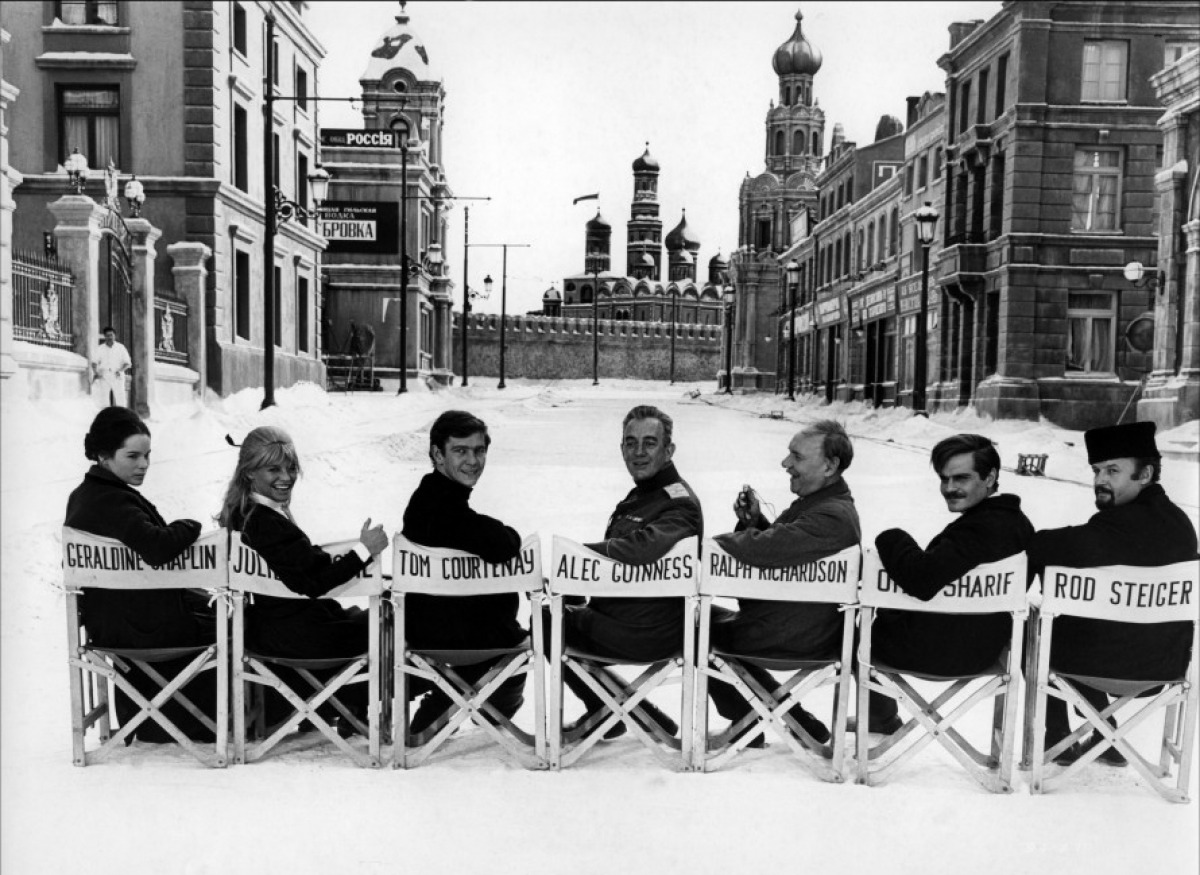
Sir Ralph Richardson, who was born on this day in 1902, sits with his many co-stars, including Alec Guinness, Julie Christie and Omar Sharif, on the set of 1965’s Doctor Zhivago:

Holiday Movie Parody of the Day:

Saturday Night Live lampooned a scene from Love Actually by making it about the U.S. election:

[embedded content]

Talk Show Appearance of the Day:

Speaking of Love Actually, here’s actor Liam Neeson auditioning to be a mall Santa while appearing on The Late Show with Stephen Colbert:

[embedded content]

Reimagined Holiday Movie of the Day:

It’s the time of year for redone Home Alone trailers that make the movie look like a thriller. Here’s one for Home Alone 2: Lost in New York with the music from the Prometheus trailer (via Live for Films):

[embedded content]

Adorable cosplay of the day:

This cat dressed as Doctor Strange has come to bargain for your awwwwwwws (via Fashionably Geek):

Remade Trailer of the Day:

Speaking of Marvel characters, here’s your obligatory Lego version of the Spider-Man: Homecoming trailer care of dt98films (via Geek Tyrant):

[embedded content]

Man on the Street Interviews of the Day:

Adorable Jacob Tremblay is the guest on Billy on the Street this week, and it’s worth watching to see the man who considers himself a documentary guy not a movie guy:

[embedded content]

Classic Trailer of the Day:

Today is the 30th anniversary of the limited theatrical debut of Oliver Stone’s Platoon. Watch the original trailer for the Vietnam War movie below.

[embedded content]

Let’s block ads! (Why?)


No Image

Board Decides To Keep Lagarde As IMF Chief After Conviction

Managing Director Christine Lagarde thanked the IMF Executive Board for the vote of confidence “in my ability to do my job.” Zach Gibson/AFP/Getty Images hide caption

toggle caption

Zach Gibson/AFP/Getty Images

The International Monetary Fund’s executive board expressed its “full confidence” in IMF Managing Director Christine Lagarde on Monday, hours after she was found guilty of negligence for improperly overseeing a 2008 case when she was France’s finance minister.

Lagarde has led the IMF since 2011.

“The Executive Board took all relevant factors into account in its discussions, including the Managing Director’s outstanding leadership of the Fund and the wide respect and trust for her leadership globally,” the board said.

U.S. Treasury Secretary Jack Lew said, “We have every confidence in her ability to guide the Fund at a critical time for the global economy.”

The case stemmed from Lagarde’s role in “settling a legal battle between the French state and business tycoon Bernard Tapie,” The Wall Street Journal reported. Lagarde, who was part of then-President Nicolas Sarkozy’s administration at the time, was accused of succumbing to political pressure in her handling of the case.

She maintained her innocence, saying she might have been unknowingly negligent but that she did her job as well as she could at the time.

Article continues after sponsorship

Lagarde thanked the IMF board for the vote of confidence “in my ability to do my job,” The Associated Press reported. She said she would not appeal the court’s ruling.

The conviction could bolster critics of the IMF, “who could complain about her continued role at the fund,” the Journal said.

“She will be a little — slightly — less credible talking about corruption, but the fund can talk about corruption without her,” Ted Truman, senior fellow at the Peterson Institute for International Economics in Washington, told the Journal.

Let’s block ads! (Why?)


No Image

Patients Cared For By Female Doctors Fare Better Than Those Treated By Men

Elderly hospitalized patients taken care of by female doctors had better results than those seen by male doctors. Julie Delton/Getty Images hide caption

toggle caption

Julie Delton/Getty Images

In a study that is sure to rile male doctors, Harvard researchers have found that female doctors who care for elderly hospitalized patients get better results. Patients cared for by women were less likely to die or return to the hospital after discharge.

Previous research has shown that female doctors are more likely to follow recommendations about prevention counseling and to order preventive tests like Pap smears and mammograms.

But the latest work, published Monday in JAMA Internal Medicine, is the first to show a big difference in the result that matters most to patients: life or death.

The study’s authors estimate “that approximately 32,000 fewer patients would die if male physicians could achieve the same outcomes as female physicians every year.”

“Of course! What did you expect?” replied the wife of Dr. Ashish Jha, the study’s senior author, when he shared his team’s findings with her. Jha said he expects a backlash over the study results. But his team’s methodology, successfully put through multiple analyses, makes this work noteworthy, he added.

But tens of thousands of fewer deaths per year if we just went with female doctors?

Whoa! To us, a man and woman who met as we were getting our start in medicine, them’s fightin’ words.

An editorial about the study urges doctors to remedy the gender disparities in care and the pay gap that favors male physicians over women.

Since half the patients we treat are women and girls, it makes sense that at least half the physician corps should reflect the population. We’ve achieved that in medical school rolls, but overall only a third of practicing doctors are female. And many specialties, including orthopedics, cardiology and neurosurgery, are still dominated by men.

Article continues after sponsorship

So why is there a gender-based difference in physicians’ care? The authors admit that they are “unable to identify exactly why female physicians have better outcomes than male physicians.”

We don’t pretend to know for sure, but as married doctors, we have our hunches. We talked it over and here are our thoughts about the research.

Dr. Sarah-Anne Henning Schumann: The actual effect reported in the study is small, but multiplied over a huge population it does add up to something significant.

Dr. John Henning Schumann: I like the Big Data aspect of it. The authors said, “Let’s look at more than a million Medicare patients over several years and see how they fared based on the gender of their doctor.” While many people may want to tear this study apart, I think the findings make intuitive sense.

Sarah-Anne: I’m assuming the difference is because of the way that women, in general, communicate. It’s about being better listeners, more nurturing and having emotional intelligence.

John: There are plenty of men who are good communicators.

Sarah-Anne: Yes, just as there are plenty of women who don’t really have those qualities. For female doctors, having worked their way through pre-med, med school and residency, they can have some of that nurturing communication skill beaten out of them.

John: That happens to men, too!

Sarah-Anne: That’s true. But this study shows us — just possibly — that if female doctors, on average, communicate better, their style might be more effective in treating disease and preventing death.

John: It’s interesting to me because I think about some of my older patients, who much prefer that I tell them what to do rather than to discuss options and share decision-making.

Sarah-Anne: I think that traditionally men were the doctors. People often assume men are more intelligent and so would be more likely to take their advice.

John: That has to change, as we get closer to parity with women in the profession.

Sarah-Anne: My mother has had many experiences with male doctors where she feels they haven’t listened to her. They aren’t warm or kind, but she feels reassured anyway. She thinks they’re smart, and what’s most important to her is their knowledge and technical skill, not their bedside manner.

John: Mom always knows best, if that’s what she values.

Sarah-Anne: Even in our family, we’re both doctors. I’m a family doctor, trained to see adults and kids. You’re an internist, trained to only see adults. And in both of our families, most of the time, our family members will reach out to you with their questions — even about kids. And my family, who attended my Harvard Medical School graduation, I’ll remind you, seems to value your opinion more. They seem to be looking for opinions more from men. That’s kind of an interesting thing.

John: I never really thought about that. I can see how that’s totally male privilege. It has to be frustrating to be taken less seriously.

Sarah-Anne: I’m in a Facebook group of physicians who are moms. While it’s not every doctor-mom in the country, there are over 60,000 of us in it. So many tell stories of being mistaken for nurses — and taking great offense at that. We have worked so hard to get where we are and want to be treated as equals to our male colleagues.

But I see the mix-up as a compliment rather than an insult. To be compared [to] a nurse says that patients are seeing me as someone who is caring for them and nurturing.

John: That’s a smart way to reframe it. Our colleague Jill used to get angry when people assumed she was a nurse. Instead, she decided to embrace it and use it as a call to service. Now she asks patients if they need an extra blanket or something to drink. And she believes that she provides better, more empathic care.

Sarah-Anne: Everyone is going to want to know what is it about women that leads to these better outcomes. I think it’s going to be hard to figure out exactly.

John: Do you think people that read or hear about this study will take home the message that they need to choose female doctors?

Sarah-Anne: Some will no doubt oversimplify it to that. What I take away is that if communication is the key, as I suspect, then we need to better select and train medical students and residents to exhibit these qualities.

John: Amen to that. What about equal pay for equal (or better!) outcomes? Paging Lilly Ledbetter!

Sarah-Anne: You’re not really asking me that, are you?

Sarah-Anne Henning Schumann is a family doctor and serves as medical director of Community Health Connection, a federally qualified community health center in Tulsa, Okla.

John Henning Schumann is an internal medicine doctor and serves as president of the University of Oklahoma’s Tulsa campus. He also hosts Studio Tulsa: Medical Monday on KWGS Public Radio Tulsa. He’s on Twitter: @GlassHospital

Let’s block ads! (Why?)


No Image

In Memoriam 2016

Prince.

Music suffered heavy losses in 2016, a year like no other in recent memory. We bid unexpected farewells to the very brightest stars — David Bowie and Prince — but we also lost masters from every corner of the music world, from classical composers and jazz greats to world music superstars, soul singers, country giants, prog-rock pioneers and record producers. They left us with unforgettable sounds and compelling stories. Hear their music and explore their legacies here.

(Credits: Tom Huizenga, producer; Mark Mobley, editor; Brittany Mayes, designer)

Kevin Winter/Getty Images

Prince

June 7, 1958 — April 21, 2016

We may never see another total talent like Prince again. He was the product of terrific genes, music education and a post-Beatles, post-Hendrix studio audacity. As a multi-instrumentalist, songwriter, singer, guitar shredder, producer, philanthropist and music business innovator, he knew few creative limits. And his transcendently erotic, genre-spanning music made us all believe freaks ran the universe.—Jason King

Back To Top

Terry O’Neill/Getty Images

David Bowie

Jan. 8, 1947 — Jan. 10, 2016

David Bowie was an open channel through whom music changed in myriad ways. The patron saint of freaks and rebels, a champion of the marginalized, Bowie was a total artist who didn’t dabble but triumph in fashion, theater and film. He challenged himself and us up to and through his final masterpiece, Blackstar.—Ann Powers

Back To Top

Pierre Boulez.

Brice Toul/Gamma-Rapho via Getty Images

Pierre Boulez

March 26, 1925 — Jan. 5, 2016

Once an enfant terrible who suggested blowing up opera houses, the French composer created complex, fantastically colorful and surprisingly sensual music with new acoustic and electronic sounds. As a first-tier conductor and music director of the New York Philharmonic, he eventually embraced most of the canon, performing familiar works with analytical clarity.—Tom Huizenga

Back To Top

Rob Verhorst/Redferns/Getty Images

Maurice White

Dec. 19, 1941 — Feb. 4, 2016

Memphis-born musical visionary Maurice White did humanity a major favor by founding 1970s superstar act Earth, Wind & Fire — which brimmed with talent like bassist Verdine White, falsetto singer Philip Bailey and tenor White himself. Delivering exuberantly funky R&B joints like “Sing a Song” and “September,” EWF redefined the soul band as the ultimate sensual rhythm machine.—Jason King

Back To Top

AFP/Getty Images

Leonard Cohen

Sept. 21, 1934 — Nov. 7, 2016

The most elegant poet and philosopher of the rock era was also one of its most sensual and funniest. If “Hallelujah” was his signature hymn, his hundreds of other songs teemed with as much divinity, grounded in erotic detail and a deep appreciation of human vulnerability. He also looked great in a suit.—Ann Powers

Back To Top

Mark Ralston/AFP/Getty Images

Juan Gabriel

Jan. 7, 1950 — Aug. 28, 2016

Mourned in his native Mexico as a national hero, he told stories that resonated with Latin music fans from the tip of South America to North America. He was iconic because of his legendary insistence on going his own way. —Felix Contreras

Back To Top

Frazer Harrison/Getty Images for Stagecoach

Merle Haggard

April 6, 1937 — April 6, 2016

The hardscrabble poetry of his songs spoke of plain truths and lessons learned, and was set to music both rowdy and reflective. His evocative storytelling left a long shadow across country music and picked up fans as disparate as Johnny Cash and The Grateful Dead.—Felix Contreras

Back To Top

Karl Walter/Getty Images

Glenn Frey

Nov. 6, 1948 — Jan. 18, 2016

Mixing the pop smoothness with the rock grit, Frey co-wrote and sang many of The Eagles’ biggest hits, including “Take It Easy,” “Lyin’ Eyes” and “Heartache Tonight.” Between the band’s initial 1980 breakup and its first reunion in 1994, Frey became a solo star — with hits such as “The Heat Is On” and “Smuggler’s Blues” — and launched an acting career.—Stephen Thompson

Back To Top

Kristian Dowling/Getty Images

Sharon Jones

May 4, 1956 — Nov. 18, 2016

A music business afterthought for much of her life, the funky and ingratiating Brooklyn soul singer broke out in the last 20 years to become one of the most electrifying performers in the business. With the aid of her band The Dap-Kings, Jones was an era-straddling thriller whose appeal crossed generations.—Stephen Thompson

Back To Top

Karl Walter/Getty Images for Stagecoach

Ralph Stanley

Feb. 25, 1927 — June 23, 2016

A high tenor, banjo player and titan of American mountain music, he and his brother Carter Stanley were bluegrass originators. Late in his career, he sang an unforgettable “O Death” in O Brother, Where Art Thou? While the lyrics asked that he be spared, the authority and quiet intensity of his voice demanded Death acquiesce for many years.—Mark Mobley

Back To Top

Hayley Madden/Redferns/Getty Images

Esma Redžepova

Aug. 8, 1943 — Dec. 11, 2016

She was the voice of a people, the Roma (historically known as Gypsies). This Macedonian singer, educator and humanitarian was one of the first international stars to sing in the Romany language. She gained particular fame she didn’t seek when a song of hers was licensed for the opening of Borat. But her legacy continues through hundreds of recordings and dozens of children she fostered.—Mark Mobley

Back To Top

STR/AFP/Getty Images

Papa Wemba

June 14, 1949 — April 24, 2016

The Congolese superstar with the high, happy, easygoing voice was influential in mixing African and Western pop styles, and reached an international audience through the world music movement of the ’80s and ’90s. His dapper fashion gave rise to a wave of young men known as sapeurs — the Society of Atmosphere-setters and Elegant People.—Mark Mobley

Back To Top

Gerardo Mora/Getty Images

Pulse nightclub shooting

June 12, 2016

Ghost Ship warehouse fire

Dec. 2, 2016

Dozens of people died this year in Orlando and Oakland doing one of the things they enjoyed most — dancing among family, friends and strangers. That they would die so young in places problems shouldn’t matter made a difficult year even tougher. The music won’t stop, but neither will the memories, vigilance and love.—Mark Mobley

Back To Top

Dustin Chambers/Atlanta Symphony Orchestra

Jane Little

Feb. 2, 1929 — May 15, 2016

For more than 71 years she played double bass in the Atlanta Symphony Orchestra, a span that included the visionary tenure of music director Robert Shaw. At 87 years old, during a concert, she collapsed while playing her instrument, which was a foot taller than she was. The song on her music stand? “There’s No Business Like Show Business.”—Mark Mobley

Back To Top

The Washington Post/Getty Images

Mose Allison

Nov. 11, 1927 — Nov. 15, 2016

In an age when most pop moved away from jazz, Mose Allison had the ears of rock stars, including The Who, The Clash and Elvis Costello. Yet he never lost a jazz audience devoted to his quietly sophisticated playing, witty writing and charmingly glancing, bluesy singing.—Mark Mobley

Back To Top

Jack Vartoogian /Getty Images

Gato Barbieri

Nov. 28, 1932 — April 2, 2016

Hard to imagine going from avant-garde to Last Tango in Paris to smooth jazz in a single, eventful career, but he did it all with style and grace. Argentina’s gift to the tenor sax made amazing records and championed Latin folk before it was cool. —Felix Contreras

Back To Top

Hans Harzheim/ECM

Paul Bley

Nov. 10, 1932 — Jan. 3, 2016

Here’s one measure of Paul Bley‘s talent: The supporting musicians on his debut recording were Charles Mingus and Art Blakey. Bley in turn helped launch the careers of Ornette Coleman and Pat Metheny. Bley could hear all the directions music could take, out into the realms of what came to be called “free jazz” — a ’60s movement in which he was a central figure.—Tom Cole

Back To Top

Michael Ochs Archives/Getty Images

Guy Clark

Nov. 6, 1941 — May 17, 2016

Lyle Lovett put it well at a Nashville memorial for this Texas troubadour: “Guy Clark was my friend before I ever met him.” So many songwriters learned by listening to his pristine, humble, gruffly sung tunes. Echoing through three generations of country and Americana stars, Clark shaped the way they philosophize about the plain stuff of life.—Ann Powers

Back To Top

Mike Coppola/Getty Images for Max Mara

Tony Conrad

March 7, 1940 — April 9, 2016

Tony Conrad wasn’t so much a violinist but a mediator between worlds. Whether jamming with Faust and the Theatre of Eternal Music in the ’70s, or later with Jim O’Rourke and Genesis Breyer P-Orridge, he always understood the essential being of sound as one continuous note.—Lars Gotrich

Back To Top

Peter Maxwell-Davies.

Evening Standard/Getty Images

Peter Maxwell Davies

Sept. 8, 1934 — March 14, 2016

Called the “harlequin of British music,” the artistically restless composer was inspired by modernists like Pierre Boulez, ancient English choral traditions and eventually the austere landscape of his beloved Orkney Islands. He left a genre-spanning trove of works running from the expressionistic to the serene and even ceremonial, as in 2004 he became Master of the Queen’s Music.—Tom Huizenga

Back To Top

Ullstein Bild/Getty Images

Keith Emerson

Nov. 2, 1944 — ca. March 11, 2016

The first time I saw Keith Emerson, it was 1971, and he was standing on top of his Hammond L-100 thrusting daggers into the keys. He was a madman making a wild mix of classical and rock in Emerson, Lake & Palmer’s wistful tales of prophets and “the fate of all Mankind.”—Bob Boilen

Back To Top

Roland Schlager/AFP/Getty Images

Nikolaus Harnoncourt

Dec. 6, 1929 — March 5, 2016

Too many candy-coated Mozart performances in the 1950s forced the Austrian cellist to create and conduct his own orchestra — Concentus Musicus Wien. From that moment, Harnoncourt became a dominant force in the early music movement, championing Monteverdi and Bach. Eventually, with the world’s great orchestras at his command, he presided over repertoire from Beethoven to Gershwin.—Tom Huizenga

Back To Top

Fin Costello/Redferns/Getty Images

Bobby Hutcherson

Jan. 27, 1941 — Aug. 15, 2016

Forget the fact that he had few peers on his instrument and instead consider his intense musicality and faultless swing. Then you have essentially crystallized his entire career, especially his impressive Blue Note output.—Felix Contreras

Back To Top

Michael Ochs Archives/Getty Images

Paul Kantner

March 17, 1941 — Jan. 28, 2016

San Francisco music journalist Joel Selvin called Paul Kantner “the soul” of Jefferson Airplane, the “contrarian” who “kept everything off balance.” Kantner co-founded the band and co-wrote songs including “Wooden Ships.” There was a strong anti-authoritarian strain that ran through his music and his life. As Selvin put it, “He never bought the Mercedes and moved to the suburbs.” Kantner stayed in the city whose sound he helped define.—Tom Cole

Back To Top

Chuck Fishman/Getty Images

Greg Lake

Nov. 10, 1947 — Dec. 7, 2016

Guitar Svengali Robert Fripp got attention as mastermind of the first King Crimson, and keyboard Dumbledore Keith Emerson stole the show in Emerson, Lake and Palmer. But Greg Lake was the voice that went from quietly melodious to full-throated on “In the Court of the Crimson King.” He wrote “Lucky Man,” a standout on ELP’s debut, at just 12 years old, and created the beautiful and enduring “I Believe in Father Christmas.”—Tom Cole

Back To Top

Rick Diamond/Getty Images for IEBA

Joe Ligon

Oct. 11, 1936 — Dec. 11, 2016

The Mighty Clouds of Joy were led by a voice of thunder. Joe Ligon was a stalwart of the hard gospel style who took some flak from the faithful for performing on Soul Train, but also managed to score a disco hit, delivering a message of salvation where it wasn’t often heard.—Mark Mobley

Back To Top

Neville Marriner.

Erich Auerbach/Getty Images

Neville Marriner

April 15, 1924 — Oct. 2, 2016

The widely admired English conductor introduced Mozart to untold millions when he led the ensemble he founded, the Academy of St. Martin in the Fields, for the Oscar-winning movie Amadeus. Over five decades he made hundreds of sturdy recordings of repertoire from Vivaldi to Bartok, fronting orchestras in Los Angeles, Minneapolis and Stuttgart.—Tom Huizenga

Back To Top

Michael Ochs Archives/Getty Images

George Martin

Jan. 3, 1926 — March 8, 2016

As producer and arranger and with The Beatles, George Martin changed what anyone thought was possible in rock music. “George Martin made us what we were in the studio,” John Lennon said. “He helped us develop a language to talk to other musicians.”—Bob Boilen

Back To Top

Michael Ochs Archives/Getty Images

Scotty Moore

Dec. 27, 1931 — June 28, 2016

Scotty Moore wanted to be a jazz guitarist but became one of the most revered of all rock ‘n’ roll sidemen. He was working at Sun Studio in Memphis when owner Sam Phillips asked him to audition an unknown named Elvis. Moore’s crisp fills and biting solos on “Hound Dog,” “Jailhouse Rock” and “Heartbreak Hotel” have become parts of history.—Tom Cole

Back To Top

Hiroyuki Ito/Getty Images

Marni Nixon

Feb. 22, 1930 — July 24, 2016

Eliza Doolittle in London, Anna in Siam, Maria on Manhattan’s West Side — they had different famous faces onscreen but sang with the same voice. Marni Nixon had an unparalleled career as a Hollywood “ghost singer,” but also left a distinguished legacy of stage and recording work, especially in contemporary classical music.—Mark Mobley

Back To Top

Russell Oberlin as Oberon in Benjamin Britten's A Midsummer Night's Dream.

Maria Jeanette/Deutsche Grammophon

Russell Oberlin

Oct. 11, 1928 — Nov. 25, 2016

The pioneering countertenor was a leading force in the American early music movement of the 1950s and possessed a singularly identifiable voice. Rather than using falsetto to sing in the alto range, Oberlin’s voice settled naturally high, affording him a full-bodied tone devoid of the hooty quality of many countertenors.—Tom Huizenga

Back To Top

Jack Vartoogian /Getty Images

Pauline Oliveros

May 30, 1932 — Nov. 24, 2016

Known for her aesthetic called “deep listening,” Oliveros thought nothing of dropping into a vacant cistern with her accordion to record an album. The Texas-born composer embraced improvisation, music of American Indians and experimented early with electronics, deconstructing Puccini in Bye Bye Butterfly, which doubled as a bold statement on the lack of women composers.—Tom Huizenga

Back To Top

Phife Dawg.

Andrew H. Walker/Getty Images

Phife Dawg

Nov. 20, 1970 — Mar. 22, 2016

Can’t really imagine alt-hip hop group A Tribe Called Quest without Malik Taylor aka Phife Dawg aka Phife aka the Five Foot Assassin. Trini-blooded Phife delivered high tenor rhymes that acted as counterpoint to Q-Tip’s sagacious flow. Unafraid to wax political, Phife also helped afford the Native Tongues pioneers an affable street cred. Never the flashiest MC, he remains a timeless icon of post 90s East Coast hip-hop.—Jason King

Back To Top

Larry Ellis/Getty Images

Prince Buster

May 24, 1938 — Sept. 8, 2016

Young boxer Cecil Bustamente Campbell became a pioneer of ska and rocksteady and one of the first Jamaican musicians to break worldwide. As famous as he was in the ’60s thanks to songs like “Al Capone” and “Madness is Gladness,” he had a second wave of fame in the ’70s and ’80s as groups like The Specials and Madness seized upon his music.—Mark Mobley

Back To Top

Martti Kainulainen/AFP/Getty Images

Einojuhani Rautavaara

Oct. 9, 1928 — July 27, 2016

The eclectic Finn, who said his brief stint in Manhattan taught him more than his teachers, was a musical experimenter. Blessed by his revered predecessor Jean Sibelius, Rautavaara dabbled in atonal techniques, neoclassical elegance, elements of American jazz — even recording birdcalls for his popular Cantus arcticus. His later mystic phase attracted a new contingent of admirers.—Tom Huizenga

Back To Top

GAB Archive/Redferns/Getty Images

Leon Russell

April 2, 1942 — Nov. 13, 2016

A musician’s musician, the Rock and Roll Hall of Famer worked with the greats — Bob Dylan, The Beach Boys, Ray Charles, Frank Sinatra, George Harrison and countless others — in a career that spanned 60 years. Though Russell‘s biggest hits came in the early ’70s, he enjoyed a major comeback in 2010 through a hit album with Elton John, whose own work he’d helped inspire.—Stephen Thompson

Back To Top

Asif Hassan/AFP/Getty Images

Amjad Sabri

Dec. 23, 1976 — June 22, 2016

At just 45, in the prime of his life and career, the clarion-voiced Sabri was gunned down while making his way to a TV performance during the Muslim holy month of Ramadan. The Pakistani Taliban claimed responsibility for killing this especially accomplished and promising member of a devout and revered musical family devoted to an ancient, honorable and tolerant tradition.—Mark Mobley

Back To Top

Jean Shepard. Elmer Williams/Getty Images hide caption

toggle caption

Elmer Williams/Getty Images

Jean Shepard

Nov. 21, 1933 — Sept. 25, 2016

There’d be no Kacey Musgraves — maybe even no Loretta Lynn — without Jean Shepard. A pioneer who sang of female independence starting in the 1950s, she was the first woman to reach a half century as a Grand Old Opry member and championed traditional country until the end of her long, inspiring life.—Ann Powers

Back To Top

NFL Films

Sam Spence

March 29, 1927 — Feb. 6, 2016

In 1966, the ascendant NFL took on a thrilling new sound, as Sam Spence began scoring NFL Films highlights with orchestral music fit for swinging spy films and spaghetti westerns. “Take Me Out to the Ball Game” and “Fly, Eagles Fly” sound quaint next to the modern onslaughts of “The Over the Hill Gang,” “Wild Bunch” and “The Pony Soldiers.”—Mark Mobley

Back To Top

Andrew H. Walker/Getty Images

Elizabeth Swados

Feb. 5, 1951 — Jan. 5, 2016

Coming to Broadway directly between West Side Story and Rent, Elizabeth Swados‘s Runaways had a similarly galvanizing run and even younger cast. After interviewing actual runaways, Swados wrote the music, lyrics, and book, choreographed and directed the celebrated show. She was also a novelist, children’s book author, memoirist and inspiration to countless younger theater artists.—Mark Mobley

Back To Top

Frank Micelotta/Getty Images

Rod Temperton

Oct. 9, 1949 — ca. Oct. 5, 2016

Pop’s British Invasion remained an occupying force — even if you didn’t know that “Thriller,” “Rock With You,” “Off the Wall,” “Boogie Nights,” “The Groove Line” and “Always and Forever” were written by one self-effacing Englishman who shunned celebrity while making peerless music.—Mark Mobley

Back To Top

Rick Nederstigt/AFP/Getty Images

Toots Thielemans

April 29, 1922 — Aug. 22, 2016

Toots Thielemans heard a Louis Armstrong record and went from studying mathematics in his native Belgium to playing jazz on the most unlikely instrument: the harmonica. And what’s even more unlikely, given how hard he blew, is that he suffered from asthma all his life. He was a favorite sideman of Quincy Jones, who called him “my Uncle Bebop.” Thielemans was also a good guitarist who developed a technique of whistling while he played.—Tom Cole

Back To Top

Rudy Van Gelder.

Francis Wolff

Rudy Van Gelder

Nov. 2, 1924 — Aug. 25, 2016

Rudy Van Gelder defined the sound of jazz, from the late ’50s into the 21st century, as the man on the other side of the studio glass. He started recording his high school friends in his parents’ living room and went on to steer more than 20,000 recordings by the likes of Sonny Rollins, John Coltrane, Thelonious Monk and Horace Silver. Van Gelder felt that each musician’s contributions should be heard clearly — his gift to them and us.—Tom Cole

Back To Top

Jordi Vidal/Redferns/Getty

Nana Vasconcelos

Aug. 2, 1944 — March 9, 2016

Rhythm was just one of his gifts. Beautiful melodies would often come soaring from his voice, from his earliest days with the chill jazz label ECM to big stadiums with Pat Metheny.—Felix Contreras

Back To Top

AFP/Getty Images

Alan Vega

June 23, 1938 — July 16, 2016

There was a terrifying side to an Alan Vega performance but there was also a wink of humor. He was half of an electric minimalist punk duo called Suicide with partner Martin Rev. They made confrontational art in a band not well-loved but ultimately memorable and important.—Bob Boilen

Back To Top

Manfred Werner

Bernie Worrell

Apr. 14, 1944 — June 24, 2016

Hugely influential funk and rock keyboard player best known as the top and bottom of Parliament-Funkadelic. His lumbering, fuzzed-out bass lines and high, keening solos gave George Clinton’s band galactic power and kicked Talking Heads into a higher gear. In a band or as a solo artist, he made synths sing and dance.—Mark Mobley

Back To Top

Article continues after sponsorship

Let’s block ads! (Why?)