Articles by admin

No Image

Fires, Floods And Earthquakes: New Report Finds 2016 Was Particularly Disastrous

These houses in southwestern Haiti were damaged or destroyed by Hurricane Matthew in October. Matthew was the most serious natural catastrophe in North America in 2016. Rebecca Blackwell/AP hide caption

toggle caption

Rebecca Blackwell/AP

Hurricane Matthew. The earthquake in Japan. Flooding in the Deep South, China and Europe. Wildfires in Canada.

Last year sometimes felt like one natural catastrophe after another. Now, new figures from reinsurer Munich Re suggest that it was indeed a particularly bad year.

Natural catastrophes caused the highest losses worldwide in the last four years, at $175 billion, Munich Re said. It recorded some 750 events globally, including “earthquakes, storms, floods, droughts and heatwaves.” The reinsurer added that about 30 percent of those losses were insured.

North America “experienced 160 loss events in 2016, the most since 1980,” the reinsurer added.

Globally, the costliest single event was the devastating earthquake on the Japanese island of Kyushu, at $31 billion. Here’s the breakdown of the five most costly disasters worldwide:

An infographic showing the five costliest natural catastrophes of 2016. Munich Re hide caption

toggle caption

Munich Re

In North America, the most devastating disaster was Hurricane Matthew, which killed hundreds of people, mostly in Haiti. The catastrophe caused some $10.2 billion in damage, Munich Re said.

Article continues after sponsorship

The report described an “exceptional” number of flood events, such as swollen rivers and flash floods. Such disasters made up 34 percent of all losses, compared with an average of 21 percent over the past 10 years.

2016’s high numbers point to the dangers of “unchecked climate change,” Peter Hoppe, head of Munich Re’s Geo Risks Research Unit, said in a statement. He explained:

“Of course, individual events themselves can never be attributed directly to climate change. But there are now many indications that certain events — such as persistent weather systems or storms bringing torrential rains – are more likely to occur in certain regions as a result of climate change.”

However, the new report does contain some good news: While 2016 had a high number of distinct events, it had a lower than average number of lives lost because of natural catastrophes.

“Some 8,700 lives were sadly lost as a result of natural catastrophes, far fewer than in 2015 (25,400) and also below the ten-year-average (60,600),” Munich Re says.

This article passed through the Full-Text RSS service – if this is your content and you’re reading it on someone else’s site, please read the FAQ at fivefilters.org/content-only/faq.php#publishers.
Recommended article: The Guardian’s Summary of Julian Assange’s Interview Went Viral and Was Completely False.


No Image

French Court Convicts English Soccer Fans Of 'Racist Violence'

Souleymane Sylla (right) with his lawyer in Paris on Tuesday during the trial of the four British men accused of racist violence towards him in February 2015. Bertrand Guay/AFP/Getty Images hide caption

toggle caption

Bertrand Guay/AFP/Getty Images

A French court has convicted four British men of racist violence for pushing a black man off the Paris metro as fans chanted, “We’re racist, we’re racist, and that’s the way we like it.”

The incident, which was caught on video by a bystander, happened in February 2015. In the video, a group of Chelsea football club supporters can be seen repeatedly shoving a black man off a crowded metro train as he tries to board.

[embedded content]

The video went viral, and as the Two-Way reported, prompted Chelsea to suspend the fans from attending games.

NPR’s Eleanor Beardsley reported that on Tuesday a French judge “convicted four men and handed down suspended prison sentences and fines.” She said, “Only two of the men showed up for their trial. They denied uttering racist slurs but said they had been drinking. The others were convicted in absentia.”

Eleanor reported that the victim, Souleyman Sylla, said on French radio that bringing the men to justice was important.

“They needed to know they hurt a family man and that this incident really traumatized my children,” he said. The Guardian reported that Sylla told the court “his life had been ‘shaken up’ by the violence” and that “he had had to stop work for different periods, did not use the metro for nine months and had been on medication.”

Article continues after sponsorship

The Guardian wrote that the four men were ordered to pay Sylla a total of €10,000 (about $10,500), adding: “The French state prosecutor said the trial was a defining moment in anti-racism cases and a ‘clear-cut example’ of racism: it was rare to have such an unabashed violently racist incident that was brazenly accompanied by the chanting seen in the video footage.”

The four men — Joshua Parsons, James Fairbairn, William Simpson and Richard Barklie — have all denied they were in any way racially motivated. Parsons, who admitted he pushed Sylla, said he had been drinking before Chelsea’s match against Paris Saint Germain but that the “we’re racist, we’re racist and that’s the way we like it” chant came from a different metro car, the Guardian wrote.

Chelsea has since issued lifetime bans for all four men.

This article passed through the Full-Text RSS service – if this is your content and you’re reading it on someone else’s site, please read the FAQ at fivefilters.org/content-only/faq.php#publishers.
Recommended article: The Guardian’s Summary of Julian Assange’s Interview Went Viral and Was Completely False.


No Image

Today in Movie Culture: 'Captain America: Civil War' Sweded, Shia LaBeouf in 'Batman v Superman' and More

Here’s everything you need to know about the last week in movie news:

Remade Movie Trailer of the Day:

Check out the latest sweded trailer from CineFix as they recreate the action of Captain America: Civil War:

[embedded content]

New Year Greeting of the Day:

Batman and Robin wish you a happy new year in this extra teaser for The Lego Batman Movie:

[embedded content]

Meme Resurrection of the Day:

Speaking of DC superhero movie treats, Shia LaBeouf returns to torment and motivate Supermand in Batman v Superman: Dawn of Justice (via Geek Tyrant):

[embedded content]

Mashup of the Day:

Disney artist Brian Kesinger drew a new Calvin and Hobbes-style Star Wars cartoon, this one of Jyn and K-2SO from Rogue One:

I’m auctioning off this original drawing on Instagram right now! Check out @briankesinger to place your bid pic.twitter.com/9gErm2T5Wi

— brian kesinger (@briankesinger) January 3, 2017

Movie Takedown of the Day:

Honest Trailers is not very excellent to the historically lenient and appropriately dated Bill & Ted’s Excellent Adventure:

[embedded content]

Vintage Image of the Day:

Mel Gibson, who turns 60 today, is directed by Richard Donner on the set of Lethal Weapon in 1986:

Cinematographer in Close-up:

Arrival director of photography Bradford Young is the cinematographer to watch right now, so here’s a video analyzing his work (via Film School Rejects):

[embedded content]

Puzzle of the Day:

See if you can figure out this year’s new Criterion Collection titles based on their annual teaser cartoon:

They Live by Night is easy. Others from @Criterion‘s annual tease? (Count the candles.) pic.twitter.com/iuPDXVTKo0

— Sam Adams (@SamuelAAdams) December 31, 2016

Supercut of the Day:

Have you fully recovered from New Year’s Eve yet? Either way, check out this great supercut of movie hangovers:

[embedded content]

Classic Trailer of the Day:

Today is the 20th anniversary of the wide release of Rob Reiner’s Ghosts of Mississippi. Watch the original trailer for the historical drama below.

[embedded content]

and

This article passed through the Full-Text RSS service – if this is your content and you’re reading it on someone else’s site, please read the FAQ at fivefilters.org/content-only/faq.php#publishers.
Recommended article: The Guardian’s Summary of Julian Assange’s Interview Went Viral and Was Completely False.


No Image

For French Law On Right To 'Disconnect,' Much Support — And A Few Doubts

The new law was prompted by concerns over the intrusion of work into private lives. Carlina Teteris/Getty Images hide caption

toggle caption

Carlina Teteris/Getty Images

Ah, to work in France: plenty of vacation and a 35-hour workweek. And, as of Jan. 1, a new law that gives French employees the right to disconnect. Companies in France are now required to stop encroaching on workers’ personal and family time with emails and calls.

The law was part of an overall labor bill that provoked months of street demonstrations and divided the country. The controversy was mostly over a single provision that made it easier for French companies to fire people. But nearly everyone supports the provision allowing workers to walk away from emails and ignore their smartphones when they’re out of the office.

French Labor Minister Myriam El Khomri commissioned a 2015 study that warned of the health impact of what she called “info-obesity.” It showed that more and more French people could not get away from work — even when they weren’t there.

Labor lawyer Patrick Thiebart argues that burnout and other health-related issues are on the rise because of an overload of digital demands on employees.

“If an employee receives emails during all their weekends and at night until 11 p.m., then I can assure you that at a certain point in time, it can negatively impact his health,” he says.

Article continues after sponsorship

French Labor Minister Myriam El Khomri commissioned a 2015 study that warned of the health impact of what she called “info-obesity.” It showed that more and more French people could not get away from the office, even when they weren’t there. Aurelien Meunier/Getty Images hide caption

toggle caption

Aurelien Meunier/Getty Images

The new law stipulates that companies with more than 50 workers must negotiate with employees and unions and agree on a policy to reduce the intrusion of work into private lives.

“Of course your boss shouldn’t send you emails on a Sunday when you’re at lunch, enjoying a leg of lamb and a good Bordeaux,” says Bernard Vivier, who runs the Higher Institute of Work, a think tank that focuses on the French workplace.

“It’s so French to throw a law at every kind of problem,” he says. But he doesn’t think a law can fix this one. Such ills must be changed by management and through new practices, he says.

It’s a complicated issue, notes Thiebart, the lawyer, because digital culture also offers employees freedom and flexibility.

“Everybody is happy with the smartphones and the new technology,” Thiebart says, “because employees can work at home and don’t have to spend time and money in commuting. And for companies, they can save money because they don’t need all the staff on the premises.”

Many large European companies and government departments already recognize the right of their employees to disconnect from work. Companies such as Volkswagen and Daimler, and French insurer Axa, have taken steps to restrict out-of-hours messaging — including Volkswagen’s limited email server connections on evenings and weekends.

Thiebart says that isn’t such a good idea, since many businesses operate across several time zones. But he says his clients, many of them large corporations, are not hostile to the new French law. They believe a lack of downtime decreases the productivity of their workforce.

At a Paris gym where people are working up a sweat after a day at the office, many are still attached to their devices. Jean Luc Bauché is lifting weights, wearing white earbuds connected to a smartphone in his pocket.

He says it’s a great idea to be able to disconnect. But he doesn’t think it’s possible.

“You can pass laws to protect people from dangers like speeding,” he says, “but this law won’t work because it’s counter to the way society is evolving.”

Bauché says he’s the only person he knows who turns his phone off at night when he sleeps.

“Most people don’t dare,” he says. “They’re afraid they’ll miss something.”

This article passed through the Full-Text RSS service – if this is your content and you’re reading it on someone else’s site, please read the FAQ at fivefilters.org/content-only/faq.php#publishers.
Recommended article: The Guardian’s Summary of Julian Assange’s Interview Went Viral and Was Completely False.


No Image

Republicans Plan To Repeal Affordable Care Act In New Session

Congress is expected to take up repeal of the Affordable Care Act this week. The plan is still sketchy, but some details are starting to emerge.

ARI SHAPIRO, HOST:

Let’s talk more now about how Republicans are planning to repeal and possibly replace the Affordable Care Act. NPR health policy correspondent Alison Kodjak is here. Hi, Alison.

ALISON KODJAK, BYLINE: Hi, Ari.

SHAPIRO: What are you hearing Republicans are likely to do?

KODJAK: Well, what they’re looking to do, at least they tell me, is that they want to gut the law essentially by removing all the taxes that pay for subsidies for people to buy insurance. There’s a whole bunch of taxes in Obamacare, taxes on medical devices, taxes on health insurance companies. Wealthy people pay a surtax. And all the money used by those taxes goes to subsidies so that lower- and middle-income people can buy insurance at an affordable price.

SHAPIRO: If those subsidies and those taxes go away, are people who are currently getting their insurance through the Affordable Care Act going to lose their coverage?

KODJAK: Well, that’s unclear. Republicans say they don’t want millions of people to suddenly lose their coverage. They want to sort of allow a transition period so that they can come up with a replacement for Obamacare after they vote on this repeal.

So what they would do is phase out the parts of the law that they want to repeal over time, probably a two-year period or something. We don’t know exactly how that’s going to work. The best model we have is a law that they passed a year ago that President Obama vetoed where they phased out most of the law over two years.

But one thing they did was they got rid of the individual mandate that requires people to buy insurance immediately, and that could undermine their whole plan if that is in the new version of the bill.

SHAPIRO: Because if they get rid of the individual requirement that everybody buy insurance, then healthy people won’t buy it. Sick people will, and it costs the insurance company a whole lot more money.

KODJAK: Right, exactly because, you know, then they raise premiums, and healthy people are even less likely to buy insurance – just this spiral that goes out of control.

SHAPIRO: So we know that Republicans say they don’t want people to lose their insurance, but if it looks like a repeal vote will come as far as two years before a replace vote and we don’t know what the replace vote looks like, sounds like it’s hard to say for sure whether people will lose their insurance or not.

KODJAK: It is. It – there’s just so much up in the air. And you know, what you have is people not sure if they’re going to lose their insurance, less motivated to buy insurance. Plus, you have the insurance market, which is a big wildcard here. Insurance companies haven’t been making a lot of money or have been losing money on the Obamacare market over the last few years. They’ve remained committed because the law was there, and they were trying to figure out how to make a product that would be profitable.

If they know the law is going away, there’s not a lot of motivation for them to continue trying to sell insurance into this market. And so what you’ll have is Republicans trying to keep this market going while they come up with a replacement, but they can’t always get the insurance companies to cooperate. They can’t force them to sell insurance into the market.

SHAPIRO: If Republicans in Congress have known for years that repealing and replacing Obamacare was one of their top priorities – and this is one of Donald Trump’s top priorities for the entire year-plus of the presidential campaign – why wouldn’t they have a replacement model all set up and ready to go the minute they took power?

KODJAK: You know, that’s a good question. There’s been a lot of talk about why over six to eight years they haven’t come up with a plan. There have been a lot of proposals out there. They’re details vary. And I think the issue is that there’s different motivations behind different Republican plans.

Some want to keep as many people covered as are covered now. Others want to give people the option of having insurance and the option of not having insurance. Others are really focused on lowering health care costs.

So what you’re finding now – what we’re seeing is the variety of different policies out there seem to be focused on universal access to insurance, making insurance available to everybody but getting rid of that mandate that Republicans can’t stand which is requiring people to have insurance.

SHAPIRO: Alison, open enrollment in these insurance exchanges is happening now and scheduled to continue through the Trump inauguration and beyond. What happens to that?

KODJAK: Well, the Trump administration will have to at least see this open enrollment through, which, you know, will last a few weeks after he’s inaugurated. And then depending on how long it takes for the Republicans to come up with a replacement plan if they want to keep Obamacare going while they – through this transition, they may be into another open enrollment period next fall.

SHAPIRO: NPR’s Alison Kodjak, thank you.

KODJAK: Thanks, Ari.

Copyright © 2017 NPR. All rights reserved. Visit our website terms of use and permissions pages at www.npr.org for further information.

NPR transcripts are created on a rush deadline by Verb8tm, Inc., an NPR contractor, and produced using a proprietary transcription process developed with NPR. This text may not be in its final form and may be updated or revised in the future. Accuracy and availability may vary. The authoritative record of NPR’s programming is the audio record.

This article passed through the Full-Text RSS service – if this is your content and you’re reading it on someone else’s site, please read the FAQ at fivefilters.org/content-only/faq.php#publishers.
Recommended article: The Guardian’s Summary of Julian Assange’s Interview Went Viral and Was Completely False.


No Image

Fan Sings About Buffalo Bills Missing The Playoffs, Again

Greece native Jennie Fagen, who graduated from the University of Rochester, wrote a parody of “Sixteen Going on Seventeen” from The Sound of Music. The Bills haven’t made the playoffs in 17 years.

DAVID GREENE, HOST:

Good morning, I’m David Greene. I’m going to spare the Cleveland Browns today because this happened.

(SOUNDBITE OF VIDEO)

JENNIE FAGEN: (Singing) Bills are 16 going on 17 years out of the playoffs.

GREENE: Buffalo Bills fan Jennie Fagen made a video about her team missing the playoffs again. It’s a sports version of a “Sound Of Music” song.

(SOUNDBITE OF VIDEO)

FAGEN: (Singing) But we can tailgate better in upstate and willingly, we Bill-ieve (ph).

GREENE: Bill-ieve it, get it? It’s MORNING EDITION.

Copyright © 2017 NPR. All rights reserved. Visit our website terms of use and permissions pages at www.npr.org for further information.

NPR transcripts are created on a rush deadline by Verb8tm, Inc., an NPR contractor, and produced using a proprietary transcription process developed with NPR. This text may not be in its final form and may be updated or revised in the future. Accuracy and availability may vary. The authoritative record of NPR’s programming is the audio record.

This article passed through the Full-Text RSS service – if this is your content and you’re reading it on someone else’s site, please read the FAQ at fivefilters.org/content-only/faq.php#publishers.
Recommended article: The Guardian’s Summary of Julian Assange’s Interview Went Viral and Was Completely False.


No Image

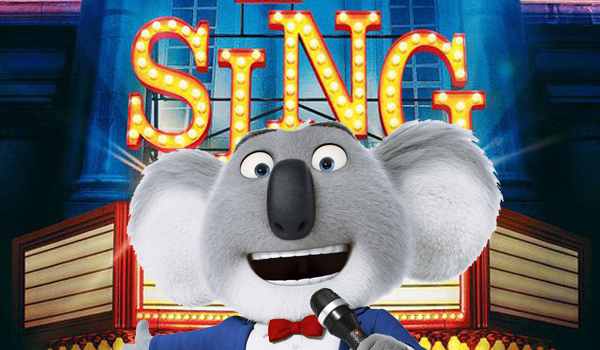
Box Office Report: ‘Rogue One’ and ‘Sing’ Drive U.S. Box Office To All-Time High

Here’s your estimated 4-day box office returns (new releases bolded):

1. Rogue One – $64.3 million ($439.7 million total)

2. Sing – $56.4 million ($180.0 million total)

3. Passengers – $20.7 million ($66.0 million total)

4. Moana – $14.3 million ($213.3 million total)

5. Why Him? – $13.0 million ($37.5 million total)

6. Fences – $12.7 million ($32.4 million total)

7. La La Land – $12.3 million ($37.0 million total)

8. Assassin’s Creed – $10.8 million ($41.9 million total)

9. Manchester by the Sea – $5.4 million ($29.6 million total)

10. Fantastic Beasts and Where To Find Them – $5.4 million ($225.4 million total)

The Big Stories

Christmas came early for Hollywood this year. That was the actual Christmas, though — the one with all the presents and merriment. Hollywood’s real present came afterwards as the 2016 box office passed the $11 billion mark for the second straight year on the 26th and then surpassed last year’s $11.12 billion on the 28th. Despite not having the greatest of holiday seasons in retrospect, this total was aided in part by nine films grossing over $300 million this year. Giving that some further perspective, there were only nine $300 million grossers from 1980-2001. There have only been three years with five or more films reaching that landmark and the record was six in 2015. With a number of big holiday releases expected to continue drawing audiences in January, not to mention the films slated to expand next month, there is hope that the total could actually reach $12 billion.

An Old Hope

Rogue One: A Star Wars Story saw an unfortunate bump in its attendance last week with the passing of Carrie Fisher. Even yours truly attended for a second time Tuesday evening, which was the second highest Tuesday gross ever in December (The Force Awakens was first) and the 7th highest ever. Estimates are now pointing to the film as reaching over $439 million through Monday which will put it in the top 13 of all-time domestic grossers. All signs suggest that $500 million is inevitable; the 7th film ever to reach that milestone in the U.S. Is $600 million in the cards? At the moment it is about $20 million off the pace of Marvel’s The Avengers, which grossed its final $160+ million from May 22-Sept. 13. Rogue One has another week of Christmas vacation for schools in some part but otherwise will have to make its cash in January; a month where Titanic made $188.2 million back in 1997. As Princess Leia would say, “Hope.”

Life, Animated

Doctor Strange and Fantastic Beasts and Where to Find Them remain your second and third best U.S. grossers for the holiday, but maybe not for long. As this column has stated for weeks, Moana was on a path to $230 million and is estimated at over $213 million as of this Monday. Good enough for fourth place currently but now it upped its endgame to potentially somewhere around $245 million, which should be more than good enough to best Doctor Strange as Marvel’s latest is looking to come in under $235 million; better than Thor: The Dark World but less than Captain America: The Winter Soldier.

This would give Disney the top three films of the holiday season were it not for Illumination’s Sing, which as I expected is laying waste to family wallets at the moment. In 13 days it is at $180 million. That is about $45 million less than Illumination’s current U.S. champ, The Secret Life of Pets, had at this point and $54 million behind Minions; both of which had summer days to push them well over $300 million each. As reported last week, Sing was destined to become the highest-grossing animated film ever released in December by a wide margin, so there is no real precedent for its prospects going forward.

Only eight films ever released in December went on to pass $300 million. Two are Star Wars, another two came from the mind of James Cameron and the other four are of the Tolkien variety. Sing is within a million of the pace of The Hobbit: An Unexpected Journey, whose 13th day of release came on Dec. 26. That film finished its run with $303 million and Sing‘s weekend haul is well ahead of it. So once again, “Hope.”

Not Singing Their Praises

Between Passengers, Assassin’s Creed and Why Him?, the three films could not even total 90% together at Rotten Tomatoes. Nor can their total grosses equal that of Sing.

The biggest disappointment of the three is clearly Sony’s Passengers. Critics have once again been blamed for its poor performance by pointing out its misleading trailer campaign as well as its rapey vibe, but it has been holding steady if just not spectacularly after its second weekend. At $66 million through Monday it will be $3 million off the pace of Night at the Museum: Secret of the Tomb which finished with $113 million. As Passengers is also about $3 million off that film’s weekend pace too it may be headed for a rough landing. Until the overseas numbers come in, the final word on the film’s impact on Sony’s bottom line for 2016 will yet to be written. But if it fails to reach $100 million in the U.S. which is a real possibility it’s going to take about $235 million in international dollars to put in the black column.

That is likely where Fox’s Assassin’s Creed is headed. Try finding a positive word said about this thing on Twitter. The 17%-rated, “B+” Cinemascored video game adaptation has at least surpassed 47 Ronin at the U.S. box office. Can it grab the $113 million the Keanu Reeves bomb did overseas, though? (It has made over $44 million to date.) It won’t be as big a bomb but any film needing to gross over $300 million outside the U.S. just to break even is not going to look good for any studio.

Fox’s self-competitor, Why Him?, certainly will not be doing that kind of business overseas ($14.3 million so far) but it may actually outlast and outgross Assassin’s Creed in the U.S. It has already jumped into the top ten and is close to the pace of Fox’s $50 million bomb Exodus: Gods and Kings, which made $65 million in the U.S. Even with that total it will still have to reach $50 million internationally otherwise Fox will be headed into 2017 with seven straight losers, with Gore Verbinski’s ambitious A Cure for Wellness on Feb. 17 and the “R”-rated Logan to kick off March. Though one film of theirs may be able to break the losing streak before then.

Your Oscar Players

Three likely Best Picture contenders remain in the top ten this week. The clear champion now and perhaps on Oscar night too is Damien Chazelle’s La La Land. Marginally expanded to an even 750 theaters this week, it is estimated to have over $37 million by Monday night. That is halfway to surpassing Boo! A Madea Halloween as Lionsgate’s top grossing film of 2016. That would also put it into the Top 15 all-time for the studio; a list that currently includes four Hunger Games, two Divergents, two Saws, two Expendables, two Tyler Perrys, a Twilight, a Now You See Me and Michael Moore’s Fahrenheit 9/11. In other words, an old-fashioned musical with Ryan Gosling and Emma Stone making that list is incredibly impressive.

Paramount is likely thinking the same thing about Denzel Washington’s Fences, which is expected to be over $32 million on Monday. It is already in wide release so its numbers aren’t quite as impressive as La La‘s, but the film has already surpassed Denzel’s directorial debut, The Great Debaters, and is likely headed past Ava DuVernay’s Selma from 2014 which barely squeaked out a few Oscar nods. Fences is all but certain to do much better all around, including winning at least one for Viola Davis. She would beat Michelle Williams out for Kenneth Lonergan’s Manchester by the Sea, itself possibly headed for wins for Best Actor (Casey Affleck) and Original Screenplay for Lonergan. With over $29 million expected by Monday it is already the top-grossing Sundance film for 2016 and now has its eyes set to supplant Brooklyn‘s $38.3 million as the top-fest grosser from last year.

Your Limited Players

Awaiting their expansions in January to help inch the box office towards its $12 billion target are a great number of acclaimed titles. Leading the pack in just 25 theaters is Fox’s Hidden Figures, which is expected to have $2.6 million after Monday. Peter Berg’s Patriots Day has made over $680,000 so far in just seven theaters. In 2013 his Lone Survivor (also with Mark Wahlberg) made $355,434 in its first 15 days in just two theaters and opened to $37.8 million in its wide expansion. So watch for Patriots Day‘s numbers on Jan. 13-15.

Only in four theaters are an interesting five-some of titles. Martin Scorsese’s Silence is currently your leader with over $337,000. Pedro Almodovar’s Julieta is around $223,000. Mike Mills’ 20th Century Women is at $213,000 and J.A. Bayona’s A Monster Calls is at an unfortunately paltry $79,000 before it goes wide this week. Tucked in there is also Ben Affleck’s Live By Night. Warner Bros. kept this from most critic’s group, not even giving it a chance for award consideration. As the film sits at 35% at Rotten Tomatoes, one can start to see why. This is a major disappointment given Affleck’s track record as a director, especially coming off the Oscar-winning Argo. With only $124,000 in limited release so far, look for Patriots Day to win that battle of the Bostonians when both open wide on the 13th.


– Erik Childress can be heard each week evaluating box office on WGN Radio with Nick Digilio as well as on Business First AM with Angela Miles and his Movie Madness Podcast.

[box office figures via Box Office Mojo]

This article passed through the Full-Text RSS service – if this is your content and you’re reading it on someone else’s site, please read the FAQ at fivefilters.org/content-only/faq.php#publishers.
Recommended article: The Guardian’s Summary of Julian Assange’s Interview Went Viral and Was Completely False.


No Image

Trump Organization Proceeds With Two Major Indonesia Projects

New York Times Washington correspondent Eric Lipton speaks with NPR’s Audie Cornish about how two projects in Indonesia could create conflicts of interest for him as he takes office.

AUDIE CORNISH, HOST:

Just last month, Donald Trump said that he would leave his businesses in the hands of his children. The president-elect announced on Twitter that there would be no new deals done during my terms in office. But the Trump organization has been moving forward with two projects in Indonesia, projects that put Trump into partnership with major political figures there. Eric Lipton writes about this in The New York Times. He joins us now via Skype. Welcome to the program.

ERIC LIPTON: Thank you.

CORNISH: So the deals you write about in Indonesia are for two resorts that will essentially, as I understand it, license the Trump name and be managed by Trump businesses. Who are these Indonesia business contacts?

LIPTON: The primary partner there is a billionaire media figure who is known by short name of Hary Tanoe and is building these projects in Bali and Lido in two prominent resort areas in Indonesia. And so there are resort developments with golf courses, and they will be branded as Trump buildings, and they will be managed by the Trump Organization.

CORNISH: Now, how close are these relationships, and why do they raise concerns about potential conflicts of interest?

LIPTON: In the case of a business partner who is going to be developing the hotels, he and the Trump family have become relatively close. There are many photographs of them with Donald Trump Jr., Eric Trump. He visited the Trump Towers. And they are side partners in this deal, and a deal which is already paying somewhere between $1 million and $10 million a year – that’s a big range but we don’t know the exact amount, it’s in the financial disclosure reports – to the Trump Organization. So they are going to be working quite closely because not only will the Trump name be on those towers, but the Trump Organization will be managing the properties.

CORNISH: Now, in what ways could this complicate the U.S. relationship with Indonesia? Is that the concern here?

LIPTON: Any time you have a president whose family is involved in international financial business arrangements, it creates at a minimum a question as to will those business relationships affect the president or his administration in terms of how they interact with that foreign country. And so simply having a business relationship with a prominent, you know, businessman in that country is an unusual and unprecedented thing in American history. On the surface there’s that, but then in this case it’s more complicated because his business partner in Indonesia has political ambitions himself. He ran for vice president unsuccessfully. And he’s talking already about possibly running for president of Indonesia. So this guy is a political figure as well as a business leader.

CORNISH: We’ve heard about how the Trump family has been dealing with their charitable foundations and projects. Can you talk about what action the Trump Organization has taken in the aftermath of the election? Have we actually seen fewer deals or deals dropped? What’s been going on?

LIPTON: There have been a number of deals that they are pulling out of or they’re terminating including in Argentina, in Brazil, in Azerbaijan, in the country of Georgia, and at least one project in India that they have told The New York Times in a series of interviews that they are no longer going to go ahead with. In some cases, for example, there’s a hotel in Rio that is already constructed that they’re going to remove the Trump name from. And there’s also a building in Azerbaijan that’s largely completed which that – will no longer have the Trump name, but it has not yet opened. And in those cases, they’re saying that the partners did not comply with the standards of the marketing and branding agreements, and so therefore they are terminating those.

So there are quite a number in different places around the world where they are pulling out of, and that will make their situation slightly less complicated. But there are still many others that will be on the books and continue to go forward while he’s president.

CORNISH: Eric Lipton is an investigative reporter for The New York Times. Thank you for taking the time to speak with us.

LIPTON: Thank you.

(SOUNDBITE OF M.O.O.N SONG “DUST”)

Copyright © 2017 NPR. All rights reserved. Visit our website terms of use and permissions pages at www.npr.org for further information.

NPR transcripts are created on a rush deadline by Verb8tm, Inc., an NPR contractor, and produced using a proprietary transcription process developed with NPR. This text may not be in its final form and may be updated or revised in the future. Accuracy and availability may vary. The authoritative record of NPR’s programming is the audio record.

This article passed through the Full-Text RSS service – if this is your content and you’re reading it on someone else’s site, please read the FAQ at fivefilters.org/content-only/faq.php#publishers.
Recommended article: The Guardian’s Summary of Julian Assange’s Interview Went Viral and Was Completely False.

No Image

Obamacare Is First Item On Congress' Chopping Block

Barack Obama signs the Affordable Care Act in the East Room of the White House in Washington on March 23, 2010. J. Scott Applewhite/AP hide caption

toggle caption

J. Scott Applewhite/AP

Congress is back in session on Tuesday, and leaders of both houses say their first order of business will be to repeal Obamacare.

If they do that, it will be a slap in the face to President Barack Obama just three weeks before he leaves the White House. The Affordable Care is the outgoing president’s signature achievement, marked by an elaborate signing ceremony in March 2010 at the White House, with lofty speeches from the vice president and Obama himself.

“Today, after almost a century of trying, today after over a year of debate, today, after all the votes have been tallied, health insurance reform becomes law in the United States of America,” Obama said that day, to long applause from the assembled crowd.

And Joe Biden famously leaned over to remind the president that it was “a big ***ing deal.”

But Republicans have been vowing to repeal the law since the day it passed, and they’ll soon have a sympathetic president in the White House to sign whatever bill they send him.

Article continues after sponsorship

“We will repeal the disaster known as Obamacare and create new health care, all sorts of reforms that work for you and your family,” President-elect Donald Trump vowed last month in Orlando.

That new health care plan hasn’t been fleshed out yet by Trump or his allies in Congress. So they say they’ll vote to get rid of Obamacare, but delay its demise until they come up with a replacement that will cover the millions of people who have insurance thanks to the law.

But insurance companies and health care analysts are worried.

“I don’t see how you talk to any [insurance] carrier and give them any desire to hang around to see what they replace it with,” says Dr. Kavita Patel, an internist at Johns Hopkins University Hospital and senior fellow at the Brookings Institution. “Why would you stick around for that?”

Patel worked in the White House and helped create the Affordable Care Act. But she’s not alone in her concern.

Last month the health insurance trade group America’s Health Insurance Plans sent a letter to lawmakers asking them to keep in place many of the financial incentives that are central to the law — including subsidies for patients to help them buy insurance and cover copayments, and a provision that eliminates some taxes on insurers.

The American Academy of Actuaries also warned in its own letter that a repeal of the ACA without replacing it would be dangerous to the long-term health of the insurance market.

Still, Republicans appear determined to move ahead with the vote as soon as this week.

Some history:

Democrats rammed the Affordable Care Act through Congress in 2010 with no Republican support.

It was a huge, complicated law and, like most legislation, it was flawed. Over the subsequent six years, Republicans, who were angry at the way the Affordable Care Act was passed, refused to cooperate in any actions that would be seen as helping it succeed. Instead, they promised in speeches and television interviews to repeal it entirely. In fact, the House has voted more than 60 times over the years to do just that.

Then-Speaker of the House John Boehner stands next to a printed version of the Affordable Care Act during a Capitol Hill news conference on May 16, 2013. Chip Somodevilla/Getty Images hide caption

toggle caption

Chip Somodevilla/Getty Images

“There’s no getting around the fact that lots of Republicans campaigned hard against the ACA and a lot of them won, including the person at the top of the ticket,” says James Capretta, a scholar at the conservative American Enterprise Institute.

But even with control of both chambers of Congress and with Trump in the White House, Republicans can’t simply repeal Obamacare. They would need the help of at least a handful of Democrats to overcome a filibuster.

Democrats can’t, however, filibuster budget bills. So Republican leaders have decided to defund Obamacare, eliminating the tax penalties for those who don’t buy insurance and the subsidies to help people pay their premiums. Essentially, that guts the law’s main elements.

The problem for Republicans is that today, an estimated 20 million people get their insurance through Obamacare. About 10 million buy policies through the exchanges set up by state and federal governments, and most of those patients get subsidies to help pay the premiums.

And millions more are covered because the law allows states to expand the number of people who are eligible for Medicaid, the health insurance program for the poor.

So people who had pre-existing conditions that shut them out of the insurance market before the ACA passed, or people who had reached insurer-imposed lifetime benefit limits, generally like the law.

But, then there are people like Will Denecke, who is mad because his insurance costs have gone up since Obamacare passed. Before the law was enacted, he spent about $340 a month on health insurance.

“Incredibly, we got a notice from my health care company, Moda, which has been having financial problems, that my premium was going up to $930,” he said last October.

He’s a self-employed urban planning consultant in Portland, Ore., and, unlike most people in Obamacare, he makes too much money to qualify for government subsidies.

“I’ve had health insurance my whole life, but it’s just offensive in principle to think of spending $1,000 a month on health care insurance when there is a good chance I won’t need it,” he said.

He was considering just letting his coverage lapse.

And, on the other side, you’ve got people like Leigh Kvetko of Dallas. She takes 10 medications every day because she’s had two organ transplant procedures, and the drugs are part of her daily regimen to survive. After Obamacare passed, she was able quit her job at a big company and start a business with her husband, because she could finally get individual insurance.

“This particular plan, the fact that they cannot discriminate against me because of how I was born, was a lifesaver, literally,” she says.

House Ways and Means Committee Chairman Kevin Brady told the Washington Times last month that consumers needn’t worry. “We can assure the American public that the plan they’re in right now, the Obamacare plans, will not end on Jan. 20, that we’re going to be prepared and ready with new options tailored for them,” he said.

This article passed through the Full-Text RSS service – if this is your content and you’re reading it on someone else’s site, please read the FAQ at fivefilters.org/content-only/faq.php#publishers.
Recommended article: The Guardian’s Summary of Julian Assange’s Interview Went Viral and Was Completely False.


No Image

Easing Old People's Loneliness Can Help Keep Them Healthy

Emil Girardi, 83, and Shipra Narruhn, 67, chat in Girardi’s San Francisco apartment. They were paired through a nonprofit called Little Brothers, Friends of the Elderly, which aims to relieve isolation and loneliness. Anna Gorman/KHN hide caption

toggle caption

Anna Gorman/KHN

Emil Girardi moved to San Francisco on New Year’s Eve in 1960. He loved everything about the city: the energy, the people and the hills. And, of course, the bars, where Girardi mixed drinks for most of his adult life.

About 10 years ago, the 83-year-old New York native had a stroke and collapsed on the sidewalk near his Nob Hill home. Everything changed.

“I didn’t want to go out of the house,” Girardi recalled, adding he only felt comfortable “going from the bedroom to the dining room.”

He’d started to fear the city’s streets — and growing older.

An out-of-state friend worried about his isolation and called a San Francisco-based nonprofit called Little Brothers, Friends of the Elderly. The organization works to relieve isolation and loneliness among the city’s seniors by pairing them with volunteers.

Little Brothers matched him with Shipra Narruhn, a computer software trainer who has volunteered with various organizations over the years, and became involved with Little Brothers after her mother’s death. The organization started in France after World War II and now operates in several U.S. cities, including Chicago, Philadelphia and San Francisco.

Article continues after sponsorship

Cathy Michalec, the executive director of the local nonprofit, said older adults often become less mobile as they age. Cities like San Francisco, because of hills, crowded streets or old housing stock, are difficult for many seniors. That can lead to isolation and loneliness, Michalec said.

“Those 50 stairs you used to be able to go up and down all the time, you can’t go up and down all the time,” she said. “The streets are crowded and sometimes unsafe. … Sometimes, our elders say, it’s easier to stay in the house.”

Across the nation, geriatricians and other health and social service providers are growing increasingly worried about loneliness among seniors like Girardi. Their concerns are fueled by studies showing the emotional isolation is linked to serious health problems. Research shows older adults who feel lonely are at greater risk of memory loss, strokes, heart disease and high blood pressure. The health threat is similar to that of smoking 15 cigarettes a day, according to AARP. Researchers say that loneliness and isolation are linked to physical inactivity and poor sleep, as well as high blood pressure and poor immune functioning.

A 2012 study showed that people who felt lonely – whether or not they lived with others or suffered from depression – were at heightened risk of death. It also showed that 43 percent of people over 60 felt lonely.

“If someone reports feeling lonely, they are more likely to lose their independence and they are at greater risk of dying solely from being lonely,” said Dr. Carla Perissinotto, a geriatrician and researcher at the University of California, San Francisco who authored the study.

There can be many causes of loneliness, Perissinotto said, including illness, hearing loss or life changes such as retirement or the loss of a spouse. “The usual social connections we have in younger life end up changing as we get older,” she said.

Narruhn recalled that she and Girardi would just visit at his apartment, in the beginning. She’d tell him about her travels and her adult daughter. He’d tell her about his adventures in San Francisco. He described what the city was like as a young gay man, and told her about the friends he had lost to AIDS. They talked about music, books and cooking.

“I could tell from talking to him that he had a lot of interests,” she said. “At one time, he was very sociable.”

Gradually, Narruhn started bringing him music from Italy, India and Mexico. Girardi liked the songs he could snap his fingers to. Finally, Shipra convinced him to go out to lunch – and to visit a hidden, tile-covered staircase in San Francisco with her.

“Shipra came to see me, and came to see me and came to see me,” he said. “Finally, she said, ‘You have to get out of the house.'”

Girardi (right) and Narruhn head to one of their favorite San Francisco restaurants for lunch. Because of their friendship, Girardi says, he no longer fears leaving his apartment or getting older. Research shows loneliness can hurt seniors’ health. Anna Gorman/KHN hide caption

toggle caption

Anna Gorman/KHN

Soon, they were going to jazz shows, on walks and to the park. Narruhn said she invited Girardi to do eclectic things with her – chakra cleansings, Reiki healing sessions – and he was always game. Over time, his fear subsided. So did his loneliness.

“After she took me out of the house, then I didn’t want to stop,” Girardi said.

There isn’t much research about the effectiveness of programs such as Little Brothers. But Perissinotto said they can help seniors build new social connections. Other efforts to address loneliness include roommate matching services in various states and, in the United Kingdom, a call-in hotline.

“Maintaining connections, that touchy-feely thing, is actually really important,” Perissinotto said. “It’s hard to measure, it’s hard to quantify, but there is something real. Even though we don’t have the exact research, we have tons of stories where we know it’s [had] an effect in people’s lives.”

AARP Foundation also recently launched a nationwide online network to raise awareness about social isolation and loneliness among older adults. The network, Connect2Affect, allows people to do a self-assessment test and reach out to others feeling disconnected.

AARP, the Gerontological Society of America and other organizations are hoping to help create more understanding of isolation and loneliness and to help lonely seniors build more social connections.

“Loneliness is a huge issue we don’t talk enough about,” said Dr. Charlotte Yeh, chief medical officer of AARP Services. “There is a huge stigma.”

One afternoon in November, Narruhn came by to take Girardi out to one of their favorite restaurants on Polk Street. The waiter greeted them by name. Over Italian food, they planned several more visits together.

Girardi said he doesn’t fear growing older anymore. He’s surrounded by his new family. And by good music, he said, and “snapping fingers.”

Kaiser Health News is an editorially independent program of the Henry J. Kaiser Family Foundation, a nonprofit, nonpartisan health policy research and communication organization not affiliated with Kaiser Permanente. You can follow Anna Gorman on Twitter: @annagorman.

This article passed through the Full-Text RSS service – if this is your content and you’re reading it on someone else’s site, please read the FAQ at fivefilters.org/content-only/faq.php#publishers.
Recommended article: The Guardian’s Summary of Julian Assange’s Interview Went Viral and Was Completely False.