Articles by admin

No Image

Best of the Week: The Most Anticipated Movies of 2017, The Future of 'Star Wars' and More

The Important News

Star Wars: Woody Harrelson might play young Han Solo’s mentor. And that young Han Solo movie might be delayed. Rogue One initially had an opening crawl. Obi-Wan Kenobi will return in Star Wars Rebels. Lucasfilm is heavily considering the future of Leia in the Star Wars Saga.

Marvel Cinematic Universe: Doctor Strange will appear in Thor: Ragnarok. Sterling K. Brown joined Black Panther.

DC Extended Universe: Ben Affleck is not totally set on directing The Batman.

X-Men: Hugh Jackman is skeptical there will ever be a Deadpool/Wolverine crossover. James McAvoy might be in The New Mutants and wants to do more X-Men movies.

Extreme Universe: Rob Liefeld’s Extreme Studios comic book franchise will become a movie franchise.

Guillermo del Toro: The Pan’s Labyrinth and Hellboy director’s next movie is about a fish man during the Cold War.

Action Movies: Dolph Lundgren and Jean-Claude Van Damme will reunite for Black Water. Trevante Rhodes joined The Predator.

Horror Movies: Sylvain White will direct The Slender Man.

Box Office: Rogue One: A Star Wars Story helped push the year’s box office to a record high.

Awards: Deadpoool is among the nominees for this year’s Writer’s Guild of America Awards.

Film Festivals: Terrence Malick’s Song to Song will open the 2017 SXSW Film Festival.

The Videos and Geek Stuff

New Movie Trailers: Fifty Shades Darker, Cult of Chucky, Rings, Between Us, Bright Lights: Starring Carrie Fisher and Debbie Reynolds, The Founder, Lost in London, The Lego Batman and Leap.

TV Spots: Fifty Shades Darker.

New images: Thor: Ragnarok, Fullmetal Activist and Annabelle 2.

FX Breakdowns: Rogue One: A Star Wars Story‘s digital characters and Arrival VFX reel.

Remade Trailers: Captain America: Civil War sweded trailer,

Reimagined Movies: Ryan Gosling’s Doctor Strange, Tim Burton’s Batman & Robin, Home Alone with blood, and Honey I Blew Up the Kid as a Godzilla movie.

Must-See Commercials: Justin Lin reimagined the opening of The Jetsons in live-action for Arconic.

Movie Influences: Rogue One owes a lot to Aliens and WarGames.

Mashups: Star Wars vs. Aliens, Rogue One meets Calvin & Hobbes and John Wick vs. Jason Bourne.

Movie Posters: All of this week’s best new posters.

Our Features

Monthly Movie Calendar: Our guide to all the new releases and anniversaries in January.

2017 Movie Previews: We listed our most anticipated sci-fi movies of 2017 and our most anticipated horror movies of 2017.

Geek Movie Guide: We listed the best geeky movies of 2016.

Comic Book Movie Guide: We argue for why Ben Affleck should get to make the Batman movie he wants.

R.I.P.: We remembered all the reel-important people who died in December.

Home Viewing: Our guide to everything hitting VOD this week.

and

MORE FROM AROUND THE WEB:

Let’s block ads! (Why?)


No Image

Republicans Prepare Efforts To Defund Planned Parenthood

Republicans are once again threatening to defund Planned Parenthood. They’ve tried and failed before, but they could have new momentum this time around with control of the House, Senate and the White House.

ARI SHAPIRO, HOST:

House Speaker Paul Ryan announced yesterday that Republicans will once again push to cut off federal tax dollars to Planned Parenthood. Republicans have tried and failed to do this in the past. President Obama vetoed a similar bill last January.

Now with a Republican president about to take office, the party has its best chance in more than a decade to get it signed into law. Joining us now to discuss this is NPR’s congressional correspondent Susan Davis. Hey, Sue.

SUSAN DAVIS, BYLINE: Hey, Ari.

SHAPIRO: Start with some basic facts. How does Planned Parenthood receive federal funding, and what does it use that money for?

DAVIS: OK, so Planned Parenthood is not funded directly by the federal government. What they do is they provide a number of health services mainly for poor women, and then they’re reimbursed by Medicaid for those services they provided. It’s illegal to use those Medicaid funds to pay for abortions with very few exceptions in federal law. They also get money through a federal grant program that’s known as Title 10. It’s for family planning, but it’s also illegal to use those funds to pay for any abortion services.

Now, Planned Parenthood does provide legal abortions, and they do refer patients to providers that also do. But those are not paid for by taxpayers. And this, Ari, is where the politics come into play on this issue and the divide over access to those abortion rights – not only whether it should be legal but what role the federal government has in all of this.

SHAPIRO: So explain what exactly Republicans are proposing to do here.

DAVIS: OK, so Republicans are looking to add a defund provision into a bigger budget bill they’re working on to repeal parts of Obamacare. We’ll probably see that bill by late February. And that bill is protected by special budget rules, so it can’t be filibustered in the Senate. And the filibuster is what Democrats have used in the past to block these similar defund efforts. And they don’t have that tool in their tool kit this year.

Also what’s motivating Republicans at this particular time – the why-now question. There was also a report out this week by a Republican-led House committee that was heavily critical of Planned Parenthood on a number of issues but particularly the role they play in not only abortion services but facilitating the transfer of fetal tissue that’s used for medical research. This is also a very controversial debate and Republicans are very much against it. But this latest defund effort is just part of a very big, broad debate over abortion and Planned Parenthood and what services they can and should be allowed to provide.

SHAPIRO: Donald Trump has a mixed record on Planned Parenthood. During the campaign, he praised the organization, saying they do very good work for millions of women. But he has also said sometimes in the same breath that he supports cutting off federal funding. So which Donald Trump do you think Republicans will be dealing with here?

DAVIS: You know, I can’t say for sure, but I do know that his inner circle is very much for this. A key player in all of this is Vice President-elect Mike Pence. He offered legislation to defund Planned Parenthood when he was a member of the House, and it passed then. But it fizzled in the Senate because of that filibuster I mentioned, and it was tried – it was done in a different way then. Pence has been a leader in this movement his entire political career. There is zero ambiguity of where he is on this issue. And he’s the Trump administration’s top liaison on Capitol Hill.

I do have to say, Ari. One person who could be interesting to watch in all of this – Ivanka Trump. You know, she’s been this moderating force for her dad on this and other issues mainly affecting women. Now, of course we don’t know if she’s going to weigh in on this, but if she does, it’s going to be interesting to watch. And we don’t know what Trump’s going to do until he says it or tweets about it.

SHAPIRO: (Laughter) And what have we heard from Planned Parenthood and the group’s allies in Congress?

DAVIS: Shortly after Paul Ryan said on Thursday that they were going to move fund with this – move forward with this, Planned Parenthood president Cecile Richards tweeted, not without one hell of a fight. This is going to be a really pitched battle.

Two interesting people to watch – Senator Susan Collins of Maine and Lisa Murkowski of Alaska. They are Republican senators, but in the past, they have opposed similar efforts, and they could be allies of Democrats on this. Also, public polling has shown that a majority of Americans oppose cutting off all funds. So this is a risk here for Republicans but one at this moment they are ready to take.

SHAPIRO: NPR’s Susan Davis, thanks a lot.

DAVIS: Thanks, Ari.

(SOUNDBITE OF LAURA VEIRS SONG, “IKARIA”)

Copyright © 2017 NPR. All rights reserved. Visit our website terms of use and permissions pages at www.npr.org for further information.

NPR transcripts are created on a rush deadline by Verb8tm, Inc., an NPR contractor, and produced using a proprietary transcription process developed with NPR. This text may not be in its final form and may be updated or revised in the future. Accuracy and availability may vary. The authoritative record of NPR’s programming is the audio record.

Let’s block ads! (Why?)


No Image

A Detroit Urban Farm Preserves Black History In Jam Form

On the north side of Detroit, a community farm teamed up with a local arts and culture nonprofit to put its summer harvest to best use — while also honoring the legacy of the city’s black families. Their answer: Afro Jam, a line of preserves based on old family recipes. Martina Guzman for NPR hide caption

toggle caption

Martina Guzman for NPR

In the kitchen at Oakland Avenue Urban Farm, just north of downtown Detroit, Linda Carter and Shawnetta Hudson are in the final stages of making their newest jam creation: cranberry-apple preserves. Carter is meticulously wiping down tables while Hudson seals the lids on jars. Then comes the logo — a beautiful graphic of a black woman with afro hair made of strawberries. The kitchen is small and basic, but for the past year it has served as the hub of a community-based product called Afro Jam.

“The name Afro Jam and the logo are empowering, independent and strong,” Carter says. “That’s what we want our community to be.”

Carter, the food safety manager at the farm, recruited Hudson from the local community to help her keep up with making and selling the product. Strawberry, peach and blueberry are Afro Jam’s best sellers.

“Strawberry jam, that’s my thing,” says Hudson. “And when Linda and I work together, we’re on point at all times.”

Staying “on point” is a goal of Carter’s. The jam venture has to be profitable. So in the past year the small group of about a half-dozen women, rotating volunteers and three paid employees has made an aggressive push to sell the spreads at summer festivals and farmers markets.

Article continues after sponsorship

Afro-Jam is a product of One Mile, a neighborhood arts and culture organization, and Oakland Avenue Urban Farm, a nonprofit dedicated to cultivating healthy local food sources for the surrounding community. The farm is a project of Northend Christian Community Development Corporation — both are managed by Jerry Hebron. It has a vegetable garden and an apple orchard. Hebron also oversees a weekly farmers market in the summer.

Roughly 83 percent of Detroit’s population is black, an aftereffect of white flight that began in the 1950s. As the people left Detroit, so did the supermarkets — especially in poorer, blacker neighborhoods.

Fresh fruits and vegetables became much harder to come by for many city residents. As a result, gardens started popping up in Detroit, which currently has roughly 1,500 urban farms. Some are large and operate at an industrial scale; others are single lots that have been turned into vegetable gardens for a few families.

The idea for Afro Jam was born out of a need to generate revenue year round while also keeping the community involved, says Hebron. “The community is at the root of everything we do,” she says.

So Hebron began spreading the word at the farmers market: They wanted to start a new line of jams using old family recipes. Recipes for making preserves poured in – including some that had been handed down for generations.

Constance King, 67, heard the call and was excited to share her mother’s recipe with the folks from Afro Jam.

“My mother brought her jam recipe [from the South] with her — it belonged to her mother and to her mother’s mother,” King says. “I felt proud about being able to share that recipe. It’s a beautiful way of keeping my mother alive.”

A lifelong resident of Detroit, King loves the city’s rich African-American history. Making biscuits and jam, she says, was part of the Southern black experience – they’ve been a staple at the Southern supper table since at least the mid-18th century.

“This [growing fruits and vegetables] is a good idea, it’s something we can do with all of this empty land,” King says. “Our neighborhood used to be full of families — there was not a vacant block. There were hardware stores, delis and grocery stores. It was a Jewish/Black community.”

King’s family is originally from Georgia but moved to Detroit in the 1940s during the Great Migration, when millions of African-Americans left their homes in the rural South in search of better jobs and an escape from harsh segregationist laws.

Hebron says that among black Detroiters, the tradition of making homemade jams has largely fallen by the wayside in the modern era.

Oakland Avenue Urban Farms used heritage recipes from seven different families – unearthing them from hiding places in attics and long-forgotten recipe boxes.

In the fall of 2015, the ladies of the farm set out to make their first batch of jam. Some of the recipes they received took days to make and weren’t practical for production.

Carter and Hebron settled on strawberry jam as their first batch, which took several days and four people to make. “We bonded over making jam, laughing and sharing old family stories,” Hebron says.

“Gathering is what it’s all about,” Carter says. “There is nothing greater than bringing people together over food.”

Proceeds from the jam venture go to Northend Christian CDC, a nonprofit that’s aimed at revitalizing Detroit’s North End historic district, where One Mile and Oakland Avenue Urban Farm are based.

For Hebron, Carter and the rest of the women who make Afro Jam, this is a way to preserve the legacy of Detroit’s black families.

“It’s one of the most amazing projects I’ve ever worked on,” Hebron says.


Martina Guzman is a journalist based in Detroit. She’s currently the race and justice journalism fellow at the Damon J. Keith Center for Civil Rights at Wayne State University.

Let’s block ads! (Why?)


No Image

Alway Have A Bathing Suit In The Winter, Ice Swimmer Says

Nuala Moore always has her bathing suit with her in January and other winter months. She is participating in the second International Ice Swimming Association World Championships.

DAVID GREENE, HOST:

So if you happen to visit Bavaria in January, you might not think of packing a bathing suit. Then again, you might be Nuala Moore from Dingle, Ireland.

NUALA MOORE: One should always have their bathing suit in the winter.

GREENE: Moore travelled to Burghausen, Germany, to compete in the 2nd International Ice Swimming Association World Championships being held today. Yes, you heard that right – ice swimming.

MOORE: It’s like putting your entire body into your freezer (unintelligible). It’s extremely painful.

GREENE: Yeah, that just doesn’t sound fun. So this eight-lane competition pool has actually been carved out of the frozen Salzach River. That’s near Austria. It sits at the foot of a hulking stone castle. And the water hovers just above 32 degrees. Competition organizers promise no icebergs in the pool. Moore, who is swimming the 1-kilometer event, says she was terrified the first time she took a dip in frosty waters.

MOORE: Absolutely terrified, and I think that’s one of the most amazing things. You get to see how fragile you actually are – that moment where you really are not everything that you believe you are.

GREENE: So it took Moore two years to warm up to the cold, so to speak, to stay in for the 20-some minutes it takes to swim a kilometer. To get started, she devised a curious training method – dunking in buckets of ice at a local fish factory. OK. Since then, she has swum in Siberian pools carved out of the ice with chainsaws. She’s paddled across the Bering Strait and also circumnavigated Ireland on a relay.

MOORE: For me, my journey has not been about racing or getting quicker. My journey has just been about understanding the body and how we can achieve these amazing things and what we as individuals need to do to present 100 percent each time.

GREENE: When Moore is not dog paddling with polar bears, she runs her own bed linens shop in Ireland. More power to her for not spending her time there and forgetting these icy waters. So she probably spends a lot of time buried beneath blankets after races, I would imagine.

Copyright © 2017 NPR. All rights reserved. Visit our website terms of use and permissions pages at www.npr.org for further information.

NPR transcripts are created on a rush deadline by Verb8tm, Inc., an NPR contractor, and produced using a proprietary transcription process developed with NPR. This text may not be in its final form and may be updated or revised in the future. Accuracy and availability may vary. The authoritative record of NPR’s programming is the audio record.

Let’s block ads! (Why?)


No Image

Today in Movie Culture: The Best Superhero Movie Moments of 2016, The Most Cliche Action Heroine Move and More

Here’s everything you need to know about the last week in movie news:

Supercut of the Day:

We Got This Covered highlights the best comic book movie moments of 2016 in this super powered supercut:

[embedded content]

Movie Cliche of the Day:

For Fandor Keyframe, Dominick Nero highlights the ridiculous fight move that all action movie heroines use:

[embedded content]

Cosplay of the Day:

The literal catbus makes sense, but we’re not so sure about the cat dressed as a totoro in this adorable My Neighbor Totoro animal cosplay posted on the Studio Ghibli Facebook page:

Movie Science of the Day:

If you’ve always thought Godzilla’s atomic breath is just fire, see how much worse it is in this science lesson from Kyle Hill:

[embedded content]

Reworked Movie of the Day:

Speaking of Godzilla, CineFix reworked Honey I Blew Up the Kid so it plays like a Godzilla movie:

[embedded content]

Vintage Image of the Day:

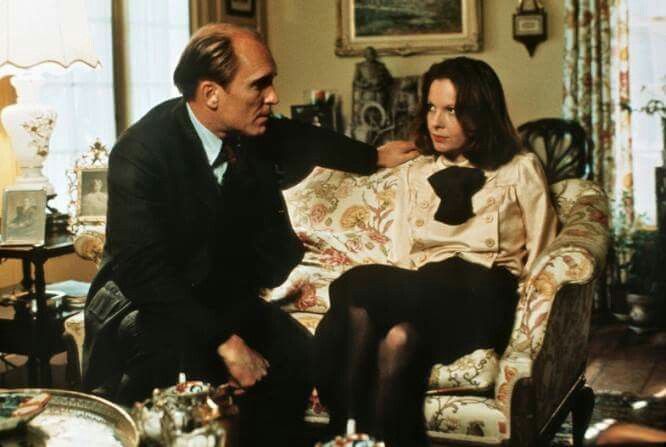
Diane Keaton, who turns 71 today, and Robert Duvall, who turns 86 today, share the frame in 1971’s The Godfather:

Filmmaker in Focus:

With Silence going wide this weekend, JoBlo.com spotlights the career of Martin Scorsese with emphasis on why he’s “kinda crazy”:

[embedded content]

Movie Comparison of the Day:

Couch Tomato shows 24 reasons why the Seth Rogen and Evan Goldberg-penned Sausage Party is just an animated rehash of the Sth Rogen and Evan Goldberg-helmed This Is the End:

[embedded content]

Alternate Movie Posters of the Day:

Every day of 2016, artist Pete Majarich made a new alternate poster for a classic movie. Here’s a video he just made showcasing all of them:

[embedded content]

Classic Trailer of the Day:

With further news this week of the musical Valley Girl remake, here’s the trailer for the original starring Nicolas Cage and Deborah Foreman:

[embedded content]

and

Let’s block ads! (Why?)


No Image

U.S. Likely To Become Net Exporter Of Energy, Says Federal Forecast

Workers move equipment at a natural gas well site near Burlington, Pa., in 2010. A federal report said Thursday natural gas production is on track to make the U.S. a net exporter of energy by about 2030. Ralph Wilson/AP hide caption

toggle caption

Ralph Wilson/AP

The U.S. could become a net exporter of energy in coming years, according to the federal government’s Annual Energy Outlook 2017. This continues a trend the Energy Information Administration has highlighted before in its annual report.

The EIA projects the country will continue to import oil through 2050, though at much lower levels than in the past. The main thing that will make the U.S. a net exporter of energy is natural gas.

Domestic natural gas production has risen by nearly 30 percent over the past decade, primarily because controversial technologies such as hydraulic fracturing have opened up new fields to drilling. Now companies are proposing and building natural gas export facilities around the country with the production boom expected to continue.

The EIA is quick to warn that there is a lot of uncertainty in projections like this. That’s why each year the agency considers a variety of factors and then develops multiple scenarios. It looks at things like production, demand, prices and technological advancements. Most of the agency’s seven scenarios show the country becoming a net exporter by 2030.

One scenario, in which crude oil prices rise sharply, projects the country would become a net energy exporter within just a few years. That’s unlikely to happen, though. The agency believes Brent crude oil prices this year will average around $51.66 a barrel — about half of what a barrel sold for in 2014.

Article continues after sponsorship

As part of its annual report the EIA also has projections for energy-related carbon emissions. EIA Administrator Adam Sieminski says emission levels will depend a lot on what happens with the Obama administration’s Clean Power Plan, which is tied up in the courts now. Considering President-elect Donald Trump’s stated desire to boost the coal industry, he could choose to stop defending the plan.

“We see the highest emissions without the Clean Power Plan because we’ll continue to use more coal, and coal has more carbon dioxide than the other fossil fuels,” says Sieminski.

The report shows Americans are using energy more efficiently, and the agency projects that will continue. Despite a growing population and a growing economy, consumption is expected to be relatively flat through 2050.

The EIA believes gasoline will remain the dominant fuel for transportation in the U.S. for decades. Still, the number of electric vehicles is expected to increase from 1 percent of the cars on the road today to 6 percent in 2040. That may not seem fast enough growth if you’re an electric-car advocate, but consider that there are about 250 million cars in the U.S. now. Sieminski says, “There’s a lot of gasoline and diesel-powered cars on the road that are not going to be retired immediately.”

The fact that natural gas is replacing coal for electricity generation has been widely reported. The EIA data show more power comes from gas than coal now. And the agency projects that renewable forms of electricity, such as wind and solar, could overtake coal by 2030.

Let’s block ads! (Why?)


No Image

The Doctors Aren't In At Kenya's Public Hospitals

Health care workers stage a protest during the ongoing doctors’ strike in Kenya. Recep Canik/Anadolu Agency/Getty Images hide caption

toggle caption

Recep Canik/Anadolu Agency/Getty Images

The halls of the Kiambu County Hospital just outside Nairobi are empty. This is normally a bustling place but on Thursday entire wings are closed.

Only in the emergency room are there a scattering of patients. Moms with babies sit languidly on metal chairs. Men with broken bones and some with serious injuries are just hoping to be treated.

But they probably won’t be seen by doctors. A doctor’s strike that began last month in Kenya has now entered its second month. Physicians at public hospitals want more money and better medical equipment, but the government says it can’t afford to meet their demands.

The strike has left millions of Kenyans without proper health care and has also overwhelmed some of the country’s private hospitals.

The nurses at the public hospitals are not on strike, so they’re doing whatever they can. They’re the ones running the ER. But a patient who needs complicated care and can’t afford a private hospital is out of luck.

The only doctor I found at the Kiambu hospital is David Kariuki, who is on strike but showed up to perform his administrative duties.

Article continues after sponsorship

“The current strike is about better working conditions for doctors, especially those within the public health sector,” he said.

A doctor right out of school in Kenya makes about $10,000 a year in the public health system. To earn more money, many of them are lured abroad or into the private hospitals that many Kenyans can’t afford.

That means, Kariuki said, that “the public health care system continues to be strained, because you have fewer doctors to see a growing population, so everyone would get overworked” and more stressed out.

And it’s not like there were a lot of doctors on duty before the strike: 5,000 physicians in the public sector serve a population of nearly 50 million.

In the emergency room, I find Masa Mawili, who came to the hospital because of his foot. It was so swollen that it hardly fit in his sandal, and the swelling extended all the way to his calf. He doesn’t know what caused the swelling.

He said he had already seen the nurses but they couldn’t tell him what was wrong with his foot. So he sat and waited hours in the hope that a doctor would show up — some of them have been working despite the strike.

On Wednesday, Kenyan President Uhuru Kenyatta met with the Kenya Medical Practitioners, Pharmacists and Dentists Union for hours. Late at night, his government put out an offer: Some doctors would get a more than 100 percent raise, others significantly less.

The doctors are supposed to respond by Friday, but they seem determined to hold out for the 300 percent raise that the government agreed to in a 2013 collective bargaining agreement but has since walked away from.

But it’s not just about the money.

“The CBA [collective bargaining agreement] once signed will make sure more doctors are trained to improve on service delivery,” the union tweeted.

At the hospital I visited, some patients sided with the doctors but others took the government’s side.

Paul Kagiri, whose college-age son was given the OK to go to college after a physical at the hospital, said that what the doctors are asking for is “very, very, very high.”

The government can’t afford to pay them. And there are reports of people who sought help at public hospitals and ended up dying. Right now, he said, it’s time to think about the wanjiku — the ordinary people.

“Only the wanjiku right now is suffering a lot,” Kagiri said. “And instead of wanjiku suffering why [don’t the doctors give back to the public?”

Let’s block ads! (Why?)


No Image

U.S. Defeats Russia In Hockey World Junior Semifinal, Faces Canada For Gold

U.S. forward Troy Terry scores the game-winning goal against Russia in the 2017 IIHF World Junior Championship semifinal in Montreal on Wednesday. Minas Panagiotakis/Getty Images hide caption

toggle caption

Minas Panagiotakis/Getty Images

The United States hockey team bested Russia in a seven-round shootout Wednesday to secure a place in the IIHF World Junior Championship gold medal match on Thursday night.

It was the Americans’ first win over the Russians in an elimination round in the tournament’s history. They had been 0-7.

Tied at 3-3 at the end of regulation and through overtime, the game went to a dramatic penalty shootout that saw the crowning of a new American hockey hero: 19-year-old Troy Terry. The University of Denver sophomore and Anaheim Ducks prospect scored three goals, including the game-winner in the seventh round.

“If you would have told me before the game that I would be the guy going multiple times in a shootout I would not have believed you,” Terry said, per USA Today Sports.

According to International Ice Hockey Federation rules, a player can shoot again after all the players in the five-player shootout rotation have shot. In the initial five rounds, Terry and teammate Jeremy Bracco scored, and U.S. goalie Tyler Parsons made three saves. In the extra two rounds, Terry scored twice more.

[embedded content]
YouTube

The feat earned comparisons to T.J. Oshie’s shootout performance in the 2014 Sochi Olympics when he scored on four of six attempts to beat Russia in group play. It also recalled Canadian Jonathan Toews’ three shootout goals in the 2007 World Junior Championship semifinal, which knocked the U.S. out of contention.

Article continues after sponsorship

And, of course, any time the U.S. tops Russia in hockey, there is inevitably a mention of the iconic Miracle on Ice game in which a young U.S. team downed the mighty Soviet Union squad in the 1980 Olympics. In the intervening years, the superpowers’ hockey rivalry has faded. As The Washington Post‘s Dave Sheinen wrote in 2014: “The hard edges of the U.S.-Russia rivalry have been softened by time, shifting geopolitical circumstances and the ubiquitous presence of Russians in the NHL, among other factors.”

In the 2017 tournament, developments in U.S.-Russia foreign relations — specifically U.S. intelligence concluding that the Russian government interfered in the presidential election — added a small but noticeable wrinkle to the rivalry, as some wryly pointed out on social media:

USA coaches surprised Russia by using Troy Terry 3 times in shootout, which means they probably never mentioned that plan on email. #WJC2017

— Greg Wyshynski (@wyshynski) January 4, 2017

Man, that sucks for Russia, who will have to look for North American wins elsewhere

— Bruce Arthur (@bruce_arthur) January 4, 2017

In Thursday night’s gold medal match, the U.S. will face Canada, which beat Sweden 5-2 on Wednesday night. As the Associated Press reports, “The United States and Canada have met three times for the title, with Canada winning in 1997 and the Americans in 2004 and 2010. Canada won the last of its record 16 titles in 2015.” The U.S. beat Canada 3-1 earlier in the tournament.

The game starts at 8 p.m. ET and will be televised on the NHL Network.

Let’s block ads! (Why?)


No Image

Today in Movie Culture: Tim Burton's 'Batman & Robin,' Darth Vader vs. Xenomorphs and More

Klingon Bird of Prey (redux)

Here’s everything you need to know about the last week in movie news:

Reimagined Movie of the Day:

What if Tim Burton stayed with the Batman franchise through the 1990s and directed Batman & Robin? Sam Ibrahim shows us in this reworked trailer:

[embedded content]

Mashup Art of the Day:

Artist Guillem H. Pongiluppi created a whole series of paintings where Darth Vader and Stormtroopers battle xenomorphs from the Alien movies. See more at Geek Tyrant.

Stormtroopers vs aliens season 2! (3/5) #StarWars #stormtrooper #alien pic.twitter.com/kw192P1Sez

— Guillem H.Pongiluppi (@guillemhp) December 23, 2016

Movie Parody of the Day:

The Korean version of Saturday Night Live did a very silly parody of Marvel’s Doctor Strange (via Twitter):

i know jack shit abt dr strange but i already know that this korean snl parody is better pic.twitter.com/SWe8ZxCA8B

— Z-01 ????????. (@LUPATIER) January 3, 2017

VFX Reel of the Day:

See why Arrival should be a contender for the visual effects Oscar in this breakdown of the work by Oblique FX (via /Film):

[embedded content]

Vintage Image of the Day:

Harmony Korine, who turns 44 today, with Chloe Sevigny on the set of Kids in 1994:

Movie Food of the Day:

YouTube cooking show Binging with Babish shows us how to make our own Big Kahuna burger as seen in Pulp Fiction:

[embedded content]

Fan Build of the Day:

Not only did Trekkie Kevin J. Walter build a 250,000 piece Lego replica of the Klingon Bird of Prey ship from Star Trek, but he also made a nice slideshow album of the model in action (via Geekologie):

Video Essay of the Day:

You’ll never not notice when movie characters drink milk again after watching this Now You See It video about what the beverage means in films, particularly in Mad Max: Fury Road:

[embedded content]

Supercut of the Day:

In support of the social media hashtag #52FilmsbyWomen, Roman Holiday shares a montage of 52 films by women:

[embedded content]

Classic Trailer of the Day:

Speaking of movies directed by women, Underworld: Blood Wars hits theaters this weekend, so let’s look back at the original trailer for the first Underworld (which was directed by a man) released back in 2003:

[embedded content]

and

This article passed through the Full-Text RSS service – if this is your content and you’re reading it on someone else’s site, please read the FAQ at fivefilters.org/content-only/faq.php#publishers.
Recommended article: The Guardian’s Summary of Julian Assange’s Interview Went Viral and Was Completely False.



No Image

FACT CHECK: Once Again, Lawmakers Are Stretching The Facts On Obamacare

Kesha Wilson holds her 1-year-old son, Kamiyan Cooper, while family nurse practitioner Terrance James makes notes as part of an examination, at a county health center in Portland, Ore., in 2012. Rick Bowmer/AP hide caption

toggle caption

Rick Bowmer/AP

President Obama and Vice President-elect Mike Pence were both on Capitol Hill Wednesday, making competing cases for and against Obama’s signature health care law. Republicans have promised to make repeal of the Affordable Care Act their first order of business, once they control both Congress and the White House.

Obama is urging his fellow Democrats to do what they can to preserve the law. If that fails, Democrats plan to hold Republicans accountable for any disruption the repeal may trigger. Both sides are trying to position themselves as the protectors of Americans’ health care, while branding the other party as a dangerous threat.

As usual, the truth may be somewhere in between. Here we take a closer look at some of the claims being floated by both parties:


President-elect Trump got the ball rolling with a pre-dawn tweet, cautioning that “Republicans must be careful in that the Dems own the failed ObamaCare disaster, with its poor coverage and massive premium increases……”

Republicans must be careful in that the Dems own the failed ObamaCare disaster, with its poor coverage and massive premium increases……

— Donald J. Trump (@realDonaldTrump) January 4, 2017

Republican House Speaker Paul Ryan echoed Trump. “This law has failed,” Ryan told reporters. “We know that things are only getting worse under Obamacare. This is about people paying higher premiums every year and feeling powerless to stop it. It’s about families paying deductibles that are so high it doesn’t even feel like you have health insurance in the first place. And in so many parts of the country, as you’ve always heard, even if you want to look for better coverage, you’re stuck with one option. One choice is not a choice. It is a monopoly. The health care system has been ruined, dismantled under Obamacare.”

Article continues after sponsorship

CLAIM: Obamacare suffers from “massive premium increases”

FACT CHECK: True in some cases, but it’s also relative. Obamacare is also actually cheaper on average than the typical employer-provided plan.

Many people shopping for health insurance on the government-run exchanges set up by Obamacare have seen double-digit premium increases this year.

The average cost of a benchmark plan rose 25 percent nationwide, but there was considerable variation from state to state. Premiums in Arizona jumped an average of 116 percent, while premiums in Indiana and Massachusetts actually went down. Most people buying insurance on the exchanges receive a government subsidy, which helps defray the cost.

A study by the Urban Institute last year found that even without the subsidy, insurance policies sold on the exchanges cost about 10 percent less than the typical employer-provided plan. Exchange policies might seem more expensive, because part of the cost of workplace plans is typically paid by employers, and thus largely invisible to the employee.

CLAIM: “You’re stuck with one option” under Obamacare

FACT CHECK: Not true for the majority, but it has increasingly become the case.

Obamacare insurance exchanges have grown less competitive, as some insurance companies have lost money and left the market. One in five customers on the exchanges had just one insurance company to choose from this year (up from 2 percent in 2016). Nearly 6 in 10 customers have a choice of three or more companies. The lack of competition, which can lead to higher prices, tends to be worse in rural areas and the South.

Insurance companies have struggled, in part, because fewer young, healthy people have signed up for coverage than forecast. Backers of the Affordable Care Act say that could be remedied with more generous subsidies to encourage sign-ups or bigger penalties for those who fail to enroll. Obama also renewed the idea of a public insurance option to supplement private offerings.

CLAIM: “The health care system has been ruined, dismantled under Obamacare”

FACT CHECK: Prices were going up at faster rates before Obamacare.

Most Americans under age 65 still get health insurance through an employer, although the percentage has been slowly dropping. The cost of employer-provided coverage has gone up since passage of the ACA. But the annual price hikes were considerably larger in the decade before the law was passed. Some of the savings from slower premium growth have been offset by higher deductibles.


While Republicans highlight the shortcomings of the Affordable Care Act, Democrats warn that repeal would be much worse.

“Instead of working to further ensure affordable care for all Americans, [Republicans] seek to rip health care away from millions of Americans, creating chaos in our entire economy,” Democratic Senate leader Chuck Schumer said Wednesday. He and his fellow Democrats offered a mocking slogan for the GOP: “Make America Sick Again.”

Schumer also suggested that repealing Obamacare would hurt rural hospitals, “right in their heartlands. The minute they enact this repeal, [hospitals] are going to suffer dramatically,” he said.

CLAIM: ACA repeal would “rip health care away from millions”

FACT CHECK: True, if Republicans don’t protect them or replace ACA with something that provides coverage.

The Affordable Care Act has expanded health care coverage to some 20 million Americans through a combination of subsidized individual policies, expanded Medicaid, and allowing young adults to stay on their parents’ plans. The uninsured rate has fallen to an all-time low of around 10 percent. Coverage would be higher still if 19 states had not refused to expand Medicaid.

If the Republican-controlled Congress repeals the Affordable Care Act, many of those newly insured Americans would be at risk of losing coverage. In addition, millions more who buy individual insurance policies off the exchanges could be at risk, if that market is disrupted. The Urban Institute estimates as many as 30 million people in all could lose their health care coverage, doubling the uninsured rate.

Republicans have promised an orderly transition as they work toward a replacement for Obamacare, and it’s possible the effective date for any repeal could be delayed for a number of years. Insurance companies, however, may be reluctant to participate once it’s clear Obamacare’s individual market is being phased out.

CLAIM: Rural hospitals are going to suffer

FACT CHECK: True, if repealed outright, but it’s also because of the way the ACA was structured in the first place.

The concern for hospitals reflects a trade-off when the ACA was passed seven years ago. The government scaled back what it pays hospitals for treating Medicare patients and the indigent, with the expectation that would be offset by payments from millions of newly insured.

Hospitals worry that if repeal of the law cuts insurance coverage, but doesn’t restore other payments, they could be left with a mountain of unpaid bills. The American Hospital Association and the Federation of American Hospitals urged Congress and the incoming Trump administration to either protect insurance coverage or replace the hospital payments.

This article passed through the Full-Text RSS service – if this is your content and you’re reading it on someone else’s site, please read the FAQ at fivefilters.org/content-only/faq.php#publishers.
Recommended article: The Guardian’s Summary of Julian Assange’s Interview Went Viral and Was Completely False.