Articles by admin

No Image

Coal Miners Hope Trump Will Help Struggling Industry

Stricken by layoffs in the coal industry, Greene County, Pa., went for Donald Trump this election. Many think he will help the industry, despite disagreeing with some of Trump’s rhetoric.

MICHEL MARTIN, HOST:

The inauguration of President-Elect Donald Trump is just 19 days away, and coal miners nationwide are waiting to see if Mr. Trump keeps election promises he made of new jobs through reopened mines. Reid Frazier of The Allegheny Front spoke to coal miners who say they don’t expect miracles, but they do want results.

REID FRAZIER, BYLINE: It’s been over a year since the coal mine Dave Hathaway worked in closed. He spent most of 2016 sending out resumes, looking for work. The search gained urgency when his son Deacon was born in August.

DAVE HATHAWAY: I like when he gets milk drunk and just passes back out (laughter). Little coma.

FRAZIER: On Election Day, Hathaway made a choice he hopes will help his long-term job prospects.

HATHAWAY: I voted for Trump. I mean, a coal miner would be stupid not to.

FRAZIER: Hathaway has had a hard time finding a job to replace the $80,000 dollars he made in the coal mines under Greene County, Pa., a few miles from the West Virginia border. He just got hired at a nearby mine. He thinks the election of Donald Trump means he’ll have a better shot at keeping this job even though he didn’t really like a lot of the things Trump had to say during the campaign.

HATHAWAY: He is a wacko. He still – I mean, he’s never going to stop being a wacko. You know what I mean? But, I mean, the things that he did say, the good stuff, was good for the coal mining community. But we’ll see what happens.

FRAZIER: Trump won over coal country voters like Hathaway by promising to slash environmental regulations. That message clearly resonated in Greene County, where over the last four years a third of the coal mining jobs like Dave Hathaway’s disappeared. Trump won the county by 40 points eight years after Barack Obama basically tied John McCain here. Tom Crooks witnessed the decline in coal firsthand. He’s a vice president at R.G. Johnson, a construction firm that builds mine shafts.

TOM CROOKS: Two years ago this week we had 145 employees, and right now we have 22.

FRAZIER: Crooks doesn’t use the phrase war on coal, but he does think federal regulations mounted by Obama’s EPA have weighed down his industry. One example – the EPA’s Clean Power Plan. That rule, which Trump has pledged to eliminate, limits the amount of carbon dioxide from coal-fired power plants. Instead, Crooks wants to see more government research into making coal as clean as possible.

CROOKS: And really what’s happened over the last eight years is the smart people stopped working on coal, in part because of the way the federal government and the state governments looked at us. We just want them to start looking to coal as an option.

FRAZIER: Trump’s promise of bringing the coal industry back has attracted interest from at least one Democratic lawmaker in this corner of Pennsylvania. Pam Snyder is a state representative in Greene County. Snyder invited the president-elect to visit her district to tell coal miners his specific plan to help them, but she has yet to hear back from him. Snyder won’t say who she voted for, but she does think Trump can help the industry by rolling back environmental regulations.

PAM SNYDER: I care deeply about the environment. But there’s a social environment, too, that I have to care deeply about. And when a big chunk of my constituency is thrown into the unemployment lines, what about that social environment?

FRAZIER: Snyder acknowledges what many here know – there’s only so much Donald Trump can do to bring back coal. Probably the biggest factor in coal’s decline has been the low price of natural gas, some of it produced in gas wells right here in Greene County. Even though she doesn’t expect Trump to return coal to the position it once held here, at this point she’ll take a modest rebound over none at all. For NPR News, I’m Reid Frazier in Waynesburg, Pa.

Copyright © 2017 NPR. All rights reserved. Visit our website terms of use and permissions pages at www.npr.org for further information.

NPR transcripts are created on a rush deadline by Verb8tm, Inc., an NPR contractor, and produced using a proprietary transcription process developed with NPR. This text may not be in its final form and may be updated or revised in the future. Accuracy and availability may vary. The authoritative record of NPR’s programming is the audio record.

This article passed through the Full-Text RSS service – if this is your content and you’re reading it on someone else’s site, please read the FAQ at fivefilters.org/content-only/faq.php#publishers.
Recommended article: The Guardian’s Summary of Julian Assange’s Interview Went Viral and Was Completely False.


No Image

Paying Homage To The Female Athletes Who Blazed The Way In Sports

Filmmaker Molly Schiot documents the paths of women who led the way in various sports in the book Game Changers: The Unsung Heroines of Sports History.

MICHEL MARTIN, HOST:

And now we’re going to hear about another kind of big break. There’s a new book out that puts a spotlight on the long-forgotten stories of dozens of women who fought to break through the glass ceiling of sports. The book is called “Game Changers: The Unsung Heroines Of Sports History.” NPR’s Shereen Marisol Meraji has more.

SHEREEN MARISOL MERAJI, BYLINE: This book is dedicated to all the women who were forever told no. That’s how filmmaker Molly Schiot opens her book “Game Changers,” a book inspired by her own battles with no.

MOLLY SCHIOT: So I was pitching stories to a major sports network.

MERAJI: Stories she wanted to make into documentaries for that sports network.

SCHIOT: They were all about women. And I was just told this one isn’t interesting enough or this one doesn’t really resonate with us or try something else.

MERAJI: Molly put the rejections in a folder…

SCHIOT: That was called failed pitches to a major sports network.

MERAJI: …And got angry. That anger compelled her to collect even more of these stories. And she found them hidden in dusty old books at the Los Angeles Public Library.

SCHIOT: Books that, like, nobody’s ever opened in – like, since the ’60s.

MERAJI: She scanned the photos she found and posted them to Instagram with long captions, dusting off these old stories for a new generation under the handle @theunsungheroines. That eventually became this coffee table book. On page 224, you’ll meet Linda Jefferson, a running back for the 1975 Toledo Troopers and one of only four women inducted into the American Football Association’s Hall of Fame. Or get acquainted with Florence Barnes on page 150. She convinced a World War I vet to teach her to fly and in 1930 took Amelia Earhart’s title as fastest woman on earth. And on page 280, say hello to the women who made all this possible.

SCHIOT: The spring pad to the Instagram feed, which later became the book, was the first story that I ever pitched. And it’s based off of the Wake-Robin Golf Club.

PAULETTE SAVOY: Well, any time you’re in a book and somebody says you were the inspiration for the book, well, I mean, you know, that’s just fabulous.

MERAJI: Paulette Savoy’s been a member of the Wake-Robin Golf Club since 1985, but it was founded about 50 years prior by wives tired of staying at home while their husbands teed up on the weekends. Wake-Robin is the first black women’s golf club in the United States.

WINNIE STANFORD: The white golfers, they weren’t used to seeing black women play golf. And a lot of times they used to hit the ball into our foursome.

MERAJI: Ninety-three-year-old Winnie Stanford is one of Wake-Robin’s oldest members.

STANFORD: You had to make up your mind if you were going to play golf. You were – just had to put up with it as long as no one got hurt.

MERAJI: The club fought to desegregate the D.C. public golf courses. And in those early years, they put up with overt racism and sexism. And while they were fighting for integration, they played at the Langston Golf Course, an old dump the city set aside for black golfers in 1939.

SAVOY: When people were playing, sometimes they had to move junk out of the way in order to hit the ball. But at least it was our golf course and we weren’t bothered.

MERAJI: That’s Paulette again. She and Jean Miller, one of Wake-Robin’s most decorated golfers, say things changed a lot by the time they stepped onto the green. They didn’t experience the same kind of harassment Winnie dealt with early on. But then again, they’re a couple decades younger.

SAVOY: Well, Winnie and I will tell you the truth. You’ll never get an age out of Jean (laughter).

MERAJI: Jean’s in four different clubs. She travels the world playing golf and considers herself a fierce competitor. But she says there’s nothing like Wake-Robin.

JEAN MILLER: It’s like coming home. Yeah, there’s a whole lot of history behind this club. I’m just so grateful that they accepted me in the group.

MERAJI: Molly Schiot’s the first to agree there’s a whole lot of history there. And it deserves more than a page in her book.

SCHIOT: My whole pipe dream from the start was to bring their story to life.

MERAJI: And she’s not taking no for an answer. Shereen Marisol Meraji, NPR News.

Copyright © 2017 NPR. All rights reserved. Visit our website terms of use and permissions pages at www.npr.org for further information.

NPR transcripts are created on a rush deadline by Verb8tm, Inc., an NPR contractor, and produced using a proprietary transcription process developed with NPR. This text may not be in its final form and may be updated or revised in the future. Accuracy and availability may vary. The authoritative record of NPR’s programming is the audio record.

This article passed through the Full-Text RSS service – if this is your content and you’re reading it on someone else’s site, please read the FAQ at fivefilters.org/content-only/faq.php#publishers.
Recommended article: The Guardian’s Summary of Julian Assange’s Interview Went Viral and Was Completely False.


No Image

Barbershop: 2016 Is Almost Over, But Was It Really The Worst?

NPR’s breaking news reporter Nate Rott, former political reporter Sam Sanders and senior business editor Marilyn Geewax talk about what happened in news during 2016.

MICHEL MARTIN, BYLINE: Now it’s time for the Barbershop. That’s where we get a group of interesting folks together and ask what’s in the news and what’s on their minds. For our final Barbershop of 2016, we decided we wanted to talk about some of the biggest stories in the news in 2016, so we turn to our own folks for this.

In for a shape-up today as Nate Rott. He covers breaking news all over the country from his base at NPR West. Hi, Nate.

NATHAN ROTT, BYLINE: Hey.

MARTIN: And here in Washington, D.C., is Sam Sanders, who was all over the country covering the 2016 elections.

SAM SANDERS, BYLINE: Hey there.

MARTIN: Hey. And also back with us – NPR senior business editor Marilyn Geewax. Marilyn, good to see you, too. Thank you for coming.

MARILYN GEEWAX, BYLINE: Hi, Michel. I’m glad to be here.

MARTIN: OK, so let’s start with the big question – at least the big question on social media. Was 2016 the worst ever (laughter)? It’s actually become its own meme on Twitter. People are posting pictures of things like burning dumpster fires and…

SANDERS: (Laughter).

MARTIN: …You know – and of course the many celebrities who’ve passed away. And you know what? One of my favorite comic strips actually had this as a storyline. One of the characters actually said, I just want 2016 to be over, to which I was, like…

SANDERS: Yeah.

MARTIN: …Really – “Judge Parker” – really?

(LAUGHTER)

MARTIN: So Sam, you wrote about this. So you know…

SANDERS: I wrote about 1,100 words on this very question…

MARTIN: Yeah. Tell me about this.

SANDERS: …Because I’m guilty of this, too. Like, for the last six months, I have been saying and tweeting, oh, my goodness – 2016 – this year is crazy. By some measures, it’s not that bad. And Marilyn can speak to this. But I wanted to ask the question, why is everyone going online, saying that this year is the worst?

MARTIN: Or maybe phrase it another way. Why is everyone online saying…

SANDERS: Yes.

ROTT: (Laughter).

MARTIN: …This is the worst year…

SANDERS: Yeah.

MARTIN: …Ever.

SANDERS: So I talked to…

MARTIN: So what did – yeah, tell me what you found out.

ROTT: I talked to a few smart thinkers, and I spoke with Nikki Usher at George Washington University, and she said we have experienced the kind of climax of what she calls ambient journalism. So when you consume media and social media and journalism on your smartphone, on your device, it’s always on you. It’s buzzing you. It’s in your face, and you’re constantly harassed by these negative headlines. And that makes things feel a lot worse than they really are.

And on top of that, this was a year where there was no part of the culture that offered something else. Usually pop culture is full of happy stories that get away from politics. But this year, think about it. Your favorite pop star probably endorsed a candidate for president. The NFL was taken over by silent protest. The biggest film of this year, “Captain America: Civil War,” was all about the modern security state. You just couldn’t escape this negativity. And I think that’s a part of it.

MARTIN: OK. Marilyn, what’s your take on this?

GEEWAX: I am just amazed at the impact that social media has had. When I think about where we were in December of 2008, that was bad. 2009, we had, like, 10 percent unemployment. Now it’s 4.6. We’ve been having low fuel prices, cheaper food. Inflation has been under control. Mortgages have been really cheap for the most part. Home prices are rising. There are five-and-a-half million job openings right now. Corporate profits are up. The stock prices are up. Someday there will be a meme called, 2016 – the good old days, you know?

(LAUGHTER)

SANDERS: Are you sure about that?

GEEWAX: You know, like, we’re going to look back on this and…

MARTIN: Well, here’s a…

GEEWAX: Say, wow…

MARTIN: Well, here’s the…

GEEWAX: …That was great.

MARTIN: But here’s the hard question. Is this part of it – is it the celebrity deaths in part, or is it the election…

GEEWAX: I think…

MARTIN: …Which was so ugly. I mean…

GEEWAX: Yeah. I – to me…

MARTIN: Is it partly that?

GEEWAX: You know, to me, it was just – the election – the whole energy of it was so negative – people tearing each other down, calling each other names. You know, just – gosh, it was really negative and nasty compared with – in 2008, there was more of a sense of, this actually is a bad year; we need to pull together and do the best we can.

MARTIN: Interesting. Nate, what do you think?

ROTT: You know, no, it wasn’t the years – worst year ever. I mean we could all hope that it’s the worst year ever because that means 2017, like – things are looking up, right? I tried taking a positive tact on this because I do think that, you know, you are what you eat, right?

So, like, I think if we look at all this negative news, you consume all this negative news, I mean, yeah, the world looks pretty bleak and terrible. So I was trying to pick my brain earlier and think of things that were really good this year.

And I think objectively, we can say it was a great year for sports. The Cubs won the World Series. They broke their curse. That was pretty exciting. LeBron James fulfilled his prophecy and brought a championship…

MARTIN: Yay.

SANDERS: Oh, OK.

ROTT: …to Cleveland. You don’t sound so excited, Sam.

SANDERS: I don’t.

(LAUGHTER)

GEEWAX: I loved it, said…

MARTIN: Sam, it’s OK.

GEEWAX: …The Buckeye.

SANDERS: (Laughter).

MARTIN: That’s all right.

ROTT: I am a unhealthy Denver Broncos fan, and we won the Super Bowl, so that’s really good. So I mean I think there were – everything’s relative, right? I think for some people, it was, yeah, a really, really, really bad year. For some people, it wasn’t so bad. And it’s important to remember that.

MARTIN: And for Trump supporters, it was a great year.

SANDERS: It was a great year.

MARTIN: I mean one of our guests – one of our earlier Barbershop guests earlier in the year was saying, look; now we get a chance to see our ideas in practice. But moving on from that, let’s just – all right, you know, we were looking at a lot of the lists that were together by lots of news organizations about, like, the biggest stories of 2016. And it was interesting, Nate, going back to your point, about kind of where you stand depends on where you sit…

ROTT: Right.

MARTIN: …Or what you focus on yourself. So let me just start with you on that. What’s your take on the biggest and most important story in 2016?

ROTT: Well, I mean it’s hard to argue that the election wasn’t the biggest story of 2016. I was trying to think of some stories that we’re going to think about in, like, 10 years, right? We’re going to look back and say, oh, 2016 – that happened.

And I think a story that didn’t get a ton of play, was kind of overwrought with all the other stuff during the election – but cannabis, marijuana – now 1 in 5 Americans live in a state where recreational pot is legal for adults. And people that I’ve talked to in the cannabis industry say it’s a game changer. It’s a turning point, a tipping point, whatever you want to call it there. And I do think that that is something that we are going to be talking about going forward.

One other thing that I know is not sexy – I’m stepping out on a limb here. But public lands, land-use issues are near and dear to my heart, and they’re a big thing out here in the West. And they don’t usually get that much attention because they just really aren’t that interesting. It’s kind of boring and complicated.

And people on the East Coast don’t really understand it as much just because public lands aren’t as big of an issue there, but they’ve been in the news a ton this year, and those are big things I think we need to talk about if you’re looking at this urban-rural divide and what what’s important to people in different parts of the country.

MARTIN: Interesting idea. Marilyn, you want to jump in on this? What’s your idea of the…

GEEWAX: Yeah.

MARTIN: What do you think is the biggest story of 2016?

GEEWAX: You know, what was a big story seemed…

MARTIN: And it could be something you covered. I mean don’t be modest.

GEEWAX: Well, it seemed small in a way, and yet it was a huge story. The Carrier plant where the people got laid off – it’s a good example of why things – negative news gets amplified. And I named all those things that were great about the economy. Stocks are up and this and that. There are all these good things that happened.

But when you watch that video that somebody made with the little handheld smartphone, you get this video of people being told their lives are being shattered. You’re going to lose your job, and the way that guy did it was so cold. It was like, and we’re going to move, and you’re going to lose your job and blah, blah, blah. And these people – you could just hear this gasp of people saying, oh, my God. You know, your life is about to fall apart, and this guy’s just rattling on.

So that ability to take something that was a relatively small story but amplified across social media made people feel like 2016 was a lot worse than it was. I think that Carrier story really had an impact on the election and an impact on how we thought about trade deals, how it helped kill off the Trans-Pacific Partnership deal. Those – that story reverberated in interesting ways.

MARTIN: Sam, what about you?

SANDERS: Yeah, I mean I think the default for someone who covers politics like me would be to say the story of the year was the election or Donald Trump or Russia. But I want to peel back those top layers and argue that the real story of this year was America’s changing consumption of news and media…

MARTIN: Yeah.

SANDERS: …And how that is shaping everything that’s going on right now. It definitely shaped this election. I mean think about it. We have seen this new economy where people are consuming the news not from an NPR website or a Washington Post website but from their social media feeds. They are feed first, social media first.

We’ve seen the rise of fake news. We’ve seen the rise of fake interaction in spaces like Twitter with all these bots doing God knows what. And so we’ve seen people more plugged in and more free to access all this information. But all of this freedom seems to have made us more divided.

And my question going forward for the next year is, like, what do we as journalists do to fix that problem? We have to ask ourselves every day, are we helping (laughter) ’cause, like, that needs to be fixed, and I’m not sure how.

MARTIN: And that is not a bad question to ask.

SANDERS: (Laughter) No.

MARTIN: I mean if you start out every day saying, what can I do to be constructive…

SANDERS: Yeah.

MARTIN: That – that’s – to me, that’s not a bad way to start the day.

SANDERS: It’s not.

MARTIN: So…

SANDERS: I mean because we’ve spent this whole year with everyone kind of just yelling for a year.

MARTIN: Well, that kind of leads really nicely into my last question for just resolutions of – New Year’s resolutions – so corny, but we all do it. I mean we all make them. So I wanted to ask.

SANDERS: Yeah.

MARTIN: Do you have any? Do you want to start, Marilyn?

GEEWAX: Wow, resolution – I want to just seriously continue to focus on context for things that – ’cause I think that’s what’s missing in this social media environment where people see things. Some bad thing happens, and it gets really blown out of context. You know, that we don’t – we need to step back. We need to be able to, as journalists, as Americans, as citizens, as voters – to look a little bit, to calm down and look at the big picture. That’s just my goal as a journalist – is to keep things in proportion and to keep things level-headed.

MARTIN: Nate, what about you?

ROTT: Disconnect – I want to disconnect more. I know it’s a hard thing to do sometimes with our job, but I think the importance of just getting away from your Twitter feed and the whole just waterfall of information and news and this and that and just, yeah, hang out, take a deep breath, talk to somebody face-to-face – I think those are things that I’m going to try to do a lot more of in the next year.

MARTIN: Sam, I’m giving you the last word.

SANDERS: I’ve been preaching this for the last year or so on the Politics Podcast. I think people should talk politics more with people in their lives in a constructive way. But what I’ve been hearing since the election is listeners right now saying, who are all these people on this other side that voted for that person? Who are they? Where are they? And it’s like, that’s your cousin. That’s the kid you went to high school with. That’s the person that bags your groceries. You just haven’t talked to them, and you don’t know what they’re seeing and thinking and feeling.

And so I urge people to talk about politics more but to listen and to engage not to persuade or to win but to learn. And I think so much of what we’ve seen in the aftermath of this election is people not actually knowing what their neighbors are doing or what they’re like or what they’re thinking. And that should change. And we can do that by talking about things like politics constructively.

MARTIN: Wow, OK – some good advice. I have a lot to think about.

SANDERS: (Laughter).

MARTIN: So thank you, all. Thank you, all. That is Sam Sanders. Nate Rott – he joined us from NPR West – here in Washington, D.C., Sam Sanders and Marilyn Geewax. Sam, Marilyn, Nate, thank you all so much for joining…

SANDERS: Thank you.

ROTT: Thank you.

GEEWAX: Thank you.

MARTIN: …Us for our very last Barbershop of 2016. And happy New Year to everyone.

SANDERS: Happy New Year.

ROTT: Happy New Year.

GEEWAX: Happy New Year to you all, too.

Copyright © 2016 NPR. All rights reserved. Visit our website terms of use and permissions pages at www.npr.org for further information.

NPR transcripts are created on a rush deadline by Verb8tm, Inc., an NPR contractor, and produced using a proprietary transcription process developed with NPR. This text may not be in its final form and may be updated or revised in the future. Accuracy and availability may vary. The authoritative record of NPR’s programming is the audio record.

This article passed through the Full-Text RSS service – if this is your content and you’re reading it on someone else’s site, please read the FAQ at fivefilters.org/content-only/faq.php#publishers.
Recommended article: The Guardian’s Summary of Julian Assange’s Interview Went Viral and Was Completely False.


No Image

Best of the Week: 2017 Movie Preview, Bloody New 'Alien: Covenant' Trailer and More

The Important News

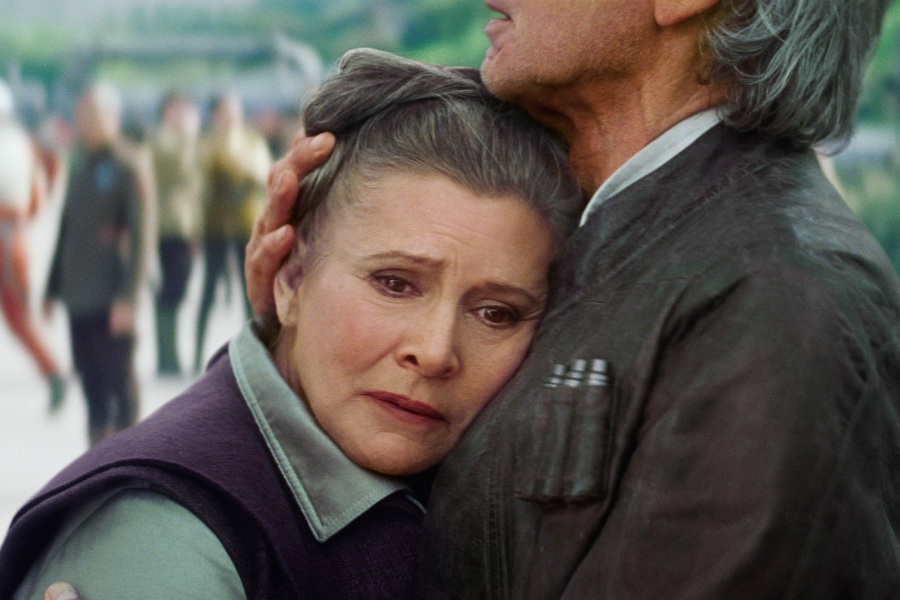
Star Wars: Carrie Fisher’s scenes for Star Wars: Episode VIII were confirmed to be completed. Oscar Isaac teased that Leia and Luke will be reunited in Episode VIII. Saw Gerrera could appear in other movies in the future. Moviegoers chose Star Wars: Episode VIII as the most anticipated movie of 2017.

Wizarding World: Katherine Waterston claims she’ll be in all the Fantastic Beasts movies.

X-Men: Deadpool was rumored to be in Logan.

Sequels: Bad Moms is getting a holiday movie follow-up.

Biopics: Nicolas Cage will play Ronald Reagan in an unknown movie project. Ryan Gosling will play Neil Armstrong in First Man.

Box Office: Rogue One: A Star Wars Story won the holiday weekend but Sing did well, too.

Reel TV: Legends of Tomorrow will feature a young George Lucas as a character.

Theme Parks: James Cameron previewed a look and details about Disney’s Avatar world.

R.I.P.: Carrie Fisher passed away at age 60. Her mother, Debbie Reynolds, passed away at age 84.

The Videos and Geek Stuff

New Movie Trailers: Alien: Covenant, Ocean Waves and Beyond Skyline.

TV Spots: The Bye Bye Man.

Behind the Scenes Featurettes: On the script for Arrival.

Movie Images: Coco, Logan and Okja.

Redone Trailers: Logan in Lego, Spider-Man: Homecoming in Lego and retro-style Alien: Covenant trailer.

Mashups: Why Him? meets Breaking Bad, all of Tim Burton’s characters mashed into one creature and a new year’s celebration mashup.

Parodies: Darth Vader and Kylo Ren celebrate Christmas together, Kylo Ren reviews Rogue One: A Star Wars Story and Ghostbusters gets a Pokemon Go type app.

Dream Casting: Eliza Dushku as DC’s Catwoman and Emma Stone as DC’s Poison Ivy.

Alternate Endings: It’s a Wonderful Life and Se7en.

Year-End Recaps: TCM’s In Memoriam video and a fake trailer for 2016: The Movie.

Movie Posters: All of this week’s best new posters.

Our Features

2017 Previews: We listed the 10 geeky movies we’re looking forward to next year.

Best of 2016: We showcased the best movie posters of the year.

Memorials: We collected remembrances of Carrie Fisher from family and friends.

Interviews: Katherine Waterston on the Fantastic Beasts series and more.

Home Viewing: Our guide to everything hitting VOD this week.

and

MORE FROM AROUND THE WEB:

This article passed through the Full-Text RSS service – if this is your content and you’re reading it on someone else’s site, please read the FAQ at fivefilters.org/content-only/faq.php#publishers.
Recommended article: The Guardian’s Summary of Julian Assange’s Interview Went Viral and Was Completely False.


No Image

2016 In Sports: Overdue Victories; When Games Got Political

Was this the year of the activist athlete? NPR’s Scott Simon looks back on the year in sports with Howard Bryant of ESPN.com.

SCOTT SIMON, HOST:

I think I’ve waited all year to say it’s time for sports.

(SOUNDBITE OF MUSIC)

SIMON: It’s the last day of 2016, the greatest year in the history of sports since, oh, 1908. Howard Bryant of ESPN and espn.com joins us. Hi there, Howard. How are you?

HOWARD BRYANT: Goodness gracious, Scott. What happened in 1908? Were you there?

SIMON: (Laughter) No, I wasn’t, but – no and neither was any other Cub fan. What do you think 2016 will be remembered for?

BRYANT: Well, obviously, 2016 will be remembered for…

SIMON: And don’t skip the obvious, OK?

BRYANT: And don’t skip the obvious. Maybe we’ll save the best for last. How about that? 2016 was a tremendous year obviously, when you look at it in terms of protest. Colin Kaepernick stole the year in terms of making the link between the American ideal and what was happening in the African-American community with regards to police brutality. You have LeBron James and Carmelo Anthony and Chris Paul at the ESPY’s talking about protests and the soccer player Megan Rapinoe as well, standing with the protests. So you have this year, once again, where activism in sports come together. And I think you’re going to see more of that in 2017.

However, I think one of the great things about this sport, about this industry is that the game on the field once again always seems to rise to the top. It always saves it from the people who play it and run it and sometimes the people who watch it. It’s almost like we had two different years. You started the year with Peyton Manning winning the Super Bowl and going out on top, and you had Chris Jenkins with Villanova winning the national championship on a 30-foot buzzer beater which was tremendous. And you’re thinking that the year couldn’t get any better than that, and then it was really a one-story year with the Golden State Warriors winning 73 games and pretty much turning the NBA into the junior varsity. And then, of course, they had a spectacular rise and a spectacular fall. And then…

SIMON: Cleveland rocks.

BRYANT: …LeBron James wins the championship.

SIMON: Yeah.

BRYANT: And Cleveland wins, and Scott Simon is very happy about that. So it’s great. On the one hand, you thought that the year was going to go one way and then it went another. And then, of course, culminating with the Olympics and Michael Phelps and Katie Ledecky and Simone Biles and so many things happened, obviously, leading up into the World Series.

And you and I had this conversation all year about the Chicago Cubs finally being the best team in baseball. And all they had to do was go out and play to their capabilities, and they were going to end this streak of a hundred years of not winning.

SIMON: A hundred and eight years, Howard.

BRYANT: Hundred and eight years. Oh, I don’t want to short anybody those eight years. And it looked as though that this was going to be inevitable, but that postseason was one of the greatest postseasons any of us had ever seen. They were on the verge of going out every round. They could have lost to the Giants in the first round. They went out to California. They were down 2-1 to the Dodgers and came back. They were down 3-1 in the World Series which was one of the great World Series culminating in one of the greatest games sevens ever. So we had a really phenomenal full year on the field and off the field.

SIMON: What do you see ahead for 2017?

BRYANT: I think you’re going to see, well, obviously, you never know what’s going to happen on the field. You have to wait, as we say. When people say to me, hey, Howard, who’s going to win? I don’t know. That’s why they play, and so we wait and see what’s going to happen. We’re going to be surprised, no question about that. But I definitely think in terms of social movements, I think you’re going to see more of athletes showing their power, revealing how much power and how much influence they actually have, these college athletes recognizing now that eventually this system has to fall apart where you have to pay these guys.

At some point, if you have the best players in college football choosing not to play in the most important games in the bowl games because they want to save themselves for the NFL draft and for their future, their financial future, at some point, the college system is going down. There’s no way that this thing can can sustain itself if – the networks are not going to pay to watch Alabama play the second string.

SIMON: Howard Bryant of espn.com. Talk to you next year, my friend. Take care.

BRYANT: Happy New Year, Scott.

SIMON: Happy New Year to you.

Copyright © 2016 NPR. All rights reserved. Visit our website terms of use and permissions pages at www.npr.org for further information.

NPR transcripts are created on a rush deadline by Verb8tm, Inc., an NPR contractor, and produced using a proprietary transcription process developed with NPR. This text may not be in its final form and may be updated or revised in the future. Accuracy and availability may vary. The authoritative record of NPR’s programming is the audio record.

This article passed through the Full-Text RSS service – if this is your content and you’re reading it on someone else’s site, please read the FAQ at fivefilters.org/content-only/faq.php#publishers.
Recommended article: The Guardian’s Summary of Julian Assange’s Interview Went Viral and Was Completely False.


No Image

Today in Movie Culture: 2016: The Movie, Nick Offerman's Countdown to 2017 and More

Here are a bunch of little bites to satisfy your hunger for movie culture:

Current Year Parody of the Day:

Everyone thinks this has been the worst, most deadly year of all time, so here’s a trailer for a fake horror movie inspired by all the bad events of 2016 (via Film School Rejects):

[embedded content]

New Year’s Countdown of the Day:

If you enjoyed Nick Offerman’s yule log last year, now you can spend the final hour of 2016 with the actor in another video of him just sitting with a glass of whiskey:

[embedded content]

New Year’s Party Mashup of the Day:

Here’s another brief movie-mashup countdown and fireworks celebration to help you ring in the new year courtesy of Darth Blender:

[embedded content]

Toy of the Day:

You can now get a replica of young Jyn Erso’s Stormtrooper doll on Etsy for your future rebel (via /Film):

Video Game History of the Day:

The creator of the “worst video game of all time,” Atari’s E.T. The Extra-Terrestrial, talks about its history in this interesting animated video (via Geek Tyrant):

[embedded content]

Vintage Image of the Day:

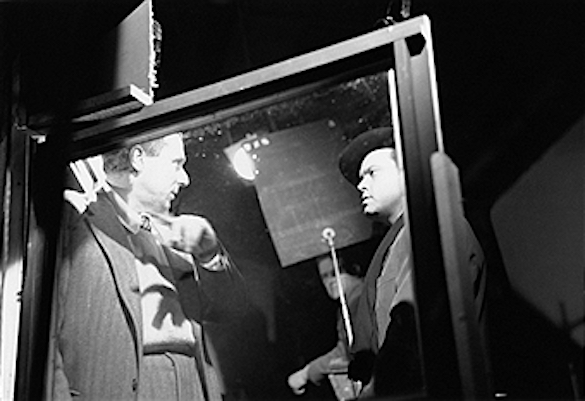
Carol Reed, who was born on this day 110 years ago, directs Orson Welles for a scene in 1949’s The Third Man:

Supercut of the Day:

We see a lot of dancing in movies supercuts, but this one is limited to ’90s movies and set to Fatboy Slim’s “Praise You” (via Cinematic Montage Creators):

[embedded content]

Movie Remix of the Day:

Eclectic Method is great at making music out of classic movies and dialogue, and this video remix of Weird Science is no exception:

[embedded content]

Cosplay of the Day:

Remember the Roger Rabbit animated short Trail Mix-Up? Here’s a cosplayer who will help you recall Jessica Rabbit’s appearance in the cartoon as a park ranger (via Fashionably Geek):

Classic Trailer of the Day:

This week is the 60th anniversary of the wide release of Elia Kazan’s Baby Doll. Watch the original trailer for the film below.

[embedded content]

and

This article passed through the Full-Text RSS service – if this is your content and you’re reading it on someone else’s site, please read the FAQ at fivefilters.org/content-only/faq.php#publishers.
Recommended article: The Guardian’s Summary of Julian Assange’s Interview Went Viral and Was Completely False.


No Image

For Whistleblowers, Repercussions Are Felt Beyond Wells Fargo

Former workers at Wells Fargo who resisted pressure to push banking products on customers who didn’t want them say the bank retaliated against them by docking their permanent record, sabotaging future job prospects.

ROBERT SIEGEL, HOST:

2016 saw one of the biggest banking scandals in U.S. history. Regulators say Wells Fargo opened as many as 2 million credit card and checking accounts in customers’ names without their approval. On top of that, former Wells Fargo workers tell NPR that the bank destroyed their careers after they tried to report wrongdoing. Capitol Hill is investigating. We should say, NPR receives financial support from Wells Fargo. NPR’s Chris Arnold has our story.

CHRIS ARNOLD, BYLINE: It hasn’t been the happiest holiday season for a former Wells Fargo worker named David. After the bank fired him from his job at a branch in Florida last year, David’s been making half of what he used to. He can’t afford his rent anymore. So instead of wrapping up presents, David’s been packing up his belongings.

DAVID: It is a strain. I’m packing boxes, putting stuff in storage. And I’m moving a one-bedroom apartment into a storage unit and then moving into one room in a person’s house.

ARNOLD: Which is not where David wants to be at 54 years old and heading into the new year.

DAVID: On New Year’s Eve, I will be moving.

ARNOLD: Over the past few months, NPR has talked to former Wells Fargo workers in Florida, Pennsylvania, New Jersey, Los Angeles and San Francisco. They all say that managers at the bank retaliated against them for calling the company’s ethics line and pushing back against intense sales pressure to sign customers up for multiple credit cards and checking accounts.

DAVID: There’s no need to have all those accounts, especially when they’re charging you fees.

ARNOLD: So David says he refused to do it. It wasn’t fair to customers. After a heated argument with one manager about all this, David says he’d had enough.

DAVID: I contacted the ethics hotline. I contacted the HR department.

ARNOLD: It was after that that David was fired. And Wells Fargo wrote negative comments on what’s called his U5 document. It’s like a report card for bankers and brokers. David thinks the real reason he was fired – retribution because he resisted the sales pressure and reported coworkers who broke the rules. But David says with these comments on his U5 report card…

DAVID: I cannot get a job working at a bank anymore. I had to declare bankruptcy because, you know, currently I’m working for minimum wage. And my career is over thanks to Wells Fargo.

ARNOLD: David only wants to use his first name for fear of damaging his job prospects even more. NPR has reported on other workers who describe much the same thing. And these stories have lawmakers in Washington now demanding answers from Wells Fargo. Massachusetts Senator Elizabeth Warren…

ELIZABETH WARREN: We heard the reports on NPR about former Wells employees, and that’s what got us interested. And so we started looking at the U5 and digging and finding more and more evidence of a big problem at Wells.

ARNOLD: Warren and two other senators sent a letter asking for answers from Wells Fargo about whether the bank retaliated against whistleblowers. And Warren is asking more broadly whether this U5 report card system is fair to workers.

The system is run by an industry group called FINRA. That’s the Financial Industry Regulatory Authority. On the one hand, if a worker takes advantage of customers, the system is effective at labeling the worker as a bad apple. But if a worker gets unfairly maligned by the bank or a manager, workers say it’s almost impossible to get their records corrected. So their careers can be unfairly destroyed. Elizabeth Warren…

WARREN: The Wells Fargo scandal exposes how vulnerable bank employees are under the current system. I hope that we’re going to see some changes come out of this.

ARNOLD: FINRA itself has launched an inquiry into Wells Fargo workers’ U5s. And Warren and a larger group of lawmakers on the Senate Banking Committee just a few days before Christmas expressed frustration in a letter over the banks, quote, “slow and incomplete responses to a broader set of questions.” And they’re now demanding more answers.

WARREN: This isn’t over yet.

ARNOLD: Wells Fargo has told NPR in a statement that it’s, quote, “disturbing to hear claims of retaliation against team members who contacted the ethics line.” The bank says it’s investigating. The bank also says it now has a team to assist former employees who’d like to be rehired. Employees can email corporateer@wellsfargo.com.

After David relocates to his new rented room in January, he says he’s very interested in getting his job back, and he says he desperately wants to get these damaging remarks off his record. Chris Arnold, NPR News.

(SOUNDBITE OF ALEX BLEEKER AND THE FREAKS SONG, “SPRING JAM”)

Copyright © 2016 NPR. All rights reserved. Visit our website terms of use and permissions pages at www.npr.org for further information.

NPR transcripts are created on a rush deadline by Verb8tm, Inc., an NPR contractor, and produced using a proprietary transcription process developed with NPR. This text may not be in its final form and may be updated or revised in the future. Accuracy and availability may vary. The authoritative record of NPR’s programming is the audio record.
This article passed through the Full-Text RSS service – if this is your content and you’re reading it on someone else’s site, please read the FAQ at fivefilters.org/content-only/faq.php#publishers.
Recommended article: The Guardian’s Summary of Julian Assange’s Interview Went Viral and Was Completely False.


No Image

Remembering Muhammad Ali, A Man Who Lived Life More Than Most

Muhammad Ali was among the great lives that ended in 2016. The self-proclaimed “greatest” boxer-turned-activist left a profound social and political legacy.

ROBERT SIEGEL, HOST:

Muhammad Ali was outspoken about everything – his boxing skills…

(SOUNDBITE OF ARCHIVED RECORDING)

MUHAMMAD ALI: I am the greatest.

(CHEERING)

SIEGEL: …His Muslim faith and why he changed his name…

(SOUNDBITE OF ARCHIVED RECORDING)

ALI: Cassius Clay was my slave name. I’m no longer a slave.

SIEGEL: …His opposition to the Vietnam War and his refusal to serve in the military.

(SOUNDBITE OF ARCHIVED RECORDING)

ALI: You won’t even stand up for me in America for my religious beliefs. And you want me to go somewhere and fight, but you won’t even stand up for me here at home.

SIEGEL: Muhammad Ali is just one of the many notable people who died this year, a personality so electric it’s impossible to capture in just one soundbite. And after news coverage of his death and funeral last June, you might think that you’ve heard all of Ali’s best clips in any case. Well, you probably didn’t hear this.

(SOUNDBITE OF TV SHOW, “I AM THE GREATEST: THE ADVENTURES OF MUHAMMAD ALI”)

ALI: Float like a butterfly. Sting like a bee.

SIEGEL: That is a Saturday morning cartoon from 1977. “I Am The Greatest: The Adventures Of Muhammad Ali” aired for just 13 episodes. It turns out even his immense personality couldn’t save what were essentially rehashed Scooby-Doo plots. But at the end of the show after Ali had saved the day, he sometimes spoke directly to his young audience.

(SOUNDBITE OF TV SHOW, “I AM THE GREATEST: THE ADVENTURES OF MUHAMMAD ALI”)

ALI: Now, this may sound strange, but I haven’t always been the heavyweight champion of the world. At one time, I was a contender, and I didn’t always win. Yup, that’s right. Nobody does. The first time I fought Joe Frazier, I got whipped, but I didn’t quit. I just kept on until I got better. I trained even harder, and the next time we fought I won.

A little disappointment shouldn’t get you down. It should make you stronger for the final round. Take it from the champion of the world.

UNIDENTIFIED CHOIR: (Chanting) Ali, Ali, Ali, Ali…

SIEGEL: Words to live by from a man who lived more than most, Muhammad Ali. He died in June at the age of 74.

Copyright © 2016 NPR. All rights reserved. Visit our website terms of use and permissions pages at www.npr.org for further information.

NPR transcripts are created on a rush deadline by Verb8tm, Inc., an NPR contractor, and produced using a proprietary transcription process developed with NPR. This text may not be in its final form and may be updated or revised in the future. Accuracy and availability may vary. The authoritative record of NPR’s programming is the audio record.

This article passed through the Full-Text RSS service – if this is your content and you’re reading it on someone else’s site, please read the FAQ at fivefilters.org/content-only/faq.php#publishers.
Recommended article: The Guardian’s Summary of Julian Assange’s Interview Went Viral and Was Completely False.


No Image

In Puerto Rico, A Woman Infected With Zika Prays For A Healthy Baby

Keishla Mojica, 23, lives in Cuagas, Puerto Rico. She was infected with Zika virus while pregnant and expects to give birth in early January. Carmen Heredia Rodriguez/KHN hide caption

toggle caption

Carmen Heredia Rodriguez/KHN

Before the virus overwhelmed Puerto Rico, Zika already lurked in Keishla Mojica’s home in Caguas.

First her partner, John Rodríguez, 23, became infected. His face swelled and a red, itchy rash covered his body. Doctors at the time diagnosed it as an allergy.

Two months later, Mojica, 23, had the same symptoms. Medics administered shots of Benadryl to soothe the rash and inflammation. She didn’t give it much more thought.

A month later she also found out she was pregnant, and that eventually led to a surprising revelation. The rashes hadn’t been caused by allergies, but instead by Zika, a virus known to cause serious birth defects.

Since 2015, the virus, which is spread by mosquitoes and sexual contact, has risen from relative obscurity to a worldwide menace. Puerto Rico marks the epicenter of the outbreak in the United States. As of Dec. 16, the commonwealth’s health department reported 35,648 confirmed cases, including 2,864 pregnant women. Federal health officials have declared a public health emergency, and anticipate 25 percent of the population will have contracted the virus by the end of 2016.

Article continues after sponsorship

The epidemic raises difficult personal questions for women like Mojica, who live on an island with strong religious traditions and a health care infrastructure bowing under the weight of fiscal debt. They include whether to consider an abortion and how to care for a child that might have devastating disabilities like microcephaly.

In response to the association between congenital defects and the virus, virtually all pregnant women on the island undergo testing for Zika as part of their prenatal care. Dr. Alfonso Serrano, 57, chairman of the obstetrics and gynecology department at HIMA San Pablo Hospital in Caguas and Mojica’s doctor, said the testing has shown that 5 to 8 percent of his patients have contracted Zika.

Even though the threat of Zika frightens women, he said, most of his patients don’t consider abortion. “It’s not something that is talked about every day,” he added.

Abortion is easy to obtain here and relatively inexpensive, but surveys show that an overwhelming majority of residents said they oppose the practice.

For Mojica, abortion was the first thought that crossed her mind when she heard she had been infected. She told no one but her mother and Rodríguez about the diagnosis. She cried and prayed often. Public service announcements on television about the outbreak angered her. But Mojica never actually discussed the possibility of an abortion with anyone.

“I waited until they gave me the results and that they verified everything,” she said. But she quickly put aside any thoughts about abortion. “I said, ‘No, forget it. Everything’s fine. Forget about it.’ That was in the moment.”

The echoes of Roman Catholicism introduced by Spanish colonial rule still reverberate through contemporary Puerto Rican society. Ninety-nine percent of its residents say they believe in God. Children greet their elders by asking for a benediction, to which they reply, “Dios te bendiga” — “May God bless you.”

But the church’s influence is declining. Just over half of the population self-identifies as Catholic, according to a 2014 Pew Research Center survey. In contrast, the number of Protestants has surged, now comprising a third of residents.

Although Zika poses a rare and extraordinary threat to pregnant women, Puerto Ricans and religious leaders remain steadfast in their opposition to abortion. More than 70 percent of Catholics and eight out of 10 Protestants in the archipelago say they morally oppose the procedure, according to Pew.

In February, the Catholic Archbishop of San Juan, Roberto Octavio Gonzalez Nieves, released a statement responding to the health department’s advisory to use condoms as part of preventing Zika transmission. The church’s stance against birth control are “well-known,” he said, encouraging couples to practice “personal discipline,” or abstinence from sex, instead.

The Pentecostal Fraternity of Puerto Rico (FRAPE), a network of Pentecostal churches across the island, also view opposition to abortion as a non-negotiable tenet.

“God is the giver of life,” says FRAPE president Alberto Rodríguez. “And he has absolute control to take it or give it.”

Although rates have declined in recent years, thousands of women in Puerto Rico continue accessing abortion services. Seven of the commonwealth’s eight clinics performed 5,363 abortions in the fiscal year starting July 2013, based on the most recent data available from the commonwealth’s health department. In comparison, Connecticut and Iowa, which have roughly the same population as Puerto Rico, reported nearly 12,000 and 4,700 abortions, respectively, in 2012.

Mojica was a faithful member of a Seventh-Day Adventist congregation that does allow for abortion under extraordinary circumstances, but says she now converses with God on her own.

A sonogram taken in August of Keishla Mojica’s fetus. She plans to call the baby Jayden. Doctors say all seems well, so far. Carmen Heredia Rodriguez/KHN hide caption

toggle caption

Carmen Heredia Rodriguez/KHN

Recent research suggests that Zika may cause a wider range of congenital problems than previously suspected, with some that may not manifest until well after a child is born. And with a quarter of Puerto Rico’s residents thought to be infected, it is unclear how many babies will have special needs. But finding adequate care for children born with disabilities is difficult in Puerto Rico, where services are fragmented, poorly funded and already oversubscribed. Nearly half the population lives in poverty.

The Division of Children with Special Medical Needs, part of the commonwealth’s health department, runs some programs to assist families with children with disabilities, such as Advancing Together, a service that trains caregivers and helps families set up a development plan for the child. But the program expires when the child turns 3, and responsibility for services is transferred to the Puerto Rican Department of Education, which has consolidated or closed dozens of schools in recent years due to declining enrollment rates and strapped budgets. Thirty percent of students attending public schools on the island in 2013 were enrolled in individualized education programs for children with special needs.

Nonprofit groups also play a role in helping children with special needs, such as Support for Parents of Children with Impediments and the Muscular Dystrophy Association. Yet, therapy services available are extremely limited, says Miguel Valencia, director of the Division of Children with Special Medical Needs.

Although half the island’s residents rely on Medicaid for health insurance, Valencia says, many specialized clinicians no longer accept the plan due to low reimbursement rates.

Puerto Rican residents do not qualify for the Social Security Administration’s supplemental security income program, which provides assistance if a medical condition results in severe disability, chronic illness or death. The service is limited to individuals living in the 50 states, the District of Columbia and the Mariana Islands.

Mojica is waiting to meet her son, who so far she has seen only in pixels of black and shades of orange. The ultrasound image shows the outline of a human face with his eyes closed directly facing the camera. It appears modulated, akin to a half finished piece of pottery. The five stubby fingers of his right hand are pressed against his forehead as if he is lost in contemplation.

The nursery overflows with outfits in anticipation of his arrival shortly after the new year. Black Converse booties and Batman onesies hang in the armoire. Wooden letters spell his name on the wall above the crib.

Although the fetus continues to grow without complications or signs of microcephaly, Mojica’s son, whom she plans to name Jayden Aramick, still faces possible developmental delays from the virus that could develop after he arrives. But at this point, the risk no longer weighs on her conscience. She has given her worries to God.

“What He says is what will come to be,” she said.

Kaiser Health News is a national health policy news service that is part of the nonpartisan Henry J. Kaiser Family Foundation.

This article passed through the Full-Text RSS service – if this is your content and you’re reading it on someone else’s site, please read the FAQ at fivefilters.org/content-only/faq.php#publishers.
Recommended article: The Guardian’s Summary of Julian Assange’s Interview Went Viral and Was Completely False.


No Image

Today in Movie Culture: The Best Photo of Carrie Fisher and Debbie Reynolds, Retro 'Alien: Covenant' Trailer and More

Here are a bunch of little bites to satisfy your hunger for movie culture:

Vintage Image of the Day:

Following the back-to-back deaths of Carrie Fisher and Debbie Reynolds, many have shared the incredible photograph seen below. The New York Times shares the story behind it:

It was 1963. Carrie Fisher was 6. Her mom, Debbie Reynolds, was on stage in Las Vegas. https://t.co/frieJj7Ezj pic.twitter.com/Qovunj6U5H

— The New York Times (@nytimes) December 29, 2016

Reworked Trailer of the Day:

Footage from the new Alien: Covenant trailer has been repurposed for a retro version akin to the original Alien trailer (via Cinematic Montage Creators):

[embedded content]

Recreated Scene of the Day:

SPOILER: Mr. Sunday Movies animated the final Darth Vader sequence from Rogue One: A Star Wars Story in 16-bit video game style graphics:

[embedded content]

Musical Preview of the Day:

Here’s a tease of Emma Watson singing “Something There” in Disney’s live-action remake of Beauty and the Beast as heard through a new doll (via Heroic Hollywood):

LISTEN: @emmawatson singing “Something There” from @beautyandthebeast. This short recording was taken from the singing @hasbro Belle doll that was spotted in stores a few days ago. Thank you to @bellabestiason for sharing with me this morning! …. Repost from @the_west_wing_: Get ready for this one guys… FIRST PEEK AT EMMA SINGING SOMETHING THERE!!!! I am officially floored, if she wasn’t perfect enough this has absolutely nailed her as #Belle! I cannot wait for this movie!!! ???? Recording taken from the singing Belle Hasbro doll! Not sure who to credit though, sorry! #beautyandthebeast #batb #disney #emmawatson #danstevens #lukeevans #joshgad #ewanmcgregor #ianmckellan #emmathompson #gugumbatharaw #kevinkline #stanleytucci #audramcdonald #taleasoldastime #beourguest #billcondon #beautyandthebeast2017

A video posted by Beauty & the Beast Movie News (@beautyandthebeastmovienews) on Dec 29, 2016 at 4:59am PST

Movie Science of the Day:

Once again, Kyle Hill looks into the science behind Thor, this time specifically explaining how the Marvel superhero summons lightning:

[embedded content]

Movie Food of the Day:

Christmas is over, but you should still watch this YouTube chef prepare and taste Buddy’s dessert breakfast pasta from Elf (via Geek Tyrant):

[embedded content]

Filmmaker in Focus:

The movies of Tim Burton all mashed together is a frightening creature (via Fashionably Geek):

Movie Pitch of the Day:

The movie described in this pitch for a script featuring 100 cliches starts out sounding a lot like Passengers (via Geek Tyrant):

[embedded content]

Year-End Recap of the Day:

Today’s look back at 2016 in film is from No Film School and is focused on the best cinematography of the year:

[embedded content]

Classic Trailer of the Day:

Today is the 10th anniversary of the U.S. release of Pan’s Labyrinth. Watch the original American trailer for Guillermo del Toro’s Oscar-winning classic below.

[embedded content]

and

This article passed through the Full-Text RSS service – if this is your content and you’re reading it on someone else’s site, please read the FAQ at fivefilters.org/content-only/faq.php#publishers.
Recommended article: The Guardian’s Summary of Julian Assange’s Interview Went Viral and Was Completely False.