Articles by admin

No Image

Trump's Labor Pick Faces Slew Of Legal Complaints From Fast-Food Workers

Fast-food workers in Los Angeles on Thursday protest against restaurant-chain mogul Andrew Puzder, who has been tapped as President Donald Trump’s nominee for labor secretary. Frederic J. Brown/AFP/Getty Images hide caption

toggle caption

Frederic J. Brown/AFP/Getty Images

President Trump’s nominee to be the next Labor secretary, Andrew Puzder, runs a fast-food empire. Now, as he awaits his confirmation hearings, current and former workers of CKE Restaurants — which operates chains like Carl’s Jr. and Hardee’s — are filing complaints alleging employment-law violations at his company.

Ceatana Cardona says she was sexually harassed by her shift manager when she worked nights as a cashier at a Hardee’s in Tampa, Fla.

“When I was one-and-a-half months pregnant with my youngest child, he asked me for a kiss. I refused and began to walk away, but he grabbed me by the collar and, inches from my face, said, ‘If you don’t give me what I want, I’m going to start taking it from you,” Cardona says.

Cardona says after she complained to another supervisor, she was given fewer, less desirable hours. She eventually left.

Now, Cardona is filing a sexual harassment claim with the Equal Employment Opportunity Commission in Washington, D.C. She’s one of 33 workers filing complaints so far this year that detail allegations of wage theft, harassment and discrimination at CKE Restaurants and its franchises. Cardona ultimately blames Puzder.

Article continues after sponsorship

“I’m holding him accountable for the harassment I experienced,” she says.

But the industry stands behind its man.

Puzder joined CKE Restaurants in the 1990s and is credited with helping to guide the company through financially troubled times. He assumed the CEO job in 2000. In a statement, the National Restaurant Association defended Puzder’s business record, saying the unions publicizing the workers’ complaints are misrepresenting his record. The trade association cited a recent survey showing 92 percent of employees at CKE called it a “good place to work.”

But the nominee finds himself defending his outspoken objection to minimum wage increases, his calls for automation in the workplace, and his company’s record with regulators. Washington Democrat Patty Murray, the ranking member of the Senate committee holding Puzder’s hearing, criticized him for not submitting required paperwork.

Cathy Ruckelshaus, litigation director for the National Employment Law Project, says that over the past decade, more than half of the investigations into CKE’s labor and workplace safety practices have found violations.

“The U.S. Senate has all the reason it needs to reject this nomination and demand a labor secretary who will look out for working Americans, instead of one who looks for ways to keep them down,” Ruckelshaus says.

CKE Restaurants did not immediately respond to requests for comment.

Let’s block ads! (Why?)


No Image

Republicans Consider Plans To Replace Obamacare In Philadelphia

Republicans spent the day working on plans to replace the Affordable Care Act and overhaul the tax code in Philadelphia, where they were joined by President Trump, Vice President Pence and British Prime Minister Theresa May.

ARI SHAPIRO, HOST:

Buckle up. We’re ready to get to work. That’s what Vice President Mike Pence told congressional Republicans in Philadelphia today. GOP lawmakers are holding a retreat to plot out an aggressive agenda for the next few months. They want to repeal Obamacare, pass a replacement plan and at the same time overhaul the tax code. They also want to fulfill President Trump’s pledge to build a wall on the U.S.-Mexico border.

Trump came to the congressional retreat today, and NPR’s congressional reporter Scott Detrow is also there. Hi, Scott.

SCOTT DETROW, BYLINE: Hey, Ari.

SHAPIRO: This is more power than Republicans in Washington have had for a long time. How are they planning to approach this very full to-do list?

DETROW: They are very eager to make up for lost time. It’s been a decade since they’ve had control of the House, the Senate and the White House, and that’s something President Trump joked about during his speech today, pointing to Paul Ryan who was on stage with him.

(SOUNDBITE OF ARCHIVED RECORDING)

PRESIDENT DONALD TRUMP: He is writing his heart out, right? And we’re actually going to sign this stuff that you’re writing. You’re not wasting your time.

(CHEERING, APPLAUSE)

TRUMP: He would write it. He’d send it up, and nothing would happen. But now it’s going to happen.

DETROW: So Ryan and other leaders are really anxious to pass laws, not just bills that get vetoed. They’re talking about a really aggressive schedule – repealing Obamacare and putting a replacement plan in place by April and then overhauling the tax code, major tax cuts by the end of August. Add to that a Cabinet that needs approval, hundreds of other executive appointments that need approval and, oh, yeah, a Supreme Court pick that’s coming in the next weeks. It’s…

SHAPIRO: Right, that too.

DETROW: …Pretty busy schedule.

SHAPIRO: Yeah. With such a busy schedule…

DETROW: That other thing.

SHAPIRO: …And Republicans controlling the White House, the House and the Senate, though not by a filibuster-proof margin, how much can Democrats actually do to slow this down?

DETROW: Democrats can slow it down, and there’s a few things that they will need to have a say on. But Republican leaders are trying to do their best to work around that. Take a listen to Mitch McConnell speaking this morning.

(SOUNDBITE OF ARCHIVED RECORDING)

MITCH MCCONNELL: You know, the two biggest issues we’re moving forward with the first half of the year obviously are repeal and replacing Obamacare and tax reform. Both of those we anticipate having little or no democratic cooperation. So we are working with the House to make sure these measures are reconcilable.

DETROW: Reconcilable – that’s Congress-speak for using a procedure where you only need 51 votes to pass a bill in the Senate, not that 60-vote threshold that means you need some Democratic support. That’s limited to things that affect the budget, though, and you still can’t create a new health care plan through reconciliation. So Republicans do still need some Democratic votes to do a lot of their agenda.

It’s interesting. Today, President Trump showed some frustration already with the pace of Congress. He made several comments about wanting his commerce secretary confirmed, wanting other members of his Cabinet confirmed. So far he’s only had four nominees be approved by the Senate.

SHAPIRO: There are so many moving pieces. Today, another one is that Mexico’s president canceled a trip to Washington, saying that Mexico will not pay for a border wall as Trump insisted it will. What did congressional Republicans have to say about that?

DETROW: Yeah, whether or not Mexico ultimately pays for this wall, everyone agrees that Congress is going to have to front the money to pay for it, and everybody agrees it’s going to be expensive. The figure that McConnell was using today was $12 to $15 billion. That would be in a spending package that’s coming in the next few months.

You know, for years, Republicans have insisted on finding funding for every spending project or cutting the same amount of money from somewhere else, but Speaker Ryan said this morning he’s expecting the White House to make what’s called a supplemental funding request. That’s the kind that’s normally used for emergency defense spending, to fund wars overseas.

But you know, you have the wall. You have other big spending projects. Paul Ryan and Mitch McConnell and President Trump all like to talk about how much they’re on the same page, but there could be some tension coming down the line here because Trump wants to spend a lot of money, and that really goes against the traditional Republican approach.

SHAPIRO: That’s NPR’s Scott Detrow speaking with us from the Republican congressional retreat in Philadelphia. Thanks, Scott.

DETROW: Thank you.

Copyright © 2017 NPR. All rights reserved. Visit our website terms of use and permissions pages at www.npr.org for further information.

NPR transcripts are created on a rush deadline by Verb8tm, Inc., an NPR contractor, and produced using a proprietary transcription process developed with NPR. This text may not be in its final form and may be updated or revised in the future. Accuracy and availability may vary. The authoritative record of NPR’s programming is the audio record.

Let’s block ads! (Why?)


No Image

14 Years Later, Venus And Serena Williams Meet Again In Australian Open Final

Venus Williams, 36, will face off against her sister Serena, 35, in Saturday’s Australian Open final. Williams beat fellow American Coco Vandeweghe Thursday to reach the finals. Dita Alangkara/AP hide caption

toggle caption

Dita Alangkara/AP

It’s been 14 years since the Williams sisters last played for the Australian Open title — but they’ll do it again on Saturday, in a final that showcases two of the most successful careers in tennis. At 36, Venus Williams is the oldest Grand Slam finalist since Martina Navratilova’s run to the Wimbledon final in 1994.

For now at least, the Australian Open’s final bracket is strictly for the over-30 club. On the men’s side, Roger Federer reached Sunday’s final with a five-set victory over Stan Wawrinka. At age 35, he’ll face either Rafael Nadal or Grigor Dimitrov, who play on Friday.

The women’s final “won’t be an easy match. I know that it won’t be easy,” Venus said after earning her spot. “You have to control yourself, then you also have to hopefully put your opponent in a box. This opponent is your sister, and she’s super awesome.”

Her sister Serena is indeed super awesome. At age 35, she’s the second-ranked player in the world and will play in her eighth Australian Open final after beating Mirjana Lucic-Baroni in just 50 minutes. World No. 1 Angelique Kerber didn’t reach the semifinals after losing to American CoCo Vandeweghe — who fell to Venus Williams in three sets Thursday.

Article continues after sponsorship

With a combined age of 71 and the experience of decades of elite tennis, both of the Williams sisters are motivated to win this final. Their only other meeting for the Australian Open title came back in 2003, when Serena won.

For Venus, the match is her first Grand Slam singles final since Wimbledon in 2009. And while she has seven Grand Slam singles titles in her career, she’s never won the Australian Open.

For Serena, the final brings a chance to break the tie for most Grand Slam titles — 22 — that she currently shares with Steffi Graf. The mark is a record in the Open era.

Let’s block ads! (Why?)


No Image

Today in Movie Culture: A Perfect Companion to 'La La Land,' Retro 'Power Rangers' Trailer and More

Here are a bunch of little bites to satisfy your hunger for movie culture:

Movie Comparison of the Day:

For Fandor Keyframe, Dominick Nero suggests La La Land and Martin Scorsese’s New York, New York are companion films:

[embedded content]

Redone Trailer of the Day:

The new Power Rangers trailer has been re-edited to fit the format and theme song of the old Mighty Morphin Power Rangers TV show (via /Film):

[embedded content]

Prank of the Day:

See electronics store shoppers freak out when Samara from The Ring climbs out of one of the televisions on display (via Fashionably Geek):

[embedded content]

Reenacted Movie Scene of the Day:

The person who redid scenes from Psycho and Titanic with cats is back with an iconic scene from The Empire Strikes Back (via Geek Tyrant):

[embedded content]

Vintage Image of the Day:

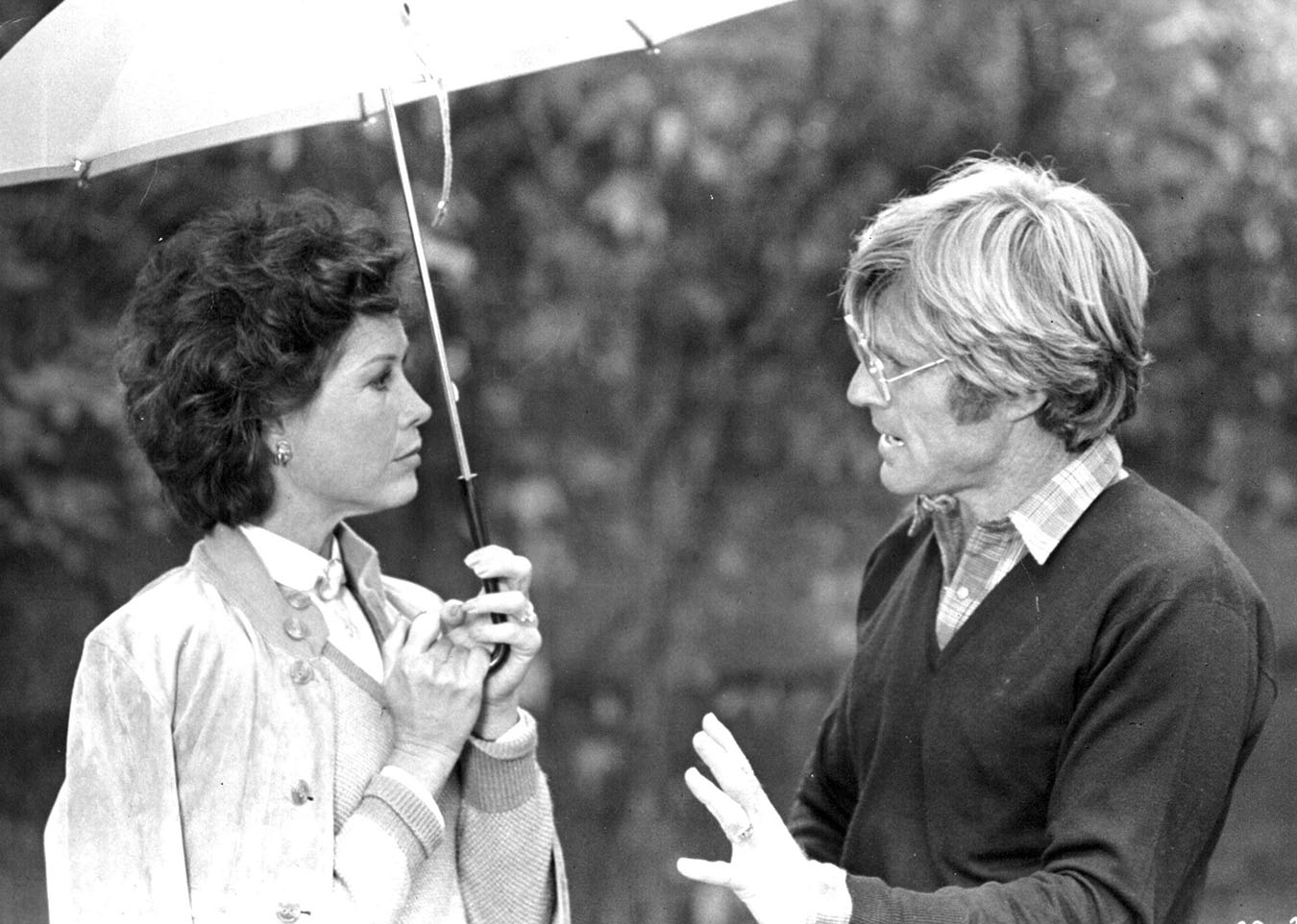
Mary Tyler Moore, who just passed away, directed by Robert Redford on the set of 1980’s Ordinary People:

Cosplay of the Day:

See how to make an awesome giant DIY costume for the ED-209 robot from RoboCop (via Fashionably Geek):

[embedded content]

Franchise Recap of the Day:

Go back through the entire Back to the Future trilogy as it’s recapped with a rap song:

[embedded content]

Movie References of the Day:

All of the movies Shrek references and parodied are showns side by side with the movie in this video by Bora Barroso (via /Film):

[embedded content]

Supercut of the Day:

Villains are often the best part movies, so here’s a lot of them in a very well-edited supercut titled The Death Squad by Cory Stevens:

[embedded content]

Classic Trailer of the Day:

This week is the 20th anniversary of the Sundance debut of Kevin Smith’s Chasing Amy. Watch the original trailer for the indie classic below.

[embedded content]

and

Let’s block ads! (Why?)


No Image

Facebook Tweaks Its 'Trending Topics' Algorithm To Better Reflect Real News

The Facebook logo is displayed at a startup gathering in Paris on Jan. 17. Thibault Camus/AP hide caption

toggle caption

Thibault Camus/AP

An article in an online publication accusing Facebook of suppressing the Women’s March in its trending topics caused a little tempest on social media over the weekend. Facebook says it did not intentionally block any story and is revealing a new way its trending-topics algorithm will now operate.

Paul Bradley Carr, writing for online outlet Pando, on Saturday posted what he said were screen shots of his Facebook pages at the height of the worldwide marches, which brought more than a million people into the streets around the globe to protest the agenda of the Trump administration.

Despite images and stories from the marches filling many people’s personal Facebook feeds and the day’s media coverage, Carr’s screenshots showed no signs of the march in Trending Topics — a feature supposed to reflect popular discussed topics.

And Carr says he discovered he was not the only one who didn’t see the Women’s March reflected on Trending Topics, accusing Facebook of trying to cozy up to the Trump administration. A very unscientific poll by this reporter found that among people in my Facebook and Twitter network most did see the Women’s March or something related trending on their page. However, a few did not.

According to Facebook, the Trending Topics — seen to the right of the main news feed on desktop and in search on mobile — are “based on a number of factors including engagement, timeliness, Pages you’ve liked and your location.” (Facebook pays NPR and other leading news organizations to produce live video streams.)

Article continues after sponsorship

Facebook representatives told NPR that the reason why some people did not see the march as trending had to do with the algorithm behind the feature. Although it took into account major news events and what’s popular on the site, it also accounted for the preferences of each person. It’s possible that Carr’s algorithmic profile indicated he wouldn’t be interested in the Women’s March.

In addition, some people may have seen trending topics they didn’t realize were about the Women’s March. For example, Ashley Judd and Madonna were trending — both women gave speeches at the main march in Washington, D.C.

And, Facebook says, none of this will happen in the future.

As of Wednesday, the company has once again changed its trending algorithms. Personal preferences are now out of the equation. “Facebook will no longer be personalized based on someone’s interests,” Facebook says in a press release. “Everyone in the same region will see the same topics.” For now, a region is considered a country, so everyone in the U.S. should see the same topics.

The latest algorithm changes are part of Facebook’s ongoing effort to curtail the spread of fake news. Some fabricated stories show up in Trending Topics, despite often originating on sites with no history of visitors and getting no coverage from legitimate news media. It’s a lucrative business, explored by NPR in November, when we tracked down one notorious fake-news creator.

The new algorithm would make hoax articles less likely to trend because it will look at “the number of publishers that are posting articles on Facebook about the same topic,” accounting for coverage by multiple news outlets, Facebook says.

According to Facebook the new algorithms will also make it easier for those who did not realize that the trends for “Ashley Judd” or “Madonna” were related to the marches to understand the context around those posts. Trending topics will now feature a headline below each topic name.

One of the updates to Trending Topics will be a display of a headline from a publisher. Facebook hide caption

toggle caption

Facebook

The company says the changes are not a response to complaints about trending during the Women’s March. Facebook says they have been in the works because its users — like Carr — actually expect and want to see trending topics related to the most talked-about real-world events.

Of course, algorithms are programs. While Facebook may hope that its new approach will appease critics such as Carr, the proof will be what happens in the real world of people’s Facebook pages.

“I do give them credit for acknowledging, at least, users’ concerns over this,” says Carr, who called Facebook’s change “a positive step.” But, he added, “we’ll see how it works in practice.”

Let’s block ads! (Why?)


No Image

Aging Giants Of Tennis Reach Australian Open Semi-Finals

NPR’s Ari Shapiro speaks with Sports Illustrated senior writer Jon Wertheim about the performances of Roger Federer and Venus Williams at the Australian Open.

ARI SHAPIRO, HOST:

What’s old is new again in tennis. We’ve reached the semifinals of the Australian Open, and some of the sport’s aging giants are still in the running. Venus Williams, 36 years old, is playing through an autoimmune disorder that causes fatigue. Her sister, Serena, is still alive in this tournament, too. And on the men’s side, both Roger Federer and Rafael Nadal are through to the semis. Fans are crossing their fingers for a throwback final.

Jon Wertheim is a senior writer with Sports Illustrated and has been watching the first Open tennis season in person. Hi there.

JON WERTHEIM: Hi, Ari.

SHAPIRO: In your coverage, you noted that the Williams sisters combined age is 71. Serena’s been dominant in recent years. Venus has been struggling. How has she looked so far this tournament?

WERTHEIM: Venus has looked fantastic. The benefit for these major events, these Grand Slams is that you have a day off in between. You referenced the autoimmune disorder, and I think the fact that Venus has a day in between her matches has been a big benefit. It also hasn’t been oppressively hot here the way it has in past years. But this – I mean it’s just extraordinary. Six of the 8 players remaining as we speak are 30 or over.

SHAPIRO: What do you attribute that to?

WERTHEIM: The game has become so physical that I think durability and strength are absolutely essential. I mean the days of sort of the waifish teenage burnout candidate are laughably obsolete. I think these are pros’ pros. These are professionals. They have nutritionists. They have teams.

And I also think these are just extraordinarily good tennis players. I mean Roger Federer could be, you know, 50 years old and still have terrific tennis talent and hand-eye coordination. I mean I think, especially in the case of Federer, Nadal and the Williams sisters, these are just extraordinary, extraordinary athletes.

SHAPIRO: So I’m trying to figure out whether we’re looking at one of the greatest generations of tennis players of all time or a tennis game where now, for some reason, people in their 30s have the advantage over people in their 20s.

WERTHEIM: Why choose?

SHAPIRO: (Laughter).

WERTHEIM: I think it’s a little bit of both. I mean I think that, you know, we’re going to be telling our grandkids about the Williams sisters, Federer and Nadal. I also think this is ultimately to tennis’s virtue. I mean sports – we all like young and fresh and the new flavors.

But I think it also speaks really well of tennis that these careers now can span – you know, in Serena’s case, she won her first major when Bill Clinton was president. We were joking. She’s going for her Grand Slam title under her fourth different president. And you know, two of them in the middle had two terms. So I think it’s great for tennis that these career shelf lives are so long now.

SHAPIRO: What do you think the chances are that we will see a throwback final between the Williams sisters on the women’s side and between Federer and Nadal on the men’s side?

WERTHEIM: I think in the case of the Williams sisters, the odds are pretty good. Both of them are playing opponents that are ranked lower than they are. I think we’ve still got a ways to go on the men’s side – especially Federer plays Stan Wawrinka, (unintelligible), fellow Swiss player who’s won three major titles of his own. It’s a little bit I think hard overhead. I mean I think from a sentimental standpoint, we would all love to see both of those finals.

SHAPIRO: We, the older generation of tennis watchers (laughter).

WERTHEIM: Yeah, I was going to say. We don’t root in the press box. We say this not out of partiality but simply rooting for the story. But no, I mean I think that it would be great for this event and great for tennis, but I don’t want to diminish the other players remaining.

SHAPIRO: That’s Jon Wertheim, senior writer for Sports Illustrated, speaking with us from Melbourne, Australia. Thanks so much.

WERTHEIM: Thanks, Ari.

(SOUNDBITE OF SHANNON AND THE CLAMS SONG, “OH LOUIE”)

Copyright © 2017 NPR. All rights reserved. Visit our website terms of use and permissions pages at www.npr.org for further information.

NPR transcripts are created on a rush deadline by Verb8tm, Inc., an NPR contractor, and produced using a proprietary transcription process developed with NPR. This text may not be in its final form and may be updated or revised in the future. Accuracy and availability may vary. The authoritative record of NPR’s programming is the audio record.

Let’s block ads! (Why?)


No Image

GOP Lawmakers Look To Shape Health Care Strategy At Philadelphia Retreat

Republicans have many ideas on how to replace the Affordable Care Act, but little consensus on how exactly to do it. Lawmakers are hoping to shape that strategy at a 3-day policy retreat in Philadelphia.

ROBERT SIEGEL, HOST:

Congressional Republicans have gathered in Philadelphia for the party’s annual retreat. President Trump and Vice President Pence will join them tomorrow. Republicans say they’ll use the meeting to decide the party’s strategy to repeal and replace Obamacare. NPR congressional correspondent Susan Davis has more on that effort.

SUSAN DAVIS, BYLINE: Republicans have a plan to replace Obamacare. In fact, they have several. The latest came this week from Republican Senator Susan Collins of Maine and Bill Cassidy of Louisiana. They say it meets the requirements for replacement outlined by President Trump. Here’s Cassidy.

(SOUNDBITE OF ARCHIVED RECORDING)

BILL CASSIDY: That he wishes all to be covered, that he wishes those with pre-existing conditions to continue to have coverage, that there not be mandates and that we make it lower cost. I think – and I think Senator Collins would agree – that there’s not many ways to get there, and as far as we know, none better than this.

DAVIS: The Cassidy-Collins plan would give states three options – keep Obamacare as is, enact their own insurance expansion or opt out of federal assistance entirely. It’s unique in that it’s the only plan so far that could keep Obamacare partially intact. Collins admits it’s a work in progress. But she says Republicans need to nail down their plan to calm down the public.

(SOUNDBITE OF ARCHIVED RECORDING)

SUSAN COLLINS: But if we do not start putting specific legislation on the table that can be debated, refined, amended and enacted, then we will fail the American people.

DAVIS: It’s also a non-starter for many conservatives, who believe anything less than full repeal would be breaking a fundamental campaign pledge. A bloc of conservatives in the House introduced their own plan earlier this month. That one would repeal the individual mandate and replace it with a system that gives people tax credits if they choose to buy insurance. North Carolina Republican Mark Walker is a co-sponsor.

MARK WALKER: It’s something that’s a good base. I’ve said this the other day. It’s round one of a 15-round engagement.

DAVIS: Other key players, like Senate Health Chairman Lamar Alexander, are taking things off the table. Here’s Alexander in an exchange with Georgia Congressman Tom Price, Trump’s nominee for Health and Human Services secretary, at a recent hearing.

(SOUNDBITE OF ARCHIVED RECORDING)

LAMAR ALEXANDER: Let me ask you this. Is this the bill – any effort to replace and repeal Obamacare – is this the bill to reform Medicare?

TOM PRICE: Absolutely not.

DAVIS: Medicare may be off the table, but Medicaid is on it. The health care program for the poor was expanded under Obamacare. Trump administration officials have said their upcoming plan will include a longstanding conservative proposal to overhaul Medicaid from a guaranteed benefit to a block grant system. That would give states authority on how to spend that money.

But that plan would likely run into a democratic blockade in the Senate, where Democrats oppose pretty much everything Republicans are trying to do to repeal Obamacare, which means Republicans are also strategizing on how to go it alone like Democrats ultimately did seven years ago. Here’s Senate Majority Leader Mitch McConnell.

(SOUNDBITE OF ARCHIVED RECORDING)

MITCH MCCONNELL: We anticipate no cooperation from the other side. And so it – you know, it would be incumbent upon us, us meaning Republicans, to come up with a replacement.

DAVIS: All of these concerns will be aired out at the retreat by key stakeholders, says House speaker Paul Ryan.

(SOUNDBITE OF ARCHIVED RECORDING)

PAUL RYAN: We’re going to work with all of our committees that are in charge of health care legislation – the Education and Workforce Committee, the Ways and Means Committee, the Commerce Committee – and we’re going to have a full, exhausting conversation at our retreat to go through all of these things.

DAVIS: And Walker, a sponsor of the House conservatives’ plan, says Republicans are acutely aware of the challenges presented by their repeal and replace plans.

WALKER: This is something that I believe if we don’t get right Democrats will do their best to make the key focal point in the 2018 elections. So there is some motivation. It’s not just the fact – we want to do the right thing. This is something very sensitive when it comes to people’s health care. But from a political side, there’s a benefit to get it right as well.

DAVIS: And huge political risks if they don’t – just ask Democrats. Susan Davis, NPR News, the Capitol.

Copyright © 2017 NPR. All rights reserved. Visit our website terms of use and permissions pages at www.npr.org for further information.

NPR transcripts are created on a rush deadline by Verb8tm, Inc., an NPR contractor, and produced using a proprietary transcription process developed with NPR. This text may not be in its final form and may be updated or revised in the future. Accuracy and availability may vary. The authoritative record of NPR’s programming is the audio record.

Let’s block ads! (Why?)


No Image

Today in Movie Culture: The Movie References in 'La La Land,' Fan Trailer for a 'Spider-Verse' Movie and More

Here are a bunch of little bites to satisfy your hunger for movie culture:

Movie References of the Day:

Today La La Land became a big deal Oscar nominee, so here’s a video showcasing the old movies it references (via Cinematic Montage Creators):

[embedded content]

Video Essay of the Day:

For Fandor Keyframe, Jacob T. Swinney highlights the most embarrassing Oscar nominations, including Click:

[embedded content]

Fan Trailer of the Day:

All the cinematic versions of Spider-Man collide in this spiffy fake trailer for a Spider-Verse movie:

[embedded content]

Fan Theory of the Day:

Does the red coloring for the Star Wars: The Last Jedi logo mean Luke is turning to the Dark Side? BossLogic depicts the theory to be so:

The red logo obviously means ……. 😛 @starwars @HamillHimself pic.twitter.com/3wk9KTG676

— BossLogic (@Bosslogic) January 24, 2017

Reworked Movie of the Day:

Speaking of Star Wars, CineFix shows us what an old school video game of Rogue One would look like with the 8-Bit Cinema version of the movie:

[embedded content]

Movie Takedown of the Day:

Michael Bolton shows up in the Honest Trailer for Willy Wonka & the Chocolate Factory for some sweet musical spoofs:

[embedded content]

Vintage Image of the Day:

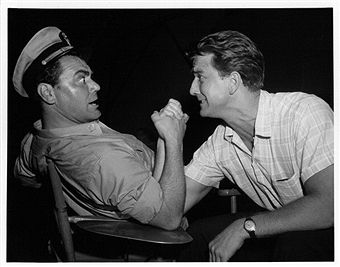
Ernest Borgnine, who was born 100 years ago today, arm wrestles with Leslie Nielsen during a break on the set of 1958’s Torpedo Run:

Movie Trivia of the Day:

Since the Oscar nominees were announced today, here’s some trivia about Best Picture winner The Hurt Locker from CineFix:

[embedded content]

Movie Food of the Day:

The new episode of Binging with Babish shows us how to make the strudel from Inglorious Basterds:

[embedded content]

Classic Trailer of the Day:

Today is the 20th anniversary of the Sundance debut of David Lynch’s Lost Highway. Watch the original trailer for the surreal thriller below.

[embedded content]

and

Let’s block ads! (Why?)


No Image

Some Firms Are Harnessing Trump's Tweets As A Marketing Strategy

Using his personal Twitter account, Trump has publicly thanked Walmart, among other companies, for their plans to increase investment and job creation. It’s not yet clear how his tweets may affect company decision making. Joe Raedle/Getty Images hide caption

toggle caption

Joe Raedle/Getty Images

Rarely has a U.S. president been so willing to use his platform as both bullhorn and cudgel to exert public pressure on individual companies.

But one of the hallmarks of President Trump’s approach to economic policy since his election has been his willingness to publicly endorse — and shame — companies in order to advance his message.

The new president’s frequent use of social media has created an entirely new kind of public-relations channel, one that companies are trying to exploit, in particular by touting their hiring announcements.

Last week, Trump publicly thanked Walmart for its “big jobs push” after the retailer last week released details of a hiring and capital spending plan that it had originally announced in October before the election.

Thank you to General Motors and Walmart for starting the big jobs push back into the U.S.!

— Donald J. Trump (@realDonaldTrump) January 17, 2017

Sprint Chairman Masayoshi Son parlayed his Dec. 6 meeting with the then-president elect into several supportive tweets from Trump. Ford, General Motors, Hyundai Motors and its affiliate Kia, have all made investment announcements referencing Trump’s tax or economic policies.

Masa (SoftBank) of Japan has agreed to invest $50 billion in the U.S. toward businesses and 50,000 new jobs….

— Donald J. Trump (@realDonaldTrump) December 6, 2016

Masa said he would never do this had we (Trump) not won the election!

— Donald J. Trump (@realDonaldTrump) December 6, 2016

“They’re using Trump as a marketing channel,” says Jonah Berger, a marketing professor at the University of Pennsylvania’s Wharton School.

He says it’s a new paradigm, both for the president and for major company brands.

“Companies didn’t used to feel like they could curry favor with a president through making some moves like this, but today’s day and age it seems like a possibility so companies are exploring it,” Berger says.

Trump’s prime focus has been the auto industry, where he has named individual companies and brands as possible targets for higher tariffs on cars made in Mexico.

Article continues after sponsorship

On Monday, during his first meeting with business leaders, Trump called out Ford CEO Mark Fields and the company’s decision to scrap plans for a $1.6 billion in Mexico in favor of expanding in Michigan.

Thank you to Ford for scrapping a new plant in Mexico and creating 700 new jobs in the U.S. This is just the beginning – much more to follow

— Donald J. Trump (@realDonaldTrump) January 4, 2017

“Mark was so nice with the plant, I wanted to sit next to him,” Trump told the business executives.

Trump criticized Ford’s rival, General Motors, earlier in the month because it manufactures some Chevy Cruzes for U.S. sale in Mexico. But then last week, GM said it would invest an additional $1 billion in the U.S., and Trump thanked the company in a tweet.

General Motors is sending Mexican made model of Chevy Cruze to U.S. car dealers-tax free across border. Make in U.S.A.or pay big border tax!

— Donald J. Trump (@realDonaldTrump) January 3, 2017

GM spokesman Patrick Morrissey acknowledges that with U.S. job creation in the spotlight, “this was good timing for us to share what we are doing.”

It is not yet clear how Trump’s Twitter account might shape decision making for companies going forward. Many of the investment plans Trump has tweeted were planned — or even originally announced — well before the election.

Take, for example, Fiat Chrysler’s announcement to increase its U.S. investment by $1 billion — which garnered a “thank you” tweet from Trump this month. CEO Sergio Marchionne told reporters that investment decision was made more than a year ago, and that the attaboy from Trump wasn’t anticipated.

“None of us have had a tweeting president before,” Marchionne said at a Dec. 9 press conference. “It’s a new way of communication, and I think we’re going to have to learn how to respond.”

It’s finally happening – Fiat Chrysler just announced plans to invest $1BILLION in Michigan and Ohio plants, adding 2000 jobs. This after…

— Donald J. Trump (@realDonaldTrump) January 9, 2017

In most cases, companies are capitalizing on investment and hiring decisions that were set in motion well before Trump’s election. Berger, the Wharton marketing professor, says it’s not clear that companies will change investment decisions based on favorable tweets.

“Whether we’ll see companies actually changing their behavior, you know, actually doing different things or moving jobs in one way or another because of him, that’s a little bit more costly, and I think we will see some of that, but not as much as firms taking advantage of old news and recycling it,” Berger says.

But the new president’s approval ratings are already low, so could companies see a backlash for trying to curry favor?

It’s certainly possible, Berger says, but if Trump is endorsing the companies, and not the other way around, there’s less chance it could backfire.

Let’s block ads! (Why?)


No Image

NASCAR Implements New Point System To Change How Fans Watch Sport

NASCAR is reinventing itself — again. A new point system may or may not draw new fans to the sport, but it will change how people watch. NPR’s Robert Siegel talks to Scott Fowler, sports columnist for the Charlotte Observer, about the new changes.

ROBERT SIEGEL, HOST:

NASCAR’s latest revamping may or may not bring in more fans, but it will change how stock car racing fans watch. Races used to be one long event – 500 miles or so. You earned points. The higher you finished, the more points you won. And the top 16 point earners at the end of the season moved on to the post-season.

Well, now each race will have three stages. Essentially fans will have three races in one to enjoy, and drivers will have more opportunities to earn points. But will everyone enjoy the new system? Well, for that, we turn to Scott Fowler, sports columnist for the Charlotte Observer. Welcome to the program.

SCOTT FOWLER: Thank you very much. I’m a big fan.

SIEGEL: Why is NASCAR doing this?

FOWLER: NASCAR needs a boost. NASCAR was a very hot sport, Robert, in – 20 years ago, even 10 years ago. Now stadiums are half empty. Millennials don’t want to sit around and watch a four-hour race. They’re a little bit desperate here, but ultimately I think it’s a smart move. They are trying to give you more of a reason to watch for a longer period of time.

SIEGEL: And the period of time at issue is really, say, the first hour of the race when now it’s consequential. Somebody could earn some points by winning.

FOWLER: Exactly. There’s something around here we call a NASCAR nap, which is what you could take after the start of a race for about three hours until the end of the race when all – everything was decided in the last 20 laps or so. Other than crashes or something, there wasn’t a lot going on.

These races are long. The shortest ones usually are 400 miles. So think of driving, say, from Washington to New York and back. That’s 400 miles. That’s how long the shortest ones of these races are. So it’s a long time to make people pay attention. And you know how attention spans are these days.

SIEGEL: Well, are the breaks after the first third and the second third of the race – are these going to be like periods in a basketball game or a hockey game? That is, will it stop and break for commercials and interview people?

FOWLER: Yes. It will be kind of pre-determined breaks much like almost two halftimes I guess you could say. They’re shorter, but that will be the time where fans will naturally go to the refrigerator. Or if they’re in the stands, hopefully they’re going to go and buy some more concessions. I’m sure the track operators would like that.

SIEGEL: The first race of the season, the Daytona 500, is barely a month away. It doesn’t seem like a lot of time for drivers and their teams to adjust to what sounds like a pretty radical change. Isn’t that rather fast?

FOWLER: I think that’s a fair statement, yeah. I think people who are doing this right now just went from taking algebra two to taking a graduate-level calculus class. I really think there’s a lot of permutations that not everyone has thought of yet that will only become apparent when it happens.

But that’s kind of exciting, and NASCAR, like I was mentioning, needs a jolt of excitement. Everyone knows what it’s like to go in a car and punch an accelerator and go fast and that thrill. And they’re trying to get back to that a little bit more opportunistically I suppose in this digital age where they really have to capture people’s attention.

The other thing I should point out – one thing this sport doesn’t have – and this will not change. There is no Dale Earnhardt Sr. coming back into the fore. I mean he was this sport’s absolute superstar – died in 2001 in a last-lap crash at the Daytona 500. And in some ways, things have not been quite the same since. His son is a very popular racer in NASCAR but has not had the same level of success. And this sport is looking for that as well. It needs another superstar.

SIEGEL: That’s Scott Fowler, sports columnist for the Charlotte Observer. Thanks for talking with us.

FOWLER: Thank you very much.

(SOUNDBITE OF THE LEISURE SOCIETY SONG, “JUST LIKE THE KNIFE”)

Copyright © 2017 NPR. All rights reserved. Visit our website terms of use and permissions pages at www.npr.org for further information.

NPR transcripts are created on a rush deadline by Verb8tm, Inc., an NPR contractor, and produced using a proprietary transcription process developed with NPR. This text may not be in its final form and may be updated or revised in the future. Accuracy and availability may vary. The authoritative record of NPR’s programming is the audio record.

Let’s block ads! (Why?)