
Articles by admin

No Image

Victims Of Contaminated Steroids Still Hurting: 'My Life's Upside-Down'

A vial of injectable steroids from the New England Compounding Center seen at the Tennessee Department of Health in Nashville in 2012. Kristin M. Hall/AP hide caption

toggle caption

Kristin M. Hall/AP

Hundreds of people around the country are still suffering from complications linked to injections of tainted medicine produced at a Massachusetts pharmacy in 2012.

A nationwide outbreak of fungal infections was tied to the shipment of nearly 18,000 contaminated vials of preservative-free methylprednisolone, a steroid, made by the New England Compounding Center in Framingham, Mass.

Barry Cadden, an owner of the pharmacy, is now on trial in U.S. District Court in Boston. He faces federal charges that include racketeering and second-degree murder. He pleaded not guilty.

The trial, which began Jan. 9, is expected to last two or three months.

Federal prosecutors say the steroids were mixed in unsanitary conditions with expired ingredients.

Bruce Singal, Cadden’s attorney, declined to comment. In court, he has said that Cadden oversaw the company’s operations, but didn’t work in the facility’s “clean rooms” or mix the drugs that harmed people. “He is not a murderer and he is not responsible for their deaths,” Singal said, according to the Associated Press.

The outbreak of fungal infections tied to injections with contaminated medicines killed at least 64 people and sickened about 700 more. A report about the public health investigation and response published in The New England Journal of Medicine in 2013, said the outlook for “patients remains uncertain. Although many case patients have completed antifungal therapy and their conditions are currently stable or improved, relapses of infection are possible.”

Many people who got sick after the injections are still waiting for compensation checks from a legal settlement with the compounding pharmacy.

Article continues after sponsorship

Several people who became sick after injections talked about their lives since then. None has testified in the case but some have plans to attend the trial. Here are excerpts from conversations with them.

Bill Thomas Courtesy of Bill Thomas/WBUR hide caption

toggle caption

Courtesy of Bill Thomas/WBUR

Bill Thomas, 62, of Lowell, Mich.

The last injection — the steroid injection that I got in my spine — was for pain in my legs, pain and numbness, due to spinal cord injuries. During the course of the next few days, I felt like I was coming down with the flu … I had trouble remembering things. I came down with an incredible headache that didn’t go away. I had terrible neck pain, and my eyes were very sensitive to light.

I’ve gone from being a person who walked two or three miles a few times a day. … I used to go out a lot in wilderness areas and did backpacking. And now I only leave the house a couple times a week. I’m always tired and always in pain, I can’t think. I get confused easily. … I can’t read like I used to.

Justice needs to be done here. Tremendous harm was done to a great many people, and that should not be forgotten.

Angela Farthing, 46, of Maryland

Angela Farthing Courtesy of Angela Farthing/WBUR hide caption

toggle caption

Courtesy of Angela Farthing/WBUR

I had fungal meningitis and was admitted to the hospital. When I was released, I ended up having a stroke and developed a brain aneurysm. I was readmitted, and I was there for almost another two months. … I got very sick. I was vomiting all the time, had horrible headaches every day. I lost a good 30 pounds; I went down to 100 pounds. … I missed about a year of work. And it was discovered later that I’d developed an abscess in my spinal cord. I had to have that surgically removed. But they could not get all of the abscess out, because they said if they would have sliced any deeper, they could have paralyzed me or I could have lost bowel or bladder function.

[My husband] really suffered quite a bit when I was diagnosed. He had to take care of me, he had to bathe me, he had to change me, he had to do my IV. … He had to take over cleaning the house and cooking and taking care of our dogs. … He was a recovering alcoholic, and unfortunately, he stopped going to AA meetings and he succumbed to his addiction.

Kathy Pugh, daughter and caregiver for her mother, Evelyn March, 85, of Pinckney, Mich.

[My mother had] an abscess in her back on her spine at the site of the injection of the tainted medicine. Now she’s not doing well at all. It’s pretty much 24/7 pain. She went from being a very vital woman with just sporadic problems with her back, to where she’s bedridden in a hospital bed on oxygen, looking up at the ceiling. That’s her life — occasionally trying to watch TV, but she finds it hard to concentrate for a very long length of time. That’s one of the side effects of the antifungal medication, which it was ‘take or die.’ “

Kathy Pugh (right) and her mother, Evelyn March Courtesy of Kathy Pugh/WBUR hide caption

toggle caption

Courtesy of Kathy Pugh/WBUR

Evelyn March

My life’s upside-down compared to what it was. I don’t understand why things can be allowed to happen like that. Getting old is bad enough, but then to put something else on to it. … I hope [Barry Cadden] gets his butt burned. I mean he, he, … well, I’d better shut up, because I’d probably say more than I should say.
Let’s block ads! (Why?)


No Image

Today in Movie Culture: 'Avengers: Infinity War' Trailers Tease, James Marsden in Green Lantern and More

Here are a bunch of little bites to satisfy your hunger for movie culture:

Production Photo of the Day:

Today was the start of production for Avengers: Infinity War in Atlanta, and the Russo Brothers are already showing us trailers (via ScreenCrush):

Hidden Camera Stunt of the Day:

Speaking of the MCU, Chris Evans surprised some comic shop customers to promote a Captain America-themed escape room for charity (via Geek Tyrant):

[embedded content]

Dream Casting of the Day:

With the shortlist out on whom Warner Bros. wants for Hal Jordan in Green Lantern Corps, BossLogic offers a look at his pick, James Marsden:

Quick piece on James Marsden as Hal, he basically is Green Lantern looks wise, and in my opinion a very underrated actor with great range pic.twitter.com/MfekXWZcS2

— BossLogic (@Bosslogic) January 23, 2017

Redone Trailer of the Day:

Darth Blender recreated the new Injustice 2 video game trailer with footage from old DC movies and TV series:

[embedded content]

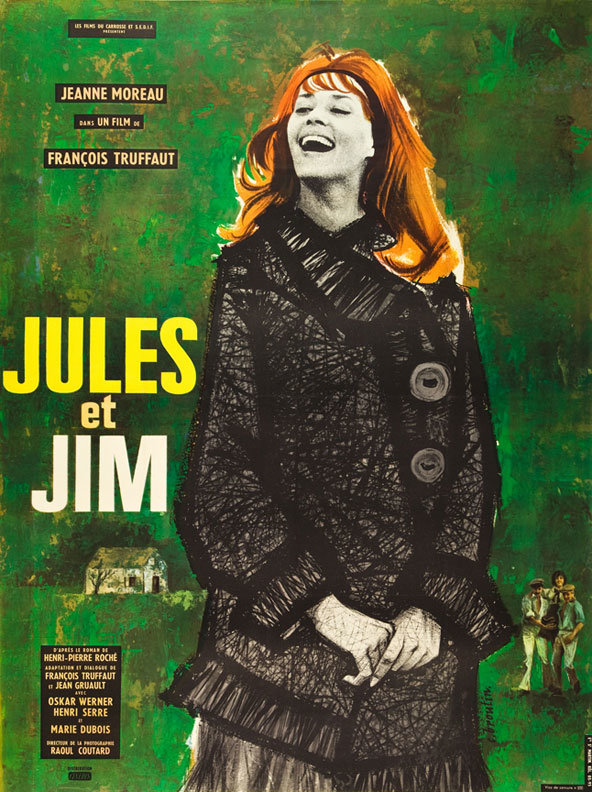
Vintage Poster of the Day:

Christian Broutin designed this iconic poster for the French release of Francois Truffaut’s Jules and Jim, which was 55 years ago today:

Movie Culture Parody of the Day:

Aziz Ansari and Saturday Night Live poked fun of the idea that it’s not okay to not absolutely love La La Land:

[embedded content]

Bad Film Analysis of the Day:

Learn the hidden meaning of Watchmen from an alien in the future in the latest edition of Earthling Cinema:

[embedded content]

Cosplay of the Day:

It’s too bad Marvel Studios doesn’t own the rights to X-Men characters or Disney’s live-action Beauty and the Beast could have looked liked this (via Live for Films):

Marvel’s Beauty and the Beast

Reworked Movie of the Day:

In the R-rated version of Frozen, it’s Elsa who killed her and Anna’s parents. It’s also much gorier:

[embedded content]

Classic Trailer of the Day:

Today is the 70th anniversary of Lady in the Lake, the first-person POV detective movie. Watch the original trailer for the mystery classic below.

[embedded content]

and

Let’s block ads! (Why?)


No Image

Dippin' Dots Beef Puts White House Press Secretary On The Spot

A staple of ballparks and malls, Dippin’ Dots has billed itself as the ice cream of the future. Travis Nicholson/Flickr hide caption

toggle caption

Travis Nicholson/Flickr

Dippin’ Dots describes its product as “an unconventional ice cream treat that’s remarkably fresh and flavorful, introducing the world to beaded ice cream” and “the original and unbeatable flash-frozen ice cream sensation.” Donald Trump’s press secretary, Sean Spicer, disagrees. For years, he has mocked the company and its “ice cream of the future” on Twitter.

In tweets from 2010 and 2011, Spicer said Dippin’ Dots was not the ice cream of the future. In 2011, Spicer also tweeted a link to a Wall Street Journal article about the company’s bankruptcy, and in his caption described Dippin’ Dots as “Ice Cream of the Past.” In September 2015, Spicer complained, “If Dippin Dots was truly the ice cream of the future they would not have run out of vanilla,” tagging the Washington Nationals baseball team in an apparent to reference a shortage of vanilla Dippin’ Dots at Nationals Park.

we may not have inauguration attendance data yet, but one set of record turnout numbers are in:

Sean spicer’s angry dippin dots twetes pic.twitter.com/KSXlXLLEeB

— ?_? (@MikeIsaac) January 22, 2017

Since Spicer assumed the role of White House press secretary, these tweets have been making the rounds on the Internet, enough so for Dippin’ Dots to write an open letter to Spicer, asking to “be friends rather than foes” and offering an ice cream social to the White House and White House press corps.

Since that letter’s release, NPR reached out to Dippin’ Dots for further comment on the (one-sided) feud. Here’s what Billie Stuber, media relations manager for Dippin’ Dots, and Shama Hyder, who handles markets for the company, told us (questions and answers have been edited for clarity):


When did Dippin’ Dots realize that Sean Spicer had a beef with them?

Billie Stuber: [Laughter] Well, it was a bit of a surprise. We’re not used to beef. We’re friends with everyone. So we noticed [Sunday] some of his old tweets began to resurface and circulate.

Article continues after sponsorship

What was your thinking?

Stuber: I scratched my head a little bit at first, and I thought, “Really?” And I had to look back and I thought, “Yeah, that really is seven years old.” First we kinda watched. … And then as more folks started to talk about it … we began to get our brainpower all together and think about how we wanted to respond.

Whose idea was the open letter?

Stuber: The open letter was actually Shama’s idea.

Shama Hyder: As Billy mentioned, Dippin’ Dots tries to stay very out of the political scene, because the consumers are across the board. … Ice cream is probably the least political of things you can find. It’s about making friends and not foes. … The open letter isn’t just to Sean Spicer; it’s really to the customers as well. This is what Dippin’ Dots stands for. We’re really about building a brand that’s inviting, that’s encompassing. And when the customers say, “Hey, we want to hear from you,” they want to hear from us.

Was there any fear of being caught up in politics? Over the past few years we have seen brands like Skittles or M&M’s be caught up in some debates about politics and race that have gotten really testy. Were you guys scared?

Hyder: From a social media perspective, these things can go either way. It takes one person misreading something. So yeah, that was a concern, but [our CEO’s and] the Dippin’ Dots team’s greater concern was making sure that they responded to their customers. … People expected a response. … The idea of not being responsive to customers was just so much worse.

Part of your letter talks about making jobs for Americans, ideals people of both parties can get behind. How do you think the White House will respond to that message?

Stuber: I hope they do respond. We’re totally as about as American as you can get. Our headquarters are in Kentucky. The company’s 29 years old. We hope that he does respond, and maybe he can truly experience Dippin’ Dots in a different way.

Were you serious about having an ice cream party at the White House briefing Room?

Both: Absolutely!

Stuber: We are prepared. We were just counting how many pallets we would need to deliver to feed the White House. So I really hope he calls us on that one.


Spicer has yet to respond to NPR’s request to comment on #DotGate.

Meanwhile, he has been getting attention for another spat — this one with Target. A 2014 tweet seemed to pick a fight with the department store chain over milk, with Spicer writing, “come on @target — just realized the two gallons of milk you sold me expire tomorrow.” Target’s official Twitter account responded soon after that initial tweet, with their apologies.

come on @target — just realized the two gallons of milk you sold me expire tomorrow

— Sean Spicer (@seanspicer) March 17, 2014

Let’s block ads! (Why?)


No Image

Rural Colorado's Opioid Connections Might Hold Clues To Better Treatment

Melissa Morris outside her home in Sterling, Colo. She quit using heroin in 2012, and now relies on the drug Suboxone to stay clean. She’s also been helping to find treatment for some of the neighbors she used to sell drugs to. Luke Runyon/Harvest Public Media hide caption

toggle caption

Luke Runyon/Harvest Public Media

A doctor handed Melissa Morris her first opioid prescription when she was 20 years old. She’d had a cesarean section to deliver her daughter and was sent home with Percocet to relieve post-surgical pain. On an empty stomach, she took one pill and lay down on her bed.

“I remember thinking to myself, ‘Oh, my God. Is this legal? How can this feel so good?’ ” Morris recalls.

Soon, she started taking the pills recreationally. She shopped around for doctors who would write new prescriptions, frequenting urgent care clinics where doctors didn’t ask a lot of questions and were loose with their prescription pad.

Morris’s path started with Percocet and Vicodin, commonly prescribed pain medications for acute injuries and illnesses. When those drugs no longer got her high, she switched to Oxycontin pills. Then she started injecting Oxycontin. After that, she got her hands on Fentanyl patches, a highly addictive and potent opioid. She’d chew on them instead of applying them to skin as the package directed.

Article continues after sponsorship

When doctors got wise to Morris’ shopping tactics, her supplies of the pills diminished, and she turned to heroin, instead.

She started stealing to fund her addiction. Morris then got into the drug trade herself, dealing methamphetamine and other illicit substances, to raise money to buy more heroin.

“You can buy a gram of heroin for 50 bucks,” she says. It’s relatively cheap. “That’s why so many people here have turned to heroin.”

Morris lives in Sterling, Colo., a city of 14,000 that’s a two-hour drive northeast of Denver. The biggest employer is a state prison. Since 2002, the death rate from opioid overdoses in Logan County, which includes Sterling, has nearly doubled, according to data analyzed by the Colorado Health Institute. Morris says she has known at least 10 people in her community who have overdosed on a mix of drugs in the last few years.

Sterling is far from unique. Rural areas and small cities across the country have seen an influx not only in the prevalence of prescription opioids, but in illicit ones like heroin. According to the U.S. Centers for Disease Control and Prevention, opioids were involved in more than 33,000 deaths in 2015 — four times as many opioid-involved deaths as in 2000. A recent University of Michigan study found the rates of babies born with symptoms of withdrawal from opioids rising much faster in rural areas than urban ones.

Like Morris, many new heroin users find themselves using the drug after getting addicted to prescription drugs first. The CDC reports three out of four new heroin users report abusing prescription opioids prior to trying heroin. In the U.S., heroin-related deaths more than tripled between 2010 and 2015, with 12,989 heroin deaths in 2015.

As the drug use reaches into more communities across the country, researchers are scrambling to both diagnose what causes some people and some regions to be more susceptible to opioid abuse, and to devise solutions. Dr. Jack Westfall, a family physician and researcher at the University of Colorado and with the High Plains Research Network, works with a network of rural clinics and hospitals in the state. He says many doctors on the Plains are feeling frantic.

“We don’t know what to do with this wave of people who are using opioids,” he says. “They’re in the clinic, they’re in the ER, they’re in the hospital. They’re in the morgue, because they overdosed.”

For more than a decade, opioids have been a key part of a rural doctor’s pain management for patients, Westfall says. Treatment options are often fewer in a rural area; alternatives like physical therapy may not be available or convenient, so drugs are a prime option.

Some researchers think larger economic, environmental and social factors leave rural Americans at particular risk, says University of California, Davis, epidemiologist Magdalena Cerdá. After the 2008 recession, rural areas consistently lagged behind urban areas in the recovery, losing jobs and population.

“You have a situation where people might be particularly vulnerable to perhaps using prescription opioids to self-medicate a lot of symptoms of distress related to sources of chronic stress — chronic economic stress,” Cerdá says.

Plus, the specific types of jobs more prevalent in rural areas — like manufacturing, farming and mining — tend to have higher injury rates. That can lead to more pain, and possibly, to more painkillers.

In some ways, the social structures of rural regions contribute to the spread of illicit drugs, says Kirk Dombrowski, a sociologist at the University of Nebraska-Lincoln.

“One of the things that is counterintuitive to most of what we think of as [being part of life in] a small town is that rural people have much larger social networks than urban people,” Dombrowski says.

In some cases, his research suggests, rural residents know and interact with roughly double the number of people an average urban resident does — giving rural people more opportunities to know where to access drugs.

“So some of those social factors of being in a small town can definitely contribute,” he says.

“It’s not a fundamentally rural problem,” says, Tom Vilsack, Barack Obama’s secretary for the U.S. Department of Agriculture, who led the Obama administration’s interagency push to curb opioid abuse. “But it’s a unique problem in rural America because of the lack of treatment capacity and facilities.”

That lack of treatment is definitely a problem in Sterling, where patients often have to drive a long way to get care.

Melissa Morris relies on Suboxone, a prescription combination of buprenorphine and naloxone that’s used to help wean people off heroin or other opioids. Morris says she doesn’t get high when taking it, but does avoid the vomiting, diarrhea and sweating that comes with opioid withdrawal. She puts it under her tongue to let it dissolve and take effect.

Morris, who has been off heroin since 2012, makes a two-hour drive to a clinic to pick up her supply of Suboxone. It’s in short supply in many rural communities, in part because few rural doctors have gone through the required training to prescribe it.

There’s there’s a six-week waiting list to get an appointment with the only doctor in Sterling who is certified to prescribe the drug, Morris says. Other areas of Colorado’s eastern Plains have no doctors at all who are legally able to dispense Suboxone.

A new effort from University of Colorado researchers could help there, with plans to train 40 primary care doctors, their clinical care teams, and nurses in Colorado’s Plains and southern San Luis Valley.

Morris acknowledges that close social ties in her town may have contributed to the spread of opioids there; opioid users, she says, tend to “stick up for each other.” Those bonds can spread drug use quickly, but they also cut other ways, she says. Just recently she recruited two opioid-dependent friends to the clinic she goes to weekly for treatment.

“I used to sell them pill and heroin,” says Morris, who is now helping these friends get clean. “And so I do have hope. I’ve seen those success stories.”

This story comes to us from Harvest Public Media, a collaborative public media project reporting on important stories in rural America.

Let’s block ads! (Why?)


No Image

Atlanta Falcons, New England Patriots To Meet On Super Bowl Sunday

Atlanta quarterback Matt Ryan tumbled into the end zone, slammed the ball to the turf with a thunderous spike, and let out a scream that showed just how much he wanted this game. He wants the next one even more.

With another MVP-worthy performance and plenty of help from Julio Jones, Matty Ice guided the Atlanta Falcons to a 44-21 rout of the Green Bay Packers for the NFC championship Sunday, a showing that erased any doubts about whether Ryan can win the big games.

In his ninth season, he’s finally headed to his first Super Bowl.

“We’ll enjoy it because it’s hard to get to this point. I know that from experience,” Ryan said. “But our ultimate goal is still in front of us.”

The Falcons (13-5) will face Tom Brady and the Patriots on Feb. 5 in Houston, just the second Super Bowl appearance in Atlanta’s 51-year history. Eighteen years ago, they lost to Denver in John Elway’s final game.

Ryan threw for 392 yards and four touchdowns, but it was his 14-yard scoring run — his first TD on the ground since 2012 — that really set the tone .

Jones was right in the middle of things, too. After barely practicing during the week because of a lingering toe injury, he finished off the Packers with a 73-yard catch-and-run on Atlanta’s second snap of the second half, pushing the lead to 31-0 and essentially turning the rest of the Georgia Dome finale into one long celebration.

Article continues after sponsorship

“He’s a beast,” Ryan said. “I’ve been lucky to play with him as long as I have. He was impressive today. I know he wasn’t feeling his best, but he’s a warrior.”

Jones finished with nine catches for 180 yards and two scores, which included a toe-dragging catch for a 5-yard touchdown with 3 seconds left in the first half, sending the Falcons to the locker room up 24-0.

Ryan sparked more delirious chants of “MVP! MVP! MVP!” as he carved up an injury-plagued Packers secondary that had no way of stopping a team that averaged nearly 34 points a game during the regular season and romped to a 36-20 victory against Seattle’s Legion of Boom last week.

The Packers, riding an eight-game winning streak and coming off a thrilling upset of the top-seeded Dallas Cowboys , got a taste of what they’d be in for on Atlanta’s very first possession. Driving 80 yards in 13 plays, the Falcons converted three third downs, the last when Ryan scrambled away from pressure and flipped a shovel pass to Mohamed Sanu for a 2-yard score.

Tom Brady’s redemption tour is headed to the Super Bowl.

After beginning the 2016 season suspended for four games for his role in the “Deflategate” scandal, the New England quarterback relentlessly carried the Patriots to an unprecedented ninth appearance in the title game, and his seventh.

Brady threw for a franchise playoff-best 384 yards and three touchdowns in a 36-17 rout of the helpless Pittsburgh Steelers on Sunday in New England’s sixth consecutive AFC championship game.

The Patriots, who have won nine in a row, are early 3-point favorites heading to face Atlanta in two weeks in Houston, seeking their fifth NFL title with Brady at quarterback and Bill Belichick as coach. Belichick’s seventh appearance in a Super Bowl will be a record for a head coach.

Brady was banned by NFL Commissioner Roger Goodell when New England (16-2) went 3-1 to open the schedule.

Since his return in Week 5, the only defeat came at home to Seattle, and Brady, 39, had one of the best seasons of a Hall of Fame-caliber career.

Brady’s main weapon was Chris Hogan. The previously unheralded receiver found open spaces everywhere on the field against a leaky secondary. Hogan caught nine balls for 180 yards and two scores.

“It’s been a long journey, but I’ve worked really hard to get to this point,” said the product of Monmouth – yes, Monmouth. “I couldn’t be happier to get to be a part of this thing, this team – this whole thing.”

Top wideout Julian Edelman added eight receptions for 118 yards and a touchdown as Brady tied Joe Montana’s playoff record with nine three-TD passing performances. Brady also had his 11th 300-yard postseason game, extending his NFL record, completing 32 of 42 throws.

“We won a lot of different ways under a lot of different circumstances,” Brady said. “Mental toughness is what it is all about and this team has got it. We’ll see if we can write the perfect ending.”

The ending for Pittsburgh (13-6) was anything but perfect. It lost star running back Le’Veon Bell late in the first quarter to a groin injury.

That didn’t seem to matter much in a record 16th conference title match for the Steelers, who made mistakes in every facet of Sunday’s game. The 19-point loss ended their nine-game winning streak.

The franchise that has won the most Super Bowls, six, and the most postseason games, 36, never seemed likely to challenge in the misty rain.

Let’s block ads! (Why?)


No Image

Abortion Plots On Television 'Becoming More Diverse And Accurate'

On this 44th anniversary of Roe v. Wade, Sociologist Gretchen Sisson of University of California, San Francisco talks about her research into abortion-related plots on television.

MICHEL MARTIN, HOST:

Today is the 44th anniversary of Roe v. Wade. That’s the Supreme Court decision that effectively legalized abortion in the United States. Hundreds of thousands of people gathered in cities across the country yesterday to demonstrate. And part of what brought many of them there judging from their signs and social media posts and interviews clearly was their concern that access to abortion will be restricted. Meanwhile, this Friday, people who favor those restrictions on abortion will rally at the National Mall in D.C. and march to the Supreme Court in what has become an annual event, the March for Life where President Trump senior counselor Kellyanne Conway is expected to speak.

Now, the truth is most people don’t go to rallies or marches on either side, but there’s evidence that the long controversy about abortion rights is playing out in a different public square, a place most Americans visit. And that is primetime television. Gretchen Sisson is a sociologist at the University of California, San Francisco, who researches how abortion is portrayed on screen. And she’s with us now. Welcome. Thanks so much for joining us.

GRETCHEN SISSON: Thanks for having me, Michel.

MARTIN: Now, a lot of people will remember the TV show “Maude.” I understand that that was actually not the first TV show that portrayed a character as having an abortion. But it was the first that portrayed the decision in depth and in primetime. How big of an impact did that make? How big was the controversy around that?

SISSON: So the controversy was pretty big at the time, and it’s important to remember that the show is set in New York. Abortion was legal in New York before Roe, and that episode aired in that window where it wasn’t even legal and accessible yet nationally. “Maude” was, of course, a little bit older for a pregnant woman. And it’s actually Maude’s daughter that is very encouraging of her mother’s abortion and says this used to be a very shameful thing, but it’s legal now. It’s just like going to the dentist. For the time when it aired, it was pretty radical.

MARTIN: Now, in 2015 and 2016, HBO’s “Girls,” “Scandal” on ABC and “Jane The Virgin” on CW all portrayed characters having abortions, so clearly it’s become more commonplace as a storyline. Do these storylines still evoke that kind of controversy that “Maude” did back in the ’70s?

SISSON: So I think we’re starting to see a shift. If you had asked me this question two years ago, I would’ve said that the stories were actually pretty reminiscent of “Maude’s” episode where a lot of the story is really focused on the decision-making process and how emotional and difficult that was for women.

It’s become much more a matter of fact, and the stories are less about the hardship of making a decision around an abortion and more about what this potential pregnancy and what the abortion means for the woman’s relationships, what it means for her career.

MARTIN: One point that you made in your research you – says that typically on television an abortion is had by a young, wealthy, white woman who has no other children. Is that the way it is in real life?

SISSON: No. It’s certainly not the way it is in real life. That experience isn’t inaccurate. For many women, that’s their reality. But we know a couple of things. Most women in the U.S. who get abortions are women of color. Most women who get abortions in the U.S. are already parenting and raising children. And until very recently, I would say their stories were largely undepicted (ph) on television.

MARTIN: Would people who believe that abortion is a profound moral dilemma – would they find depictions of that on screen today?

SISSON: I think we are seeing that balance, but in different ways than we used to. So, for example, on “Jane The Virgin,” Xio’s abortion is handled very straight-forwardly. We find out about it after the fact. And then the story is less about her decision to get the abortion and more about her disclosing that abortion to her mother who she believes will be opposed. So they sort of have that conversation in a different space.

MARTIN: If people watch television, whichever side they’re on, are they likely to see their reality, their point of view reflected in what they see on television?

SISSON: I think the stories we’re starting to see on television are becoming more diverse and thus more accurate. I also think that if you are in favor of abortion rights and you’re looking ahead to the next four years and feeling like little policy progress is going to be made in support of abortion access, then the cultural sphere including television offers something more to move forward with, to change the way people are thinking and talking about abortion in those spaces.

MARTIN: Gretchen Sisson is a research sociologist at the think tank Advancing New Standards in Reproductive Health or ANSRH at the University of California, San Francisco. We reached her in San Francisco. Professor Sisson, thank you so much for speaking with us.

SISSON: Thank you.

Copyright © 2017 NPR. All rights reserved. Visit our website terms of use and permissions pages at www.npr.org for further information.

NPR transcripts are created on a rush deadline by Verb8tm, Inc., an NPR contractor, and produced using a proprietary transcription process developed with NPR. This text may not be in its final form and may be updated or revised in the future. Accuracy and availability may vary. The authoritative record of NPR’s programming is the audio record.

Let’s block ads! (Why?)


No Image

Unraveling The Berimbau, A Simple Instrument With A Trove Of Hidden Talents

Gregory Beyer is the artistic director of the musical ensemble Arcomusical, whose new album, MeiaMeia, is dedicated to berimbau master Naná Vasconcelos. Courtesy of the artist hide caption

toggle caption

Courtesy of the artist

Last year, Brazil lost one of its most famous musicians: Naná Vasconcelos, who put an instrument called the berimbau on the world’s musical map. It’s a kind of bow with a gourd attached, and it is the inspiration for a new album, MeiaMeia: New Music for Berimbau, by the group Arcomusical.

“The instrument’s history is extremely deep,” says Gregory Beyer, the group’s artistic director. “Cave paintings depict people with musical bows thousands of years ago, but the more recent history shows that the instrument has its tradition among the Bantu-speaking peoples throughout the region of southern Africa.”

Beyer spent time with Vasconcelos before his passing. He says that some of how the late musician mastered and reinvented the instrument came out of necessity.

“When he moved from the northeast to Rio de Janeiro to work specifically with [Brazilian singer] Milton Nascimento, he moved into a small apartment where his drum set was no longer acceptable to his neighbors — and so the berimbau became an ersatz drum set for him,” Beyer says. “He had low notes that would represent a bass drum, high notes that would represent a snare drum … and he put all these things together and created just an incredibly inspired performance style that was like nothing that anyone had heard before.”

[embedded content]
YouTube

Beyer joined NPR’s Lulu Garcia-Navarro, berimbau in hand, to talk about the legacy of Naná Vasconcelos and demonstrate how the instrument creates its unique sound. Hear their conversation, and the music, at the audio link.

NPR thanks our sponsors

Let’s block ads! (Why?)


No Image

What Does Trump's Affordable Care Act Executive Order Do?

Donald Trump was president for less than a day when he signed an executive order guiding agencies to limit the way that the Affordable Care Act works. But does the executive order do?

MICHEL MARTIN, HOST:

We’re going to take a break from covering the women’s marches today to talk about one of President Donald Trump’s first moves after taking the oath of office yesterday. President Trump signed an executive order to limit what he calls the quote, unquote, “burdens of the Affordable Care Act,” taking a step toward fulfilling his campaign promise to dismantle the law. NPR health policy correspondent Alison Kodjak is with us now to explain exactly what Donald Trump’s order does and what it cannot do. Alison, thanks so much for joining us.

ALISON KODJAK, BYLINE: Thanks for having me.

MARTIN: So what exactly is in this executive order? What is the president trying to do here?

KODJAK: Well, the order talks broadly about, quote, “easing the burden of the Affordable Care Act.” But he talks about easing the burden, not just on individuals, but on insurance companies, on hospitals, on doctors, on medical device-makers, pretty much across the board, saying this law is hurting the entire health care industry.

And what it does is essentially sets the direction of policy for it. It tells all the heads of all his agencies, who haven’t yet been confirmed mostly, that they should find ways to ease the financial burden of this law on all these constituencies.

MARTIN: Now, that’s a pretty sweeping mandate. What can the order specifically require them to do at this point?

KODJAK: Well, it’s a little bit vague because it depends on how aggressive they want to be. He specifically mentions the Department of Health and Human Services. He’s nominated Representative Tom Price, who probably will be confirmed sometime in the next days or weeks. The HHS has a lot of regulations, such as the minimum requirements for coverage that they could change through a rule-making process. In addition, the HHS has the power to offer waivers to people who say that the individual mandate to buy insurance is a hardship.

So there are some people who speculate, oh, they’re going to just start giving waivers to anybody who complains. They can’t not enforce the law, meaning they have to have the IRS actually collect the penalty if people don’t buy insurance. But if they offer too many of these waivers, that could kind of undermine the individual market by making people not buy insurance.

MARTIN: But is the danger here that the individual market could actually collapse before there is a replacement for it? Because that’s what leads me to – my final question to you is how does this dovetail with President Trump’s other plans and promises?

KODJAK: If they want to have a replacement before they repeal the law, then they clearly don’t want the market to collapse, you know, in some sort of chaotic way. At which point, it’s probably unlikely that they’ll be too aggressive. It sort of just sets the tone of this is our intention, this is what we want to do. However, if they do want to really push it hard, they could do some damage early on.

MARTIN: So Alison, what is the bottom line here?

KODJAK: Well, no one’s quite sure because President Trump and his colleagues on Capitol Hill don’t yet seem to be on the same page about what they want. He has said he wants insurance for all. They’ve said they want to provide an atmosphere where everybody has access to insurance. And so we need to see where they’re going to go with that.

MARTIN: That’s NPR health policy correspondent Alison Kodjak here in our studios in Washington, D.C. Alison, thank you so much.

KODJAK: Thanks, Michel.

Copyright © 2017 NPR. All rights reserved. Visit our website terms of use and permissions pages at www.npr.org for further information.

NPR transcripts are created on a rush deadline by Verb8tm, Inc., an NPR contractor, and produced using a proprietary transcription process developed with NPR. This text may not be in its final form and may be updated or revised in the future. Accuracy and availability may vary. The authoritative record of NPR’s programming is the audio record.

Let’s block ads! (Why?)


No Image

Corporate Leader Brenda Barnes Dies At 63

Brenda Barnes, the former CEO of Sara Lee, has died. She became known for quitting her job as the CEO of Pepsi-Cola to spend time with her family. Scott Simon speaks with her daughter Erin Barnes.

SCOTT SIMON, HOST:

Brenda Barnes died on Tuesday at the age of 63. She was one of the highest-ranking women in corporate America when she chose to step down as president of PepsiCo North America in 1997 to be with her three children. She told NPR…

(SOUNDBITE OF ARCHIVED BROADCAST)

BRENDA BARNES: The whole issue boils down to time. You know, I was faced with many times when I might not be at a school event or I wouldn’t be there at a special moment, you know, for one of my children to tell me about or, you know, when you have very limited time windows, you are trying to force an interaction. That child might not be ready to talk about it. So just having that casual time to interact with your family is what I was finding that I was missing too much.

SIMON: Brenda Barnes would spend seven years with her children, and served on a few corporate boards, before she returned to full-time work as the CEO of Sara Lee. Erin Barnes is the daughter of Brenda Barnes. She is now 28 and joins us from Chicago. Thanks very much for being with us.

ERIN BARNES: Thank you for having me.

SIMON: Your mother always said she didn’t make the decision she did for you, her children, so much as herself. Help us understand that.

E. BARNES: Yeah, she – we were very fortunate growing up to have a wonderful nanny who lived with us for about 11 years and really became part of our family. She moved with us eight or nine times. And my mom, you know, told us after the fact, when she made the decision to stay home, that she said, I knew my children were loved. They were fed. They were educated. They had happy lives. So it wasn’t that we weren’t being well taken care of, she just didn’t want to miss another birthday. And her job had her travel so frequently that it did pull her away from home more than she wanted to be.

SIMON: Yeah, what difference do you think it made in your lives?

E. BARNES: Oh, it changed our lives entirely. It’s hard to even quantify, you know, what that would be like. But if I look back on those years, both of my parents who left Pepsi around the same time were the parents who drove every kid to the mall, to the movies, to soccer games and practices. And they were just – they were there at our disposal 100 percent of the time, and we have such a strong family unit.

And I think my mom particularly stepping down when she was at such a pinnacle in her career really showed us what value we were to her and how important her family was. And she really – you know, her actions very much matched what she always preaches, which is that family is the most important thing to her.

SIMON: There was some criticism at the time, I gather.

E. BARNES: Yeah, yeah. She laughed. I mean, I – she really is blown away. And I think it was maybe in the interview she had with Katie Couric back in the day that she said, you know, I got famous for quitting my job. I think she just never in a million years would have thought that it would have impacted the business world like it did. And it sparked a debate of women feeling like she had a responsibility to other women, showing that you can have it all. And my mom would always just say there’s 24 hours a day, seven days in a week, and you have to pick and choose what’s important to you. So that’s really all she did.

And people – my mom would always tell people the thing she hated most was this debate that women have, you know, kind of criticizing one or the other, whether it’s working moms kind of pitting themselves against stay-at-home moms or vice versa. My mom just said, it is 100 percent a personal decision for you, for your family. And what she did find that upset her so much, and it was such a kind of lacking space just in our business world, is that these moms who do work and then stay at home to spend some time with their children don’t lose their minds.

They don’t lose any of their hard work, but they have a hard time coming back into the workforce. You know, that broke her heart because she said these women are brilliant, and running a household is no small feat. And they’re running the PTAs and they’re – you know, they’re running communities. Why are we having a hard time getting these women back into the working world? So she did some work at Sara Lee with the Returnships Program. But, you know, she was just very much a supporter of people making individual decisions and encouraging women to support each other and not – you know, there’s no right or wrong way to do anything. You just make your choices and choose what’s important to you.

SIMON: You sort of have changed your career track, I gather, too.

E. BARNES: I did. And my whole family is in business, so I kind of got pulled in that world in college. And then through the experience – so I worked in advertising in Chicago. And then through the experience with my mom, I have decided – and in my last couple months of a career change and finish nursing school this spring. So it was a decision largely shaped by, you know, kind of the identity I found in myself caring for her during the last six and a half years and having so many of those medical professionals help us in such a meaningful time. It was just something that really resonated with me and I found that I was much happier, you know, when I was caring for her. So I made a change and I’m very happy with it.

SIMON: Sounds like you learned from her example.

E. BARNES: Absolutely. Yeah, she – you know, our parents, I think, never cared what we did as long as we were happy doing it and that we worked hard and treated people with respect.

SIMON: Well, it sounds like you and your mother have done that.

E. BARNES: Thank you. Thank you very much.

SIMON: Erin Barnes, her mother, Brenda Barnes, died this week at the age of 63. Thanks for finding time for us this week.

E. BARNES: Thank you. I appreciate it.

Copyright © 2017 NPR. All rights reserved. Visit our website terms of use and permissions pages at www.npr.org for further information.

NPR transcripts are created on a rush deadline by Verb8tm, Inc., an NPR contractor, and produced using a proprietary transcription process developed with NPR. This text may not be in its final form and may be updated or revised in the future. Accuracy and availability may vary. The authoritative record of NPR’s programming is the audio record.

Let’s block ads! (Why?)


No Image

Saturday Sports: Golf, Politics And The Presidency

Golf will return as the prominent presidential sport. And football legend and African-American icon Jim Brown shocked the political sports community by supporting Donald Trump.

SCOTT SIMON, HOST:

Administrations come and go, but now it’s time for sports.

(SOUNDBITE OF MUSIC)

SIMON: President Trump is a golfer, so was President Obama, who was mostly a devoted basketball player. Does sports get politicized this year, too? NPR’s sports correspondent Tom Goldman joins us.

Tom, thanks so much for being with us.

TOM GOLDMAN, BYLINE: My pleasure, Scott.

SIMON: There’s been a fair amount of division in American sport over President Trump, hasn’t there? Ranging in LeBron James, Kareem Abdul-Jabbar, on the one hand…

GOLDMAN: Right.

SIMON: …And then – let me get you to talk about Jim Brown, interesting figure now.

GOLDMAN: Very interesting case. You know, considered the greatest running back in NFL history, known for his activism when he joined other prominent African-American athletes like Muhammad Ali and Bill Russell and Kareem Abdul-Jabbar as you mentioned, all speaking out during the civil rights movement. But, you know, Brown’s form of activism was always different. He was more about practicality than protest. And it led to his controversial criticism of civil rights leaders like Martin Luther King Jr. and more recently Congressman John Lewis.

Journalist Dave Zirin wrote this week about spending time with Brown a couple of years ago and learning more about Brown’s attitudes, which focused on building an economic base in African-American communities – business ownership, entrepreneurship as a way to resist racism. And Brown has spent many years doing kind of roll-your-sleeves-up work in those communities. And this apparently is what he believes the new president will encourage after having a recent meeting with Trump.

SIMON: And he’s going to be talking about it, I gather, this week at a forum with a lot of other interesting people.

GOLDMAN: Yeah, yeah. He’s scheduled to take part in an event at San Jose State University. It’s a gathering to discuss athlete activism. And there will be, you know, traditional liberal voices from men like Dr. Harry Edwards and Kareem Abdul-Jabbar. And it’ll be interesting to hear what comes out of it, perhaps some constructive dialogue that could be applied outside the world of sports.

SIMON: Tom, I got to tell you, I was at the White House this week with the Chicago Cubs.

GOLDMAN: Lucky guy.

SIMON: And – yes, indeed. And I – President Obama said something, in what might be the last remarks of his administration, I want to note. The president said – the last official remarks of his administration, he said, quote, “sometimes people wonder, well, why are you spending time on sports? There’s other stuff going on throughout our history. Sports has had this power to bring us together even when the country is divided. Sports has changed attitudes and culture in ways that seem subtle but that ultimately made us think differently about ourselves and who we were.” The president said, there’s a direct line between Jackie Robinson and me standing here. There’s a direct line between people loving Ernie Banks and then the city being able to come together and work together in one spirit.

GOLDMAN: That’s nice…

SIMON: I told – I told his speech writers, the best presidential address I’ve heard since Gettysburg.

GOLDMAN: (Laughter) And I understand, like a great basketball move by the president, it was improvised.

SIMON: It was improvised indeed, yeah. The speechwriter told that to us. We got to talk about the NFL this weekend, Steelers versus Patriots, Green Bay versus the Falcons. A lot of people would love to see Brady and Rodgers – versus Rodgers in the Super Bowl.

GOLDMAN: Yeah. Well, that may very well happen. I think Brady’s a pretty strong bet, you know, hard to imagine Pittsburgh coming into Foxborough, Mass., and beating New England on its home field. Pittsburgh’s running back Le’Veon Bell has been the strength of the Pittsburgh offense. But he’s going up against an amazing and kind of unheralded run defense of the Patriots. Atlanta-Green Bay – man, we’ve got visions of both teams scoring in the 40s or 50s. That’s going to be a really exciting game, hard to call. And, you know what? We’re out of time, so I don’t have to.

SIMON: (Laughter) Way to vamp. NPR’s Tom Goldman, working the clock. Thanks very much, my friend.

GOLDMAN: (Laughter) You’re welcome.

Copyright © 2017 NPR. All rights reserved. Visit our website terms of use and permissions pages at www.npr.org for further information.

NPR transcripts are created on a rush deadline by Verb8tm, Inc., an NPR contractor, and produced using a proprietary transcription process developed with NPR. This text may not be in its final form and may be updated or revised in the future. Accuracy and availability may vary. The authoritative record of NPR’s programming is the audio record.

Let’s block ads! (Why?)