Articles by admin

No Image

Roger Federer Takes Home Australian Open Title In Five-Set Classic

Switzerland’s Roger Federer serves against Spain’s Rafael Nadal during the men’s singles final on day 14 of the Australian Open tennis tournament in Melbourne on January 29, 2017. Greg Wood/AFP/Getty Images hide caption

toggle caption

Greg Wood/AFP/Getty Images

Roger Federer won his 18th Grand Slam title and put some extra distance on the all-time list between himself and Rafael Nadal, the man he beat 6-4, 3-6, 6-1, 3-6, 6-3 in a vintage Australian Open final on Sunday night.

It was the 35-year-old Federer’s first major title since Wimbledon in 2012, his first in Australia since 2010, and it reversed the status quo against his nemesis, Nadal.

Both players were returning from extended layoffs — Federer for six months after Wimbledon with an injured left knee; Nadal for a couple of months with an injured left wrist — and were seeded 17th and ninth respectively.

“It’s been a different last six months, I wasn’t sure I was going to make it here but here I am — we made it,” Federer said after accepting the trophy from Australian great Rod Laver, who lends his name to the main stadium at Melbourne Park.

“I would have been happy to lose too, to be honest. The comeback was perfect as it was. Tennis is a tough sport, there’s no draws. If there was going to be one, I would have been happy to have it tonight and share it with Rafa, really.”

Article continues after sponsorship

Federer had lost six of the previous eight Grand Slam finals he’d played against Nadal, and had only previously beaten the left-handed Spaniard in 11 of their 34 matches.

Nadal remains equal second with Pete Sampras on the all-time list, with the last of Nadal’s 14 majors coming at Roland Garros in 2014.

He missed his chance to be the first man in the Open era to win each of the four Grand Slams twice. Instead, Federer became the first man in the Open era to win three Grand Slam titles at least five times (Wimbledon 7 titles, U.S. Open 5, Australian Open 5 and French Open 1).

After four sets where the momentum swung alternately from one player to the next, the fifth had all the tension and drama that these two players are famous for.

Nadal went up an early break and it seemed as if the injury time-out Federer needed after the fourth set may have been an indicator of things to come.
But the Swiss star rallied, and broke back in a pivotal sixth game and took control in a period when he won 10 straight points.

Nadal saved three break points in the eighth game but lost momentum again when Federer finished off a 26-shot rally — the longest of the match — with a forehand winner down the line.

Consecutive forehand errors gave Federer the pivotal break for 5-3, but Nadal made him work for the very last point.

Serving for the match, Federer had to save two break points with an ace and a forehand winner.

At deuce, he was called for a double-fault but challenged the out call on his second serve. The call was overturned, and he got to play two.

Not long after, he fired an ace to get his second match point and hit a forehand crosscourt winner to finish off.

His celebrations were delayed, though, when Nadal challenged the call. Federer watched the replay on the tournament screen, and leaped for joy when it showed his last shot was in. His 100th match at the Australian Open ended with his fifth title at Melbourne Park.

“Congratulation to Roger … Just amazing, the way he’s playing after such a long time of him not being on the tour,” Nadal said. “For sure, you have been working a lot to make that happen. So congratulations.”

Nadal spent two months recovering from a left wrist injury before heading to Brisbane for a warmup tournament, breaking his usual routine. He reached the quarterfinals there, and had no expectations of reaching the final in Australia.

“I had some hard time not being able to compete in full condition. … some injuries, well not new for me, but still tough when it happens,” Nadal said. “I fight a lot these two weeks. Today, a great match, probably Roger deserved it a little bit more than me.”

No two players had met more often in Grand Slam finals in the Open era, and Nadal had previously dominated. But they hadn’t met in a major final since the 2011 French Open, won by Nadal.

Three months ago, they were both on breaks when Federer joined Nadal in Mallorca for the opening of the Spaniard’s tennis academy and the pair joked about ever being able to contend for majors again.

Yet here they were, first Grand Slam tournament of the season, renewing the classic rivalry that saw them dominate tennis a decade ago.

The long-odds final — No. 9 against No. 17 — unfolded after six-time champion Novak Djokovic was shockingly upset by No. 117-ranked Denis Istomin in the second round and top-ranked Andy Murray, a five-time losing finalist in Australia, went out in the fourth round to left-handed serve-volleyer Mischa Zverev.

Federer beat Zverev in the quarterfinals and U.S. Open champion Stan Wawrinka in an all-Swiss semifinal to reach the championship match. The six years between his Australian titles set a record, too, longer than the five years that both Boris Becker and Andre Agassi had between championships in Melbourne.

It capped a remarkable weekend for 30-somethings — all four singles finalists were 30 or older — after Serena Williams beat her sister Venus Williams in the women’s final to capture her Open-era record 23rd Grand Slam title.

Let’s block ads! (Why?)


No Image

History Made At Australian Open As All Singles Finalists In Their 30s

All four of the women and men who made it to the Australian Open singles finals are in their 30s. Courtney Nguyen writes for the Women’s Tennis Association, explains why older athletes are dominating.

MICHEL MARTIN, HOST:

Let’s turn for a few minutes to tennis where history is being made at the Australian Open. All four of the women and men that made it to the singles finals are in their 30s. That’s an age that used to mean retirement was at hand if you were still playing at all, and the finals rekindled two historic rivalries. Early this morning, Venus and Serena Williams faced off in a Grand Slam final for the ninth time in their careers. It was 36-year-old Venus Williams’ first major championship finals appearance since 2009, but it was the younger Williams sister Serena who took the victory and broke records.

At 35 years old, Serena became the oldest woman to win a Grand Slam singles title in the modern era. The win also marked her 23rd Grand Slam title, the most in the modern era. But there’s nothing but love in this rivalry. In her championship acceptance speech, Serena made sure to thank her sister.

(SOUNDBITE OF ARCHIVED RECORDING)

SERENA WILLIAMS: She’s my inspiration. She’s the only reason I’m standing here today and the only reason that the Williams sisters exist, so thank you, Venus, for inspiring me.

(APPLAUSE)

MARTIN: Tomorrow morning, the men’s final. That will bring Roger Federer, who is 35, and Rafael Nadal, who is 30, back together for the – get this – 35th time since 2004.

To talk about all this, we’re joined now by Courtney Nguyen. She’s a senior writer for WTA Insider. That’s a website that covers women’s tennis. She’s with us now via Skype from Melbourne, Australia. Courtney Nguyen, thanks so much for joining us once again.

COURTNEY NGUYEN: Happy to do it.

MARTIN: So, first of all, were any of these four finalists expected to make it this far?

NGUYEN: Well, I think the only one that really was expected and was a pre-tournament favorite was Serena Williams. She was the number-two player in the world. Now she’s the number-one player in the world by winning. But the other three, especially Venus Williams, really were unexpected storylines. Again, with Roger and Rafa turning back the clock – definitely not a final we expected on the men’s side either.

MARTIN: Is this showing at the Australian Open Finals something unique – we’re talking about age here – or are we seeing this elsewhere in professional tennis?

NGUYEN: Well, I think that the sport in general is aging, and it’s the best thing about – that could happen to the sport. You cultivate these stars, and it’s good business to kind of make sure that these stars stay in the game as long as possible. This is a trend that has been happening for a while, particularly spearheaded by Serena.

MARTIN: Is this about older players hanging on longer, being better able to preserve their bodies, you know, for whatever reason getting better training, better guidance about conditioning or is it – is there – are there a lack of younger stars coming up the ranks?

NGUYEN: I think a lot of it is the aspect of endurance. You know, tennis is a sport of teenage prodigies. It’s what we’ve always been used to from the ’70s and ’80s. We haven’t seen that very much in the 2000s, and I think the big reason why is because an 18 year old – it’s tough for them to transition onto the pro tour and really be able to compete physically with the likes of, you know, these strong 30 year olds who get, as you said, the training and the conditioning.

MARTIN: As I mentioned you are in Melbourne covering all this, how are the fans taking all this in? Is this exciting? What are you hearing? What’s the vibe?

NGUYEN: It’s pure excitement. And I think that goes hand-in-hand with the nostalgia and the wistfulness of it all. I mean, these are four champions in Federer, Nadal and Serena and Venus who just have so much history down here in Australia, have so much history in the game. And this is a sport where we like to see our champions as much as we love to see that break-out ingenue start, you know, come through and make a name for themselves. These four names in particular are the ones that really tug at the heartstrings of tennis fans.

MARTIN: That was Courtney Nguyen. She’s a senior writer at WTA Insider. She joined us via Skype from Melbourne where she is doing hard duty covering the Australian Open. Courtney, thanks so much for joining us.

NGUYEN: Always a pleasure.

Copyright © 2017 NPR. All rights reserved. Visit our website terms of use and permissions pages at www.npr.org for further information.

NPR transcripts are created on a rush deadline by Verb8tm, Inc., an NPR contractor, and produced using a proprietary transcription process developed with NPR. This text may not be in its final form and may be updated or revised in the future. Accuracy and availability may vary. The authoritative record of NPR’s programming is the audio record.

Let’s block ads! (Why?)


No Image

Countries Listed On Trump's Refugee Ban Don't Include Those He Has Business With

President Donald Trump’s refugee ban in the Middle East could be one of the first conflicts of interest for the president, as his bans avoided nations that he has business ties in.

MICHEL MARTIN, HOST:

We are continuing our coverage of the Trump administration’s executive orders implementing a permanent ban on those coming from Syria and a temporary ban of citizens coming from six additional Muslim-majority countries – Iran, Iraq, Libya, Somalia, Yemen and Sudan.

Now, one aspect of the new policy that has drawn notice are countries that are not on the list, including Saudi Arabia, Egypt and the United Arab Emirates. And those are the countries of origin of a number of people who carried out terrorist attacks in the U.S. starting with September 11, 2001. Those countries also happen to be places where President Trump and his family have business interests.

That’s one reason ethics experts continue to raise questions about how President Trump is addressing potential conflicts or even the appearance of them. NPR senior business editor Marilyn Geewax is heading up our coverage of this issue, so she is with us now to talk us through it.

MARILYN GEEWAX, BYLINE: Hi, Michel.

MARTIN: So can you give us an example of what business deals Mr. Trump has in the Middle East?

GEEWAX: He has a lot of properties, mostly golf courses in the United Arab Emirates. He has luxury towers in Turkey. In recent years, he’s also formed companies in Egypt. And in 2015, his daughter, Ivanka, who’s had a very prominent role in the Trump Organization said that she was looking at what she called opportunities in the United Arab Emirates, Qatar and Saudi Arabia.

The Trump Organization has all kinds of operations in other Muslim-majority countries outside of the Middle East like Indonesia, Azerbaijan. But those places were not added to his list of places that need extra restrictions.

MARTIN: So are the countries Mr. Trump has singled out places in which he has done or has pursued business deals?

GEEWAX: Well, according to his campaign financial filings, he does not have business interests in those countries where he’s imposing these new restrictions. Now, it’s fair to point out that these countries do have very serious problems. They’ve had civil wars. They have extremist groups there, and that raises concerns. And those are reflected in U.S. Immigration vetting systems that we have in place already.

So that list has raised the hackles of ethics experts. They fear that this list was shaped at least in part by Trump’s desire to remain on good terms with the governments where he is doing business.

MARTIN: Tell us a bit more about what these ethics experts are saying.

GEEWAX: One of them, for example, spoke with NPR. That’s Norm Eisen. He’s a former ethics adviser to President Obama, and he’s a fellow now at Brookings Institution. He says that it looks to him like Trump was singling out countries that did not pay him tribute. That was his words.

You know, it’s very hard to get into the head of the president to know what he’s thinking, but that’s exactly the point about having conflicts of interests. It makes people question your motives. In fact, Eisen says this is the kind of thing that could even lead to a constitutional crisis.

MARTIN: Well, those are very strong words. What does this have to do with the Constitution?

GEEWAX: There’s this thing called the Emoluments Clause in the Constitution. That’s a kind of strange word, but it means gifts or bribes from foreign governments. The Founding Fathers were very clear that they did not want a president enriching himself from foreign governments, so there are a lot of people who are questioning whether or not allowing some Middle Eastern countries to have people enter the United States while putting other people on a banned list reflects more the president’s interests rather than the best interests of the country.

MARTIN: That’s NPR’s senior business editor Marilyn Geewax joining us once again from our studios in Washington, D.C. Marilyn, thank you.

GEEWAX: You’re welcome.

Copyright © 2017 NPR. All rights reserved. Visit our website terms of use and permissions pages at www.npr.org for further information.

NPR transcripts are created on a rush deadline by Verb8tm, Inc., an NPR contractor, and produced using a proprietary transcription process developed with NPR. This text may not be in its final form and may be updated or revised in the future. Accuracy and availability may vary. The authoritative record of NPR’s programming is the audio record.

Let’s block ads! (Why?)


No Image

John Hurt, Distinguished British Actor, Passes Away at 77

John Hurt / A Man for All Seasons

Sir John Hurt, a British actor who enjoyed a long career filled with distinguished performances, has passed away, according to multiple news reports. He was 77.

Born in a coal mining village in England, Hurt was accepted into the Royal Academy of Dramatic Arts and made both his stage and movie debuts in 1962. He first gained international attention in A Man for All Seasons (above right and below) in 1966.

[embedded content]

On television, he made big marks as the notorious Quentin Crisp in The Naked Civil Servant and in the miniseries I, Claudius as the nasty, duplicitous Caligula.

[embedded content]

He earned an Academy Award nomination for his dramatic supporting role in Midnight Express and followed that up with his brief, yet incredibly memorable (and NSFW) appearance in Ridley Scott’s Alien.

[embedded content]

It was his lead performance in The Elephant Man, however, that showed the full range of his talent, bringing great empathy and understanding to his character, even beneath layers of makeup.

[embedded content]

Directed By David Lynch, the movie was made by Mel Brooks’ production company and Brooks has shared his feelings on the actor.

No one could have played The Elephant Man more memorably. He carried that film into cinematic immortality. He will be sorely missed.

— Mel Brooks (@MelBrooks) January 28, 2017

Hurt earned another Academy Award nomination for his performance. He also continued to work with Brooks, showing his comic skills in History of the World: Part 1 and Spaceballs. In 1984, he portrayed George Orwell’s iconic character Winston Smith.

[embedded content]

Though he rarely nabbed lead roles, he remained much in demand as a supporting actor. His voice made him a natural for animated movies as well.

Four animated #JohnHurt films.#RIP pic.twitter.com/JdX4HY0knW

— Rupert Pupkin (@bobfreelander) January 28, 2017

Hurt became known to a newer generation in three installments of the Harry Potter series, Hellboy, V for Vendetta, Indiana Jones and the Kingdom of the Crystal Skull and Snowpiercer. He had a fine reputation among his fellow actors, as noted in this fond remembrance.

John Hurt ?? pic.twitter.com/YhTMckHRuI

— kath ?? (@KathyBurke) January 28, 2017

Sir John Hurt is survived by his wife, Anwen Rees-Myers, and two children.

Let’s block ads! (Why?)


No Image

Obamacare Repeal Could Threaten Provisions That Help Older Adults

Medicaid doesn’t just provide health care for the poor; it also pays for long-term care for a lot of older people, including the majority of nursing home residents. Repealing the ACA could change the way Medicaid programs are funded. Bill Gallery/Doctor Stock/Science Faction/Getty Images hide caption

toggle caption

Bill Gallery/Doctor Stock/Science Faction/Getty Images

Republican lawmakers meeting in Philadelphia this week say they want their replacement of Obamacare to be done by spring. There is no consensus on a plan yet, but several Republicans in Congress have already circulated proposals that could reduce or eliminate features of the federal health law that have benefited older Americans.

Here are some examples:

Prescription drugs

The Affordable Care Act expanded Medicare’s prescription drug benefit. Before the ACA, people on Medicare had to deal with a gap in that insurance coverage that came to be known as the doughnut hole. That’s the point at which Medicare would stop paying part of the cost of drugs, and beneficiaries would have to buy them at full price. Then, when the patient’s out-of-pocket costs reached a level deemed to be “catastrophic,” Medicare would start paying most of the cost of the drugs again.

A 2011 study from the Kaiser Family Foundation showed that when patients had to pay full price, they’d skip some of their prescribed medications — and that could, potentially, result in sicker patients and higher costs for Medicare.

Article continues after sponsorship

Gradually, the ACA has been closing the doughnut hole coverage gap. According to the Center for Medicare and Medicaid Services, beneficiaries have saved more than $23.5 billion in prescription drug costs. It’s unknown if this program would be maintained in a Republican plan that replaces the ACA.

Medicaid

Medicaid is commonly thought of as the program that provides health care for the poor. But it also pays for long-term care for a lot of older people, including the majority of nursing home residents.

One idea in some of the Republican proposals for replacing the Affordable Care Act is to turn Medicaid from a guaranteed benefit into a block grant to states. States would get a fixed amount of money from the federal government, and could make their own decisions on how to spend it.

That’s an idea that’s been popular for some time among conservatives such as House Speaker Paul Ryan. They argue that states know their needs better than Washington does, and the block grant would give states flexibility in meeting those needs.

Critics fear this could do away with many protections that federal law currently provides for vulnerable older people. They also worry about what might happen in an economic downturn, when the demand for Medicaid goes up, but the amount of federal money allocated for it stays the same. For example, would states have to choose between cutting services for poor children versus cutting programs for the frail elderly?

Limiting the cost of insurance premiums for older adults

Before the Affordable Care Act, insurance companies could charge people in their 50s and 60s many times more than they’d charge a younger person for the same policy. The affordable care act put a limit on that. Now Insurance companies can only charge older people three times as much as they charge people a few decades younger. But the various GOP replacement proposals either set higher limits — five or six times higher — or they don’t have any limits at all.

A study sponsored by the Rand Corporation and the Commonwealth Fund found that if older Americans were charged five times more for insurance than younger people, about 400,000 would no longer be able to afford to buy health insurance.

Let’s block ads! (Why?)


No Image

Best of the Week: 'Stars Wars VIII' Got a Title, Oscar Nominations Announced, Sundance Film Festival Buzz and More

The Important News

Star Wars: The title of the next Star Wars movie is The Last Jedi. Mark Hamill and Rian Johnson reacted to the title. Woody Harrelson admitted he’s playing Garrish Shrike in the Han Solo Star Wars Story.

Oscars: La La Land led the Academy Award nominations with a record-tying 14.

Marvel Cinematic Universe: Black Panther began filming. Avengers: Infinity War began filming, too. Sean Gunn hints that Rocket Racoon is in Avengers: Infinity War. Scott Derrickson isn’t ruling anything out for Doctor Strange 2.

DC Extended Universe: The Flash is being completely rewritten.

X-Men: Fox is moving ahead with a new X-Men TV series slightly related to the movies. And Bryan Singer will direct the pilot.

Reboots: James Cameron is planning a “reboot and conclusion” of the Terminator series. Jacob Tremblay joined The Predator. Tim Story will direct a new version of Shaft. Every Which Way But Loose is being remade.

Sequels: Michael Dougherty was confirmed as the director of Godzilla: King of Monsters. Danielle Pineda will be a female lead in Jurassic World 2. Universal is making Sing 2. Lara Vandervoort and Hannah Anderson joined Saw: Legacy.

Dystopian sci-fi movies: Michael Bay is producing Little America.

Video Game Movies: Naomie Harris joined Rampage.

Biographies: Daisy Ridley will play real life spy Virginia Hall. Alex Gibney is making a documentary about Roger Ailes.

Box Office: With Split, M. Night Shayalan had his first number one in over a decade.

RIP: Mary Tyler Moore passed away at age 80.

The Videos and Geek Stuff

New Movie Trailers: The Belko Experiment, Imperial Dreams, Lowriders, Brimstone, My Cousin Rachel, The Assignment, 1 Night, the TV series Legion and the video game The Avengers.

TV Spots: King Arthur: Legend of the Sword.

Movie Clips: Wilson.

Movie Pics: Baby Driver and The Aquaman table read cast photo.

Movie Posters: All of this week’s best new posters and new animated Beauty and the Beast character posters.

Production Videos: James Gunn shows the Guardians of the Galaxy Vol. 2 score being recorded and The Lego Batman Movie gets a fake behind the scenes documentary.

Dream Casting: James Marsden as the Green Lantern.

Easter Eggs: La La Land‘s movie references and Shrek movie references.

Movie Comparisons: La La Land and New York, New York and Lethal Weapon 3 and Star Trek Beyond.

Reworked Movies: R-rated Frozen, retro Power Rangers, Alejandro G. Inarritu’s Wolverine and 8-Bit Rogue One: A Star Wars Story.

Fake Movies: Spider-Verse trailer.

Oscar Montages: The worst Oscar nominees, the 2017 Best Picture nominees and the 2017 Best Production Design nominees.

Pranks: Chris Evans surprises and challenges comic shop fans and The Ring‘s Samara scares electronics store customers.

Our Features

Sundance Reviews: Erik shared his thoughts on An Inconvenient Sequel, The Big Sick and more. And his thoughts on Patti Cake$, Brigsby Bear and the breakout roles. And his thoughts on two innovative virtual reality experiences.

Sundance Buzz: We highlighted the notable debuts of the fest and more buzz from the fest and the major deals.

Sundance Interview: Laia Costa on her breakout role in Newness.

Star Wars Movie Guide: We listed the possibilities of what the title The Last Jedi could mean.

Comic Book Movie Guides: We itemized everything you want to know about the ending of Split. And we suggested ways to get The Flash back on course.

Geek Movie Guide: We curated a geeky movie marathon tied to the Oscar nominees.

Home Viewing: Our guide to everything hitting VOD this week.

and

MORE FROM AROUND THE WEB:

Let’s block ads! (Why?)


No Image

Episode 750: Retraining Day

Workers assemble a General Electric Co. GE Transportation locomotive at the Erie, Pennsylvania, plant in 2009. Doug Benz/Bloomberg via Getty Images hide caption

toggle caption

Doug Benz/Bloomberg via Getty Images

Trade has winners and losers. The winners are American consumers. We all get cheaper goods from abroad. American companies benefit too; they sell more products overseas, even hire extra workers. But there are also people who lose, and those people tend to lose big and lose in big groups. In parts of the country, factories have been closing and jobs have been moving overseas for decades.

So to make trade really benefit everyone, there’s this idea that makes a lot of sense. Take some of the money, some of the gains, from the people who are better off because of trade and give it to the losers. This isn’t just a theoretical idea. It’s an entire government program.

Since 1974, the Trade Adjustment Assistance (TAA) program has been helping workers who have lost their jobs due to trade policy. TAA is sometimes called the Cadillac of retraining programs. In one sense, workers who lose their jobs to trade are in a far better position than workers who lose their jobs to pretty much anything else: recession, bad management, whatever. Because if they lose their jobs to trade they can qualify for TAA and that means the government will help them find a job in an industry that isn’t dying. TAA will pay for school, relocation and job-seeking expenses, pretty much whatever it takes to help a former factory worker find a new job that won’t be outsourced.

Article continues after sponsorship

So why don’t we hear more about this program? Why does it seem like there’s nothing left behind for workers after a factory closes up because of trade?

On today’s show, we visit one of the cities where trade has had a big impact: Erie, Pennsylvania. When General Electric downsized a locomotive factory in Erie, 1,500 people lost their jobs. Many of them were eligible for TAA benefits. Things aren’t going so smoothly, though. We try to find out why.

Music: “The Long Haul” and “Happy Faces.” Find us: Twitter/ Facebook.

Let’s block ads! (Why?)


No Image

Repeal Ripples: 5 Insurance Exchange Chiefs Contemplate An Uncertain Future

Peter Lee, executive director of Covered California, speaks during an enrollment event in Grand Park, in front of Los Angeles City Hall, on Nov. 14. Gary Friedman/LA Times via Getty Images hide caption

toggle caption

Gary Friedman/LA Times via Getty Images

With open enrollment season for buying health coverage under the Affordable Care Act ending Tuesday, it seemed like an apt time to talk with folks in charge of some of the state insurance marketplaces created by the federal health law.

It’s the third year these marketplaces, also called exchanges, have been running. The marketplaces are the go-to option for people under 65 who don’t get health insurance through work or qualify for Medicaid.

This time around, there’s a last-minute wrinkle: The Trump administration has halted advertising and outreach for HealthCare.gov, the federally run exchange, in the last week of enrollment, when sign-ups typically surge.

But the states that control their own exchanges also control their own promotion and, for now, their destiny.

All told, 11 states and the District of Columbia run their own marketplaces. Under the ACA, the marketplaces were supposed to become self-sustaining businesses within a few years, supported by fees insurers pay to offer plans on the sites.

But the election of Donald Trump as president and Republican majorities in both houses of Congress mean that proposition, like the rest of the health law, is now in doubt.

Here’s what five exchange chiefs are looking at now and for the future.


California Has Ingredients To ‘Make The Individual Market Work’

Peter Lee, executive director, Covered California

More than 5 million Californians — about a quarter of all Americans now covered under Obamacare — gained insurance either through Medicaid expansion or on the state’s exchange, called Covered California.

With the Affordable Care Act now on the political chopping block, California has a lot to lose.

Article continues after sponsorship

But Covered California’s executive director, Peter Lee, says he is planning for a different scenario. He hopes to position California as a leader in a new model for health coverage nationwide.

“I do think that we have a number of the ingredients of what can make the individual market work,” Lee says. “And we want to take those lessons to members of Congress and to policy leaders.”

In particular, Lee believes California’s market-based approach is one that would be “in sync, philosophically, with many of the things I hear from Republican and Democratic members of Congress and the Trump administration.”

“We have about 1.4 million Californians shopping in our marketplace picking private plans with the leg up of federal tax credits that make health care affordable to 90 percent of them,” Lee says.

California’s marketplace has had its share of problems. A reliance on inaccurate provider directories left some consumers exposed to higher-than-expected medical bills. Consumers also complained about narrow networks that left them unable to choose the doctors they wanted.

But overall, the state is considered an ACA success story, thanks in part to innovative approaches, including state discretion to choose which insurers could operate in its market and then to negotiate premiums and benefits with those insurers.

“It’s a consumer-centric market solution,” Lee says. “Whether you’re a Republican or Democrat or independent, it’s a market-based solution that has a lesson for the country.”

Still, Lee’s hopefulness is tempered by the knowledge that California faces a loss of $20 billion in federal funds if the promised Obamacare repeal happens without a replacement that preserves Medicaid expansion and premium subsidies.

Under that scenario, Lee says, “people would have their health insurance pulled out from under them in droves.”

“The whole issue of repeal without replace is cataclysmic not just for California or Californians but for any of the 20 million Americans that have coverage because of the Affordable Care Act,” he says.

Even in the face of a “very fuzzy” future, Lee says he is focusing on the present, which includes shepherding more than 300,000 Californians newly enrolled in health care into 2017 coverage. He also wants to get the word out on parts of California’s plan that can be adopted elsewhere.

“There have been some things that have not worked great with the Affordable Care Act; there are some things that have worked pretty darn well,” Lee says. “Let’s make sure the laboratory of the states is a laboratory that’s sharing the lessons of success and failure with one another.”

Stephanie O’Neill, freelance reporter based in Ojai, Calif.


Donna Frescatore, executive director, NY State of Health Courtesy of NY State of Health hide caption

toggle caption

Courtesy of NY State of Health

New York Fears A Return To ‘$1,000 A Month For An Individual Policy’

Donna Frescatore, executive director, NY State of Health

The New York state health exchange is fielding its busiest enrollment period yet, even with the uncertainty about the health law’s future.

A repeal of the Affordable Care Act, without significant replacement, could cost 2.7 million New Yorkers their health insurance and the state $3.7 billion, according to Democratic Gov. Andrew Cuomo’s office.

“We believe that the stakes here in New York are dramatic — for consumers, for our health care delivery system and for our state budget as well,” says Donna Frescatore, executive director of NY State of Health, New York’s marketplace.

Losing “momentum” is one of Frescatore’s main concerns. Between 2013 and 2015, the uninsured rate in New York was cut in half, falling from 10 percent to 5 percent, according to the state’s health department.

“We talk to moms who are concerned because their children have pre-existing conditions and they’re afraid coverage might no longer be available. We talk to self-employed New Yorkers who fear that the premiums could increase to the 2013 levels — over $1,000 a month for an individual policy,” Frescatore says.

Without financial support from the federal government, premiums may increase.

Options may revert to health insurance plans as they were in New York before the ACA.

“New York had a number of very strong consumer protections in place before the Affordable Care Act, including guaranteed issue,” says Frescatore. “People could get insurance regardless of whether or not they had a medical condition or illness, as well as other consumer protections. We’ll maintain those protections.”

But without an individual mandate bringing enough people into the insurance pool and no financial assistance, she adds, the price of plans is “just out of reach” financially for many consumers.

For now, the New York exchange continues outreach to enroll consumers and reassure them that policies won’t be disrupted throughout 2017.

“At this point, without knowing more details about repeal or replacement, what we’re really focused on is getting people coverage that they deserve,” Frescatore says.

Karen Shakerdge, WXXI and Side Effects Public Media


Jim Wadleigh, CEO, Access Health CT Courtesy of Access Health CT hide caption

toggle caption

Courtesy of Access Health CT

Connecticut To Insurers: ‘We’re Making Changes In The Positive Direction’

Jim Wadleigh, CEO, Access Health CT

Connecticut was an early adopter of the ACA. After the law was enacted, the state expanded Medicaid ahead of schedule to cover roughly 200,000 more people a year. For this year, more than 100,000 people enrolled in coverage they found on the state-based exchange, with nearly 80 percent getting subsidies.

But while the exchange may have been attractive to many consumers, it was less appealing to insurers. Two of the four original insurance companies in the marketplace are no longer in it. Now, with an uncertain future ahead, Access Health CT CEO Jim Wadleigh says he has one hard goal in mind as he thinks beyond 2017: “What can we do to help make the business environment that our carriers are in easier for them to be more successful?”

Insurers have told Wadleigh that they lose money on customers who miss open enrollment periods and go through special enrollment — the process reserved for people with big life events or job changes that merit new insurance.

“What the carriers are telling us is, these customers are coming in … finding a reason that they have a life event because they’re sick, get services, and then drop out,” he says.

That’s an expensive pattern. This week, Wadleigh is asking his board to approve a plan to ramp up enforcement.

“If we can do a better job enforcing the special enrollment, we think we can reduce the premiums by potentially 6 percent to 10 percent,” he says.

Another way to reduce costs? Shrink provider networks. So, let’s say you live in Hartford. Do you really need to pay for a plan that covers a doctor’s visit in Danbury?

“Customers are telling us they would go with a network choice option, or a narrow network, if it was cheaper and/or had a lower deductible,” he says.

That chance, he says, could save another few percentage points in premiums.

Third, Wadleigh says he is considering changes that would push more of the cost of emergency room visits to consumers, hoping to deter frequent ER fliers.

The question is whether all of this will work. Wadleigh says he thinks it will. He already has had discussions with existing carriers that are curious whether other insurers are looking to get into the marketplace.

“So what that is telling me is that the carriers think that we’re making changes in the positive direction,” he says. “And we expect that other carriers would be interested in joining our exchange with that.”

Whether they do — and whether the exchange will even be around for them to join — is still very much unclear.

Jeff Cohen, WNPR


Louis Gutierrez, executive director, Massachusetts Health Connector Courtesy of the Massachusetts Health Connector hide caption

toggle caption

Courtesy of the Massachusetts Health Connector

Massachusetts Chief Says, ‘Every Day Is a Good Day of Coverage’

Louis Gutierrez, executive director, Massachusetts Health Connector

A near record number of Massachusetts residents are signing up for coverage through the state’s online insurance market, the Health Connector. Enrollment is running 32 percent ahead of last year as the Jan. 31 deadline approaches. Around 47,000 people who didn’t have insurance through the exchange last year have purchased insurance for 2017.

So many members, physicians and others in the health care world were stunned when Louis Gutierrez, who runs the exchange, said he couldn’t guarantee coverage through the end of 2017 for the nearly 240,000 enrollees so far.

“I don’t want to be in the business of speculating or making commitments about things I can’t personally control,” Gutierrez says. “I don’t think any of us really know” what’s going to happen with the repeal of the ACA.

Gutierrez says he is not predicting precipitous changes but adds that he “can’t speak to the future. Every day is a good day of coverage.”

Health insurers, which are threatening to pull out of exchanges in some states, aren’t the main concern in Massachusetts. Gutierrez says he is hearing very little from the state’s “mature and stable market.” Most plans that sell insurance through the Health Connector are nonprofits based in the state. And they may have less reason to worry that healthy members will flee, leaving insurers to cover the high costs of ill members. Massachusetts residents would still be required to buy insurance, by state law, even if the ACA mandate is repealed.

But if federal funds shrink or disappear, it’s likely coverage would become very expensive for the 178,000 men and women who expect to receive subsidies or tax credits for insurance purchased through the exchange.

“We’re interested in maintaining broad and affordable access to coverage,” Gutierrez said, but “that will depend on the shape of any subsidies that change or happen in the new scheme.”

Many Massachusetts residents are wondering whether the state could revert to the law passed in 2006, which became a model for Obamacare. The individual mandate is still on the books, but the employer mandate and other elements were replaced with provisions in the federal law.

Martha Bebinger, WBUR


Kevin Patterson, CEO, Connect for Health Colorado Courtesy of Connect for Health Colorado hide caption

toggle caption

Courtesy of Connect for Health Colorado

Colorado Looks Toward ‘Working Together As Western States’

Kevin Patterson, CEO, Connect for Health Colorado

The view from Kevin Patterson, the CEO of Connect for Health Colorado, might be summarized as sunny with storm clouds on the horizon. “I think we’re feeling like things are going really well,” he says.

Patterson says enrollment numbers for 2017 are running 15 percent ahead of last year. But two things are clouding the future. First, the new Trump administration and congressional Republicans are vowing to undo Obamacare.

Second, the Colorado exchange is under fire from state lawmakers. As soon as the legislative session got underway in January, Republicans unveiled a bill to repeal the exchange altogether. They are expected to zero in on a recent federal audit that found the exchange improperly spent millions in federal funds and called for refunds.

Patterson says the exchange has made many changes and disagrees with the recommendation to refund the money.

The exchange is expected to survive the legislative turmoil, but it still faces the possibility of federal subsidies disappearing under a repeal of the Affordable Care Act.

But Patterson believes the exchange could carry on. “I do think there are things that we’ve learned that could be applied in a new era or whatever post-ACA is,” he says.

Still, he worries an Obamacare repeal without a timely, adequate replacement could cause some insurers to pull out of the exchange or charge higher rates. Already consumers saw premiums go up and choice go down this year. And this is pressing — insurers have to file rate requests in Colorado in May. “So the clock is ticking,” Patterson says. “Somebody has to give us a little more guidance I think to the industry around what the new world is going to look like. And I think the sooner we do that the better it is for every consumer.”

But, beyond 2017, he says, the exchange could look to expand its other lines of business beyond the individual marketplace. That could include helping small employers and public sector employers not in the marketplace figure out insurance packages and benefits. “I think that’s somewhere where we can show some more value,” he says.

Colorado’s exchange is also flirting with the possibility of working with neighboring states, particularly those in the Mountain time zone. “We’re kind of used to working together as Western states on problems that are really unique to us,” Patterson says. “That’s where I would start.”

John Daley, Colorado Public Radio

This story is part of a reporting partnership with NPR, local member stations and Kaiser Health News.

Let’s block ads! (Why?)


No Image

Nadal Books Date With Federer For Australian Open Title

Rafael Nadal throws his towel to a ball boy during his semifinal against Bulgaria’s Grigor Dimitrov at the Australian Open. Kin Cheung/AP hide caption

toggle caption

Kin Cheung/AP

Rafael Nadal has reached the final of the Australian Open, where he will face longtime rival Roger Federer in a matchup that answers the prayers of tennis fans eager to see a ninth Grand Slam final between the pair. Nadal outlasted Grigor Dimitrov in a nearly five-hour match Friday.

“For me, it’s a privilege” to face Federer again, Nadal said after his semifinal.

By reviving a rivalry that began in earnest when they slugged it out in the 2006 French Open, Nadal and Federer, now 30 and 35, respectively, provide a bookend to the women’s bracket, where Venus and Serena Williams will play in the Australian Open’s final for the first time since 2003.

The ninth-seeded Nadal needed a gritty win over No. 15 seed Dimitrov to reach the final, winning 6-3, 5-7, 7(7)-6(5), 6(4)-7(7), 6-4. Nadal had been poised to win in four sets — but Dimitrov used his mobility and a booming serve to prolong the match at Melbourne’s Rod Laver Arena, and his creativity and lashing backhand gave Nadal fits.

Nadal was on the losing end of two key challenges late in the match, as in the final sets, two of Dimitrov’s angled shots — one on either sideline — were shown to have caught a sliver of the line.

Article continues after sponsorship

Fate seemed to turn against Nadal in the final set, as Dimitrov held serve by using a no-look over-the-head cross-court shot (after losing his footing near the net) to set up a baseline winner that Nadal couldn’t reach. But after both players held serve through the set’s first eight games, Nadal finally broke through to go up 5-4.

One day earlier, Federer had booked his spot in the title match with his own five-set victory over Stan Wawrinka.

On Sunday, Nadal will appear in his first Grand Slam final since the 2014 French Open — and Federer will be trying to break a drought of his own: He hasn’t won a Grand Slam since Wimbledon in 2012.

Let’s block ads! (Why?)


No Image

Today in Movie Culture: 2017 Best Picture Guide, Cheap and Easy 'Resident Evil' Cosplay and More

Here are a bunch of little bites to satisfy your hunger for movie culture:

Oscars Montage of the Day:

Montage master Jacob T. Swinnery has compiled a wonderful showcase of the nine movies nominated for Best Picture this year:

[embedded content]

Cosplay of the Day:

Need some Resident Evil cosplay quick for tonight’s midnight show of The Final Chapter or any other time? Here’s a tutorial for cheap and easy ways to make Alice and zombie dog costumes:

[embedded content]

Movie Comparison of the Day:

Couch Tomato shows us 24 things Star Trek Beyond has in common with Lethal Weapon 3. One is a Star Wars connection:

[embedded content]

Supercut of the Day:

See how similar a lot of bank robbery movies are when they’re edited together in this multipart video from 1LineMovieShorts (via Cinematic Montage Creators):

[embedded content]

Vintage Image of the Day:

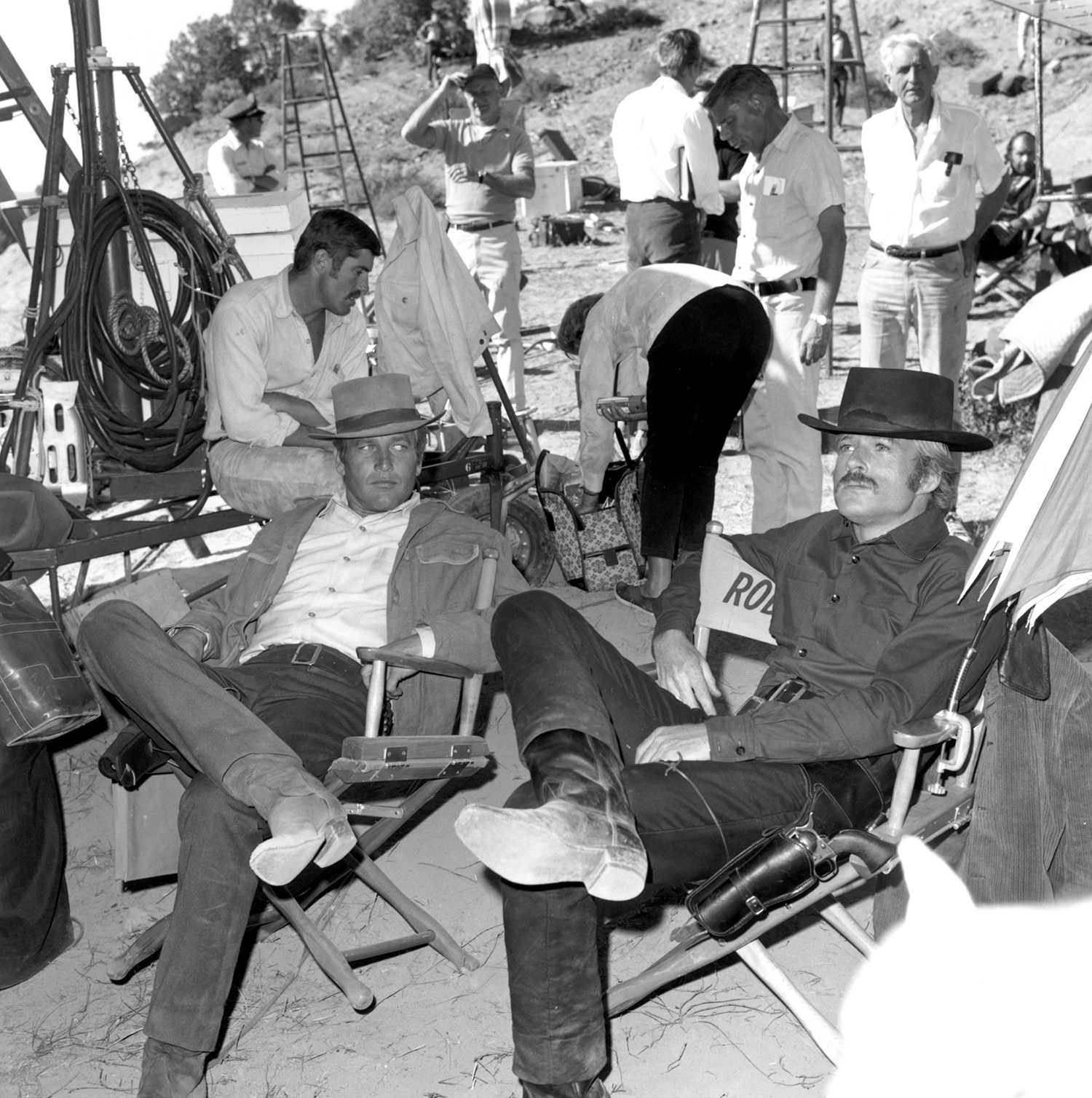
Paul Newman, who was born on this day in 1925, sits back with Robert Redford on the set of 1969’s Butch Cassidy and the Sundance Kid:

Actor in the Spotlight:

With a new xXx movie in theaters, ScreenCrush shares a bunch of biographical trivia about Vin Diesel:

[embedded content]

Filmmaker in Focus:

For Fandor Keyframe in honor of the Sundance Film Festival going on, Philip Brubaker profiles Jim Jarmusch and how cool he is:

[embedded content]

Film History Lesson of the Day:

Filmmaker IQ’s John Hess goes throught the history of the cash-grab “mockbuster” in this primer on the kind of stuff put out by Asylum:

[embedded content]

Art Show of the Day:

This weekend at Gallery 1988 East in Los Angeles, you can find the below piece by Joshua Budich of Deadpool and a chimichanga and more at the Fictional Food 2 show spotlighting edible and drinkable treats from movies and TV (via io9):

Classic Trailer of the Day:

This week is the 40th anniversary of the theatrical release of Barbara Kopple’s Harlan County USA. Watch the original trailer for the Oscar-winning documentary below.

[embedded content]

and

Let’s block ads! (Why?)