Articles by admin

No Image

White House Says Medicare Should Leverage Its Buying Power To Pull Down Drug Prices

Medicare accounts for about 29 percent of all spending on prescription medicines in the U.S. each year. stevecoleimages/iStockphoto/Getty Images hide caption

toggle caption

stevecoleimages/iStockphoto/Getty Images

Drug companies could be forgiven if they’re confused about whether President Donald Trump thinks the government should get involved in negotiating the price of prescription drugs for Medicare patients.

Just a few days before Trump was sworn in he said the pharmaceutical industry was “getting away with murder” in the way it prices medicine, and he promised to take the industry on. It was a promise he’d made repeatedly on the campaign trail.

“We’re the largest buyer of drugs in the world and yet we don’t bid properly,” he said in a news conference in early January. “We’re going to start bidding and we’re going to save billions of dollars over a period of time.”

But last week, Trump appeared to walk that vow back when he met with the leaders of several giant pharmaceutical companies at the White House.

“I’ll oppose anything that makes it harder for smaller, younger companies to take the risk of bringing a product to a vibrantly competitive market,” he said, sitting around a table in the Roosevelt Room, flanked by leaders of five large drugmakers. “That includes price fixing by the biggest dog in the market – Medicare — which is what’s happening.”

Article continues after sponsorship

So on Tuesday, White House spokesman Sean Spicer cleared up the confusion, for now at least.

When asked during his daily news briefing whether the president is in favor of having Medicare negotiate lower prices for prescription medicine, Spicer said, “He’s for it, yes. Absolutely.”

Spicer went on to say that the U.S. should be doing what other countries do — bring the government’s purchasing power to bear to get a better deal on medicine prices.

“So his commitment is to make sure that he does what he can,” Spicer said, “and, I think rather successfully, use his skills as a businessman to drive them down.”

Current U.S. law prohibits Medicare officials from interfering in the negotiations between drugmakers and the insurance companies that administer Medicare’s prescription drug plans.

Medicare accounts for about 29 percent of all spending on prescription medicines in the U.S. each year. So, would bringing Medicare’s huge purchasing power to bear in talks over prescription drug prices actually reduce those prices?

The only government report that looks at the issue is a 2007 Congressional Budget Office study that concluded that it would have a “negligible effect” on prices.

Dr. Walid Gellad, director of the Center for Pharmaceutical Policy and Prescribing at University of Pittsburgh disagrees.

“There’s a reason why the pharmaceutical industry does not want Medicare negotiation to happen,” Gellad told NPR. “And the obvious reason is because it will lower prices.”

Gellad said the CBO report doesn’t take into account the ability the government would have to say no to some particularly high-priced medicines.

If Medicare, for example, said it would pay for only one of the two major Hepatitis C medications on the market today — drugs that cost upwards of $40,000 for a course of treatment — Gellad estimates the drugmakers would cut the price by at least $10,000 to win the government’s business.

That sort of negotiating is already allowed at the U.S. Department of Veterans Affairs.

“If Medicare were to get the same prices for drugs as in the VA you’d have billions, tens of billions of dollars of savings,” Gellad told NPR.

The Medicare prescription drug program was created in 2003; the program’s drug coverage is handled exclusively by private insurance companies. There is no direct government pharmacy coverage.

That means each insurer negotiates prices for medications separately. If one insurance company strikes a deal regarding one drug, another company may negotiate a better price for a competing medication.

A 2015 study jointly published by Carleton University and the public advocacy group Public Citizen showed that Medicare pays, on average, 73 percent more than Medicaid pays for brand-name drugs, and 80 percent more than the VA pays.

Let’s block ads! (Why?)


No Image

Today in Movie Culture: Kristen Stewart Spoofs 'Willy Wonka,' Michael Mann Influences 'The Dark Knight' and More

Here are a bunch of little bites to satisfy your hunger for movie culture:

Movie Parody of the Day:

Kristen Stewart stars as Charlie Bucket in Saturday Night Live‘s parody of a scene from Willy Wonka & the Chocolate Factory:

[embedded content]

Movie Comparison of the Day:

See how much Michael Mann’s Heat influenced Christopher Nolan’s The Dark Knight in this video putting scenes side by side:

[embedded content]

Movie Trivia of the Day:

Speaking of Nolan’s Batman movies, here’s a bunch of trivia about Batman Begins from ScreenCrush:

[embedded content]

Film Studies Lesson of the Day:

CineFix makes us better cinephiles by spotlighting five brilliant moments of camera movement:

[embedded content]

Body Art of the Day:

Speaking of cinephiles, check out one of the coolest movie fan tattoos ever, turning its host into a human zoetrope (via Fashionably Geek):

[embedded content]

Cosplay of the Day:

Speaking of body art, sometimes you can only afford to dress up a single finger, as Lowcostcosplay does with this Spirited Away cosplay:

Vintage Image of the Day:

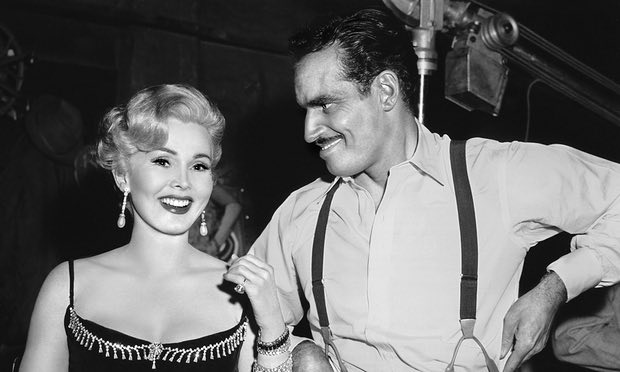
Zsa Zsa Gabor, who would have turned 100 today, with Charlton Heston on the set of Orson Welles’s Touch of Evil in 1957:

Good Film Analysis of the Day:

For One Perfect Shot, H. Perry Horton spotlights Paul Thomas Anderson’s use of silence in There Will Be Blood:

Bad Film Analysis of the Day:

Learn the hidden meaning of Disney’s Aladdin from an alien in the future who likes to point out questionable plot holes in kids’ movies:

[embedded content]

Classic Trailer of the Day:

This week is the 20th anniversary of Richard Linklater’s SubUrbia starring Giovanni Ribisi. Watch the original trailer for the indie classic below.

[embedded content]

and

Let’s block ads! (Why?)


No Image

World Track And Field Body Maintains Russian Suspension From Competition

Anastasiya Grigoryeva (center) during a 60m heat at the Russian Winter national athletics meet in Moscow, Russia, on Feb. 5. Ivan Sekretarev/AP hide caption

toggle caption

Ivan Sekretarev/AP

Track and field’s world governing body decided Monday to maintain Russia’s suspension from international competition.

During a meeting of the International Association of Athletics Federations, or IAAF, the governing body’s president Sebastian Coe told the AFP that Russia “could not be reintegrated into the sport before November.”

That means Russia’s national track and field team will not be able to compete in the August IAAF World Championships in London, although wiggle room in the ban could allow Russian athletes who are approved individually by the IAAF and submit to drug testing to compete without a country affiliation.

“Our priority is to return clean athletes to competition but we must all have confidence in the process,” Coe said, according to a press release. “Clean Russian athletes have been badly let down by their national system.”

A task force report released Monday cited Russia’s continued lack of sufficient testing for performance-enhancing drugs in its athletes as one of the reasons for its recommendation against reinstatement.

In the report, the head of the task force Rune Andersen, noted that Russia had made some progress by establishing a committee to investigate state collusion to cover up doping by Russian track and field athletes.

However, he also documented the Russian government’s apparent ongoing involvement in possible doping by its athletes:

“There continues to be very limited testing of Russian track & field athletes at the national level. Furthermore, there continue to be troubling incidents in respect of the testing that is taking place. For example, (i) on 25 January 2017 it was reported that five athletes had withdrawn from a national competition when they heard that DCOs had turned up to do drug testing; (ii) in at least one case, boxes of samples being shipped to foreign labs for testing were opened and inspected, and (it appears) attempts were made to open a sample bottle.”

Article continues after sponsorship

The report also noted that a Russian TV broadcast in January “showed Vladimir Kazarin, who has been provisionally suspended since August, continuing to coach at least two top Russian athletes,” as USA Today reported.

As we have reported, the IAAF banned Russian athletes from competing in the 2016 Summer Olympics in Rio de Janeiro, “Because the system in Russia has been tainted by doping from top level and down, we cannot trust that what we call and what people might call clean athletes really are clean,” Andersen said in a June 2016 announcement of the ban.

However, there was what he called a “tiny crack in the door” that might allow Russian athletes to compete in the games, as he explained at the time:

” ‘The task force does consider, however, that if there are individual athletes can clearly and convincingly show that they are not tainted by the Russian system because they have been outside the country or subject to other strong anti-doping systems, including effective drug testing, then there should be a process through which they can apply for permission to compete in international competition — not for Russia, but as a neutral athlete,’ [Andersen said].

“Additionally, athletes who have made an ‘extraordinary contribution to the fight against doping in sport’ should be able to apply for this permission, Andersen said [in June 2016].”

Those exceptions eventually allowed one track and field athlete, Russian long jumper Darya Klishina, to compete in the Olympics, as The New York Times reported.

On Monday, the IAAF approved a pair of recommended loopholes included in the task force report. The first allows athletes under age 15 to compete in international competitions as “neutral athletes,” meaning they would not represent the Russian state.

The second allows athletes between 15 and 18 and Masters-level athletes who want to compete neutrally be allowed to apply to the organization’s doping review board for individual consideration.

The Russian government has not commented on the governing body’s decision.

Let’s block ads! (Why?)


No Image

Even With Travel Ban Blocked, Artists Are Still Left Hanging

Syrian singer Omar Souleyman (performing here in Malmö, Sweden, in August 2016) is among the musicians whose performances in the U.S. have been left in limbo. Pacific Press/LightRocket via Getty Images hide caption

toggle caption

Pacific Press/LightRocket via Getty Images

President Trump’s executive order on immigration restricting travel to the U.S. for travelers from seven Muslim-majority countries led to a firestorm of criticism, lawsuits and injunctions by five federal judges staying the order. But questions remain about who can and can’t come to this country. Among those caught in the confusion are a number of prominent musicians, whose personal lives — and livelihoods — have been put on hold.

Omar Souleyman is a Syrian singer who in recent years has collaborated with Björk and performed at the Nobel Peace Prize concert. Five years ago, he moved to the southeast of Turkey to avoid the war at home in Syria.

Souleyman has a new album on the way, and he was planning a U.S. tour to promote it. He’s toured the U.S. 16 times before. This time around, says his manager, Mina Tosti, they were planning tour dates in New York, Detroit, Los Angeles and Arizona, and were in the thick of planning an appearance at the SXSW festival in March as well.

[embedded content]
Ribbon Music YouTube

The visa paperwork for this trip was already well underway when the executive order was announced. When Tosti visited the homepage of the U.S. Embassy in Ankara last week, she saw this notice: “‘If you already have an appointment scheduled,'” she reads aloud, “‘please DO NOT ATTEND.’ Capital letters.”

Article continues after sponsorship

She says there’s an unspoken message behind those words: “You are not welcome. Do not come near us.”

Now that the order is in limbo, Tosti is not sure what to do. Neither is immigration lawyer Matthew Covey, who heads a U.S. nonprofit called Tamizdat that advocates for foreign artists and helps facilitate their visa applications.

“For the arts, it’s really not a resolution at all,” Covey asserts. “Because at least for performing arts programmers, the temporary restraining order is just that. We don’t know when or if it will disappear, and we’ll go back to the ban. So if you’re running a performing arts organization here in the U.S., and you’re trying to figure out who to book for June, July, even for March — there are very few presenters who are going to risk contracting with an artist from one of the seven countries now for any point in the foreseeable future.”

Among those left hanging are some of the world’s top musicians. Kayhan Kalhor is a virtuoso of the Persian kamancheh, a bowed stringed instrument. Kalhor is a four-time Grammy Award nominee and a longtime collaborator of cellist Yo-Yo Ma.

Kalhor was born and raised in Iran, but he is a Canadian citizen — and he lives in California. Right now, he’s on tour in Iran. Isabel Soffer was hoping to help him tour the U.S. in May. She’s an American who produces concerts and festivals across the country and works extensively with artists from the Middle East.

“So many of these incredible artists from all over the world are doing this dance,” Soffer observes, “because so many of them have complex lives based around mobility. Where do they belong? Where do they live? What passports do they have? How do they function?”

[embedded content]
NPR Music YouTube

Mahdyar Aghajani is an Iranian producer and composer best-known in this country for his score for the film “No One Knows About Persian Cats” – a “near-documentary” about Iran’s banned underground music scene.

“Until two years ago,” Aghajani says, “we were considered satanists.”

He’s now based in Paris. Speaking via Skype, he says he still manages a hip-hop collective called Moltafet back home. “They cannot work in Iran,” he says, “because the government is against them, so they’re illegal. They cannot officially monetize their music.”

So Aghajani was hoping to bring Moltafet to the U.S., to reach both the Iranian diaspora here and mainstream hip-hop fans. “And we had so many states [as] part of the tour,” Aghajani says, “and now this thing has put everything on hold, basically, because half our plan is now nothing.”

Aghajani says that as an Iranian artist, he’s already had to figure out how to knock down official hurdles. And he thinks that what he and his friends have gone through can be a model for others.

“The borders, they cannot stop us,” Aghajani says. “Right now, with all this technology, we don’t have to physically be there to do a show. I mean, you’ve got projection to hologram to augmented reality, virtual reality, all these streaming services. There’s so many technologies right now that we have access to, that I think the artists should be creative, like they shouldn’t be scared or hopeless or anything like that. Imagine if I had this mentality — we had Ahmadinejad. I know Trump is very bad and everything, but Ahmadinejad was way crazier, I think!”

For now, attorney Matthew Covey of the organization Tamizdat is offering to prepare and file visa applications, pro bono, for artists from any of the seven countries named in the executive order, no matter what happens.

Let’s block ads! (Why?)


No Image

'Glass House' Chronicles The Sharp Decline Of An All-American Factory Town

Once a thriving factory town, Lancaster, Ohio is now beset by underemployment and drug abuse. Shelly Metcalf hide caption

toggle caption

Shelly Metcalf

Lancaster, Ohio, the home of the Fortune 500 company Anchor Hocking, was once a bustling center of industry and employment. At its peak following World War II, Lancaster’s hometown company was the world’s largest maker of glass tableware and employed more than 5,000 town residents.

Though Anchor Hocking remains in Lancaster today, it is a shell of its former self, and the once thriving town is beset by underemployment and drug abuse. Lancaster native Brian Alexander chronicles the rise and fall of his hometown in his new book, Glass House.

“People are genuinely struggling,” he tells Fresh Air’s Dave Davies. “The economy of the town is struggling, not because there’s high unemployment, [but] because the employment that there is all minimum wage, or even lower than minimum wage.”

Fairfield County, in which Lancaster is located, went 61 percent for Donald Trump in the presidential election — a fact that Alexander attributes to the candidate’s message of disaffection. Alexander says on Election Day one Lancaster woman told him she voted for Trump because she wanted “it to be like it was.”


Interview Highlights

On how Lancaster was once deemed an all-American town

After World War II, Forbes devoted almost its entire 30th anniversary issue to Lancaster, Ohio, of all places, and positioned Lancaster as the epitome and the apogee of the all-American town — a sort of perfect balance between large industry, agriculture [and] small businesses, like retail and merchants and so on. … And everything was in this state of almost Utopian equilibrium, and for the most part it really was like that.

Which is not to say there were not problems. There’s always been problems, there’s always been small-town scandals, and there’s always been an element of poverty, a fair amount of drinking in Lancaster. My grandfather used to say — he was an old glass man from western Pennsylvania — and when he would come to visit he would say that he never saw a town with more churches and more bars. … So it was not free of problems, but it was really, from my life, very much like Leave it to Beaver, quite honestly.

Article continues after sponsorship

On how Anchor Hocking contributed to the fabric of the town during its heyday

You had a core of college-educated, sophisticated people who made good livings working right downtown at the corner of Broad and Main Street, and more importantly, in some ways, their wives — remember this is ’40s, ’50s, ’60s and into the ’70s — their wives typically didn’t work at a career-type job outside the home. They threw themselves into the town. So they did hospital benefits, they did benefits for preserving the old Antebellum homes in Lancaster, they did vaccination drives, they made sure the sidewalks got repaired, the streets got paved, they attended city council meetings. This was a core of civic leadership.

On the 1987 acquisition of Anchor Hocking by the Newell Corp.

It was a hostile takeover. It’s still a little bit mysterious exactly how hostile it was, but they buy it in a hostile takeover, and the first thing they do is fire all of the executives and close down the headquarters. So now you have gutted a core group of people that were active in the life of the town. As one person in Lancaster, an old-timer who I interviewed said, “It ripped the heart out of this town.” So you’ve taken away the executives, you’ve taken away their wives, their families. …

[It was] devastating for the town. And the new incoming people, the people Newell picked to run Anchor Hocking never lived in Lancaster; they all lived in Columbus. There’s a long-standing belief, unshakable belief, that Newell instructed its incoming executives to not live in Lancaster, so as not to be involved in the United Way and other Lancaster civic activities. I could not find any proof of that, but you cannot shake Lancasterians’ belief that that was, in fact, the case. …

Workers will tell you that Newell was not a bad employer. They were not necessarily unhappy under Newell. It wasn’t the same; it was less of a family atmosphere. Workers who are hourly people and salaried people all say the same thing. They say that the company became somewhat more efficient, that they made money, they made money for Newell, that they were not unhappy under Newell, but it didn’t feel like the old Anchor Hocking, and it never would again.

On how what happened in Lancaster reflects a larger trend in capitalism

When you can pay a foreign worker a third or less of what you’re paying a unionized flint glass worker in Lancaster, that’s an element, but it’s far from the only one. We seem to have this shrugging-shoulders belief that this is all some sort of natural evolution, like how the dinosaurs died. But what I’m trying to argue in the book is that some of this, at least in part, results from a series of conscious decisions [by] politicians, economists, business people, financiers.

On what Lancaster is like today

Brian Alexander’s previous books include The Chemistry Between Us, Rapture and America Unzipped. Brian Alexander hide caption

toggle caption

Brian Alexander

The houses, for example, are not quite as well kept up as they used to be. The west side, which has always been the working class side of town, is even more disheveled than it used to be. … Parents are in jail, so grandparents or aunts or uncles have the kids. I saw just the other day a map of the state of Ohio that showed the percentage of kids who are now a part of the social service system and what the percentage of their parents who are opiate users. In Fairfield County, 58 percent of the kids who are in the system, their parents used opiates. The county next door, Hocking County, it’s over 70 percent. So now you’ve got drugs in the community, which are an escape from all this sort of stuff. …

The best thing going for Lancaster is how much people love their town, and they want it to work. But they’re up against some very tough situations.

On Lancaster voters supporting Trump in the presidential election

I think partly Trump has already fulfilled at least one expectation, and that is to sort of express this sort of generalized anger and aggressiveness that they wish they could [have] and Trump, I think, is sort of their pilot in doing it for them. Ultimately, I think they’ll find that to be empty, but I can’t be sure.

Let’s block ads! (Why?)


No Image

Trump, GOP Lawmakers Back Off From Immediate Obamacare Repeal

Sen. Lamar Alexander, R-Tenn., seen here with Sen. Patty Murray, D-Wash., at a Jan. 18 hearing of the Senate Health, Education, Labor and Pensions Committee, says he’d like to see the individual insurance market fixed before repealing Obamacare. Carolyn Kaster/AP hide caption

toggle caption

Carolyn Kaster/AP

There’s a moment in the Broadway musical Hamilton where George Washington says to an exasperated Alexander Hamilton: “Winning is easy, young man. Governing’s harder.”

When it comes to health care, it seems that President Trump is learning that same lesson. Trump and Republicans in Congress are struggling with how to keep their double-edged campaign promise — to repeal Obamacare without leaving millions of people without health insurance.

During the campaign, Trump promised to repeal and replace the Affordable Care Act immediately upon taking office. Last month, in an interview with The Washington Post, he said he had a replacement law “very much formulated down to the final strokes.”

But on Sunday, he dialed back those expectations in an interview with Fox News.

“It’s in the process and maybe it will take till sometime into next year, but we are certainly going to be in the process. It’s very complicated,” Trump said.

He repeated his claim that Obamacare has been “a disaster” and said his replacement would be a “wonderful plan” that would take time “statutorily” to put in place. And then he hedged the timing again.

“I would like to say by the end of the year, at least the rudiments,” he said.

Trump’s recent hesitation comes as Republicans in Congress tame their rhetoric surrounding the health care law.

Sen. Lamar Alexander, R-Tenn., chairman of the Senate health committee, said he’d like to see lawmakers make fixes to the current individual market before repealing parts of the law.

“We can repair the individual market, which is a good place to start,” Alexander said on Feb. 1.

Article continues after sponsorship

He has also urged his colleagues to leave the other parts of the health care sector — Medicare, Medicaid and the employer market — alone.

Throughout the campaign, and over the six years since the law passed, Republicans in Congress have vowed to completely repeal the Affordable Care Act.

But in the time since the law went into effect, it has helped as many as 20 million people get insurance who didn’t have it before, according to the Department of Health and Human Services.

Just last week, the open enrollment period for 2017 ended and HHS reported that 9.2 million people bought insurance through the federal government’s insurance marketplace — slightly lower than last year but still a large number. About 3 million more people likely bought coverage on state-run exchanges, based on enrollment in past years.

In addition, about 10 million people qualified for health coverage because of the expansion of Medicaid in most states.

That left Trump and Republicans, the day after the election, facing the choice of fulfilling their clear promise to repeal the ACA and the reality that doing so could leave millions of people without access to health care.

At that time the public seemed to gain a new appreciation of the law once it was actually threatened with repeal. In recent weeks, several polls have shown that more people view it more favorably than they did before the election.

Another reality Republicans have had to face is that, even though they control both houses of Congress and the White House, their ability to repeal the ACA is limited. That’s because Democrats in the Senate can block bills using their filibuster power.

But laws dealing with taxes and the budget are protected from filibuster, so Republicans can roll back many Obamacare provisions because they involve tax credits and federal spending.

That leaves lawmakers having to build a new health care system that works within the general framework of the Affordable Care Act. They can get rid of subsidies to help people buy insurance, but the law creating government-run insurance exchanges, for example, will still be on the books.

That’s why Alexander and a handful of other Republicans are beginning to talk about repairing the current system. Currently, not enough young healthy people have signed up for coverage to offset the costs to insure sicker, older people. The result is that premiums have risen and insurance companies that lost money pulled out of many markets.

But not everyone is on board. House Speaker Paul Ryan, R-Wis., said last week in an interview on Fox that repairing the health care system means “You must repeal and replace Obamacare.”

Let’s block ads! (Why?)


No Image

Football Played Key Role In Rhodes Scholar's Path To Success

From being thrown into poverty as a child to becoming a Rhodes Scholar, Texas Christian University senior football player Caylin Moore has come a long way and overcame seemingly insurmountable odds.

MICHEL MARTIN, HOST:

It’s Super Bowl Sunday. You knew that, but we wanted to take a few minutes to share a football story you might not otherwise be hearing today. We wanted to tell you about Caylin Moore. He grew up outside of Los Angeles in Carson. After his parents split up, poverty became the new normal as his mother struggled to support the family, especially after falling into a deep depression after surviving a sexual assault. Sometime after that, his father went to prison for killing a girlfriend.

Through all of this, Caylin Moore kept himself motivated by working hard at school and at football. Now he’s on the verge of finishing his economics degree with a near-perfect GPA at Texas Christian University. He is a safety on the college football team which competed in the Liberty Bowl last December. And this fall, Caylin Moore is preparing to attend the University of Oxford on a Rhodes Scholarship. I called him up recently, and I started our conversation by asking him to describe how he’s seen his life change.

CAYLIN MOORE: I don’t think it was really until I took myself outside of that environment to see what other people had that I kind of started to understand that, wow, we were really going through it.

I remember when I went to college, you know – I went to go wash my hands under the sink. And I turned the left knob, you know – the hot knob – and I felt that hot water on my hands. And we didn’t have hot water at the house that I group up in, so it immediately brought me to tears just washing my hands with that hot water. And it made me think about, wow, I made it. I did it.

MARTIN: Well, what role did football play in your life growing up?

MOORE: Football played a very key role. So in the inner city where I come from, everyone around doesn’t have positive male role models, so a lot of times you may fall victim to the streets or things of that nature. So my mom placed us in football, and that gave us positive male role models, gave us something positive to do and something to work towards and kind of gave you a vision of a way that you can make it out of poverty and out of your current situation. It gave us hope, to be honest.

MARTIN: You know, the – one of the things that I like about your story is it isn’t like a football fairytale. You went to Marist College at first, and you were quarterback there which is a prime position. You even won a summer Fulbright to study in England over the summer, but then you got hurt and couldn’t play. So you had to work as a janitor. I assume that you took that job as it pays pretty well. You know, it pays better than a lot of other campus jobs that you can take.

MOORE: Right.

MARTIN: So if you need the money, that’s what you do, but it had to have been – I’m just assuming – it had to have been a little bit hard to go from being kind of star quarterback to then being a janitor.

MOORE: Yeah. It was extremely humbling. I remember – you know, I used to mop and sweep with my head down. And then one day I just kind of changed my mindset, and I said, you know, I started listening – the Wale album had just came out – so the same songs on repeat, “The Bloom” and a couple different songs on the album. And I would just mop and sweep to those songs, and I would dance while I did it because I started to have hope and encouragement in my heart that, one, I could play football again, and that, two, I would chase some academic pursuits that had never been done before.

MARTIN: Did anybody ever say anything to you, though, anybody who kind of knew you as a football player and then saw that you were cleaning up? Did anybody ever say anything to you?

MOORE: I had times where people kind of looked down on me or, hey, you missed a spot or, you know, little slick remarks here and there. But I made a concerted effort never to let it get me or never let it discourage me.

MARTIN: Why was it so important to you to get to a D1 school – or a division-one school? For people who are not aware, that’s the most competitive level of college athletics. Why was that so important to you?

MOORE: I actually had personal reasons. But my father is in life in prison for murder, and I told myself I would never stop playing football. And so he could see me on TV. So, you know, I did that through eventually transferring to Texas Christian University.

MARTIN: Has he been able to see on TV?

MOORE: Yes, ma’am. He has.

MARTIN: And what does that mean to you?

MOORE: It’s indescribable.

MARTIN: Why did you want to be a Rhodes Scholar?

MOORE: Ultimately so I can make a positive change in my word in my community. But I will say one of the short-term reasons is that I had heard about it long ago when I was in eighth grade from Myron Rolle. He was a role model for me, and I said, you know, I want to be able to succeed in football like this man and also use my mind to take me to different places that I never even thought of before.

So I kind of always, you know, had in the back of my mind, but I didn’t really think I could become a Rhodes Scholar. And then my mom sent me a text in July to say, hey, make sure you apply for this. I had totally forgot about it, to be honest with you. And then I started kind of looking into it, and I thought about how the opportunity will open doors for me. So I had to jump on that opportunity.

MARTIN: Can you tell me about the moment that you found out you’d won?

MOORE: I had been in the waiting room after my interview just kind of like watching little dance videos and stuff like that to take my mind off of it. Everyone else was kind of like talking and, perhaps, comparing each other’s accomplishments to each other because they wanted to see who would win.

But I was just super, super quiet. And when they called us in, they announced me. And when they announced me, I just stared at the floor for like an awkwardly long time, like about 37 seconds. And that – mind you, 37 seconds is a super long time for such a tense environment. And I just stared at the floor because I felt like if I move my body and move towards the lady to shake her hands that would be me acknowledging that anything is possible. And for those 37 seconds, I wasn’t ready to deal with that yet.

MARTIN: Well, eventually you – hopefully you did move (laughter) and shake her hand, I hope.

MOORE: Eventually I did. I did.

MARTIN: What did your mom say when you called her?

MOORE: She always had a mindset that even though we live in the hood, the hood will not live in us. So it gives her confirmation that she did raise us right, that, you know, I was right. You know – her – she was right. So I think that’s what it kind of did for her.

MARTIN: Your mom sounds very special.

MOORE: Very special.

MARTIN: That is Caylin Moore. He’s a senior at Texas Christian University. He’s been playing as a safety on the football team. He is headed to Oxford this fall on a Rhodes Scholarship. And we were really pleased to talk with him from Texas Christian University. Caylin, thanks so much for joining us. Congratulations on everything. The best of luck to you.

MOORE: Yes, ma’am. Thank you as well. I appreciate it.

Copyright © 2017 NPR. All rights reserved. Visit our website terms of use and permissions pages at www.npr.org for further information.

NPR transcripts are created on a rush deadline by Verb8tm, Inc., an NPR contractor, and produced using a proprietary transcription process developed with NPR. This text may not be in its final form and may be updated or revised in the future. Accuracy and availability may vary. The authoritative record of NPR’s programming is the audio record.

Let’s block ads! (Why?)


No Image

A Small Business Owner On Trump's Plans For Small Businesses

NPR’s Lulu Garcia-Navarro speaks with small business owner Joy Weatherup Anthis about how she views President Trump’s plan for small business regulations and how they affect her construction business.

LOURDES GARCIA-NAVARRO, HOST:

Slashing red tape was one of Donald Trump’s campaign promises. As president, he has made good on that promise, signing an executive order this past week that will mean for every new regulation put into law, two regulations will be slashed. And as he signed that order, President Trump was surrounded by small business owners who’d been invited to the White House for a listening session with Trump.

Joy Weatherup Anthis was one of them. She owns JWA Construction Management in DeWitt, N.Y., and she joins us from DeWitt this morning. Hi.

JOY WEATHERUP ANTHIS: How are you?

GARCIA-NAVARRO: Very well. So tell me a little bit about your business.

WEATHERUP ANTHIS: We’re a construction management services company. We make sure that the general contractors and subcontractors on a project stay within budget and time constraints and schedules. And we’re their eyes and ears basically.

GARCIA-NAVARRO: How have federal regulations affected you?

WEATHERUP ANTHIS: You know, they – the problem with federal regulations are there are ones that are necessary in our industry – in the construction industry for standards of construction of anything, from concrete to support beams and things like that. But the unnecessary ones are the ones that bog us down.

GARCIA-NAVARRO: So is it that there are too many regulations or that they’re too complicated – or both?

WEATHERUP ANTHIS: I think it’s both. If there was one regulation in the process that we would be able to somehow get through it, but there’s one on top of the other on top of the other. You feel like you’ve gotten to the end of the requirement, and then there’s – oh, by the way, one more thing to do, which, frankly, is what the president, I believe, is trying to do – is to make only the regulations that are in place essential regulations.

GARCIA-NAVARRO: You talked about that there are some good regulations that need to be protected. How do you make sure that those regulations stay in place and they don’t get jettisoned along with some of the other stuff?

WEATHERUP ANTHIS: Honestly, I’m not sure. I’m not familiar enough about what the people on Capitol Hill have to do when they go through the process. My hope is that the ones that are very, very important to the health and safety of our general public are the ones that stay and then they bring forward new ones that help our economy. So my hope is when they throw away two to bring forward one, that the two are some of the inconsequential, difficult, non-essential regulations that have been really hindering us.

GARCIA-NAVARRO: You know, the creation of new U.S. businesses has actually climbed steadily since 2010, according to the U.S. Bureau of Labor Statistics. And that runs counter to the narrative from the Trump administration that small businesses, medium-sized businesses have been stifled – or were stifled under the Obama administration.

WEATHERUP ANTHIS: They may have grown. But as you know, as well as I do, statistics can be manipulated. How fast have they grown? Have they grown to their potential? Have they grown enough? And it’s not that I don’t believe those numbers that they have grown steadily. And I’m hoping that some of the things that President Trump will put in place, such as the tax reform and the regulatory issues, will speed up whatever steady gain it has been said that we’ve made since 2010.

GARCIA-NAVARRO: Joy Weatherup Anthis, small business owner from DeWitt, N.Y., thanks so much for being with us.

WEATHERUP ANTHIS: My pleasure.

Copyright © 2017 NPR. All rights reserved. Visit our website terms of use and permissions pages at www.npr.org for further information.

NPR transcripts are created on a rush deadline by Verb8tm, Inc., an NPR contractor, and produced using a proprietary transcription process developed with NPR. This text may not be in its final form and may be updated or revised in the future. Accuracy and availability may vary. The authoritative record of NPR’s programming is the audio record.
Let’s block ads! (Why?)


No Image

Yes, All This Happened. Trump's First 2 Weeks As President

President Trump speaks before signing an executive order surrounded by small business leaders in the Oval Office earlier this week. Pool/Getty Images hide caption

toggle caption

Pool/Getty Images

President Trump’s first two weeks in office have been a sprint, not the start of a marathon. If the rapid pace and, sometimes, hourly developments of executive orders, news, controversies and more have left you exhausted, you’re not alone. If you’re finding it hard to remember just everything that’s transpired too, we’re here for that, too.

Here’s a quick recap of the highlights — and lowlights — of the first 14 days of Trump’s nascent presidency.

Saturday, January 21

On his first full day as president, Trump goes to the CIA to try and mend fences with the intelligence agency he repeatedly maligned during the campaign and the transition. (He blamed the media for creating the feud, but his own tweets disprove that). While standing before a memorial at the agency, he argued over the crowd size at his inauguration, making false assertions which run counter to aerial photos of the event and NPR’s own reporters on the ground. He also claims it stopped raining during his inaugural address, when it did not.

Hours later, new press secretary Sean Spicer makes his first appearance in the White House briefing room to double down on those falsehoods about crowd size. He cites wrong numbers for Metro usage in D.C. and also falsely says that floor coverings used for the first time on the National Mall made photos show where there were gaps, when in fact such coverings had been used before. After delivering his fiery broadside, Spicer left without taking any questions.

Article continues after sponsorship

While all that was happening, the Women’s March on Washington protesting Trump and his policies toward women drew thousands and thousands of people — and the second highest Metro ridership day ever, second only to President Obama’s first inauguration. Protests weren’t just limited to D.C., though — similar events happened across the country that also drew massive crowds. And the protests even went worldwide, happening on all seven continents.

Sunday, January 22

The White House should have been in clean-up mode after Saturday’s first rocky day in office, but instead on the Sunday shows they doubled down on false claims about crowd size and more. Trump counselor Kellyanne Conway argued on NBC’s “Meet the Press” that Spicer had simply provided “alternative facts” when making his arguments — a moniker that looks primed to persist throughout the Trump administration.

Monday, January 23

The biggest news happened when Trump met that evening with both Republican and Democratic congressional leaders, reviving his unfounded claims that there were between 3 and 5 million illegal votes cast in the 2016 election that caused him to lose the popular vote to Democrat Hillary Clinton. This would continue to be an issue for the rest of the week (see more below).

Trump also signed an executive order reinstating the “Mexico City Policy,” a global gab rule which prohibits international non-governmental organizations (NGO) that provide or talk about abortion services from receiving federal funding. He also signaled his intent to withdraw from the Trans Pacific Partnership trade agreement and instituted a federal hiring freeze except for the military.

Spicer had his second outing with the press, still in a largely defensive crouch. He blamed the press for trying to “undercut the tremendous support” for Trump and doubled down on his insistence that Trump’s was the most-watched inauguration ever, though given difficulty in counting streaming numbers, that’s hard to back-up.

Ethics experts filed a lawsuit in court alleging that the president was in violation of the Emoluments Clause of the Constitution because of his overseas businesses

Tuesday January 24

Spicer repeated Trump’s unfounded assertions that there was widespread voter fraud during the U.S. elections but provided no further proof of why the president believed that.

Trump approved construction of the Keystone XL and Dakota Access pipeline, which had both been stopped during the Obama administration amid outcry from environmental groups. Other executive orders directed the Commerce Department to review how federal regulations might be impeding U.S. manufacturers.

Wednesday, January 25

Trump signed two executive orders keeping one of his top campaign promises, ordering the U.S. government to begin construction of a wall along the southern border with Mexico. He asserted that while the U.S. government would have to front the money, Mexico would pay it back. (Mexican leaders have said they will not.) Trump also directed Homeland Security and the Justice Departments to withhold federal funds from sanctuary cities.

In his first interview as president, Trump doubled-down (tripled-down?) on his unproven belief that there were millions of illegal voters. “You have people that are registered who are dead, who are illegals, who are in two states. You have people registered in two states. They’re registered in a New York and a New Jersey. They vote twice. There are millions of votes, in my opinion,” he told ABC’s David Muir.

Studies Trump cited offer no proof of such voter fraud. And he also incorrectly claimed it was illegal to be registered in two states; it’s not illegal unless someone votes in two states, because often voter rolls are not quickly updated. In fact, it turned out some Trump aides and family members were registered in multiple states.

Thursday, January 26

Trump traveled to Philadelphia to address the GOP congressional retreat, where he delivered a relatively on-message speech promising Obamacare repeal, to crack down on violent crime, and touted his executive actions on immigration and trade.

Mexican President Enrique Peña Nieto canceled a planned trip to the U.S. amid Trump’s continued assertion that the country would repay the U.S. for the border wall. One possibility to recoup the investment from Mexico that the White House floated was a 20-percent import tax, which, as NPR’s Scott Horsley reported, “would effectively saddle U.S. consumers with a significant portion of the wall’s cost, estimated at $15 billion or more.”

Trump gives his second interview to a friendly source, Fox News’s Sean Hannity. He again boasts of his crowd sizes during his inauguration and talks about the (still unproven) allegations that there were millions of illegal votes cast in November.

He also tells Hannity he continues to believe waterboarding works and talks about bringing it back, though it is outlawed in the U.S. as torture. His new Defense Secretary, retired Gen. James Mattis, has said he does not believe waterboarding is effective and has reiterated it is illegal, as have top GOP congressional leaders such as Speaker Paul Ryan.

Friday, January 27

Trump signs an executive order which blocks travelers from seven countries, all of which are Muslim-majority — Iraq, Iran, Syria, Yemen, Sudan, Libya and Somalia — from entering the U.S. for 90 days. New refugee admissions are suspended for 120 days, while Syrian refugees are banned indefinitely. There’s confusion at airports whether or not the ban includes those with valid U.S. visas, green cards or people from those countries who are permanent residents. Protests begin at airports as travelers are detained.

Trump hosted his first foreign leader at the White House — British Prime Minister Theresa May. She pushed for a future trade deal with the U.S. The two held a joint press conference, where May said Trump had reaffirmed his support for NATO — though he has questioned whether the U.S. should be in the alliance in the past.

The annual anti-abortion event the March for Life draws thousands more demonstrators to the national mall. Vice President Pence and Kellyanne Conway both spoke.

Saturday, January 28

Protests continue at airports across the country amid confusion over Trump’s travel ban. Immigration attorneys begin offering their services pro bono. Late on Saturday, a federal judge issued a stay on the deportations of valid visa holders after they have landed in the U.S. in response to an ACLU lawsuit.

Trump reshuffles the National Security Council, elevating controversial chief strategist Steve Bannon to be a permanent member of the principals committee, giving him equal billing with other Cabinet-level officials. The director of National Intelligence and the chairman of the Joint Chiefs of Staff, who are typically permanent members, will now only attend when pertinent issues are being discussed.

Trump calls several foreign leaders, including Russian President Vladimir Putin. He also has a tense call with Australian Prime Minister Malcolm Turnbull, though details won’t be reported on this until later in the week. The president tells Turnbull it was “the worst call by far” that he (Trump) has had that day and the two clash on the Obama administration’s deal to accept refugees from the country.

Trump signs several executive orders — an ethics order banning administration appointees from ever lobbying foreign governments and from federal lobbying for five years after they leave office. He also directs the administration to develop a “comprehensive plan to defeat ISIS.”

Sunday, January 29

A U.S. Navy SEAL is killed during a raid in Yemen targeted against al-Quaida militants, the first military casualty of Trump’s administration. Later in the week, questions are raised over how the operation — which also is believed to have killed several civilians — was carried out.

Protests continue at airports over the Trump administration’s travel ban.

Monday, January 30

Acting Attorney General Sally Yates (a holdover from the Obama administration) announces she will direct Justice Department lawyers not to defend Trump’s travel ban. Hours later, the president fires her and replaces her with Dana Boente, the top federal prosecutor in suburban Virginia, as the interim attorney general until his nominee, Alabama Sen. Jeff Sessions, is confirmed by the Senate.

More Republicans continue to speak out against Trump’s travel ban, voicing concern over its implementation. Former President Obama breaks his silence since leaving office, saying through a spokesman that “American values are at stake.”

Trump signs an executive order that says for every regulation the executive branch proposes, two others must be repealed.

Tuesday, January 31

Trump nominates federal appeals court Judge Neil Gorsuch to fill the seat of the late Justice Antonin Scalia. The evening ceremony in the White House’s East Room is arranged for suspense, which gives it the aura of a reality TV show in some ways. Conservatives praise his pick, which was a major campaign issue after Senate Republicans refused to take up President Obama’s nominee, Judge Merrick Garland, for much of 2016.

Wednesday, February 1

National Security Adviser Michael Flynn makes a surprise appearance at the daily press briefing to announce that the Trump administration is putting Iran “on notice” after the country conducted a ballistic missile test.

Trump and daughter Ivanka travel to Dover Air Force Base for the return to the U.S. of the remains of Navy SEAL William “Ryan” Owens, who was killed over the weekend in the Yemen raid.

The AP reports that during a call with Mexican President Enrique Pena Nieto last week, Trump threatens to send in the U.S. military to stop the “bad hombres down there.” Mexico denies the remarks.

Thursday, February 2

The Celebrity Apprentice creator Mark Burnett introduces Trump at the annual National Prayer Breakfast. During his remarks, Trump called out the low ratings of the NBC reality show he once hosted, and criticized the new host, action star and former California Gov. Arnold Schwarzenegger. “And I want to just pray for Arnold, if we can, for those ratings, OK,” the president said.

Trump also pledges at the breakfast to repeal the Johnson Amendment, which prohibits tax-exempt religious groups from wading into politics.

Friday, February 3

A federal judge in Seattle temporarily halted Trump’s executive order on immigration and travel from some Muslim-majority countries. The order is effective nationwide.

New sanctions are announced against Iran, following up on the administration’s earlier threat against the country.

Trump signs two executive orders directing the review of the Dodd-Frank financial regulations and halting implementation of another federal rule which mandates financial advisers to act in the best interests of their clients.

Saturday, February 4

Airlines resume allowing travelers once affected by Trump’s travel ban to come to the U.S.

Trump, who is at his Mar-a-Lago resort in Palm Beach, Fla., for the weekend, tweets that, “The opinion of this so-called judge, which essentially takes law-enforcement away from our country, is ridiculous and will be overturned!” He later adds on Twitter that because of the “terrible decision” that “many very bad and dangerous people may be pouring into our country.”

Let’s block ads! (Why?)


No Image

Barbershop: When Sports Meet Politics

Washington Post sports columnist Kevin Blackistone, conservative commentator Lenny McAllister and ESPN magazine writer Pablo Torre discuss whether sports and politics can be separated.

MICHEL MARTIN, HOST:

Now it’s time for a trip to the Barbershop. That’s where we gather a group of interesting folks to talk about what’s in the news and what’s on our minds. So joining us for a shape-up today are Kevin Blackistone. He’s a sports columnist at The Washington Post and a professor of journalism at the University of Maryland. He’s here with me at our studios in Washington D.C. Professor Blackistone, welcome back.

KEVIN BLACKISTONE: Thank you very much.

MARTIN: Lenny McAllister is a conservative political commentator. He’s been a recent congressional candidate. He writes for many outlets including The Root. He’s at member station WESA in Pittsburgh. Lenny, welcome back to you as well.

LENNY MCALLISTER: Hey, Michel. How are you?

MARTIN: I’m great. And Pablo Torre is a senior writer at ESPN joining us from our New York bureau. Pablo, welcome back to you as well.

PABLO TORRE: It is good to be back, Michel. Thank you.

MARTIN: Thank you. So Beyonce’s having twins. Oh, wait. I hear there’s a big…

(LAUGHTER)

MARTIN: …I hear there’s a big sporting event tomorrow. I’m just kidding. So the Super Bowl is tomorrow in Houston.

TORRE: All right. Yes.

MARTIN: Yes that – the New England Patriots take on the Atlanta Falcons. But the political news is kind of right in there with the football and even those Super Bowl ads that we talk about so much are intertwined with this. And let me play one that’s getting a lot of attention. It’s a Budweiser ad, and it traces kind of the immigration story of one of the company’s founders, Adolphus. Busch. Let’s hear a quick clip.

(SOUNDBITE OF COMMERCIAL)

UNIDENTIFIED ACTOR #1: (As character) Welcome to America.

UNIDENTIFIED ACTOR #2: (As character) You’re not wanted here. Go back home.

MARTIN: It just shows this arduous journey getting here from Germany. And I just – and you can see why given all the news that this one kind of stands out to a lot of people and is getting a lot of mention. So Kevin, I want to start with you because there’s also kind of a counter move to this. There’s even a hashtag telling people, like yourself…

BLACKISTONE: Right

MARTIN: …To stick with the sports. Just…

BLACKISTONE: (Laughter).

MARTIN: And I now have to ask you how you react to that.

BLACKISTONE: I laugh at that because if you’ve been a black sports columnist or you’ve been a woman sports columnist and are, you’ve been hearing that for years. So it’s kind of funny now that my white columnist colleagues are getting the same thing because they dare to venture where sports is not supposed to walk. So, you know, this is not going to be the first politicized sporting event, not even the first politicized Super Bowl. But certainly because of our – the temperature of our political climate, it’s going to be one that will probably be more heated and discussed more than anything.

MARTIN: And why is that?

BLACKISTONE: Well, I think just because, obviously, Donald Trump and his administration have really impacted things like never before. And going into the Super Bowl, you know, one of the conversations we’ve had since December of 2015 was about Tom Brady who will quarterback the New England Patriots in this, who was asked about a red cap that was in his cubby hole up in New England which said make America great again. And people asked him about his relationship with Donald Trump and the fact that he had the campaign slogan there in his room and whether or not he supported Donald Trump in many of the things that Donald Trump stood for. And that has been talked about this week.

MARTIN: So is the argument that if you support the Patriots, then you support Donald Trump? Is that supposed to be…

BLACKISTONE: I think some people have made that leap, but I don’t think that’s fair or true. But I think the question is for Tom Brady since you are a face of the NFL and certainly the face of the Patriots how you stand or how you square with Donald Trump on the outrageous things that a lot of people say that he has said and done.

MARTIN: OK. Pablo, what about you? Is it stick with sports?

TORRE: Look, Michel, we just spent a time not too long ago celebrating the life and death of Muhammad Ali. And one of the fascinating roles that Muhammad Ali should be playing for us, but never really ends up playing for us is that of the patron saint of not sticking to sports – sports and culture, sports and politics. There’s never been a bright line dividing those two, and it’s not just Ali. You look at, for instance, the people even in Trump’s administration – Woody Johnson, the owner of the Jets was just nominated – named to be an ambassador to the United Kingdom.

We have Betsy DeVos, a part owner of the Orlando Magic who is certainly being nominated for the secretary of education. And I would also like to point out even beyond the Tom Brady, Bill Belichick, Robert Kraft, the owner of the Patriots, that triumvirate of people who Trump claims as friends and has used as campaign tools – there’s also just this idea that – you played that clip from that Budweiser ad – like in a vacuum – in a vacuum that’s not 2017, I should say – that’s not partisan.

That’s not a partisan concept to stand up for immigrants. So what’s happening here, too, is not just that bright line being just eradicated by the Donald Trumpiness (ph) of it. It’s the idea that, oh, right, there are issues affecting people of color, immigrants many of whom, by the way, populate sports, including this very Super Bowl. And people are probably going to end up speaking on that as well.

MARTIN: So are your fans asking you to stay out of talking about these things? I mean, Kevin, obviously, your identity is so clear on this that you’ve talked about these issues for so long. I kind of have a hard time imagining people saying don’t talk about it anymore. But, Pablo, what about you? I mean…

TORRE: I’m trying to desensitize them in the way that KB has done to his readership. I’m trying to get people to realize – and yes. To answer your question – yes, many people – they want the escapism. And, by the way, I do, too, at this point. I would love to be able to seek refuge in a place that is free from the pressures and the reality of a normal life today. But, look, reality is a wave, and sports is a part of culture that sits underneath that wave. And that’s what we’re seeing as always.

MARTIN: Lenny, what about you? And you’ve run for Congress three times, and, you know…

MCALLISTER: Twice. Twice.

MARTIN: Twice. OK, sorry. But you’re here with us, so we know how that turned out. Sorry.

MCALLISTER: Yes.

MARTIN: (Laughter) But – so is kind of football your safe haven? Do you not want people to talk politics around football or sport? Where are you on this?

MCALLISTER: Well, number one, you have to realize that I’m sitting in Pittsburgh, Pa., as a native Pittsburgher, so it was a refuge until two weeks ago in Foxboro, Mass. Now with that said, you know, I don’t understand why people think that folks stop being American just because they play a sport or folks stop being Americans just because they play an instrument. You know, I think that’s very insulting, and you can’t say that you’re for the Constitution and you’re for the First Amendment.

And I look at fellow conservatives a lot of times, and I look at the hypocrisy of this. And I say you are for the Constitution, but you want somebody that can dunk a basketball to just be an entertainer that dunks a basketball. And then when people see how that could be racist or how it could be sexist to say it to a woman or how it could be, you know, just insulting overall when it comes to entertainment, they don’t understand the duplicity in the statement.

I have no problems with these types of things. In fact, I encourage it. I think that we’re going to heal past the animus that we have seen over the last several years by debating and trusting each other as Americans across things such as sports and entertainment.

MARTIN: During the game, too?

MCALLISTER: Unfortunately…

MARTIN: During the game, too?

MCALLISTER: Even during – I mean, why? We are still Americans, and so the – see the ad – with the Bush ad or even the things, you know – a couple years ago there was a controversy with Tim Tebow and his mom. And people flipped out about that. We should be able to still have our values and have those discussions because we’re having it at the water cooler or on social media.

But now we’re not having discussions. We’re having arguments constantly. And if we don’t regain the skill to talk to each other in love and in respect, this is going to continue to spiral.

MARTIN: And especially over wings.

(LAUGHTER)

MARTIN: I mean, if you can’t have a loving conversation over wings, I don’t even understand, you know, who you are.

MCALLISTER: Yes. I agree.

MARTIN: OK. So here’s another side of the story. You remember for people who maybe don’t follow the game, but for the people who do, clearly people know this – that the Patriots are back after Deflategate. I mean, the league claims that the Patriots used underinflated footballs to give quarterback Tom Brady an advantage.

This all started in 2015. Then after a lot of toing and froing, Tom Brady accepted the league’s punishment, a four-game suspension, and despite all that, back at the Super Bowl again. So, Kevin, is it – you’ve got to give it – is it time to give the man his props?

BLACKISTONE: Well, of course. But the only really – the only way to really see him get his props and to enjoy it would be for the Patriots to win and for Roger Goodell to have to shake his hand and hand him the trophy – and maybe the MVP trophy. I mean, that’s the comic cynic in me that wants to see that happen.

And remember, it’s not only Deflategate, but there was also Spygate back in 2007 which really begin to discolor the white hat that the Patriots had worn since 9/11 into the NFL and really painted them as this kind of Darth Vader, diabolical team that you can’t trust and is always up to something underhanded in order to get ahead. So this is going to be – this could be a real comedy at the end.

MARTIN: So who do we think is taking the game tomorrow? Yes, I am asking you to speculate. I want to hear from everybody really briefly. And who do you – what do you think Beyonce and Jay-Z should name their twins?

(LAUGHTER)

MARTIN: Getting back to what really matters here.

(LAUGHTER)

MARTIN: So who takes it? Kevin, quick.

BLACKISTONE: I’ll the – Patriots 27-24.

MARTIN: OK. Pablo.

TORRE: Patriots 31, Falcons 28. And Pablo and, you know, Michel, I guess, would be good names.

MARTIN: You know, you’re right.

(LAUGHTER)

MARTIN: You are so right about that. OK and Billy – I’m sorry. Billy – I was going to say that’s my husband’s name. It’s like Michel and Billy.

MCALLISTER: Billy’s also a good name.

MARTIN: That was my – that’s a good name, too. Lenny. OK (laughter).

MCALLISTER: I will second Pablo with the Pablo and Michel…

TORRE: Thank you.

MCALLISTER: And I – unfortunately, I think that the Patriots are going to win by six points.

MARTIN: OK. And the names? Lenny.

MCALLISTER: I’m going to second…

MARTIN: What do – Beyonce and Jay-Z should name their kids?

MCALLISTER: I’m going to second Pablo’s choices.

TORRE: This is a hashtag, Michel.

MCALLISTER: Pablo and Michel work.

TORRE: Lenny’s…

MCALLISTER: Absolutely.

TORRE: …Going to help us trend this.

(LAUGHTER)

MARTIN: OK. What is it? I didn’t hear. I couldn’t hear.

MCALLISTER: Pablo and Michel.

TORRE: Pablo and Michel. We’re going to make this work.

MARTIN: Pablo and Michel. You know, you’re right. And – well, OK. Wait. That was Kevin Blackistone, sports columnist for The Washington Post, professor of journalism at the University of Maryland, Lenny McAllister, conservative commentator with us from member station WESA in Pittsburgh and Pablo Torre, senior writer at ESPN with us from our bureau in New York and namesake of Beyonce’s twins. Thank you all so much for joining us.

(LAUGHTER)

TORRE: Thank you.

MCALLISTER: God bless.

Copyright © 2017 NPR. All rights reserved. Visit our website terms of use and permissions pages at www.npr.org for further information.

NPR transcripts are created on a rush deadline by Verb8tm, Inc., an NPR contractor, and produced using a proprietary transcription process developed with NPR. This text may not be in its final form and may be updated or revised in the future. Accuracy and availability may vary. The authoritative record of NPR’s programming is the audio record.

Let’s block ads! (Why?)