Articles by admin

No Image

Best of the Week: 'The Batman' is Getting a New Director, the Han Solo Movie Started Shooting and More

The Important News

DC Extended Universe: Ben Affleck dropped out of directing The Batman. Gavin O’Connor, Denis Villeneuve and George Miller are rumored replacements. Nicole Kidman and Yahya Abdul-Mateen II joined Aquaman.

Star Wars: The solo Han Solo movie began production with the fake working title “Red Cup.” Lando Calrissian’s fate after Return of the Jedi is revealed in a new novel.

Giant Monsters Universe: Millie Bobby Brown joined Godzilla: King of the Monsters.

Sequels: Jack Reacher: Never Go Back‘s video release comes with a new graphic novel. James Cameron says Avatar sequels begin filming this summer. Mel Gibson and John Lithgow will join Daddy’s Home 2.

Spinoffs: Corin Hardy will direct the Conjuring spinoff The Nun.

Remakes: Dominic West joined the Tomb Raider reboot. Diego Luna will star in the next version of Scarface. Denis Villeneuve will helm the next version of Dune.

Action Movies: Liam Neeson will star in a new action movie titled Hard Powder. Julius Avery will helm the supernatural WWII movie Overlord.

True Stories: HBO will depict the making of The Godfather in a TV movie. Yoko Ono is producing a movie about her and John Lennon. Dakota Johnson will play infamous rape victim Carrie Buck in Unfit.

Box Office: M. Night Shayalan’s Split continued to reign in theaters.

Awards: Hidden Figures and Fences were big winners at the SAG Awards.

Festivals: Baby Driver and Ghost in the Shell are among the movies showing at SXSW this year.

Marvel TV: Aubrey Joseph and Olivia Holt will star in the Cloak and Dagger series. Rhenzy Feliz, Virginia Gardner and others joined Marvel’s Runaways.

RIP: John Hurt passed away at age 77.

The Videos and Geek Stuff

New Movie Trailers: Beauty and the Beast, Transformers: The Last Knight, Ghost in the Shell, This Beautiful Fantastic, Fist Fight, Girls Trip and The Lego Batman Movie.

TV Spots: The Lego Batman Movie.

Movie Clips: Fifty Shades Darker and Wheeler.

Movie Pics: Ocean’s Eight and Pixar’s Lou.

Movie Posters: All of this week’s best new posters and how the twist of Split is revealed on its poster.

Movie Music: The Mountain Goats’ unofficial canon theme song for Star Wars VIII.

Reworked Trailers: Weird Spider-Man: Homecoming Trailer.

Reworked Movies: Edge of Tomorrow as a rom-com.

Fake Movies: Split 2 and A Day on Alderaan: A Star Wars Story.

Alternate Endings: How Doctor Strange should have ended and the original ending of Jurassic Park.

Mashups: Fifty Shades Darker meets Toy Story, Star Wars vs. Toy Story, Wolverine teams up with Deadpool and City Slickers meets Westworld.

Oscars Montages: 2017 Best Actress showcase, 2017 Best Director showcase, and every Best Cinematography winner ever.

Commercials: 2017 Super Bowl ads by famous directors.

Our Features

Monthly Movie Guide: We marked the important new releases and movie anniversaries in February.

Event Coverage: We reported on the annual Alamo Drafthouse Nicolas Cage movie marathon.

Geek Movie Guide: We highlighted all the geeky stuff to know about in February.

Horror Movie Guide: We highlighted all the latest horror news and trailers.

Comic Book Movie Guide: We contemplate whether Ben Affleck might be leaving Batman behind.

R.I.P.: We remembered all the reel-important people we lost in January.

Home Viewing: Our guide to everything hitting VOD this week.

and

MORE FROM AROUND THE WEB:

Let’s block ads! (Why?)


No Image

Episode 752: Eagles vs. Chickens

A bald eagle flies off with its kill. White Oak Pastures/White Oak Pastures hide caption

toggle caption

White Oak Pastures/White Oak Pastures

Will Harris took over his family’s industrial farm after he graduated from college. Harris was making a profit, just as his dad had. He was also farming just as his dad had: with pesticides in the field, hormone injections for the cattle, and whatever else squeezed more money out of his land.

Over time, though, Harris’s worldview changed. He started to see the downside to the industrial farming: his animals weren’t as healthy as they could be. His soil wasn’t as rich as the soil just over the fence in the forest nearby. He wanted a different kind of farm, one that didn’t depend on chemical fertilizers or man-made interventions.

He went organic. He started making changes. To replace the chemical fertilizer, he brought in chickens and let them roam free. Free-range chickens would fertilize the grass; the grass would nurture the cattle, and shoppers at Whole Foods would love Harris’s organic beef. It was a great plan.

But then, the eagles started to descend on Harris’s farm. Eagles eat chicken. Eagles love chicken.

Article continues after sponsorship

Today on the show, a farmer tries to live more in harmony with nature — and pays the price.

Music: “Lead Me Away” and “Breaking All The Ties.” Find us: Twitter/ Facebook.

Let’s block ads! (Why?)


No Image

Political Divisions Could Put Damper On Super Bowl Merriment

Atlanta and New England face off in this Sunday’s Super Bowl in Houston. The big game offers a massive party in the host city. But the current political divide could ruin the fun leading up to game day.

AUDIE CORNISH, HOST:

Super Bowl Sunday – pretty much an American holiday. Atlanta and New England are facing off Sunday in Houston for the NFL title. It’s usually an excuse for fans and more fans to flood into the host city and party in the streets. NPR’s Tom Goldman wondered if that will hold true this year when we’ve seen a lot more people speaking out on politics and marching in the streets.

UNIDENTIFIED CROWD: (Chanting) Hey, Christians, don’t you see? Jesus was a refugee.

TOM GOLDMAN, BYLINE: Last weekend, before the party really started, the anti-Trump protests about immigration that swept the country – they hit Houston, as well. Marchers showed up at Discovery Green, the 12-acre downtown Houston park that’s hosting a massive Super Bowl fan festival. But by last night, the Super Bowl bubble separating the world’s problems from football and fun had enveloped the park.

DISCLOSURE: (Singing) Now I got you in my space. I won’t let go of you.

GOLDMAN: Hundreds of people strolled the Green, and there were no political signs, shirts or hats in sight. Just a lot of Patriot’s and Falcon’s jerseys and lots of Houston Texan’s gear, too. The Super Bowl has been a welcome distraction this year. Although, there have been attempts to pierce the bubble.

WILLIE MCGINEST: Did Trump call you? I’m joking. Don’t answer that question (laughter).

TOM BRADY: Not you.

GOLDMAN: That was former New England Patriot’s linebacker Willie McGinest – now working for the NFL Network – asking Patriot’s quarterback Tom Brady this week about Brady’s friendship with President Trump, and that was Tom Brady not answering. Brady has repeatedly deflected the question in Houston. The Patriots are expert at not saying anything controversial. And, really, there wasn’t much talk about the president at all inside the bubble.

LEIGH STEINBERG: Nobody here is reading the paper about the latest Trump move (laughter), OK? We’re reading the sports section (laughter). And so it’s a respite for a week.

GOLDMAN: But legendary sports agent Leigh Steinberg says while heads are buried in the sports pages, they are not, figuratively speaking, buried in the sand.

STEINBERG: There are more charitable role-modeling events going on this week that have the potential to be real change.

GOLDMAN: Steinberg insists the real world, minus the political discord, is alive and well at the Super Bowl, and it’ll be a big part of his 30th Annual Super Bowl Party tomorrow. Politicians, Republicans and Democrats, entertainers, athletes, coaches, NFL owners – they’ll all mingle during the afternoon event and learn about charities for abandoned kids who go into foster care, for environmental causes, for the fight against domestic violence. There will be a workshop on football-related concussions.

STEINBERG: The only reason that I’m happy about publicizing it is because there’s so much negative news.

GOLDMAN: There will be a reminder of that as well this weekend – an anti-Trump march tomorrow downtown. And then Super Bowl Sunday – a demonstration at NRG Stadium – site of the game. Organizer Gina Maganya says it’s nothing against the Super Bowl.

GINA MAGANYA: I think we’re just taking advantage of the people coming together and being able to spread that message far and wide as far we can spread it.

GOLDMAN: As she spoke you could see and hear the fireworks coming from Discovery Green a couple of miles away. Tom Goldman, NPR News, Houston.

Copyright © 2017 NPR. All rights reserved. Visit our website terms of use and permissions pages at www.npr.org for further information.

NPR transcripts are created on a rush deadline by Verb8tm, Inc., an NPR contractor, and produced using a proprietary transcription process developed with NPR. This text may not be in its final form and may be updated or revised in the future. Accuracy and availability may vary. The authoritative record of NPR’s programming is the audio record.

Let’s block ads! (Why?)


No Image

Republicans Consider Restoring High-Risk Pools In Obamacare Replacement

Republicans are working on plans to repeal and replace the Affordable Care Act. One of the possibilities that has been put forward, reinstating high-risk pools. NPR’s Audie Cornish talked to Ryan Burt, who’s been involved with high-risk pools for 25 years and helped establish Minnesota’s high-risk pool, one of the oldest and most highly regarded high-risk pool programs in the country.

AUDIE CORNISH, HOST:

We’ve been looking this week at what we know of plans to replace Obamacare, and one of them aims to spread the burden of caring for the very sick. Here’s Speaker Paul Ryan on public TV’s “Charlie Rose” show.

(SOUNDBITE OF TV SHOW, “CHARLIE ROSE”)

PAUL RYAN: By having taxpayers, I think, step up and focus on, through risk pools, subsidizing the care for people with catastrophic illnesses. Those losses don’t have to be covered by everybody else, and we stabilize their plans.

CORNISH: High-risk pools are insurance programs for people who can’t get coverage because they have chronic illnesses or disease. Obamacare essentially did away with them when the law banned insurance companies from turning away people with pre-existing conditions. Ryan Burt has been involved with high-risk pools for some 25 years now. Welcome to the program.

RYAN BURT: Thank you. It’s a pleasure to be here.

CORNISH: So you helped start Minnesota’s high-risk pool and it did pretty well. In California the idea didn’t do so well. People actually reportedly died while on waiting lists to get coverage. Can you help us understand kind of, like, what the tipping point is between one doing well and one not?

BURT: Well, I think one of the big issues is funding. The people that use risk pools are sick. They require health care services. And they use a lot of those services. And there’s really no way that you could charge premiums high enough to be able to cover those claims costs and yet have anybody be able to afford them. So there’s a delicate balancing act between charging premiums that cover a relatively significant amount of the claims that are going to be incurred, but also finding an outside funding mechanism to balance the difference.

CORNISH: Was it cheap coverage? Was it high deductible coverage? Did it cover everything?

BURT: Well, it varied by state. There were some states that controlled premiums to we’ll say a relatively affordable level. On the other hand, there were states that in order to try and control costs had more limited benefit sets and had higher premiums along with those.

CORNISH: How do insurers feel about high-risk pools?

BURT: On the one hand, risk pools can play a very good role in helping to stabilize the market. It takes a lot of the very sickest of our friends and family members and provides them with insurance and a special way to fund the claims that are incurred. On the other hand, depending on how the risk pools are funded, a lot of times that expense comes right back to the insurance companies themselves and they’re assessed for the additional money required to pay for the claims.

CORNISH: House Republicans want to put $25 billion towards high-risk pools over the next decade. Will this work?

BURT: Risk pool programs do require an outside funding to make them work. They are not a catch-all, be-all, end-all for all individuals that require a lot of health care services, who are very sick. They’re really designed to help a smaller segment of that group who generally are employed, who have some means and can afford to pay for the insurance which admittedly is higher than what the average a relatively healthy person just walking around in the street every day would pay.

CORNISH: So is there a chance that there are people who fall through the cracks, Right? Maybe there’s a gap.

BURT: That would be true, yep. If, in order to cover those folks, there would be subsidies required and ways to try and make the premiums more affordable for those folks.

CORNISH: Why do you think this idea keeps coming up?

BURT: There’s a 30-plus year experience around the country with risk pools, and, again, keeping in mind the narrow focus of what they intended to do. In many cases they were very successful. Are they a be-all, end-all solution to all issues with our health care system – absolutely not. But in terms of offering high quality coverage to a segment of our society that is in dire need of coverage, it’s really a godsend.

CORNISH: Ryan Burt is an attorney who works with the National Association of State Comprehensive Health Insurance Plans. Thank you for explaining it to us.

BURT: My pleasure.

(SOUNDBITE OF SINKANE SONG, “HOW WE BE”)

Copyright © 2017 NPR. All rights reserved. Visit our website terms of use and permissions pages at www.npr.org for further information.

NPR transcripts are created on a rush deadline by Verb8tm, Inc., an NPR contractor, and produced using a proprietary transcription process developed with NPR. This text may not be in its final form and may be updated or revised in the future. Accuracy and availability may vary. The authoritative record of NPR’s programming is the audio record.

Let’s block ads! (Why?)


No Image

Today in Movie Culture: Billy Crystal and Daniel Stern Return to 'City Slickers,' Buzz Lightyear vs. Darth Vader and More

Here are a bunch of little bites to satisfy your hunger for movie culture:

Movie Character Reunion of the Day:

Billy Crystal and Daniel Stern reprise their City Slickers roles and crossover into Westworld in this Funny or Die parody:

Movie Character Battle of the Day:

Since Toy Story‘s Emperor Zurg seems modeled after Darth Vader, it’s not weird to see Buzz Lightyear fight the actual Star Wars villain (via Fashionably Geek):

[embedded content]

Mashup of the Day:

Speaking of characters battling, here’s an animated mashup of all the great movie action heroes in an epic gladiatorial match (via Geek Tyrant):

[embedded content]

Video Essay of the Day:

Fandor Keyframe looks at the power of the replay in Groundhog Day and other movies like it that have come before and after:

[embedded content]

Film History Lesson of the Day:

Ever wonder why many cartoon characters, including Mickey Mouse, wear gloves? Vox Pop has the historical answers:

[embedded content]

Adorable Cosplay of the Day:

Hidden Figures stars Taraji P. Henson and Janelle Monae have both shared this photo of three young girls dressed like the movie’s main characters (via THR):

Movie Comparison of the Day:

With Rings out in theaters this week, Couch Tomato shows why It Follows is basically the same movie as The Ring:

[embedded content]

Filmmaker in Focus:

Mr. Nerdista looks at the work of Arrival director Denis Villeneuve and how the filmmaker explores humanity:

[embedded content]

Oscars Montage of the Day:

Appreciate this year’s contenders for the Academy Award for Best Director in Art of the Film’s showcase of the nominees:

[embedded content]

Classic Trailer of the Day:

This weekend is the 75th anniversary of the release of Woman of the Year. Watch the original trailer for the Hepburn/Tracy classic below.

[embedded content]

and

Let’s block ads! (Why?)


No Image

Snapchat, All Grown-Up: 5 Things We Learned From Snap's IPO Filing

Snap co-founder and CEO Evan Spiegel is taking the parent company of the Snapchat app public. Jae C. Hong/AP hide caption

toggle caption

Jae C. Hong/AP

When a 2014 Forbes cover featured a grinning cofounder of Snapchat, the accompanying text described CEO Evan Spiegel as “the 23-year-old who told Zuckerberg to take his $3 billion and shove it.” Snapchat had just turned away Facebook’s acquisition offer, which was triple the amount the social network paid for Instagram in 2012.

The thing Spiegel was holding out for is happening now, after much anticipation: Snapchat’s parent company, Snap, is going public, hoping to raise at least $3 billion.

By most reports, this is slated to be the biggest tech initial public offering in years. The listing is expected to value Snap between $20 billion and $25 billion — the highest valuation of an American tech company since Facebook.

Snap’s filings with the Securities and Exchange Commission presented the first chance for outsiders to review the company’s financials. Here’s a quick summary from Reuters:

“Snap had $404.5 million in sales in 2016, up from $58.7 million in 2015. However, it had a net loss of $514.6 million in 2016, up from a net loss of $372.9 million in 2015. … Snap had 158 million active users in 2016, up 48 percent from 2015.”

The filings also had a few interesting tidbits. Below are five things we gleaned.

Snap may be the first company to discuss “sexting” in a stuffy SEC initial public offering filing.

That’s because the history of Snapchat as a popular social app starts with parents worried about how their children were using the self-deleting photographs.

Article continues after sponsorship

“Many people didn’t understand what Snapchat was, and said it was just for sexting — even when we knew it was being used for so much more,” the IPO documents say.

In the past five years Snap has become a social mainstay for its users, the majority of whom are between 18 and 34 years old. It has popularized funky selfie filters, as well as telling stories through a sequence of photos and videos — imitated later by Instagram. Last year Snap launched camera glasses called Spectacles; in Thursday’s filings, Snap describes itself as a “camera company.”

“We believe that the camera screen will be the starting point for most products on smartphones,” the company says in its SEC filing.

Snap makes virtually all of its money through advertising.

For the past two years, advertising revenue accounted for an average of 97 percent of Snap’s revenue. The company says most advertisers don’t have long-term advertising commitments with Snap, something the company hopes to achieve.

As The Economist points out, this poses a new kind of challenge for the relationship Snap is building with its users:

“Although Snap encourages users to be silly on its app, it hopes to be taken seriously as a business. It will need to decide what approach it should take when using information about users to target ads. Mr Spiegel has called the practice ‘creepy’ in the past. Yet Snap may need to share more data about its users; Mr Spiegel has indicated that he may be willing to do this.”

Unlike Facebook and Twitter, which pushed to keep growing users, Snap is focused on increasing the time and energy each user puts into the app.

In outlining risks related to its business, Snap repeatedly points out that its operations are best in places with affordable and abundant Internet access that’s strong enough to constantly load video:

“Unlike many other free mobile applications, the majority of our users tend to be located in markets with high-end mobile devices and high-speed cellular internet,” the filings read. These also happen to be the markets where advertisers pay the biggest bucks.

But these are also markets that eventually will run out of new users for Snapchat. So Snap says its strategy is to keep innovating the camera platform “in an effort to drive user engagement, which we can then monetize through advertising.”

Snapchat’s cofounders — CEO Spiegel and CTO Robert Murphy — will keep control of all stockholder decisions.

The two Stanford fraternity brothers have had this control because they own the majority of voting stock, and the IPO is structured to keep it that way — which Reuters points out is extraordinary:

“Existing investors will have one vote for each of their shares, while new investors will have no voting rights.

“Keeping tight control is common in companies closely associated with their founders, who often prefer to grow their business without being questioned by a broad array of investors. Still, offering a class of stock with no votes in an IPO is unprecedented.”

Snap runs on Google.

For the vast majority of computing, data storage and other needs that go into running an Internet service, Snap says it relies on the cloud services of Google. Though the deal is not exclusive, Snap says it has committed to spend $2 billion with Google Cloud in the next five years.

Let’s block ads! (Why?)


No Image

Health Savings Accounts Are Back In The Policy Spotlight

Are health savings accounts worth it? Katie Edwards/Ikon Images/Getty Images hide caption

toggle caption

Katie Edwards/Ikon Images/Getty Images

They are just three little words — “health savings accounts” — but they are generating a lot of buzz as Republicans contemplate plans to repeal and replace the Affordable Care Act.

Expanding the use of these accounts, based on a long-held conservative view that consumers should be more responsible for their health care spending, is a part of almost every GOP replacement plan under consideration on Capitol Hill.

Here’s the theory behind HSAs: Making consumers bear a bigger upfront share of medical care – while making it easier to save money tax-free for that purpose – will result in more judicious use of the health system that could ultimately slow rising costs.

While the details of the current proposals differ, they all generally seek to allow larger tax-free contributions to the accounts and greater flexibility on the types of medical services for which those funds can be used. Some include tax credit subsidies to help fund the accounts.

Supporters say premiums for the insurance linked to an HSA are lower, and they like HSAs’ trifecta of tax savings: no taxes on contributions, the growth of the funds in the account or on their withdrawal if spent on medical care. But skeptics note the tax break benefits wealthy people more than those who earn less.

Still, expect to hear a lot more about HSAs in the coming months. Here’s a rundown of some of the basics:

How do HSAs work?

HSAs currently must be paired with qualifying health insurance plans that have annual deductibles of at least $1,300 for individuals or $2,600 for a family, although surveys show average deductibles are generally higher than those minimums. Unlike some other types of insurance, the consumer pays the full cost of most doctor visits, drugs or hospital stays until the deductible is met. There are some exceptions for services deemed preventive, such as certain vaccines, prescription medications or cancer screenings.

Article continues after sponsorship

To pay for those deductibles and other medical costs, consumers can make tax-free contributions to the HSA account. This year, that allowable amount maxes out at $3,400 for individuals or $6,750 for families, and unused portions can roll over to the following year. The amounts in the HSA grow tax-free, similar to retirement accounts. Some employers who offer HSA-coupled insurance contribute to the accounts on behalf of their employees.

Money in the funds moves with the policyholders, even if they change jobs or insurers, similar to how workers can take their 401(k) retirement fund to a new employer. Still, polls have shown that most Americans already have little or no money saved for an emergency, so skeptics say they are not likely to embrace medical accounts.

“Americans who are struggling to afford health insurance right now don’t have the money to set aside,” said Maura Calsyn, managing director, health policy, at the Center for American Progress. “Raising the limits is essentially just providing high-income individuals with a greater tax benefit and doesn’t do anything to increase coverage.”

Critics also point out that older or sicker people could blow through their entire fund every year and never accumulate any savings.

How would they change under GOP proposals?

Several proposals – including the Better Way white paper authored by House Speaker Paul Ryan, R-Wis., would increase HSA contribution limits. Ryan’s plan would allow the tax-free contributions to total as much as the insurance plan’s annual deductible and out-of-pocket maximum. For families, that could be more than $14,000 a year.

Kentucky Republican Sen. Rand Paul’s Obamacare Replacement Act would get rid of the upper limit on contributions entirely. It would also allow the accounts to be coupled with any type of insurance, not just high-deductible plans.

What services can HSA funds cover?

Currently, money in the accounts can be used only for certain health costs, such as deductibles, copayments for doctor visits, hospital care and other out-of-pocket costs. The funds cannot be used to pay premiums on health insurance plans. Both the Ryan proposal and one from Rep. Tom Price, R-Ga., the physician nominated to head the Department of Health and Human Services, would allow the funds to be used to pay fees directly to doctors, for “concierge care,” which refers to arrangements in which consumers pay annual or monthly fees for special coverage that provides quicker access, longer visits or, in some cases, all primary care services.

Christopher Condeluci, an attorney and former counsel to the Senate Finance Committee, said Republicans might seek to loosen the rules around what services are exempt from the deductible, potentially to incorporate medical care important to people with chronic illnesses, such as annual eye exams for people with diabetes. “That would recognize that there are individuals who are high medical utilizers and high-deductible plans just are not appealing to them … unless you can change the definition to make them more appealing,” he said.

How common are HSAs?

An estimated 26 million Americans — policyholders and their dependents — are covered by some type of HSA-eligible plan. That’s a small share of the overall 178 million who have coverage through their jobs or purchased on their own, but it has steadily grown since HSAs first became available in 2003. Among employers who offered insurance last year, about 24 percent had HSA-eligible plans, with average annual deductibles of $2,295 for single policies and $4,364 for families, according a survey by the Kaiser Family Foundation. (Kaiser Health News is an editorially independent program of the foundation.)

Paul Fronstin, with the Employee Benefit Research Institute, noted that the slow ramp-up is similar to most trends in health benefits. Now, he said, with the GOP focus on changing the health system, “we could see an acceleration of that trend.”

How much do they cost and what are the advantages?

Eligible health plans may have lower premiums than other types of insurance because of their higher deductibles. Policy experts and economists say the accounts might make people better consumers of health care because they have more “skin in the game” and are more likely to shop for the best prices on drugs, medical care or hospitalizations — and avoid running to the doctor with the sniffles. “It makes people more conscious that the health care they are getting is being paid for with real dollars and not coming out of the ether,” said Joe Antos with the American Enterprise Institute.

What are the disadvantages?

For one thing, it isn’t easy for people to comparison shop on the prices for medical care. And, consumers don’t always make good choices. Among those with HSAs, overall spending on medical care does indeed go down, Fronstin and other researchers have reported. But they also uncovered a disturbing trend: at least in the first year or two, policyholders cut back on everything, including high-value services they should really seek. ER visits go up. And many even forgo screening exams – such as mammograms or other cancer tests – even though they are specifically excluded from the deductible and are therefore “free” to the consumer. Bypassing preventive or other care could lead to higher costs in the future.

Follow Kaiser Health News’ Julie Appleby on Twitter: @Julie_appleby.

Let’s block ads! (Why?)


No Image

Today in Movie Culture: Every Repeated Day in 'Groundhog Day' At Once, 'Lord of the Rings' Reunion and More

Here are a bunch of little bites to satisfy your hunger for movie culture:

Movie Scenes Comparison of the Day:

Groundhog Day is tomorrow, so here’s all the repeated scenes in Groundhog Day played side by side:

[embedded content]

Cast Reunion of the Day:

Actors from The Lord of the Rings: The Fellowship of the Ring, including Viggo Mortensen, Orlando Bloom and Elijah Wood not only recently reunited for the film’s 15th anniversary but they also reenacted the cave troll battle scene (via Geek Tyrant):

Oscars 2017 Showcase of the Day:

See how great this year’s crop of Best Actress nominees are in this Academy Awards showcase by Vic Rincon:

[embedded content]

Oscars History Supercut of the Day:

Burger Fiction showcases every winner of the Academy Award for Best Cinematography:

[embedded content]

Vintage Image of the Day:

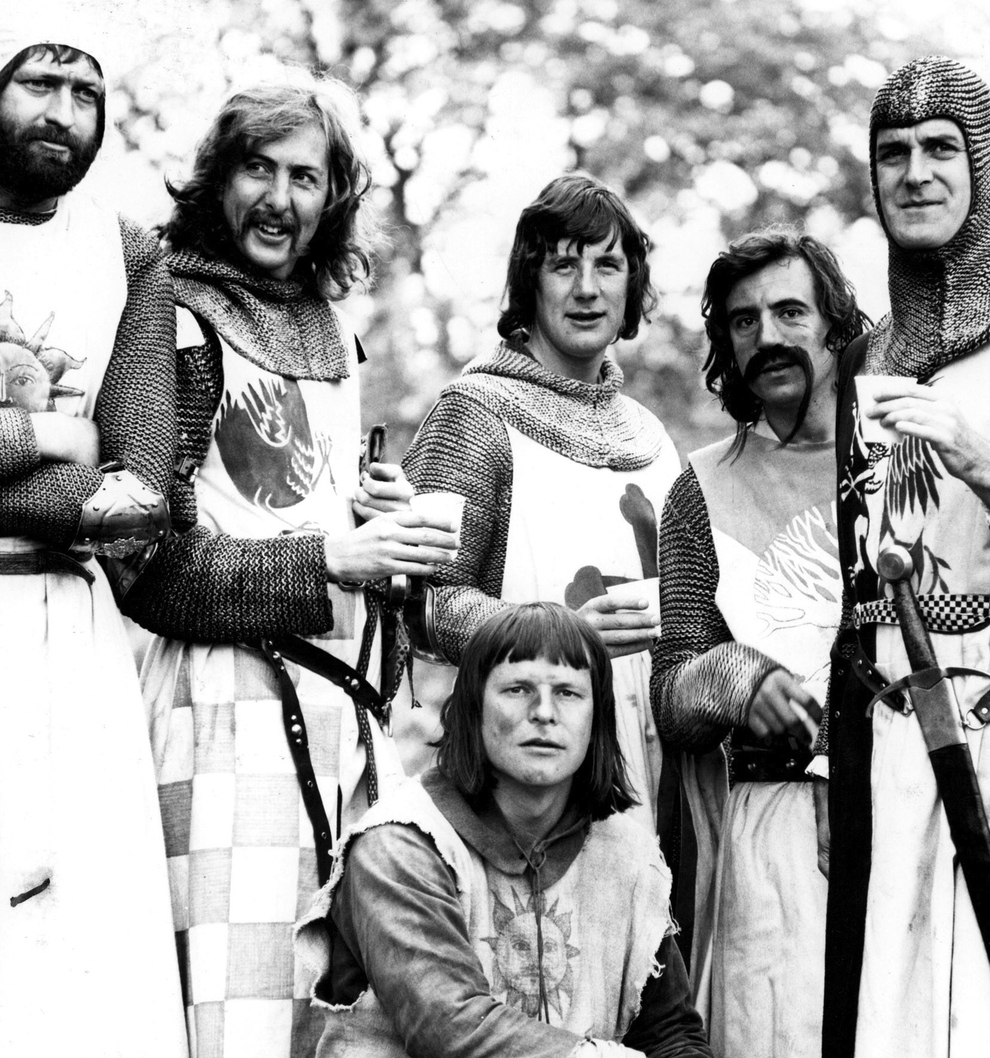
Terry Jones, who turns 75 today, with Graham Chapman, Eric Idle, Michael Palin, John Cleese and Terry Gilliam on the set of Monty Python and the Holy Grail in 1974:

Filmmaker in Focus:

The Film Guy breaks down the style and tropes of Wes Anderson in this spotlight on his work:

[embedded content]

Movie Trivia of the Day:

How much do you know about Night of the Living Dead? Well, here’s a bunch of trivia that could stump you:

[embedded content]

Cosplay of the Day:

A lot of work went into this Queen Amidala cosplay and you can see how much at the cosplayer’s blog (via Fashionably Geek):

Movie Comparison of the Day:

It’s a little late this long after the holidays but here’s a video showing how much National Lampoon’s Christmas Vacation has in common with It’s a Wonderful Life:

[embedded content]

Classic Trailer of the Day:

Today is the 40th anniversary of the initial Italian release of Dario Argento’s Suspiria. Watch the original American trailer for the horror classic below.

[embedded content]

and

Let’s block ads! (Why?)


No Image

First Listen: Tinariwen, 'Elwan'

Tinariwen’s new album, Elwan, comes out February 10. Courtesy of the artists hide caption

toggle caption

Courtesy of the artists

Since the Tuareg guitar band Tinariwen from Mali was launched into the international stratosphere nearly 20 years ago, it’s become something of a rite of passage for rock musicians to guest on their albums. This time around, for Elwan (Elephants), their eighth international release, they’re joined by Kurt Vile, Mark Lanegan (formerly of Screaming Trees), Alain Johannes (formerly of Queens of the Stone Age) and guitarist Matt Sweeney, who’s worked with everyone from Will Oldham to Run The Jewels.

But that’s all a sideshow: The main draw continues to be Tinariwen itself — with the band’s swirling guitars, rhythms inspired by the gait of camels and gutturally declaimed poetry.

The band has become globally peripatetic — partly due to their near-constant touring, but also because the situation in their home community in northern Mali continues to be incredibly dangerous and culturally toxic. As a result, the recording sessions for Elwan were split between the Paris suburbs, a studio in Joshua Tree, Calif., and a southern Moroccan town called M’hamed El Ghizlane, an oasis very near the Algerian border and home to its own Saharan music festival.

Article continues after sponsorship

Time and turmoil have both taken a serious toll — and the new music on Elwan reflects that hard reality. When Tinariwen started coming into the eye of international tastemakers nearly two decades ago, the band’s political thrust revolved more around the Tuareg people’s struggles to achieve political and social equality within the various Saharan countries they inhabit — and their decades-long push toward self-determination, possibly even by establishing their own nation.

As on past albums, the group’s lyrical concerns focus on the Tuareg, their culture and their people’s tenuous future. The tenere — the desert itself — is not just a backdrop or even subject matter in their songs. Usually performing in their native language, Tamashek, they sing direct addresses to those endless sands. In fact, the band’s name, Tinariwen, is just the plural of “tenere” in Tamashek. Listen to the beginning of Elwan‘s second track, “Sastanaqqam” (I Question You): “Tenere,” they sing, “can you tell me / of anything better / Than to have your friends and your mount / And a brand-new goatskin, watertight … To know how to find water in / The unlikeliest of places?”

But the chaos, warfare and corruption of the last several years has been tremendous. They’ve endured seeing a fellow ethnic Tuareg tried in The Hague for war crimes against cultural monuments in northern Mali, watching a former friend of the band emerge as a key leader of the Islamist group Ansar Dine, and even having a member of their own band kidnapped by Ansar Dine (and later released). Even this week, the news continues to be discouraging: Mali’s vaunted Festival in the Desert, which served as a major launchpad for Tinariwen — and which had been organized entirely in secret to take place this past weekend — was cancelled at the last minute by government officials, due to terrorism fears.

Unsurprisingly, Tinariwen’s message has grown more bitter than on past albums. “The strongest impose their will / And leave the weakest behind,” they sing on the track “Tenere Taqqal” (What Has Become Of The Tenere). “Many have died battling for twisted ends / And joy has abandoned us, exhausted by all this duplicity.” The song also includes another telling line that references the album’s title: “The tenere has become an upland of thorns/Where elephants (elwan) fight each other / Crushing tender grass / underfoot.”

And yet — there is still sweetness, and hope, on Elwan. There are outright love odes like “Hayati” (My Life), which is sung in Arabic, and songs like the spare solo “Ittus” (Our Goal), a voice-and-guitar composition performed by one of the group’s founders, Hassan Ag Touhami, that is just three lines long: “I ask you, what is our goal? / It is the unity of our nation / And to carry our standard high.”

One of the album’s most rollicking songs on Elwan is “Assawt” (The Voice Of Tamashek Women). It’s a paean to Tuareg women that calls for their freedom — a summoning that still rings out clear and true over the desert sands.

Tinariwen: Elwan Courtesy of the artist hide caption

toggle caption

Courtesy of the artist

Tinariwen, ‘Elwan’

01Tiwàyyen

3:05

  • <iframe src="https://www.npr.org/player/embed/512650724/512695315" width="100%" height="290" frameborder="0" scrolling="no" title="NPR embedded audio player">

    02Sastanàqqàm

    3:22

    • <iframe src="https://www.npr.org/player/embed/512650724/512695609" width="100%" height="290" frameborder="0" scrolling="no" title="NPR embedded audio player">

      03Nizzagh Ijbal

      3:39

      • <iframe src="https://www.npr.org/player/embed/512650724/512695769" width="100%" height="290" frameborder="0" scrolling="no" title="NPR embedded audio player">

        04Hayati

        3:22

        • <iframe src="https://www.npr.org/player/embed/512650724/512696238" width="100%" height="290" frameborder="0" scrolling="no" title="NPR embedded audio player">

          05Ittus

          3:45

          • <iframe src="https://www.npr.org/player/embed/512650724/512696403" width="100%" height="290" frameborder="0" scrolling="no" title="NPR embedded audio player">

            06Ténéré Tàqqàl

            4:25

            • <iframe src="https://www.npr.org/player/embed/512650724/512697213" width="100%" height="290" frameborder="0" scrolling="no" title="NPR embedded audio player">

              07Imidiwàn N-Àkall-In

              3:33

              • <iframe src="https://www.npr.org/player/embed/512650724/512697388" width="100%" height="290" frameborder="0" scrolling="no" title="NPR embedded audio player">

                08Talyat

                4:14

                • <iframe src="https://www.npr.org/player/embed/512650724/512697525" width="100%" height="290" frameborder="0" scrolling="no" title="NPR embedded audio player">

                  09Assàwt

                  3:39

                  • <iframe src="https://www.npr.org/player/embed/512650724/512697798" width="100%" height="290" frameborder="0" scrolling="no" title="NPR embedded audio player">

                    10Arhegh Ad Annàgh

                    2:47

                    • <iframe src="https://www.npr.org/player/embed/512650724/512698157" width="100%" height="290" frameborder="0" scrolling="no" title="NPR embedded audio player">

                      11Nànnuflày

                      5:02

                      • <iframe src="https://www.npr.org/player/embed/512650724/512698349" width="100%" height="290" frameborder="0" scrolling="no" title="NPR embedded audio player">

                        12Intro Flute Fog Ed

                        1:26

                        • <iframe src="https://www.npr.org/player/embed/512650724/512698566" width="100%" height="290" frameborder="0" scrolling="no" title="NPR embedded audio player">

                          13Fog Edaghàn

                          3:05

                          • <iframe src="https://www.npr.org/player/embed/512650724/512698839" width="100%" height="290" frameborder="0" scrolling="no" title="NPR embedded audio player">

                            Let’s block ads! (Why?)


                            No Image

                            Episode 751: The Thing About That Border Tax

                            The Internal Revenue Service (IRS) headquarters stands in Washington, D.C., U.S. Andrew Harrer/Bloomberg via Getty Images hide caption

                            toggle caption

                            Andrew Harrer/Bloomberg via Getty Images

                            America’s corporate tax is a mess. Republicans have a plan to fix it. But it will be a tough sell.

                            The new plan would lower the corporate tax rate, currently one of the highest in the world. And it would change how the tax works on a fundamental level. It’s called a border adjustment tax, and it would be a huge tax break to American exporters.

                            Of course every tax change has winners and losers. The losers under the new tax plan would be any business that imports products. Businesses like Walmart and Target would likely pay more in taxes.

                            Trade economists have talked about the border adjustment tax for decades, but it is only now getting its moment in the spotlight. The Republicans in Congress are pushing it as a way to lower the corporate tax rate from 35 percent to 20 percent.

                            The plan even got the approval of President Donald Trump as a way to make Mexico pay for a border wall.

                            But on today’s episode we talk to an early backer of the border adjustment tax, and he says it doesn’t do what everyone thinks it does. It definitely doesn’t punish Mexico or make them pay for anything. And in the end it won’t even hurt the nation’s importers.

                            Article continues after sponsorship

                            The reason is complicated. We’ll use a jar of marbles and a lovely music box to make sense of the Republican border adjustment tax plan.

                            Music: “Baiser Fatal.” Find us: Twitter/ Facebook.

                            Let’s block ads! (Why?)