Articles by admin

No Image

First Listen: Orchestra Baobab, 'Tribute to Ndiouga Dieng'

Orchestra Baobab’s new album, Tribute to Ndiouga Dieng, comes out March 31.

Youri Lenquette/Courtesy of the artist

hide caption

toggle caption

Youri Lenquette/Courtesy of the artist

One of West Africa’s most charming bands is back — again. Almost a decade after the group’s last album and nearly 50 years since its founding, Senegal’s Orchestra Baobab is swaggering back onto international dance floors with its silk, sultry songs, layering Afro-Cuban sounds with local traditions and pop styles from across Senegal and elsewhere in West Africa.

First, a little back story. Orchestra Baobab was founded in 1970 as the house band for a venue in Dakar called Club Baobab, an elegant nightclub owned by the country’s minister of finance (who was also the younger brother of Senegal’s president at the time). Club Baobab soon became one of the city’s main see-and-be-seen spots for politicians, businessmen and the city’s elite – and it needed its own band to keep its patrons dancing. Culling some of its members from the competing nightclub act Star Band, Orchestra Baobab played at its new home five nights a week, five hours at a time, with one half-hour break each evening. With that kind of schedule comes a finesse and tightness that can’t be replicated.

Orchestra Baobab called itself “specialists in all styles” – which meant playing a highly danceable blend of the Cuban sounds that already had become a smash across much of the African continent, local griot traditions, and influences from the many countries Baobab’s original players hailed from, including Senegal, Togo, Guinea and Morocco.

But eventually, Orchestra Baobab’s sleek, smooth sound fell out of favor. It was edged out by mbalax, the high-flying, drum-heavy and fast-paced style made popular by other artists, most notably singer Youssou N’Dour (a Star Band alumnus himself) — and Orchestra Baobab disbanded in 1987. Its members splintered off: Bandleader and guitarist Barthelemy Attisso, for example, went back to his other career as a lawyer working in his native Togo. (He’s since rejoined the band for big tours and several recording projects, but his legal work kept him away from this album.)

That wasn’t quite the end of Orchestra Baobab. In 2001, British producer Nick Gold — the mastermind behind the wildly popular resurrection of Cuba’s Buena Vista Social Club a few years earlier — reissued an old Orchestra Baobab album, 1982’s Pirate’s Choice. The reissue, plus some coaxing from both Gold and Youssou N’Dour, fueled a reuniting of the band, whose membership has evolved greatly over the years.

Tribute to Ndiouga Dieng is named after one of the group’s original vocalists, who died last November after a prolonged illness. For Tribute, Baobab has added a kora player from Mali named Abdouleye Cissoko, who contributes a sparkling, filigreed overlay to the band’s horn, guitar and drum-driven heft. And there are a couple of guest vocalists — both stars in their own rights — who add extra punch to this project: Cheikh Lô, who appears on the song “Magno Kouto” and Thione Seck, who left Baobab in 1979 to launch his solo career and returns on this album to revisit one of his early hits, “Sey.”

Even with all the changes in lineup, Baobab’s buttery-smooth sound remains. Tribute to Ndiouga Dieng is full of charm and easy grace, from the high-spirited opening track called “Foulo” to the sinuous “Woulinewa.” (If you want to check out the songs’ lyrics, they’re available in English translation.) Long live Orchestra Baobab — for another 50 years, at least.

Orchestra Baobab: Tribute to Ndiouga Dieng

Courtesy of the artist

hide caption

toggle caption

Courtesy of the artist

First Listen: Orchestra Baobab, ‘Tribute to Ndiouga Dieng’

01Foulo

4:13

  • <iframe src="https://www.npr.org/player/embed/521001534/521110754" width="100%" height="290" frameborder="0" scrolling="no" title="NPR embedded audio player">

    02Fayinkounko

    5:05

    • <iframe src="https://www.npr.org/player/embed/521001534/521110835" width="100%" height="290" frameborder="0" scrolling="no" title="NPR embedded audio player">

      03Natalia

      3:19

      • <iframe src="https://www.npr.org/player/embed/521001534/521110854" width="100%" height="290" frameborder="0" scrolling="no" title="NPR embedded audio player">

        04Magnokouto

        4:53

        • <iframe src="https://www.npr.org/player/embed/521001534/521110889" width="100%" height="290" frameborder="0" scrolling="no" title="NPR embedded audio player">

          05Mariama

          4:38

          • <iframe src="https://www.npr.org/player/embed/521001534/521111174" width="100%" height="290" frameborder="0" scrolling="no" title="NPR embedded audio player">

            06Woulinewa

            5:04

            • <iframe src="https://www.npr.org/player/embed/521001534/521111277" width="100%" height="290" frameborder="0" scrolling="no" title="NPR embedded audio player">

              07Sey

              4:34

              • <iframe src="https://www.npr.org/player/embed/521001534/521111365" width="100%" height="290" frameborder="0" scrolling="no" title="NPR embedded audio player">

                08Caravana

                3:45

                • <iframe src="https://www.npr.org/player/embed/521001534/521111409" width="100%" height="290" frameborder="0" scrolling="no" title="NPR embedded audio player">

                  09Douga

                  4:22

                  • <iframe src="https://www.npr.org/player/embed/521001534/521111484" width="100%" height="290" frameborder="0" scrolling="no" title="NPR embedded audio player">

                    10Alekouma

                    2:42

                    • <iframe src="https://www.npr.org/player/embed/521001534/521111513" width="100%" height="290" frameborder="0" scrolling="no" title="NPR embedded audio player">

                      Let’s block ads! (Why?)


                      No Image

                      Health Care Plan Championed By Trump Hurts Counties That Voted For Him

                      The Affordable Care Act replacement plan championed by President Trump would hurt low-income people in rural areas that voted heavily for the Republican last fall, according to an NPR analysis of data on proposed subsidy changes from the Kaiser Family Foundation.

                      The new changes in tax credits and subsidies for older Americans are a big reason many Republicans are hesitant to get behind the American Health Care Act, which is set for a vote in the House on Thursday.

                      A major component of the Affordable Care Act, subsidies helped lower- and middle-income people offset the cost of the health care premiums.

                      If the new GOP replacement plan does pass — which is still very much in up in the air — the bill would still face substantial hurdles in the Senate. Maine Republican Sen. Susan Collins articulated her opposition to the bill in its current form Sunday on NBC’s Meet the Press, citing how it “disproportionately affects older rural Americans.”

                      In an effort to woo reluctant members, one of the amendments announced on Monday evening by House leaders would give the Senate the opportunity to give more tax credits to people aged 50 to 64. However, there’s no requirement to make that happen once it passes over to the Senate.

                      Still, as the Congressional Budget Office also found, it’s older, poorer people who would see some of the largest reduction in both cost and coverage.

                      And they’re also largely in rural areas and smaller counties that voted overwhelmingly for Trump. According to NPR’s analysis of the 2016 election results, Trump won 68.5 percent of the vote in rural counties, and he also carried smaller counties with a similar 63.4 percent of the vote. That’s based on classifications by the U.S. Department of Agriculture that factors in both their level of urbanization and their proximity to metro areas; the groupings of rural counties and small counties are reliant on the degree of urbanization in the county.

                      But in major metropolitan areas, Trump only got 44 percent of the vote compared to Clinton’s majority.

                      And ultimately it’s those major metro areas that would see some of the smallest changes to the health care subsidies they’re receiving. For example, both 27-year-olds and 40-year-olds making $20,000 per year would only see a drop in their subsidies by about $1,000. However, 60-year-olds in metro areas in that same income bracket would see their subsidies decrease by almost $5,000.

                      But 27- and 40-year-olds in higher income brackets from $40,000 to $75,000 a year would actually see an uptick in their subsidies, ranging from $1,500 to $3,000. In 60-year-olds, though, only those making $75,000 a year would see an increase in subsidies of about $4,000. Sixty-year-olds in other income groups would see a dip.

                      In the more Trump-friendly areas, those differences are far more pronounced. In rural counties, a 60-year-old who makes just $20,000 a year would see their subsidies drop by $6,700. Only a 60-year-old who makes $75,000 or more a year would see an uptick. However, 27- and 40-year-olds who make at least $40,000 a year in rural areas would see an increase in subsidies, ranging from just over $1,000 to $3,000 more for a 40-year-old who makes $75,000. Smaller counties would also see similar changes.

                      Why the change in different areas around the country? The major reason seems to be because, unlike the Affordable Care Act, the Republican bill does not take the local cost of insurance into account — usually much higher in rural areas — and doesn’t increase the subsidies if local insurance premiums rise. And credits are the same across the board regardless of income.

                      Overall, though, despite the fact that premiums are typically higher in rural areas, people in metro areas would be less affected by the potential subsidy changes. For a 40-year-old who makes $30,000 a year, subsidies would drop in rural and small areas, but there’s about a $1,016 difference between rural areas and metro areas, where 40-year-olds in that income bracket would see an increase. Ultimately, the discrepancies between rural and metro areas only begins to close in higher income brackets.

                      Trump has traveled over the past week to some of the areas that might be most adversely affected by the bill, though both in Nashville, Tenn., and Louisville, Ky., his lobbying at the campaign rallies he held was not that pronounced. And many of the conservative members who are on the fence about the bill come from rural areas or small towns — that went heavily for Trump.

                      But even if the law does pass and these changes go into effect, it’s unclear if once-loyal voters would turn on Trump or even place the blame with him. A telling anecdote from the Washington Post‘s Jenna Johnson covering Trump’s rally last week was a woman who praised Trump for lowering her son’s premiums by almost $500 since he took office. However, those changes were due to the Affordable Care Act, not anything enacted by Trump in the two months since he took office.

                      Methodology

                      Kaiser Family Foundation estimated differences in federal subsidies under the proposed Republican plan in 2020 at the county level. A caveat: Kaiser’s analysis at the $20,000 income level excludes Alaska, Minnesota, New York and Washington, D.C. In 2020, those residents would be eligible for Medicaid (Alaska and Washington, D.C.) or the Basic Health Program (Minnesota and New York).

                      We grouped each county into one of three groups based on its USDA Rural-Urban Continuum Code. Metro counties had a code between 1 and 3, small-town counties had a code between 4 and 7, rural counties had a code of either 8 or 9.

                      Election results data came from the Associated Press. These results were last updated on Nov. 28, 2016, and are not the final certified results. The average vote calculations for rural, smaller and metro counties do not include Alaska, as the AP does not report election results on the county level in Alaska.

                      We calculated an average value for each county grouping, weighted by population. For each county, we multiplied the county’s dollar difference for each age and income bracket by the county’s population (according to 2015 American Community Survey 5-Year data) to create a weighted score. Then, for each county grouping (metro, small town, metro), we summed the weighted scores for each age and income bracket and divided it by the summed population of those county groupings.

                      Let’s block ads! (Why?)


                      No Image

                      Fearful Farmers Rush To Find 'Guest Workers'

                      Guest workers harvest much of North Carolina’s sweet potato crop, including at the fields of Burch Farms, in Faison, N.C.

                      Dan Charles/NPR

                      hide caption

                      toggle caption

                      Dan Charles/NPR

                      Dan Fazio says his phone is “ringing off the hook” these days.

                      He’s executive director of WAFLA, an organization that helps fruit growers in Washington state find workers — and specifically, foreign workers who are allowed to enter the U.S. specifically as seasonal workers on farms.

                      WAFLA takes care of the bureaucratic details. It applies for permission from the Department of Labor to bring in workers for specific jobs. It certifies that it has looked for U.S. citizens to do these jobs and can’t find them. Then it locates people in places like Mexico, or Central America. These “guest workers” get a special visa, called an H-2A visa, that lets them stay in the country temporarily, usually for no more than 10 months. WAFLA brings them by bus to the fields and orchards of Washington.

                      “This year, we’ll get labor certifications for over 10,000 workers,” Fazio says.

                      Interest in WAFLA’s services is surging for two different reasons. There’s a shortage of farm workers across the country. But more recently, it’s also been driven by fear of the Trump administration’s immigration crackdown.

                      “We haven’t seen any raids, but we have seen the paranoia,” says Fazio. “A government vehicle drives by a farm, and all the farm workers run away.”

                      The workers, many of whom are in the country without legal authorization, are worried about deportation. But farm employers are worried, too. Because if they lose their workers, they could also lose their harvest.

                      So they’re getting on the phone to Fazio, looking for workers who are here legally, and won’t run away.

                      Use of these H-2A visas has already been growing in recent years, because farmers are finding it hard to find enough workers.

                      Users of the program include tobacco and sweet potato growers in North Carolina, small organic farms in Pennsylvania, even the Trump Winery, in Virginia.

                      They’re turning to workers like Felipe Montan.

                      Montan’s home is in Veracruz, Mexico. That’s where I reached him, by phone. But he’ll soon leave his family there and get on a bus to North Carolina, to work in sweet potato fields. He’s been doing this for the past ten years. He’ll spend most of the year there.

                      The separation from his family is hard, Montan says, but there’s just not much work at home in Veracruz. He’s also moved to other parts of Mexico, for months at a time, to find work. But the work in North Carolina pays much more. “It has helped me to improve my house,” he says. “It has allowed me to pay for education for my kids. I have a daughter who’s in the university.”

                      The guest worker program has plenty of critics. The H-2A visa ties a worker to one employer. That can leave workers vulnerable to abuse or exploitation.

                      Montan says it’s generally worked out well for him. He gives a lot of credit to a union contract between a group of North Carolina growers and the Farm Labor Organizing Committee, which is part of the AFL-CIO. These are the only H-2A workers who are covered by a union contract.

                      In California, the country’s biggest agricultural state, guest workers are rare. Most farmers there have refused to use the H-2A program, due to the many regulations that come with it.

                      Employer-provided housing near La Belle, Florida, for guest workers who harvest oranges and grapefruit.

                      Dan Charles/NPR

                      hide caption

                      toggle caption

                      Dan Charles/NPR

                      Employers are required to provide free housing and transportation to workers. They also have to pay a wage that the government sets for each area. This year, in California, that minimum hourly wage is $12.57.

                      But some of those farmers now are so worried about immigration enforcement that they’re calling Jeanne Malitz, a lawyer in San Diego who specializes in guest worker applications. Malitz is hiring more people in her law firm to handle the workload.

                      “I don’t sleep very much these days!” she says.

                      I reached Malitz right after she finished talking to farmers in the town of San Luis Obisbo. “They want to know, what are all the rules? What do we do? Where are we going to get housing?” Malitz says.

                      Last year, nationwide, about 160,000 farm jobs were filled by guest workers. That comes to about 10 percent of all the jobs in fields and orchards, taking care of planting, pruning, and harvesting.

                      Malitz wouldn’t be surprised if that number doubled over the next five years.

                      In fact, she’s wondering if the Department of Labor will have enough people to handle all the applications that they’re about to receive.

                      Let’s block ads! (Why?)


                      No Image

                      Today in Movie Culture: A Capella 'Beauty and the Beast,' 'Ferris Bueller' Pizza Commercial and More

                      Here are a bunch of little bites to satisfy your hunger for movie culture:

                      Cover Songs of the Day:

                      Celebrate the massive success of Beauty and the Beast with this performance of a capella versions of its songs by BYU students (via Geek Tyrant):

                      [embedded content]

                      Vintage Poster of the Day:

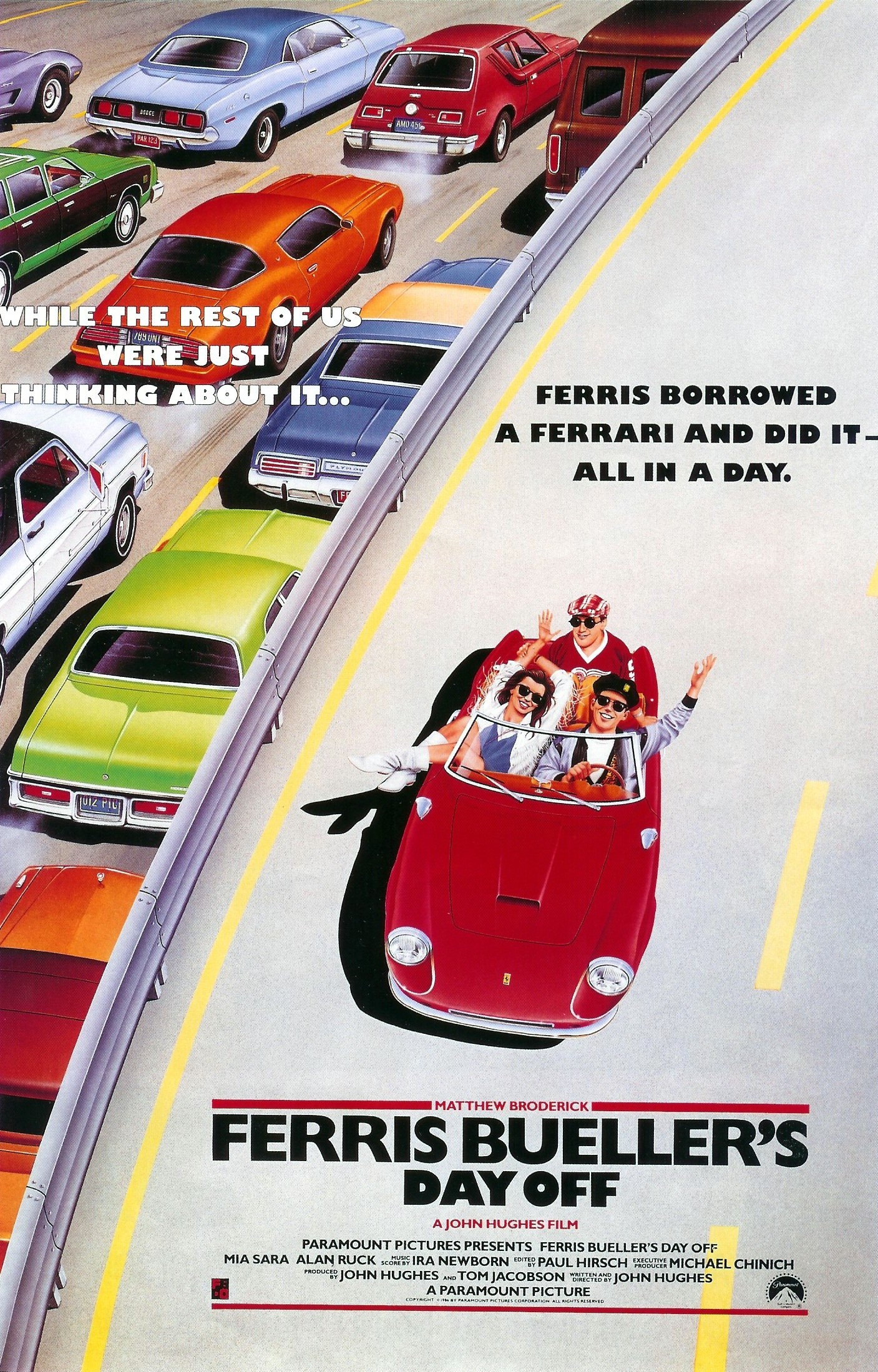
                      Matthew Broderick turns 55 today, so in honor of his birthday here is an original poster for Ferris Bueller’s Day Off:

                      Commercial of the Day:

                      Speaking of Ferris Bueller, Domino’s Pizza recreated the famous run home sequence for a new commercial starring Stranger Things actor Joe Keery with a Cameron cameo (via Geek Tyrant):

                      [embedded content]

                      Movie Bloopers:

                      With Power Rangers opening this Friday, check out a bunch of bloopers and B-roll footage from the reboot:

                      [embedded content]

                      Movie Takedown of the Day:

                      Speaking of Power Rangers, Honest Trailers easily demolishes the 1990s Mighty Morphin Power Rangers movie:

                      [embedded content]

                      Movie Trivia of the Day:

                      And here is a bunch of trivia you might not know about the Power Rangers franchise:

                      [embedded content]

                      Filmmaker in Focus:

                      With The Belko Experiment, which he scripted, in theaters, James Gunn is the subject of a trivia showcase from ScreenCrush:

                      [embedded content]

                      Video Essay of the Day:

                      There’s more of The Matrix on the way, so here’s a new Film Radar video essay on the philosophical ideas of the franchise:

                      [embedded content]

                      Cosplay of the Day:

                      This guy’s custom made Spider-Man costume has some awesome shutter lenses like the new MCU movie version (via Fashionably Geek):

                      Classic Trailer of the Day:

                      Today is the 20th anniversary of the release of Liar Liar starring Jim Carrey. Watch the original trailer for the classic comedy below.

                      [embedded content]

                      and

                      Let’s block ads! (Why?)


                      No Image

                      Researchers Test Hotter, Faster And Cleaner Way To Fight Oil Spills

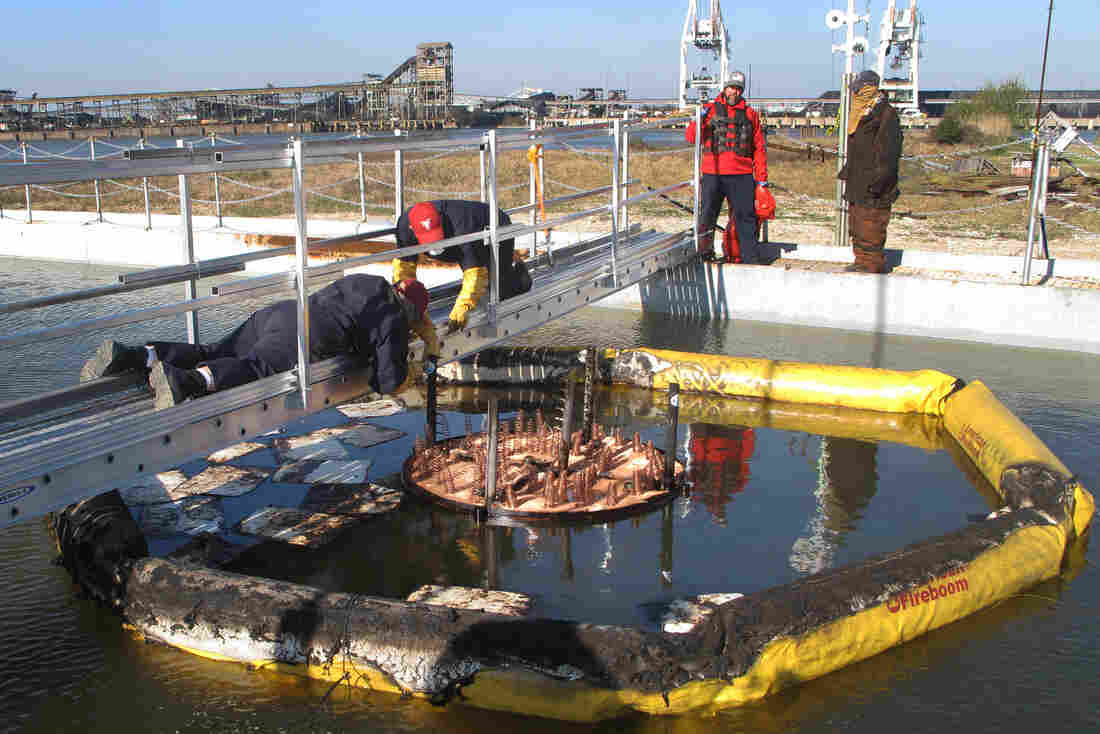
                      Researchers at the Coast Guard’s Joint Maritime Test Facility on Little Sand Island, in Mobile Bayoff the Alabama coast, fit the Flame Refluxer with coils for a test burn.

                      Debbie Elliott/NPR

                      hide caption

                      toggle caption

                      Debbie Elliott/NPR

                      On a cold and windy day off the coast of Alabama, a team of researchers from Worcester Polytechnic Institute in Massachusetts gathers, conducting the first test outside a laboratory for a potential new solution to a challenging problem: cleaning oil spills from water.

                      The invention, the Flame Refluxer, is “very simple,” says Ali Rangwala, a professor of fire protection engineering: Imagine a giant Brillo pad of copper wool sandwiched between layers of copper screen, with springy copper coils attached to the top.

                      “The coils collect the heat from the flame and they transmit it through the copper blanket,” Rangwala explains.

                      The goal is to make a hotter, faster and more complete burn that leaves less pollution.

                      Cleaning oil from water is a challenge, especially on the open sea. That was dramatically evident seven years ago, when a massive oil spill during the BP disaster polluted the Gulf of Mexico.

                      The Flame Refluxer after a test burn.

                      Debbie Elliott/NPR

                      hide caption

                      toggle caption

                      Debbie Elliott/NPR

                      Responders typically use three cleanup methods in an oil spill: skimmers and oil booms to soak it up, dispersants to break it up, and fire to burn it up. That’s called in-situ, or in-place, burning.

                      The federal government is backing research on the Flame Refluxer, which supporters hope will provide an effective and ecologically sound alternative.

                      For the test — at the U.S. Coast Guard’s Joint Maritime Test Facility on Little Sand Island in Mobile Bay — workers place the blanket inside a ring-shaped floating protective barrier, or fire boom, in a concrete pool. Oil is pumped from a nearby tank, and a long torch-like lighter sets it afire.

                      Before long, the fire is roaring with flames up to 12 feet high.

                      Rangwala monitors by video in a nearby research shed. “It’s looking very good,” he observes.

                      refluxer

                      Source: Worcester Polytechnic Institute

                      Credit: NPR

                      Engineers are tracking the fire’s heat and the emissions that are being captured by a strategically placed windsock downwind of the test burn.

                      The device potentially could reduce air pollution, as well as the layer of tar that remains after oil burns and sinks to the ocean floor, threatening marine life.

                      Rangwala says the copper blanket was designed to capture any remaining residue, but they’re finding that the tar is burning off as well.

                      He says the test indicates a hotter, quicker, cleaner burn.

                      “Currently it’s about three times faster than baseline,” he says. “And the smoke is also grayish in color, compared to black.”

                      The gray smoke, with less soot, is one of the things that Karen Stone is looking for.

                      “The lighter it is, the cleaner it is,” says Stone, an oil spill response engineer with the federal Bureau of Safety and Environmental Enforcement.

                      Workers at the Coast Guard’s Joint Maritime Test Facility fit the Flame Refluxer with coils for a test burn.

                      Debbie Elliott/NPR

                      hide caption

                      toggle caption

                      Debbie Elliott/NPR

                      The agency has invested $1.5 million to develop the Flame Refluxer, and is also paying for other new technology.

                      It’s an effort to be better prepared to respond, after the 2010 BP disaster in the Gulf revealed some major gaps. For example, the country didn’t have enough fire boom on hand and had to scramble to borrow supply from other countries.

                      Black smoke billows from a controlled burn of surface oil during the 2010 Deepwater Horizon oil spill.

                      U.S. Coast Guard

                      hide caption

                      toggle caption

                      U.S. Coast Guard

                      “Once you have a spill, it really gets the attention,” says Stone. “We realize, wow, we really need to advance it and make it better, improve it, for when it happens again.”

                      Stone says the technology that is working in the Gulf environment also shows promise for responding to oil spills in the Arctic. But it is likely 5 to 10 years from being used in an actual disaster.

                      The next step is finding the best way to deploy and test it in open water.

                      Let’s block ads! (Why?)


                      No Image

                      It's Not Clear How Many People Could Actually Work To Get Medicaid

                      Many people who are on Medicaid are also in college or taking care of relatives, according to health policy analyst Leighton Ku. That would make it harder for them to meet work requirements proposed by the GOP.

                      Courtesy of Milken Institute School of Public Health

                      hide caption

                      toggle caption

                      Courtesy of Milken Institute School of Public Health

                      Republican House leaders are making last-minute changes to their health care proposal in a bid to woo more conservatives ahead of a vote scheduled for Thursday.

                      One of those changes would let states impose work requirements on some Medicaid recipients. A handful of states asked the Obama administration for that authority but were denied.

                      To further examine how requiring millions of Medicaid recipients to work could impact lives across the country, NPR’s Audie Cornish spoke with Leighton Ku, a professor of health policy at George Washington University. The interview has been edited for length and clarity.


                      Interview Highlights

                      On whom this requirement could affect

                      The way it’s written right now, it might affect millions of adults on Medicaid who aren’t elderly, disabled or pregnant. They could be required to work to get their health insurance.

                      Among the people who enrolled in Medicaid under the expansion, about 13 percent might be considered able-bodied but not working right now. Of those, the great majority said the reason they weren’t working was because they were taking care of family members. If you look across the nation, it might be millions of individuals who receive Medicaid benefits at the moment but potentially could be required to work under the rules Congress is considering.

                      On why requiring people to work to get Medicaid could prove problematic

                      Most Medicaid recipients want to work, and a majority of those on Medicaid [who can work] are already working. The problem is that many of them live in places where jobs aren’t available or they don’t have the right sorts of skills. Others have health problems or family obligations, or in some cases they’re trying to better themselves in other ways like going to college.

                      If someone is going to college to get training so they can have a meaningful job later on, that doesn’t count as meeting the work requirement in these policies. There are people who are trying to better themselves [but] have problems, whether related to work or family obligations, and this’ll say, “You can’t keep your health insurance anymore.”

                      I disagree that this creates opportunity for people. People already had the opportunity to go look for work and get job training. This will actually disallow some of them to pursue other opportunities.

                      On how requiring work for health insurance differs from requiring work for food stamps

                      There are some work requirements in the food stamp program (SNAP). But that makes a little more sense in this context: If people work, they’ll make more income and help make them economically self-sufficient. In the context of Medicaid, that makes less sense. Only a quarter of jobs available to people enrolled in Medicaid offer health insurance to their workers. It’s not as though work requirements get them to the point where they’ll be self-sufficient with respect to health insurance coverage.

                      Let’s block ads! (Why?)


                      No Image

                      Tom Brady's Missing Super Bowl Jersey Found In Mexico

                      The long national nightmare of Tom Brady’s missing Super Bowl jersey is now over. It has been found in Mexico.

                      AUDIE CORNISH, HOST:

                      Everyone can relax. Tom Brady’s Jersey has been found.

                      KELLY MCEVERS, HOST:

                      Brady, of course, is the star quarterback who led the New England Patriots to a historic comeback over the Atlanta Falcons in the Super Bowl. Then after the sweet win, someone stole the jersey he wore at the game from his locker.

                      CORNISH: Patriots owner Robert Kraft told Fox Business that the jersey was practically priceless.

                      (SOUNDBITE OF ARCHIVED RECORDING)

                      ROBERT KRAFT: It’s like taking a great Chagall or Picasso or something.

                      MCEVERS: Well, maybe not that priceless. It is a piece of NFL history valued at $500,000.

                      CORNISH: The search went on for weeks. The NFL, the FBI, even the Texas Rangers got involved. Yesterday, the league announced the missing Jersey was found at the home of a journalist in Mexico. Fox Sports 1 broke down the locker room security footage used to catch the suspect like it was the Zapruder film.

                      (SOUNDBITE OF TV SHOW, “UNDISPUTED”)

                      JAY GLAZER: And then you see him leaving right there. He still has the backpack on, plus something under his left arm…

                      UNIDENTIFIED MAN: Wow.

                      GLAZER: …You see right there. This is…

                      MCEVERS: The newspaper that employed the journalist has apologized. The story has given some a chance to poke at the media. Here’s White House Press Secretary Sean Spicer today.

                      (SOUNDBITE OF ARCHIVED RECORDING)

                      SEAN SPICER: I am very happy that though – that the individual in the press corps who took Tom Brady’s jersey – that that has been returned properly.

                      CORNISH: So this story has a happy ending for almost everyone, except the Atlanta Falcons.

                      (SOUNDBITE OF THE WEEKND SONG, “STARBOY”)

                      Copyright © 2017 NPR. All rights reserved. Visit our website terms of use and permissions pages at www.npr.org for further information.

                      NPR transcripts are created on a rush deadline by Verb8tm, Inc., an NPR contractor, and produced using a proprietary transcription process developed with NPR. This text may not be in its final form and may be updated or revised in the future. Accuracy and availability may vary. The authoritative record of NPR’s programming is the audio record.

                      Let’s block ads! (Why?)


                      No Image

                      South X Lullaby: DakhaBrakha

                      To call what DakhaBrakha does “folk music” completely misses a world of inspiration and sound, both here on Earth and perhaps elsewhere. The mostly-acoustic, utterly unique Ukrainian band mixes traditions from its homeland, but goes wide too, with West African rhythms and Indian drones to create a wild, thrilling texture (especiallylive).

                      Late at night, we asked DakhaBrakha to bring its cello, keyboard, accordion – and tall, wool hats! — to the balcony of the Hilton Austin hotel overlooking Austin, Texas. They played “Kolyskova” from 2010’s Light, but the band only ever calls it “Lullaby.” It’s a quiet, contemplative song that the band says is a “connecting of several lullabies” with “philosophical lyrics that [say] we have time for everything — time to laugh and cry, time to live and die.”

                      SET LIST
                      • “Kolyskova”
                      CREDITS

                      Producers: Bob Boilen, Mito Habe-Evans; Director/Videographer: Nickolai Hammar; Audio Engineer: Josh Rogosin; Photo: Nickolai Hammar; Executive Producer: Anya Grundmann.

                      Support for NPR Music comes from Blue Microphone.

                      Let’s block ads! (Why?)


                      No Image

                      Democrats Criticize Supreme Court Nominee Gorsuch As Pro-Business

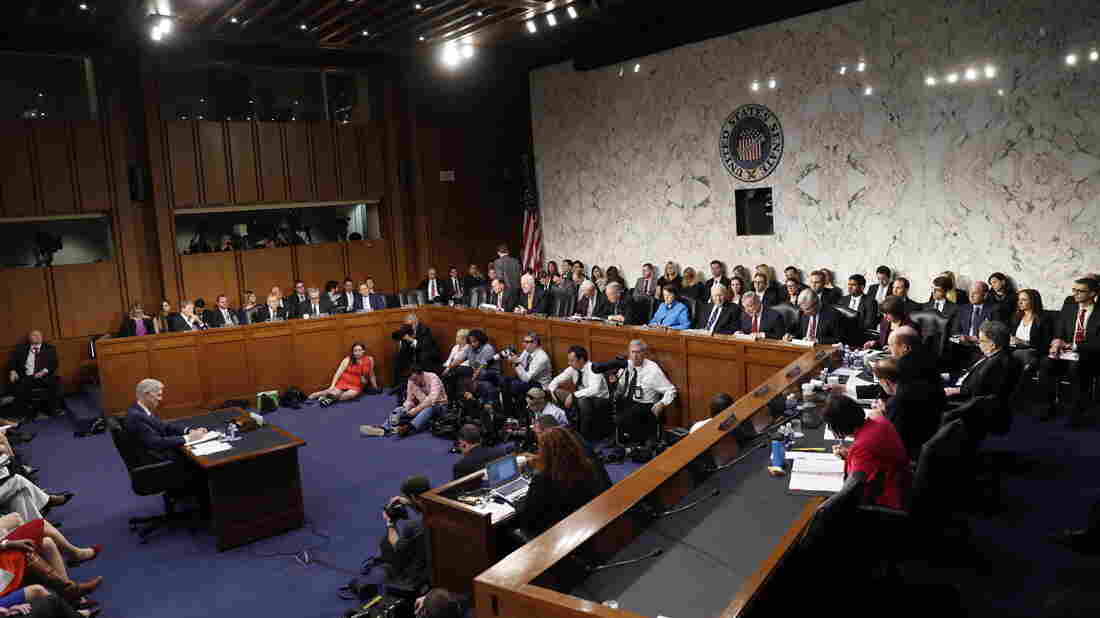
                      Supreme Court nominee Neil Gorsuch hears senators’ opening statements on Monday for the first day of his confirmation hearings.

                      Pablo Martinez Monsivais/AP

                      hide caption

                      toggle caption

                      Pablo Martinez Monsivais/AP

                      One of the themes that developed on Day 1 of Supreme Court nominee Neil Gorsuch’s hearings is that Democrats plan to make an issue of what they say is the Supreme Court’s pro-business leanings. In their opening statements on Monday, Democratic members of the Senate Judiciary Committee argued that Gorsuch is likely to continue the trend.

                      Sen. Sheldon Whitehouse of Rhode Island alleged that when the court’s majority is made of Republican appointees, the narrow 5-4 decisions “line up to help corporations against humans.”

                      Illinois Sen. Dick Durbin said that the court under Chief Justice John Roberts is often called “a corporate court” and said a study by the left-leaning Constitutional Accountability Center found that it ruled for the U.S. Chamber of Commerce 69 percent of the time.

                      Durbin also cited Gorsuch’s dissent in a case in which a truck driver lost his job after his rig broke down one bitterly cold night. (NPR’s Nina Totenberg reported on the case here.) The driver was instructed to stay with the truck, but he found himself growing numb in the unheated cab and so drove away to find warmth, leaving the trailer behind, and was fired for disobeying orders.

                      Durbin said it was 14 below that night, adding, “but not as cold as your dissent, Judge Gorsuch.” He added, “Thank goodness that the majority in this case pointed out that common sense and the Oxford dictionary” supported their view that the firing was without merit.

                      In his own opening statement, Gorsuch spoke of striving for impartiality and the support he has received across the political spectrum.

                      “In my decade on the bench, I have tried to treat all who come to court fairly and with respect. … My decisions have never reflected a judgment about the people before me — only my best judgment about the law and facts at issue in each particular case,” the nominee said. “For the truth is, a judge who likes every outcome he reaches is probably a pretty bad judge, stretching for the policy results he prefers rather than those the law compels.”

                      Gorsuch will begin taking questions from the senators on Tuesday morning.

                      Let’s block ads! (Why?)


                      No Image

                      After Short-Lived Tenure, Uber President Quits Amid Company Turmoil

                      Former Target CMO Jeff Jones was hired by Uber to help support the embattled company’s reputation.

                      Cindy Ord/Getty Images for Target

                      hide caption

                      toggle caption

                      Cindy Ord/Getty Images for Target

                      After less than a year as president of Uber, Jeff Jones is leaving the embattled ride-hailing company, Uber confirms.

                      “We want to thank Jeff for his six months at the company and wish him all the best,” an Uber spokesperson says in a statement.

                      Jones, previously Target’s chief marketing officer, was brought on by CEO Travis Kalanick last fall to boost Uber’s reputation.

                      Though Uber has long held its reputation as an aggressive startup, the company has been battling recent controversies, ranging from sexual harassment allegations to Kalanick’s abrasive behavior.

                      After a video surfaced earlier this year, showing Kalanick arguing with an Uber driver, the CEO admitted he needed leadership help, and announced his search for a new chief operating officer.

                      While that hunt appeared to threaten Jones’ role as second in command to Kalanick, in a statement to Recode, Jones simply says his leadership approach is “inconsistent” with what he saw happening at Uber.

                      Meanwhile, Uber CEO Travis Kalanick issued a note to staff: “After we announced our intention to hire a COO, Jeff came to the tough decision that he doesn’t see his future at Uber.”

                      Recodefirst reported Jones’ departure on Sunday, initially citing sources that claimed Jones’ departure was “directly related” to the company’s amassing controversies.

                      A number of recent scandals plague Uber, including:

                      • This month, The New York Times exposed Uber’s secret “Greyball” program, established in 2014 to evade authorities worldwide in cities where the service has been banned. Uber later announced it will prohibit the use of the program
                      • Last month, former Uber employee Susan Fowler Rigetti published a blog post describing systemic sexism and sexual harassment in the workplace. The viral post prompted Uber to launch an independent investigation, led by former U.S. Attorney Gen. Eric Holder
                      • Earlier this year, a social media campaign encouraged consumers to #DeleteUber after CEO Travis Kalanick joined President Trump’s economic advisory council — he’s since quit
                      • People accused Uber of trying to profit from Trump’s immigration order and “breaking strike” by lifting surcharge pricing for airport protesters in New York

                      Jones joins a list of recent top executives to leave the company. Engineering executive Amit Singhal was asked to resign after failing to disclose a sexual harassment claim from his previous job at Google. This month, Uber’s vice president of product and growth Ed Baker stepped down, in addition to security researcher Charlie Miller’s departure.

                      Last month, Uber employees spoke with CNNTech about the company’s “grueling” work pace and work-life balance — or lack thereof.

                      “If you’re going to leave, people do so within the first year because the pace isn’t what they expected or what they’re used to,” said Neal Narayani, Uber’s head of people analytics.

                      Let’s block ads! (Why?)